Facts · Updated 8 Oct 2026
What Do Woodpigeons Eat? Diet Through the Year and in Gardens
By the Birdfact teamChecked by Nathan Cope
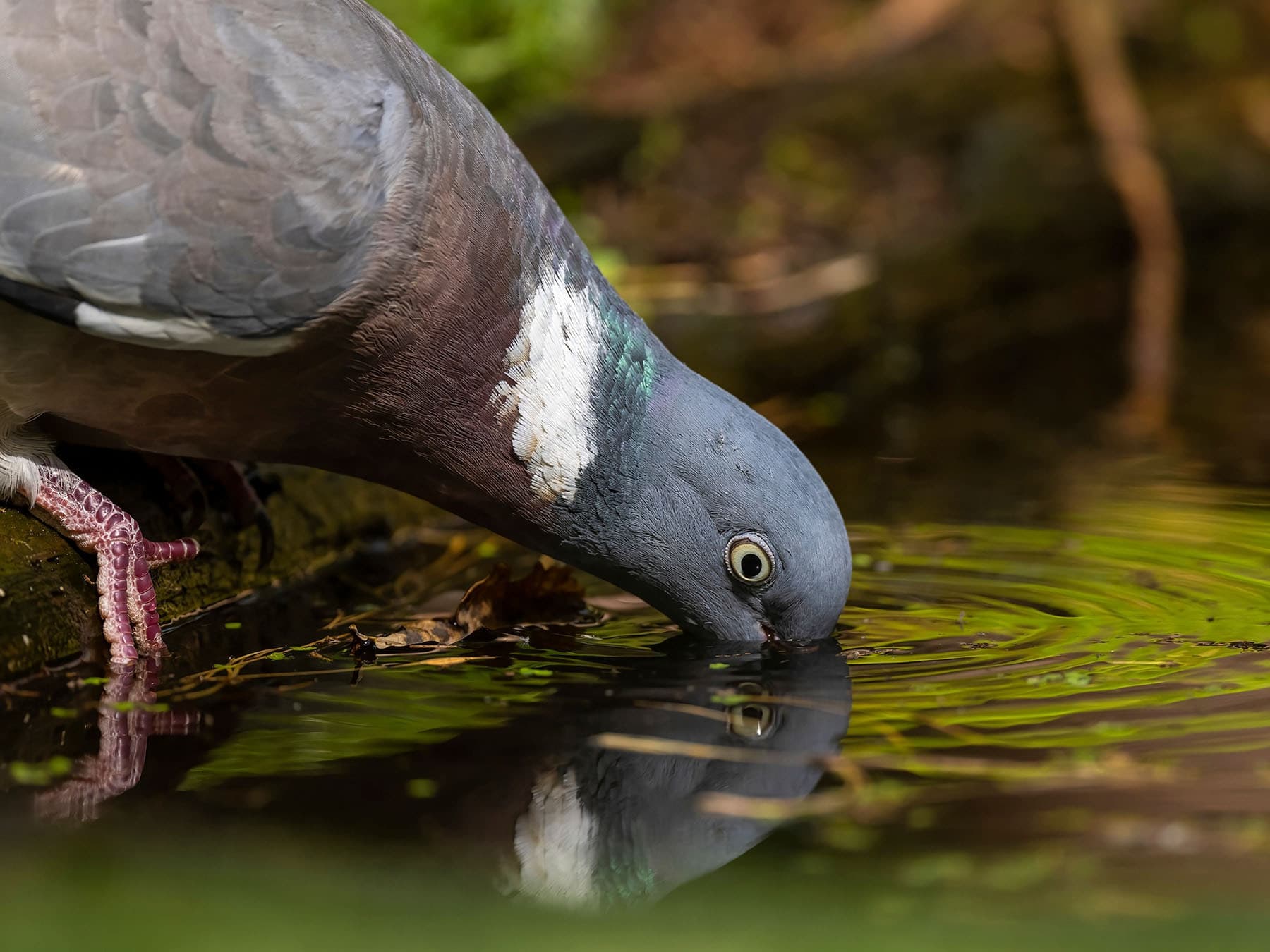
Woodpigeons eat almost nothing but plants: clover and other green leaves, grain, buds, seeds, and in winter and spring the fruits and seeds of trees, especially ivy berries, acorns and beech-mast. A few snails and other small animals are taken, mostly in summer, and the young are fed on crop milk.
On this page8 sections
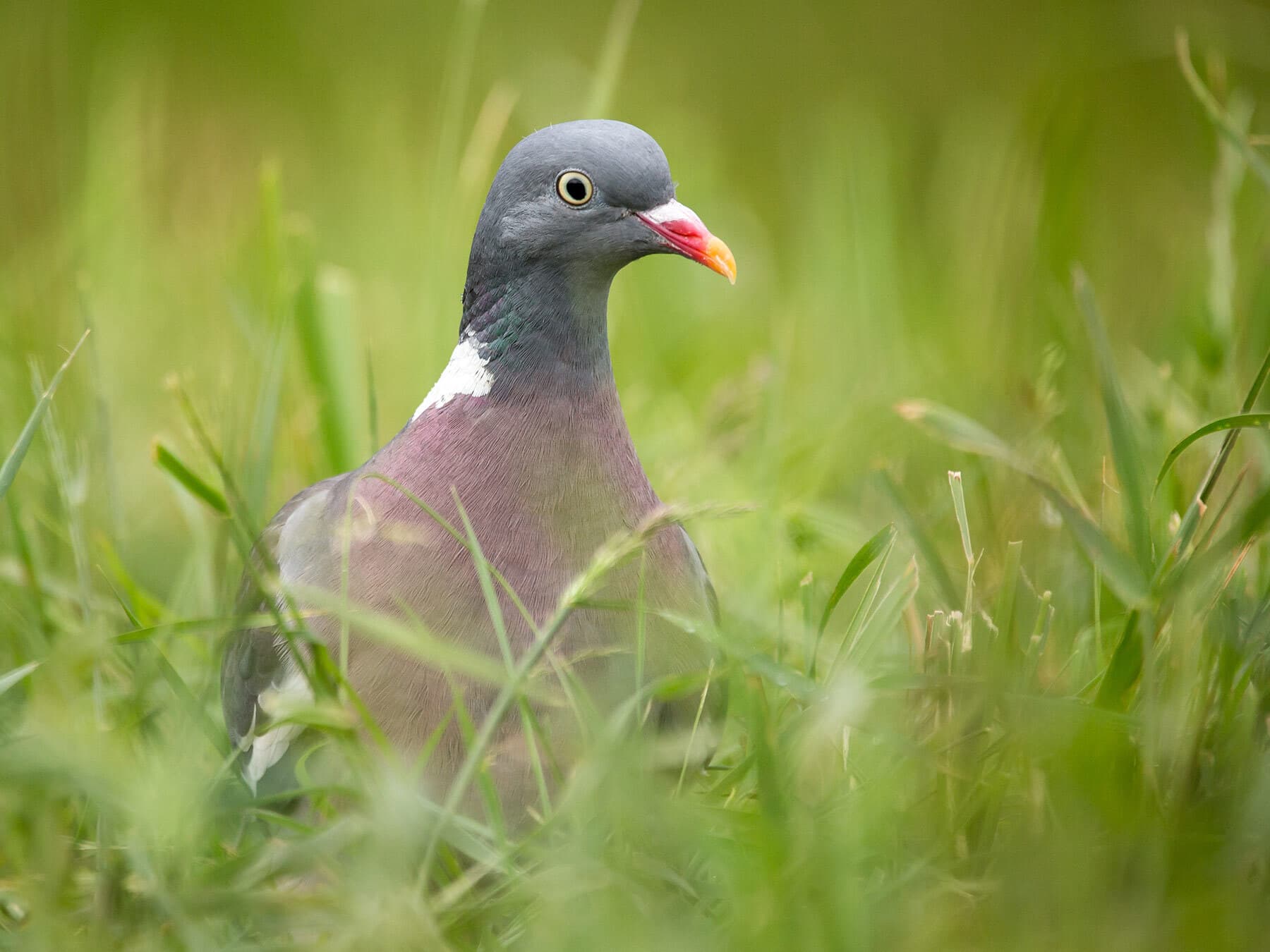
What Woodpigeons eat through the year, on lawns and farmland, what they feed their young, and Woodpigeons in your garden. For the bird itself, see Woodpigeon identification and facts.
What do Woodpigeons eat?
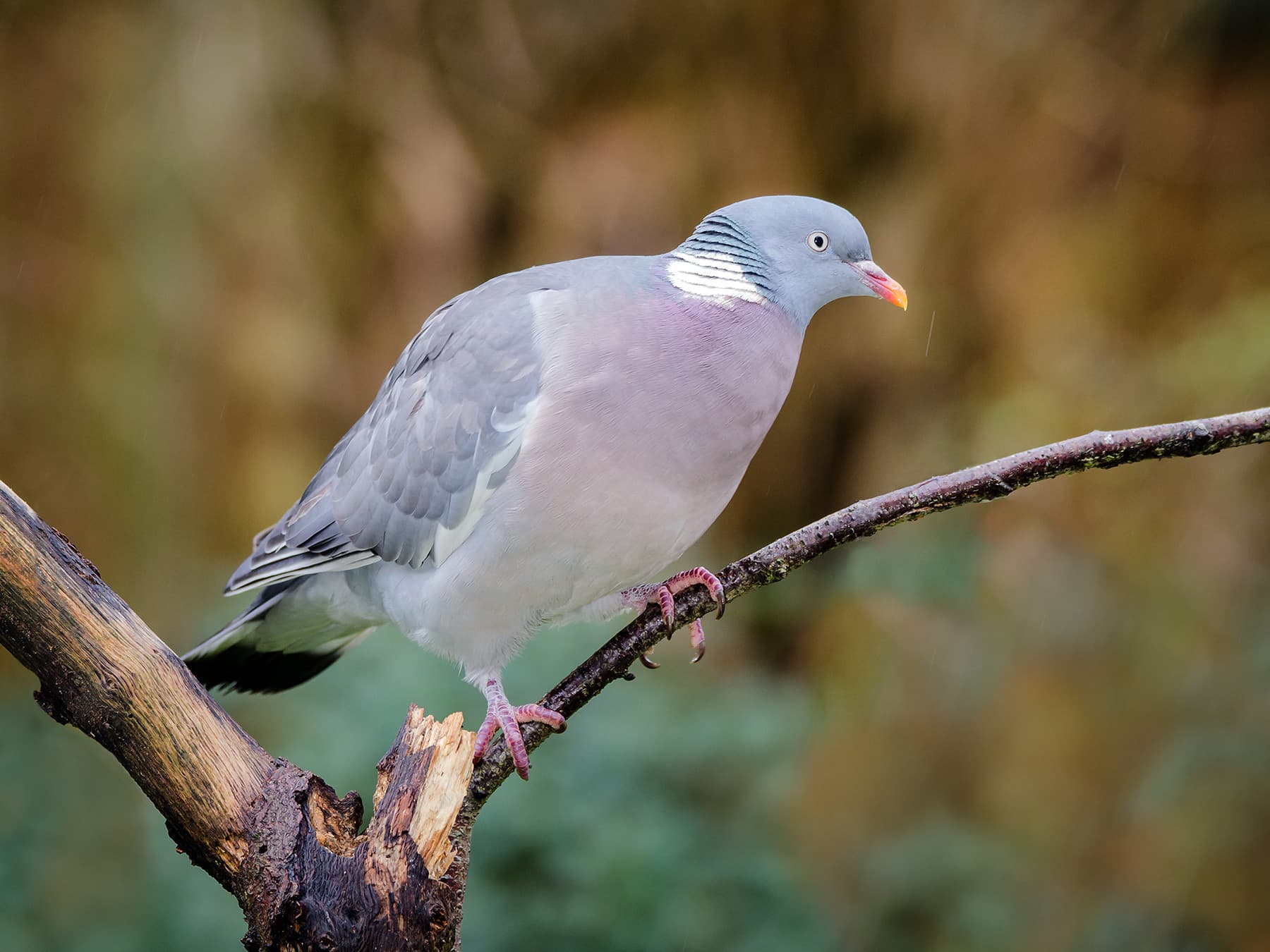
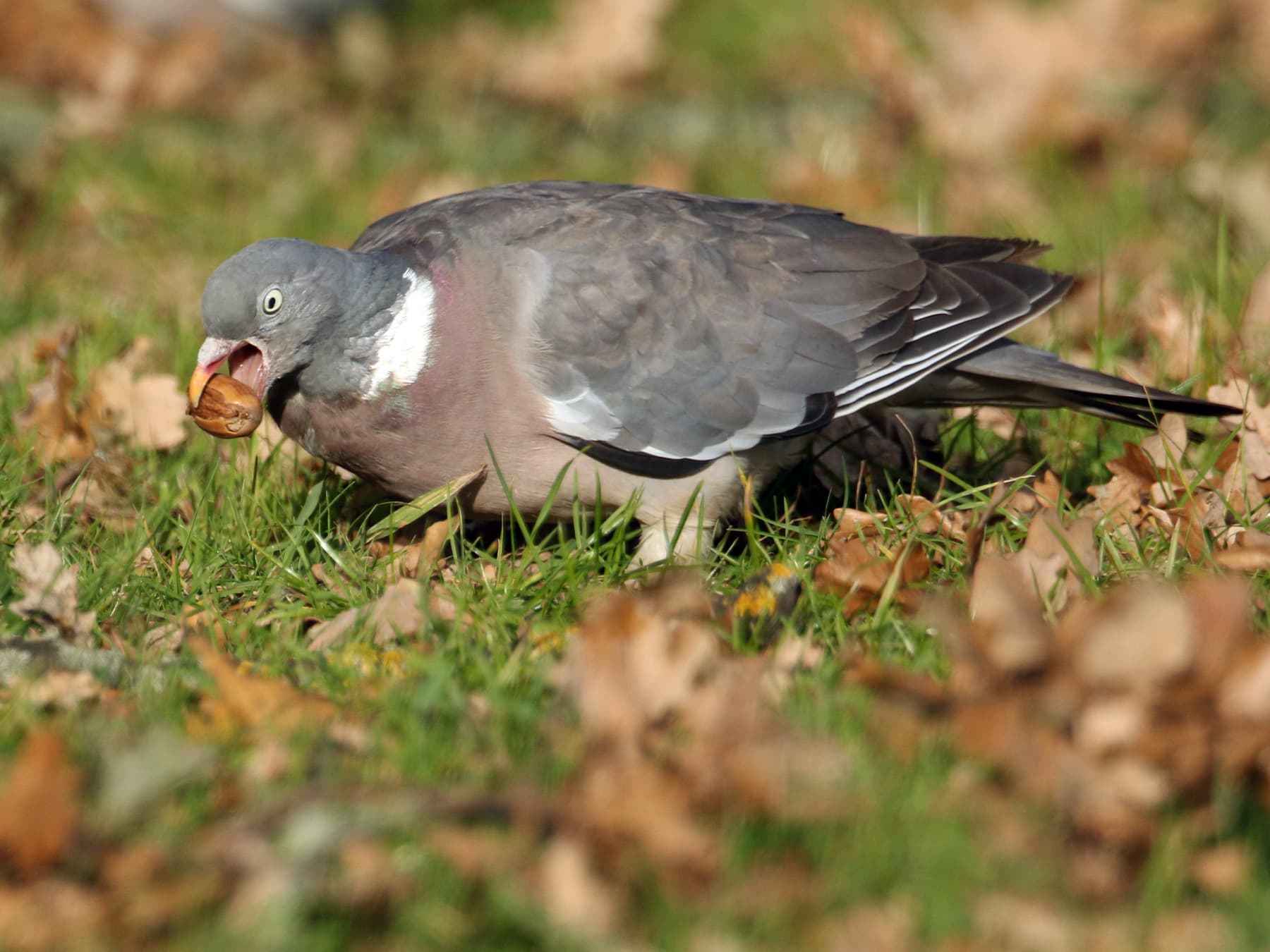
Plants, almost entirely. When researchers in Ireland examined the crops of 299 Woodpigeons, 99.7% of the food by volume was plant material.1 The menu is broad: green leaves such as clover, oilseed rape and cabbage; buds, flowers and seeds; grain such as wheat, barley, oats and maize; root crops; and the fruits and seeds of trees, from ivy berries to acorns, beech-mast and elder.2
Through the year
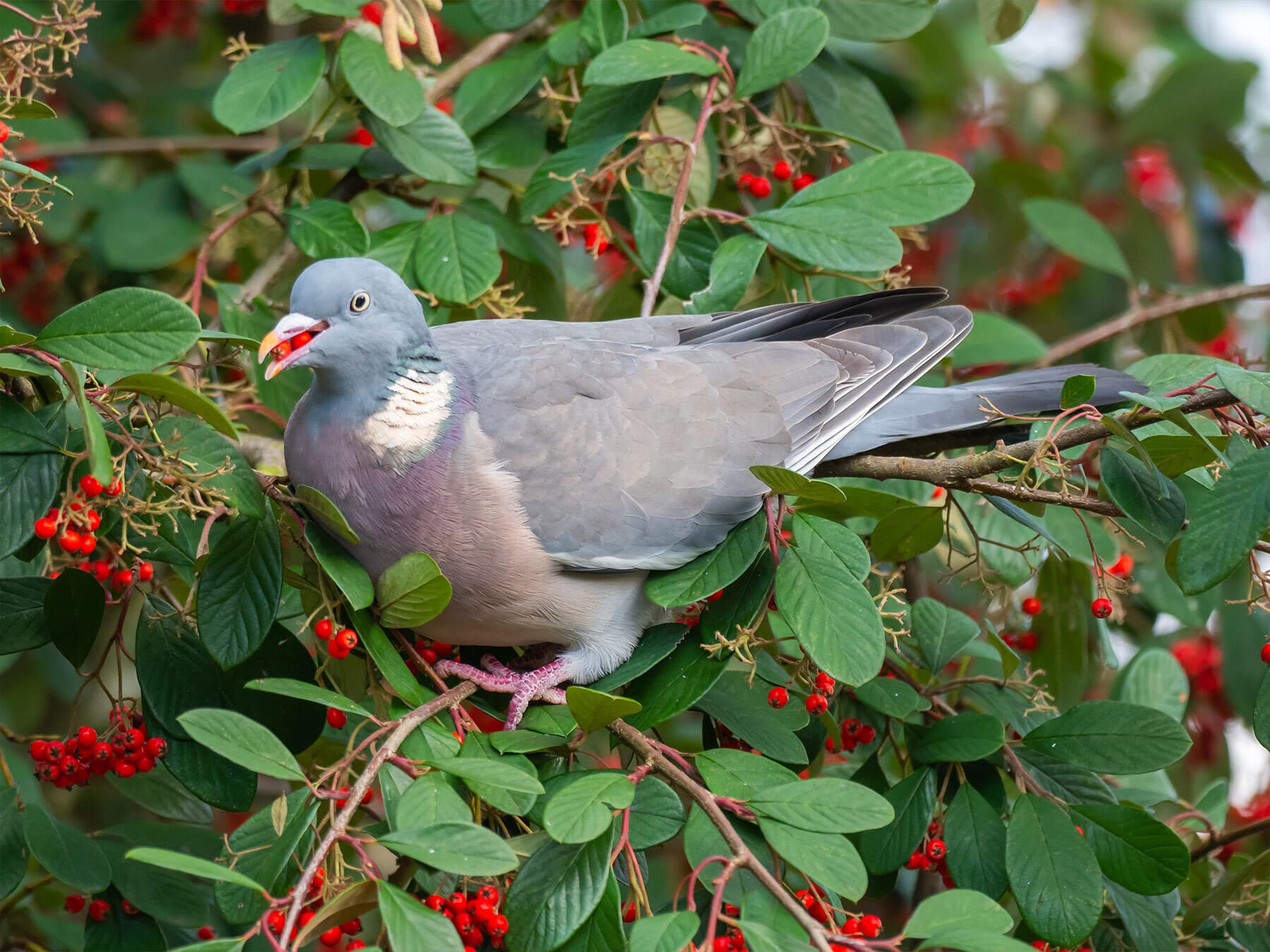
What a Woodpigeon eats depends on the season. In the Irish study, cereal grain was the main food in summer (27.1% of the diet, with clover at 22.3%) and above all in autumn (52.1%). In winter and spring the fruits and seeds of trees took over: 43.7% of the winter diet, mostly ivy berries, with beech-mast and haws, and 55.3% in spring.1
Ivy is a speciality. Most seed-eating birds, such as finches and tits, avoid ivy fruit, whose seeds are toxic, but Woodpigeons eat it in quantity, helped by a muscular gizzard. These seasonal foods are rich in energy and largely ignored by other seed-eaters.
What are Woodpigeons eating on my lawn?
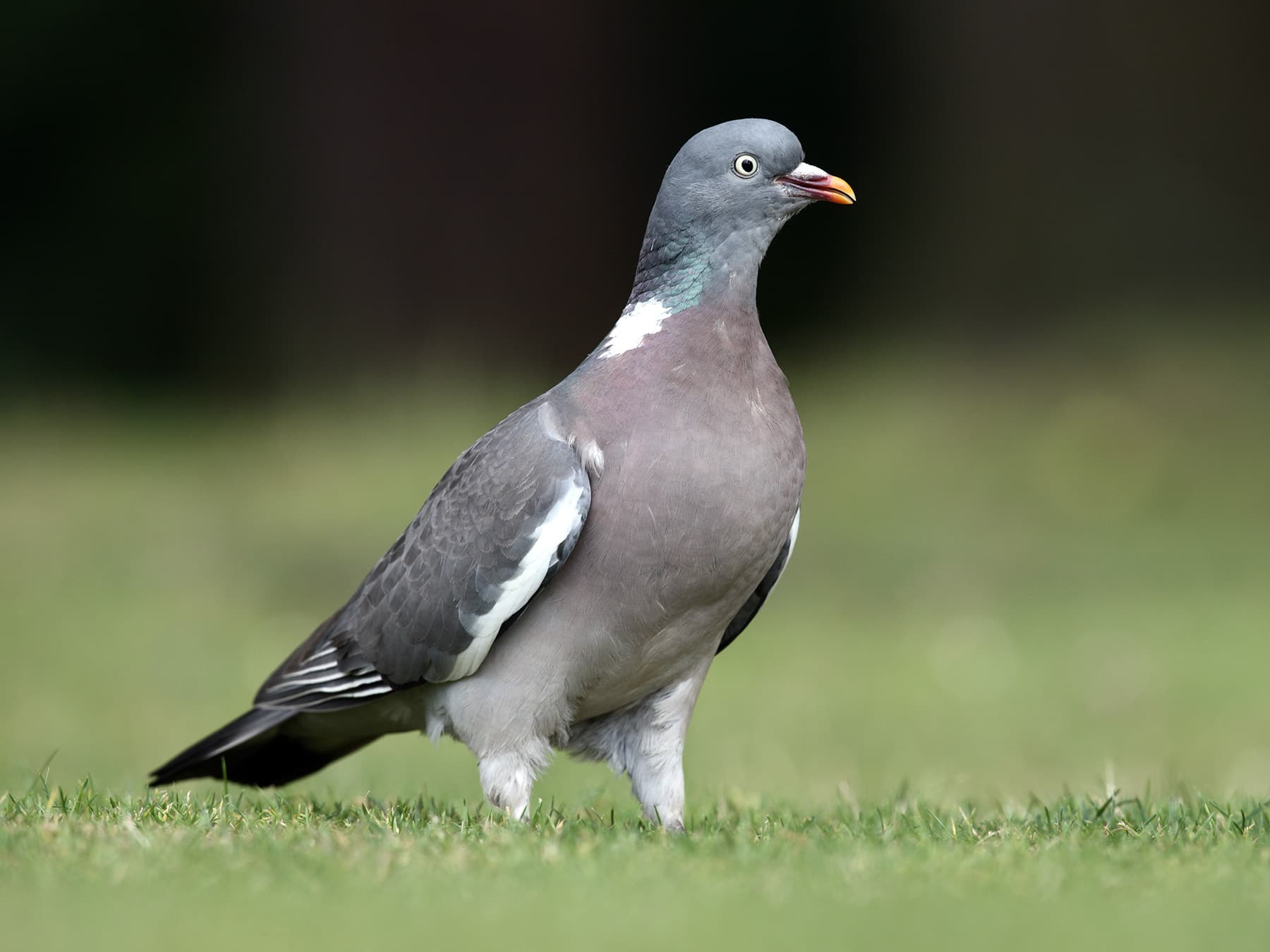
Mostly plants. No study we read looked at lawns, but in the Irish crop samples clover leaves, weeds such as chickweed, and grass were all common foods, and all grow in lawns. Clover was especially important in summer and autumn.1
Farm crops
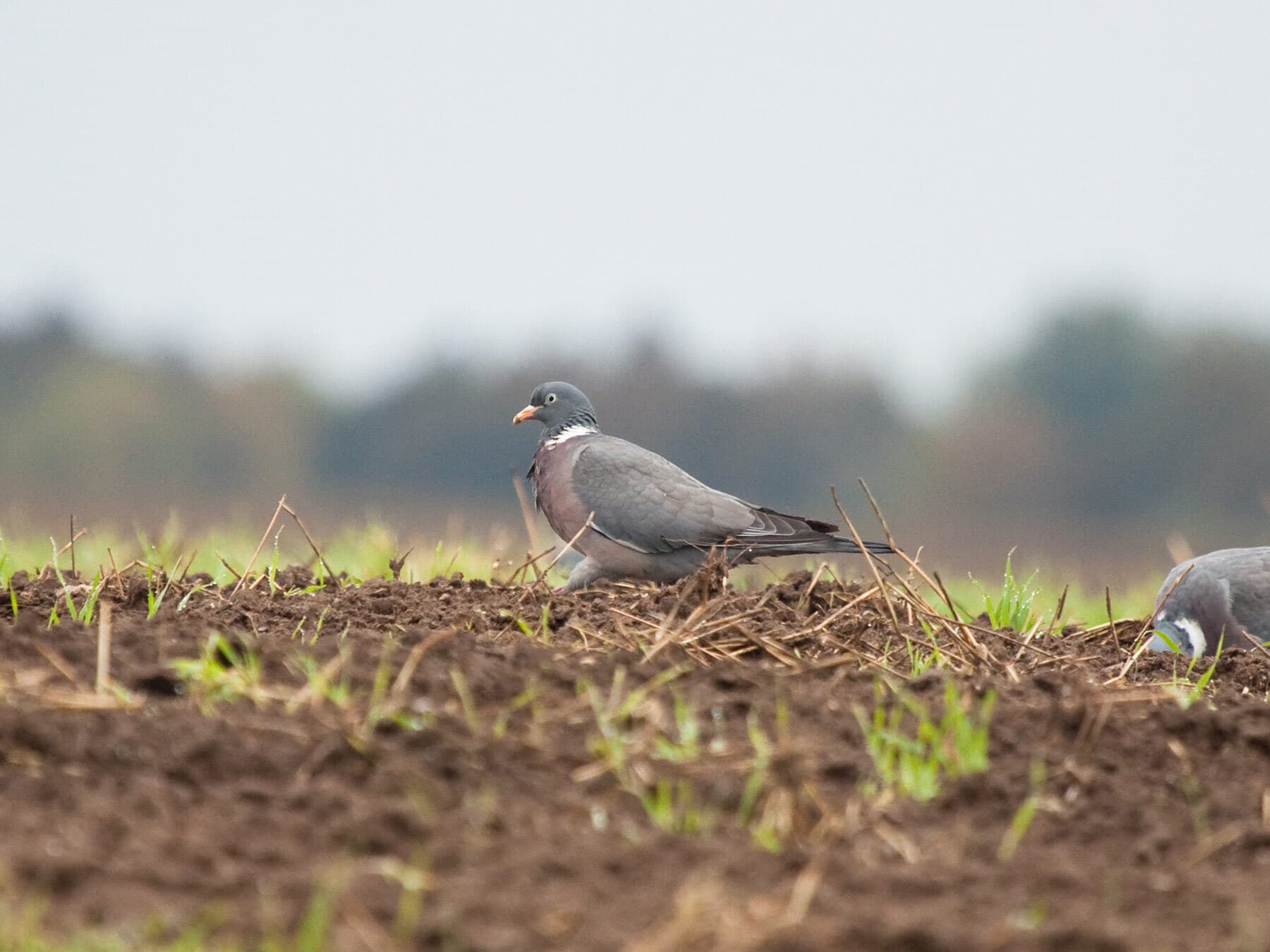
Flocks of many thousands can gather on farm crops and can damage them, oilseed rape above all, and Birds of the World notes that the bird is regarded as a pest in some countries where large flocks damage brassica crops.2 In Sweden as many as 107 crop species have been found in its winter food.2
Farming has shaped Woodpigeon numbers. In an East Anglian study from 1961 to 1986, winter numbers fell from the early 1960s to the early 1970s, when clover leys were being cut back, and rose again after oilseed rape came in in the mid 1970s.3 A Cambridgeshire study found winter numbers were set by the area of oilseed rape, and there is some evidence that winter cereals and rape lie behind the long-term rise in Woodpigeons.4
Insects, snails and slugs
Woodpigeons occasionally eat earthworms, slugs, snails, beetles, spiders and other small animals, but these are a tiny part of the diet.2 In Ireland animal food, mostly snails, peaked in summer: it turned up in over 27% of summer crops and 42% in July, at the peak of the breeding season. The authors suggest the snails may supply calcium for eggshells. Mealworms are not among the foods recorded in the studies we read.
Food for the chicks
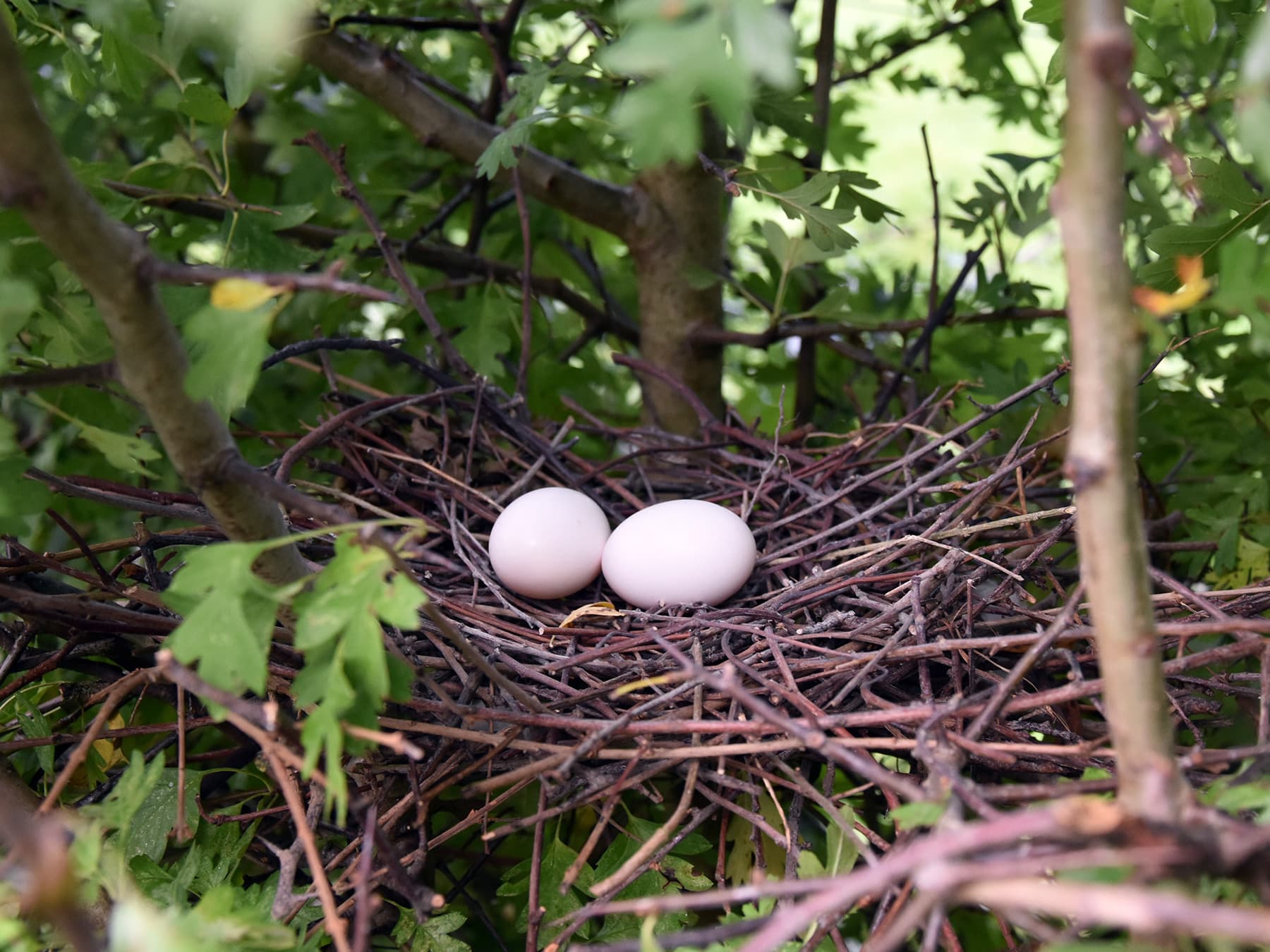
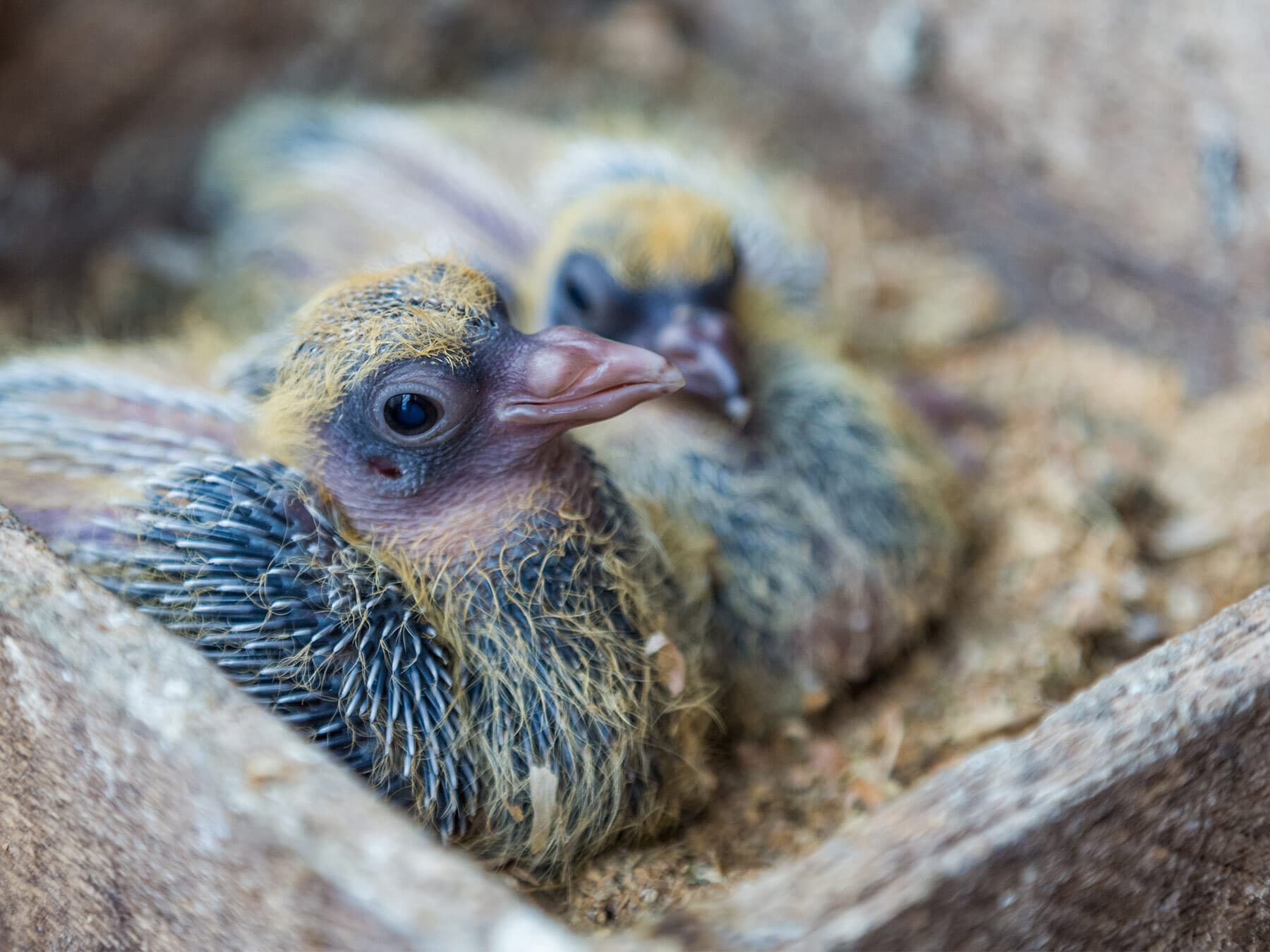
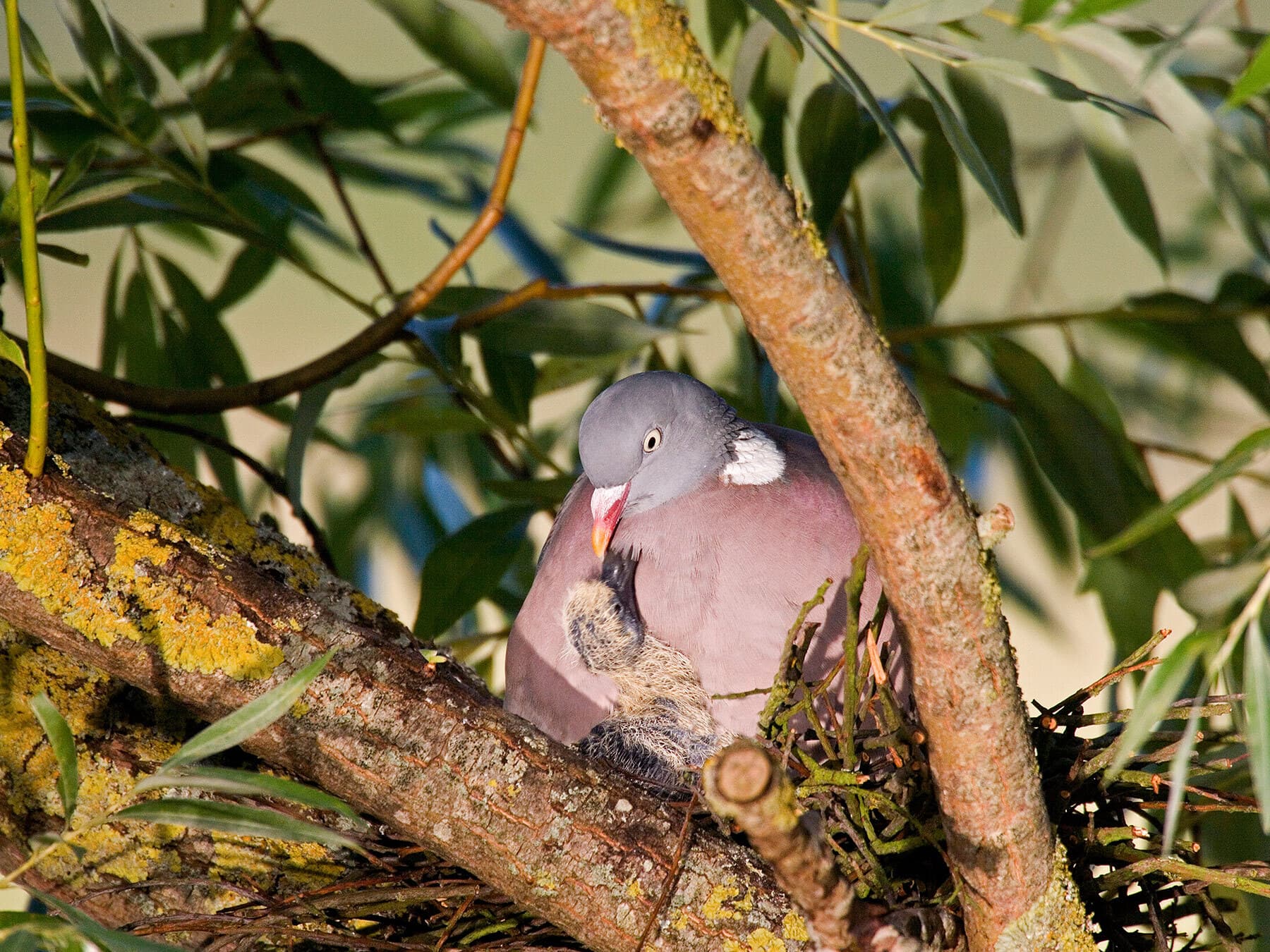
Baby Woodpigeons are fed on crop milk at first. Like all pigeons and doves, the parents make a nourishing "milk" in their crop under the control of the hormone prolactin and bring it up into the chicks' bills.5 See Woodpigeon nesting.
Feeding them in your garden
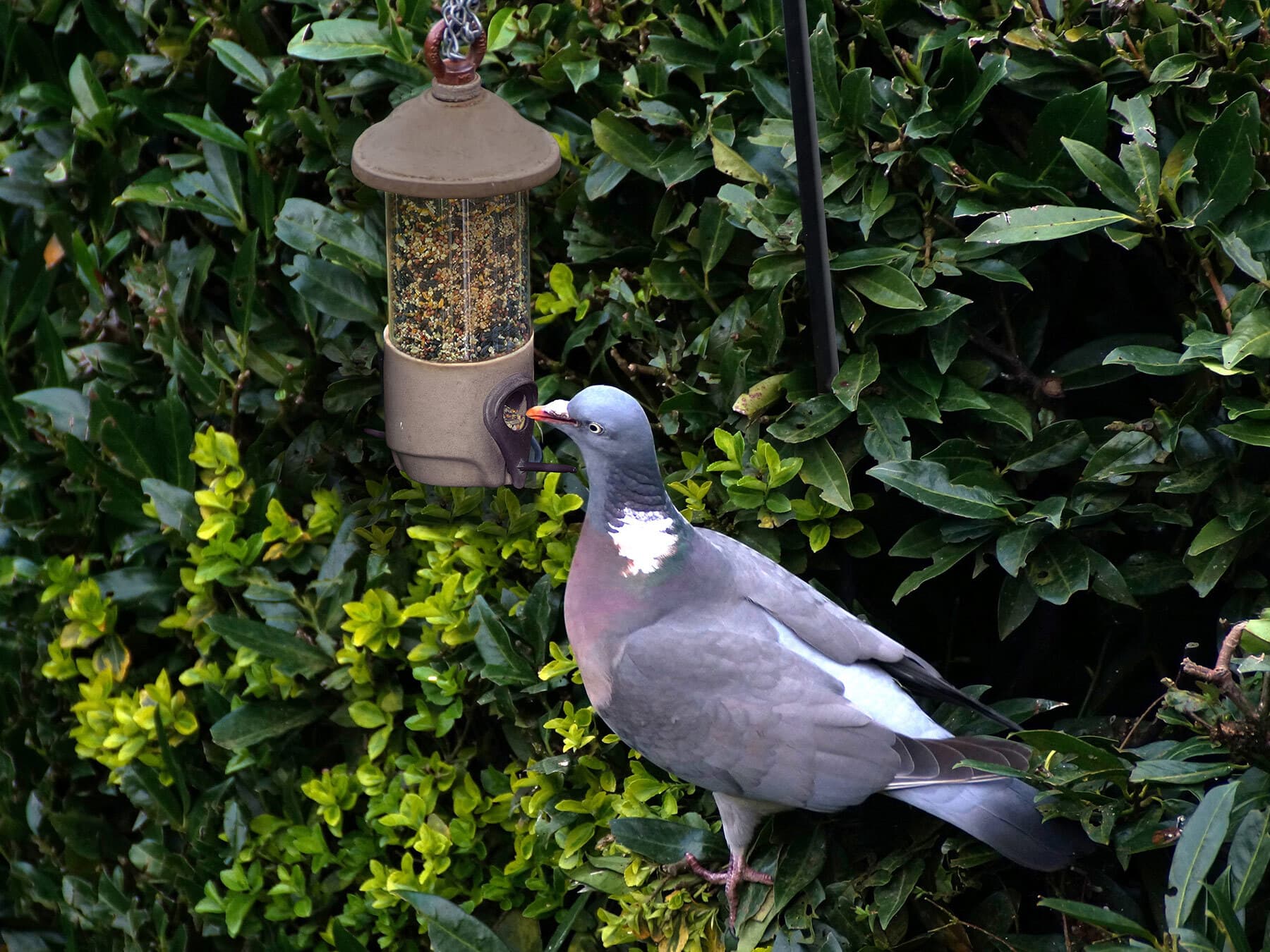
Woodpigeons feed mostly on the ground but also in trees,2 and more of them now feed in gardens than in the past.4 No source we read names a feeder food for them.
If you feed birds, follow the RSPB's current advice to slow the spread of disease such as trichomonosis: from 1 May to 31 October pause seeds and peanuts, putting out only small amounts of mealworms, fat balls or suet; use hanging feeders rather than flat surfaces such as bird tables, trays and window feeders; clean feeders every week; and put out fresh water every day.6
Sources
- Ó hUallacháin, D., Dunne, J. (2013). Seasonal variation in the diet and food preference of the Woodpigeon Columba palumbus in Ireland. Bird Study 60: 417-422. doi:10.1080/00063657.2013.798259
- Baptista, L. F., Trail, P. W., Horblit, H. M., Boesman, P. F. D., Garcia, E., Perlman, Y. (2025). Common Wood-Pigeon (Columba palumbus), version 1.1. Birds of the World (J. del Hoyo, A. Elliott, J. Sargatal, D. A. Christie, E. de Juana and M. G. Smith, editors). Cornell Lab of Ornithology. doi:10.2173/bow.cowpig1.01.1
- Inglis, I. R., Isaacson, A. J., Thearle, R. J. P., Westwood, N. J. (1990). The effects of changing agricultural practice upon Woodpigeon Columba palumbus numbers. Ibis 132(2): 262-272. doi:10.1111/j.1474-919x.1990.tb01044.x
- BTO. Woodpigeon (Columba palumbus). BTO BirdFacts. Accessed 8 October 2026. Source
- Horseman, N. D., Buntin, J. D. (1995). Regulation of pigeon cropmilk secretion and parental behaviors by prolactin. Annual Review of Nutrition 15: 213-238. doi:10.1146/annurev.nu.15.070195.001241
- RSPB (2026). Our latest guidance on feeding garden birds. RSPB news. Accessed 8 October 2026. Source