


Ivory-billed Woodpecker
Lord God Bird, Grail Bird · Campephilus principalis
By the Birdfact teamChecked by Nathan Cope
On this page13 sections
How to recognise it
What do Ivory-billed Woodpeckers look like?
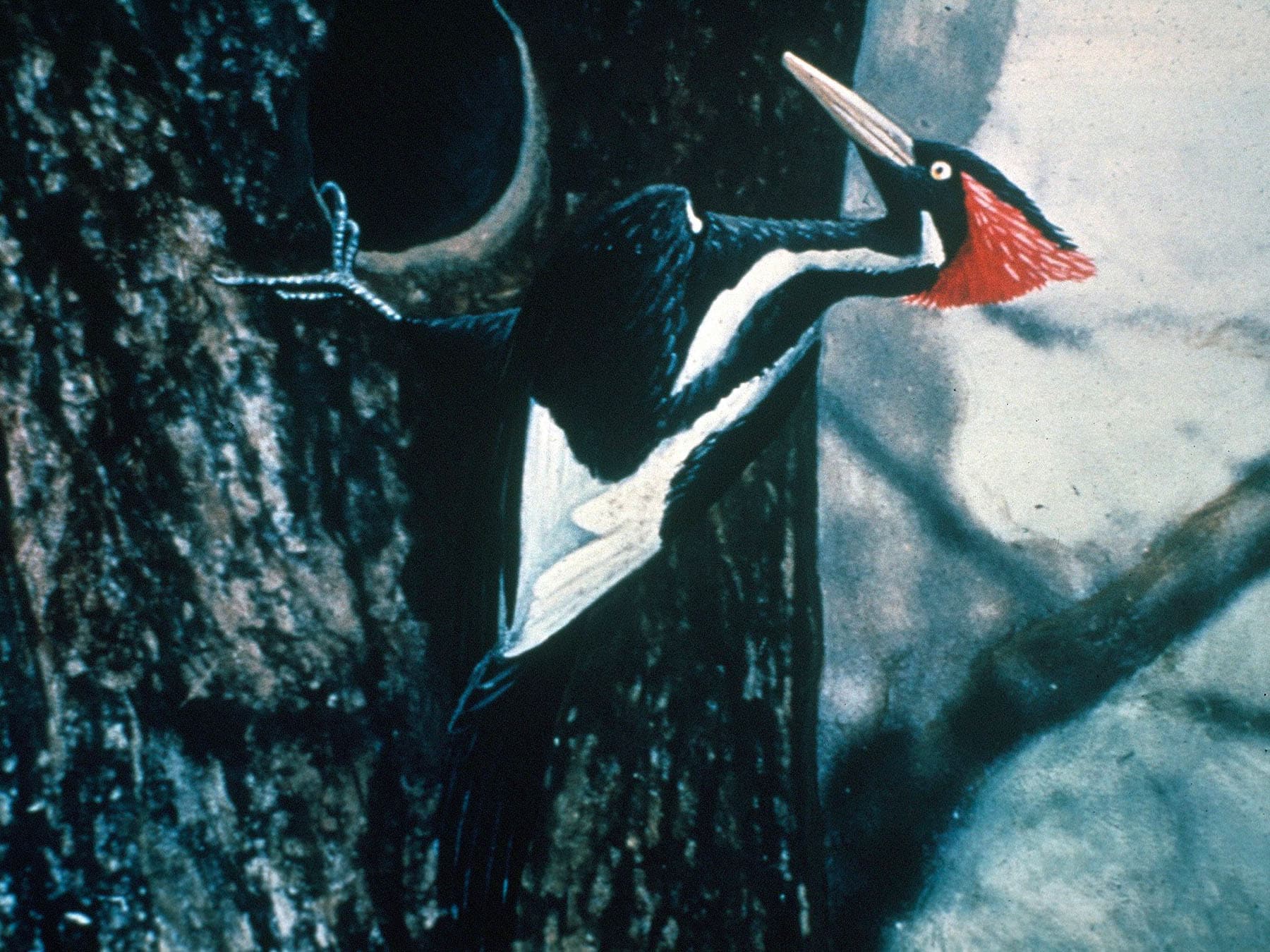
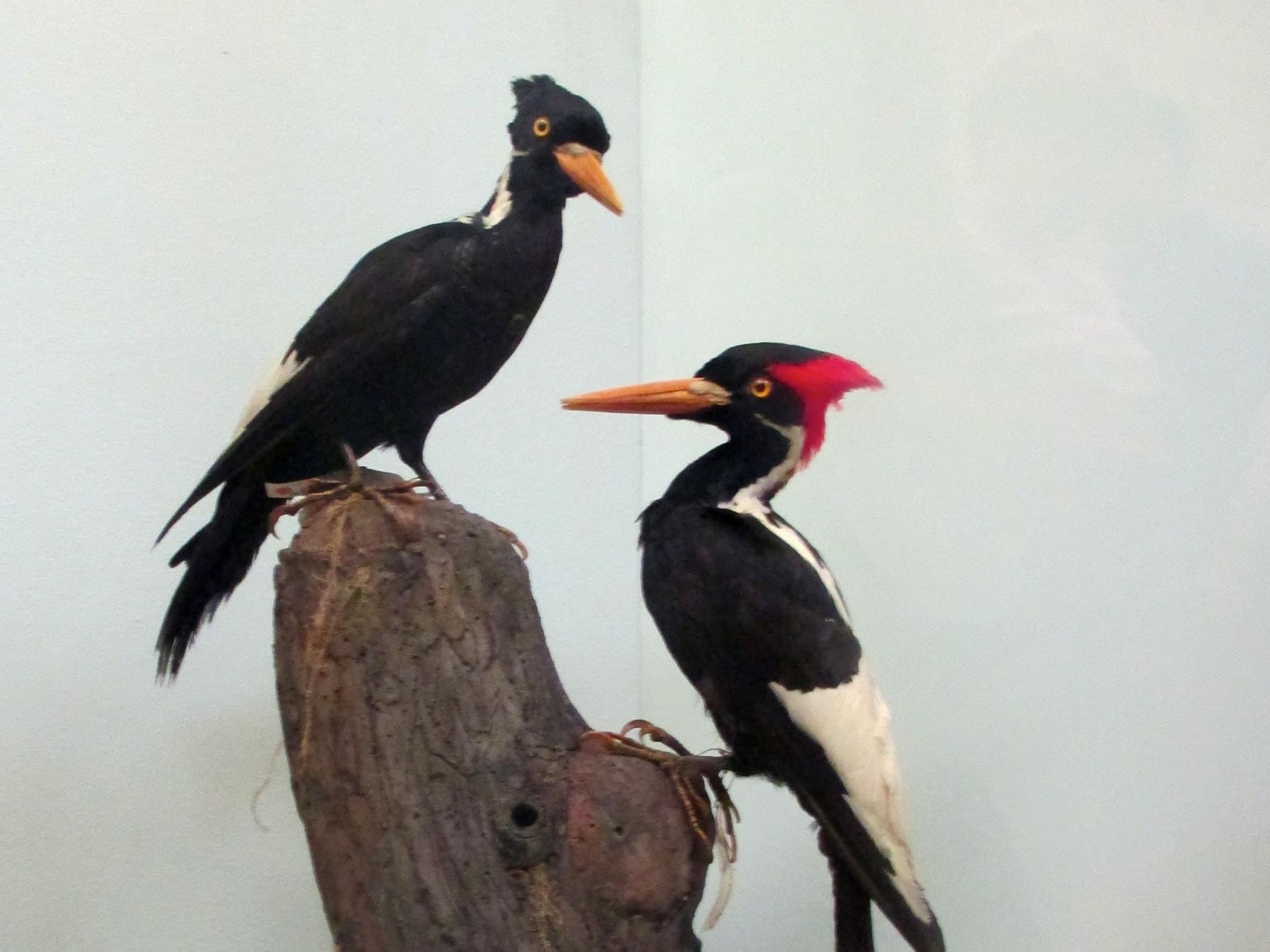
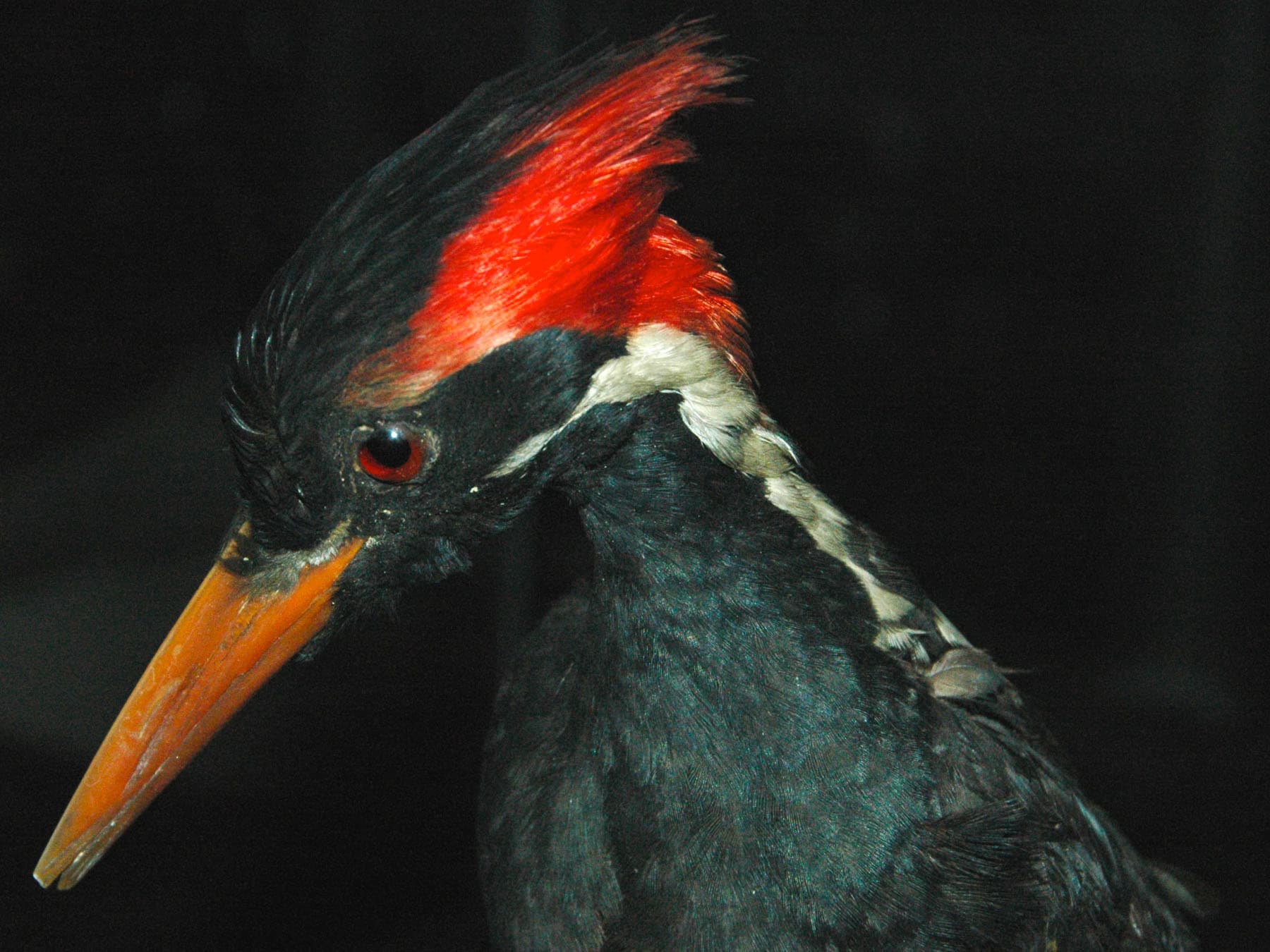
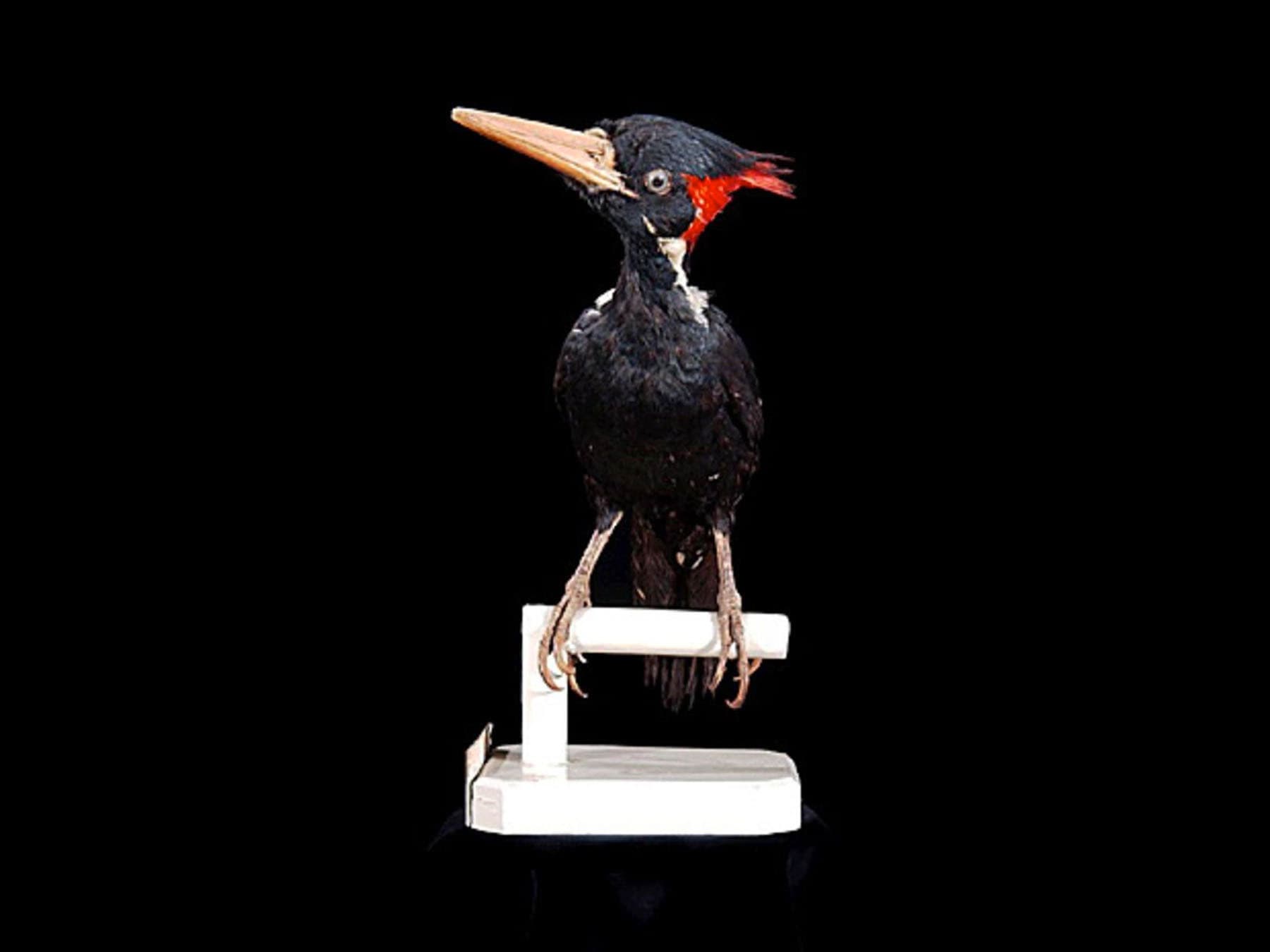
Ivory-billed Woodpeckers are very large and visually striking birds with long, ivory-colored bills and pale yellow eyes. They are primarily black but have a white stripe from the side of their face to their wing. Extensive white plumage is visible above and below their wings, at rest, and in flight.
Females appear similar to males but are easily identified by the color of their crest. Males have red crests that extend from the crown to the nape, while females have black crowns. Juveniles appear similar to adult females, with black rather than red crests.
The Ivory-billed Woodpecker is most likely to be confused with the common and widespread Pileated Woodpecker. However, Pileated Woodpeckers are just half their weight, have white stripes above the eye and below the bill, and have much less white plumage on their wings. These smaller birds also have dark bills and eyes.
(Main image credit: Original photo by Arthur A. Allen, 1935 [1], watercolored by Jerry A. Payne, USDA-ARS, CC BY 3.0 US)
How big were Ivory-billed Woodpeckers?
Ivory-bills were very large woodpeckers, even bigger than the common Pileated Woodpecker. They were one of the biggest members of the Picidae family in the world.
Length
Adults measured approximately 18 to 21 inches or 46 to 53 centimeters in length.
Weight
These birds were known to exceed a pound in weight, reaching about 16 to 20 ounces.
Wingspan
Ivory-billed Woodpeckers had a wingspan of approximately 30 inches or 76 centimeters.
Its size
Adults- Length
- 48–53 cm
- Wingspan
- 76–80 cm
- Weight
- 450–570 g
Its song and calls
What sound did an Ivory-billed Woodpecker make?
Ivory-billed Woodpeckers were said to produce a soft, trumpet-like ‘Kent’ call and drum on wood to communicate.
When and where to see it
What was the habitat of an Ivory-billed Woodpecker?
Ivory-billed Woodpeckers inhabited extensive bottom-land hardwood and upland pine forests with large mature trees. They were particularly attracted to areas affected by flooding, storms, or fires with plenty of dead trees to forage in.
What was the range of an Ivory-billed Woodpecker?
Ivory-billed Woodpeckers were restricted to the United States and Cuba. They were known or suspected to occur in the following US states:
- Texas
- Louisiana
- Kentucky
- Illinois
- Ohio
- Indiana
- Oklahoma
- Alabama
- Georgia
- Florida
- South Carolina
- North Carolina
Where did Ivory-billed Woodpeckers live?
Ivory-billed Woodpeckers were forest birds that foraged, nested, and roosted in trees. They were said to be somewhat nomadic, moving from area to area in search of dead and decaying trees which attracted the beetles they fed on.
How rare were Ivory-billed Woodpeckers?
Ivory-billed Woodpeckers probably occurred naturally in low numbers, but they became increasingly rare as they were hunted and their forest habitat was destroyed by logging. Their range had already contracted considerably by the start of the twentieth century.
Where could you see Ivory-billed Woodpeckers in the US?
Ivory-billed Woodpeckers could be seen in forested areas of the American Southeast up until the early 1900s. Today, taxidermy specimens are still displayed at various museums.
Migration
Did Ivory-billed Woodpeckers migrate?
Ivory-billed Woodpeckers were not known to migrate. They probably remained within the same areas during all months of the year when food supplies were good but may have moved nomadically in search of prime foraging grounds.
Were Ivory-billed Woodpeckers native to the US?
Ivory-billed Woodpeckers were a native species in the United States.
Tips for seeing it
- Look for large, freshly stripped areas on dead trees, a sign of foraging activity
- Listen for loud, distinctive double-rap drumming sounds
- Search in mature, undisturbed bottomland forests
- Be extremely cautious and respectful, as any sightings could be of critical importance
- The Ivory-billed Woodpecker is most likely confused with the widespread Pileated Woodpecker. However, Pileated Woodpeckers are just half their weight, have white stripes above the eye and below the bill, and have much less white plumage on their wings. These smaller birds also have dark bills and eyes.
What it eats
What did Ivory-billed Woodpeckers eat?
Ivory-billed Woodpeckers fed on insects, especially the larvae of wood-boring beetles that live in dead trees. They also ate plant material like nuts and berries.
What did Ivory-billed Woodpecker chicks eat?
Ivory-billed Woodpeckers probably fed their chicks a similar diet to their own. Large beetle larvae were a likely food source.
Nesting and breeding
Where did Ivory-billed Woodpeckers nest?
Ivory-billed Woodpeckers probably nested throughout their former range in the American Southeast and Cuba. They were cavity nesters that excavated their nest tunnels in dead trees or those infected by fungus. They nested in many tree species, often in swampy areas.
When did Ivory-billed Woodpeckers nest?
Ivory-billed Woodpeckers began nesting in late winter, with records between February and May.
What did Ivory-billed Woodpecker eggs look like?
Ivory-billed Woodpeckers laid up to six large plain white eggs, each measuring about 35 millimeters long and 25 millimeters wide.
Did Ivory-billed Woodpeckers mate for life?
Ivory-billed Woodpeckers were thought to form long-term pair bonds and may well have mated for life.
Behaviour
Were Ivory-billed Woodpeckers aggressive?
Ivory-billed Woodpeckers were not particularly aggressive birds and were said to be fairly social, allowing other individuals or pairs to forage nearby.
Where did Ivory-billed Woodpeckers sleep at night?
Like many other members of their family, Ivory-billed Woodpeckers roosted in tree cavities that they excavated for that purpose. Males would also sleep on the eggs at night when nesting.
Lifespan and predators
What were the predators of Ivory-billed Woodpeckers?
Humans were a major predator of the Ivory-billed Woodpecker, and they were likely also preyed upon by large birds of prey like the Great-horned Owl. Their eggs and young may have been vulnerable to snakes and raccoons.
Were Ivory-billed Woodpeckers protected?
Ivory-billed Woodpeckers were protected and listed as an endangered species in the United States as early as 1967. They are still federally protected by the Endangered Species Act and the Migratory Bird Treaty Act.
When did Ivory-billed Woodpeckers become extinct?
Ivory-billed Woodpeckers are not officially extinct, according to the International Union for Conservation of Nature. However, the last confirmed sighting in the USA was way back in 1944 in Louisiana, and the last sighting of the Cuban subspecies was in the late 1980s. Excluding more recent reports, the species may have been extinct in the United States for over half a century.
Conservation
The Ivory-billed Woodpecker is considered critically endangered and possibly extinct. Extensive habitat loss and historical hunting have decimated populations.
Despite occasional reported sightings, no conclusive evidence of living individuals has been documented since the 1940s. Conservation efforts focus on habitat protection and continued searches.
Similar birds
Often mistaken for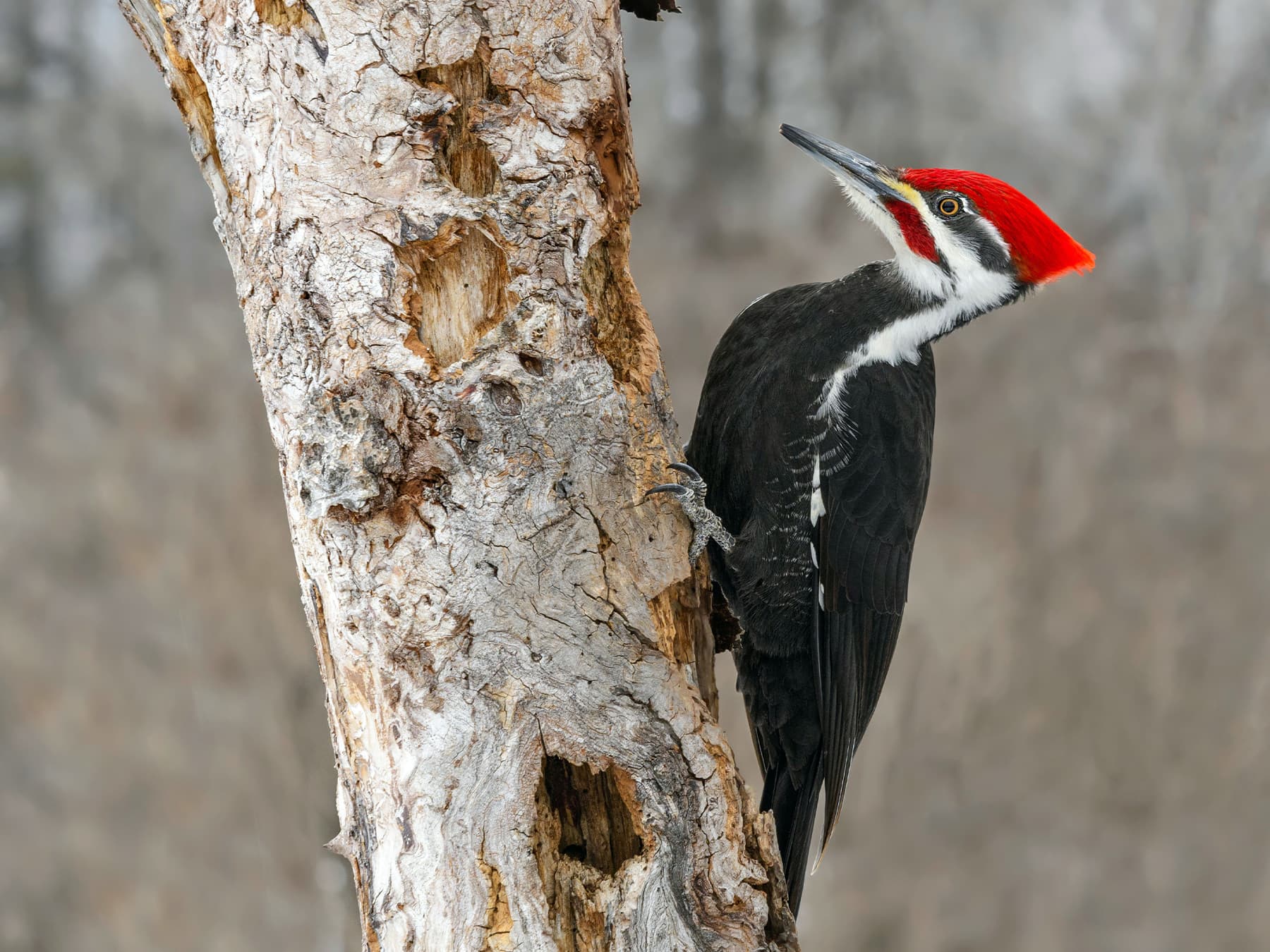
Quick facts
- Length
- 48–53 cm
- Wingspan
- 76–80 cm
- Weight
- 450–570 g
- Lifespan
- 15–20 years
- Family
- Woodpeckers
- Migration
- Resident
- Global status (IUCN)
- Critically Endangered
- World population
- 1 - 49 mature individuals
- Population trend
- Unknown
- Also called
- Lord God Bird, Grail Bird
- Scientific name
- Campephilus principalis
Questions
4Is there a reward if you find an Ivory-billed Woodpecker?
Finding the critically endangered or extinct Ivory-billed Woodpecker alive and well would be rewarding enough for most birdwatchers, but various rewards have been offered to assist in finding and leading scientists to these birds. At one point, there was even a reward of $50,000 on offer!
What states did the Ivory-billed Woodpecker live in?
Ivory-billed Woodpeckers lived in the Southeast from Texas to Florida and north to North Carolina. At earlier times, they also extended inland to Illinois.
When was the last time someone saw an Ivory-billed Woodpecker?
Despite the last verified sighting being in 1944, there have been repeated claims of Ivory-billed Woodpecker sightings right up to the present. A 2022 study found some evidence for their continued existence, but concrete proof in the form of high-resolution photographs or footage remains elusive.
Why did people hunt Ivory-billed Woodpeckers?
Ivory-billed Woodpeckers were large birds that were hunted for their food value but also for their desirable eggs and feathers. They were also taken for display in museums and collections.
Sources
2- Conservation statusBirdLife International. 2020. Campephilus principalis. The IUCN Red List of Threatened Species 2020: e.T22681425A182588014. Source (opens in a new tab)
- Population estimateBirdLife International. 2020. Campephilus principalis. The IUCN Red List of Threatened Species 2020: e.T22681425A182588014. Source (opens in a new tab)

Checked by
Nathan Cope, founder and editor
Nathan founded Birdfact and leads its writers and contributors in the UK, the US and Canada. He has watched and studied birds for more than ten years, and checks every article and species guide before it’s published.