Facts · Updated 8 Oct 2026
Are Eagles Dangerous? (Reasons They Attack + How to Avoid)
By the Birdfact teamChecked by Nathan Cope
On this page10 sections

There are over sixty known Eagle species distributed on every continent except Antarctica. These graceful and powerful hunters are among the world’s largest birds of prey, with some reaching weights over fifteen pounds. Eagles have been revered by various cultures across the globe for millennia, but are they really dangerous to human beings?
Most people have little to fear from Eagles. The larger species can certainly inflict severe or even life-threatening injuries on human beings, although this is extremely rare. The only time an Eagle is likely to attack is if trapped, cornered, or when its eggs or chicks are threatened.
Eagles have a reputation for being dangerous, and you only have to look at their powerful talons to see why. However, these birds pose little to no threat to humans if left undisturbed. In fact, these majestic birds have a lot more to fear from us than we do from them.
Eagles can tackle surprisingly large prey, and archeological evidence even suggests that they may have preyed on the children of early hominids like Australopithecus africanus. Even large eagles can rarely take off from flat ground carrying more than about 2 to 3kg (5 to 6lb), so small pets may be hunted opportunistically in rare cases.
This article separates the facts from the fiction about the danger of Eagle attacks.

How eagles defend themselves
Adult Eagles have few natural predators, but they are well-equipped to defend themselves against their enemies.
Flight
Like all birds, an Eagle’s first line of defense is to escape. Golden Eagles, for example, can reach a speed of 80 miles per hour (129 km/h) in level flight.
But what if an Eagle can’t escape its enemy?
Talons
If escape is impossible, an Eagle will face its enemy head-on and defend itself with its claws. To do this, the bird may need to lean back, supported by its tail, or lie on its back, supported by its outstretched wings and with its talons extended.
Eagles have four needle-sharp talons (claws) on each foot, which are their most dangerous weapons. They usually use their talons for capturing and killing their prey, but Eagles will not hesitate to use them in self-defense.
Not only are their talons large (over four inches in the Harpy Eagle), but they are wielded with great force. It’s not easy to measure how strong Eagles are, but estimates put the grip strength of the Bald Eagle at an impressive 300 pounds per square inch.
Beak
Eagles use their talons to keep their heads and other vulnerable body parts out of harm’s way, but they also have a last resort if their claws aren’t enough to deter their attacker. Eagles have large, sharp beaks that are used for killing and eating their prey. Their bills can open skin and cut through flesh, and a bite could cause a serious injury.

When eagles turn aggressive
Eagles prefer to flee rather than fight. However, there are circumstances where they can be aggressive.
Eagles will usually only attack if cornered or trapped and unable to escape. However, they may also act aggressively toward predators and people that approach their nest.
Are eagles aggressive to humans?
Eagles are rarely aggressive toward humans unless provoked. young Bald Eagles have been recorded, so you should always treat these birds with the respect they deserve.
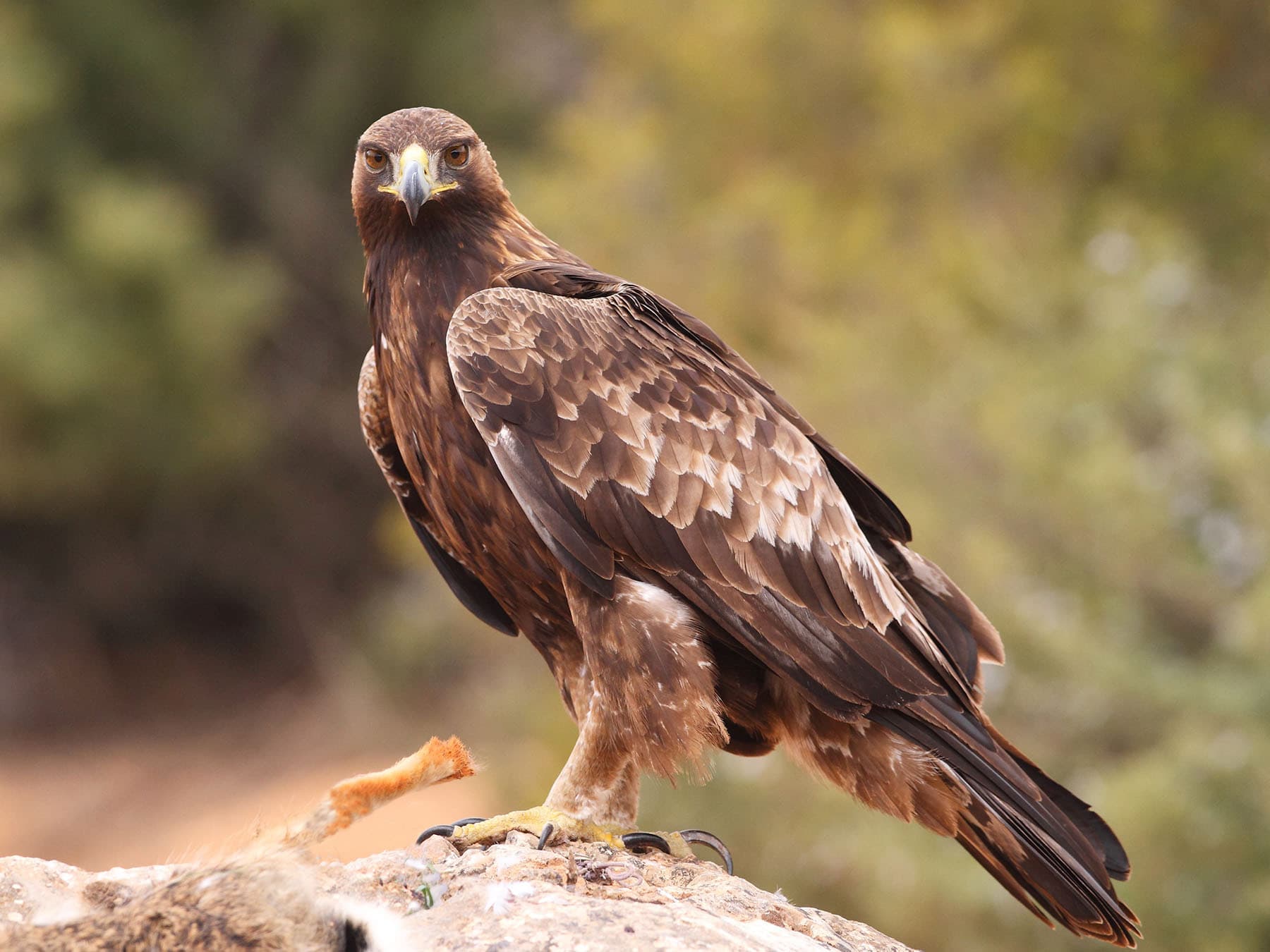
Eagles and other birds
Eagles can be aggressive toward other birds for a variety of reasons.
Predation
Many Eagle species include birds as part of their diet. The American Bald Eagle, for example, regularly feeds on waterfowl, including large species like Snow Geese. Great Blue Herons from time to time.
Nest defense
Sometimes the tables turn, and Eagles must use aggression to defend their eggs and chicks against other birds. The following birds are threats to nesting Eagles in the United States:
- Gulls
- Crows
- Ravens
- Great Horned Owls
Kleptoparasitism
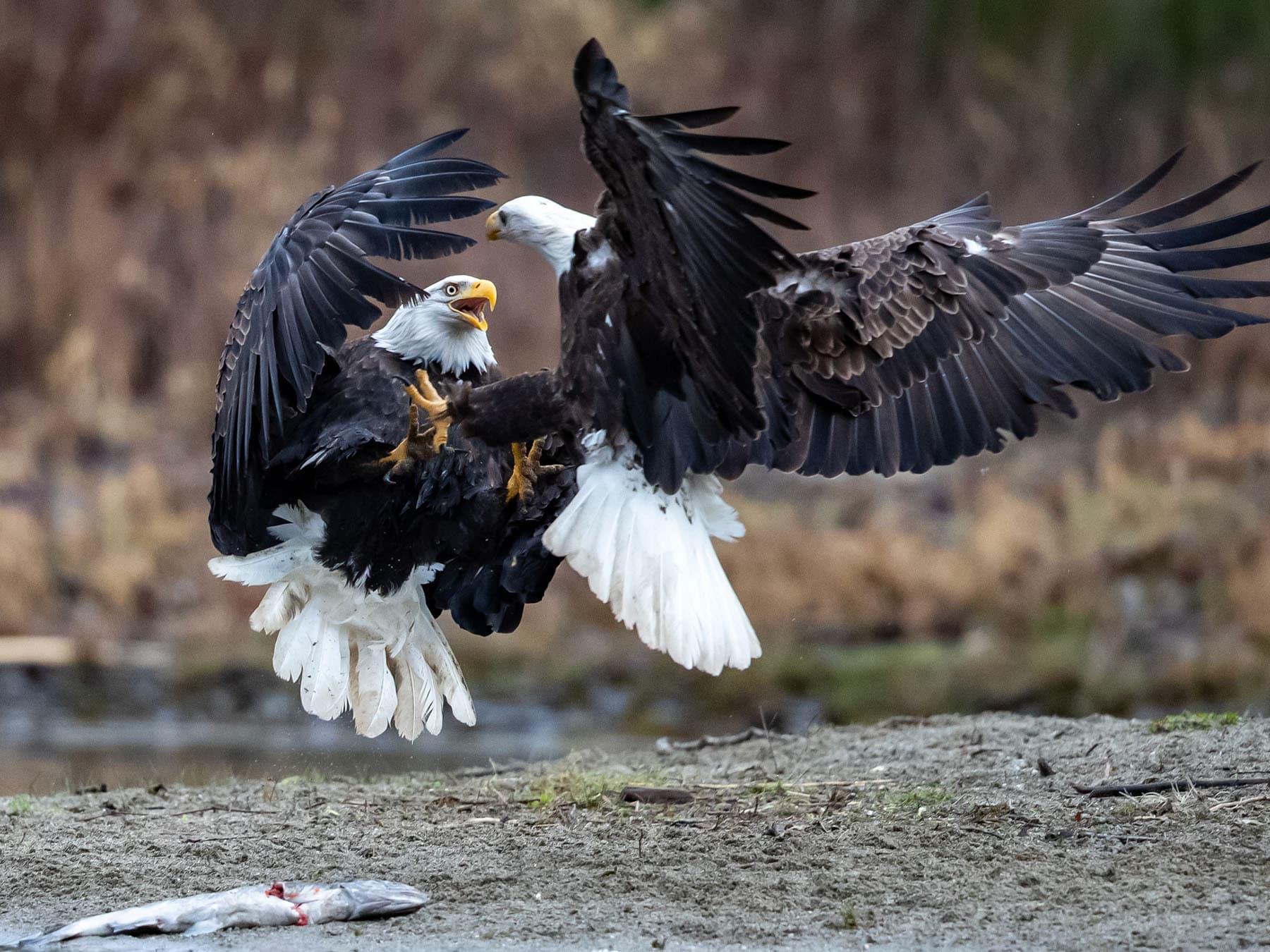
Many Eagles will steal prey from other birds rather than catch their own. Ospreys and Red-tailed Hawks. These aggressive birds will also steal meals from mammals like foxes, otters, and even people.
What should you do if an eagle attacks you?
Eagle attacks are highly unusual, although documented cases prove they are possible. So how could you protect yourself from an Eagle?
The Eagle’s talons are its most deadly weapon, followed by its beak. In the case of an attack, try to cover the bird's eyes with your clothing and make your escape.
Eagles rarely attack without good reason. Stay calm, assess the possible reasons for the attack, and leave the area if the bird is protecting itself or its nest.
Fights
Eagles can be highly territorial, and with such powerful weapons, conflicts can be fatal. They do not usually fight to the death, although they may succumb to their injuries after the fact.
In some cases, Eagles lock their talons in flight and don’t let go until they crash land on the ground below.

What eagles fear
Eagles fear humans and large predatory mammals like wolves and bears, although they are generally fearless around other birds. Healthy Adult Eagles have few predators, although old, sick, or injured individuals are vulnerable to many predators.
Golden Eagle. Some species, like the Booted Eagle of the Old World, are much smaller and have more potential enemies.
Are eagles friendly to humans?
Eagles are usually fearful of humans and will avoid encounters, especially in wilderness areas where they are not accustomed to our presence.
Practitioners of this ancient hunting technique certainly build a close bond with their birds, although calling them friendly might be a stretch.
The most dangerous eagles
While most Eagles pose little danger to humans, many larger species could cause significant injuries if they were to attack. The following species regularly hunt large prey and could severely injure a human being:
- Golden Eagle
- Harpy Eagle
- Philippine Eagle
- Crowned Eagle

FAQs
Has an Eagle ever killed a human?
Eagle attacks are extraordinary occurrences, although a fatal attack on a child in Ethiopia in 2019 was reported in the media. However, people have lived in the same environments as wild Eagles since the dawn of humanity, so such encounters have probably occurred many times.
Can an Eagle crush a human skull?
It is difficult to say just how strong an Eagle's grip strength is, although estimates put their maximum force at around 300 - 400 psi. Eagles are undeniably powerful predators, but they lack the strength and size to crush a human skull.
Can an Eagle pick up a human?
The largest Eagle species are physically capable of carrying a human infant. However, adults and even children are far too heavy for an Eagle to lift or carry.

Do Eagles attack human eyes?
Eagles rarely attack humans and are not known to target our eyes. However, your eyes would be especially vulnerable to injuries in an attack.
Do Eagles attack cats?
The larger Eagle species could tackle adult house cats, although felines are a risky meal. Pet owners have little to fear from Eagles since attacks on pets are very rare.
Do Eagles attack dogs?
Eagles rarely attack dogs, although some large species could take puppies and miniature dog breeds. Canids are not typical Eagle prey, although Mongolian hunters are known for hunting foxes with trained Golden Eagles.
Do Eagles eat human babies?
Eagles are capable of hunting and eating human babies, although this rarely (if ever) happens. Of course, babies should not be left unattended near Eagles or any other wild predators.