


Harpy Eagle
American Harpy Eagle, Royal-hawk · Harpia harpyja
By the Birdfact teamChecked by Nathan Cope
On this page15 sections
How to recognise it
What do Harpy Eagles look like?
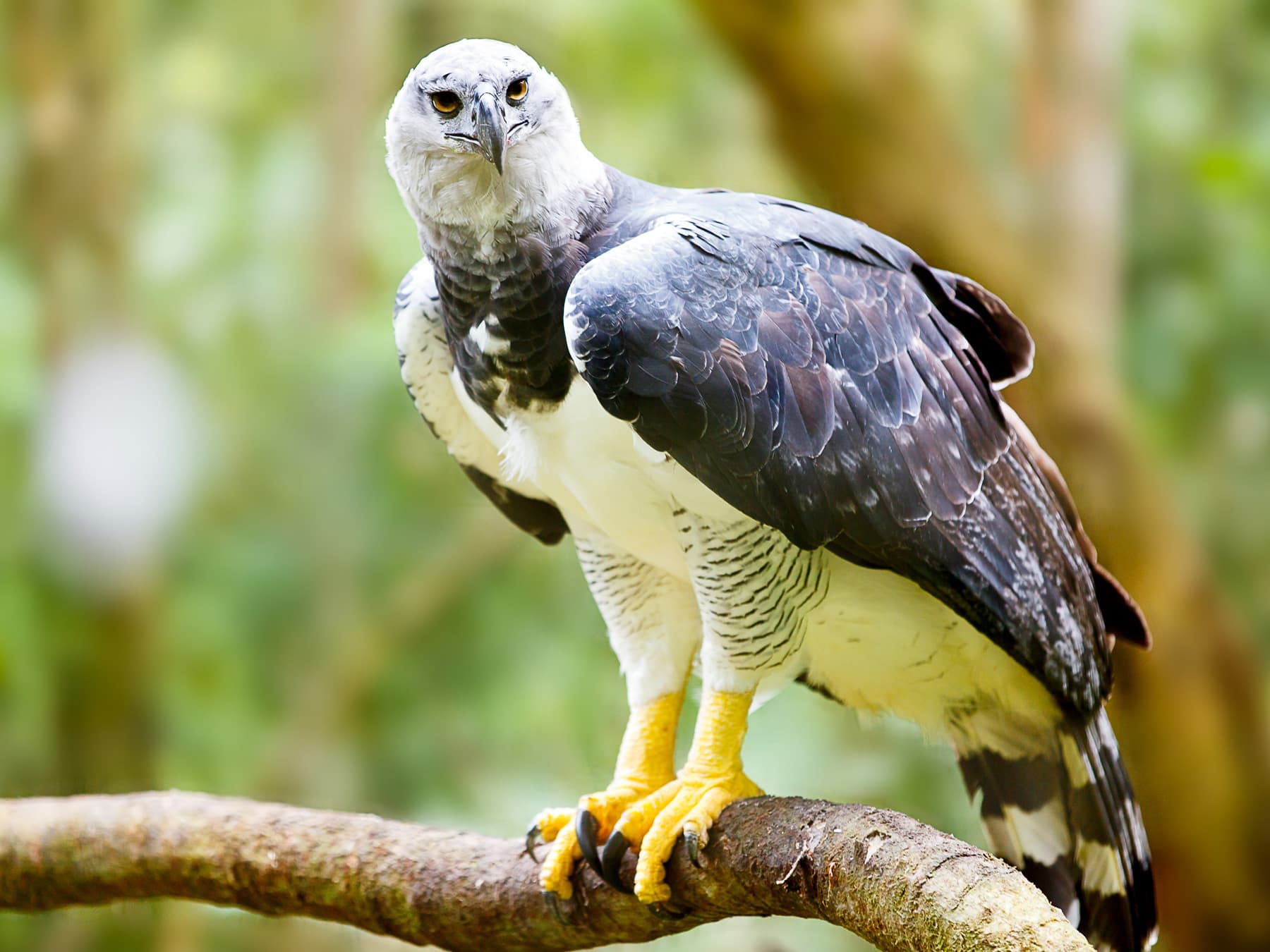
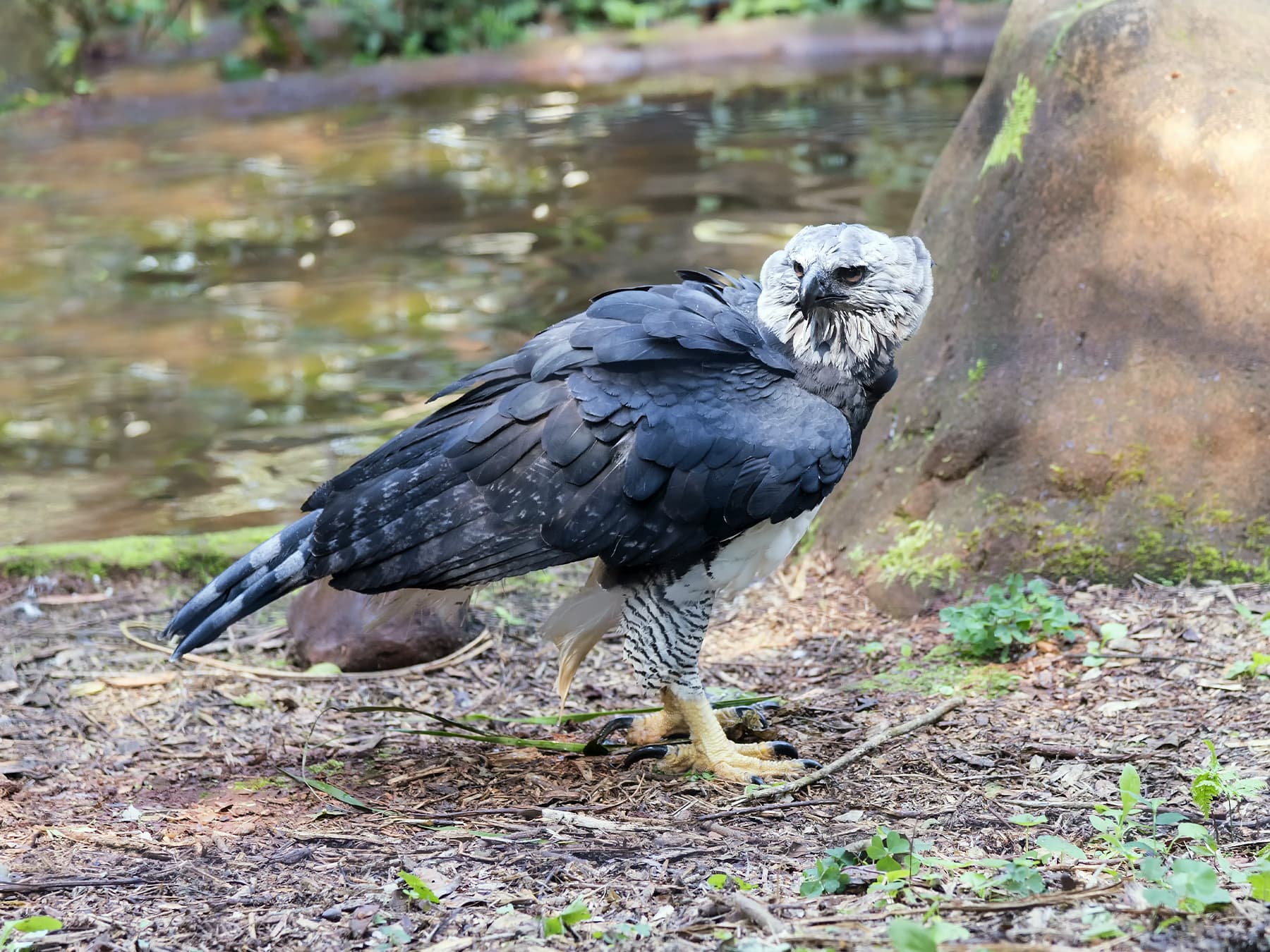
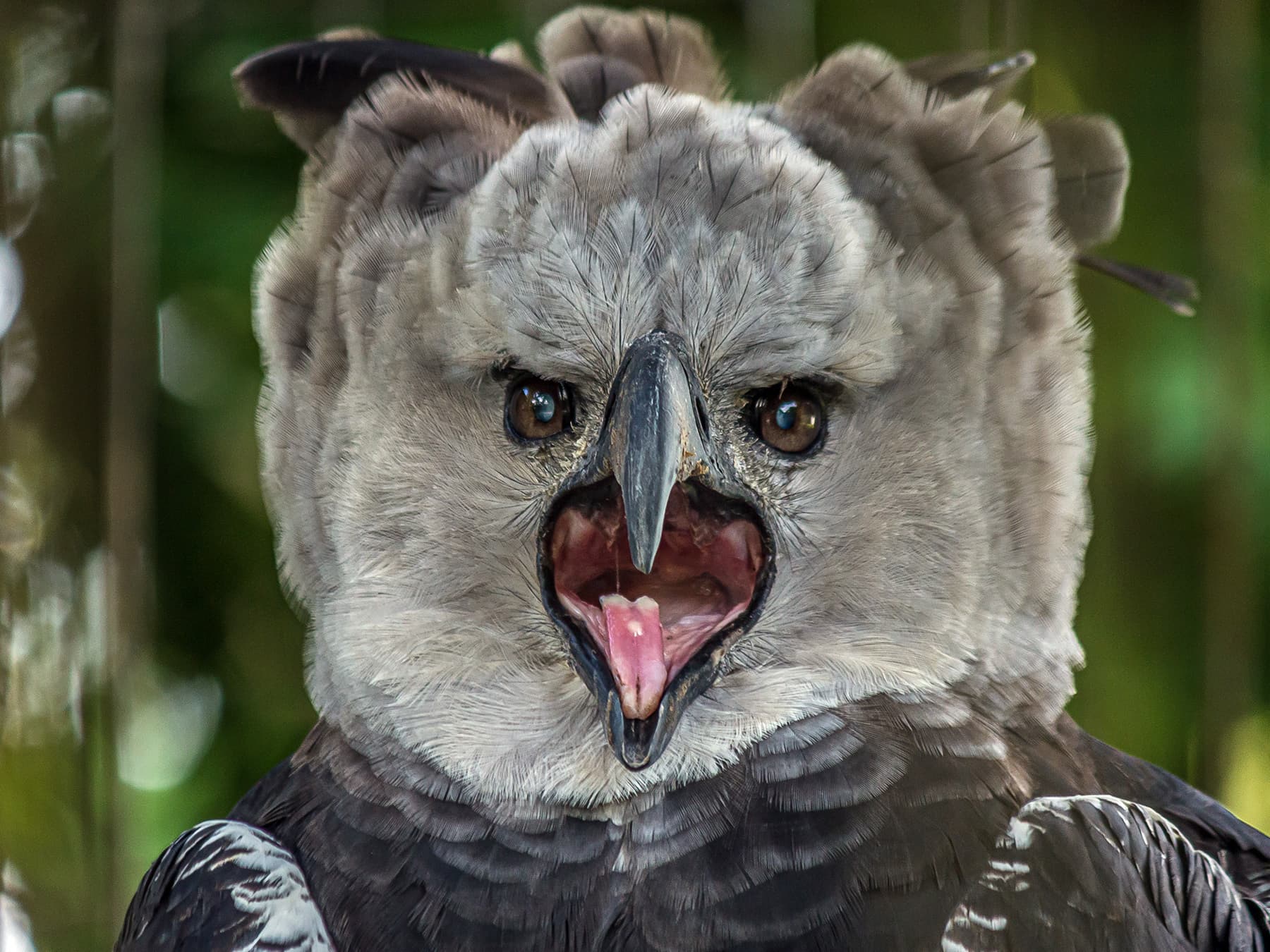
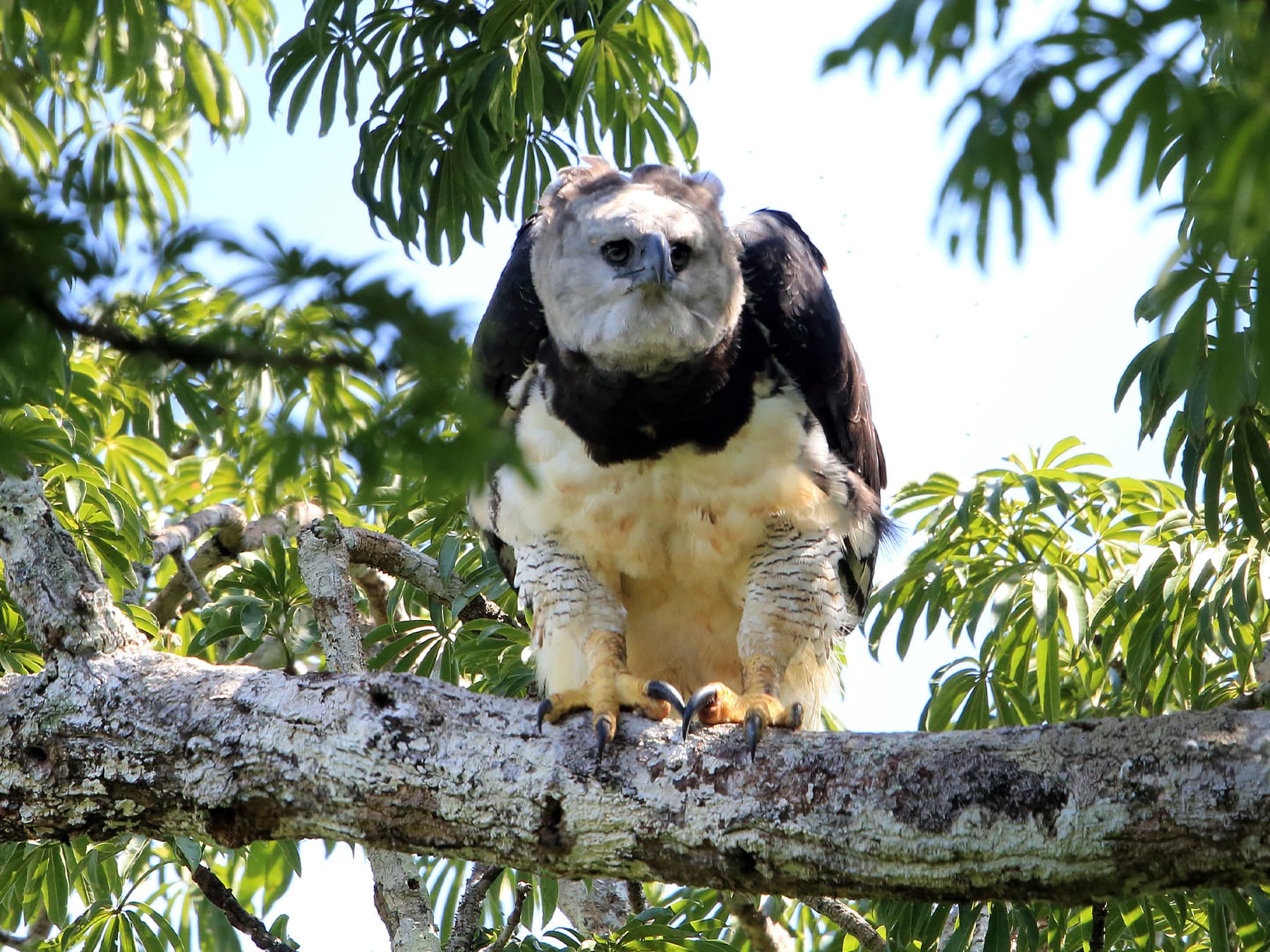
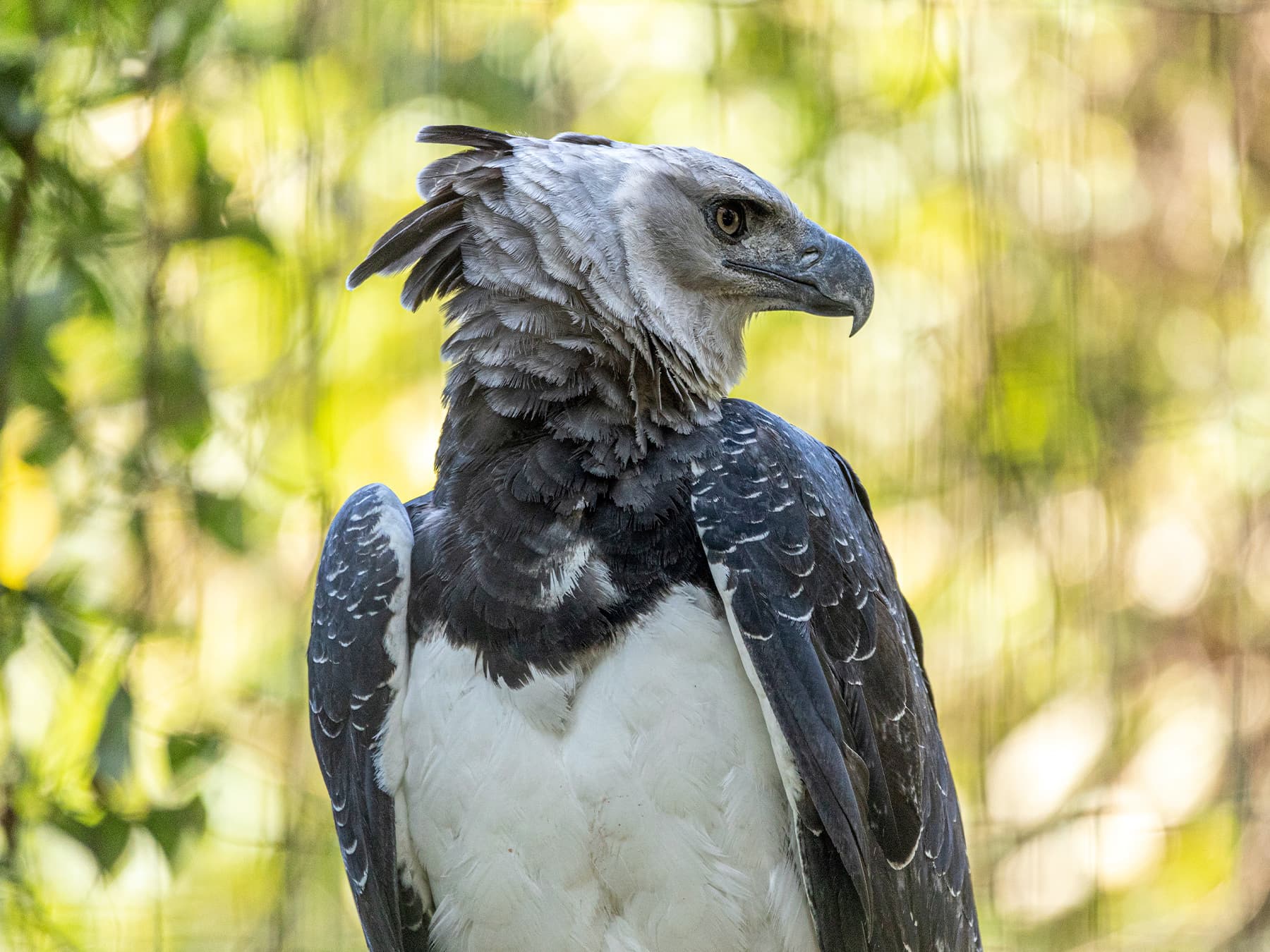
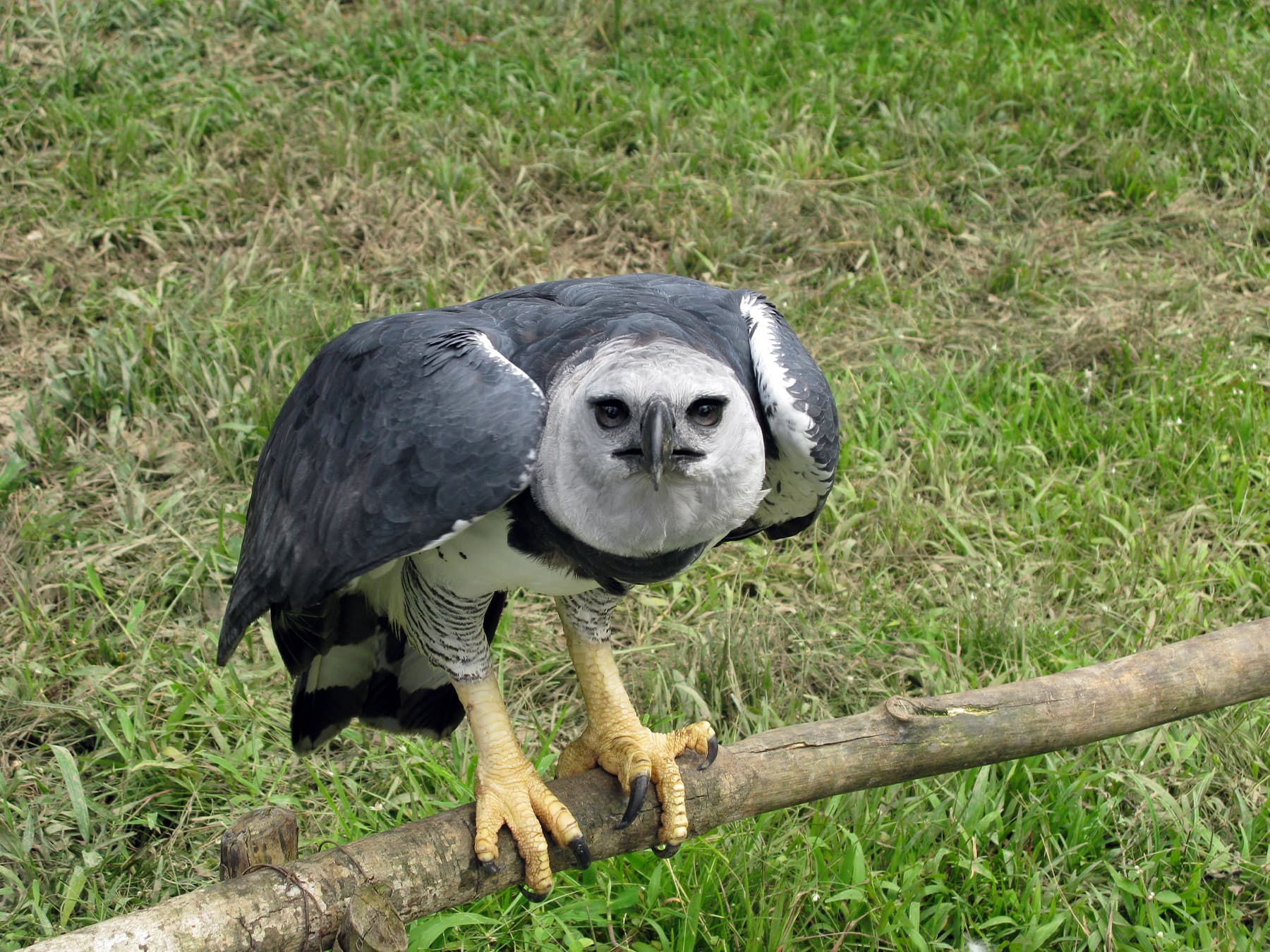
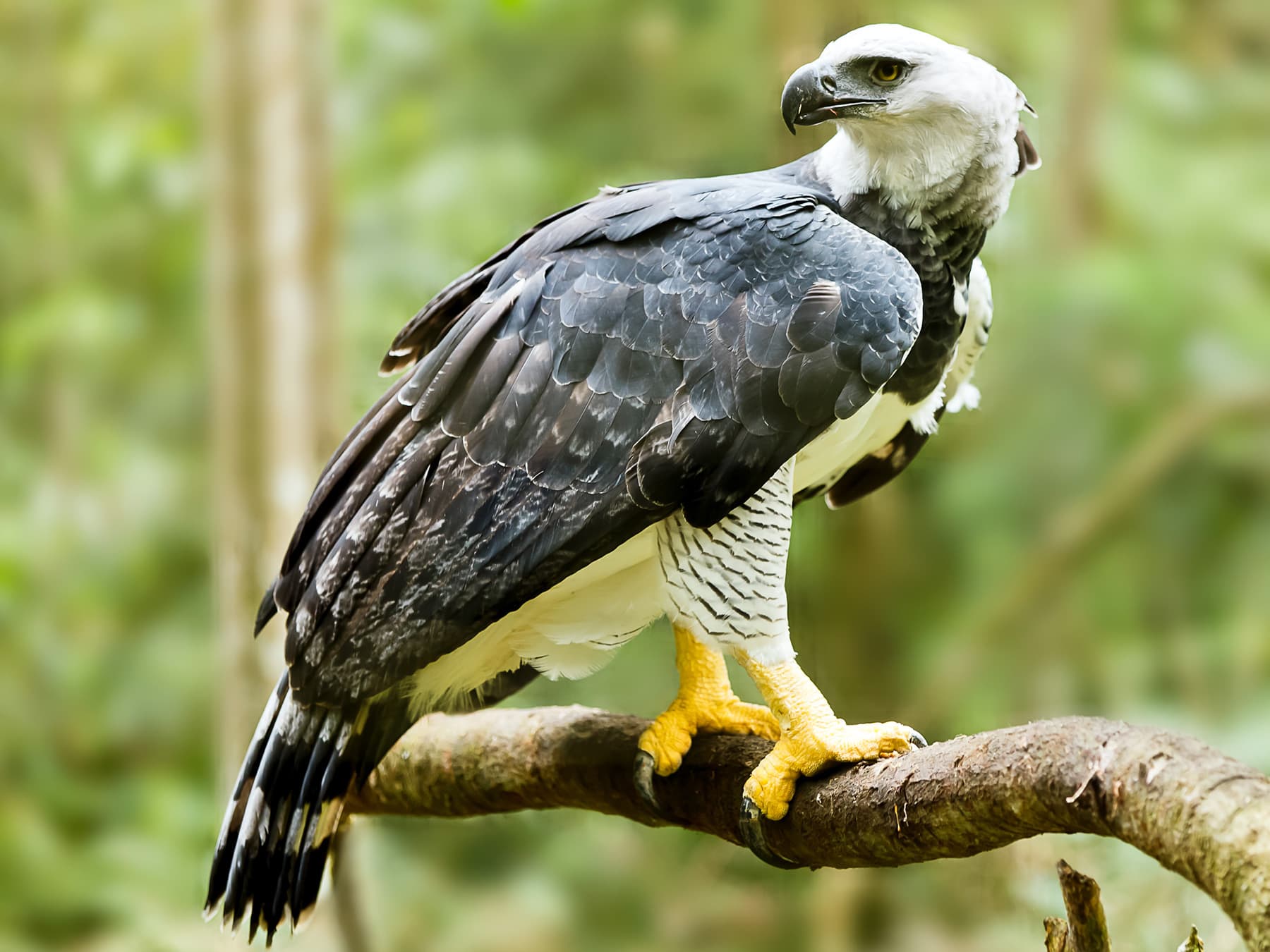
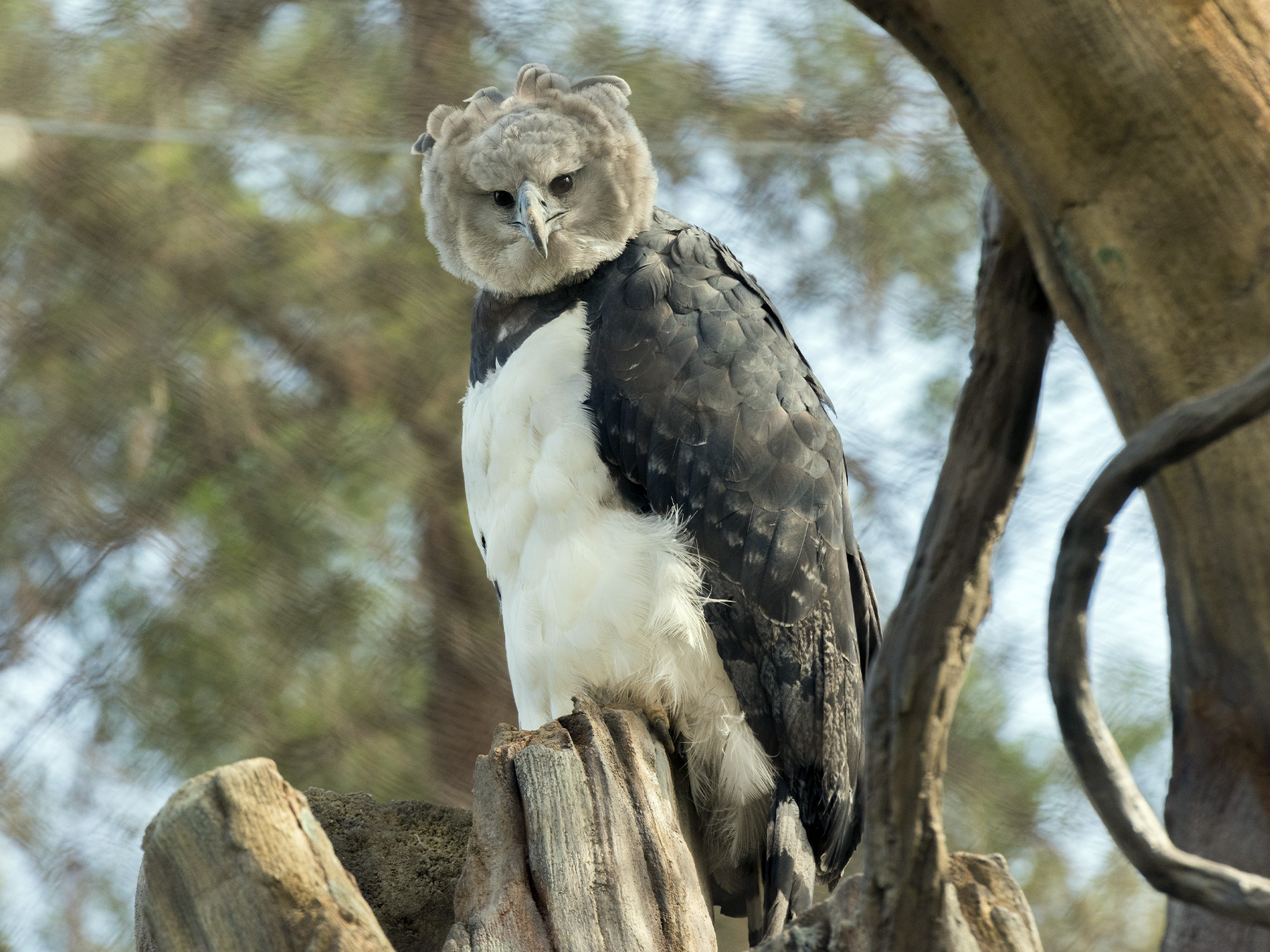
The Harpy Eagle is a massive bird with a long crest that can be raised at will. These birds have heavy, hooked black bills and gray-brown eyes. Their monstrous feet and legs stand out with a bright yellow color, contrasting with their black talons. Harpy Eagles have immense curved talons that can reach lengths of over four inches, that’s as big as a Grizzly Bear’s claws!
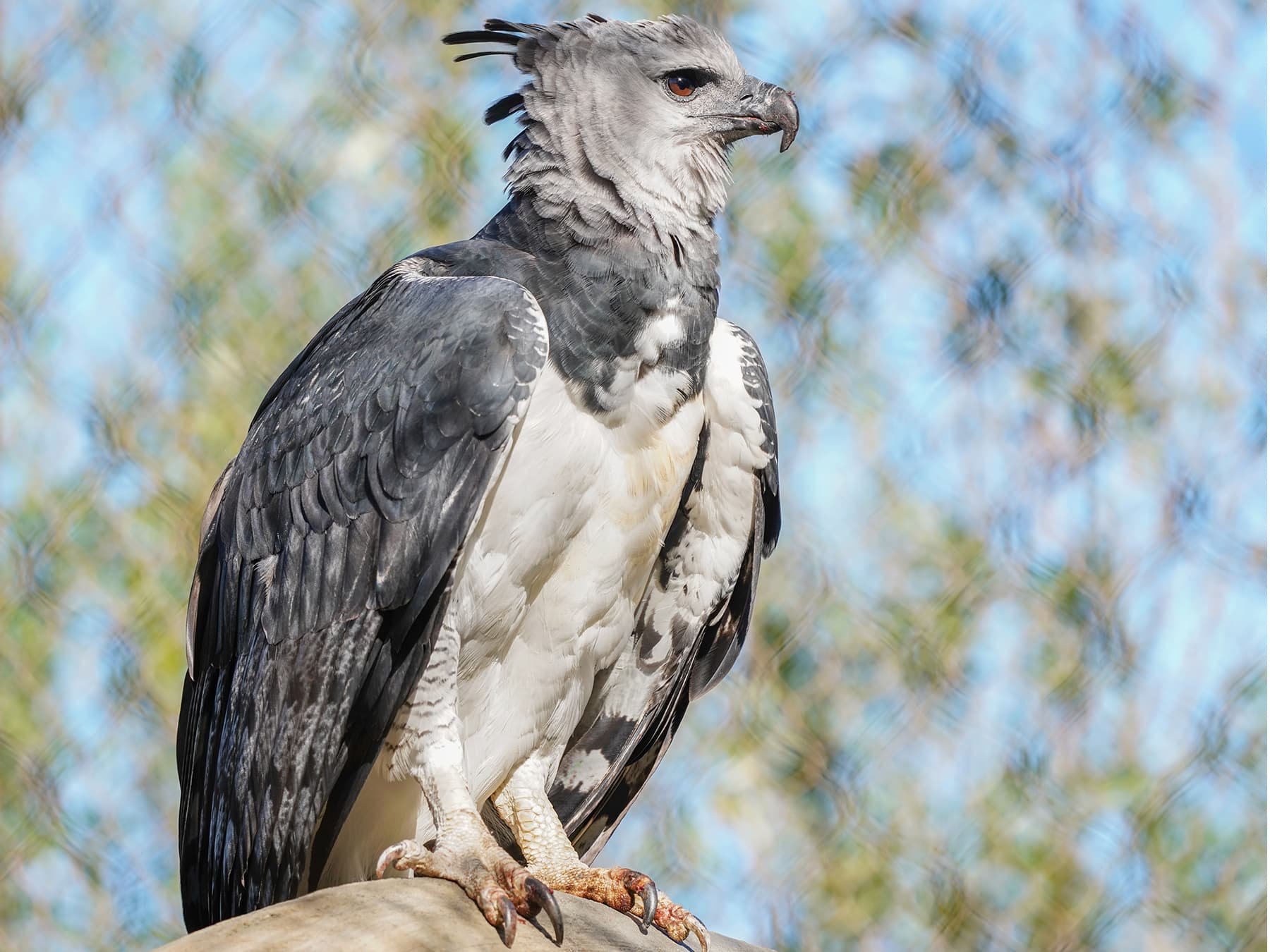
Adult Harpy Eagles are dark slate gray above on the back and upper wings. This dark plumage also forms a broad band around the breast, separating the whitish underparts from the pale gray head. Their tail is broadly banded in pale and dark gray, and their feathered upper legs are finely barred.
Female Harpy Eagles have the same plumage as males, although they are much bigger at about twice the weight.
Juvenile birds only attain their adult plumage in their third or fourth year. Until then, they are easily identified by their predominantly white plumage with darker flight feathers and banded tails.
How big are Harpy Eagles?
Harpy Eagles are true giants of the bird world. They are not quite the heaviest or longest of eagles, but they’re not far off either.
Length
Adult Harpy Eagles have a total body length of 34 to 42 inches or 87 to 107 centimeters.
Weight
Most wild Harpy Eagles weigh 9 to 20 pounds, with males just half the weight of females. Captive specimens can grow to a staggering 27 pounds!
Wingspan
At 72 to 88 inches (183 - 224 cm), the Harpy Eagle’s wingspan is much broader than the average human height.
Check out this guide for more fascinating facts about Harpy Eagle size.
Its size
Adults- Length
- 89–105 cm
- Wingspan
- 176–224 cm
- Weight
- 4000–9000 g
Its song and calls
What sound does a Harpy Eagle make?
The Harpy Eagle’s call is a series of plaintive high-pitched cries, each lasting roughly one second and made at similar intervals. They are most vocal in the nesting season.
When and where to see it
The Harpy Eagle is not recorded regularly in the UK, Ireland, the United States or Canada.
Worldwide: recorded regularly in 12 countries
Countries where it was recorded in at least 3 of the 6 years 2019–2024. Linked countries have their own bird list.
Data: EOD – eBird Observation Dataset (Cornell Lab of Ornithology), accessed via GBIF.org, CC BY 4.0. Records from 2019–2024, aggregated and filtered by Birdfact. How these lists are made
What is the habitat of a Harpy Eagle?
Harpy Eagles live in tropical rainforest habitats, mostly at low elevations. They usually hunt in the upper canopy but may also look for prey in open habitats that border the forest.
What is the range of a Harpy Eagle?
Harpy Eagles are largely restricted to South and Central America. The immense country of Brazil is their major stronghold, but they also range south to Paraguay and Argentina. In North America, they reach their northern limit in the southeast of Mexico.
Where do Harpy Eagles live?
Harpy Eagles spend most of their lives in the upper canopy of rainforest trees. They may nest within just a few miles of each other in prime habitats, although they occupy large home ranges of thousands of hectares. These patient hunters spend little time in flight and rarely soar like other large birds of prey.
There’s much more to learn about the range and habitat of the Harpy Eagle. Read our in-depth article for a closer look.
How rare are Harpy Eagles?
Harpy Eagles are rare and elusive birds. Despite their large range, these threatened eagles are thinly distributed and difficult to find in the wild.
Where can you see Harpy Eagles in the US?
Harpy Eagles are not native to the United States, although bird watchers can enjoy sightings of captive birds at several zoos across the south of the country. The following zoos have these magnificent birds on exhibit:
- San Diego Zoo, California
- Los Angeles Zoo, California
- Dallas Zoo, Texas
- Zoo Miami, Florida
Migration
Do Harpy Eagles migrate?
Harpy Eagles do not migrate. After gaining independence and finding a mate, paired birds will remain in the same area throughout their lives.
Tips for seeing it
- Look for them perched on emergent trees in undisturbed rainforests
- Listen for their distinctive whistle-like call
- Observe for signs of recent kills, as they often return to the same feeding sites
- Use local guides familiar with nesting sites for better chances of sightings
What it eats
What do Harpy Eagles eat?
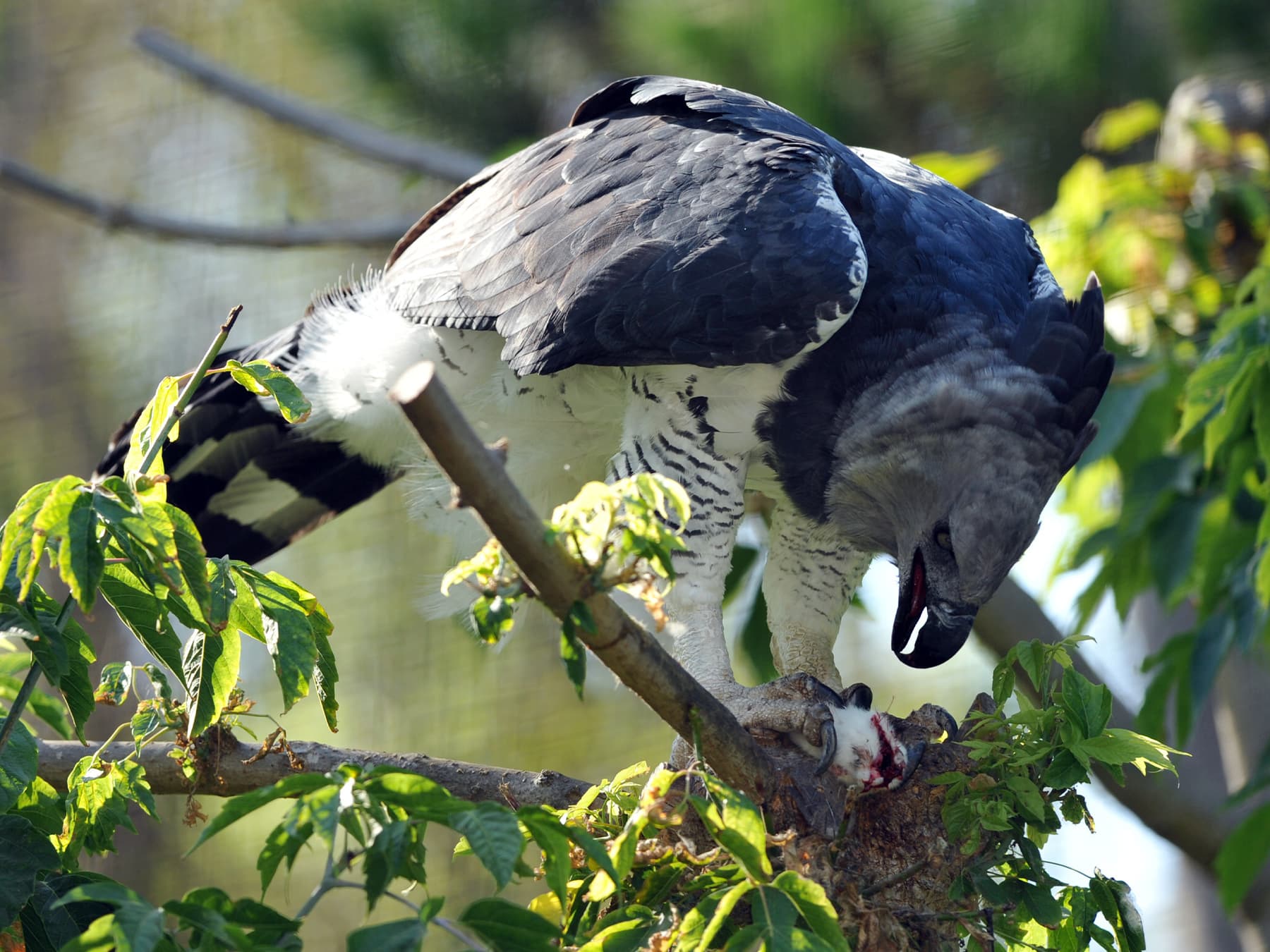
Harpy Eagles are perfectly built to hunt large animals in the rainforest canopy. Mammals are their most important prey, but they also eat large reptiles and other birds. The following animals are commonly taken:
- Sloths
- Various monkeys (squirrel, capuchin, howler, etc.)
- Wild pigs
- Deer
- Anteaters
- Porcupines
- Large birds like macaws
- Reptiles like snakes and iguanas
There’s much more to learn about the Harpy Eagle diet. Check out this in-depth guide to learn where, what, and how these magnificent birds hunt.
What do Harpy Eagle chicks eat?
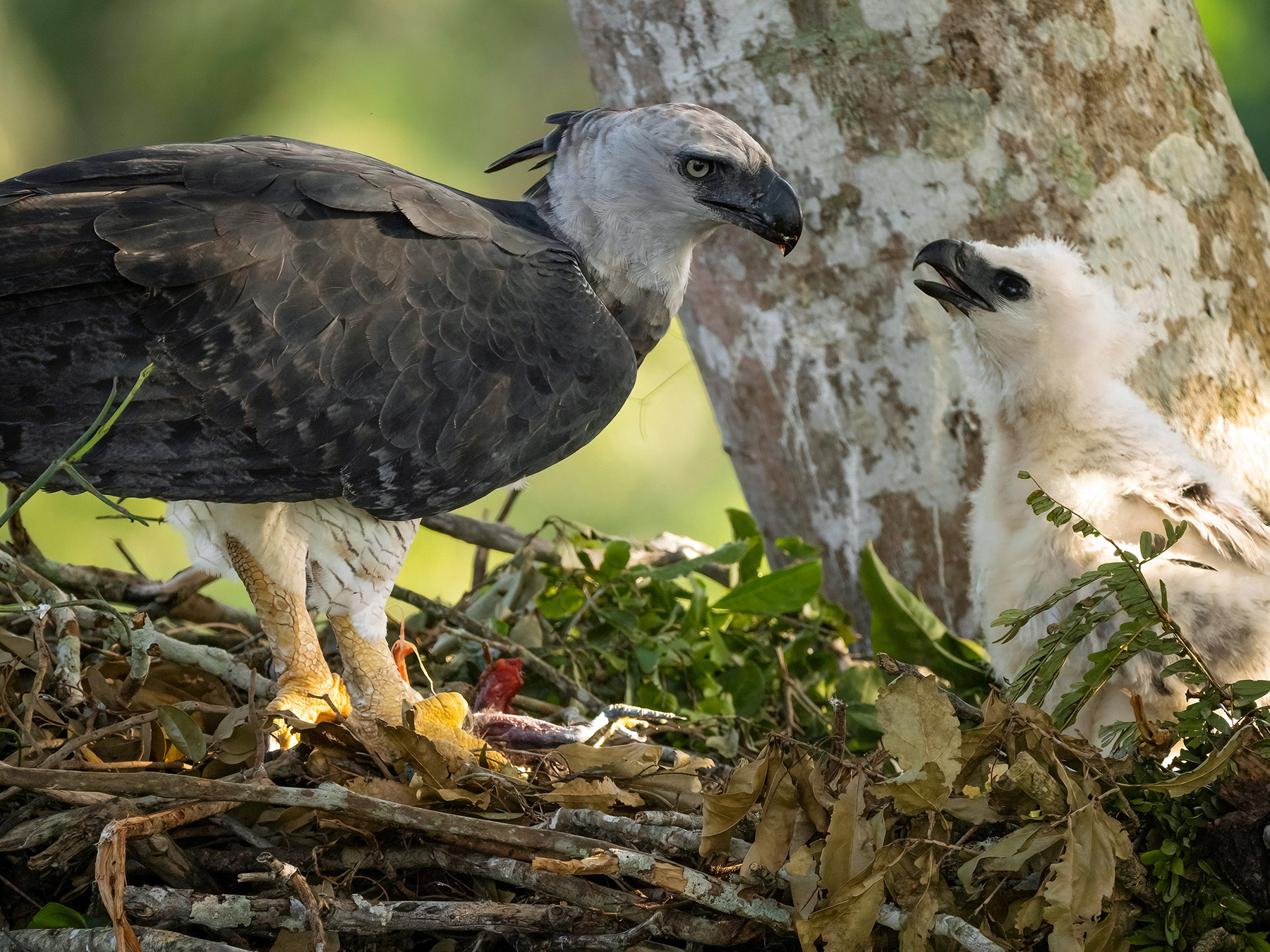
The Harpy Eagle chick eats the meat of monkeys, sloths, and other prey that its parents catch. Both parents hunt to feed the young bird, and they help young chicks by tearing off manageable strips of meat.
Nesting and breeding
Where do Harpy Eagles nest?
Harpy Eagles build large stick nests that can measure four feet (1.2m) deep and five feet (1.5m) wide. Both sexes build the nest from twigs and add softer green material before the female lays her eggs. They nest high in the crown of rainforest trees, sometimes over 130 feet (40 m) above the ground.
When do Harpy Eagles nest?
Harpy Eagles begin nesting in April or May. They incubate their eggs for eight weeks but only raise a single chick. The young bird will stay in the nest for up to six months and remain dependent on its parents for food for up to a year longer. Spending so much time on a single chick means pairs can only breed every two to three years.
What do Harpy Eagle eggs look like?
Harpy Eagles usually lay two plain white eggs. Single-egg clutches are fairly common, but three eggs are rare. Their eggs are very large, measuring about three inches long and two inches wide (75mm x 57mm) on average.
Do Harpy Eagles mate for life?
Harpy Eagles are monogamous. Pairs mate for life, which is impressive considering their long potential lifespan.
Behaviour
Are Harpy Eagles aggressive?
Harpy Eagles are not particularly aggressive. Despite their fearsome appearance, these birds are only aggressive toward their prey and other animals that may threaten their young.
Where do Harpy Eagles sleep at night?
Harpy Eagles roost among the branches of large trees in their rainforest habitat.
Lifespan and predators
How long do Harpy Eagles live?
Harpy Eagles are long-lived birds that first breed after about five years. They can survive for up to 35 years in the wild.
What are the predators of Harpy Eagles?
Harpy Eagles are apex predators with no natural enemies to fear. Shooting by farmers and habitat destruction caused by logging are their most serious threats.
Are Harpy Eagles protected?
Harpy Eagles are protected locally in Brazil and internationally by CITES (the Convention on International Trade in Endangered Species of Wild Fauna and Flora) Appendix I.
Are Harpy Eagles endangered?
Harpy Eagles are ranked as a ‘Vulnerable’ species on the IUCN Red List, which is just one category short of being globally endangered with extinction. More locally, they are considered critically endangered in countries in the north of their range.
Conservation
Harpy Eagles face threats from habitat loss due to deforestation and human persecution. Conservation efforts focus on protecting large tracts of undisturbed rainforests and educating local communities about their ecological importance. Captive breeding programs also contribute to their conservation.
Similar birds
Often mistaken for
More photos
4 photos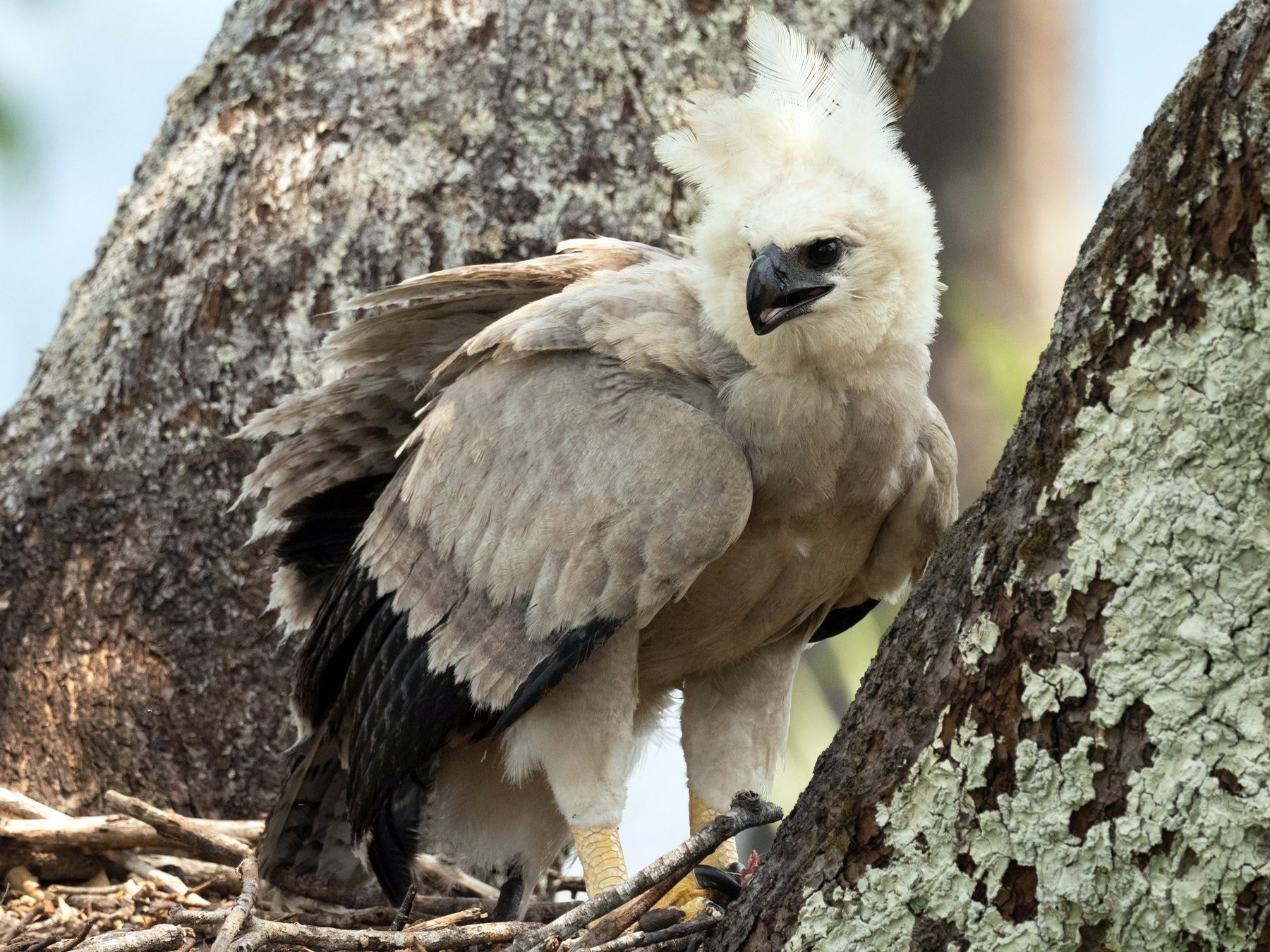

Harpy Eagle guides
1 guidesQuick facts
- Length
- 89–105 cm
- Wingspan
- 176–224 cm
- Weight
- 4000–9000 g
- Lifespan
- 25–35 years
- Family
- Hawks & Eagles
- Migration
- Resident
- Global status (IUCN)
- Vulnerable
- World population
- 100,000 - 250,000 mature individuals
- Population trend
- Population decreasing due to habitat loss and hunting
- Also called
- American Harpy Eagle, Royal-hawk
- Scientific name
- Harpia harpyja
Questions
3Is a Harpy Eagle stronger than the Bald Eagle?
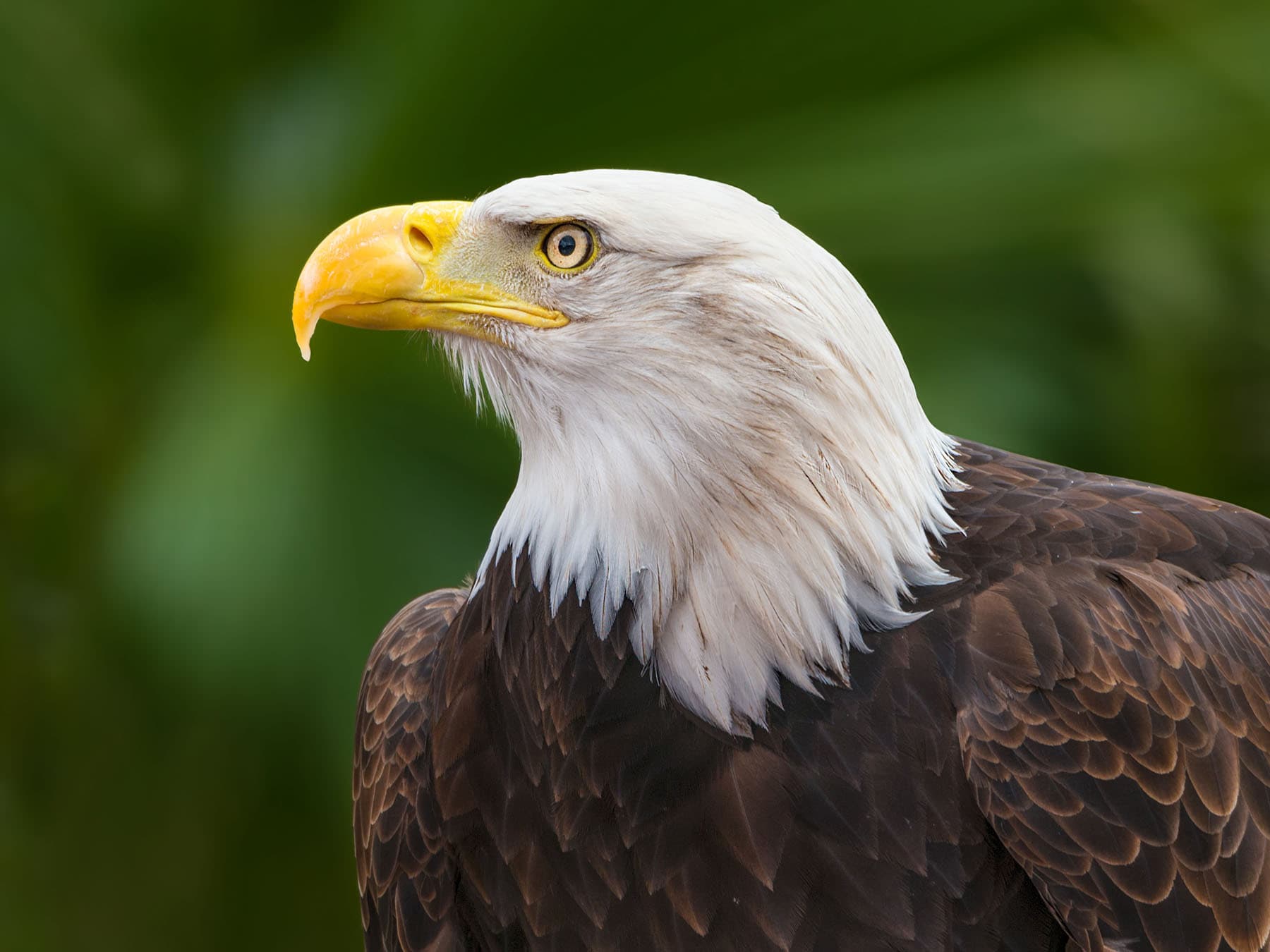
Harpy Eagles are much larger than Bald Eagles and far more powerful. Bald Eagles mainly feed on fish and waterbirds, while Harpies tackle much larger animals, including adult monkeys and even young deer!
Is the Harpy Eagle the biggest eagle in the world?
Harpy Eagles are among the three largest surviving eagle species. Only the massive Steller’s Sea Eagle (Haliaeetus pelagicus) and the critically endangered Philippine Eagle (Pithecophaga jefferyi) rival their size.
Are Harpy Eagles aggressive to humans?
Harpy Eagles are not naturally aggressive toward humans, and it’s a good thing because an attack could easily turn deadly. They show little fear for humans, however, leaving them vulnerable to shooting. The only situation where these majestic birds may pose a real threat to an adult human is where their eggs or chicks are threatened.
Sources
3- 1BirdLife International. 2021. Harpia harpyja. The IUCN Red List of Threatened Species 2021: e.T22695998A197957213. Source (opens in a new tab)
- 2E. Miranda in litt.; A. Monroy-Ojeda in litt. (2021)
- 3BirdLife International. 2021. Harpia harpyja. The IUCN Red List of Threatened Species 2021: e.T22695998A197957213. Source (opens in a new tab)

Checked by
Nathan Cope, founder and editor
Nathan founded Birdfact and leads its writers and contributors in the UK, the US and Canada. He has watched and studied birds for more than ten years, and checks every article and species guide before it’s published.