


Crowned Eagle
African Crowned Eagle, Crowned Hawk-Eagle · Stephanoaetus coronatus
By the Birdfact teamChecked by Nathan Cope
On this page19 sections
- How to recognise it
- Its size
- Its song and calls
- When and where to see it
- What it eats
- Nesting and breeding
- Behaviour
- Lifespan and predators
- Conservation
- What does a Crowned Eagle look like?
- How big is a Crowned Eagle?
- How much does a Crowned Eagle weigh?
- What is the scientific name of a Crowned Eagle?
- Are Crowned Eagles aggressive?
- How do Crowned Eagles hunt?
- Do Crowned Eagles mate for life?
- Crowned Eagle guides
- Quick facts
- Sources
How to recognise it
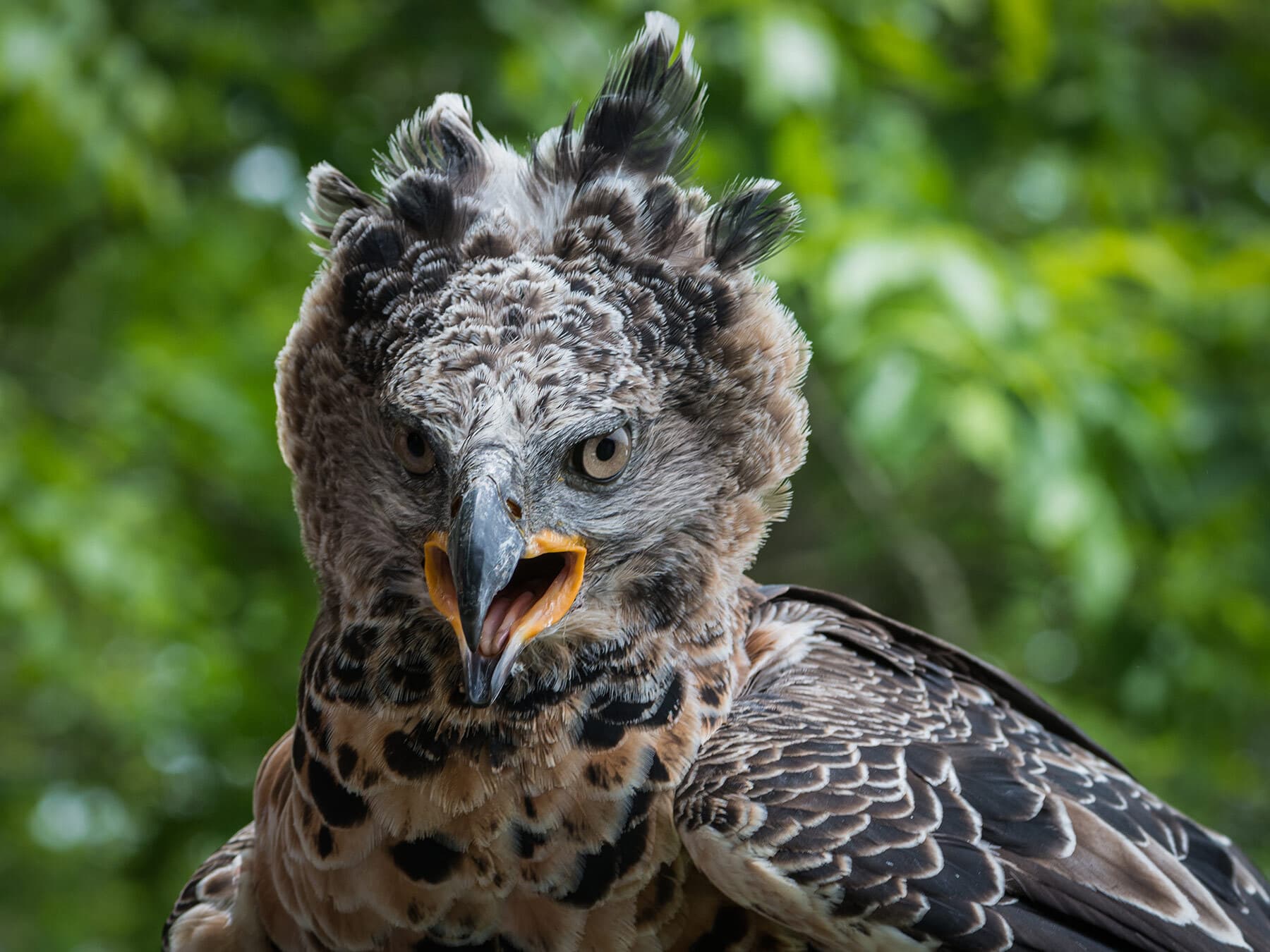
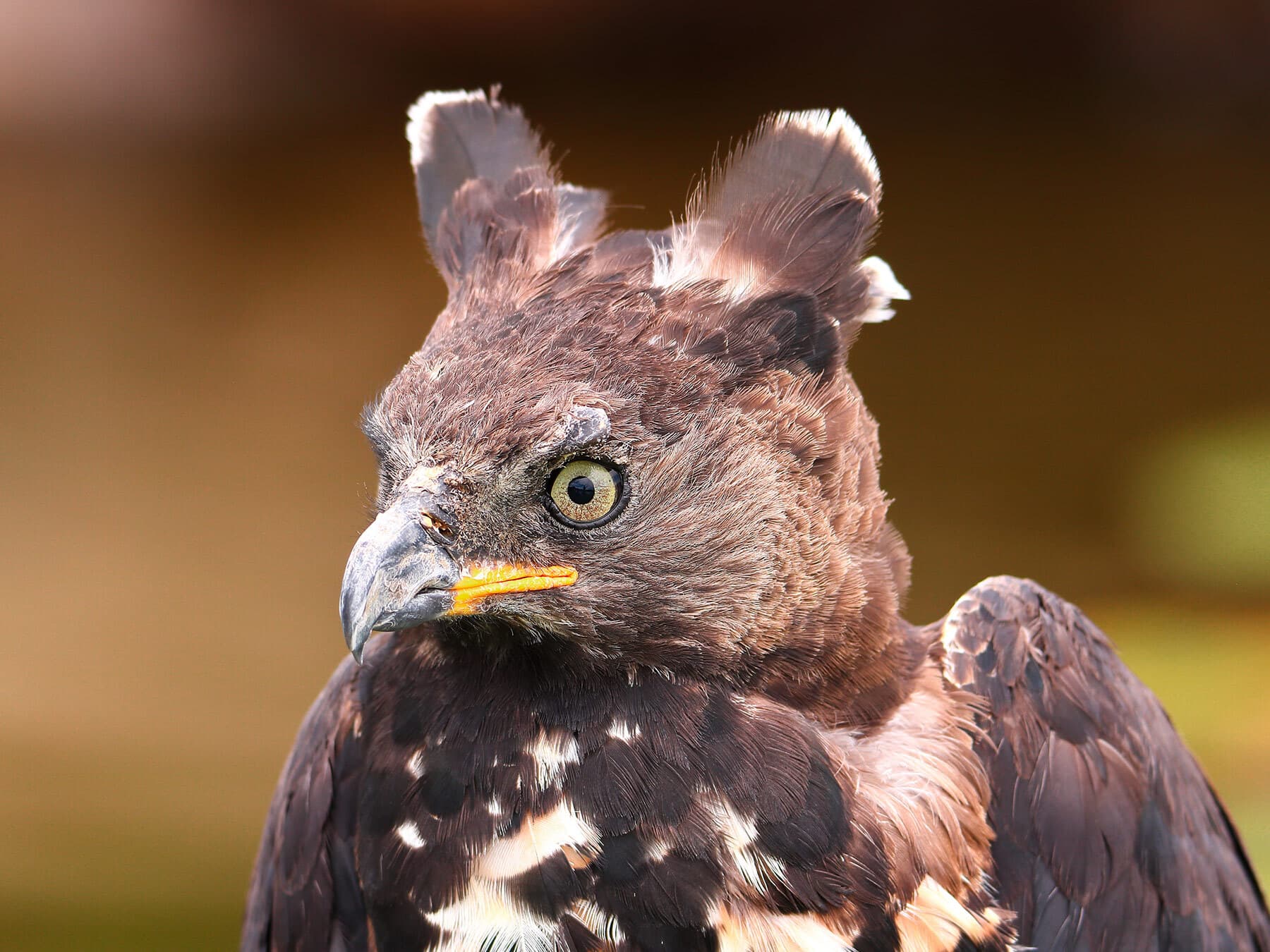
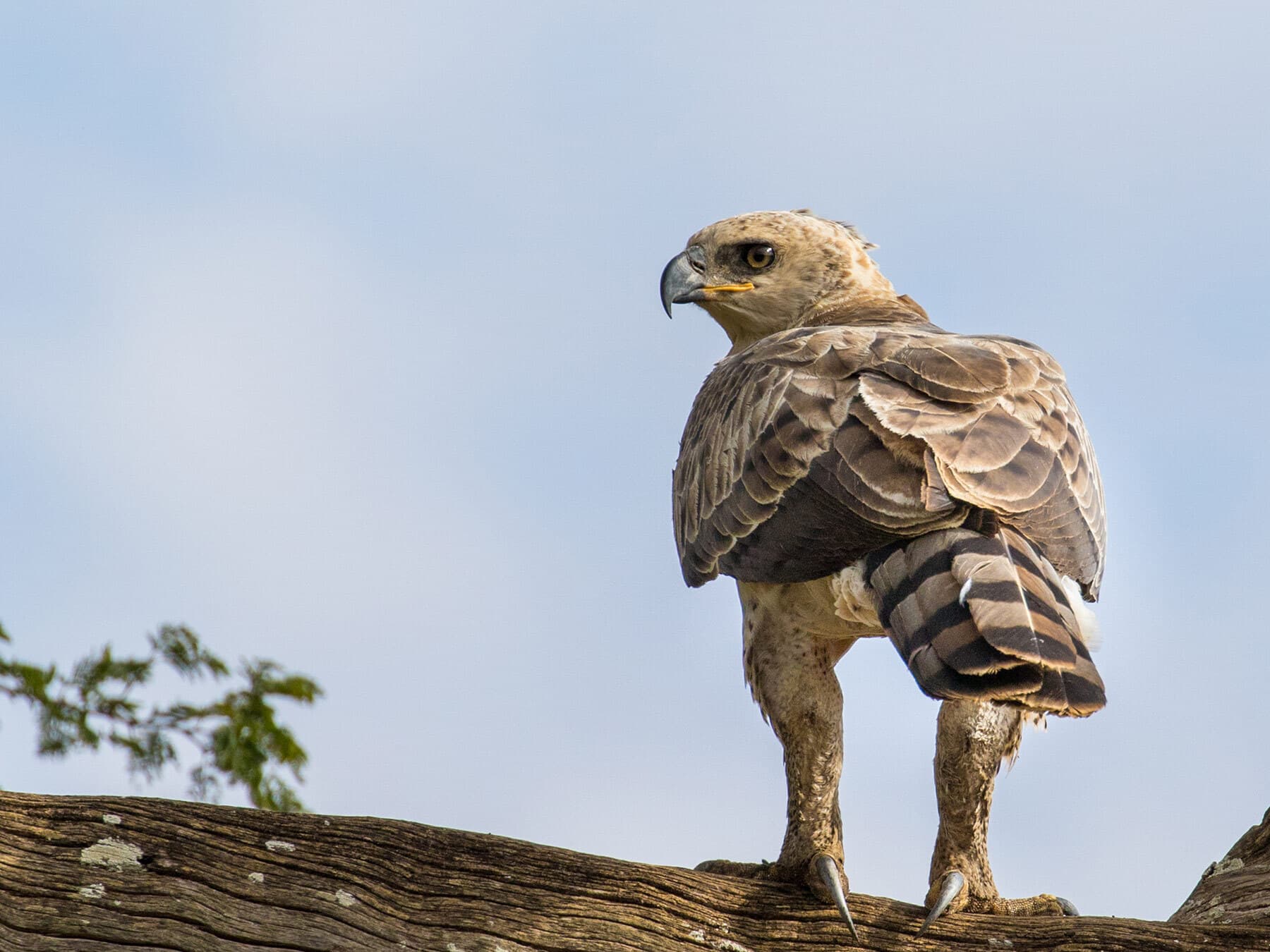
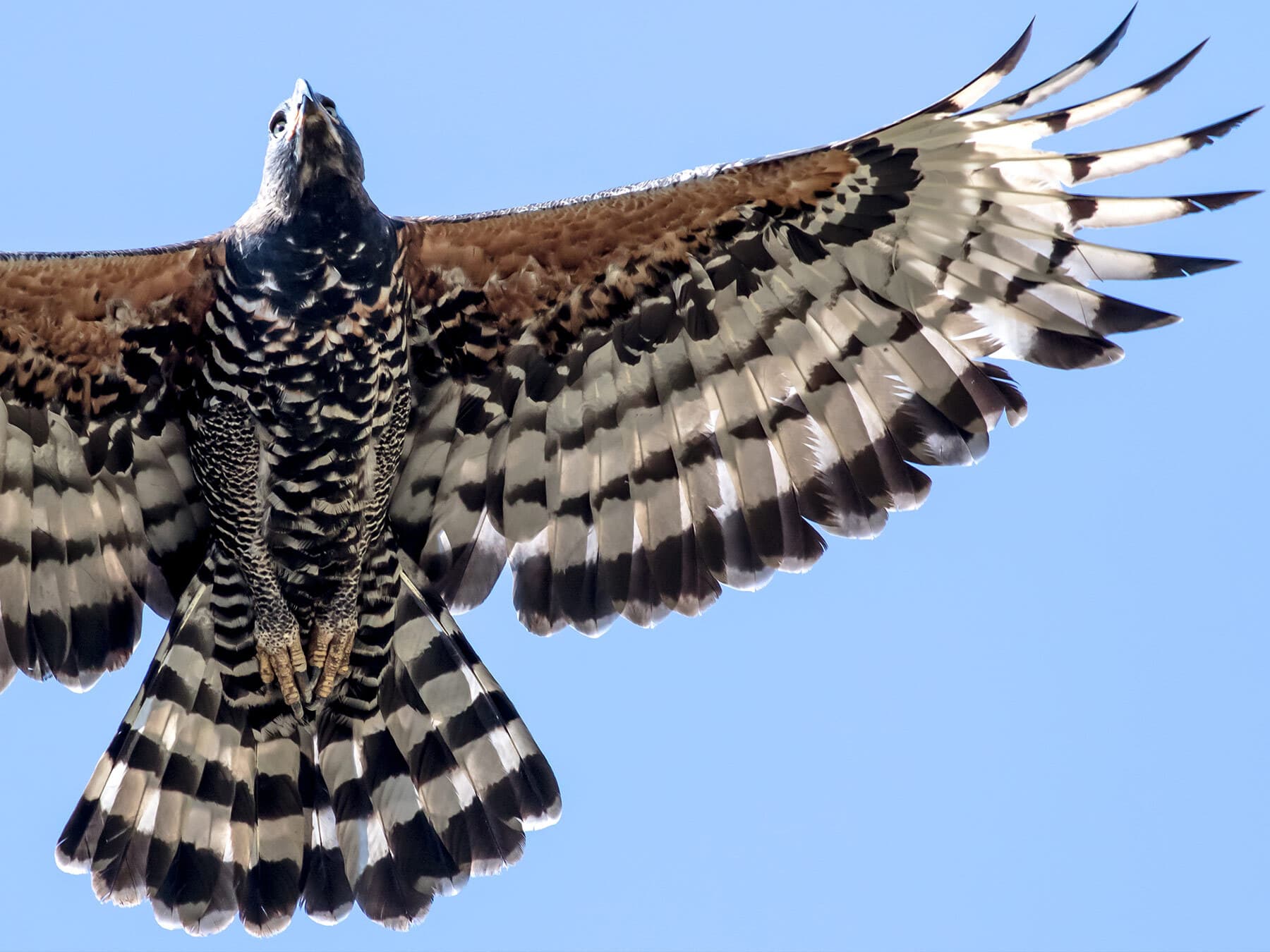
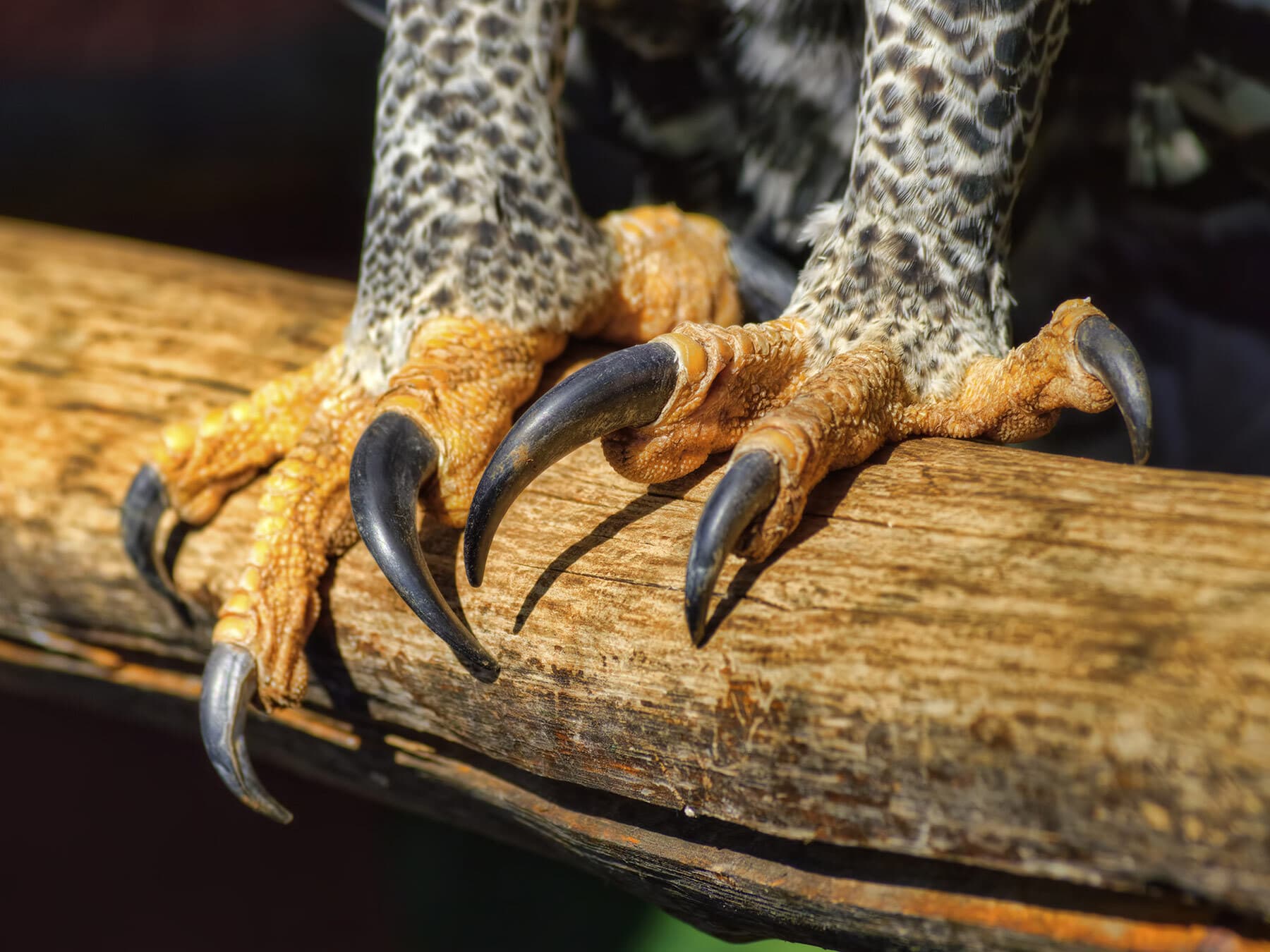
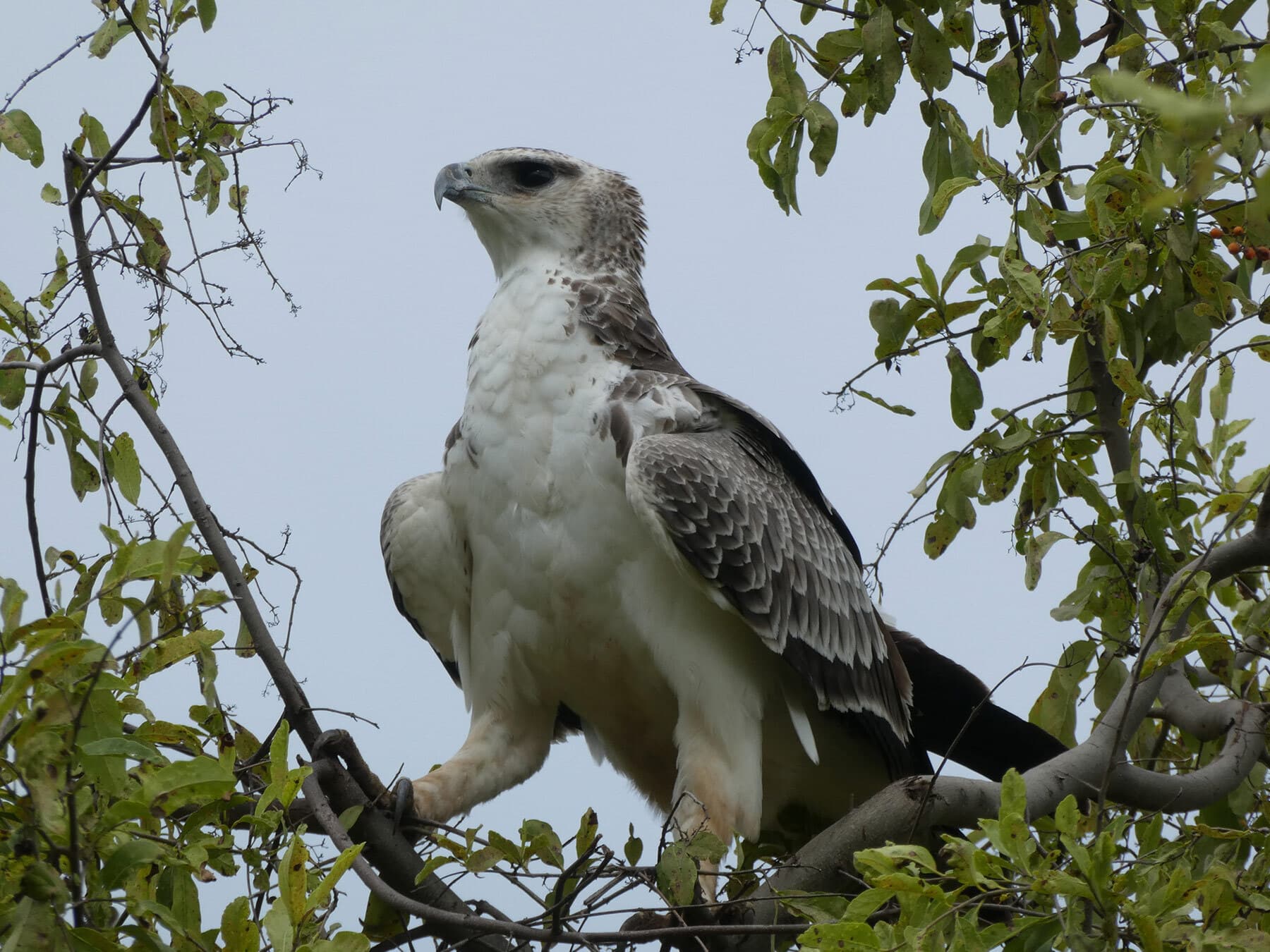
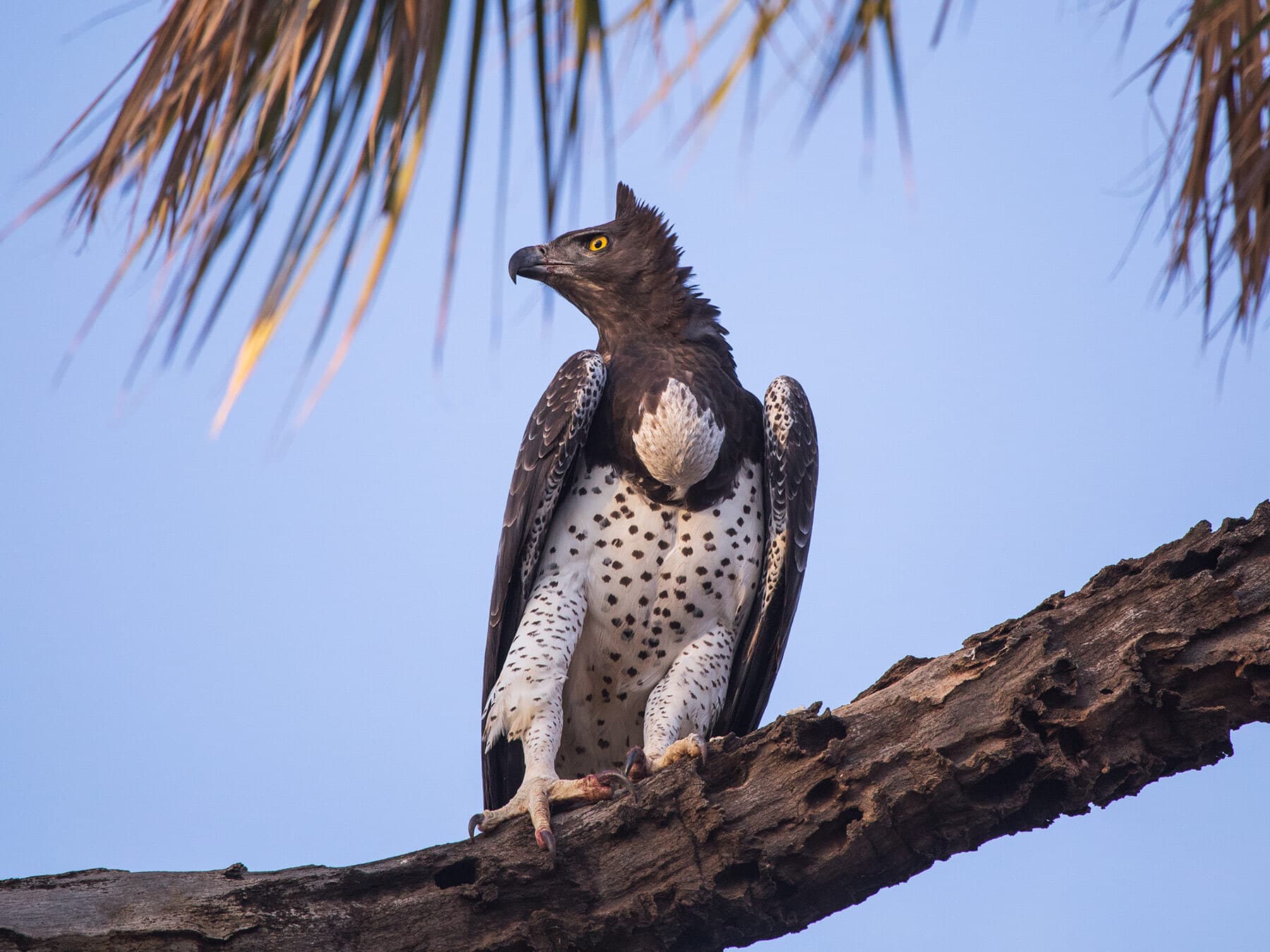
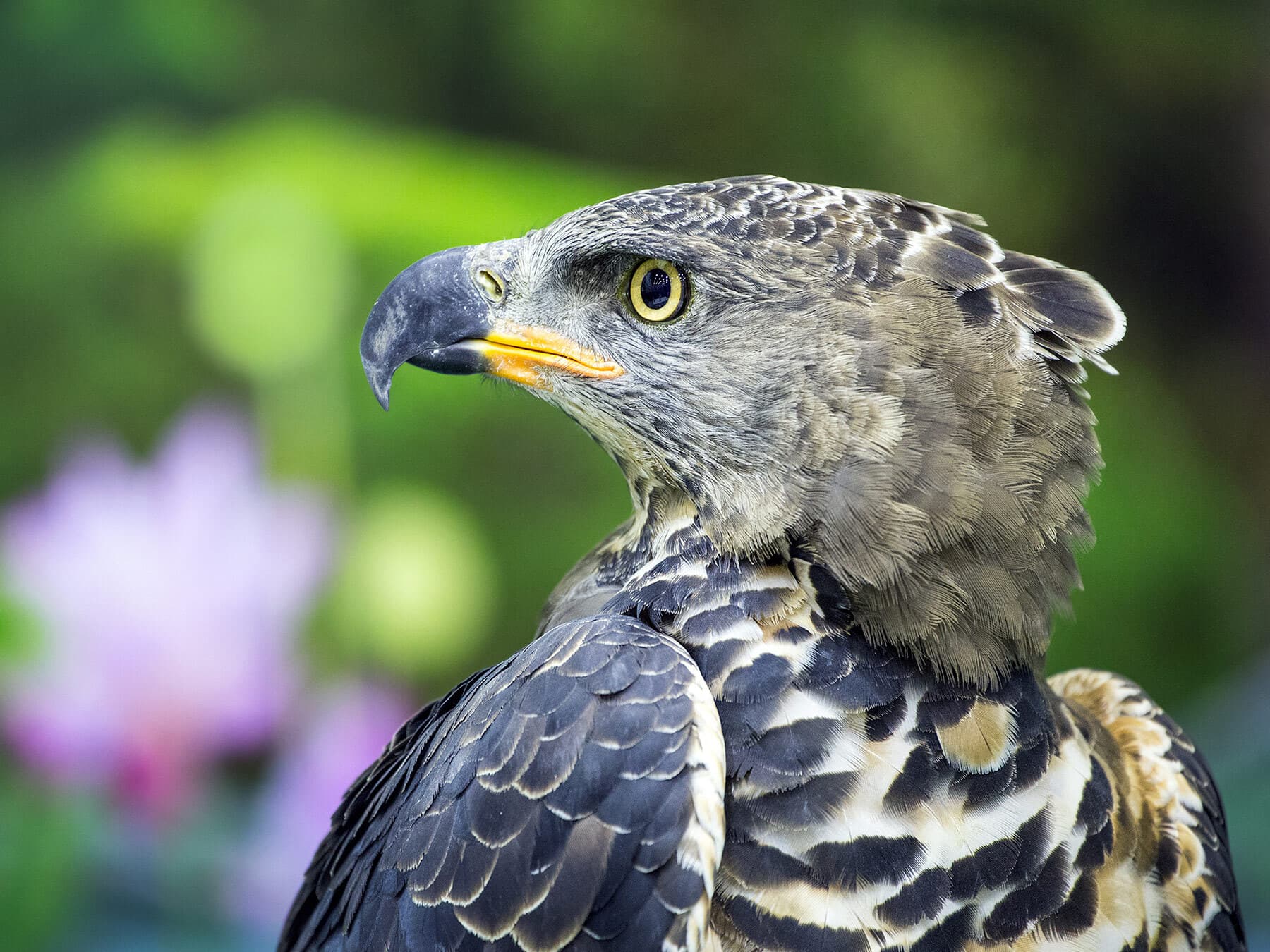
The Crowned Eagle is a striking raptor with a dark brown back, black-barred white underparts, and a distinctive black-and-white crest. Its powerful build includes broad wings, a long tail, and formidable talons.
Females are noticeably larger than males, often by up to 10-15%. Juveniles have paler plumage with a less prominent crest and take about 5 years to develop adult colouration.
Its size
Adults- Length
- 80–99 cm
- Wingspan
- 160–190 cm
- Weight
- 2700–4700 g
Its song and calls
Crowned eagles are known to be loud and vocal birds. Their typical calls consist of loud, sharp whistles that rise and fall in pitch. They also produce a wide range of territorial calls, also consisting largely of whistles. Complex communication has been observed between parents and chicks, particularly once the parents are urging the fledgling to completely leave the nest.
When and where to see it
The Crowned Eagle is not recorded regularly in the UK, Ireland, the United States or Canada.
Worldwide: recorded regularly in 17 countries
Countries where it was recorded in at least 3 of the 6 years 2019–2024. Linked countries have their own bird list.
Africa (17)
- Angola
- Cameroon
- Central African Republic
- Congo - Kinshasa
- Eswatini
- Ethiopia
- Gabon
- Ghana
- Kenya
- Malawi
- Mozambique
- Rwanda
- South Africa
- Tanzania
- Uganda
- Zambia
- Zimbabwe
Data: EOD – eBird Observation Dataset (Cornell Lab of Ornithology), accessed via GBIF.org, CC BY 4.0. Records from 2019–2024, aggregated and filtered by Birdfact. How these lists are made
Crowned eagles often target tree-top nesting sites in forested areas close to rivers or freshwater, preferring to nest some 15m to 45m above the ground. The nests are often maintained throughout the entire year and are constructed using large sticks and lined with green branches and soft foliage. These nests can become quite massive - around 2.5m (8ft) in diameter if the nesting site permits it.
What is the habitat of a Crowned Eagle?
Crowned eagles occupy a vast strip of land stretching across all of Sub-Saharan Africa, extending to both West, East and South Africa. Preferred habits are mostly heavily forested with a wide selection of sheltered, tall trees.
Some Crowned eagles may reside in more isolated or arid plains, so long as they can find a safe, tall tree to create their large nests. Their nests are intensive to build and require strong, stable tree-forks ideally surrounded by healthy, dense foliage.
Where can I find Crowned eagles?
Crowned eagles are distributed across Sub-Saharan Africa, stretching south to South Africa and west to Guinea, Senegal, The Gambia, Sierra Leone and Cameroon. In East Africa, the Crowned eagle can be found from Ethiopia to Uganda, Kenya and Tanzania. Also, they are distributed throughout Zambia, Mozambique and Zimbabwe with isolated populations in Angola.
Fewer Crowned eagles may be found centrally in the Central African Republic and the Democratic Republic of Congo.
Do Crowned Eagles migrate?
Crowned eagles are non-migratory and tend to be sedentary, occupying reasonably small, fixed territories. Crowned eagles even inherit nests from other pairs - nests are maintained across generations.
Tips for seeing it
- Look for them perched on tall trees at forest edges
- Listen for their distinctive, far-carrying whistling call
- Observe early mornings when they are most active
- Search for signs of large prey remains beneath potential nesting sites
- Use binoculars to spot their characteristic crest
What it eats
Crowned eagles are reportedly responsible for one of the world’s earliest ‘murder mysteries’ when the skull of the Taung Child was discovered in a quarry in South Africa. This 2.5 million-year-old skull was discovered with puncture wounds akin to that of eagle talons, and anthropologists now believe this pre-human child was likely killed by Crowned eagles.
There have been other cases of children being attacked or killed by Crowned eagles, but the odds of being attacked by one are extremely slim, especially compared to some of the other wildlife indigenous to the same parts of Africa as the Crowned eagle.
What does a Crowned Eagle eat?
Crowned eagles are powerful, expert hunters that prefer to prey on larger mammals, preferably those around the same weight as themselves (3 to 5kg). Those distributed in the rainforest regularly hunt primates, including monkeys, baboons and possibly even chimpanzees. Crowned eagles in more open arid terrain hunt antelope, hyraxes, bushbucks and Pygmy hippos. Other prey includes pigs and boar, large reptiles, other birds, pangolins and squirrels. In the Democratic Republic of Congo, Crowned eagle diets are some 80%+ primates, consisting mainly of Blue monkeys and Black and White colobus monkeys.
Crowned eagles are very capable of catching and killing animals 4 to 6 times their body weight - as much as 22.5% of their diet consists of prey weighing over 20kg.
Are Crowned Eagles threatened?
Crowned eagles are officially classified as Near Threatened, meaning that their populations are decreasing. The current population is estimated at 50,000 adult pairs maximum but could be as low as 15,000. Crowned eagles face pressures via persecution through trapping and shooting, as well as deforestation and nest destruction.
Nesting and breeding
Crowned eagle clutch sizes are very small, consisting of just 1 or 2 eggs. In East Africa, just one egg is more likely. This ensures that the eaglets can be fed sufficient food to survive.
What do Crowned Eagle eggs look like?
Crowned eagle eggs are relatively large, measuring 68.2 mm x 53.6 mm (2.69 in x 2.11 in) and weighing around 87 to 100g (3 to 3.5oz). They’re typically all-white though they may display some reddish-brown markings.
Do Crowned eagles share nest-building duties?
Crowned eagles share many nest-building duties, though the male is more likely to assemble the nest as the female gathers materials. Nests can take half a year to build from scratch but once established, they are maintained rigorously and can reach enormous sizes.
How often do Crowned eagles breed?
Crowned eagles tend to breed only every two years rather than one. Their breeding cycle is exceptionally long, mainly because the fledgling birds can sometimes take as long as a year to become fully independent. This is amongst the longest of any raptor.
Looking after Crowned eagle chicks is an intensive task - they may be fed entirely by their parents for some eight months and remain highly dependent on their parents even when they’re practically fully grown.
Behaviour
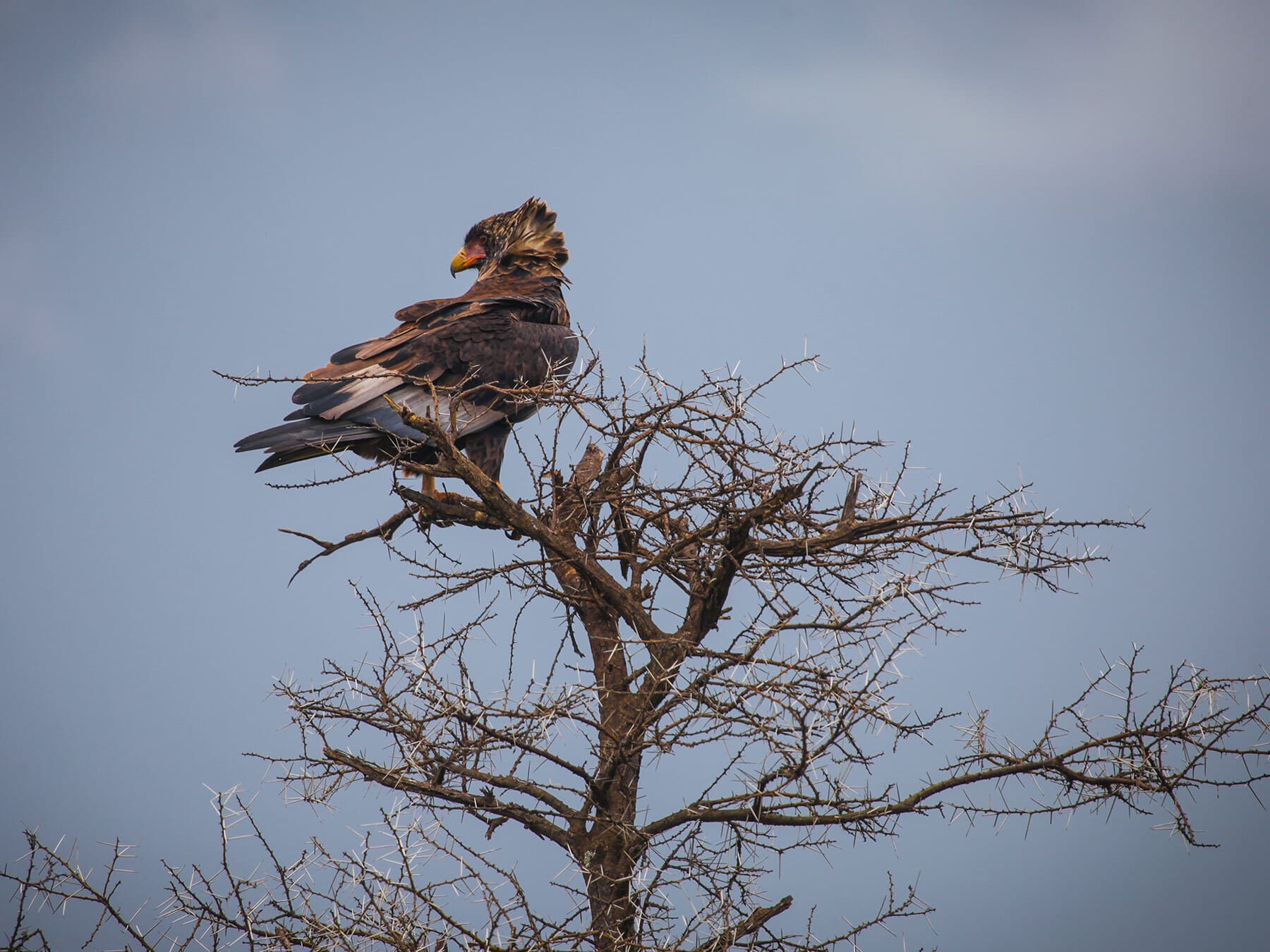
Crowned Eagles are solitary hunters, employing a sit-and-wait strategy from concealed perches. They are known for their agility in forest environments, manoeuvring through dense canopies with remarkable skill.
These birds often perform spectacular aerial displays during courtship, including high-altitude soaring and dramatic dives.
Lifespan and predators
Crowned eagles live for around 14 years which is typical for large eagles and other large birds of prey. For example, the similarly sized Golden eagle also lives for around 14 years on average. The very oldest may live until their late 20s or their early 30s when kept in captivity.
Conservation
The Crowned Eagle faces threats from habitat loss due to deforestation and human encroachment. Conservation efforts focus on protecting large forest tracts and educating local communities about the importance of these apex predators in maintaining ecosystem balance.
What does a Crowned Eagle look like?
Crowned eagles are typically eagle-like in shape, with rounded, heavy wings, large talons and densely feathered legs. They have small faces with large crested swept-back feathers, thus providing their namesake 'crowned' appearance.
The eagle's head itself is usually dark brown, the torso has dark upperparts and a striking spotted breast and thighs. Crowned eagles have long, striped tail feathers. Their bodies are quite lengthy compared to other eagles, but their overall length is perhaps exaggerated by their tail feathers.
Crowned eagles are nevertheless very large and powerful eagles with particularly strong thighs and are revered for being amongst the most beautiful of eagles in terms of their plumage.
How big is a Crowned Eagle?
Crowned eagles are amongst the world’s largest eagles, measuring 80 to 99 cm (31 to 39 in) in length. This places it as the fifth-longest eagle, mainly by merit of its long tail feathers and slick, long-lengthed form. It is not the largest eagle in Africa - that title goes to the Martial eagle - but it is allegedly the most powerful by virtue of the size of its prey, though there is some debate surrounding this.
How much does a Crowned Eagle weigh?
Adult Crowned eagles weigh around 3 to 4.5kg on average, though a weight of 5kg is possible for large females. This is around half of the world’s heaviest eagles, such as the Harpy eagle, which weighs in at 7 to 9kg. Nevertheless, Crowned eagles are powerful, heavy birds with tremendous strength.
What is the scientific name of a Crowned Eagle?
The scientific name for a Crowned eagle is Stephanoaetus coronatus, the only living species of the genus Stephanoaetus from the diverse family of birds of prey Accipitridae.
Are Crowned Eagles aggressive?
Crowned eagles are aggressive predators that are capable of killing prey some six times their body weight. For example, Crowned eagles in South Africa’s Tsitsikamma are regularly observed killing and eating antelope of some 20kg or more. When hungry, they aggressively pursue any living prey that they feel able to kill without undue risk.
How do Crowned Eagles hunt?
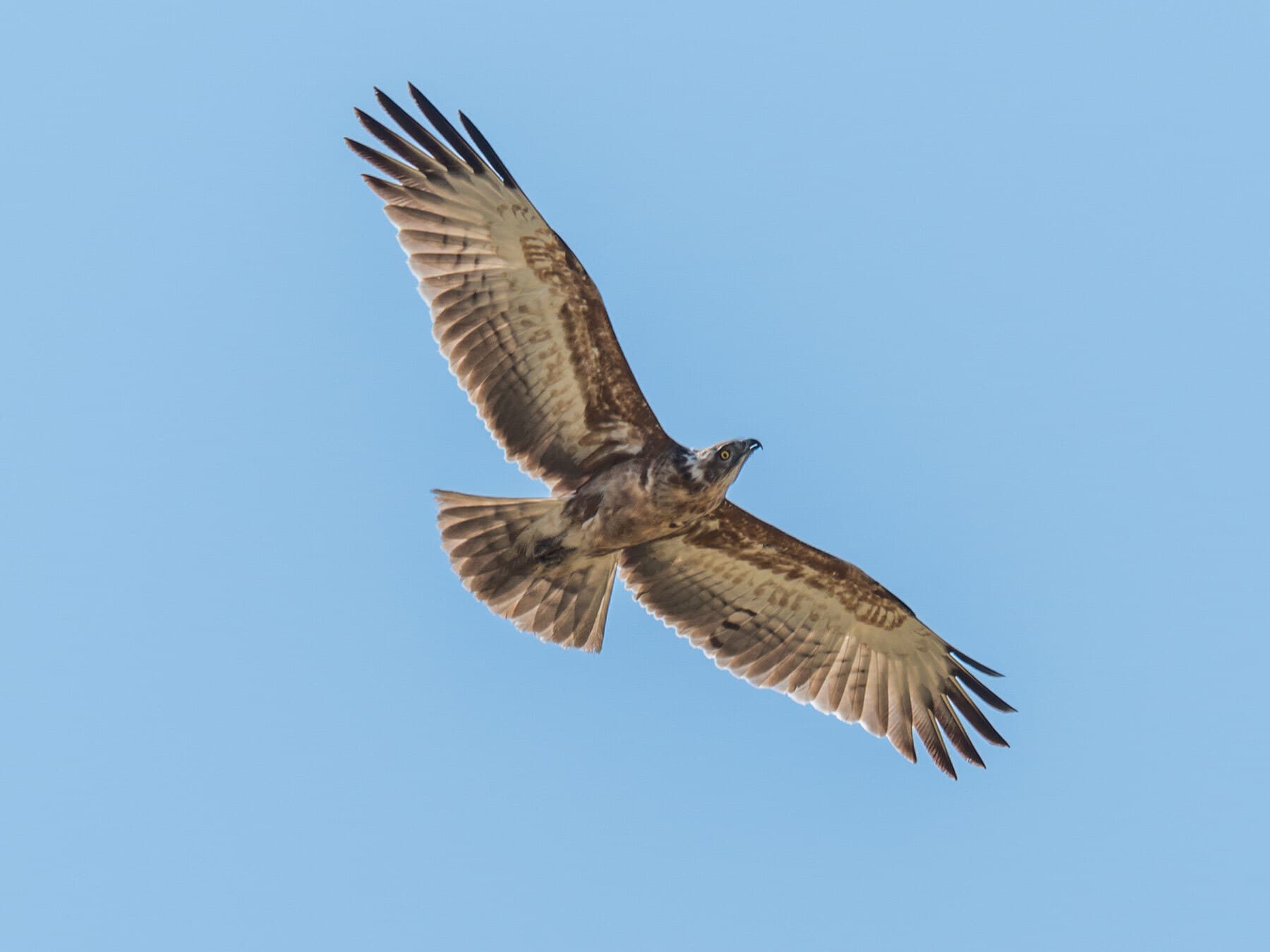
Crowned eagles will hover at a great height of some 5,000 to 8,000ft, identifying prey before either swooping in at speeds in excess of 100mph (160 km/h) or landing on a nearby branch or perch and ambushing their target. When possible, Crowned eagles look to conserve energy when hunting, so they will avoid any unnecessary movement and practice ‘still-hunting’.
They aim to kill upon impact, either puncturing the skull or spine. Mated pairs often hunt together and share prey. Instead of consuming prey in-situ, they will often tear it into manageable pieces and carry it either to their nest or a nearby tree fork.
Do Crowned Eagles mate for life?
Crowned eagles form strong monogamous pairs. Mating can occur at any time of year, but peaks in July through to November. Pairs of Crowned eagles often hunt together, sharing their prey.
Crowned Eagle guides
1 guidesQuick facts
- Length
- 80–99 cm
- Wingspan
- 160–190 cm
- Weight
- 2700–4700 g
- Lifespan
- 14–20 years
- Family
- Hawks & Eagles
- Migration
- Resident
- Global status (IUCN)
- Near Threatened
- World population
- 5,000 - 50,000 mature individuals
- Population trend
- Decreasing
- Also called
- African Crowned Eagle, Crowned Hawk-Eagle
- Scientific name
- Stephanoaetus coronatus
Sources
3- 1BirdLife International. 2018. Stephanoaetus coronatus. The IUCN Red List of Threatened Species 2018: e.T22696201A129914678. Source (opens in a new tab)
- 2BirdLife International. 2018. Stephanoaetus coronatus. The IUCN Red List of Threatened Species 2018: e.T22696201A129914678. Source (opens in a new tab)
- 3BirdLife International. 2018. Stephanoaetus coronatus. The IUCN Red List of Threatened Species 2018: e.T22696201A129914678. Source (opens in a new tab)

Checked by
Nathan Cope, founder and editor
Nathan founded Birdfact and leads its writers and contributors in the UK, the US and Canada. He has watched and studied birds for more than ten years, and checks every article and species guide before it’s published.