


Yellow-bellied Sapsucker
Sphyrapicus varius
By the Birdfact teamChecked by Nathan Cope
On this page13 sections
How to recognise it
What do Yellow-bellied Sapsuckers look like?
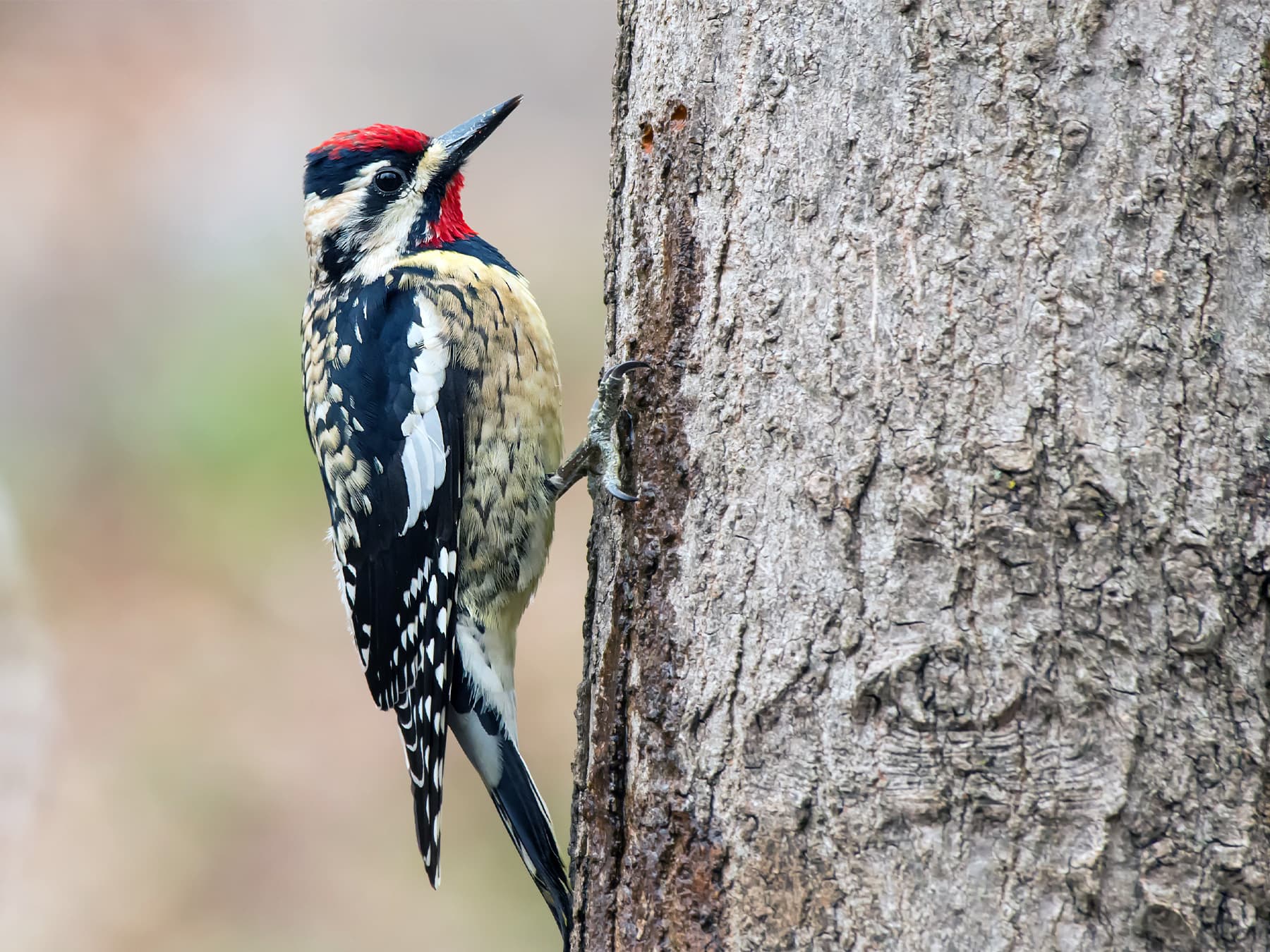
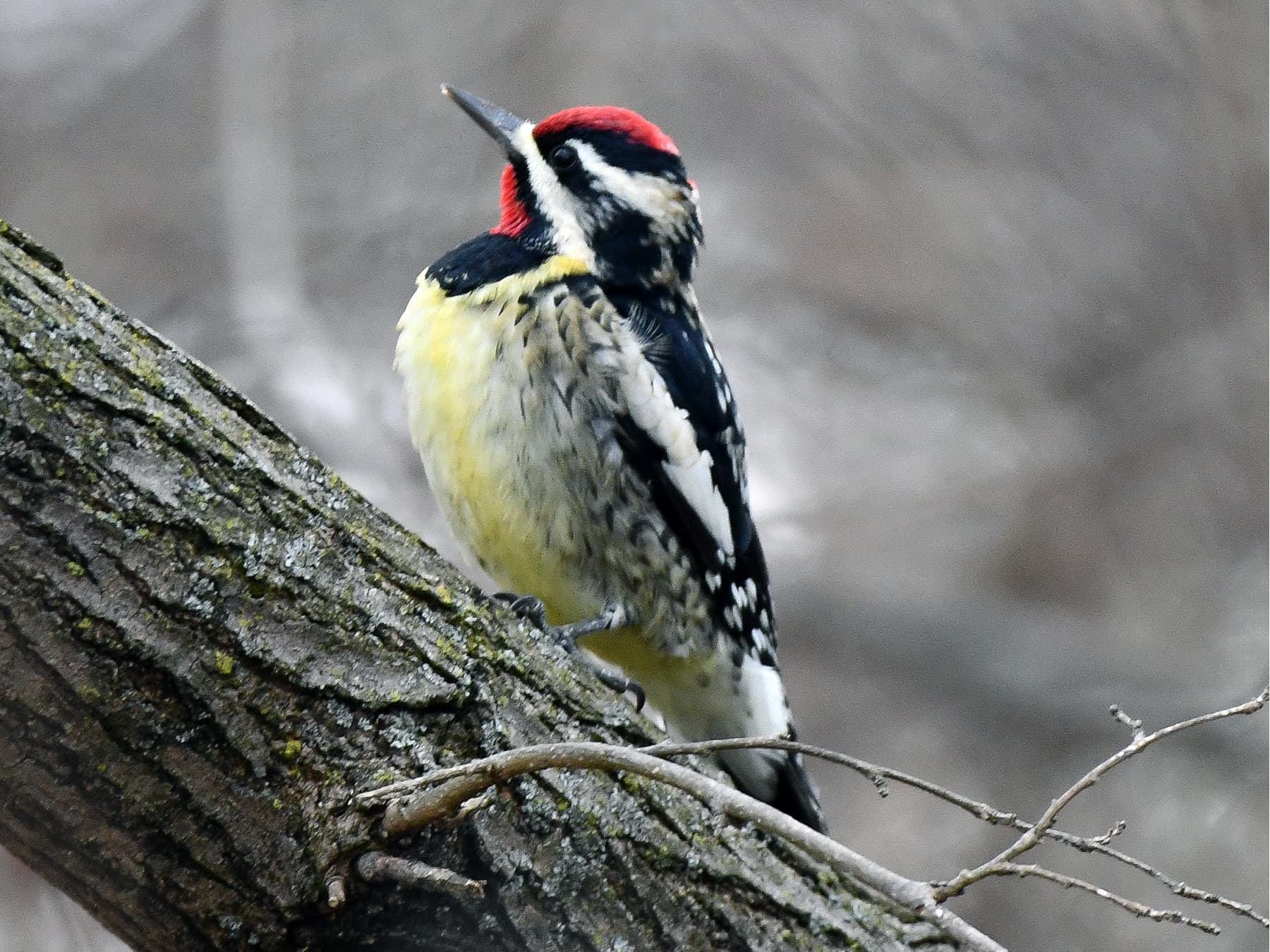
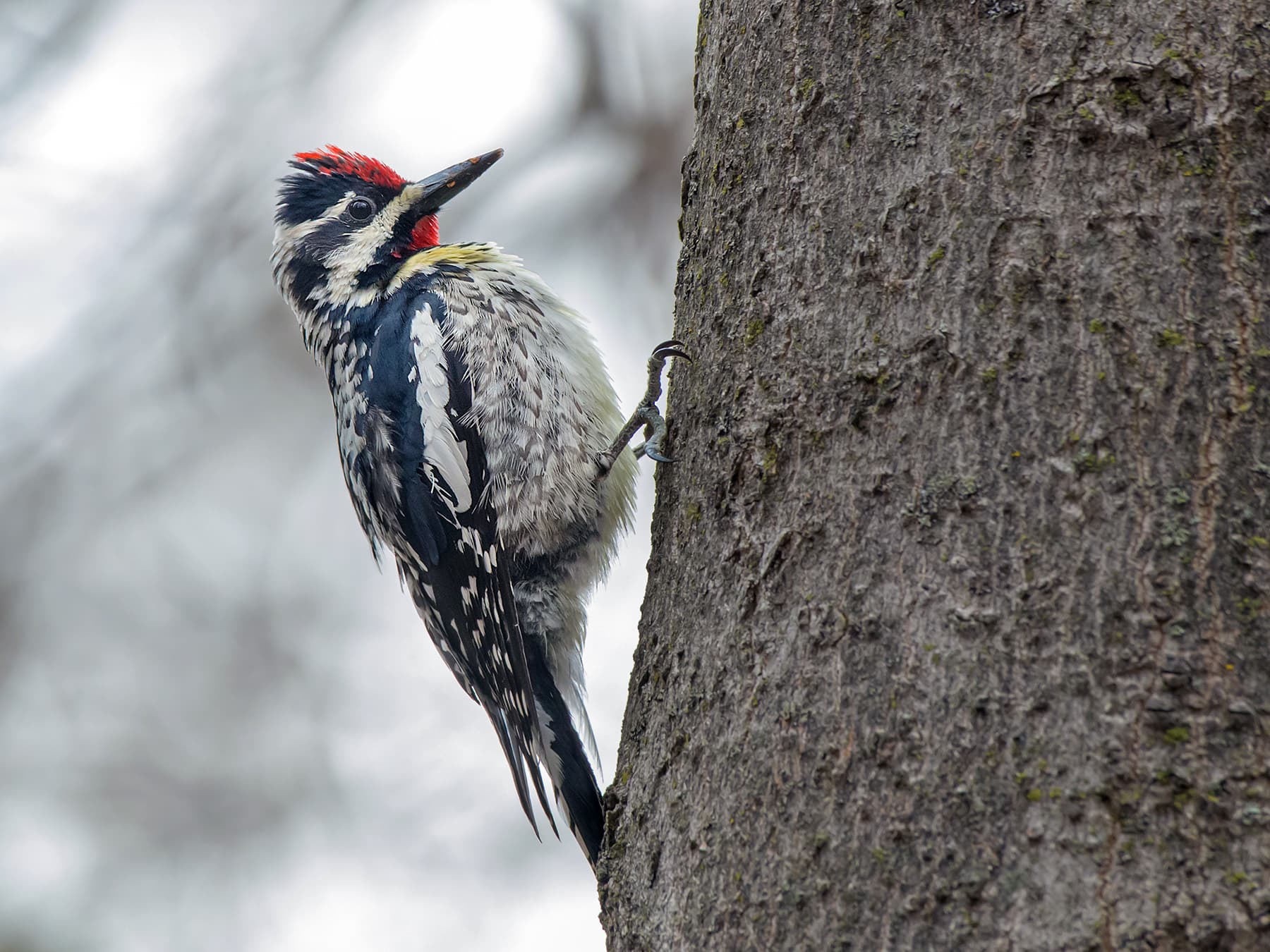
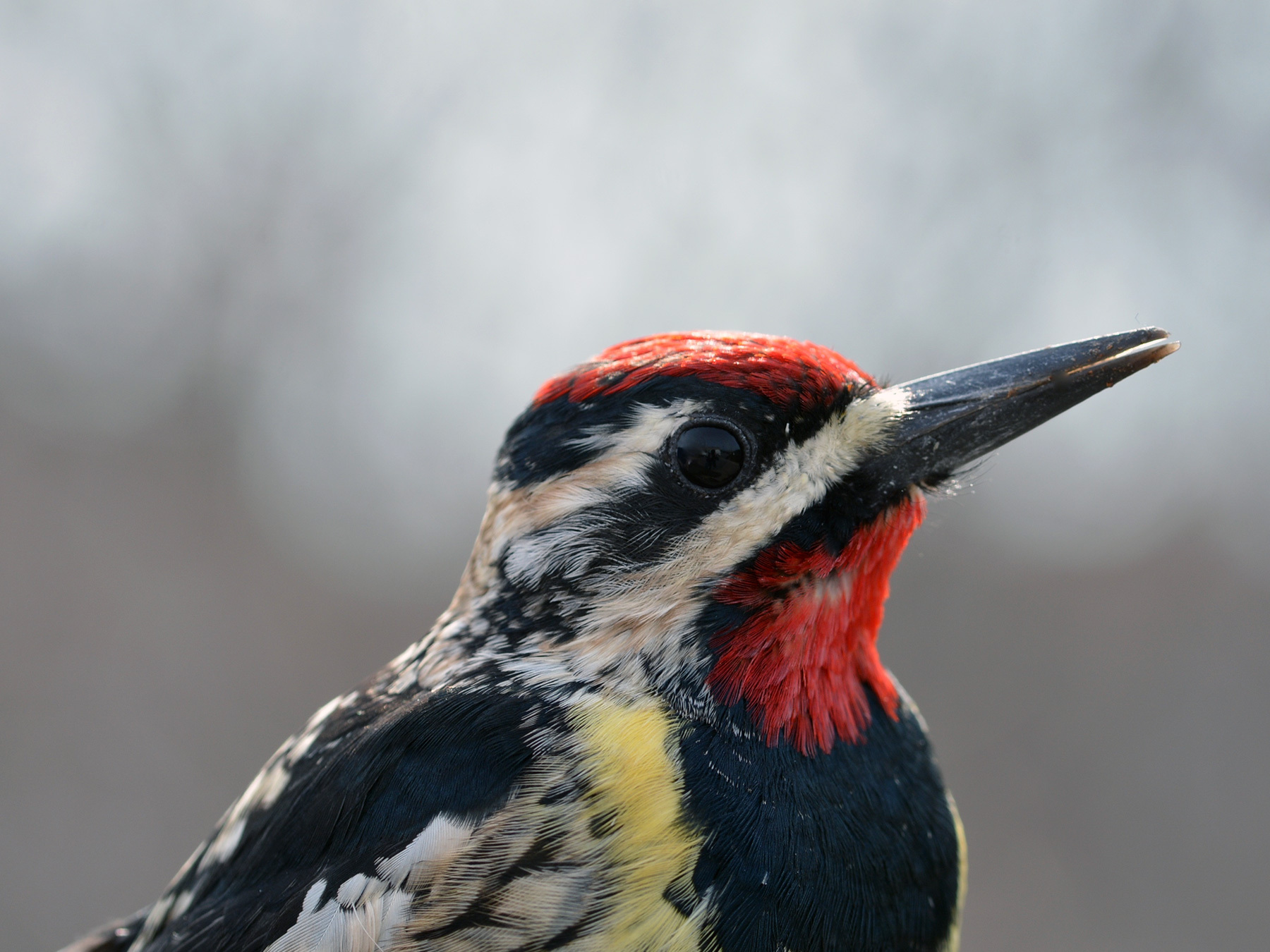
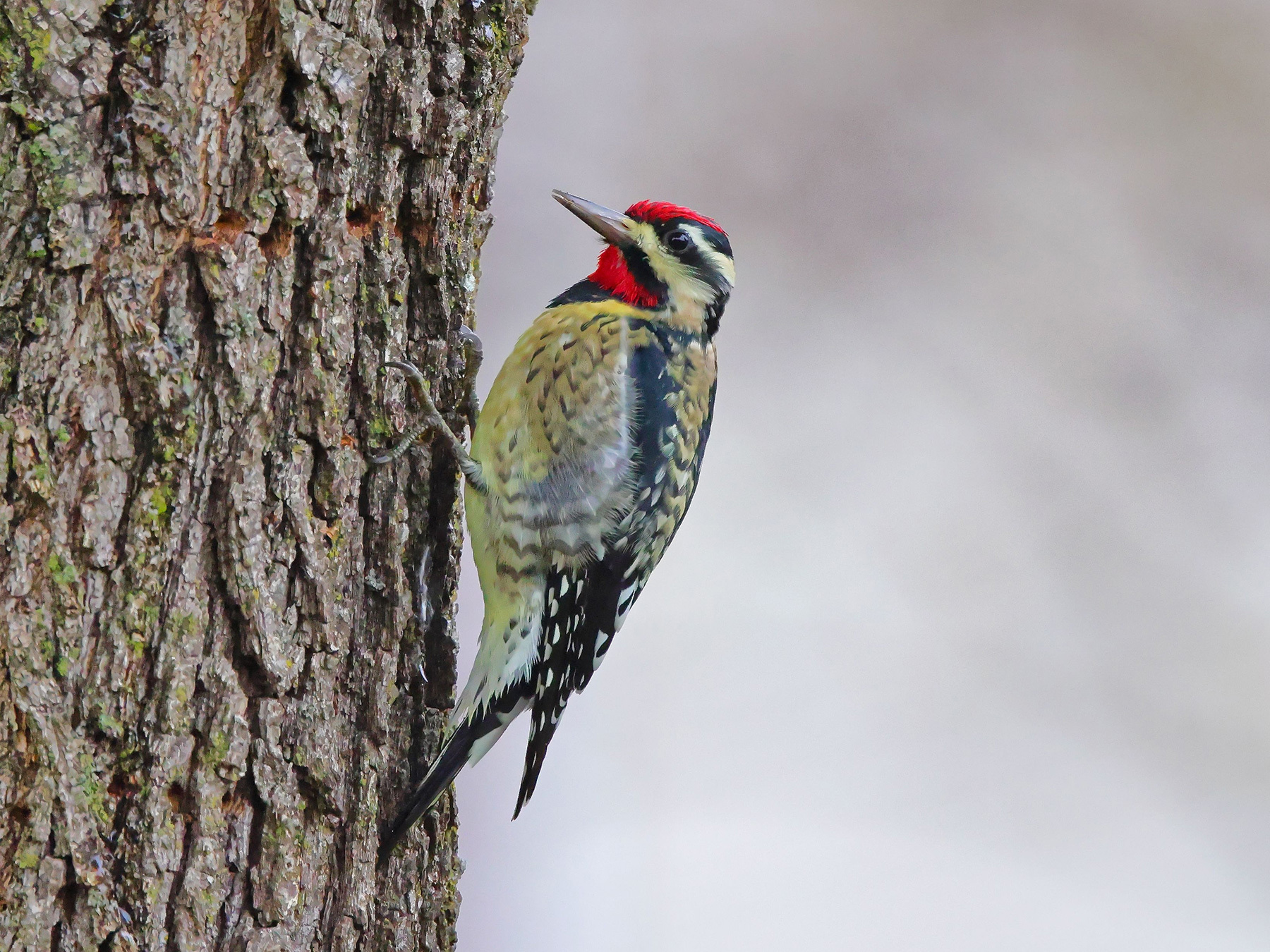
The Yellow-bellied Sapsucker is a small woodpecker with mostly black and white plumage and red markings around the head and throat. They may have a yellowish wash to their belly and breast, but their common name really isn’t all that accurate.
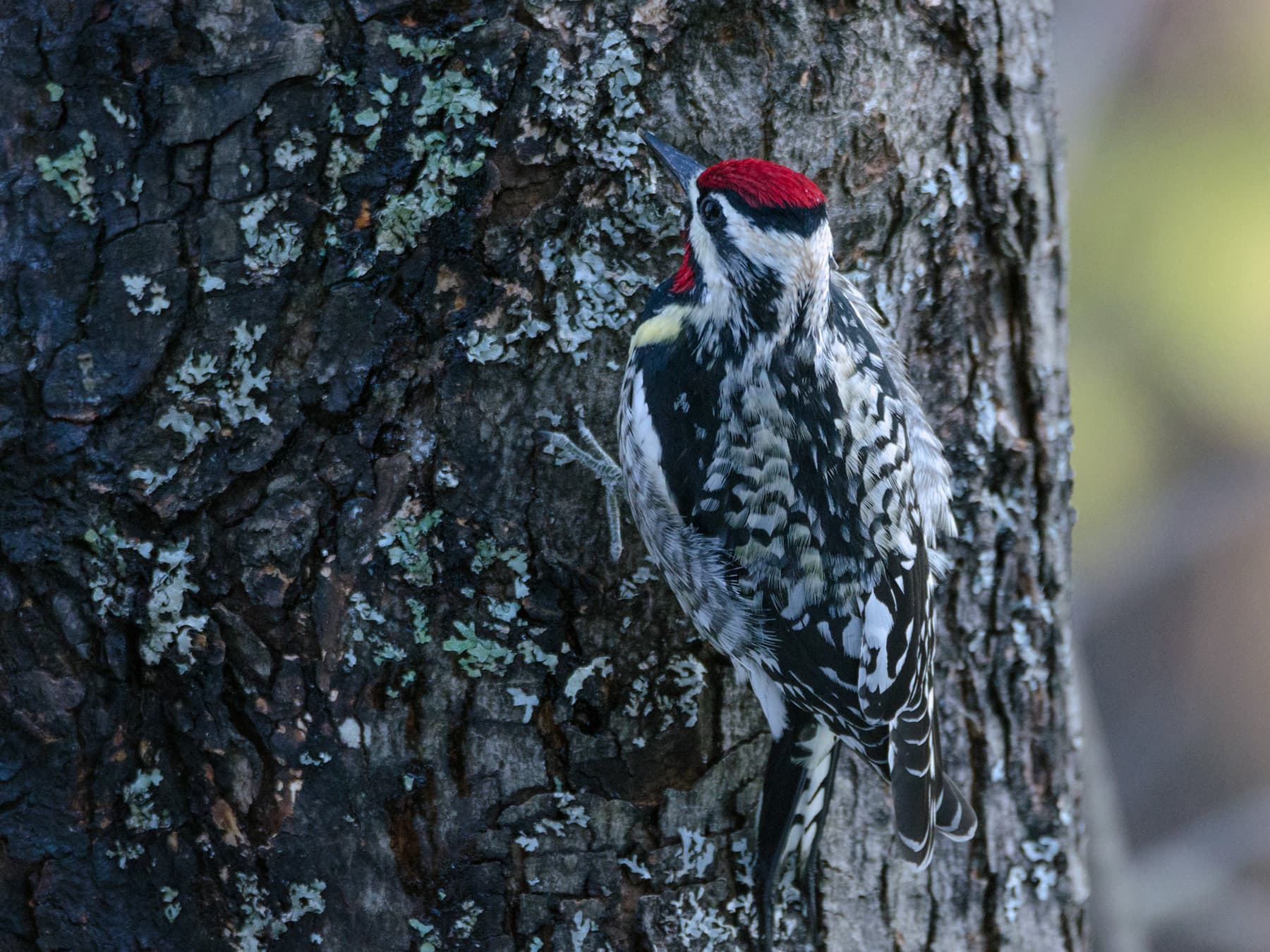
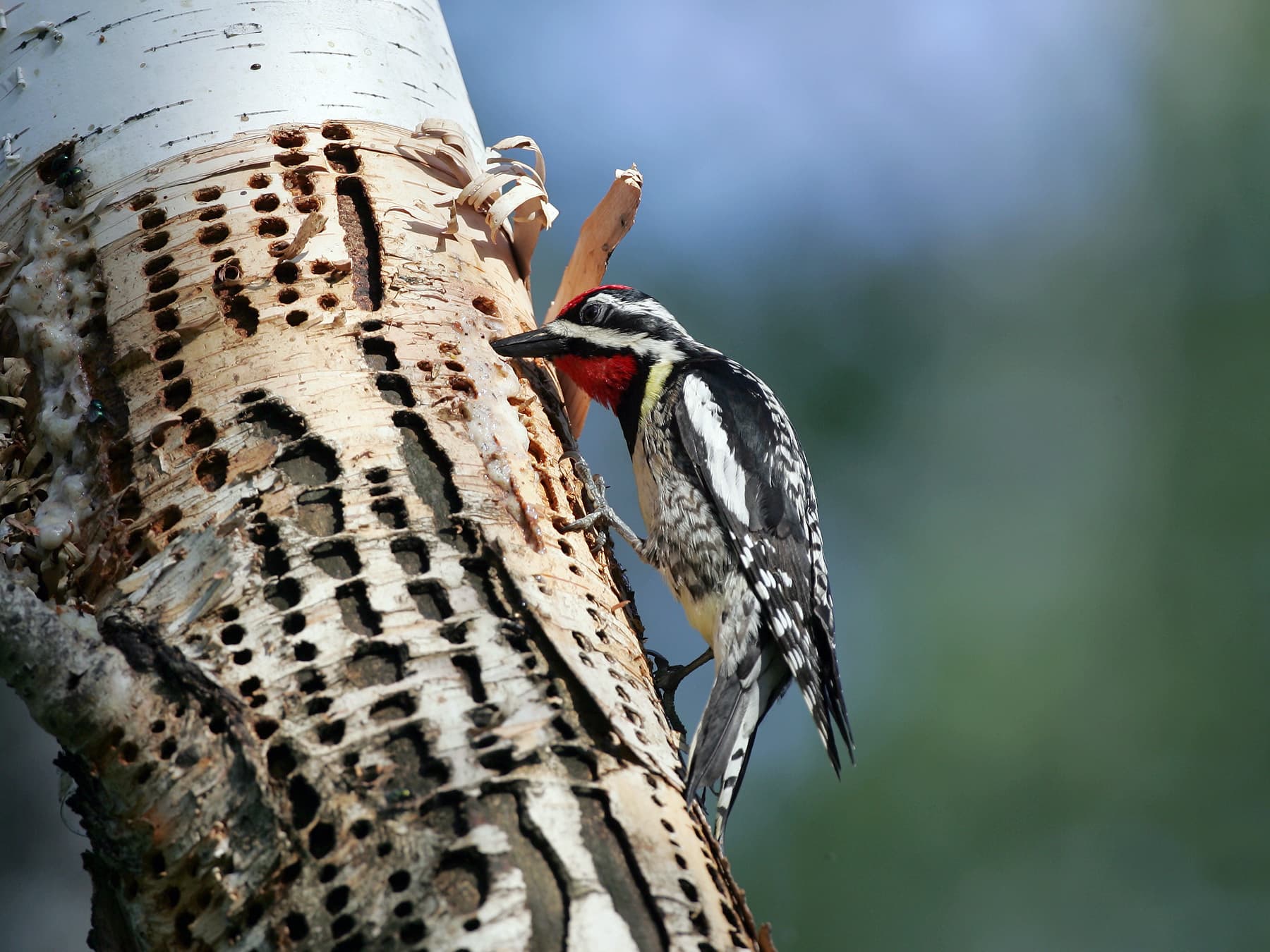
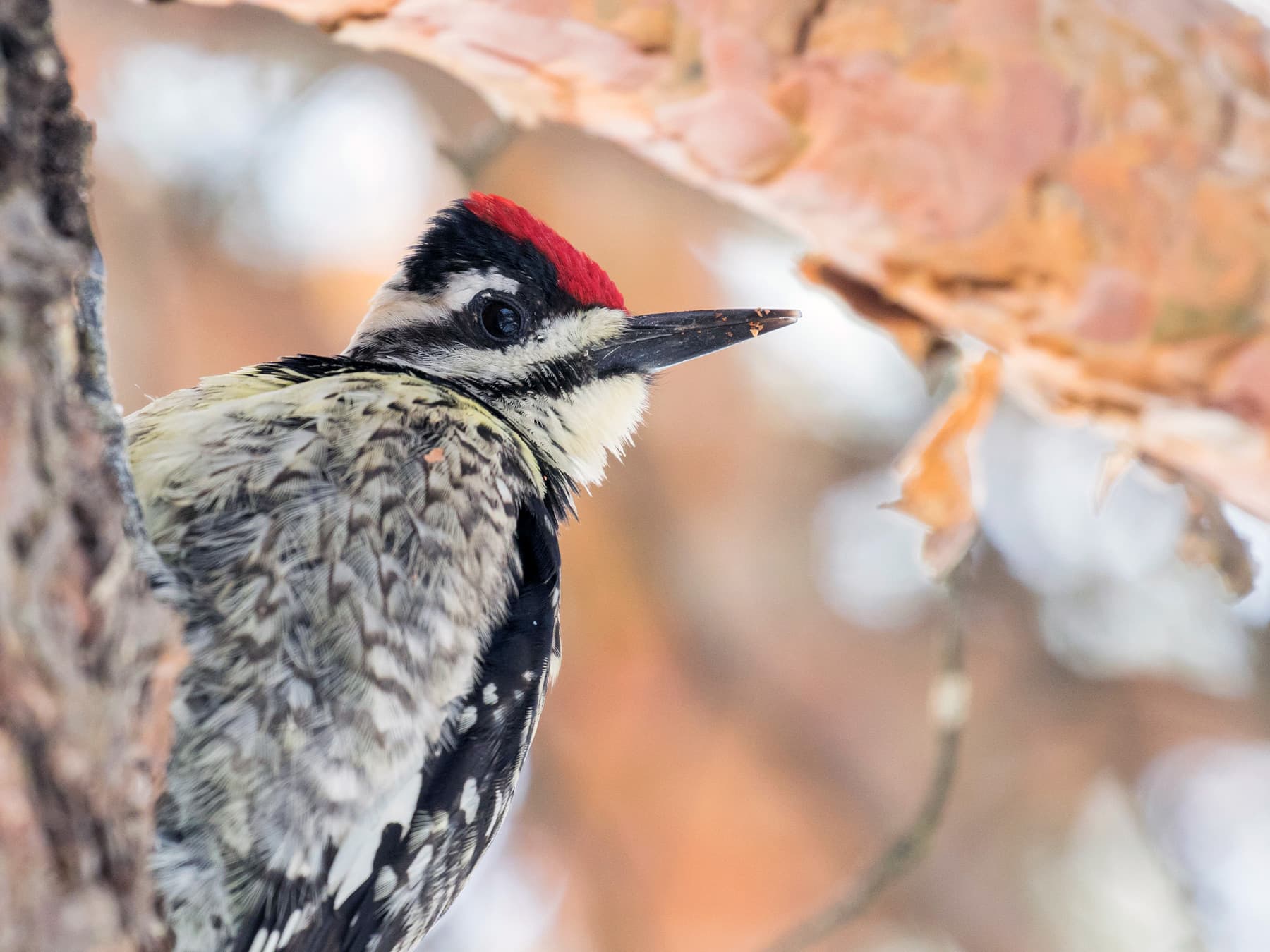
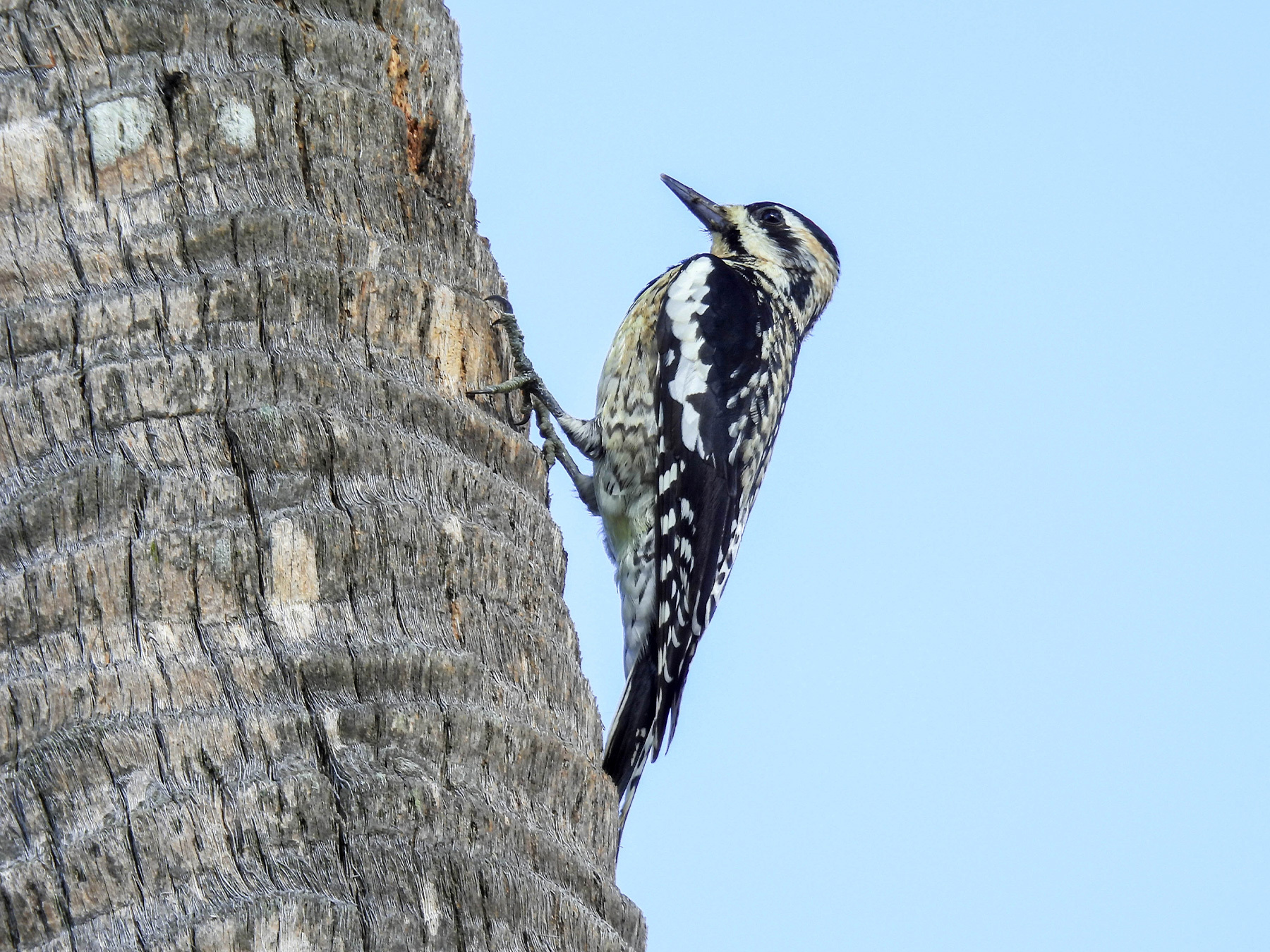
They are primarily black above, with indistinct white barring on their back and bold white stripes along each wing. Their underparts are pale yellow or whitish with darker streaks and bars. The head is more distinctly marked with broad black and white stripes alternating from the crown to the throat.
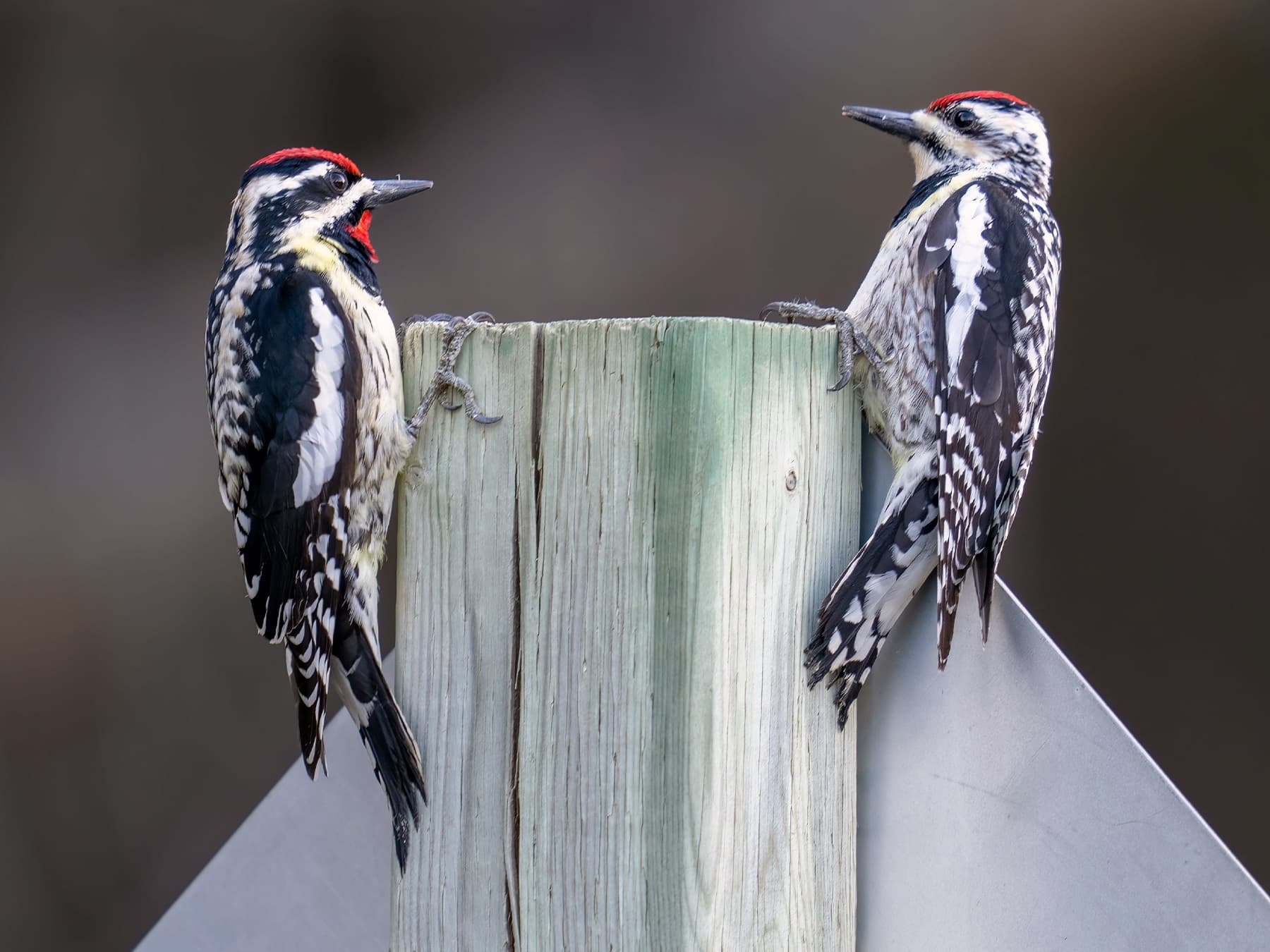
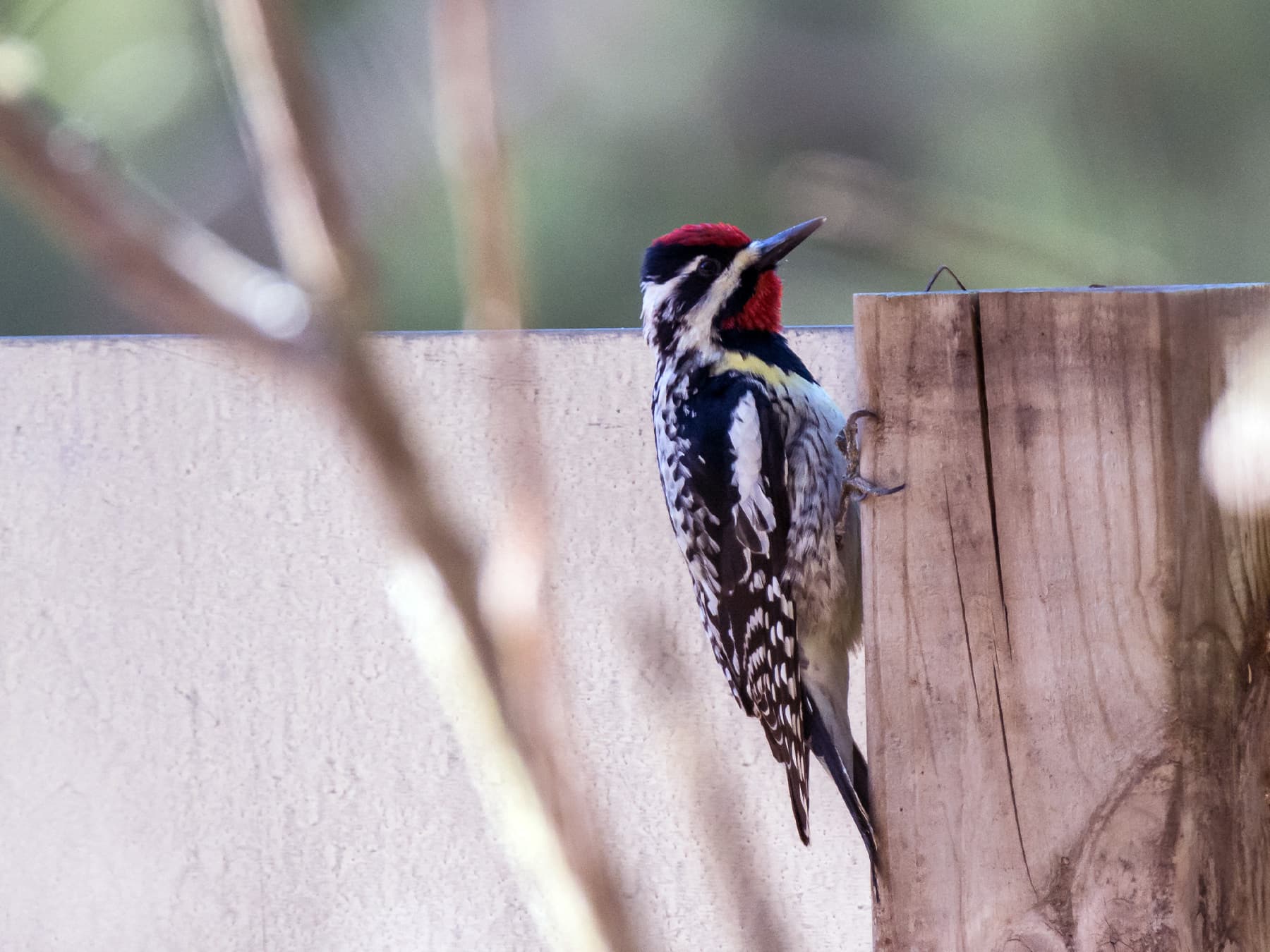
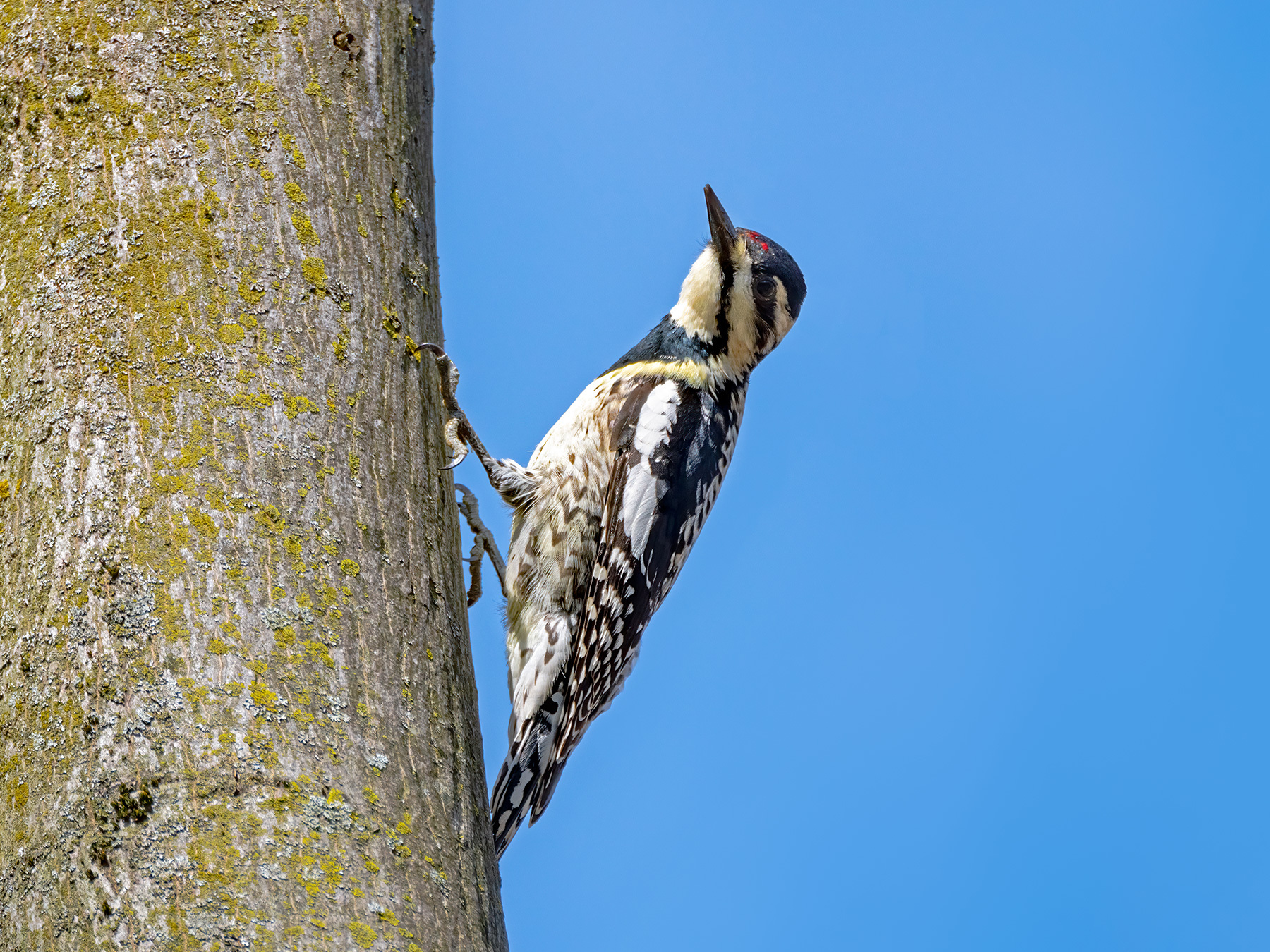
Males and females are very similar but easily distinguished by the color of their throats. Females have a white throat, while males have a red throat, and both have a red forehead and a broad black band on the upper breast that forms a ring around the throat. Check out this guide for much more information on distinguishing between the sexes.
Juveniles are similar to adults but appear brownish and have much duller head markings. They do not have red plumage on the forehead or throat.
The Yellow-bellied Sapsucker is most easily confused with the Red-naped Sapsucker (S. nuchalis), but fortunately, their ranges are mostly separate.
How big are Yellow-bellied Sapsuckers?
Yellow-bellied Sapsuckers are small woodpeckers, larger than the Downy Woodpecker but smaller than the Red-bellied Woodpecker.
Length
Yellow-bellied Sapsuckers have a body length of approximately 7 to 9 inches (18 - 23 cm).
Weight
Adults have an average weight of about 1¾ ounces (50g), and there is little difference between the sexes.
Wingspan
Typical wingspans vary between 15½ and 17¾ inches (34 - 40 cm).
Its size
Adults- Length
- 19–22 cm
- Wingspan
- 34–40 cm
- Weight
- 40–55 g
Its song and calls
What sound does a Yellow-bellied Sapsucker make?
Yellow-bellied Sapsuckers vocalize and drum on resonant surfaces, particularly during the breeding season. Their typical call is a mewing ‘wheeer wheeer wheeer’ sound, although they also produce a ‘waa’ alarm call that can be heard at any time of the year.
Like many species in the woodpecker family, these birds drum on hollow tree trunks and other resonant surfaces to communicate. Yellow-bellied Sapsuckers drum relatively slowly and arrhythmically.
- Call0:00 / 0:19
Recorded in North Carolina, United States · February 2024
- Drumming0:00 / 0:15
Recorded in Minnesota, United States · May 2013
When and where to see it
OctoberPeak season
Most recorded in October
- 1. District of Columbia1.1%
- 2. Maryland0.78%
- 3. North Carolina0.77%
- 4. Virginia0.76%
- 5. South Carolina0.75%
Each dot is a county, state or province: the bigger and darker, the larger the bird’s share of that place’s bird records that month. Grey dots: no regular records. The ringed point is the centre of the bird’s records this month; the arrow shows how it moved since last month, and the dashed loop its path through the year. “Arrivals” colours places where it becomes regular this month (orange) or is in its last regular month (grey). GBIF eBird Observation Dataset, 2019–2024. Map data: Natural Earth, US Census Bureau; place centres © OpenStreetMap contributors.
In your area
See when the Yellow-bellied Sapsucker is recorded in your county, state or province.
How often the Yellow-bellied Sapsucker turns up in the United States and Canada through the year, from birdwatchers' records.
United States
Resident · all year · most records in December
Canada
Summer visitor · regularly Apr–Oct · most records in April
Show as a table
| Month | United States | Canada |
|---|---|---|
| January | 0.32% (regular) | 0.016% |
| February | 0.25% (regular) | 0.012% |
| March | 0.17% (regular) | 0.008% |
| April | 0.20% (regular) | 0.52% (regular) |
| May | 0.12% (regular) | 0.42% (regular) |
| June | 0.13% (regular) | 0.41% (regular) |
| July | 0.10% (regular) | 0.36% (regular) |
| August | 0.048% (regular) | 0.21% (regular) |
| September | 0.11% (regular) | 0.30% (regular) |
| October | 0.35% (regular) | 0.19% (regular) |
| November | 0.33% (regular) | 0.014% |
| December | 0.40% (regular) | 0.015% |
Worldwide: recorded regularly in 20 countries
Countries where it was recorded in at least 3 of the 6 years 2019–2024. Linked countries have their own bird list.
North America (20)
- Bahamas
- Belize
- Bermuda
- Canada
- Cayman Islands
- Costa Rica
- Cuba
- Dominican Republic
- El Salvador
- Guatemala
- Haiti
- Honduras
- Jamaica
- Mexico
- Nicaragua
- Panama
- Puerto Rico
- St Pierre & Miquelon
- Turks & Caicos Islands
- United States
Data: EOD – eBird Observation Dataset (Cornell Lab of Ornithology), accessed via GBIF.org, CC BY 4.0. Records from 2019–2024, aggregated and filtered by Birdfact. How these lists are made
What is the habitat of a Yellow-bellied Sapsucker?
Yellow-bellied Sapsuckers are forest and woodland birds. They prefer deciduous and mixed forests that support their favorite food trees.
What is the range of a Yellow-bellied Sapsucker?
Yellow-bellied Sapsuckers are restricted to North America. They occur from Eastern Central Alaska across Canada to the Maritime Provinces and south through the eastern half of the Lower 48 states of the US. They also visit most of Mexico, Central America, and the Caribbean Islands.
Would you like to learn more about the habitat and range of the Yellow-bellied Woodpecker? Check out our in-depth guide!
Where do Yellow-bellied Sapsuckers live?
Yellow-bellied Sapsuckers spend most of their lives in trees. These acrobatic birds are specially adapted for clinging to vertical tree trunks, using their zygodactyl feet for grip and stiff tail feathers for added support.
How rare are Yellow-bellied Sapsuckers?
Yellow-bellied Woodpeckers are widespread birds and common in suitable habitats. However, they are rare in some states like Ohio and Missouri.
Where can you see Yellow-bellied Sapsuckers in the US?
Yellow-bellied Sapsuckers are very widespread east of the Rockies and the Great Plains. They breed in the Upper Midwest, Great Lakes region, and the Northeast down to West Virginia. Look out for overwintering birds across the Southeast in forests and woodlands from Texas to Florida and up the East Coast as far as Connecticut.
Where can you see Yellow-bellied Sapsuckers in Canada?
Yellow-bellied Sapsuckers are summer breeding visitors to every Canadian province and territory except Nunavut. They are mostly absent from the south of British Columbia, Alberta, and Saskatchewan and the north of Quebec.
Migration
Do Yellow-bellied Sapsuckers migrate?
Yellow-bellied Sapsuckers are highly migratory. These birds nest in the north of their range (mostly in Canada) during the spring and summer but retreat to the American Southeast, Mexico, the Caribbean, and Central America to enjoy the relatively mild southern winters.
Are Yellow-bellied Sapsuckers native to the US?
Yellow-bellied Sapsuckers are a native species in the United States. These highly migratory birds can be seen in different parts of the country during all months of the year.
Tips for seeing it
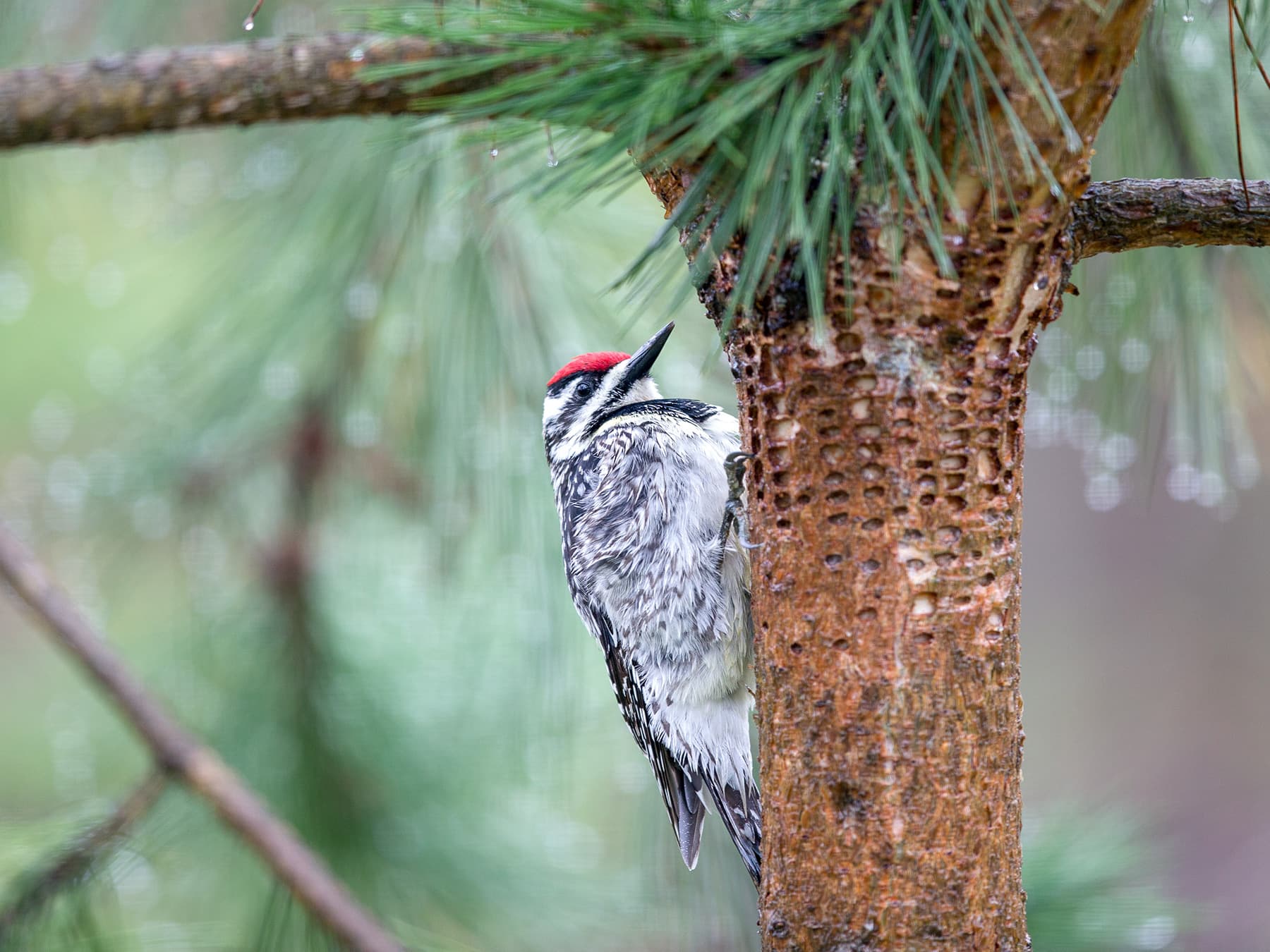
- Look for neat rows of small holes on tree trunks, a telltale sign of sapsucker activity
- Listen for their distinctive 'mewing' call, which sounds cat-like
- In spring, watch for courtship drumming displays on resonant objects
- In eastern North America, check deciduous forests during migration seasons
- The Yellow-bellied Sapsucker is most easily confused with the Red-naped Sapsucker (S. nuchalis), but fortunately, their ranges are mostly separate.
What it eats
What do Yellow-bellied Sapsuckers eat?
As their name suggests, Yellow-bellied Sapsuckers feed on the sap of various trees such as maples, aspens, and birches. They drill holes into the bark of these trees and wait for them to well up with the sugary fluid. Their diet is supplemented with insects attracted to the sap and various fruits.
What do Yellow-bellied Sapsucker chicks eat?
Their chicks are fed a diet of small insects, sometimes dipped in tree sap. Both parents feed the young.
Nesting and breeding
Where do Yellow-bellied Sapsuckers nest?
Yellow-bellied Sapsuckers nest in the north of their range, primarily in Canada, but also in the American Northeast and parts of Alaska. The male drills a nest hole into a soft, fungus-infected limb of a deciduous tree but does not bring in any other material.
When do Yellow-bellied Sapsuckers nest?
Yellow-bellied Sapsuckers nest in late spring and summer, usually between May and July. The female will lay her eggs within days of her partner completing the nest, and both parents will work together to incubate them for ten to thirteen days. The young birds fledge the nest about four weeks later.
What do Yellow-bellied Sapsucker eggs look like?
Yellow-bellied Sapsuckers usually lay four to six plain white eggs, each measuring about 23 millimeters long and 17 millimeters across.
Do Yellow-bellied Sapsuckers mate for life?
Yellow-bellied Sapsuckers form monogamous pairs that remain together for the entire breeding season. They will usually reunite with the same partner each year or until one of the pair fails to return.
Behaviour
Are Yellow-bellied Sapsuckers aggressive?
Yellow-bellied Sapsuckers can be very protective over their sap supply and will chase away competition like large insects and hummingbirds. They are also territorial when nesting and may act aggressively toward other woodpeckers or members of their own species.
Where do Yellow-bellied Sapsuckers sleep at night?
Yellow-bellied Sapsuckers may sleep in their nest cavity during excavation, incubation, and brooding, but they sleep elsewhere for the rest of the year.
Lifespan and predators
How long do Yellow-bellied Sapsuckers live?
Like most small birds, Yellow-bellied Sapsuckers typically live just a few years. The oldest individuals live 6 to 8 years.
What are the predators of Yellow-bellied Sapsuckers?
Yellow-bellied Sapsuckers are vulnerable to many predators from egg to adulthood. Small mammals like raccoons and birds of prey like Sharp-shinned and Cooper’s Hawks probably pose the greatest threats.
Are Yellow-bellied Sapsuckers protected?
Yellow-bellied Sapsuckers are protected by the Migratory Bird Treaty Act in the United States and Canada’s Migratory Birds Convention Act.
Are Yellow-bellied Sapsuckers endangered?
Yellow-bellied Sapsuckers are a widespread and common bird. Officially listed as a ‘Least Concern’ species on the IUCN Red List, they are not endangered.
Conservation
While currently listed as Least Concern, Yellow-bellied Sapsuckers face threats from habitat loss due to deforestation and climate change.
Conservation efforts focus on protecting mature deciduous forests and promoting sustainable forestry practices to maintain suitable breeding habitats.
More photos
5 photos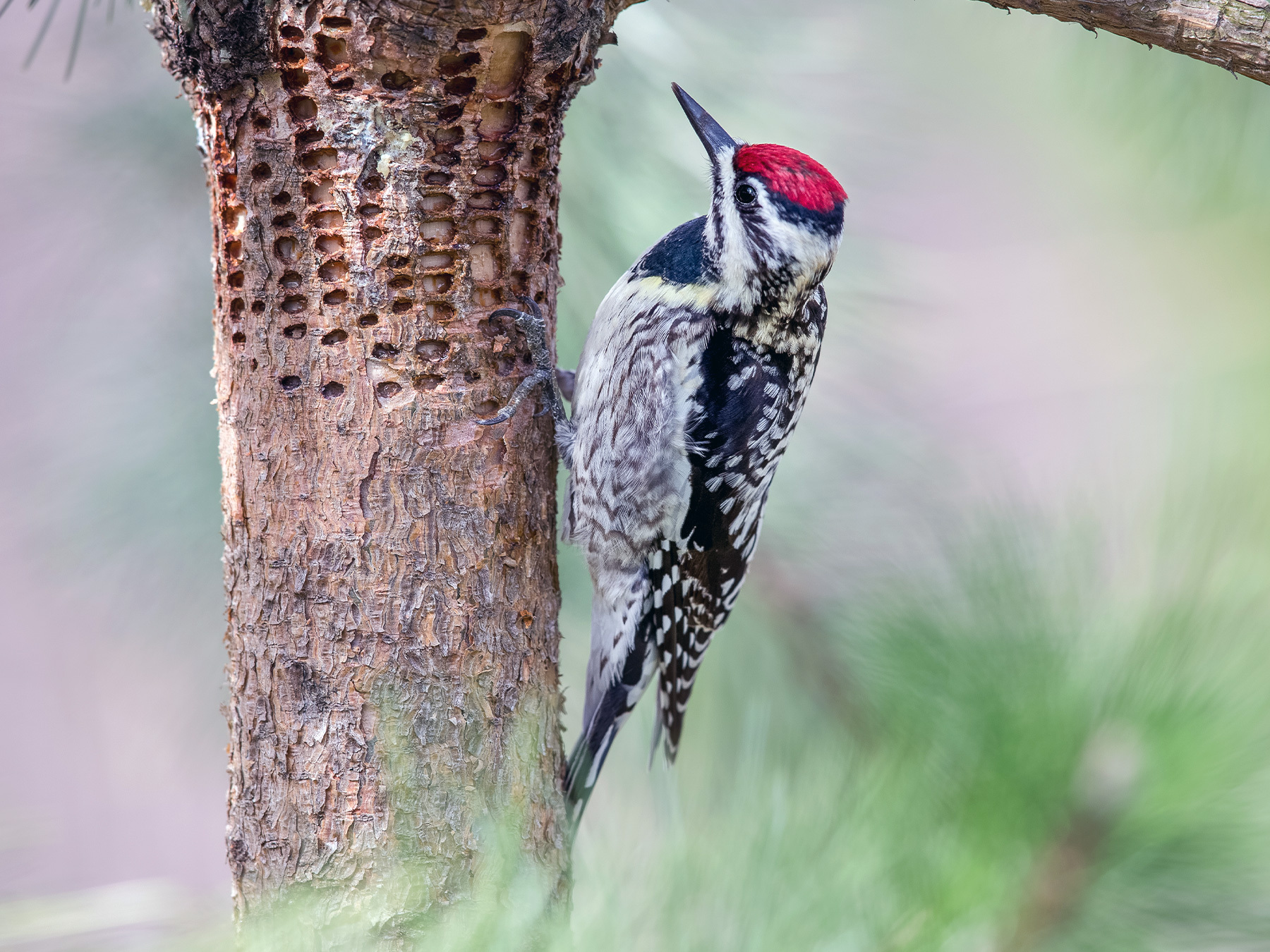
Quick facts
- Length
- 19–22 cm
- Wingspan
- 34–40 cm
- Weight
- 40–55 g
- Lifespan
- 5–7 years · oldest recorded 7.8 years
- Family
- Woodpeckers
- Migration
- Short-distance migrant
- Global status (IUCN)
- Least Concern
- World population
- 14,000,000 mature individuals
- Population trend
- Decreasing
- Scientific name
- Sphyrapicus varius
Questions
4What attracts Yellow-bellied Sapsuckers?
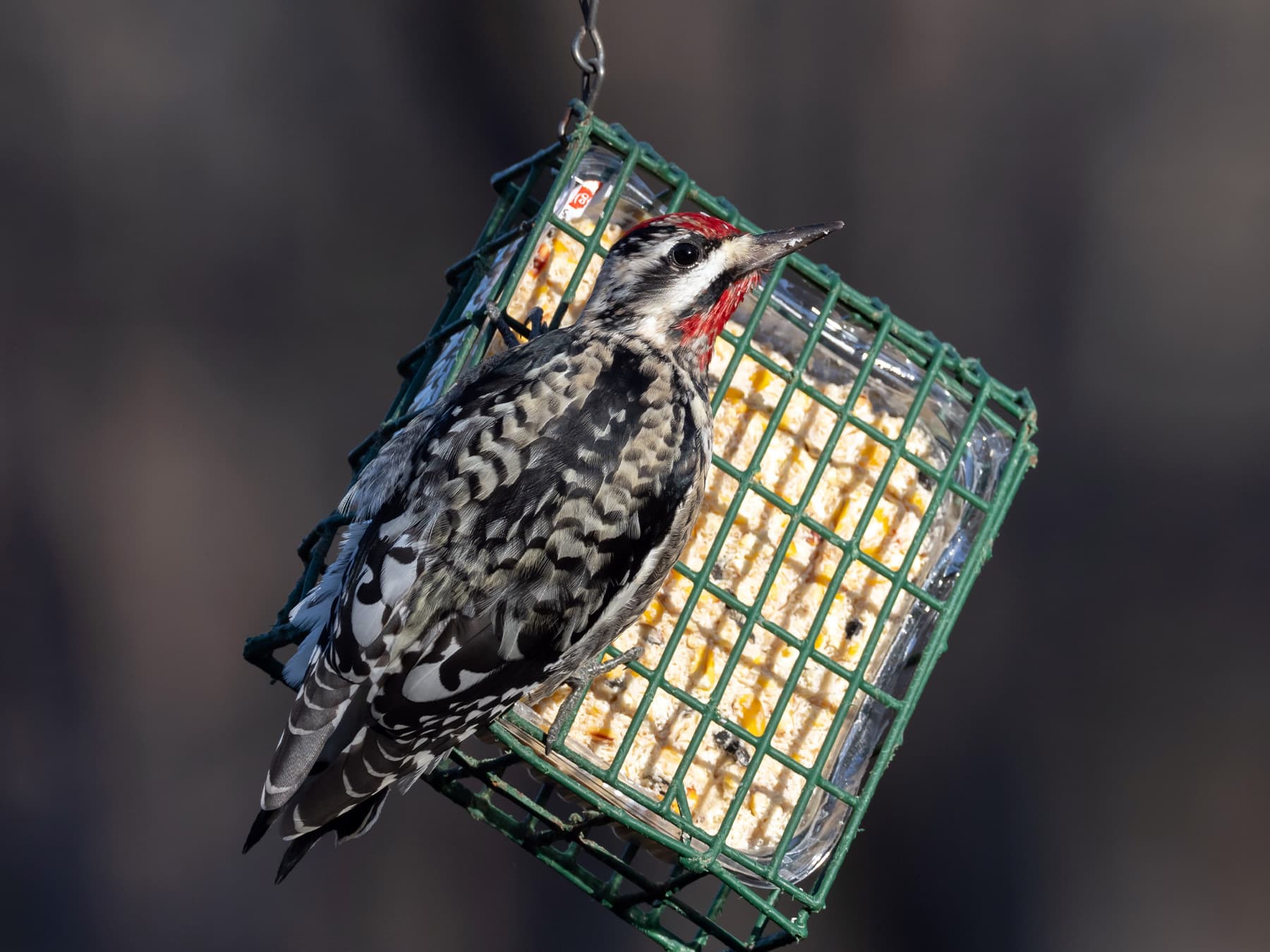
Birdwatchers can attract Yellow-bellied Sapsuckers by providing suet and sugary foods like grape jelly. Planting their favorite food trees is a great way to keep them coming back year after year.
What trees do Yellow-bellied Sapsuckers prefer?
Yellow-bellied Sapsuckers prefer deciduous trees with sugary sap. Their favorite trees are maples, birches, serviceberry, oaks, and apple trees.
Do Yellow-bellied Sapsuckers harm trees?
Yellow-bellied Sapsuckers usually don’t cause much serious harm to trees, although they can increase the risk of pest infestations and disease. They have been reported to kill some trees by drilling holes all the way around the trunk, although this is rare.
What is the difference between a Yellow-bellied Sapsucker and a woodpecker?
Yellow-bellied Sapsuckers are true woodpeckers from the Picidae family. There are four species of Sapsuckers in North America, and they differ from other woodpeckers primarily in their habit of drilling small, regularly-spaced wells on tree trunks to harvest the sugary sap.
Sources
3- 1BirdLife International. 2016. Sphyrapicus varius. The IUCN Red List of Threatened Species 2016: e.T22680868A92883427. Source (opens in a new tab)
- 2del Hoyo et al (2002)
- 3Partners in Flight (2022) Source (opens in a new tab)

Checked by
Nathan Cope, founder and editor
Nathan founded Birdfact and leads its writers and contributors in the UK, the US and Canada. He has watched and studied birds for more than ten years, and checks every article and species guide before it’s published.