


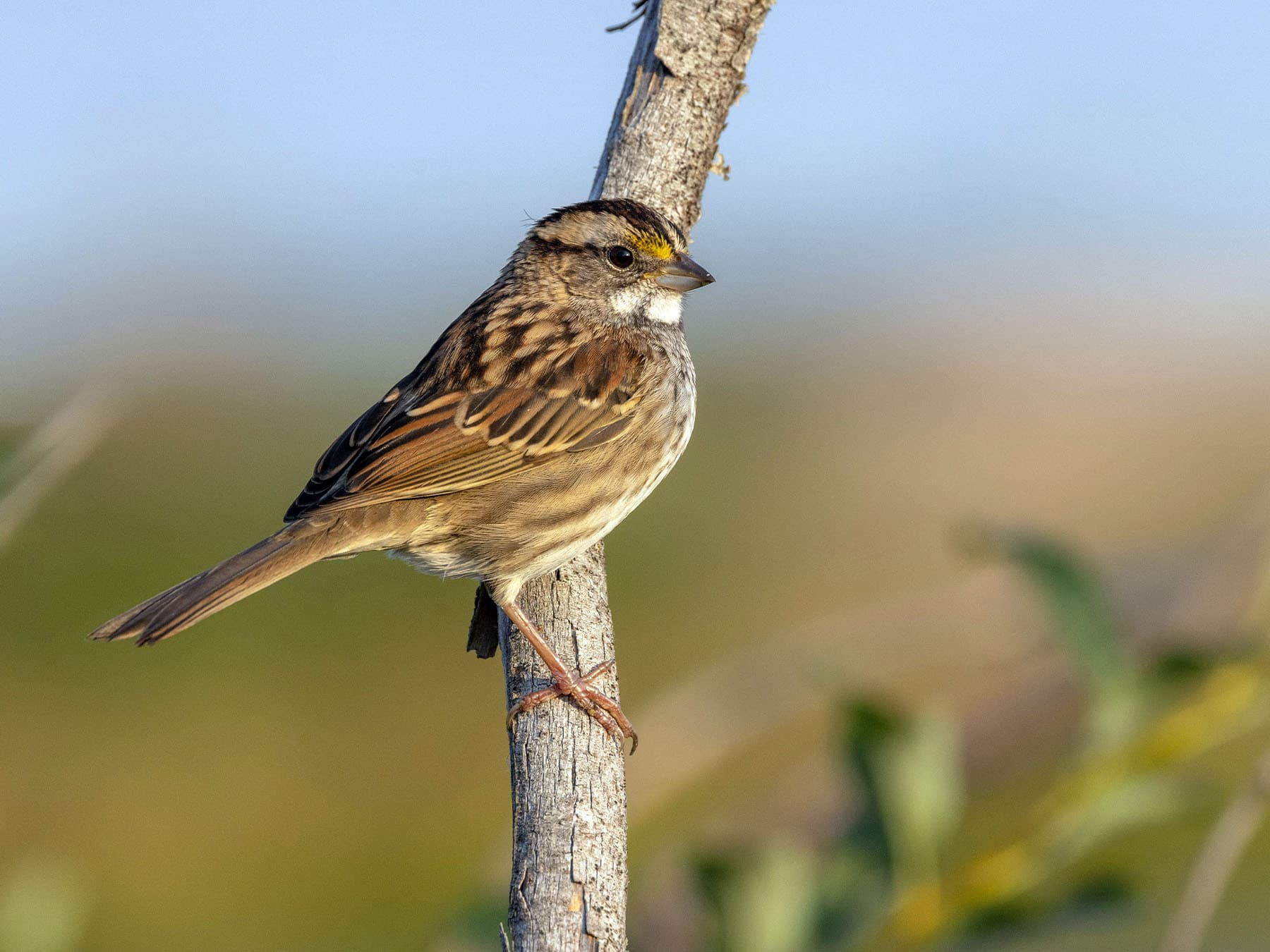
White-throated Sparrow
Whitethroat · Zonotrichia albicollis
By the Birdfact teamChecked by Nathan Cope
See it in 3D
2 plumages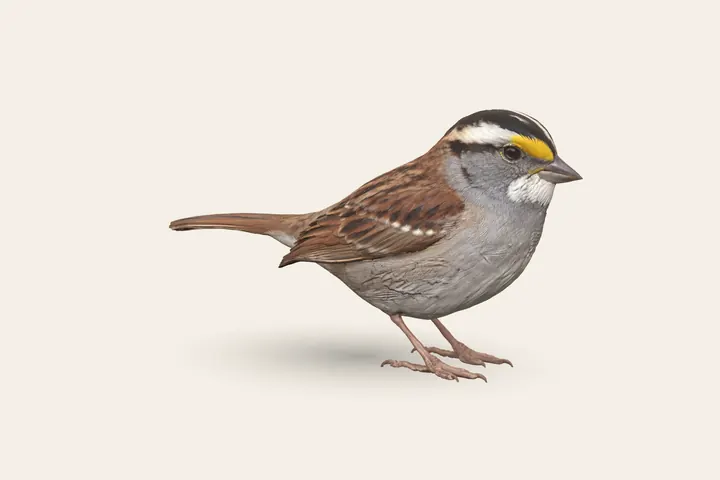 3D model
A White-throated Sparrow (White-striped) is 6.5–7 in (16–18 cm) long, bill to tail.
3D model · White-striped · Length 6.5–7 in (16–18 cm) · How we make our birds · Report a problem
© 2026 NC Digital Limited (Birdfact). All rights reserved. This 3D model may be viewed on this page and shared by link only. Downloading, extracting, copying or reusing it, or using it to train machine-learning models, is not permitted without our written permission. Using our models
On this page11 sections
How to recognise it
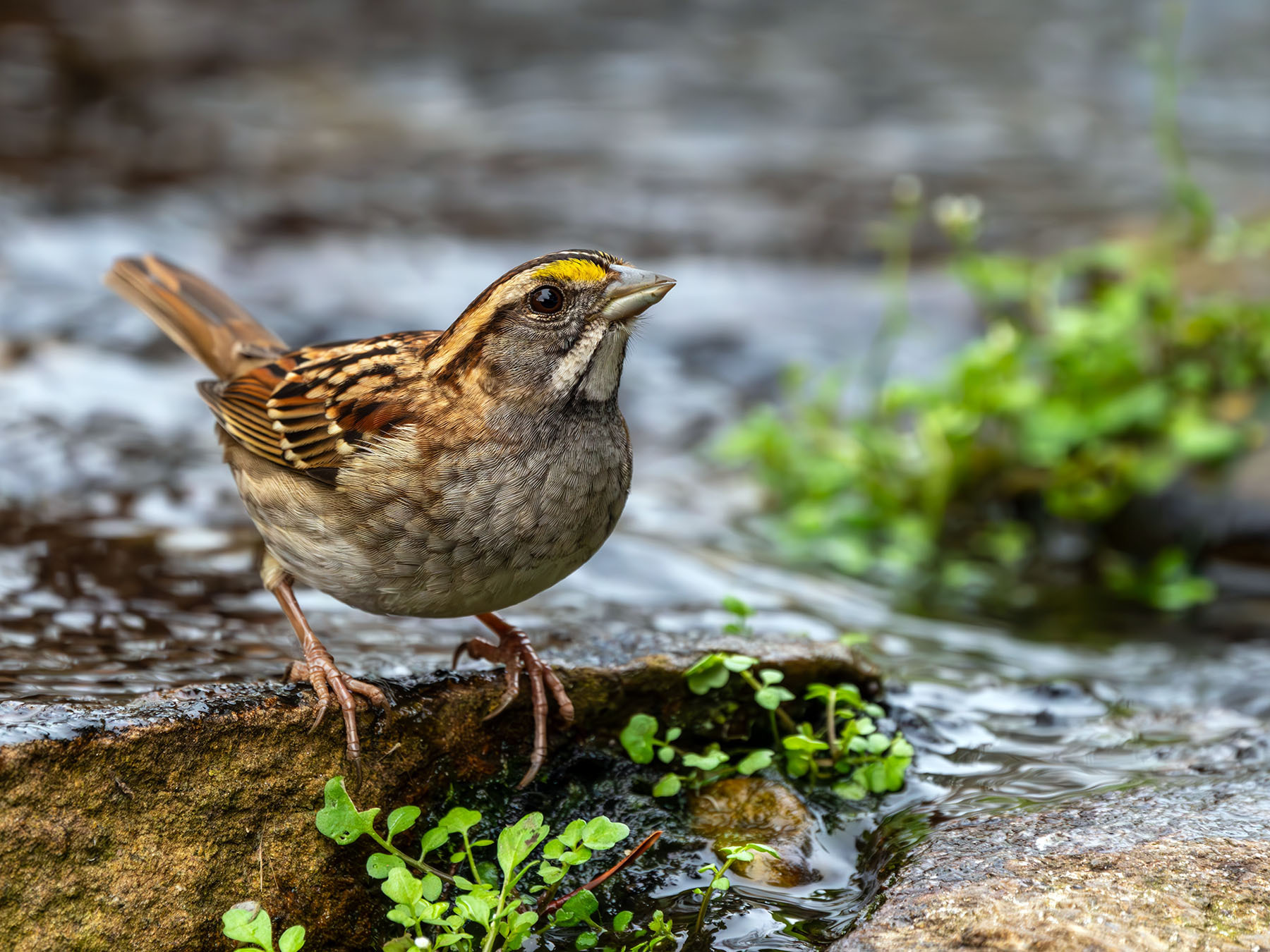
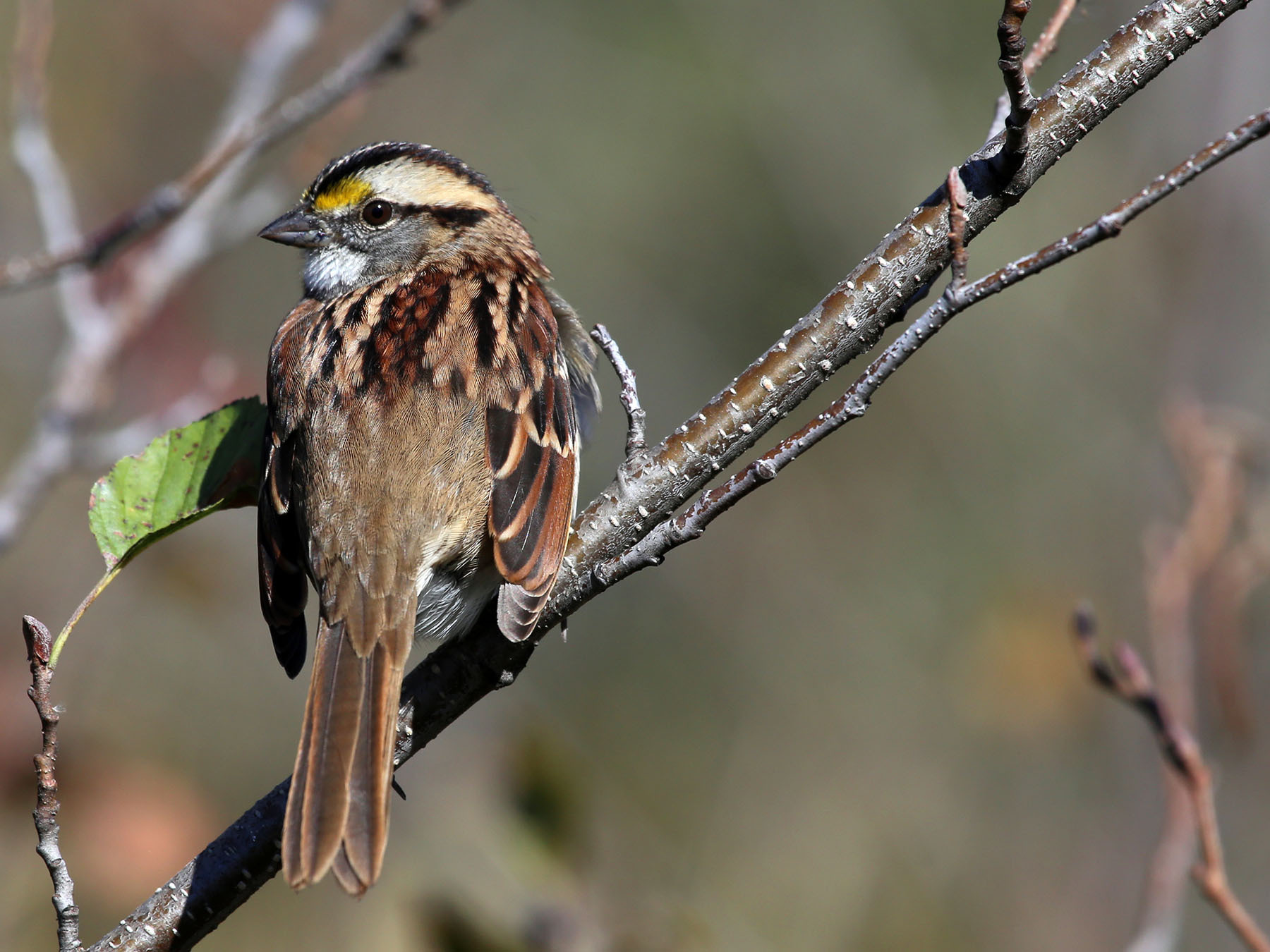
The White-throated Sparrow is a striking bird with a brown-streaked back, gray breast, and distinctive white throat patch. Its head features bold black and white (or tan) stripes, with a bright yellow spot between the eye and bill.
Adults of both sexes look similar, though two color morphs exist: white-striped and tan-striped. Juveniles have a similar pattern but with duller, streakier plumage.
Not sure it’s a White-throated Sparrow? Check your photo: Birdfact names the bird and shows the look-alike side by side.
Its size
Adults- Length
- 16–18 cm
- Wingspan
- 23–25 cm
- Weight
- 22–32 g
Its song and calls
The White-throated Sparrow's song is one of the most recognizable in North America, often described as 'Oh-sweet-canada-canada-canada' or 'Old-sam-peabody-peabody-peabody.' Their call is a sharp 'chink' or 'tseet.' In winter, they may give a soft, musical warble.
Heard one and not sure? Let the bird song identifier listen.
When and where to see it
OctoberPeak season
Most recorded in October
- 1. Vermont3.6%
- 2. New Hampshire3.1%
- 3. Quebec2.9%
- 4. Minnesota2.9%
- 5. New York2.8%
Each dot is a county, state or province: the bigger and darker, the larger the bird’s share of that place’s bird records that month. Grey dots: no regular records. The ringed point is the centre of the bird’s records this month; the arrow shows how it moved since last month, and the dashed loop its path through the year. “Arrivals” colours places where it becomes regular this month (orange) or is in its last regular month (grey). GBIF eBird Observation Dataset, 2019–2024. Map data: Natural Earth, US Census Bureau; place centres © OpenStreetMap contributors.
In your area
See when the White-throated Sparrow is recorded in your county, state or province.
How often the White-throated Sparrow turns up in the United States and Canada through the year, from birdwatchers' records.
United States
Winter visitor · regularly Sep–Jul · most records in November
Canada
Resident · all year · most records in October
Show as a table
| Month | United States | Canada |
|---|---|---|
| January | 1.2% (regular) | 0.60% (regular) |
| February | 1.2% (regular) | 0.52% (regular) |
| March | 0.92% (regular) | 0.28% (regular) |
| April | 1.1% (regular) | 0.80% (regular) |
| May | 0.52% (regular) | 1.4% (regular) |
| June | 0.100% (regular) | 1.0% (regular) |
| July | 0.078% (regular) | 1.00% (regular) |
| August | 0.033% | 0.59% (regular) |
| September | 0.24% (regular) | 1.6% (regular) |
| October | 1.2% (regular) | 2.0% (regular) |
| November | 1.3% (regular) | 0.78% (regular) |
| December | 1.3% (regular) | 0.62% (regular) |
Worldwide: recorded regularly in 5 countries
Countries where it was recorded in at least 3 of the 6 years 2019–2024. Linked countries have their own bird list.
North America (5)
Data: EOD – eBird Observation Dataset (Cornell Lab of Ornithology), accessed via GBIF.org, CC BY 4.0. Records from 2019–2024, aggregated and filtered by Birdfact. How these lists are made
Tips for seeing it
- Look for them on the ground or in low bushes in wooded areas
- Listen for their distinctive 'Old Sam Peabody, Peabody, Peabody' song
- Check bird feeders in winter, especially in the eastern United States and Canada
- Observe their scratching behavior in leaf litter
What it eats
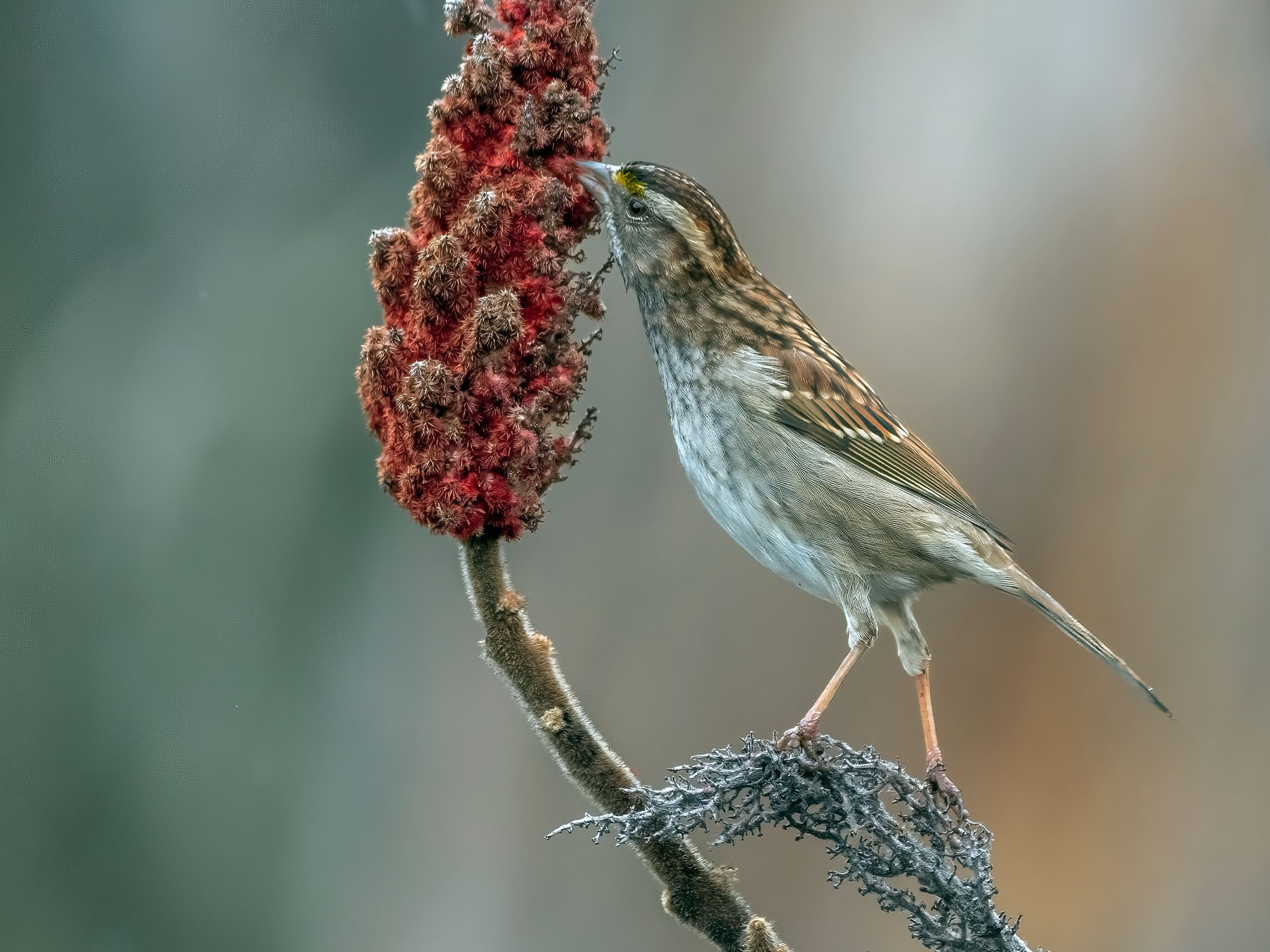
White-throated Sparrows have a varied diet consisting mainly of seeds, berries, and insects. They forage on the ground, scratching in leaf litter to uncover food. In winter, they frequently visit bird feeders, showing a preference for millet and sunflower seeds.
Nesting and breeding
Breeding season for White-throated Sparrows typically begins in late spring. Males establish territories and attract females with their distinctive songs.
Nests are usually built on or near the ground, hidden in dense vegetation. The female constructs a cup-shaped nest using grasses, twigs, and moss, lined with finer materials. She lays 3-5 pale blue or green eggs, speckled with reddish-brown.
Incubation lasts about 11-14 days, primarily by the female. Both parents feed the nestlings, which fledge after 8-9 days but continue to be fed by adults for several more weeks.
Behaviour
White-throated Sparrows are often seen foraging on the ground, using both feet to scratch leaf litter in search of food. They are social birds, forming small flocks outside the breeding season. During courtship, males perform a simple display by fluffing their feathers and spreading their tails.
Conservation
While the White-throated Sparrow is currently listed as Least Concern, it faces threats from habitat loss and climate change. Conservation efforts focus on protecting breeding and wintering habitats, particularly in boreal forests and urban green spaces.
More photos
4 photos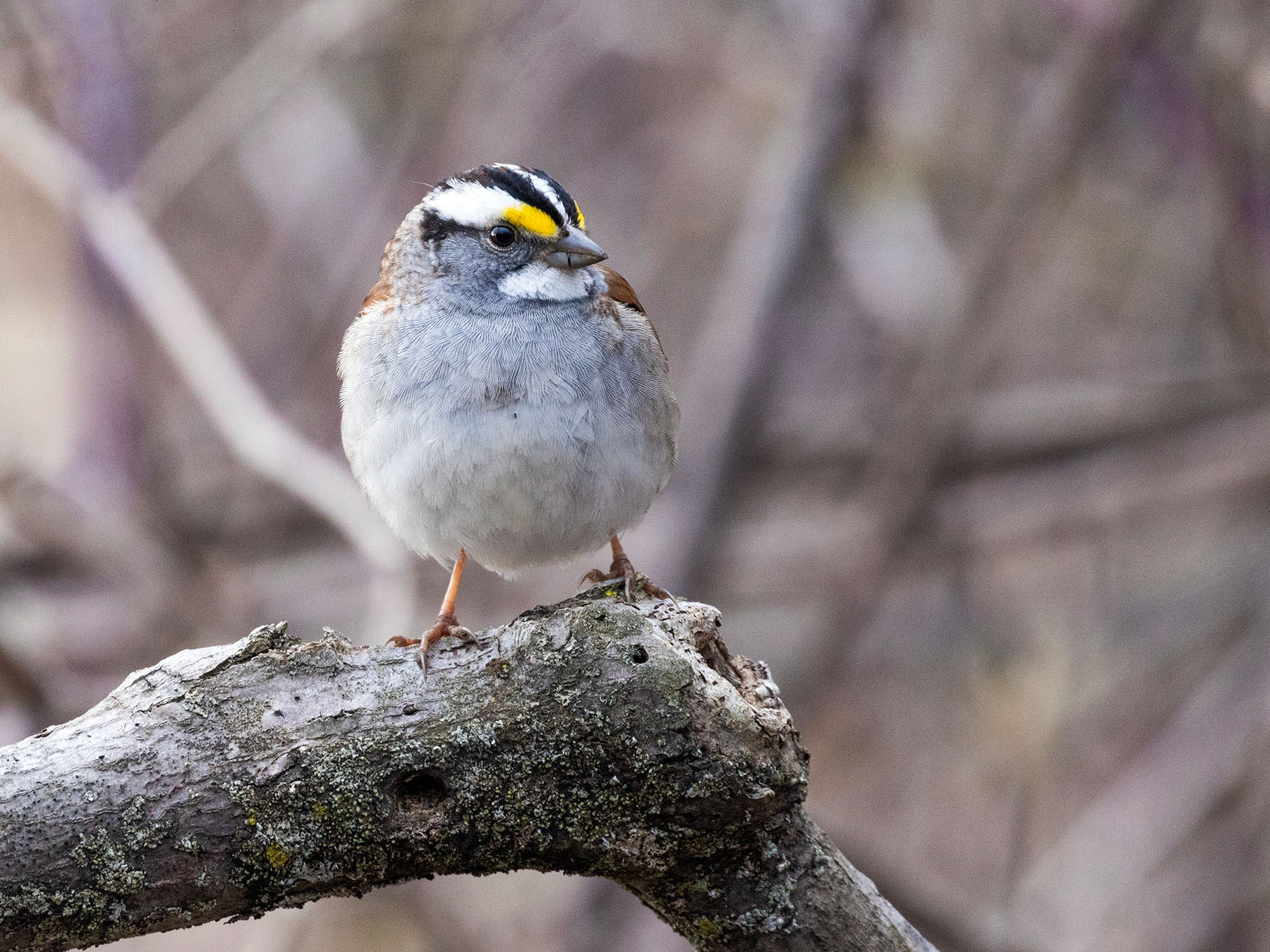
Quick facts
- Length
- 16–18 cm
- Wingspan
- 23–25 cm
- Weight
- 22–32 g
- Lifespan
- 2–9 years
- Family
- New World Sparrows
- Migration
- Short-distance migrant
- Global status (IUCN)
- Least Concern
- World population
- Unknown
- Population trend
- Decreasing
- Also called
- Whitethroat
- Scientific name
- Zonotrichia albicollis

Checked by
Nathan Cope, founder and editor
Nathan founded Birdfact and leads its writers and contributors in the UK, the US and Canada. He has watched and studied birds for more than ten years, and checks every article and species guide before it’s published.