
Verdin
Auriparus flaviceps
By the Birdfact teamChecked by Nathan Cope
On this page13 sections
How to recognise it
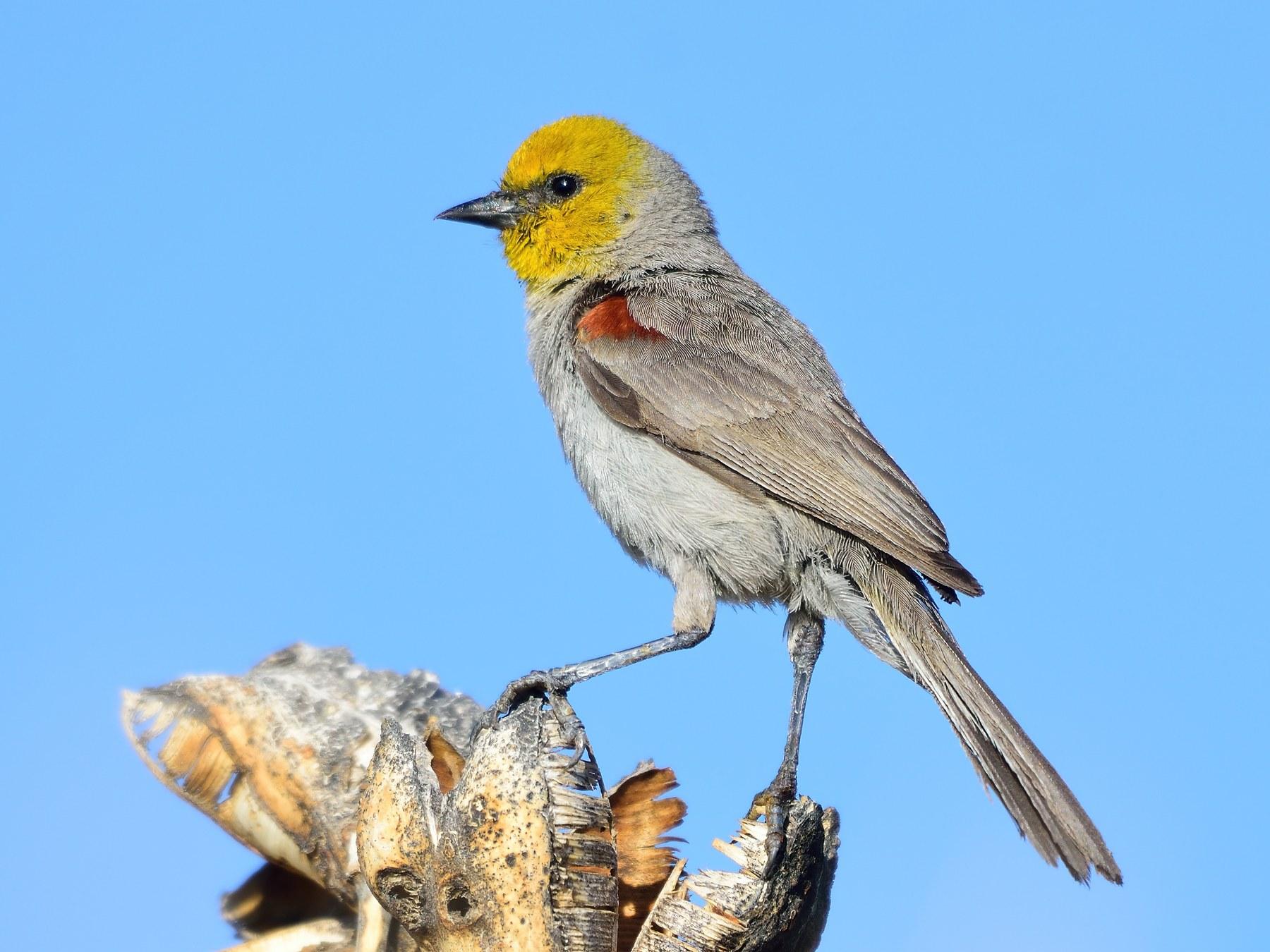
An adult Verdin is a tiny gray bird with a yellow head. The yellow covers at least the forehead, chin and throat, and runs from a dull olive-yellow to bright lemon. Look too for the dark lores, between the eye and the bill, and a small rufous-to-chestnut patch on the shoulder, though it is often hard to see. The back is brownish gray, the underparts pale gray to whitish, and the short, sharply pointed bill is dark.
In some birds the yellow spreads over the rear of the crown and the cheeks, and it looks more olive in fall and winter. Some breeding males in the Southwest also show a small orange spot at the base of the forehead feathers, bright but easily missed.
Birds vary slightly across the range: eastern birds are darker and larger, with stouter bills, and western and southern birds smaller and paler. AviList recognizes six subspecies, two of them in the US.1 The pale acaciarum lives from southeastern California, southern Nevada and southwestern Utah to western Arizona and southwestern New Mexico, and the darker ornatus from southeastern Arizona and southern and central New Mexico to Texas and southwestern Oklahoma.2
Size and shape
The Verdin is 3.5–4.3 in (9–11 cm) long, with a wingspan of 6.3–7.1 in (16–18 cm), and weighs 0.2–0.3 oz (5–8 g). In size it falls between a Black-tailed Gnatcatcher and a Bridled Titmouse. It is shaped rather like a chickadee, but slimmer and smaller-headed, with a slight body and a fairly long tail.
Male, female and young birds
The sexes look roughly alike. Females are slightly grayer, with less yellow on the head and throat and a paler, more tawny shoulder patch.
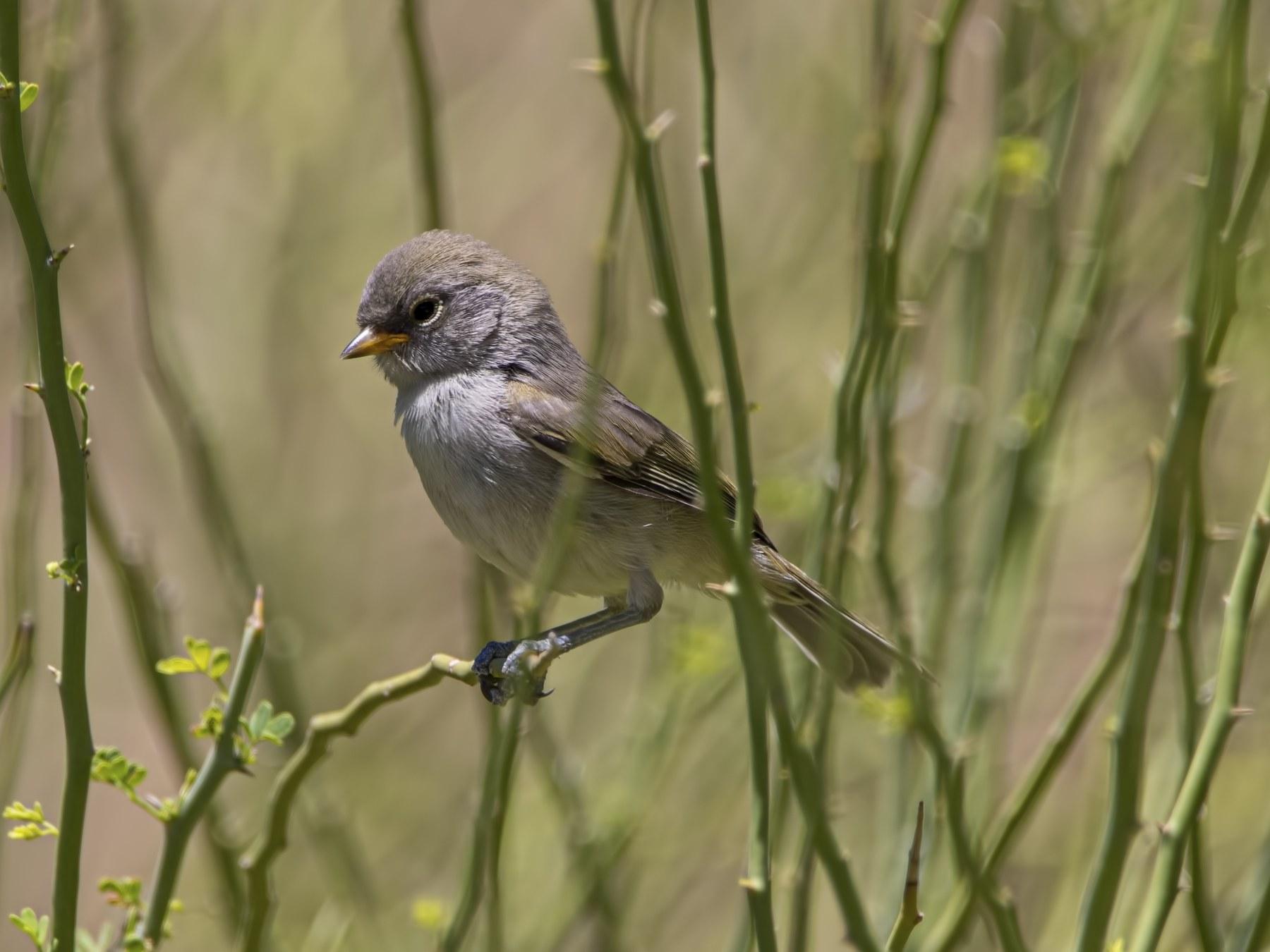
Young birds look quite different. A juvenile has no yellow head and no chestnut shoulder: it is plain gray, browner above and light gray below, sometimes with a yellow wash. Its bill is orange-pink just after it leaves the nest, then soon turns dark gray with a yellowish base. Yellow feathers first appear on the face and forehead during its first molt, which replaces only some of its wing feathers.
Adults molt all their feathers once a year, from July to September, after breeding ends. A breeding male's yellow grows brighter and spreads further in spring, apparently without a spring molt.
Identification: similar birds
With its yellow head, an adult is unlikely to be mistaken for any other bird in its range. It is the plain gray young bird that causes confusion.
A just-fledged Bushtit has a short tail, so tail length helps little at first, but it has a brown cap or brown, sometimes black, ear patches, where a young Verdin's face is plain gray with dark lores and gray ear coverts. Once grown, a Bushtit has a long tail.
A young Lucy's Warbler is buffier, darker above and paler below, with buffy-white wing bars and a fine dark bill. A young Verdin looks plainer and grayer, without the buff, and has a longer tail and a stockier bill, pinkish at first and later dark with a yellowish base.
Black-tailed and Blue-gray Gnatcatchers have long black tails edged with white, and the Blue-gray is bluish gray with a white eye-ring. A young Verdin has a shorter tail and lacks their black and white.
Not sure it’s a Verdin? Check your photo: Birdfact names the bird and shows the look-alike side by side.
Its size
Adults- Length
- 9–11 cm
- Wingspan
- 16–18 cm
- Weight
- 5–8 g
Its song and calls
Its calls are loud and persistent. The commonest is a rapid, staccato "tschep" or chip, repeated on one pitch, and it also gives a clear "tseet" every few seconds. When excited it scolds with a chatter that rises in pitch and speed and can run for up to a minute, slowing as it goes, and it gives a "gee-gee-gee" alarm when it spots a predator.
The song is a simple whistle of two or three notes, "tseet-tsoor-tsoor", which breeding males give in the early morning in early spring, never in fall or winter. What it is for is uncertain, though probably not to attract a female.2 One field guide instead describes an infrequent three-note song with the last note highest.3
Paired birds give a soft, warbling "tweedle" when together, from February to July, which may help hold the pair together. In early spring, unmated males call "tseet" over and over, which may attract females, and once paired they call less often and less loudly. Calling is loudest in the morning and late afternoon.
A range-wide study found that the song varies by region in a way that matches the separate desert regions. In playback trials, Verdins called back more strongly to local-sounding songs but approached local and foreign songs equally.4
- Chip calls0:00 / 0:11
Recorded in Arizona, United States · January 2021
- Calls0:00 / 0:21
Recorded in Arizona, United States · July 2013
- Call notes0:00 / 0:17
Recorded in Arizona, United States · January 2024
Heard one and not sure? Let the bird song identifier listen.
When and where to see it
November
Here all year
The year across North America
Choose a place on the map to see its year, or find yours.
Most recorded in November
Up to 2.4% of a place’s bird records that monthHere in other months
How this map is made
Each county, state or province is shaded by the Verdin’s share of all the bird records there that month: the darker, the larger the share. A place with only a trace of records in a month is left unshaded. Shades compare places on this map with each other, not one bird with another. Records: GBIF eBird Observation Dataset, 2019–2024. Map: Natural Earth; place centres © OpenStreetMap contributors.
How often the Verdin turns up in the United States through the year, from birdwatchers' records.
United States
Resident · all year · most records in March
Show as a table
| Month | United States |
|---|---|
| January | 0.13% (regular) |
| February | 0.13% (regular) |
| March | 0.14% (regular) |
| April | 0.092% (regular) |
| May | 0.053% (regular) |
| June | 0.059% (regular) |
| July | 0.081% (regular) |
| August | 0.099% (regular) |
| September | 0.081% (regular) |
| October | 0.098% (regular) |
| November | 0.14% (regular) |
| December | 0.14% (regular) |
Worldwide: recorded regularly in 2 countries
Countries where it was recorded in at least 3 of the 6 years 2019–2024. Linked countries have their own bird list.
North America (2)
Data: EOD – eBird Observation Dataset (Cornell Lab of Ornithology), accessed via GBIF.org, CC BY 4.0. Records from 2019–2024, aggregated and filtered by Birdfact. How these lists are made
The Verdin lives year-round in the deserts of the US Southwest and Mexico: the Mojave, Sonoran and Chihuahuan Deserts and the cactus and acacia scrub nearby. In the US it ranges from southeastern California, southern Nevada and the far southwest of Utah through southern and northwestern Arizona and southern and central New Mexico to most of western Texas west of the Brazos River, and rarely and locally into southwestern Oklahoma.
In Mexico it is found in all but the far northwest of Baja California and south through Sonora and Sinaloa, inland to northeastern Jalisco, Guanajuato and northwestern Hidalgo, and along the Gulf lowlands to central Tamaulipas. In the US it is most numerous in southeastern California and in Arizona below the Mogollon Rim.5
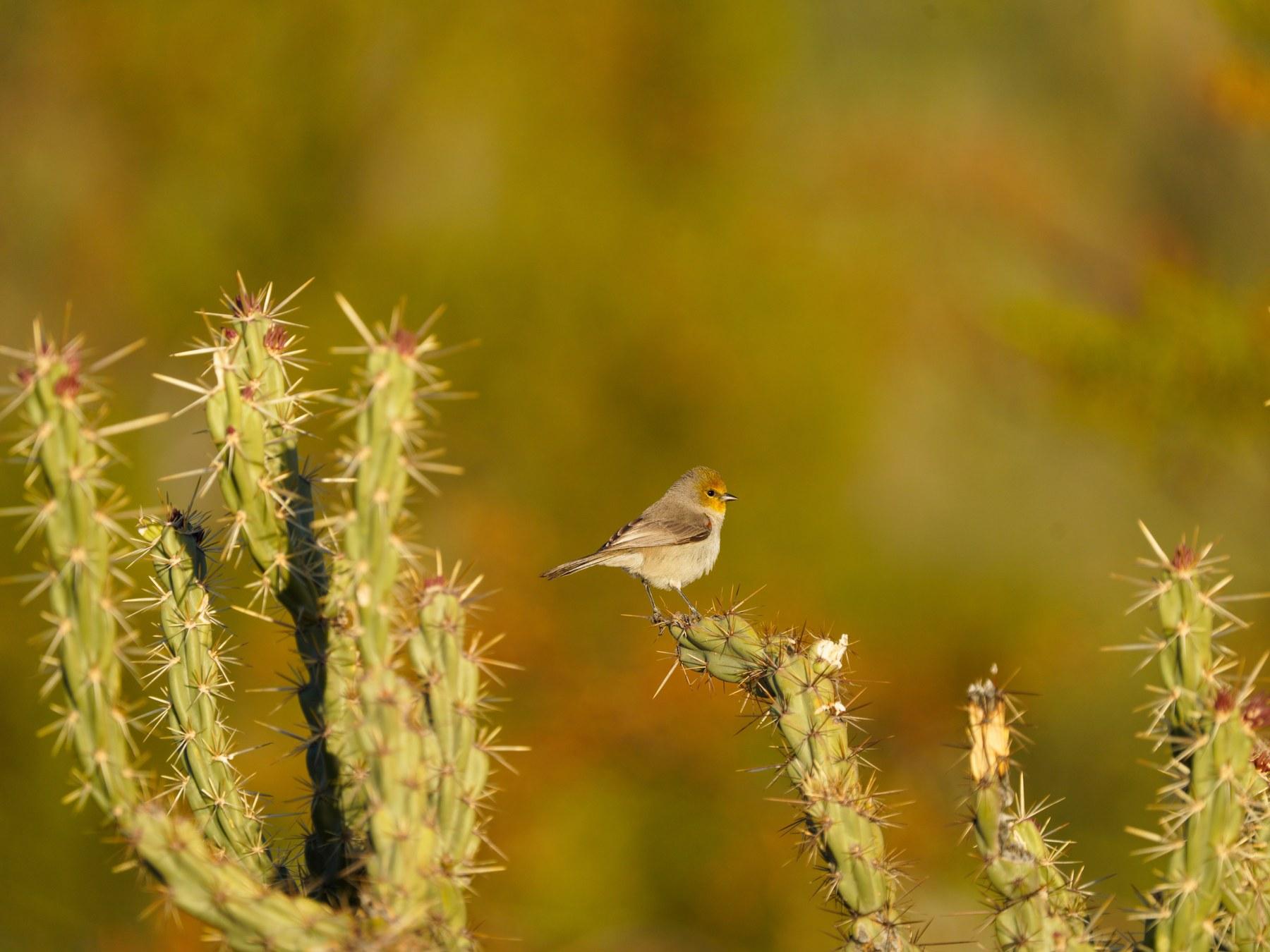
Look for it in desert scrub, especially along washes lined with thorny shrubs and small trees such as paloverde, mesquite, catclaw and other acacias, and in desert streamside thickets. It prefers brush to open desert and avoids dense forest. It lives mostly in the lowlands, up to about 6,000 ft (1,830 m) in Texas and 7,000 ft (2,135 m) in central Mexico.
It also lives in some towns. It is common in the suburbs of some southwestern ones, and it persists where housing is sparse. In a 1986 study around Tucson, dense mobile-home developments cut its numbers sharply, while low-density neighborhoods kept healthy populations.2
Migration and movements
The Verdin does not migrate. Young birds disperse in their first winter, most no more than a few miles; in Arizona some moved 0.3–1.9 miles (0.5–3 km) from where they hatched. A winter rise in numbers in residential Tempe, Arizona, has been put down to birds moving in from the desert nearby.2
Spotting tips
Listen for the repeated chips and "tseet" calls, then watch the outer foliage of thorny shrubs and small trees for a tiny bird moving restlessly and jerkily. Look for the round twig nests too, and in yards near desert scrub, check hummingbird feeders.
What it eats
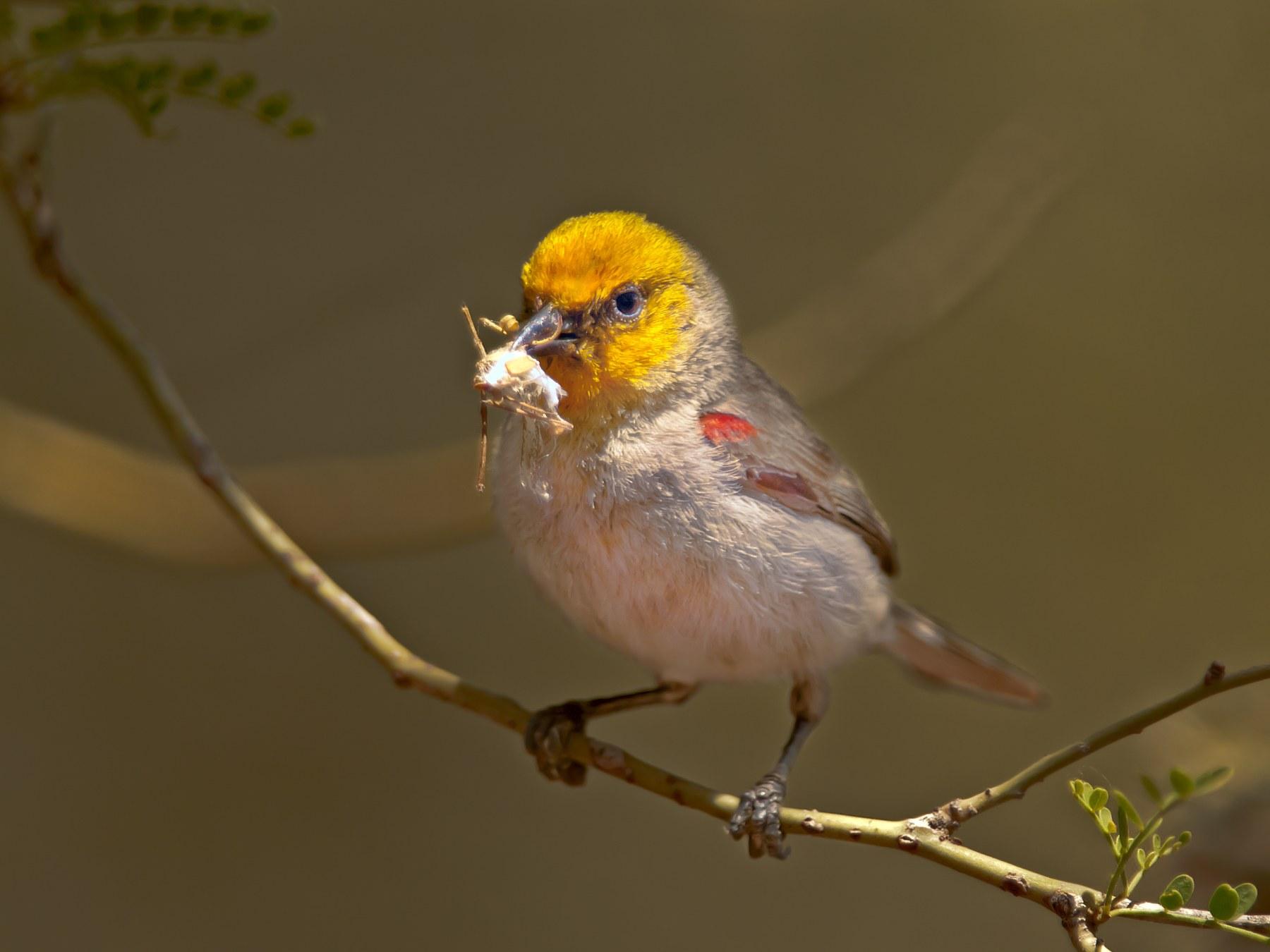
The Verdin eats mostly small insects and spiders, gleaned from leaves and flowers. It also takes nectar, berries and other small fruit, and pulp from the pods of legume trees.
It forages almost nonstop, especially in cool weather, working acrobatically and jerkily through the leafy outer foliage of small trees and shrubs. It often holds a leaf or flower in one foot to inspect it, beats caterpillars against a branch and tears larger prey apart with its bill. It rarely comes to the ground, and now and then it hovers at the tip of a branch like a kinglet.
On the lower Colorado River its main foods were scale insects, caterpillars, jumping spiders and aphids, with beetle and wasp larvae in spring and leafhoppers in summer. In stomachs of 41 adults and 42 young birds from Maricopa County, Arizona, collected from February to October, caterpillars, moths and butterflies made up 21.1% of the items counted in adults and 44.6% in young birds.2 In fall and winter especially, it eats berries and fruit, among them fan palm and date palm, agarita, wolfberry, mesquite and hackberry.
Feeding in your yard
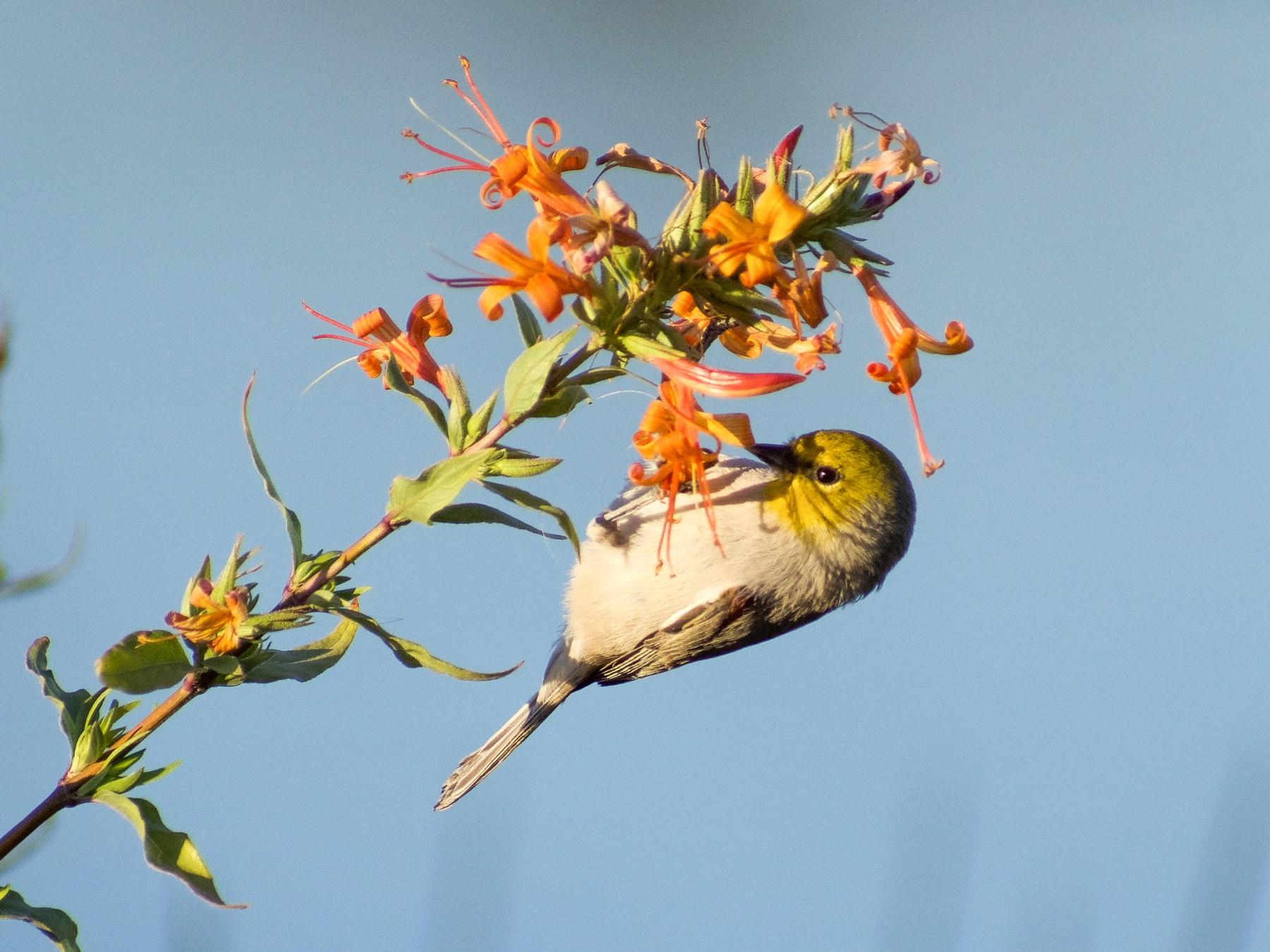
The Verdin regularly takes nectar from tubular flowers, and sometimes pierces the base of chuparosa flowers to reach it. In one winter study in Riverside County, California, nectar was estimated to supply about 5% of its energy.2
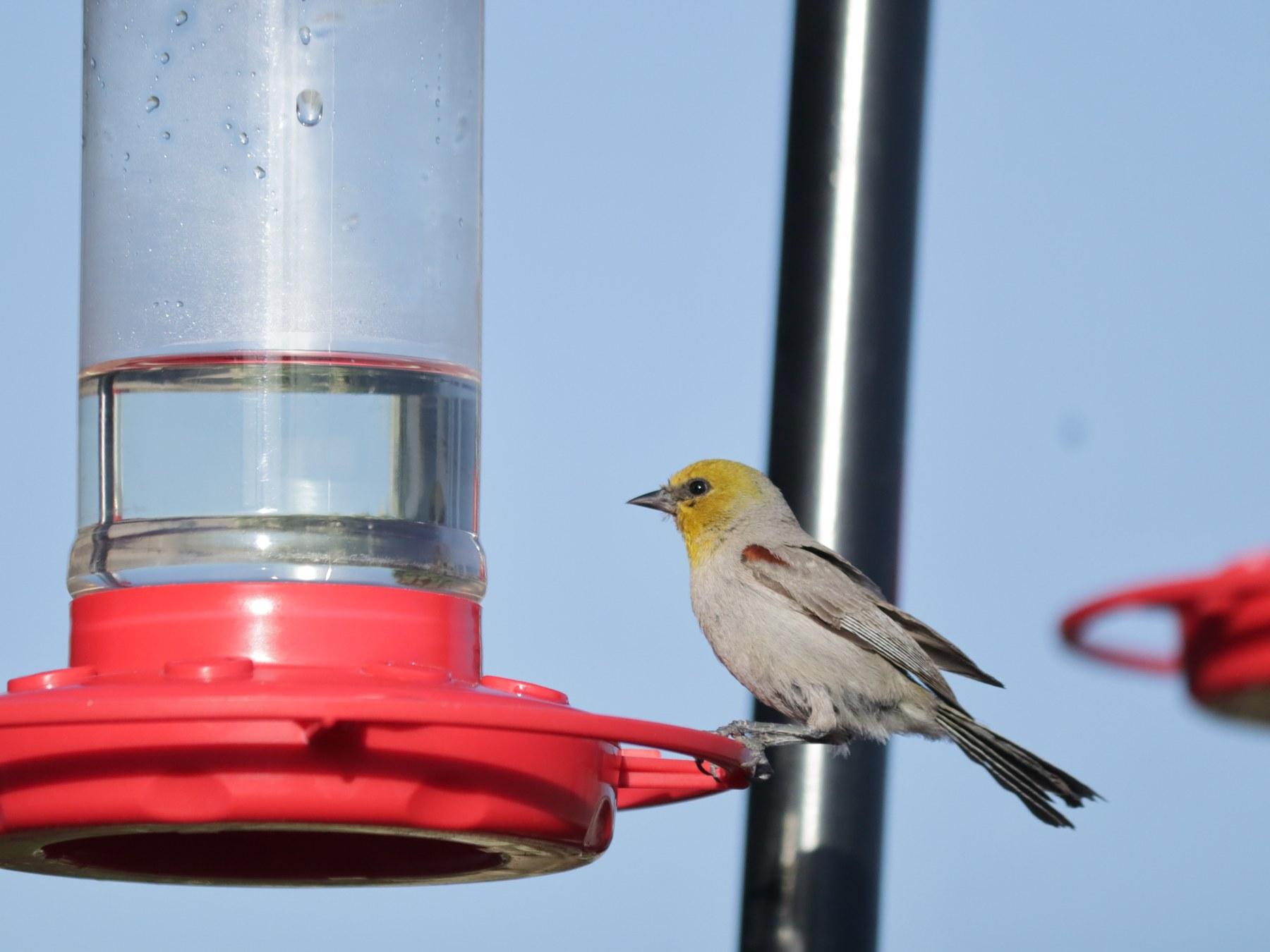
It visits hummingbird feeders for sugar water, and several may come at once. A hummingbird feeder or flowering shrubs may bring one into your yard. We found no source that recommends seed, suet or mealworms for it.
Nesting and breeding
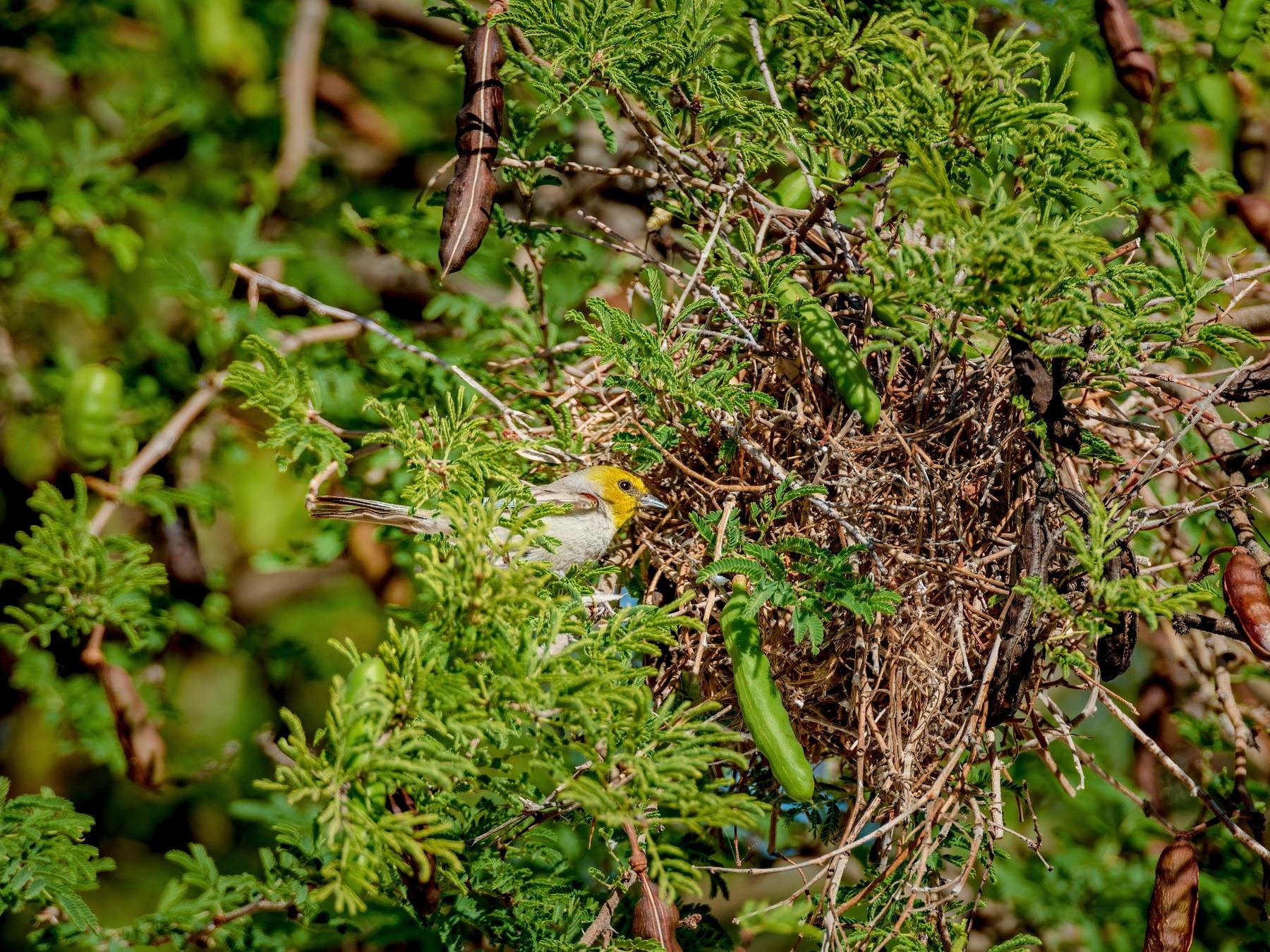
The Verdin's nest is its best-known feature: a bulky, enclosed ball of thorny twigs, 6–10 in (15–25 cm) across, entered by a small hole near the bottom of one side. It sits in the outer branches of a shrub or small tree, usually 2.6–6.6 ft (0.8–2.0 m) up and at most about 13 ft (4 m), often along a desert wash.
In Maricopa County, Arizona, males become aggressive toward other Verdins and call more from mid-January, and the earliest pairing there was on January 23. Laying usually starts in mid-March or April, with the earliest egg on March 4 and the latest on July 23, and in Texas egg dates run from March 25 to September 15.2, 5
Both sexes build. The male makes most of the thorny outer shell, and the female most of the inner layers and all of the soft lining, with the male bringing her feathers. Inside the shell is a layer of matted leaves, flowers and feathers bound with spider silk, then a lining of grass, plant down and feathers. A breeding nest takes an estimated six days to build.
Nests are often in smoke tree, mesquite, catclaw acacia, desert willow, paloverde or oaks, and in places in cholla cactus. In Baja California, a 1930 study found half the nests in cholla and 40% in mesquite.2 Farther south, in Baja California Sur, 12 empty nests collected in spring 2008 were on average 97.6% twigs of cape wild-plum, a plant found only in Baja California Sur, by weight.6
Roost nests
Verdins build nests to sleep in as well as to raise young, and use them all year. Each bird builds several roost nests a year besides one or two breeding nests, and young birds build their own soon after they become independent. In Arizona, one pair built 11 nests in a single year.
Winter roost nests are bigger and thicker-walled, with warmer linings, while summer ones are smaller and may have no lining. Nests built in summer tend to face the prevailing wind, perhaps for cooling, while spring breeding nests face away from it and winter roost nests face any direction. Very little wind gets into a winter roost nest, and sleeping in one saves the bird energy in winter.
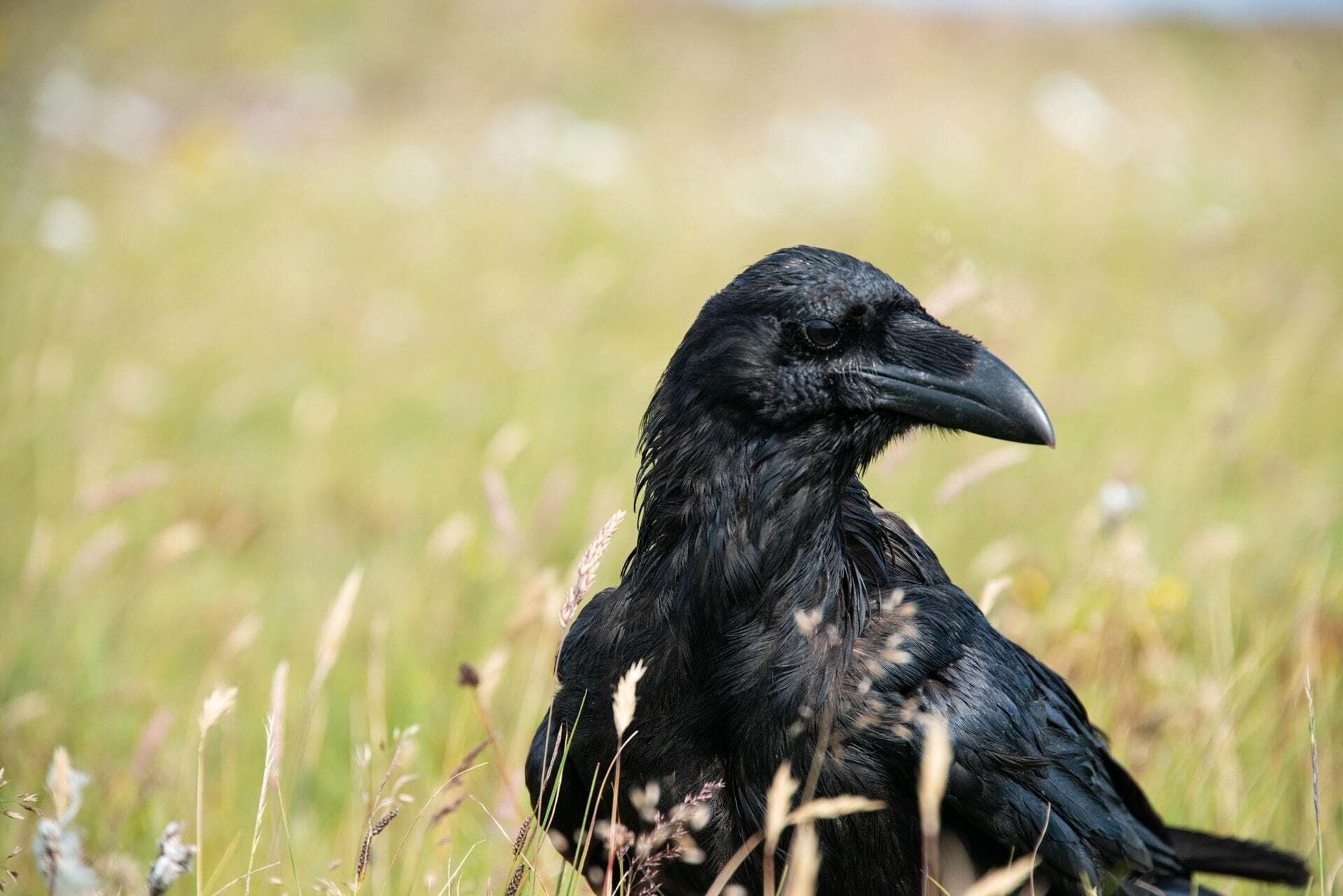
Old nests can last for seasons in the dry desert air, so nests can seem more numerous than the birds. Other birds use them too. Cactus Wrens, Lucy's Warblers and House Sparrows take them over, and gnatcatchers, Bewick's Wrens and Ruby-crowned Kinglets have roosted in them, including a group of 15 Black-tailed Gnatcatchers one winter, apparently huddling for warmth.2
Eggs and young
A clutch is 3–6 eggs, usually 4, with smaller clutches in the south of the range. The eggs are pale blue-green to greenish white with brown or reddish spots at the larger end, and are laid one a day, early in the morning. In a 1965–1967 study near Mesa, Arizona, clutches averaged 3.82 eggs (28 clutches).7
The female alone incubates, for 14–18 days, while the male calls nearby. She feeds the chicks alone for their first week, and then both parents feed them. The young leave the nest 17–21 days after hatching and are fed for about 18 days more. The male takes the larger share then, since the female may lay again within two days, and he roosts with the young in a nest for about two weeks.
About half of pairs try for a second brood, with up to four nesting attempts in a season, but late nests, in June and July, fledge young only about 30–35% of the time.2 Success varies from place to place: 72% of eggs produced fledged young in southern Nevada, against 29% in the Mesa study's 25 breeding nests.2, 7 In a larger sample of 277 nests, clutches laid in March and April averaged 3.86 eggs against 3.28 in June and July, and raised more young.2
Cowbirds rarely lay in Verdin nests, perhaps because the nest is enclosed and guarded by thorns.2 In southeastern California and western Arizona from 2004 to 2009, all 13 bird species studied started nesting later after dry winters.8 In a 2010 experiment, Verdin nests started later survived less well, and the authors expect drought to cut Verdin breeding output further through nest predation.8
Behaviour
The Verdin is usually alone, sometimes in pairs or loose mixed flocks, and on one Baja California island it often foraged with Black-tailed Gnatcatchers and Black-throated Sparrows. It moves between branches with hops or a few quick wingbeats.
Pairs appear to be monogamous, though the bond is not known to last beyond one breeding season, and in two Arizona counties pairs did not stay together through the winter. Home ranges are large for so small a bird: about 23 acres (9.4 ha) on average for six pairs in Maricopa County, Arizona, and about 20 acres (8 ha) for 33 pairs in Doña Ana County, New Mexico, where males defended them as territories.2 In a study near Mesa, Arizona, only the area near the nest was defended.7
In New Mexico, unmated males were reported building loose "display nests", perhaps to attract females. A later Arizona study could not confirm this, and courtship in the Verdin is still poorly understood.
It goes to roost early and gets up late. It is often the first bird to settle in the evening, entering its roost nest about 30–40 minutes before sunset, often after one to three minutes of chattering nearby, and it often sleeps with its tail poking out toward the entrance. In May in Maricopa County it was active for about 13 hours a day, and in December and January in Riverside County, California, about 10.2
Behavior: coping with desert extremes
In hot weather the Verdin slows down. In southern Arizona, once the air passed about 86–95°F (30–35°C), it spent most of its time sitting rather than foraging.9 In great heat it rests quietly deep in the shade of a shrub, holding its wings out and panting now and then.
In a laboratory study, the water it lost by breathing rose steeply as the air warmed from 86°F to 122°F (30–50°C). At 86–97°F (30–36°C) its water loss was split about evenly between skin and breathing, but at higher temperatures it came to rely heavily on evaporation from breathing.10 A model built on laboratory measurements suggests that in summer, keeping out of sun and wind can cut its water loss through evaporation to a quarter or less.11
Verdins may not drink at all in nature, though captive birds drink and bathe, and nests have been found 10 miles (16 km) from the nearest known water.2 At Kofa National Wildlife Refuge in Arizona, a thesis found that man-made water sources appear to matter little to the daily water balance of small resident birds, the Verdin among them.12
Winter cold costs it more. Wild Verdins used 33.6 kJ of energy a day in winter against 22.8 kJ in summer, measured with doubly labeled water.13 A model built on laboratory measurements also suggests that moving from a shady, windy spot to a sunny, sheltered one may cut its winter metabolic rate by as much as 50%.11 Wintering birds in Riverside County lost on average 6.7% of their body weight overnight.2
Lifespan and predators
The oldest Verdin on record was caught again after banding at an age of at least 5 years 7 months, in a list of North American banding longevity records published in 1983.2 The only Verdin on the USGS Bird Banding Laboratory's current online table is a female at least 4 years 11 months old. She was banded in Arizona on July 7, 2015, when already in at least her third calendar year, and caught again there on May 15, 2018, when she died in the trap or during handling.14
Most live much shorter lives. From the ratio of young to adult museum specimens (286 from the southwestern US), one study estimated that about 75% of Verdins die in their first year, and that adults survive at 60% a year.2 In the Mesa study no breeding adult was seen for more than two seasons, which suggests that few live beyond 3 years.2
Numbers can swing sharply within and between years, perhaps after cold winters or a poor insect supply. On the lower Colorado River, numbers fell by an estimated 84% between the summer peak and the late-winter low in most years.2
Predators
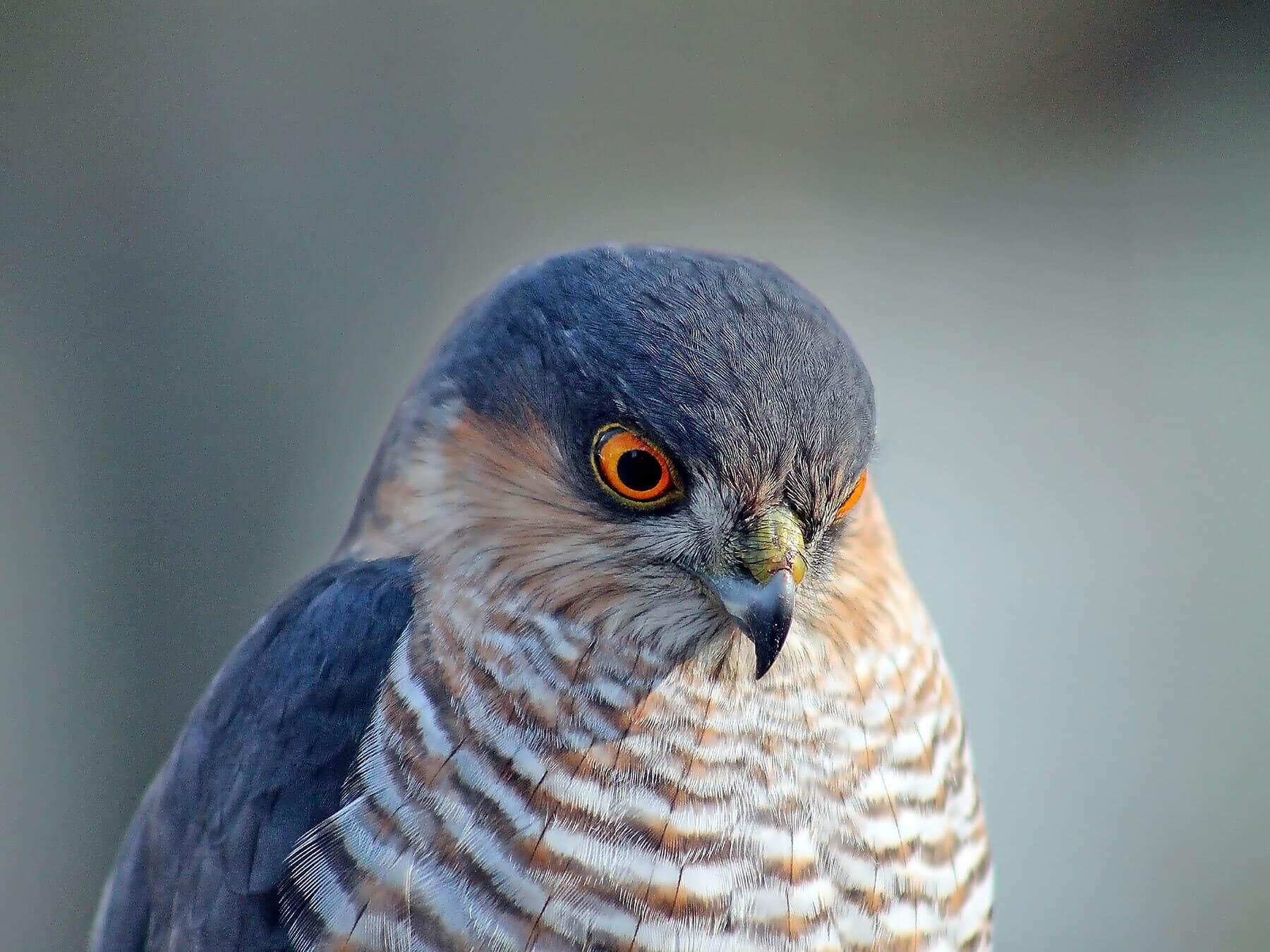
Sharp-shinned and Cooper's Hawks take an occasional adult or young bird. Loggerhead Shrikes and scrub-jays raid nests, and a Coachwhip snake was a likely nest predator at one Arizona site. Verdins sound the alarm at hawks, and a 1964 account called the Verdin "always the first bird to see a hawk".2
Conservation
Population trend
The North American Breeding Bird Survey shows a statistically clear long-term decline: −1.76% a year from 1967 to 2025 (95% credible interval −3.23 to −0.49, from 208 routes). The fall has been steeper over the last ten years, at −5.86% a year for 2015–2025, though 2015 was a local high in the survey's index. The index fell from about 11 birds per route in 1967, and a peak of 14.5 in 1975, to 3.0 in 2021 and 4.0 in 2025.17
The falls are significant in Arizona (−2.14% a year), the Sonoran and Mojave Deserts (−2.25%) and the Tamaulipan Brushlands of south Texas and northeast Mexico (−1.78%). The declines in Texas as a whole and in California are not statistically significant, and New Mexico and the Chihuahuan Desert show rises that are not significant either.17
Habitat loss is the main known threat. In Birds of the World's account, written in 1999, Verdins had gone from coastal San Diego County, where they were found before 1975, and development may have been the cause. Clearing for farms, resorts and golf courses had also reduced their habitat in the Colorado Desert.2
Legal status
In the United States, the Verdin is on the federal list of birds protected under the Migratory Bird Treaty Act.18 It is not listed under the Endangered Species Act, and the Fish and Wildlife Service's species database labels it a Species of Concern, which is not a listing.19 It is not on Mexico's NOM-059 list of species at risk as modified in 2019.20
Names and relatives
Of the penduline-tit family (Remizidae), the Verdin is the one member in the Americas, and it is the only species in its genus, Auriparus. Its relatives are the penduline tits of Eurasia and Africa. Its place was long disputed. It was traditionally grouped with the penduline tits near the chickadees and titmice, but it has also been suggested to belong near the Bananaquit and, on early DNA evidence, near the gnatcatchers. A later DNA-DNA hybridization study placed it firmly in Remizidae,21 and a 2009 survey of fused back vertebrae gave additional support.22
It shares some habits with its Old World relatives, among them holding foliage in its foot, nectar feeding more like that of the African penduline tits, and the male's calling during pair formation.
A six-species DNA study found no genetic split between Sonoran and Chihuahuan Desert Verdins, but a break in Baja California that the authors say was likely caused by a former seaway across the peninsula.23 We found no source we could rely on for the origin of the English name.
Similar birds
Often mistaken for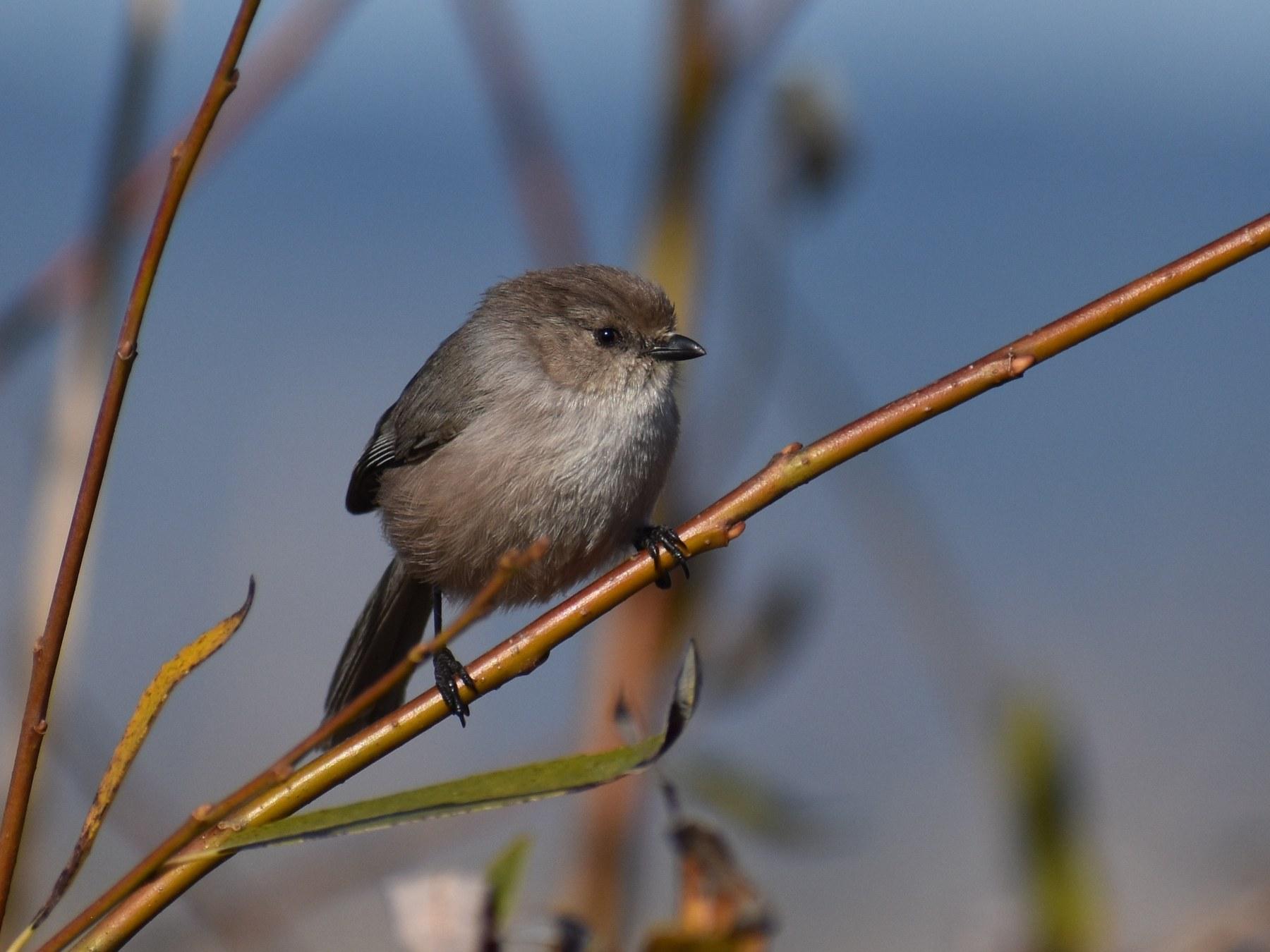
Quick facts
- Length
- 9–11 cm
- Wingspan
- 16–18 cm
- Weight
- 5–8 g
- Lifespan
- oldest recorded 5 years 7 months
- Migration
- Resident
- Global status (IUCN)
- Least Concern
- World population
- About 7.2 million breeding-age birds (Partners in Flight, an estimate for around 2010)
- Population trend
- A clear long-term decline: Breeding Bird Survey counts have fallen by about 1.8% a year since 1967, and faster over the last ten years, with significant falls in Arizona, the Sonoran and Mojave Deserts and the brushlands of south Texas
- Scientific name
- Auriparus flaviceps
Sources
36- 1AviList Core Team (2025). AviList: The Global Avian Checklist, v2025b. AviList Core Team. doi:10.2173/avilist.v2025b (opens in a new tab)
- 2Webster, M. D. (2020). Verdin (Auriparus flaviceps), version 1.0. Birds of the World (A. F. Poole and F. B. Gill, editors). Cornell Lab of Ornithology. doi:10.2173/bow.verdin.01 (opens in a new tab)
- 3National Audubon Society and Kaufman, K.. Verdin. Audubon Guide to North American Birds. Accessed 28 November 2026. Source (opens in a new tab)
- 4Greig, E. I., Kinnebrew, E., Witynski, M. L. and Larsen, E. C. (2021). A desert songbird with no confamilials in the Western Hemisphere (Verdin, Auriparus flaviceps) investigates divergent conspecific songs. Ornithology 138(3): ukab032. doi:10.1093/ornithology/ukab032 (opens in a new tab)
- 5Tweit, R. C. (2006). Verdin, Auriparus flaviceps. The Texas Breeding Bird Atlas, Texas A&M AgriLife Research. Accessed 28 November 2026. Source (opens in a new tab)
- 6Romero-Figueroa, G., Ortiz-Avila, V. and Lozano-Cavazos, E. A. (2014). Twigs of cape wild-plum (Cyrtocarpa edulis) used in construction of nests by verdins (Auriparus flaviceps) in xerophytic scrubland of Baja California Sur, Mexico. The Southwestern Naturalist 59(2): 295-297. doi:10.1894/n07-gds-14.1 (opens in a new tab)
- 7Taylor, W. K. (1971). A Breeding Biology Study of the Verdin, Auriparus flaviceps (Sundevall) in Arizona. American Midland Naturalist 85(2): 289-328. doi:10.2307/2423760 (opens in a new tab)
- 8McCreedy, C. and van Riper, C. (2015). Drought-caused delay in nesting of Sonoran Desert birds and its facilitation of parasite- and predator-mediated variation in reproductive success. The Auk 132(1): 235-247. doi:10.1642/auk-13-253.1 (opens in a new tab)
- 9Austin, G. T. (1978). Daily Time Budget of the Postnesting Verdin. The Auk 95(2): 247-251. Accessed 28 November 2026.
- 10Wolf, B. O. and Walsberg, G. E. (1996). Respiratory and Cutaneous Evaporative Water Loss at High Environmental Temperatures in a Small Bird. Journal of Experimental Biology 199(2): 451-457. doi:10.1242/jeb.199.2.451 (opens in a new tab)
- 11Wolf, B. O. and Walsberg, G. E. (1996). Thermal Effects of Radiation and Wind on a Small Bird and Implications for Microsite Selection. Ecology 77(7): 2228-2236. doi:10.2307/2265716 (opens in a new tab)
- 12Hyde, T. (2011). Stable isotopes provide insight into the use of wildlife water developments by resident and migrant birds (thesis). University of New Mexico, Biology ETDs. Accessed 28 November 2026. Source (opens in a new tab)
- 13Webster, M. D. and Weathers, W. W. (2000). Seasonal Changes in Energy and Water use by Verdins, Auriparus Flaviceps. Journal of Experimental Biology 203(21): 3333-3344. doi:10.1242/jeb.203.21.3333 (opens in a new tab)
- 14USGS Bird Banding Laboratory. Longevity records, AOU 7460 Verdin (current table). USGS Bird Banding Laboratory, Bander Portal. Accessed 28 November 2026. Source (opens in a new tab)
- 15BirdLife International (2022). Auriparus flaviceps. The IUCN Red List of Threatened Species 2022. IUCN Red List, version 2022-2 (read through GBIF's copy of the IUCN checklist). Accessed 28 November 2026. Source (opens in a new tab)
- 16Partners in Flight (2023). Avian Conservation Assessment Database, global download (ACAD 2023). Bird Conservancy of the Rockies. Accessed 28 November 2026. Source (opens in a new tab)
- 17Hostetler, J. A. et al. (2026). The North American Breeding Bird Survey, Analysis Results 1966-2025. U.S. Geological Survey data release. doi:10.5066/P1OSNSFC (opens in a new tab)
- 18U.S. Fish and Wildlife Service (2026). 50 CFR 10.13, List of Birds Protected by the Migratory Bird Treaty Act. Electronic Code of Federal Regulations (as of 25 Nov 2026). Accessed 28 November 2026. Source (opens in a new tab)
- 19U.S. Fish and Wildlife Service. ECOS species reports: Verdin (Auriparus flaviceps, 9426) and A. f. acaciarum (11989). Environmental Conservation Online System. Accessed 28 November 2026. Source (opens in a new tab)
- 20SEMARNAT (2019). Modificación del Anexo Normativo III, Lista de especies en riesgo de la NOM-059-SEMARNAT-2010. Diario Oficial de la Federación, 14 Nov 2019. Accessed 28 November 2026. Source (opens in a new tab)
- 21Sheldon, F. H. and Gill, F. B. (1996). A Reconsideration of Songbird Phylogeny, with Emphasis on the Evolution of Titmice and their Sylvioid Relatives. Systematic Biology 45(4): 473-495. doi:10.1093/sysbio/45.4.473 (opens in a new tab)
- 22James, H. F. (2009). Repeated Evolution of Fused Thoracic Vertebrae in Songbirds. The Auk 126(4): 862-872. doi:10.1525/auk.2009.08194 (opens in a new tab)
- 23Zink, R. M., Kessen, A. E., Line, T. V. and Blackwell-Rago, R. C. (2001). Comparative Phylogeography of Some Aridland Bird Species. The Condor 103(1): 1-10. doi:10.1093/condor/103.1.1 (opens in a new tab)
- 24Cornell Lab of Ornithology. Verdin: Overview, ID Info and Life History. All About Birds. Accessed 28 November 2026. Source (opens in a new tab)
- 25Webster, M. D. and Weathers, W. W. (1990). Heat Produced as a By-Product of Foraging Activity Contributes to Thermoregulation by Verdins, Auriparus flaviceps. Physiological Zoology 63(4): 777-794. doi:10.1086/physzool.63.4.30158176 (opens in a new tab)
- 26Webster, M. D. and Weathers, W. W. (1988). Effect of Wind and Air Temperature on Metabolic Rate in Verdins, Auriparus flaviceps. Physiological Zoology 61(6): 543-554. doi:10.1086/physzool.61.6.30156163 (opens in a new tab)
- 27Sloane, S. A. (2020). Bushtit (Psaltriparus minimus), version 1.0: Identification. Birds of the World. Cornell Lab of Ornithology. doi:10.2173/bow.bushti.01 (opens in a new tab)
- 28Johnson, R. R., Yard, H. K. and Brown, B. T. (2020). Lucy's Warbler (Leiothlypis luciae), version 1.0: Identification. Birds of the World. Cornell Lab of Ornithology. doi:10.2173/bow.lucwar.01 (opens in a new tab)
- 29Farquhar, C. C. and Ritchie, K. L. (2020). Black-tailed Gnatcatcher (Polioptila melanura), version 1.0: Identification. Birds of the World. Cornell Lab of Ornithology. doi:10.2173/bow.bktgna.01 (opens in a new tab)
- 30Kershner, E. L. and Ellison, W. G. (2020). Blue-gray Gnatcatcher (Polioptila caerulea), version 1.0: Identification. Birds of the World. Cornell Lab of Ornithology. doi:10.2173/bow.buggna.01 (opens in a new tab)
- 31Rojas-Soto, O. R., Westberg, M., Navarro-Siguenza, A. G. and Zink, R. M. (2010). Genetic and ecological differentiation in the endemic avifauna of Tiburon Island. Journal of Avian Biology 41(4): 398-406. doi:10.1111/j.1600-048x.2010.04864.x (opens in a new tab)
- 32United States Congress (1918). 16 U.S.C. 703, Taking, killing, or possessing migratory birds unlawful. Legal Information Institute, Cornell Law School (copy of the US Code). Accessed 28 November 2026. Source (opens in a new tab)
- 33Goldstein, R. B. (1974). Relation of Metabolism to Ambient Temperature in the Verdin. The Condor 76(1): 116-119. doi:10.2307/1365995 (opens in a new tab)
- 34Austin, G. T. and Miller, J. S. (1982). Temperature-related behavior of some migrant birds in the desert. The Great Basin Naturalist 42(2). doi:10.5281/zenodo.16273402 (opens in a new tab)
- 35Parker, K. C. (1986). Partitioning of Foraging Space and Nest Sites in a Desert Shrubland Bird Community. American Midland Naturalist 115(2): 255. doi:10.2307/2425862 (opens in a new tab)
- 36Kozma, J. M. and Mathews, N. E. (1997). Breeding Bird Communities and Nest Plant Selection in Chihuahuan Desert Habitats in South-Central New Mexico. Wilson Journal of Ornithology 109(3): 424-436. doi:10.5281/zenodo.16527678 (opens in a new tab)

Checked by
Nathan Cope, founder and editor
Nathan founded Birdfact and leads its writers and contributors in the UK, the US and Canada. He has watched and studied birds for more than ten years, and checks every article and species guide before it’s published.