


Redwing
Red-winged Thrush · Turdus iliacus
By the Birdfact teamChecked by Nathan Cope
On this page14 sections
How to recognise it
Redwings can be confused with some other common UK songbirds, although they certainly live up to their name and have other characteristic features that set them apart. Continue reading for more Redwing identification tips.
What do Redwings look like?
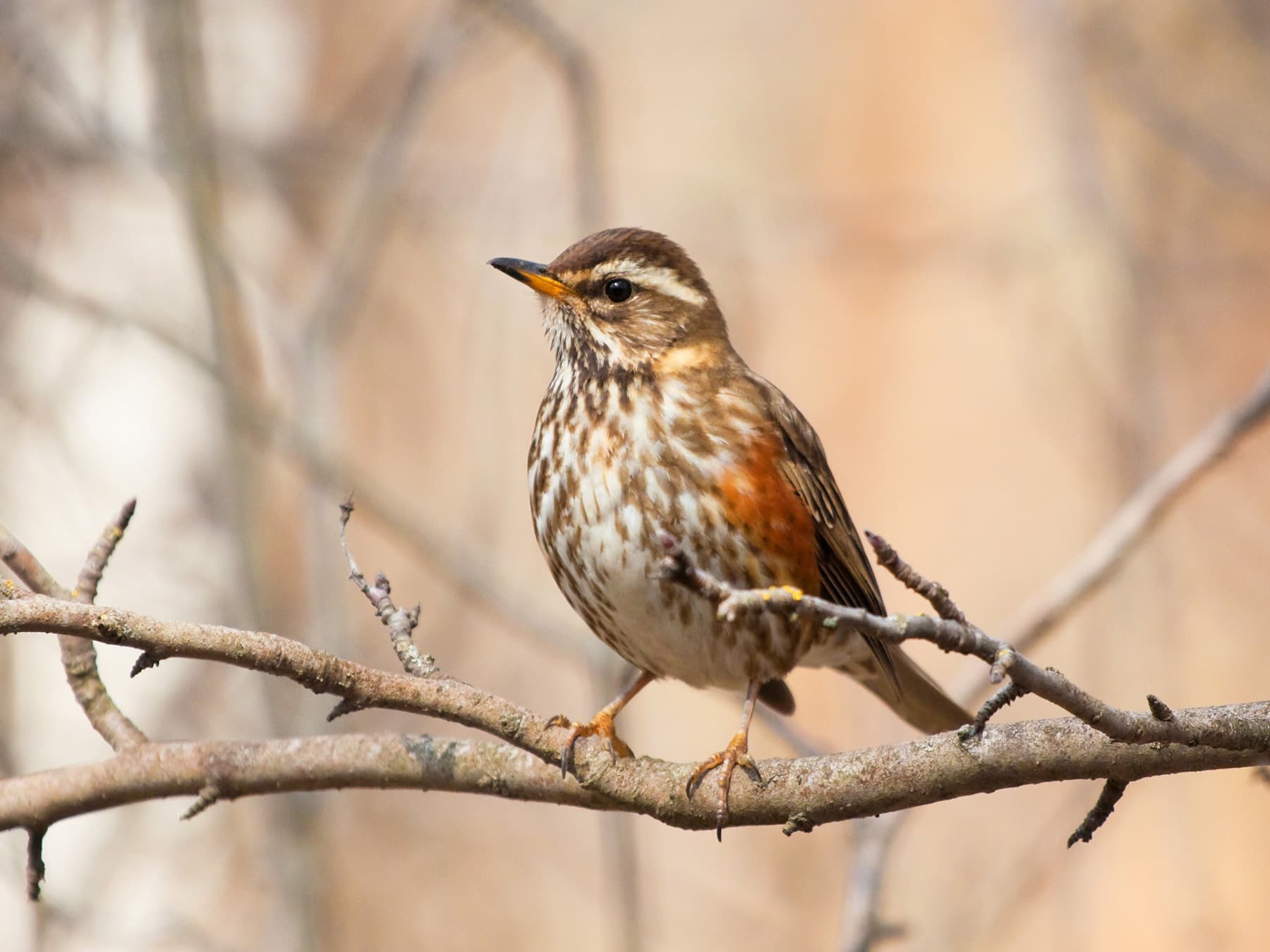
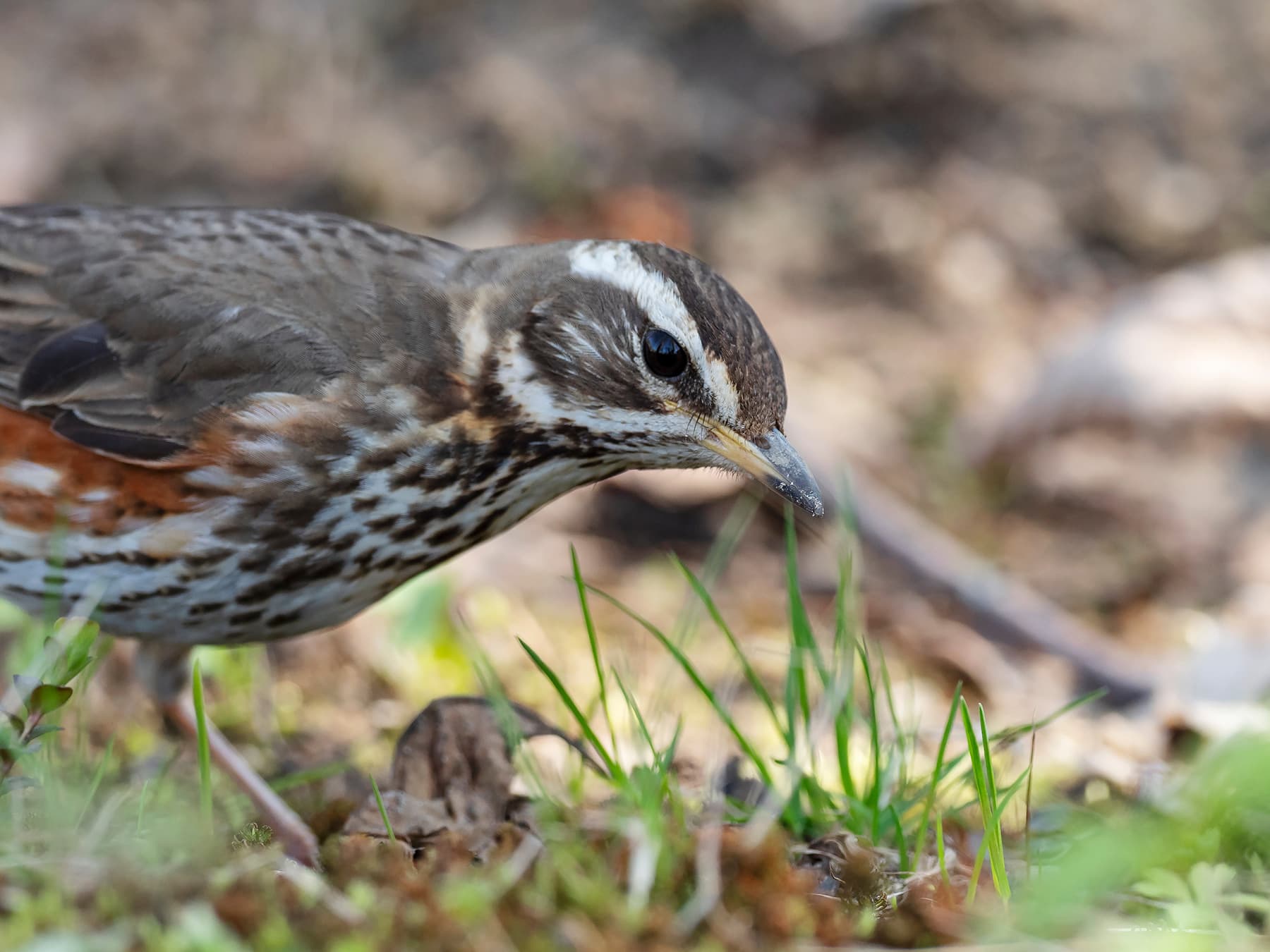
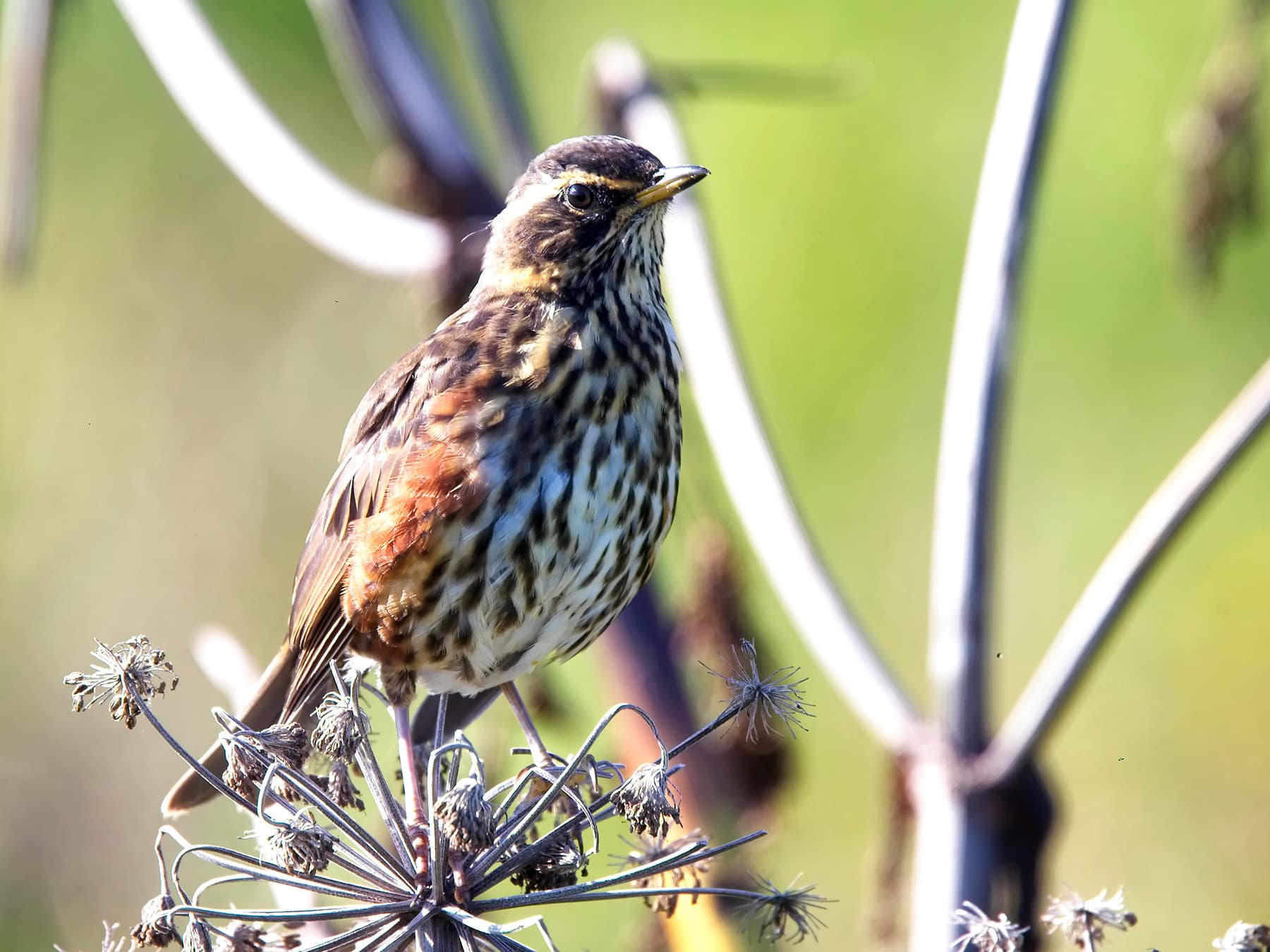
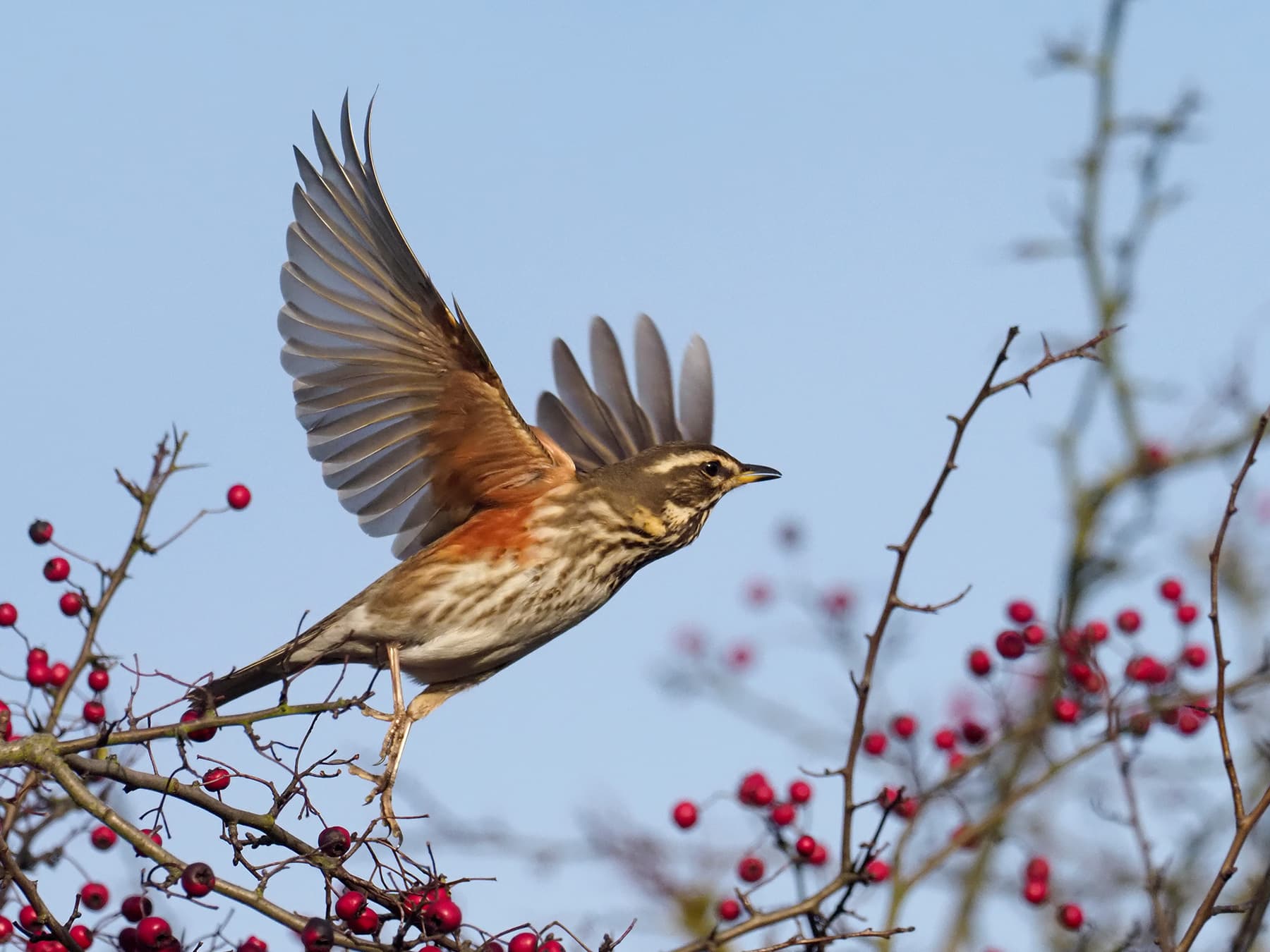
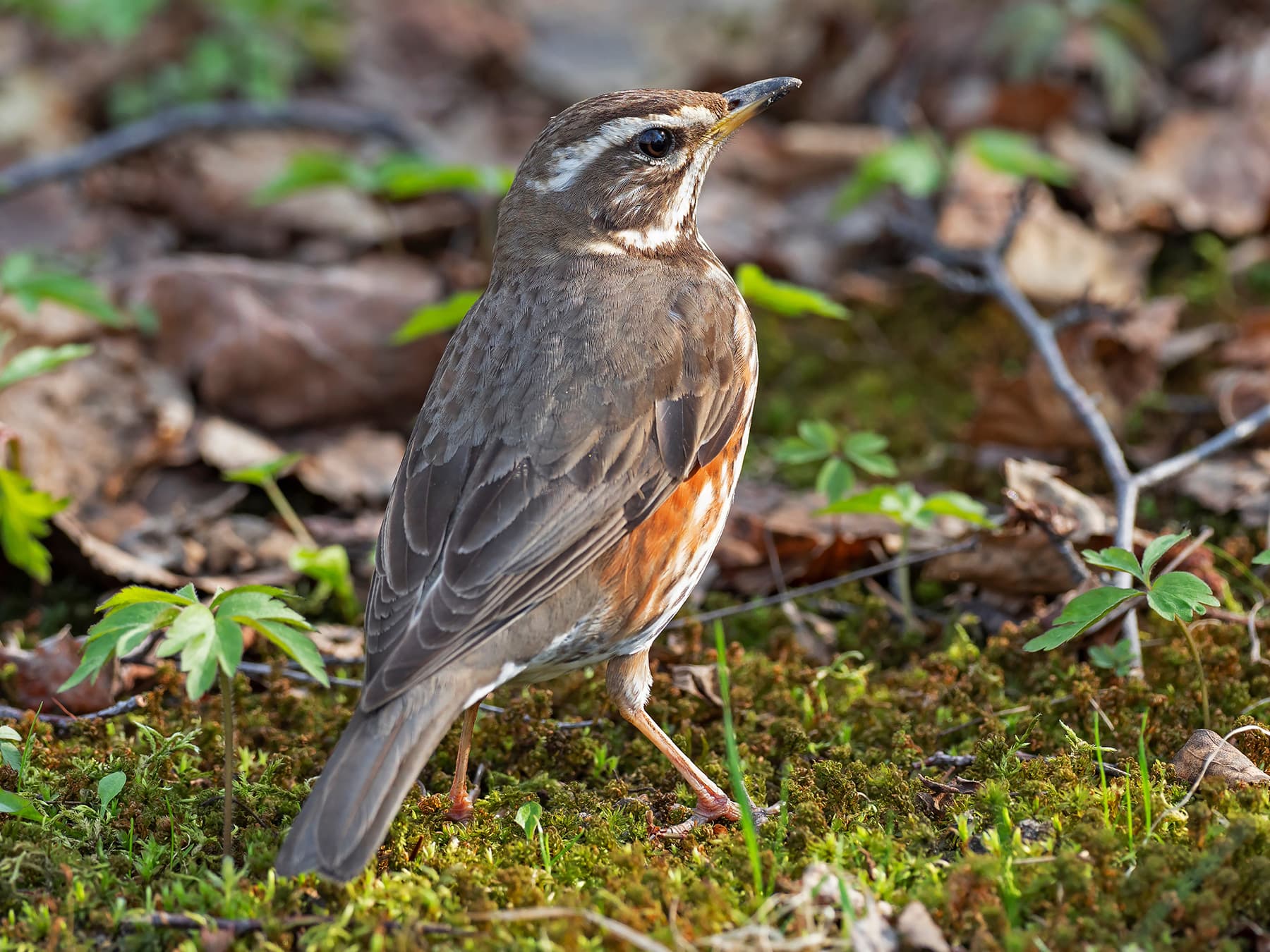
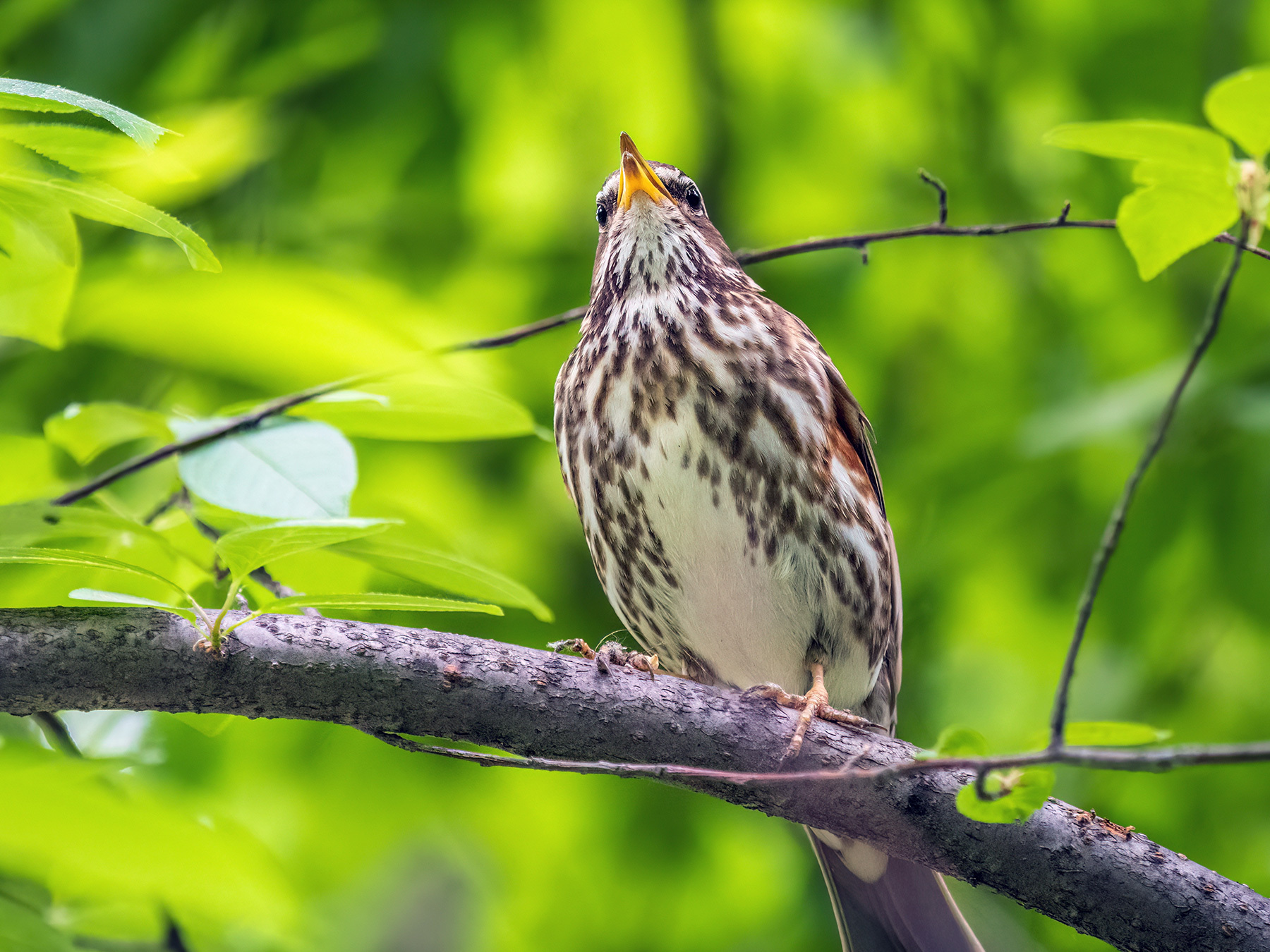
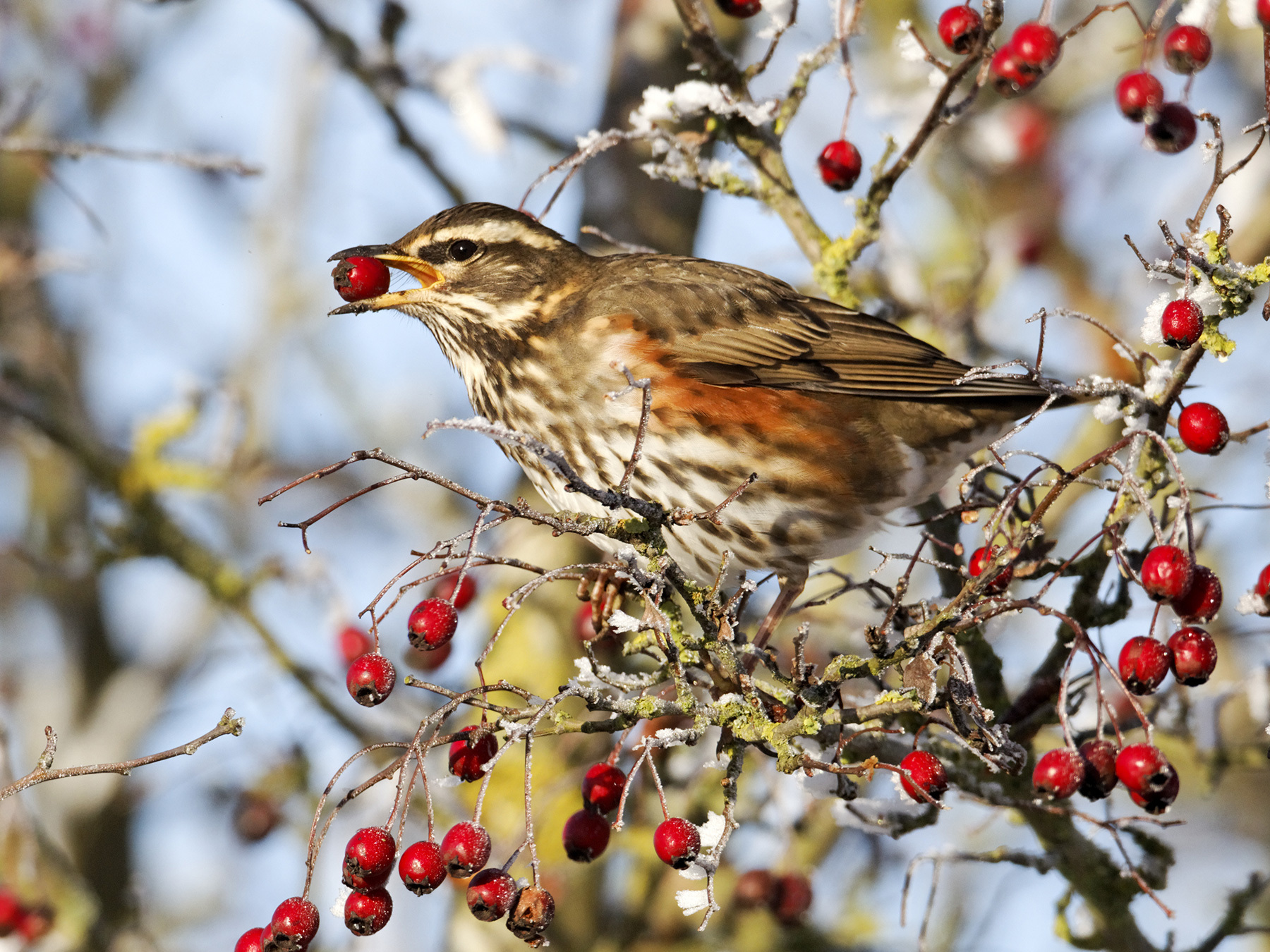
The Redwing is a small thrush with a uniform dark brown back and paler underparts. Prominent features include a spotted breast and a warm rufous orange patch on each flank. The face is also boldly marked with a white eyebrow stripe (supercilium) and moustachial stripe.
Male and female Redwings look alike, both with black eyes, a yellow bill with a black tip, and pinkish legs. Juveniles appear similar to adults but have pale streaks on the upperparts and lack the characteristic rusty flanks.
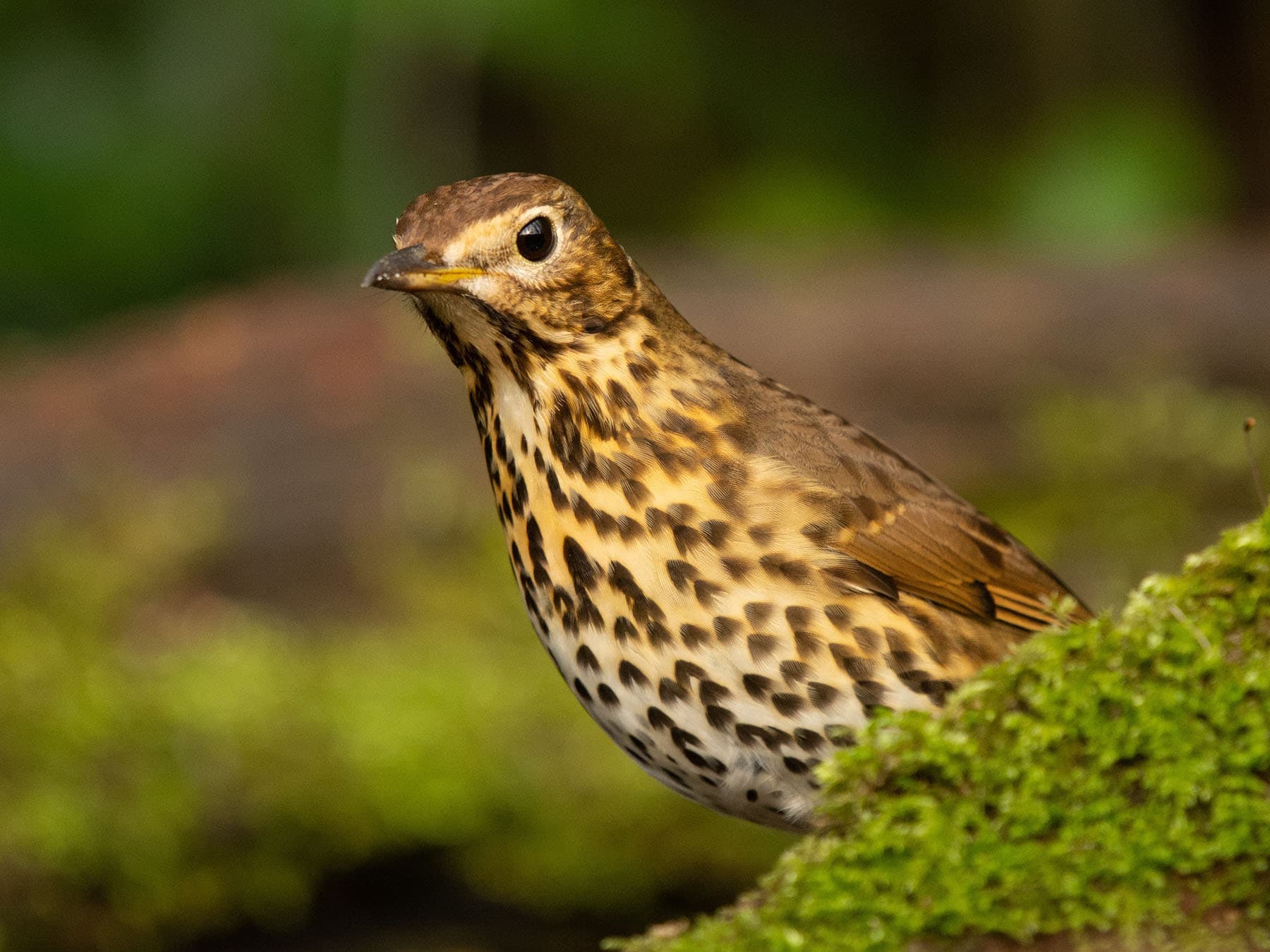
Redwings are most easily confused with the Fieldfare, another winter visitor from Scandinavia, and the Song Thrush, a common resident. The Fieldfare is significantly larger, with a grey head, brown wings, and a warm brown band across the chest. The Song Thrush lacks the distinct supercilium and reddish flanks.
How big are Redwings?
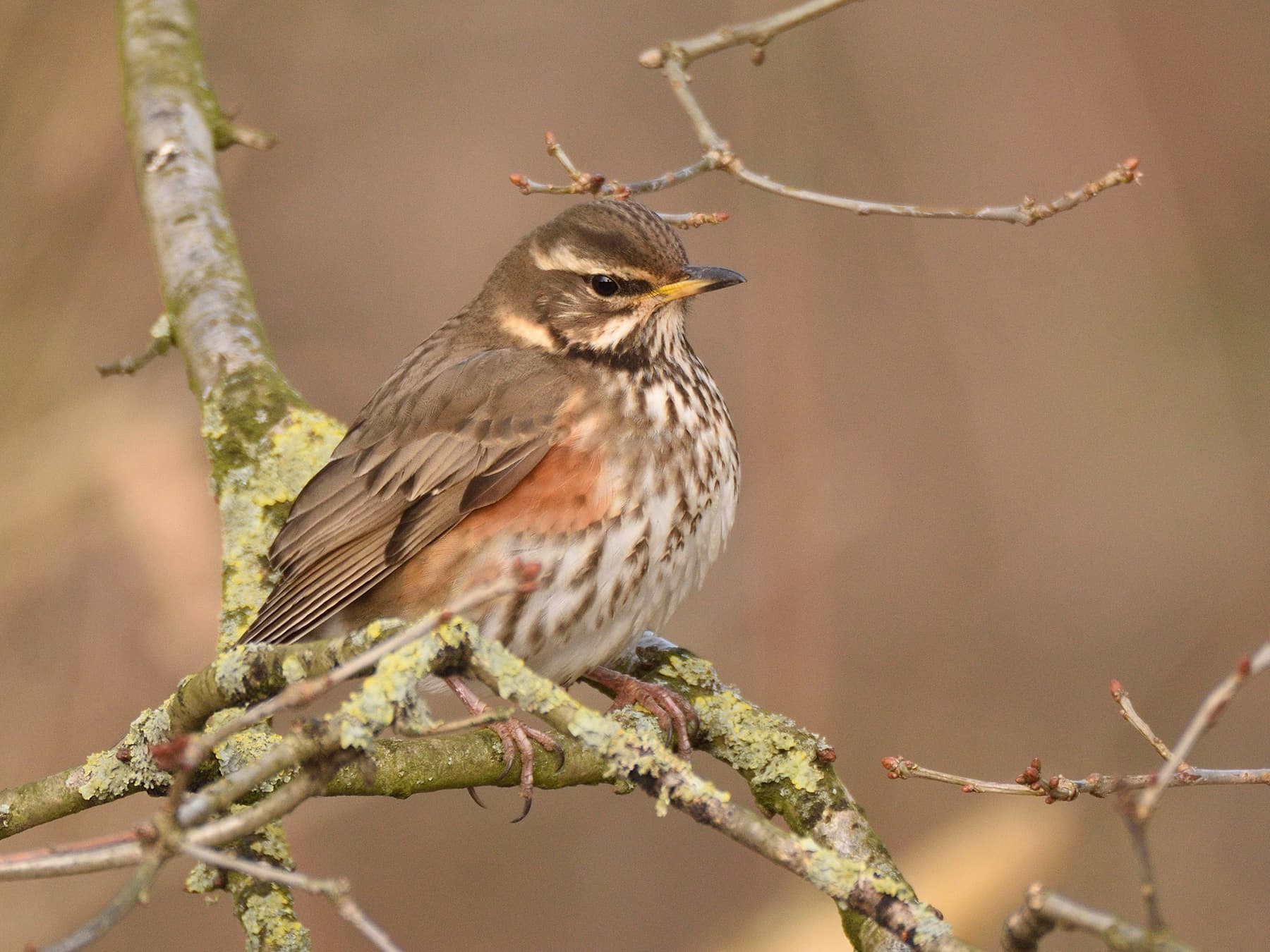
Redwings are the smallest UK thrush species, larger than the robin but smaller than the Starling.
Length
The Redwing has a body length of 20 to 24 centimetres.
Weight
These birds weigh 46 to 80 grams.
Wingspan
Most adults have a wingspan of 33 to 35 centimetres.
Its size
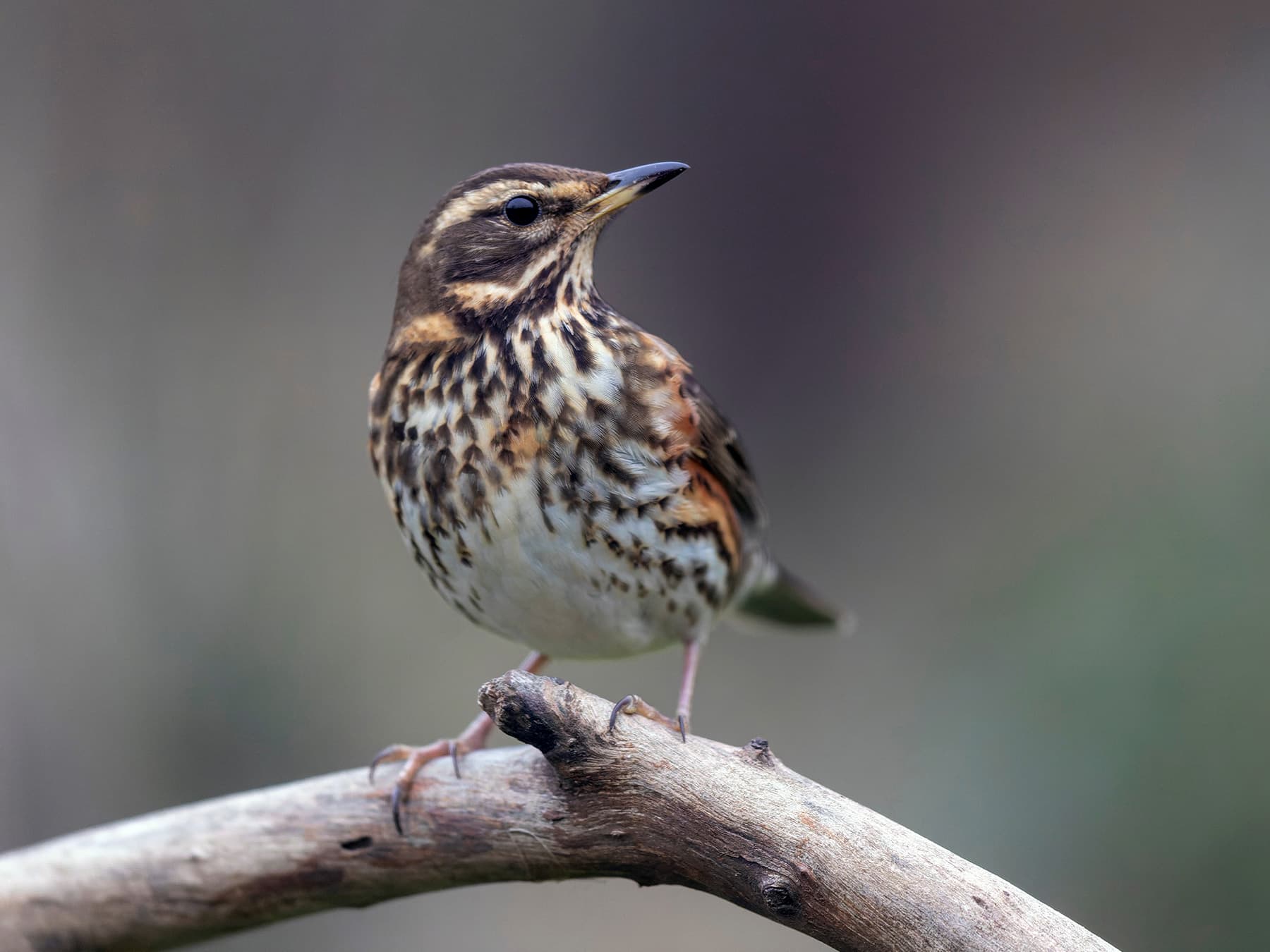
Adults- Length
- 20–24 cm
- Wingspan
- 33–35 cm
- Weight
- 50–75 g
Its song and calls
The Redwing’s high-pitched call is often heard on autumn nights and is a harbinger of the approaching winter.
What sound does a Redwing make?
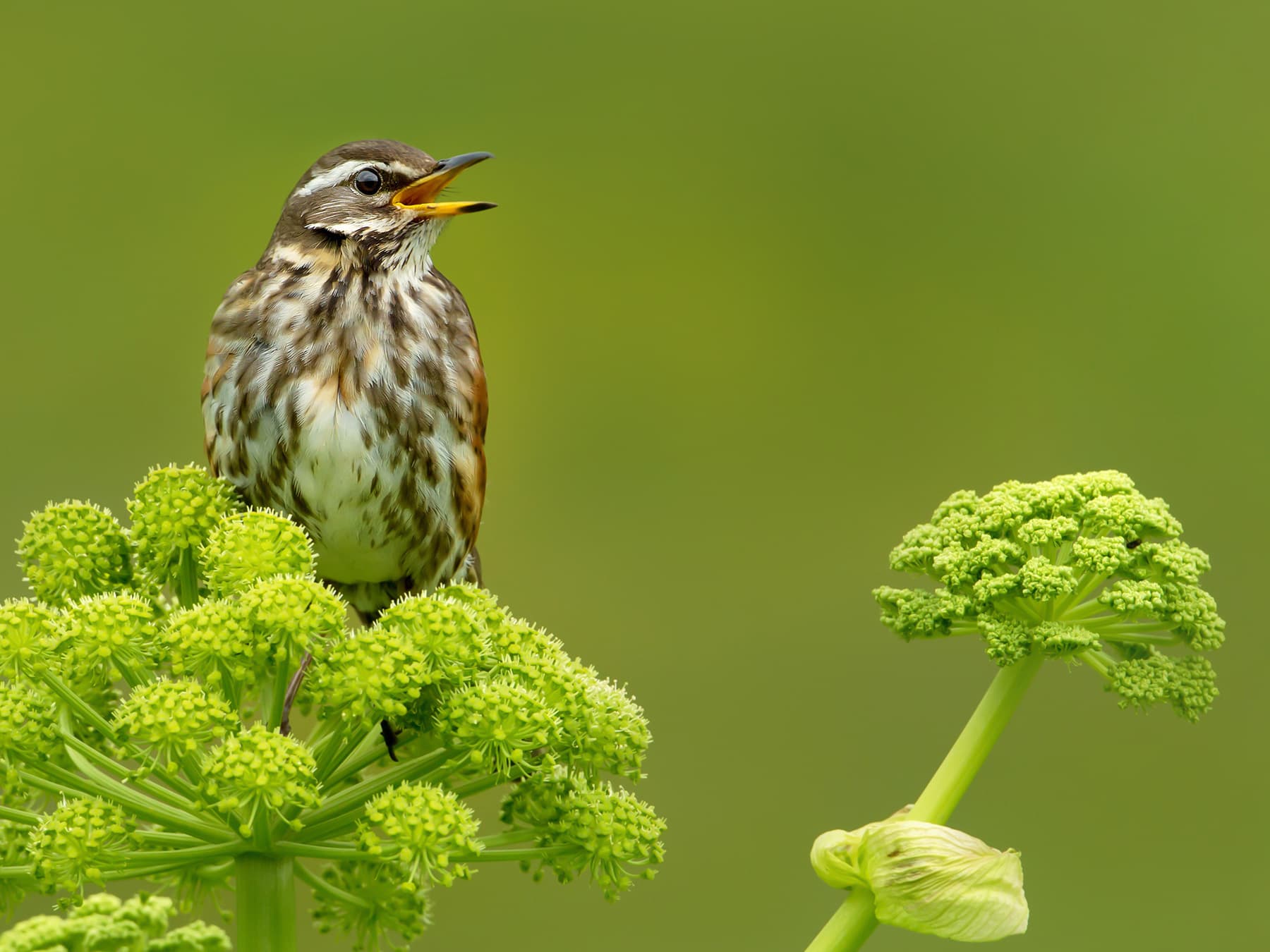
Redwings produce a variety of vocalisations. Their most commonly heard sound is a high-pitched buzzing ‘tseeep’ contact call uttered in flight by day or night. This call is first heard in September and October as migrating birds return to the United Kingdom. Males have a pleasant warbling song, although this is rarely heard in the non-breeding season.
- Song and calls0:00 / 0:17
Recorded in Reykjavíkurborg, Iceland · June 2023
- Flight call0:00 / 0:10
Recorded in Normandie, France · November 2024
When and where to see it
OctoberIn season
Most recorded in October
- 1. Shetland Islands2.7%
- 2. Stirling2.5%
- 3. Offaly2.5%
- 4. Eilean Siar2.4%
- 5. Derbyshire1.9%
Each dot is a county, state or province: the bigger and darker, the larger the bird’s share of that place’s bird records that month. Grey dots: no regular records. The ringed point is the centre of the bird’s records this month; the arrow shows how it moved since last month, and the dashed loop its path through the year. “Arrivals” colours places where it becomes regular this month (orange) or is in its last regular month (grey). GBIF eBird Observation Dataset, 2019–2024. Map data: Natural Earth, US Census Bureau; place centres © OpenStreetMap contributors.
In your area
See when the Redwing is recorded in your county, state or province.
How often the Redwing turns up in the UK, Ireland and Canada through the year, from birdwatchers' records.
United Kingdom
Winter visitor · regularly Oct–Apr · most records in December
Ireland
Winter visitor · regularly Oct–Mar · most records in January
Canada
Passage migrant · regularly Feb–Mar · most records in February
Show as a table
| Month | United Kingdom | Ireland | Canada |
|---|---|---|---|
| January | 1.3% (regular) | 0.90% (regular) | 0.001% |
| February | 1.1% (regular) | 0.68% (regular) | 0.004% (regular) |
| March | 0.64% (regular) | 0.44% (regular) | <0.001% (regular) |
| April | 0.080% (regular) | 0.024% | <0.001% |
| May | 0.003% | – | – |
| June | <0.001% | – | – |
| July | – | – | – |
| August | 0.001% | – | – |
| September | 0.038% | 0.001% | – |
| October | 1.1% (regular) | 0.30% (regular) | – |
| November | 1.4% (regular) | 0.65% (regular) | <0.001% |
| December | 1.5% (regular) | 0.83% (regular) | <0.001% |
Recorded regularly in
Worldwide: recorded regularly in 54 countries
Countries where it was recorded in at least 3 of the 6 years 2019–2024. Linked countries have their own bird list.
Europe (41)
- Åland Islands
- Albania
- Austria
- Belarus
- Belgium
- Bulgaria
- Croatia
- Czechia
- Denmark
- Estonia
- Faroe Islands
- Finland
- France
- Germany
- Greece
- Guernsey
- Hungary
- Iceland
- Ireland
- Isle of Man
- Italy
- Jersey
- Latvia
- Lithuania
- Luxembourg
- Malta
- Moldova
- Netherlands
- Norway
- Poland
- Portugal
- Romania
- Russia
- Serbia
- Slovakia
- Slovenia
- Spain
- Sweden
- Switzerland
- Ukraine
- United Kingdom
Africa (1)
Asia (10)
- Armenia
- Azerbaijan
- China
- Georgia
- Iran
- Israel
- Kazakhstan
- Mongolia
- Palestinian Territories
- Turkey
North America (2)
- Canada
- Greenland
Data: EOD – eBird Observation Dataset (Cornell Lab of Ornithology), accessed via GBIF.org, CC BY 4.0. Records from 2019–2024, aggregated and filtered by Birdfact. How these lists are made
What is the habitat of a Redwing?
Redwings are most common in open country, although they may retreat to gardens and parks in cold weather. Berry-producing shrubs and dense grassland are important habitat requirements.
Look out for Redwings in the following habitats:
- Thickets
- Open woodland
- Orchards
- Hedgerows
- Stubble fields
What is the range of a Redwing?
The Redwing has an extensive range in the Northern Hemisphere. They breed from Scandinavia to Eastern Russia and are widespread in Europe, the Middle East, and North Africa in the non-breeding season.
Where do Redwings live?
Redwings live in terrestrial habitats, although they must make long water crossings on migration. These birds forage on the ground and in shrubs and trees and sleep well above the ground. Interestingly, these birds nest very low to the floor, or even on terra firma in many cases.
How rare are Redwings?
Redwings can be very common in the winter when nearly 700,000 individuals arrive from Europe and Asia. They are gregarious birds, so you will likely see many of them together, often in the company of other flocking birds like Fieldfare and Starlings.
Where can you see Redwings in the UK?
Redwings are widespread in the UK, although they are shy and difficult to approach. They rarely forage in towns and cities, so head out into the countryside for your best chance. Look out for flocks of birds in the colder months, especially around open fields near dense vegetation with hawthorn and other fruiting plants.
Migration
Birdwatchers are only likely to spot the Redwing in the colder months of the year, although a small breeding population makes them a year round-resident in the north. Continue reading to learn more about Redwing Migration.
Do Redwings migrate?
Redwings are a migratory species that overwinter in the United Kingdom, arriving in the autumn and departing in the spring. Most return to Scandinavia, but others breed in Iceland and the Faroe Islands. Some UK Redwings migrate much further afield with band recoveries from Georgia and Iran.
Are Redwings native to the UK?
Redwings are native non-breeding migrants to the UK. Some have begun to breed in parts of Northern Scotland, making them full-time residents in the United Kingdom.
Tips for seeing it
- Look for Redwings in open fields and parks during the winter months
- Listen for their thin, high-pitched call, especially at night during migration
- Observe flocking behaviour with other thrush species like Fieldfares
- In the UK, check berry-laden hedgerows and orchards in autumn and winter
What it eats
What do Redwings eat?
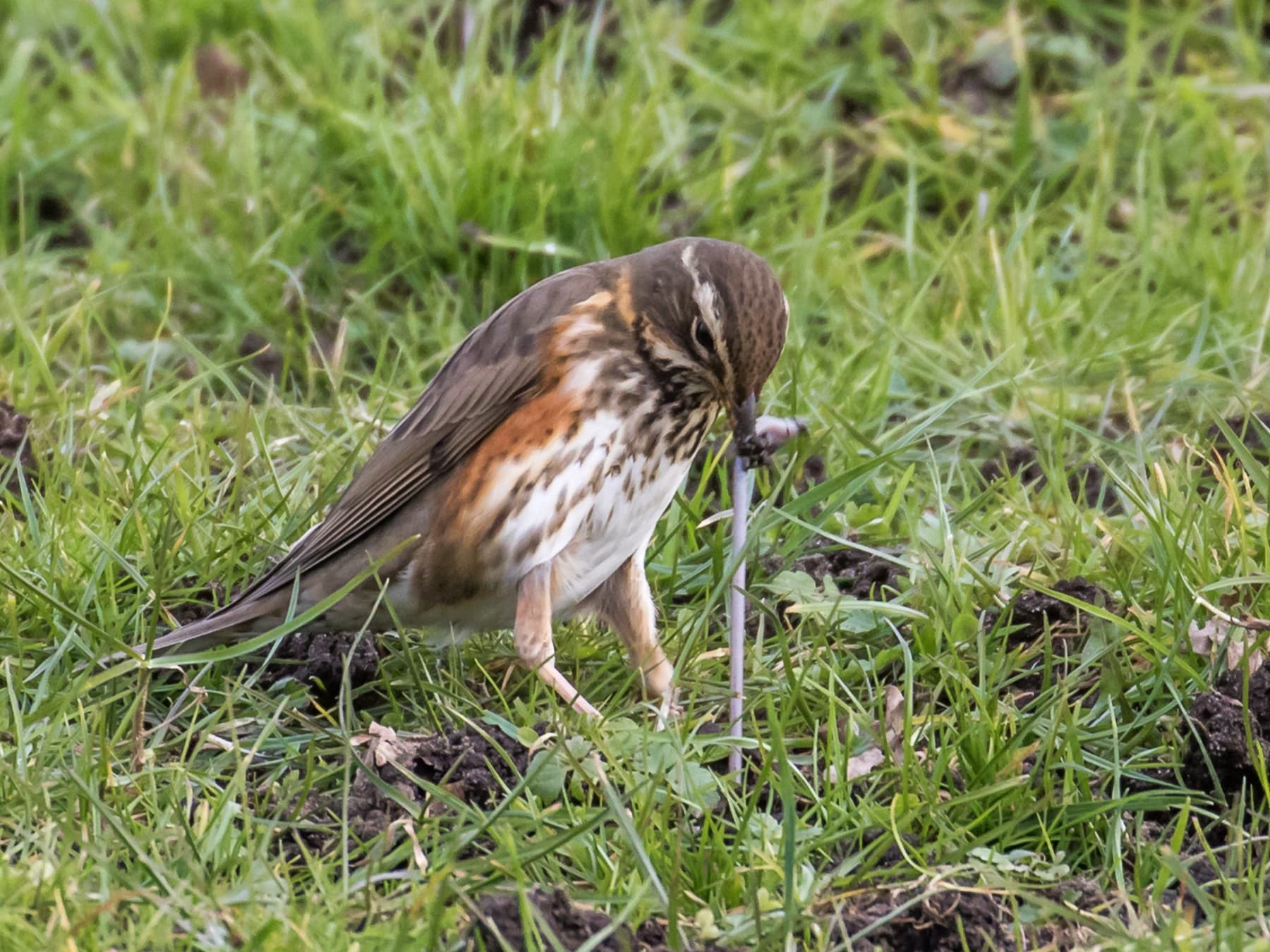
Redwings eat insects, snails and other invertebrates that they find by searching through the leaf litter. Fruits and berries like hawthorn and ivy are other important components of their diet.
These birds rarely visit bird feeders, although they could be tempted with apples and mealworms in snowy conditions when they are more likely to venture into gardens.
What do baby Redwings eat?
Redwing chicks are mostly fed earthworms, although their parents also supply small insects like flies, caterpillars, and beetles. The chicks rely on their parents for the two weeks it takes them to fledge and then a further two weeks as they learn to forage for themselves.
Nesting and breeding
Redwings are non-breeding visitors to the UK, although a tiny population remains year-round to breed in the far north. Keep reading to learn more about Redwing breeding and nesting habits.
Where do Redwings nest?
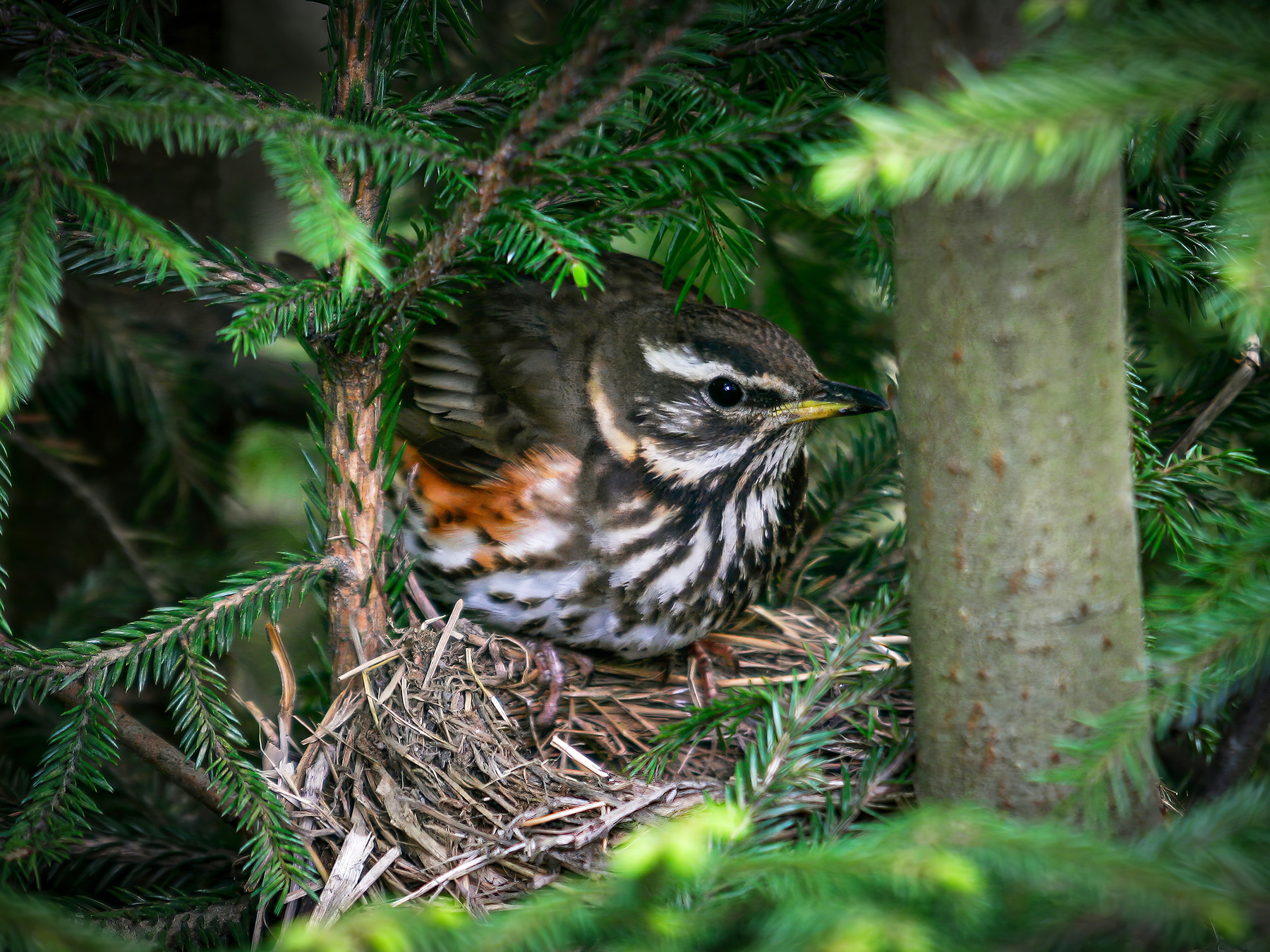
Most Redwings nest between Scandinavia and Eastern Russia, with approximately two dozen breeding pairs in Northern Scotland. They build their nests in a variety of microhabitats, including the ground, in low vegetation, on tree stumps, or low down in tree branches.
When do Redwings nest?
Redwings first breed at a year old. They nest between mid-spring and mid-summer (early April to late July) and produce two broods each year.
What do Redwing eggs look like?
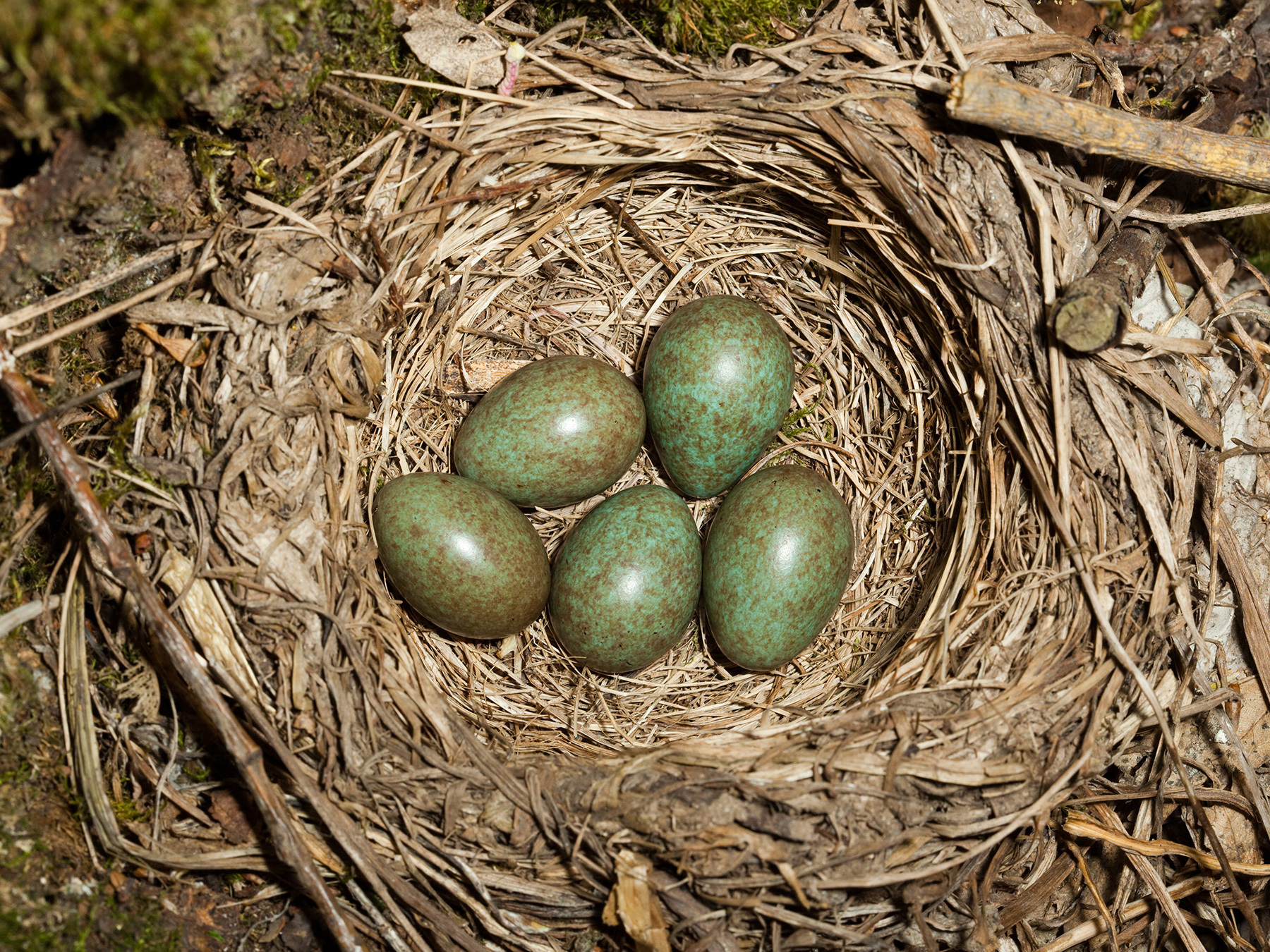
Redwings lay four to six pale blue-green eggs with red-brown markings. Each egg measures approximately 26 millimetres long and 19 millimetres wide.
Do Redwings mate for life?
Redwings are probably monogamous during the breeding season, although they find a new partner each year.
Behaviour
Are Redwings aggressive?
Redwings are not aggressive in the United Kingdom. These nomadic birds are gregarious and non-territorial during the winter when they move about in search of berries and other food sources.
Where do Redwings sleep at night?
Redwings sleep at night for most of the year but also migrate at night in the Autumn and Spring. They sleep in vegetation like hedgerows, thickets and trees and often roost communally in large flocks (several thousand in some cases).
Lifespan and predators
How long do Redwings live?
Redwings are fairly short-lived birds. Those that live to adulthood are likely to survive for about two years, although the oldest known specimen lived for well over eleven years.
What are the predators of Redwings?
Redwings are vulnerable to birds of prey like the Peregrine and the Sparrowhawk that will pick them off as they come in to roost. Mammalian carnivores like foxes and cats also take their toll. Crows are an important nest predator on their breeding grounds.
Are Redwings protected?
Redwings are protected by the Wildlife and Countryside Act 1981.
Are Redwings endangered?
Redwings are not endangered, although they are an Amber-listed species in the United Kingdom and have suffered a significant range reduction since the 1970s. Globally, the species is listed as ‘Near Threatened’ on the IUCN red list due to a decreasing population trend.
Conservation
Listed as Near Threatened, Redwing populations are declining in parts of their range due to habitat loss and climate change.
Conservation efforts focus on preserving breeding habitats in northern Europe and maintaining suitable wintering grounds in southern regions.
Similar birds
Often mistaken for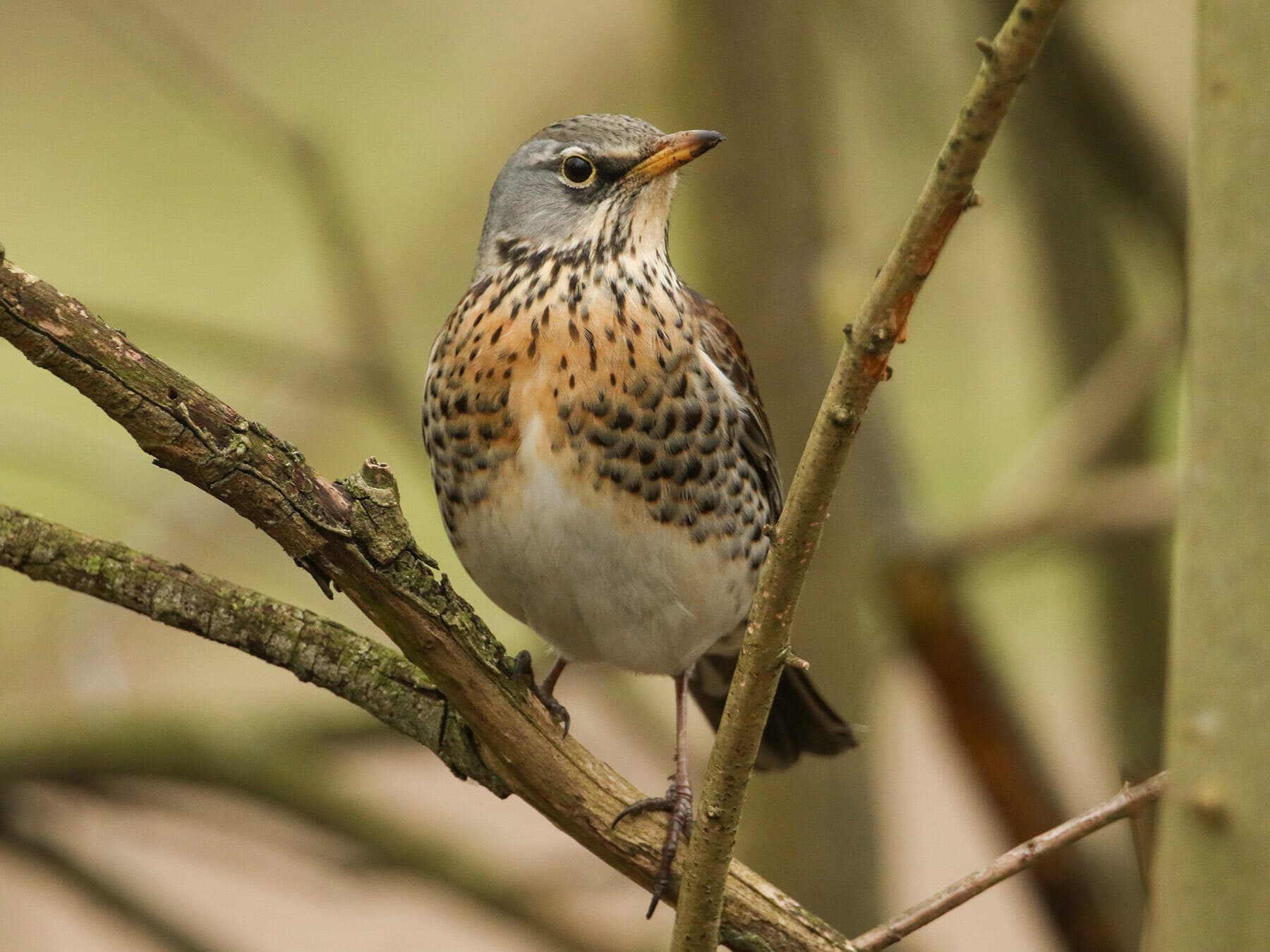
More photos
5 photos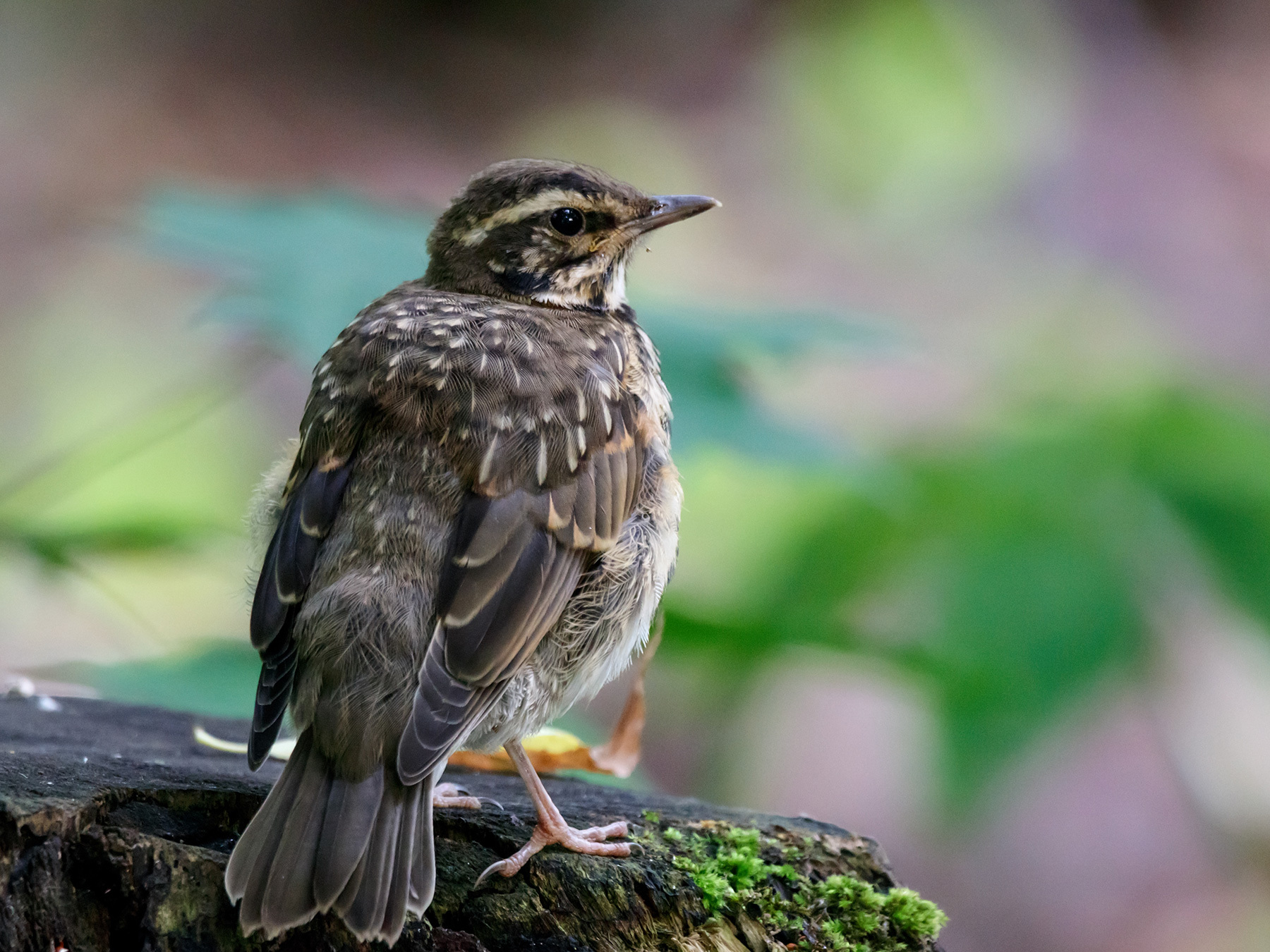
Redwing guides
1 guidesQuick facts
- Length
- 20–24 cm
- Wingspan
- 33–35 cm
- Weight
- 50–75 g
- Lifespan
- 2–5 years · oldest recorded 11.8 years
- Family
- Thrushes
- Migration
- Long-distance Migrant
- Global status (IUCN)
- Near Threatened
- World population
- 98,000,000 - 151,000,000 individuals
- Population trend
- Decreasing
- Also called
- Red-winged Thrush
- Scientific name
- Turdus iliacus
Sources
4- 1BirdLife International. 2017. Turdus iliacus (amended version of 2016 assessment). The IUCN Red List of Threatened Species 2017: e.T22708819A110990927. Source (opens in a new tab)
- 2BirdLife International. 2017. Turdus iliacus (amended version of 2016 assessment). The IUCN Red List of Threatened Species 2017: e.T22708819A110990927. Source (opens in a new tab)
- 3BirdLife International. 2017. Turdus iliacus (amended version of 2016 assessment). The IUCN Red List of Threatened Species 2017: e.T22708819A110990927. Source (opens in a new tab)
- 4BTO longevity records: maximum age from a ringed bird, 11 years, 10 months, 7 days (set in 1988), BirdFacts: Redwing (1988) Source (opens in a new tab)

Checked by
Nathan Cope, founder and editor
Nathan founded Birdfact and leads its writers and contributors in the UK, the US and Canada. He has watched and studied birds for more than ten years, and checks every article and species guide before it’s published.