Species Profile
Red-breasted Nuthatch
Sitta canadensis
Quick Facts
Conservation
LCLeast ConcernLifespan
6–7 years
Length
11–12 cm
Weight
8–13 g
Wingspan
22–24 cm
Migration
Partial migrant
Gallery
Appearance
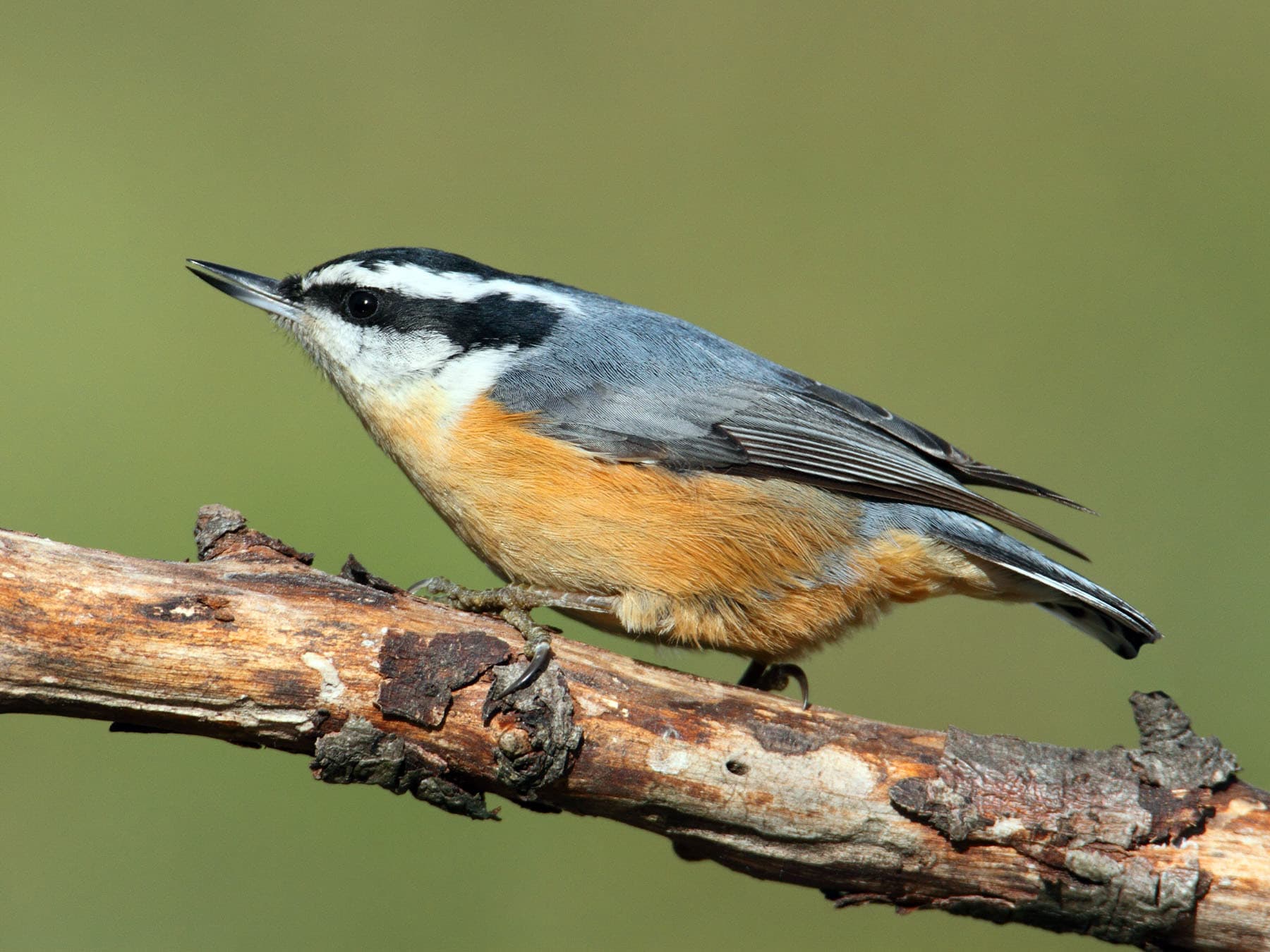
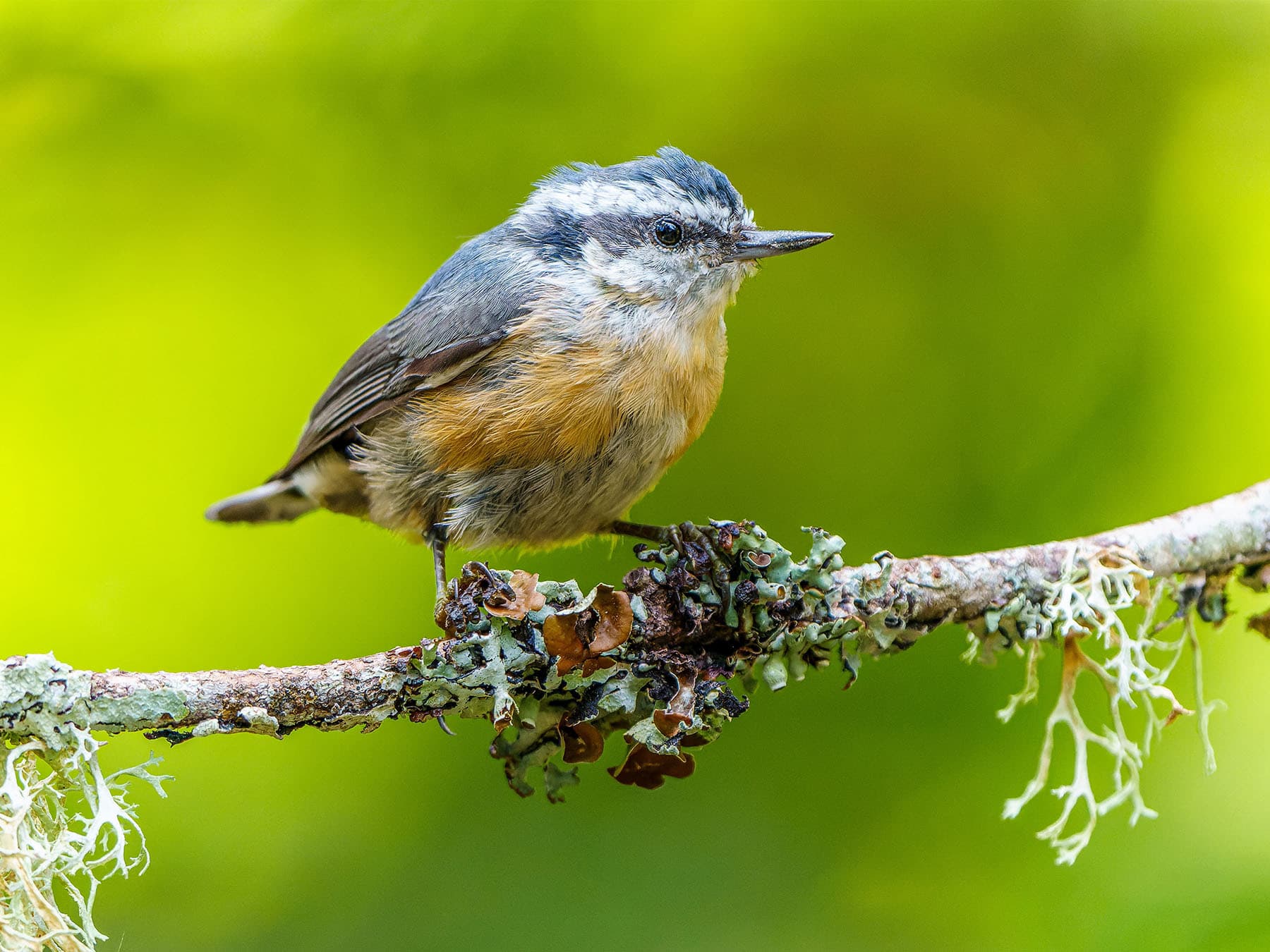
The Red-breasted Nuthatch is a small, compact bird with a distinctive blue-gray back, black cap, and white face with a black eye-line. Its most striking feature is the rusty-red breast and belly, contrasting sharply with its upper parts.
Both sexes are similar, though males typically have a darker cap and more intense red underparts. Juveniles resemble adults but with duller plumage and a less defined cap.
Identification & Characteristics
Colors
- Primary
- Blue
- Secondary
- Black
- Beak
- Black
- Legs
- Black
Attributes
Understanding Attributes
Rated 0–100 based on research and observation. A score of 50 is average across all bird species. These attributes are relative and don't necessarily indicate superiority.
Habitat & Distribution
Red-breasted Nuthatches inhabit coniferous and mixed forests across North America, from Alaska to Newfoundland and south to California and North Carolina. They prefer mature stands of spruce, fir, pine, and hemlock trees.
During winter, some populations move southward or to lower elevations in search of food. They are common in Canada and the northern United States, with irregular irruptions into southern regions during years of poor cone crops in the north.
Diet
Red-breasted Nuthatches primarily feed on insects, spiders, and seeds from coniferous trees. They use their sharp, straight bills to probe bark crevices for prey and to hammer open seeds. In winter, they supplement their diet with suet and sunflower seeds from bird feeders.
Behaviour
Red-breasted Nuthatches are agile climbers, often seen moving headfirst down tree trunks in search of food. They are known for their habit of caching seeds, storing them in bark crevices for later consumption. These birds are generally solitary or found in pairs, but may join mixed-species flocks in winter.
Calls & Sounds
The Red-breasted Nuthatch's call is a distinctive, nasal 'yank-yank' or 'ank-ank', often described as sounding like a tiny tin horn. During breeding season, males produce a soft, warbling song. When alarmed, they emit a rapid series of sharp notes.
Nesting & Breeding
Red-breasted Nuthatches form monogamous pairs and begin breeding in late spring. Males court females with wing-fluttering displays and offerings of food.
Nests are typically excavated in dead or decaying trees, often in abandoned woodpecker holes. The female lines the cavity with grass, bark strips, and pine needles. She lays 4-7 white eggs with reddish-brown speckles.
Both parents incubate the eggs for about 12 days. After hatching, nestlings are fed by both adults and fledge after 18-21 days. Families may stay together for several weeks post-fledging.
Conservation
While the Red-breasted Nuthatch is currently listed as Least Concern, it faces threats from habitat loss due to deforestation and climate change. Conservation efforts focus on preserving mature coniferous forests and maintaining suitable nesting sites in managed woodlands.
Population
Estimated: Unknown
Trend: Stable
Elevation
Sea level to 3000 meters
Additional Details
- Predators:
- Main predators include small raptors such as Sharp-shinned Hawks, Cooper's Hawks, and Northern Pygmy-Owls, as well as squirrels and domestic cats.
Birdwatching Tips
- Listen for their distinctive 'yank-yank' call, which sounds like a toy trumpet
- Look for them on coniferous trees, especially during winter
- Watch for their unique climbing behavior, often moving headfirst down tree trunks
- In North America, check bird feeders stocked with sunflower seeds or suet
Did You Know?
- Red-breasted Nuthatches smear pine resin around their nest entrance, possibly to deter predators.
- They can hang upside down from branches while feeding.
- During irruption years, they may travel over 1,000 miles south of their usual range.
Community Photos
Be the first to share a photo of the Red-breasted Nuthatch
Upload a PhotoIdentify Any Bird Instantly
- Upload a photo from your phone or camera
- Get an instant AI identification
- Ask follow-up questions about the bird
Monthly Birds in Your Area
- Personalised for your location
- Seasonal tips and garden advice
- Updated every month with new species