


Ovenbird
Teacher Bird · Seiurus aurocapilla
By the Birdfact teamChecked by Nathan Cope
On this page11 sections
How to recognise it
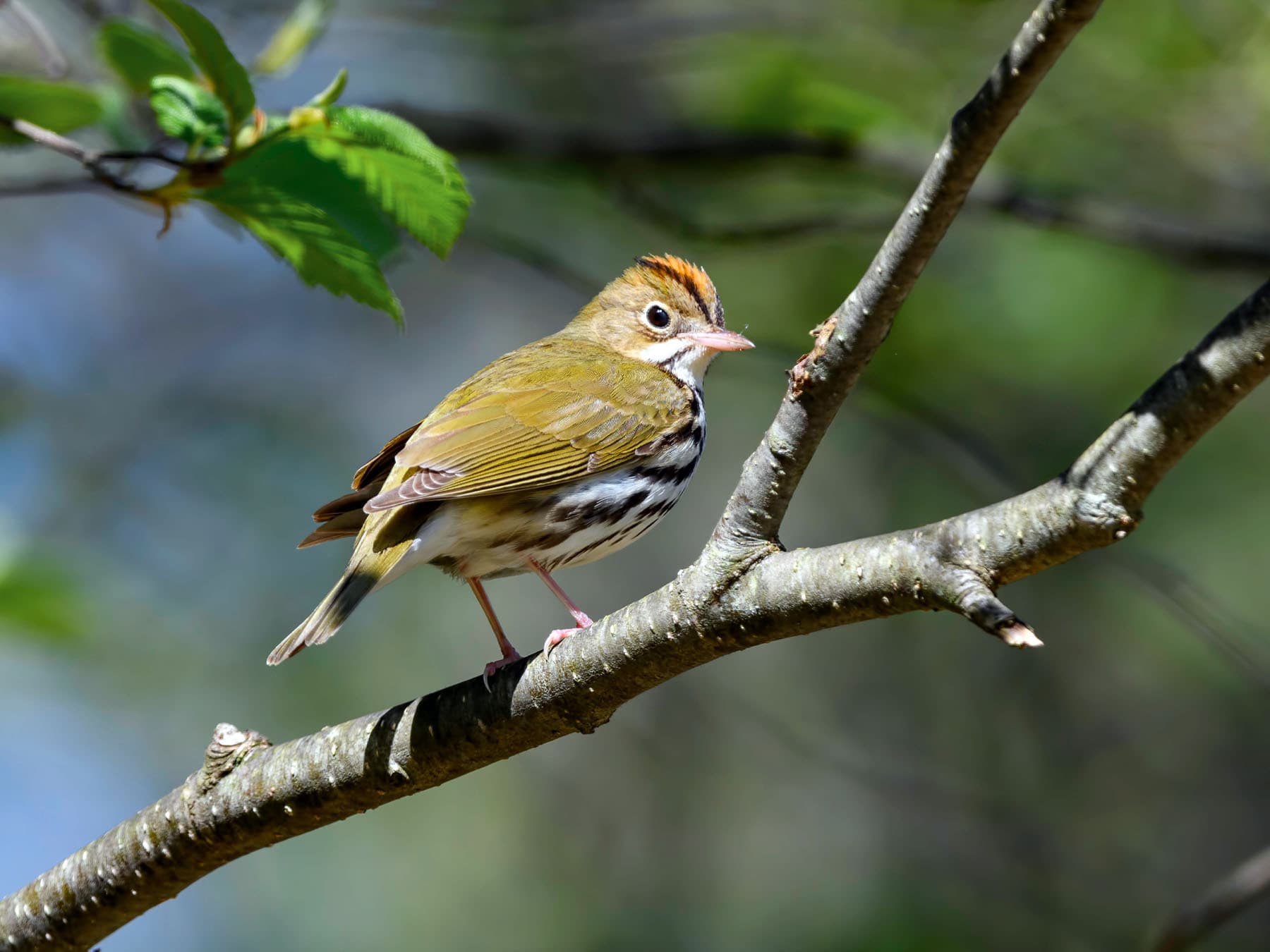
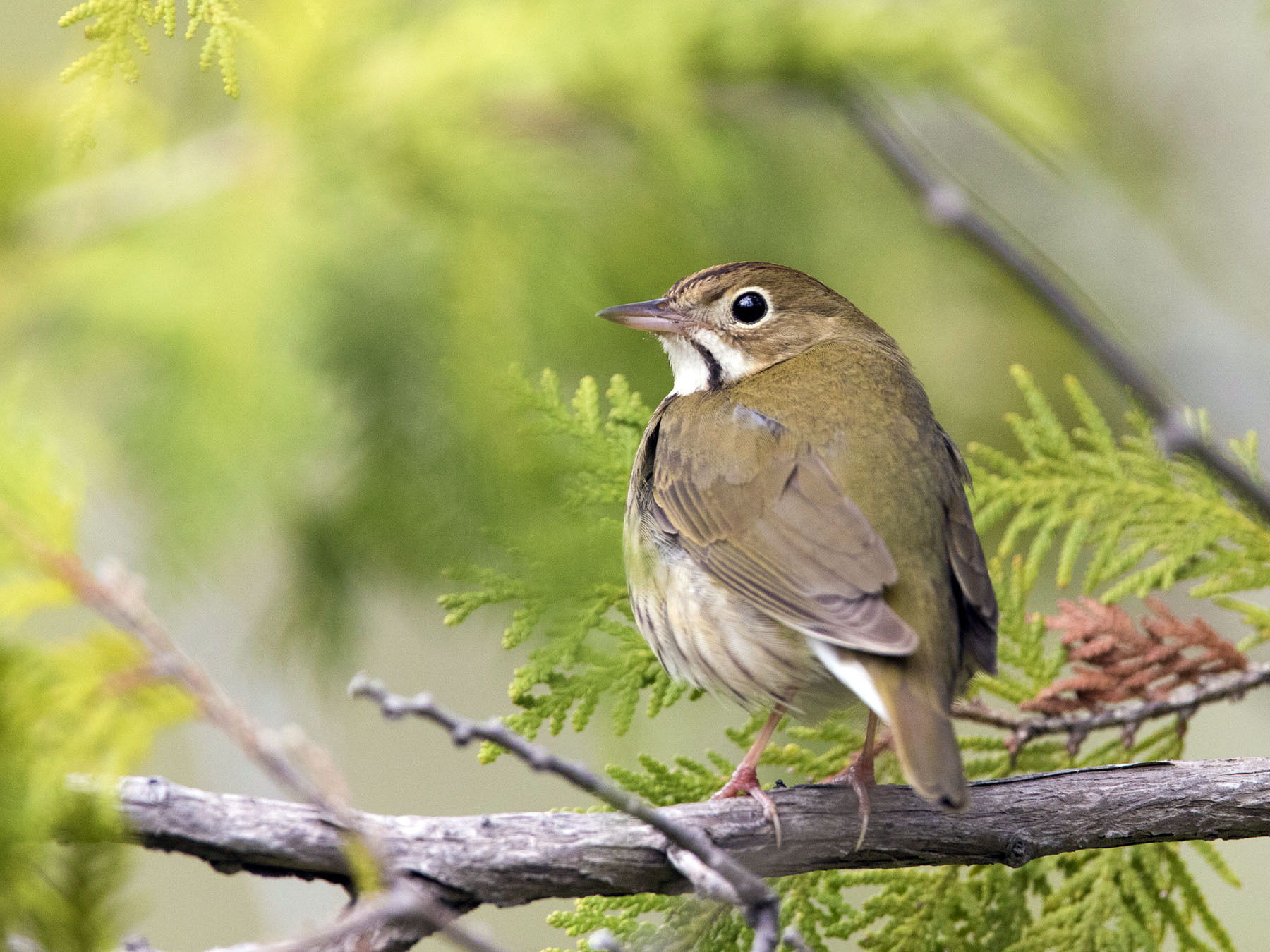
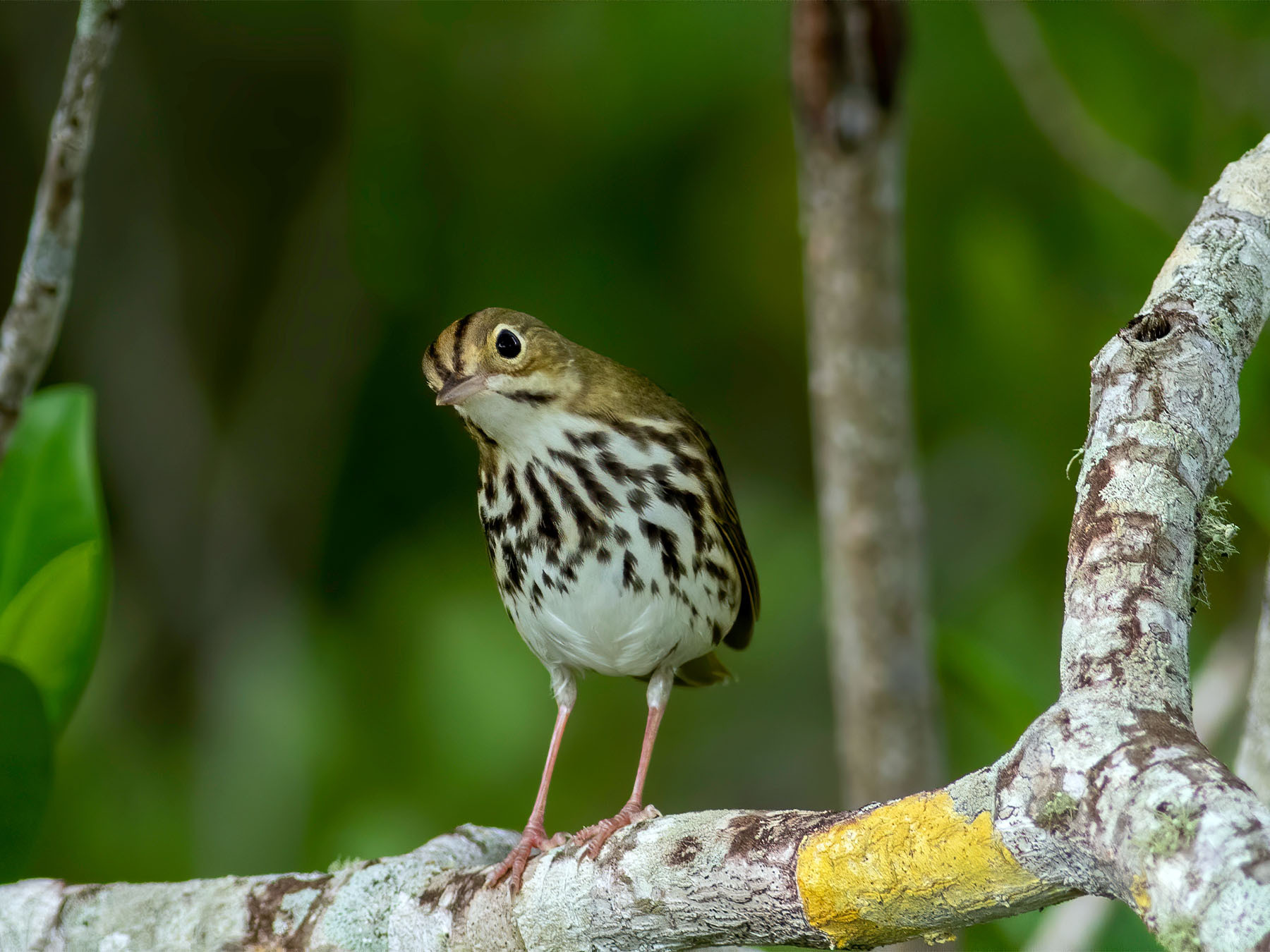
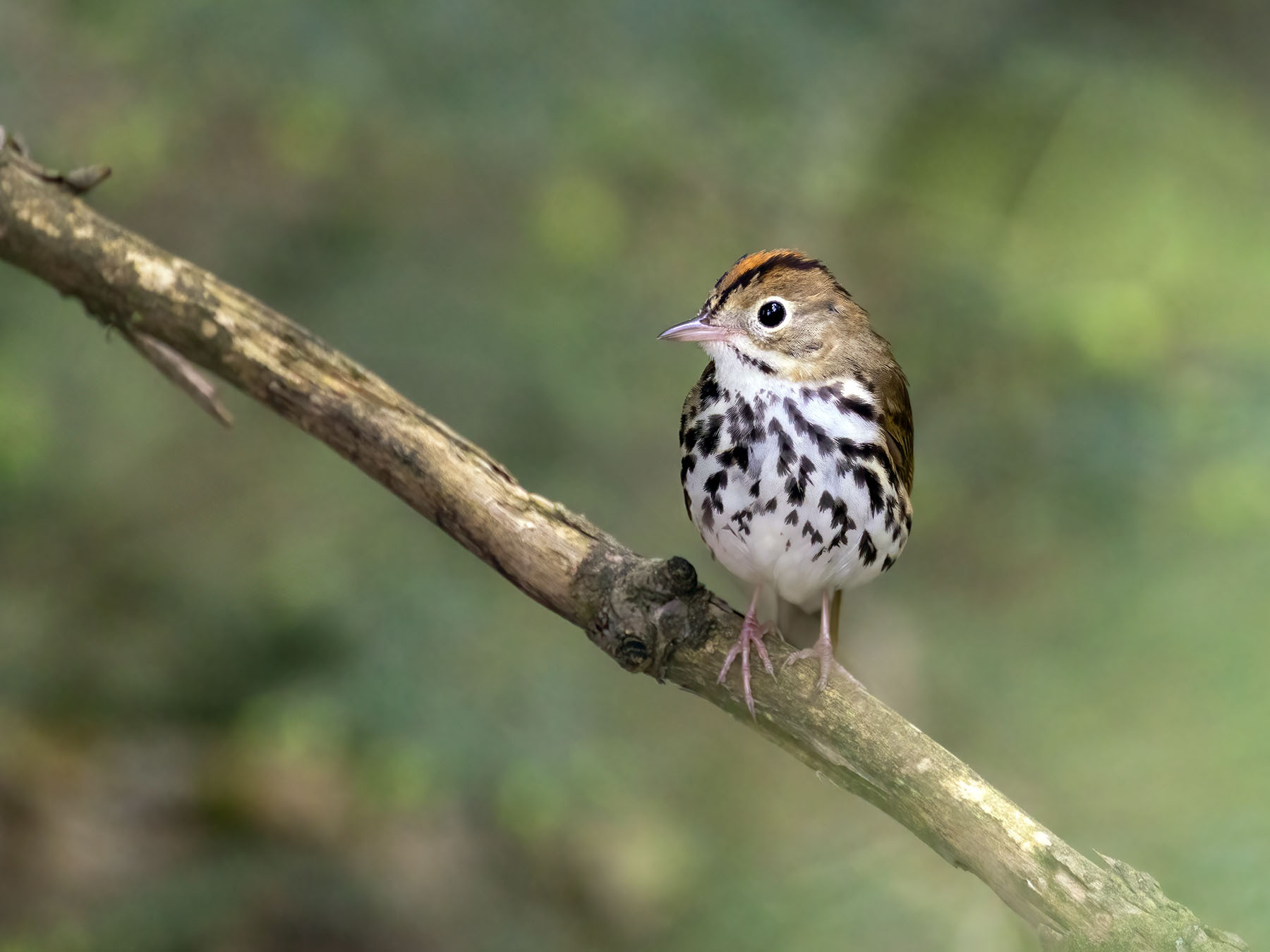
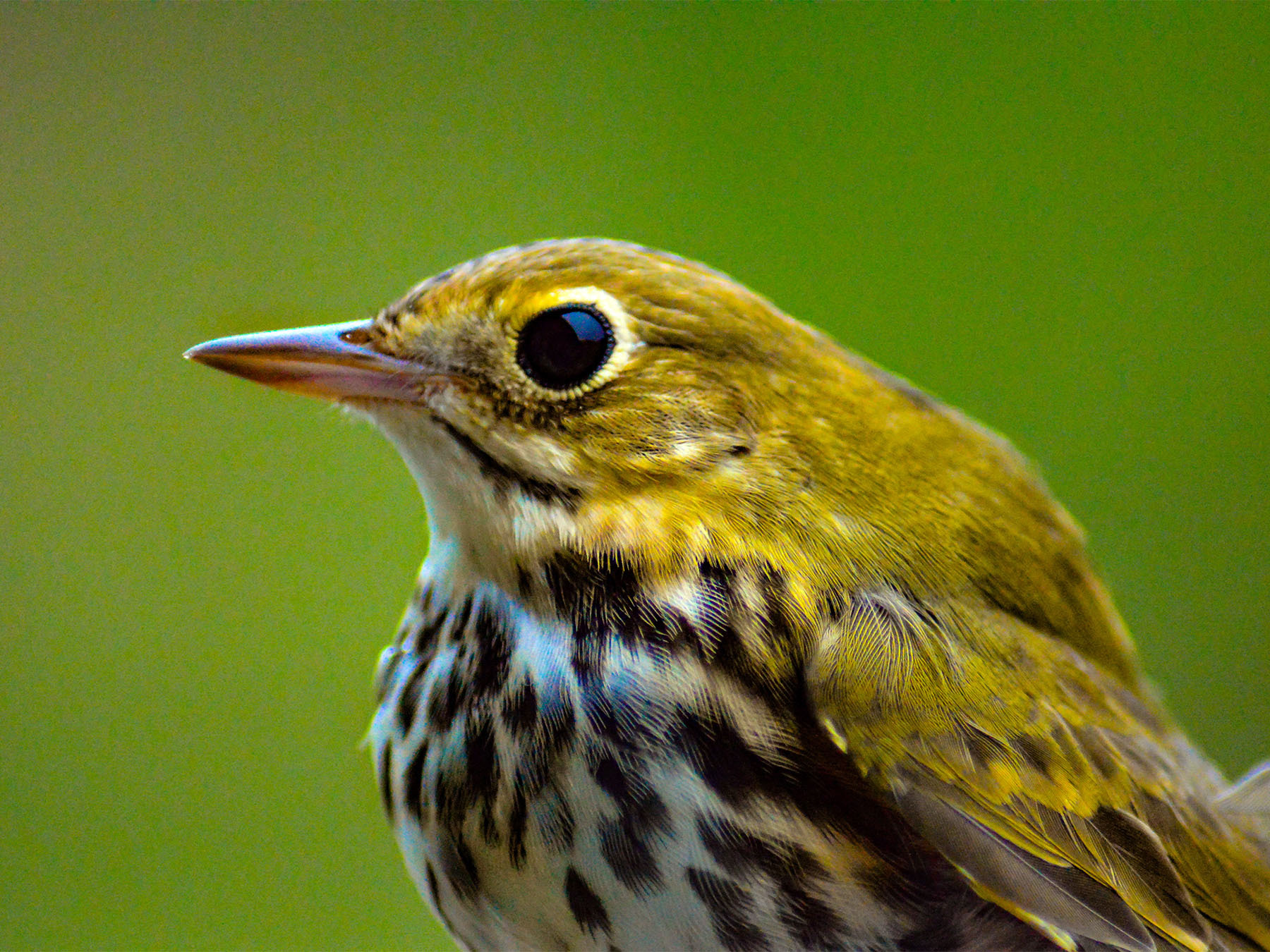
The Ovenbird is a small warbler with dull olive-green upperparts and white underparts heavily streaked with black. Its distinctive feature is a tawny-orange crown stripe bordered by black lines. The bird has a dark brown bill and pink legs.
Males and females look similar, though females tend to be slightly duller. Juveniles initially show browner plumage with less distinct markings but soon molt to resemble adults.
Its size
Adults- Length
- 12–15 cm
- Wingspan
- 19–23 cm
- Weight
- 18–28 g
Its song and calls
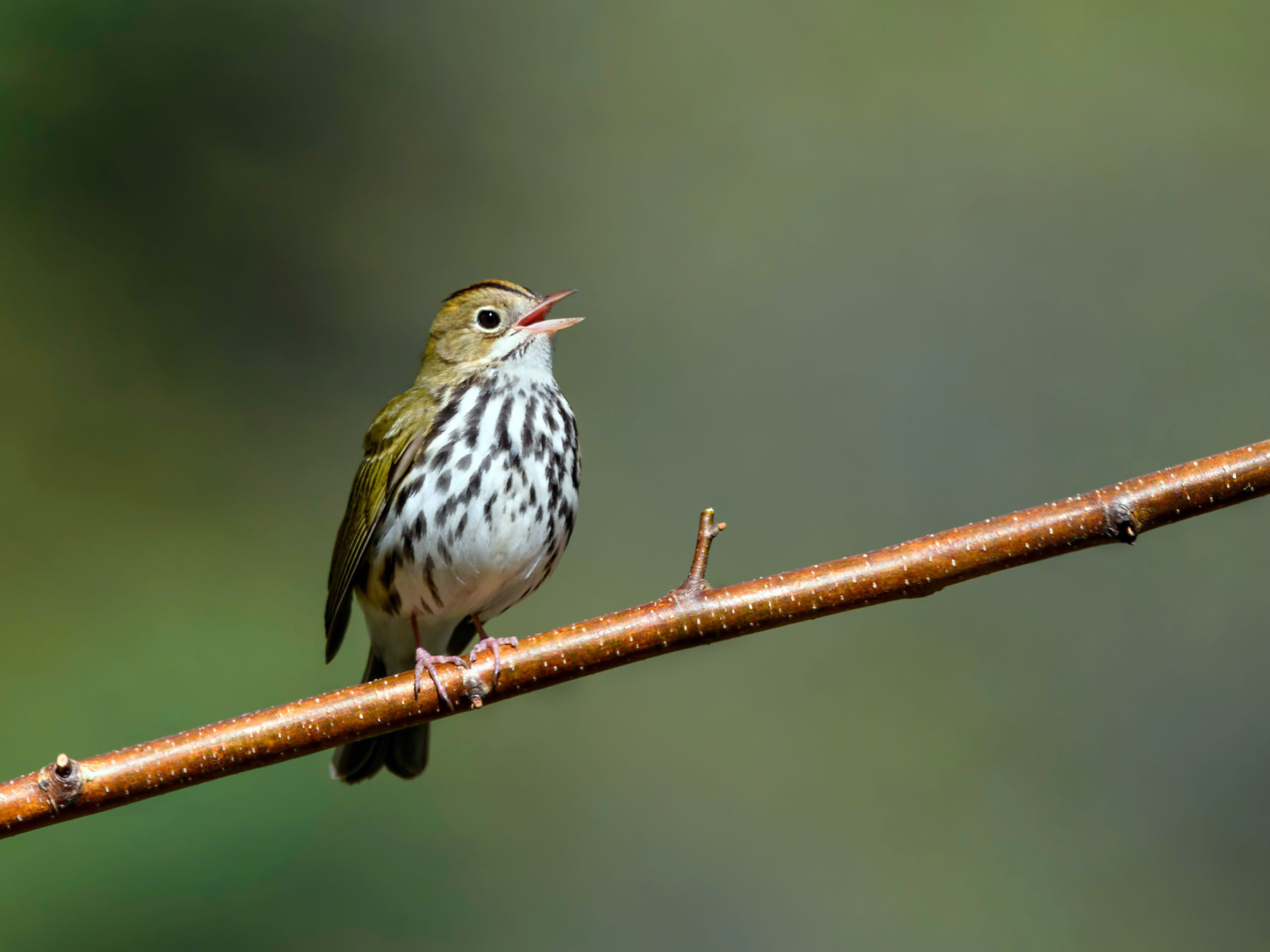
The Ovenbird's song is a loud, ringing 'teacher-teacher-teacher' that increases in volume. This distinctive vocalization gives rise to its alternative name, 'Teacher Bird.'
They also have a flight song, a complex series of musical notes and trills given during a display flight.
- Song0:00 / 0:30
Recorded in South Dakota, United States · June 2015
When and where to see it
OctoberLeaving
Most recorded in October
- 1. Florida0.63%
- 2. District of Columbia0.16%
- 3. New York0.13%
- 4. Alabama0.11%
- 5. Georgia0.11%
Each dot is a county, state or province: the bigger and darker, the larger the bird’s share of that place’s bird records that month. Grey dots: no regular records. The ringed point is the centre of the bird’s records this month; the arrow shows how it moved since last month, and the dashed loop its path through the year. “Arrivals” colours places where it becomes regular this month (orange) or is in its last regular month (grey). GBIF eBird Observation Dataset, 2019–2024. Map data: Natural Earth, US Census Bureau; place centres © OpenStreetMap contributors.
In your area
See when the Ovenbird is recorded in your county, state or province.
How often the Ovenbird turns up in the United States and Canada through the year, from birdwatchers' records.
United States
Summer visitor · regularly Apr–Oct · most records in May
Canada
Summer visitor · regularly May–Sep · most records in June
Show as a table
| Month | United States | Canada |
|---|---|---|
| January | 0.009% | <0.001% |
| February | 0.008% | <0.001% |
| March | 0.009% | <0.001% |
| April | 0.13% (regular) | 0.006% |
| May | 0.57% (regular) | 0.56% (regular) |
| June | 0.52% (regular) | 0.82% (regular) |
| July | 0.22% (regular) | 0.46% (regular) |
| August | 0.070% (regular) | 0.13% (regular) |
| September | 0.17% (regular) | 0.11% (regular) |
| October | 0.078% (regular) | 0.006% |
| November | 0.013% | <0.001% |
| December | 0.009% | 0.001% |
Worldwide: recorded regularly in 25 countries
Countries where it was recorded in at least 3 of the 6 years 2019–2024. Linked countries have their own bird list.
North America (24)
- Antigua & Barbuda
- Aruba
- Bahamas
- Belize
- Bermuda
- Canada
- Cayman Islands
- Costa Rica
- Cuba
- Dominican Republic
- El Salvador
- Guadeloupe
- Guatemala
- Haiti
- Honduras
- Jamaica
- Mexico
- Nicaragua
- Panama
- Puerto Rico
- St Pierre & Miquelon
- Turks & Caicos Islands
- United States
- US Virgin Islands
South America (1)
Data: EOD – eBird Observation Dataset (Cornell Lab of Ornithology), accessed via GBIF.org, CC BY 4.0. Records from 2019–2024, aggregated and filtered by Birdfact. How these lists are made
Tips for seeing it
- Listen for their loud, distinctive 'teacher-teacher-teacher' song
- Look for them walking on the ground in deciduous forests
- Observe leaf litter for movement, as they often forage there
- Visit eastern North American forests during spring and summer for the best viewing opportunities
What it eats
Ovenbirds primarily feed on insects and other small invertebrates found in leaf litter. Their diet includes ants, beetles, caterpillars, and spiders.
They forage by walking slowly on the forest floor, picking prey from leaves and soil with their sharp bills.
Nesting and breeding
Ovenbirds form monogamous pairs during the breeding season, which typically runs from May to July. Males establish territories and attract females with their loud songs.
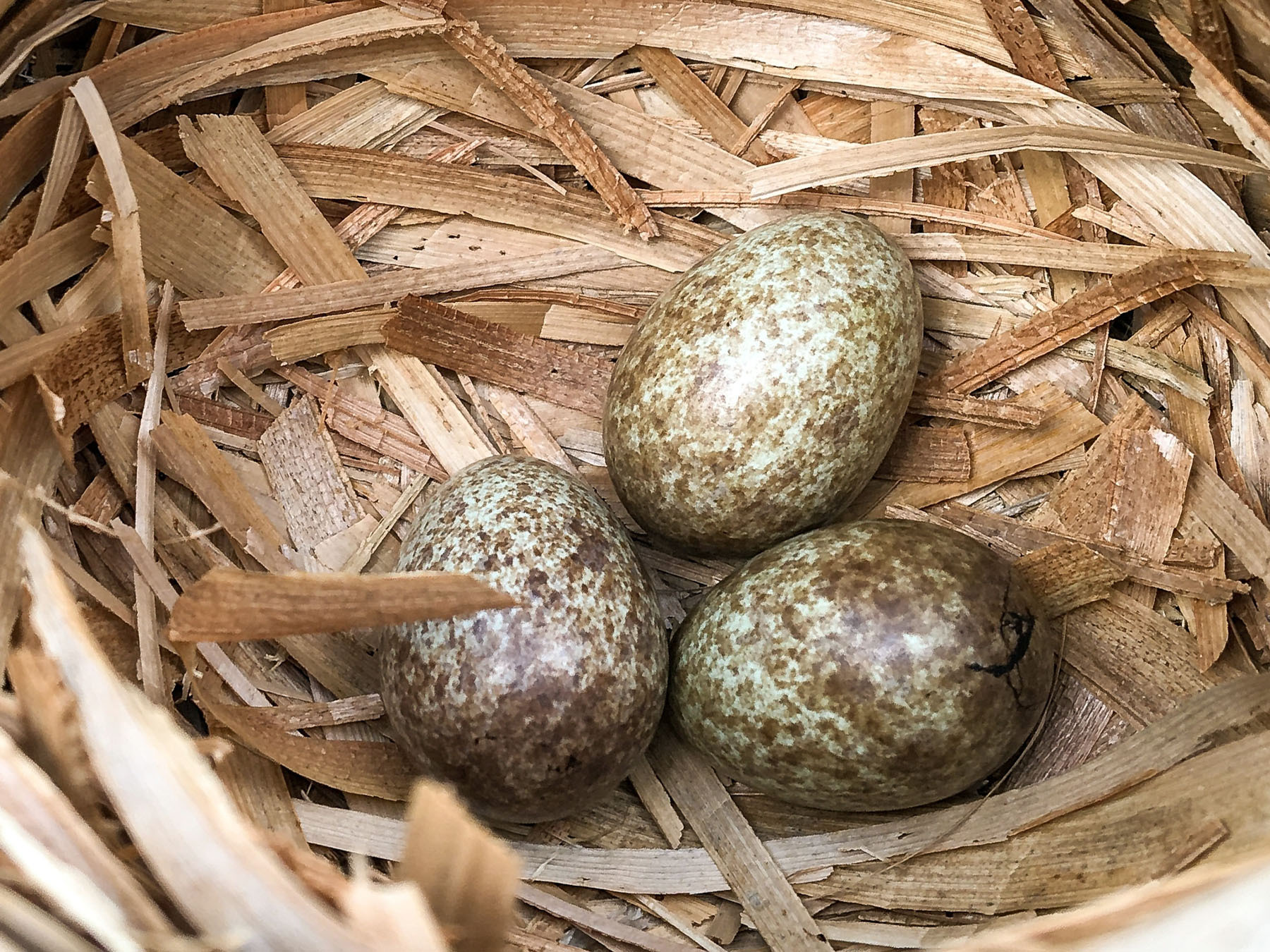
The female builds a unique, dome-shaped nest on the ground, resembling a Dutch oven (hence the bird's name). The nest is made of leaves, grasses, and bark, with a side entrance. She lays 3-6 white eggs with brown speckles.
Incubation lasts about 12 days and is performed solely by the female. Both parents feed the nestlings, which fledge after 7-10 days but remain dependent on adults for another 2-3 weeks.
Behaviour
Ovenbirds are primarily ground-dwelling birds, walking deliberately on the forest floor while bobbing their tails. They forage by picking insects from leaf litter.
During the breeding season, males become territorial, singing from elevated perches to defend their areas.
Conservation
While currently listed as Least Concern, Ovenbirds face threats from habitat loss due to forest fragmentation and urbanization.
Conservation efforts focus on preserving large tracts of mature deciduous forests, crucial for their breeding success.
More photos
7 photos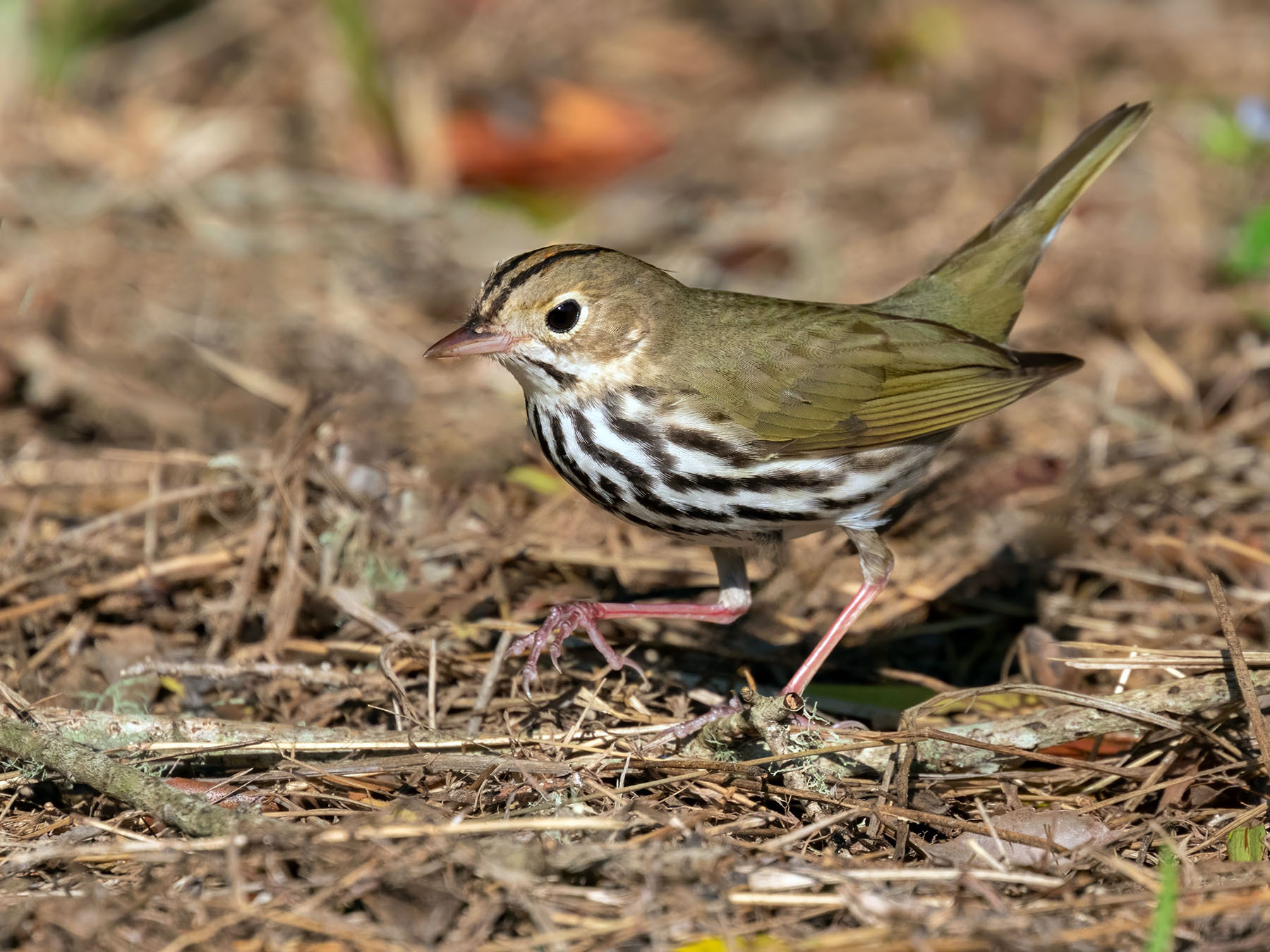
Quick facts
- Length
- 12–15 cm
- Wingspan
- 19–23 cm
- Weight
- 18–28 g
- Lifespan
- 1–3 years · oldest recorded 11 years
- Family
- New World Warblers
- Migration
- Long-distance Migrant
- Global status (IUCN)
- Least Concern
- World population
- 26,000,000 mature individuals
- Population trend
- Stable
- Also called
- Teacher Bird
- Scientific name
- Seiurus aurocapilla
Sources
4- 1BirdLife International. 2021. Seiurus aurocapilla. The IUCN Red List of Threatened Species 2021: e.T22721779A139133223. Source (opens in a new tab)
- 2Pardieck et al. 2018; Partners in Flight 2019; Rosenberg et al. 2019
- 3Partners in Flight (2019) Source (opens in a new tab)
- 4Historical Longevity Records of North American Birds Source (opens in a new tab)

Checked by
Nathan Cope, founder and editor
Nathan founded Birdfact and leads its writers and contributors in the UK, the US and Canada. He has watched and studied birds for more than ten years, and checks every article and species guide before it’s published.