


Mute Swan
White Swan · Cygnus olor
By the Birdfact teamChecked by Nathan Cope
On this page15 sections
How to recognise it
What do Mute Swans look like?
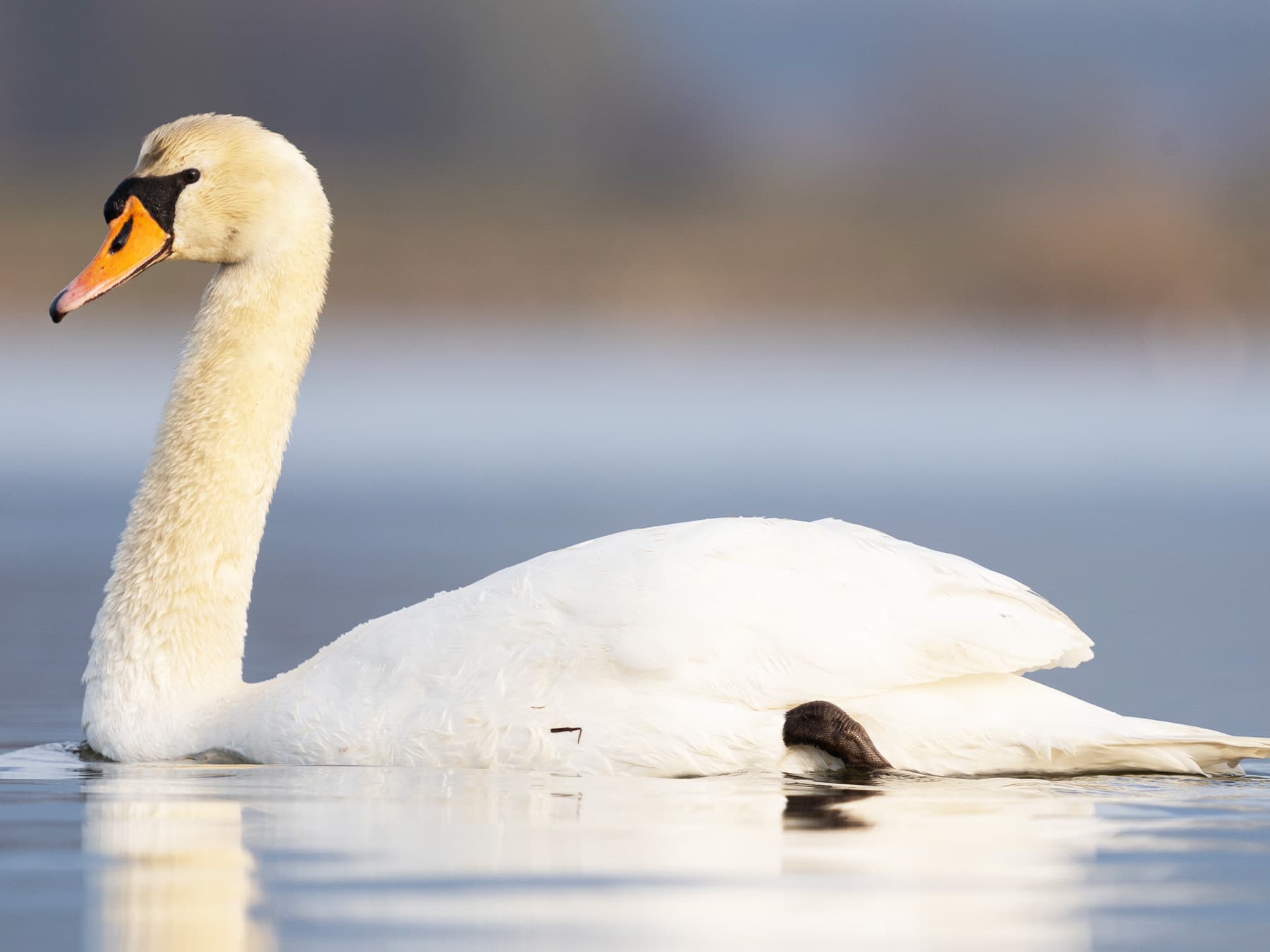
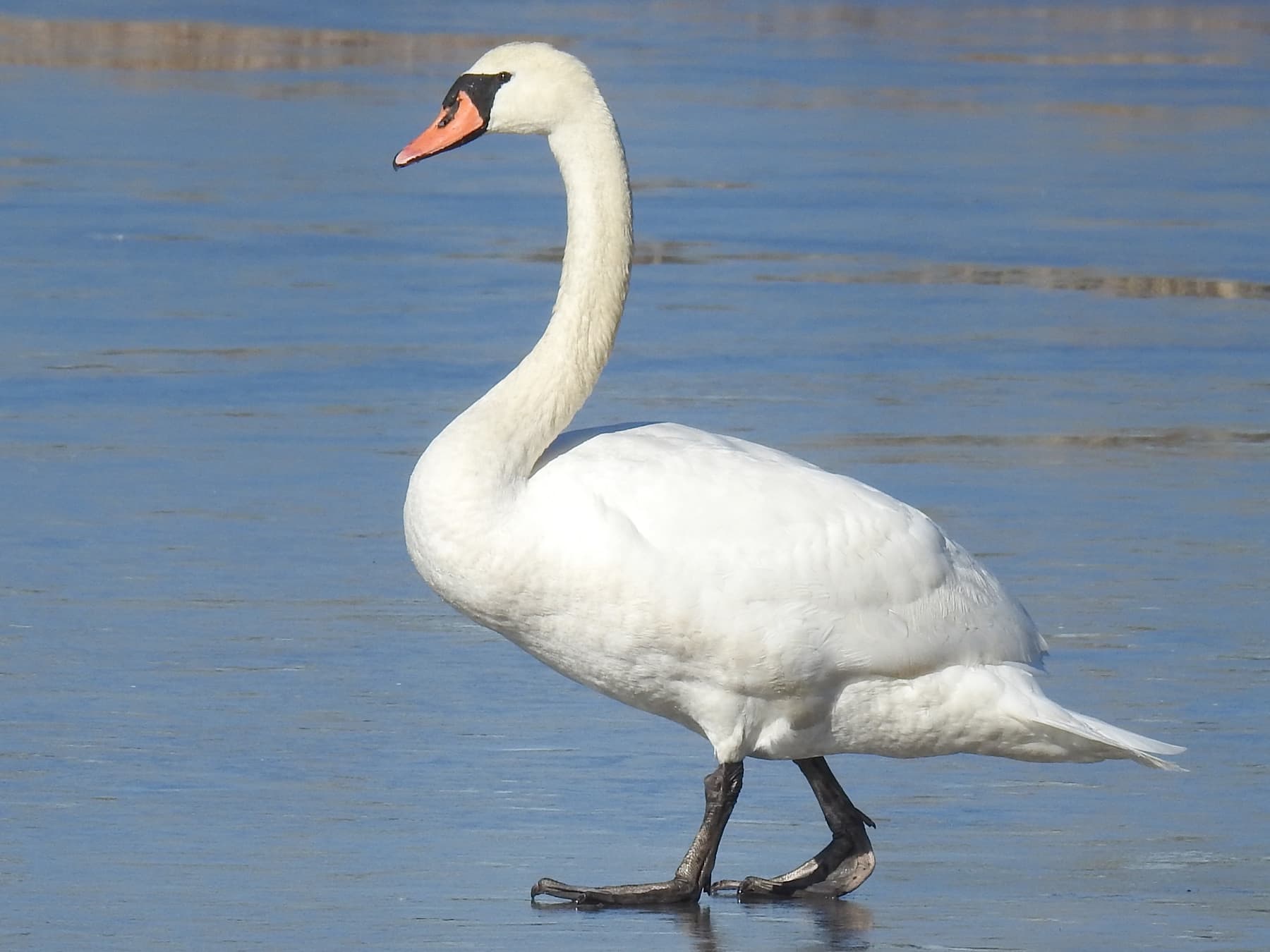
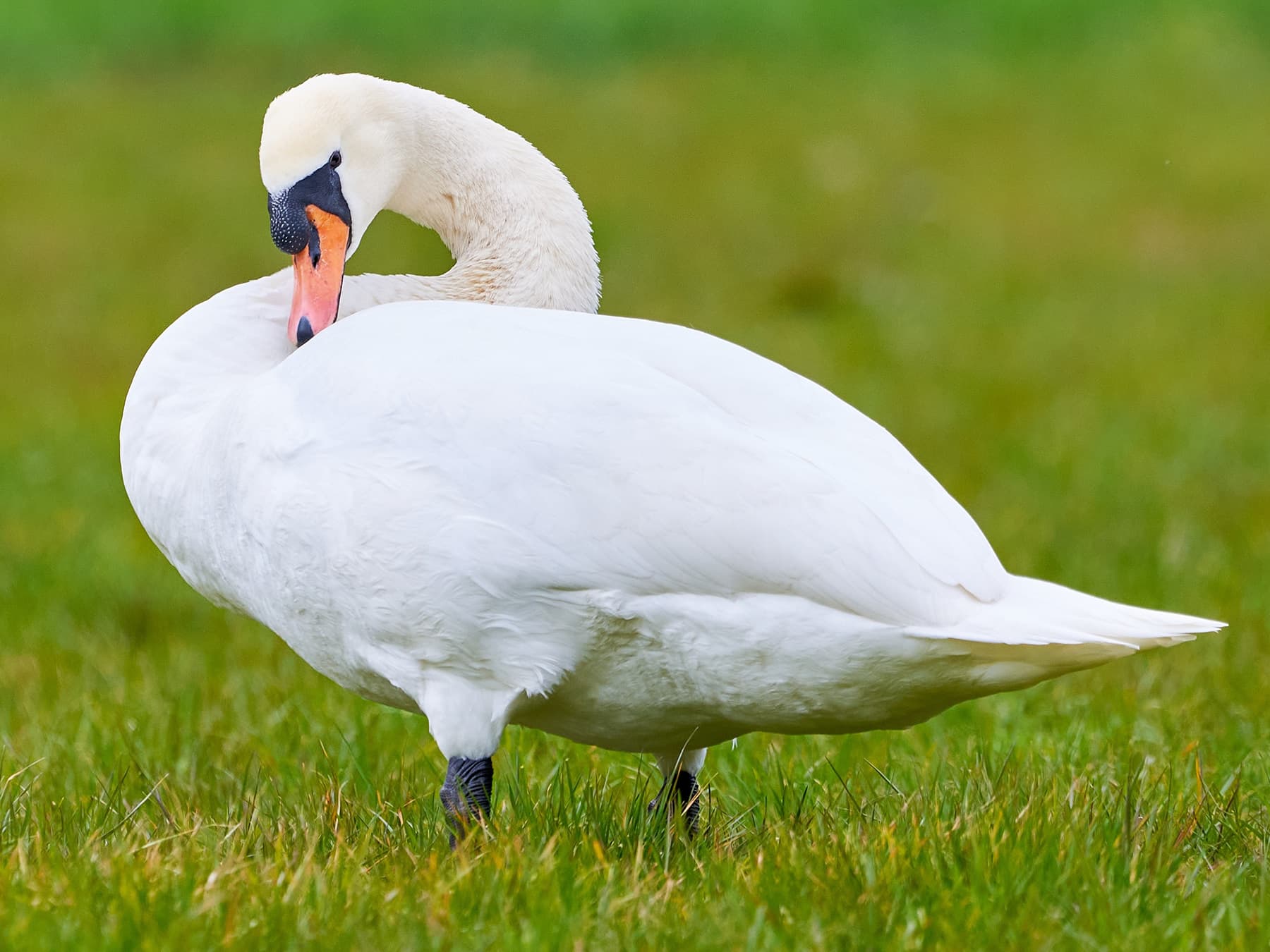
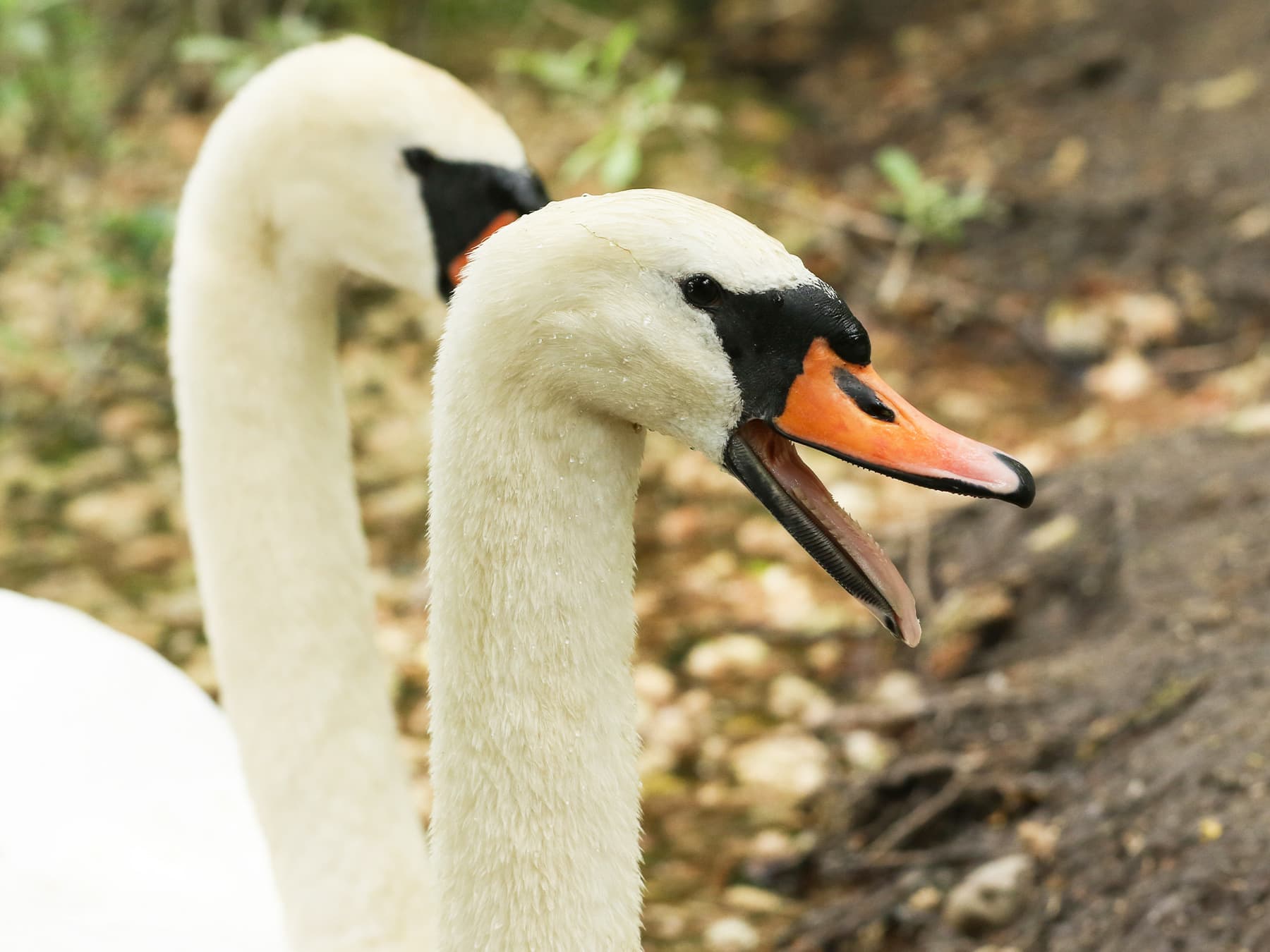
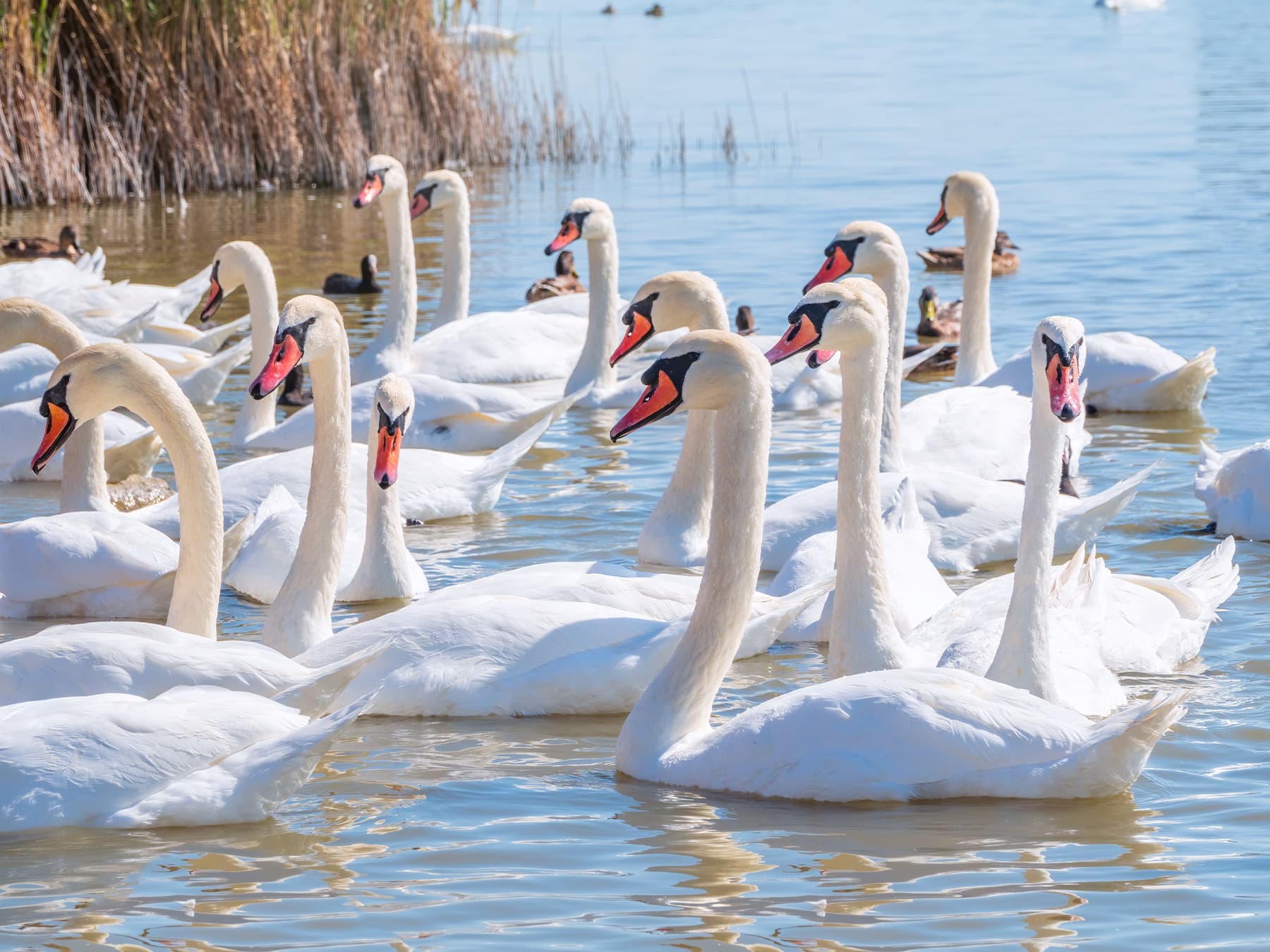
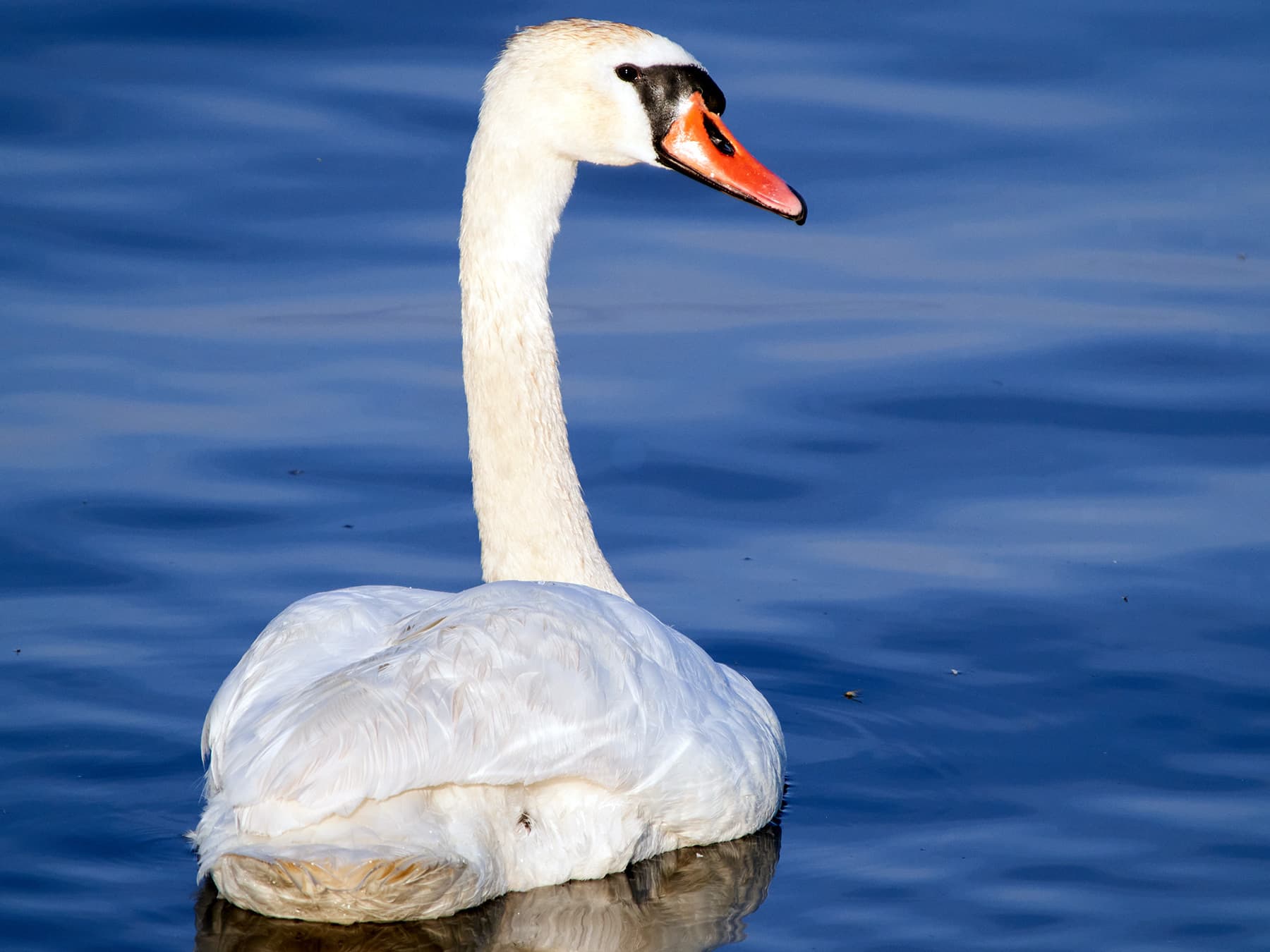
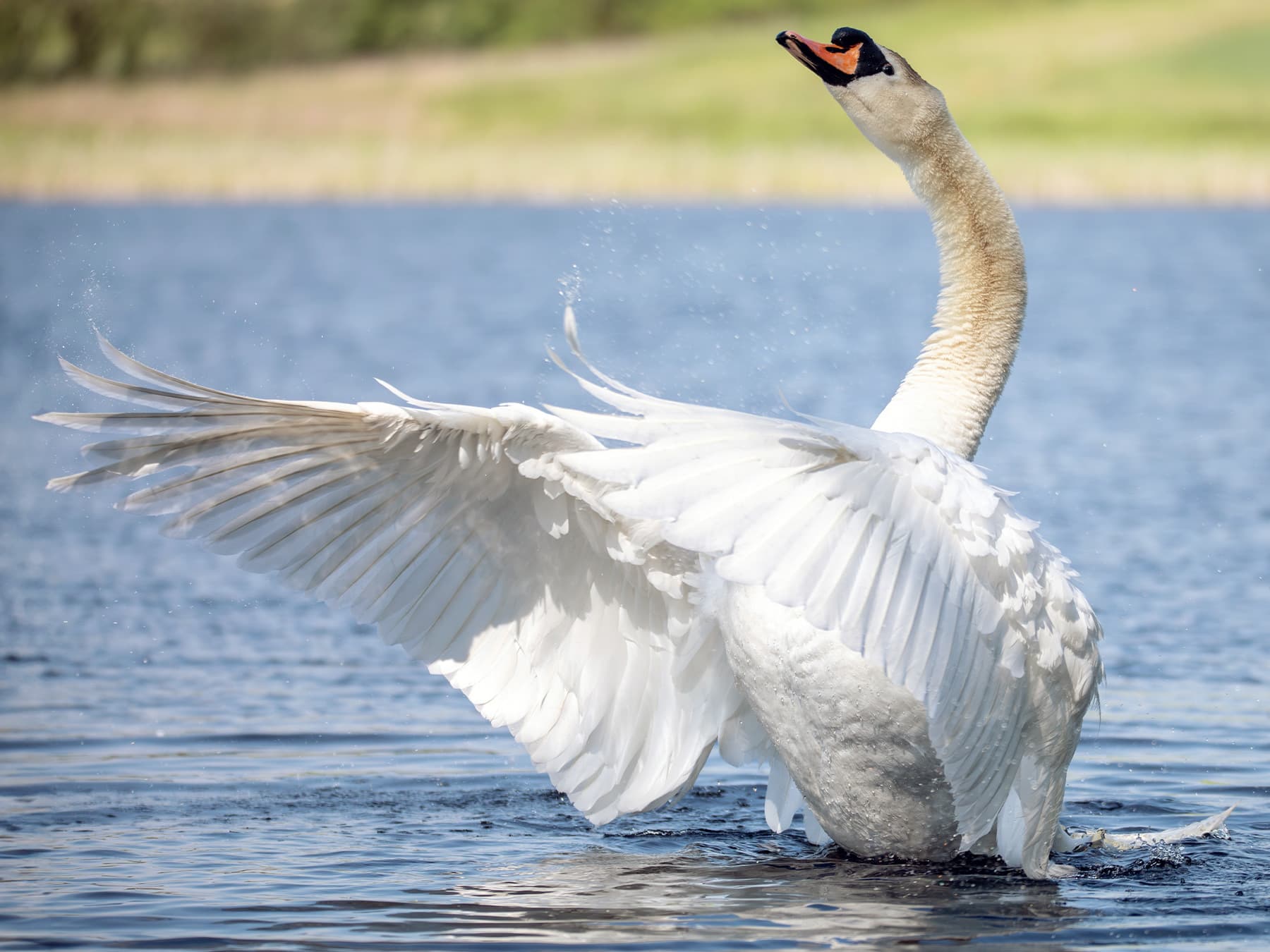
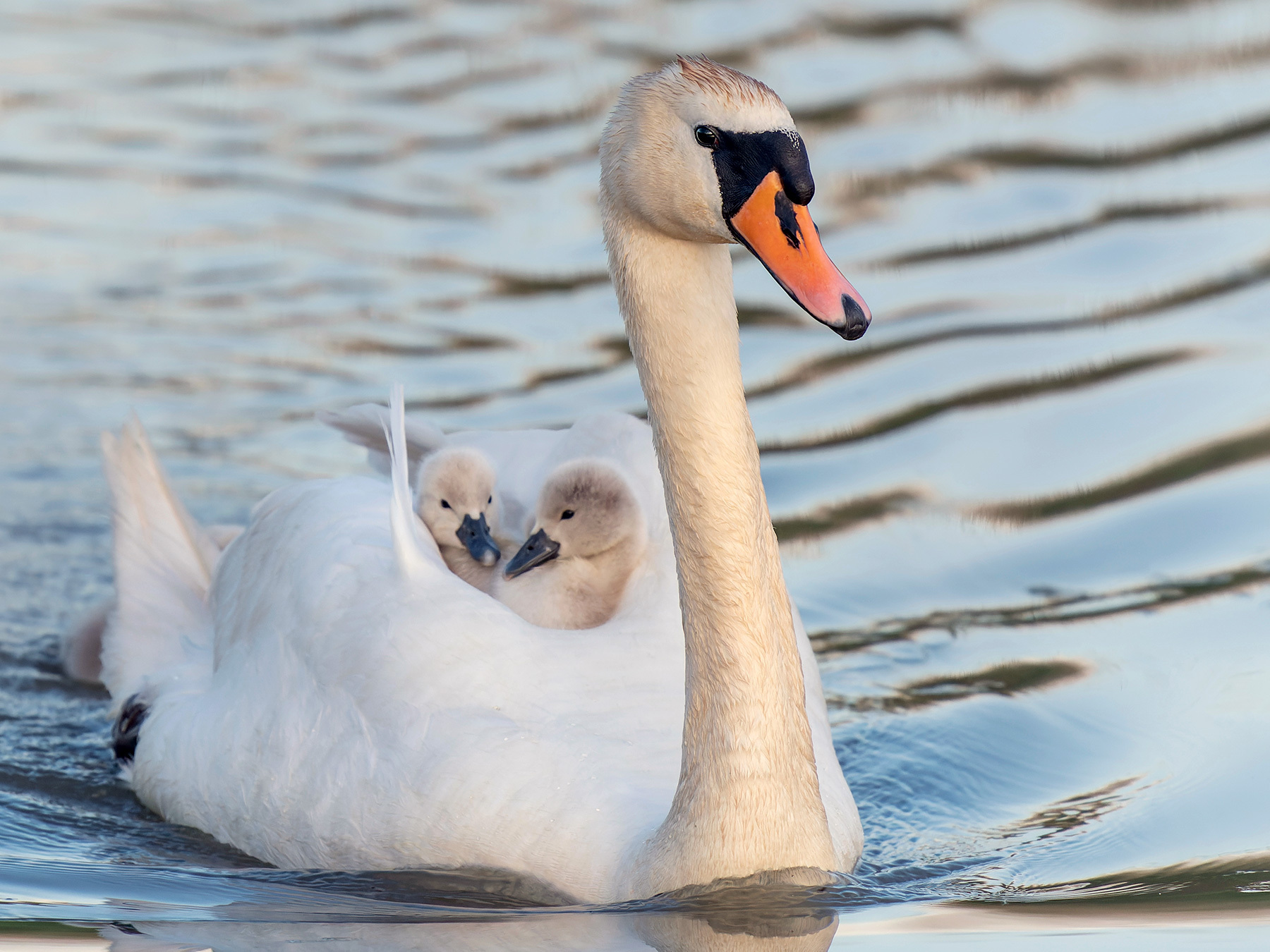
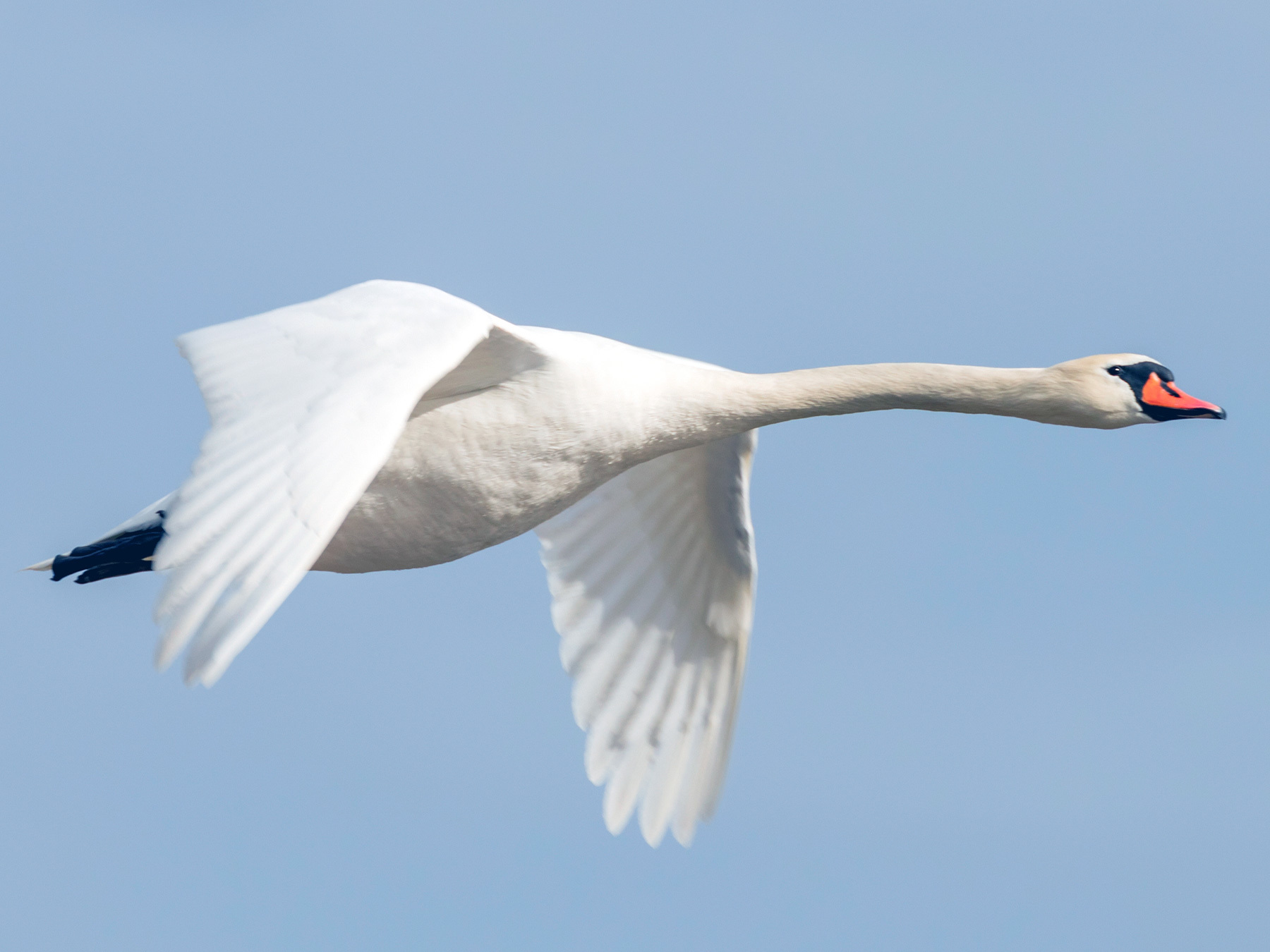
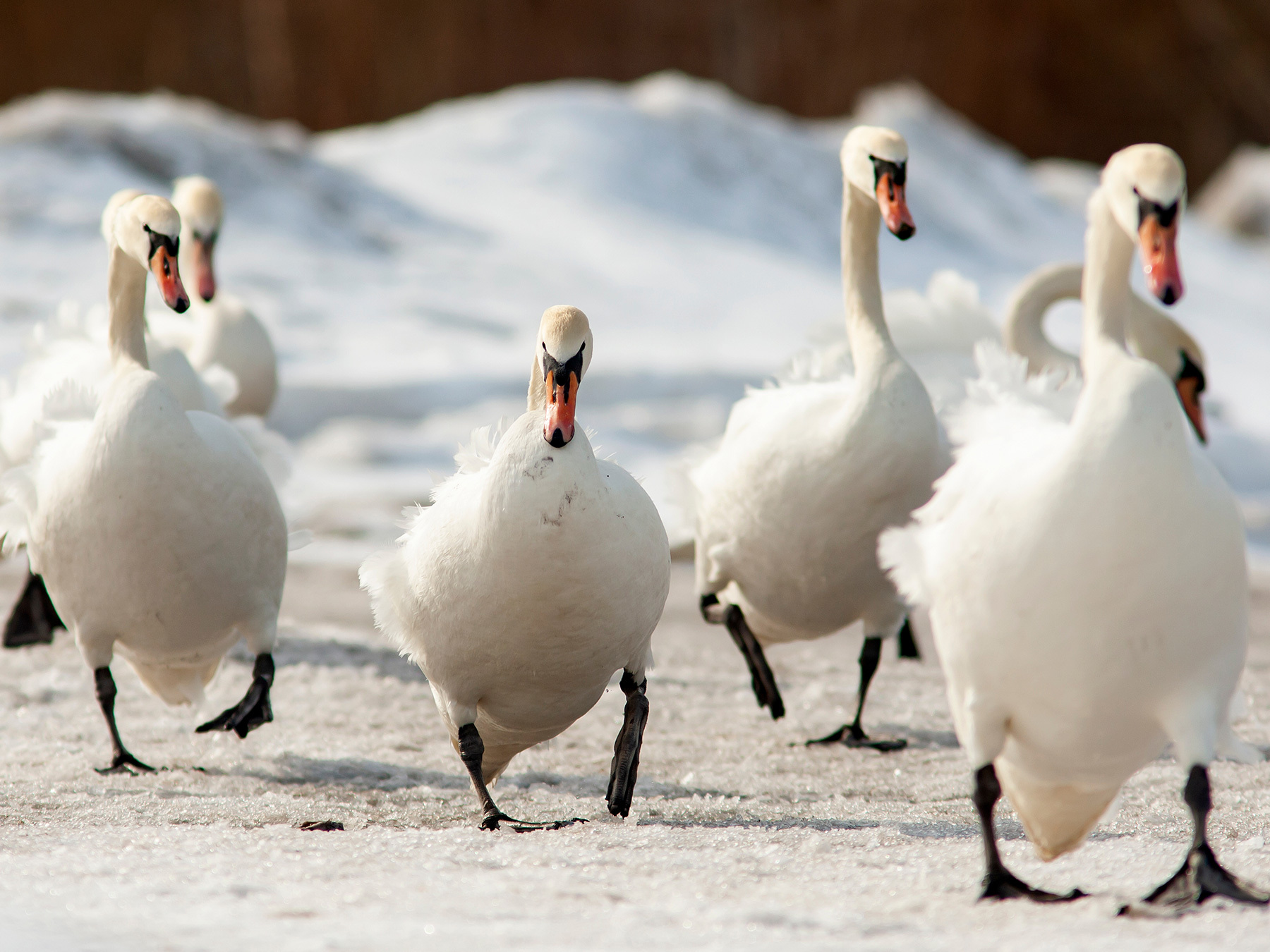
The Mute Swan is an unmistakable, massive white bird with an orange bill and a black mask that reaches the eyes and includes a prominent black knob above the bill. They have long, elegant S-shaped necks and black legs with webbed feet.
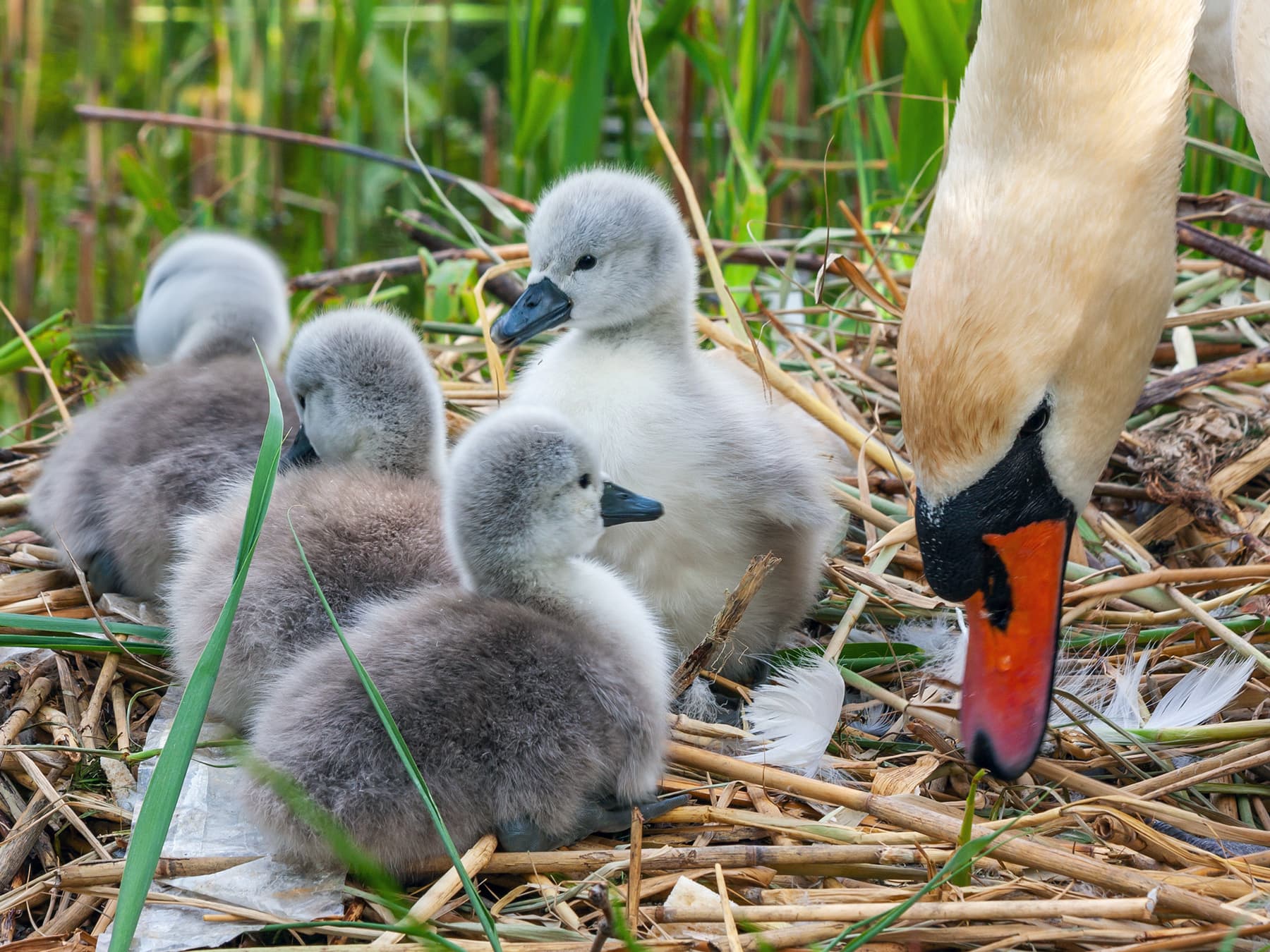
Females (pens) are significantly smaller than males (cobs) and have shorter bills with smaller knobs. Baby Mute Swans are known as cygnets, and they may be either gray or white. Gray morph cygnets develop brown juvenile plumage before attaining their white adult plumage.
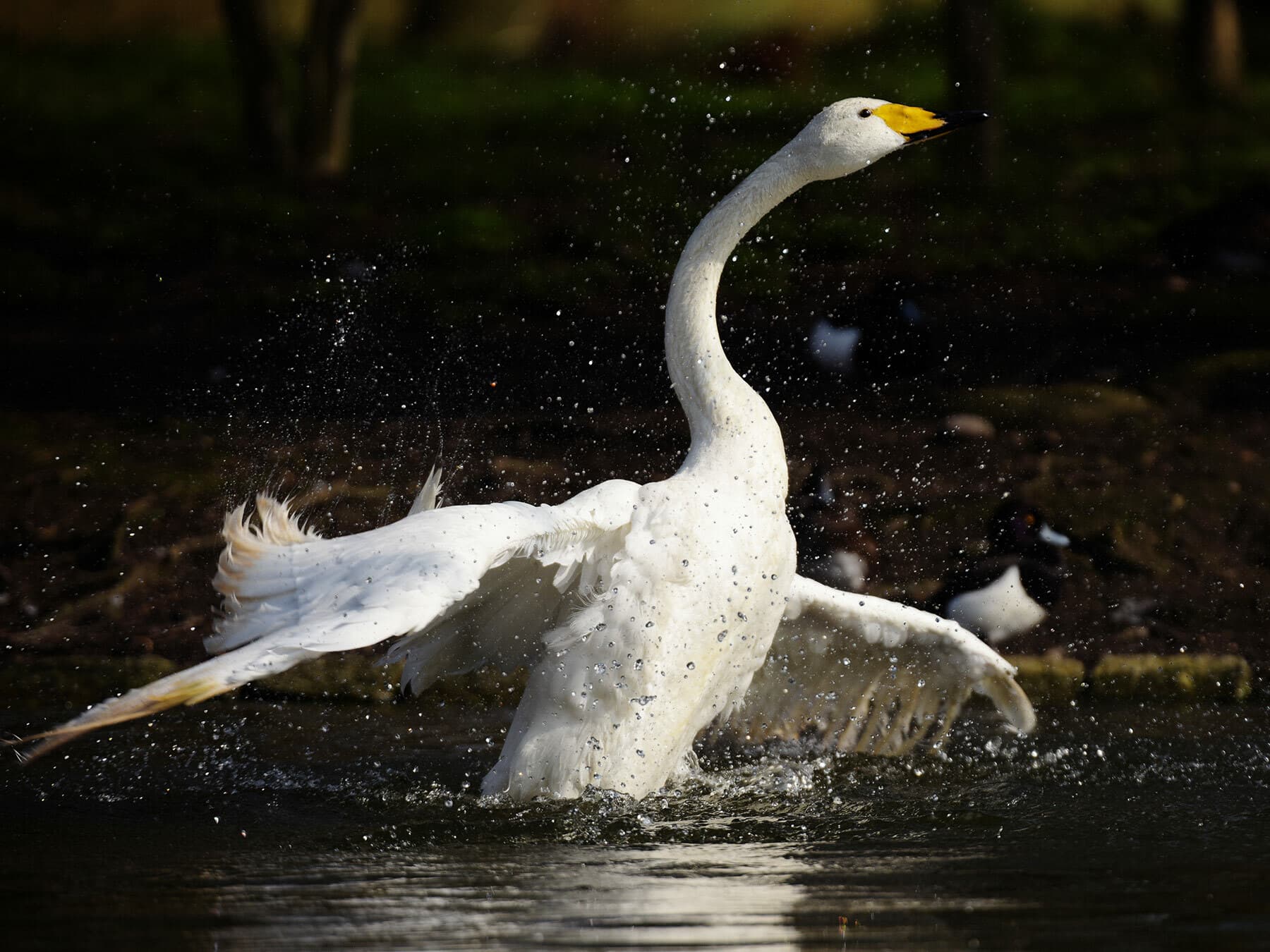
The Mute Swan is one of three UK swan species and can be distinguished from the Bewick’s Swan and Whooper Swan by its black mask and knob above the bill. They can be distinguished from native North American Swans by their orange bill.
How big are Mute Swans?
Length
Mute Swans have a total body length of 1.27 to 1.52 meters or about 4 to 5 feet.
Weight
Mute Swans are among the world’s heaviest flying birds. They can reach an astonishing 15 kilograms or 33 pounds, although an average adult male weighs around 10kg (22lb) and an average female weighs 8.4kg (18.5lb).
Wingspan
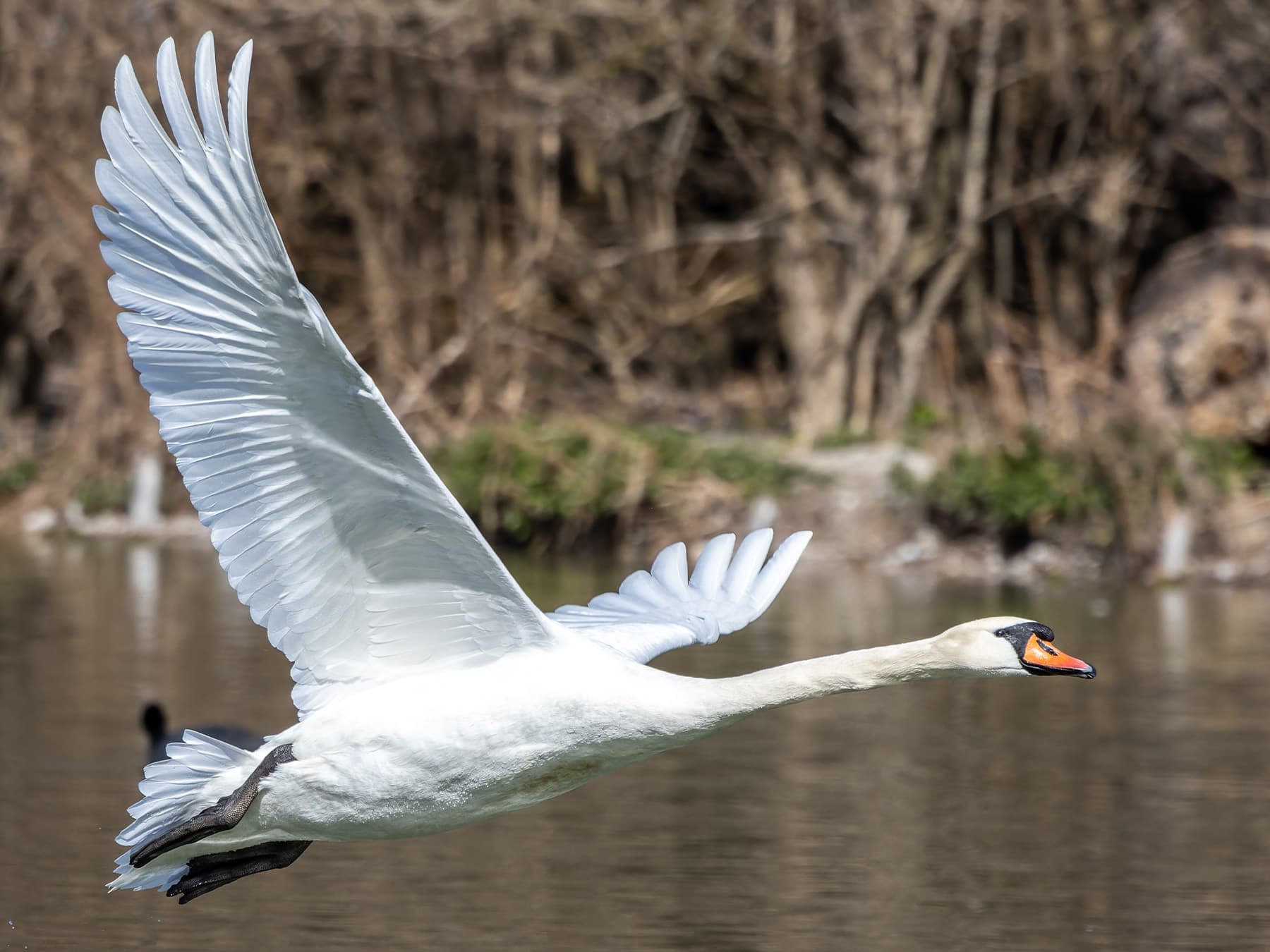
Mute Swans spend little time in flight, although they have a magnificent wingspan of 2 - 2.4 meters or 6ft 7in - 7ft 10in.
Its size
Adults- Length
- 140–160 cm
- Wingspan
- 200–240 cm
- Weight
- 7000–14000 g
Its song and calls
What sound does a Mute Swan make?
The Mute Swan may be quieter than other Cygnus species, but it is certainly not silent. These birds trumpet, hiss, grunt, and snore. They are most vocal when threatened and during courtship.
- Call0:00 / 0:55
Recorded in Bretagne, France · March 2022
When and where to see it
OctoberHere all year
Most recorded in October
- 1. Blaenau Gwent3.5%
- 2. West Lothian3.1%
- 3. Renfrewshire3.0%
- 4. Kildare2.7%
- 5. Newport2.5%
Each dot is a county, state or province: the bigger and darker, the larger the bird’s share of that place’s bird records that month. Grey dots: no regular records. The ringed point is the centre of the bird’s records this month; the arrow shows how it moved since last month, and the dashed loop its path through the year. “Arrivals” colours places where it becomes regular this month (orange) or is in its last regular month (grey). GBIF eBird Observation Dataset, 2019–2024. Map data: Natural Earth, US Census Bureau; place centres © OpenStreetMap contributors.
In your area
See when the Mute Swan is recorded in your county, state or province.
How often the Mute Swan turns up in the UK, Ireland, the United States and Canada through the year, from birdwatchers' records.
United Kingdom
Resident · all year · most records in January
Ireland
Resident · all year · most records in March
United States
Resident · all year · most records in March
Canada
Resident · all year · most records in January
Show as a table
| Month | United Kingdom | Ireland | United States | Canada |
|---|---|---|---|---|
| January | 1.4% (regular) | 1.4% (regular) | 0.19% (regular) | 0.42% (regular) |
| February | 1.4% (regular) | 1.4% (regular) | 0.18% (regular) | 0.37% (regular) |
| March | 1.3% (regular) | 1.5% (regular) | 0.19% (regular) | 0.35% (regular) |
| April | 1.2% (regular) | 1.2% (regular) | 0.13% (regular) | 0.22% (regular) |
| May | 1.2% (regular) | 1.2% (regular) | 0.10% (regular) | 0.17% (regular) |
| June | 1.1% (regular) | 1.3% (regular) | 0.084% (regular) | 0.085% (regular) |
| July | 1.2% (regular) | 1.3% (regular) | 0.095% (regular) | 0.087% (regular) |
| August | 1.2% (regular) | 1.2% (regular) | 0.12% (regular) | 0.12% (regular) |
| September | 1.2% (regular) | 1.3% (regular) | 0.13% (regular) | 0.20% (regular) |
| October | 1.2% (regular) | 1.4% (regular) | 0.16% (regular) | 0.24% (regular) |
| November | 1.3% (regular) | 1.4% (regular) | 0.18% (regular) | 0.32% (regular) |
| December | 1.4% (regular) | 1.4% (regular) | 0.16% (regular) | 0.32% (regular) |
Recorded regularly in
Worldwide: recorded regularly in 57 countries
Countries where it was recorded in at least 3 of the 6 years 2019–2024. Linked countries have their own bird list.
Europe (41)
- Åland Islands
- Albania
- Austria
- Belarus
- Belgium
- Bosnia & Herzegovina
- Bulgaria
- Croatia
- Czechia
- Denmark
- Estonia
- Finland
- France
- Germany
- Greece
- Hungary
- Ireland
- Isle of Man
- Italy
- Jersey
- Latvia
- Liechtenstein
- Lithuania
- Luxembourg
- Moldova
- Montenegro
- Netherlands
- North Macedonia
- Norway
- Poland
- Portugal
- Romania
- Russia
- Serbia
- Slovakia
- Slovenia
- Spain
- Sweden
- Switzerland
- Ukraine
- United Kingdom
Asia (13)
- Azerbaijan
- China
- Georgia
- Iran
- Japan
- Kazakhstan
- Kyrgyzstan
- Mongolia
- Singapore
- South Korea
- Turkey
- United Arab Emirates
- Uzbekistan
North America (2)
Oceania (1)
Data: EOD – eBird Observation Dataset (Cornell Lab of Ornithology), accessed via GBIF.org, CC BY 4.0. Records from 2019–2024, aggregated and filtered by Birdfact. How these lists are made
What is the habitat of a Mute Swan?
Mute Swans inhabit shallow fresh and brackish environments with abundant aquatic plants. They prefer water of 0.2 - 0.45 meters (8 to 18 inches) deep, where they can easily reach the bottom with their bill.
Look out for Mute Swans in the following habitats:
- Marshes
- Lagoons
- Slow-flowing rivers and creeks
- Ponds in parks and urban areas
What is the range of a Mute Swan?
Mute Swans occur naturally from Ireland in the west to China in the East. They are widespread in Central Europe but sparsely distributed through Asia. Today they also occur in parts of the Pacific Northwest, the Great Lakes region, and the Northeast of the United States.
Where do Mute Swans live?
Mute Swans spend most of their time on the water or along the bank. They occasionally move into adjacent fields to feed during harsh winters when the water freezes over.
How rare are Mute Swans?
Mute Swans are the most common Swan species in the United Kingdom, with about 7,000 pairs and over 50,000 individuals present in the winter. The species is localized but increasingly common in the US, with a population of about 15,000 at the turn of the century.
Where can you see Mute Swans in North America?
Mute Swans have a patchy distribution in the United States, although feral birds are common in the Northeast from Ontario to North Carolina, in Michigan in the Great Lakes region, and in the Pacific Northwest.
Look out for these birds in the following areas:
- Long Island and Hudson Bay, New York
- Chesapeake Bay
- Delaware Bay
- Vancouver Island, British Columbia.
Where can you see Mute Swans in the UK?
Birdwatchers can see Mute Swans on shallow, well-vegetated waterbodies across most of the United Kingdom and Ireland. They are scarce or absent in parts of Southwest England, Wales, and Northern Scotland.
Migration
Do Mute Swans migrate?
Mute Swans are migratory in parts of their range and resident in others. The UK population can be seen throughout the year, although they may undertake local movements in harsh winters, and some birds visit from Continental Europe. Across the Atlantic in the United States, they follow a similar pattern, only moving south from frozen waterways or to the coast for the winter.
Are Mute Swans native to North America?
Mute Swans are not a native species in North America. They were first introduced in the 1800s as ornamental birds and have since become a feral species in several states.
Are Mute Swans native to the UK?
Mute Swans are a wild native species in the United Kingdom, despite their somewhat domesticated status. Remains dating to 6,000 years before the present have been found in East Anglia.
Tips for seeing it
- Look for Mute Swans on lakes, ponds, and slow-moving rivers
- Observe their distinctive S-shaped neck when swimming
- Listen for the sound of their wings during flight, as they are not truly 'mute'
- In the UK, participate in the annual Swan Upping event on the River Thames to see swan counting and marking
What it eats
What do Mute Swans eat?
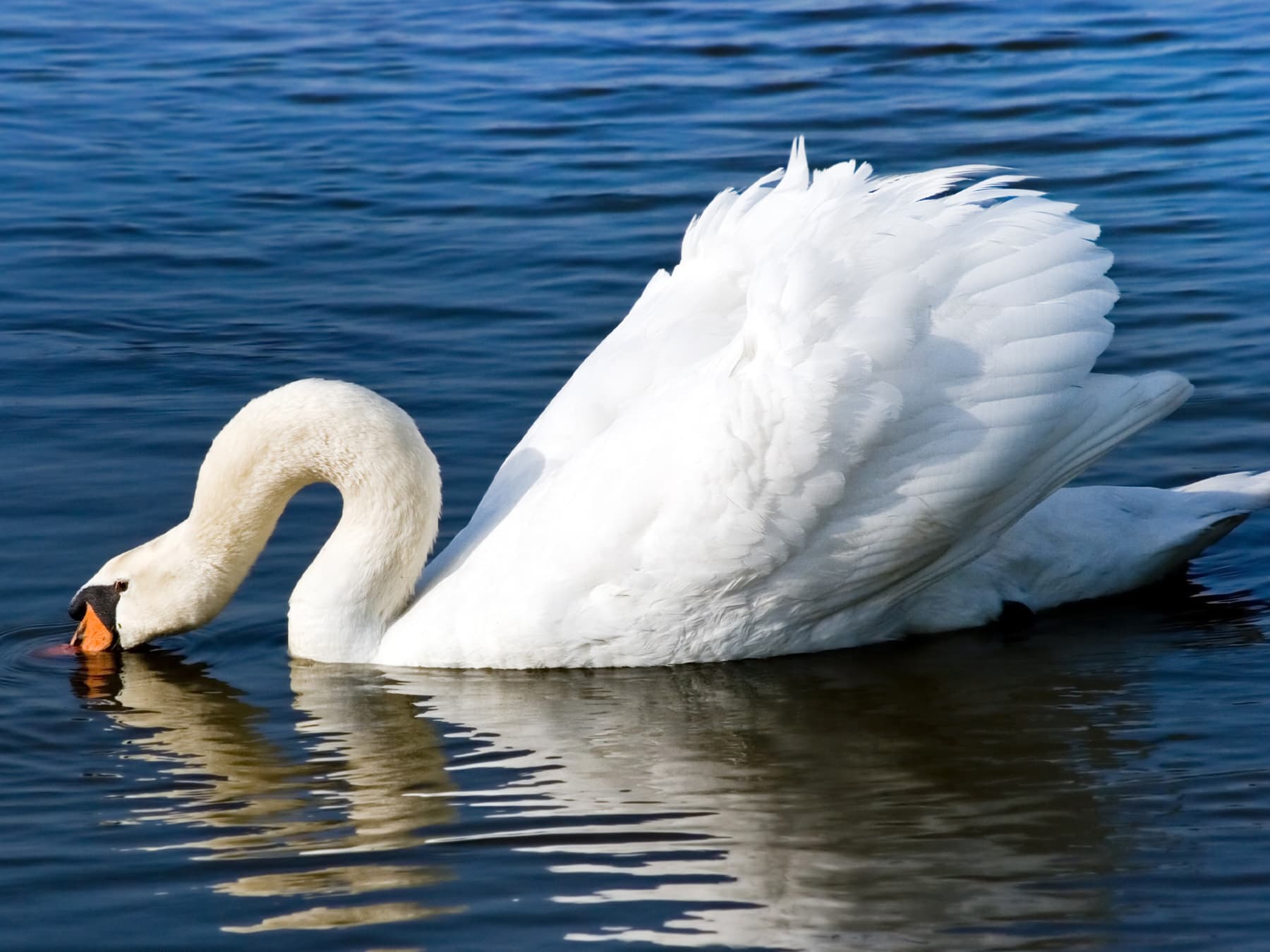
Mute Swans are omnivorous, although aquatic plants make up the bulk of their diet. They may also forage for grain in farmland when the water freezes over. Animal prey includes frogs, tadpoles, and insects. They also eat small dead or dying fish, although they struggle to swallow larger meals.
What do Mute Swan chicks eat?
Mute Swan cygnets feed themselves, although they do not have their first meal for a week or so after hatching. The young birds can retrieve food below the surface almost right away, gradually learning to hold their breath for longer periods and even fully submerging themselves.
Nesting and breeding
Where do Mute Swans nest?
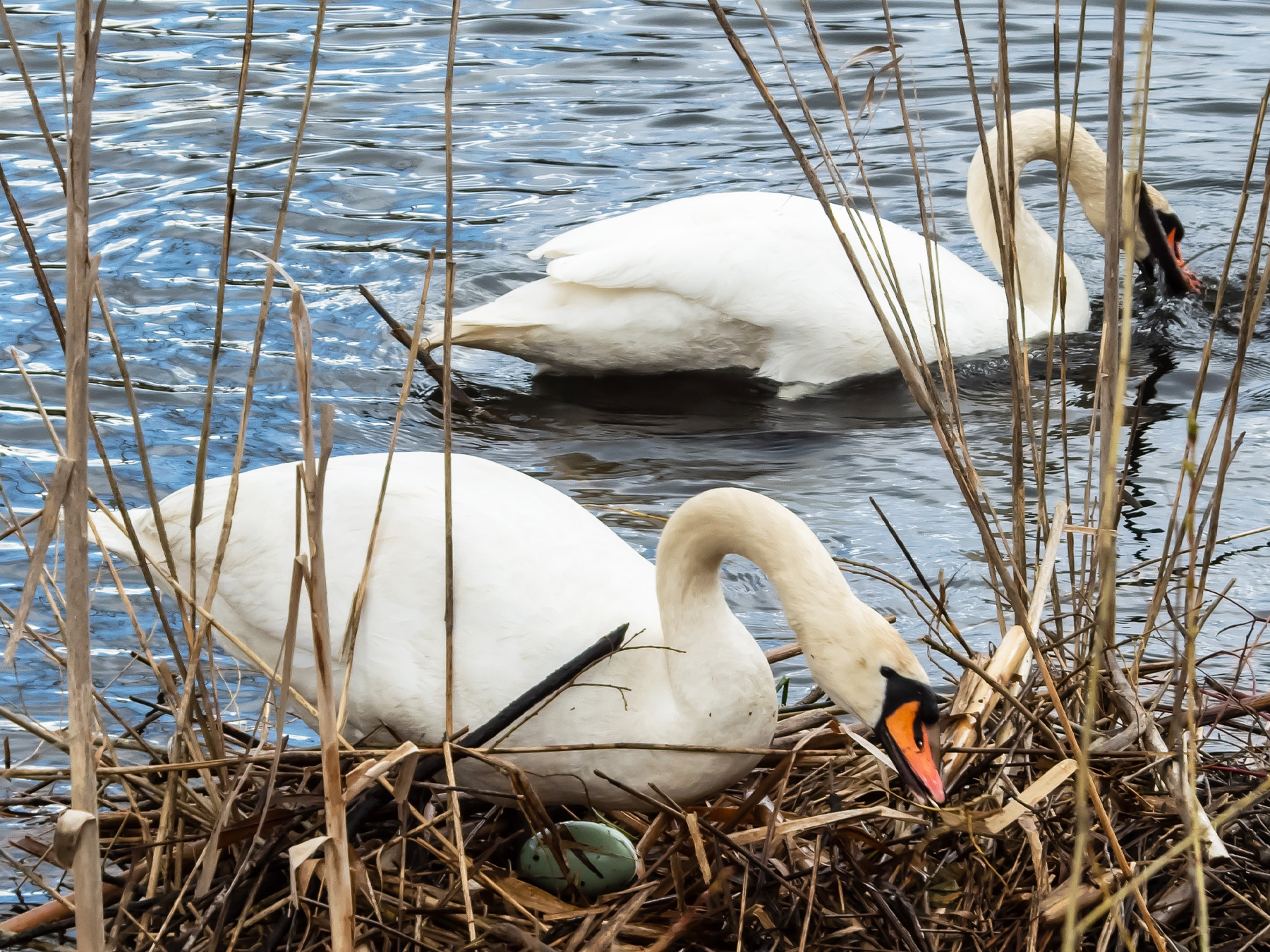
Mute Swan pairs work together to build a nest at a site chosen by the male but approved by the female. The nest is a large cup (up to four meters or thirteen feet across) of plant material such as reeds and grasses and built on a small island or along a heavily reeded bank.
When do Mute Swans nest?
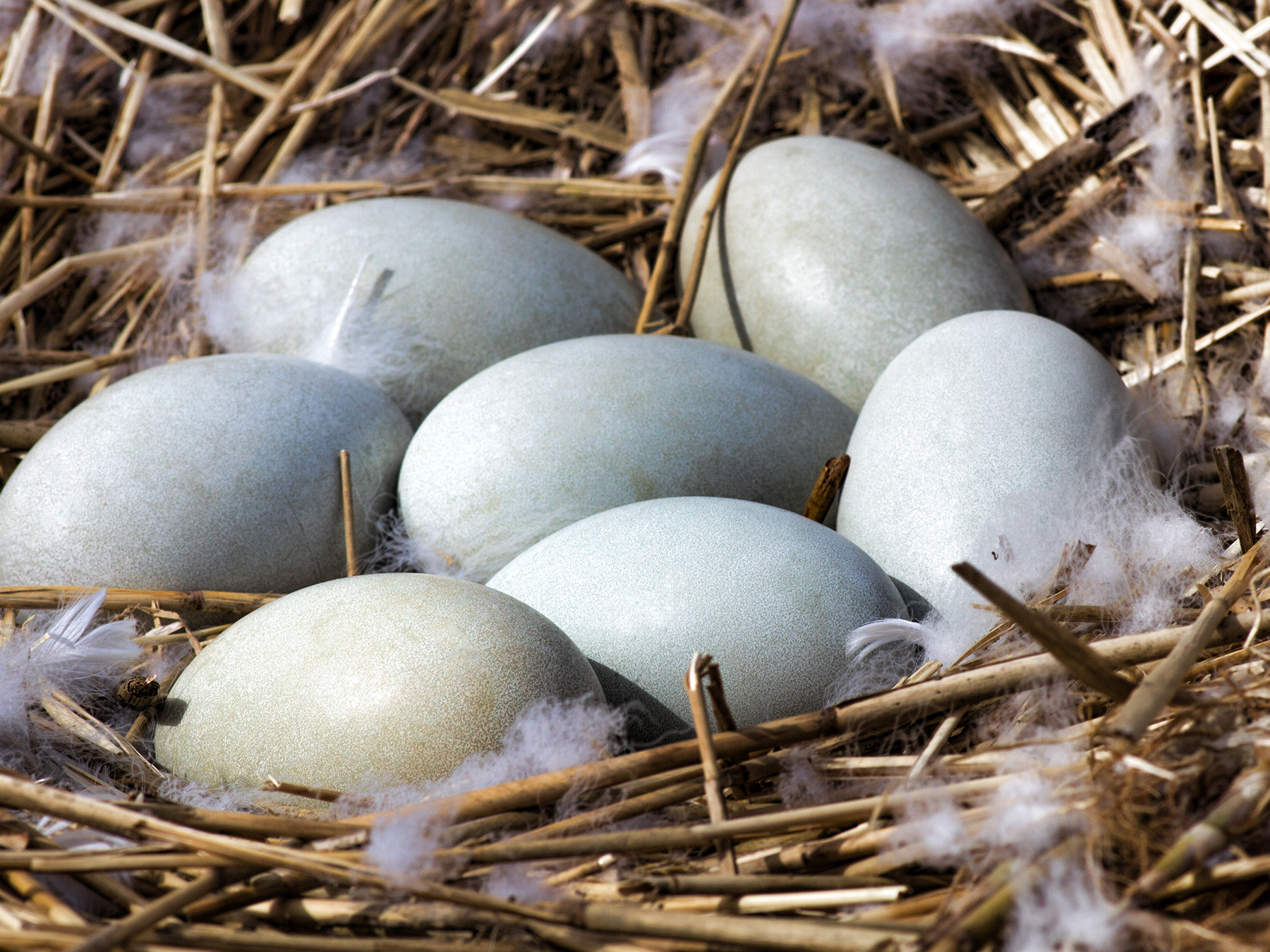
Mute Swans build their nests in March and early May. Construction takes ten days or less, and they begin to lay their eggs three days later. The four to seven eggs are laid at two-day intervals and hatch after about 36 days.
What do Mute Swan eggs look like?
Predictably, Mute Swan eggs are massive, ranging from 10 to 12 centimeters (4+ inches) long and 7 to 8 centimeters (3 inches) at their widest. Interestingly, their eggs are blueish-green when fresh but become whitish during incubation.
Do Mute Swans mate for life?
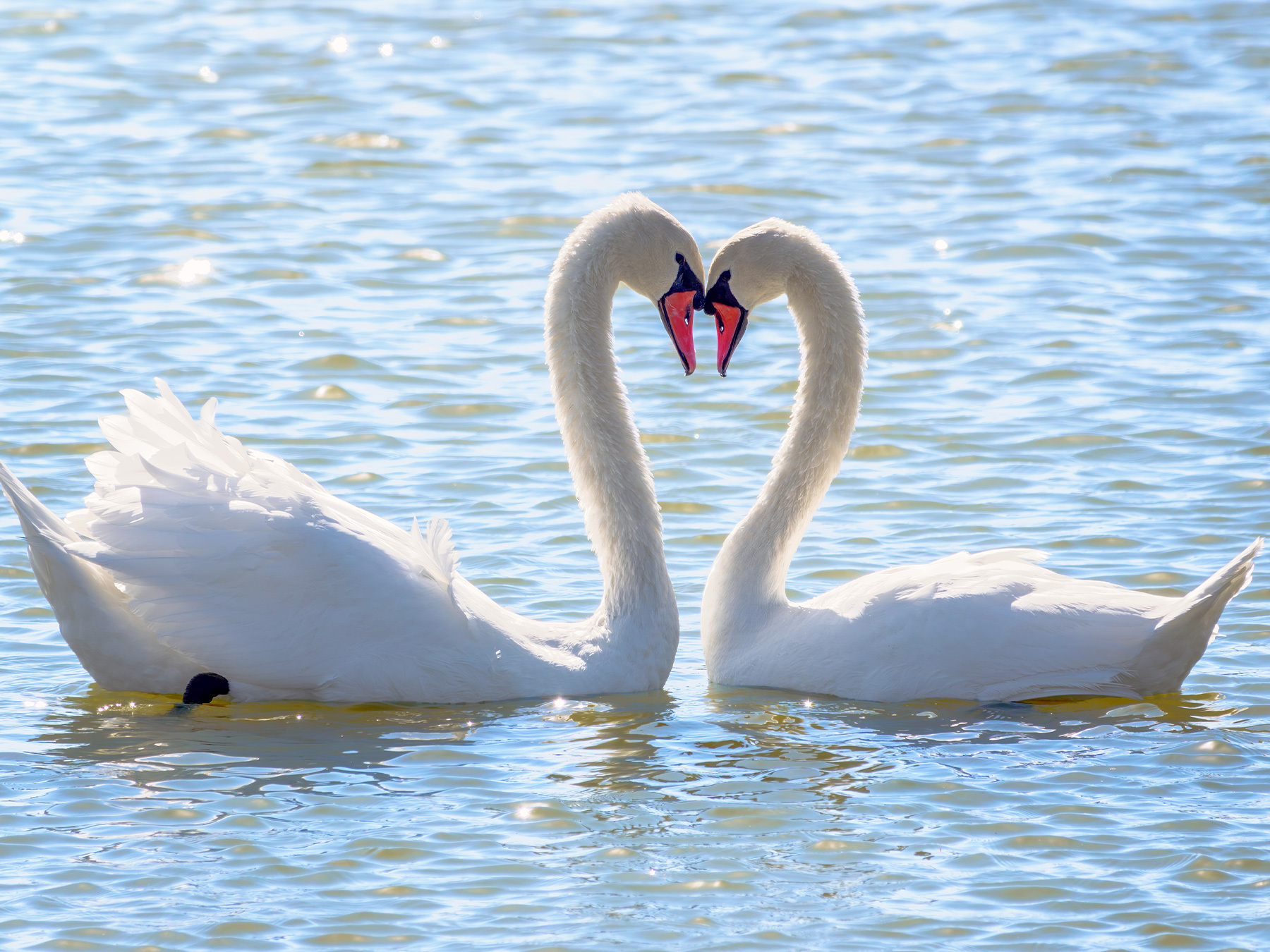
Mute Swans typically mate for life. These birds form lifelong pair bonds and usually only seek a new mate if their partner should die.
Behaviour
Are Mute Swans aggressive?
Mute Swans can be highly aggressive, particularly during the nesting season when established pairs do not tolerate the presence of other Mute Swans in their territory. Males are more aggressive than females, although both sexes are involved in conflicts. Physical fights involve striking with the wrists, biting, and occasionally drowning the opponent.
Mute Swans may attack humans that threaten their eggs or young. However, these birds rarely attack if unprovoked and usually give fair warning by hissing and spreading their wings. Read this article to learn more about swan aggression and how to avoid conflict with these magnificent birds.
Where do Mute Swans sleep at night?
Mute Swans sleep on the water or on the bank nearby.
Lifespan and predators
How long do Mute Swans live?
Mute Swans can live for at least 29 years in the wild, although their average life expectancy is about ten years.
What are the predators of Mute Swans?
Mammals like foxes, raccoons, and otters may eat Mute Swan eggs and cygnets. Healthy adults have few predators, although females are vulnerable to larger carnivores like coyotes when incubating their eggs.
Are Mute Swans protected?
Mute Swans in the United Kingdom are protected by the Wildlife and Countryside Act 1981. They do not enjoy the protection of the Migratory Bird Treaty Act in the United States, although it is illegal to hunt them in Michigan, and they are protected in New Jersey.
Are Mute Swans endangered?
Mute Swans are not endangered. They have a green conservation status in the United Kingdom and are ranked ‘Least Concern’ on the IUCN Red List.
Conservation
While Mute Swans are currently listed as Least Concern, they face threats from habitat loss, lead poisoning from ingested fishing weights, and collisions with power lines.
Conservation efforts focus on protecting wetland habitats and regulating lead use in fishing equipment.
Similar birds
Often mistaken for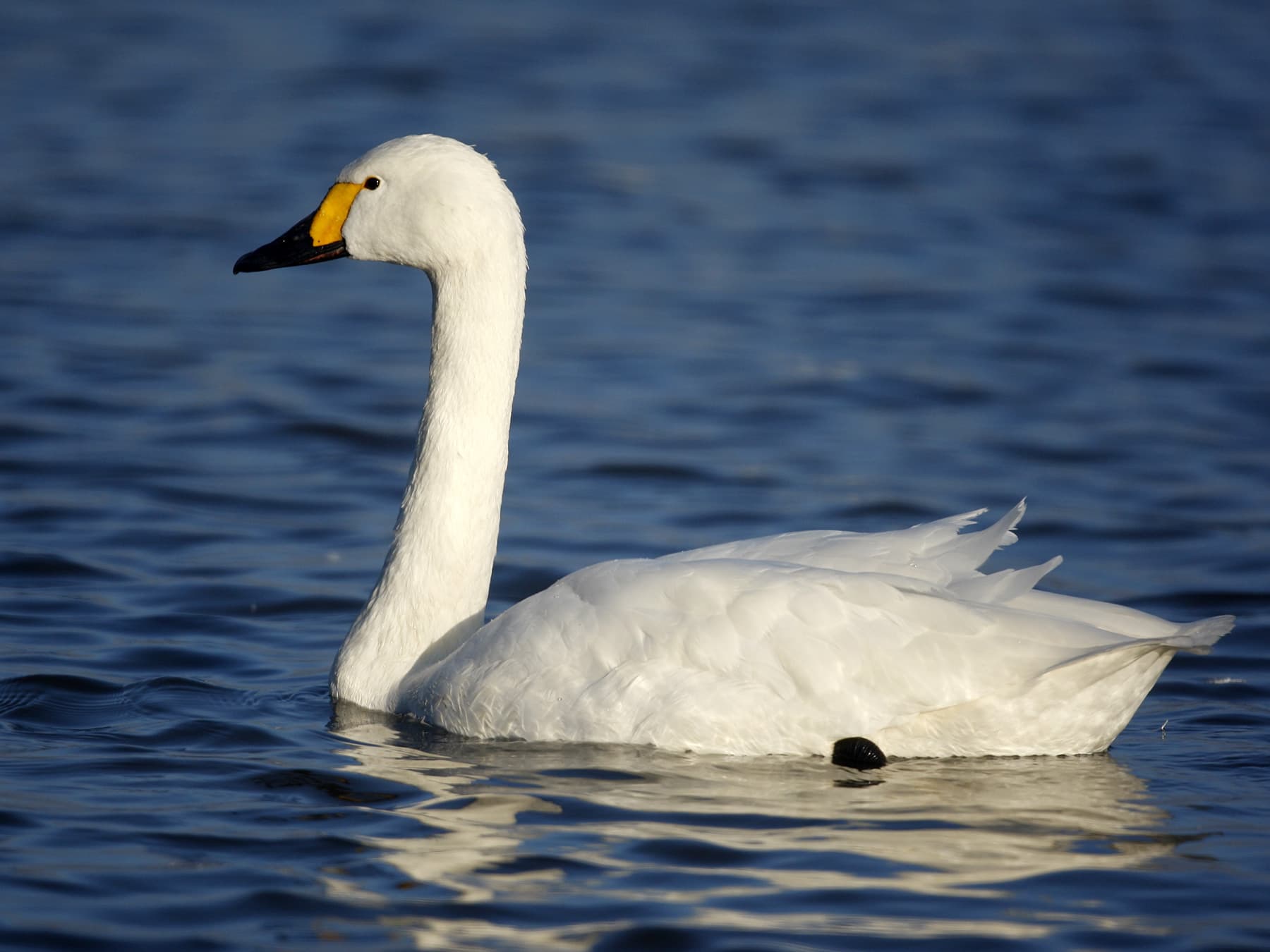
More photos
7 photos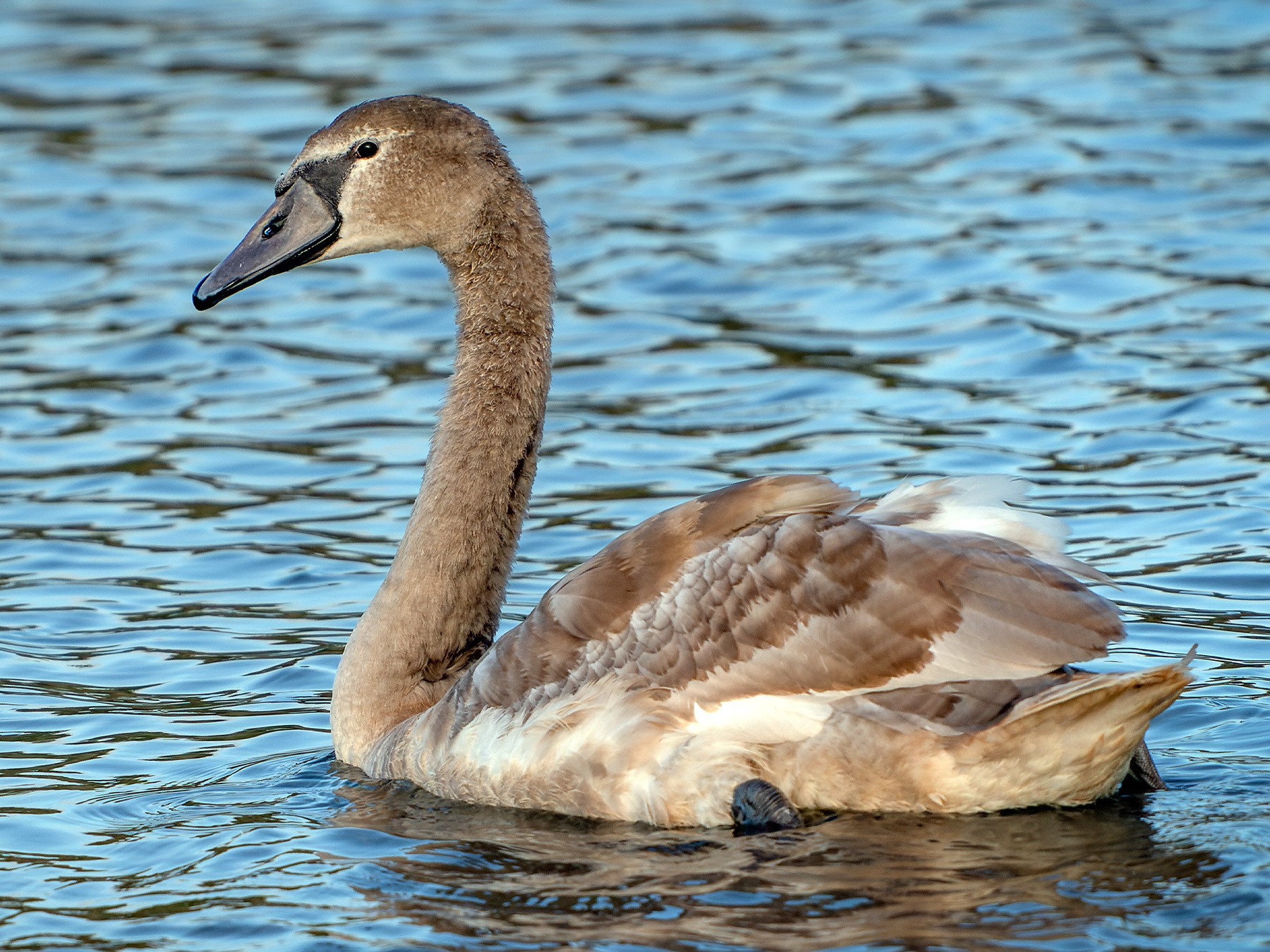
Mute Swan guides
6 guidesQuick facts
- Length
- 140–160 cm
- Wingspan
- 200–240 cm
- Weight
- 7000–14000 g
- Lifespan
- 10–26 years · oldest recorded 40 years
- Family
- Ducks, Geese & Swans
- Migration
- Partial migrant
- Global status (IUCN)
- Least Concern
- World population
- 598,000 - 615,000 individuals
- Population trend
- Increasing
- Also called
- White Swan
- Scientific name
- Cygnus olor
Questions
5Why is a Mute Swan called mute?
Mute Swans get their name from their quiet nature. They call less than other swans, although they are certainly not silent.
Are Mute Swans still invasive?
Mute Swans are invasive in the United States, where they are non-native. They are considered harmful to natural environments and a nuisance for people in many areas, and their population continues to grow.
Can you keep a Mute Swan as a pet?
Mute Swans can be kept as pets on private American properties with substantial ponds. However, owning such a large bird is a serious long-term commitment, and all steps should be taken to stay within the lawn and prevent these birds from escaping into wild waterways.
Keeping Mute Swans is illegal in some states, so check in with authorities before purchasing these birds. You may not keep a pet swan in the United Kingdom.
How did the Mute Swan get to America?
Mute Swans were brought to America from Europe. These undeniably beautiful waterfowl were introduced to ponds in parks and estates as an ornamental attraction, an activity still practiced today on private properties.
How do Mute Swans affect the environment?
Mute Swans are large birds with a serious appetite. They are part of the natural ecosystem in the United Kingdom and Europe, but these newcomers cause damage in the United States. There they outcompete native waterfowl and alter small wetlands by overgrazing the aquatic vegetation and kicking up sediments in the water column.
Sources
4- 1BirdLife International. 2016. Cygnus olor. The IUCN Red List of Threatened Species 2016: e.T22679839A85946855. Source (opens in a new tab)
- 2Wetlands International (2015)
- 3Wetlands International (2015)
- 4Worlds Oldest Swan Found Dead In Denmark Source (opens in a new tab)

Checked by
Nathan Cope, founder and editor
Nathan founded Birdfact and leads its writers and contributors in the UK, the US and Canada. He has watched and studied birds for more than ten years, and checks every article and species guide before it’s published.