


Tundra Swan
Whistling Swan, Bewick's Swan · Cygnus columbianus
By the Birdfact teamChecked by Nathan Cope
On this page15 sections
How to recognise it
What do Bewick's Swans look like?
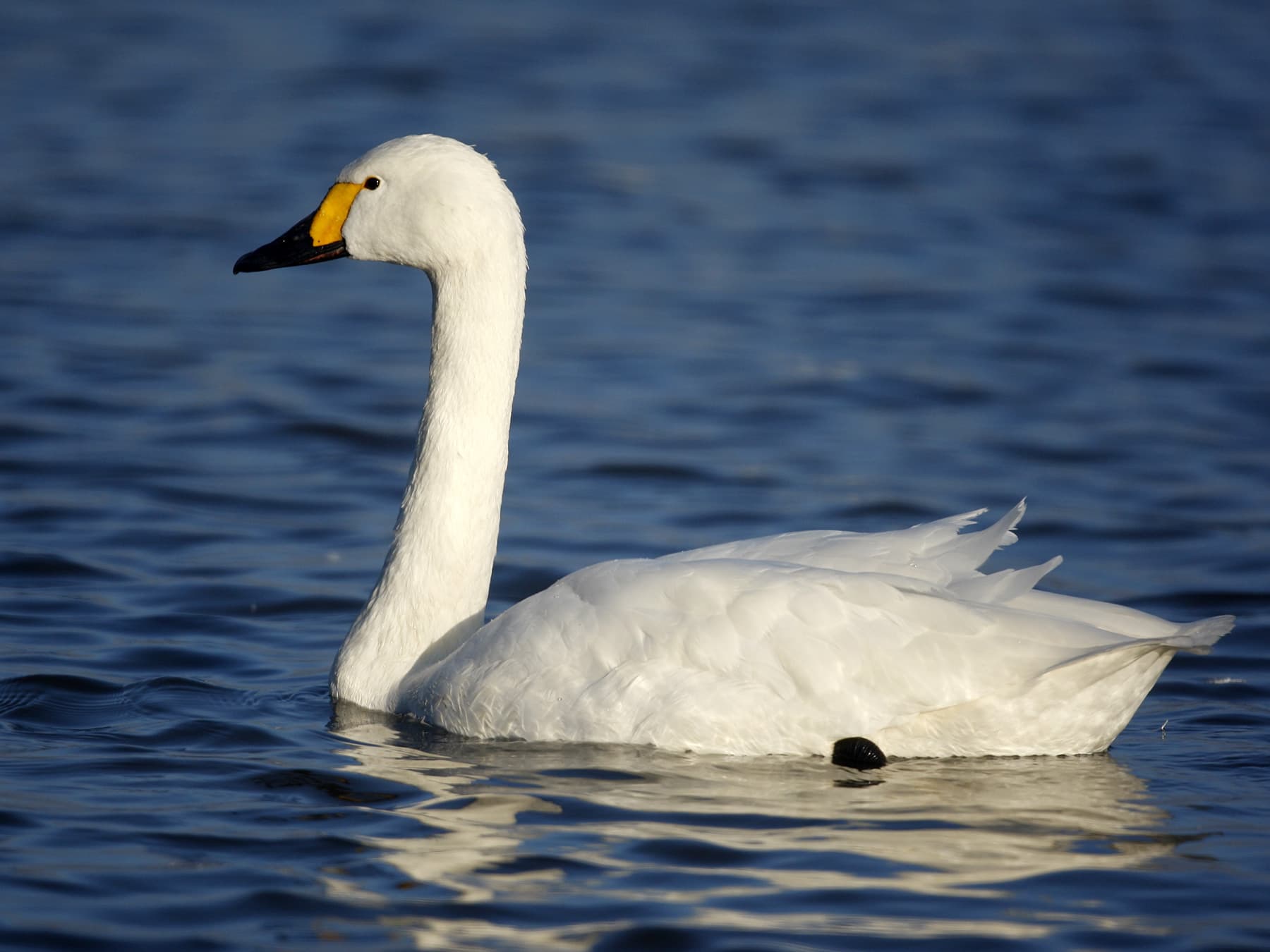
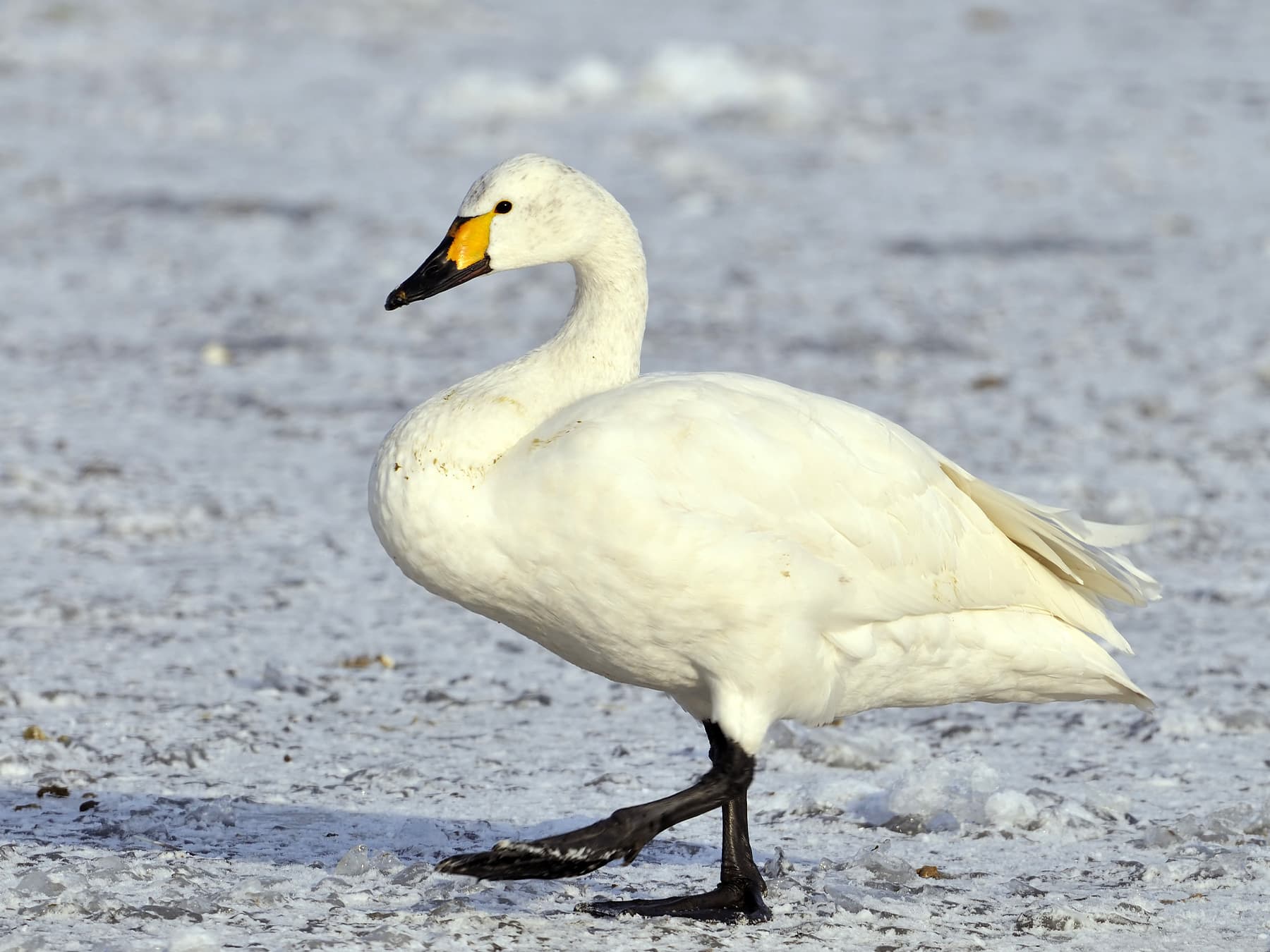
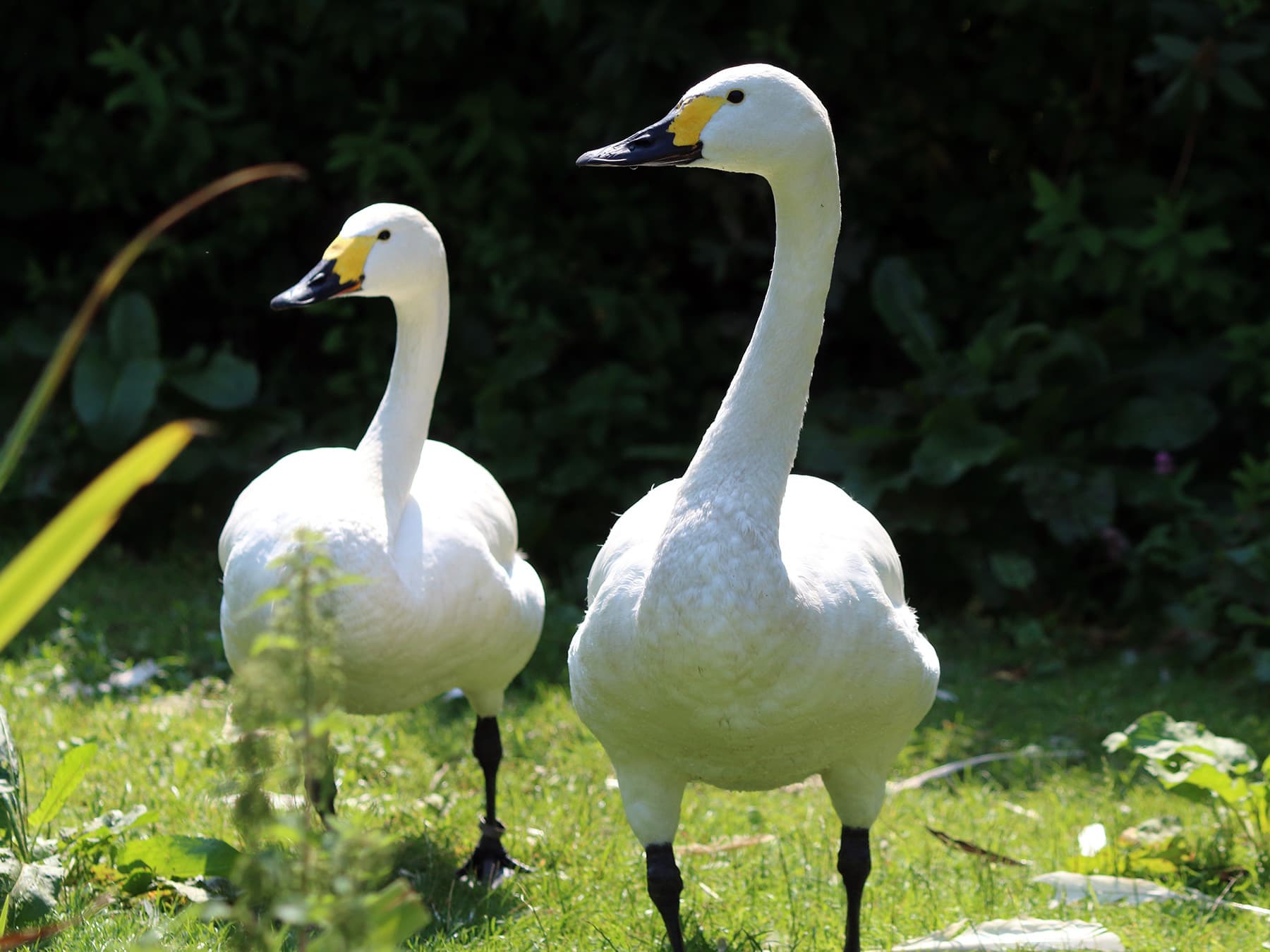
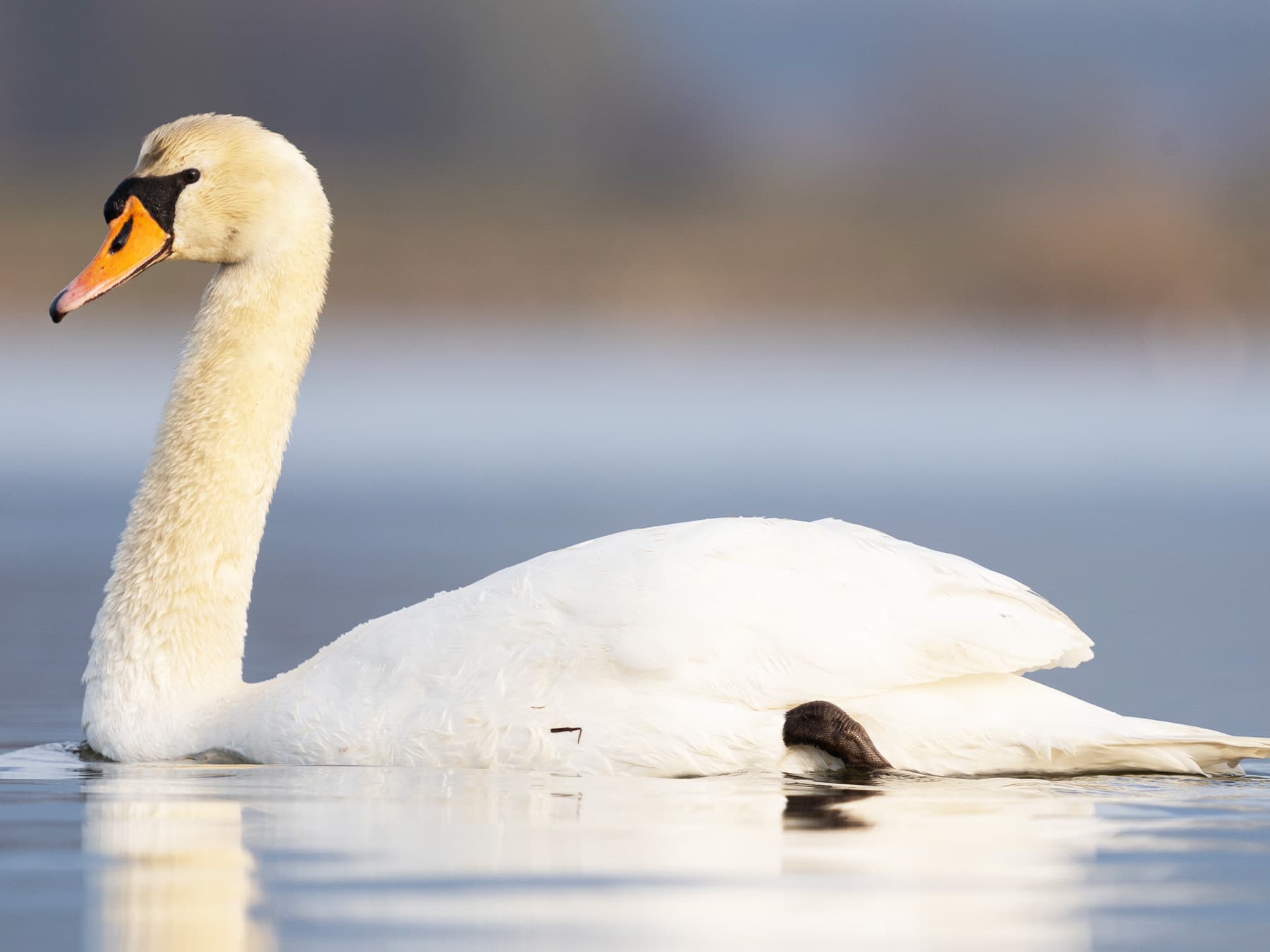
Bewick’s swans are small in stature when compared to the much larger and more common mute swan. Their necks are straighter than the curved neck of a mute swan, giving the Bewick’s swan a more upright posture.
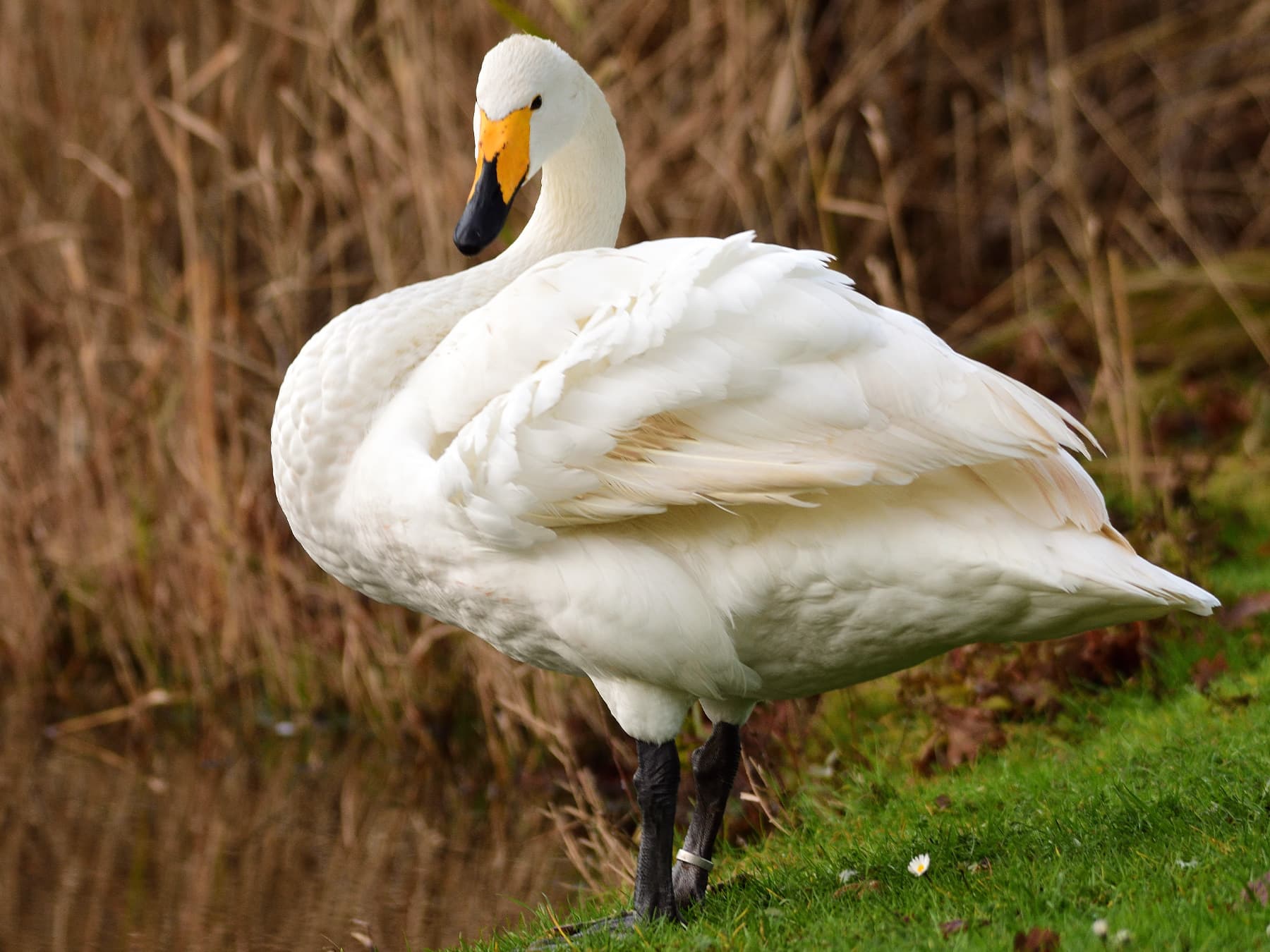
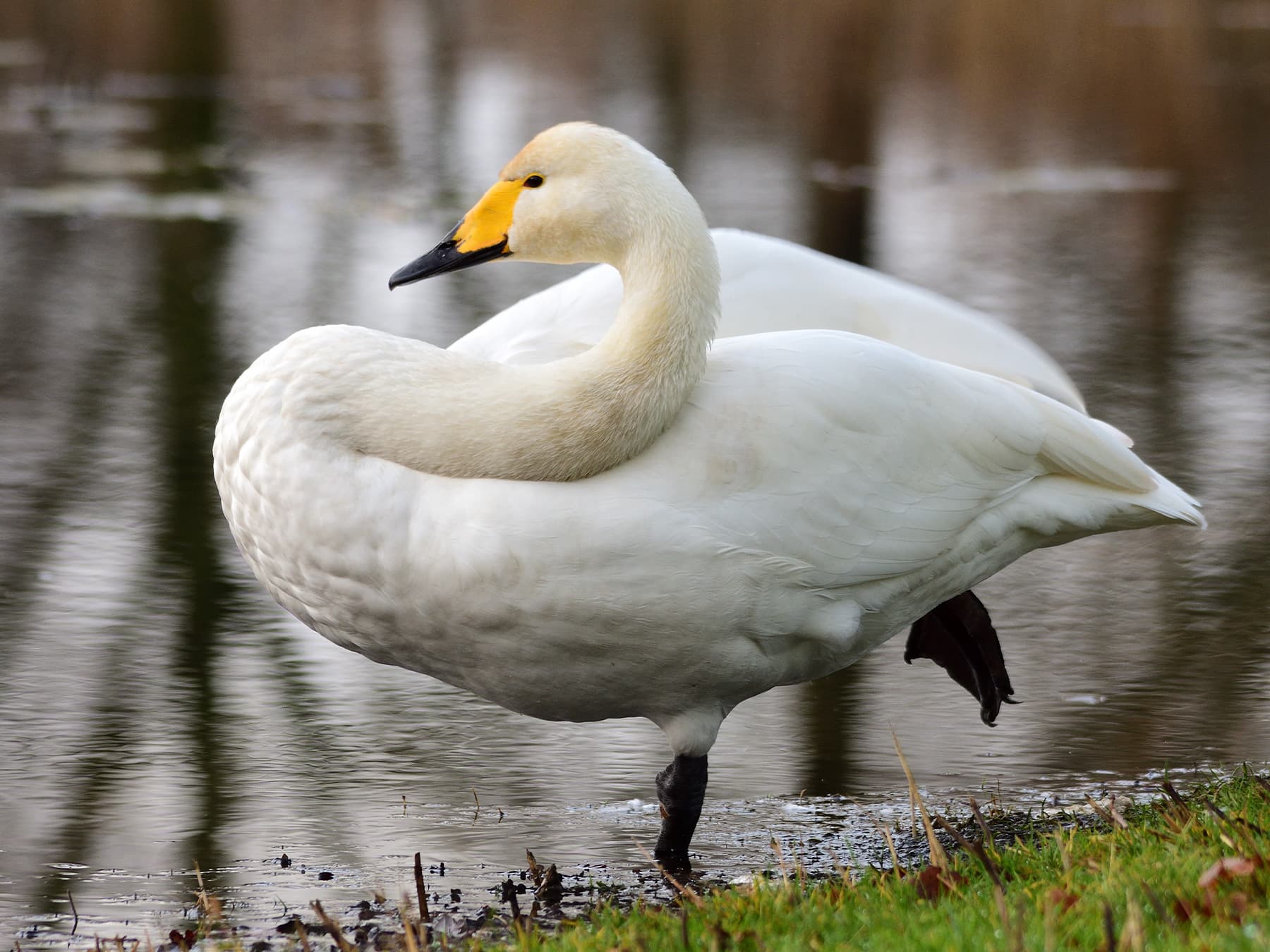
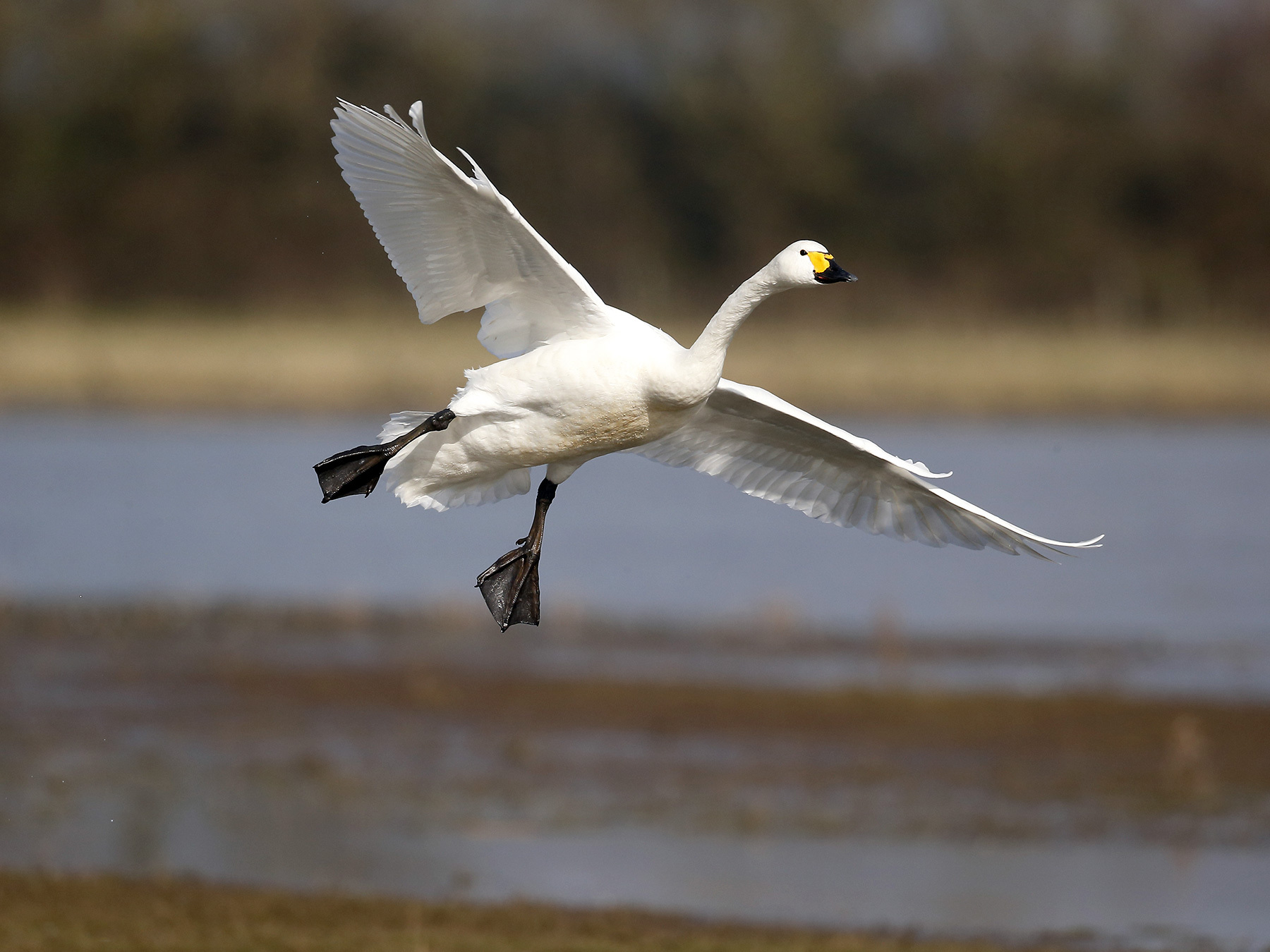
Their bodies and wings are white all year round, and their legs are black. A key identifying feature is the bill, which is black at the tip and bright yellow at the base, with a greater area of yellow than in the otherwise very similar Whooper swan.
Male and female Bewick’s swans are identical in plumage and colouring, although females are noticeably smaller.
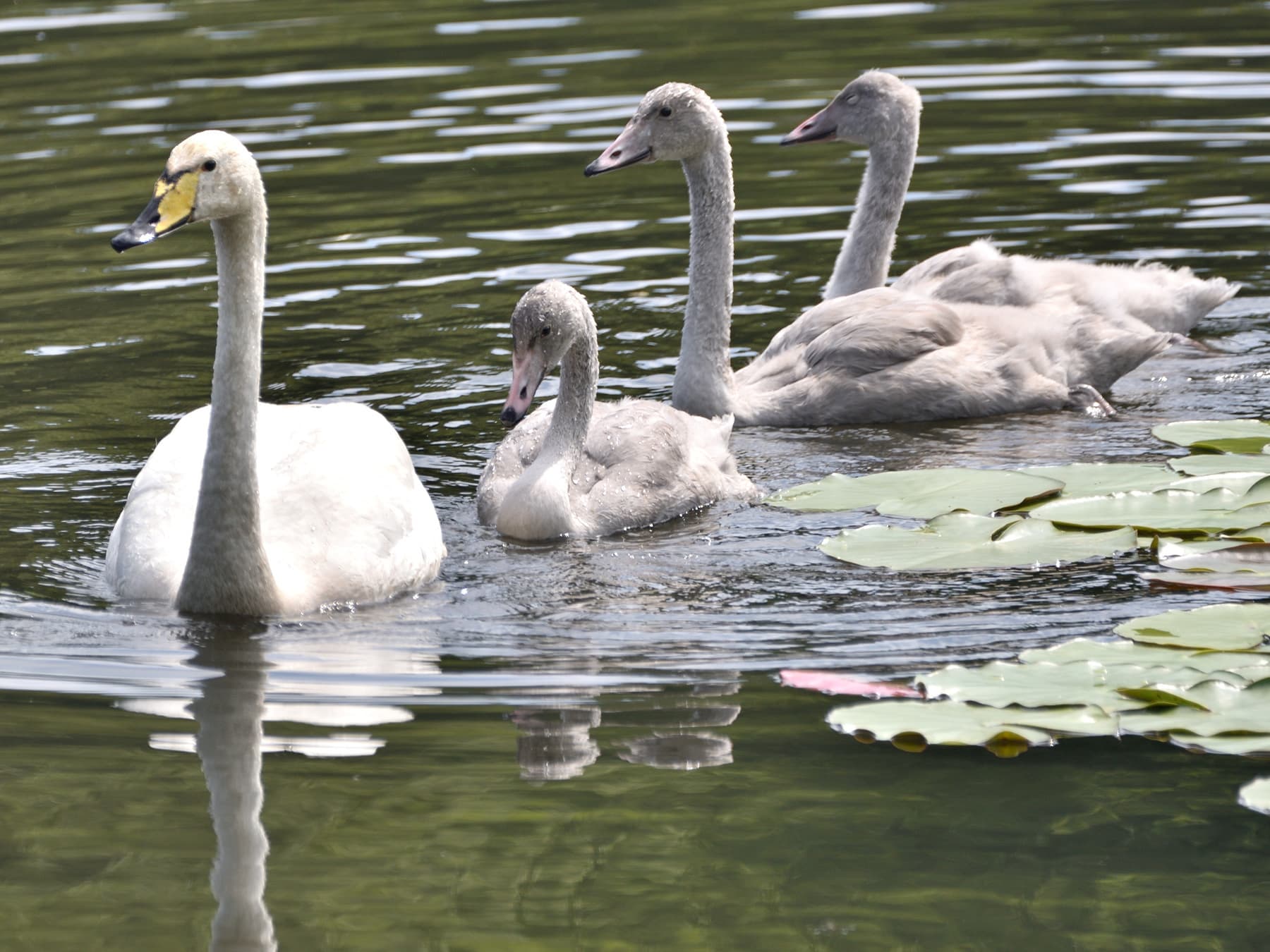
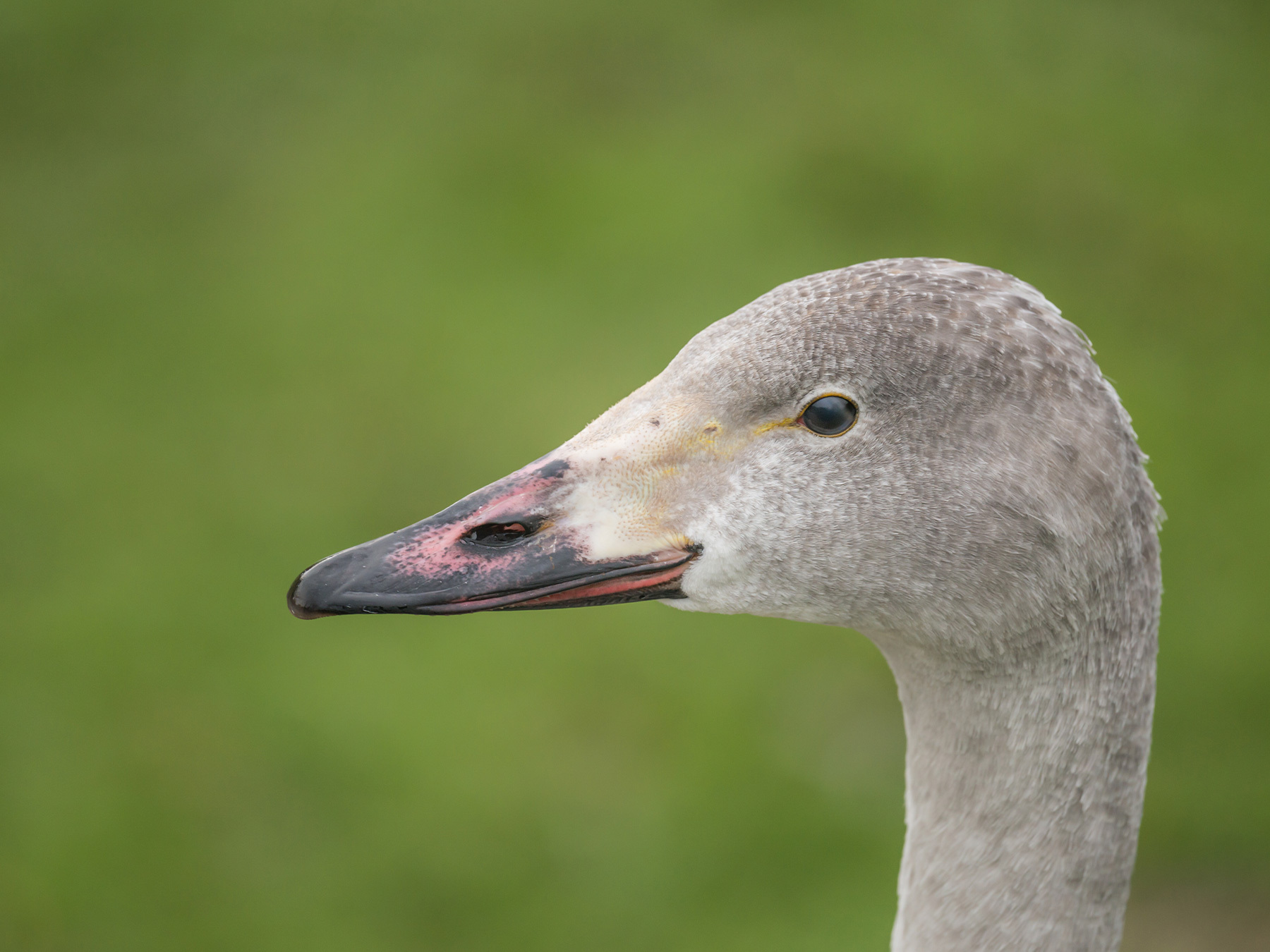
Juvenile Bewick’s swans are smaller than adults and have an off-white/pale grey colour. Their bill is initially greyish-pink.
How big are Bewick's Swans?
The smallest swan species to visit the UK, Bewick’s swans are roughly the same size as a Canada goose. Males are typically larger than females in this species.
- Length: 115 cm to 140 cm (3 ft 3 in to 4 ft 7 in)
- Wingspan: 167 cm to 225 cm (5 ft 4 in to 7 ft 1in)
- Weight Male: 4.5 kg to 8.4 kg (9.9 lb to 18.5 lb)
- Weight Female: 4.3 kg to 7.8 kg (9.5 lb to 17.2 lb)
Its size
Adults- Length
- 120–150 cm
- Wingspan
- 168–211 cm
- Weight
- 3700–9600 g
Its song and calls
What sound does a Bewick's Swan make?
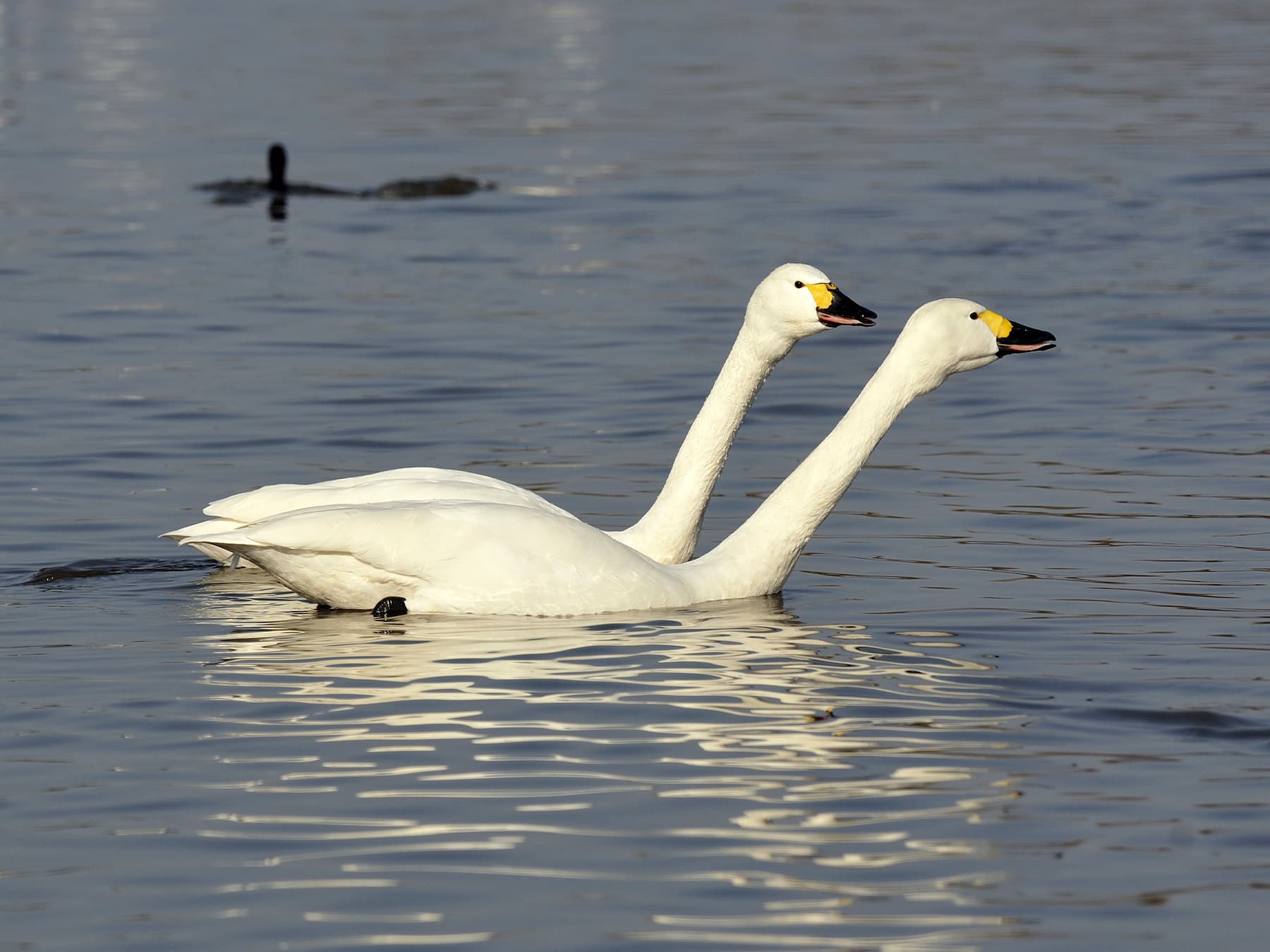
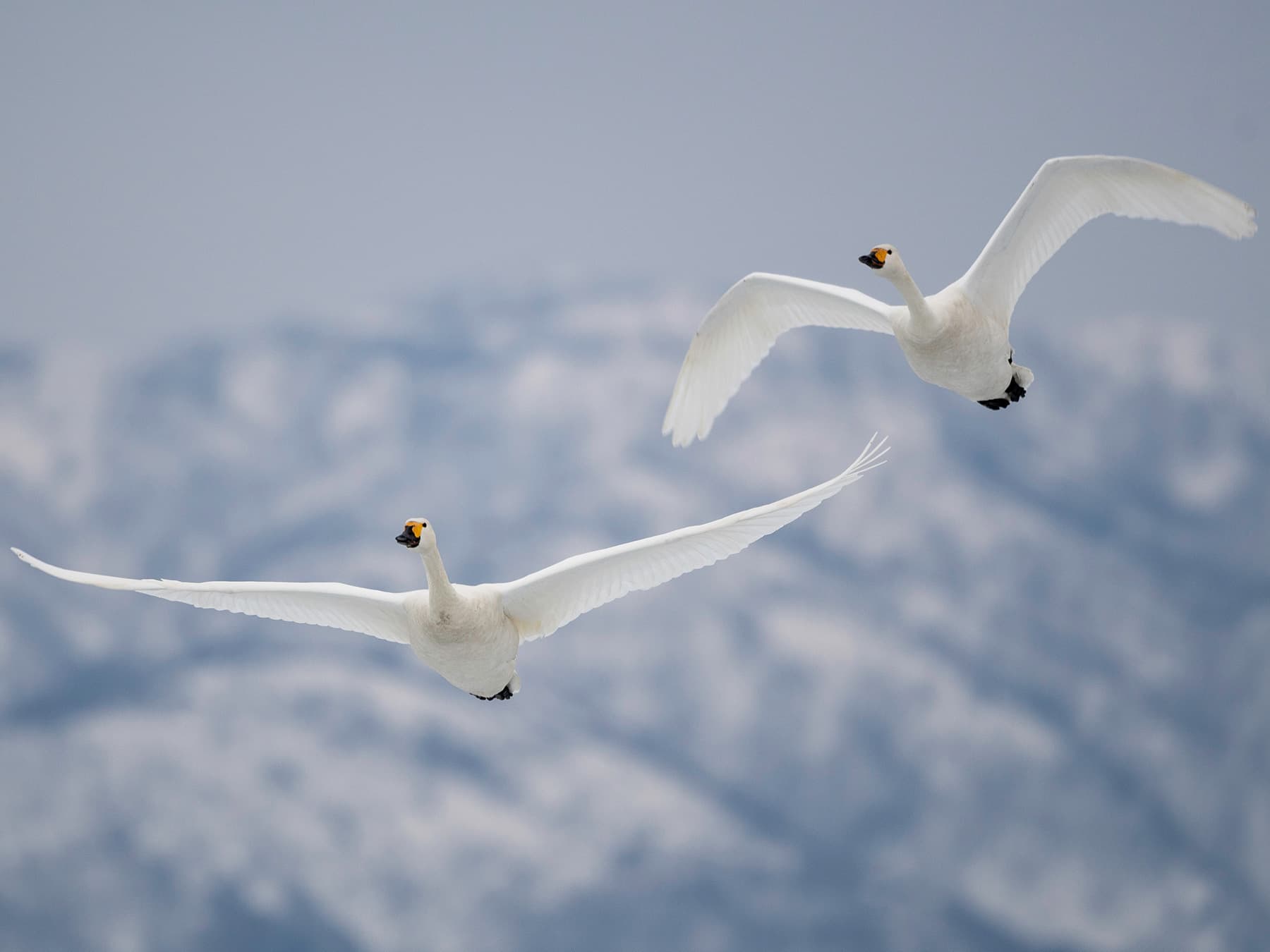
Compared to mute swans, Bewick’s swans are a much more vocal species. They have softer higher-pitched calls than the harsh hornlike honking of the similar Whooper swan. Calls heard in flight include a ‘hoo’ or ‘ho’ note, and a softer ‘honk’.
- Call0:00 / 0:42
Recorded in Gloucestershire, England
Lawrence Shove / The British Library Board · Wikimedia Commons · CC BY-SA 4.0
When and where to see it
OctoberMostly absent
Most recorded in October
- 1. Gloucestershireunder 0.1%
- 2. South Yorkshireunder 0.1%
- 3. Buckinghamshireunder 0.1%
- 4. Leicestershireunder 0.1%
- 5. Cambridgeshireunder 0.1%
Each dot is a county, state or province: the bigger and darker, the larger the bird’s share of that place’s bird records that month. Grey dots: no regular records. The ringed point is the centre of the bird’s records this month; the arrow shows how it moved since last month, and the dashed loop its path through the year. “Arrivals” colours places where it becomes regular this month (orange) or is in its last regular month (grey). GBIF eBird Observation Dataset, 2019–2024. Map data: Natural Earth, US Census Bureau; place centres © OpenStreetMap contributors.
In your area
See when the Tundra Swan is recorded in your county, state or province.
How often the Tundra Swan turns up in the UK, Ireland, the United States and Canada through the year, from birdwatchers' records.
United Kingdom
Winter visitor · regularly Nov–Mar · most records in January
Ireland
Passage migrant · regularly Jan–Feb · most records in January
United States
Winter visitor · regularly Oct–Jun · most records in January
Canada
Winter visitor · regularly Oct–Jun · most records in March
Show as a table
| Month | United Kingdom | Ireland | United States | Canada |
|---|---|---|---|---|
| January | 0.070% (regular) | 0.051% (regular) | 0.12% (regular) | 0.12% (regular) |
| February | 0.038% (regular) | 0.018% (regular) | 0.12% (regular) | 0.11% (regular) |
| March | 0.007% (regular) | 0.004% | 0.10% (regular) | 0.24% (regular) |
| April | <0.001% | – | 0.016% (regular) | 0.087% (regular) |
| May | <0.001% | – | 0.004% | 0.019% (regular) |
| June | <0.001% | – | 0.017% (regular) | 0.016% (regular) |
| July | <0.001% | – | 0.003% | 0.010% |
| August | <0.001% | – | 0.002% | 0.004% |
| September | – | – | 0.001% | 0.012% |
| October | 0.001% | – | 0.017% (regular) | 0.11% (regular) |
| November | 0.023% (regular) | – | 0.12% (regular) | 0.19% (regular) |
| December | 0.043% (regular) | 0.013% | 0.12% (regular) | 0.13% (regular) |
Recorded regularly in
Worldwide: recorded regularly in 39 countries
Countries where it was recorded in at least 3 of the 6 years 2019–2024. Linked countries have their own bird list.
Europe (26)
Asia (11)
- Azerbaijan
- China
- Georgia
- Iran
- Japan
- Kazakhstan
- Kyrgyzstan
- Mongolia
- South Korea
- Taiwan
- Turkey
North America (2)
Data: EOD – eBird Observation Dataset (Cornell Lab of Ornithology), accessed via GBIF.org, CC BY 4.0. Records from 2019–2024, aggregated and filtered by Birdfact. How these lists are made
What is the habitat of a Bewick's Swan?
During the breeding season, Bewick’s swans are found on Arctic tundra landscapes in Siberia, using lakes, pools and ponds. Coastal regions are popular, although some pairs may regularly return to breeding grounds slightly further inland.
Winter habitats include marshlands, grasslands, and cultivated fields, particularly in coastal areas or around estuaries.
What is the range of a Bewick's Swan?
Bewick’s swans are a migratory species, with distinct breeding and wintering grounds some distance apart. Breeding occurs from Russia’s Kola Peninsula eastwards into northern Siberia.
Post-breeding, Bewick’s swans disperse, with many migrating south-west to spend winter in north-western Europe, from the UK and the Netherlands east to Estonia and the Balkan states. Eastward migration also occurs, with wintering populations present in eastern China, Japan, and the Korean peninsula.
Where do Bewick's Swans live?
An international census in 2005 recorded 21,500 Bewick’s swans overwintering in the Netherlands. Since then, declines are evident and the global population is estimated at fewer than 18,000 in the whole of Europe. The Netherlands, Germany, and the UK all have sizeable winter populations while breeding Bewick’s swans are only found in Russia.
How rare are Bewick's Swans?
Populations of Bewick’s swans are showing a significant decline in recent years, and they are becoming increasingly rare in north-western Europe.
However, annually, 4,350 individuals spend winter months in the UK, so sightings are not especially uncommon, particularly in eastern England and in a band across southern England running from The Wash to the Severn Estuary.
Where can you see Bewick's Swans in the UK?
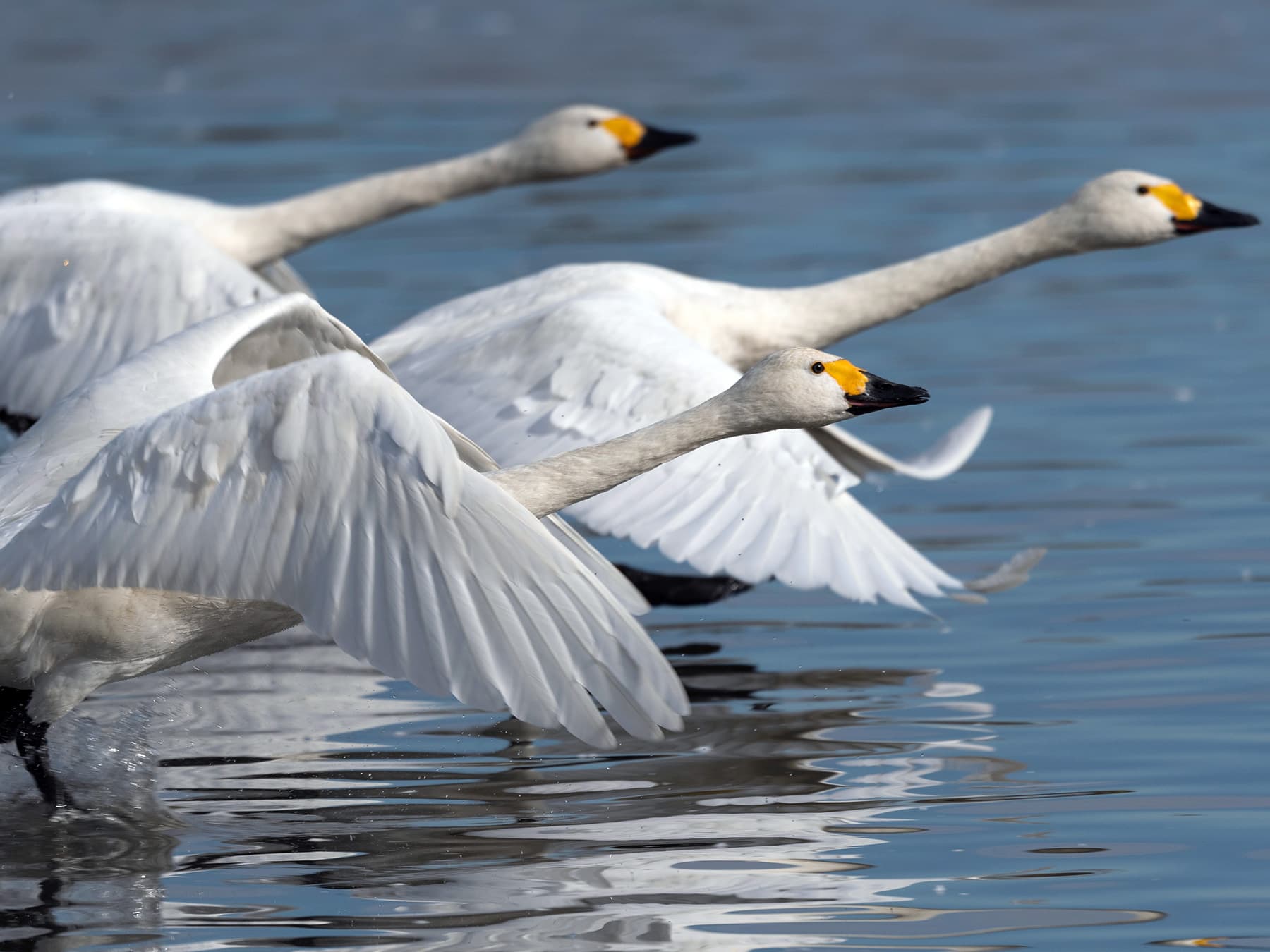
Bewick’s swans are winter visitors to the UK, arriving from October onwards and departing by March. Eastern England, Lancashire, and the south-west offer the best chances of sightings, with The Ouse and Nene Washes in Cambridgeshire, Martin Mere in Lancashire and Slimbridge in Gloucestershire among sites with regular reports.
Migration
Do Bewick's Swans migrate?
Bewick’s swans are a fully migratory species, breeding in the inhospitable Arctic tundras of Siberia, and migrating south in winter in search of frost-free waters. A typical migration journey takes between 48 and 50 days. No Bewick’s swans are resident in the same territory all year round.
Why do Bewick's Swans migrate?
Once waters in the Arctic begin to freeze over and food supplies start to run low, Bewick’s swans embark on their southern migration flights to more temperate regions until conditions begin to ease the following spring.
Foraging becomes impossible as the ground freezes, and further south, where temperatures are milder, offers abundant food resources during winter.
Where do Bewick’s Swans migrate to?
Bewick’s swans migrate from their Siberian breeding grounds south-westwards into north-west Europe, particularly the Netherlands, the UK, Germany, and the Baltic States, particularly Estonia. Smaller numbers head to the south-east, spending winter months in eastern China, Japan and parts of the Korean peninsula.
Are Bewick's Swans native to the UK?
Bewick’s swans are regular visitors to the UK each winter, but none are year-round residents, leaving for breeding grounds in Siberia each spring. No breeding takes place in the UK.
Tips for seeing it
- Look for large, white birds in wetlands and agricultural fields during migration seasons.
- Listen for their distinctive honking calls, especially in flight.
- Observe them in coastal areas and large inland water bodies during winter.
- Use a spotting scope to distinguish the yellow bill patch from a distance.
- In the UK, focus on wetlands in East Anglia and the Severn Estuary during winter.
What it eats
What do Bewick's Swans eat?
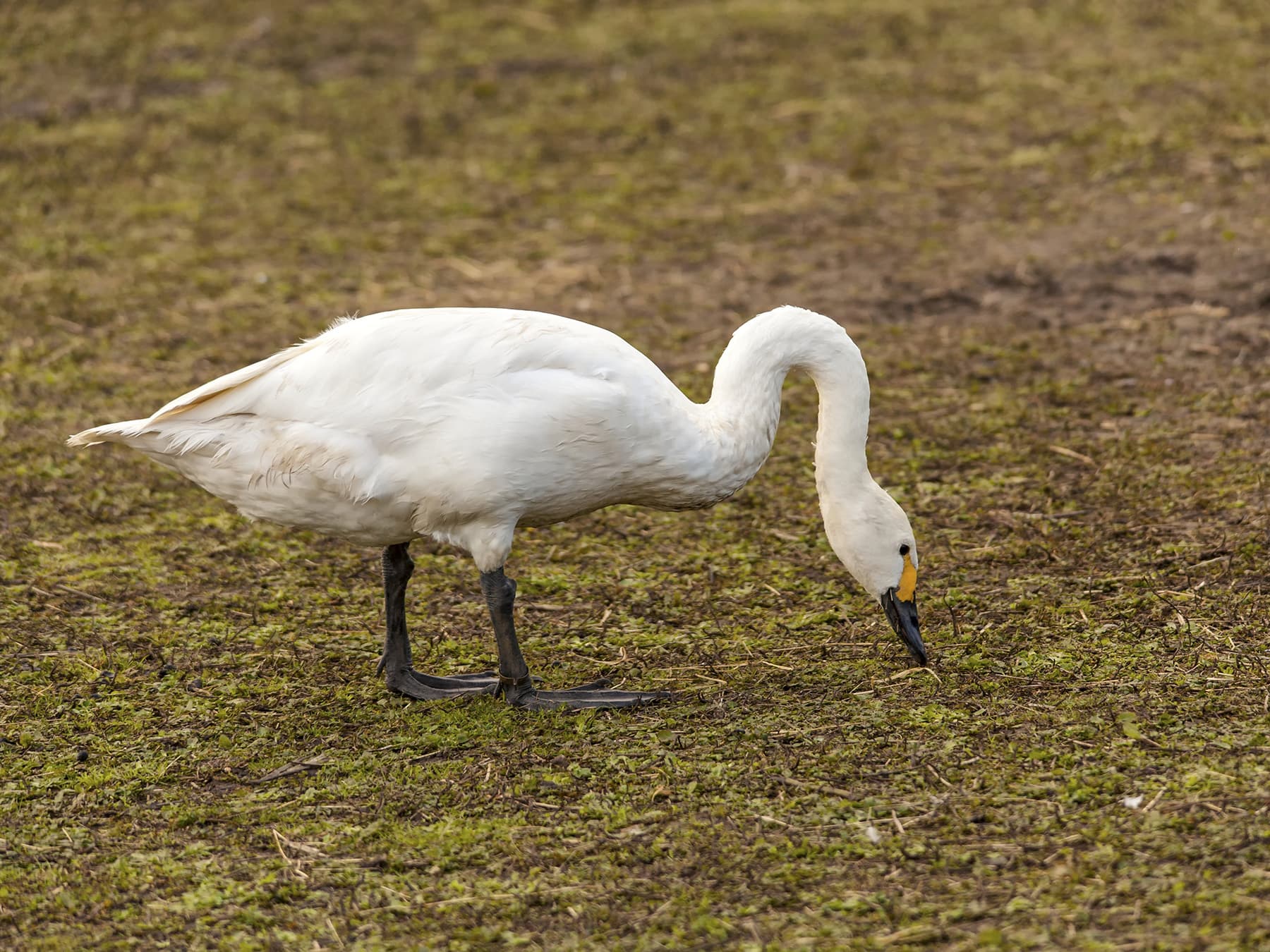
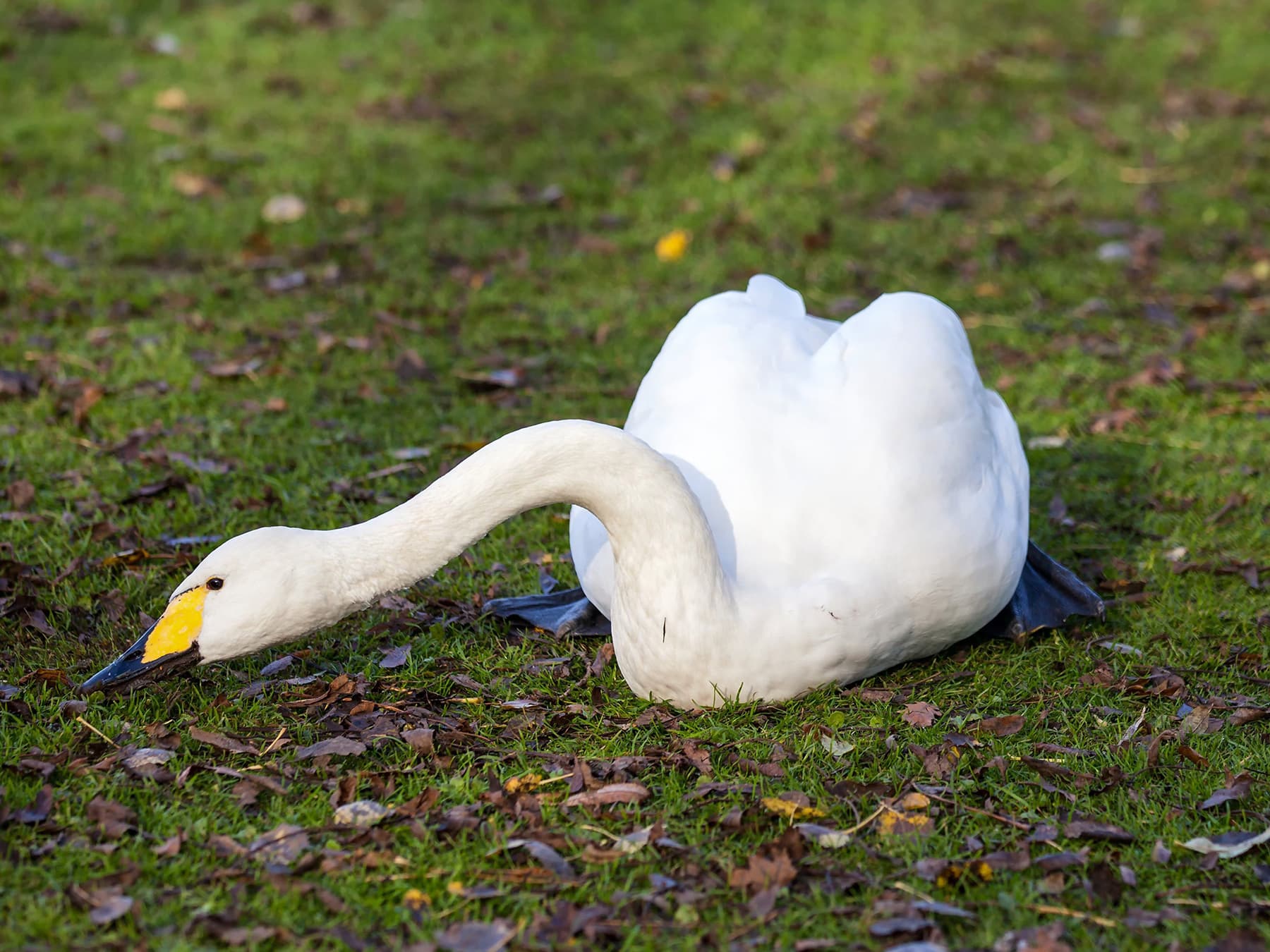
Roots, grasses, and other aquatic vegetation are among the main sources of food for Bewick’s swans during the breeding season. Foraging takes place on grasslands next to wetlands, as well as on the water surface, with their long necks extending below the water to find plant matter and some aquatic invertebrates.
On wintering grounds, leftover potato and grain crops from cultivated fields are a major source of food for visiting Bewick's swans. Pondweeds, roots, and soft grasses are also eaten.
What do Bewick's Swan chicks eat?
In their early days, Bewick’s swans may feed on immature mosquitoes and other aquatic insects, before gradually introducing plant matter into their diet.
Nesting and breeding
Where do Bewick's Swans nest?
Nest sites are chosen on small islands to offer maximum protection from land predators. Large mounds of moss, lichen, and grasses are constructed, with a depression in the middle where the eggs are laid. Females undertake the bulk of the building work, pulling materials into shape around themselves while sitting on the nest foundation, and building upwards using vegetation and mud.
When do Bewick's Swans nest?
Bewick’s swans return to breeding grounds from late April to early May, and nesting begins a short while later. Eggs are laid in June and incubation lasts for 29 to 30 days. Males take a smaller share of incubation duties than females, relieving their mate so she can take breaks to feed. Incubation lasts for 29 to 30 days.
What do Bewick's Swan eggs look like?
Between three and five creamy white eggs are laid, measuring 107 mm by 68 mm (4.2 in by 2.7 in). Eggs are not glossy and later in the incubation period may become stained a light tan, from the surrounding nesting materials.
Do Bewick's Swans mate for life?
Bewick’s swans mate for life, remaining as strongly bonded pairs from one year to the next, returning to the same breeding grounds and raising young at nest sites they have previously used successfully.
Behaviour
Are Bewick's Swans aggressive?
Aggressive behaviour witnessed in Bewick’s swans is largely confined to posturing and rarely becomes physical. Some biting and snapping at intruders is usually enough to drive away any potential threats.
Lifespan and predators
How long do Bewick's Swans live?
On average, Bewick’s swans live for around 9 years, breeding for the first time at four years of age. However, some individuals live for much longer – the oldest known example of a Bewick’s swan was 28 years and 1 month, according to ringing data.
What are the predators of Bewick's Swans?
Known to be particularly aggressive defenders of their nests and young, Bewick’s swans have few successful predators. On rare occasions that nests are left unattended, Arctic foxes, eagles, gulls, weasels, and wolves may opportunistically raid nests, although attacks when an adult is present are rare.
Are Bewick's Swans protected?
Bewick’s swans are listed as Schedule I birds in the Wildlife and Countryside Act, 1981. This legislation prevents any disturbance to nest sites, eggs and young, and also states that it is an offence to knowingly kill, injure or capture a Bewick’s swan.
Are Bewick's Swans endangered?
Bewick’s swans have Red status on the British Birds of Conservation Concern list. Increases have been shown in their breeding range, but declines in numbers wintering in western Europe are evident, particularly since the year 2000, leading to the species being added to the European Red List.
Conservation
While currently listed as Least Concern, Tundra Swans face threats from habitat loss, particularly in their breeding grounds due to climate change.
Conservation efforts focus on protecting key wetland habitats along migration routes and wintering areas, as well as monitoring population trends.
Similar birds
Often mistaken for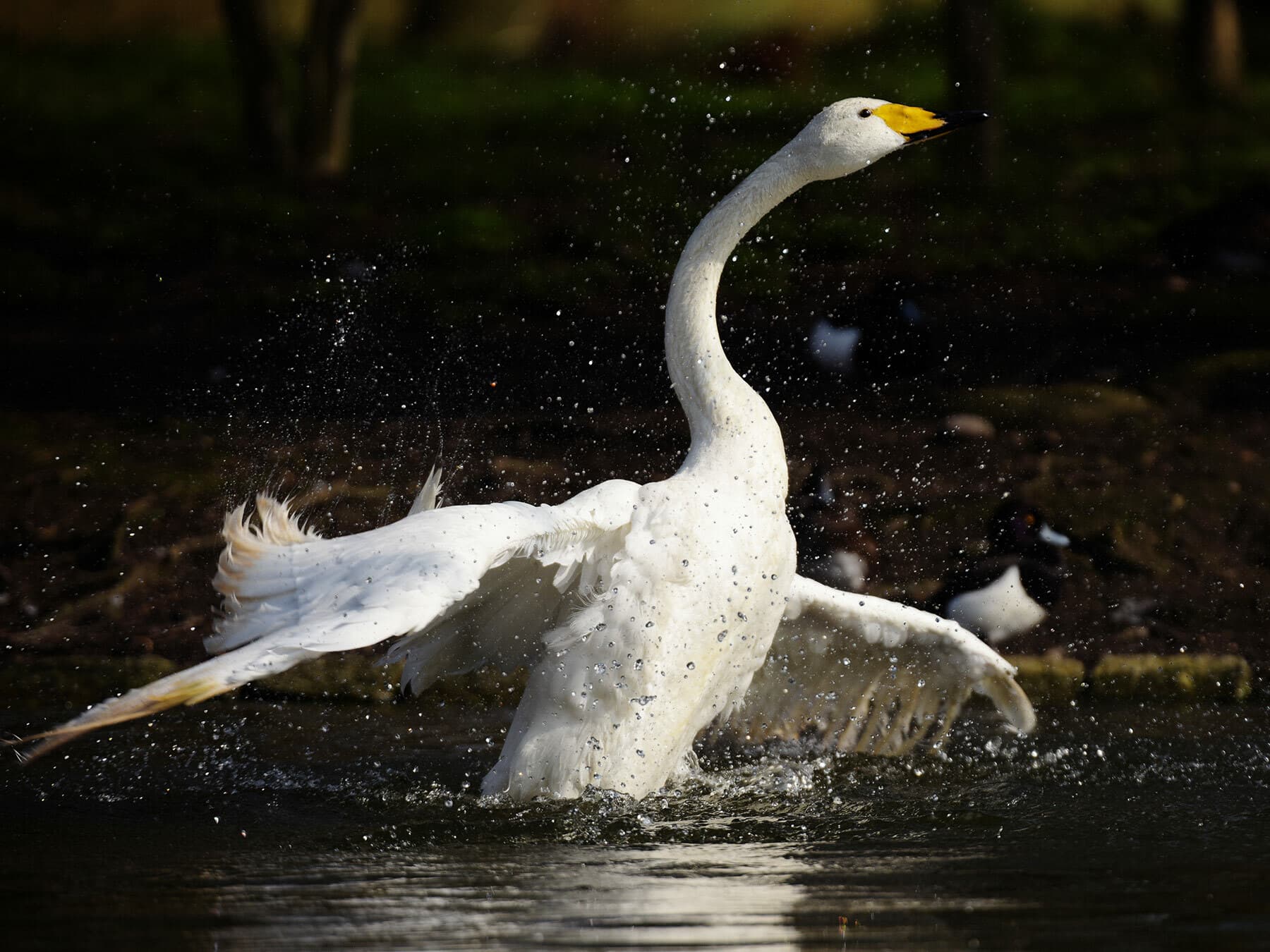
More photos
3 photos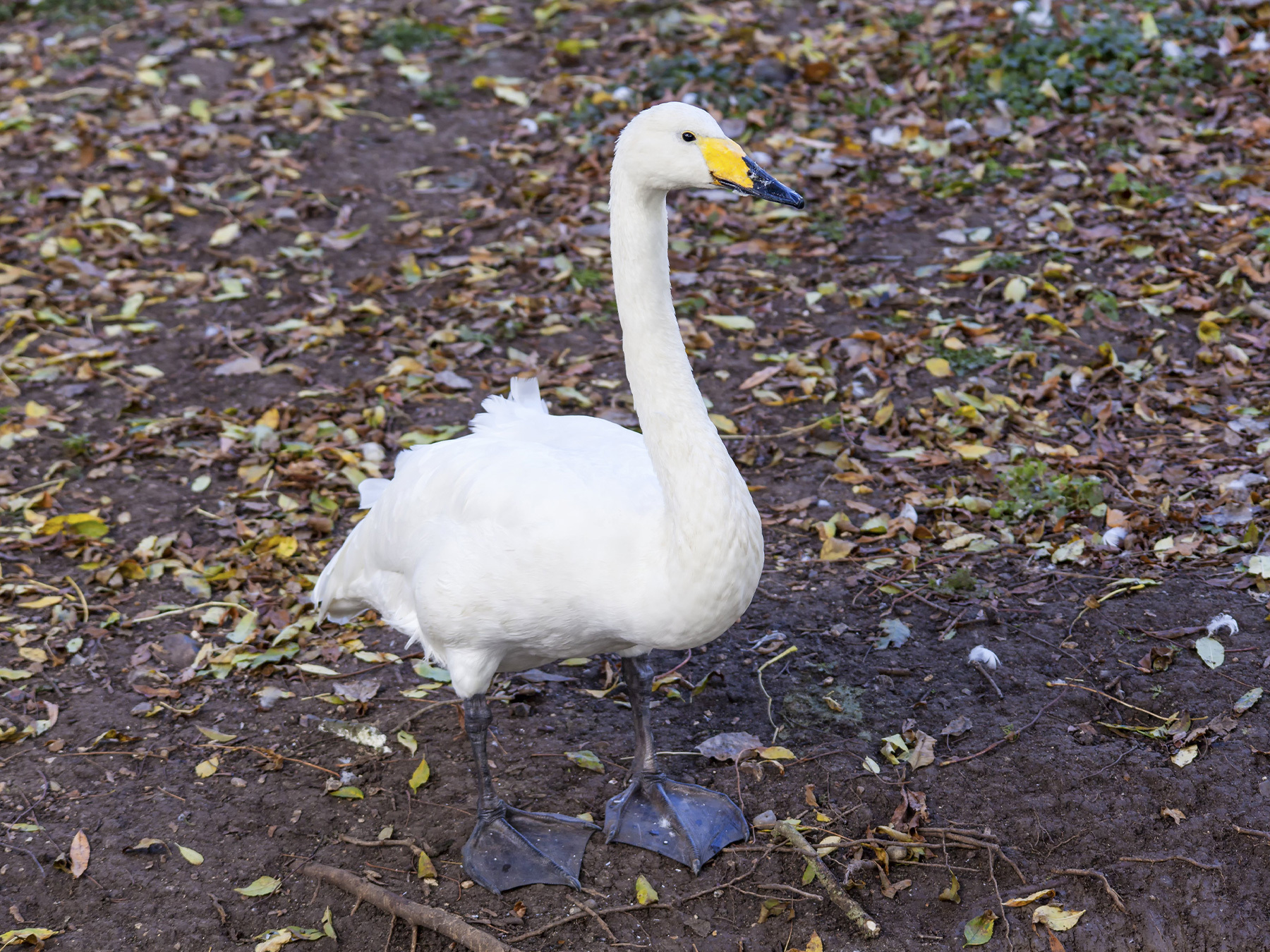
Tundra Swan guides
6 guidesQuick facts
- Length
- 120–150 cm
- Wingspan
- 168–211 cm
- Weight
- 3700–9600 g
- Lifespan
- 10 years · oldest recorded 24.1 years
- Family
- Ducks, Geese & Swans
- Migration
- Long-distance Migrant
- Global status (IUCN)
- Least Concern
- World population
- 317,000 - 336,000 mature individuals
- Population trend
- Unknown
- Also called
- Whistling Swan, Bewick's Swan
- Scientific name
- Cygnus columbianus
Questions
2Why are they called Bewick's Swans?
Naturalist William Yarrell named the species in 1830, after a well-established engraver, Thomas Bewick, who was a leading illustrator of birds and animals at the time.
Are Bewick’s Swans the same as Tundra Swans?
Bewick’s swans are a separate subspecies of tundra swan: tundra swans are native to North America, while Bewick’s swans are only found in Europe and Asia.
Sources
3- 1BirdLife International. 2016. Cygnus columbianus. The IUCN Red List of Threatened Species 2016: e.T22679862A89644875. Source (opens in a new tab)
- 2Wetlands International (2016)
- 3Fransson et al., EURING list of longevity records for European birds (2010) Source (opens in a new tab)

Checked by
Nathan Cope, founder and editor
Nathan founded Birdfact and leads its writers and contributors in the UK, the US and Canada. He has watched and studied birds for more than ten years, and checks every article and species guide before it’s published.