


Whooper Swan
Wild Swan · Cygnus cygnus
By the Birdfact teamChecked by Nathan Cope
On this page14 sections
How to recognise it
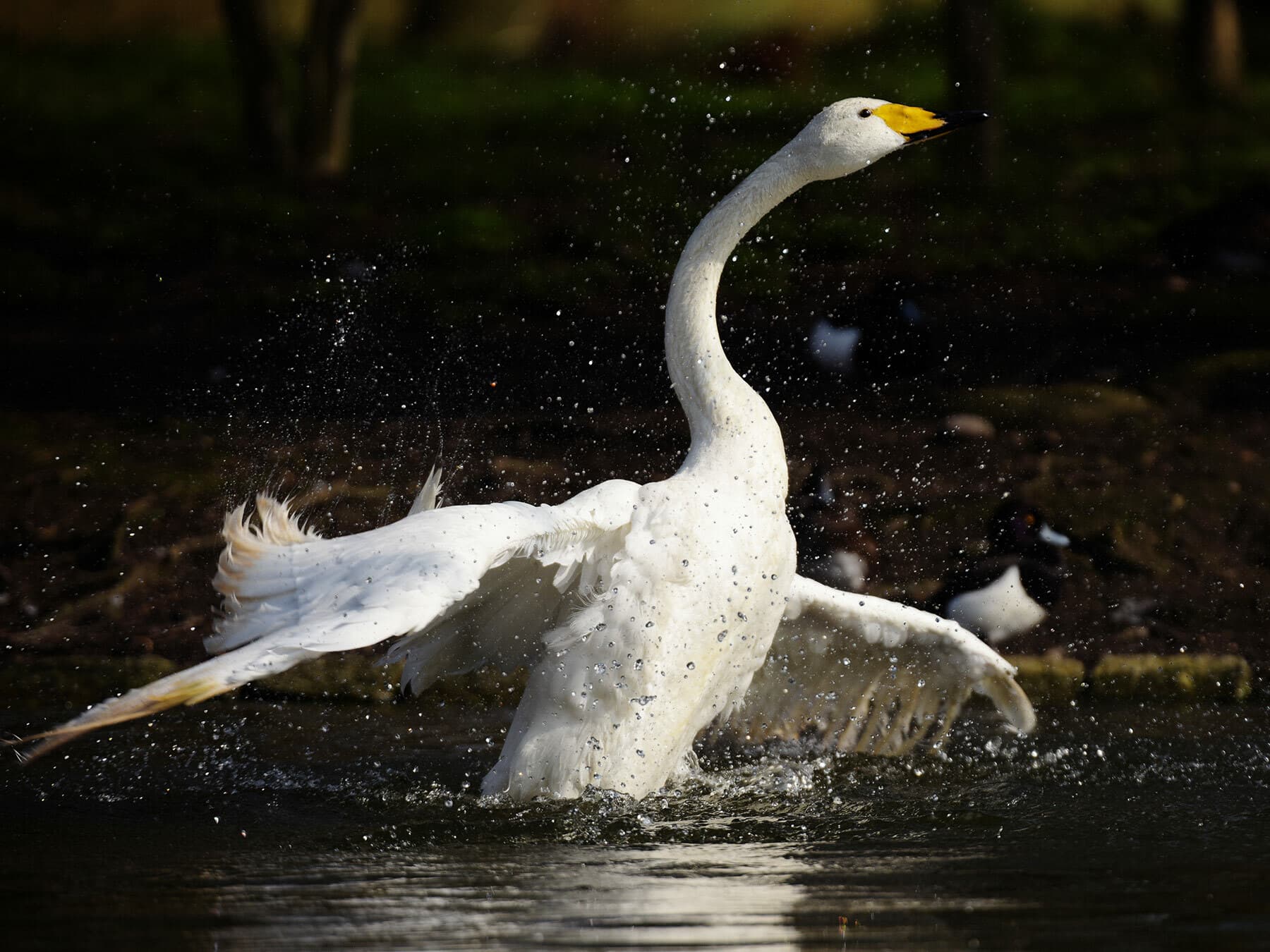
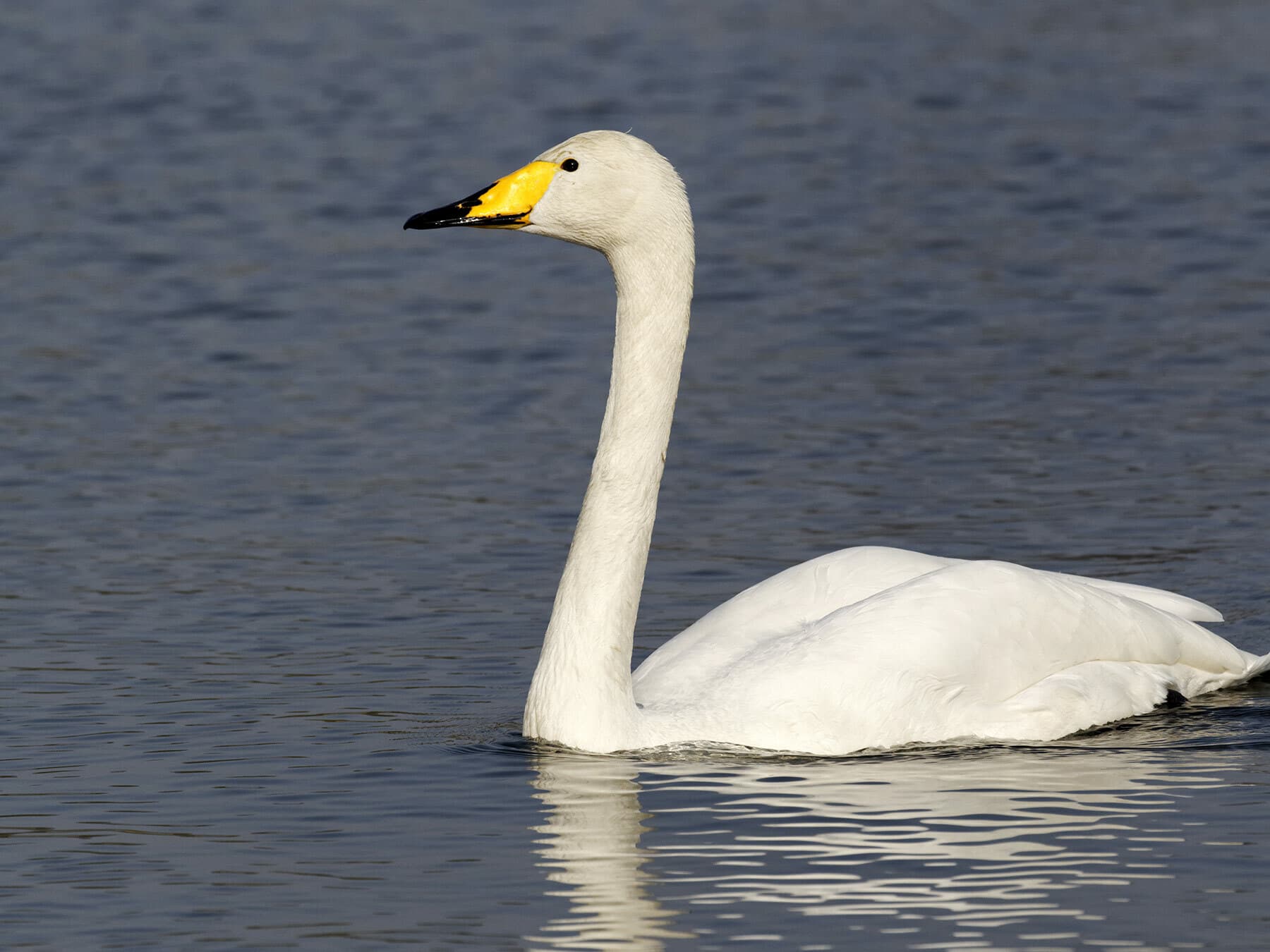
The Whooper Swan is a majestic, large waterfowl with pure white plumage and distinctive yellow and black bill. Adults typically measure 140-165 cm in length, with a wingspan of 205-275 cm, making them one of the largest flying birds in the Northern Hemisphere.
Both sexes share identical plumage, but females are slightly smaller than males. Juveniles have greyish-brown plumage, gradually turning white as they mature.
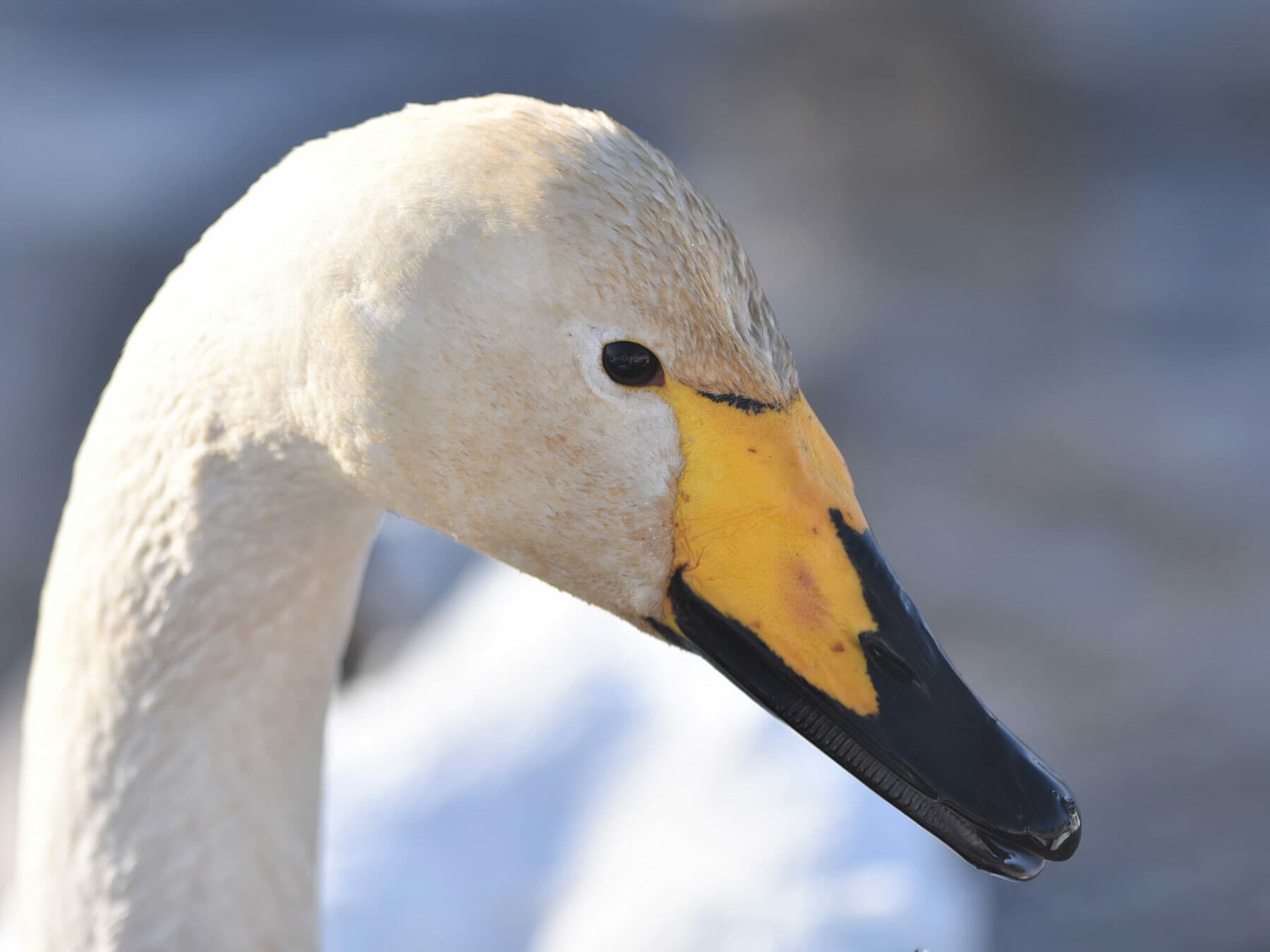
The bill pattern, with its extensive yellow area reaching the tip, distinguishes Whooper Swans from other swan species. Their legs and webbed feet are black.
Its size
Adults- Length
- 140–165 cm
- Wingspan
- 205–275 cm
- Weight
- 7400–14000 g
Its song and calls
The whooper’s call is a loud, low pitched hooting sound, persistent during aggressive or triumphant behaviour but softer in contact situations with its mate or offspring. The sound can resemble an old fashioned car air horn.
- Song0:00 / 0:36
Recorded in Fanel BE, Switzerland · December 2019
- Call0:00 / 0:59
Recorded in Bretagne, France · December 2024
When and where to see it
OctoberIn season
Most recorded in October
- 1. Derry1.8%
- 2. Perthshire and Kinross1.7%
- 3. Donegal1.4%
- 4. Offaly1.3%
- 5. Eilean Siar1.3%
Each dot is a county, state or province: the bigger and darker, the larger the bird’s share of that place’s bird records that month. Grey dots: no regular records. The ringed point is the centre of the bird’s records this month; the arrow shows how it moved since last month, and the dashed loop its path through the year. “Arrivals” colours places where it becomes regular this month (orange) or is in its last regular month (grey). GBIF eBird Observation Dataset, 2019–2024. Map data: Natural Earth, US Census Bureau; place centres © OpenStreetMap contributors.
In your area
See when the Whooper Swan is recorded in your county, state or province.
How often the Whooper Swan turns up in the UK, Ireland, the United States and Canada through the year, from birdwatchers' records.
United Kingdom
Winter visitor · all year · most records in October
Ireland
Winter visitor · regularly Jun–Apr · most records in November
United States
Winter visitor · regularly Aug–Jun · most records in February
Canada
Scarce · regularly Apr · most records in March
Show as a table
| Month | United Kingdom | Ireland | United States | Canada |
|---|---|---|---|---|
| January | 0.16% (regular) | 0.49% (regular) | <0.001% (regular) | – |
| February | 0.13% (regular) | 0.45% (regular) | 0.001% (regular) | <0.001% |
| March | 0.12% (regular) | 0.35% (regular) | <0.001% (regular) | 0.002% |
| April | 0.024% (regular) | 0.10% (regular) | <0.001% (regular) | 0.001% (regular) |
| May | 0.014% (regular) | 0.026% | <0.001% (regular) | <0.001% |
| June | 0.011% (regular) | 0.043% (regular) | <0.001% (regular) | – |
| July | 0.015% (regular) | 0.040% (regular) | <0.001% | – |
| August | 0.019% (regular) | 0.030% (regular) | <0.001% (regular) | <0.001% |
| September | 0.039% (regular) | 0.048% (regular) | <0.001% (regular) | <0.001% |
| October | 0.18% (regular) | 0.45% (regular) | <0.001% (regular) | <0.001% |
| November | 0.16% (regular) | 0.58% (regular) | <0.001% | 0.001% |
| December | 0.13% (regular) | 0.48% (regular) | <0.001% (regular) | 0.002% |
Recorded regularly in
Worldwide: recorded regularly in 44 countries
Countries where it was recorded in at least 3 of the 6 years 2019–2024. Linked countries have their own bird list.
Europe (31)
Asia (11)
- Azerbaijan
- China
- Georgia
- Iran
- Japan
- Kazakhstan
- Kyrgyzstan
- Mongolia
- South Korea
- Turkey
- United Arab Emirates
North America (2)
Data: EOD – eBird Observation Dataset (Cornell Lab of Ornithology), accessed via GBIF.org, CC BY 4.0. Records from 2019–2024, aggregated and filtered by Birdfact. How these lists are made
Whooper swans occupy an extensive geographic range. The majority of whooper swans arriving in the UK, come from Iceland where they breed, arriving here in October and leaving again in late March. They can be found on farmland, estuaries, wetlands, freshwater lakes and coastal areas and mainly occupy these areas in Scotland, northern England and East Anglia. They also migrate directly to Northern Ireland where they can number approximately 20% of the UK’s total whooper swan population. Recent figures indicate there are in the region of up to 20,000 birds over wintering within the UK.
Signs and Spotting tips
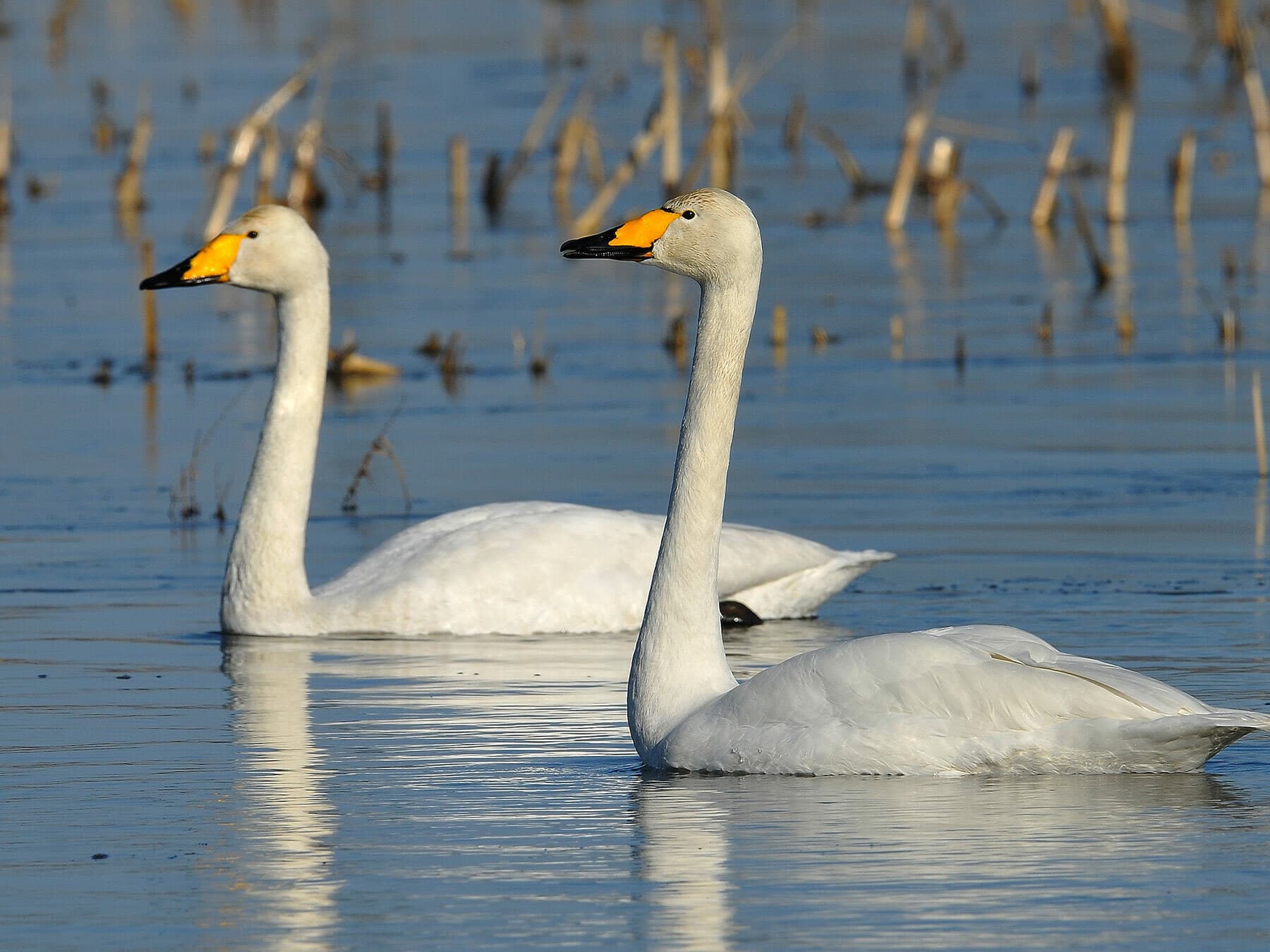
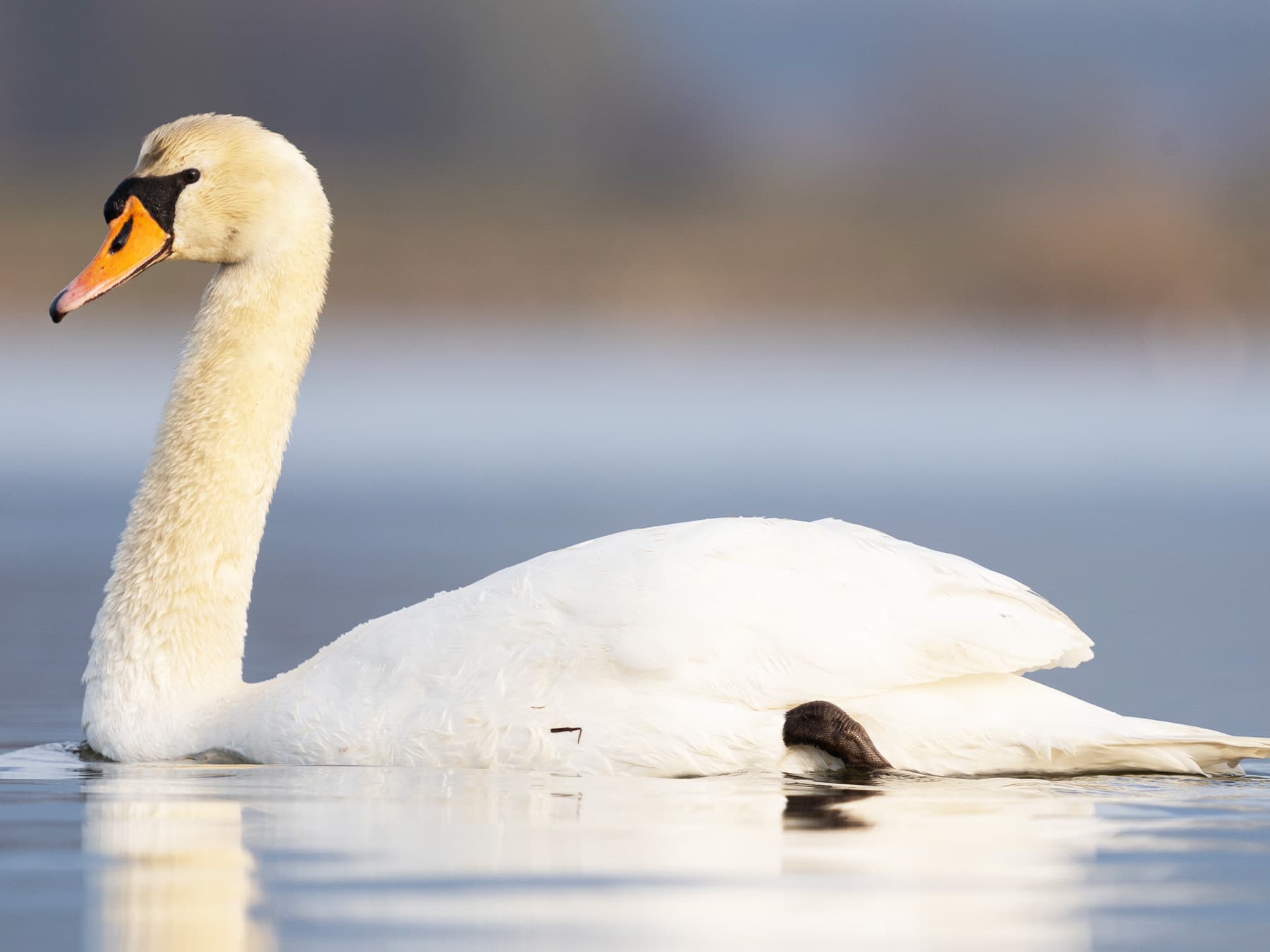
Whoopers are often confused with the Bewick’s Swan (the only other migratory swan in the UK) but Bewick’s are a lot smaller and whilst their bills have some yellow colouration it is not as prominent as the whooper’s and covers less area. Geographically the areas they occupy, apart from a few locations in East Anglia are also totally different.
What it eats
Generally, whooper swans feed on aquatic plants, grass and grains and even potatoes and other waste crops found in ploughed fields.
Nesting and breeding
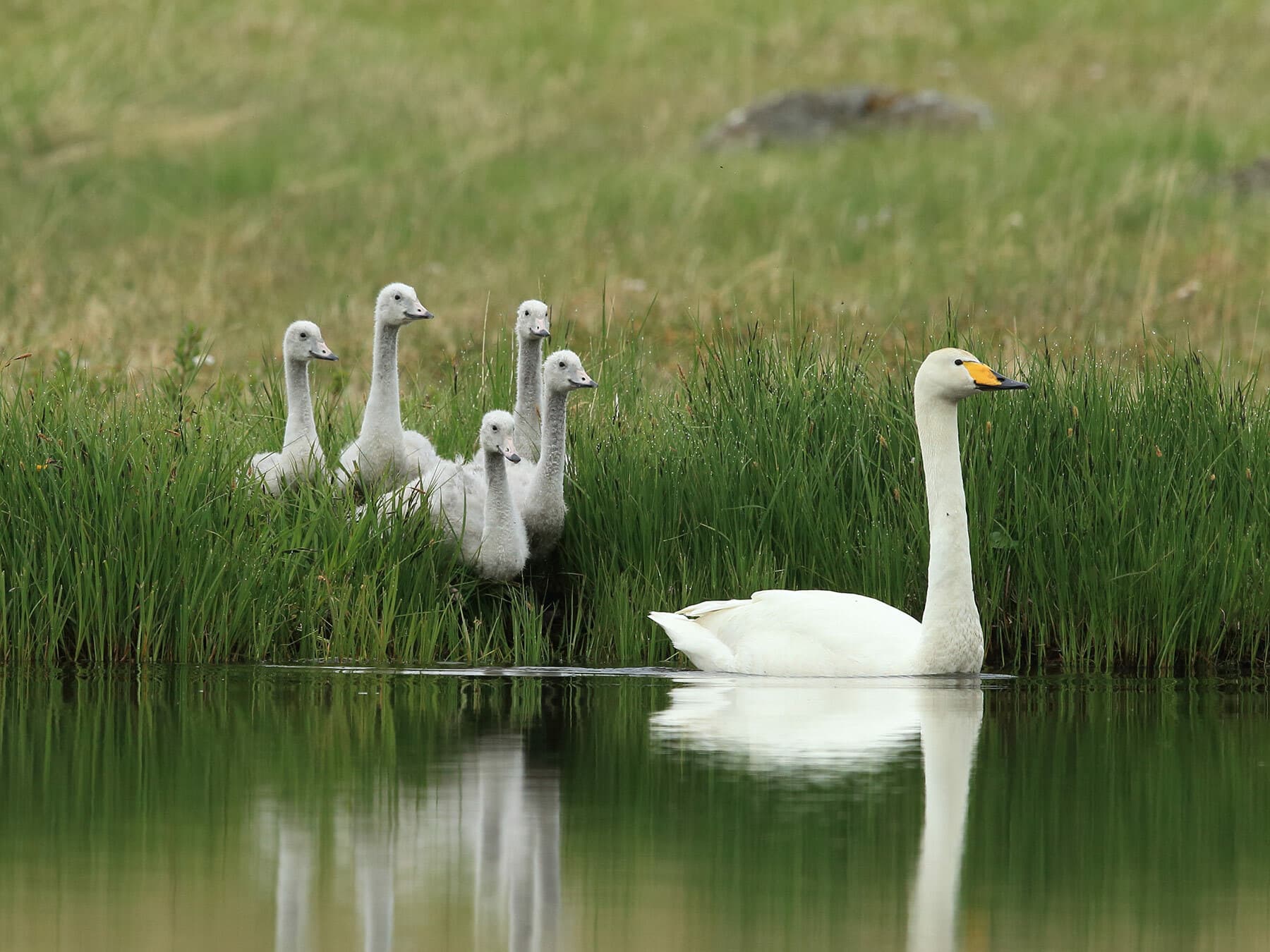
It is very unlikely that you will come across breeding pairs within the United Kingdom as latest information indicates there are less than 30 breeding pairs across the UK and these are mainly in Scotland. Nests are built of reeds, moss and aquatic plants forming large mounds on dry shores or in shallow water. One brood consisting of 4 to 6 white eggs is laid between late April to June and incubated by the female for up to 40 days.
Behaviour
Whooper Swans are highly social birds, often seen in large flocks during migration and winter. They are strong fliers capable of long-distance flights at high altitudes.
These swans are known for their graceful swimming and upending behaviour while foraging in shallow waters.
Lifespan and predators
The average lifespan is nine years although there have been ringed birds reaching over 25 years of age.
Conservation
While currently listed as Least Concern, Whooper Swans face threats from habitat loss, particularly in their breeding grounds. Climate change may affect their migration patterns and breeding success.
Conservation efforts focus on protecting wetland habitats and monitoring population trends.
What does a Whooper Swan look like?
The whooper swan is a very large bird, in fact one of the largest members of the swan family. Adult whooper swans have white plumage with black legs and black webbed feet. They have a long slender neck and long yellow, triangular wedge shaped marking on their bill which extends past their nostrils. The tip of the bill is black in colour. They have a short tail and relatively short legs in comparison with body size. Juveniles are greyish all over with a pink or creamy coloured bill, tipped with black.
Similar birds
Often mistaken for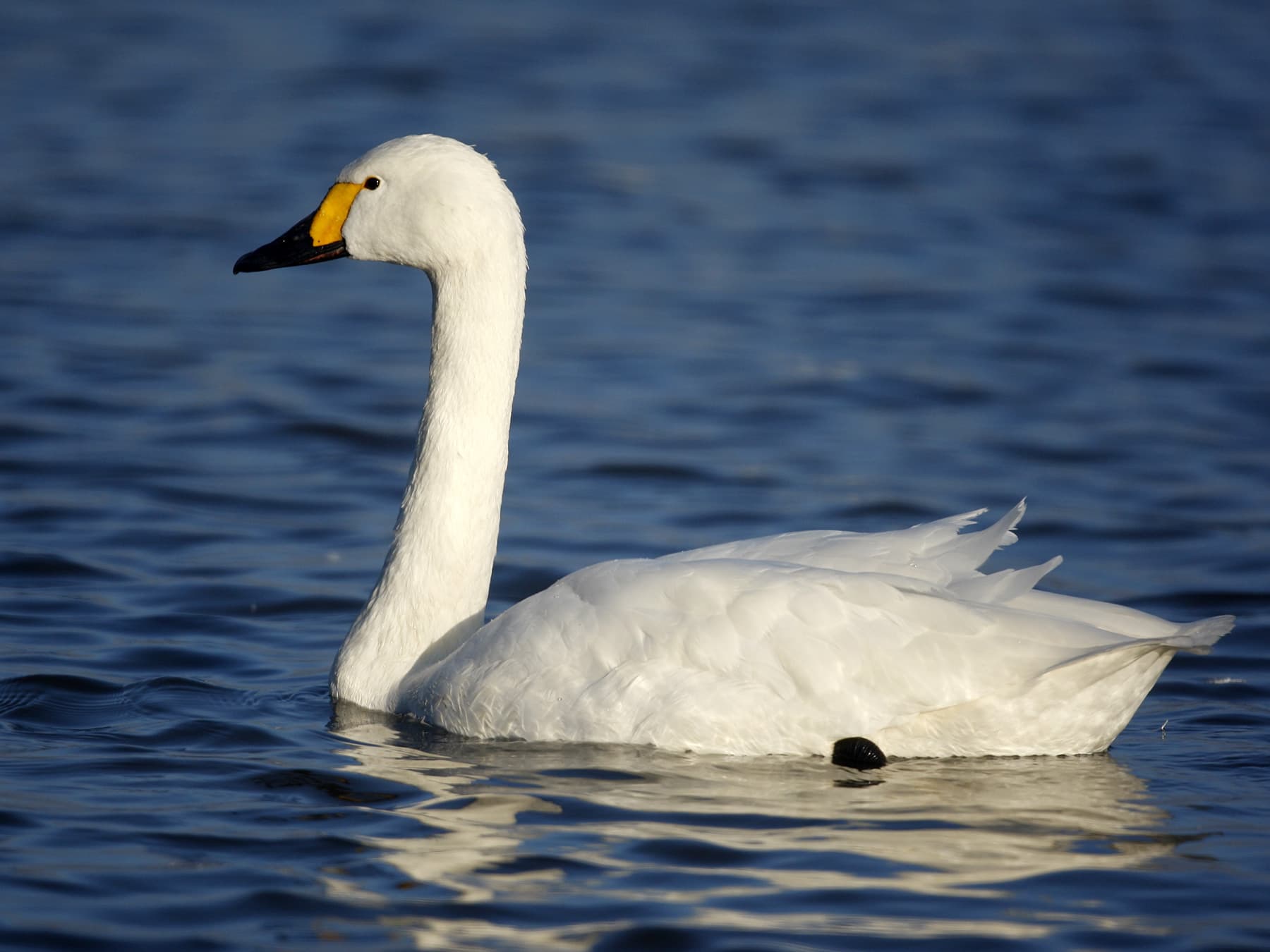
Whooper Swan guides
6 guidesQuick facts
- Length
- 140–165 cm
- Wingspan
- 205–275 cm
- Weight
- 7400–14000 g
- Lifespan
- 9 years · oldest recorded 26.7 years
- Family
- Ducks, Geese & Swans
- Migration
- Long-distance Migrant
- Global status (IUCN)
- Least Concern
- World population
- 180,000 - 220,000 mature individuals
- Population trend
- Unknown
- Also called
- Wild Swan
- Scientific name
- Cygnus cygnus
Sources
3- 1BirdLife International. 2016. Cygnus cygnus. The IUCN Red List of Threatened Species 2016: e.T22679856A85965262. Source (opens in a new tab)
- 2Wetlands International (2015)
- 3Fransson et al., EURING list of longevity records for European birds (2010) Source (opens in a new tab)

Checked by
Nathan Cope, founder and editor
Nathan founded Birdfact and leads its writers and contributors in the UK, the US and Canada. He has watched and studied birds for more than ten years, and checks every article and species guide before it’s published.