


Merlin
Pigeon Hawk · Falco columbarius
By the Birdfact teamChecked by Nathan Cope
On this page14 sections
How to recognise it
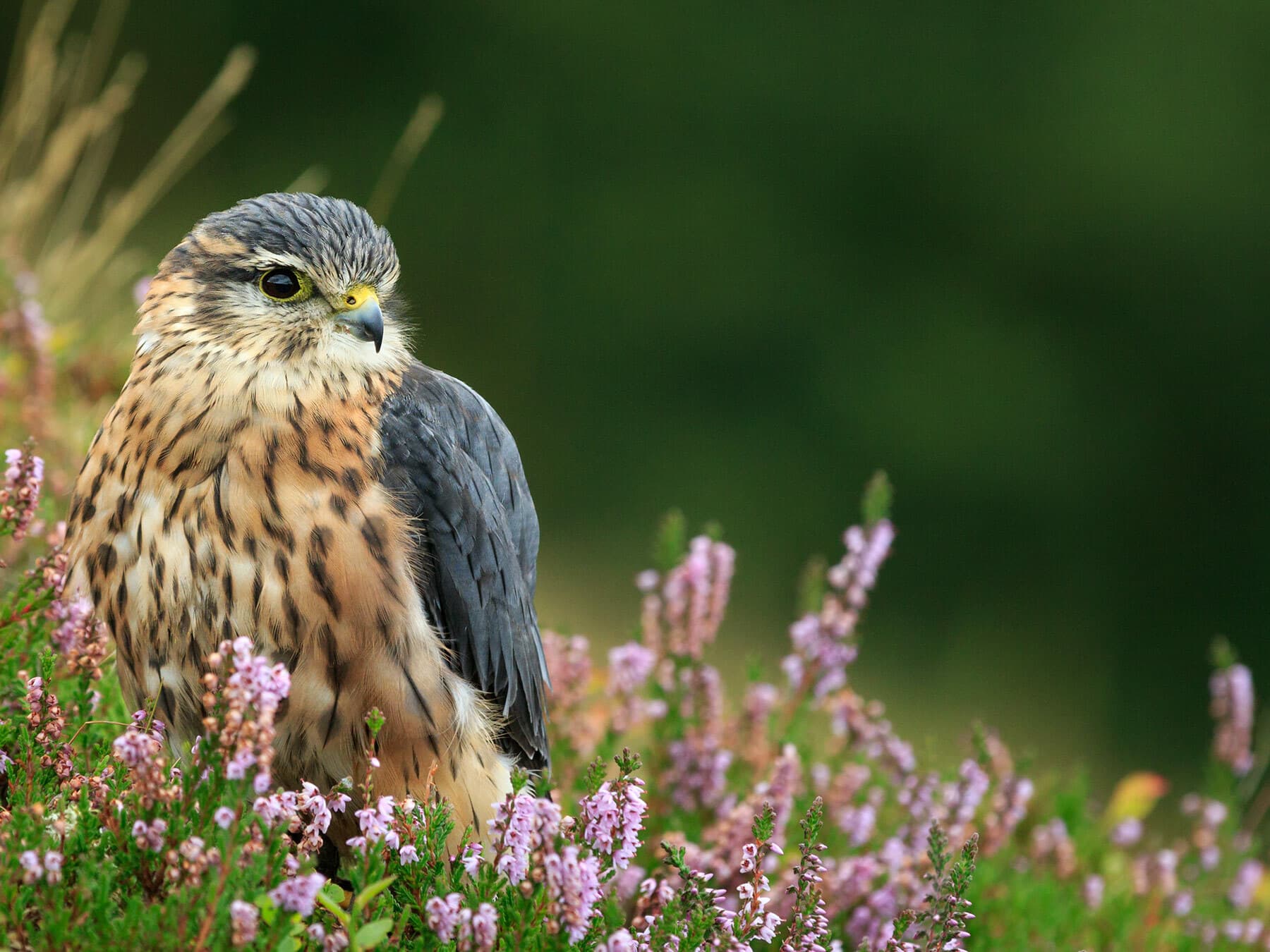
The Merlin is a compact falcon with a stocky build and pointed wings. Males display blue-grey upperparts, while females are brown above. Both sexes have streaked underparts, with males showing rufous barring and females having heavier brown streaking.
Juveniles resemble adult females but have a brown tail with narrow pale bands. All Merlins have a distinctive dark moustache mark and yellow legs, contrasting with their dark plumage.
Its size
Adults- Length
- 24–33 cm
- Wingspan
- 50–62 cm
- Weight
- 125–300 g
Its song and calls
Both birds vocalise with the female’s call being somewhat deeper than the male and with more nasal overtones similar to a repeated, ‘kee – kee – kee’. The male issues a shorter and more staccato ‘ki – ki – ki’.
- Call0:00 / 0:33
Recorded in St, United States · May 2012
When and where to see it
OctoberPeak season
Most recorded in October
- 1. Pembrokeshire1.3%
- 2. Antrim0.95%
- 3. Orkney Islands0.91%
- 4. Wexford0.71%
- 5. Eilean Siar0.68%
Each dot is a county, state or province: the bigger and darker, the larger the bird’s share of that place’s bird records that month. Grey dots: no regular records. The ringed point is the centre of the bird’s records this month; the arrow shows how it moved since last month, and the dashed loop its path through the year. “Arrivals” colours places where it becomes regular this month (orange) or is in its last regular month (grey). GBIF eBird Observation Dataset, 2019–2024. Map data: Natural Earth, US Census Bureau; place centres © OpenStreetMap contributors.
In your area
See when the Merlin is recorded in your county, state or province.
How often the Merlin turns up in the UK, Ireland, the United States and Canada through the year, from birdwatchers' records.
United Kingdom
Winter visitor · all year · most records in October
Ireland
Winter visitor · all year · most records in October
United States
Winter visitor · all year · most records in October
Canada
Resident · all year · most records in September
Show as a table
| Month | United Kingdom | Ireland | United States | Canada |
|---|---|---|---|---|
| January | 0.056% (regular) | 0.087% (regular) | 0.12% (regular) | 0.22% (regular) |
| February | 0.046% (regular) | 0.10% (regular) | 0.090% (regular) | 0.18% (regular) |
| March | 0.032% (regular) | 0.074% (regular) | 0.068% (regular) | 0.25% (regular) |
| April | 0.025% (regular) | 0.040% (regular) | 0.061% (regular) | 0.34% (regular) |
| May | 0.010% (regular) | 0.027% (regular) | 0.032% (regular) | 0.20% (regular) |
| June | 0.007% (regular) | 0.017% (regular) | 0.019% (regular) | 0.16% (regular) |
| July | 0.013% (regular) | 0.023% (regular) | 0.034% (regular) | 0.31% (regular) |
| August | 0.033% (regular) | 0.041% (regular) | 0.062% (regular) | 0.50% (regular) |
| September | 0.061% (regular) | 0.066% (regular) | 0.17% (regular) | 0.62% (regular) |
| October | 0.12% (regular) | 0.20% (regular) | 0.22% (regular) | 0.42% (regular) |
| November | 0.073% (regular) | 0.15% (regular) | 0.15% (regular) | 0.24% (regular) |
| December | 0.055% (regular) | 0.13% (regular) | 0.14% (regular) | 0.22% (regular) |
Recorded regularly in
Worldwide: recorded regularly in 101 countries
Countries where it was recorded in at least 3 of the 6 years 2019–2024. Linked countries have their own bird list.
Europe (39)
Africa (1)
Asia (17)
- Azerbaijan
- China
- Cyprus
- Georgia
- India
- Iran
- Israel
- Japan
- Jordan
- Kazakhstan
- Kyrgyzstan
- Mongolia
- Palestinian Territories
- Saudi Arabia
- South Korea
- Turkey
- Uzbekistan
North America (38)
- Anguilla
- Antigua & Barbuda
- Aruba
- Bahamas
- Barbados
- Belize
- Bermuda
- Canada
- Caribbean Netherlands
- Cayman Islands
- Costa Rica
- Cuba
- Curaçao
- Dominica
- Dominican Republic
- El Salvador
- Grenada
- Guadeloupe
- Guatemala
- Haiti
- Honduras
- Jamaica
- Martinique
- Mexico
- Montserrat
- Nicaragua
- Panama
- Puerto Rico
- Sint Maarten
- St Kitts & Nevis
- St Lucia
- St Martin
- St Pierre & Miquelon
- St Vincent & the Grenadines
- Trinidad & Tobago
- Turks & Caicos Islands
- United States
- US Virgin Islands
Data: EOD – eBird Observation Dataset (Cornell Lab of Ornithology), accessed via GBIF.org, CC BY 4.0. Records from 2019–2024, aggregated and filtered by Birdfact. How these lists are made
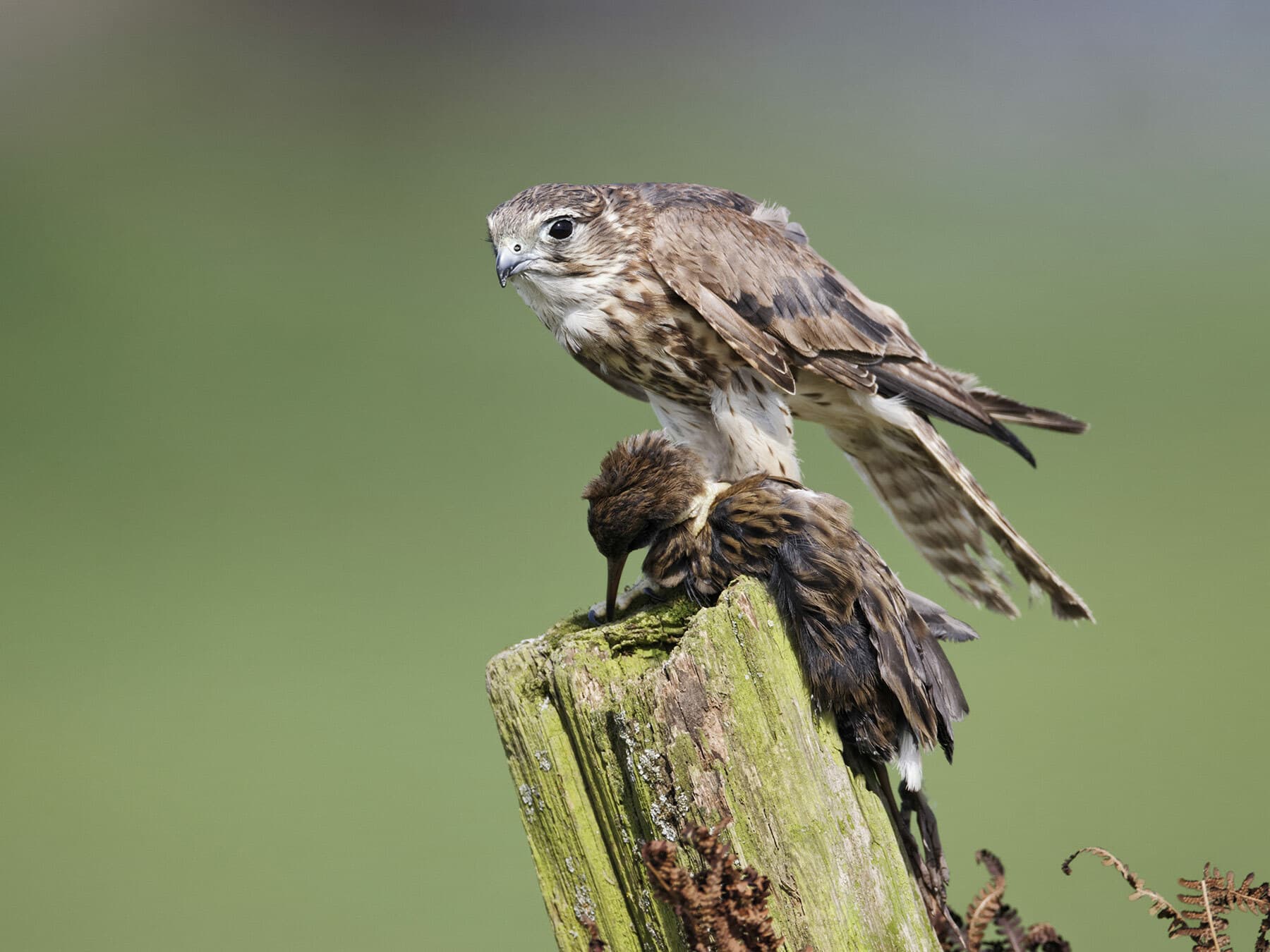
During the breeding season and throughout the summer merlins tend to restrict themselves to the open country of higher ground or uplands and moorlands in Scotland, Wales and northern England. During this period if ground nesting they are very elusive and difficult to spot. Merlins often perch overlooking their hunting grounds and are more likely to be seen starting their attack from a perched position as opposed to chancing upon a victim during normal flight. In the winter they move down to both coastal and lowland areas although seldom straying more than a hundred miles from their breeding grounds.
Signs and Spotting tips
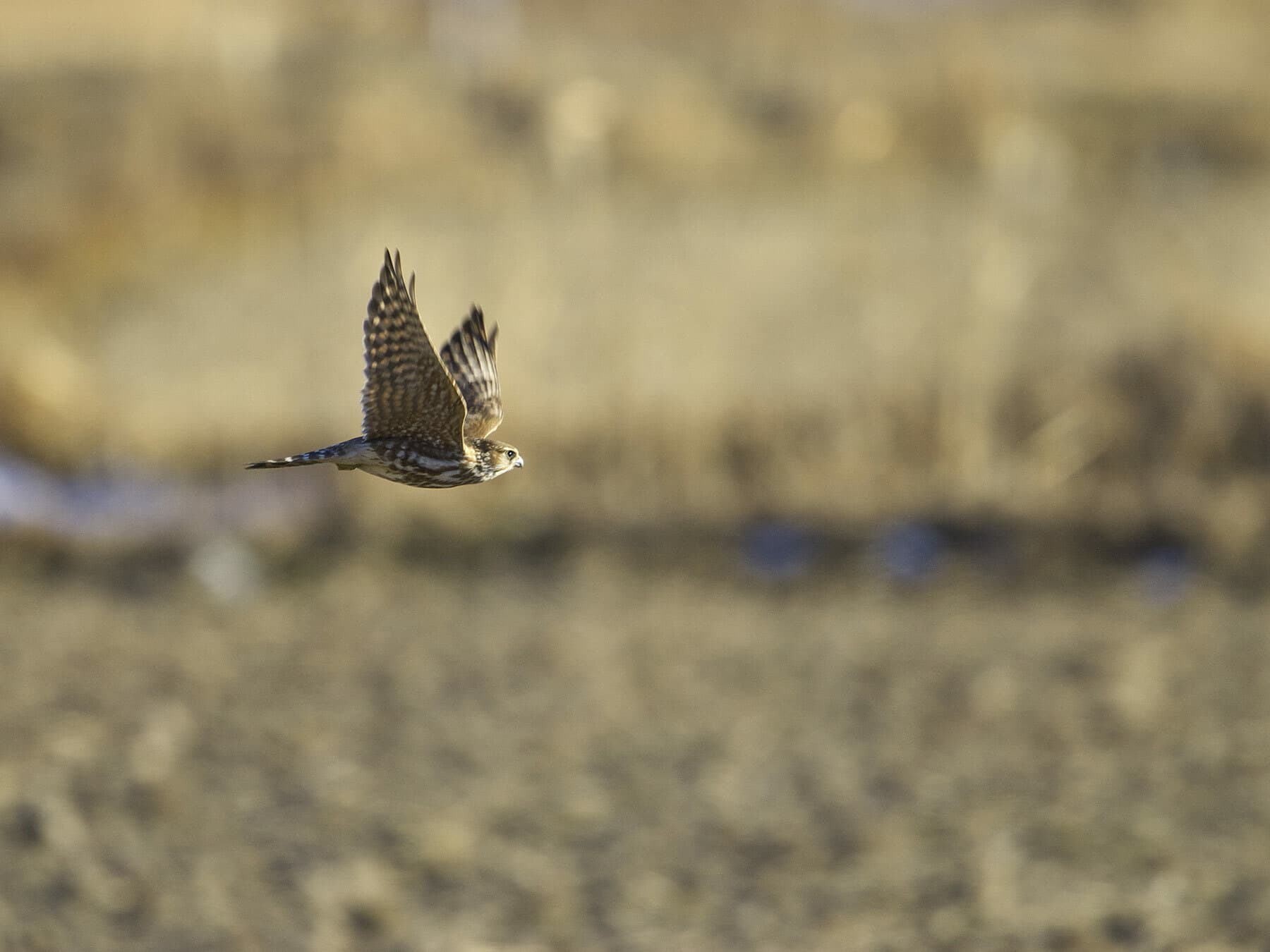
Small, compact and fast flying, the merlin has an average straight-line speed of around 50 kilometres per hour. It rarely dives in order to catch its prey preferring to travel very low to the ground using constant wingbeats with few glides but is also adept at fast turns and climbs.
What it eats
Catching its prey on the wing the merlin feeds mainly on small birds but will take flying insects.
Nesting and breeding
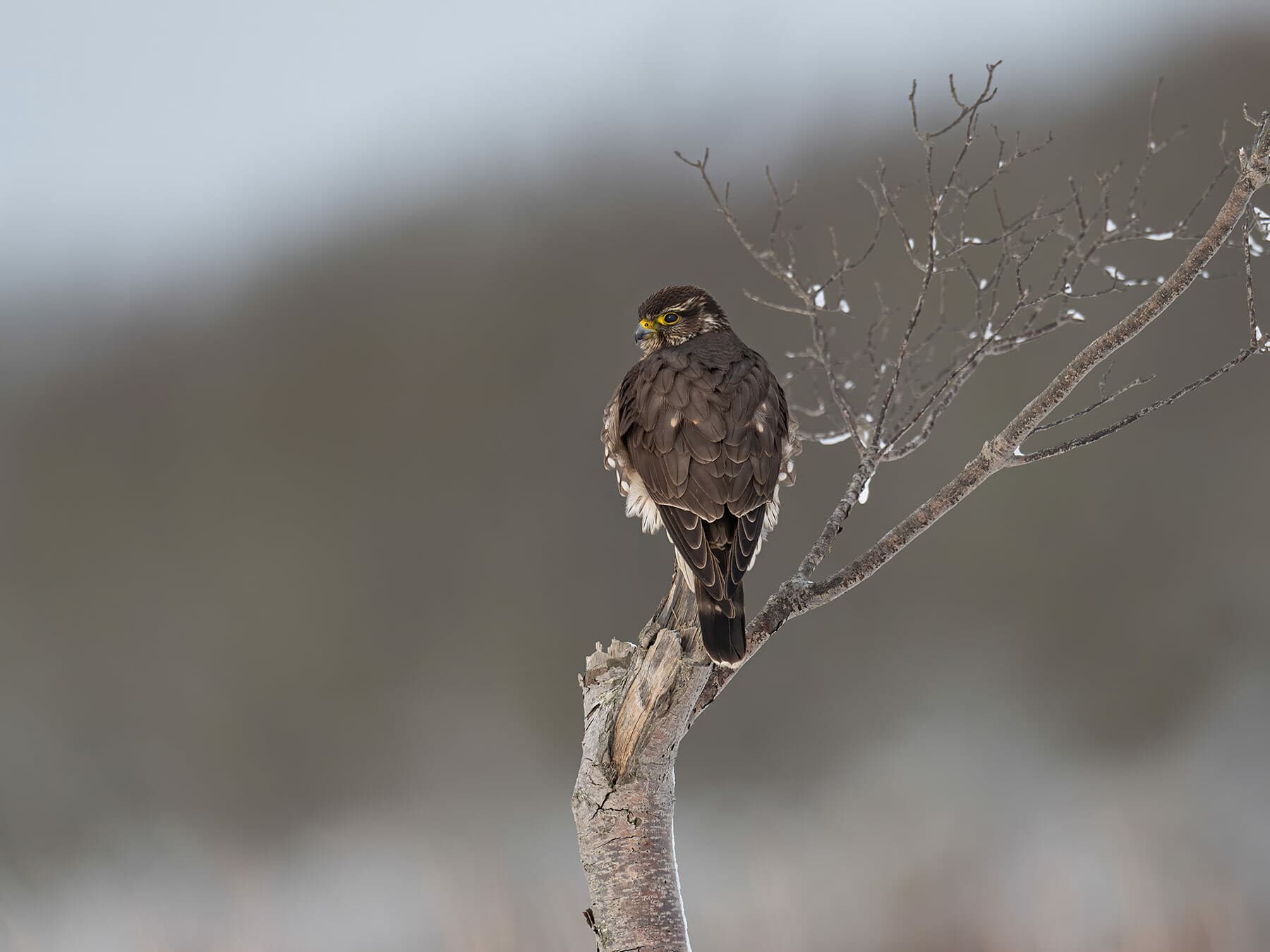
Nests are usually ground scrapes in heather although old disused crows’ nests in trees are occasionally utilised instead. One brood is produced annually between April and June and consists of 3 – 6 smooth, pale buff coloured eggs with brown markings. Incubation lasts from twenty eight to thirty two days with fledging taking place between twenty five to thirty two days after hatching.
Behaviour
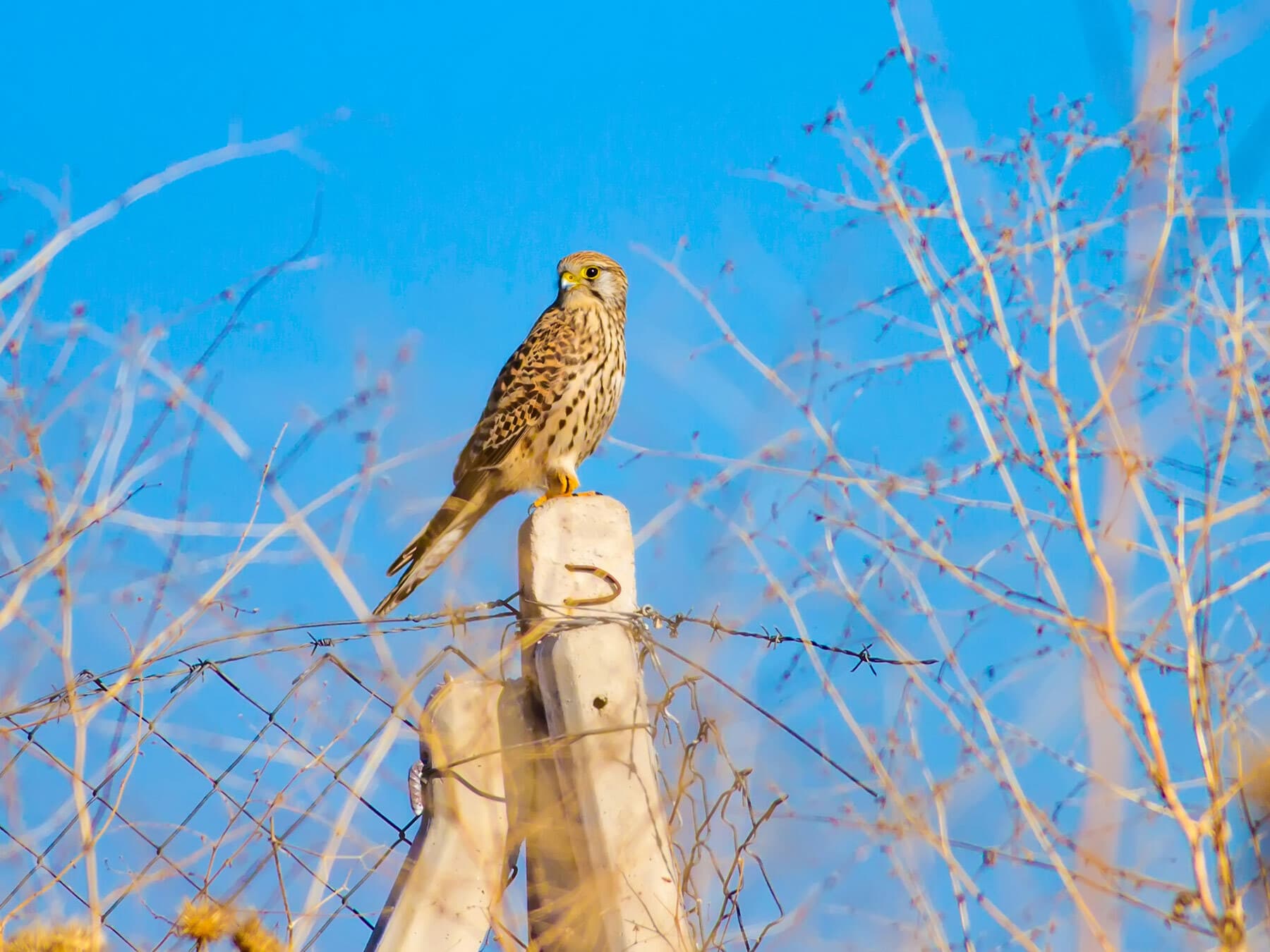
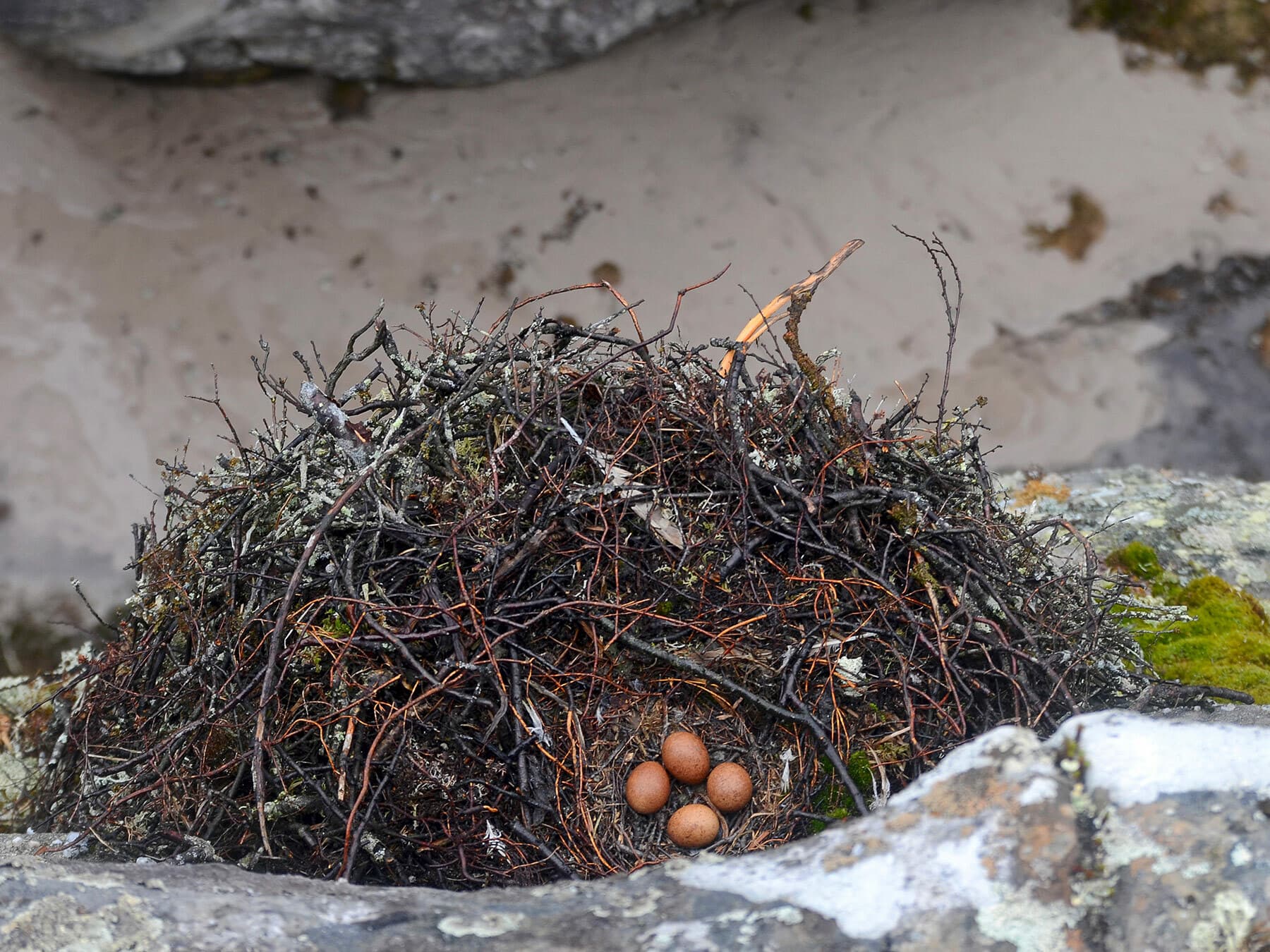
Merlins are agile and swift hunters, often seen flying low over open areas in pursuit of small birds. They frequently perch on exposed branches or posts, scanning for prey.
During the breeding season, Merlins become territorial and may perform impressive aerial displays to defend their nesting areas.
Lifespan and predators
The average life expectancy for merlins is a maximum of ten years.
Conservation
While the Merlin is currently listed as Least Concern, it faces threats from habitat loss and pesticide use.
Conservation efforts focus on preserving breeding habitats and reducing the use of harmful chemicals in their hunting grounds. Monitoring programs track population trends across their range.
What does a Merlin look like?
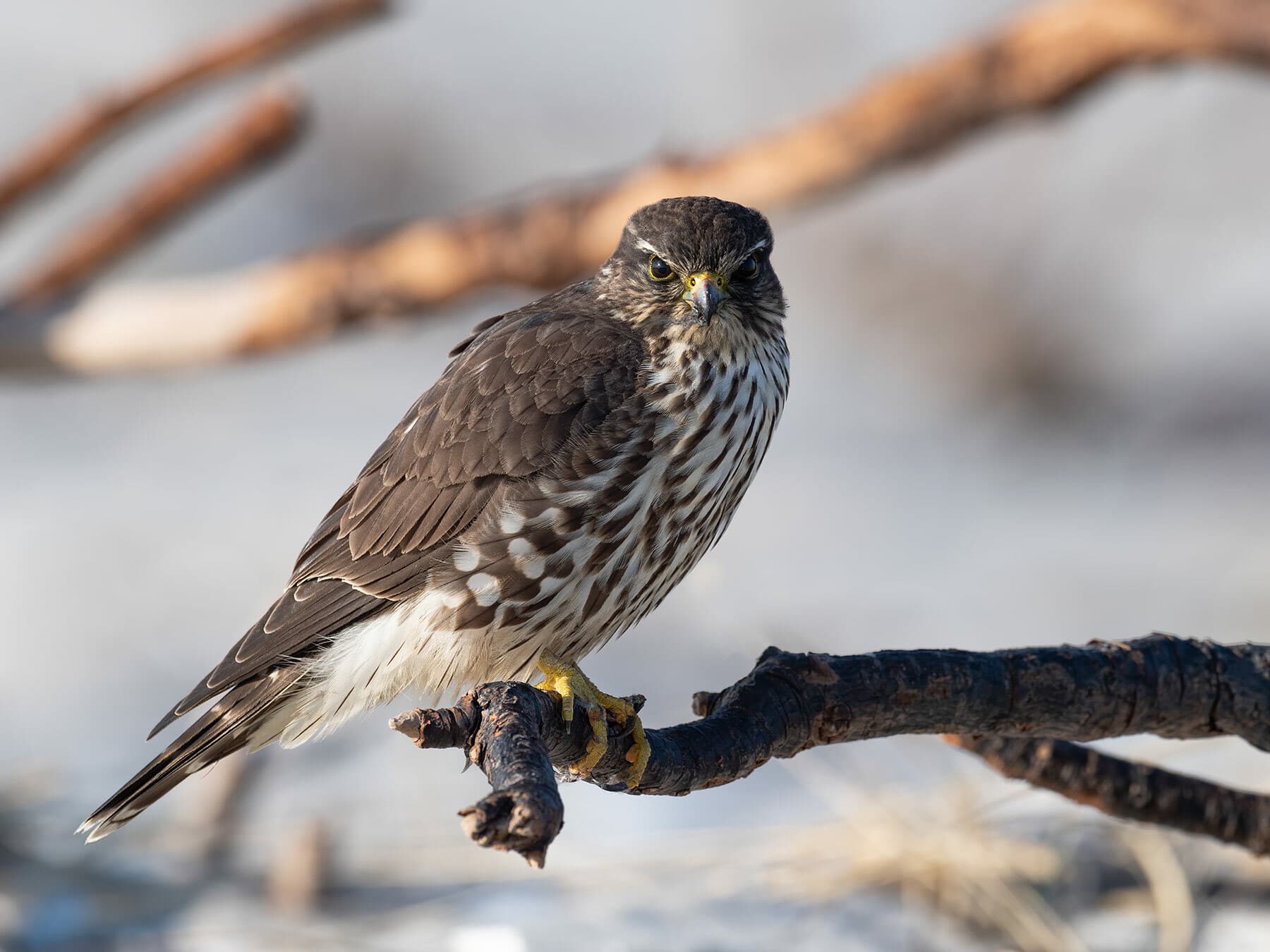
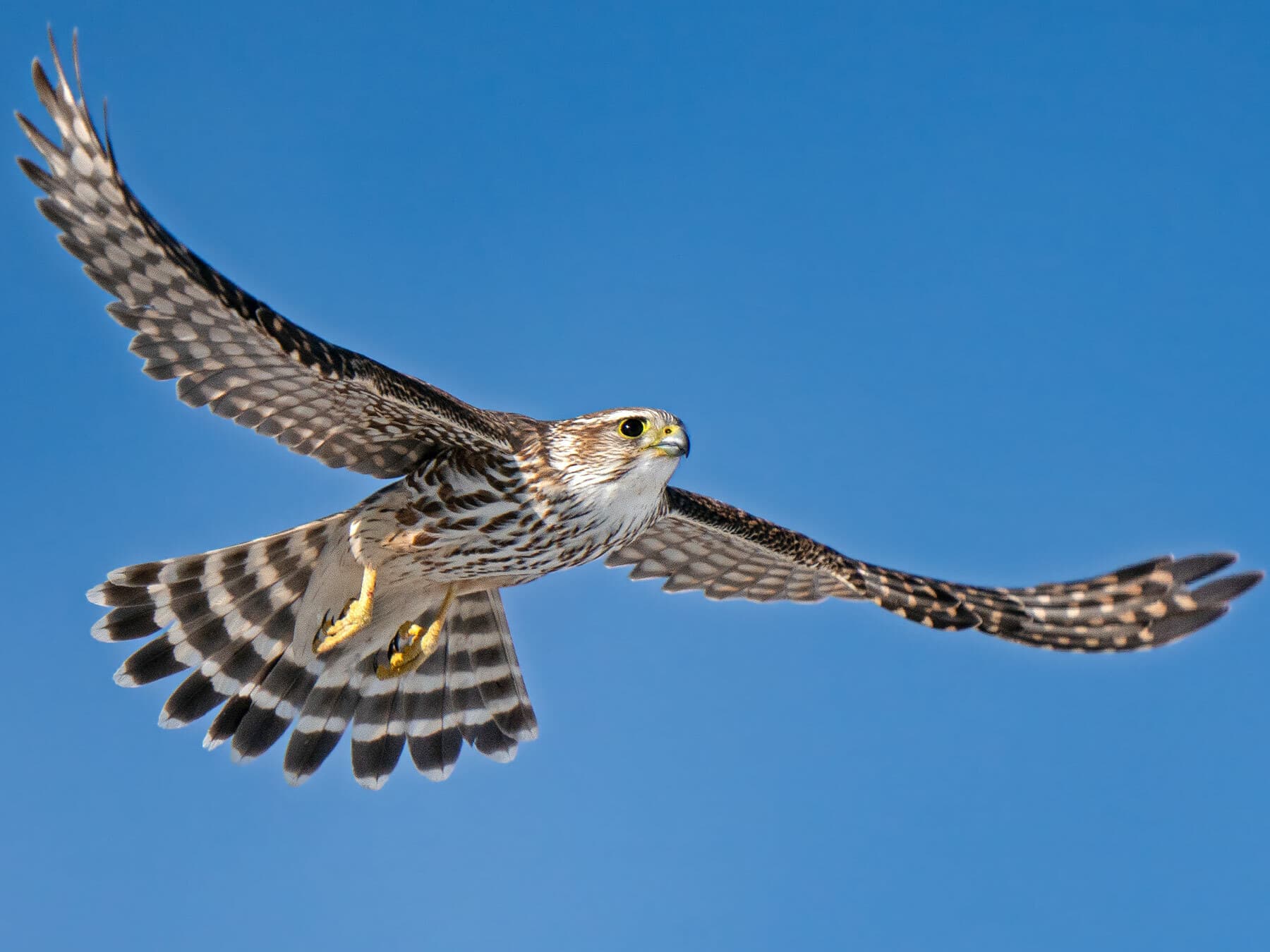
Adult male merlins have a slate grey head and upperparts, including the tail, which is banded near its end by a broad black strip. The tip of the tail is white. The body is small but proportionate and the head is also small and almost square. The neck is buff as are the cheeks and there is a white striped area above the eye. The throat is also white. The male’s underparts are a buff orange with black streaks and the undertail coverts are a creamy white. The sides of the breast and the leg feathers have a pale rusty brown hue. The eyes are dark brown and the bill is grey and hooked with a dark tip. The area on the bill from the nostrils to the base also known as the cere, is yellow and the legs are pale orange with black talons. Adult female merlins are up to 30% larger than the adult male and overall are much darker in colour being dark brown above with cream underparts, heavily streaked with brown. The upper tail is marked with up to four or five creamy bands and there are pale edges to the flight feathers. Facial markings, eye colour and bill are similar to the male. The female’s legs are yellow. Juveniles resemble the female in plumage and patternation although often slightly darker overall.
Similar birds
Often mistaken for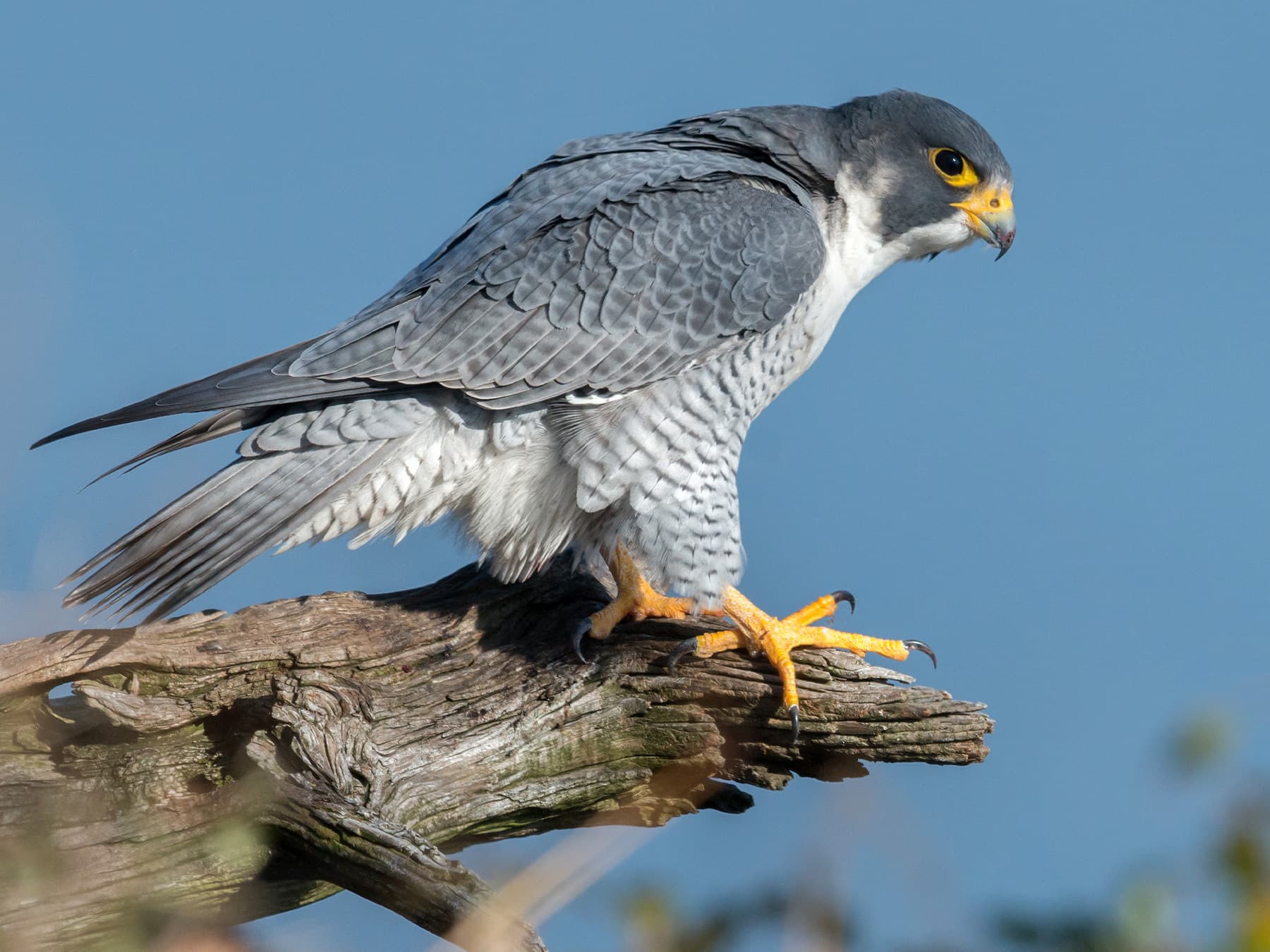
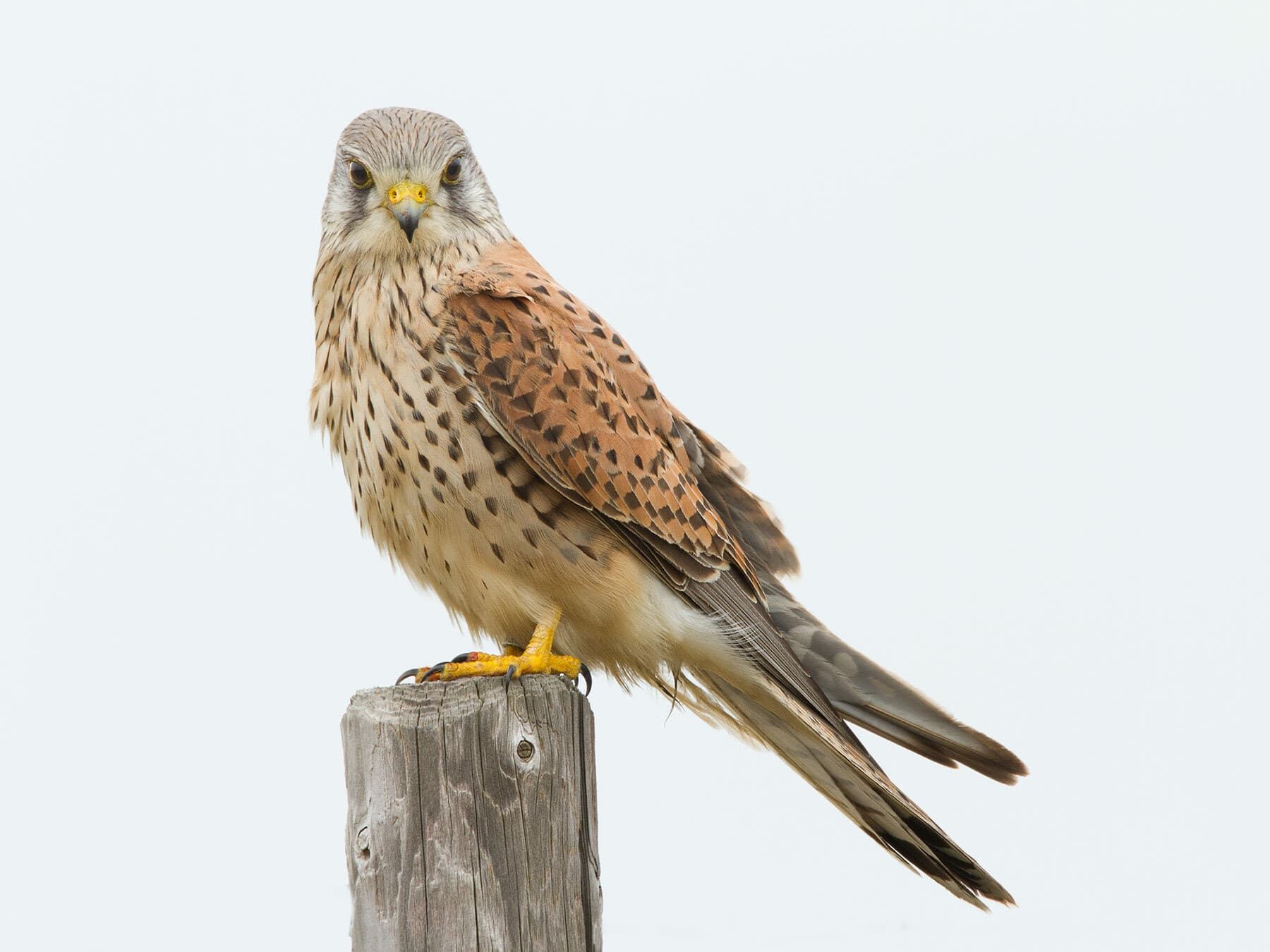
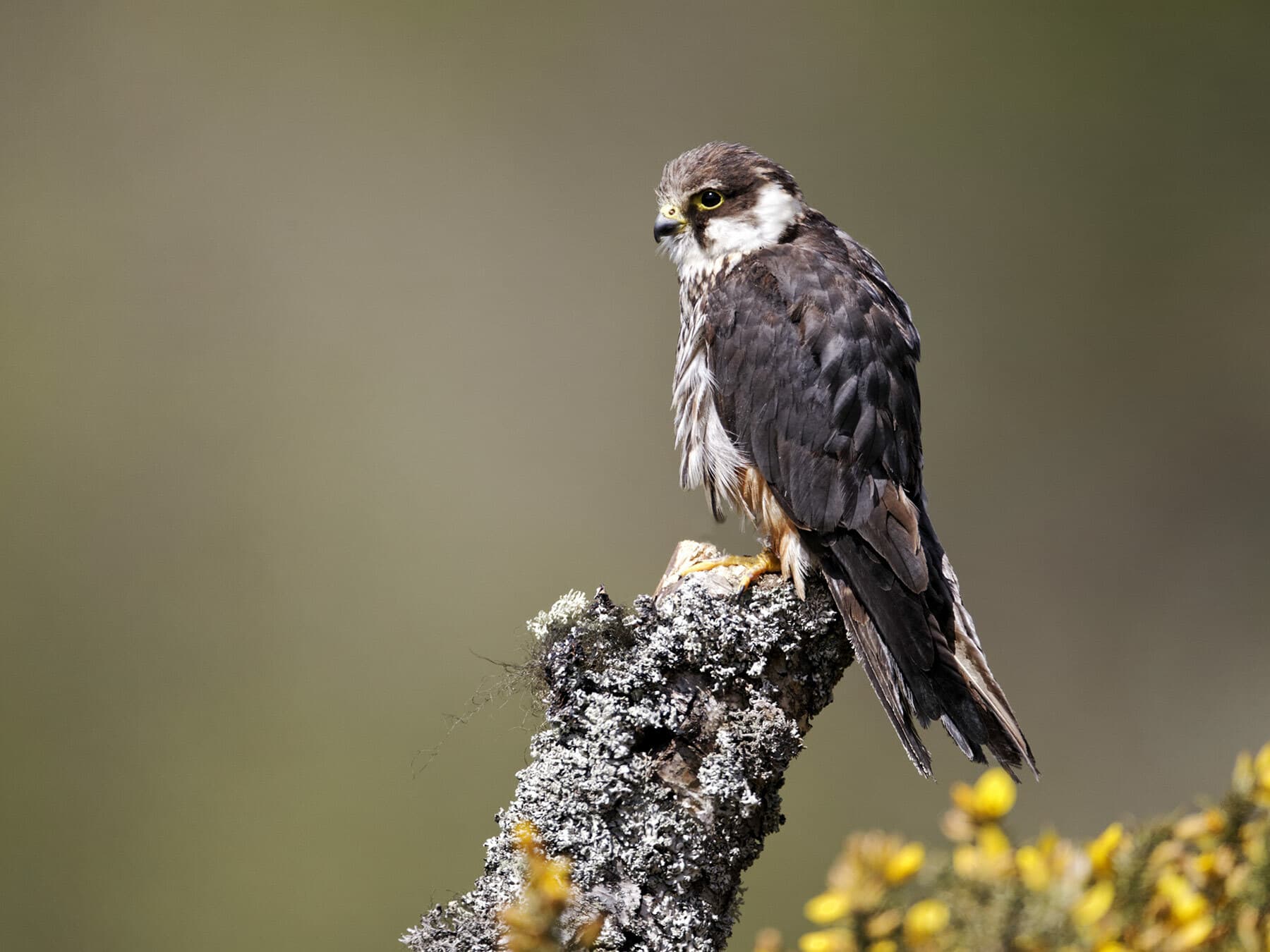
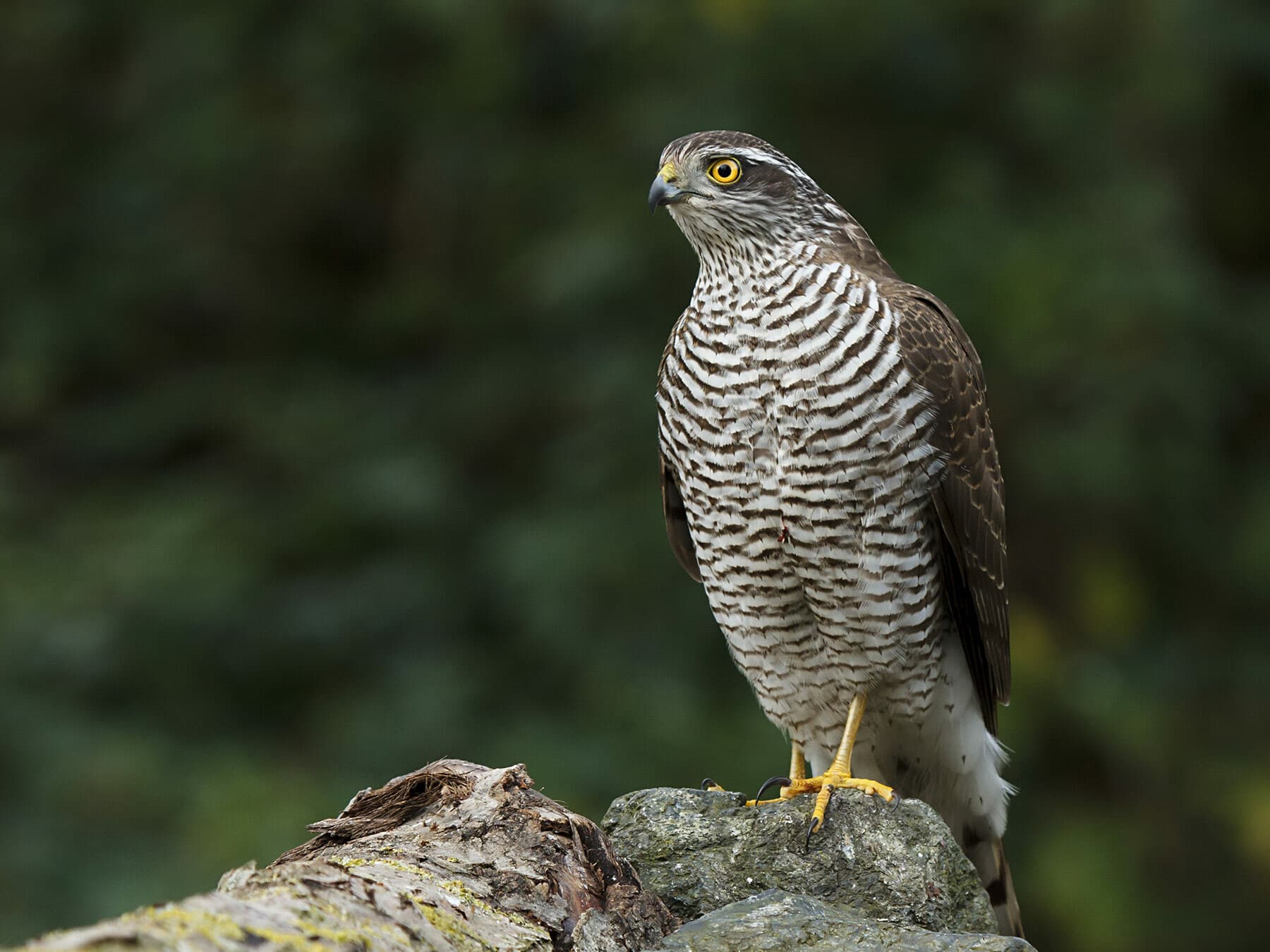
Merlin guides
1 guidesQuick facts
- Length
- 24–33 cm
- Wingspan
- 50–62 cm
- Weight
- 125–300 g
- Lifespan
- 8–11 years
- Family
- Falcons
- Migration
- Partial migrant
- Global status (IUCN)
- Least Concern
- World population
- 250,000 - 3,200,000 mature individuals
- Population trend
- Overall population stable, some regional fluctuations due to habitat loss
- Also called
- Pigeon Hawk
- Scientific name
- Falco columbarius
Sources
3- 1BirdLife International. 2021. Falco columbarius. The IUCN Red List of Threatened Species 2021: e.T22696453A154505853. Source (opens in a new tab)
- 2BirdLife International. 2021. Falco columbarius. The IUCN Red List of Threatened Species 2021: e.T22696453A154505853. Source (opens in a new tab)
- 3BirdLife International. 2021. Falco columbarius. The IUCN Red List of Threatened Species 2021: e.T22696453A154505853. Source (opens in a new tab)

Checked by
Nathan Cope, founder and editor
Nathan founded Birdfact and leads its writers and contributors in the UK, the US and Canada. He has watched and studied birds for more than ten years, and checks every article and species guide before it’s published.