


Peregrine Falcon
Duck Hawk · Falco peregrinus
By the Birdfact teamChecked by Nathan Cope
On this page15 sections
How to recognise it
What do Peregrine Falcons look like?
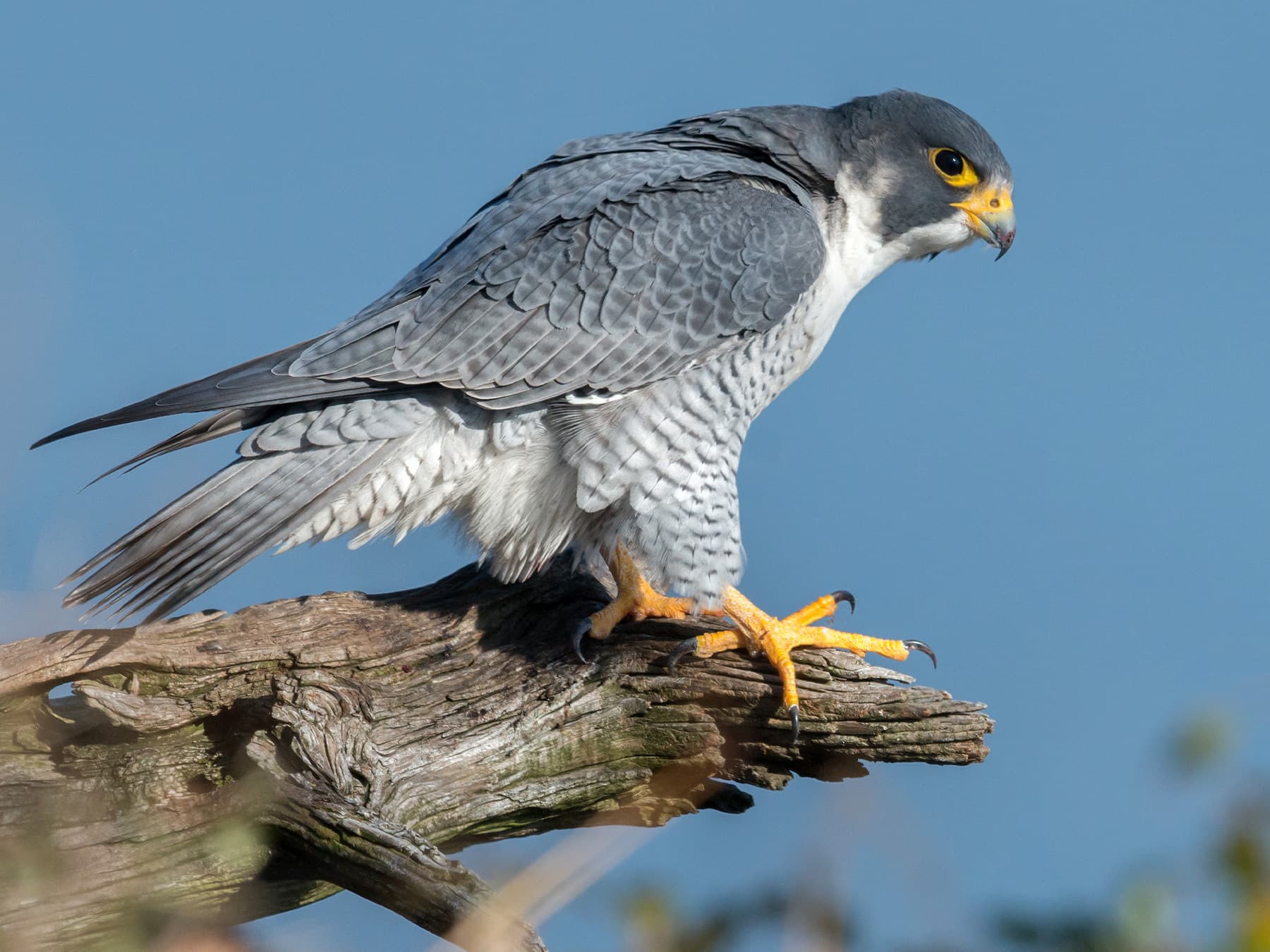
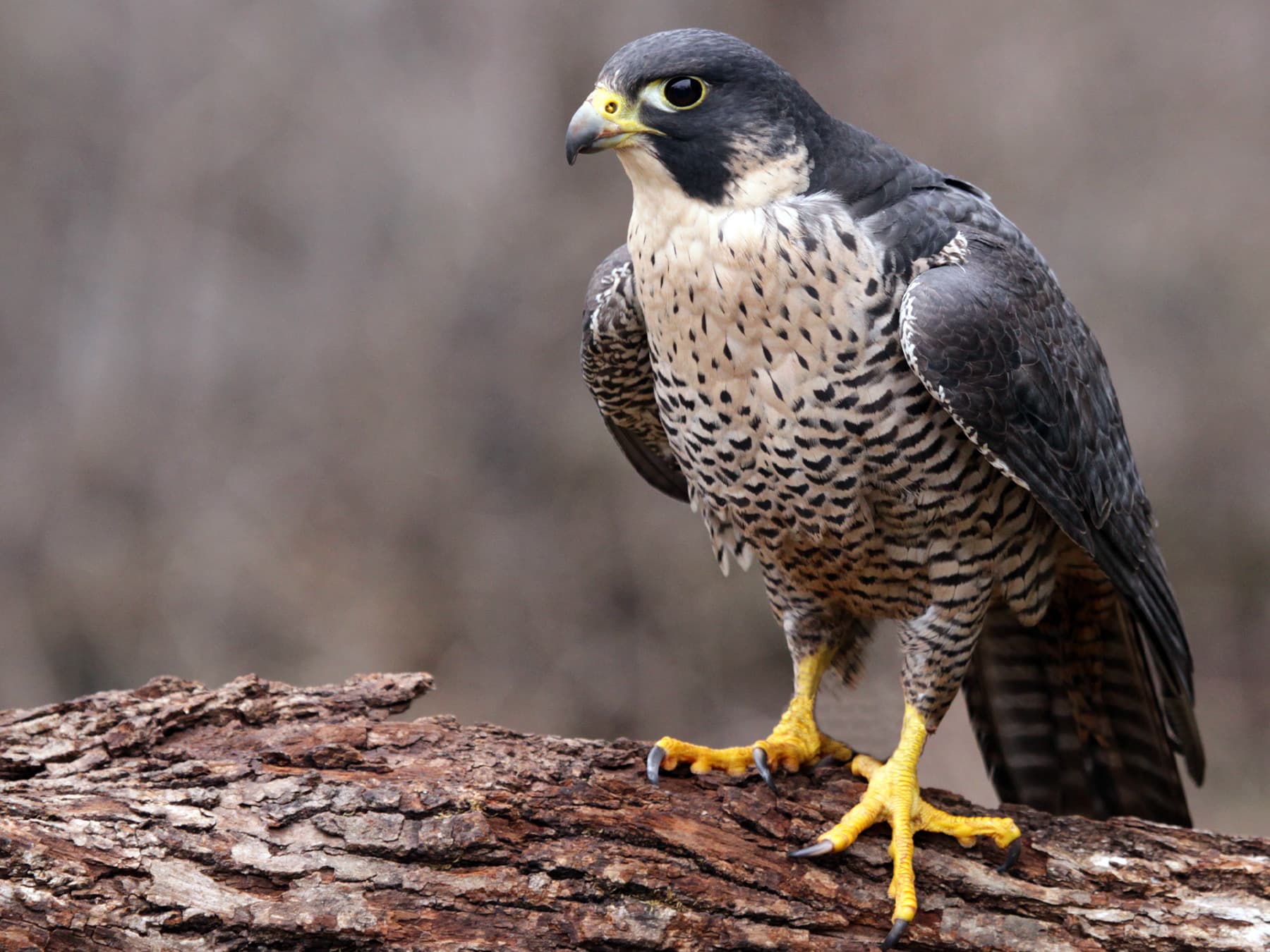
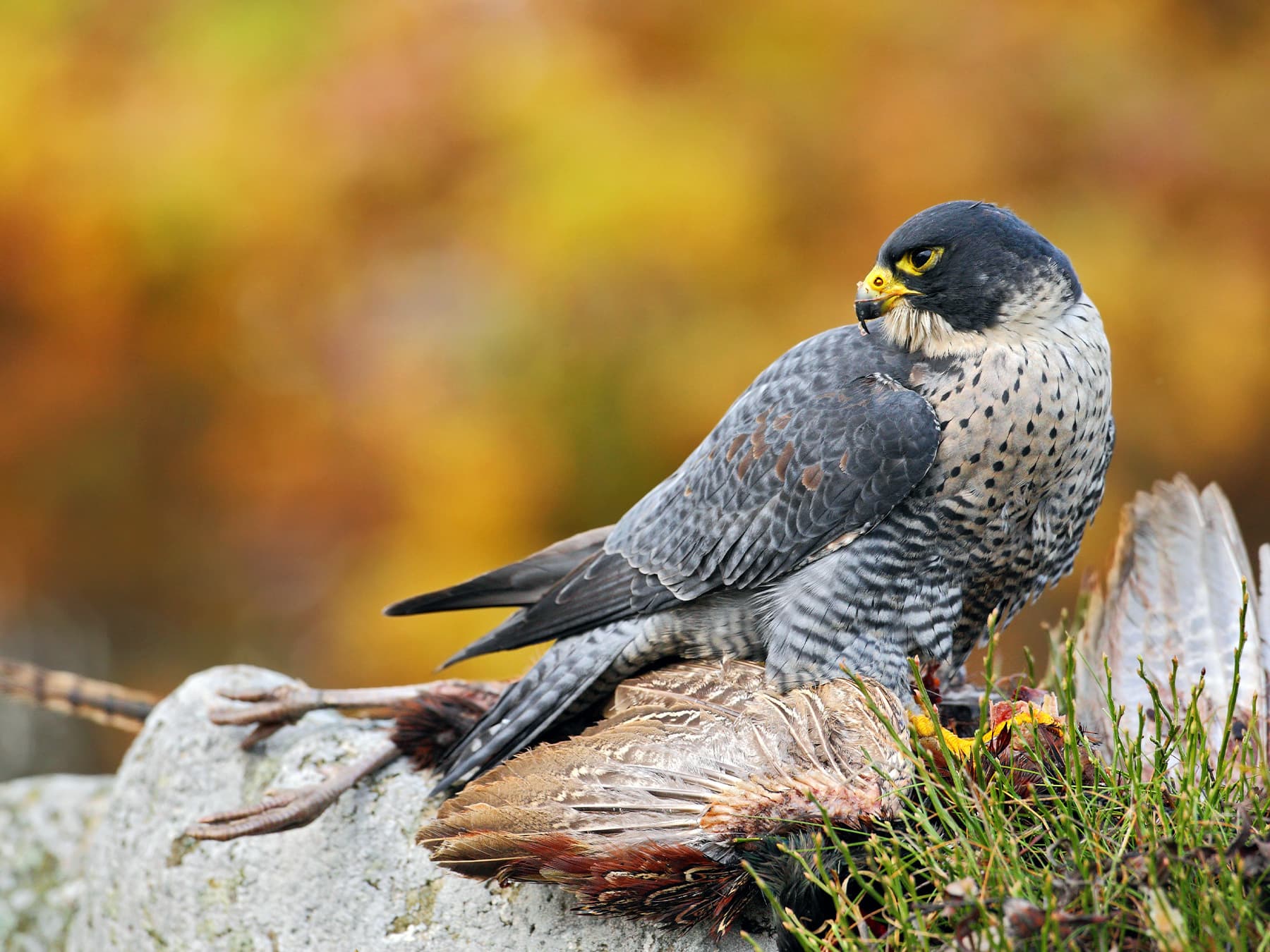
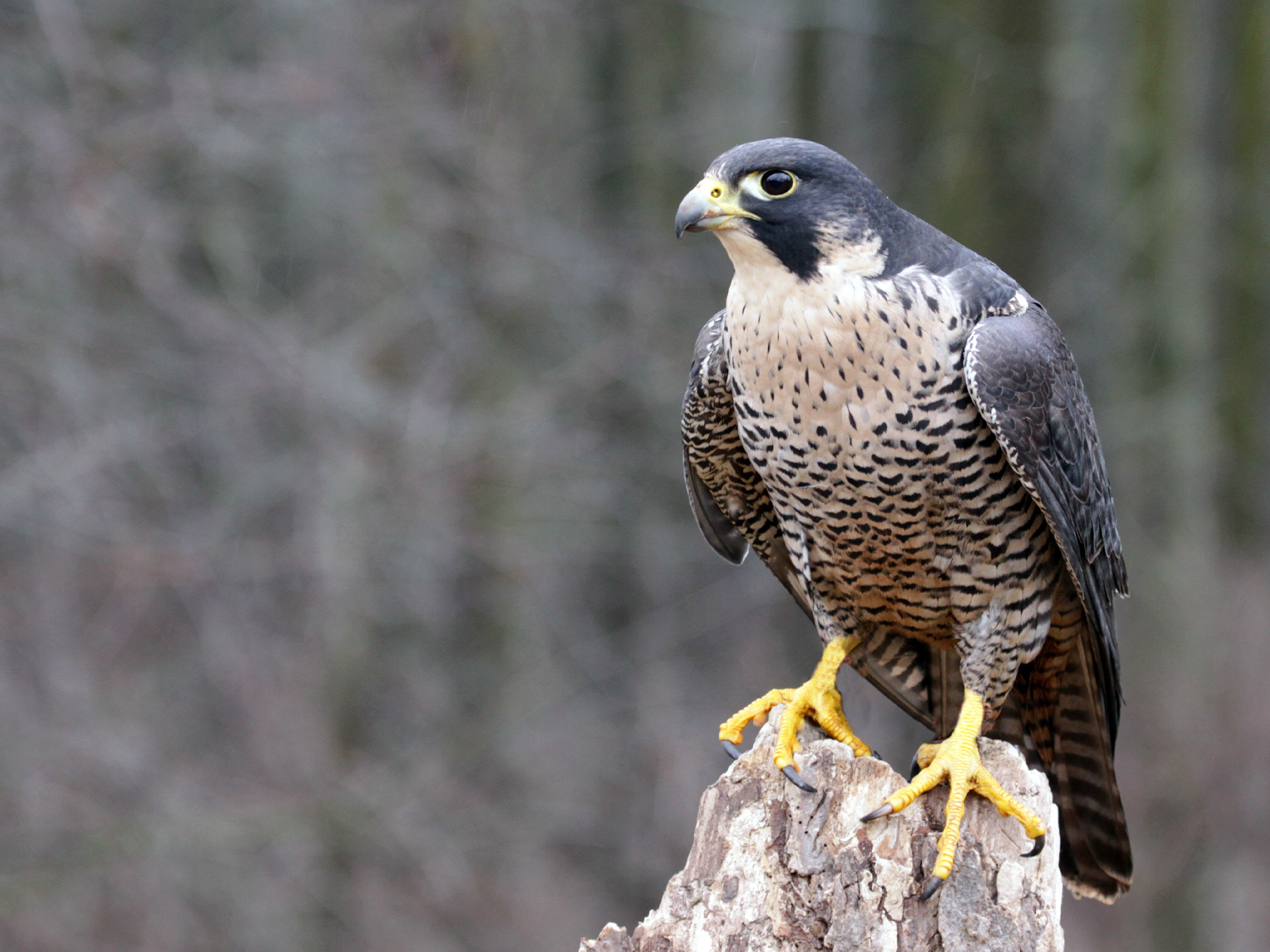
Peregrine Falcons are sleek but powerfully built birds of prey with dark slate-gray upperparts and paler underparts. Their belly, upper legs, and undertail are whitish with closely spaced black barring, and their breast is white with fine black speckles.
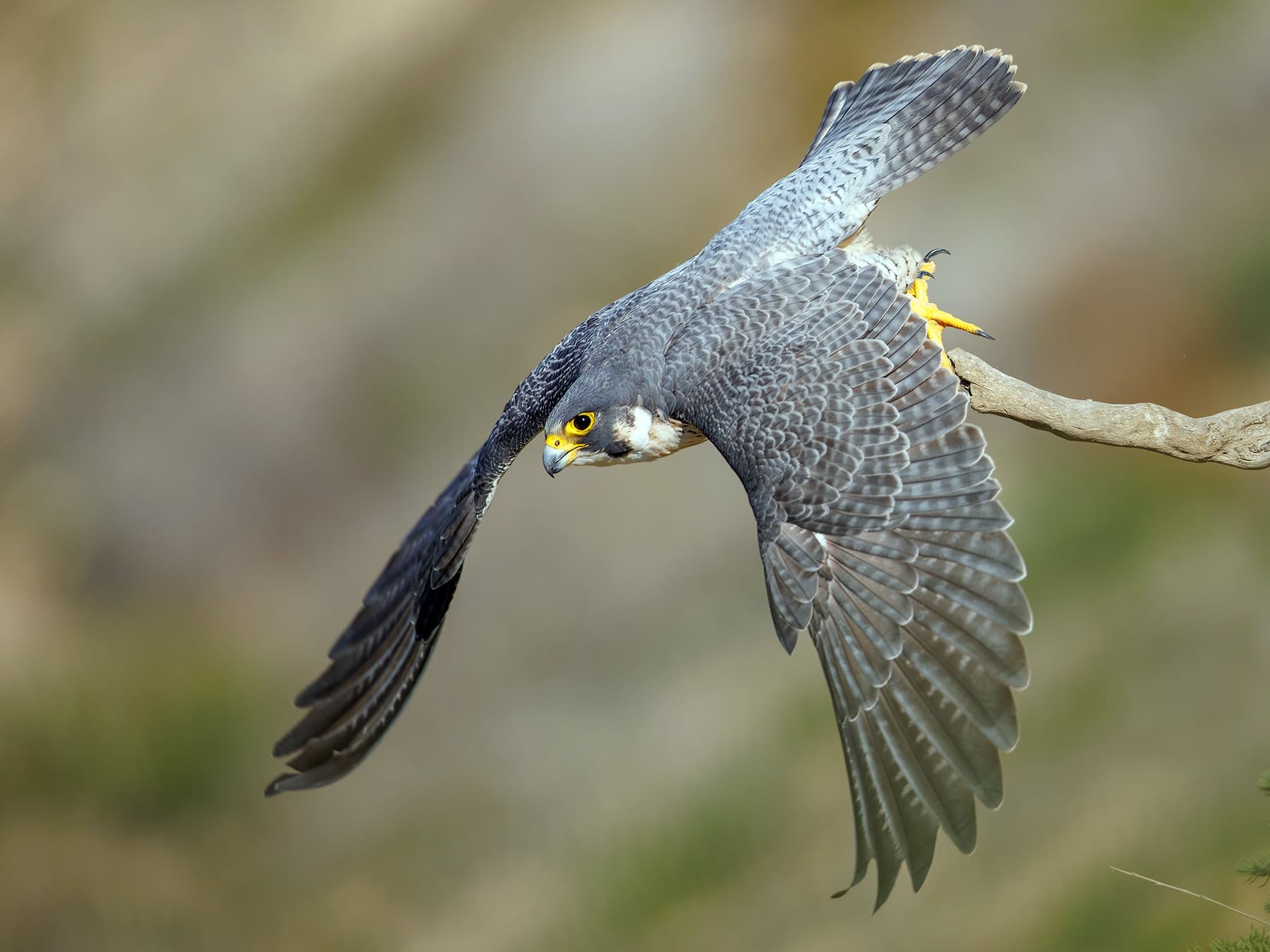
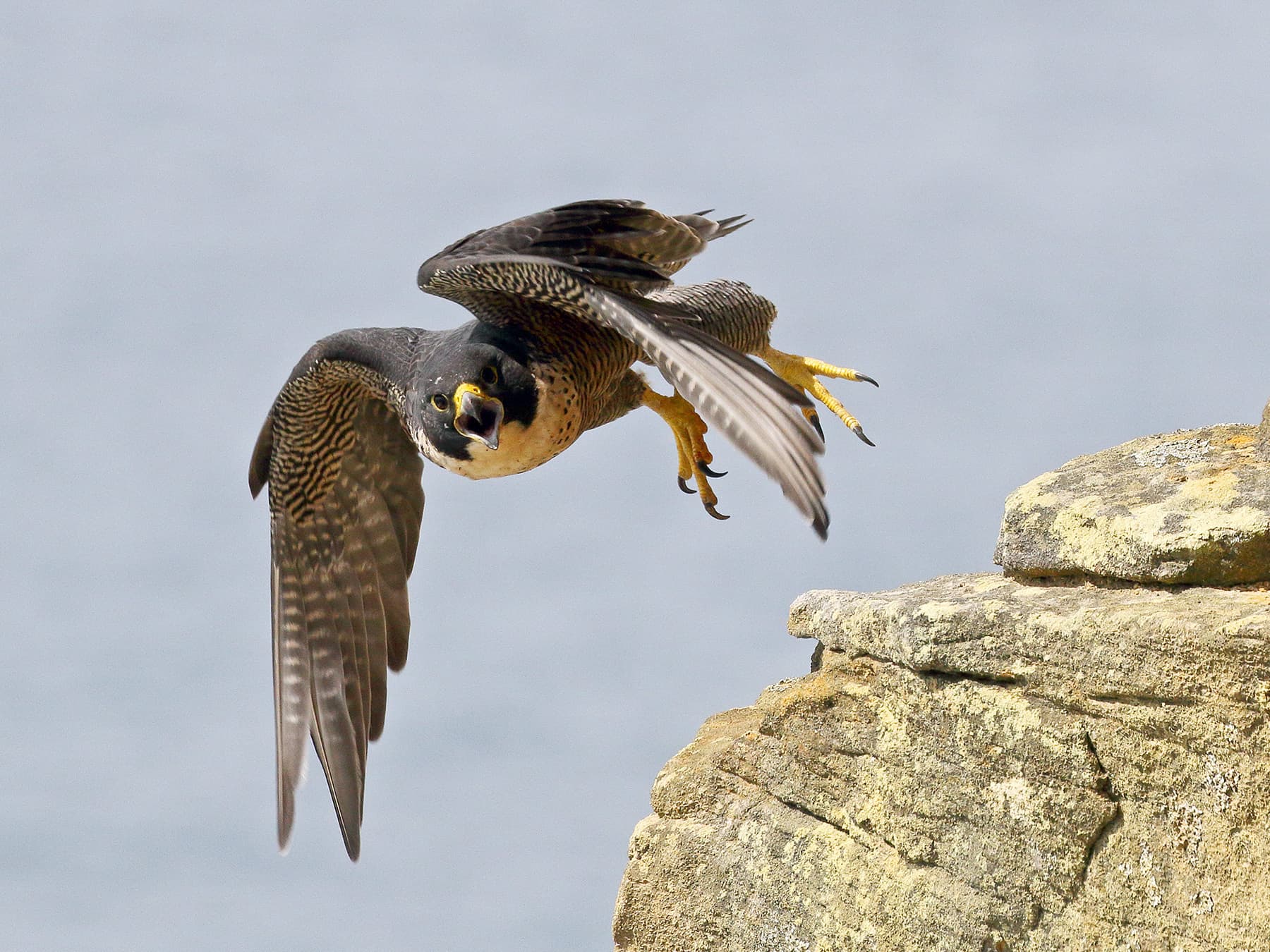
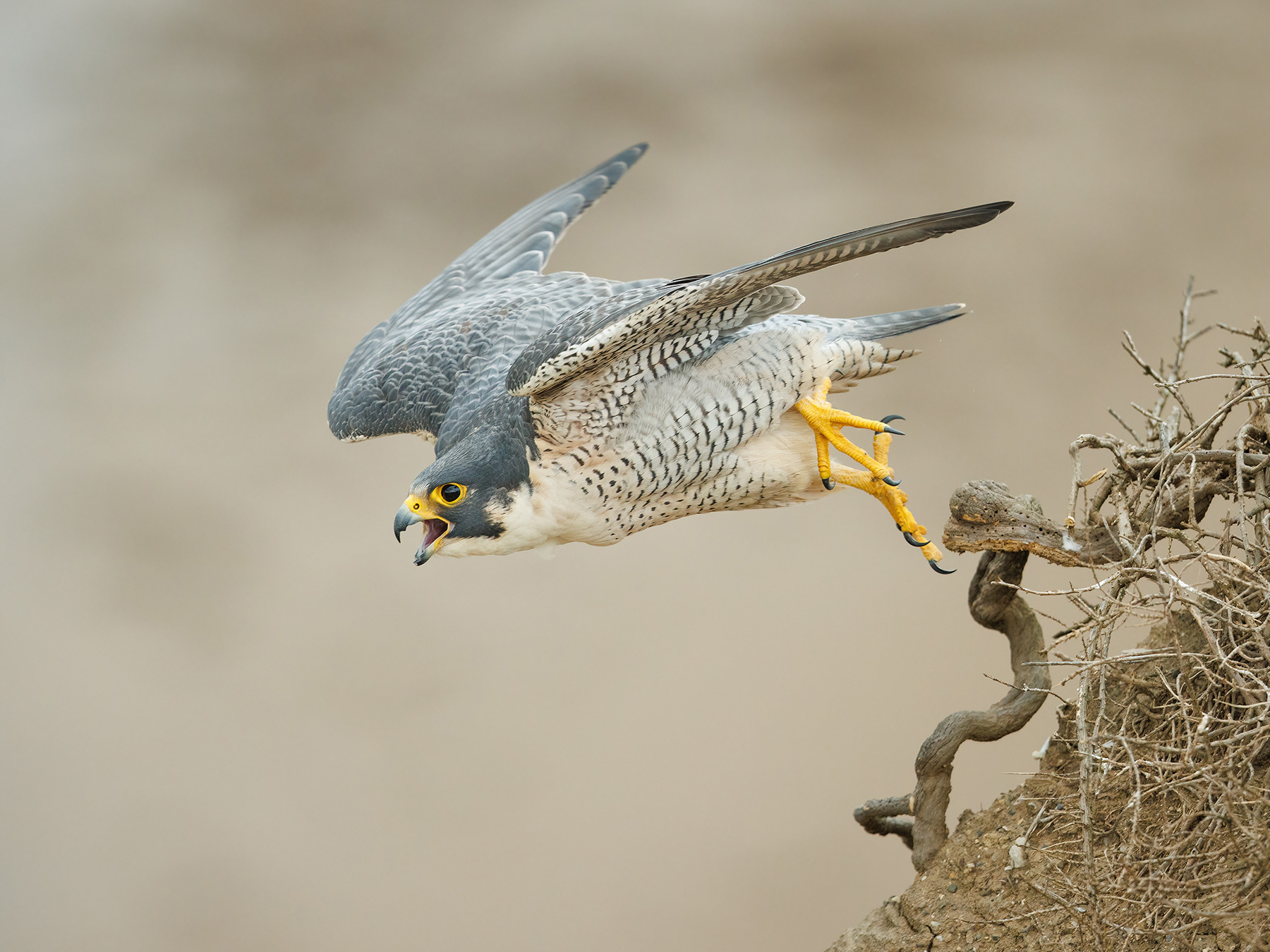
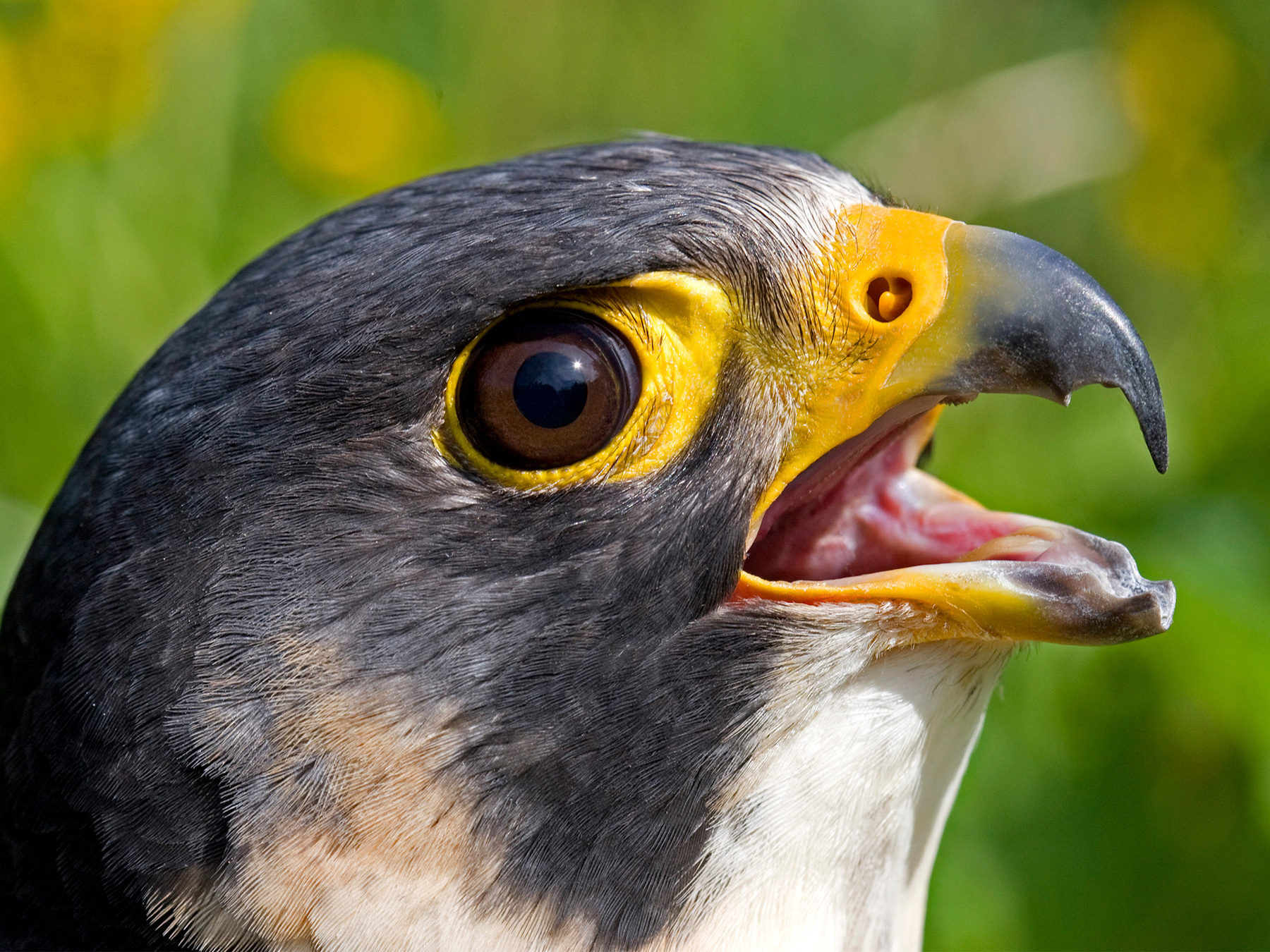
Typical of the falcon family, these birds have dark head markings. In the Peregrine, their dark hood extends well below the eyes, but pale white plumage reaches up to the bill and onto the cheeks. Adults have sharply hooked black bills, dark brown eyes, and bright yellow skin at the base of the bill and surrounding each eye. Their legs and feet are the same bright yellow shade.
Female Peregrine Falcons are often darker than males (tiercels) but otherwise very similar in appearance. The most obvious difference between the sexes is size, with females growing much larger than their male counterparts.
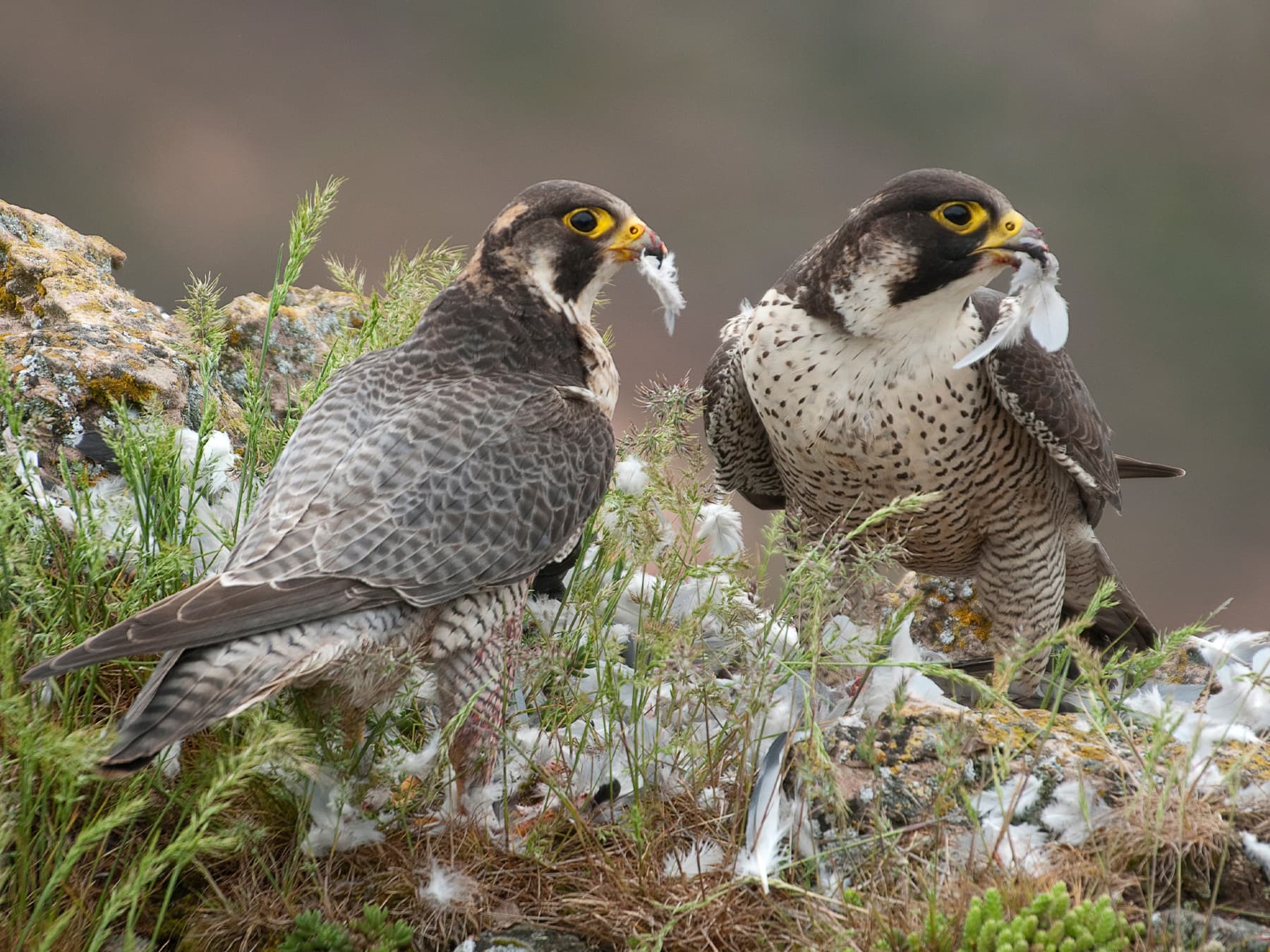
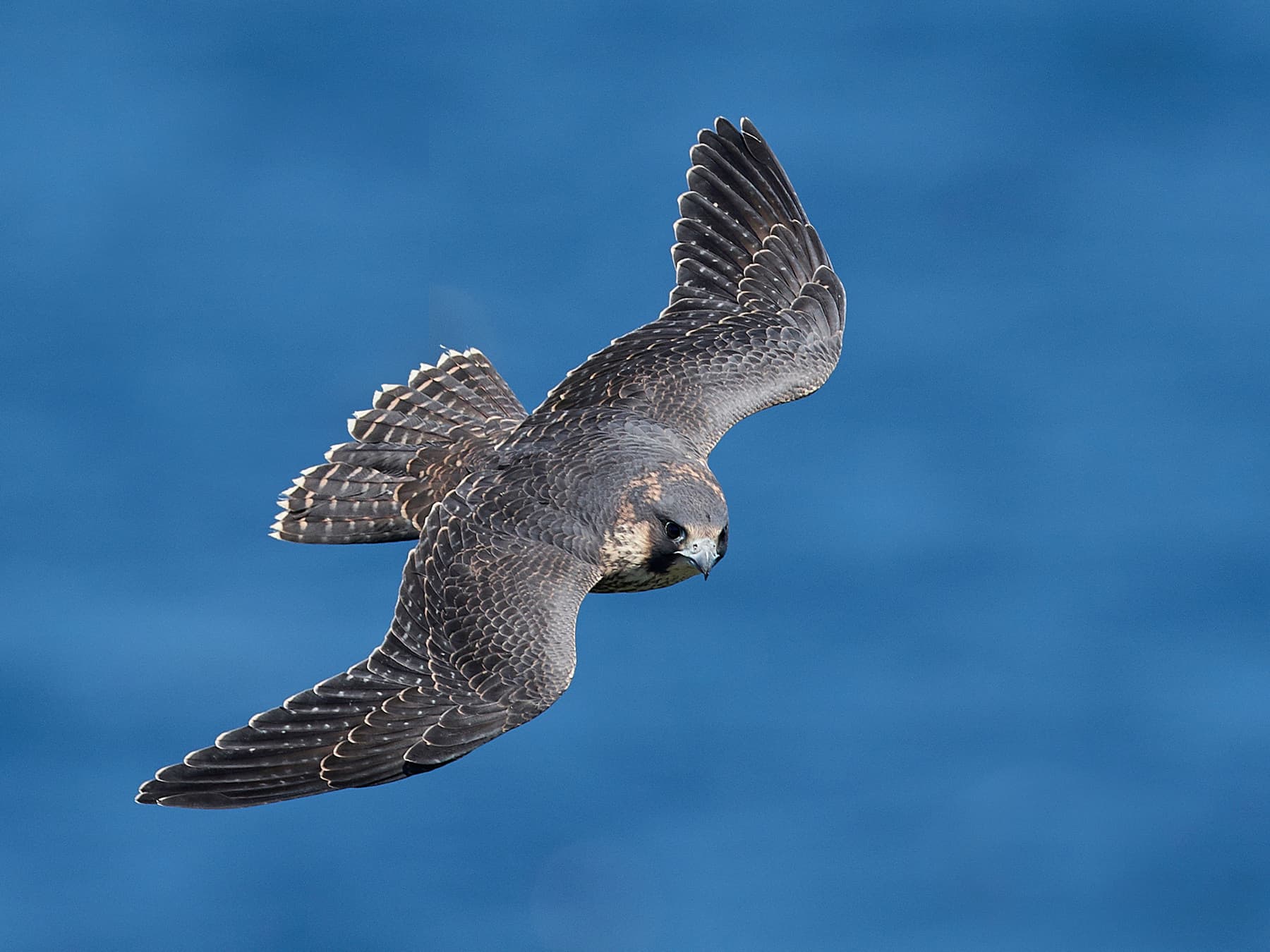
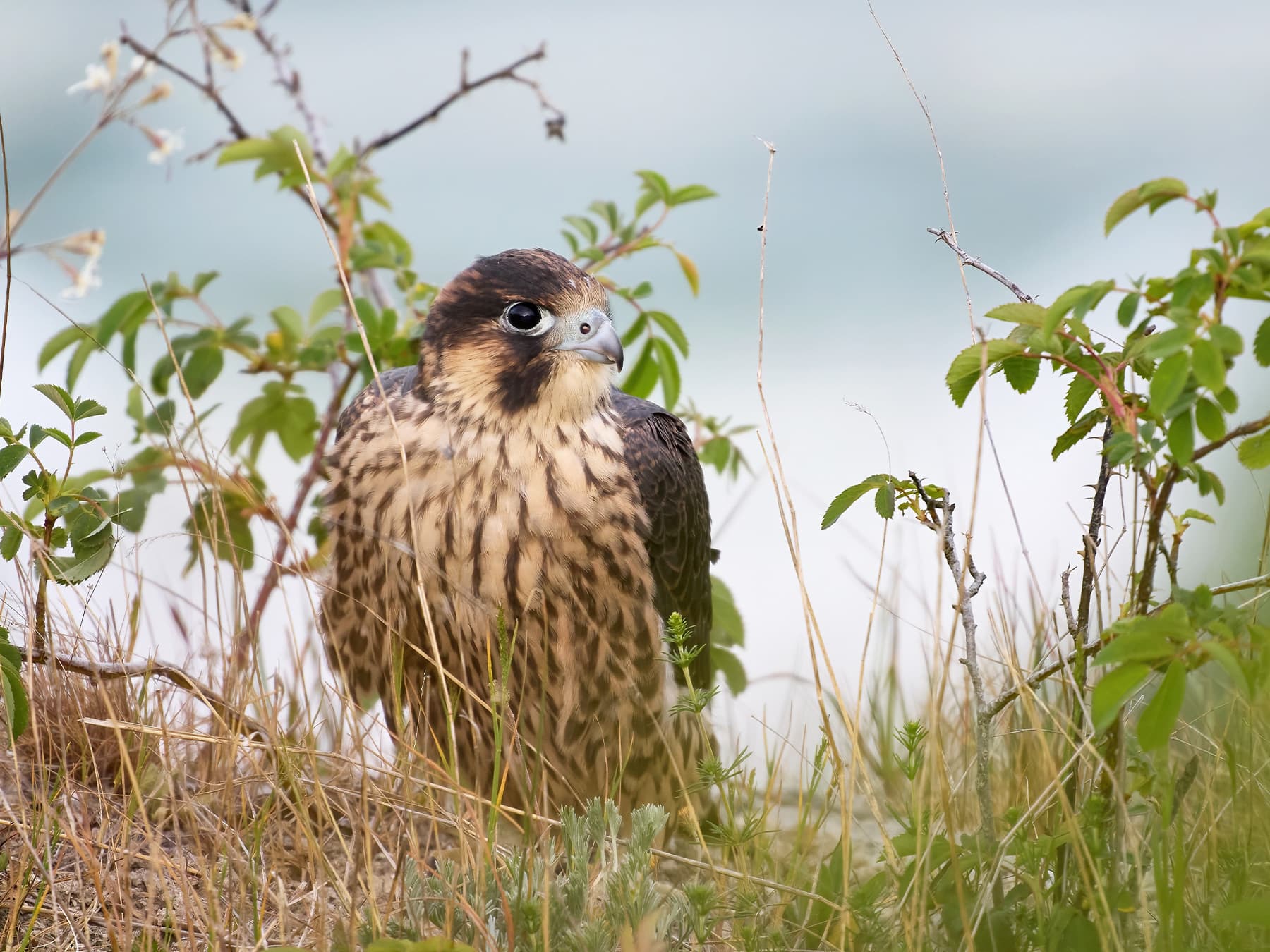
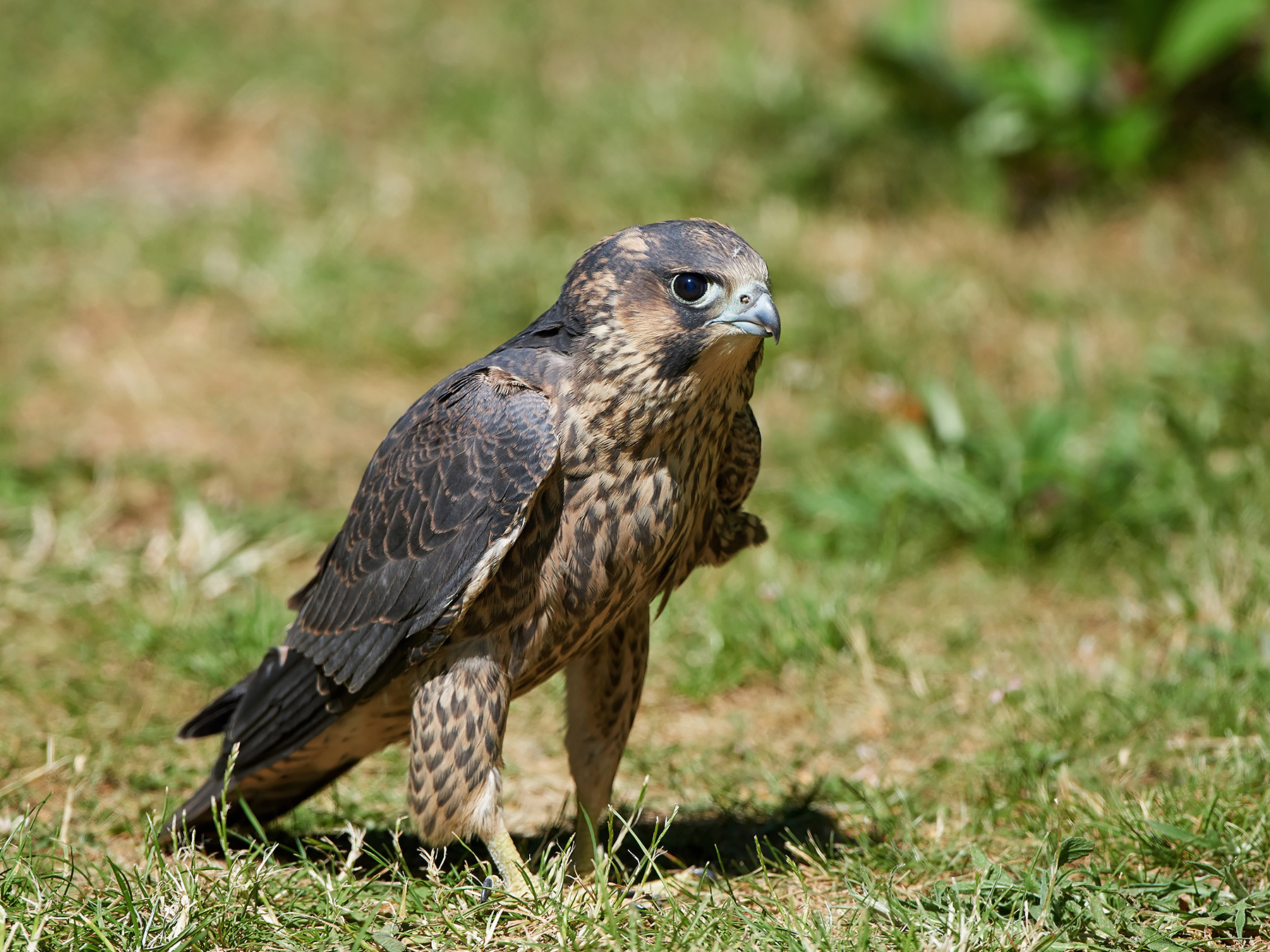
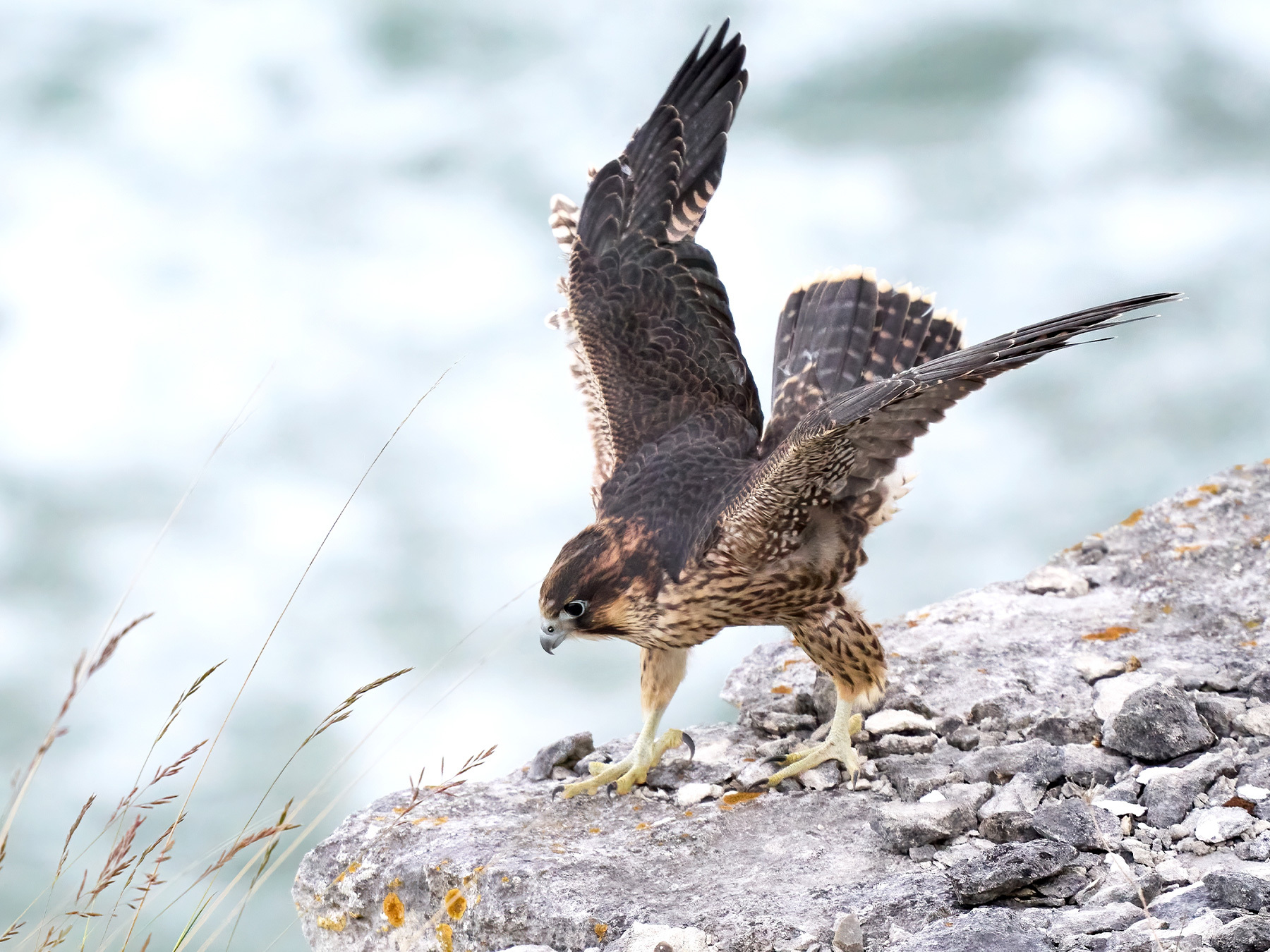
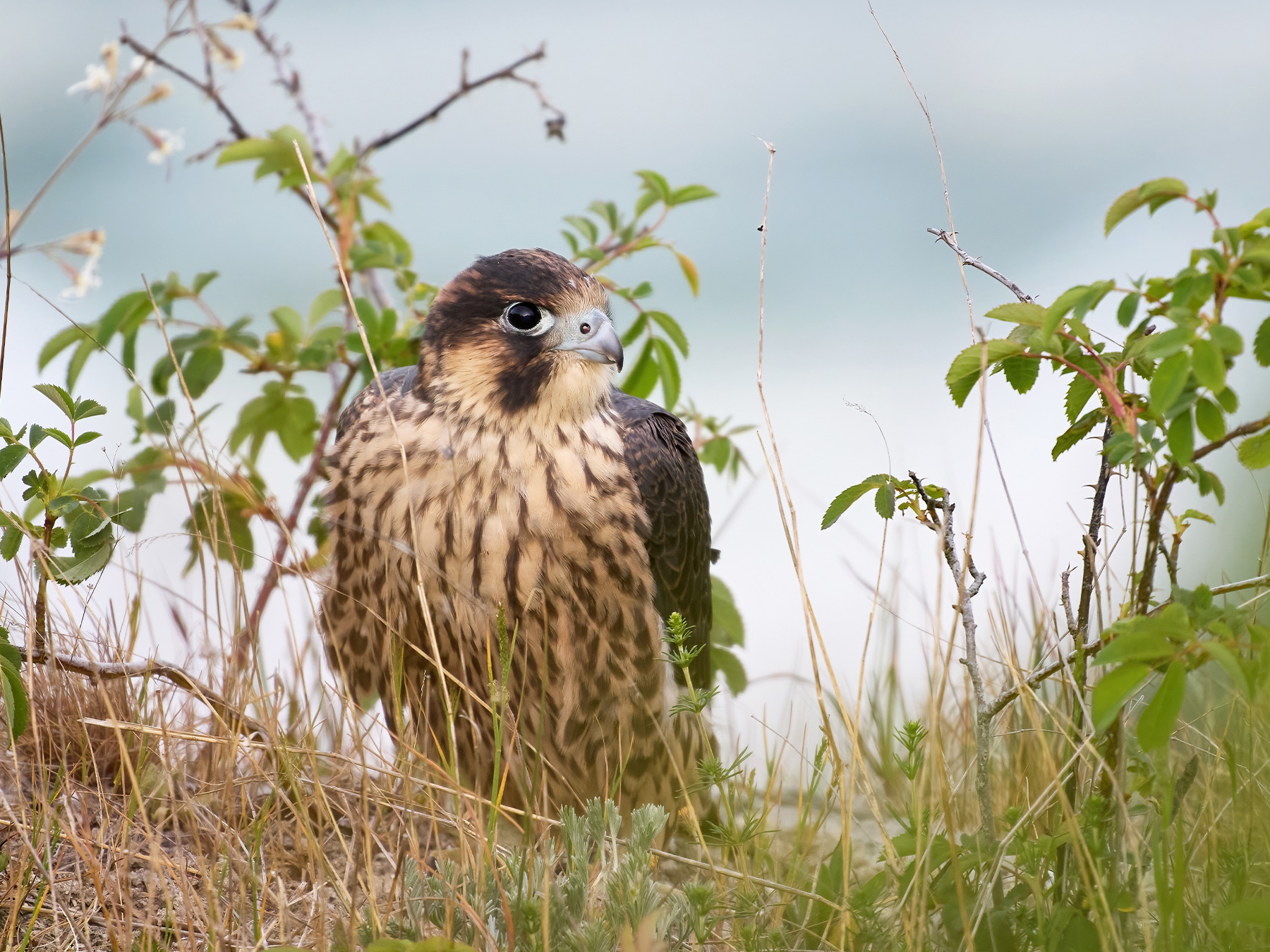
Juveniles are similar to adults but browner above and buffy below. Young birds are also streaked rather than barred below and have blueish (not yellow) skin around their eyes and the base of their bill.
How big are Peregrine Falcons?
Large for a falcon, the Peregrine is a medium-sized bird of prey about the size of a large crow or raven. The sexes overlap in size, although females grow significantly larger than males.
Length
Adult Peregrine Falcons have a total body length of about 13 to 23 inches or 34 to 58 centimeters. Females are longer on average.
Weight
These powerfully built birds have a surprisingly wide weight range, with the smallest males around 0.9 pounds or 400 grams and the largest females reaching over 3.3 pounds or 1.5 kilograms.
Wingspan
Adult wingspans vary between 29 and 47 inches or 74 to 120 centimeters.
Its size
Adults- Length
- 34–58 cm
- Wingspan
- 74–120 cm
- Weight
- 330–1500 g
Its song and calls
What sound does a Peregrine Falcon make?
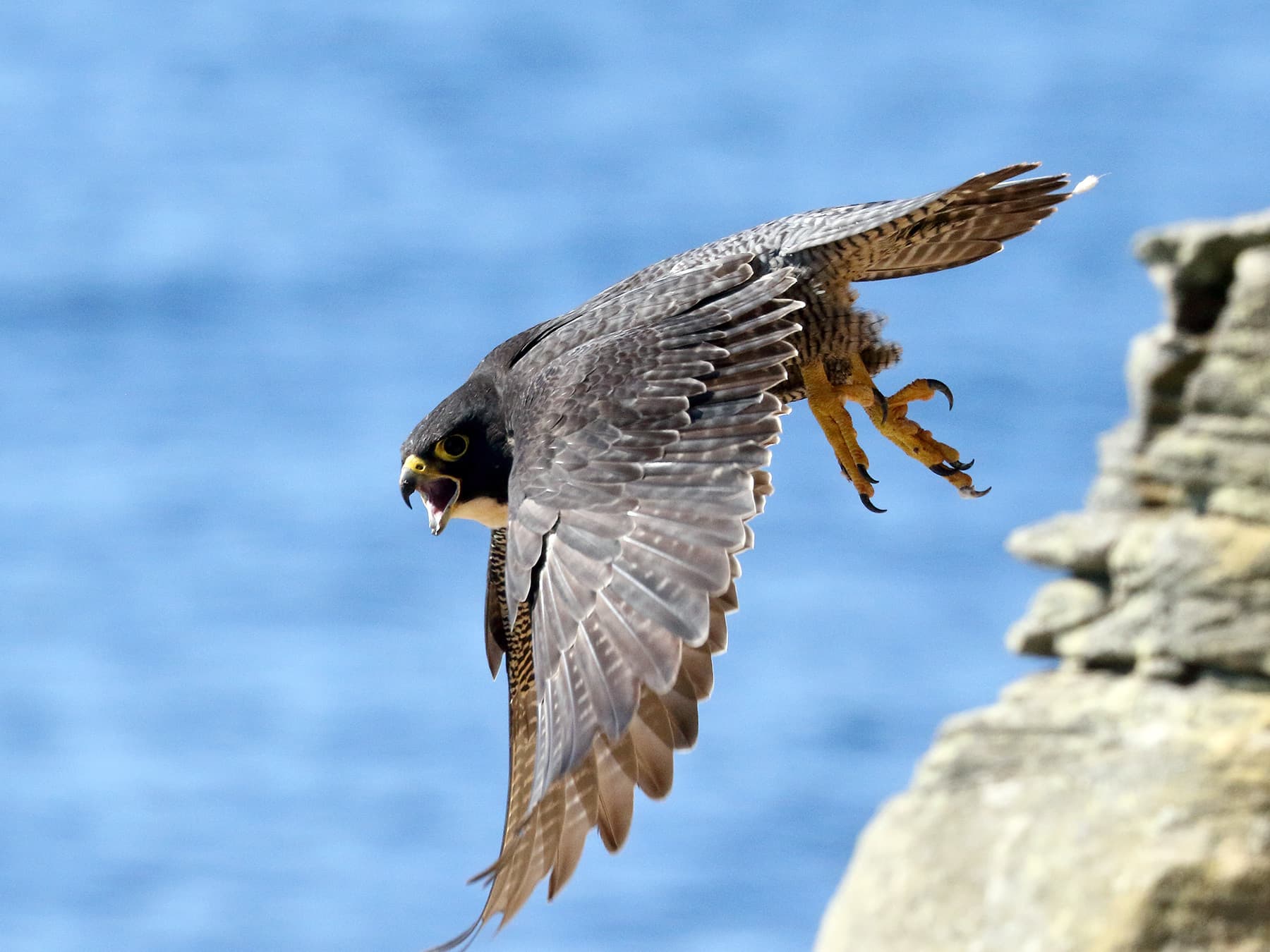
Peregrine Falcons are most vocal around the nest, producing a harsh ‘Haak haak haak’ or a higher-pitched ‘chi chi chi’ call.
- Flight call0:00 / 0:10
Recorded in Lombardy, Italy · September 2022
When and where to see it
OctoberIn season
Most recorded in October
- 1. Louth0.78%
- 2. Antrim0.64%
- 3. Vale of Glamorgan0.62%
- 4. Tipperary0.61%
- 5. Isle of Wight0.58%
Each dot is a county, state or province: the bigger and darker, the larger the bird’s share of that place’s bird records that month. Grey dots: no regular records. The ringed point is the centre of the bird’s records this month; the arrow shows how it moved since last month, and the dashed loop its path through the year. “Arrivals” colours places where it becomes regular this month (orange) or is in its last regular month (grey). GBIF eBird Observation Dataset, 2019–2024. Map data: Natural Earth, US Census Bureau; place centres © OpenStreetMap contributors.
In your area
See when the Peregrine Falcon is recorded in your county, state or province.
How often the Peregrine Falcon turns up in the UK, Ireland, the United States and Canada through the year, from birdwatchers' records.
United Kingdom
Resident · all year · nesting-season records held back
Ireland
Resident · all year · most records in August
United States
Resident · all year · most records in October
Canada
Resident · all year · most records in September
Show as a table
| Month | United Kingdom | Ireland | United States | Canada |
|---|---|---|---|---|
| January | 0.23% (regular) | 0.24% (regular) | 0.12% (regular) | 0.13% (regular) |
| February | 0.22% (regular) | 0.24% (regular) | 0.090% (regular) | 0.10% (regular) |
| March | 0.035% (regular) | 0.20% (regular) | 0.072% (regular) | 0.087% (regular) |
| April | held back (protected) | 0.17% (regular) | 0.055% (regular) | 0.065% (regular) |
| May | held back (protected) | 0.14% (regular) | 0.042% (regular) | 0.048% (regular) |
| June | held back (protected) | 0.17% (regular) | 0.047% (regular) | 0.045% (regular) |
| July | held back (protected) | 0.23% (regular) | 0.066% (regular) | 0.076% (regular) |
| August | 0.24% (regular) | 0.33% (regular) | 0.12% (regular) | 0.16% (regular) |
| September | 0.25% (regular) | 0.31% (regular) | 0.16% (regular) | 0.22% (regular) |
| October | 0.24% (regular) | 0.29% (regular) | 0.18% (regular) | 0.18% (regular) |
| November | 0.23% (regular) | 0.28% (regular) | 0.13% (regular) | 0.12% (regular) |
| December | 0.21% (regular) | 0.19% (regular) | 0.11% (regular) | 0.12% (regular) |
Nesting-season records (April to July) are held back to protect nests, so those months show as present but unmeasured.
Recorded regularly in
Worldwide: recorded regularly in 178 countries
Countries where it was recorded in at least 3 of the 6 years 2019–2024. Linked countries have their own bird list.
Europe (38)
Africa (32)
- Algeria
- Angola
- Botswana
- Cameroon
- Cape Verde
- Côte d’Ivoire
- Djibouti
- Egypt
- Equatorial Guinea
- Eswatini
- Ethiopia
- Ghana
- Guinea
- Guinea-Bissau
- Kenya
- Madagascar
- Malawi
- Mayotte
- Morocco
- Mozambique
- Namibia
- Nigeria
- Rwanda
- Senegal
- Sierra Leone
- South Africa
- Tanzania
- Tunisia
- Uganda
- Western Sahara
- Zambia
- Zimbabwe
Asia (44)
- Armenia
- Azerbaijan
- Bangladesh
- Bhutan
- Brunei
- Cambodia
- China
- Cyprus
- Georgia
- Hong Kong SAR China
- India
- Indonesia
- Iran
- Iraq
- Israel
- Jordan
- Kazakhstan
- Kuwait
- Kyrgyzstan
- Laos
- Lebanon
- Macao SAR China
- Malaysia
- Mongolia
- Myanmar (Burma)
- Nepal
- Oman
- Pakistan
- Palestinian Territories
- Philippines
- Qatar
- Saudi Arabia
- Singapore
- South Korea
- Sri Lanka
- Taiwan
- Tajikistan
- Thailand
- Timor-Leste
- Turkey
- United Arab Emirates
- Uzbekistan
- Vietnam
- Yemen
North America (41)
- Anguilla
- Antigua & Barbuda
- Aruba
- Bahamas
- Barbados
- Belize
- Bermuda
- British Virgin Islands
- Canada
- Caribbean Netherlands
- Cayman Islands
- Costa Rica
- Cuba
- Curaçao
- Dominica
- Dominican Republic
- El Salvador
- Greenland
- Grenada
- Guadeloupe
- Guatemala
- Haiti
- Honduras
- Jamaica
- Martinique
- Mexico
- Montserrat
- Nicaragua
- Panama
- Puerto Rico
- Sint Maarten
- St Barthélemy
- St Kitts & Nevis
- St Lucia
- St Martin
- St Pierre & Miquelon
- St Vincent & the Grenadines
- Trinidad & Tobago
- Turks & Caicos Islands
- United States
- US Virgin Islands
South America (14)
Oceania (9)
- Australia
- Christmas Island
- Fiji
- New Caledonia
- Northern Mariana Islands
- Palau
- Papua New Guinea
- US Outlying Islands
- Vanuatu
Data: EOD – eBird Observation Dataset (Cornell Lab of Ornithology), accessed via GBIF.org, CC BY 4.0. Records from 2019–2024, aggregated and filtered by Birdfact. How these lists are made
What is the habitat of a Peregrine Falcon?
Peregrine Falcons inhabit many different habitats on migration but prefer areas with cliffs for nesting. They naturally occur along rocky coastlines, river courses, and mountainous regions, but the species has also adapted to urban centers where they nest on skyscrapers and other tall buildings.
What is the range of a Peregrine Falcon?
Peregrine Falcons are one of the world’s most widespread bird species, occurring on every continent except Antarctica. There are 19 recognized subspecies, with three occurring in North America alone.
Where do Peregrine Falcons live?
Peregrine Falcons are remarkably adaptable birds that live everywhere from the High Arctic to the forested tropics. They are right at home in many modern cities where rooftops and ledges make ideal nest sites, and feral Rock Doves provide a year-round food source.
Check out our complete guide to learn much more about where Peregrine Falcons live.
How rare are Peregrine Falcons?
Although increasing in number, Peregrine Falcons are generally uncommon to rare birds.
Where can you see Peregrine Falcons in the US?
Peregrine Falcons are widespread but patchily distributed in the United States. They are resident breeders in the Southwest, along the West Coast, the Upper East Coast, and parts of the Eastern Interior. They are summer breeding visitors to the Midwest and parts of Texas, and winter visitors to the Gulf Coast and the Southeast.
Where can you see Peregrine Falcons in the UK?
Although generally uncommon, Peregrines are widespread in the United Kingdom, including England, Wales, Scotland, and Northern Ireland. Coastal sea cliffs and mountainous country are the best places to spot these birds, although they also nest in major cities like Manchester and London.
Where can you see Peregrine Falcons in Canada?
Peregrine Falcons occur year-round along Canada’s west coast in British Columbia and Vancouver Island. They are also widespread breeding visitors to the northern half of the country and the prairies of the south.
Where can you see Peregrine Falcons in Australia?
Peregrine Falcons are uncommon residents in suitable habitats throughout most of Australia, although they are scarce or absent from parts of the southwestern interior.
Migration
Do Peregrine Falcons migrate?
Peregrine Falcons are partially migratory, depending on where they nest and which subspecies they belong to. They are seasonal visitors across most of their global range but occur in sedentary populations in many areas, including the United Kingdom and the West Coast of the United States.
Read more about the Peregrine Falcon’s migratory habits in this complete guide.
Are Peregrine Falcons native to the US?
Peregrine Falcons are native residents and migrants within the United States of America. Three subspecies are known to occur in the US, namely the North American Peregrine Falcon (Falco peregrinus anatum), the Tundra Peregrine Falcon (F. p. tundrius), and Peale’s Peregrine Falcon (F. p. pealei).
Are Peregrine Falcons native to the UK?
Peregrine Falcons are a native species in the United Kingdom. The resident population in the UK belongs to the nominate subspecies, Falco peregrinus peregrinus.
Tips for seeing it
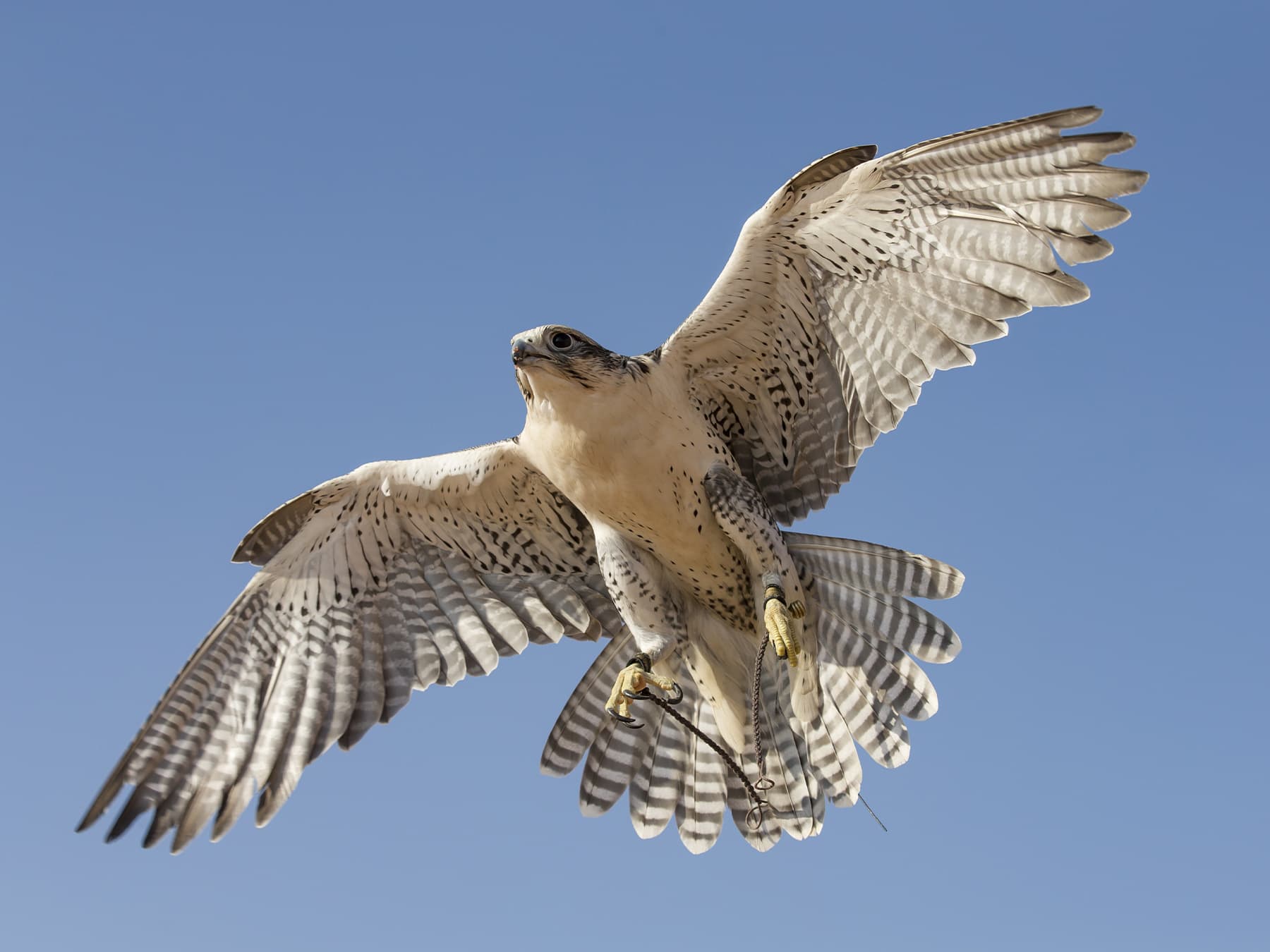
- Look for Peregrines near cliff faces or tall buildings in urban areas
- Observe their distinctive, pointed wing shape during flight
- Listen for their loud, repetitive 'kak-kak-kak' calls
- In coastal areas, watch for their high-speed dives towards water birds
- Use a spotting scope to view distant perched birds on high ledges
What it eats
What do Peregrine Falcons eat?
Peregrine Falcons are specialized hunters of other birds, although they are not fussy about the species. They are known to feed on hundreds or even thousands of different birds, ranging in size from Hummingbirds to Snow Geese and everything in between!
Would you like to learn more about the Peregrine Falcon diet? Check out this full diet guide for much more information.
What do Peregrine Falcon chicks eat?
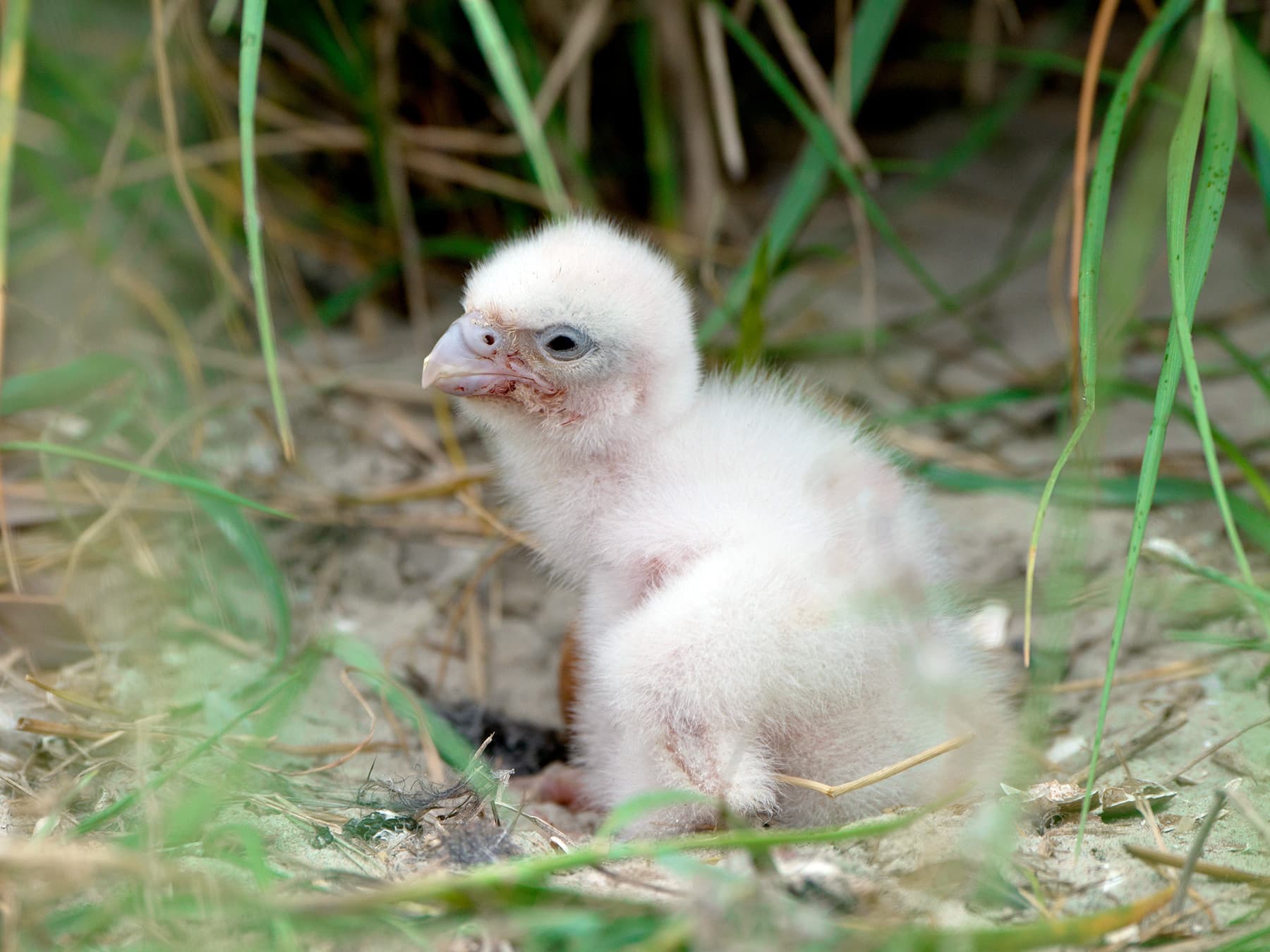
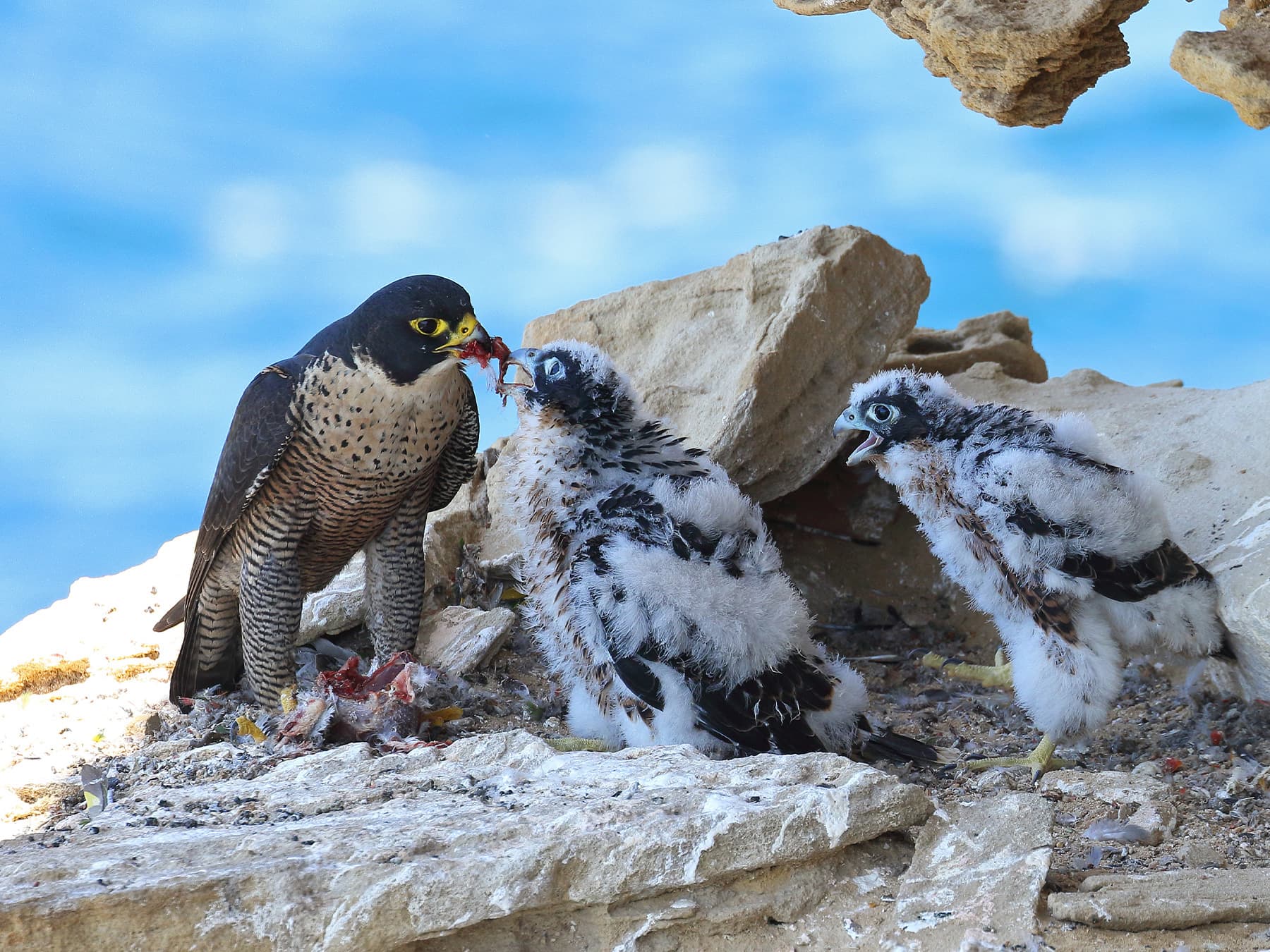
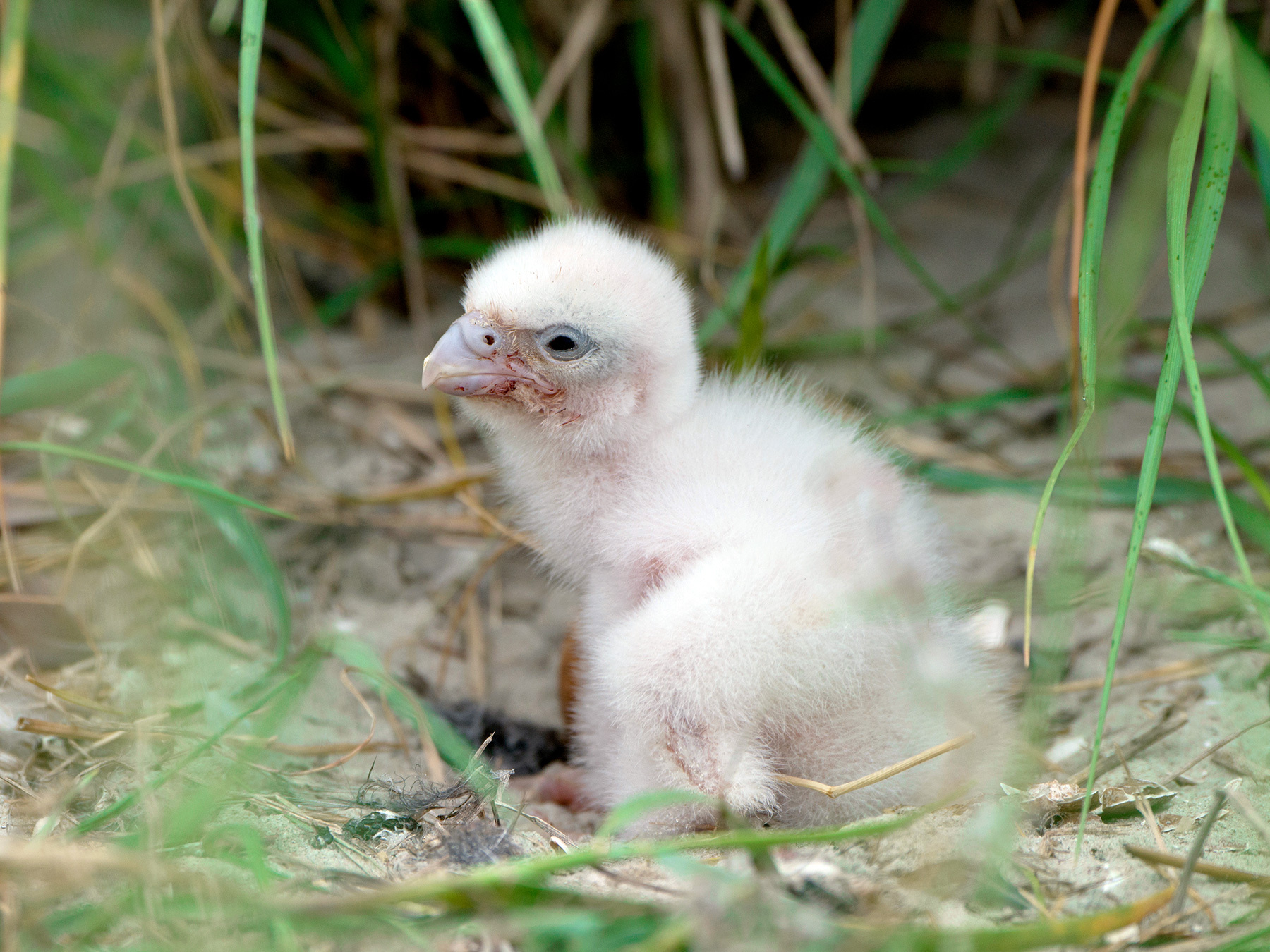
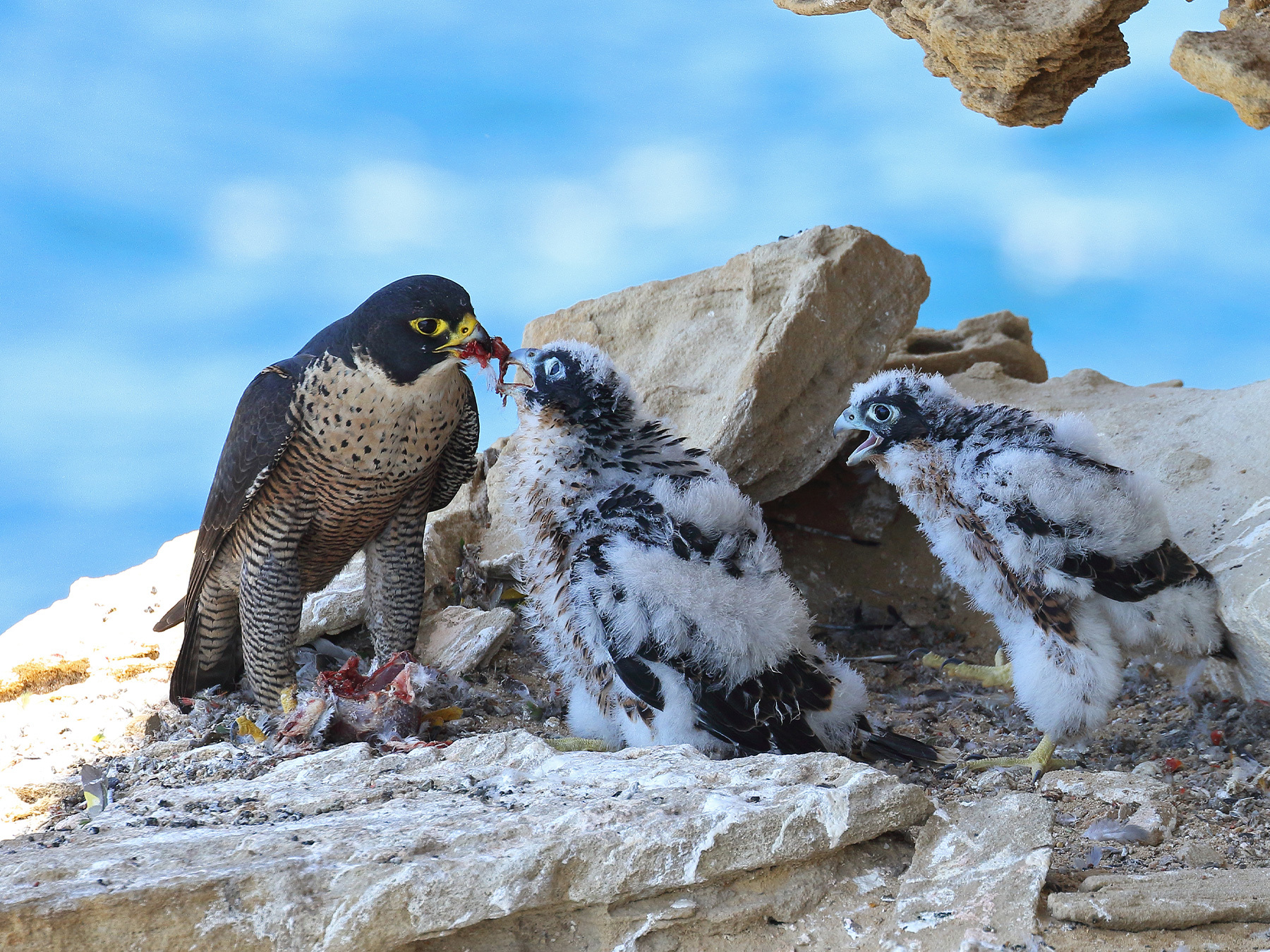
Both male and female Peregrine Falcons deliver prey to their chicks. The downy white nestlings eat the flesh of other birds, torn into manageable strips until the chicks are old enough to feed themselves. Their parents will continue to feed them for several weeks or even months after fledging.
Nesting and breeding
Where do Peregrine Falcons nest?
Peregrine Falcons do not usually build a nest at all, although they may use the abandoned nests of other large birds like Ravens. They typically nest on ledges of coastal cliffs, ravines, and mountainous areas but also use artificial structures like buildings and bridges and sometimes raise their young on the ground.
Check out this complete guide for much more on Peregrine Falcon nesting.
When do Peregrine Falcons nest?
Peregrine Falcons nest in the spring and summer. Their timing varies greatly depending on location, with nesting starting much later in the Arctic than close to the equator. They raise a single brood per year, with incubation lasting roughly one month and fledging occurring five to six weeks later.
What do Peregrine Falcon eggs look like?
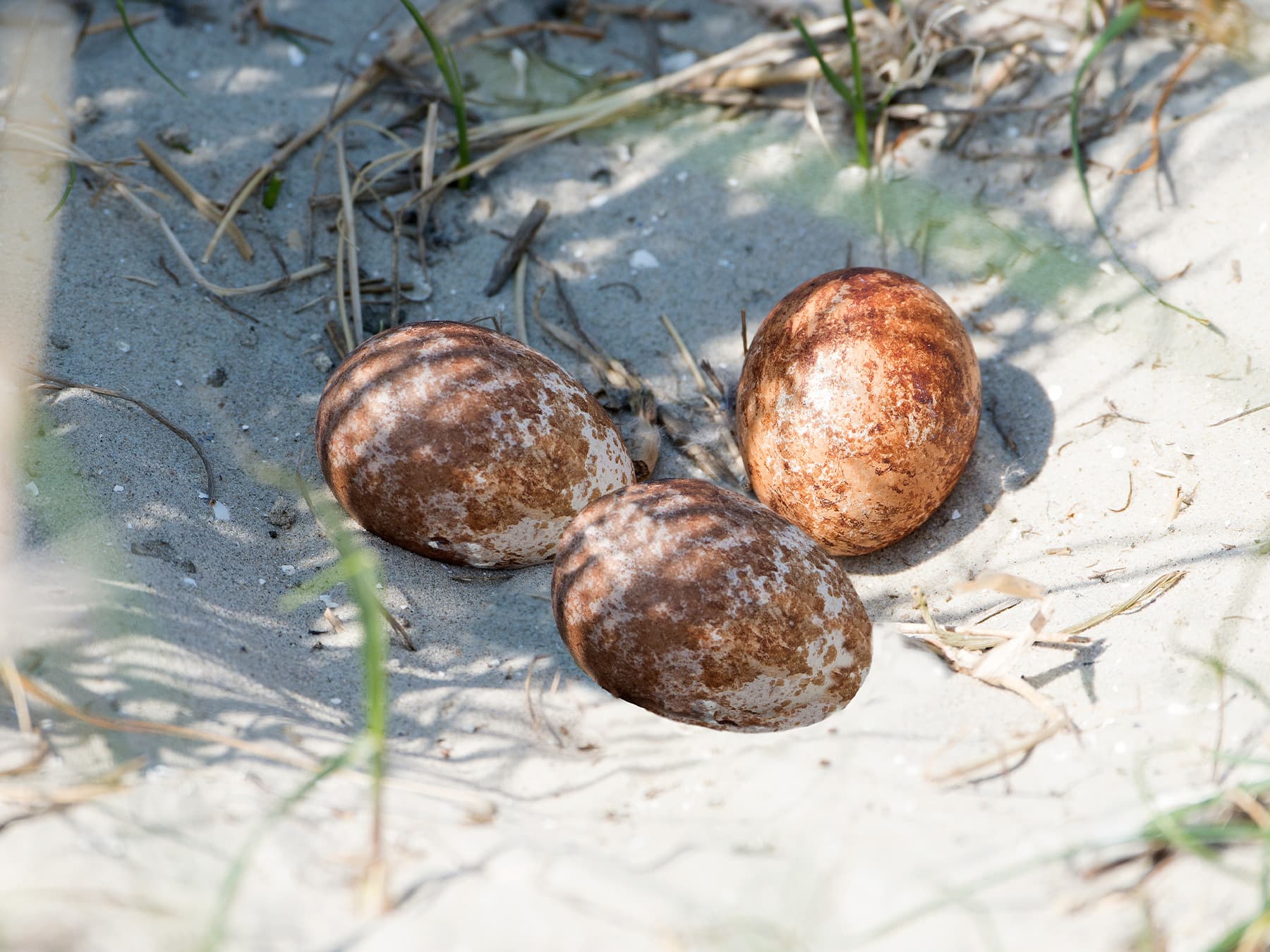
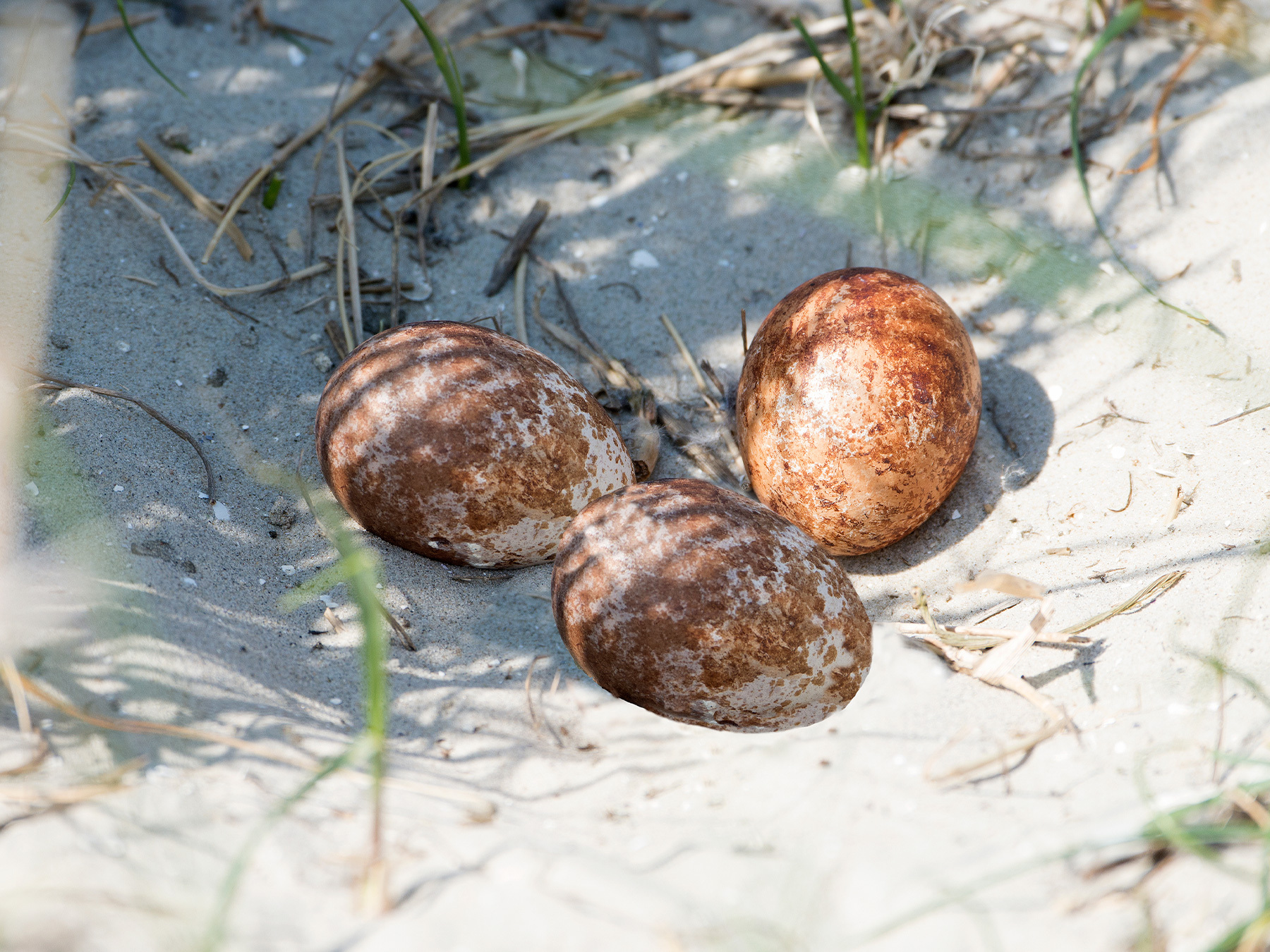
Peregrine Falcons typically lay three to six mottled brown or reddish-brown eggs, each measuring about 2 inches long and 1⅔ inches wide (52 x 41 millimeters).
Do Peregrine Falcons mate for life?
Peregrine Falcons are monogamous birds that typically mate with the same partner year after year.
Behaviour
Are Peregrine Falcons aggressive?
Peregrine Falcons can be highly aggressive when nesting and may attack any potential predators while calling loudly. They are known to divebomb and even physically strike intruding humans, so it’s best to stay well away from a falcon’s nest!
They are also aggressive toward their own kind when unwelcome birds intrude on their territory. Peregrine Falcon fights can be brutal and sometimes even fatal.
Where do Peregrine Falcons sleep at night?
Peregrine Falcons typically roost on cliff ledges, high-rise buildings, and other sheltered spots that are inaccessible to ground predators.
Lifespan and predators
How long do Peregrine Falcons live?
Wild Peregrine Falcons are known to live for up to 19 years, although the average bird has a life expectancy of just five or six years. Check out our in-depth guide for much more on the Peregrine Falcon lifespan.
What are the predators of Peregrine Falcons?
Few animals get the chance (or dare) to prey on healthy adult Peregrine Falcons. However, they are not safe from predation by much larger birds of prey like the Golden Eagle and Great Horned Owl. Carnivorous mammals like wolves and foxes also feed on their eggs and chicks at accessible nest sites.
Are Peregrine Falcons protected?
Peregrine Falcons are listed on CITES Appendix 1 and protected by law in many countries, including the Migratory Bird Treaty Act in the United States and the Wildlife and Countryside Act in the United Kingdom.
Are Peregrine Falcons endangered?
Peregrine Falcons are not endangered. Globally, the species is ranked as ‘Least Concern’ on the IUCN Red List, and their numbers have increased since the ban on DDT, a harmful pesticide that decimated populations in the mid-twentieth century. However, the species is still illegally persecuted and collected in parts of its range.
Conservation
Peregrine Falcons have made a remarkable recovery since the ban of DDT in many countries. However, they still face threats from habitat loss, illegal hunting, and collisions with man-made structures.
Ongoing conservation efforts focus on nest site protection and urban habitat management.
Similar birds
Often mistaken for
More photos
11 photos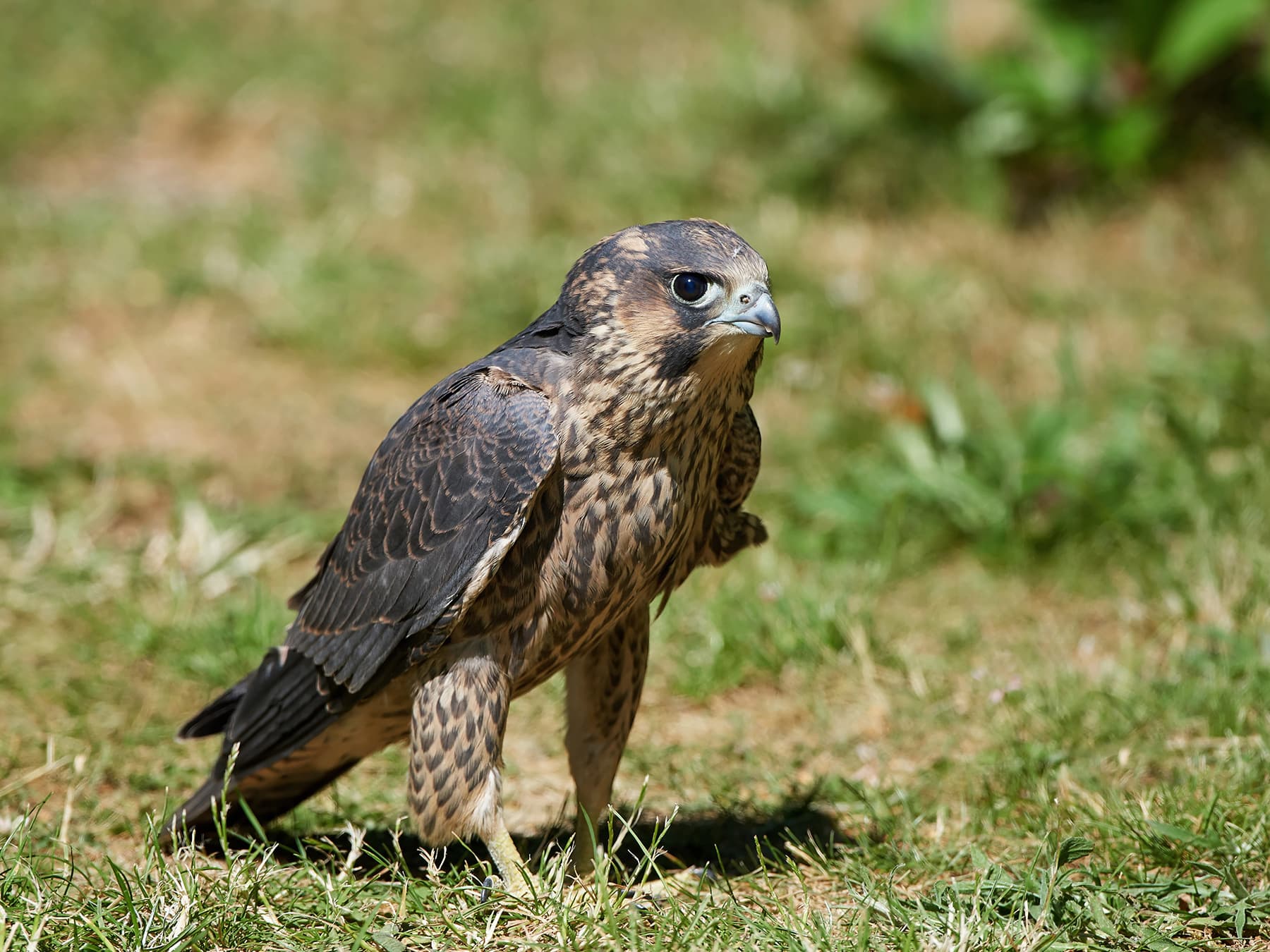 Juvenile Peregrine Falcon
 Peregrine Falcon chick at nest site
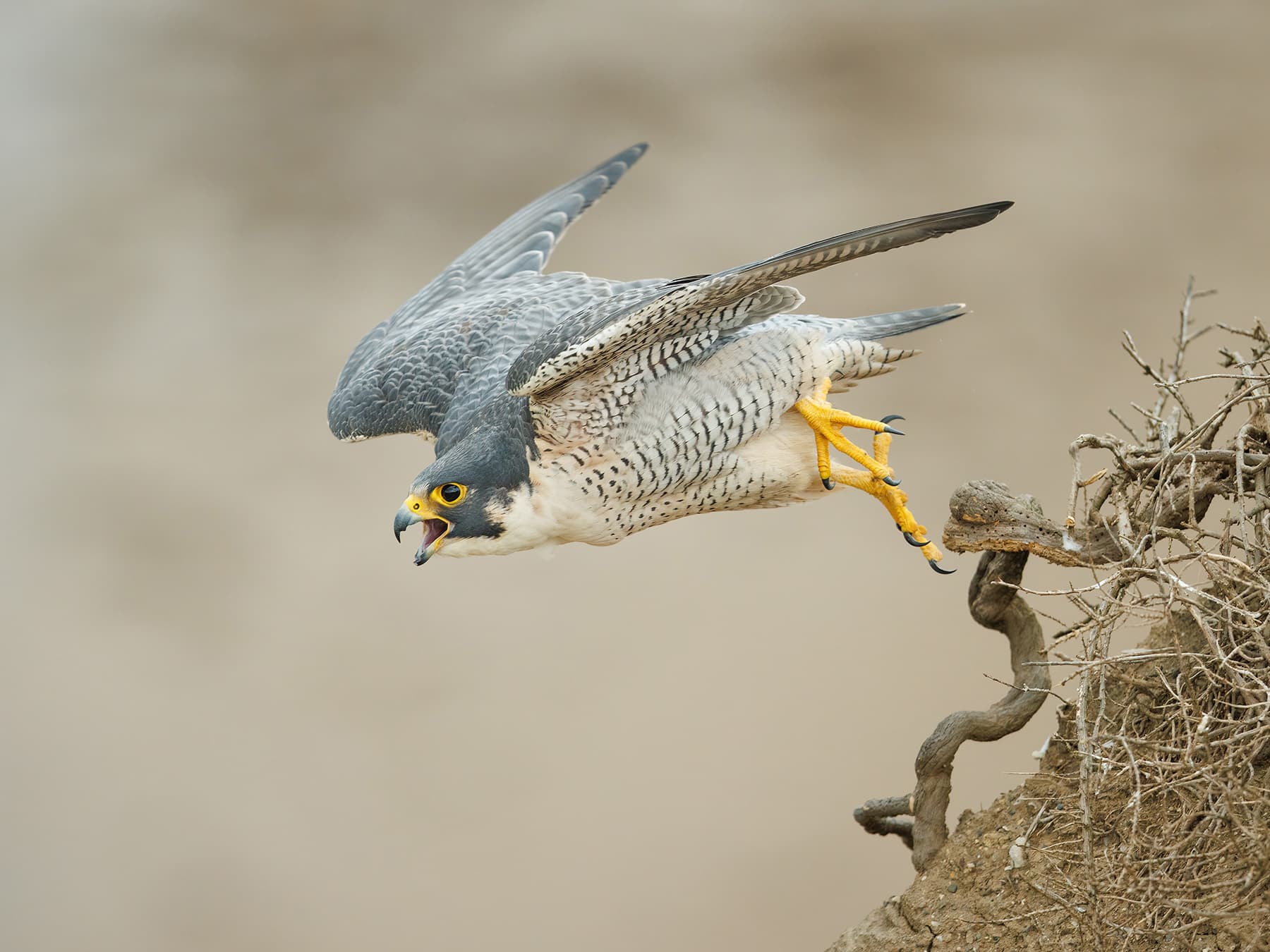 Peregrine Falcon taking-off
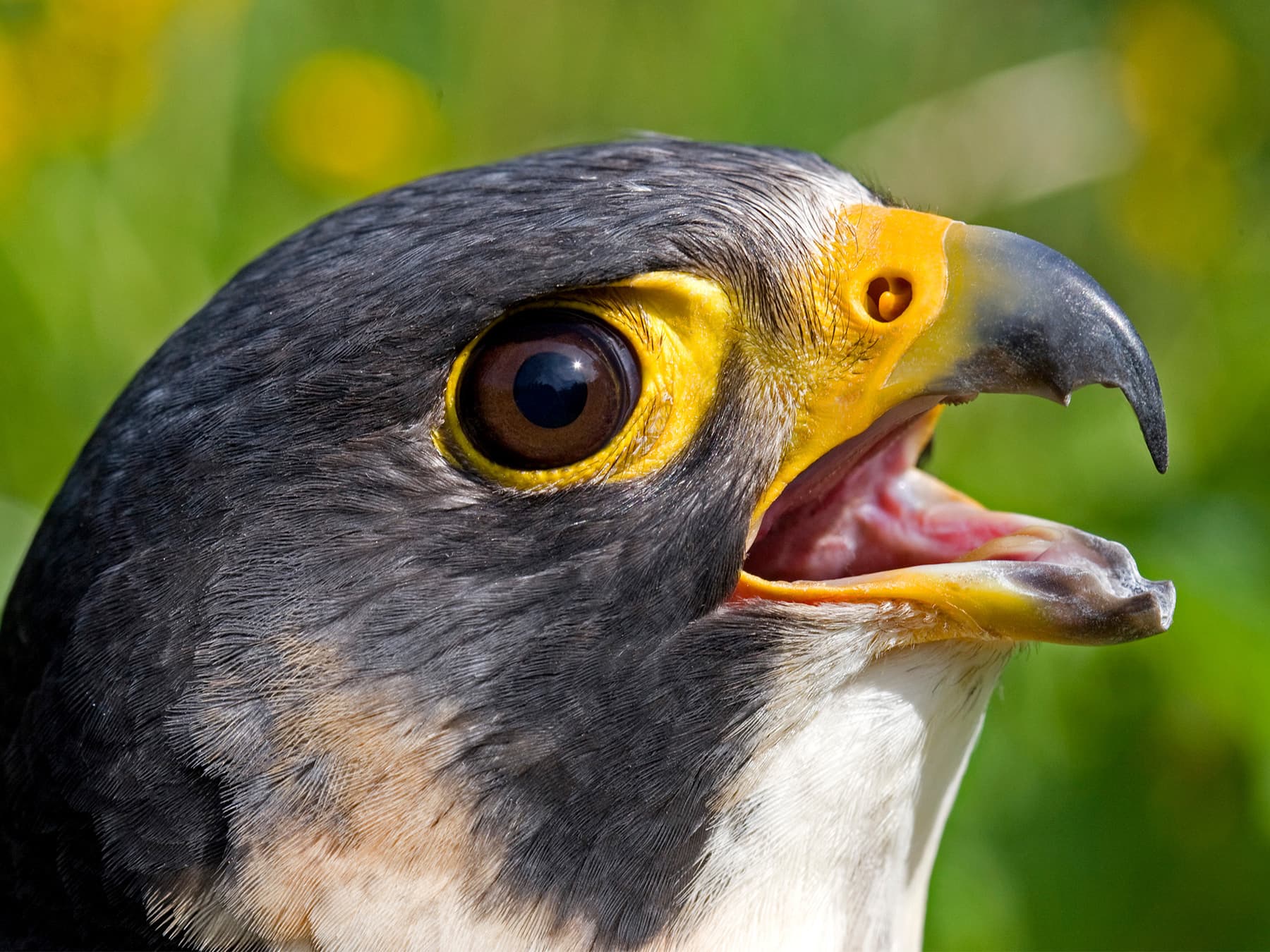 Portrait of a Peregrine Falcon
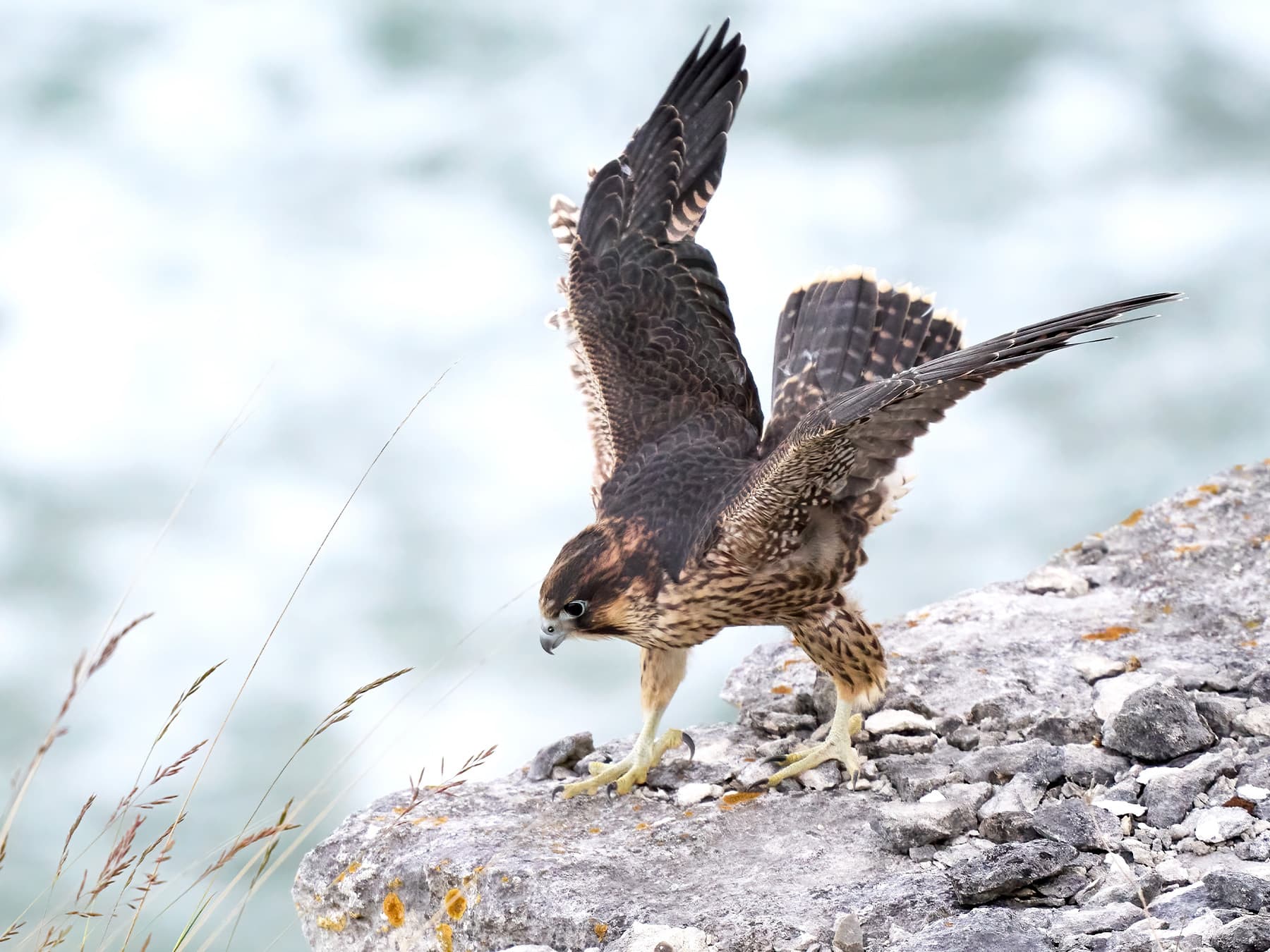 Juvenile Peregrine Falcon landing on a rocky coastline
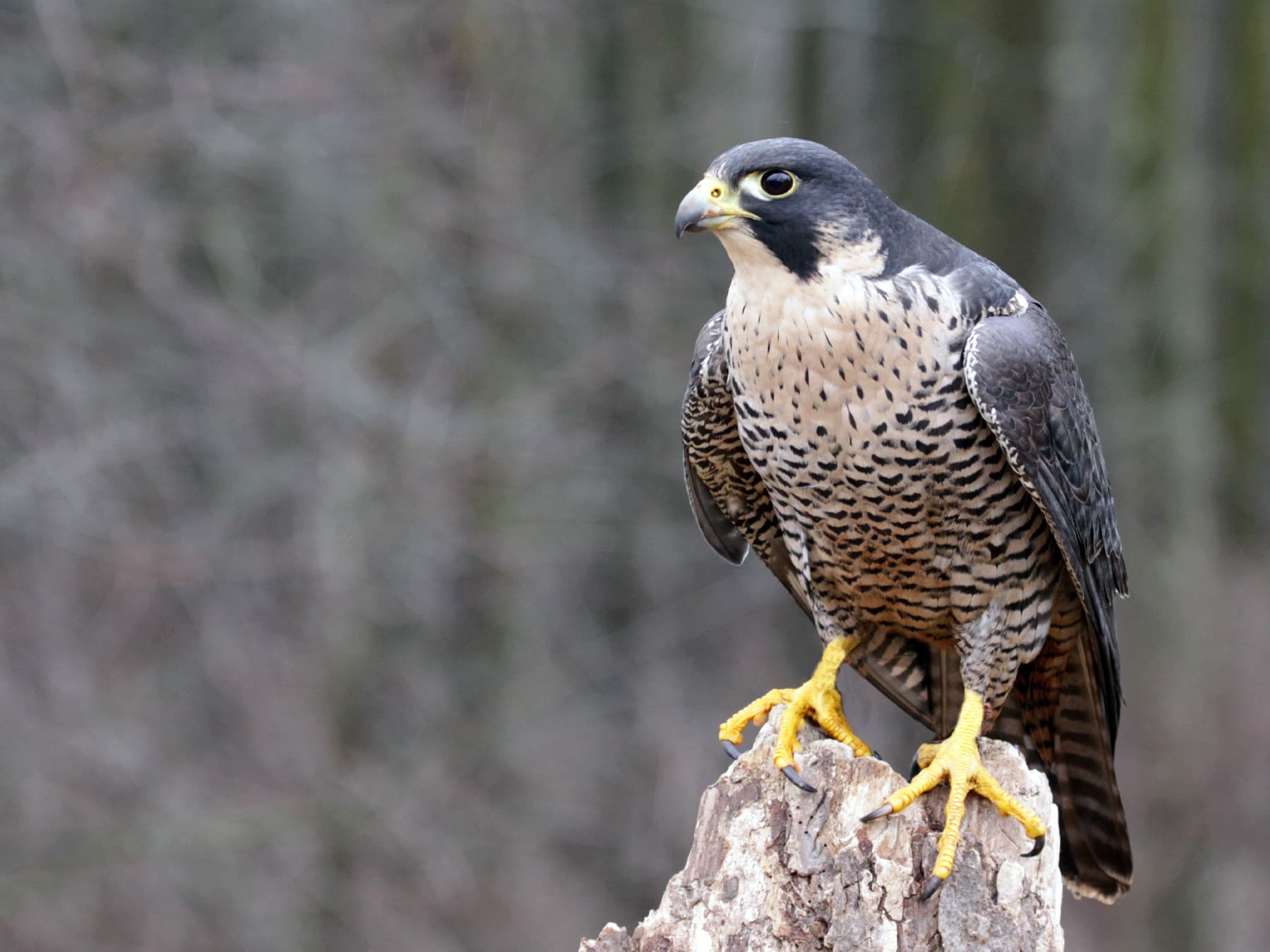 Peregrine Falcon adult
 Juvenile Peregrine Falcon
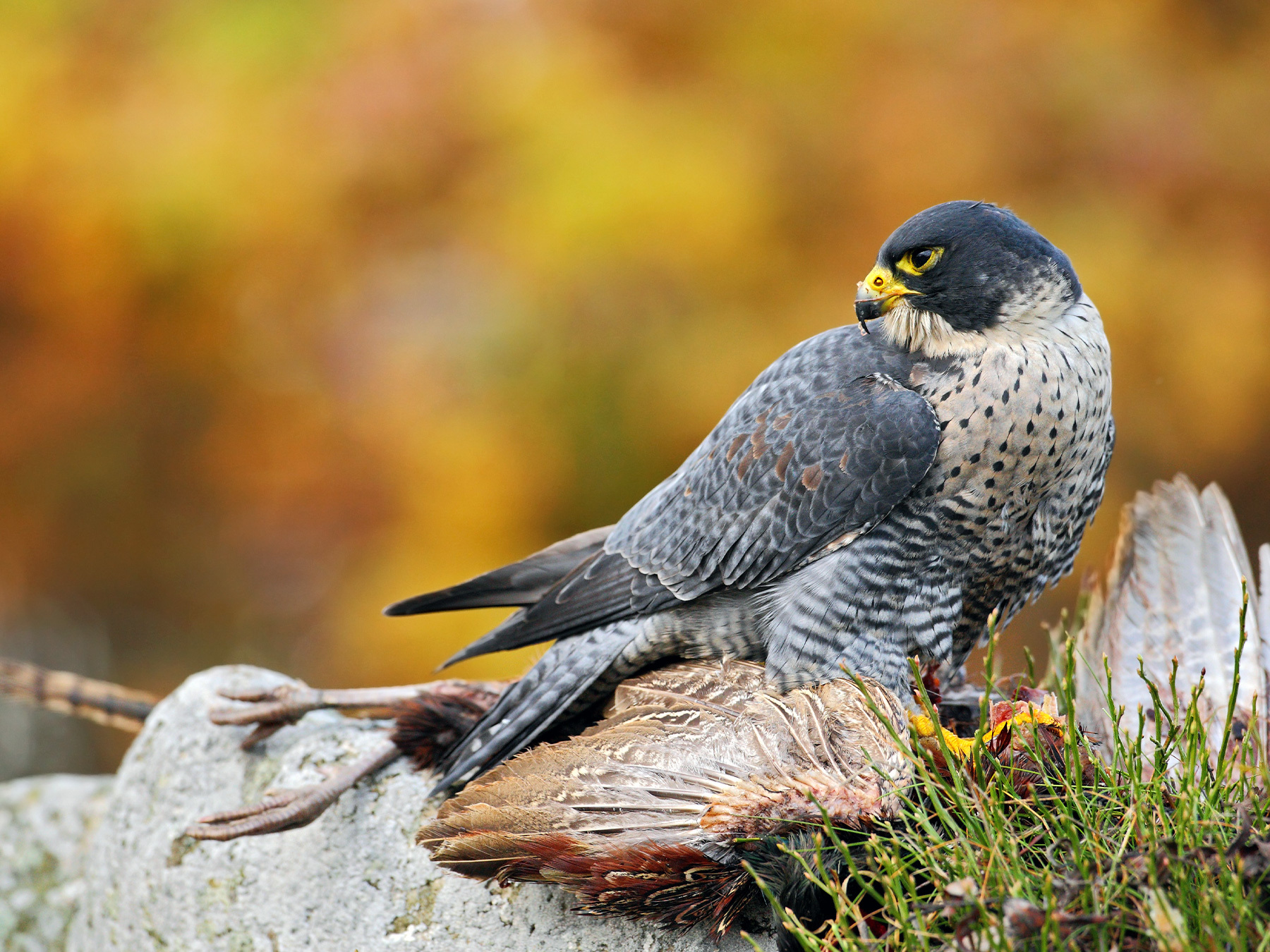
 Peregrine Falcon feeding on prey
 Peregrine Falcon feeding young at the nest site
 Nest of a Peregrine Falcon with three eggs
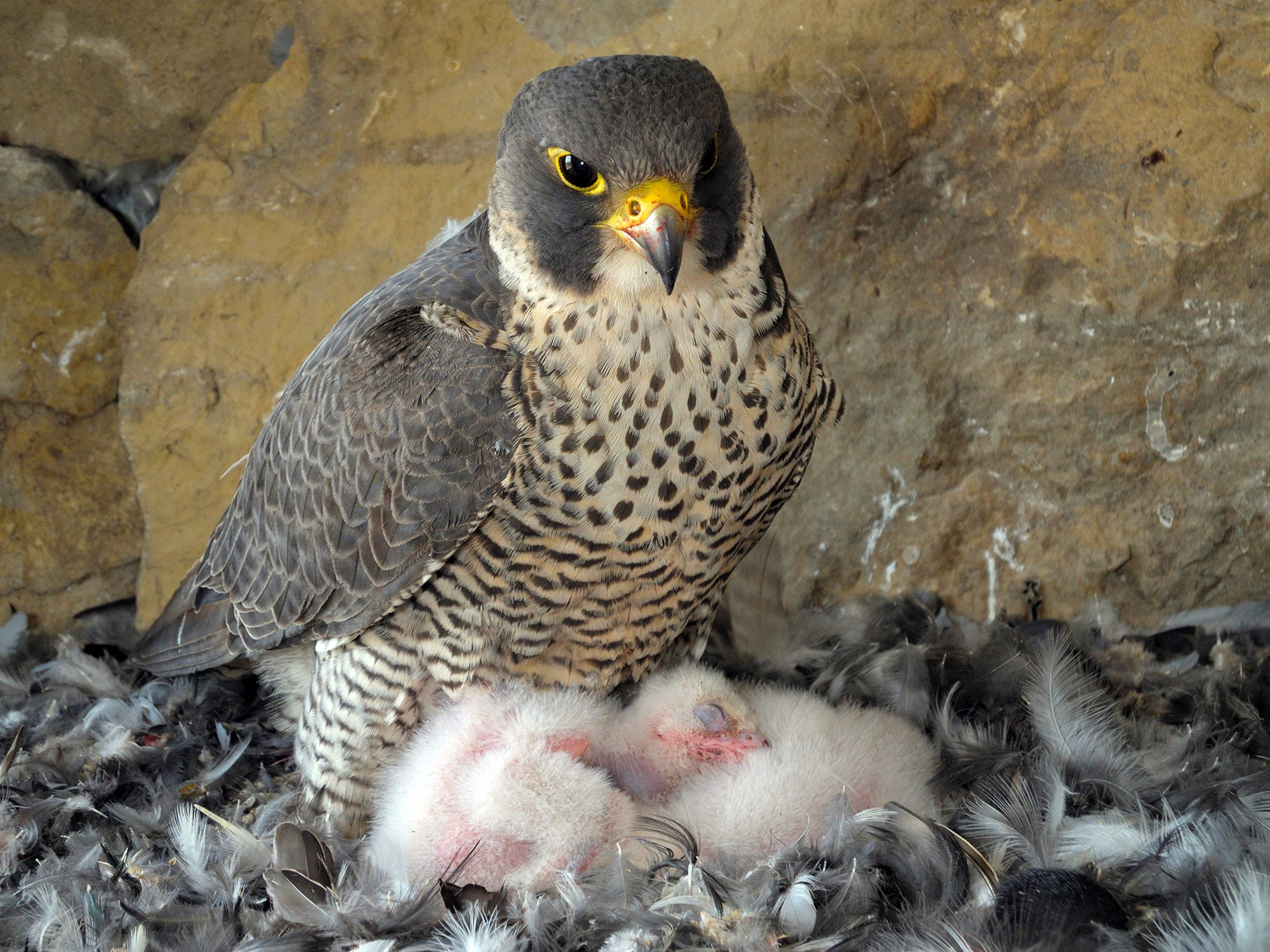
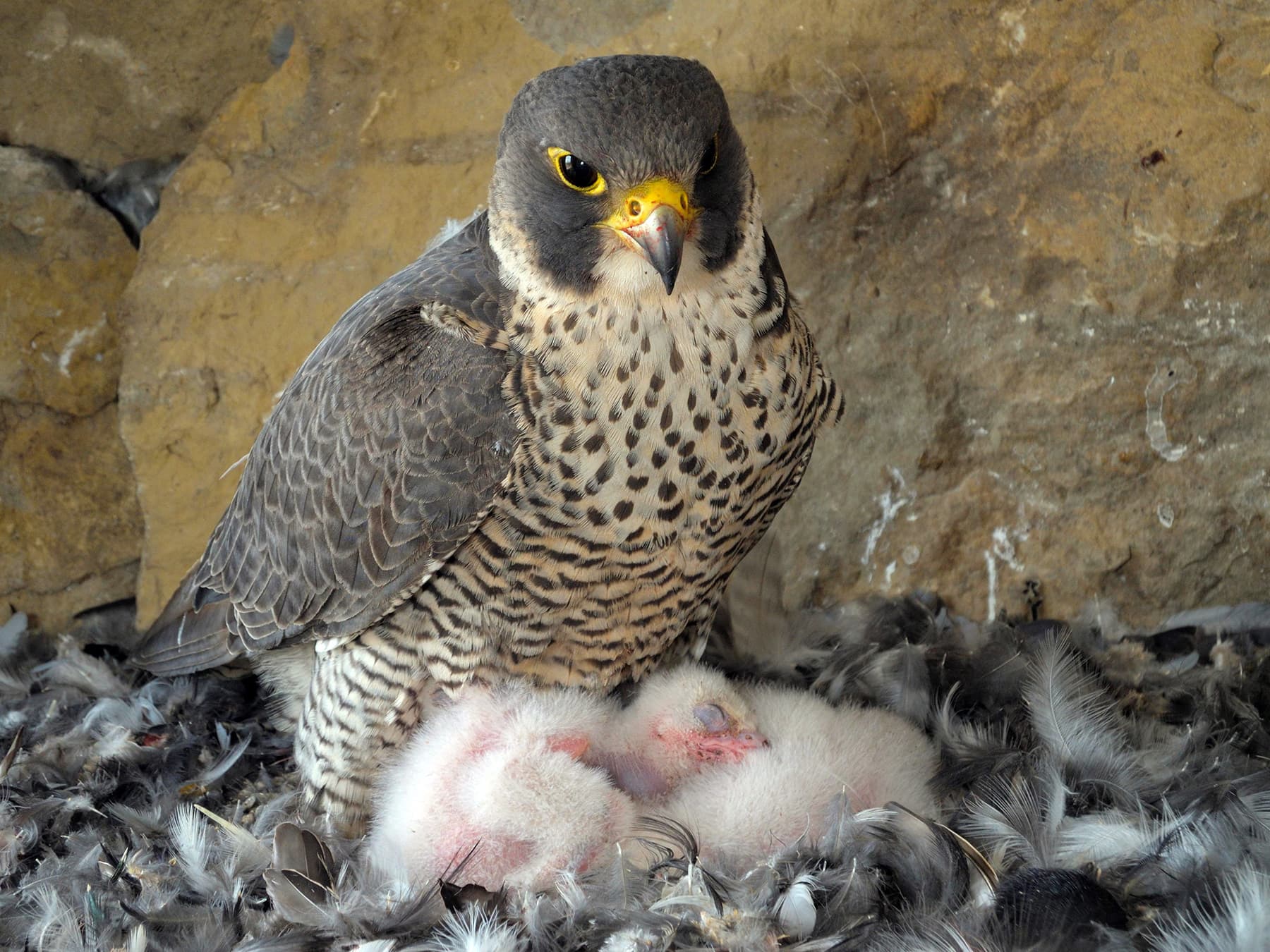 Peregrine Falcon at nest site with chicks
Peregrine Falcon guides
4 guidesQuick facts
- Length
- 34–58 cm
- Wingspan
- 74–120 cm
- Weight
- 330–1500 g
- Lifespan
- 5–6 years · oldest recorded 21.8 years
- Family
- Falcons
- Migration
- Partial migrant
- Global status (IUCN)
- Least Concern
- World population
- 100,000 - 500,000 mature individuals
- Population trend
- Increasing
- Also called
- Duck Hawk
- Scientific name
- Falco peregrinus
Questions
5What time of day do Peregrines hunt?
Peregrine Falcons are naturally diurnal birds that may hunt at any time of the day, with peaks in the morning and late afternoon. They may hunt bats in the twilight of dawn and dusk and even use artificial light to hunt at night in urban areas.
Do Peregrines eat seagulls?
Seabirds are an important component of the Peregrine Falcon diet, particularly for coastal populations. They are known to hunt many different Gull species in the Laridae family.
Do Peregrines eat squirrels?
Peregrine Falcons typically hunt birds which they catch in the air. However, they are known to hunt many small mammals, including the occasional squirrel.
Are Peregrine Falcons the fastest birds in the world?
Peregrine Falcons are believed to be the World’s fastest bird and the fastest-moving animal on the planet. They can reach speeds approaching 200 miles an hour (320km/h) when stooping (diving) in to catch their prey, although they can’t achieve this kind of speed in level flight.
How many Peregrine Falcons are there in the world?
The Peregrine Falcon has an enormous worldwide distribution but generally occurs in low numbers. Their global population could stand anywhere between 100,000 and 499,000 individuals, according to Birdlife International, with about 72,000 individuals in North America and 32,000 to 62,000 individuals in Europe.
Sources
4- 1BirdLife International. 2021. Falco peregrinus. The IUCN Red List of Threatened Species 2021: e.T45354964A206217909. Source (opens in a new tab)
- 2BirdLife International. 2021. Falco peregrinus. The IUCN Red List of Threatened Species 2021: e.T45354964A206217909. Source (opens in a new tab)
- 3BirdLife International. 2021. Falco peregrinus. The IUCN Red List of Threatened Species 2021: e.T45354964A206217909. Source (opens in a new tab)
- 4BTO longevity records: maximum age from a ringed bird, 21 years, 10 months, 24 days (set in 2016), BirdFacts: Peregrine (2016) Source (opens in a new tab)

Checked by
Nathan Cope, founder and editor
Nathan founded Birdfact and leads its writers and contributors in the UK, the US and Canada. He has watched and studied birds for more than ten years, and checks every article and species guide before it’s published.