Facts · Updated 8 Oct 2026
Wren Nesting in the UK: Nests, Eggs and Baby Wrens
By the Birdfact teamChecked by Nathan Cope
The male Wren builds several domed nests low in thick cover, and the female chooses one and lines it with feathers. In Britain the first clutch, usually 5 or 6 eggs, is laid from mid-April, on average in early May; the chicks leave the nest at 14.5 to 18 days, and Wrens usually raise two broods.
On this page14 sections
Everything about Wren nests in Britain: when and where Wrens nest, the male's several nests, eggs, chicks and fledglings, nest boxes, winter roosts and the law. For the bird itself, see Wren identification, song and facts.
When do Wrens nest?
From spring into summer. In British nests the first clutches are laid between mid-April and late June, on average on 2 May (the earliest recorded 14 April, the latest 21 June).1 Wrens usually raise two broods a year, so a second clutch follows later in the summer.
The male's nests
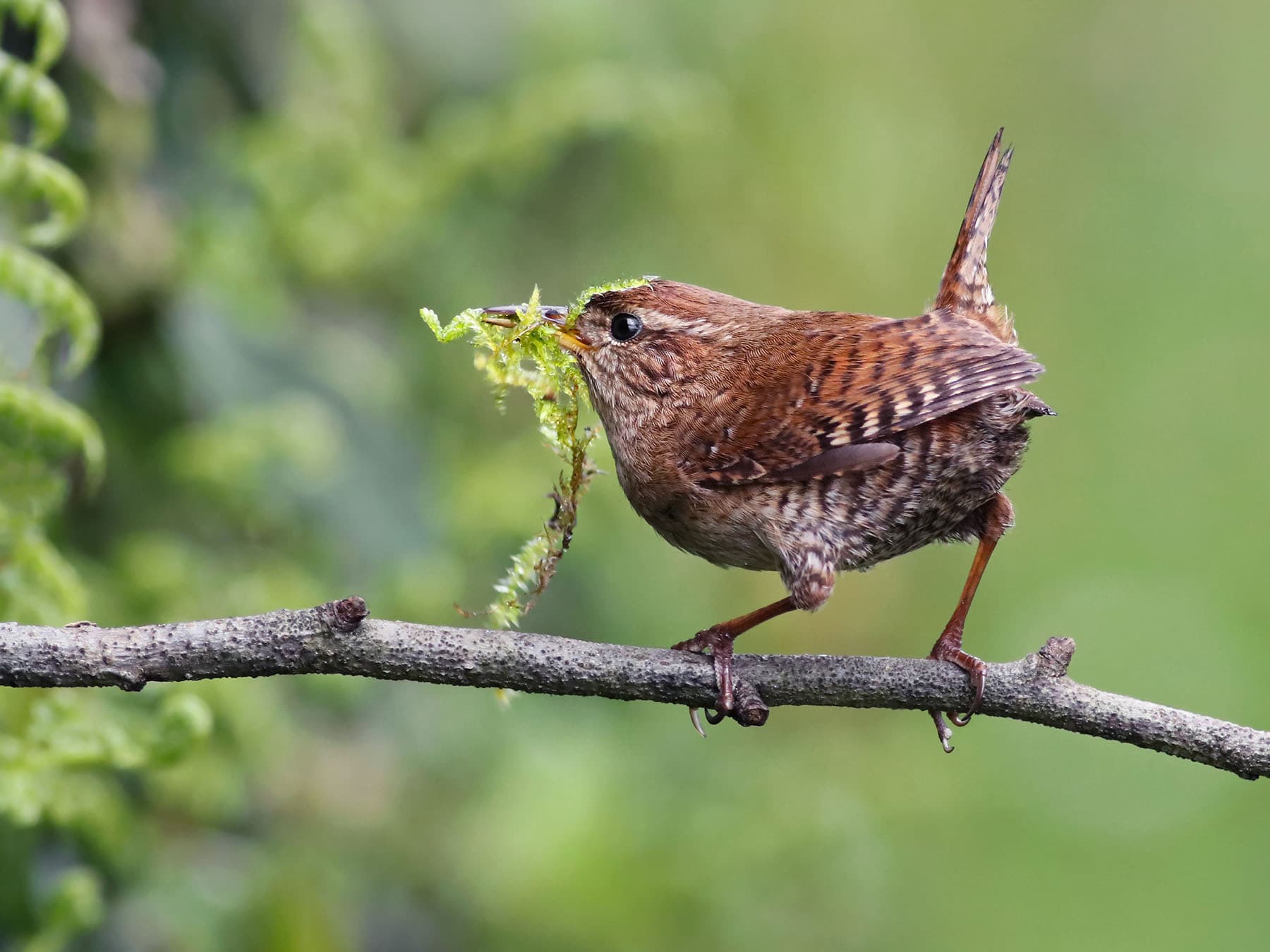
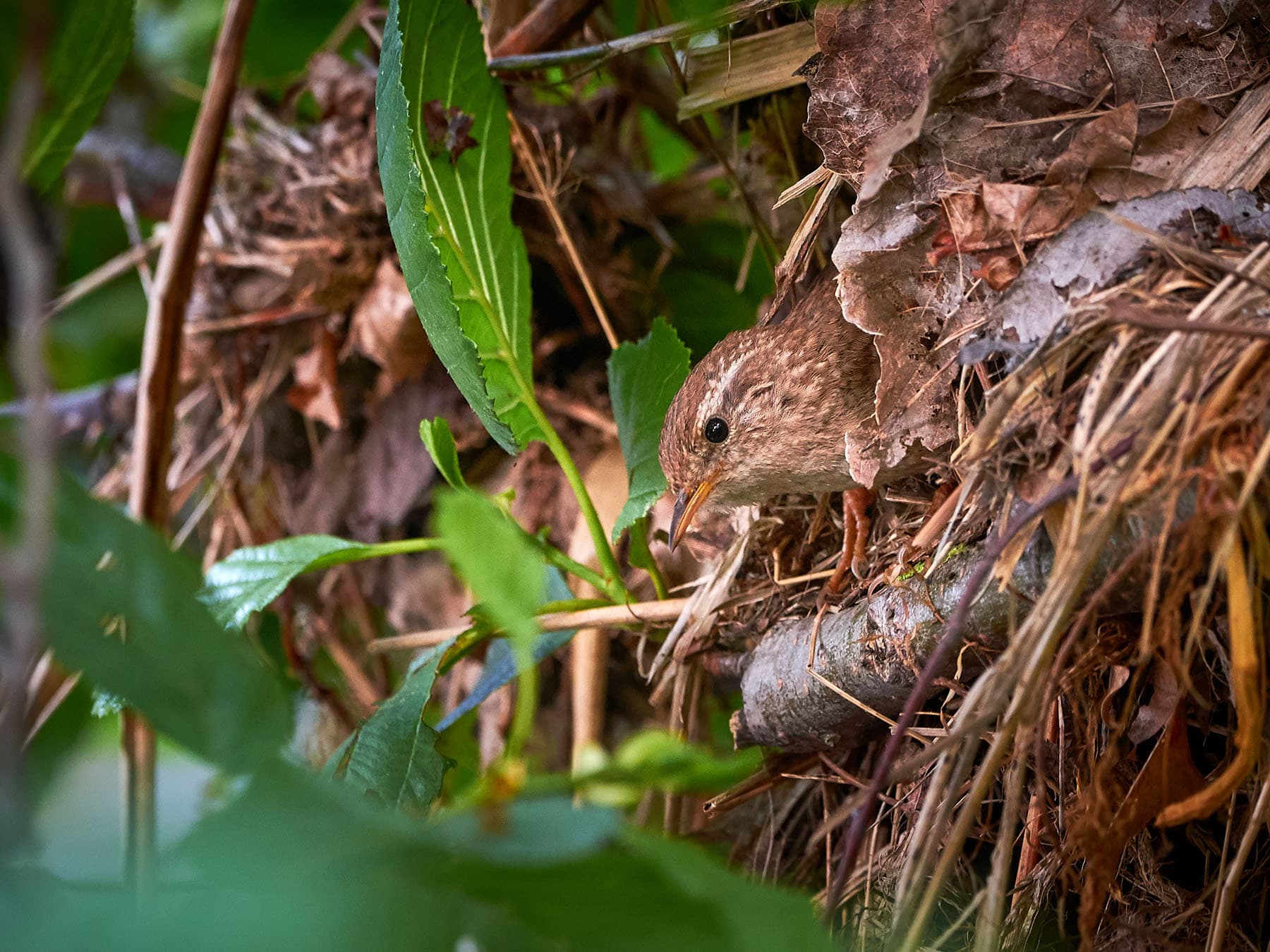
Wren nesting starts with the male. He builds several nests on his territory, and when a female arrives she inspects them, chooses one and lines it with feathers.2 Some males attract two or more females. According to All About Birds, in some populations as many as half the males do so, and even a settled pair often parts after the first brood, the female taking a new mate for the second.3
Where do Wrens nest?
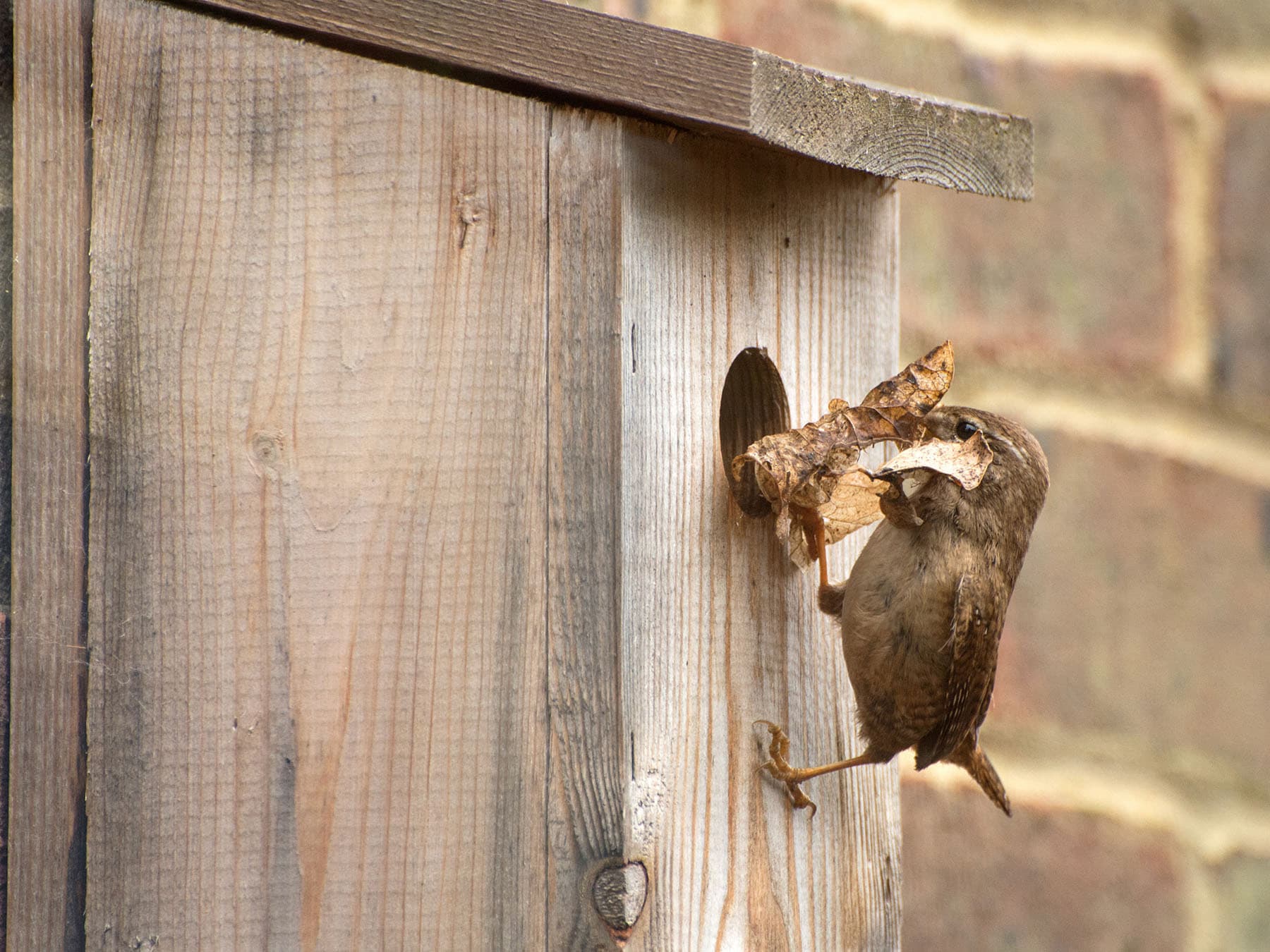
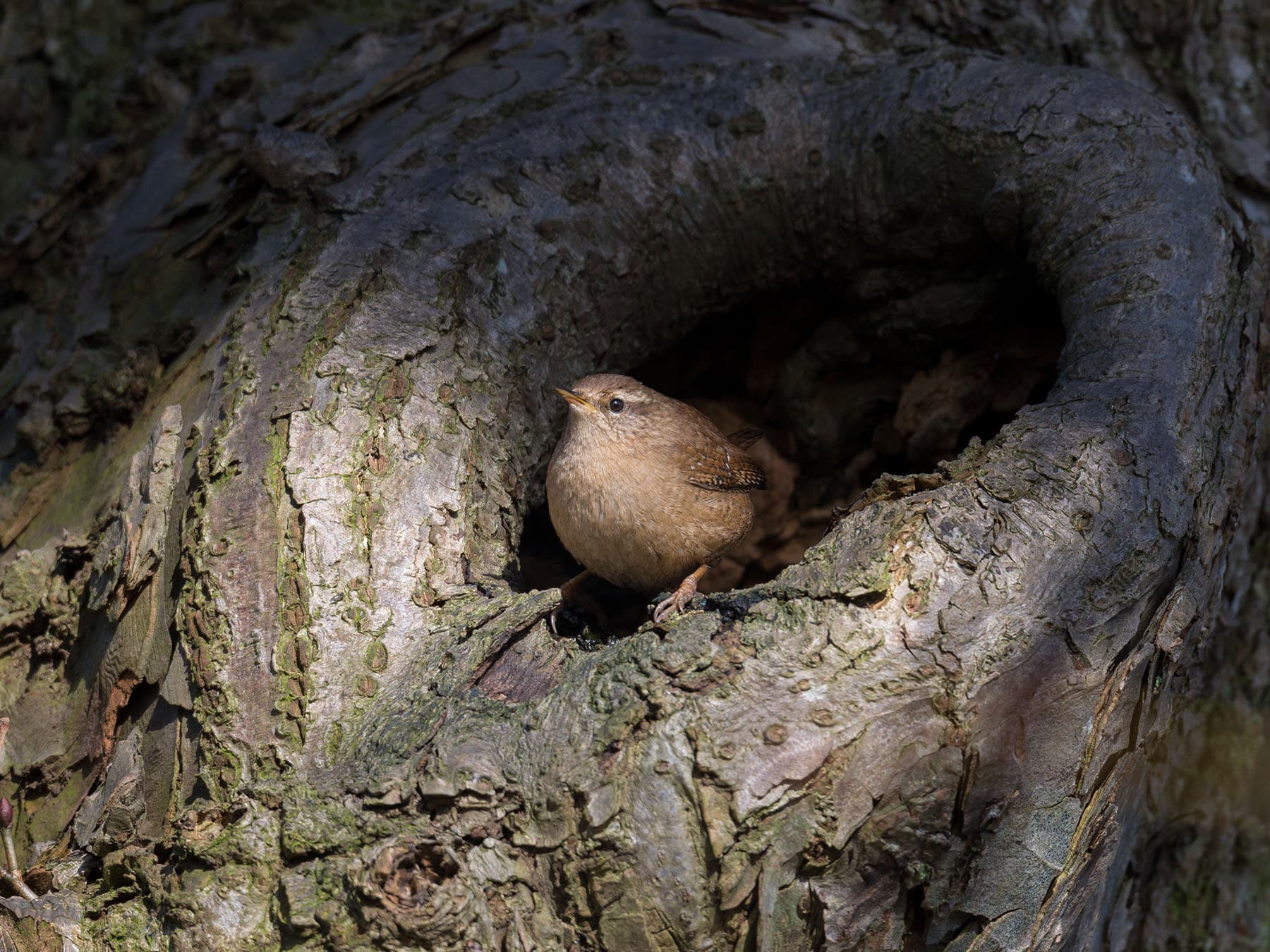
Usually low down, in thick cover. Nests are tucked into dense bushes, brambles and climbers, banks, crevices in walls, rock faces and tree trunks, holes in trees, and sometimes inside buildings. Wrens are known for odd sites too: Birds of the World mentions the pocket of a hanging coat.4
On the ground itself? Nests are built low, but tucked into dense growth, a bank or a crevice: open ground is not among the nest sites the sources describe. A nest may be used again in a later year, sometimes by birds other than those that built it.
What the nest looks like
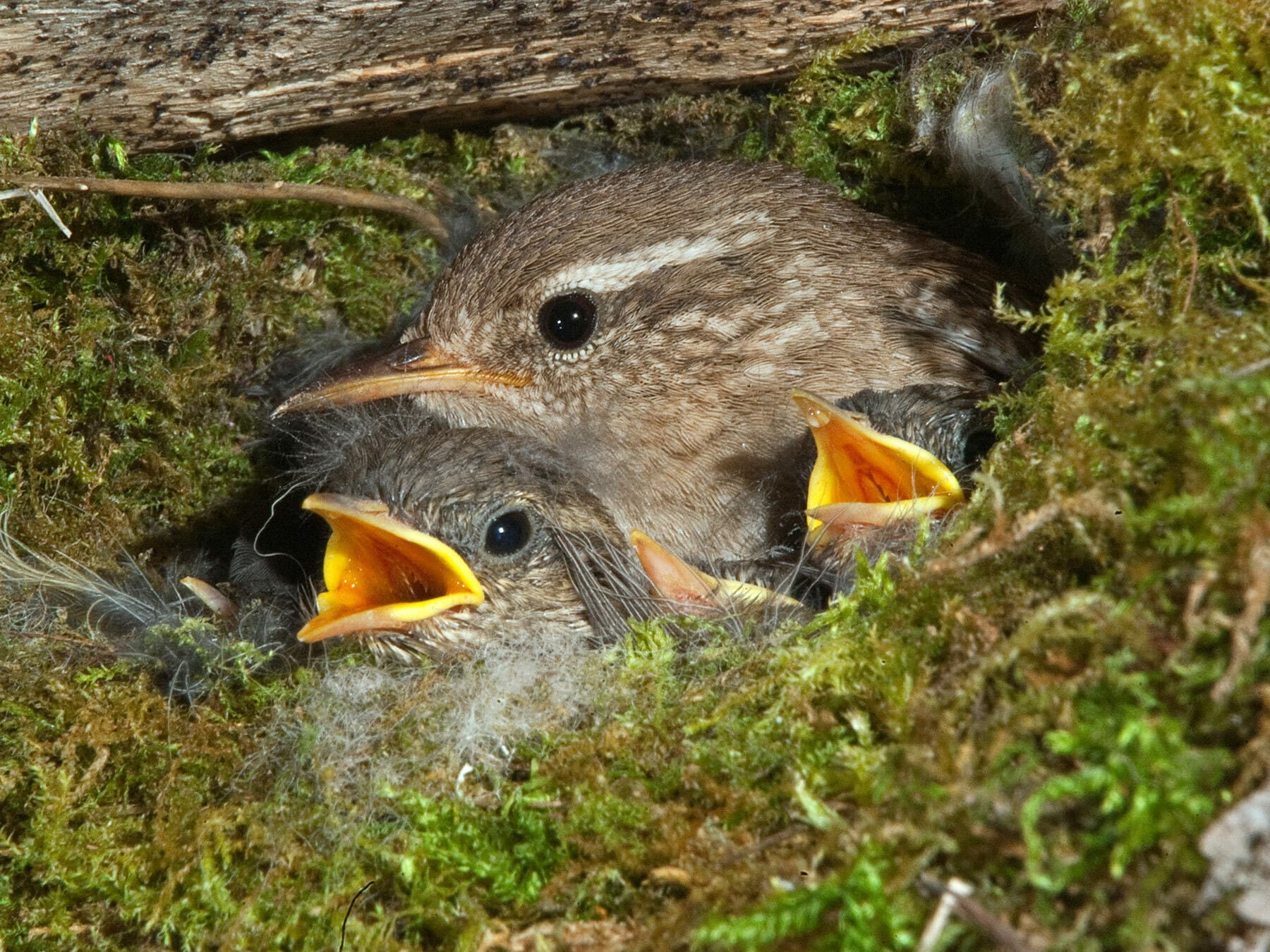
A neat ball of moss, leaves and grass with a round entrance in the side. The material is often wet when it is put in place, so the nest dries into a tight, firm dome. Birds of the World gives the average size as about 11 cm high, 13 cm wide and 14.5 cm deep, with a chamber about 6 cm across inside. The female lines it with feathers and hair.
Eggs
A clutch is usually 5 or 6 eggs in British nests, and anything from 2 to 10 has been recorded. The eggs are tiny, about 16 by 13 mm and 1.3 g.1 They are white with fine pale brown or reddish-brown spots, mostly at the broad end. Elsewhere in the range, Birds of the World notes nests holding up to 17 eggs, probably two females laying in one nest.
Incubation
Only the female incubates, for 16 to 18 days in British nests.
Baby Wrens
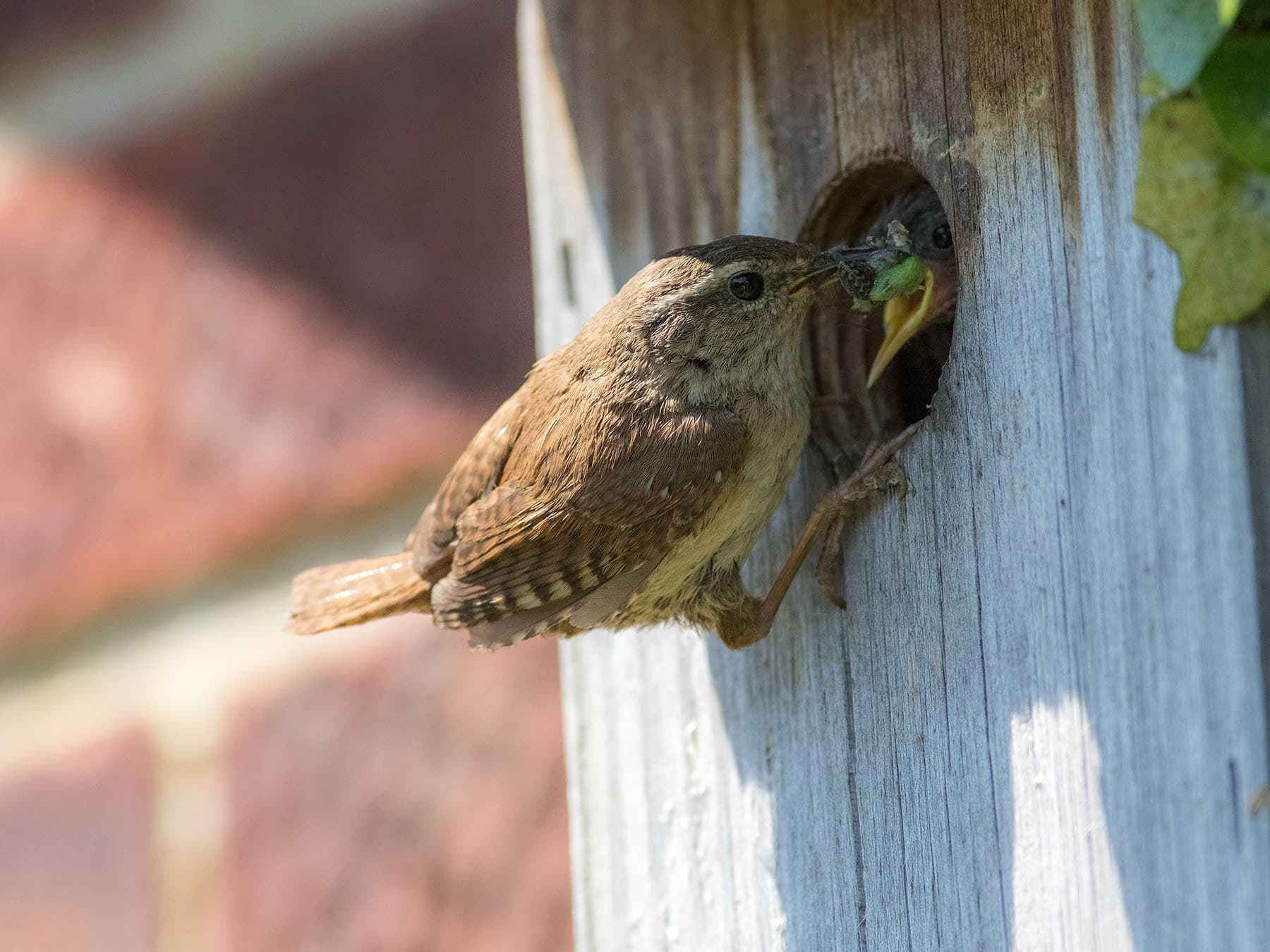
The chicks hatch helpless, with some down. The female broods them, and both parents bring food, though how much the male helps varies: some share the work equally, others do little.
The young leave the nest at 14.5 to 18 days old in British nests. Their parents go on caring for them for another 9 to 18 days before they are fully independent.
Fledglings
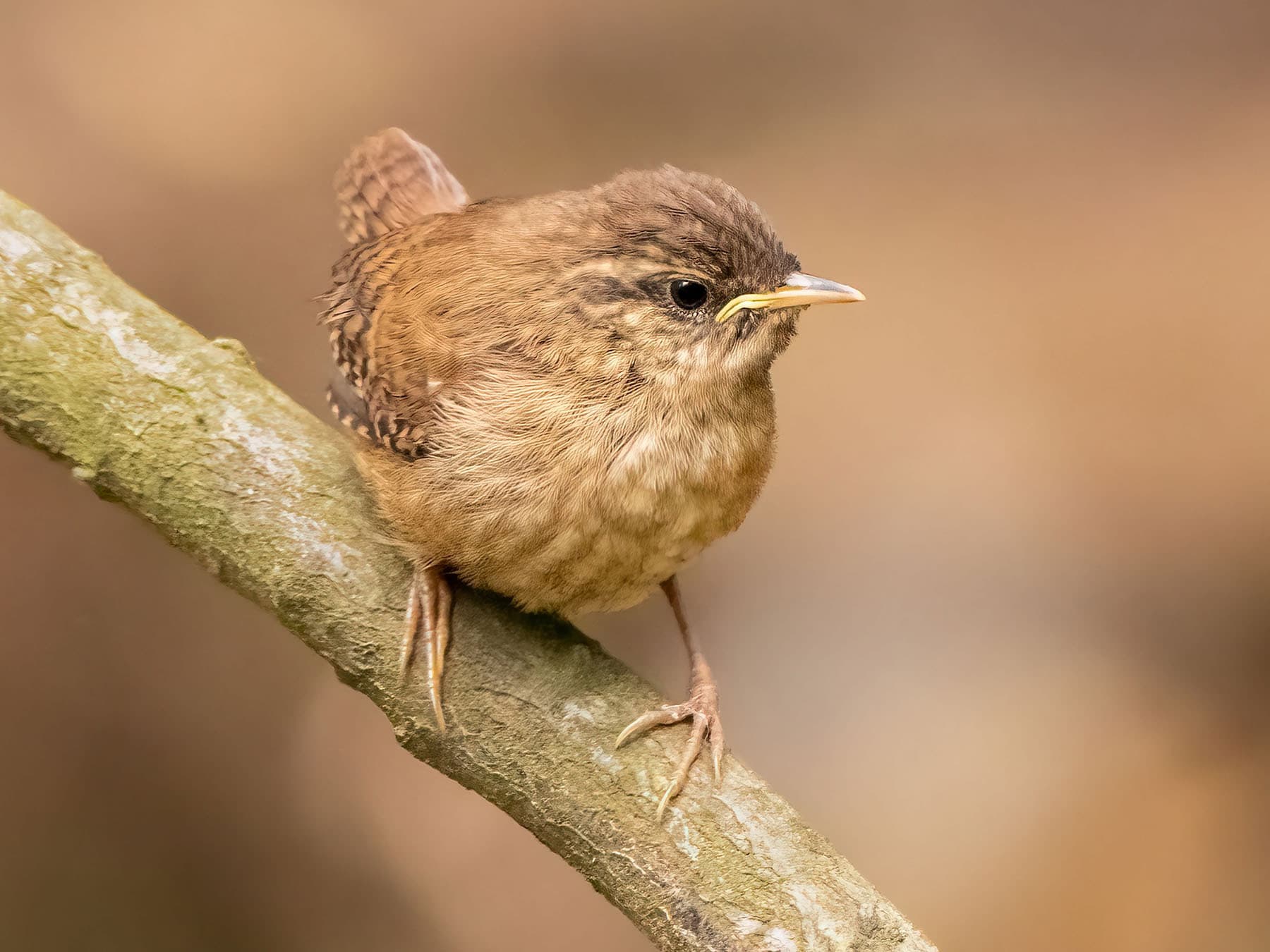
A young Wren just out of the nest has a softly mottled breast and yellow at the corners of the bill. If you find one on the ground, fully feathered and unhurt, it is usually best left where it is: its parents are likely to be close by and still feeding it. Keep pets and people away, and move it only if it is in danger, a short way into cover.5
Broods
Usually two a year in Britain. A male with more than one female may have several broods on his territory in a season.
Nest success
In one study in old-growth forest in Poland, 40% of Wren nests produced young, and 91% of the losses were to predators. Cuckoos only rarely lay in Wren nests.
Do Wrens use nest boxes?
Winter roosts
Outside the breeding season Wrens roost in nest boxes, roosting pouches and other holes, and on cold nights many crowd in together for warmth. The BTO's Garden BirdWatch roosting survey found up to 51 roosting together, near Lyme Regis, and an average of about 10 in a nest box.8 The BTO notes that some birds use nest boxes to roost in during the winter.
Nests and the law
The nests of all wild birds are protected while in use or being built. In England and Wales it is an offence intentionally to take, damage or destroy the nest of any wild bird while it is in use or being built. In Scotland the offence also covers doing so recklessly, and interfering with the nest.9 In Northern Ireland it covers doing so intentionally or recklessly.10 Wrens nest low in hedges, climbers, banks and walls, so check before cutting or clearing in spring and summer.
Sources
- BTO. Wren (Troglodytes troglodytes). BTO BirdFacts. Accessed 8 October 2026. Source
- RSPB. Wren. RSPB Birds A-Z. Accessed 8 October 2026. Source
- Cornell Lab of Ornithology. Eurasian Wren: Life History and Identification. All About Birds. Accessed 8 October 2026. Source
- Kroodsma, D. E., Brewer, D., Christie, D. A., Marks, J. S. (2020). Eurasian Wren (Troglodytes troglodytes), version 1.0. Birds of the World (J. del Hoyo, A. Elliott, J. Sargatal, D. A. Christie and E. de Juana, editors). Cornell Lab of Ornithology. doi:10.2173/bow.winwre4.01
- RSPB. Injured and baby birds. RSPB advice. Accessed 8 October 2026. Source
- BTO. Love birds welcome National Nest Box Week. BTO press release. Accessed 8 October 2026. Source
- BTO. Putting up a nest box. BTO, Helping birds. Accessed 8 October 2026. Source
- BTO. Roosting survey: results. BTO Garden BirdWatch. Accessed 8 October 2026. Source
- UK Parliament (1981). Wildlife and Countryside Act 1981, section 1. Accessed 7 October 2026. Source
- UK (1985). The Wildlife (Northern Ireland) Order 1985, article 4. Accessed 7 October 2026. Source