Facts · Updated 8 Oct 2026
What Do Wrens Eat? Diet and Feeding in the UK
By the Birdfact teamChecked by Nathan Cope
Wrens eat mostly insects and spiders, picked from leaves, crevices and leaf litter low down, with some berries and seeds in winter. They are not regular feeder birds: they find their food in thick, low cover.
On this page7 sections
What Wrens eat through the year, how they find it, winter, the young, and Wrens in your garden. For the bird itself, see Wren identification, song and facts.
What do Wrens eat?
Mostly insects and spiders. Wrens eat beetles, bugs, moths and butterflies, and the caterpillars of moths and butterflies, along with spiders and other small invertebrates such as earwigs, grasshoppers and snails.1, 2 They also eat some berries and seeds, especially in winter when insects are harder to find.3
Fish, tadpoles and frogs
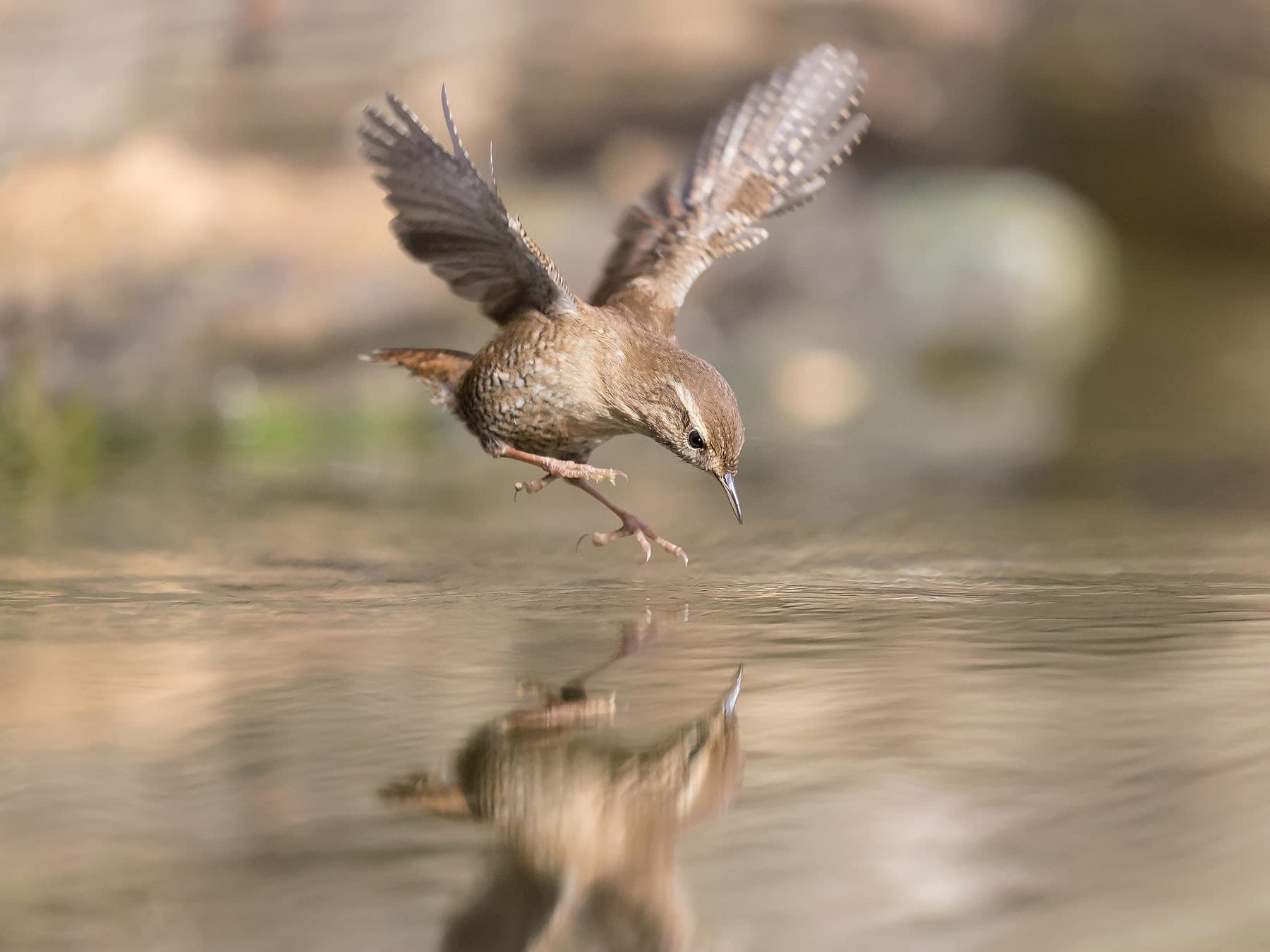
Now and then Wrens take small vertebrates too: small fish, tadpoles and young frogs. They have been seen wading into shallow water and putting their heads under to catch prey.
How they find their food
Wrens hunt low down, alone or in pairs, on or near the ground. They forage and take cover in bushes, hedgerows, fallen trees and brush piles, picking prey from leaves and twigs, probing into crevices and searching leaf litter. They also catch insects in the air, and they will even forage under snow.
They are resourceful too: Wrens have been seen following a foraging badger to catch the prey it disturbed.
What do Wrens eat in winter?
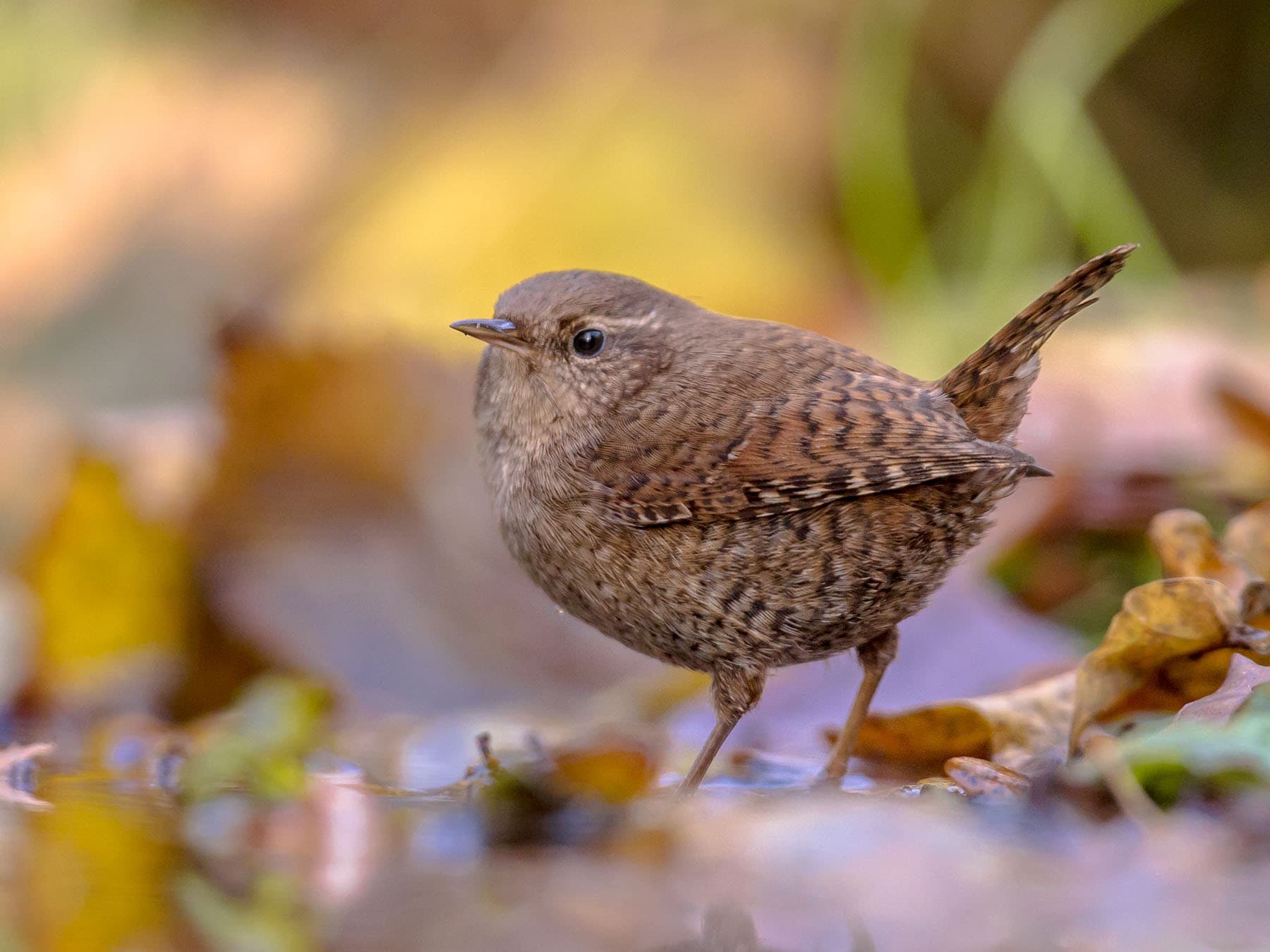
The same small insects and spiders, when they can find them, plus more berries and seeds. Winter is the hard time: in long spells of frost and snow, both the cold and the difficulty of finding insects take their toll.4 Numbers can fall sharply after a hard winter, and young birds suffer most.
Food for the chicks
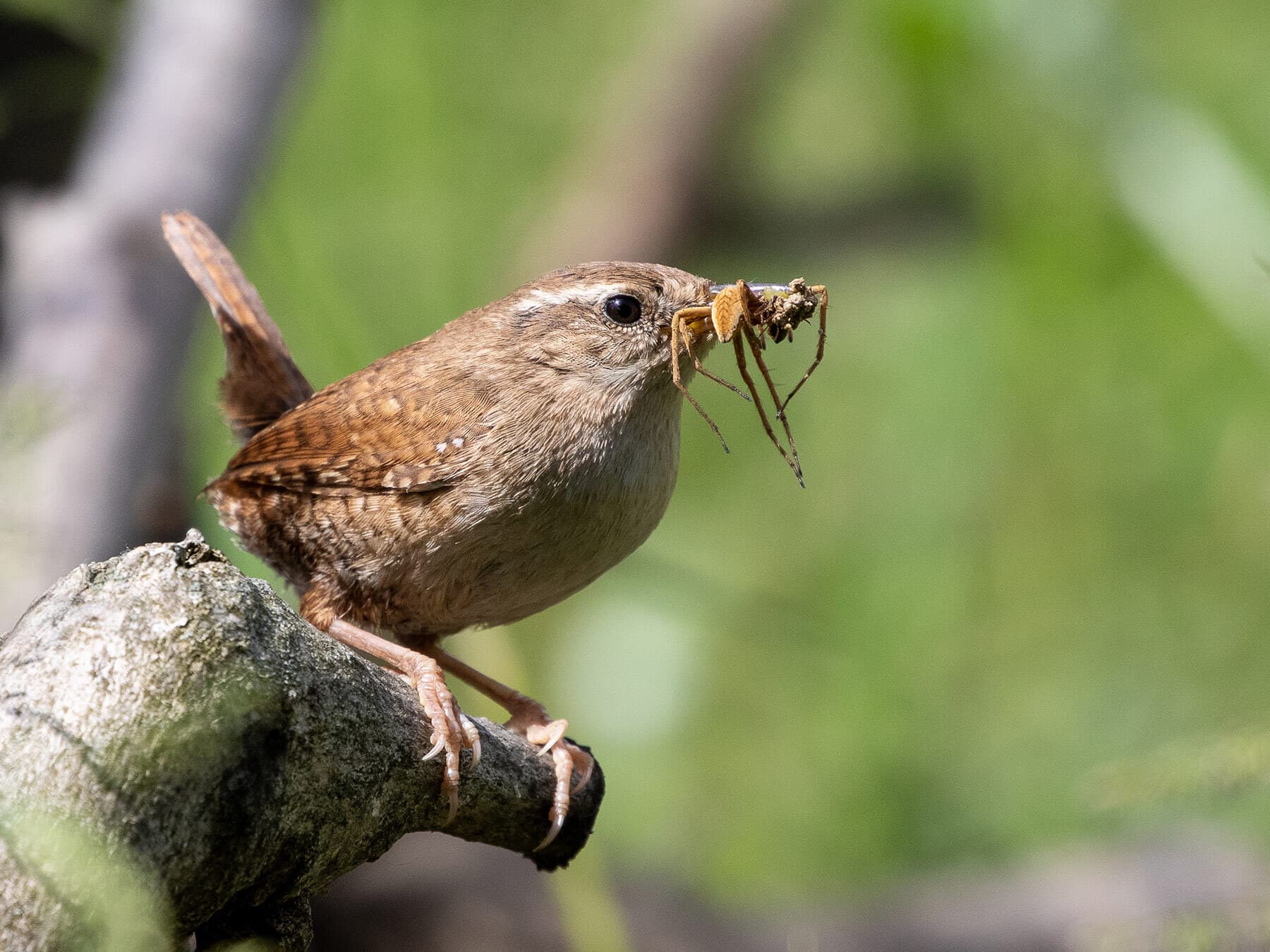
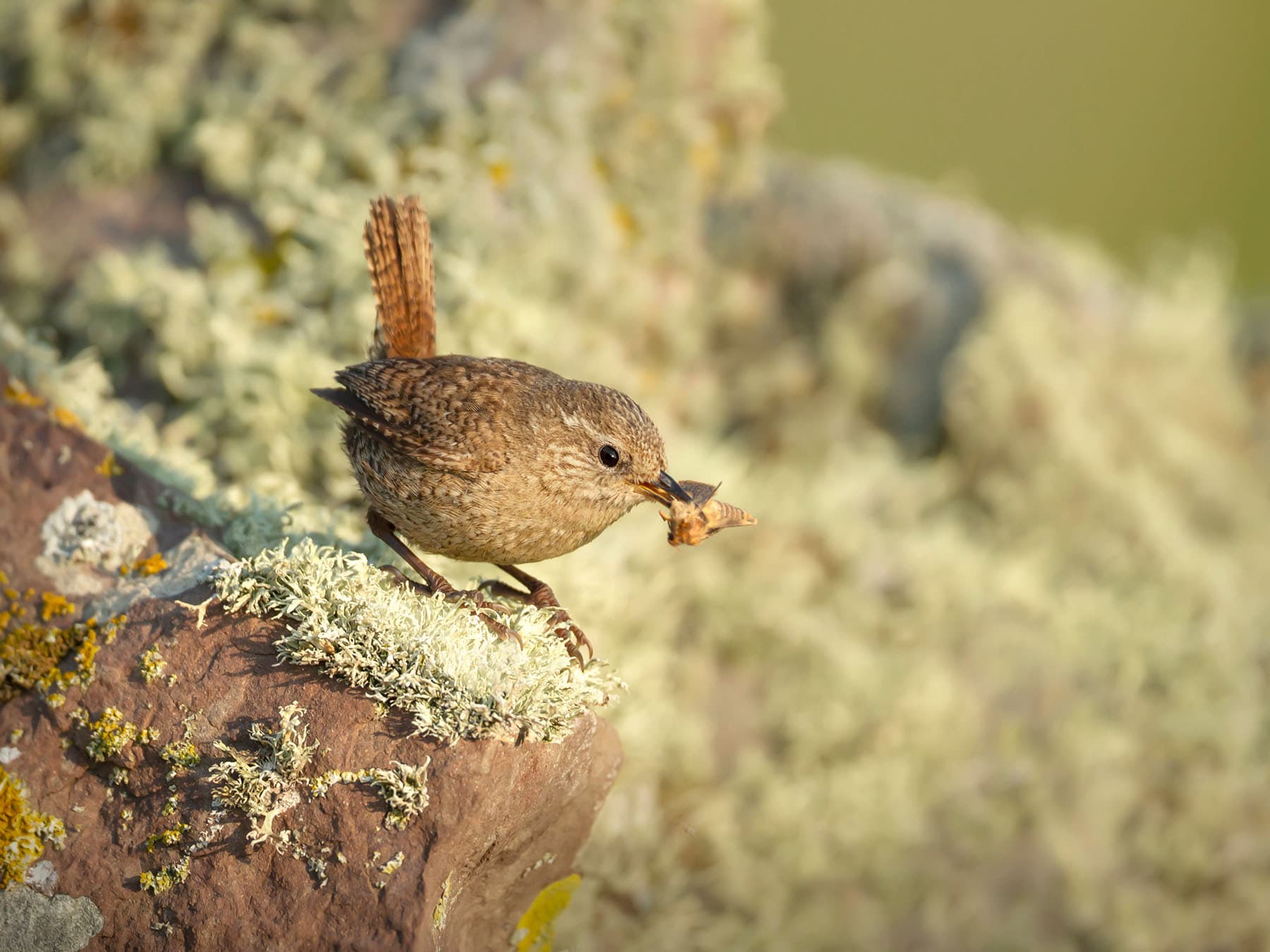
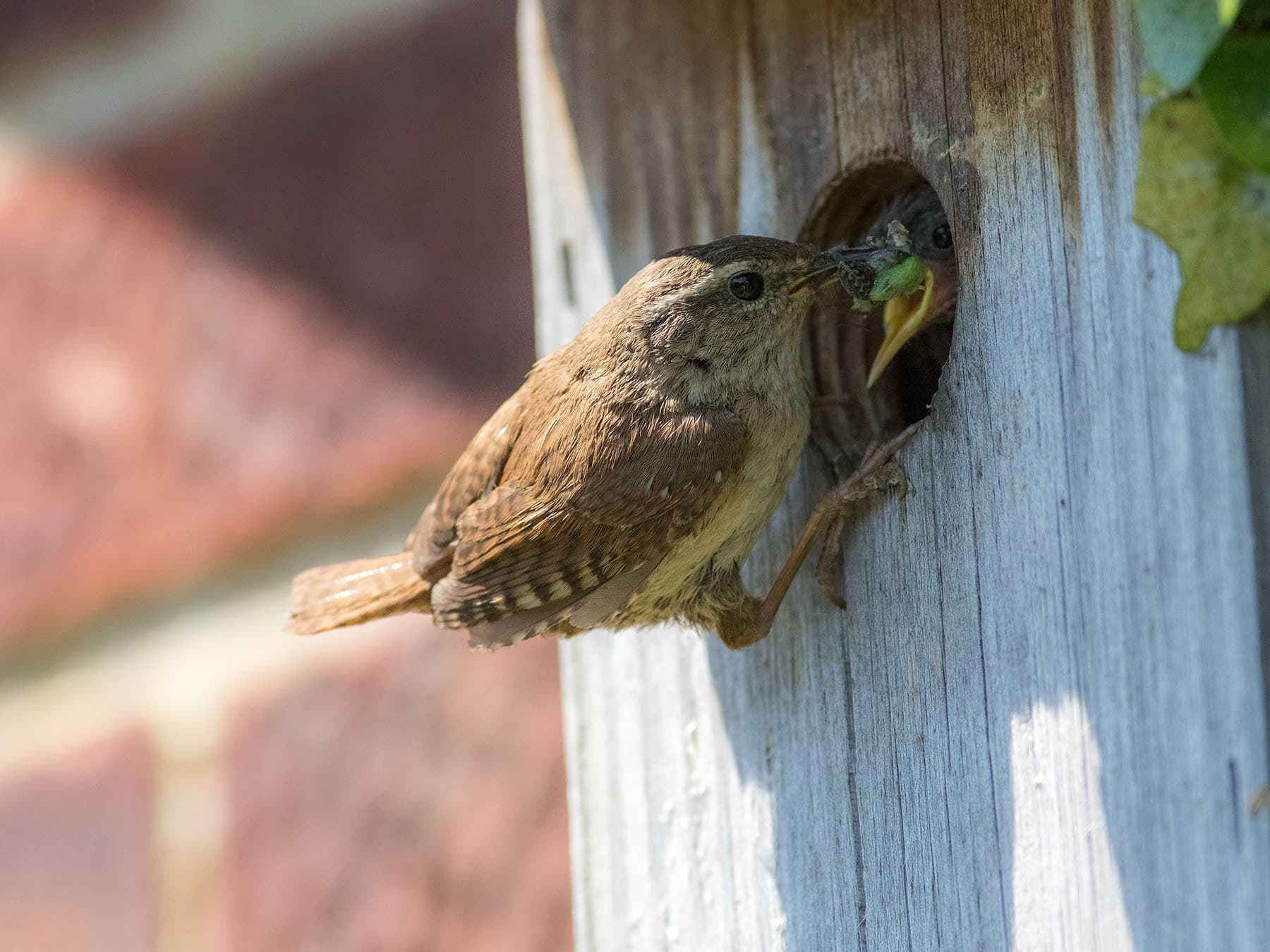
Both parents bring food to the nest, though some males do much more of it than others.2 The sources do not list the chicks' food item by item; the adults in these photos carry insects and other small prey.
Feeding Wrens in your garden
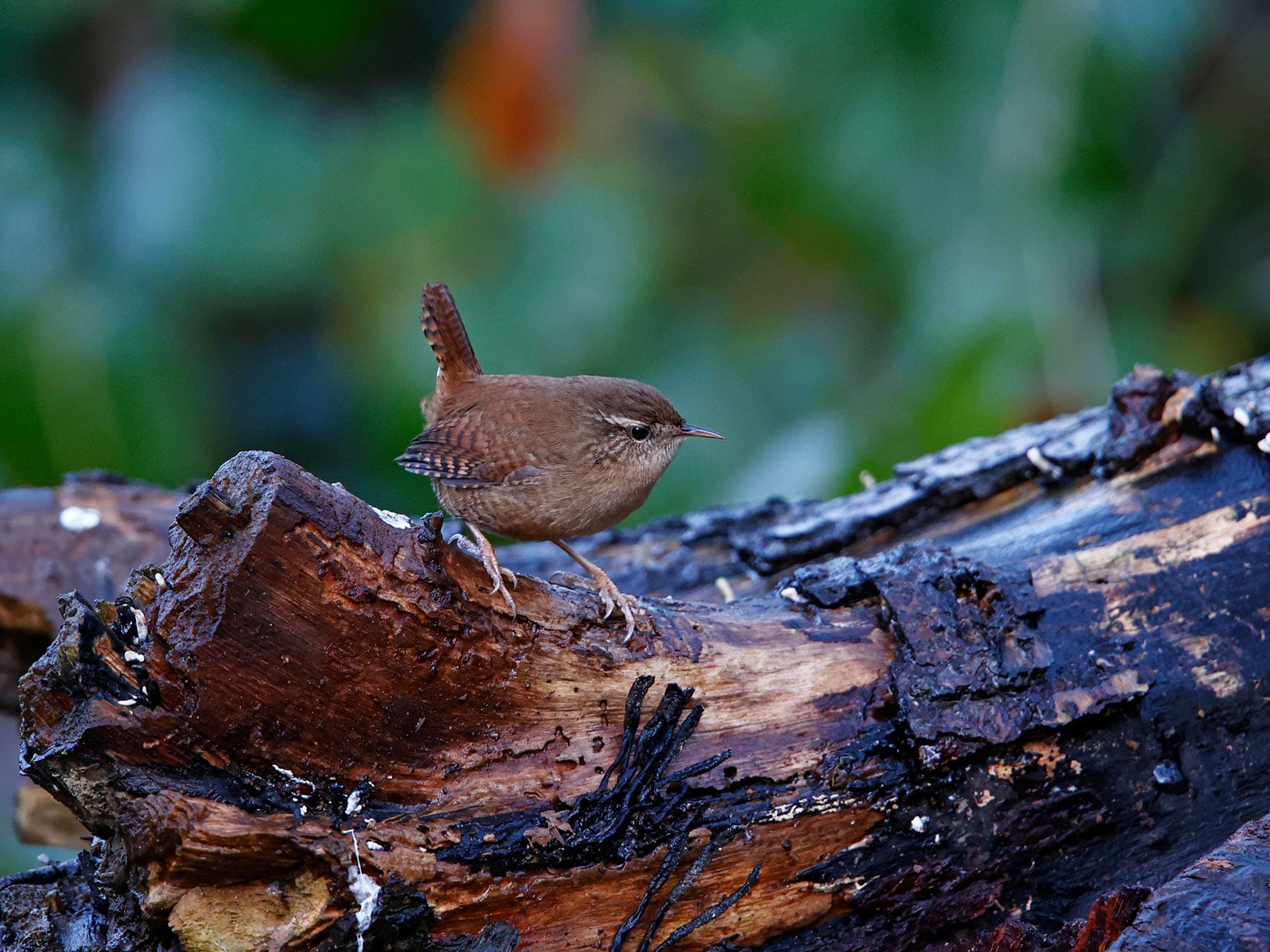
Wrens are not regular feeder birds, and no BTO or RSPB feeding advice names a food for them. The RSPB notes that they sometimes pick up crumbs that have fallen from bird feeders.3
If you feed birds, follow the RSPB's current advice to slow the spread of disease: use hanging feeders rather than flat feeders such as bird tables, trays and window feeders, clean them every week, and put out fresh water every day. Between 1 May and 31 October it advises only small amounts of mealworms, fat balls or suet.5
Sources
- Kroodsma, D. E., Brewer, D., Christie, D. A., Marks, J. S. (2020). Eurasian Wren (Troglodytes troglodytes), version 1.0. Birds of the World (J. del Hoyo, A. Elliott, J. Sargatal, D. A. Christie and E. de Juana, editors). Cornell Lab of Ornithology. doi:10.2173/bow.winwre4.01
- Cornell Lab of Ornithology. Eurasian Wren: Life History and Identification. All About Birds. Accessed 8 October 2026. Source
- RSPB. Wren. RSPB Birds A-Z. Accessed 8 October 2026. Source
- BTO. Wren (Troglodytes troglodytes). BTO BirdFacts. Accessed 8 October 2026. Source
- RSPB (2026). Our latest guidance on feeding garden birds. RSPB news. Accessed 8 October 2026. Source