Facts · Updated 8 Oct 2026
What Do Chaffinches Eat? Diet and Feeding in the Garden
By the Birdfact teamChecked by Nathan Cope
Chaffinches eat seeds for much of the year and insects in spring and summer, and feed their chicks on caterpillars and aphids. In gardens they feed mostly on the ground. What they eat through the year, what to put out and when, and how to keep them free of disease.
On this page10 sections
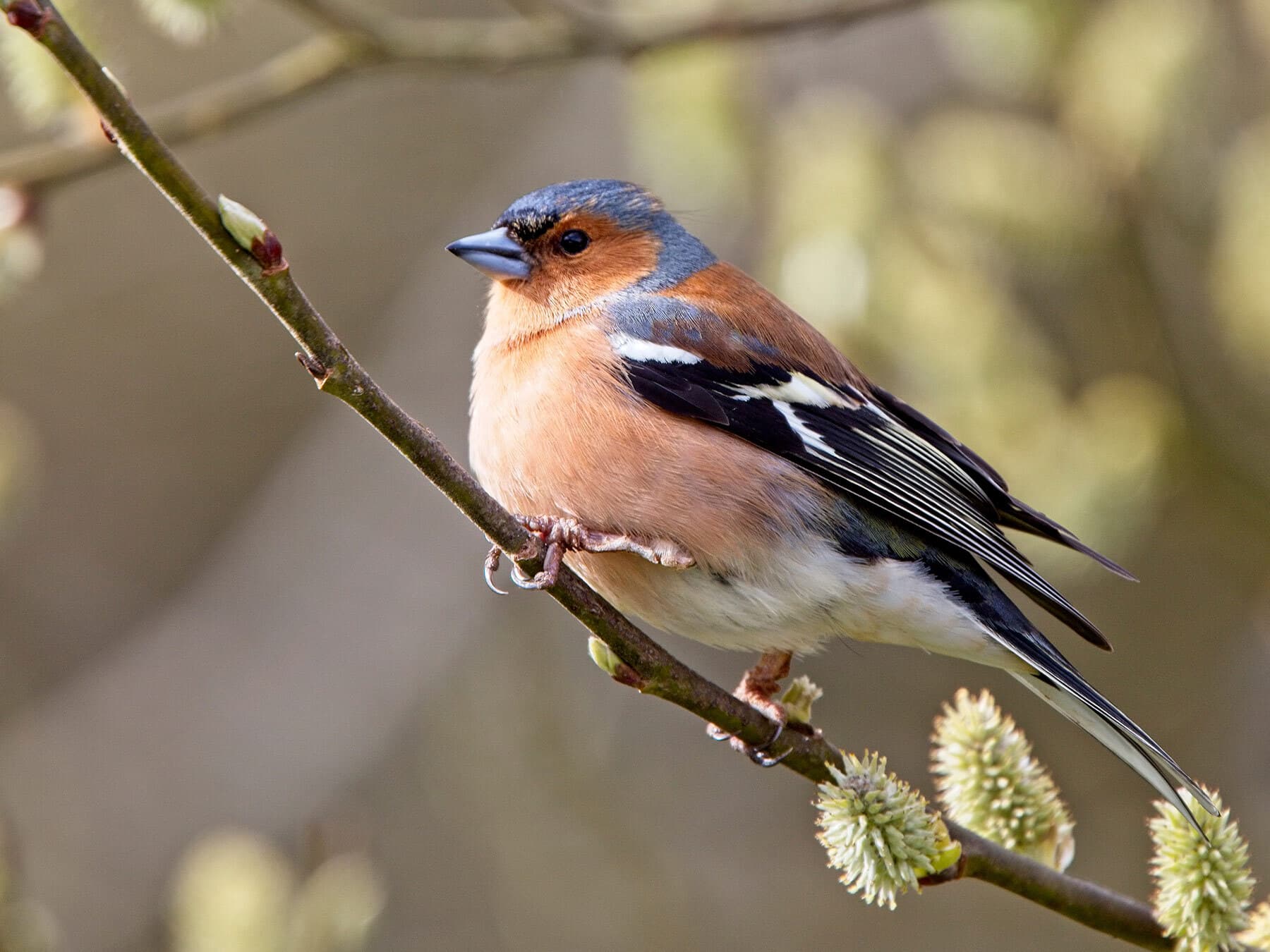
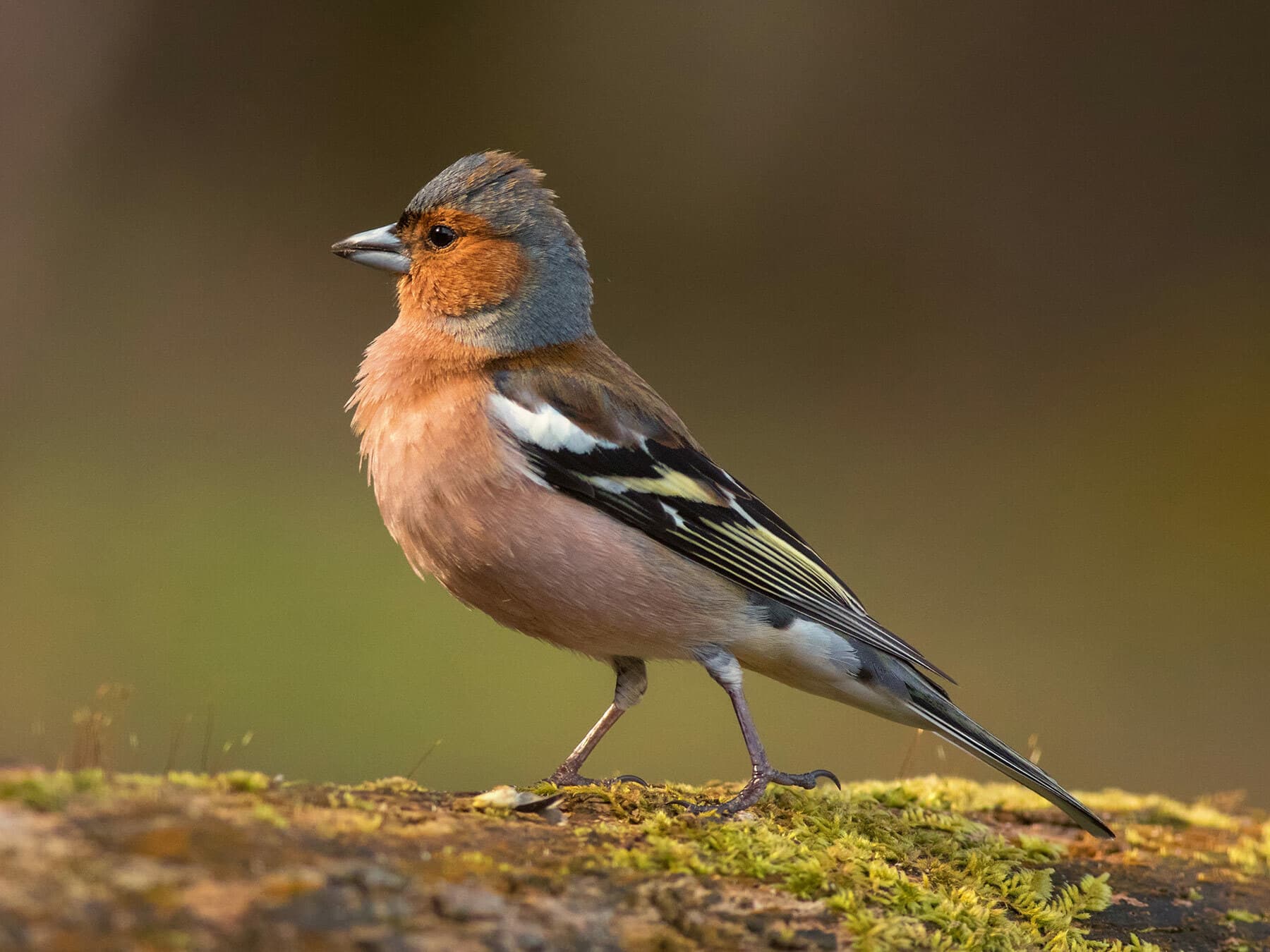
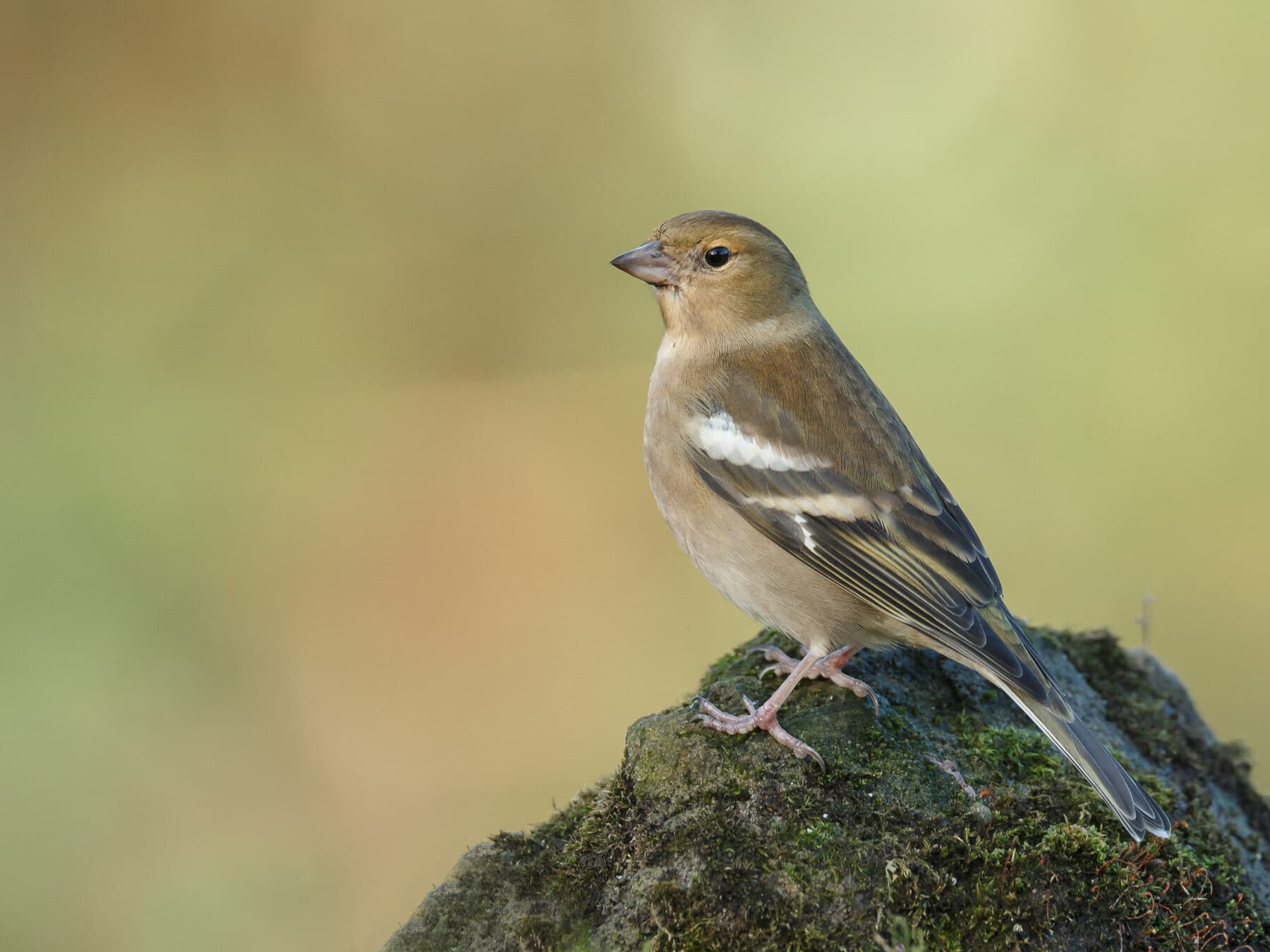
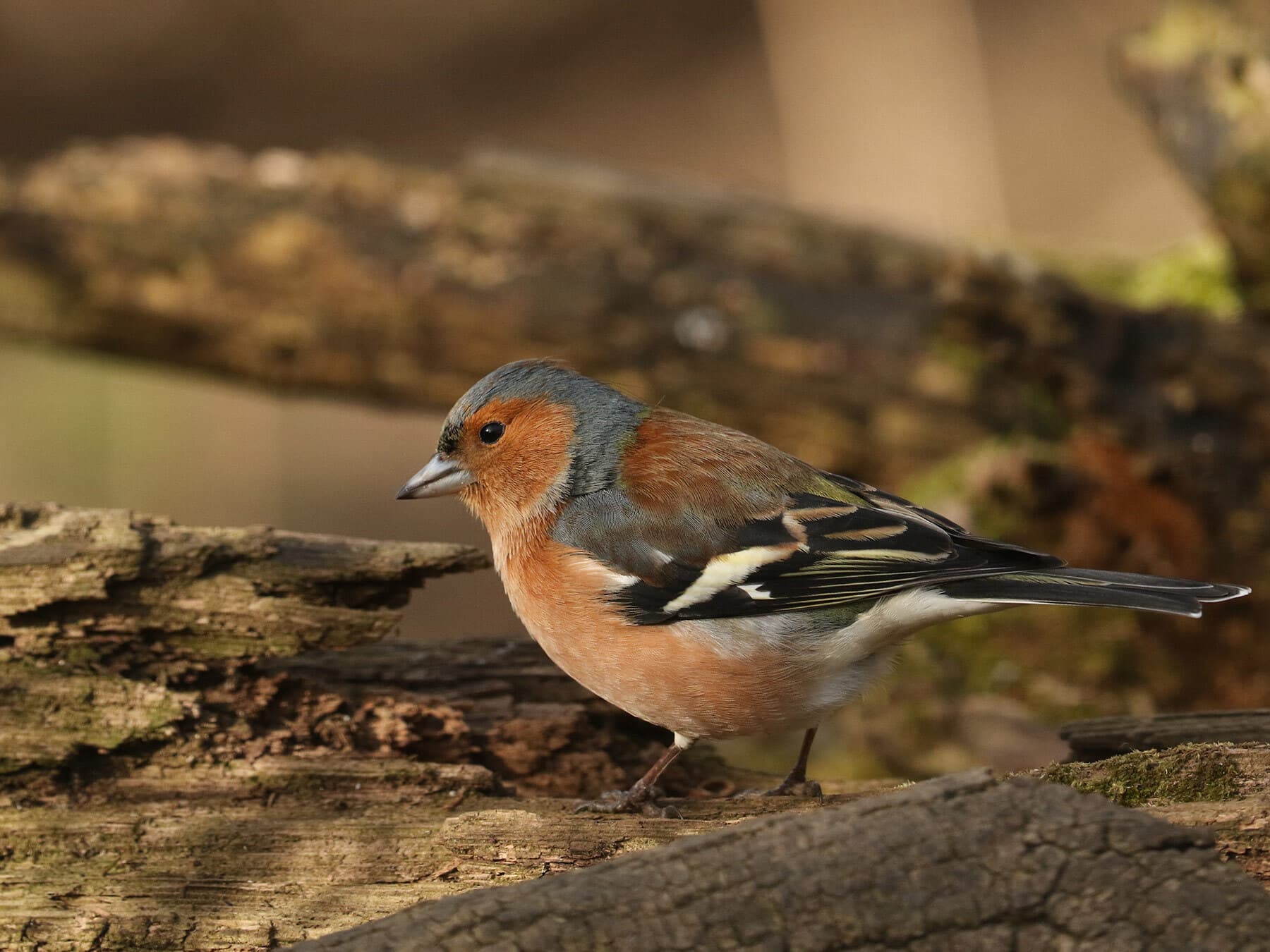
Chaffinches eat seeds for much of the year and insects in spring and summer, and they feed their chicks almost entirely on insects. In gardens they are ground feeders, picking up seed under feeders and tables. Here is what they eat through the year, what to put out, and how to keep them healthy.
What do Chaffinches eat?
Their diet is the most varied of any finch. It is mostly small invertebrates and their larvae, with seeds and buds; the list of seeds runs to dozens of plants, from beech, birch and pine to nettle, chickweed, grasses and cereals.1
Spring and summer
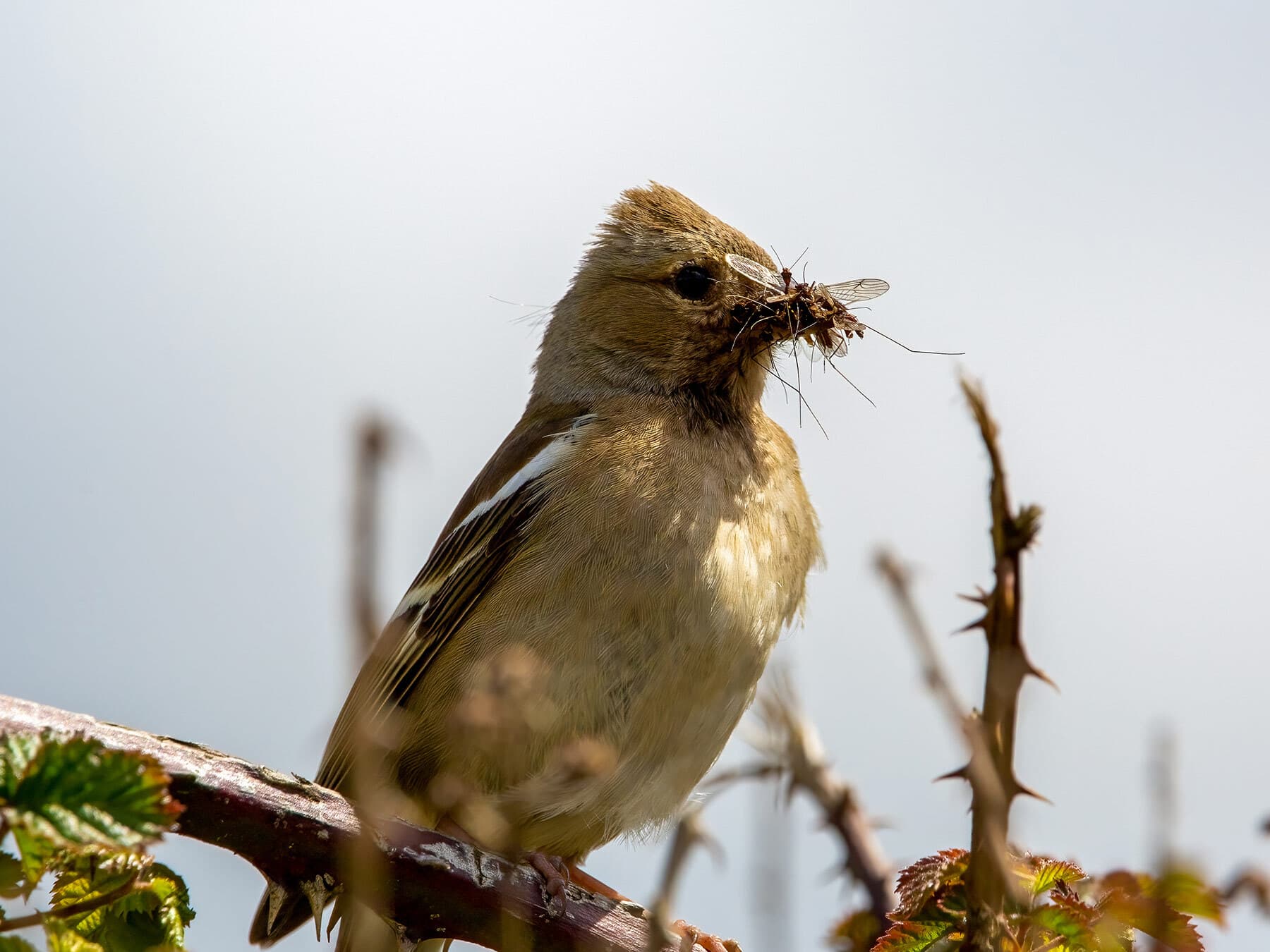
Insects and other small invertebrates, caught at every level in trees and bushes: caterpillars, aphids, beetles, flies, moths and many more, with tree buds in spring. A Chaffinch will cling briefly to a tree trunk, snatch an insect in the air, or hover to take one from a leaf. Some even wade into shallow water and dip their heads to pull out caddis fly larvae, stripping off the case as if it were a seed husk.1
Winter
Seeds, mostly from the ground. Winter flocks feed on stubble and weedy fields, often with Bramblings, Greenfinches and sparrows, and on the wild bird seed strips some farmers sow for birds.
Food for the chicks
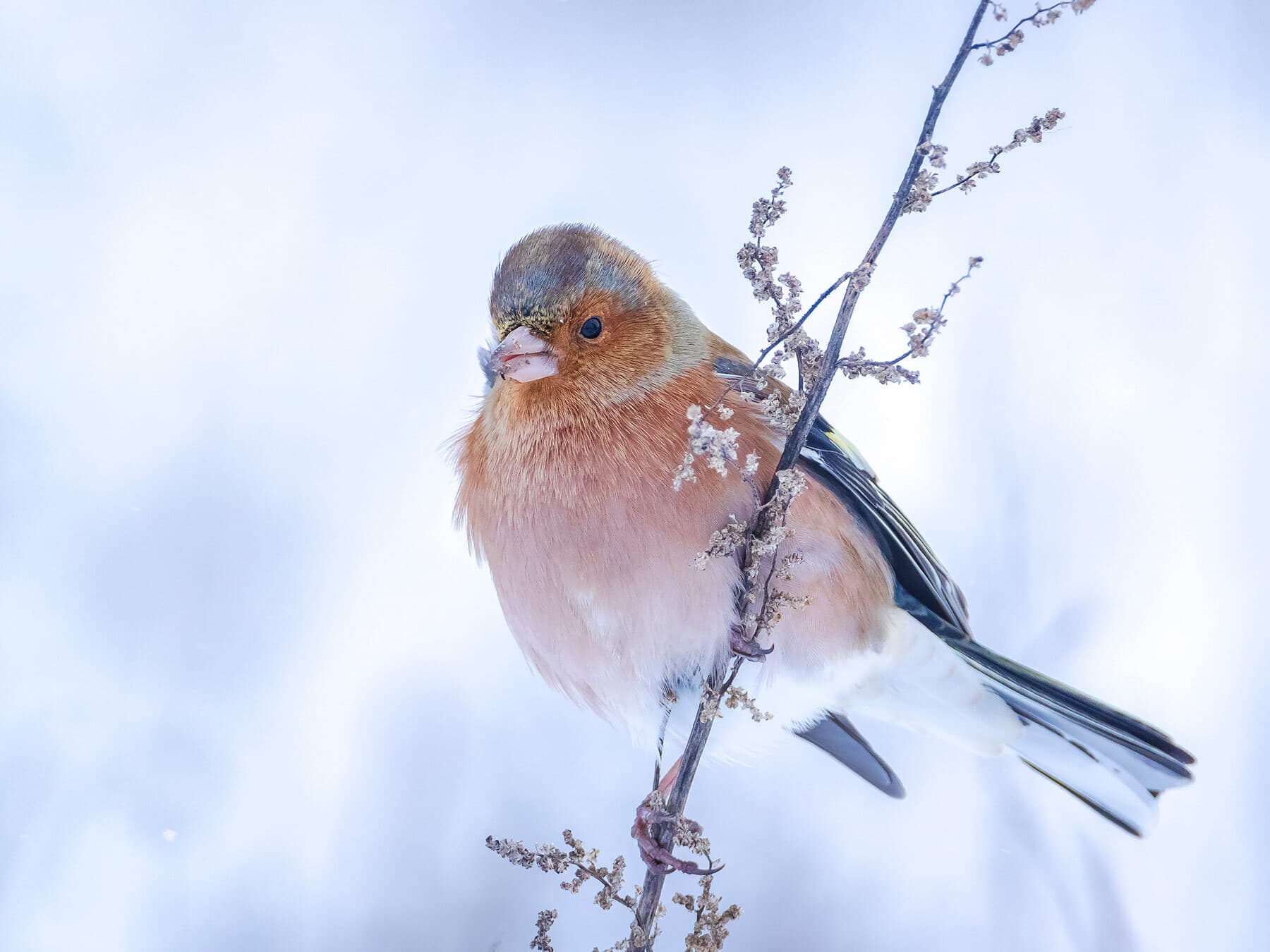
Unlike many finches, Chaffinches feed their chicks almost entirely on insect larvae, mainly caterpillars and aphids. More on chicks: Chaffinch nesting.
Feeding on the ground
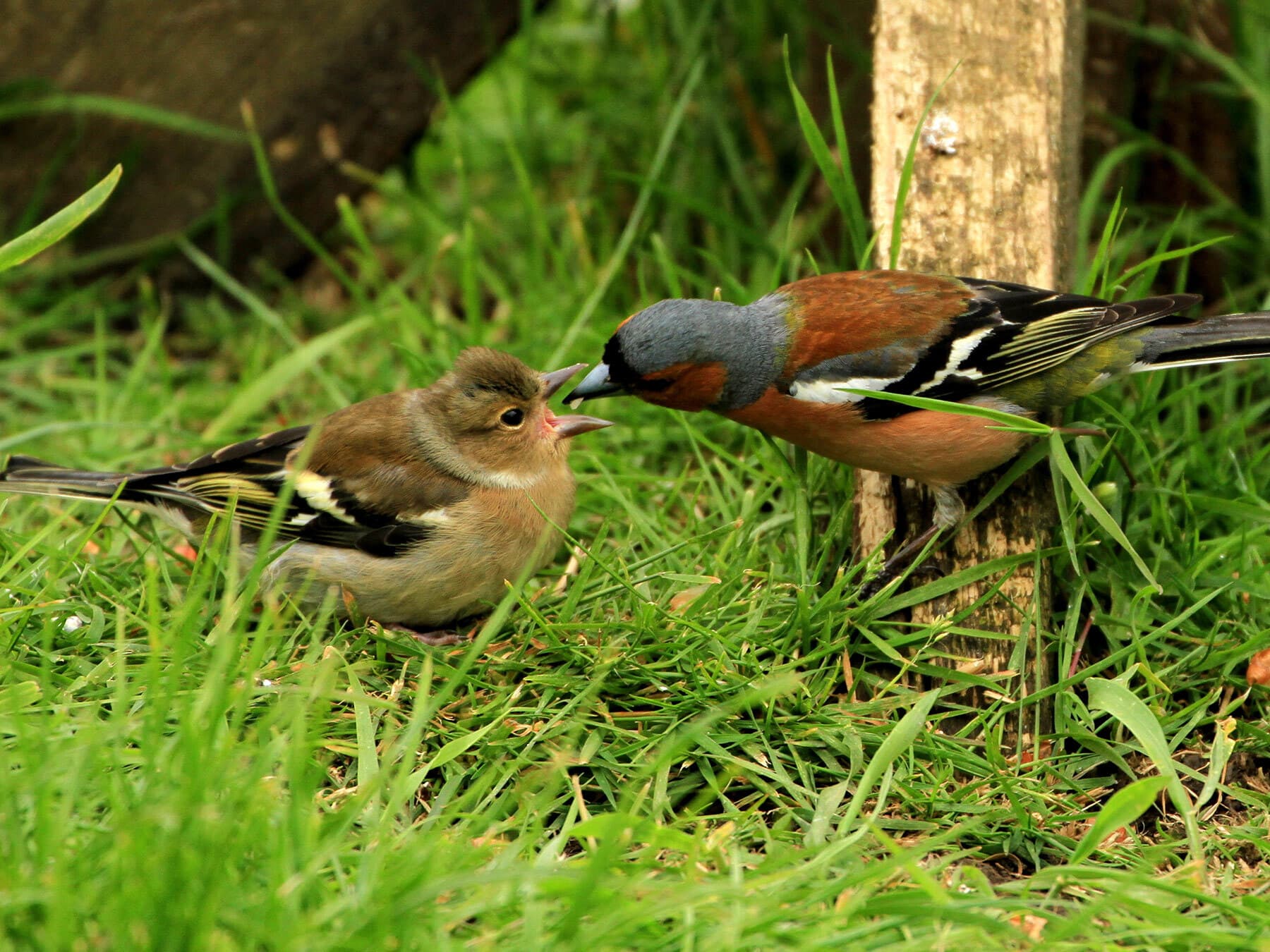
They forage on the ground all year, moving in small, jerky hops or shuffling steps and nodding their heads. In gardens they often hop about under the bird table or under a hedge rather than feeding on it.2
Feeding Chaffinches in your garden
Chaffinches will pick up what falls from a feeder, and some will cling to a hanging feeder themselves. Sunflower hearts and a good seed mix, with little cereal, suit finches. Use hanging feeders rather than bird tables, trays or food scattered on the ground: the RSPB advises against flat surfaces, where disease spreads more easily.3
The RSPB's latest guidance (July 2026) is to feed seed only from 1 November to 30 April. From 1 May to 31 October, when natural food is plentiful and disease spreads most easily, it advises pausing seed and peanuts and offering small amounts of mealworms, fat or suet instead. Finches are less drawn to fat and suet, so the risk to them is likely to be lower.3
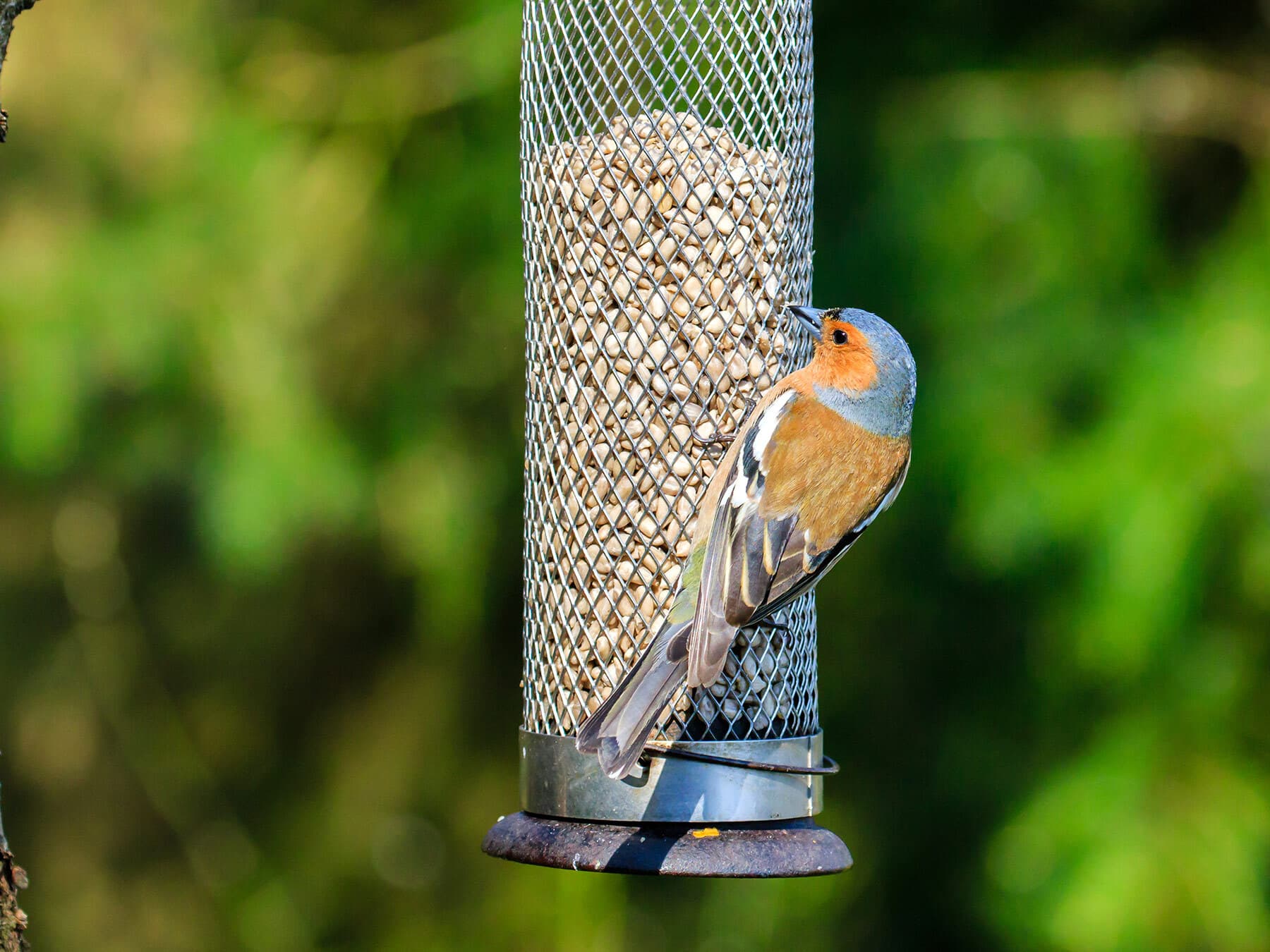
Feeder hygiene and disease
Since 2005, Chaffinches and Greenfinches in Britain have been hit by finch trichomonosis, a disease caused by a parasite that can spread between birds through shared food and water. Sick birds look lethargic and fluffed up and struggle to swallow.4 The disease has been linked to the fall in Chaffinch numbers.
To lower the risk: use hanging feeders rather than flat ones, put out only what is eaten, keep food dry, clean feeders every week, and change the water every day. If you see sick birds, consider stopping feeding for a while.5
What are the growths on a Chaffinch's feet?
Crusty growths on the legs and feet, sometimes called "scaly leg" or "tassel foot", are common in Chaffinches. Post-mortems on over a thousand finches found two causes: a virus, the Fringilla coelebs papillomavirus, and Cnemidocoptes mites. Reports rise from November to March, when continental Chaffinches arrive. Most affected birds behave normally, though severe cases can go lame. Good feeder hygiene helps.6
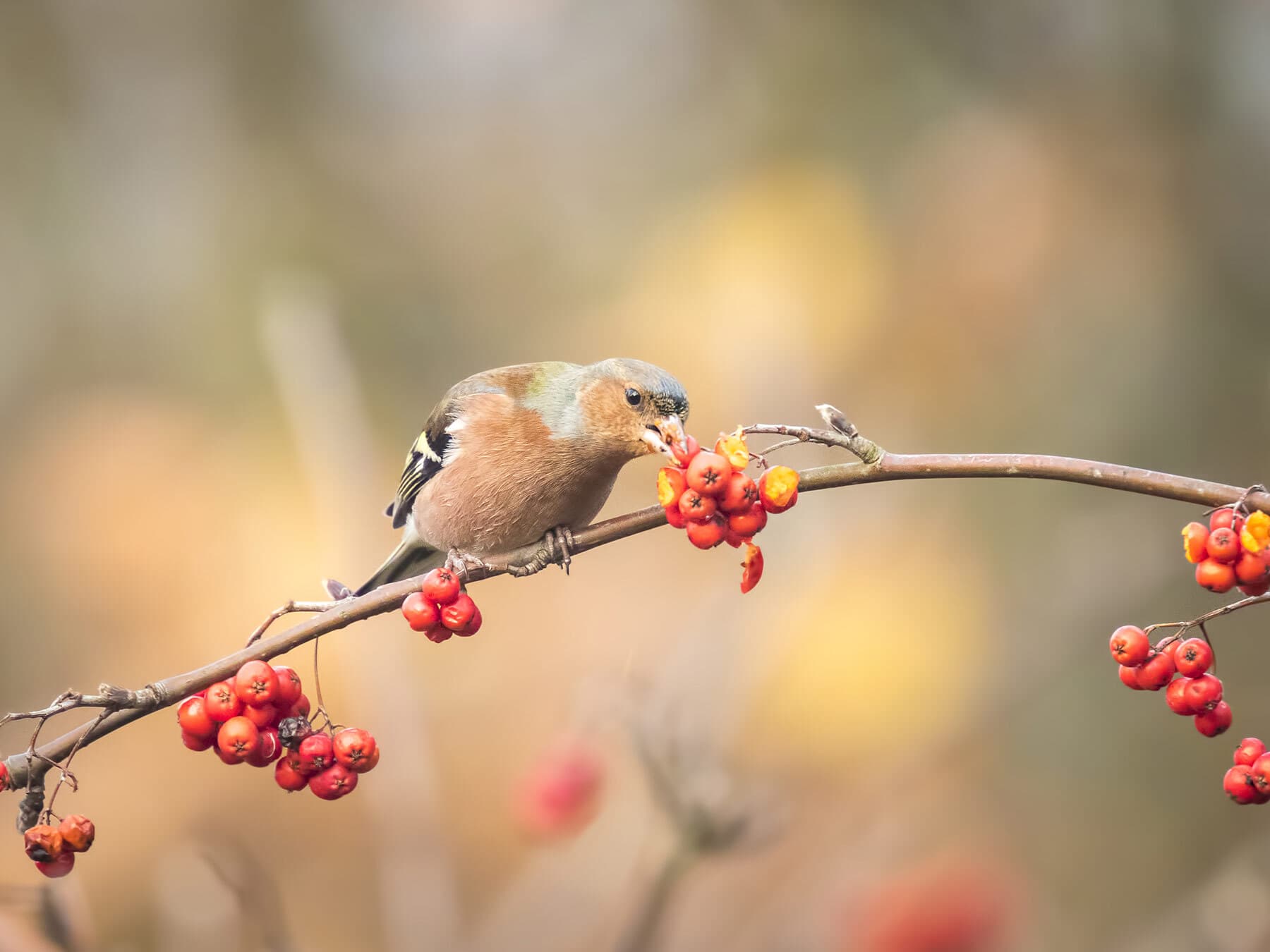
Berries and fruit trees
Their foods include the seeds, buds or flowers of many fruiting trees and shrubs, from rowan and hawthorn to bramble and elder.
Sources
- Clement, P., Kirwan, G. M., Goodman, D. D., Pyle, P., Hansasuta, C. (2026). Common Chaffinch (Fringilla coelebs), version 1.3. Birds of the World (R. Ahmed, B. K. Keeney, N. D. Sly and S. M. Billerman, editors). Cornell Lab of Ornithology. doi:10.2173/bow.comcha.01.3
- RSPB. Chaffinch. RSPB Birds A-Z. Accessed 6 October 2026. Source
- RSPB (2026). How to help garden birds. RSPB news. Accessed 6 October 2026. Source
- Robinson, R. A., Lawson, B., Toms, M. P., Peck, K. M., Kirkwood, J. K., Chantrey, J. et al. (2010). Emerging infectious disease leads to rapid population declines of common British birds. PLoS ONE 5: e12215. doi:10.1371/journal.pone.0012215
- BTO. Chaffinch (Fringilla coelebs). BTO BirdFacts. Accessed 6 October 2026. Source
- Lawson, B., Robinson, R. A., Rodriguez-Ramos Fernandez, J., John, S. K., Benitez, L., Tolf, C. et al. (2018). Spatio-temporal dynamics and aetiology of proliferative leg skin lesions in wild British finches. Scientific Reports 8: 14670. doi:10.1038/s41598-018-32255-y
- RSPB. How and what to feed your garden birds. RSPB. Accessed 6 October 2026. Source
- BTO. Feeding garden birds. BTO, Helping birds. Accessed 6 October 2026. Source
- Hanmer, H. J., Cunningham, A. A., John, S. K., Magregor, S. K., Robinson, R. A., Seilern-Moy, K. et al. (2022). Habitat-use influences severe disease-mediated population declines in two of the most common garden bird species in Great Britain. Scientific Reports 12: 15055. doi:10.1038/s41598-022-18880-8