Facts · Updated 8 Oct 2026
Chaffinch Nesting: Nests, Eggs and Baby Chaffinches
By the Birdfact teamChecked by Nathan Cope
The female Chaffinch builds a lichen-covered cup in a tree or bush, lays 4 or 5 eggs from late April, and raises one brood a year. When they nest, where, what the nest and eggs look like, how long they take, and what the young look like.
On this page12 sections
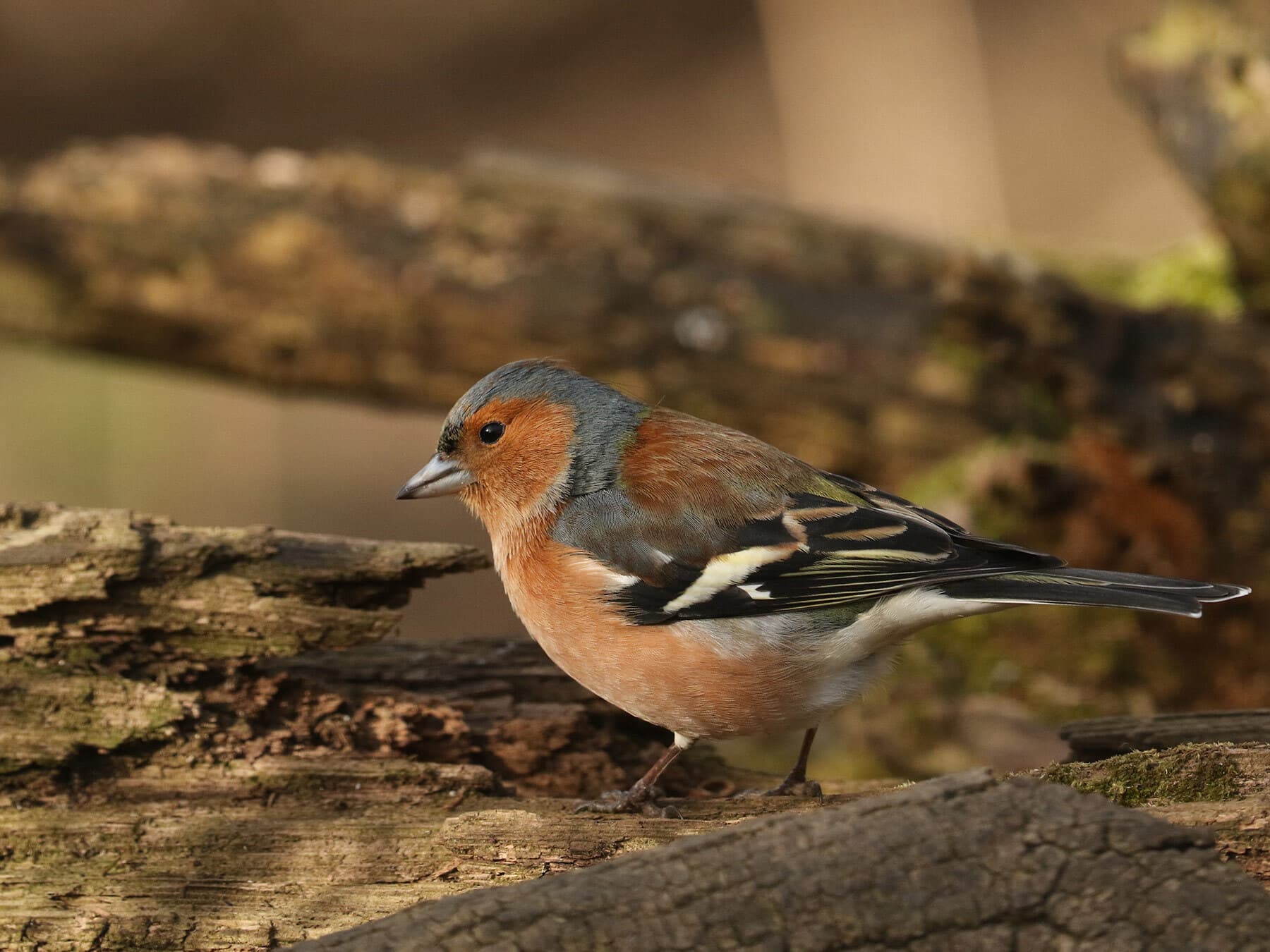
Chaffinches nest in trees and bushes in spring and early summer. The female builds a beautiful lichen-covered cup, lays 4 or 5 eggs and raises one brood a year. This page follows a nest from building to fledging. For the bird itself, see Chaffinch identification, song and facts.
When do Chaffinches nest?
Where do Chaffinches nest?
In a tree or bush: on a branch, against the trunk or in a fork, as high as 35 m. In the breeding season Chaffinches are commonest in conifer woods, and are also found in scrub, farmland hedges, villages and broadleaved woods, as well as gardens and parks.1
The nest
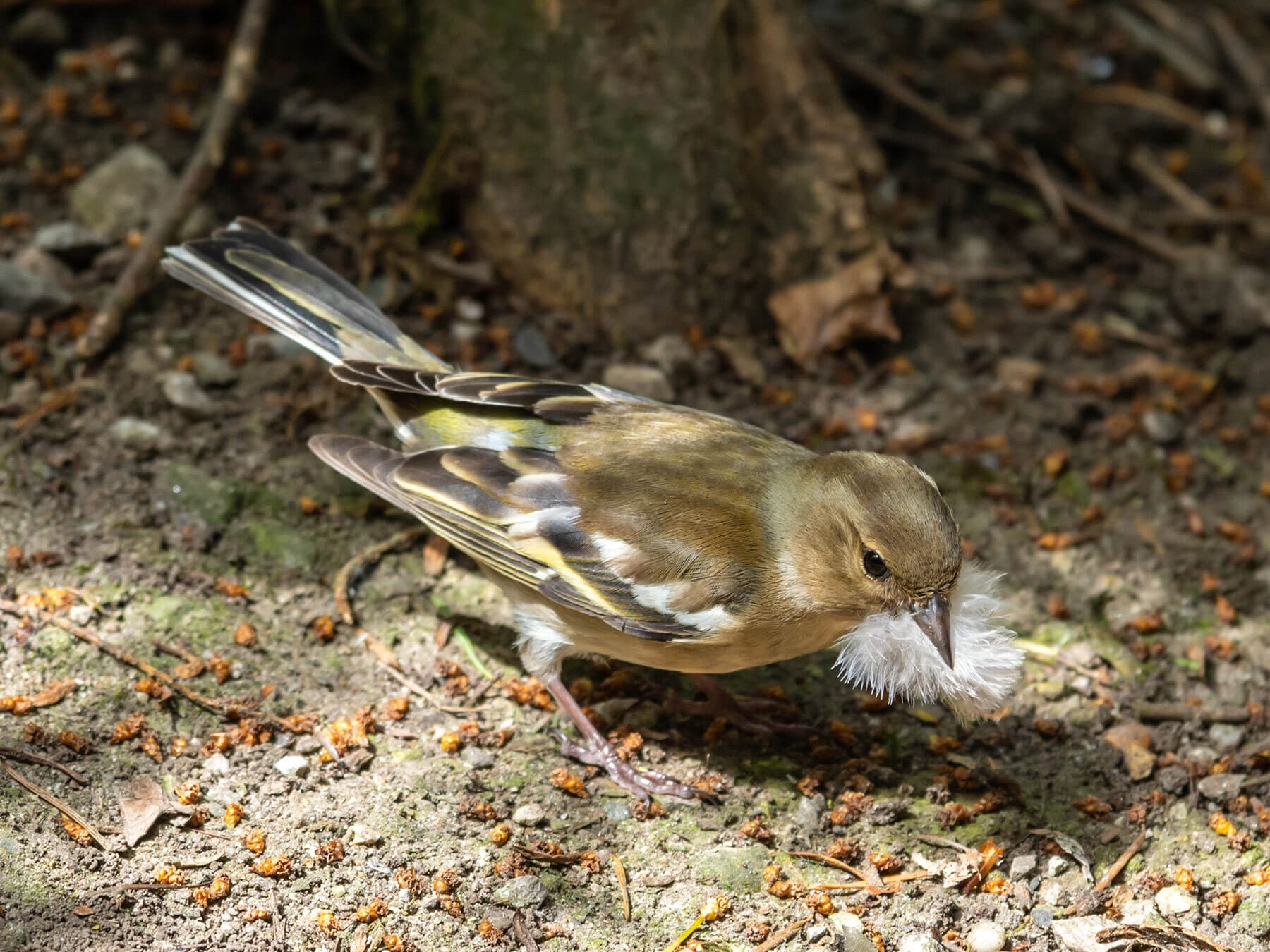
A neat, deep cup of moss, grass, fine roots, lichen and strips of bark, lined with hair and feathers. The female decorates the outside with lichen and binds it with spider silk, so it blends into the branch it sits on.
Building
The female builds it alone. Early in courtship the male is dominant, but she takes over as the eggs are laid and incubated.
Eggs
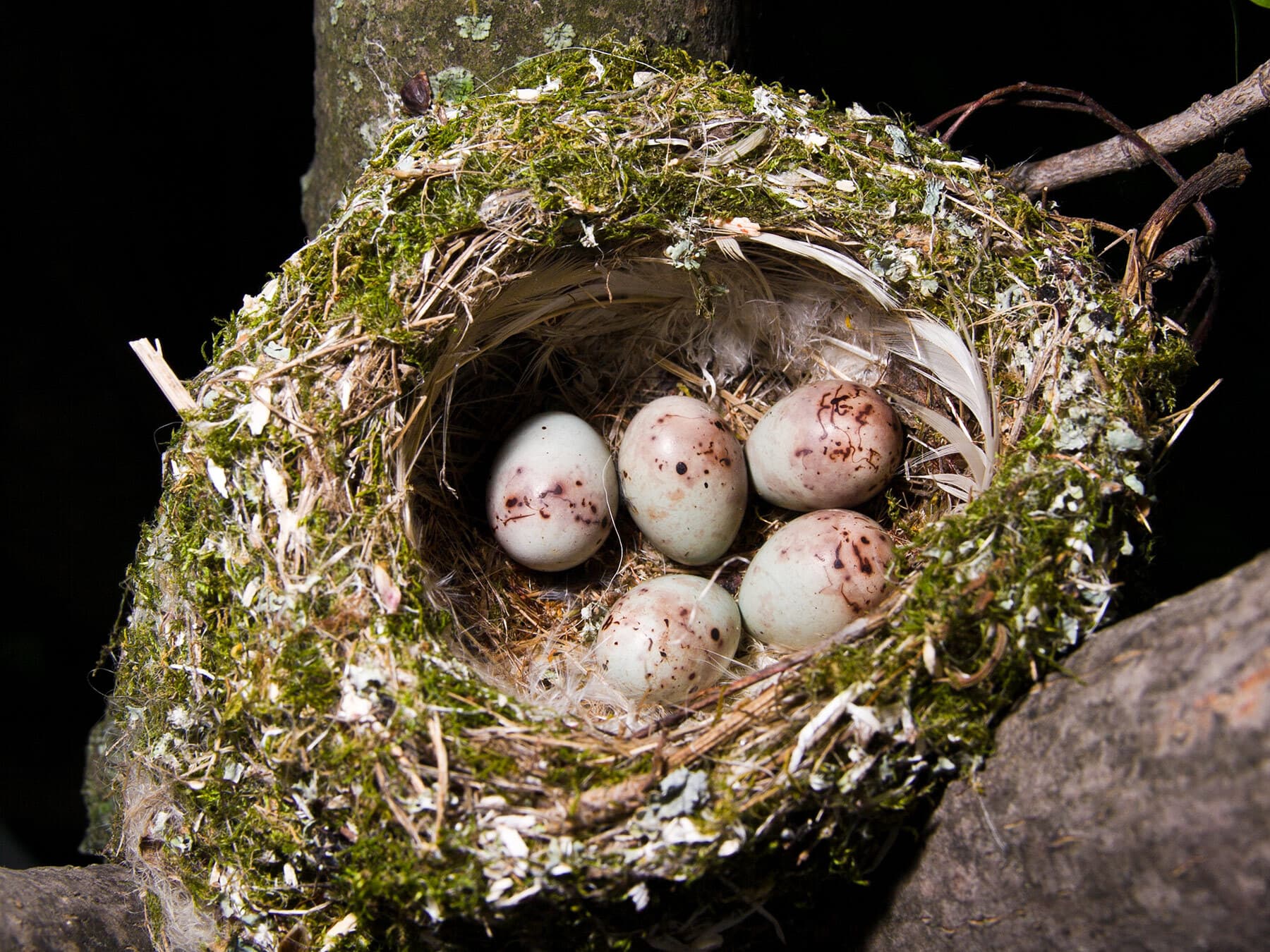
A clutch is usually 4 or 5 eggs, 4.27 on average in BTO records, though anything from 2 to 8 has been found. They are pale bluish-green to light reddish, with purple-brown blotches, spots or fine streaks, and measure about 19 by 15 mm.2
Incubation
The female incubates alone, usually for 12 to 13 days in British nests.
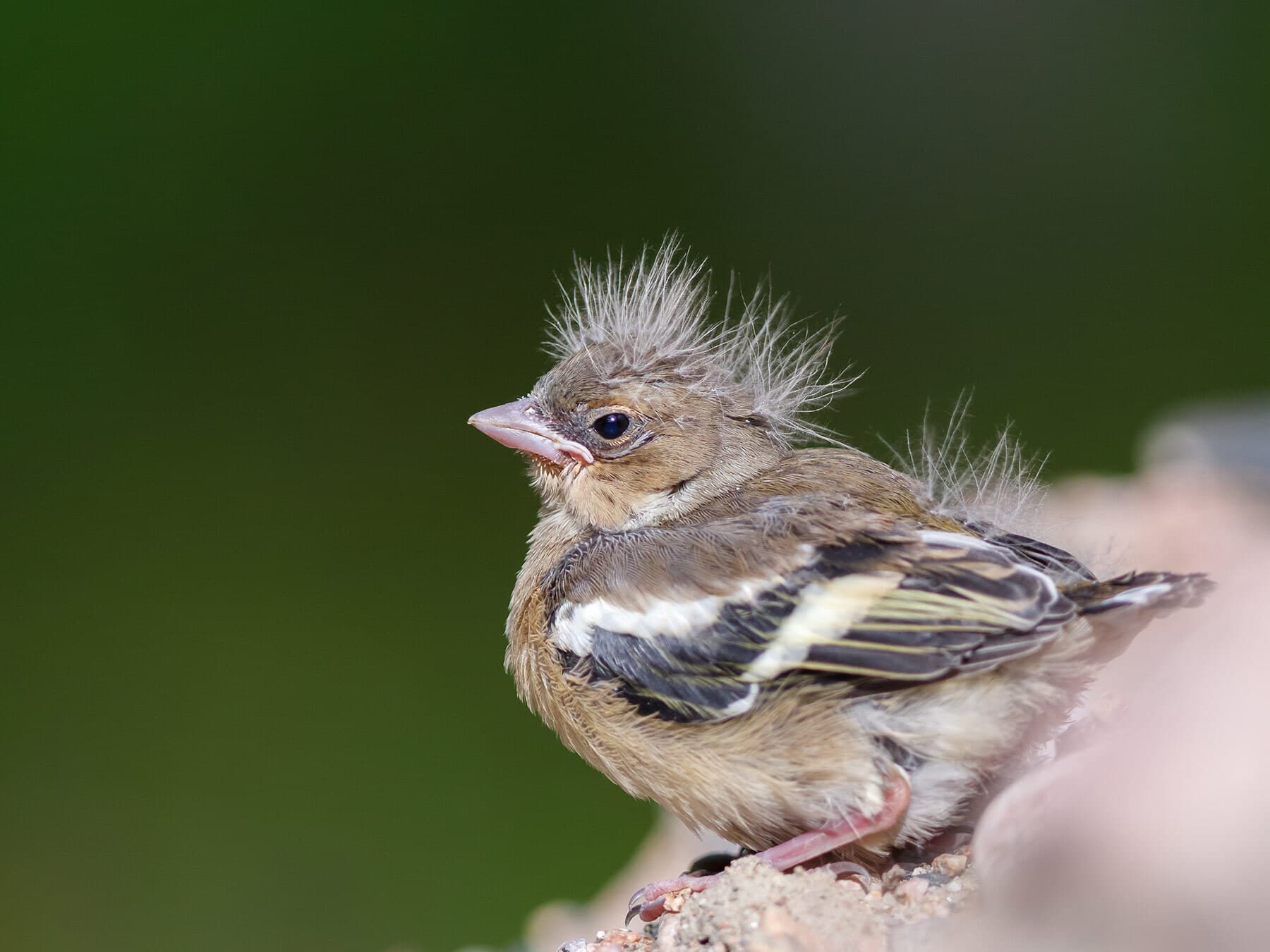
Baby Chaffinches
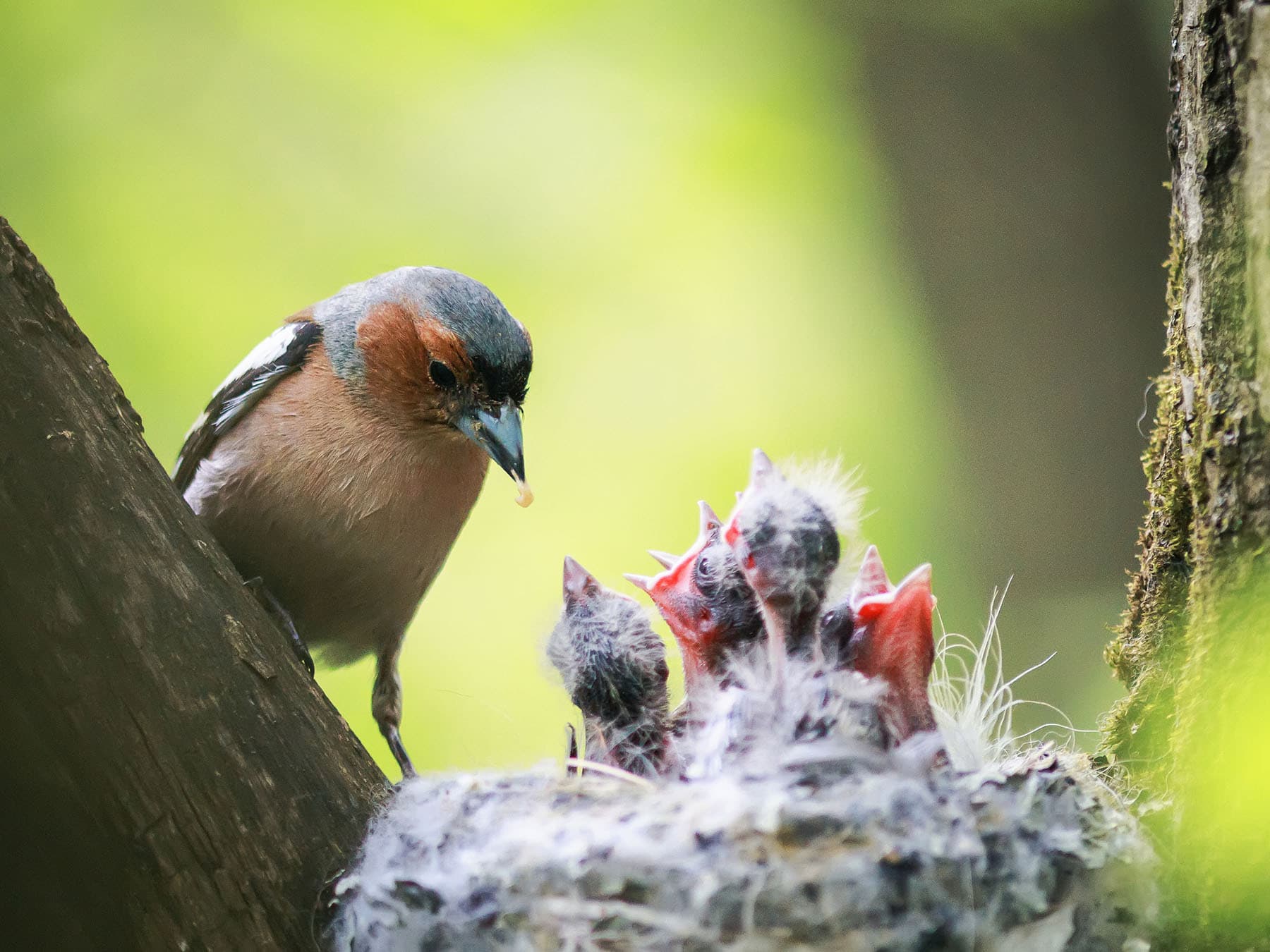
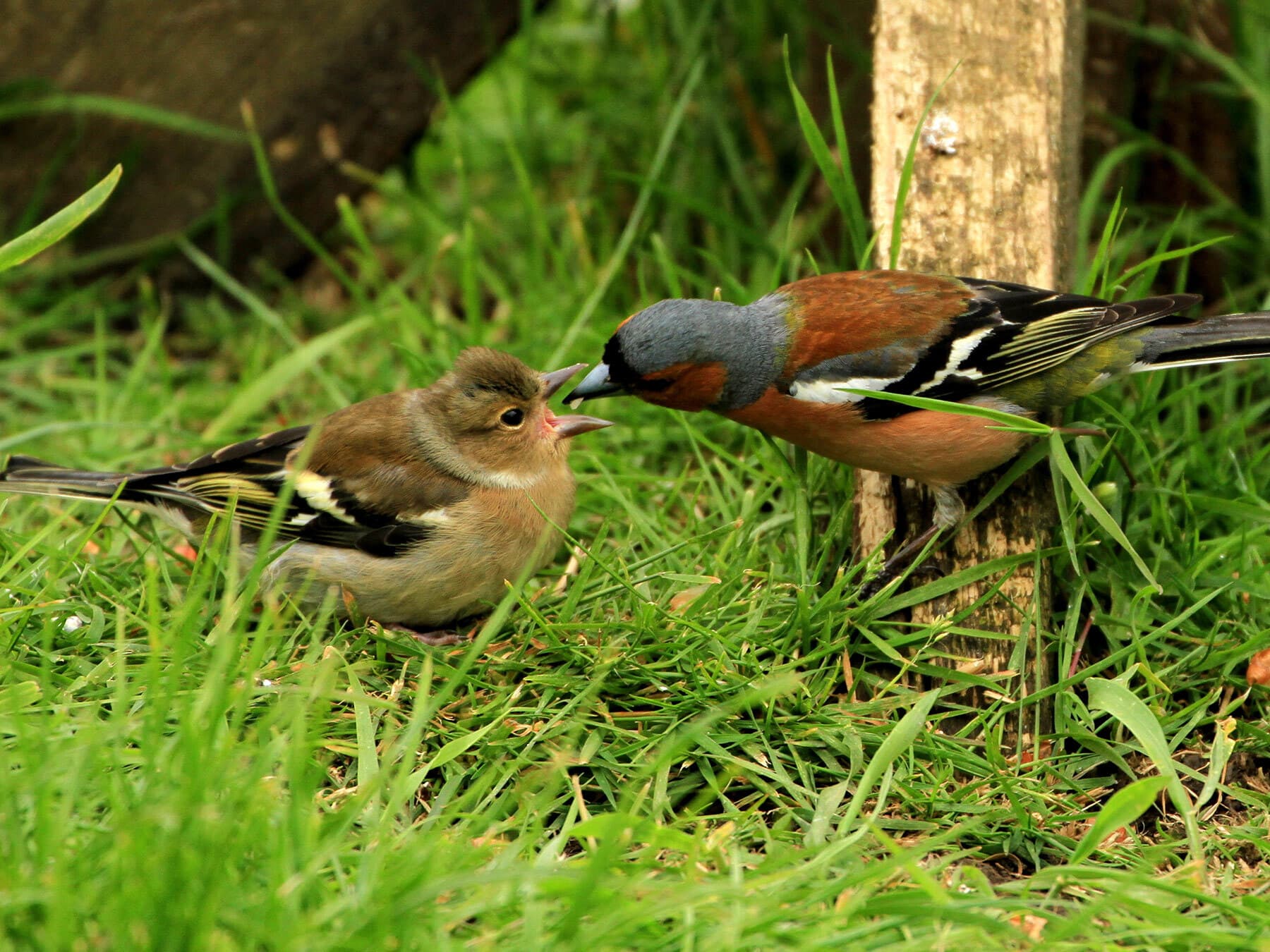
The chicks hatch helpless, with some down. They are fed almost entirely on insects, mainly caterpillars and aphids, and the female brings most of it; the male brings anything from very little to about a third of the food.
They leave the nest at 13 to 15.5 days old.2 Both parents then go on feeding them for up to three weeks.
Young Chaffinches
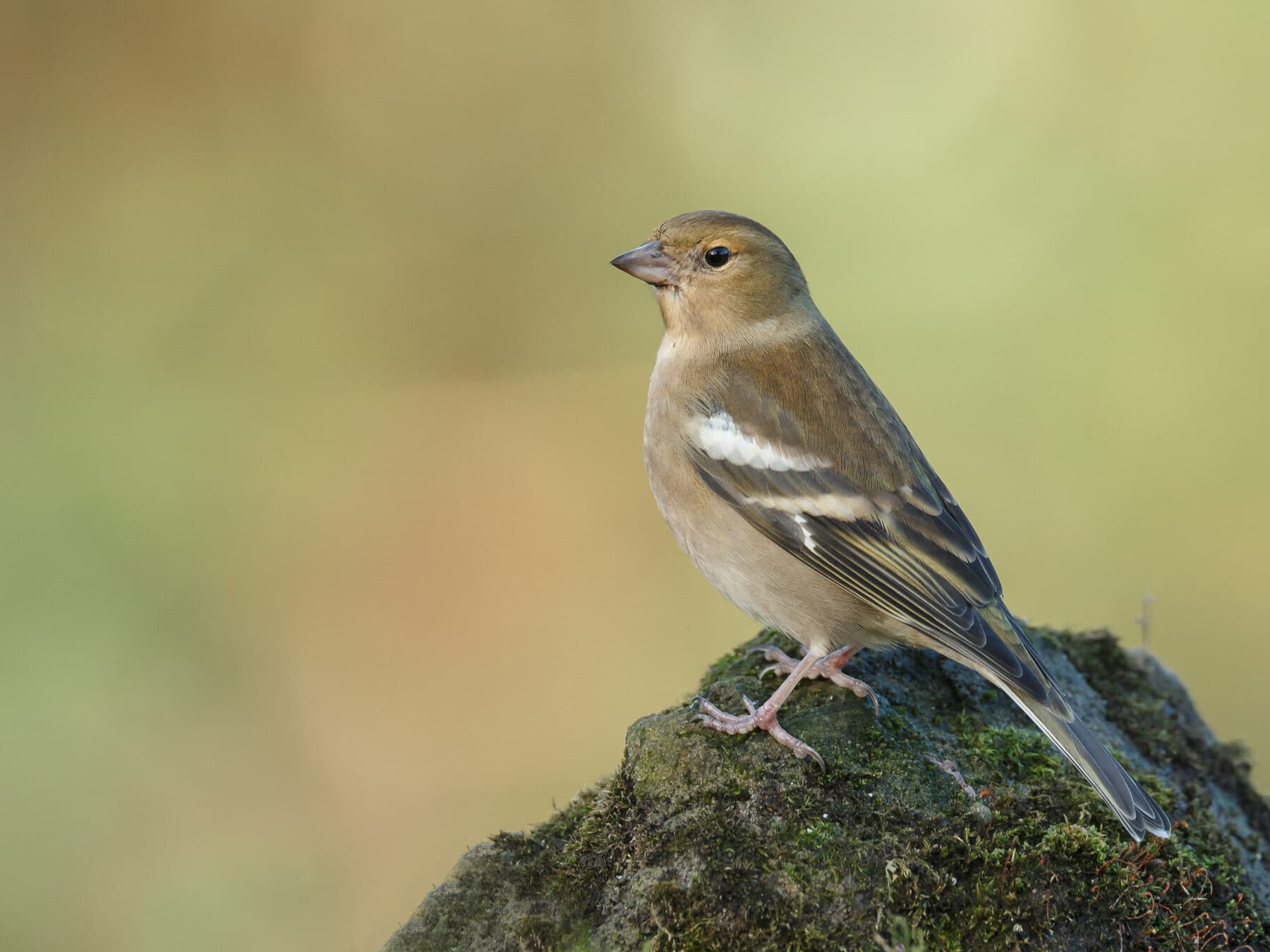
They look like a dull female: olive-brown, with a pale buffish patch on the back of the neck and a dusky bill. Young males and females look alike. See female Chaffinches for the differences.
Broods
Pairs raise one brood; a second is exceptional.
Nest success
Many nests fail. In British nest records, 59% of 10,967 eggs hatched and 41% of those produced young that left the nest. Success rose through the spring as leaves grew and hid the nests: about 38% of nests begun in early April succeeded, against about half of those begun in late May. Crows, squirrels, cats, stoats and weasels take eggs and chicks.1
Nest boxes
Chaffinches build their own open cup in the fork of a tree or bush, and none of the BTO or RSPB guidance we checked offers a nest-box design for them.
Sources
- Clement, P., Kirwan, G. M., Goodman, D. D., Pyle, P., Hansasuta, C. (2026). Common Chaffinch (Fringilla coelebs), version 1.3. Birds of the World (R. Ahmed, B. K. Keeney, N. D. Sly and S. M. Billerman, editors). Cornell Lab of Ornithology. doi:10.2173/bow.comcha.01.3
- BTO. Chaffinch (Fringilla coelebs). BTO BirdFacts. Accessed 6 October 2026. Source
- RSPB. Chaffinch. RSPB Birds A-Z. Accessed 6 October 2026. Source