Facts · Updated 12 Oct 2026
One for Sorrow: The Magpie Rhyme and Its History
By the Birdfact teamChecked by Nathan Cope
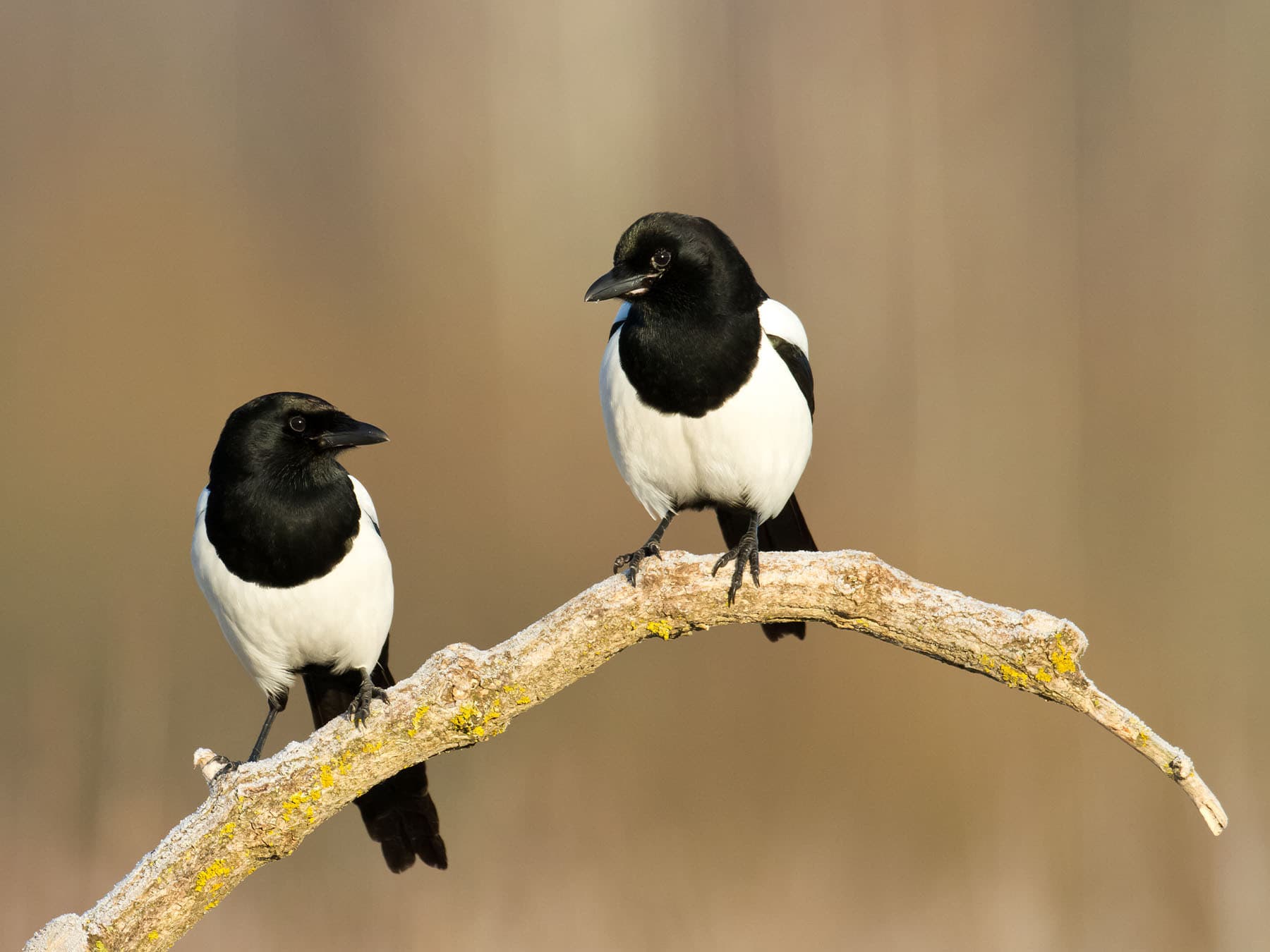
"One for sorrow, two for joy" is a counting rhyme for magpies. The oldest printed version we found, from the west of England in 1780, runs to four, with four for death. Longer versions grew in the 19th century, "two for joy" is first found in 1887, and the familiar girl, boy, silver, gold and secret appear together in 1922. Here are the old versions, what each number means in them, and the customs for turning the luck.
On this page11 sections
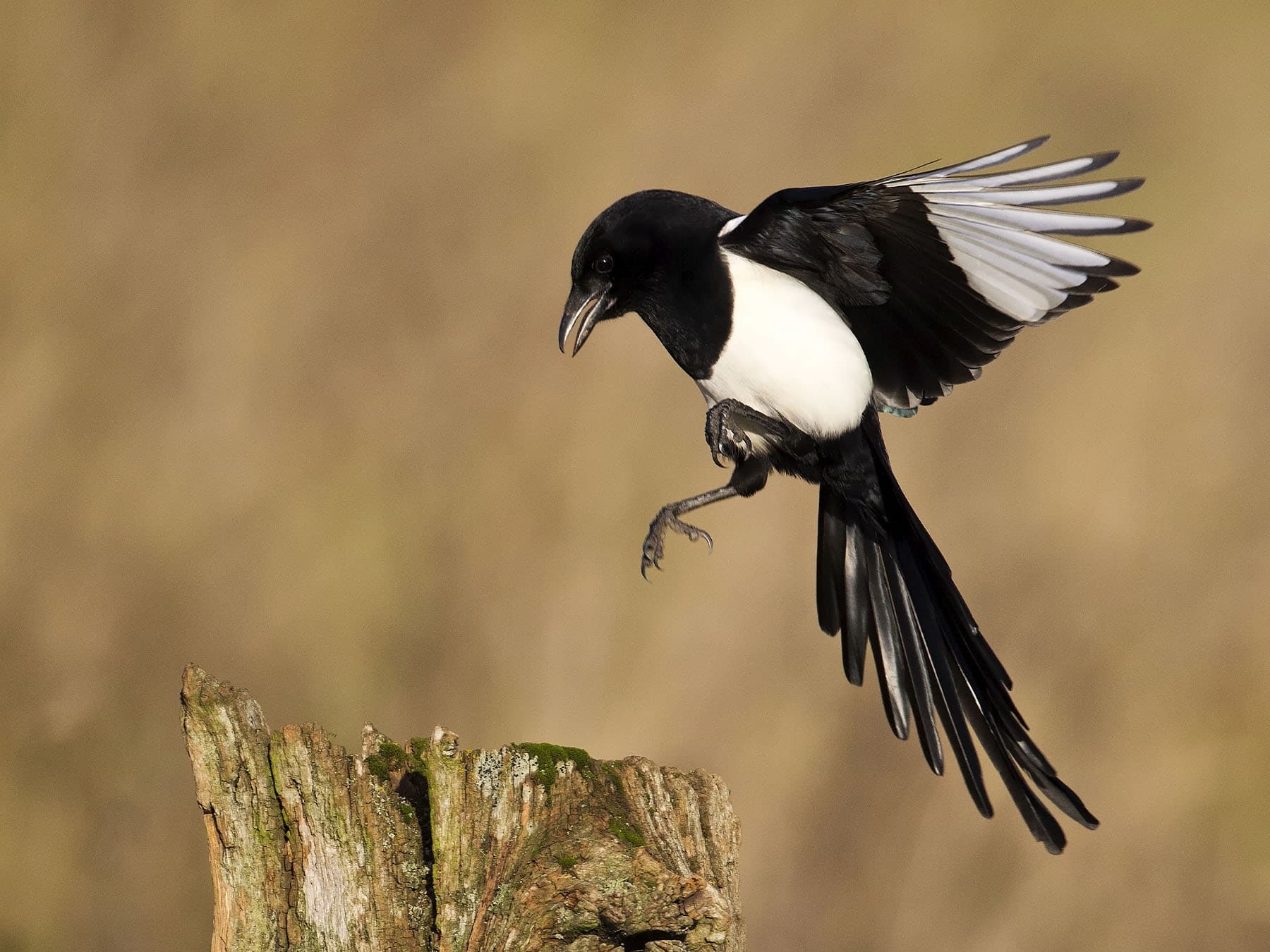
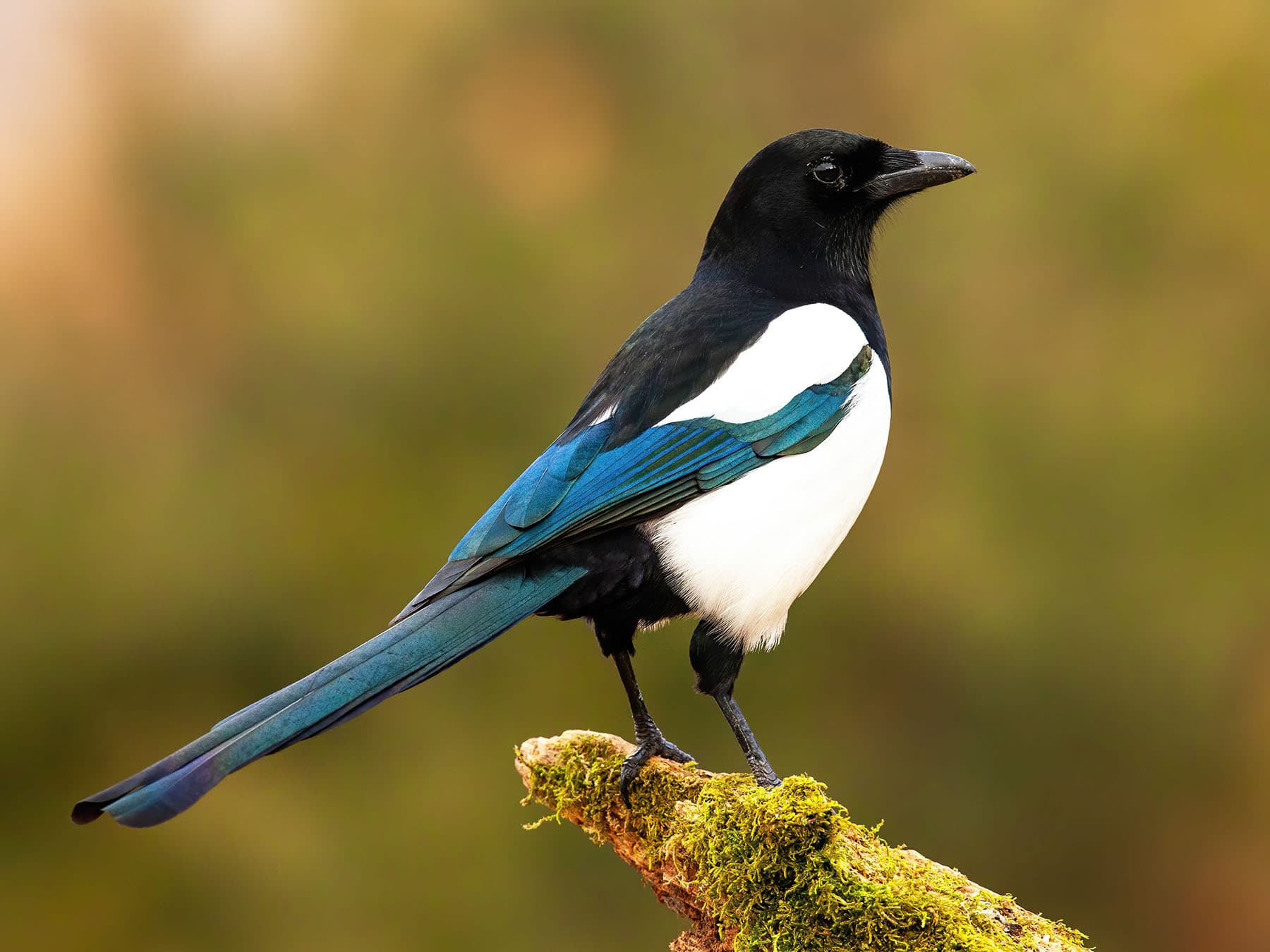
The magpie rhyme counts magpies for luck: one for sorrow, two for joy. This page traces it through the old books where it was written down, from a four-line version of 1780 from the west of England to the lines that are familiar now, with the customs for turning the bad luck and the bird behind it all, the Eurasian Magpie. For the bird itself, see the Magpie guide.
The magpie rhyme
This version, which counts to seven with joy for two, a girl and a boy, silver, gold and a secret, appears as an "Old Rhyme" at the front of Mary Webb's novel Seven for a Secret (1922):1
I saw seven magpies in a tree.
One for you and six for me,
One for sorrow,
Two for joy,
Three for a girl,
Four for a boy.
Five for silver,
Six for gold,
Seven for a secret
That's never been told.
Other versions end the seventh line "never to be told", as in a northern dialect version printed in 1913: "Sebben is a secret, nivver to be told".2 The rhyme was passed on by word of mouth for generations, and the old collections of folklore record different words in almost every county.
How old is the magpie rhyme?
The earliest printed version we found is from 1780. In a note on the "magot-pies" of Macbeth, the scholar Samuel Henley wrote that in the west of England the meaning of the omen depended on how many magpies were seen together:3
One for sorrow:
Two for mirth:
Three for a wedding:
Four for death.
Reading omens from magpies is older. Henry Ellis's 1813 edition of John Brand's Popular Antiquities quotes a 17th-century writer who said people knew "by the chattering of Magpies" that strangers were coming. The same edition reprints Henley's lines and adds a note by the antiquary Thomas Park that the counting was also known in Lincolnshire, where turning round three times was thought to avert the sorrow.4 Francis Grose, in 1787, gave a prose version that went up to five: two meant a marriage or merriment, three a successful journey, four "an unexpected piece of good news" and five a great company.5
How the rhyme grew
Scotland had it the other way round. Robert Chambers wrote in 1826 that the belief held "throughout all Scotland", in this form:6
Ane's joy; twa's grief;
Three's a marriage; four's death.
Walter Gregor recorded the same lines as current in some districts of north-east Scotland in 1881.7
The longer versions appear in the middle of the 19th century. The first we found that counts to seven is from Lancashire, printed by James Orchard Halliwell in 1849:8
One for anger,
Two for mirth,
Three for a wedding,
Four for a birth,
Five for rich,
Six for poor,
Seven for a witch,
I can tell you no more.
Halliwell noted that in some counties two magpies brought sorrow and in others joy. The earliest silver, gold and secret we found are in a North of England tract by Michael Denham, issued between 1850 and 1858, which counts to ten:9
One for sorrow,
Two for luck (varia mirth);
Three for a wedding,
Four for death (varia a birth);
Five for silver (varia rich);
Six for gold (varia poor);
Seven for a secret
Not to be told;
Eight for heaven,
Nine for h——,
And ten for the deevil's awn sell!
Other endings took the count on to dancing and to France: "Five for a fiddle, six for a dance, / Seven for England, eight for France" (Notes and Queries, 1852).10 A Lancashire version printed in 1892 reaches twelve: "Nine for a burying, Ten for a dance, / Eleven for England, Twelve for France."11
"Two for joy" is a late arrival. The earliest we found is from Ireland, in 1887: "One is sorrow, / Two is joy, / Three a marriage, / And four a boy."12 By 1892 a writer had heard "One for sorrow, two for joy, / Three for a girl and four for a boy" in Wales and the Midlands.13 Mary Webb's epigraph of 1922 is the earliest printing we found with all of joy, a girl, a boy, silver, gold and a secret. Lines that take the count on to eight, nine and ten, with a wish, a kiss and a bird not to be missed, are given in a 1978 children's TV quiz book as the words of the song at the start of the ITV programme Magpie.14
What each number means
The table sets five versions side by side, with the words as the sources print them. Blank cells mean that version stopped earlier; the 1892 Lancashire version has two coarse lines at seven and eight, left out here.
| Magpies | Devon, 1780 | Scotland, 1826 | North of England, 1850s | Lancashire, 1892 | Mary Webb, 1922 |
|---|---|---|---|---|---|
| 1 | sorrow | joy | sorrow | anger (or sorrow) | sorrow |
| 2 | mirth | grief | luck (or mirth) | mirth | joy |
| 3 | a wedding | a marriage | a wedding | a wedding | a girl |
| 4 | death | death | death (or a birth) | a birth | a boy |
| 5 | silver (or rich) | (the) rich | silver | ||
| 6 | gold (or poor) | (the) poor | gold | ||
| 7 | a secret not to be told | (a coarse line) | a secret that's never been told | ||
| 8 | heaven | (a coarse line) | |||
| 9 | h—— | a burying | |||
| 10 | the deevil's awn sell | a dance | |||
| 11 | England | ||||
| 12 | France |
What do 8, 9, 10 or 13 magpies mean?
It depends which version you learned. In the lines known from the 1970s, eight is for a wish, nine for a kiss and ten for a bird not to be missed.14 In the 1850s North of England version, eight was heaven, nine was hell and ten the devil himself; in the twelve-line Lancashire version of 1892, nine was a burying, ten a dance, eleven England and twelve France.11
We found no printed version that goes past twelve. The rhymes for 13, 15 or 20 magpies that circulate online have no old source we could find.
Saluting a magpie, and other ways to turn the luck
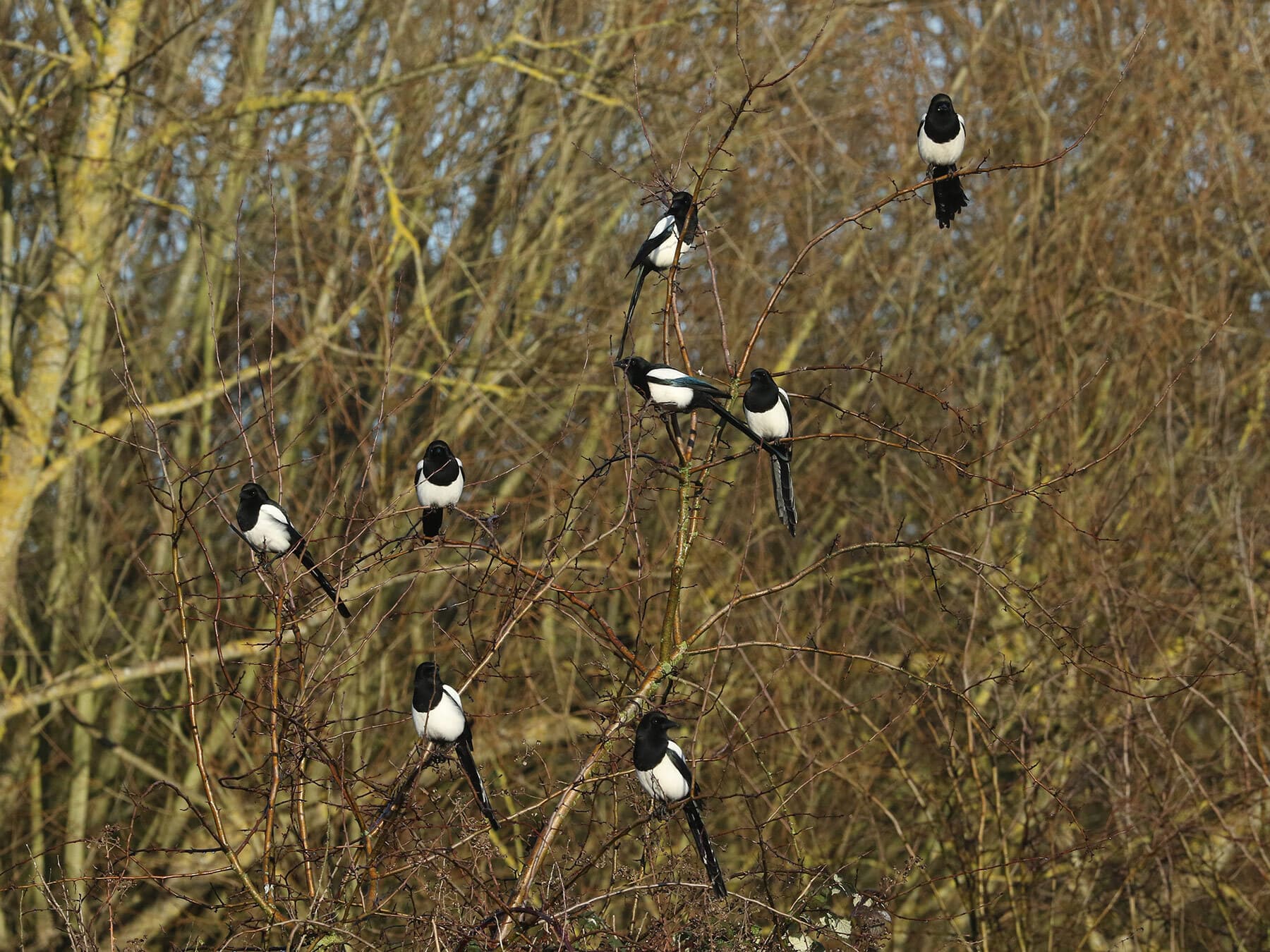
Seeing a single magpie was the bad sign, and people had many ways of cancelling it. Halliwell wrote in 1849 that the misfortune could be avoided "by pulling off your hat, and making a very polite bow to the knowing bird", which he had "more than once seen quite seriously performed".8 Others crossed themselves (Lincolnshire, 1853)15, drew a cross on the ground with the foot and spat on it (Cardiganshire, 1865)16, or spat three times over the right shoulder, as in this Devon charm:17
Clean birds by sevens,
Unclean by twos:
The dove, in the heavens,
Is the one I choose.
A Yorkshire version was said while making the sign of the cross: "I cross the magpie, / The magpie crosses me; / Bad luck to the magpie, / And good luck to me."18 In County Durham, William Henderson recalled an old lady who seized the reins when a magpie crossed the road and made him turn the carriage back.
The greeting "Good morning, Mr Magpie" is in print by 1926. Eleanor Bissell, an American writing from Spain, reported her companion's version, "Good morning, Mr. Magpie ... how is your wife to-day, and how are the twins?", because "it is bad luck not to speak politely to a magpie". It is the earliest printing of the longer greeting we found.19
Why were magpies thought unlucky?
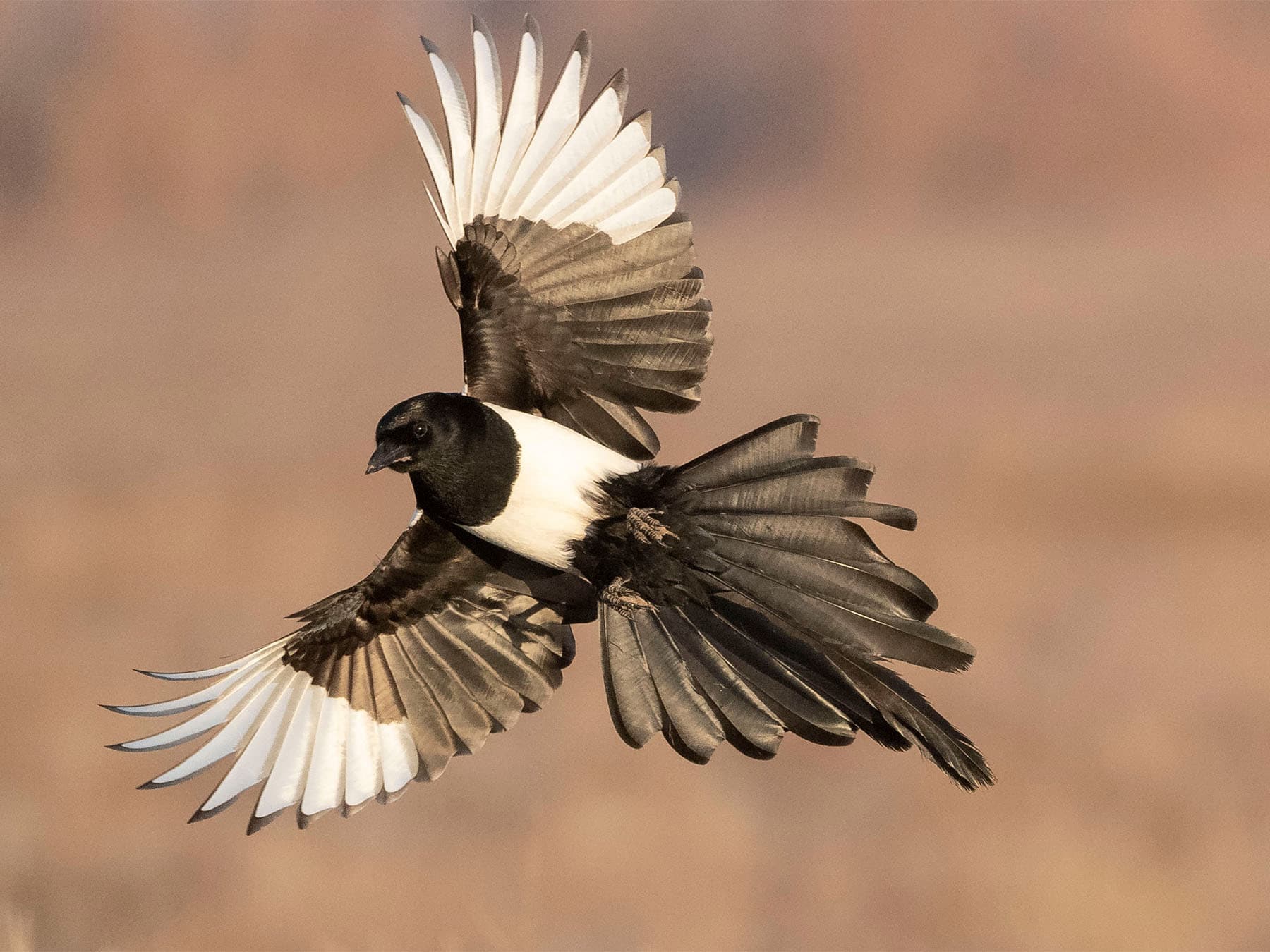
The folklore collectors recorded several explanations, each a belief told to them rather than a known origin. A servant in the North of England said the magpie was the only bird that would not go into the Ark, preferring to sit outside "jabbering over the drowned world"; a boy in County Durham said it was a cross between a raven and a dove, and so was never baptised in the Flood.18 Charles Swainson printed, without naming a source, the story that after the Crucifixion the magpie alone did not go into full mourning, and noted beliefs in Germany and the North that witches took its shape.20 In the north-east of Scotland it was said to carry a drop of the devil's blood in its tongue.7
The bird behind the rhyme
The chemist Humphry Davy offered anglers a natural reason in 1828: in cold spring weather one magpie stays on the eggs while its mate looks for food, so a single bird means bad weather for fishing, while a pair out together means it is mild.21
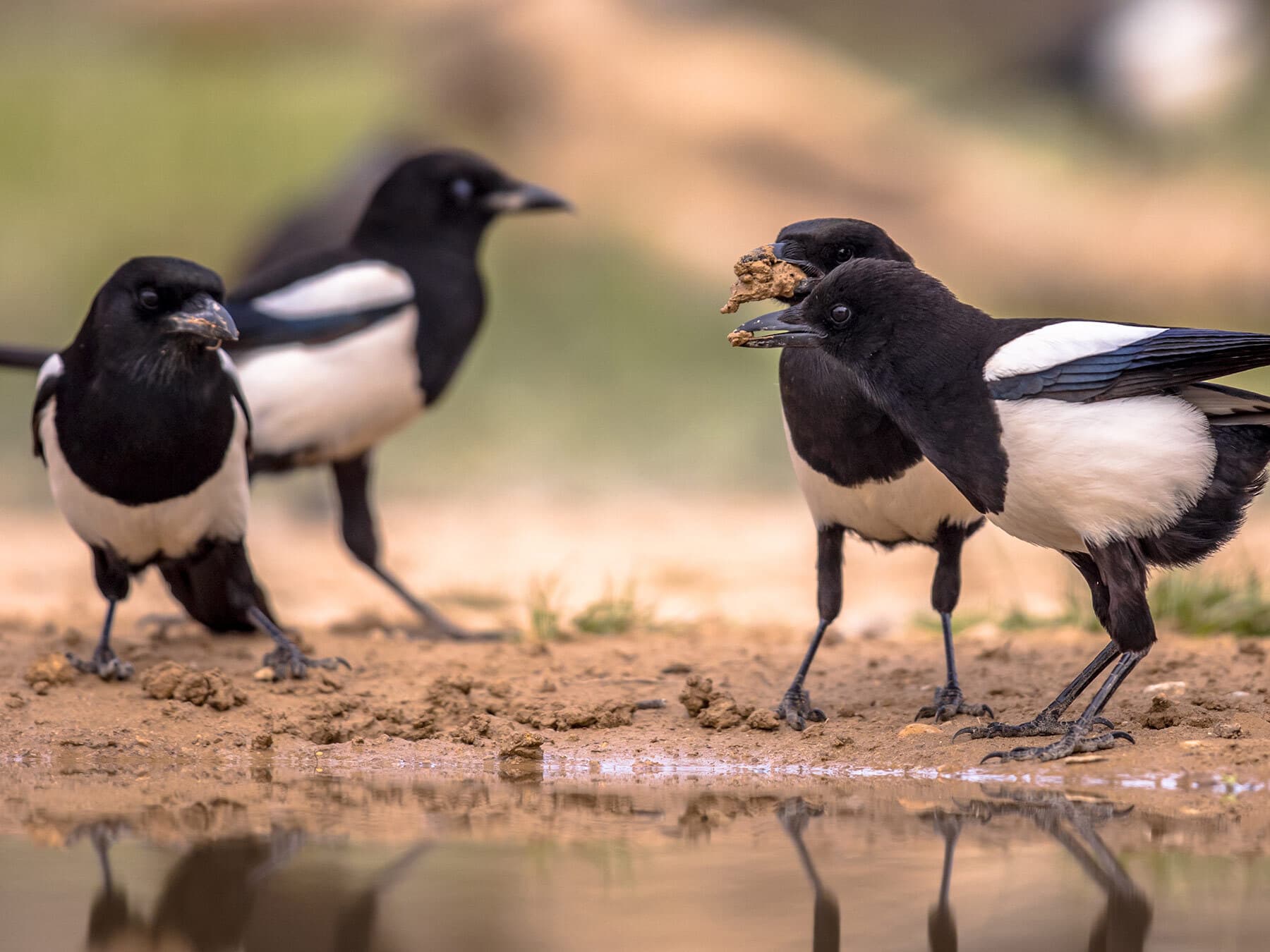
Davy's explanation rests on real behaviour. In spring the female incubates alone and the male brings her food, and magpie pairs stay together all year, even inside a flock.22 Younger birds without a territory form flocks, and in late winter and spring magpies meet in noisy gatherings: see what a group of magpies is called.
Lucky magpies
Not everyone thought magpies unlucky. Swainson recorded that in Norway magpies were protected as bringers of good luck, and that in West Sussex a magpie on the roof meant the house was safe.20 In the north-east of Scotland a magpie hopping ahead of a traveller meant success.7
In East Asia the magpie is a bird of good news. In Shanghai in 1929 it was called the "Bird of Joy" and the "Guest Bird", and its call was a sign of good fortune.23 In the Chinese story of the weaver and the cowherd, magpies form a bridge across the river of stars on the seventh night of the seventh month so the parted lovers can meet24, and the same bridge is told in Korea25, where a magpie calling in the morning meant good news.26 These are the magpies of East Asia, now treated as a separate species, the Oriental Magpie.27
Do people still believe it?
In a YouGov survey of 2,212 British adults in November 2022, 13% said they believed seeing a magpie brings good luck, more women (17%) than men (10%), and 22% of 18 to 24-year-olds. The survey did not ask about saluting or about magpies and bad luck.28
Sources
- Webb, M. (1922). Seven for a Secret (epigraph). Hutchinson, London (US ed. Doran, 1923, read). Accessed 12 October 2026. Source
- Wright, E. M. (1913). Rustic Speech and Folk-Lore, pp. 217-218. Oxford University Press. Accessed 12 October 2026. Source
- Henley, S. (1780). Note on Macbeth ('By magot-pies'), in Supplement to the Edition of Shakspeare's Plays published in 1778 by Samuel Johnson and George Steevens, vol. II, p. 706. C. Bathurst and others, London. Accessed 12 October 2026. Source
- Brand, J., Ellis, H. (ed.) (1813). Observations on Popular Antiquities, vol. 2. F. C. and J. Rivington, London. Accessed 12 October 2026. Source
- Grose, F. (1787). A Provincial Glossary, with a Collection of Local Proverbs, and Popular Superstitions (Superstitions, p. 62). S. Hooper, London. Accessed 12 October 2026. Source
- Chambers, R. (1826). The Popular Rhymes of Scotland, p. 285. W. Hunter, Edinburgh. Accessed 12 October 2026. Source
- Gregor, W. (1881). Notes on the Folk-Lore of the North-East of Scotland, pp. 137-138. Folk-Lore Society, London. Accessed 12 October 2026. Source
- Halliwell, J. O. (1849). Popular Rhymes and Nursery Tales, pp. 167-169. John Russell Smith, London. Accessed 12 October 2026. Source
- Denham, M. A., Hardy, J. (ed.) (1895). The Denham Tracts, vol. II ('Folklore of the North of England', issued c. 1850-58), pp. 19-20. Folk-Lore Society, London. Accessed 12 October 2026. Source
- T. D. (1852). Lucky omens. Notes and Queries, 1st series 5: 293. Accessed 12 October 2026. Source
- Northall, G. F. (1892). English Folk-Rhymes, pp. 140-141, 167-168. Kegan Paul, Trench, Trubner, London. Accessed 12 October 2026. Source
- Page, J. T., 'Paddy from Cork', Nankivell, F., Gardiner, R. F. (1887). Crow v. magpie. Notes and Queries, 7th series 3: 188, 298, 414-415. Accessed 12 October 2026. Source
- Anonymous (1892). Bird superstitions and curiosities. Part II. All the Year Round: 106. Accessed 12 October 2026. Source
- Eldin, P. (compiler) (1978). The New Armada TV Quiz Book. Armada, London. Accessed 12 October 2026. Source
- Peacock, E. (1853). (Magpie omen, Bottesford Moors). Notes and Queries, 1st series 8: 382. Accessed 12 October 2026. Source
- J. R. (1865). Welsh parallels for Cornish proverbs. Notes and Queries, 3rd series 7: 304-305. Accessed 12 October 2026. Source
- Thiselton Dyer, T. F. (1878). English Folk-Lore, pp. 81-83. Hardwicke and Bogue, London. Accessed 12 October 2026. Source
- Henderson, W. (1879). Notes on the Folk-Lore of the Northern Counties of England and the Borders (2nd ed.), pp. 126-128. Folk-Lore Society, London. Accessed 12 October 2026. Source
- Bissell, E. (1926). Out of the way places in Spain. The Christian Leader (Boston), 20 March 1926 29: 8. Accessed 12 October 2026. Source
- Swainson, C. (1885). Provincial Names and Folk Lore of British Birds. Trübner and Co. for the English Dialect Society, London (published in conjunction with the Folk-Lore Society). Accessed 12 October 2026. Source
- Davy, H. (1828). Salmonia: or Days of Fly Fishing, pp. 157-158. John Murray, London. Accessed 12 October 2026. Source
- Kirwan, G. M., Madge, S., Christie, D. A., Perlman, Y. (2025). Eurasian Magpie (Pica pica), version 1.1. Birds of the World (G. M. Kirwan, editor). Cornell Lab of Ornithology. doi:10.2173/bow.eurmag1.01.1
- Wilkinson, E. S. (1929). Shanghai Birds, pp. 65-66. North-China Daily News and Herald, Shanghai. Accessed 12 October 2026. Source
- Werner, E. T. C. (1922). Myths and Legends of China. George G. Harrap, London. Accessed 12 October 2026. Source
- Griffis, W. E. (1911). The Unmannerly Tiger and Other Korean Tales ('The Sky Bridge of Birds'). Thomas Y. Crowell, New York. Accessed 12 October 2026. Source
- Allen, H. N. (1889). Korean Tales. G. P. Putnam's Sons, New York and London. Accessed 12 October 2026. Source
- AviList Core Team (2025). AviList: The Global Avian Checklist, v2025b. doi:10.2173/avilist.v2025b
- YouGov. Superstitions (GB survey, fieldwork 24-25 November 2022, 2,212 adults). YouGov. Accessed 11 October 2026. Source