


Published 30 Oct 2026
Nutcracker in Norfolk: the 2026 Mundesley Bird
By the Birdfact teamChecked by Nathan Cope
A Nutcracker from Siberia was found in a garden at Mundesley, Norfolk, on 23 October 2026 and seen there until 28 October: the county's first since 1979. It is part of a big irruption after this year's Siberian pine seed crop probably failed. In 1968, one of the first of about 315 British Nutcrackers turned up at Trunch, just inland.
On this page7 sections
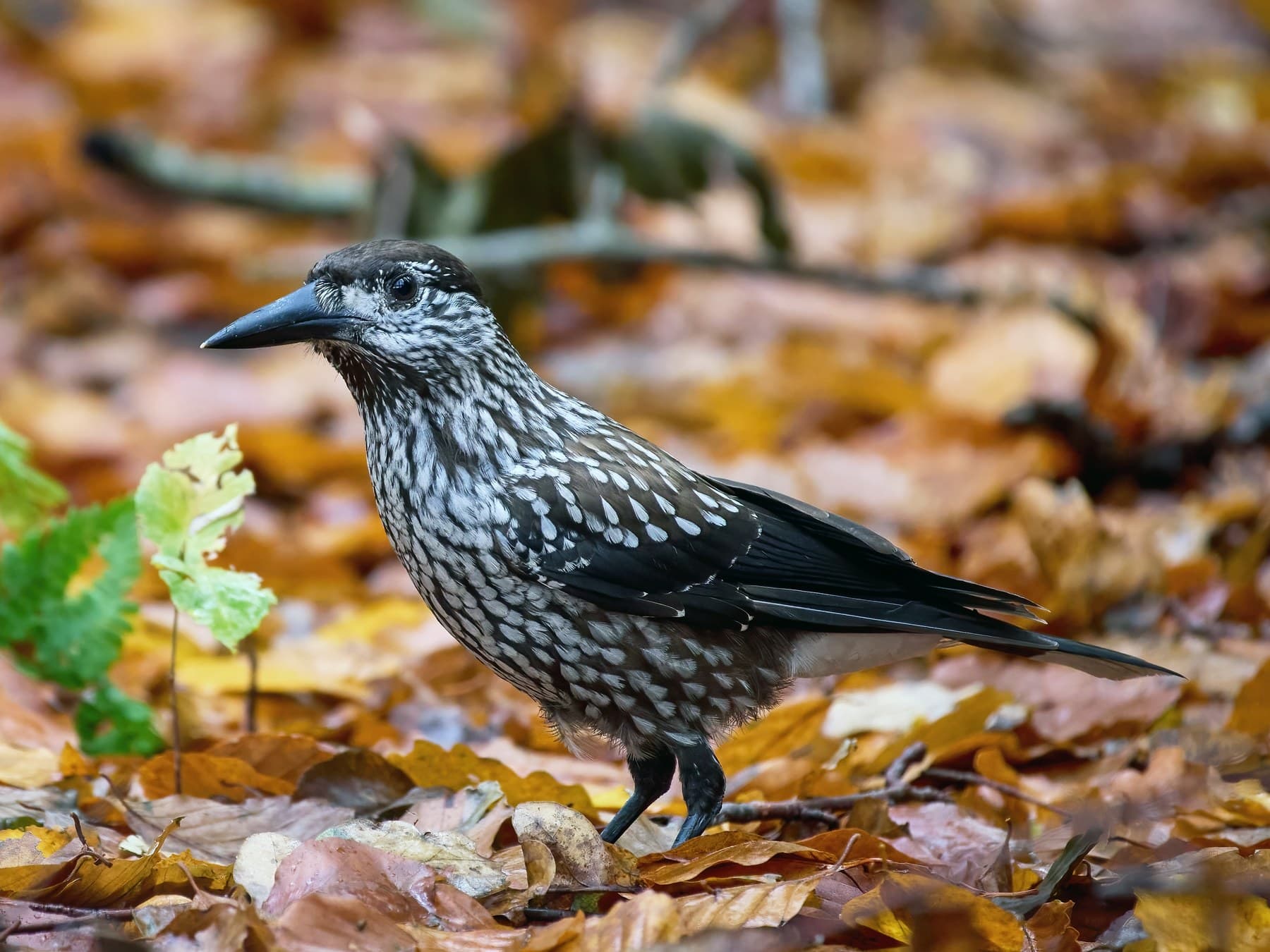
A Nutcracker, a white-spotted member of the crow family from the forests of Siberia, was found in a garden at Mundesley, on the north-east Norfolk coast, on Friday 23 October 2026. Word got out the next morning, and before midday a big crowd was there.1 It was the county's first Nutcracker since 1979, and the first in Britain that crowds have been able to see in decades.
This page covers what was seen and when, why the bird came, how it fits Norfolk's history with the species, and how to watch one without disturbing it. For the bird itself, see our Nutcracker species guide.
What was seen and when
Why it came
Nutcrackers rarely travel. Most are resident in the conifer forests of Europe and Asia, living on pine seeds they hide each autumn. But the Siberian birds depend on the pine seed crop, and when a run of good years is followed by a failure, large numbers leave in search of food.4 This autumn the Siberian crop has probably failed, and a major irruption has carried hundreds, possibly thousands, of Nutcrackers into western Scandinavia.1
Norfolk and the 1968 invasion
The last time this happened on a large scale was 1968, when about 315 Nutcrackers were reported in Britain, about five times as many as in all the years before. One of the first two, on 6 August, was at Trunch, just inland from Mundesley, and that autumn Nutcrackers were also seen at Mundesley itself, at Overstrand, Happisburgh and Knapton.5 Norfolk had at least 104 that year, against 8 county records before 1968.6
Before this autumn, the county's last were one at Gunton on 6 October 1978 and a one-day bird at Itteringham on 23 September 1979.7 Across Britain, the last Nutcracker that stayed long enough for many people to see was in 1991.1
How to recognise one
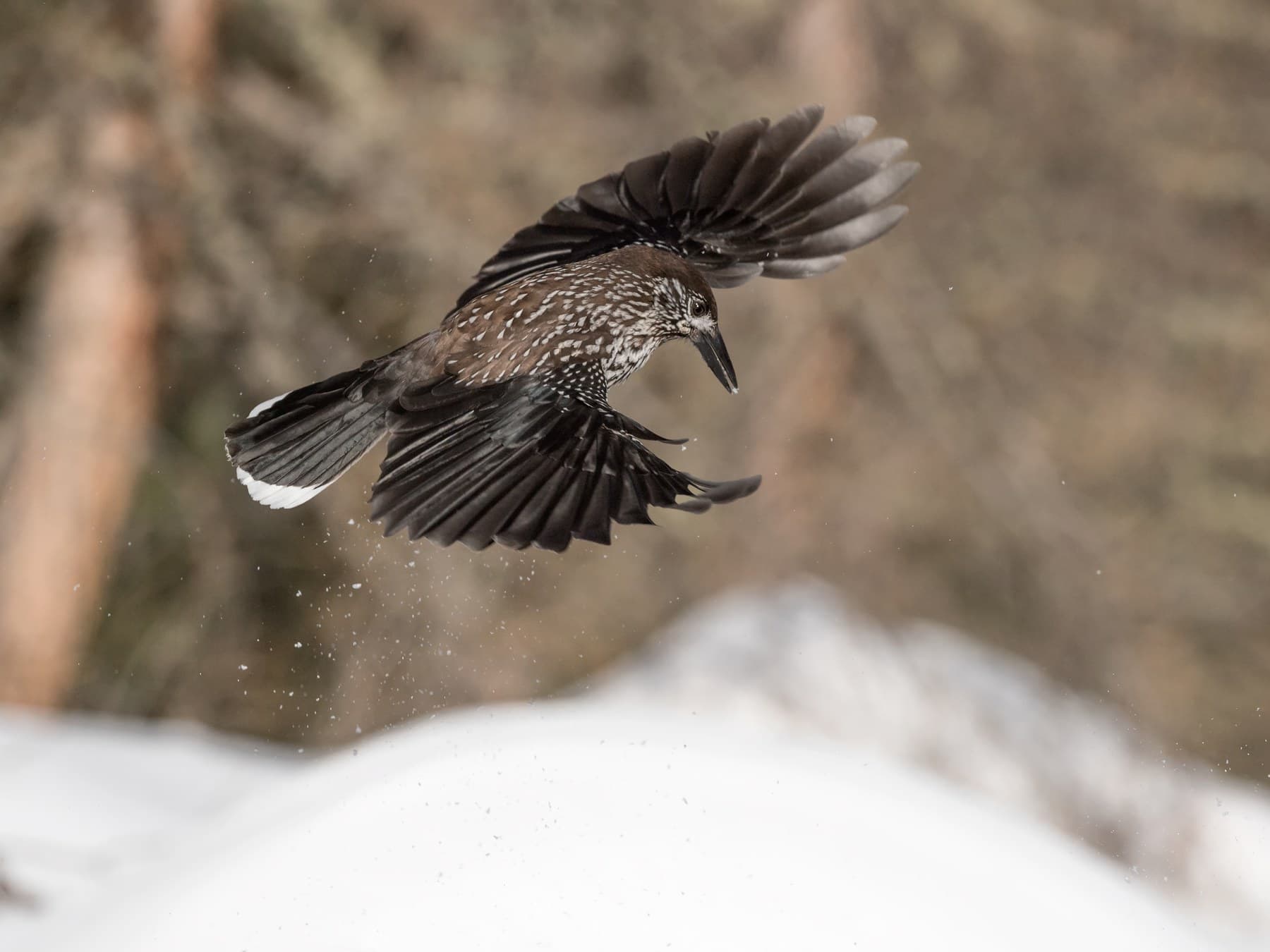
A Nutcracker is about the size of a Jay, but dark chocolate-brown all over, covered in white spots, with a plain dark cap, a long dark bill and white under the tail. In flight it looks broad-winged and short-tailed, with white tips to the tail. Its usual call is a harsh, grating "kraak", but many vagrants are silent.4 In winter a Starling is also spotted, but it is much smaller.
What it eats here
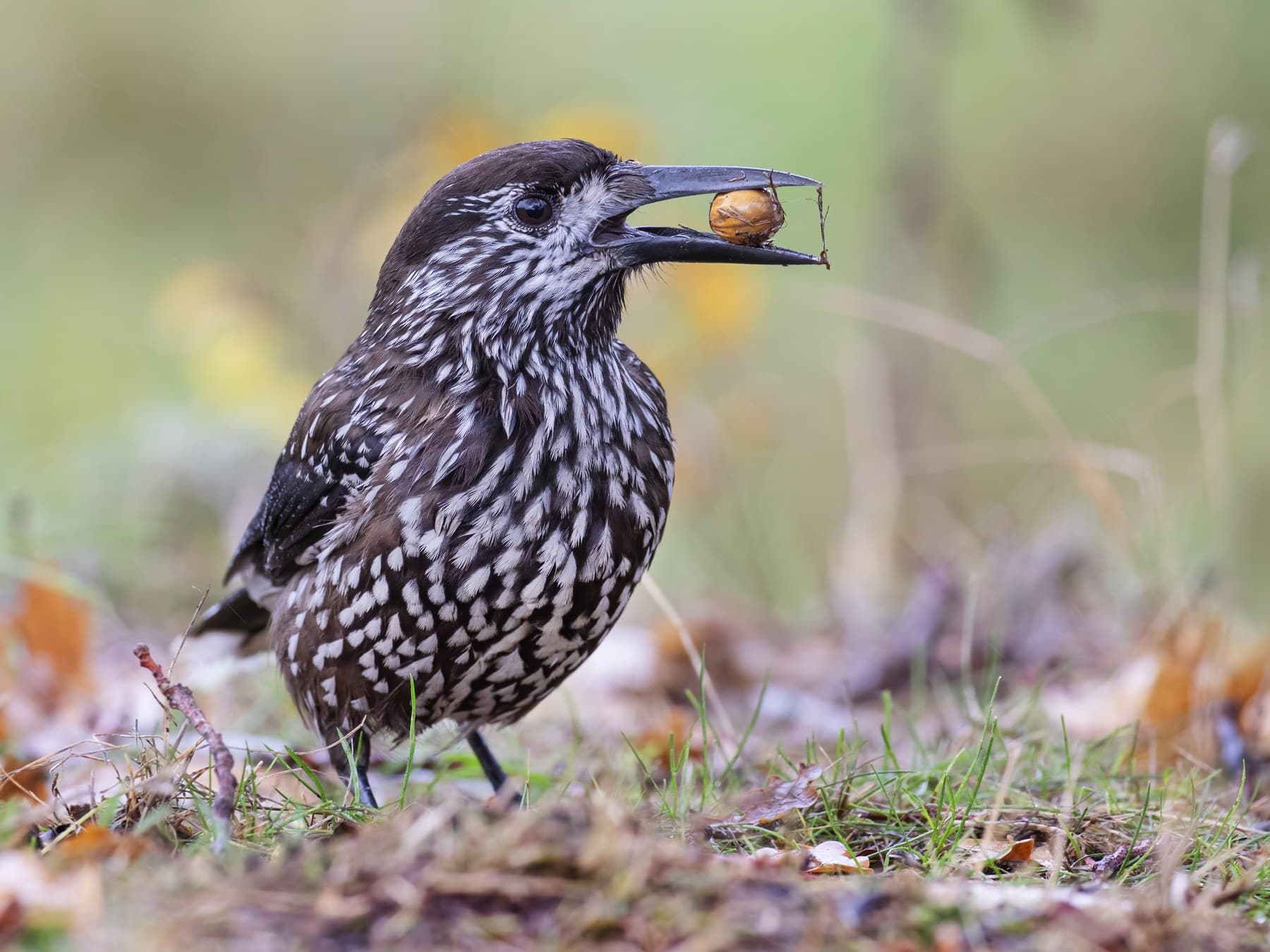
Without its pine seeds, a Nutcracker in Britain has to make do. The 1968 birds dug for grubs in the ground and along roadside verges, opened wasp and ant nests, ate blackberries, acorns and elderberries, took peanuts and nuts from bird tables, and ate bread and household fat. Many were very tame, letting people within 2 m.5
If you go to see one
Rare migrants are often exhausted after a long journey and easily disturbed. The Birders' Code, published by the BTO, asks birders to put the bird first: if it flies off or keeps calling in alarm, you are too close. Stay on roads and paths, respect local residents and private land, and remember that a crowd adds up to far more disturbance than one person.8
At Mundesley, birders gave something back. A villager collected donations from visitors for the village lifeboat, and a visiting birder set up an online appeal; by 28 October the two had raised more than £1,700.9 The Mundesley Volunteer Inshore Lifeboat is an independent station, run by volunteers and paid for entirely by donations.10
Sources
- BirdGuides (2026). Nutcracker arrives in Norfolk sparking huge twitch. Accessed 30 October 2026. Source
- Birds of Norfolk (2026). Norfolk birding news, October 2026. Accessed 30 October 2026. Source
- RSPB (2026). Influx of Nutcrackers a sweet treat for UK birdwatchers. Accessed 30 October 2026. Source
- Kirwan, G. M., Madge, S., del Hoyo, J., Christie, D. A., Collar, N., Moura, N., Pyle, P. (2024). Northern Nutcracker (Nucifraga caryocatactes), version 1.0. Birds of the World (G. M. Kirwan, B. K. Keeney and M. G. Smith, editors). Cornell Lab of Ornithology. doi:10.2173/bow.eurnut3.01
- Hollyer, J. N. (1970). The invasion of Nutcrackers in autumn 1968. British Birds 63(9): 353-373. Accessed 30 October 2026. Source
- Seago, M. J. (editor) (1983). Norfolk Bird Report 1982. Transactions of the Norfolk & Norwich Naturalists' Society 26(4). Accessed 30 October 2026. Source
- Norfolk & Norwich Naturalists' Society (1981). Norfolk Bird Report 1980. Transactions of the Norfolk & Norwich Naturalists' Society 25(5). Accessed 30 October 2026. Source
- BTO. The Birders' Code. Accessed 30 October 2026. Source
- BBC News (2026). Twitchers raise cash to give Mundesley villagers tweet relief. Accessed 30 October 2026. Source
- Mundesley Volunteer Inshore Lifeboat. Mundesley Volunteer Inshore Lifeboat. Accessed 30 October 2026. Source
- BTO. Nutcracker (Nucifraga caryocatactes). BTO BirdFacts. Accessed 30 October 2026. Source