Published 12 Oct 2026
Do Magpies Kill Songbirds? What the Evidence Says
By the Birdfact teamChecked by Nathan Cope
Magpies do take eggs and chicks, and sometimes adult birds. But national studies in Britain since 1991 have found no evidence that magpies caused songbird declines; studies of farmland birds point mainly to changes in farming. Locally, magpies can take many nests: they were the main identified predator of urban Blackbird nests, and artificial nests near garden feeders were taken more often. Here is the evidence, study by study, and how to protect nests without harming magpies.
On this page11 sections
- Do magpies kill other birds?
- Are magpies to blame for songbird declines?
- The main studies at a glance
- Where magpies do take many nests
- The main causes of songbird declines
- Cats and other predators
- More magpies, and nearer to people
- Protecting nests in your garden
- Magpies and the law
- What preys on magpies?
- Sources
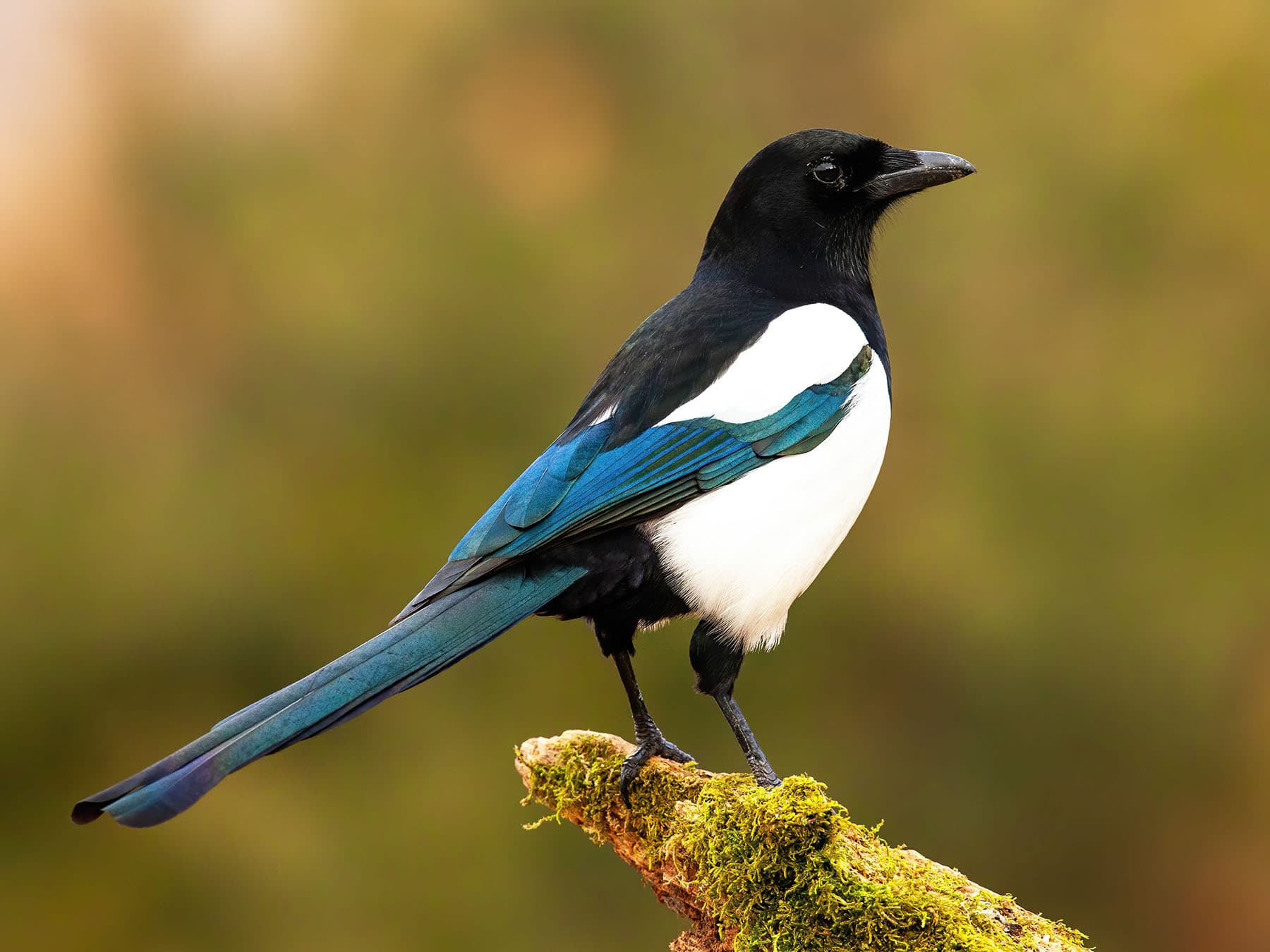
Yes, magpies take the eggs and chicks of other birds, and occasionally an adult bird. But the large British studies have not found that magpies caused the fall in songbird numbers, and studies of farmland birds point mainly to changes in farming.1 This page sets out the evidence, study by study, with what magpies do in gardens and how to protect nests without harming them. It is about the Eurasian Magpie; for the bird itself, see the Magpie guide.
Do magpies kill other birds?
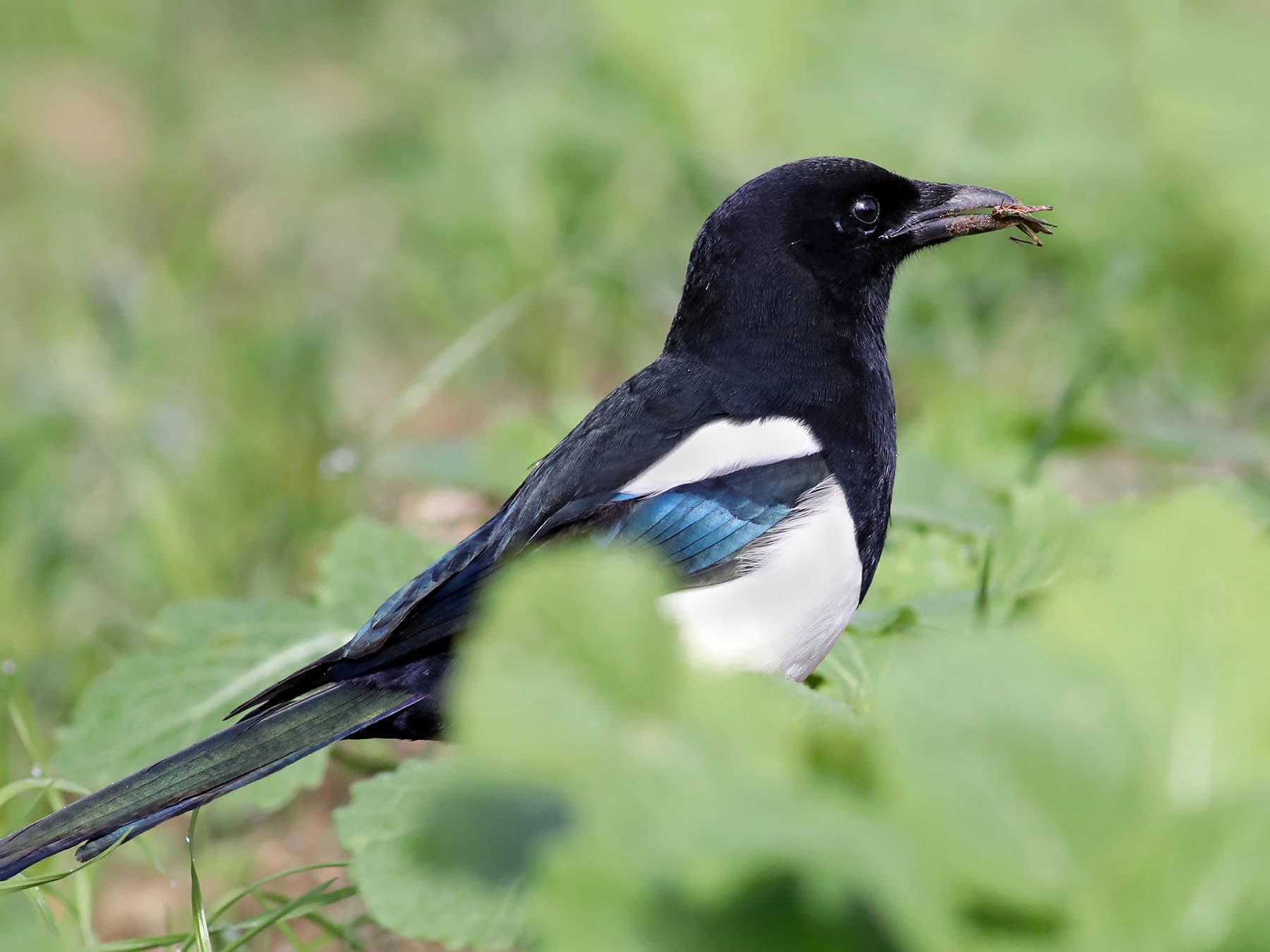
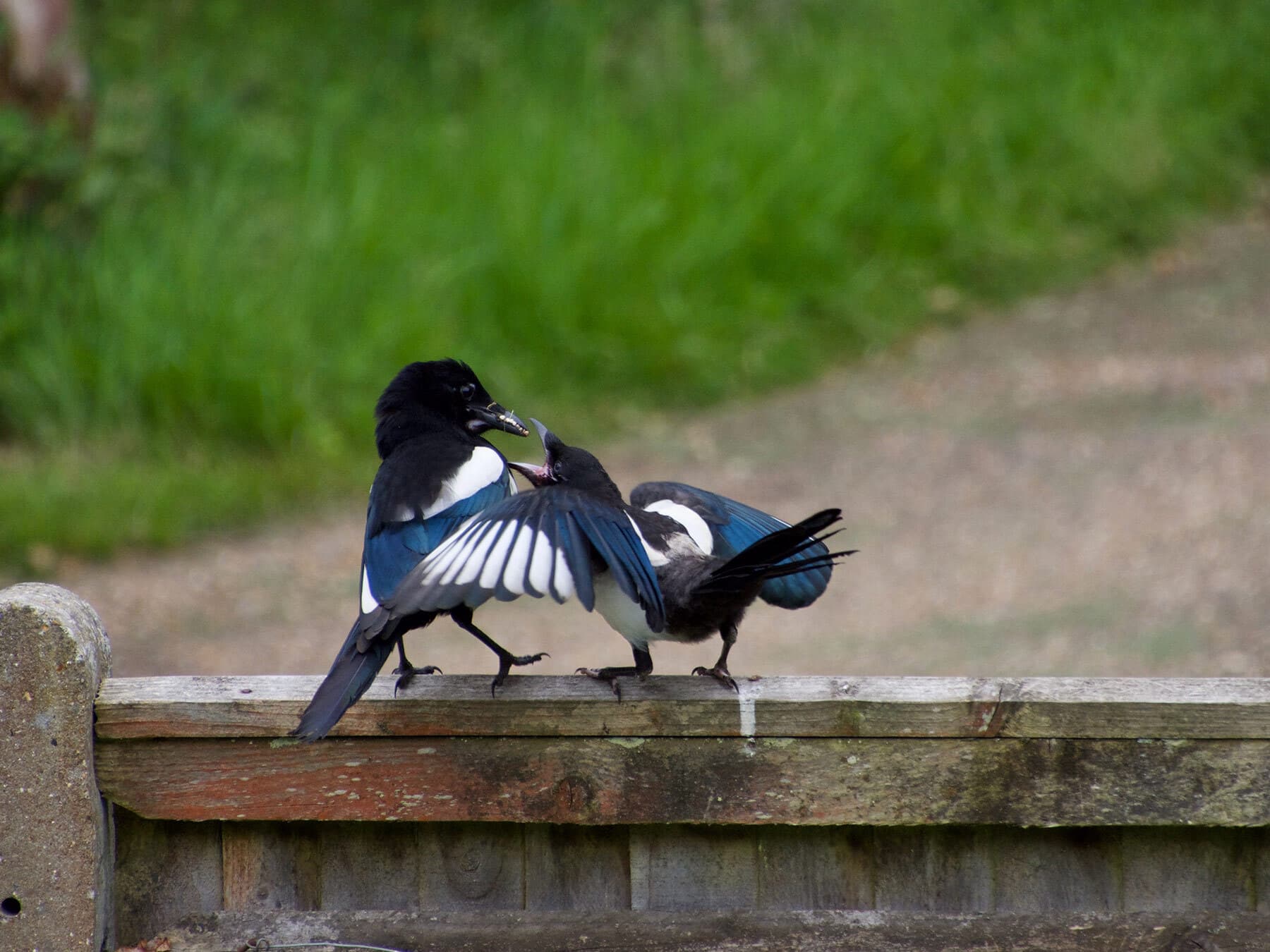
Yes. Magpies eat birds' eggs and nestlings, and very occasionally catch an adult bird; Birds of the World notes that locally their nest raids can hit other birds hard. Most of their food, though, is invertebrates, with carrion, seeds and fruit.2 In a study of urban magpies in Manchester, the summer diet of adults and chicks included few eggs or nestlings.3 More on their food: what magpies eat.
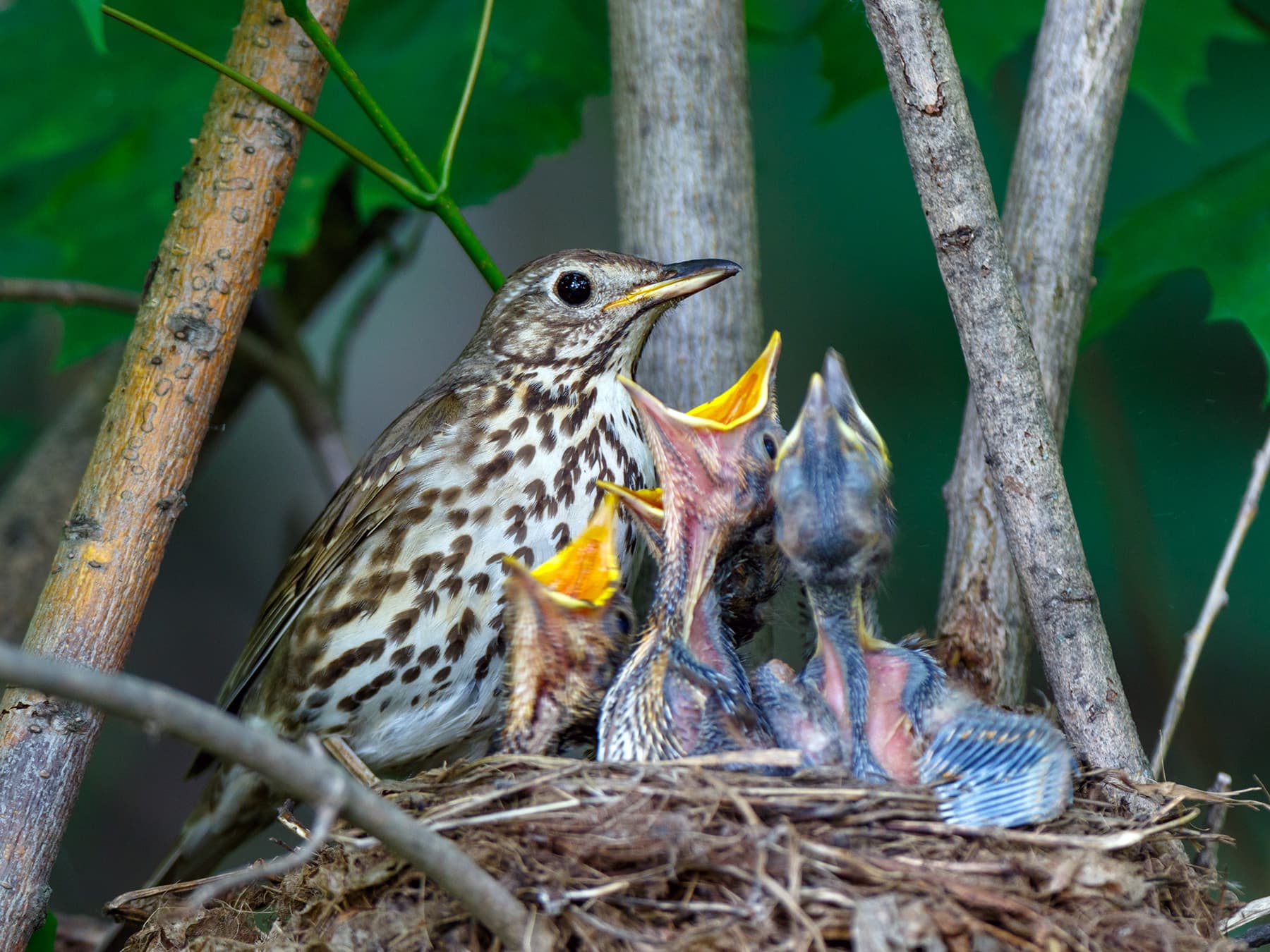
When cameras are put on songbird nests, magpies are seldom the culprits. A review of 46 British nest-camera studies, covering 2,088 nests of songbirds, waders and other birds, found magpies rarely recorded taking songbird nests. Jays and birds of prey took the largest shares of songbird broods (23% and 21%), and the crow family took 31% of songbird clutches, with Jays the main egg-takers. The songbird studies were mostly in woodland, though, and farmland and gardens were poorly covered.4 A review of 80 British studies attributed 24% of songbird nest predation to the crow family as a whole; open-cup nesters breeding while magpies and Jays feed their own young suffered the highest rates.5
Are magpies to blame for songbird declines?
Not according to the national studies. Magpie numbers in Britain rose by an average of 4-5% a year between 1966 and 1986. A BTO analysis of that period found that nest success did not fall in any of 15 songbird species, rose in four (Song Thrush, Greenfinch, Starling and Yellowhammer), and was not related to the number of magpies on farmland or in woodland. The authors found no evidence that more magpies had harmed songbirds, while noting that some effects might not show up in such a study.6
Later work pointed the same way. A national analysis of 23 songbird species found that their year-to-year changes were no different at sites with and without magpies and Sparrowhawks.7 A study of 29 bird populations in England found no evidence, for 22 of them, that the rise in magpies, crows, Jays and other predators had held their numbers down; for the other seven it could not rule an effect out, and as a study of patterns it could not prove cause either way.8 The BTO's summary is that magpies taking eggs and chicks does not lower songbird numbers across whole populations.9 The RSPB's former magpie page, describing BTO analysis it commissioned of 35 years of records, said songbird numbers were no different where magpies were many or few, and that taking eggs and chicks, though "upsetting to witness", is "completely natural".10
Reviews agree, with caveats. A review of 42 studies found no negative effect of crows, ravens and magpies in 81% of cases, and magpies were less likely than crows to cut other birds' breeding success.11 A review of predation in the UK found "little evidence that predation limits populations of pigeons, woodpeckers and passerines", though it can for some seabirds, waders and gamebirds.12 A 2020 review for Defra found "medium-high" strength of evidence that magpies can affect wild birds, but nearly all of the strongest studies had confounding factors, mostly the removal of several predators at once, so the effect could not be put down to magpies specifically.13 And a 2022 BTO report for Natural Resources Wales knew of no case where high magpie numbers had been shown to cause a decline, while warning that the lack of studies is "an evidence gap rather than evidence of no impact".14
The main studies at a glance
Each study is described in more detail above and below; full references are in the Sources.
| Study | Where and when | What it did | What it found |
|---|---|---|---|
| Gooch, Baillie & Birkhead (1991) | Britain, 1966-1986 | BTO census and nest records for 15 songbirds | Magpies rose 4-5% a year; nest success fell in none of the 15; no evidence of harm |
| Thomson et al. (1998) | Britain, national census | Compared 23 songbirds at sites with and without magpies and Sparrowhawks | Year-to-year changes did not differ |
| Newson et al. (2010) | England, 1967-2005 | Correlated 29 bird populations with nest predators and raptors | No evidence of an effect for 22; for 7 an effect could not be ruled out |
| Groom (1993) | Urban Blackbird nests | Followed nests | Fewer than 5% fledged young; most identified predation by magpies; most failures unexplained |
| Chiron & Julliard (2007) | Suburbs near Paris, 3 years | Removed magpies | Very limited effect on songbird breeding |
| Sage & Aebischer (2017) | Southern England farmland, 2011-2014 | Controlled crows and magpies together at one site in each of 16 pairs | Nest success about 10% higher, mainly hole-nesters; no difference for open-cup nesters |
| Hanmer et al. (2017) | Reading, 2014 | 108 artificial nests near feeders | Nests near full feeders taken more often; magpies made 37 of 74 predations |
| Barton et al. (2025) | Britain, 46 camera studies | Filmed predators at 2,088 nests of songbirds, waders and others | Magpies rarely recorded at songbird nests; Jays (23%) and birds of prey (21%) the largest shares of songbird broods |
Where magpies do take many nests
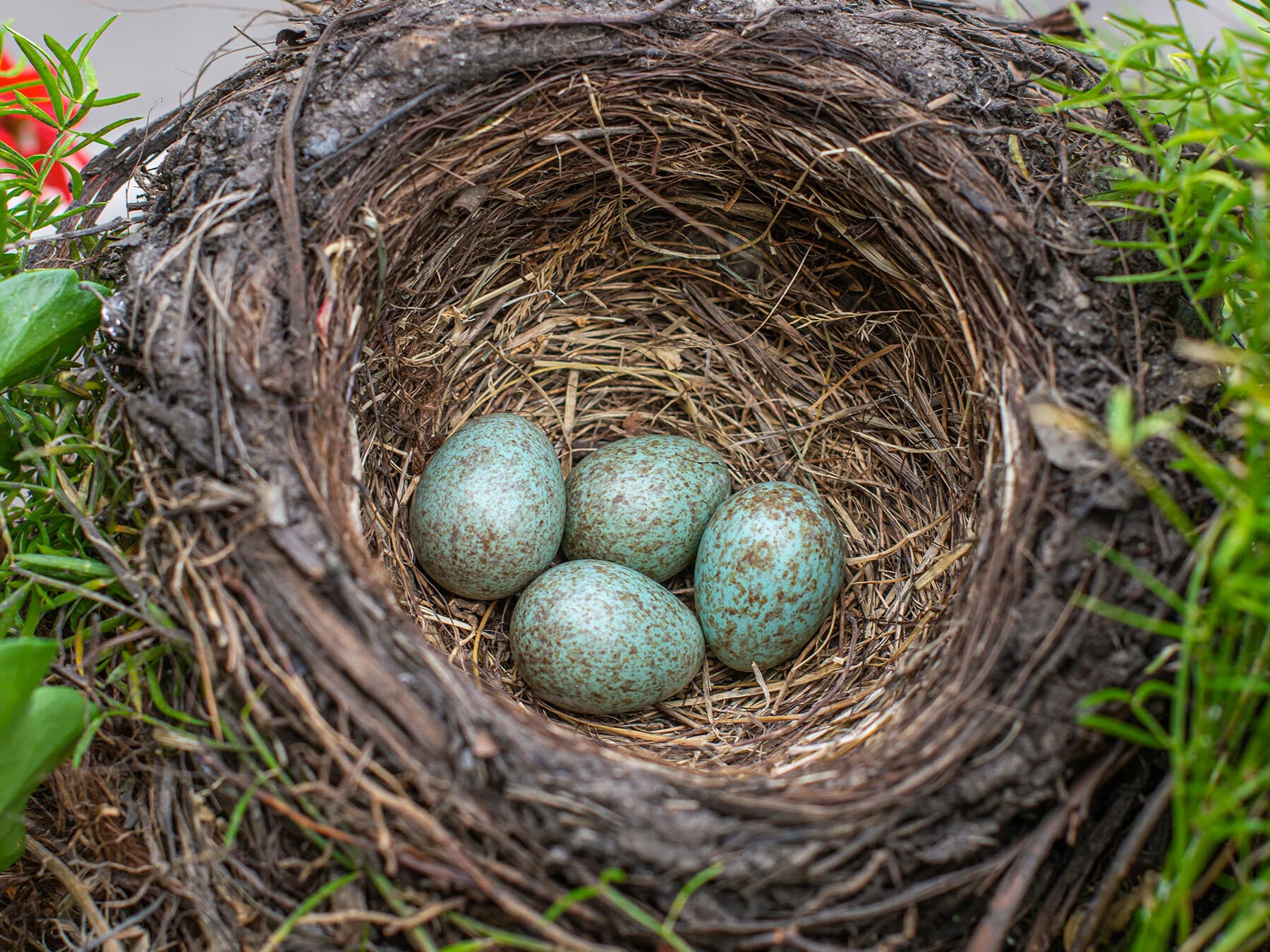
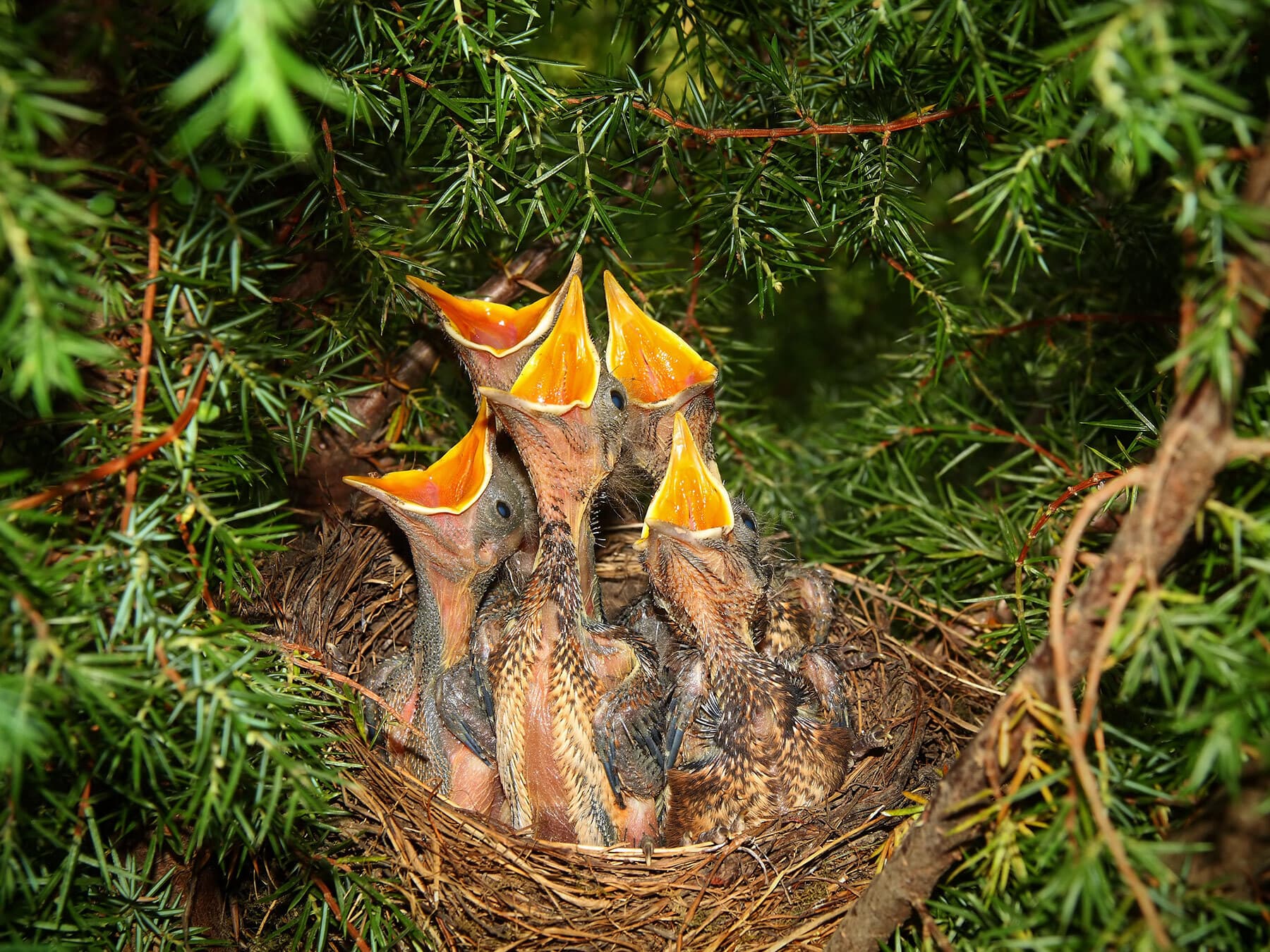
Locally, magpies can be the main nest predator. In a study of urban Blackbirds, fewer than 5% of nests produced young, and most of the nest predation that could be identified was by magpies, though most failures had no known cause.15 On the University of Reading campus, artificial Blackbird-style nests near filled peanut feeders were taken far more often (88.6%, or 76.5% where the feeder had a guard) than nests near empty feeders (51.5%); magpies made 37 of the 74 predations. The authors called artificial nests "indicative rather than definitive", and it is not known whether this affects bird numbers.16 On Warwickshire farmland, magpies were the main predators of artificial nests, especially inside breeding magpies' territories late in the season, and some sites were hit again and again, perhaps by particular birds.17
Removing magpies alone has had little measurable effect on songbird breeding. When magpies were removed from suburbs near Paris for three years, it made very little difference to how many young the songbirds raised.18 On farmland in southern England, where crows and magpies were controlled together, nest success was about 10% higher; the authors' data suggest hole-nesting species contributed most, and open-cup nesters as a group did no better.19 Removing several predators at once, magpies among them, has raised songbird breeding success in some farmland studies, but those studies cannot separate the magpie's part.13
The main causes of songbird declines
For farmland birds, the main causes found are changes in farming: weedkillers, sowing cereals in autumn instead of spring, drainage and more intensive grassland, and more livestock. The RSPB's former magpie page put intensive farming first too, and Martin Harper wrote on the RSPB's site in 2016 that "the evidence that breeding songbird numbers are limited by predation is weak".20 The BTO notes that nest predators such as crows, magpies, Sparrowhawks and grey squirrels have increased and may matter locally, but studies have failed to find a significant effect at a national scale for many prey species.21
Cats and other predators
Magpies are not the only predator in a garden. Pet cats in Britain were estimated to have brought home 27 million birds between April and August 1997, a figure that counts only what they carried home.22 Across British towns, areas with more cats had fewer kinds of breeding birds, while the numbers of magpies, crows and Jays were not strongly negatively linked to bird numbers.23 The two can interact: in Sheffield, a model cat placed near Blackbird nests cut the parents' feeding visits and was followed by much more nest predation, chiefly by the crow family.24 On nest cameras across Britain, Jays and birds of prey took the largest shares of songbird broods.4
More magpies, and nearer to people
Magpies can seem to be everywhere because there are more of them, and more live near people. UK magpie numbers more than doubled between 1967 and 2024 (up 104%), rising until the late 1980s and stable since; they have colonised many towns and suburbs since the 1960s, and the Breeding Bird Survey now finds them most often in towns.9 Magpies grew fastest on mixed and grazing farms25, and in a British city their distribution was most closely linked to the number and variety of trees.26
Protecting nests in your garden
The charities' advice is about helping nests stay hidden, not about removing magpies. Hedges, shrubs and climbers help hide nests from predators, and the RSPB asks people not to cut hedges between March and September, the main nesting season.27
For nest boxes, the BTO advises putting small-hole boxes 1-3 m up, hiding open-fronted boxes among shrubs or creepers, keeping them out of reach of cats and squirrels and away from bird feeders.28 The RSPB notes that open-fronted boxes are the kind the crow family can raid, and advises boxes without a perch.29 The Reading authors suggest using guarded feeders and thinking about whether to feed birds in the breeding season at all.16 The RSPB's 2026 advice already pauses seed and peanuts from May to October, for disease reasons.30
Magpies and the law
Like all wild birds, magpies, their eggs and their nests in use are protected by law in Great Britain31 and Northern Ireland.32 General licences allow authorised people to kill or take magpies for set purposes: in England, to conserve wild birds of conservation concern or to prevent serious damage through attacks on livestock, making reasonable efforts with other lawful methods before and while using them33, 34; in Scotland, to conserve wild birds or prevent serious damage35, 36; in Northern Ireland, to prevent disease and serious damage and, from March to August, to conserve wild birds.37, 38 None of the Welsh general licences for 2026 names the magpie.39
What preys on magpies?
Magpies lose nests too. In a Cotswolds study, Carrion Crows ate magpie eggs and chicks, and magpie pairs nesting near crows raised fewer young.40 More on magpie nesting.
Sources
- Newton, I. (2004). The recent declines of farmland bird populations in Britain: an appraisal of causal factors and conservation actions. Ibis 146(4): 579-600. doi:10.1111/j.1474-919x.2004.00375.x
- Kirwan, G. M., Madge, S., Christie, D. A., Perlman, Y. (2025). Eurasian Magpie (Pica pica), version 1.1. Birds of the World (G. M. Kirwan, editor). Cornell Lab of Ornithology. doi:10.2173/bow.eurmag1.01.1
- Tatner, P. (1983). The diet of urban Magpies Pica pica. Ibis 125(1): 90-107. doi:10.1111/j.1474-919x.1983.tb03086.x
- Barton, M. G., Conway, G. J., Henderson, I. G. et al. (2025). Meta-analysis of predator identity in nest-camera studies in the British Islands. Ibis 168(1): 42-62. doi:10.1111/ibi.13436
- Capstick, L. A., Madden, J. R. (2021). Factors predicting susceptibility of songbirds to nest predation by corvids. European Journal of Wildlife Research 67: 96. doi:10.1007/s10344-021-01532-z
- Gooch, S., Baillie, S. R., Birkhead, T. R. (1991). Magpie Pica pica and songbird populations. Retrospective investigation of trends in population density and breeding success. Journal of Applied Ecology 28(3): 1068-1086. doi:10.2307/2404226
- Thomson, D. L., Green, R. E., Gregory, R. D., Baillie, S. R. (1998). The widespread declines of songbirds in rural Britain do not correlate with the spread of their avian predators. Proceedings of the Royal Society B 265(1410): 2057-2062. doi:10.1098/rspb.1998.0540
- Newson, S. E., Rexstad, E. A., Baillie, S. R., Buckland, S. T., Aebischer, N. J. (2010). Population change of avian predators and grey squirrels in England: is there evidence for an impact on avian prey populations? Journal of Applied Ecology 47(2): 244-252. doi:10.1111/j.1365-2664.2010.01771.x
- BTO. Magpie (Pica pica). BTO BirdFacts. Accessed 11 October 2026. Source
- RSPB. Magpie: effect on songbirds (archived page). RSPB (Internet Archive copy of 10 May 2023; the live page has since been removed). Accessed 11 October 2026. Source
- Madden, C. F., Arroyo, B., Amar, A. (2015). A review of the impacts of corvids on bird productivity and abundance. Ibis 157(1): 1-16. doi:10.1111/ibi.12223
- Roos, S., Smart, J., Gibbons, D. W., Wilson, J. D. (2018). A review of predation as a limiting factor for bird populations in mesopredator-rich landscapes: a case study of the UK. Biological Reviews 93(4): 1915-1937. doi:10.1111/brv.12426
- National Wildlife Management Centre (APHA) (2020). Review of the evidence base for inclusion of avian species on General Licences GL34, GL35 and GL36 in England (Annex 1). Defra, published March 2021. Accessed 12 October 2026. Source
- Taylor, R. C., Noble, D. G., Calladine, J. R., Newson, S. E., Bowgen, K. M. (2022). Assessment of the vulnerability to predation by carrion crow, magpie, jackdaw and jay of Red and Amber-listed Birds of Conservation Concern in Wales. NRW Evidence Report 599, Natural Resources Wales (by the BTO). Accessed 12 October 2026. Source
- Groom, D. W. (1993). Magpie Pica pica predation on Blackbird Turdus merula nests in urban areas. Bird Study 40(1): 55-62. doi:10.1080/00063659309477129
- Hanmer, H. J., Thomas, R. L., Fellowes, M. D. E. (2017). Provision of supplementary food for wild birds may increase the risk of local nest predation. Ibis 159(1): 158-167. doi:10.1111/ibi.12432
- Capstick, L. A., Sage, R. B., Madden, J. R. (2019). Predation of artificial nests in UK farmland by magpies (Pica pica): interacting environmental, temporal, and social factors influence a nest's risk. European Journal of Wildlife Research 65(3). doi:10.1007/s10344-019-1290-6
- Chiron, F., Julliard, R. (2007). Responses of songbirds to magpie reduction in an urban habitat. Journal of Wildlife Management 71(8): 2624-2631. doi:10.2193/2006-105
- Sage, R. B., Aebischer, N. J. (2017). Does best-practice crow Corvus corone and magpie Pica pica control on UK farmland improve nest success in hedgerow-nesting songbirds? A field experiment. Wildlife Biology 2017(1): 1-10. doi:10.2981/wlb.00375
- Harper, M. (2016). The conservationist's dilemma - 3. RSPB (20 June 2016). Accessed 11 October 2026. Source
- BTO (2022). BirdTrends 2022: changes in breeding performance. British Trust for Ornithology. Accessed 12 October 2026. Source
- Woods, M., McDonald, R. A., Harris, S. (2003). Predation of wildlife by domestic cats Felis catus in Great Britain. Mammal Review 33(2): 174-188. doi:10.1046/j.1365-2907.2003.00017.x
- Sims, V., Evans, K. L., Newson, S. E., Tratalos, J. A., Gaston, K. J. (2008). Avian assemblage structure and domestic cat densities in urban environments. Diversity and Distributions 14(2): 387-399. doi:10.1111/j.1472-4642.2007.00444.x
- Bonnington, C., Gaston, K. J., Evans, K. L. (2013). Fearing the feline: domestic cats reduce avian fecundity through trait-mediated indirect effects that increase nest predation by other species. Journal of Applied Ecology 50(1): 15-24. doi:10.1111/1365-2664.12025
- Gregory, R. D., Marchant, J. H. (1996). Population trends of Jays, Magpies, Jackdaws and Carrion Crows in the United Kingdom. Bird Study 43(1): 28-37. doi:10.1080/00063659609460993
- Tatner, P. (1982). Factors influencing the distribution of Magpies Pica pica in an urban environment. Bird Study 29(3): 227-234. doi:10.1080/00063658209476763
- RSPB. Birds' nests and nestboxes: top tips to help nesting birds. RSPB. Accessed 11 October 2026. Source
- BTO. Putting up a nest box. BTO. Accessed 11 October 2026. Source
- RSPB. Our ultimate guide to nestboxes. RSPB. Accessed 11 October 2026. Source
- RSPB (2026). Our latest guidance on feeding garden birds. RSPB news. Accessed 11 October 2026. Source
- UK Parliament (1981). Wildlife and Countryside Act 1981, section 1. Accessed 11 October 2026. Source
- UK Government (1985). The Wildlife (Northern Ireland) Order 1985, Article 4. Accessed 11 October 2026. Source
- Natural England (2026). GL40: general licence to kill or take certain species of wild birds to conserve wild birds, flora or fauna. Accessed 11 October 2026. Source
- Natural England (2026). GL42: general licence to kill or take certain species of wild birds to prevent serious damage. Accessed 11 October 2026. Source
- NatureScot (2026). General licence for birds GL01/2026: conservation of wild birds. Accessed 11 October 2026. Source
- NatureScot (2026). General licence for birds GL02/2026: prevention of serious damage to livestock, foodstuffs for livestock, crops, vegetables and fruit. Accessed 11 October 2026. Source
- Department of Agriculture, Environment and Rural Affairs (2026). General licence TPG/2/2026 (Wildlife (Northern Ireland) Order 1985). Accessed 11 October 2026. Source
- Department of Agriculture, Environment and Rural Affairs (2026). General licence TPG/3/2026 (Wildlife (Northern Ireland) Order 1985). Accessed 11 October 2026. Source
- Natural Resources Wales. General licences for birds 2026. Natural Resources Wales. Accessed 11 October 2026. Source
- Vines, G. (1981). A socio-ecology of magpies Pica pica. Ibis 123(2): 190-202. doi:10.1111/j.1474-919x.1981.tb00924.x