


Fish Crow
Corvus ossifragus
By the Birdfact teamChecked by Nathan Cope
On this page12 sections
How to recognise it
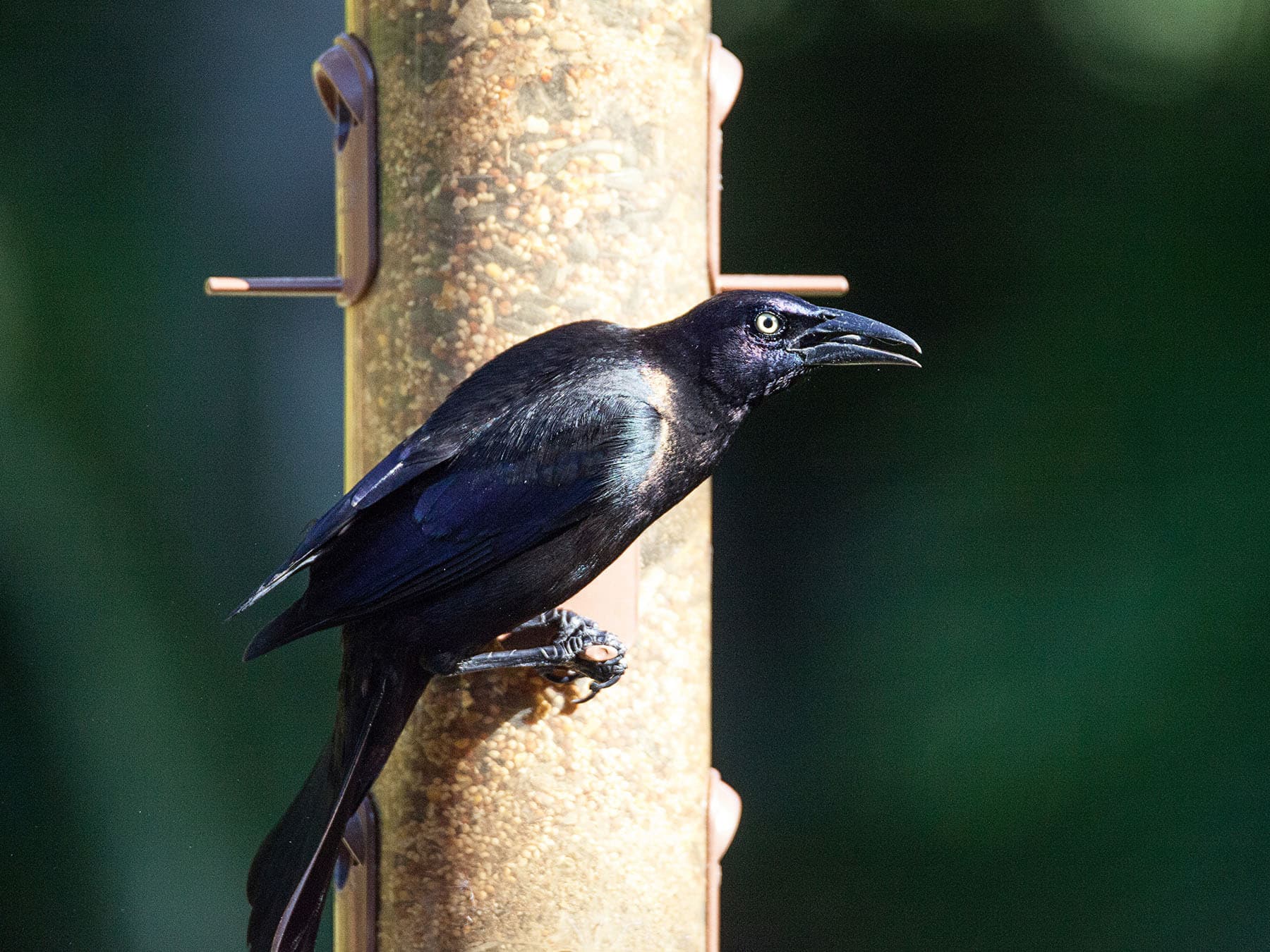
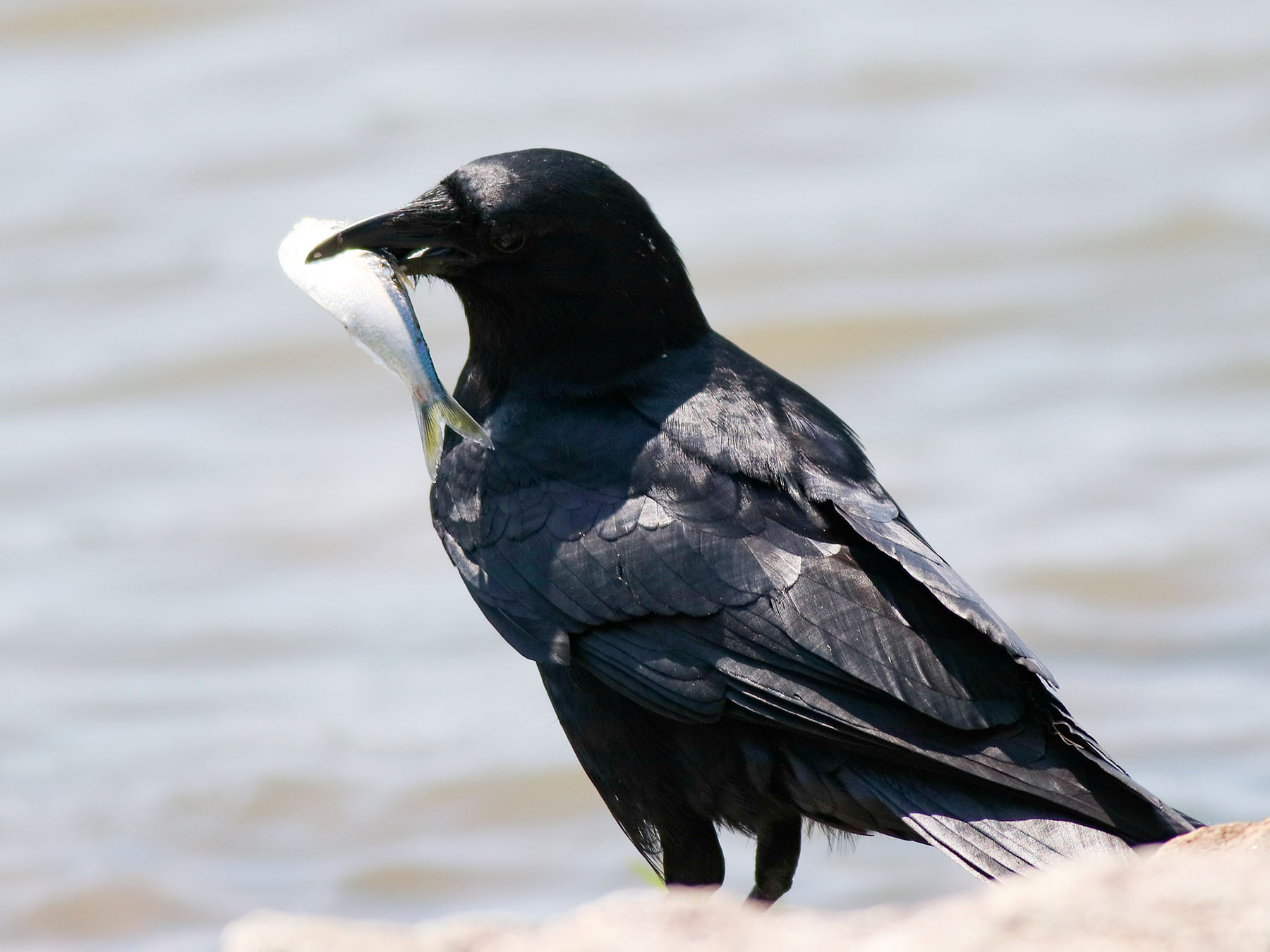
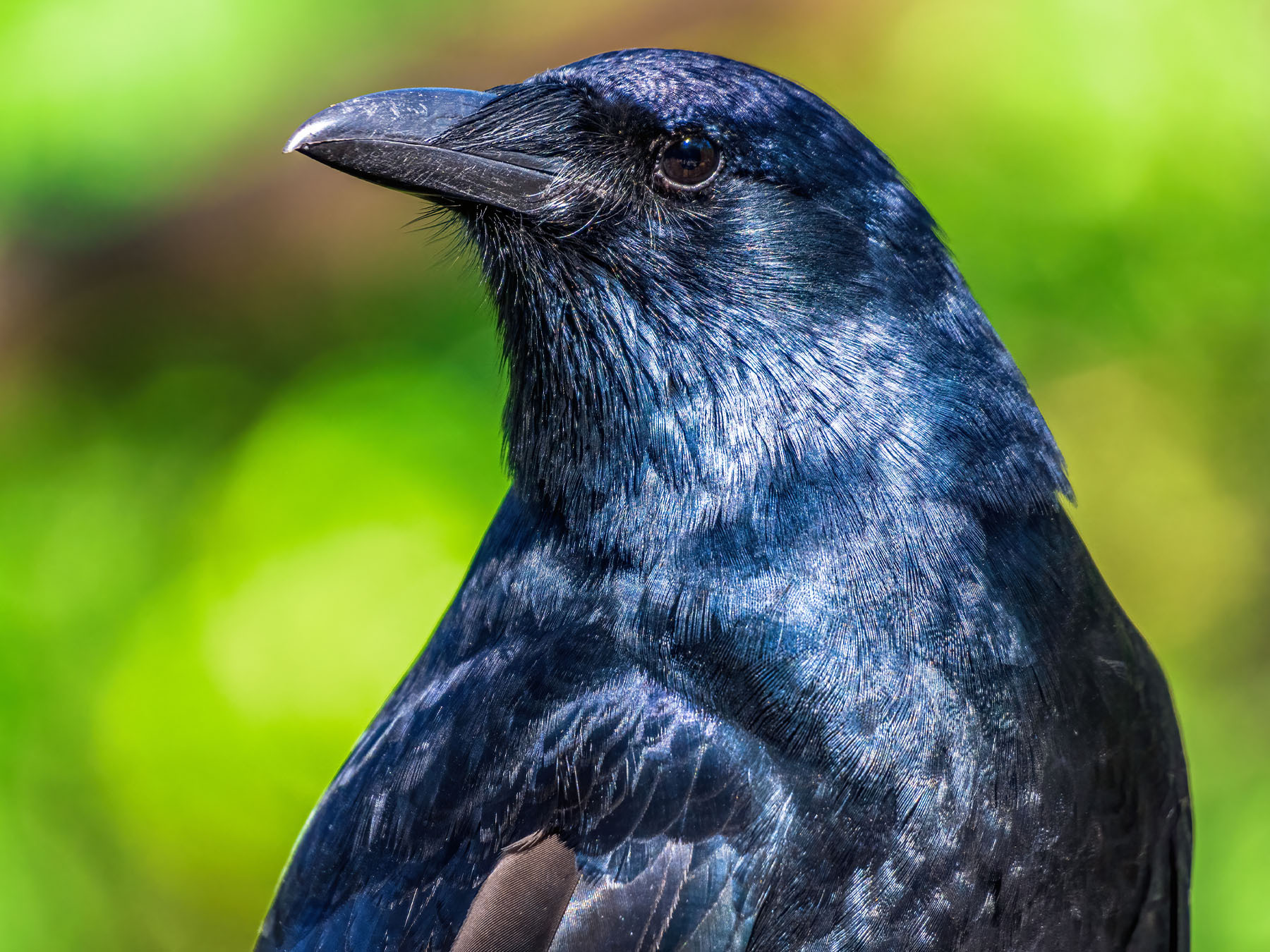
The Fish Crow is a medium-sized corvid with glossy black plumage that shows a subtle purple sheen in good light. It has a slender build, with a relatively small head and a thin, slightly curved bill shorter than the American Crow's.
Juveniles appear similar to adults but may have a duller plumage and less glossy feathers. There's no significant difference between males and females in appearance.
Its size
Adults- Length
- 36–41 cm
- Wingspan
- 84–91 cm
- Weight
- 230–400 g
Its song and calls
The Fish Crow's call is distinctively nasal and short, often described as a two-note 'uh-uh' or 'ca-ha'. It is higher-pitched and less harsh than the American Crow's 'caw'. The Fish Crow also produces a variety of softer croaks, rattles, and guttural sounds in social interactions.
- Call0:00 / 0:14
Recorded in North Carolina, United States · March 2024
When and where to see it
OctoberIn season
Most recorded in October
- 1. District of Columbia1.5%
- 2. Florida1.4%
- 3. Maryland0.87%
- 4. Virginia0.80%
- 5. Mississippi0.73%
Each dot is a county, state or province: the bigger and darker, the larger the bird’s share of that place’s bird records that month. Grey dots: no regular records. The ringed point is the centre of the bird’s records this month; the arrow shows how it moved since last month, and the dashed loop its path through the year. “Arrivals” colours places where it becomes regular this month (orange) or is in its last regular month (grey). GBIF eBird Observation Dataset, 2019–2024. Map data: Natural Earth, US Census Bureau; place centres © OpenStreetMap contributors.
In your area
See when the Fish Crow is recorded in your county, state or province.
How often the Fish Crow turns up in the United States and Canada through the year, from birdwatchers' records.
United States
Resident · all year · most records in March
Canada
Summer visitor · all year · most records in March
Show as a table
| Month | United States | Canada |
|---|---|---|
| January | 0.26% (regular) | 0.004% (regular) |
| February | 0.35% (regular) | 0.003% (regular) |
| March | 0.56% (regular) | 0.011% (regular) |
| April | 0.50% (regular) | 0.010% (regular) |
| May | 0.31% (regular) | 0.006% (regular) |
| June | 0.35% (regular) | 0.004% (regular) |
| July | 0.39% (regular) | 0.006% (regular) |
| August | 0.32% (regular) | 0.004% (regular) |
| September | 0.23% (regular) | 0.003% (regular) |
| October | 0.26% (regular) | 0.003% (regular) |
| November | 0.25% (regular) | 0.003% (regular) |
| December | 0.24% (regular) | 0.001% (regular) |
Worldwide: recorded regularly in 2 countries
Countries where it was recorded in at least 3 of the 6 years 2019–2024. Linked countries have their own bird list.
North America (2)
Data: EOD – eBird Observation Dataset (Cornell Lab of Ornithology), accessed via GBIF.org, CC BY 4.0. Records from 2019–2024, aggregated and filtered by Birdfact. How these lists are made
Tips for seeing it
- Look for Fish Crows near coastal areas, rivers, and lakes
- Listen for their distinctive nasal 'uh-uh' call, which differs from the American Crow's 'caw'
- Observe their behavior around water, including following boats and foraging on shorelines
- Note their slightly smaller size and more slender build compared to American Crows
What it eats
Fish Crows have a varied diet, primarily consisting of small fish, crustaceans, and mollusks found in coastal waters. They also consume insects, small reptiles, bird eggs, and nestlings. Opportunistic feeders, they readily take advantage of human food scraps in urban areas.
Nesting and breeding
Fish Crows typically form monogamous pairs and breed from March to June. They engage in courtship displays that include aerial chases and mutual preening.
Nests are built in trees or large shrubs, often near water. They are a bulky structure of sticks lined with softer materials like grass and bark. Females lay 3-5 pale blue-green eggs with brown spots.
Both parents incubate the eggs for about 16-18 days. Nestlings fledge after approximately 30-35 days but may remain dependent on parents for several more weeks.
Behaviour
Fish Crows are highly social birds, often seen in small flocks or pairs. They're known for their agile flight, frequently soaring and gliding over water bodies.
These intelligent birds are opportunistic foragers, often following fishing boats or scavenging along beaches and waterfronts.
Conservation
While the Fish Crow is currently listed as Least Concern, it faces threats from habitat loss due to coastal development and climate change.
Local populations may be affected by pollution in aquatic ecosystems, which can impact their food sources.
Similar birds
Often mistaken for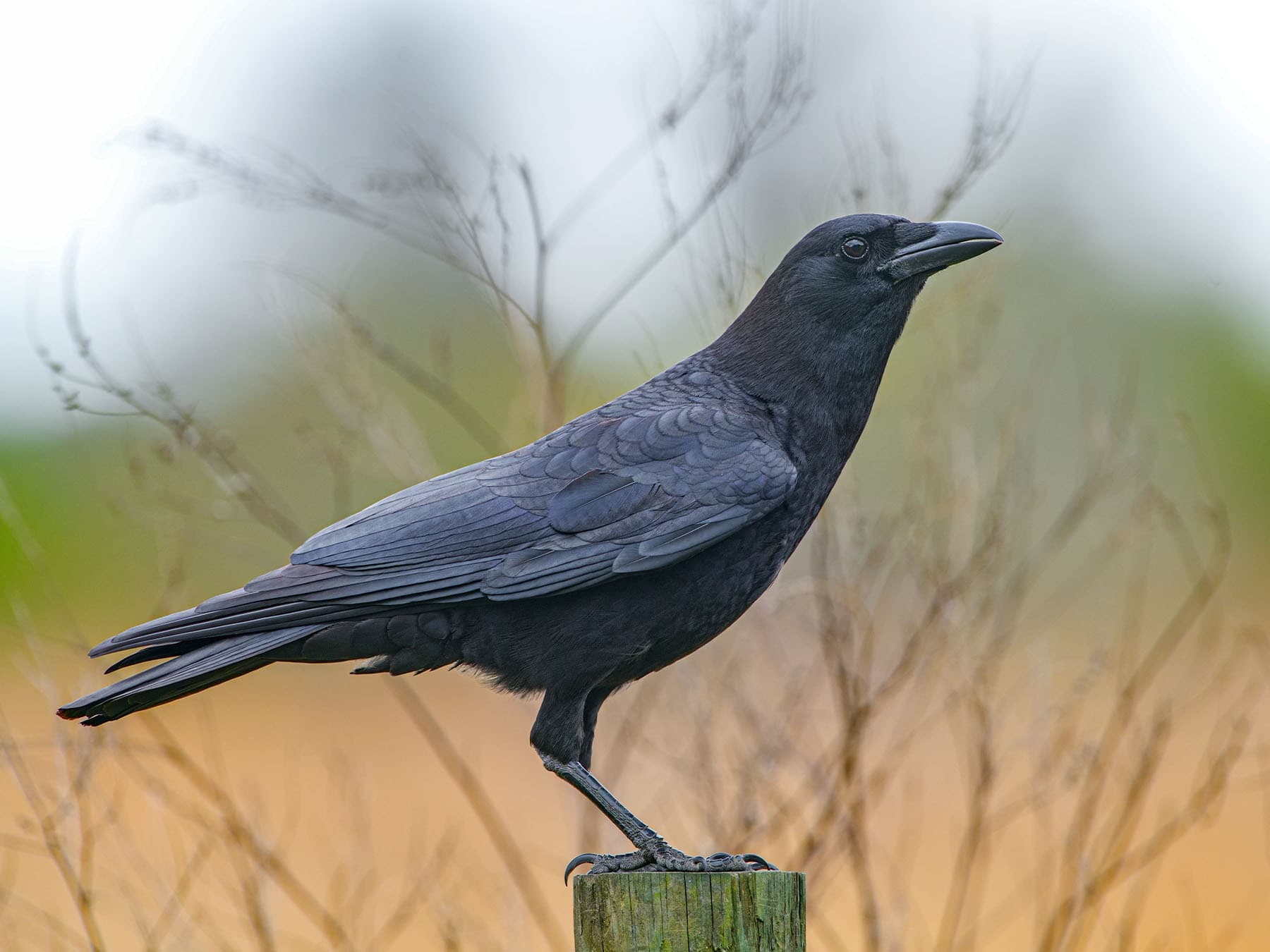
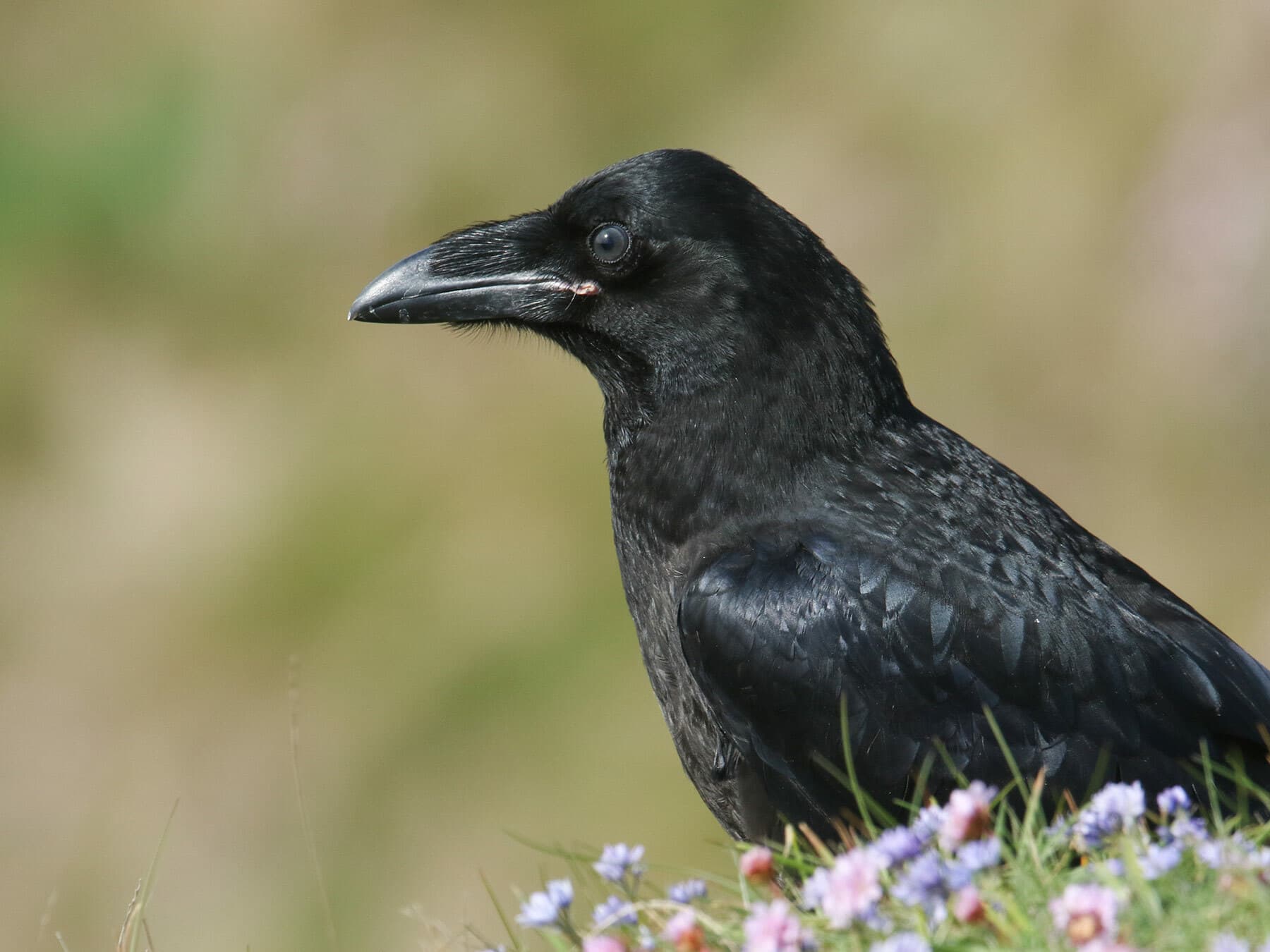
More photos
3 photos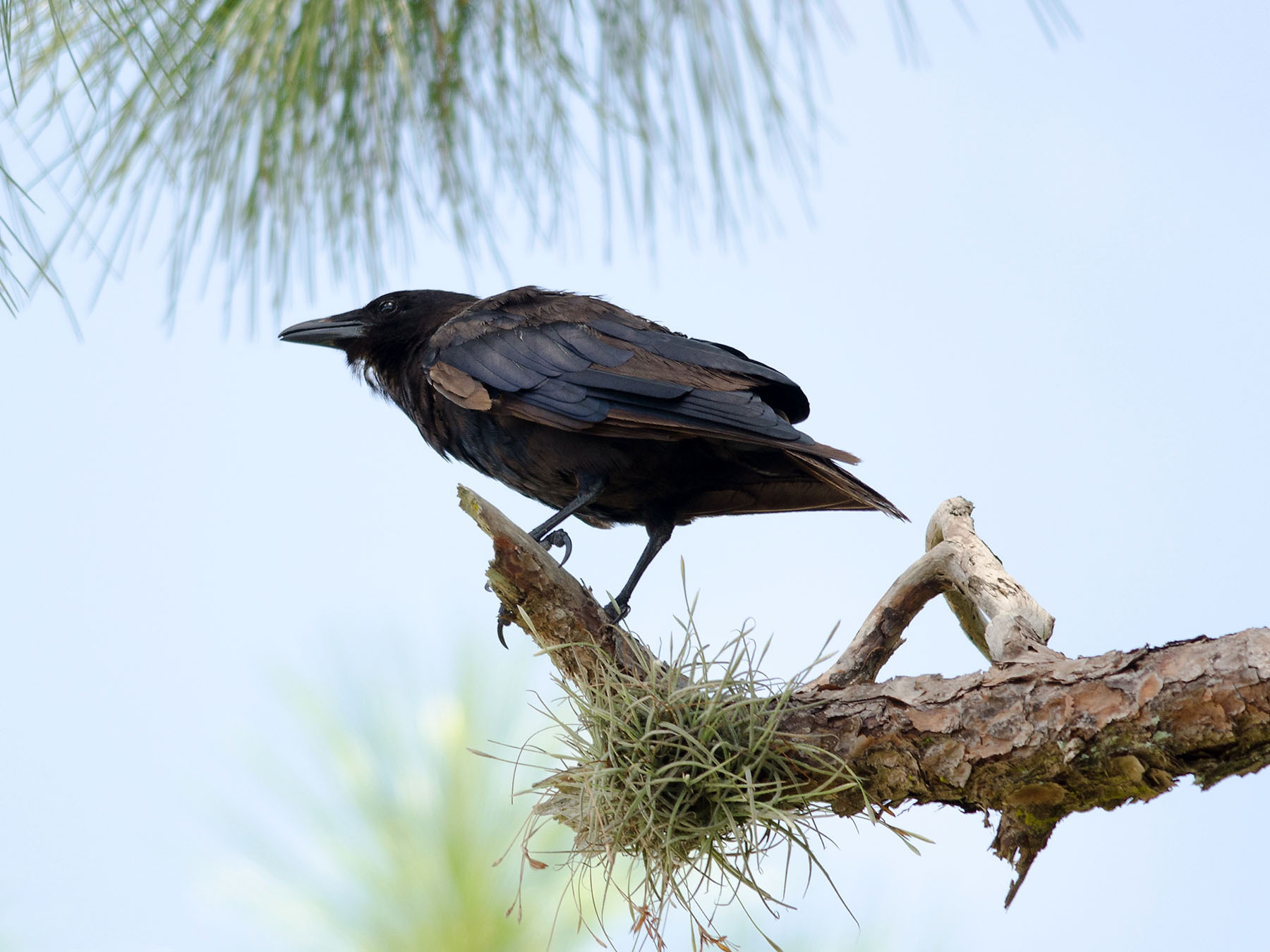
Quick facts
- Length
- 36–41 cm
- Wingspan
- 84–91 cm
- Weight
- 230–400 g
- Lifespan
- 7–10 years
- Family
- Crows & Jays
- Migration
- Partial migrant
- Global status (IUCN)
- Least Concern
- World population
- Unknown
- Population trend
- Population appears to be increasing
- Scientific name
- Corvus ossifragus
Sources
2- 1BirdLife International. 2016. Corvus ossifragus. The IUCN Red List of Threatened Species 2016: e.T22705993A94045235. Source (opens in a new tab)
- 2Breeding Bird Survey and/or Christmas Bird Count: Butcher and Niven (2007)

Checked by
Nathan Cope, founder and editor
Nathan founded Birdfact and leads its writers and contributors in the UK, the US and Canada. He has watched and studied birds for more than ten years, and checks every article and species guide before it’s published.