


Cuckoo
Common Cuckoo, European Cuckoo · Cuculus canorus
By the Birdfact teamChecked by Nathan Cope
On this page15 sections
How to recognise it
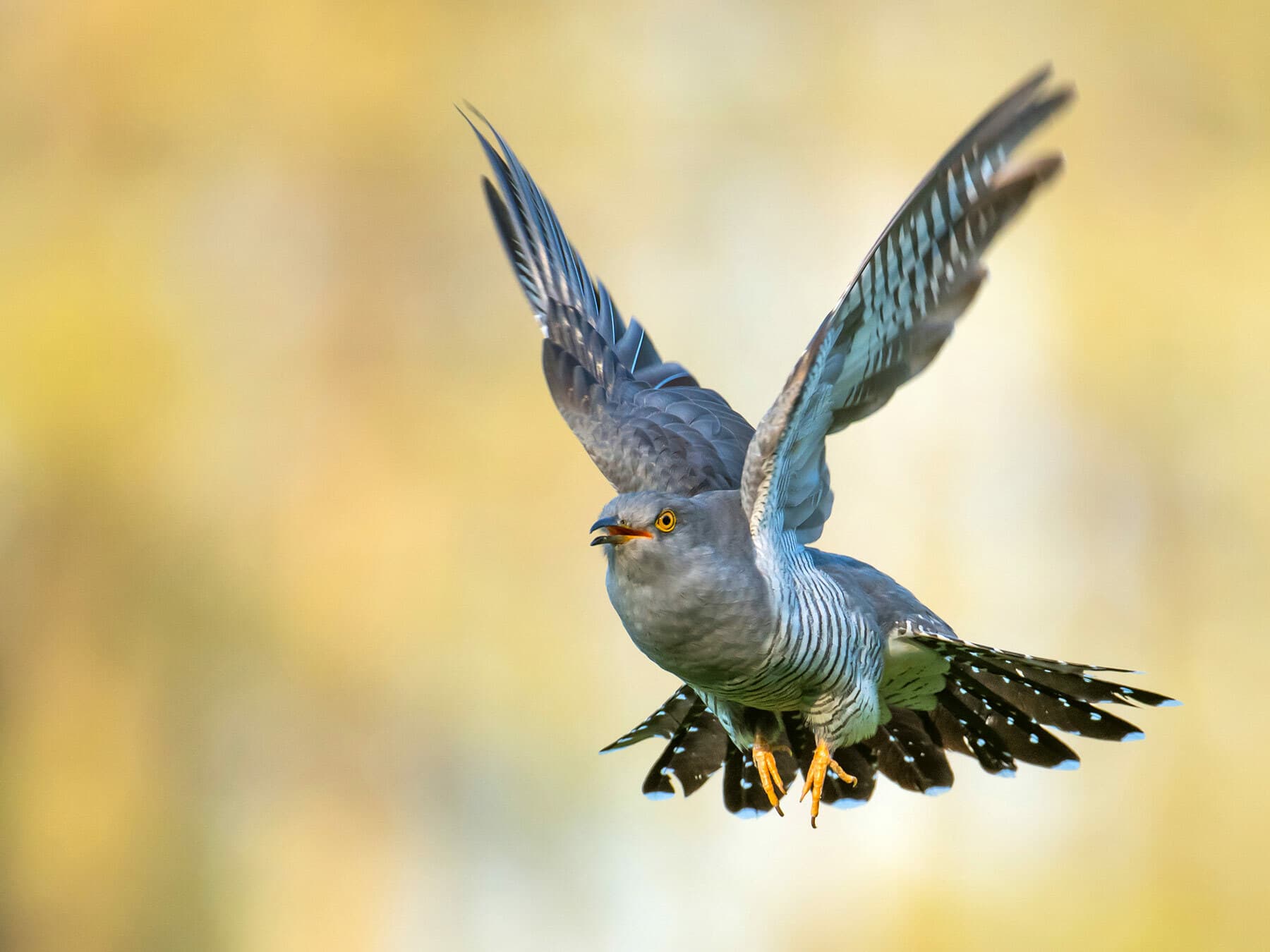
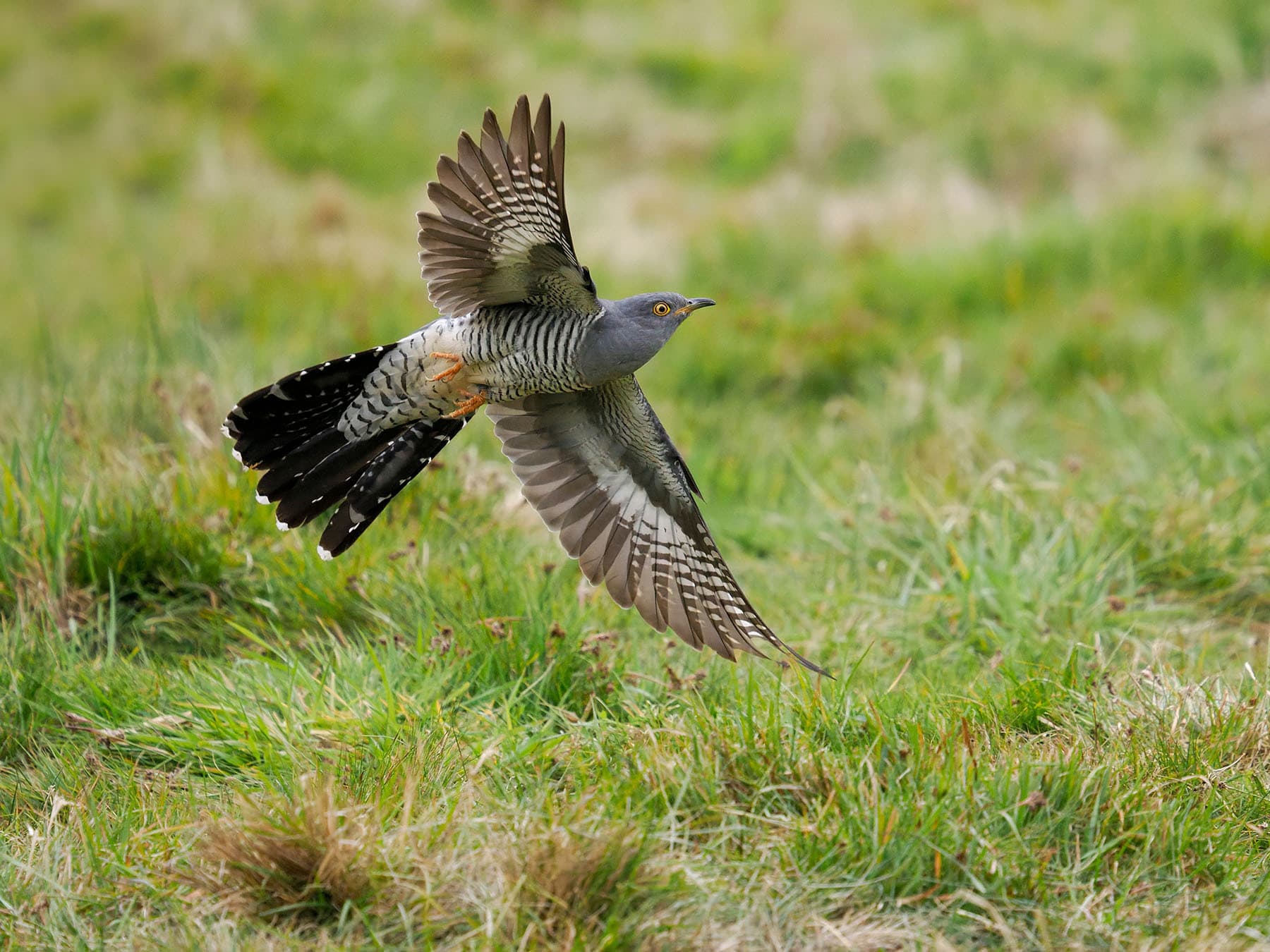
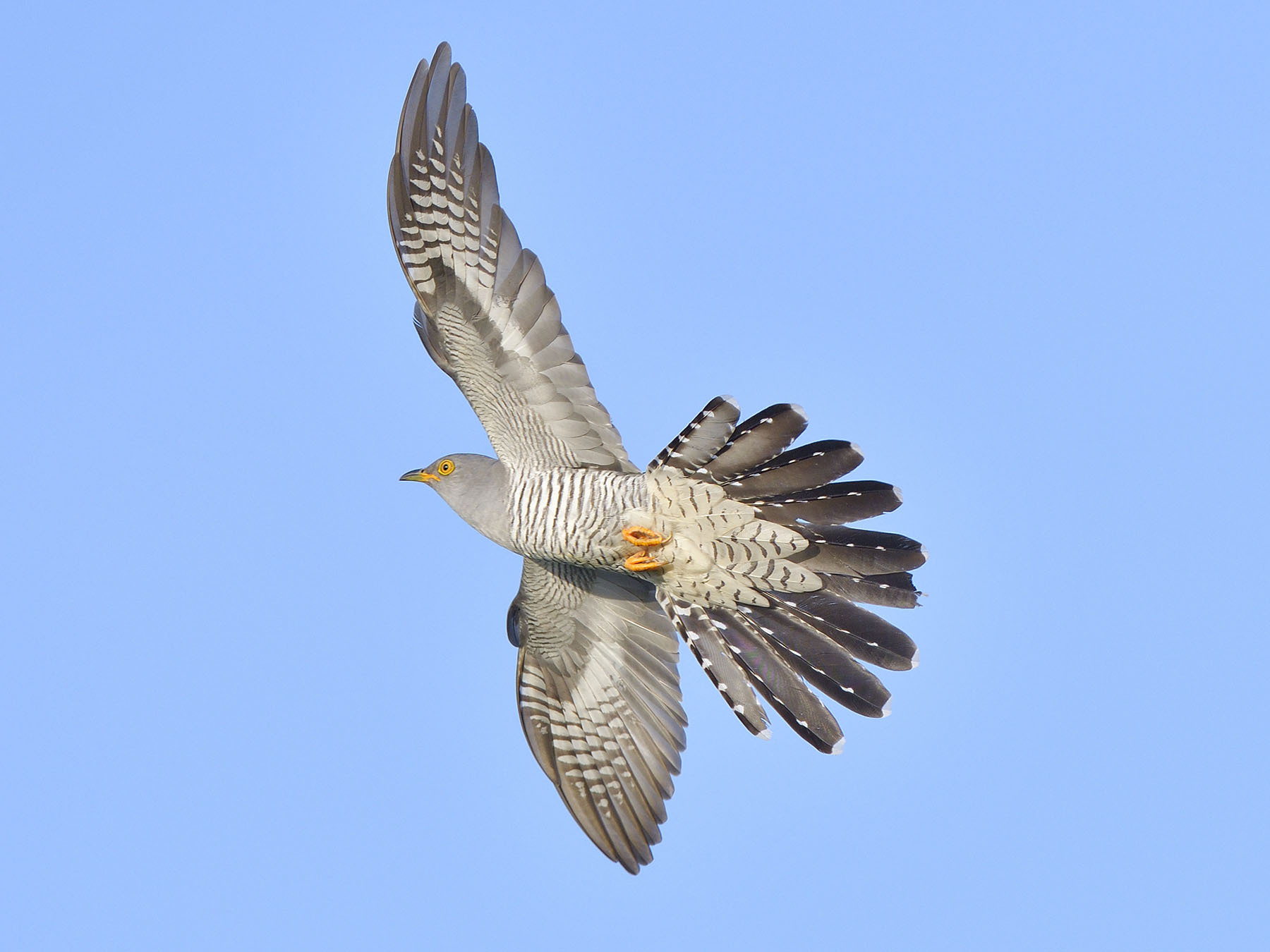
Cuckoos appear very much like hawks when seen in flight. Their flight is fast and direct, and their long, sharply pointed wings and large tails present a sleek and streamlined appearance. Generally shy and nervous, getting a good look at a perched Cuckoo can be challenging.
What do Cuckoos look like?
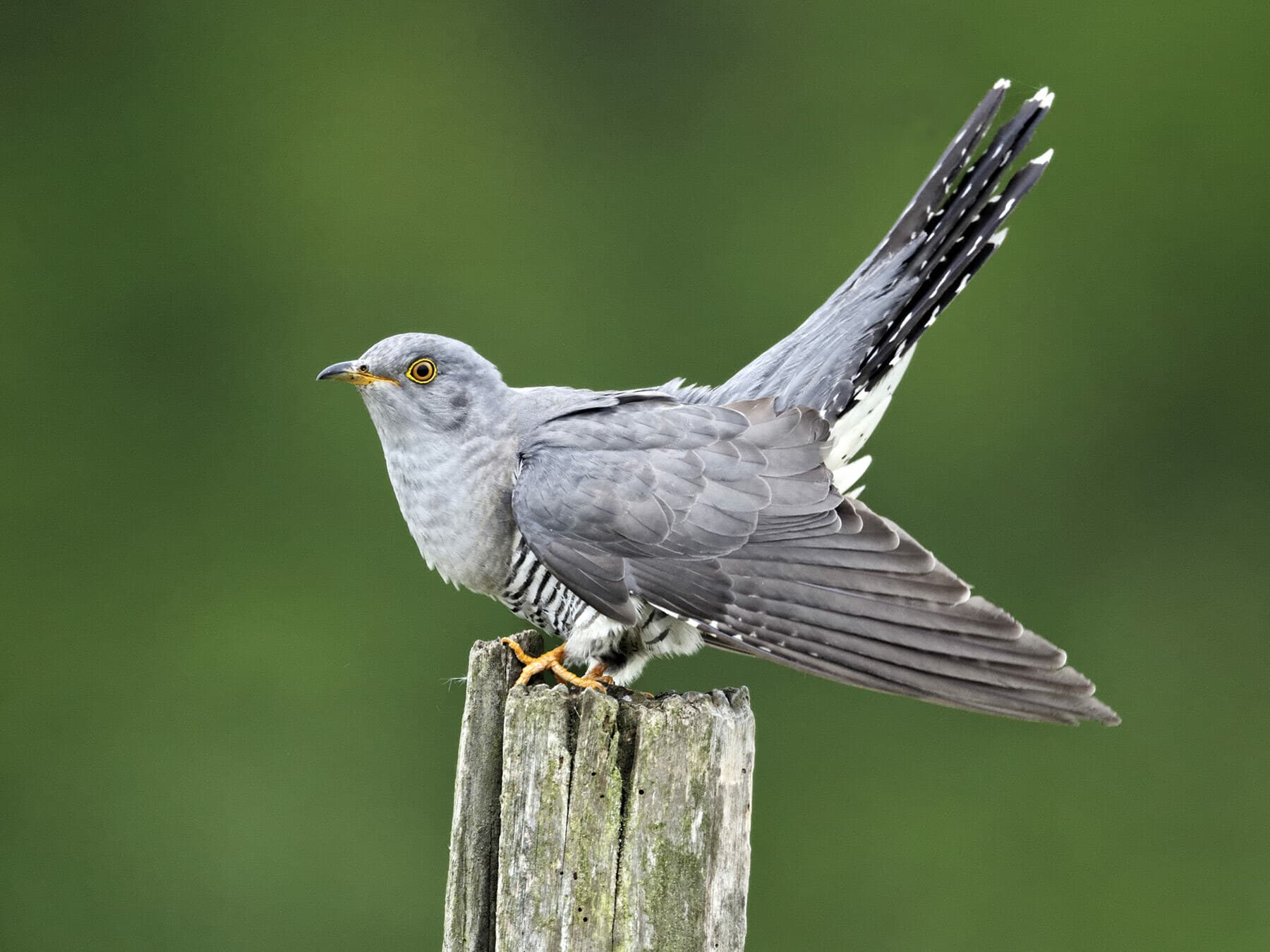
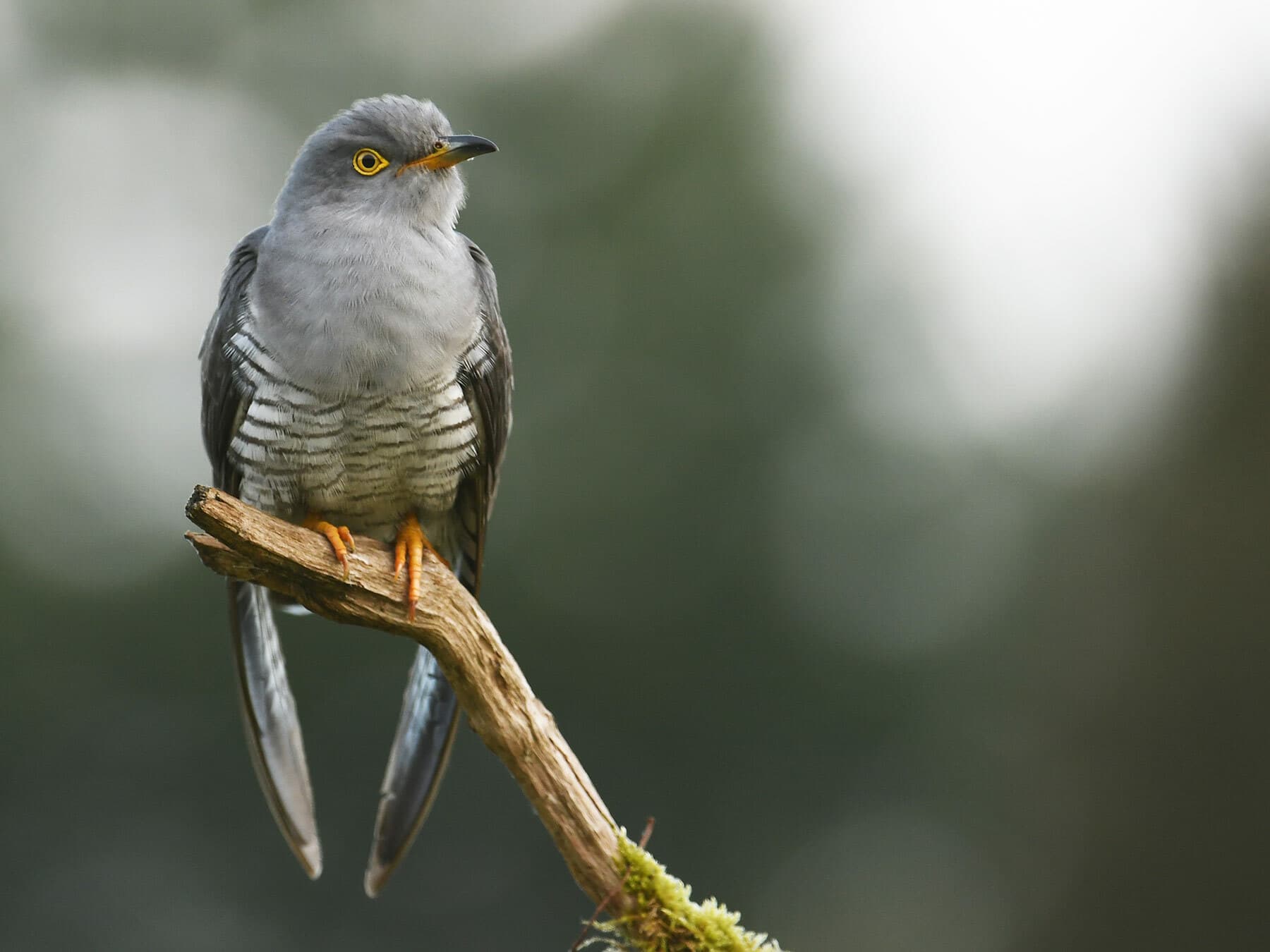
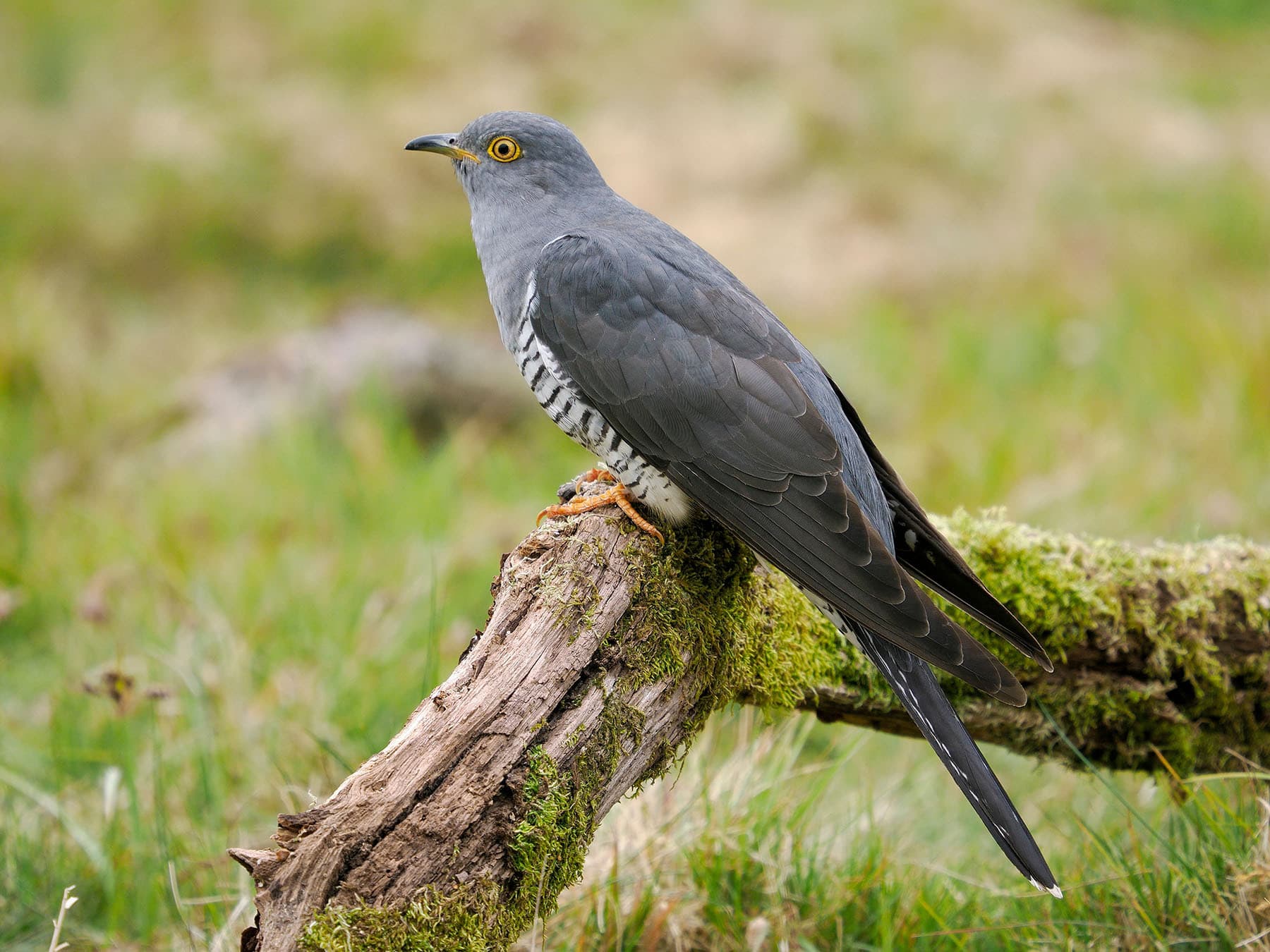
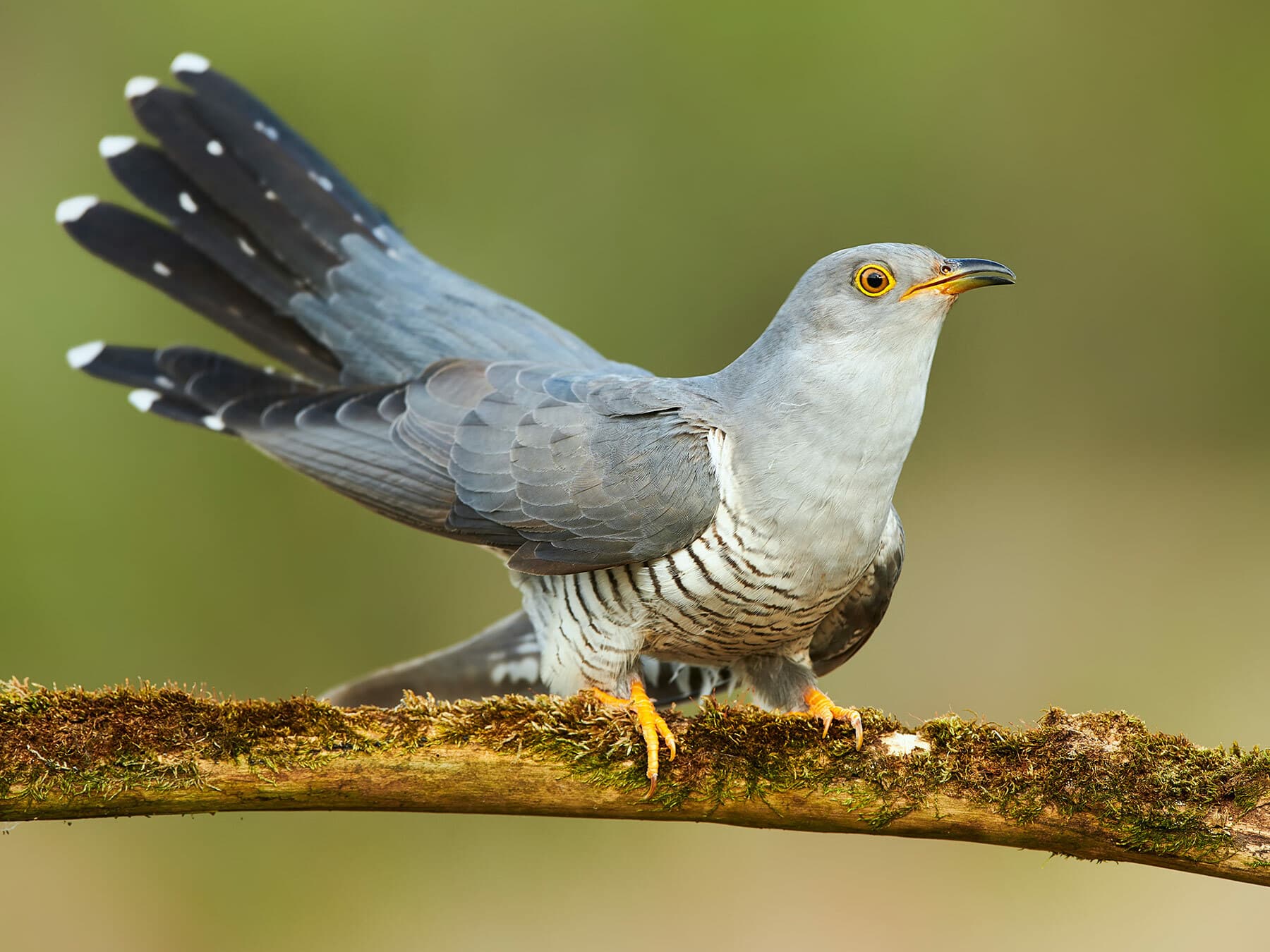
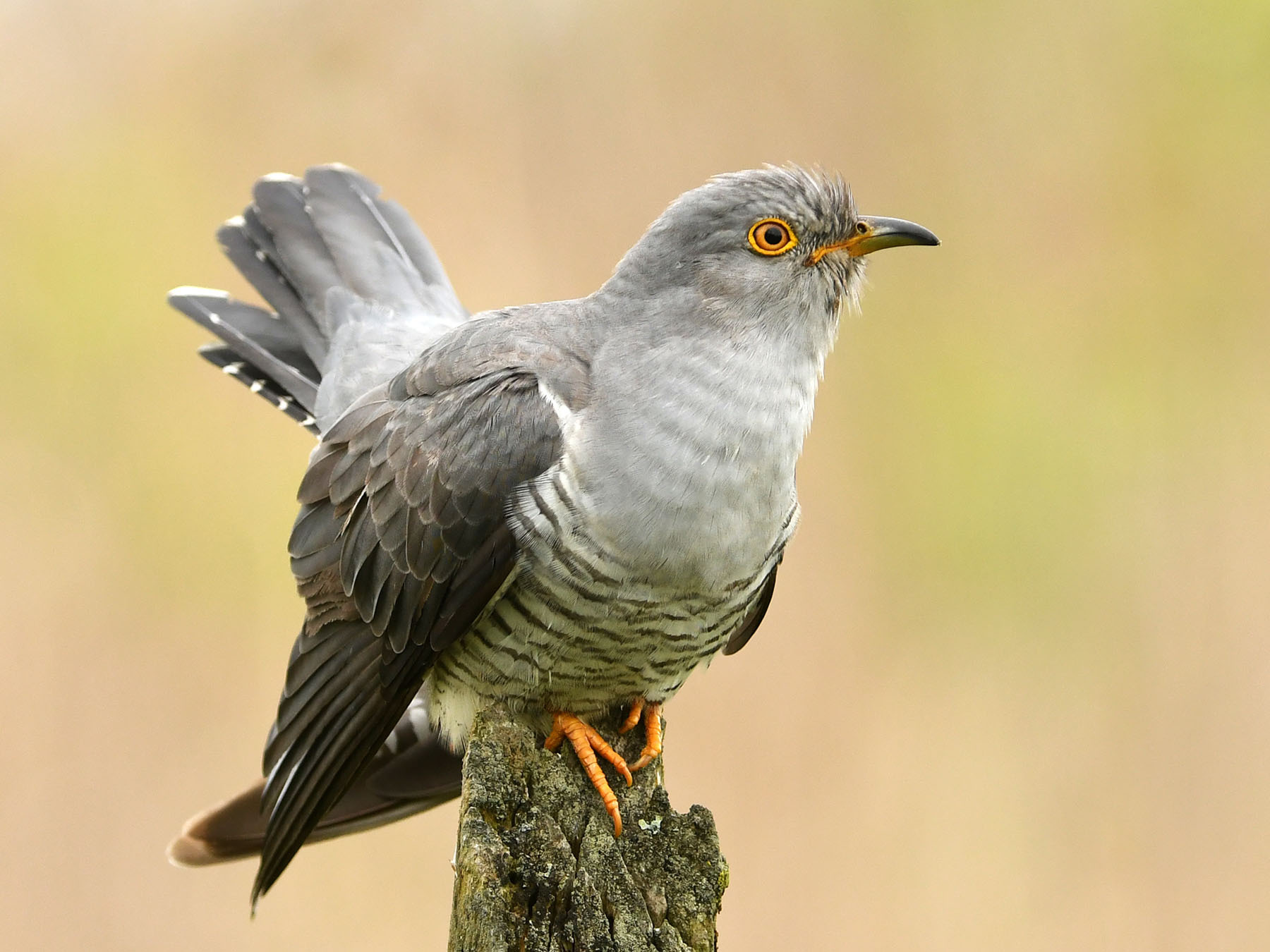
Adults Cuckoos are uniform slate-grey above with whitish underparts, barred in black. Their slim, slightly curved bills are dark with a yellow base. They have short, yellow legs, and their yellow eyes are surrounded by a bare yellow ring.
Adult female Cuckoos resemble males but differ slightly in chest colouration. Males have all-grey chests, while females have a warm brown tinge to the breast.
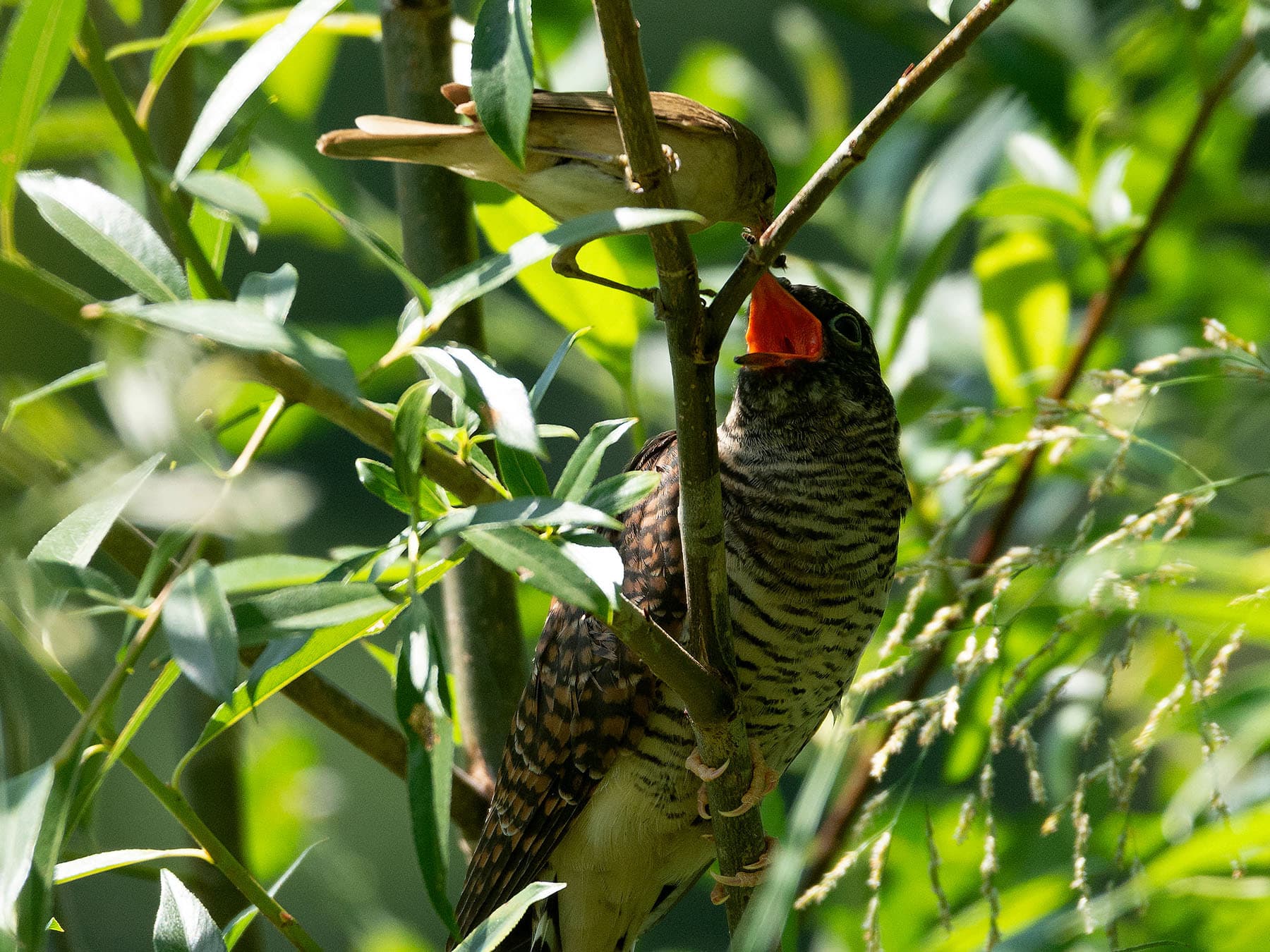
Juvenile Cuckoos resemble adults but have browner, mottled upper parts. Young birds also have a whitish spot on the nape of the neck.
How big are Cuckoos?
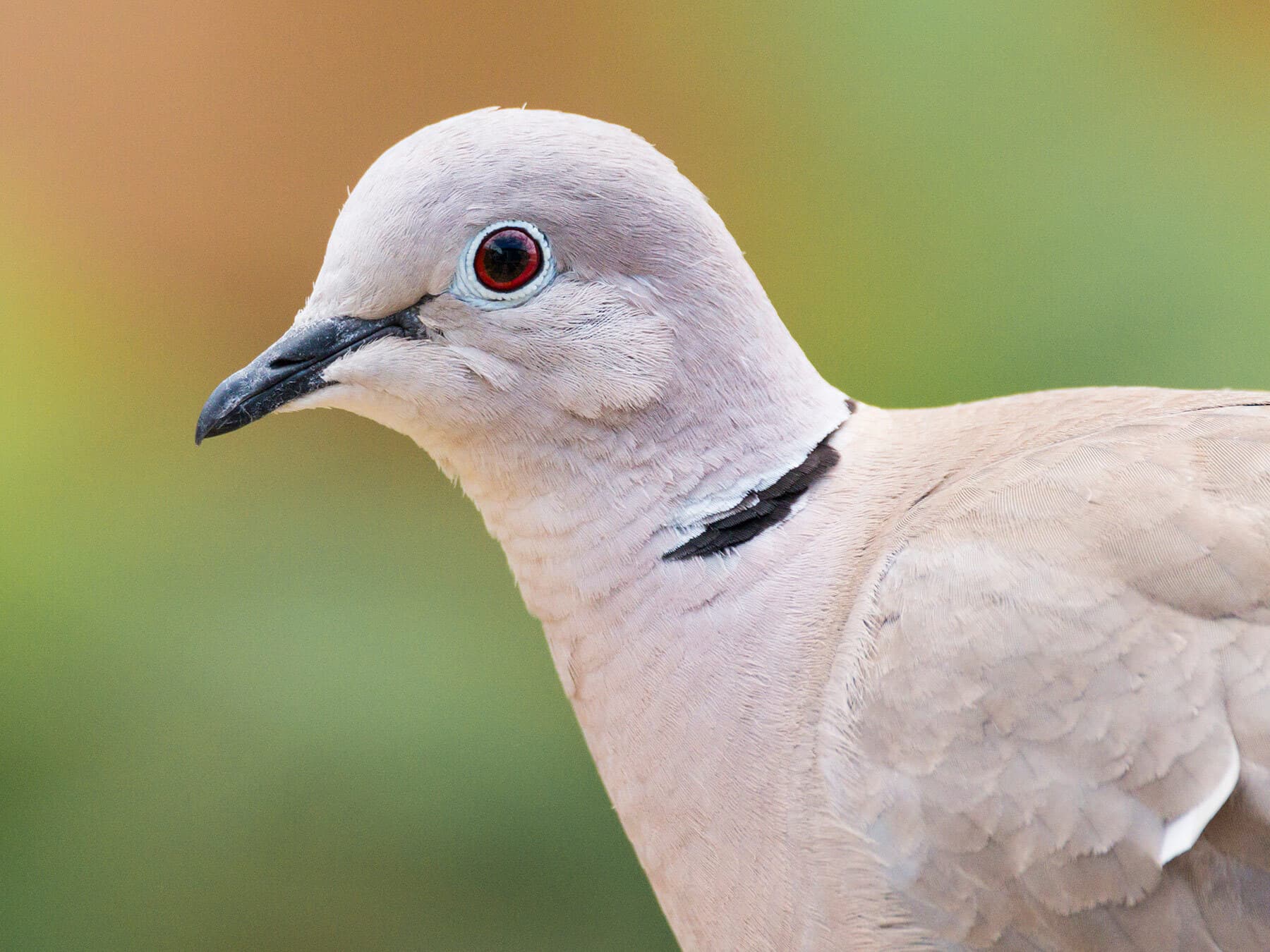
Common Cuckoos are medium-sized birds, longer but leaner than a Collared Dove. Females are generally smaller than males.
Length
Cuckoos are long, streamlined birds. They measure 32 to 34 centimetres from bill to tail-tip.
Weight
Cuckoos weigh 106 to 133 grams. Females are lighter at up to 112 grams.
Wingspan
Cuckoos have long wings that appear narrow and pointed in flight. Their wingspan ranges between 55 and 65 centimetres.
Its size
Adults- Length
- 32–34 cm
- Wingspan
- 55–60 cm
- Weight
- 110–130 g
Its song and calls
The Cuckoo’s song is one of the most familiar bird vocalisations in the world, popularised through those grand old clocks, first invented in the 18th century. These birds take their common, generic, and family name from their two-noted song.
What sound does a Cuckoo make?
Male Cuckoos produce a strident ‘cu-coo’ song, with greater emphasis on the first note. This short song is produced ten to twenty times at short intervals. Female Cuckoos are less vocal than their male counterparts, although they utter a rapid chuckling “kwik-kwik-kwik’ call.
- Song0:00 / 0:40
Recorded in Surrey, England
Aubrey John Williams / The British Library Board · Wikimedia Commons · CC BY-SA 4.0
- Call0:00 / 0:18
Recorded in Pod grúne - Volovec, Slovakia · May 2012
When and where to see it
OctoberMostly absent
Most recorded in October
- 1. Norfolkunder 0.1%
- 2. Suffolkunder 0.1%
- 3. Oxfordshireunder 0.1%
- 4. Cornwallunder 0.1%
- 5. Lincolnshireunder 0.1%
Each dot is a county, state or province: the bigger and darker, the larger the bird’s share of that place’s bird records that month. Grey dots: no regular records. The ringed point is the centre of the bird’s records this month; the arrow shows how it moved since last month, and the dashed loop its path through the year. “Arrivals” colours places where it becomes regular this month (orange) or is in its last regular month (grey). GBIF eBird Observation Dataset, 2019–2024. Map data: Natural Earth, US Census Bureau; place centres © OpenStreetMap contributors.
In your area
See when the Cuckoo is recorded in your county, state or province.
How often the Cuckoo turns up in the UK, Ireland and the United States through the year, from birdwatchers' records.
United Kingdom
Summer visitor · regularly Apr–Jul · most records in May
Ireland
Summer visitor · regularly Apr–Jul · most records in May
United States
Scarce · most records in November
Show as a table
| Month | United Kingdom | Ireland | United States |
|---|---|---|---|
| January | – | – | – |
| February | – | – | – |
| March | <0.001% | – | – |
| April | 0.16% (regular) | 0.14% (regular) | – |
| May | 0.70% (regular) | 0.51% (regular) | <0.001% |
| June | 0.47% (regular) | 0.24% (regular) | <0.001% |
| July | 0.048% (regular) | 0.037% (regular) | – |
| August | 0.026% | 0.009% | – |
| September | 0.006% | <0.001% | – |
| October | <0.001% | – | – |
| November | – | – | 0.002% |
| December | – | – | – |
Recorded regularly in
Worldwide: recorded regularly in 97 countries
Countries where it was recorded in at least 3 of the 6 years 2019–2024. Linked countries have their own bird list.
Europe (44)
- Åland Islands
- Albania
- Andorra
- Austria
- Belarus
- Belgium
- Bosnia & Herzegovina
- Bulgaria
- Croatia
- Czechia
- Denmark
- Estonia
- Finland
- France
- Germany
- Greece
- Hungary
- Ireland
- Isle of Man
- Italy
- Jersey
- Kosovo
- Latvia
- Liechtenstein
- Lithuania
- Luxembourg
- Malta
- Moldova
- Montenegro
- Netherlands
- North Macedonia
- Norway
- Poland
- Portugal
- Romania
- Russia
- Serbia
- Slovakia
- Slovenia
- Spain
- Sweden
- Switzerland
- Ukraine
- United Kingdom
Africa (17)
Asia (35)
- Armenia
- Azerbaijan
- Bangladesh
- Bhutan
- China
- Cyprus
- Georgia
- Hong Kong SAR China
- India
- Iran
- Iraq
- Israel
- Japan
- Jordan
- Kazakhstan
- Kuwait
- Kyrgyzstan
- Laos
- Lebanon
- Mongolia
- Myanmar (Burma)
- Nepal
- Oman
- Pakistan
- Palestinian Territories
- Qatar
- Saudi Arabia
- South Korea
- Taiwan
- Tajikistan
- Thailand
- Turkey
- United Arab Emirates
- Uzbekistan
- Vietnam
North America (1)
Data: EOD – eBird Observation Dataset (Cornell Lab of Ornithology), accessed via GBIF.org, CC BY 4.0. Records from 2019–2024, aggregated and filtered by Birdfact. How these lists are made
Cuckoos are a widespread visitor to the United Kingdom, although they occur in low numbers. Continue reading to learn where to look for these fascinating birds.
What is the habitat of a Cuckoo?
The Common Cuckoo visits a wide variety of habitats across its range. Birdwatchers can look (and listen) out for these birds in the following areas:
- Woodlands
- Coniferous and deciduous forest edges
- Reedbeds
- Farmland
- Moorland
What is the range of a Cuckoo?
Cuckoos have an extensive global distribution. In the summer, these wide-ranging birds visit the northern hemisphere from the United Kingdom in the west to Eastern Russia. Some birds even cross the Bering Sea to breed in Western Alaska.
During the non-breeding season, most Cuckoos occur in central and Southern Africa. However, some remain north of the equator to enjoy the tropical climate of Southeast Asia and Sri Lanka.
Where do Cuckoos live?
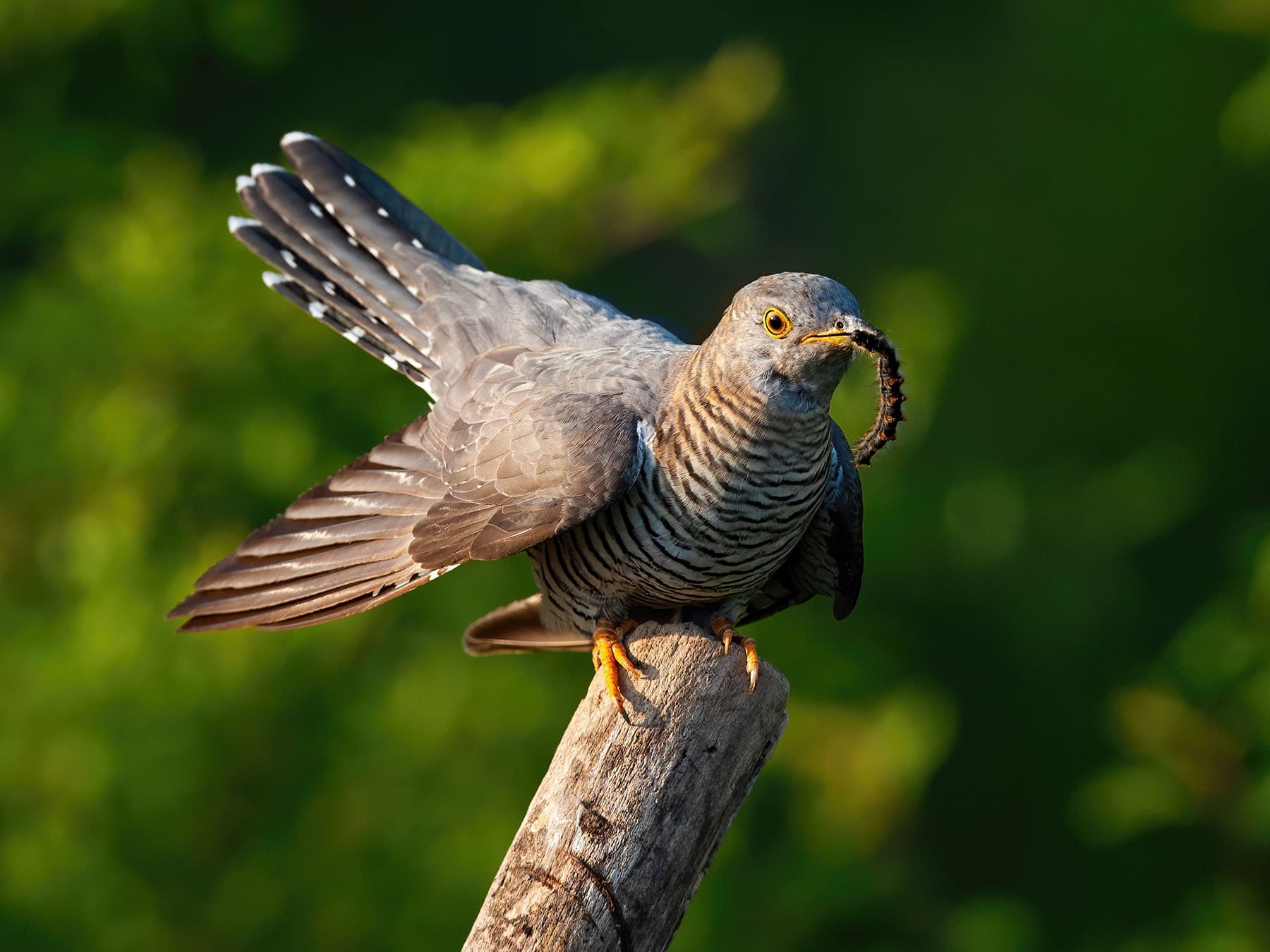
Cuckoos spend most of their time within the canopy of trees or searching the branches of hedges and shrubs for their favourite food - caterpillars. These birds have relatively weakly developed legs and rarely move on the ground.
How rare are Cuckoos?
Cuckoos are in decline in the United Kingdom. Habitat loss in the UK and elsewhere on their migration path may be responsible for their decreasing numbers.
Where can you see Cuckoos in the UK?
Birdwatchers can spot Cuckoos virtually throughout the United Kingdom and Ireland during the summer. They are most numerous in the south, although they venture as far as the Orkney Islands north of the Scottish mainland.
Signs and spotting tips
The cuckoo’s silhouette in flight can resemble a small falcon or hawk. However, unlike these, the cuckoo has a weak flight action and rapid wingbeats. And it rarely lifts its wings above the horizontal plane.
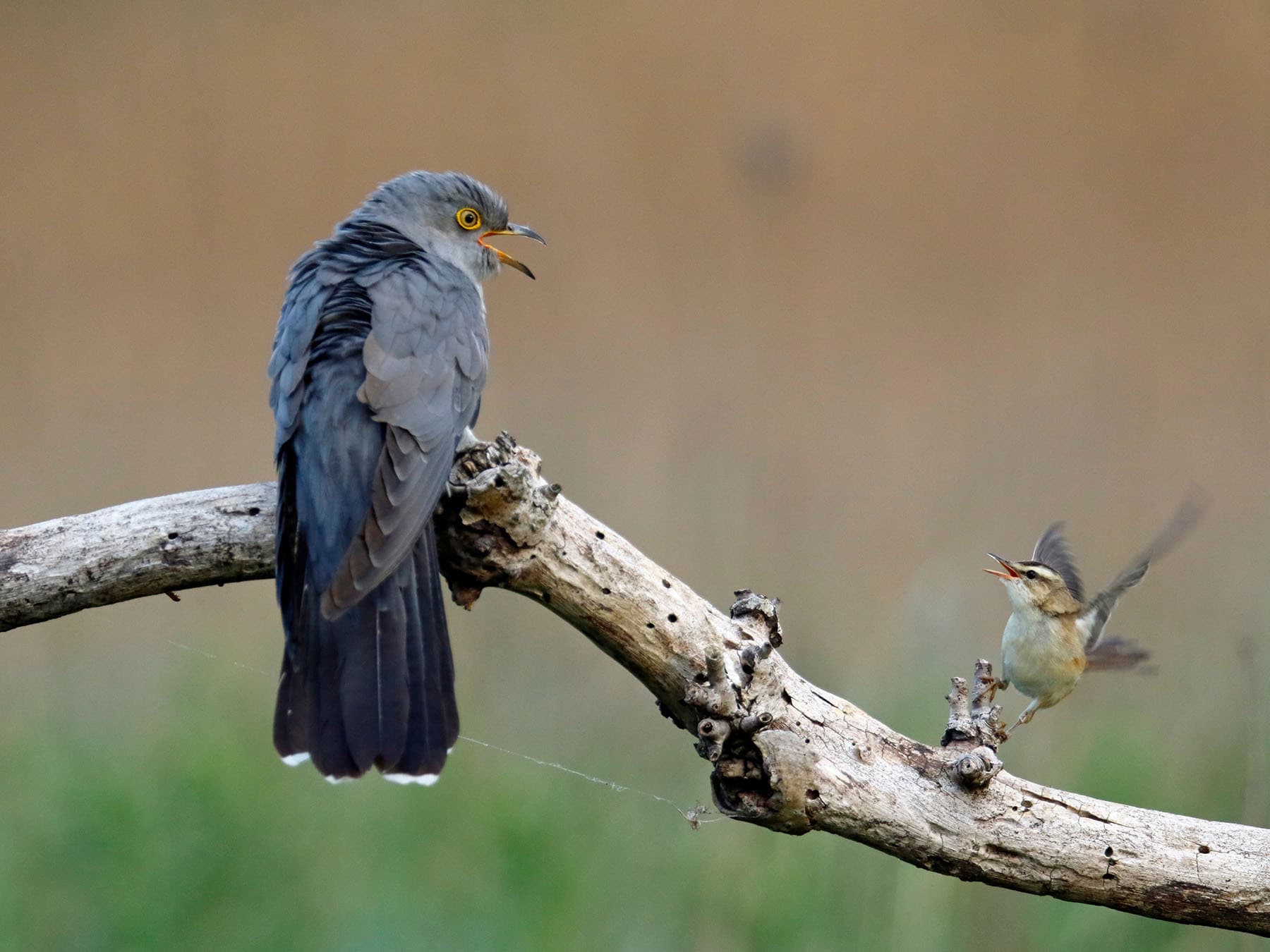
It is easy to observe in the breeding season as it often perches in the open, on a telephone pole or fence post. When perched, it often droops its wings and cocks its tail a little. Females can spend a lot of time in the air looking for a nesting site.
Migration
Cuckoos are summer visitors to the United Kingdom. Read along to learn more about their impressive annual journey.
Do Cuckoos migrate?
Cuckoos are highly migratory across their range. Some fly an astonishing 7500 miles from their overwintering grounds in Southern Africa to their breeding grounds in Central Asia.
When do Cuckoos arrive in the UK?
Cuckoos return to the United Kingdom in the spring each year. The first birds arrive in March, and most have returned by the end of April.
Adults Cuckoos leave the UK in June, but juveniles will remain for a further few weeks. The ability of young Cuckoos to navigate without the guidance of adult birds is a true marvel of nature. It demonstrates their instinctual migratory drive and sense of direction.
What it eats
The Cuckoo has a fairly specialised diet that limits competition with other insectivorous birds. Continue reading to learn more about their most important food sources.
What do Cuckoos eat?
Cuckoos feed predominantly on hairy caterpillars, but they also eat a variety of other invertebrates, as well as the eggs and babies of other birds.
What do Cuckoo chicks eat?
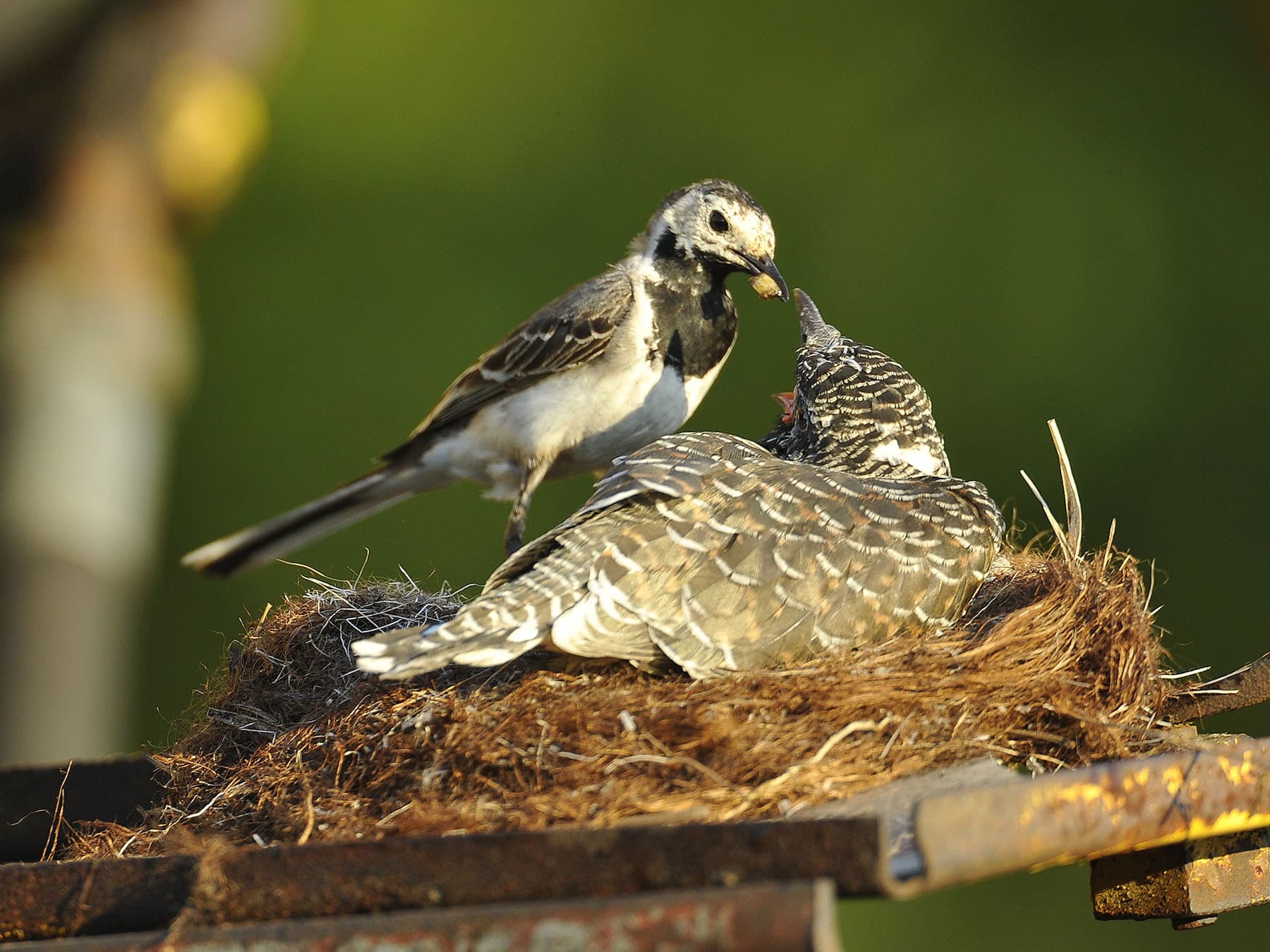
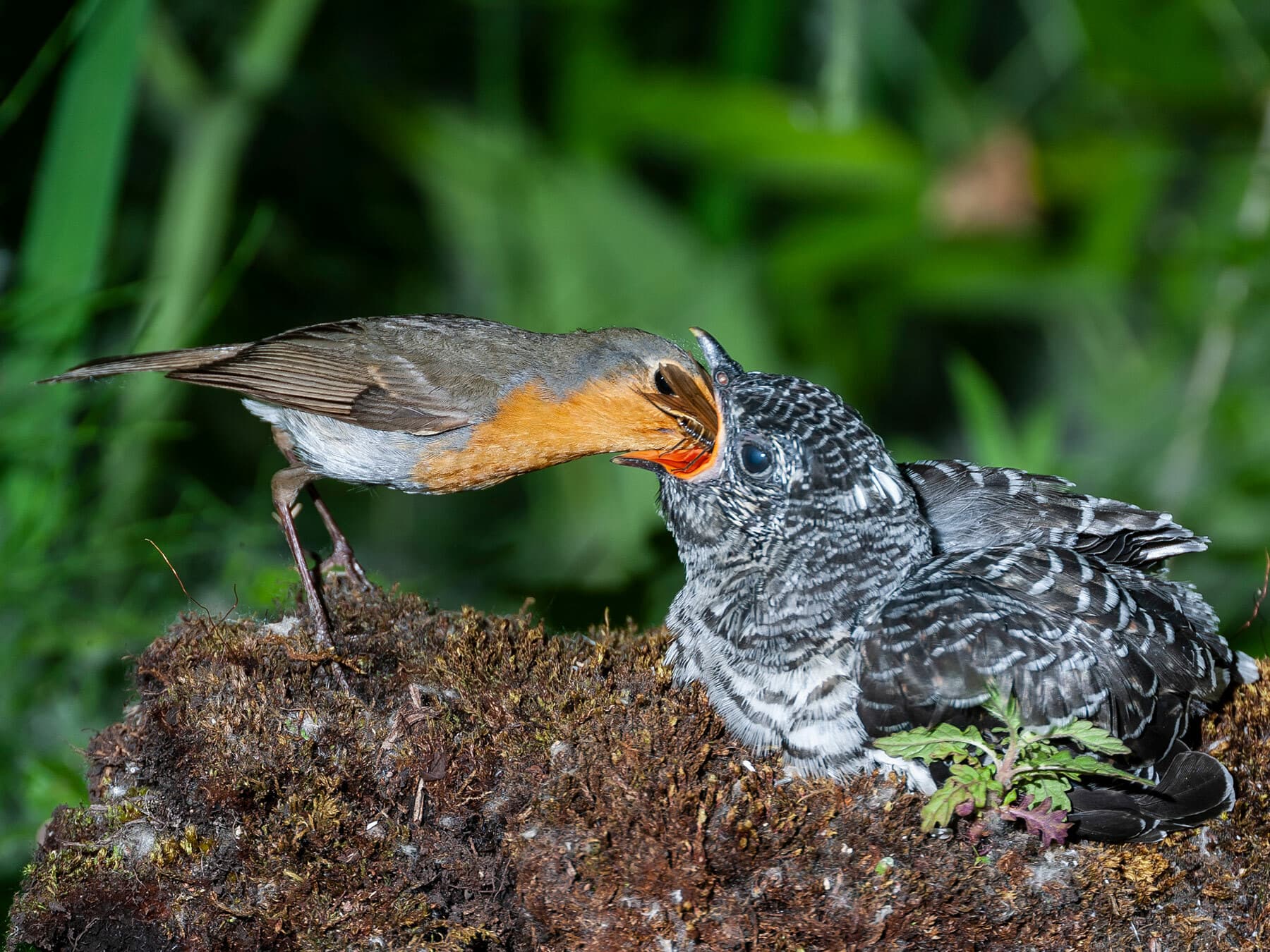
Young Cuckoo chicks eat insects. Their host parents are usually a smaller species, and they must work tirelessly to feed the ravenous imposter in their nest.
Nesting and breeding
Cuckoos are notorious for their laziness during the nesting season. Read along to learn more about their loathsome breeding habits.
Where do Cuckoos nest?
Cuckoos lay their eggs in other birds' nests, avoiding the responsibility of building their own. Their hosts include at least a hundred other insect-eating bird species across their range.
In the UK, Cuckoos lay their eggs in at least 26 different birds nests, including the following species:
- Blackbird (Turdus merula)
- Meadow Pipit (Anthus pratensis)
- Reed Warbler (Acrocephalus scirpaceus)
- Dunnock (Prunella modularis)
- Pied Wagtail (Motacilla alba)
- Linnet (Linaria cannabina)
- Robin (Erithacus rubecula)
- Greenfinch (Chloris chloris)
Why do Cuckoos steal nests?
Nest building is a time and energy-consuming task. Cuckoos lay their eggs in other birds' nests to maximise the chance of their offspring surviving and minimise the effort they must contribute.
Why don’t Cuckoos raise their own chicks?
Leaving their egg to hatch and be raised by an unsuspecting host allows Cuckoos to spend more time caring for themselves. They are not bound to their nest and, therefore free to leave south on their annual migration to the rich foraging grounds of Africa long before their chicks can fend for themselves.
What do Cuckoo eggs look like?
Cuckoo eggs measure 23 millimetres long and 17 millimetres wide. Their eggs vary both in colour and patterning. Amazingly, most eggs match the appearance of the host species’ clutch.
Do Cuckoos mate for life?
Cuckoos do not mate for life. Both males and females will mate with multiple partners during each breeding season.
Behaviour
Cuckoo behaviour is difficult to observe due to their shy and retiring nature. Listening out for their well-known call is the best way to locate them, particularly in the early morning and late afternoon when they are most active.
Are Cuckoos aggressive?
The Cuckoo’s resemblance to birds of prey like the Sparrowhawk is no coincidence. These cunning birds may use this disguise to frighten off would-be hosts as a diversion to lay their eggs in peace.
Despite their dangerous looks, Cuckoos are not aggressive. In fact, they are frequently on the receiving end of aggression from other birds.
Are Cuckoos friendly?
Cuckoos are shy birds, and due to their somewhat specialised diets, they rarely visit bird feeding tables. As a result, tame or habituated individuals are rare.
Where do Cuckoos sleep at night?
Most Cuckoos sleep in sheltered positions in the canopy of trees or other vegetation.
Lifespan and predators
Cuckoos are not particularly long-lived, and the species is becoming increasingly rare in England and Wales. Keep reading to learn more about their lifespan, predators, and conservation status in the United Kingdom.
How long do Cuckoos live?
Cuckoos can live for over twelve years, although most birds that survive to adulthood will live just four years or so.
What are the predators of Cuckoos?
Cuckoos are fairly large, agile and fast-flying birds. Adults may fall prey to raptors like falcons, while chicks are vulnerable to carnivorous mammals like stoats.
Are Cuckoos protected?
Cuckoos are protected by the Wildlife and Countryside Act of 1981.
Are Cuckoos endangered?
Common Cuckoos are not endangered on a global scale. They are considered a ‘Least Concern’ species, although the population is in decline.
However, Cuckoos have a red conservation status in the United Kingdom due to significant recent declines. Less than 20,000 breeding pairs are thought to visit the UK each year.
Conservation
While listed as Least Concern globally, Common Cuckoo populations are declining in parts of Europe, including the UK. Habitat loss, climate change affecting migration patterns, and declines in host species populations are primary concerns. Conservation efforts focus on protecting breeding habitats and researching migration routes.
Similar birds
Often mistaken for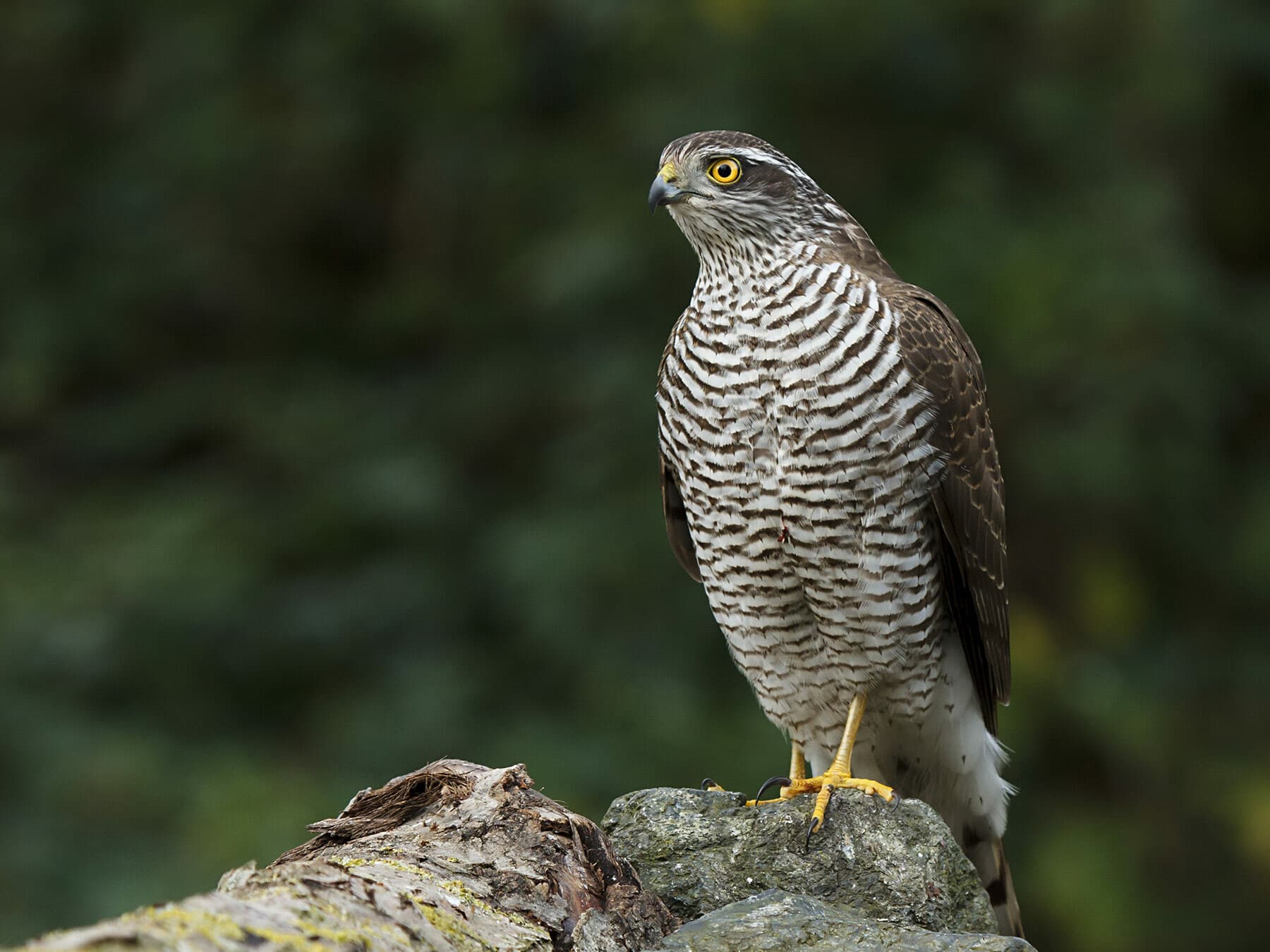
More photos
3 photos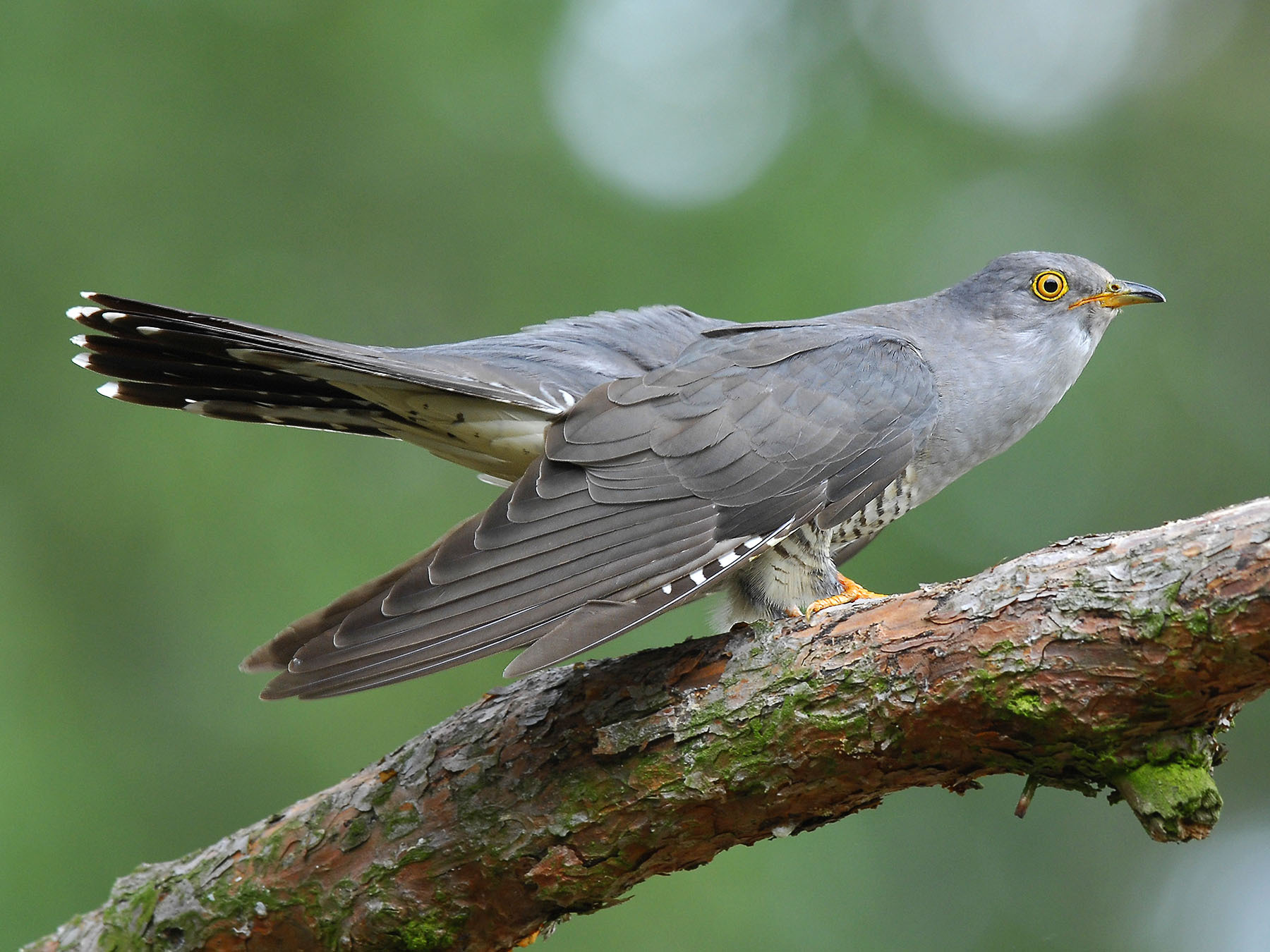
Cuckoo guides
1 guidesQuick facts
- Length
- 32–34 cm
- Wingspan
- 55–60 cm
- Weight
- 110–130 g
- Lifespan
- 6–8 years
- Family
- Cuckoos
- Migration
- Long-distance Migrant
- Global status (IUCN)
- Least Concern
- World population
- 40,000,000 - 74,999,999 mature individuals
- Population trend
- Decreasing
- Also called
- Common Cuckoo, European Cuckoo
- Scientific name
- Cuculus canorus
Questions
4What is the Cuckoo bird famous for?
Cuckoos are infamous for their nesting strategy, but their beautiful two-noted call is also familiar to many people. Female Cuckoos famously lay their eggs in other birds’ nests, leaving the unwitting foster parents to feed and care for the cunning bird's young.
When was the earliest Cuckoo in the UK?
The earliest Cuckoos arrive in the UK in late February. The rest of the population arrives over the following two months.
Are Cuckoos evil?
Despite their questionable breeding strategy, Cuckoos are not malicious creatures. Of course, killing off another species’ offspring and then manipulating them into feeding and caring for you is not the typical definition of kindness either!
What is a group of Cuckoos called?
Known collective nouns for a group of Cuckoos are as follows:
- an asylum of cuckoos
- a cooch of cuckoos
- a family of cuckoos
Sources
3- 1BirdLife International. 2019. Cuculus canorus (amended version of 2016 assessment). The IUCN Red List of Threatened Species 2019: e.T22683873A155496731. Source (opens in a new tab)
- 2BirdLife International. 2019. Cuculus canorus (amended version of 2016 assessment). The IUCN Red List of Threatened Species 2019: e.T22683873A155496731. Source (opens in a new tab)
- 3BirdLife International. 2019. Cuculus canorus (amended version of 2016 assessment). The IUCN Red List of Threatened Species 2019: e.T22683873A155496731. Source (opens in a new tab)

Checked by
Nathan Cope, founder and editor
Nathan founded Birdfact and leads its writers and contributors in the UK, the US and Canada. He has watched and studied birds for more than ten years, and checks every article and species guide before it’s published.