Facts · Updated 8 Oct 2026
What Do Sandhill Cranes Eat? (Complete Guide)
By the Birdfact teamChecked by Nathan Cope
On this page12 sections
- What do Sandhill Cranes eat in the wild?
- What is the Sandhill Cranes' favorite food?
- How do Sandhill Cranes find food and hunt?
- What are Sandhill Cranes eating on my lawn?
- What do Sandhill Cranes eat in the winter?
- What do baby Sandhill Cranes eat?
- What attracts Sandhill Cranes?
- What can I feed Sandhill Cranes?
- Why is it illegal to feed Sandhill Cranes?
- What is the fine for feeding Sandhill Cranes in Florida?
- What do Sandhill Cranes drink?
- Sandhill Crane Diet FAQs
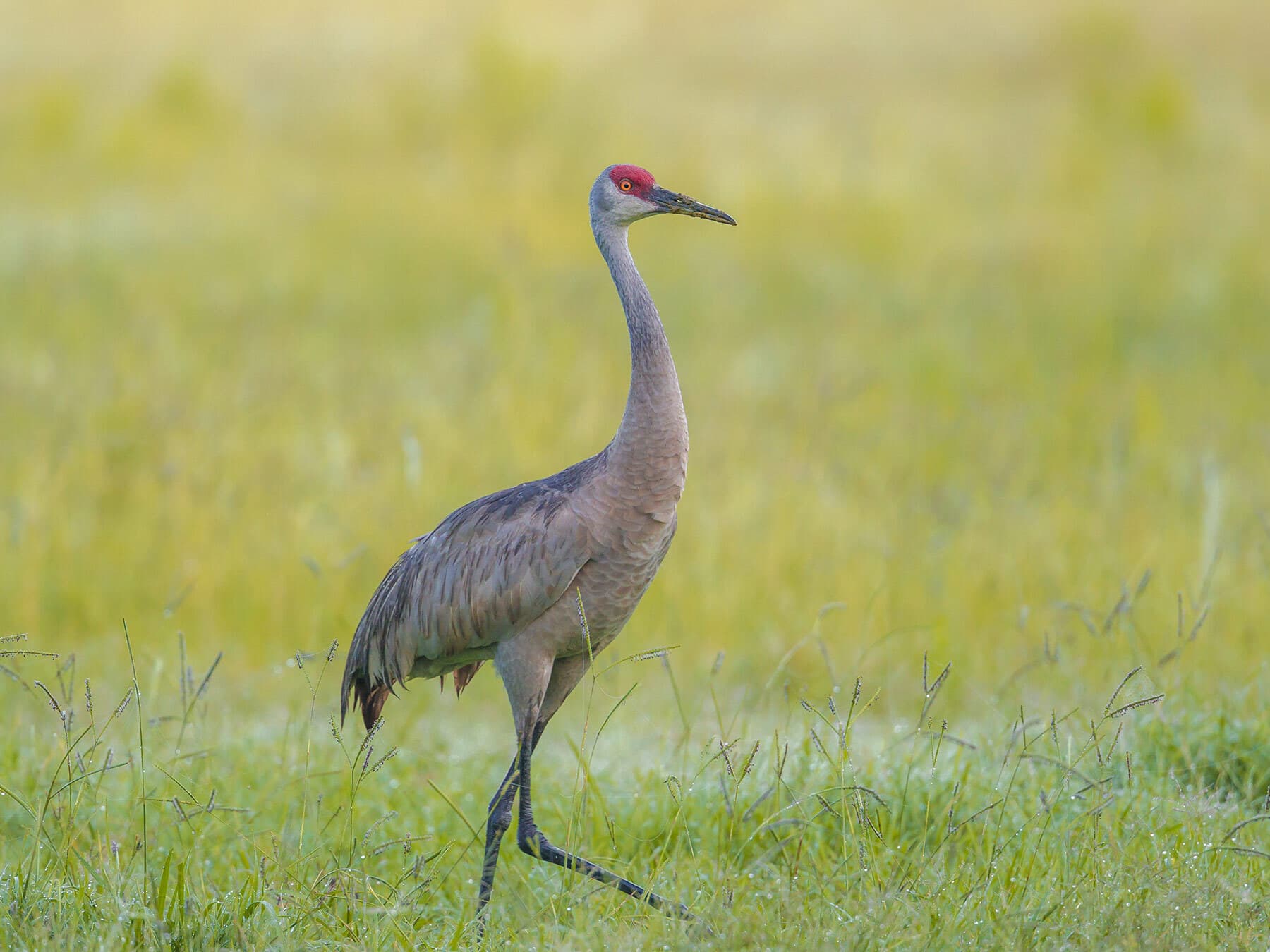
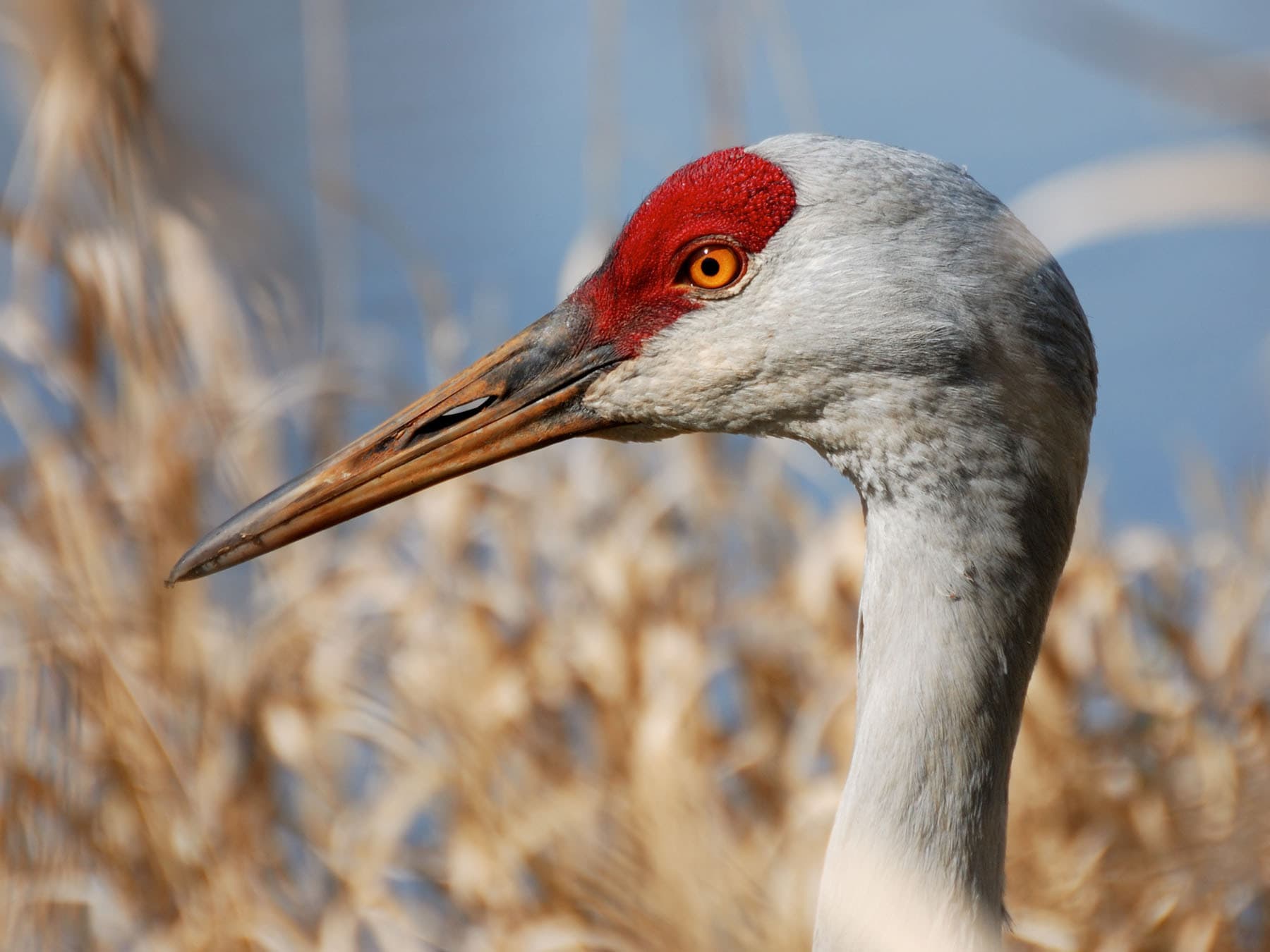
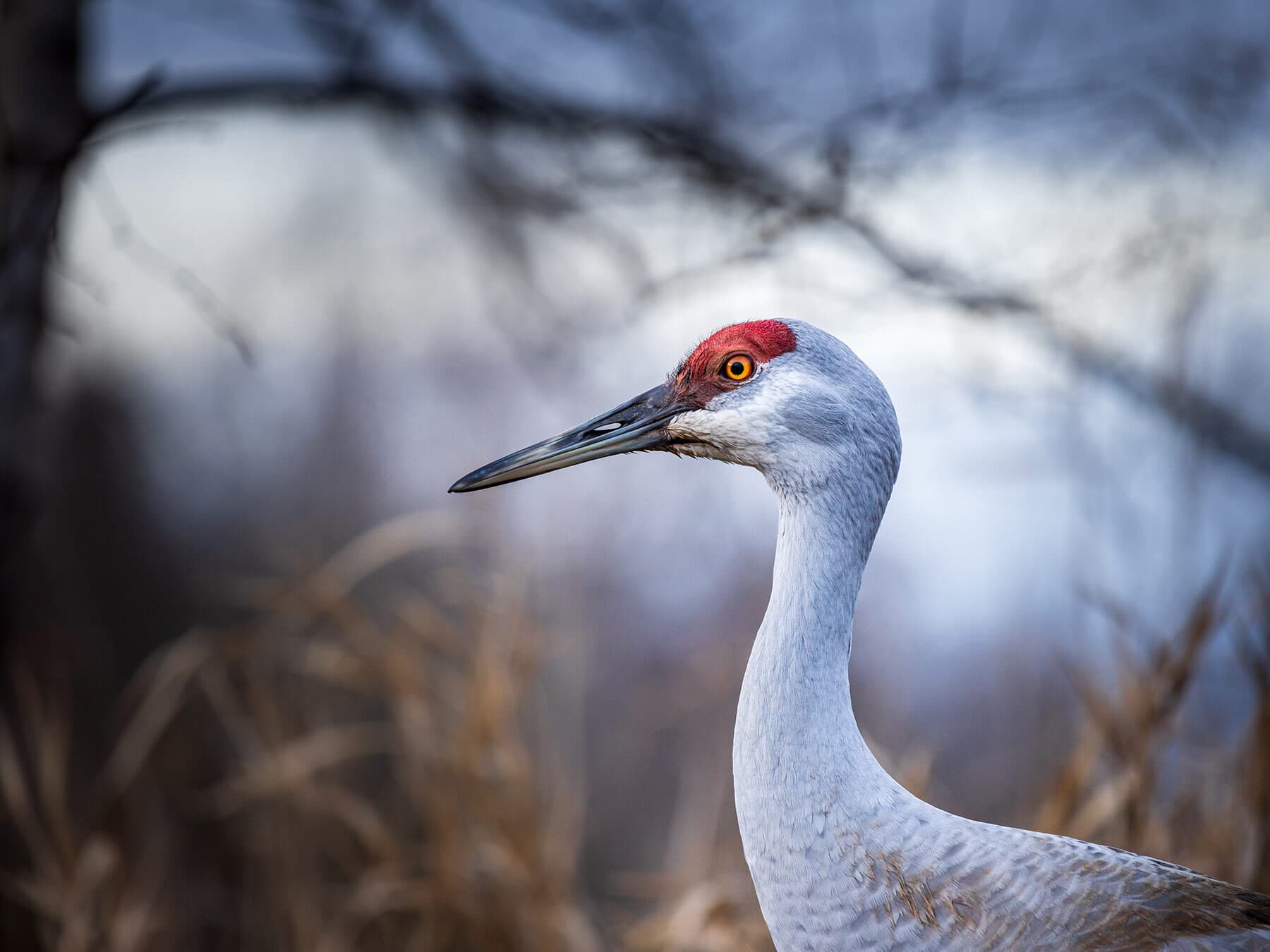
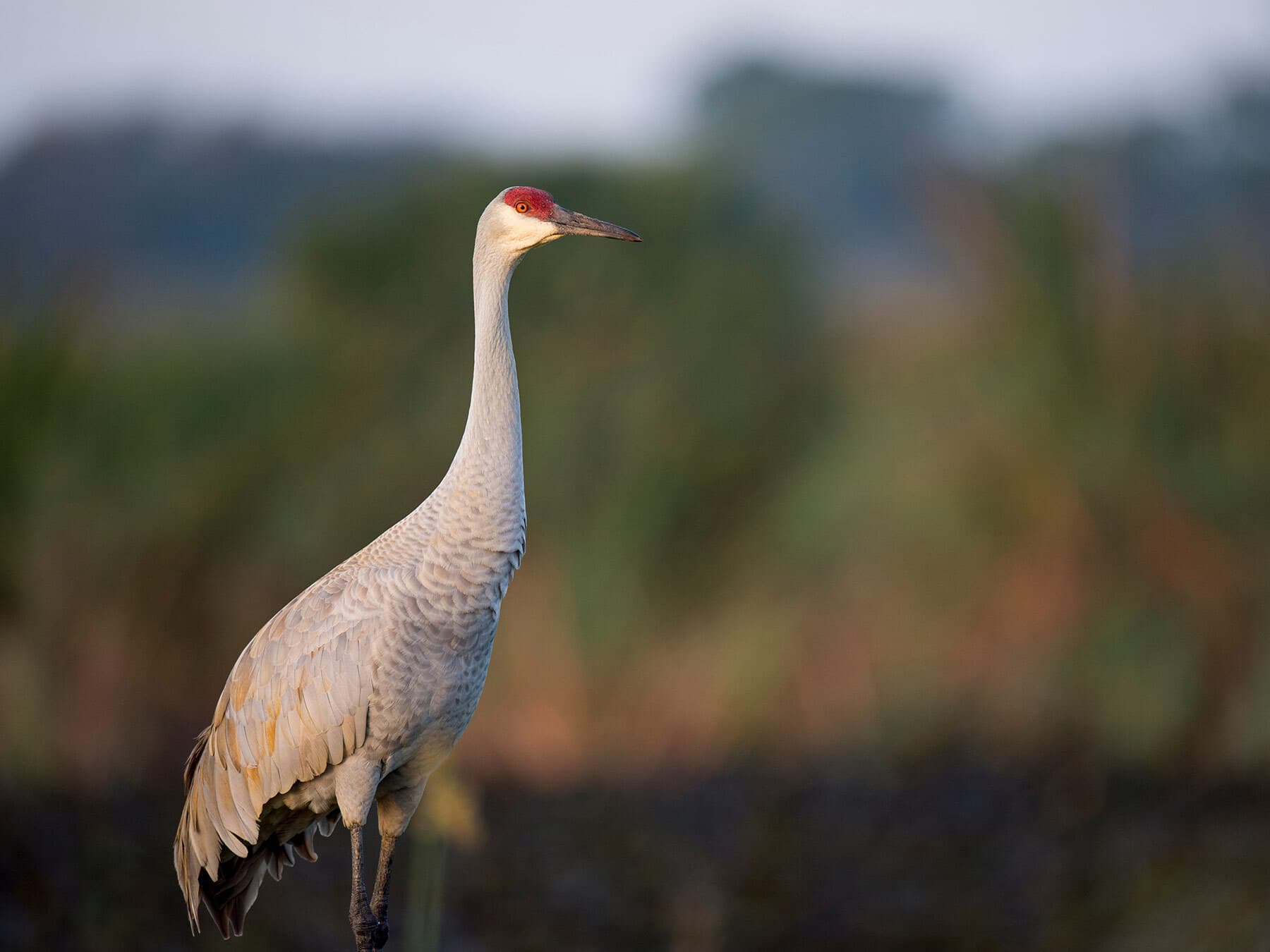
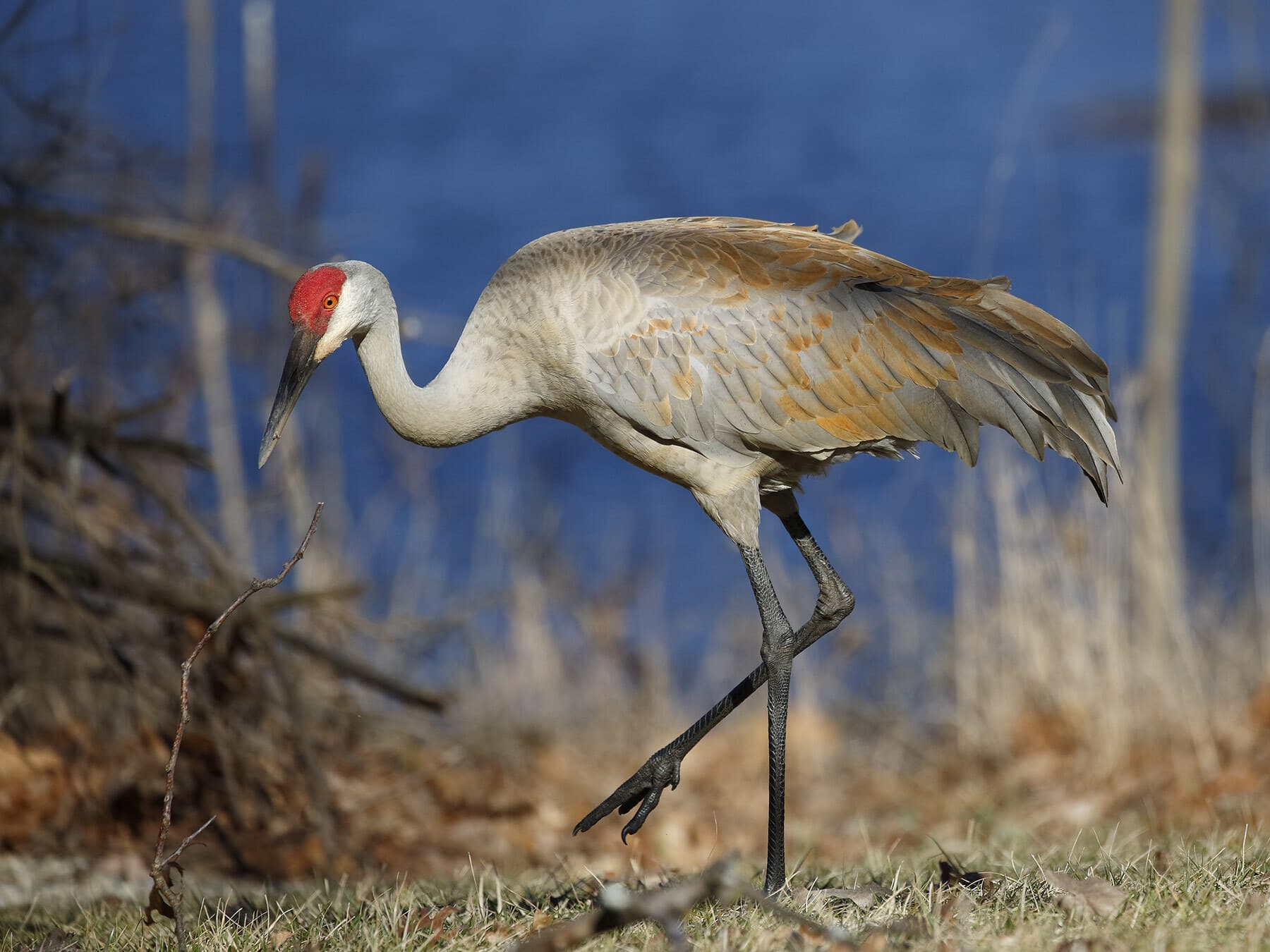
The sandhill crane (Antigone canadensis) is a magnificent bird, standing tall and elegant as it wades through marshes or saunters over the open plains. As natural foragers, these birds often move about with their bills lowered, searching the ground for their next meal. But what exactly are they searching for?
Sandhill cranes eat a well-rounded diet of seeds, berries, insects, small mammals, reptiles, and crustaceans. What is on the menu varies depending on their location and the time of year.
We will delve deeper into the diet and feeding behavior of the sandhill crane throughout the article.
As you may know, these cranes are well-traveled. From their summer breeding grounds to their wintering range, the sandhill crane covers a vast array of ecosystems, including coastal Alaska, mid-western wetlands, and southwestern agricultural areas.
Wetlands and open plains habitats are vital for these birds. They offer the food sources sandhill cranes rely on to survive, such as insects, frogs, lizards, snakes, mice, crayfish, and plant matter. Cranes also utilize agricultural lands, eating leftover seeds from the previous year's crop.
What do Sandhill Cranes eat in the wild?
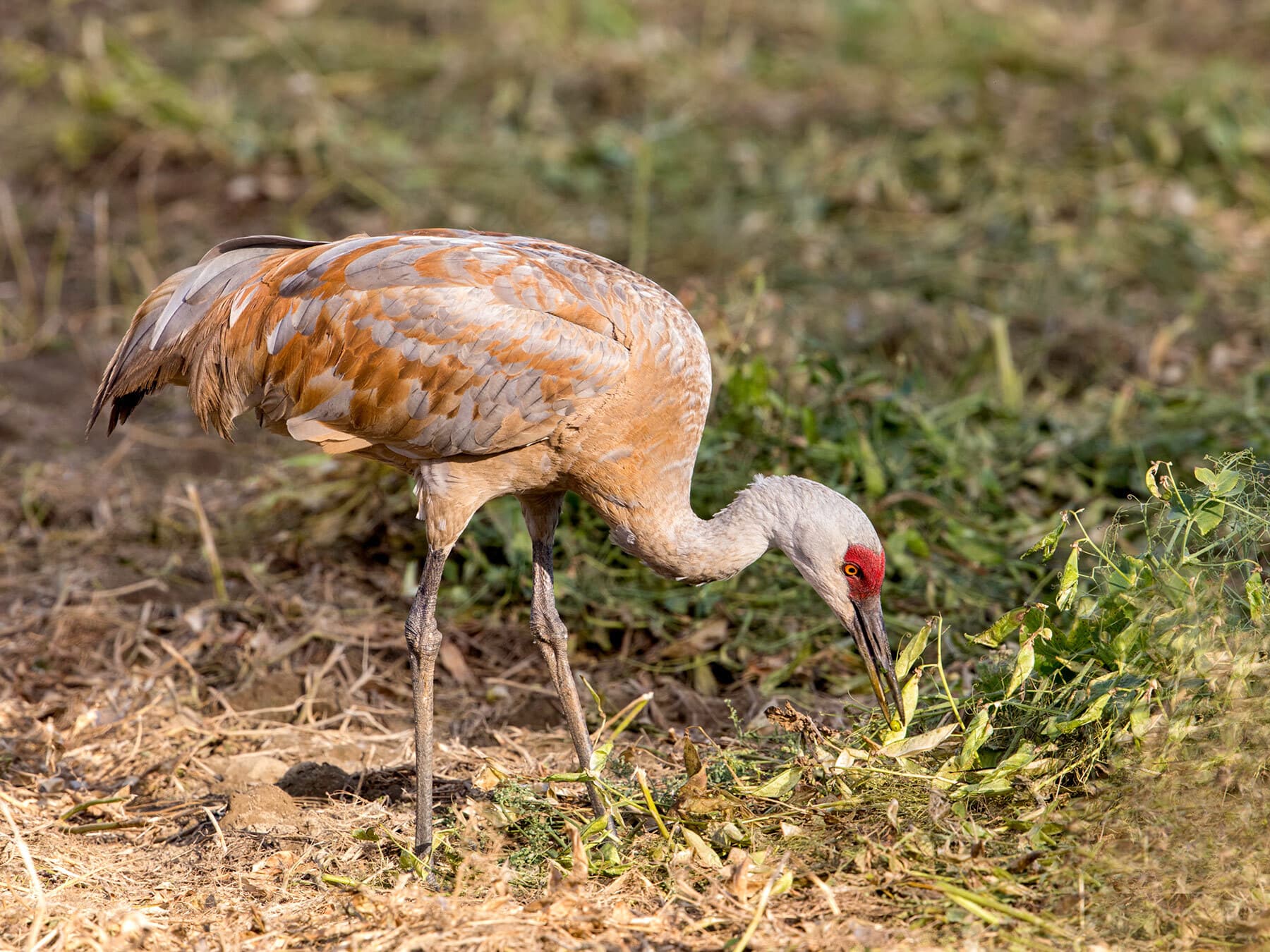
Sandhill cranes are omnivores and, thus, have a wide-ranging diet that includes plants and animals. The birds frequently forage for cultivated or naturally occurring seeds, grain, and berries. They also enjoy various animal life, including insects, worms, mice, small birds, frogs, crayfish, snakes, and lizards.
What is the Sandhill Cranes' favorite food?
It is hard to know if the sandhill crane favors one food source over all the others.
However, some meals - plant tubers, berries, grains, earthworms, frogs, and crayfish - seem to be more highly sought after than others.
How do Sandhill Cranes find food and hunt?
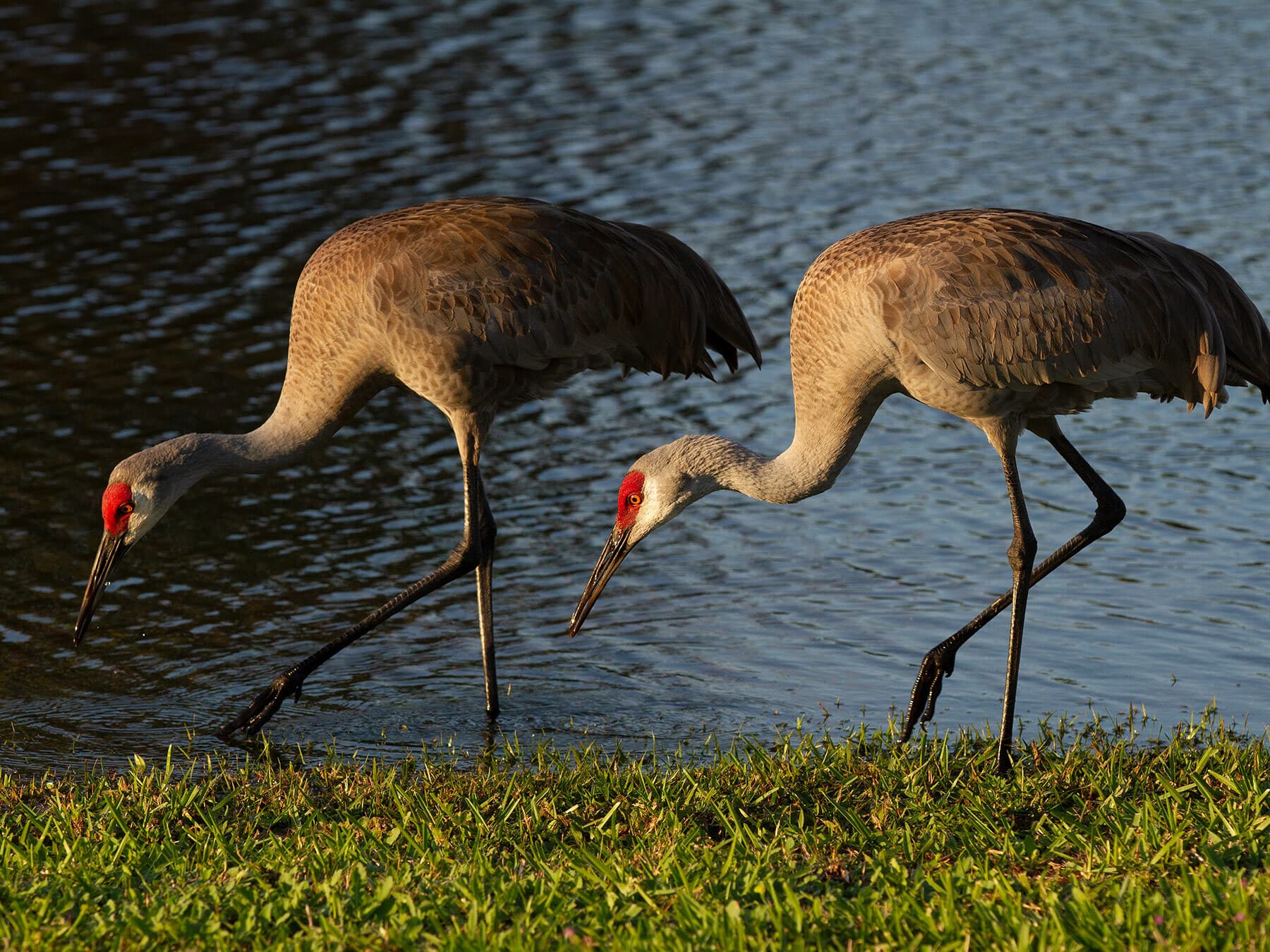
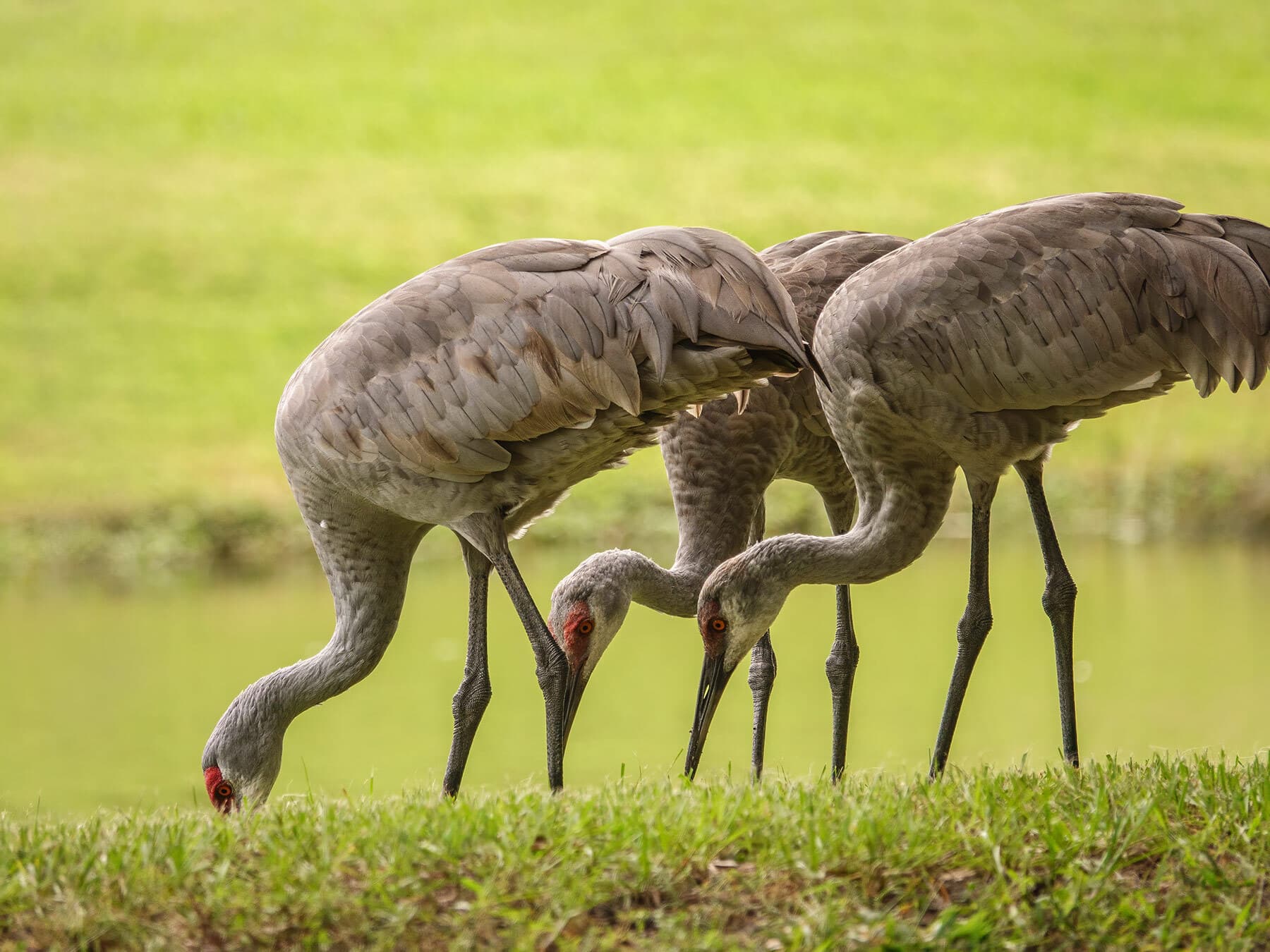
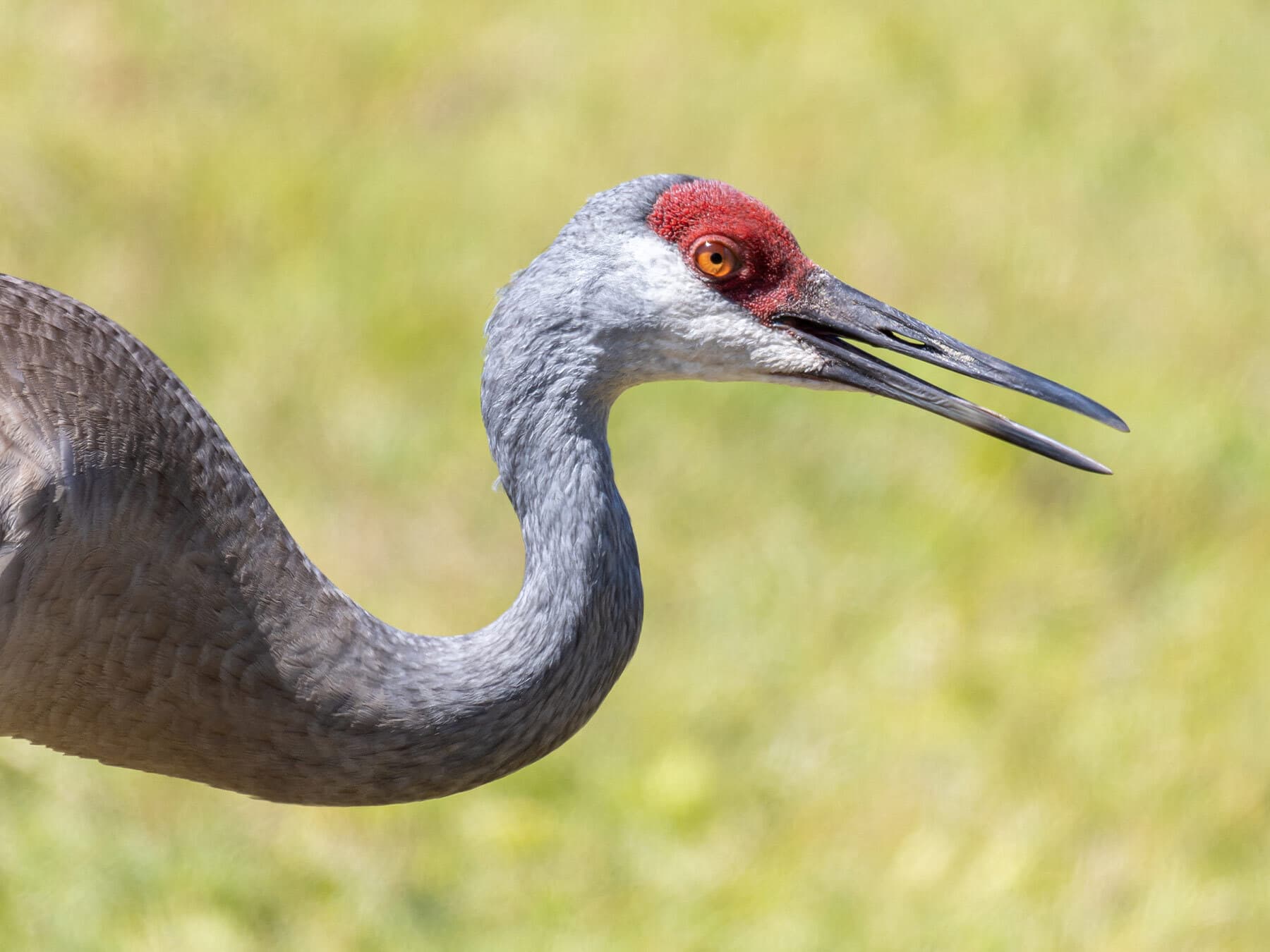
Sandhill cranes are not hunters. Instead, they forage for meals by picking up insects, seeds, and small animals off the ground. These cranes will also use their bills to probe under the surface of loose soils, mud, and marshes to find a meal.
What are Sandhill Cranes eating on my lawn?
When sandhill cranes are foraging on your lawn, they are likely eating insects and seeds. Cranes are often attracted to freshly seeded yards and may occasionally cause damage by digging as they forage. They will also pull up plant tubers and bulbs.
What do Sandhill Cranes eat in the winter?
Sandhill cranes still have a fairly varied diet in winter. By this time, the birds have migrated south to the warmer climates of Mexico and the southern United States.
In these regions, sandhill cranes will still feast on a variety of local plant and animal life.
Winter meals often include insects, small rodents and birds, snakes, lizards, and frogs. They will also forage for berries, seeds, and aquatic plants.
What do baby Sandhill Cranes eat?
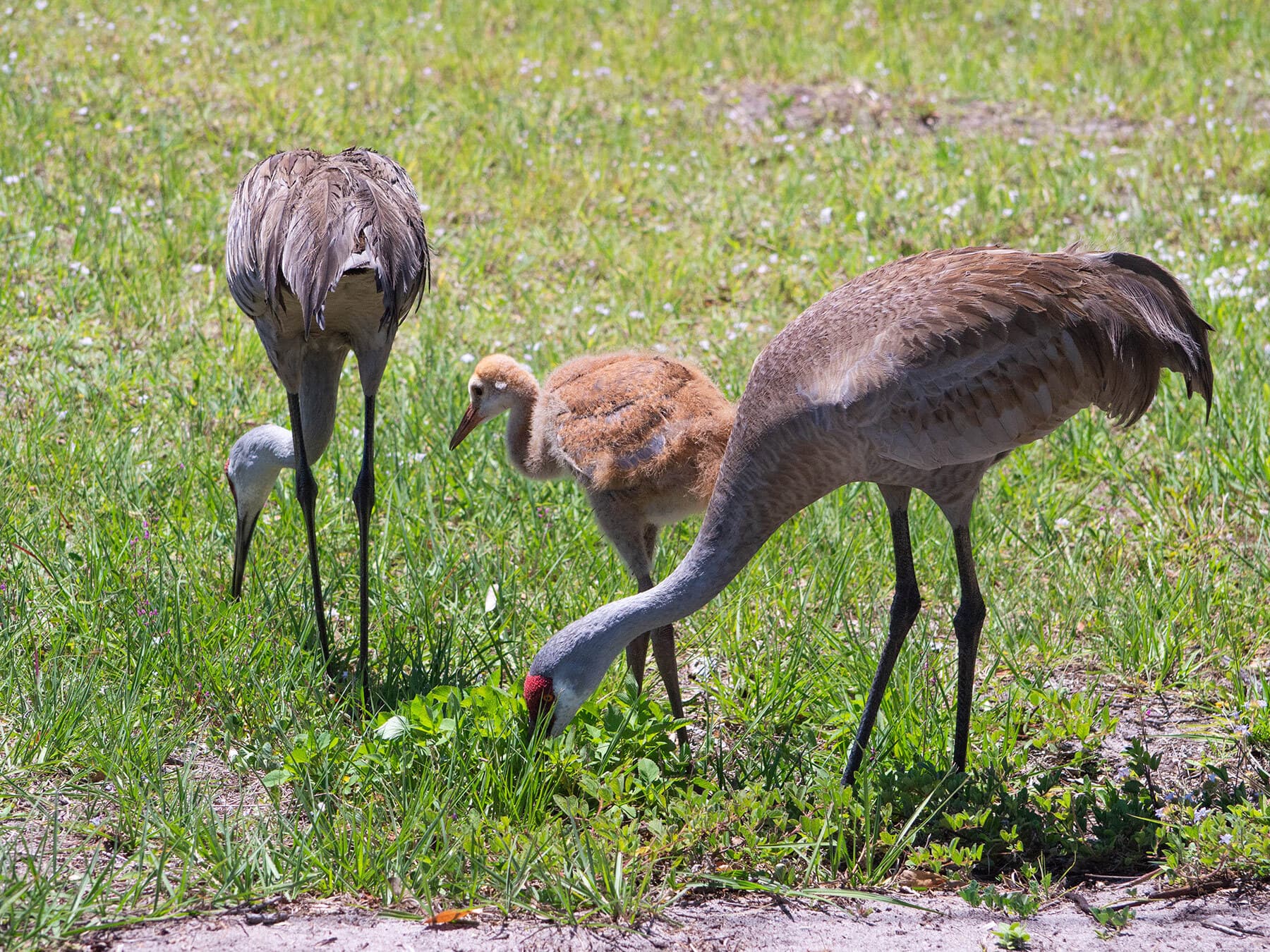
Baby sandhill cranes mostly eat the same diet as their parents - insects, earthworms, seeds, berries, and other small animals.
The young leave the nest about a day after hatching, following their parents through the marshes. Parents feed their chicks for several days, but the young cranes soon learn to forage for themselves.
What attracts Sandhill Cranes?
Sandhill cranes are attracted to open plains and marshes, often preferring to be near water. Large mowed lawns and crop fields draw these birds as well.
Such areas offer the food resources sandhill cranes desire, including seeds and grains, insects, grubs, and small rodents.
What can I feed Sandhill Cranes?
Sandhill cranes should not be fed by people. These birds mustn't grow comfortable around humans and begin to see them as an easy food supplier.
In some states, such as Florida, it is illegal to feed sandhill cranes. They are not like typical backyard birds. Feeding one is more like offering food to a bear or a fox. Doing so will likely turn the bird into a nuisance for people, which could be detrimental to the species as a whole.
Why is it illegal to feed Sandhill Cranes?
It is illegal to feed sandhill cranes because it can create unnecessary conflict between them and humans. If these birds grow accustomed to receiving food from people, they lose their fear of us and will flock to more populated areas.
At best, the cranes become a nuisance, damaging yards, gardens, and crops fields. At worst, cranes can be somewhat aggressive, approaching people and pecking them out of wanting an easy meal.
Neither of these scenarios bodes well for the sandhill crane. As of right now, they are not a threatened or endangered species. However, they are at risk because of their dependence on specific habitats. Preventing them from getting acclimated to life around humans is one way to protect them.
What is the fine for feeding Sandhill Cranes in Florida?
The fine for feeding sandhill cranes in Florida is $500 and sixty days in jail. The offense is considered a second-degree misdemeanor.
What do Sandhill Cranes drink?
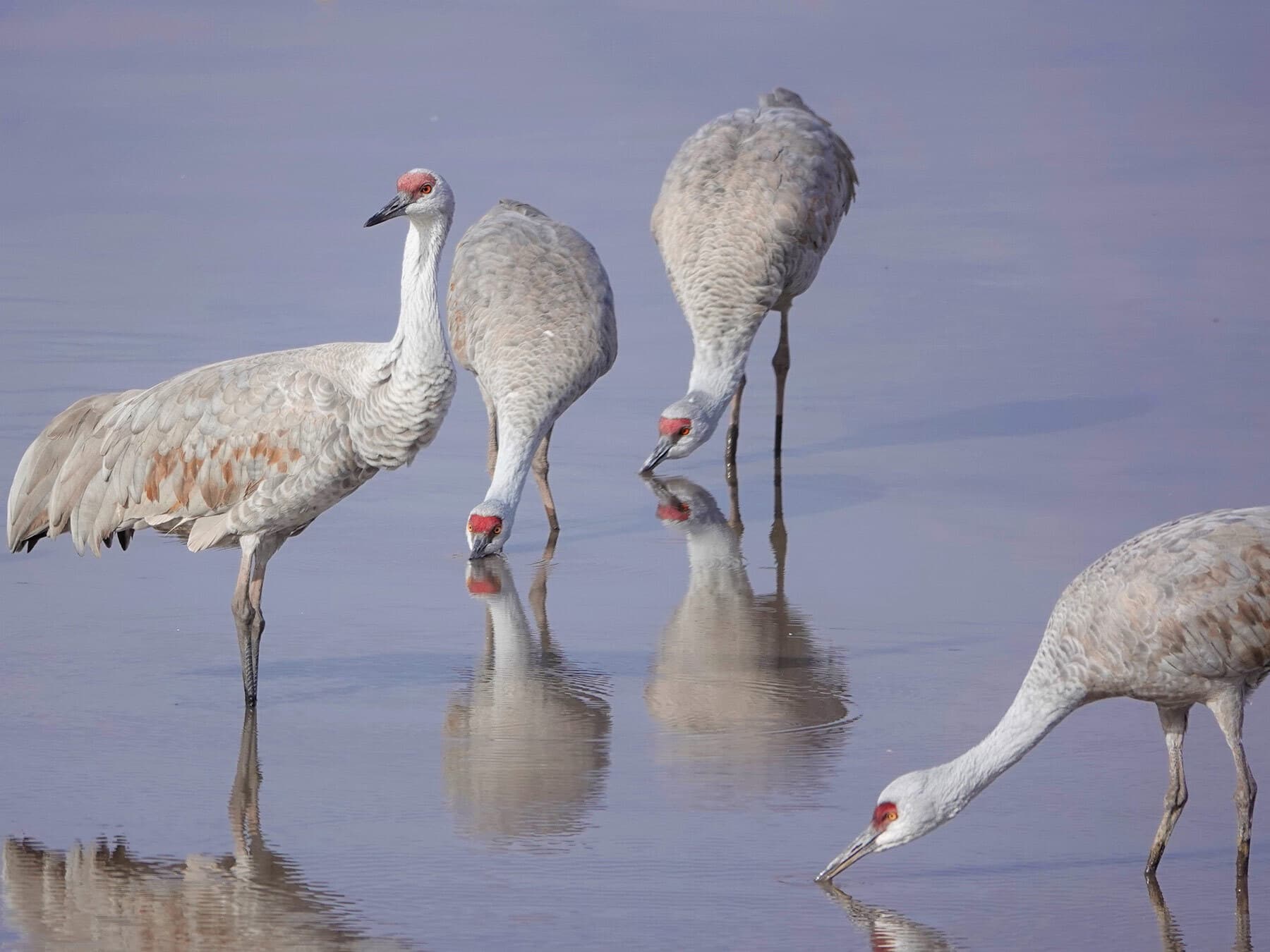
Sandhill cranes drink water frequently by dipping their bills in a lake or other water source. They also get some hydration from their food.
Sandhill Crane Diet FAQs
Can sandhill cranes eat bread?
Sandhill cranes should not eat bread. Bread is unlike anything they would find in the wild. Plus, it is a poor nutritional substitute for their natural diet. It is important to remember that feeding these birds is illegal.
Do sandhill cranes eat snakes?
Sandhill cranes will eat snakes. These reptiles are a regular part of the crane's diet.
Do sandhill cranes eat fish?
Unlike herons, sandhill cranes do not eat fish. They forage for berries, grains, and seeds. Cranes also enjoy insects, worms, reptiles, amphibians, small mammals, and crayfish.
Can sandhill cranes eat peanuts?
Sandhill cranes will eat peanuts grown as crop plants. However, you should not try to feed peanuts to cranes. It is illegal to feed these birds. If they grow accustomed to receiving food from humans, it could be dangerous for the species long-term.
Do sandhill cranes eat mice?
Sandhill cranes do eat mice. They also feed on a variety of other small animals.
Do sandhill cranes eat birdseed?
Sandhill cranes eat a variety of seeds in the wild. If you have bird feeders in your yard, visiting cranes may pick up the birdseed that has fallen to the ground.
What do sandhill cranes eat in Florida?
In Florida, sandhill cranes eat a variety of seeds, berries, aquatic plant life, and crop plants such as peanuts and corn. They also eat plenty of animal life found in the marshes and open areas where they reside, including insects, grubs, crayfish, reptiles, amphibians, mice, and small birds.
What do sandhill cranes eat in Minnesota?
In Minnesota, sandhill cranes forage for various naturally occurring plant and animal life, including the usual seeds, berries, insects, and many small animals. They will also eat cultivated grains such as wheat and oats.
What do sandhill cranes eat in Michigan?
Sandhill cranes can be found in Michigan marshlands and farm country throughout the breeding season. Here they feed on wetland plants, amphibians, reptiles, and a plethora of insects. The cranes will also forage corn and wheat fields, eating young plants and seeds.
What do sandhill cranes eat in New Mexico?
In New Mexico, sandhill cranes eat mostly insects and leftover crops like corn and alfalfa. Chufa tubers, a grass-like plant with nutritious tubers, are also a popular food source.
What do sandhill cranes eat in Wisconsin?
Amongst the marshlands of Wisconsin, sandhill cranes eat a variety of seeds, berries, and wetland plants. They also eat the animals associated with these areas, including frogs, lizards, snakes, and insects. Corn is a common food source as well.
What do sandhill cranes eat in Alaska?
Some sandhill cranes have summer breeding grounds in Alaska. Here they have a broad menu and often eat small rodents, frogs, various insects, berries, seeds, and the bulbs of plants. They will occasionally forage along shorelines, picking up tasty morsels found along the way.