Facts · Updated 8 Oct 2026
Flamingo Migration: All About The Great Pink Voyage
By the Birdfact teamChecked by Nathan Cope
On this page14 sections
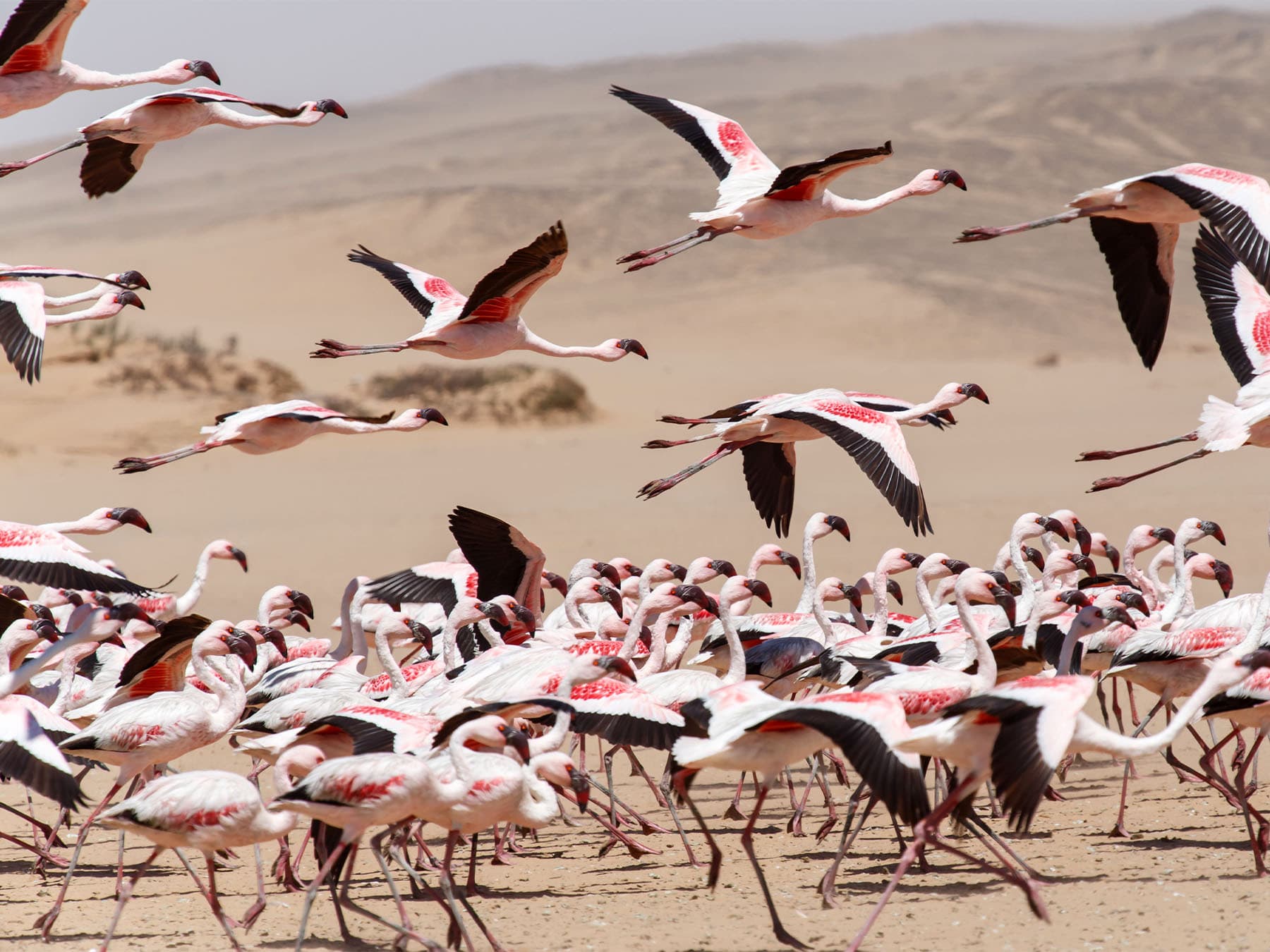
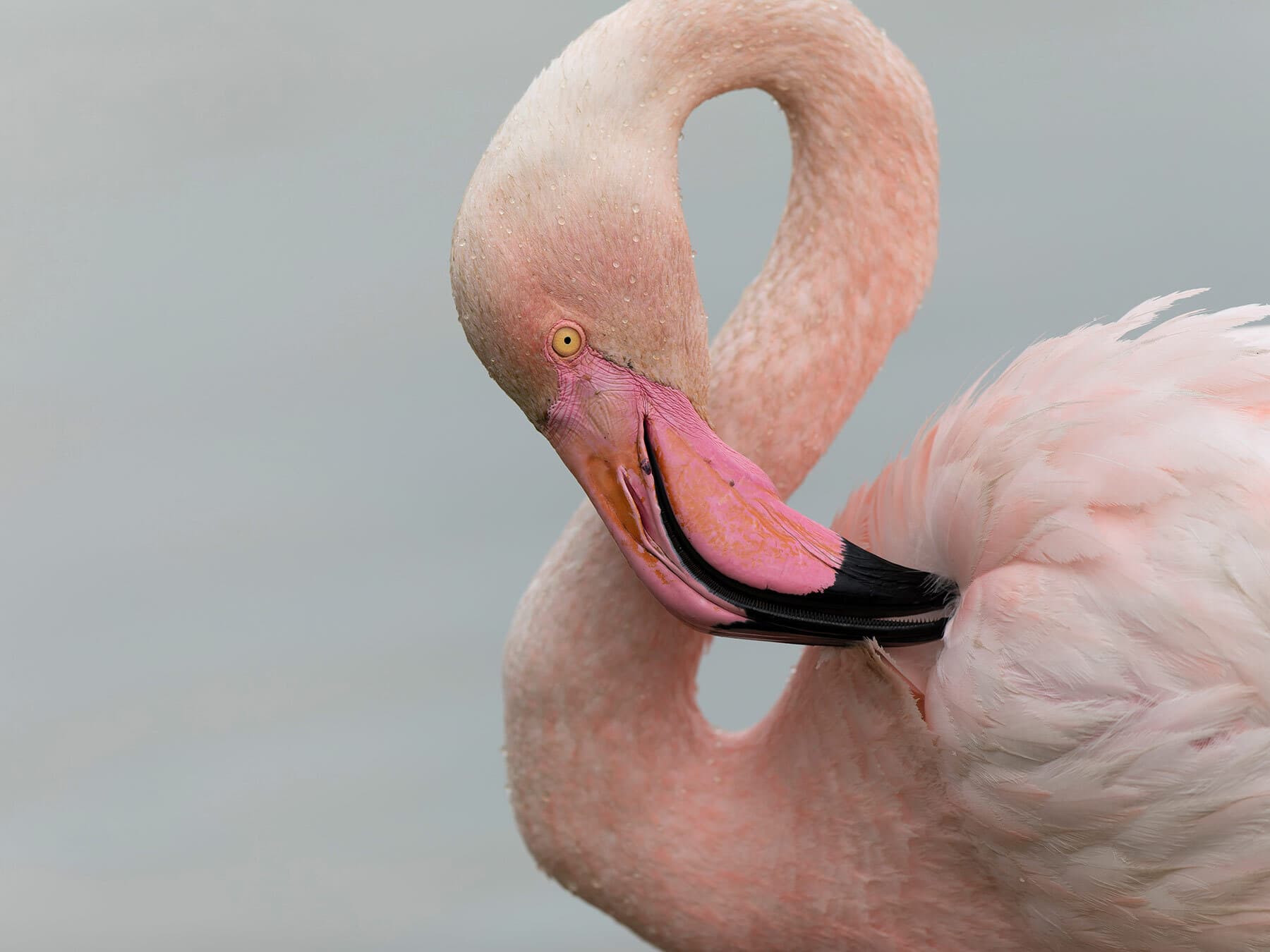
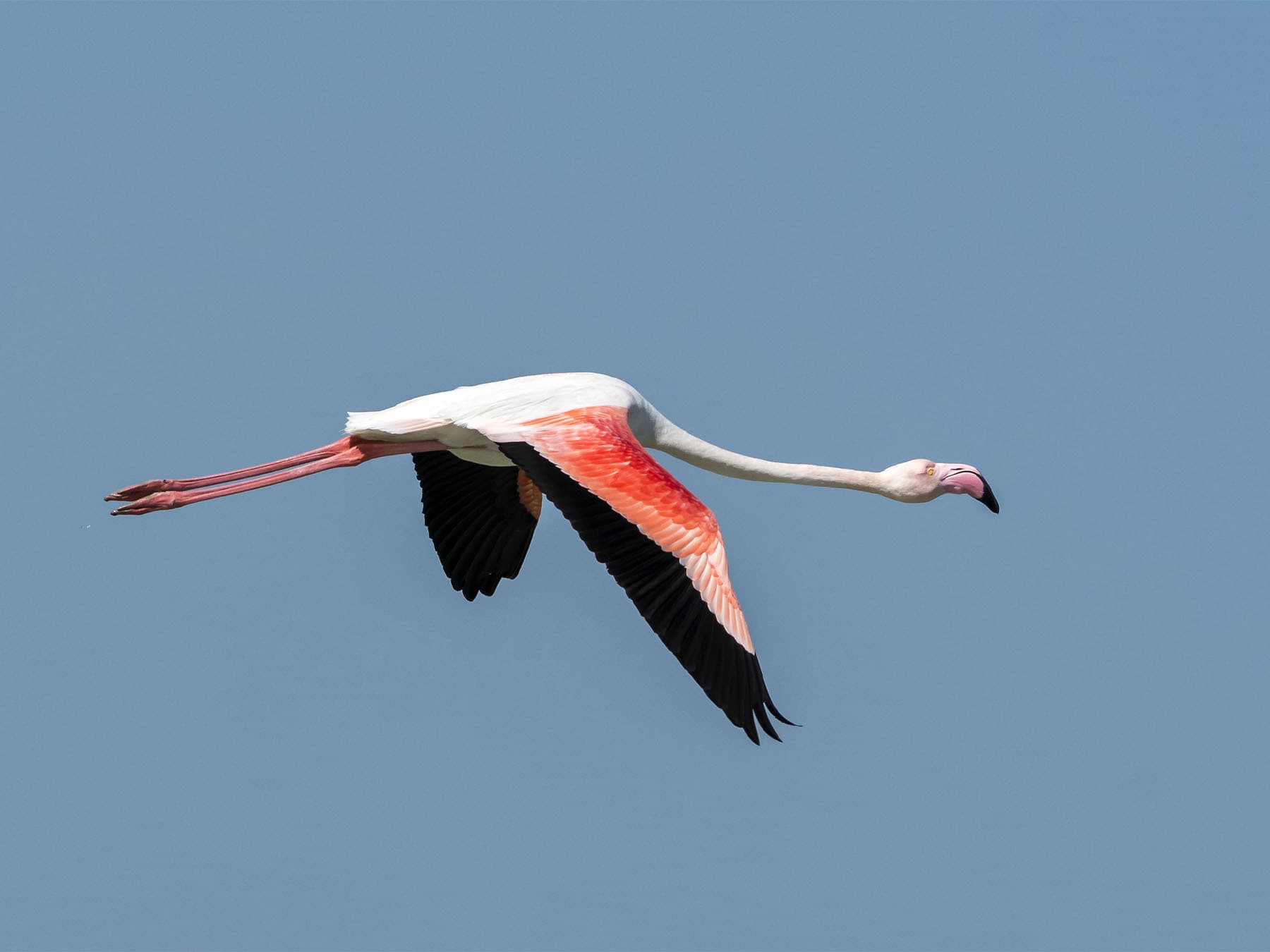
Flamingos are strange birds. Odd but beautiful, lanky but graceful, these pink waders are a memorable sight for any birdwatcher. They are usually seen walking through shallow waters, but they are never more eye-catching than when seen in flight with their long necks and legs held straight and level.
These birds seem to come and go from their feeding and breeding grounds, but do they migrate, and just how far do they go?
There is still much to be learned about Flamingo migration, but scientists have discovered that some make impressive long-distance journeys while others don’t move much at all. These birds are not strictly migratory, and their movements vary depending on location and species.
There’s a lot more to discover about Flamingo migration. Read along with us to learn all about how and why these birds migrate!
Do Flamingos migrate?
There are six species in the Flamingo family, and each is at least partially nomadic and migratory. However, these birds are irregular migrants that move somewhat erratically depending on weather conditions, food supply, and other factors.
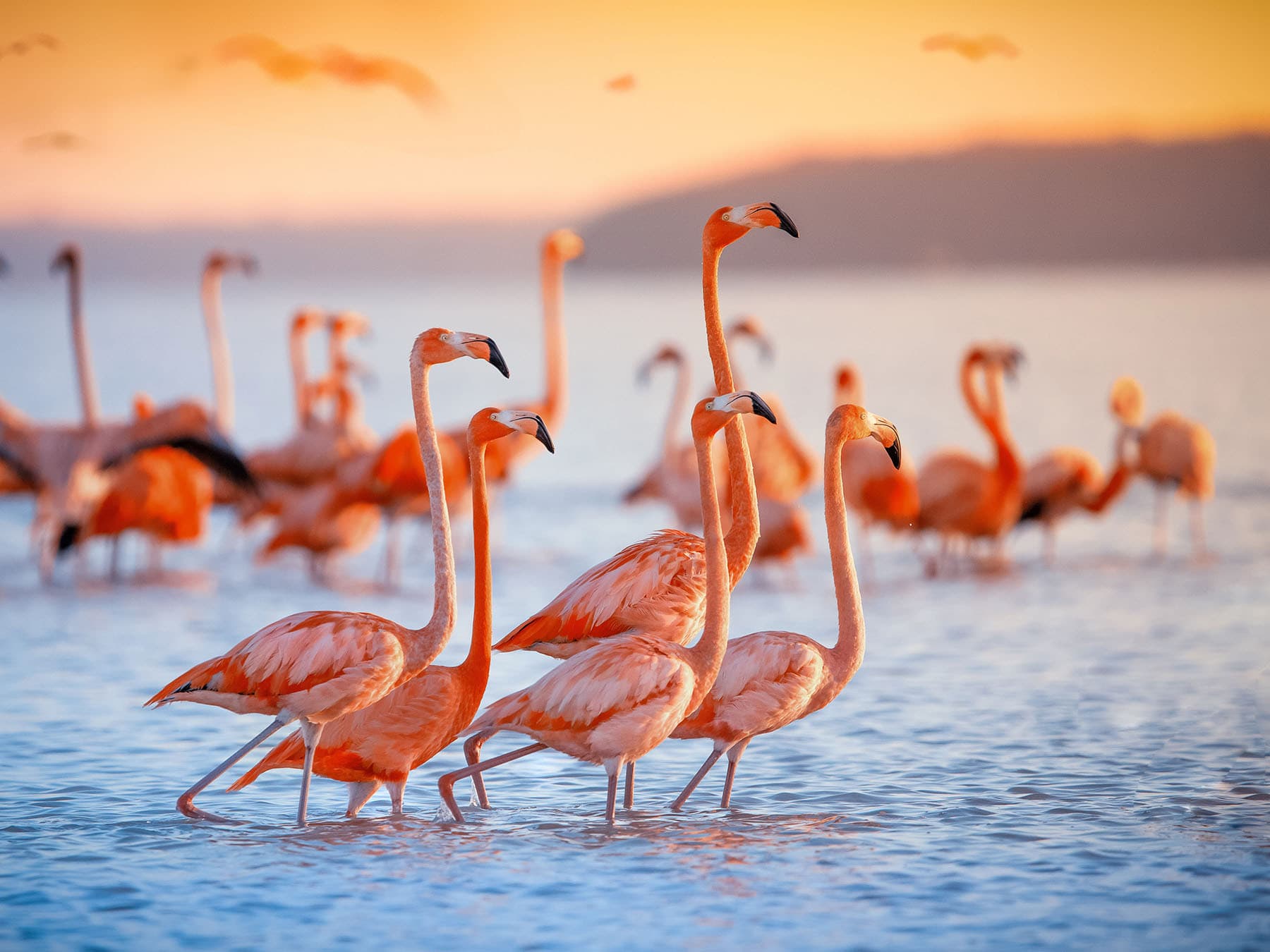
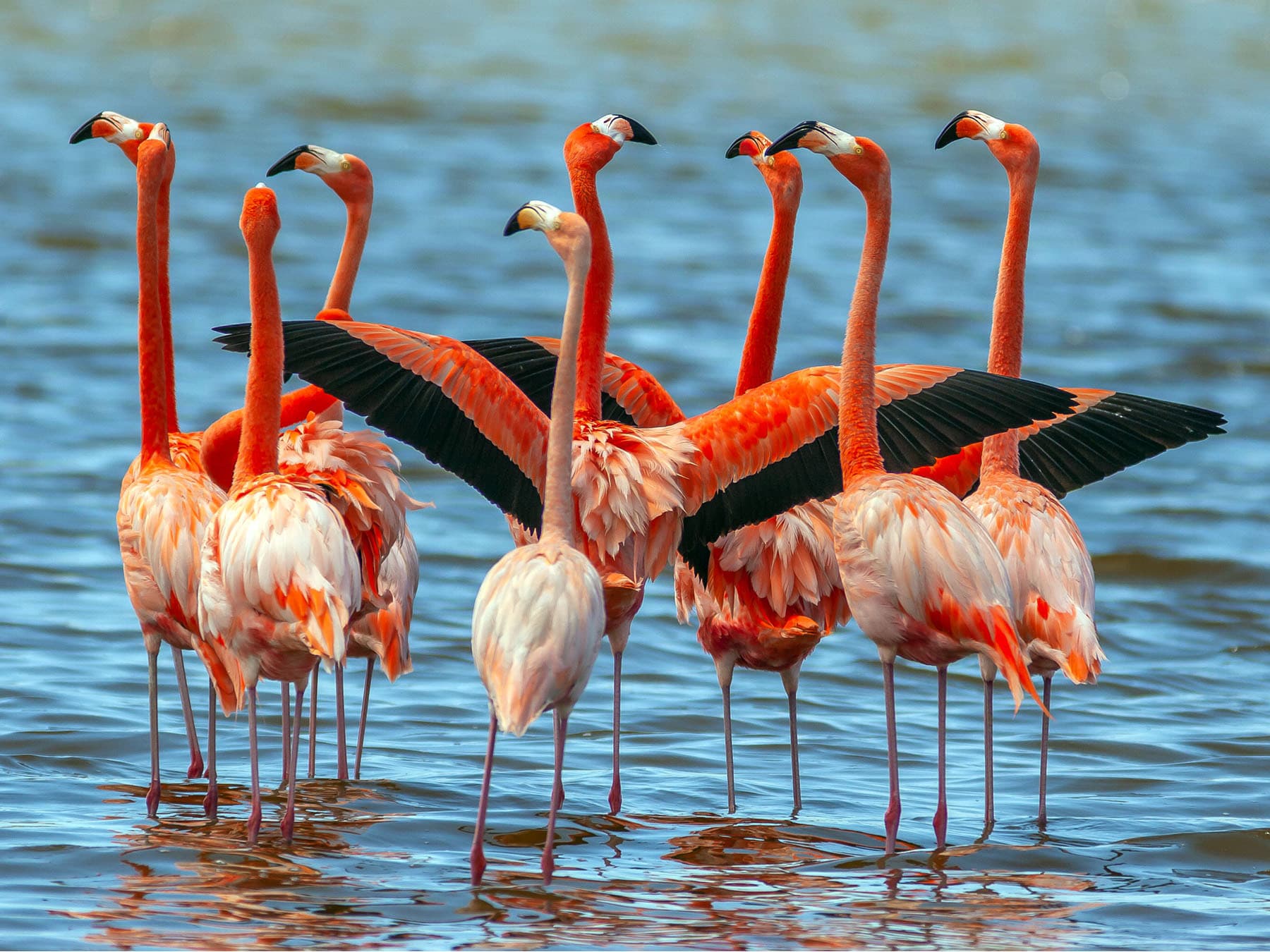
American Birdwatchers will be most familiar with the American Flamingo (Phoenicopterus ruber), which occurs in the Caribbean and coastal areas of surrounding Mexico and South America. These birds used to migrate to Florida, although most of the birds seen in the United States are resident domestic specimens. However, these distinctive birds might just be making a comeback in the Southeast, so it’s worth scanning likely habitats just in case.
Timing
Flamingo movements are not as predictable as other birds with regular annual migrations. They do, however, tend to head south for the winter in the northernmost parts of their Old World range. They also migrate to particular regions to breed, but only after rainfall creates suitable habitats.
Flamingos feed in shallow water, so flooding or drought could cause them to migrate. These birds are somewhat nomadic, and changing water levels force them to find new foraging grounds. This could result in seasonal movements similar to migration but governed by local rainfall patterns rather than the time of year.
Why they move
These birds may migrate or move to new areas for various reasons. These are the most important reasons for Flamingo migration:
- To search for rich food sources
- To leave overcrowded waters
- To escape predators or human disturbance
- They may leave due to drought or flooding
- Finally, many Flamingos migrate to warmer areas during cold winters
Distances
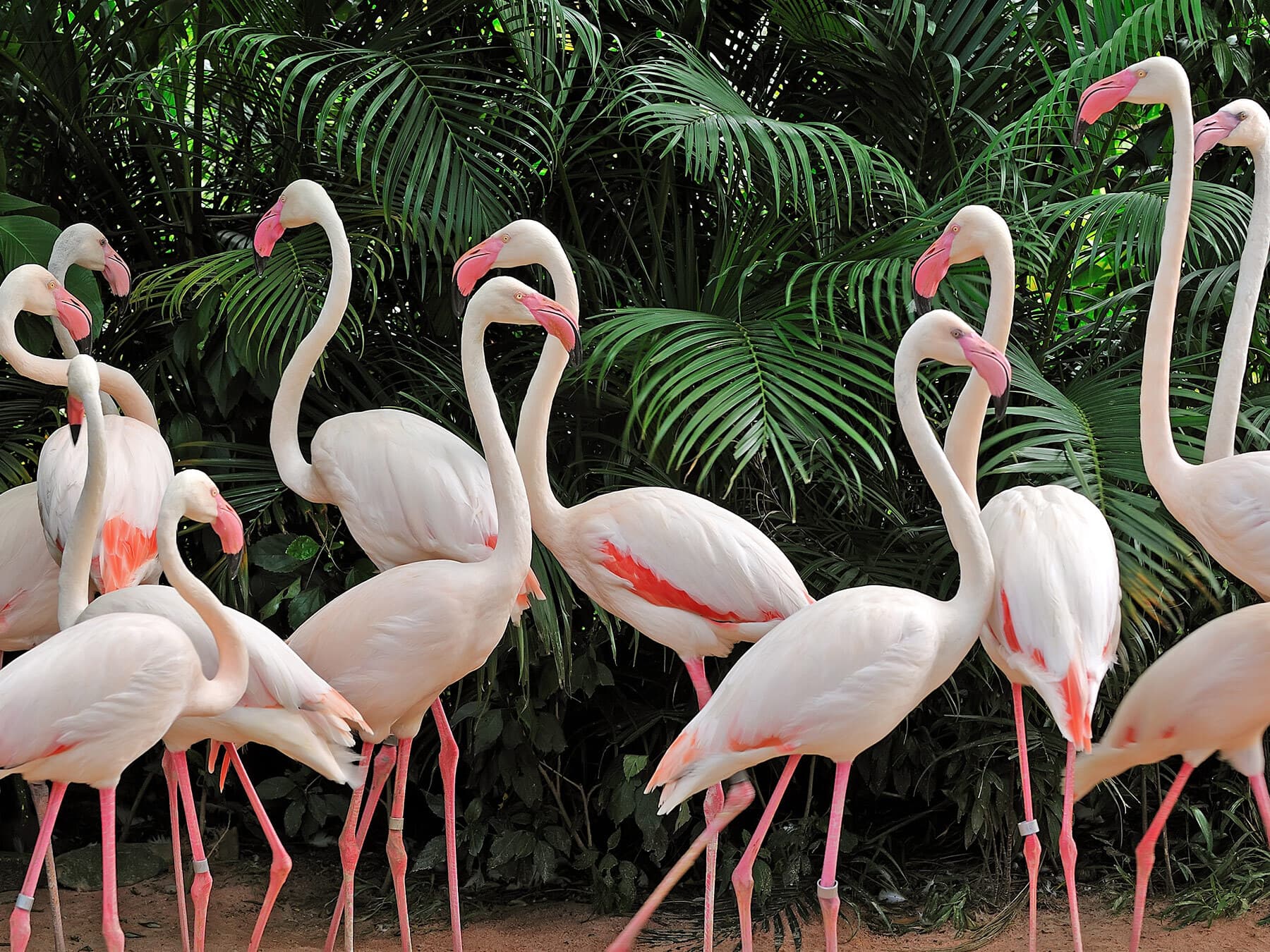
The different Flamingo species migrate at different distances, and their habits can differ greatly even among the same species. Greater Flamingos (Phoenicopterus roseus) in Asia can migrate about 3000 miles, while American Flamingos usually migrate short distances of just a few hundred miles or less.
How long journeys last
Flamingo migrations may be short journeys of just a few hours, but they can travel over a thousand miles in just two days when migrating longer distances. These birds can maintain flight speeds of about 40 miles per hour (60km/h) in level flight, but they prefer to use favorable winds to save energy.
Where do Flamingos migrate to?
As a group, Flamingos do not follow strict migratory routes, and birds of the same species may head off in completely different directions when migrating. Nomadic birds will be looking for the same thing: shallow, nutrient-rich feeding areas.
Long flights
Flamingos can fly impressive distances, sometimes covering hundreds of miles in a single night! Whether they will complete an entire migration without stopping generally depends on how far they need to go to reach favorable foraging or nesting grounds.
Sedentary, nomadic or migratory
Flamingos can be sedentary, nomadic, or migratory. Some parts of the world offer suitable conditions for these birds throughout the year, and Flamingos may remain in the same area or move between good feeding spots in these areas.
In winter
Flamingos from areas with cold winters often migrate to more tropical regions. For example, many Greater Flamingos that visit France in summer migrate to Africa for the colder months.
In South America, many Flamingos simply head to lower altitudes for the winter. In the Andes mountains, some Flamingos can stay on lakes all year where hot springs keep the water warm, while others will move down to the coast or inland salt lakes where the waters don’t freeze over.
In summer
Some Flamingos move to higher latitudes (further from the equator) for the summer, even breeding as far north as France and Kazakhstan. Other species head up to high-lying, mountainous areas during the warmer months.
The Journey: Challenges and Adaptations
Flamingos may be tall, but they are still vulnerable to predators like large cats, jackals, and eagles. They are relatively safe from hungry mouths when migrating at night, but there's one threat that evolution has not prepared them for. Low powerlines and other infrastructure pose a risk to some species, particularly in India and Africa.
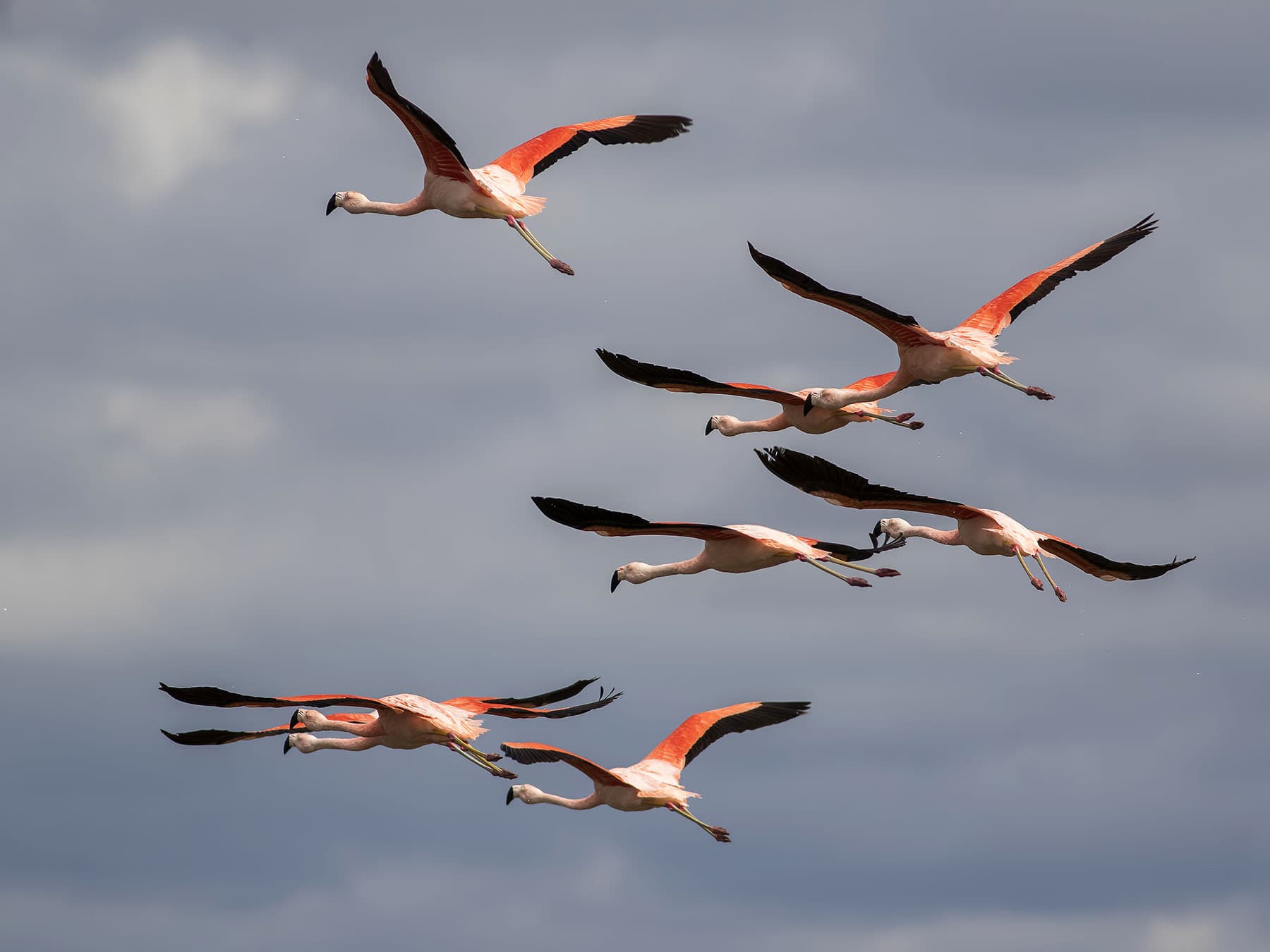
Flamingos fly well, easily cruising at about 40 miles an hour without rest for several hours if necessary. Depending on conditions, these birds might fly thousands of feet above the ground or just over the water’s surface. Like many other large waterbirds, Flamingos often migrate in v-formation, which saves energy for the individuals flying behind the leader.
Where to watch
Flamingos are widespread waterbirds, and their migrations are irregular across much of their range. However, the following destinations regularly support large numbers of migrating Flamingos:
- Camargue National Park, France
- Pulicat Lake, India
- Etosha Pan, Namibia
- Makgadikgadi salt pans, Botswana
Want to know more about where Flamingos live and where you can see them? this interesting article.
Food on the move
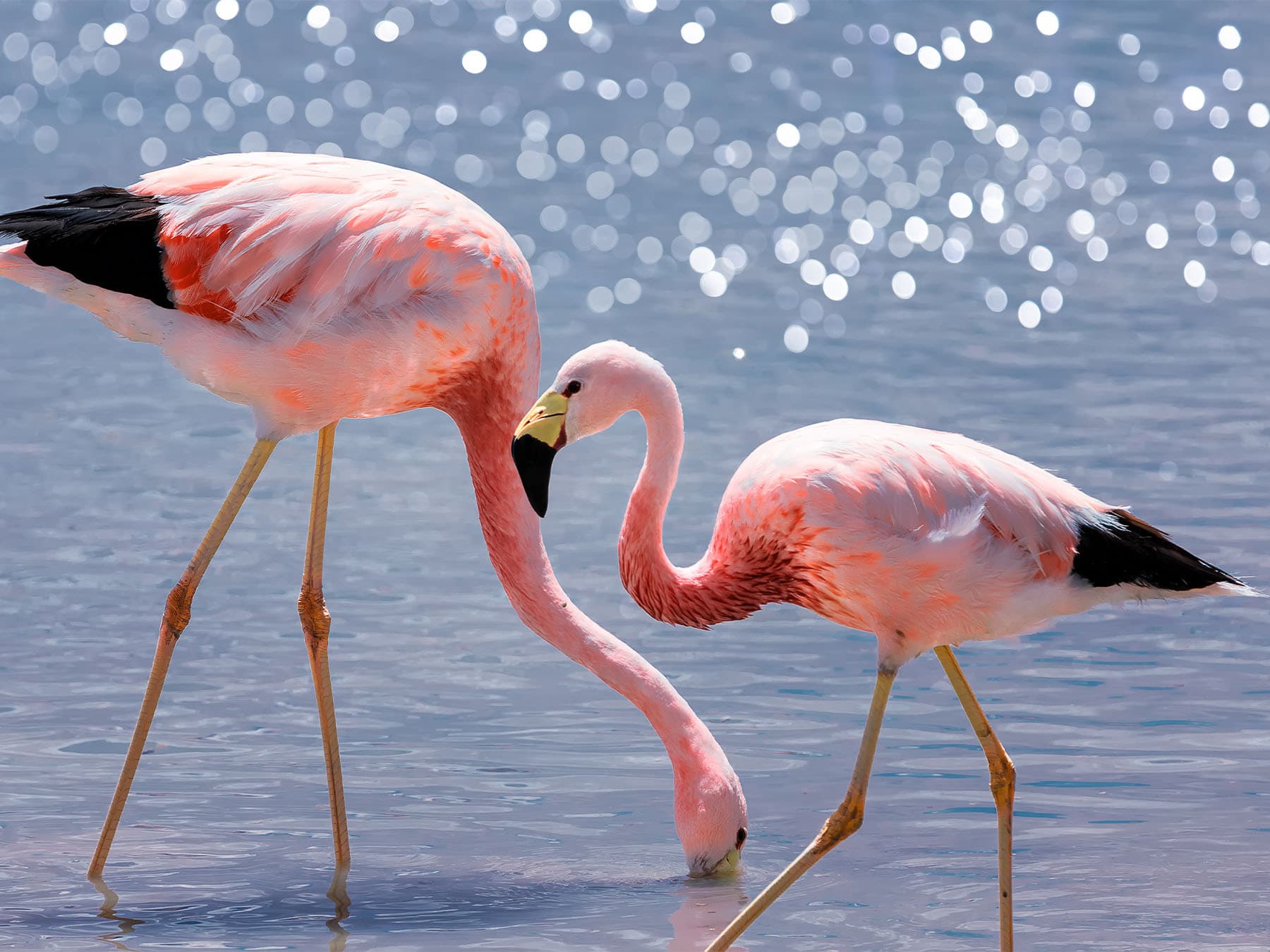
These birds are omnivorous and feed by wading through shallow water and searching for food on the bottom or at the water’s surface. Aquatic and marine invertebrates, plants, and algae are their favorite foods.
Flamingo’s diet. You’ll also learn why these birds are so pink!
FAQs
Do Flamingos migrate at night?
Flamingos are known to migrate during the day or night, depending on their species and environmental factors. Lesser Flamingos (Phoeniconaias minor), for example, tend to migrate after dark, while Greater Flamingos (Phoenicopterus roseus) are less particular.
Do Flamingos migrate in pairs or groups?
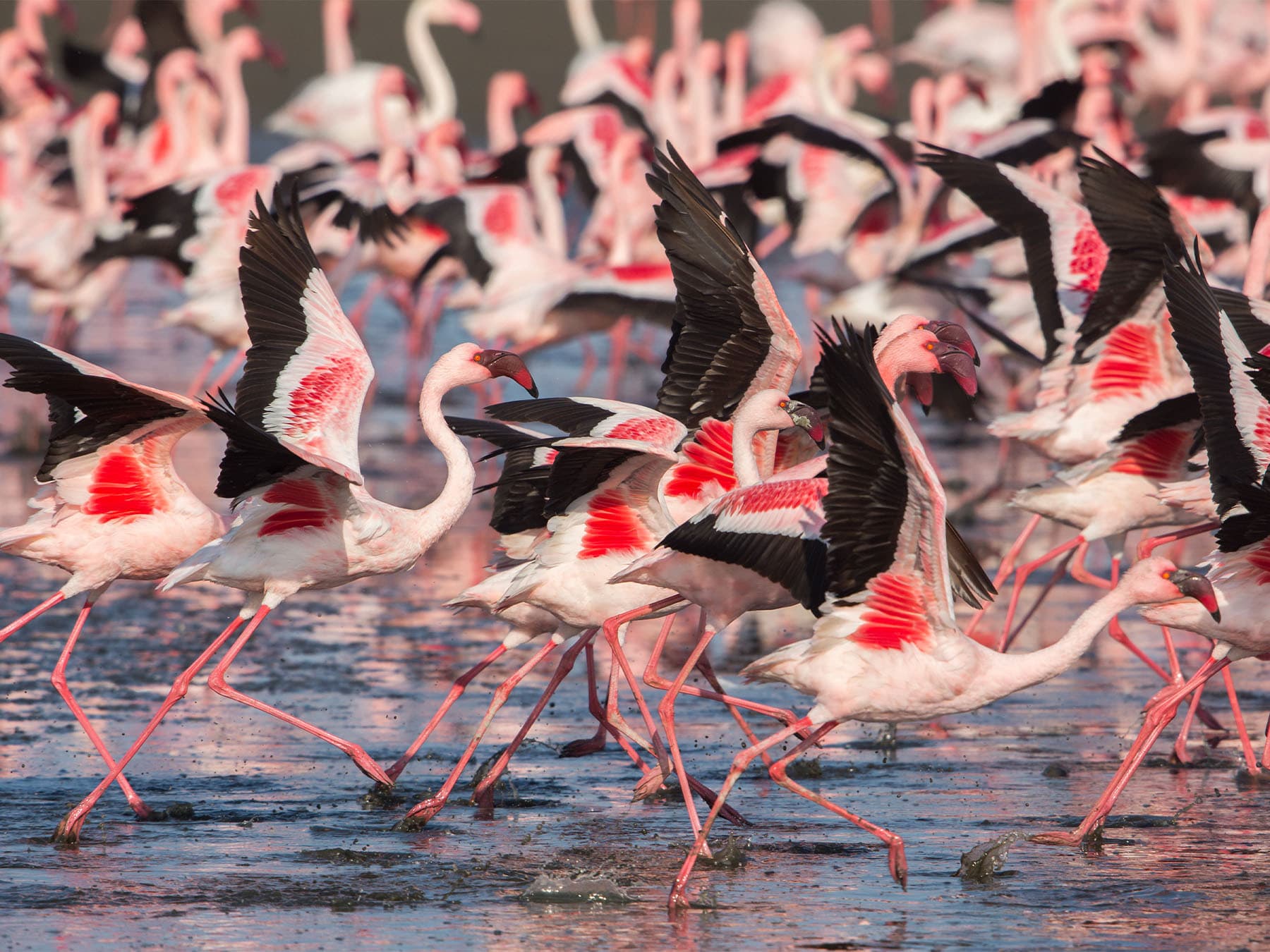
flamboyances), and they will migrate together, sometimes in groups of several hundred.
Do Flamingos die during migration?
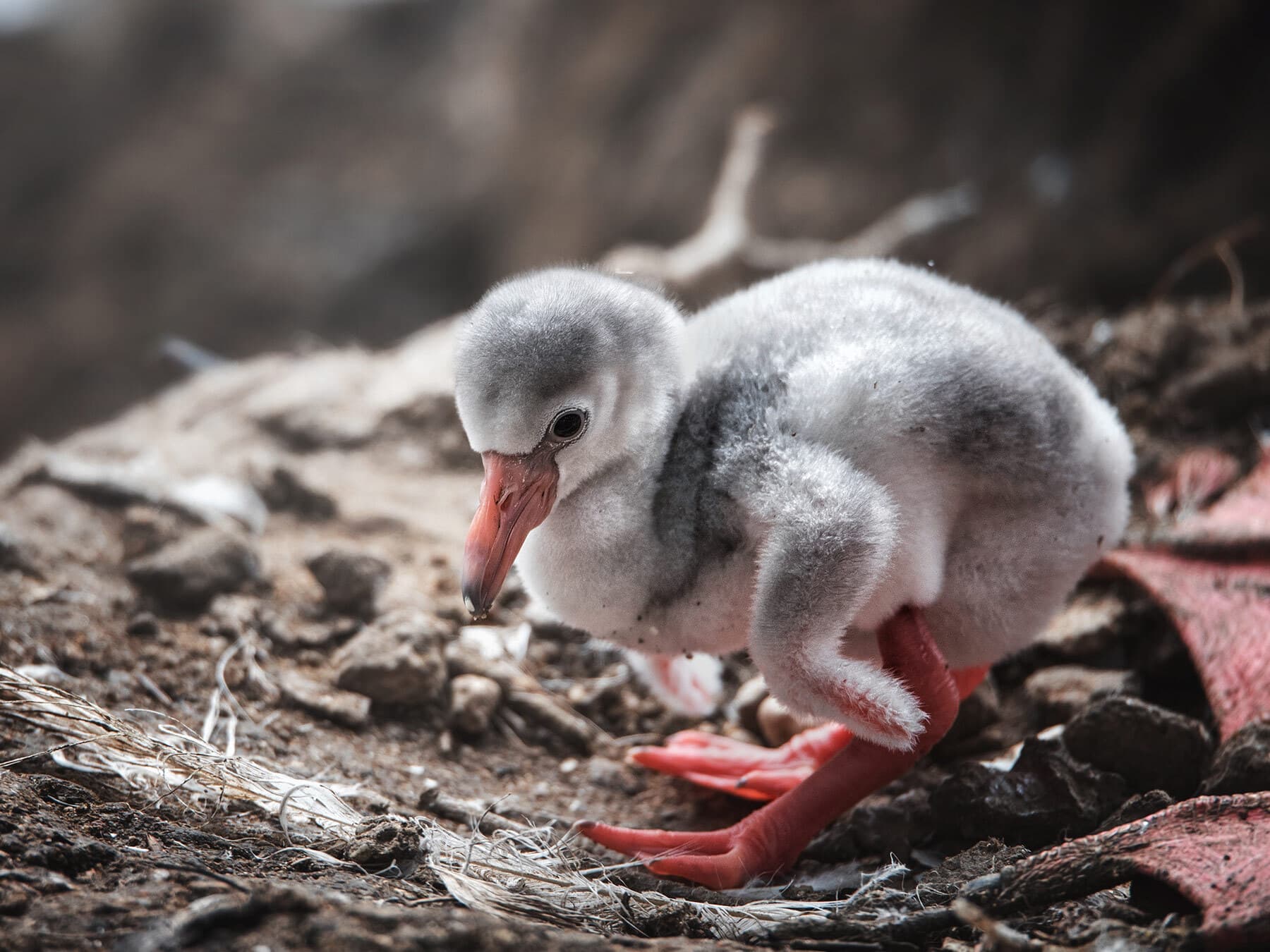
Migration presents a physical challenge to Flamingos, and young, unhealthy, or older birds could succumb to exhaustion and other dangers along the way. However, these birds usually migrate to escape dwindling food resources or harsh weather, so staying put is just as risky.