


Greater Flamingo
European Flamingo, Rosy Flamingo · Phoenicopterus roseus
By the Birdfact teamChecked by Nathan Cope
On this page12 sections
How to recognise it
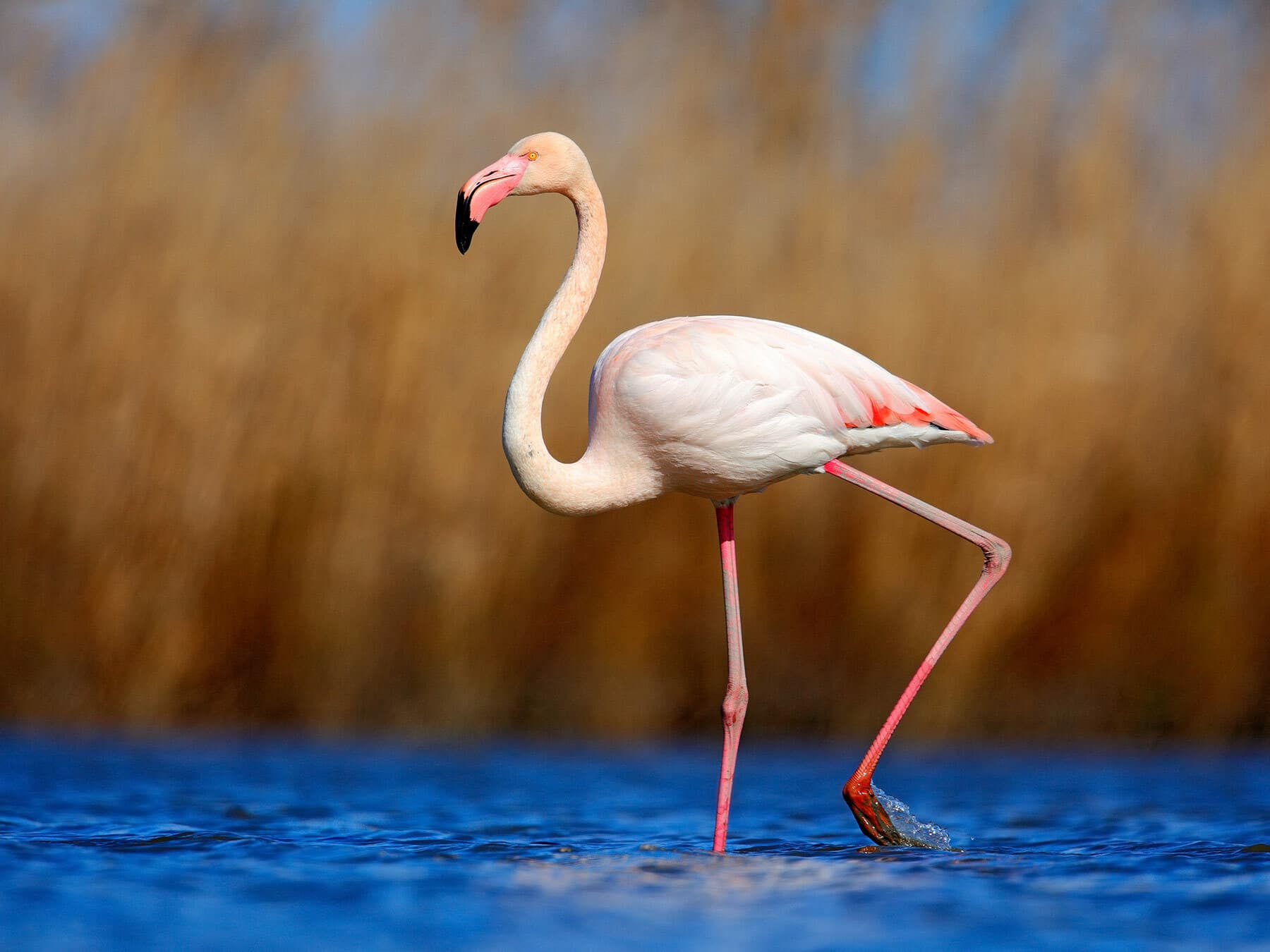
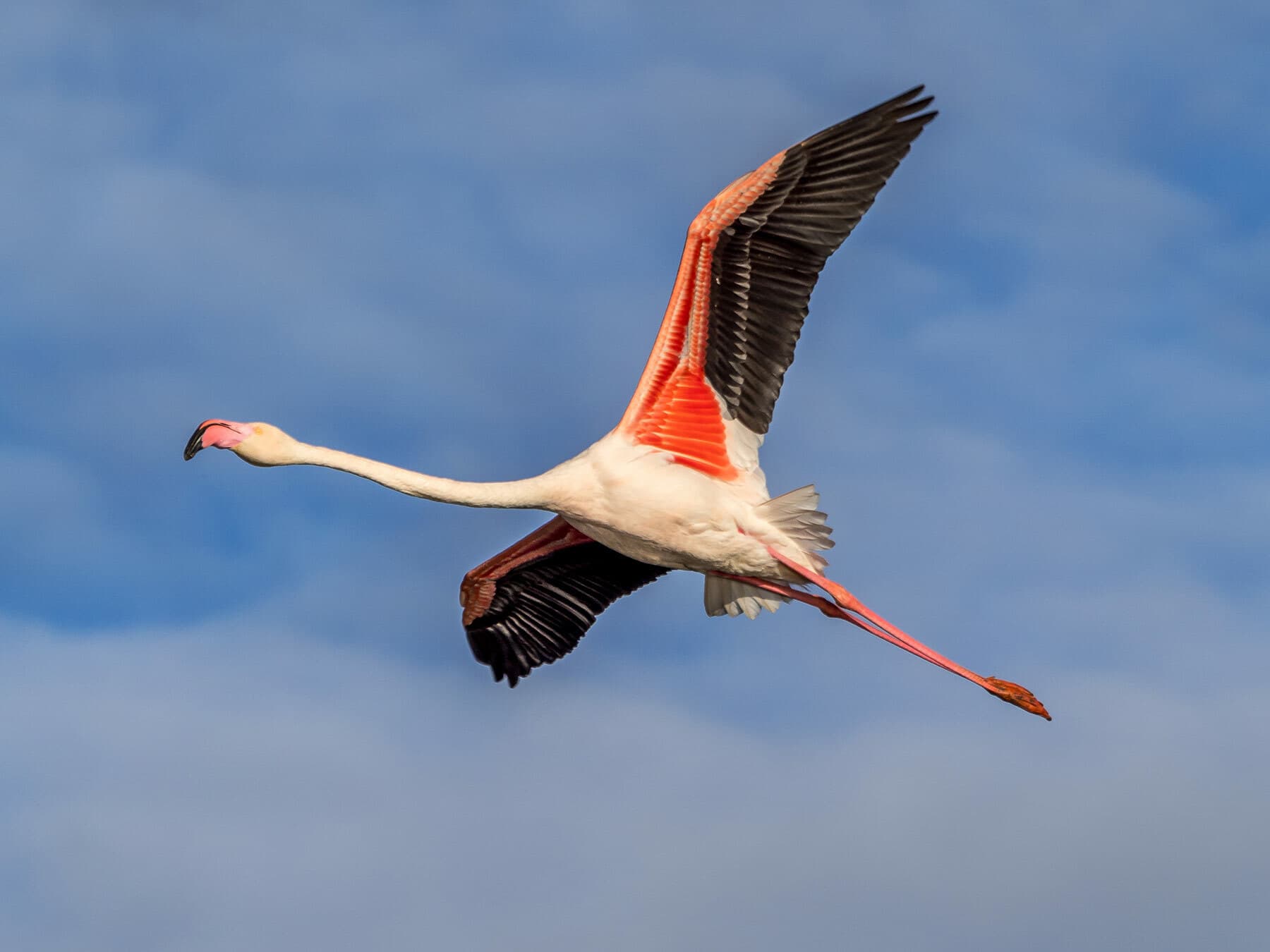
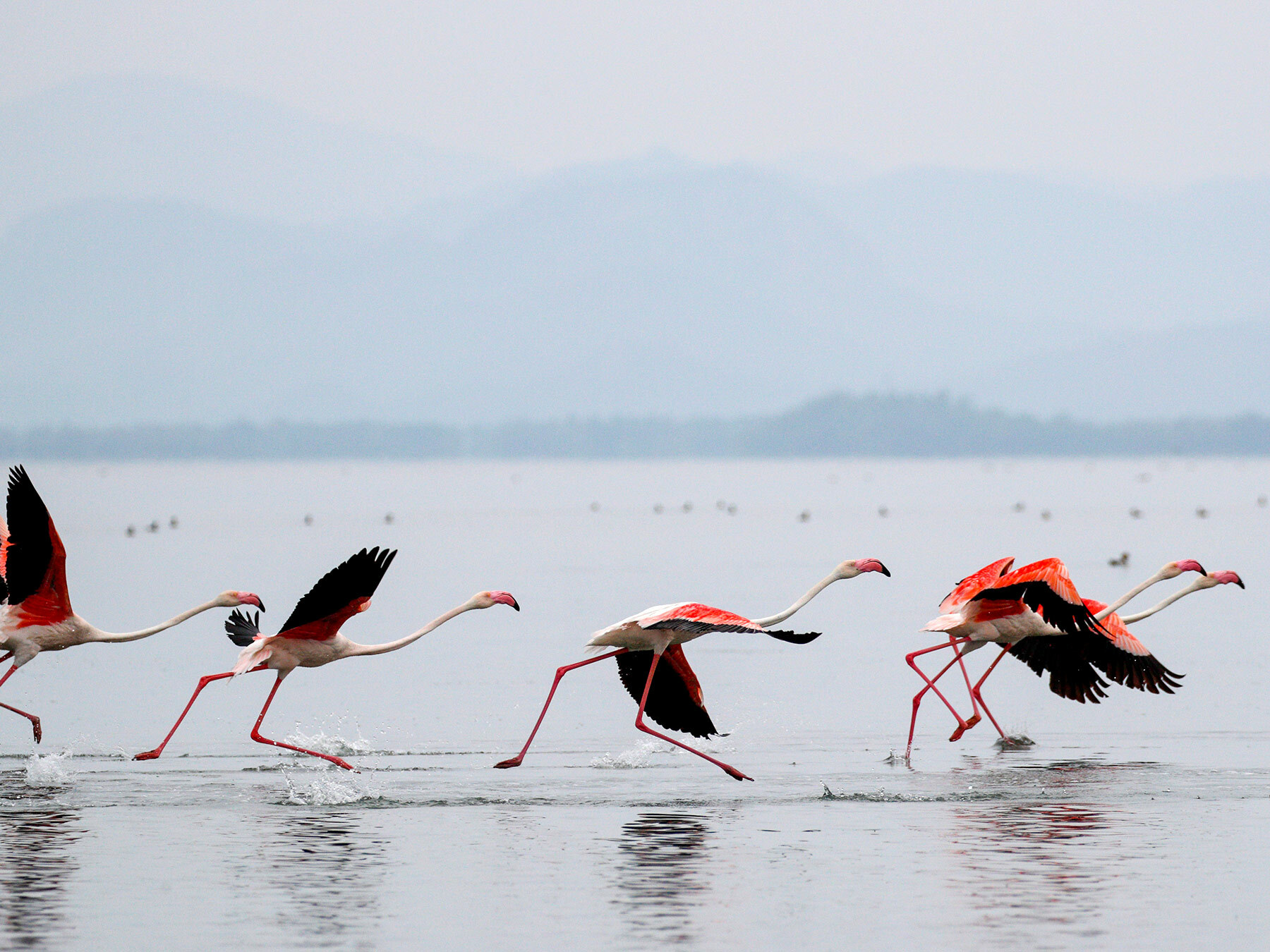
The Greater Flamingo is a striking bird with a long, sinuous neck and legs. Its plumage ranges from pale pink to rosy red, with black flight feathers visible when wings are spread. The large, downward-curved bill is pink with a black tip.
Males and females are identical in plumage colouring and patternation, but the female is up to one-fifth smaller overall.
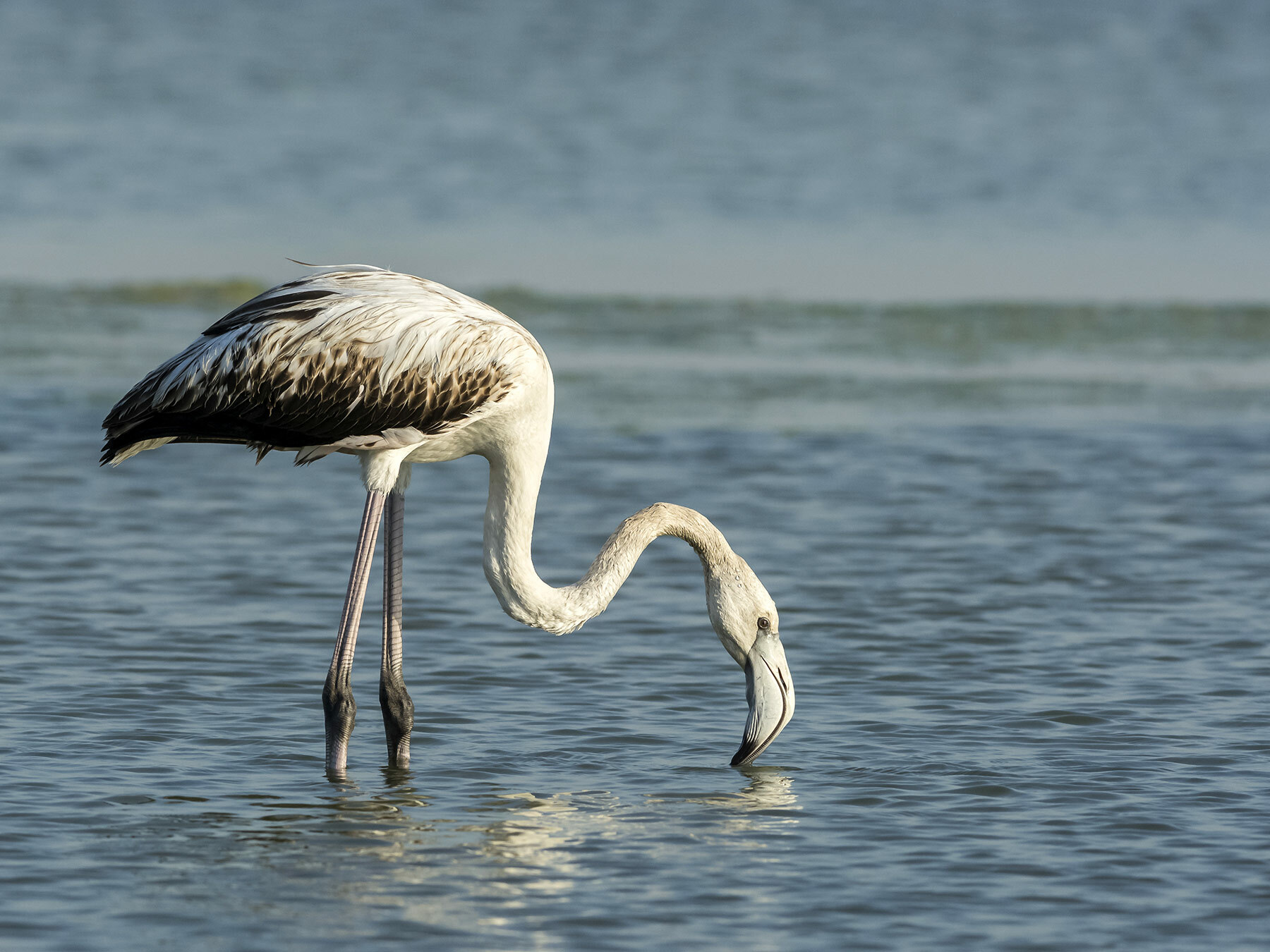
Juveniles are greyish-white, gradually acquiring pink plumage as they mature. Adults become more intensely coloured during the breeding season, their feathers taking on a deeper pink hue.
Its size
Adults- Length
- 120–145 cm
- Wingspan
- 140–165 cm
- Weight
- 2000–4000 g
Its song and calls
A medium toned, repetitive honking sound similar to a goose forms the basic call, particularly between pairs, changing to a more raucous almost barking cacophony within small groups and flocks.
- Flight call0:00 / 0:09
Recorded in Andalucía, Spain · August 2018
When and where to see it
The Greater Flamingo is not recorded regularly in the UK, Ireland, the United States or Canada.
United States: recorded in 5 of the 6 years. Too few years to count as a regular visitor.
Worldwide: recorded regularly in 59 countries
Countries where it was recorded in at least 3 of the 6 years 2019–2024. Linked countries have their own bird list.
Europe (17)
Africa (22)
- Algeria
- Angola
- Botswana
- Djibouti
- Egypt
- Ethiopia
- Gambia
- Guinea-Bissau
- Kenya
- Madagascar
- Mauritania
- Morocco
- Mozambique
- Namibia
- Senegal
- South Africa
- Tanzania
- Tunisia
- Uganda
- Western Sahara
- Zambia
- Zimbabwe
Asia (19)
North America (1)
Data: EOD – eBird Observation Dataset (Cornell Lab of Ornithology), accessed via GBIF.org, CC BY 4.0. Records from 2019–2024, aggregated and filtered by Birdfact. How these lists are made
Greater flamingos are widespread throughout Africa, India, Sri Lanka and the Middle East but are also relatively common in southern Europe, where they can be found in France, Spain, Italy, Greece and the Balearic Islands. Colonies of flamingos have also been reported in the Canary Islands, Turkey, Kazakhstan and Afghanistan.
Signs and Spotting tips
Preferring the salty shallow water of saline lakes, lagoons, salt pans and estuaries or even mudflats and sandbanks, the greater flamingo is never far from wetland areas. It will also choose water with extremely high alkalinity.
What it eats
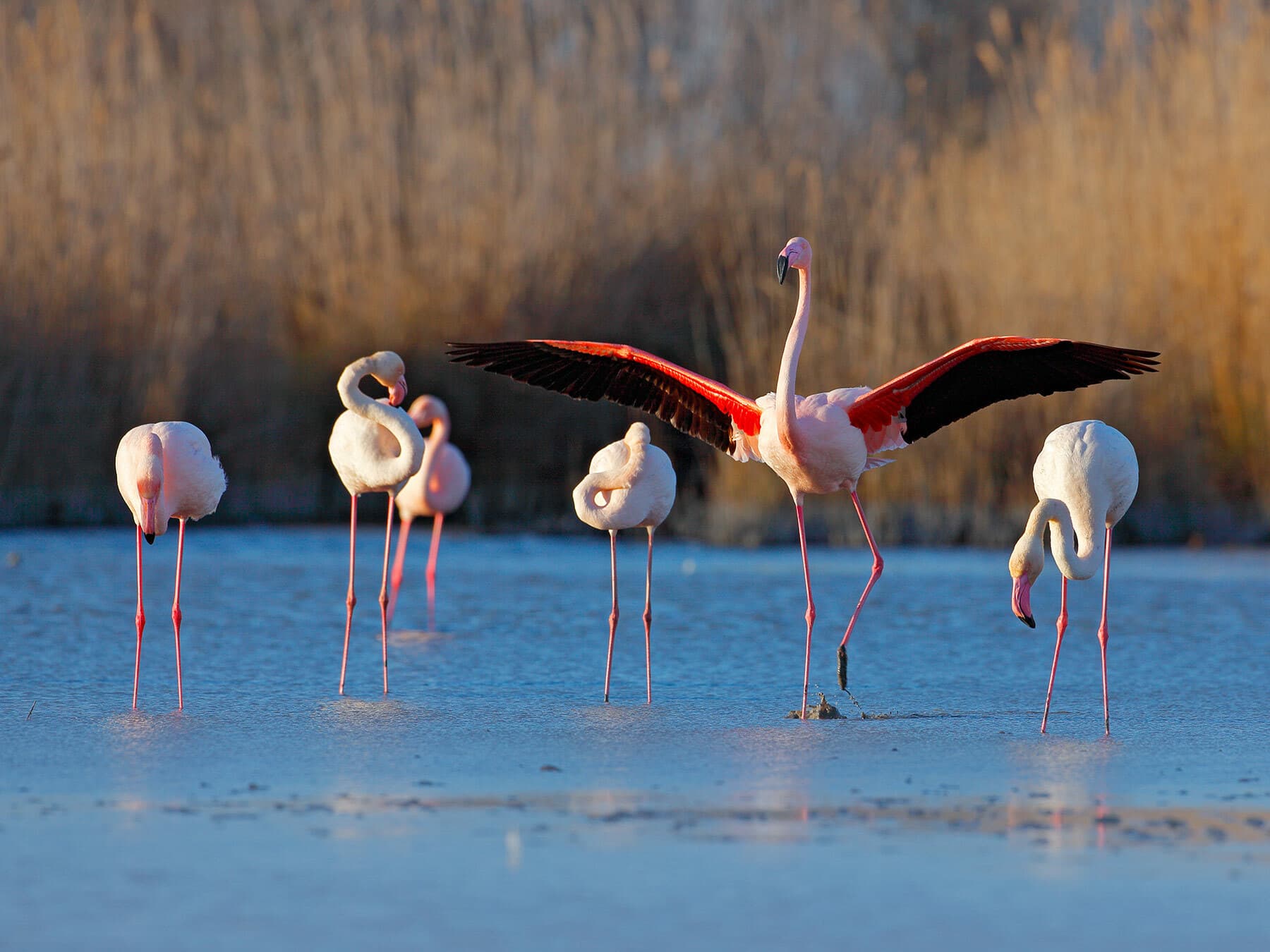
The adult greater flamingo is predominantly pale pink and white with an elongated neck, narrow wings and long pale pink legs. Primary and secondary flight feathers are black and the lesser and median wing coverts are a bright red in colour, contrasting with the remainder of the wing area which is pale pink. The bill is chunky, pink in colour and curving downwards to a black tip; the eyes are bright yellow. Males and females are identical in plumage colouring and patternation but the female is up to one fifth smaller overall. In flight the neck is extended forwards in a straight line and the legs assume an almost mirror image trailing backwards. Juveniles mostly lack the pinkish colour of the adult being mainly greyish brown overall with dark grey brown legs and bill and brownish wings and tail. Traces of pink may be seen on the underparts of young birds.
What does a Greater Flamingo eat?
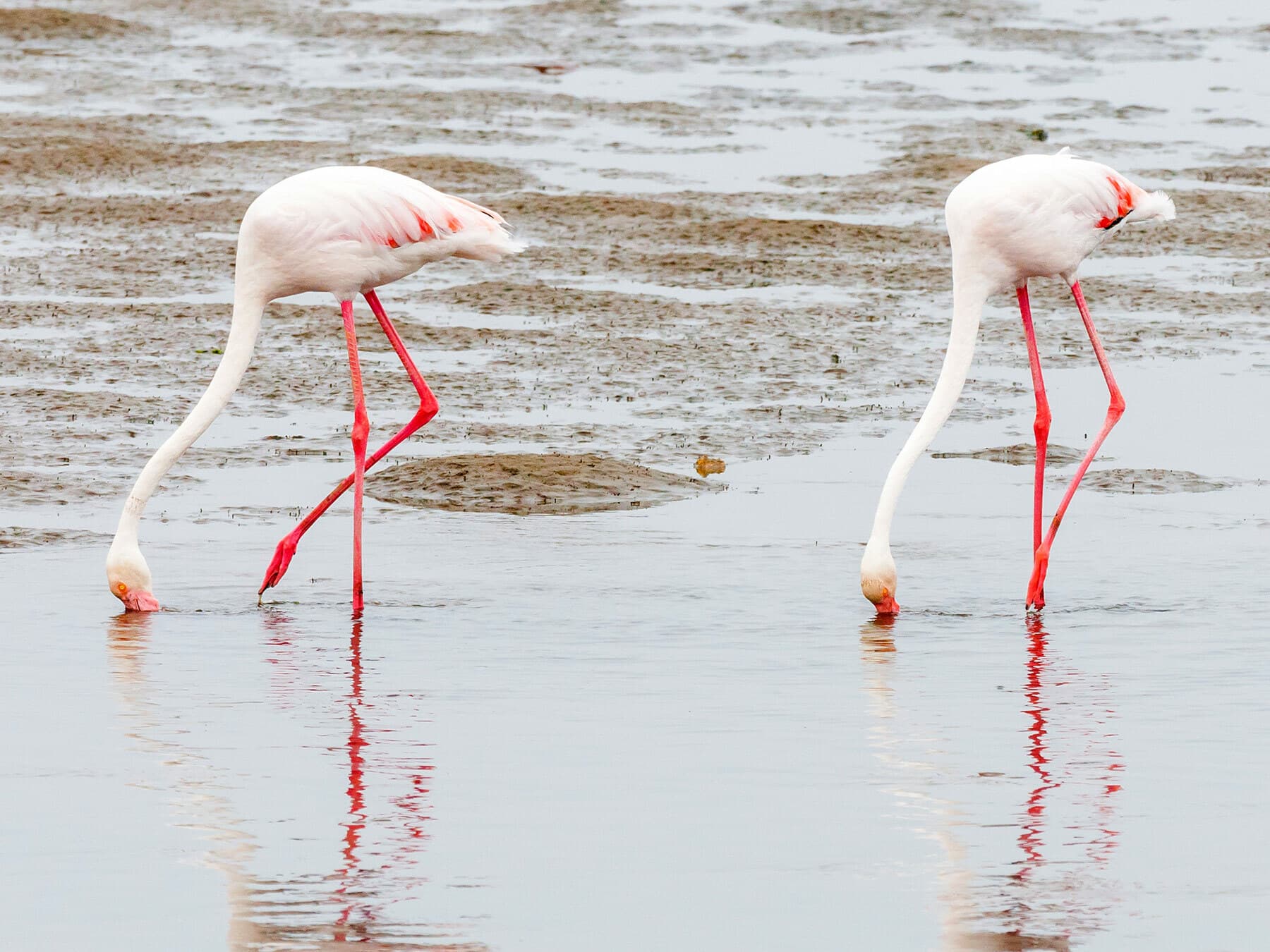
The greater flamingo has a varied diet consisting of, but not limited to, plants, seeds, shoots, algae, insects, molluscs, worms and crustaceans. Whilst standing up with neck bent they feed from the bottom of shallow water using their bills which they sweep from side to side upside down. Less commonly they can also feed whilst swimming.
How long do Greater Flamingos live for?
Life expectancy of greater flamingos is at least thirty five years.
Nesting and breeding
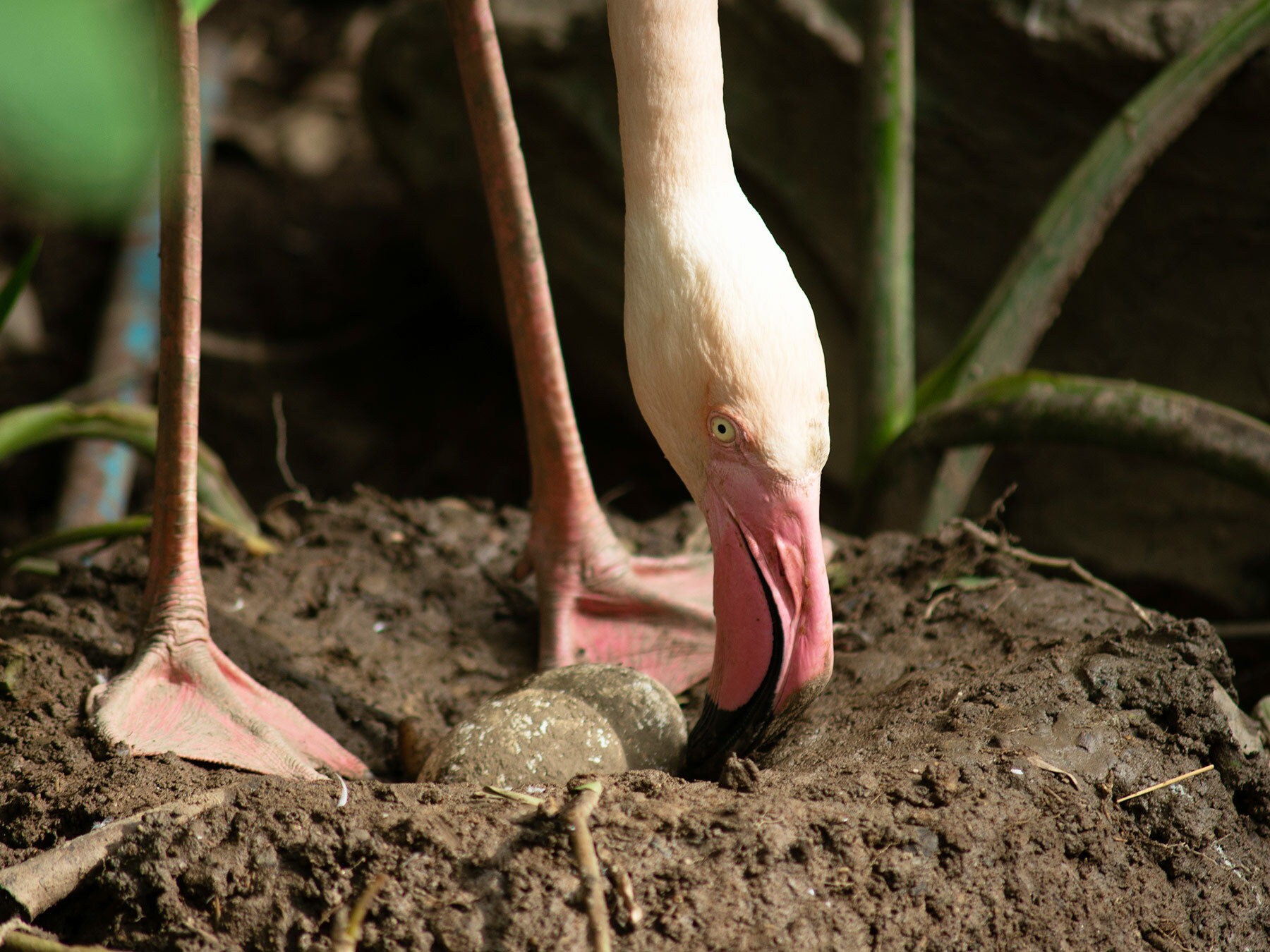
Nests are built from mud pillars with a saucer shaped top within shallow water or on small islands within the lake the flock is currently occupying thus affording some protection from predators. Breeding within Europe is normally between March and May whereas in north Africa it occurs as early as February. Huge colonies of up to 20,000 pairs of flamingos build nests with the breeding period frequently determined by the rainy seasons in tropical and sub-tropical regions. One white egg, occasionally two, is laid and incubated by both parents for a period of between twenty seven and thirty one days. Fledging normally takes place from nine to thirteen weeks.
Behaviour
Greater Flamingos are highly social, often gathering in large flocks of thousands. They perform elaborate courtship displays, including synchronised head movements and wing-spreading.
When feeding, they wade through shallow water, swinging their heads from side to side to filter small organisms from the water.
Conservation
While currently listed as Least Concern, Greater Flamingos face threats from habitat loss, pollution, and human disturbance. Conservation efforts focus on protecting breeding sites and maintaining suitable wetland habitats. Climate change and water management practices pose potential long-term challenges to their populations.
More photos
4 photos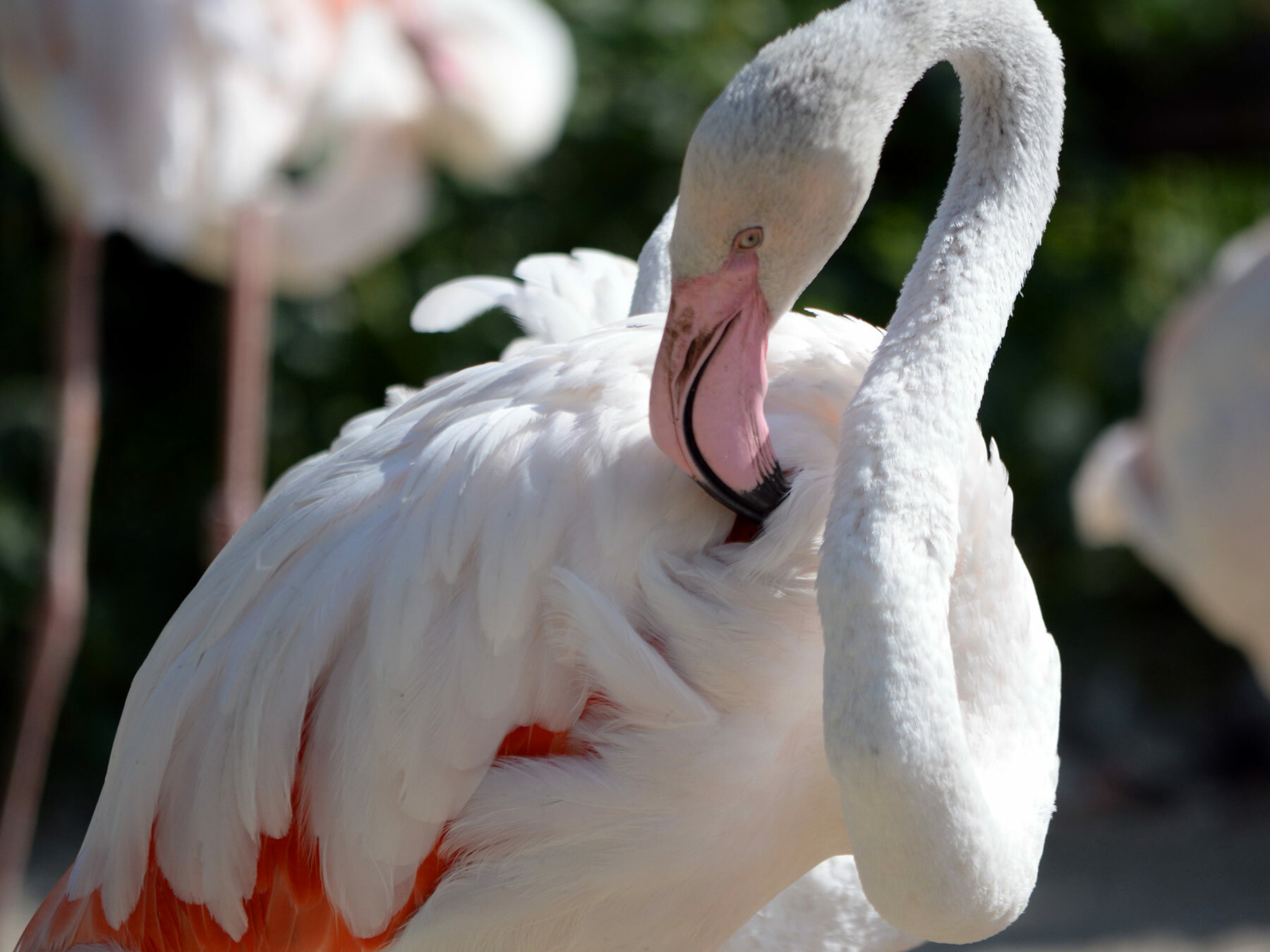
Greater Flamingo guides
5 guidesQuick facts
- Length
- 120–145 cm
- Wingspan
- 140–165 cm
- Weight
- 2000–4000 g
- Lifespan
- 20–30 years
- Family
- Flamingos
- Migration
- Partial migrant
- Global status (IUCN)
- Least Concern
- World population
- 550,000 - 680,000 mature individuals
- Population trend
- Stable
- Also called
- European Flamingo, Rosy Flamingo
- Scientific name
- Phoenicopterus roseus
Sources
3- 1BirdLife International. 2019. Phoenicopterus roseus (amended version of 2018 assessment). The IUCN Red List of Threatened Species 2019: e.T22697360A155527405. Source (opens in a new tab)
- 2Wetlands International (2015)
- 3Wetlands International (2015)

Checked by
Nathan Cope, founder and editor
Nathan founded Birdfact and leads its writers and contributors in the UK, the US and Canada. He has watched and studied birds for more than ten years, and checks every article and species guide before it’s published.