


Eurasian Wigeon
Wigeon, Whistling Duck · Mareca penelope
By the Birdfact teamChecked by Nathan Cope
On this page14 sections
How to recognise it
What do Wigeons look like?
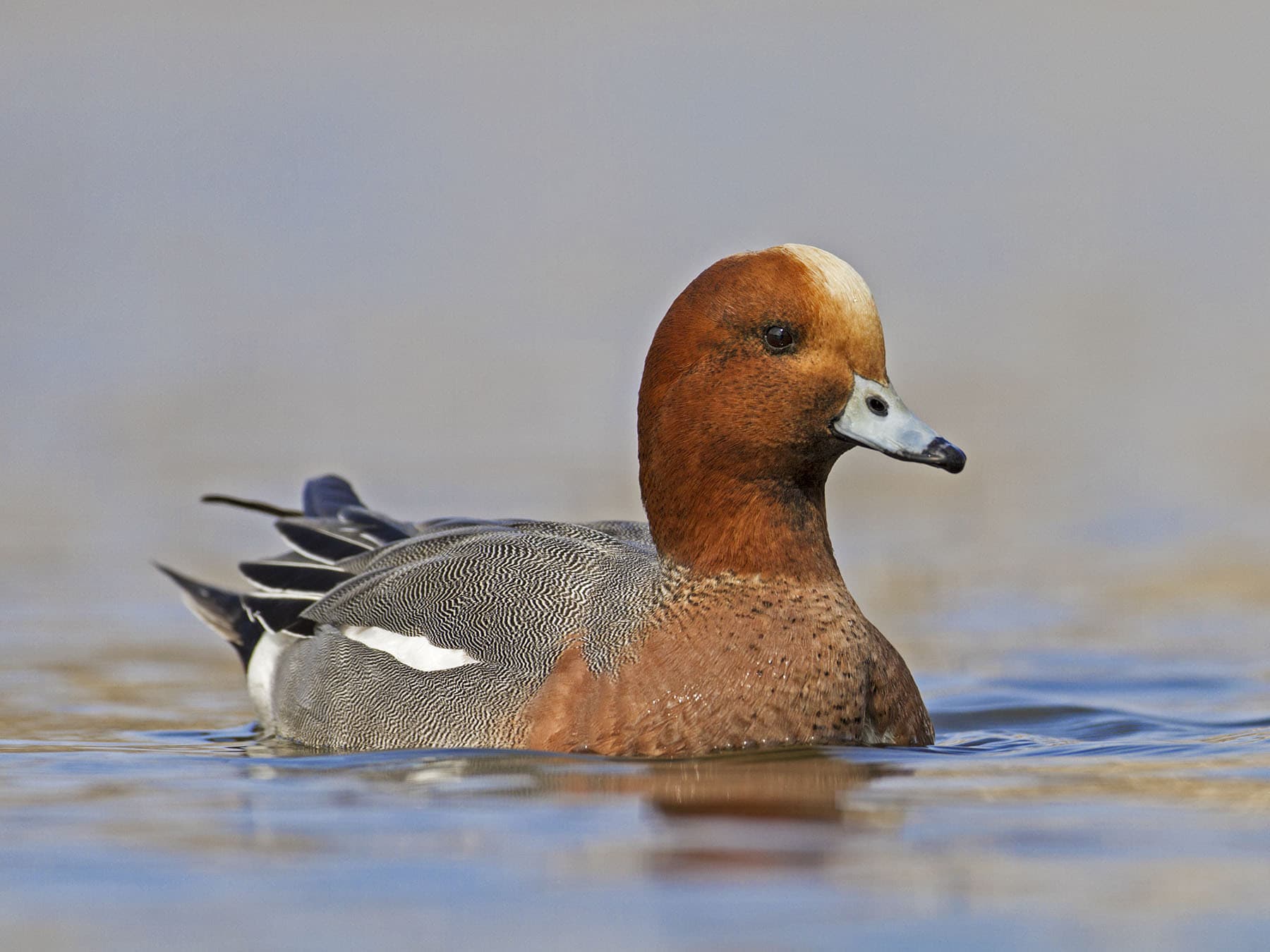
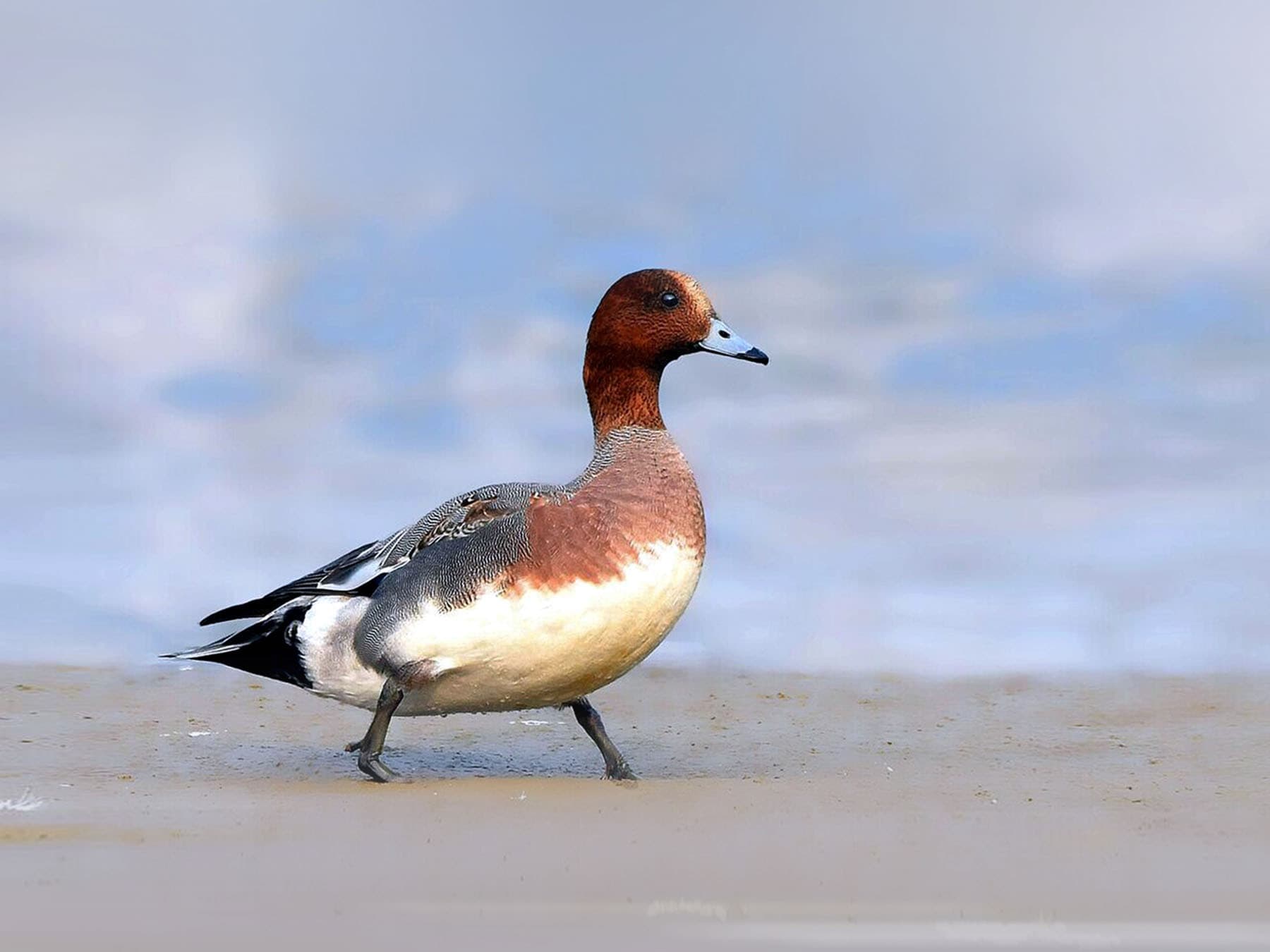
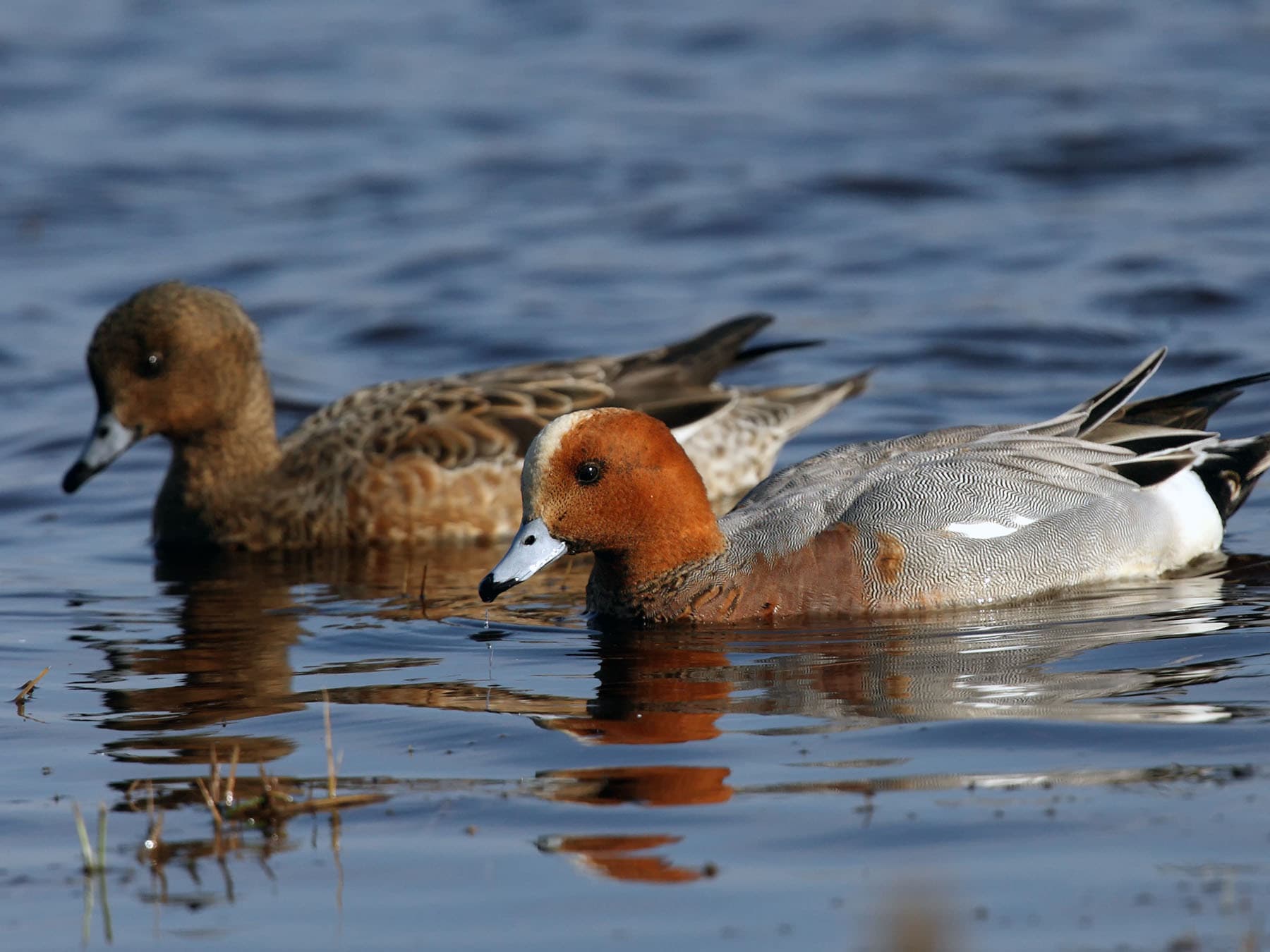
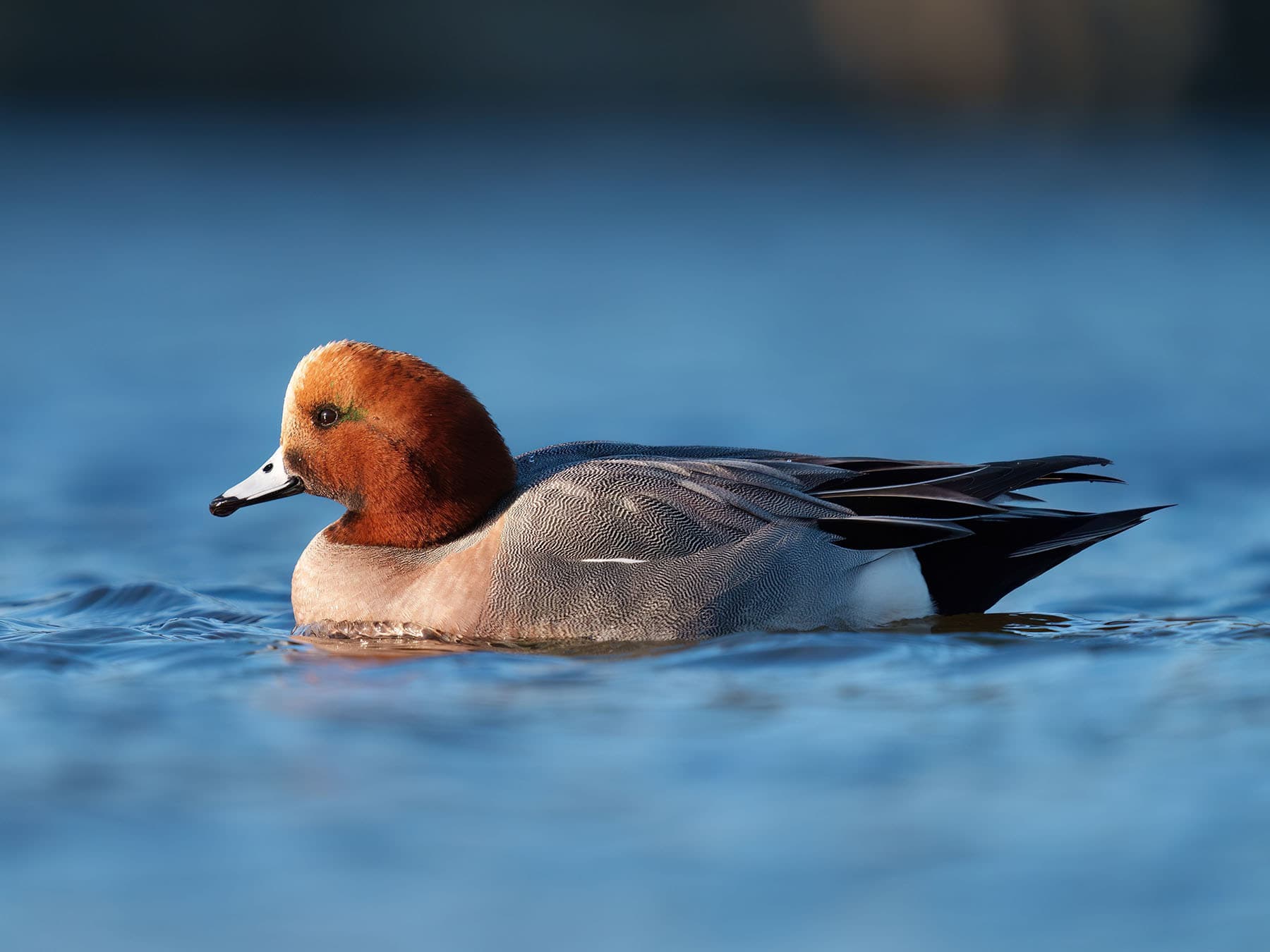
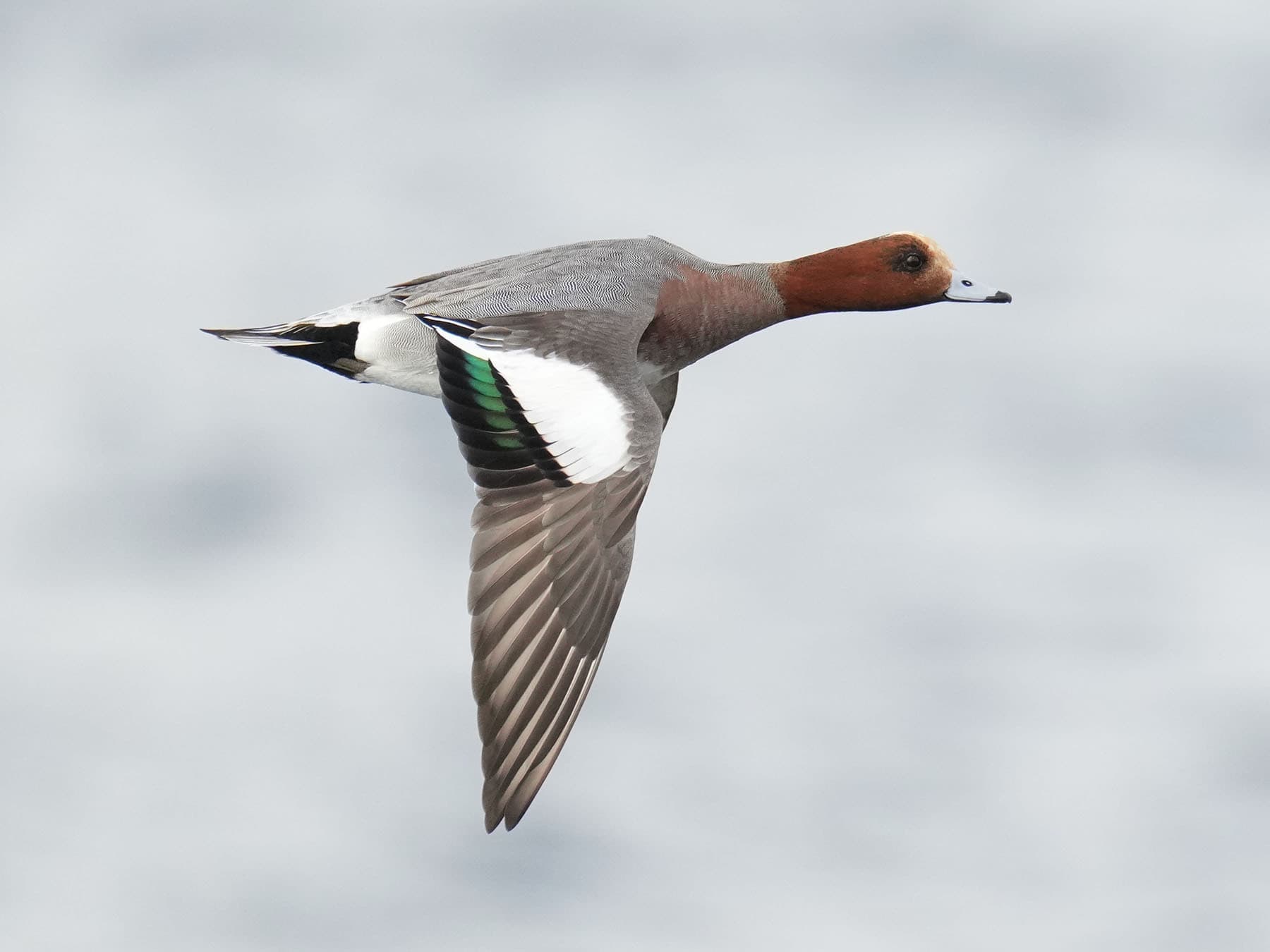
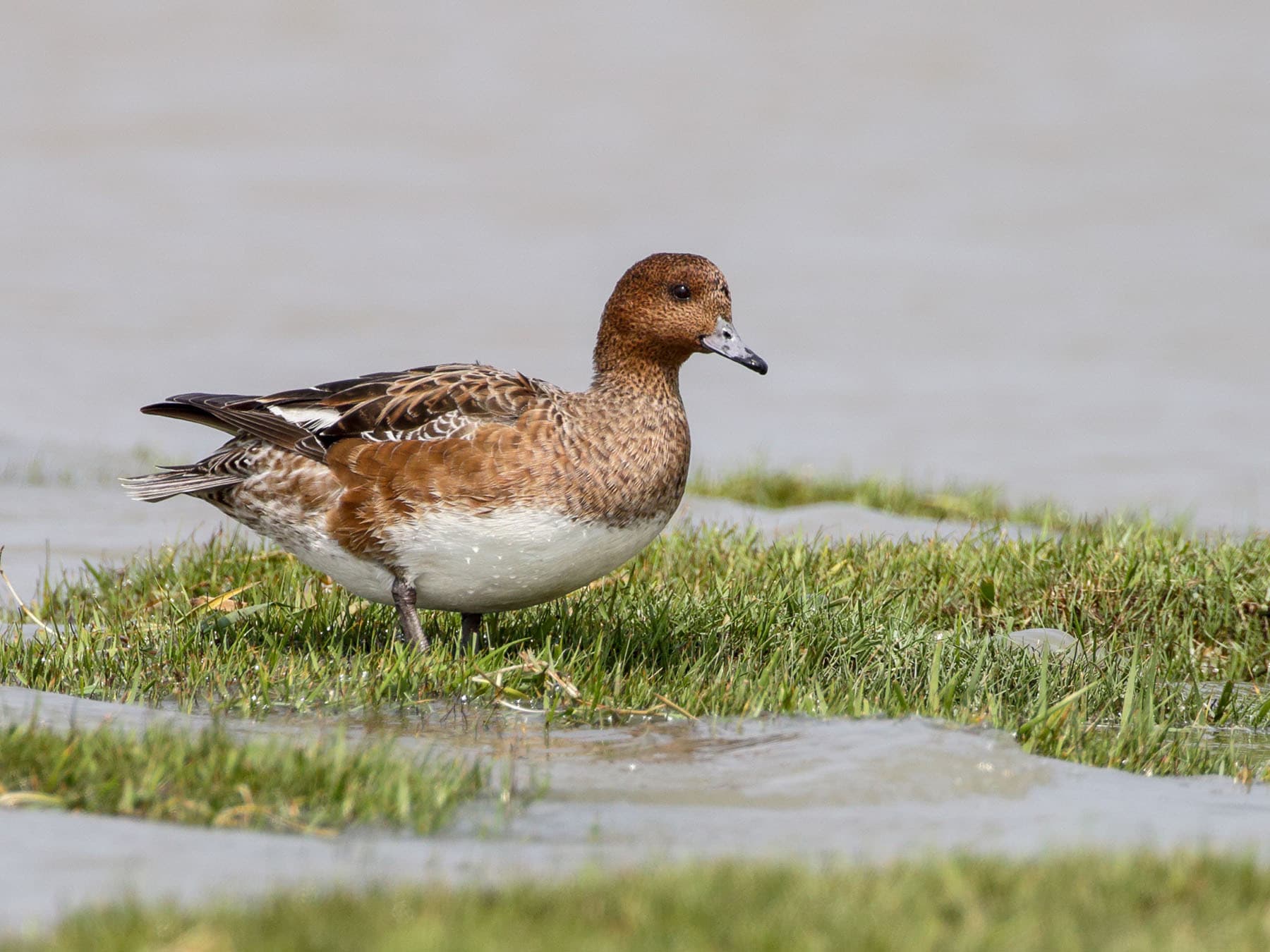
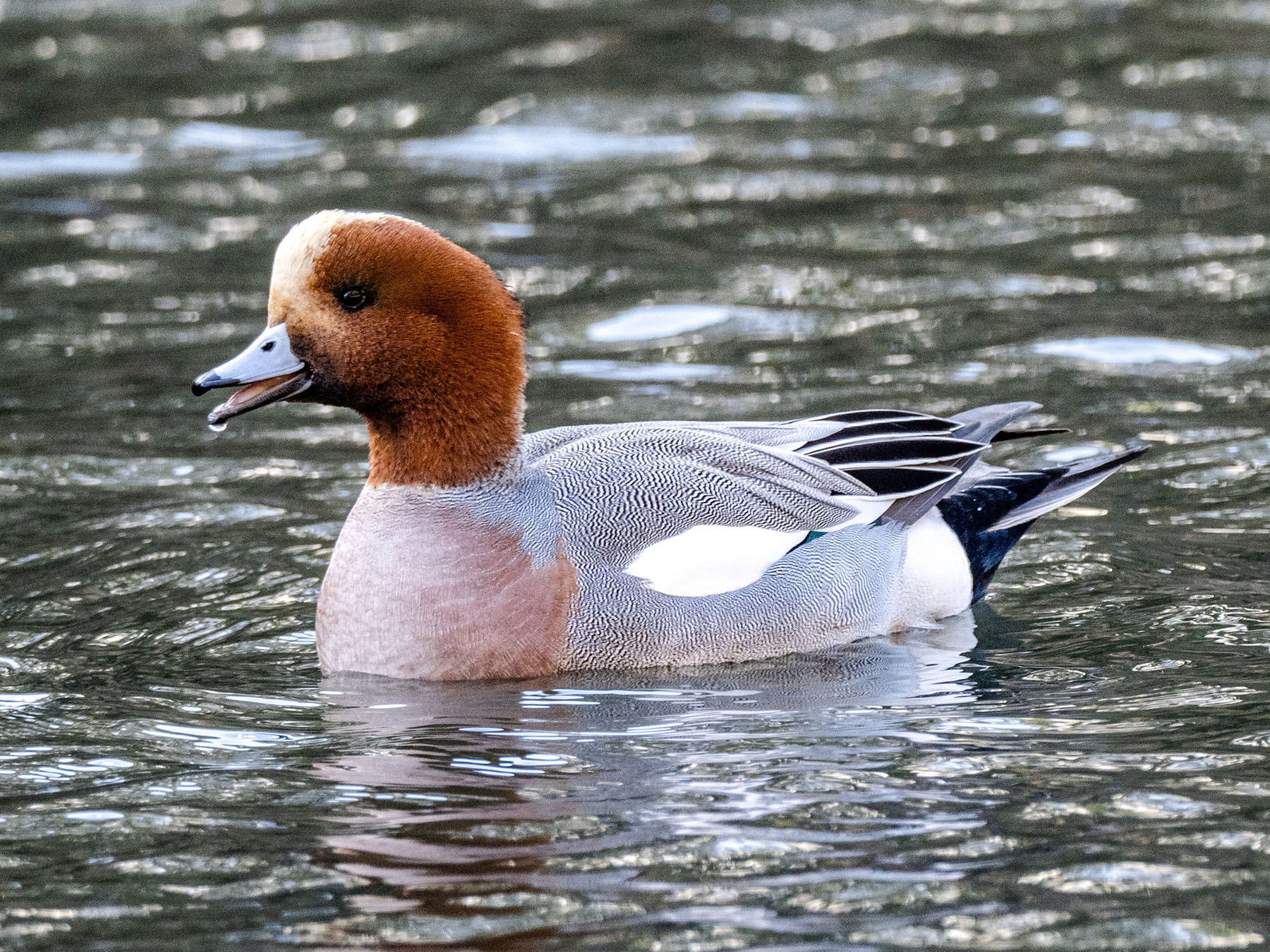
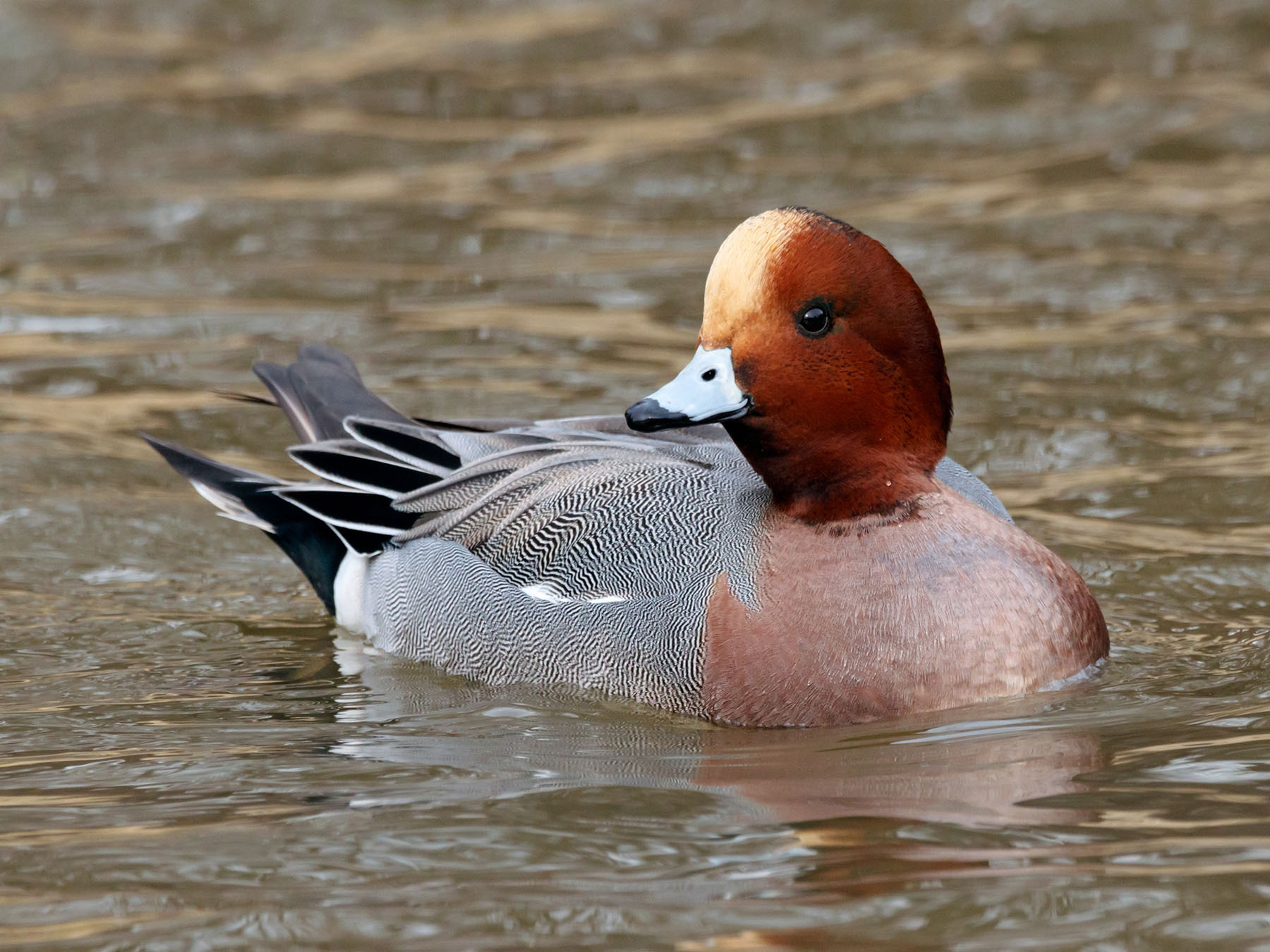
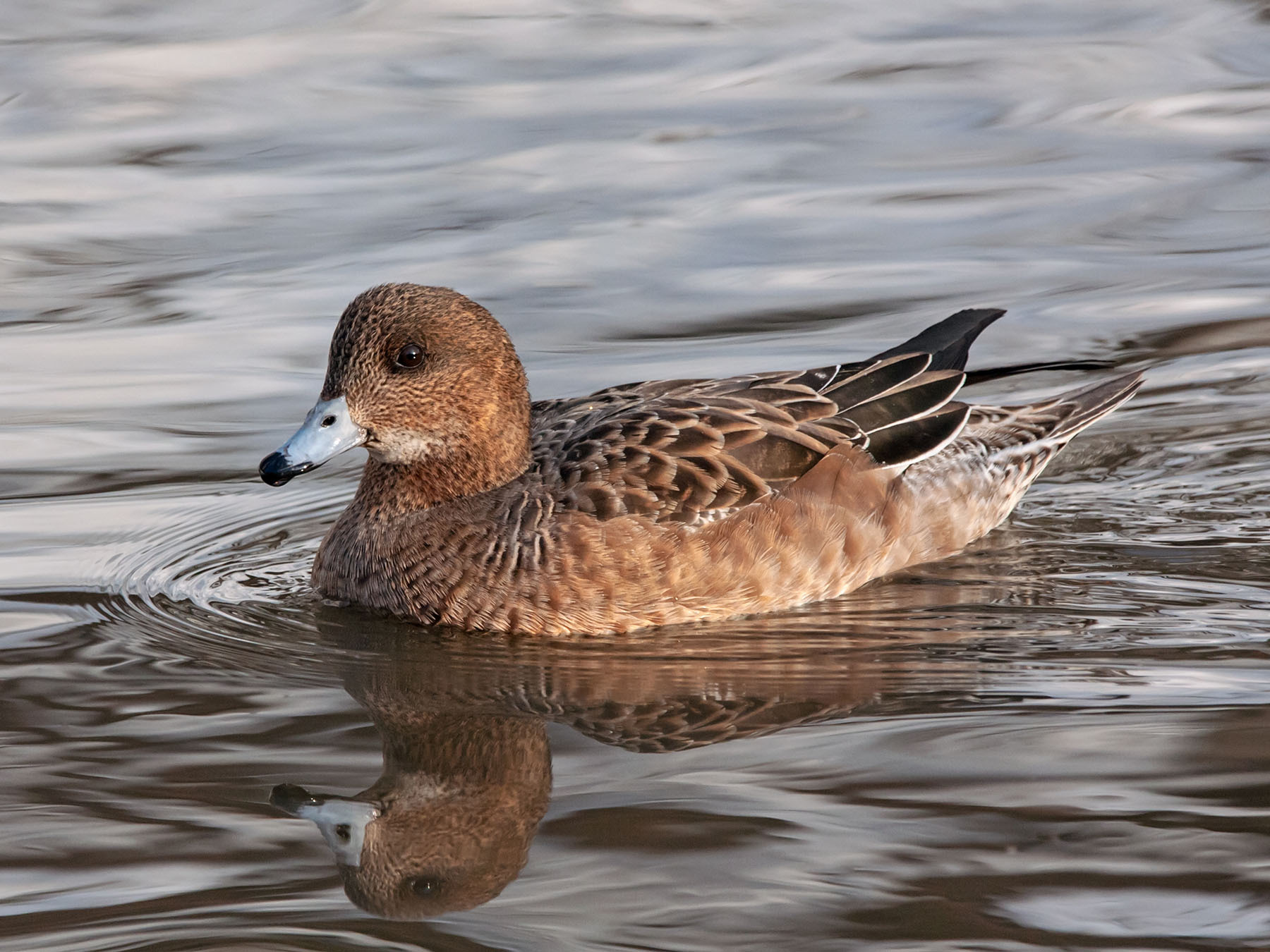
Eurasian wigeons are medium-sized ducks with rounded heads. Males and females are unalike: males have a yellowish forehead stripe, a chestnut head and neck, a pink breast and a grey body, with paler underparts. Females are rusty brown all over, with a white belly, and there is little contrast between the colouring of their head and upper body markings.
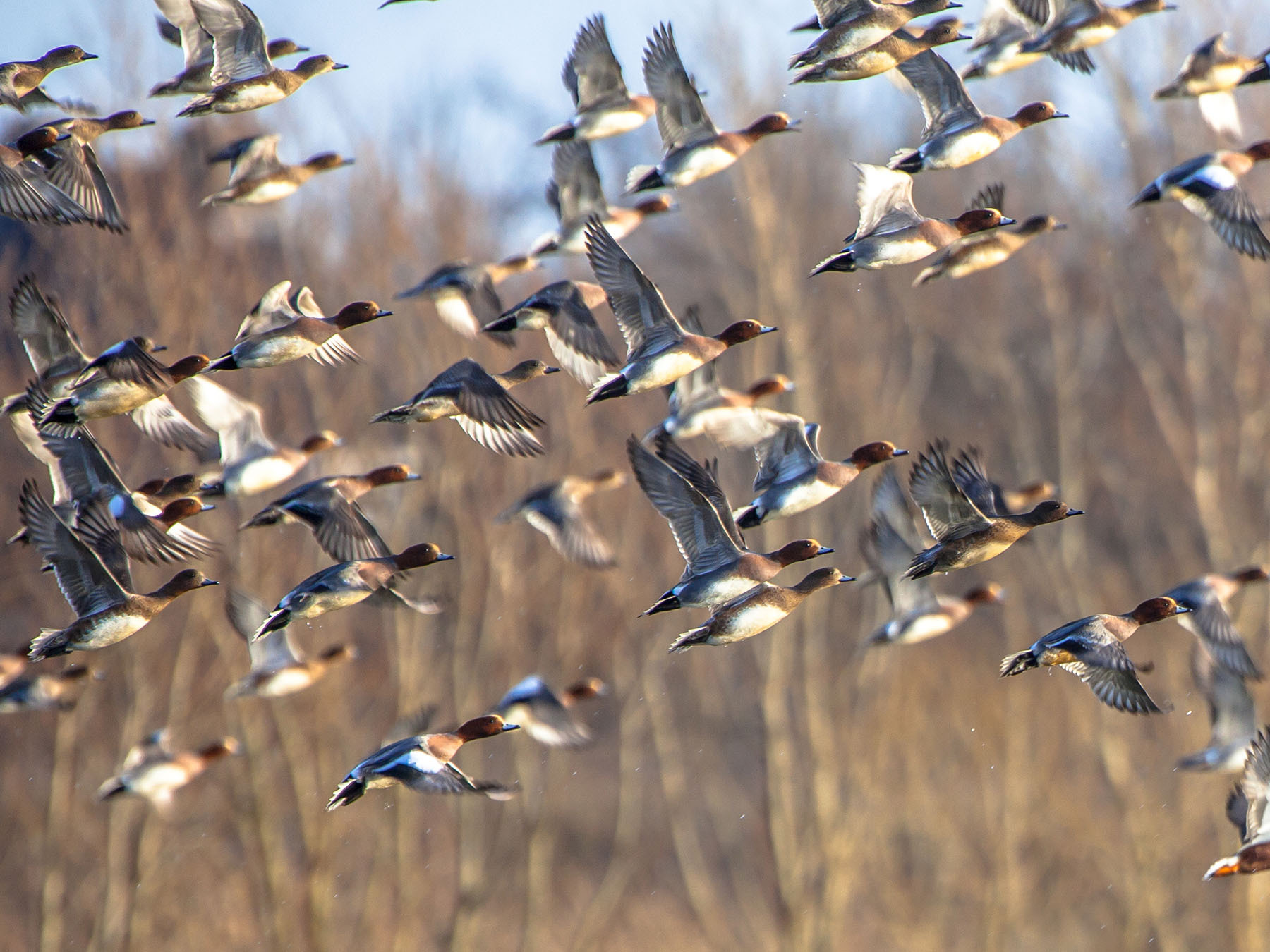
A white stripe is visible on their wings, particularly in flight. Male wigeons have white-grey tails, which are edged with black.
Female wigeons are similar in colouring to female mallards, and lack the bold plumage of their male mates, although both sexes do have the same black-tipped blue-grey bill.
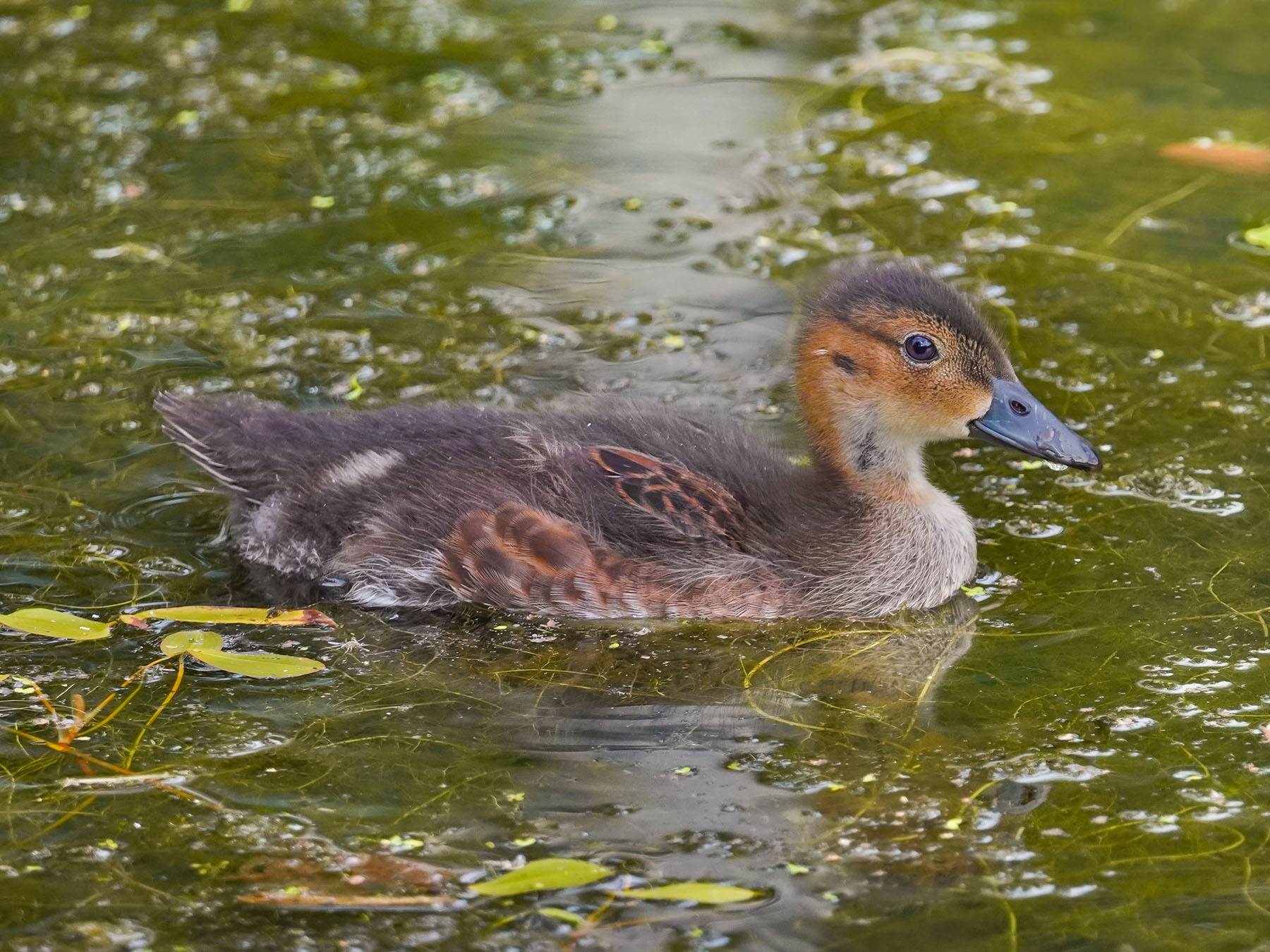
Juvenile wigeons are similar in appearance to adult females. By their first winter, young males develop the distinctive grey body and chestnut head of adult males, but it takes a further year for the white wing markings to be fully defined.
How big are Wigeons?
Eurasian wigeons rank between the smaller tufted duck and larger mallard in terms of size. Female wigeons are slightly smaller than males and usually weigh less, although there is some overlap between the measurement ranges for the sexes.
- Length: 45 cm to 51 cm (17.7 in to 20.1 in)
- Wingspan: 75 cm to 86 cm (29.5 in to 33.9 in)
- Weight: 500 g to 900 g (17.6 in to 31.7 in)
Its size
Adults- Length
- 42–51 cm
- Wingspan
- 71–85 cm
- Weight
- 500–900 g
Its song and calls
What sound does a Wigeon make?
Unlike many ducks, male Eurasian wigeons have a distinctive, almost musical call, which sounds like a two-pitch whistle, “wheee-ooooo” and can be heard in flight as well as when foraging on water or land.
Female Eurasian wigeons are not blessed with the same tuneful whistle of males. Instead, their call sounds like a gruff growl.
- Song0:00 / 2:23
Recorded in PA, United States · June 2019
- Flight call0:00 / 0:15
Recorded in Bretagne, France · December 2025
When and where to see it
OctoberArriving
Most recorded in October
- 1. Blaenau Gwent2.2%
- 2. Stockton-on-Tees2.1%
- 3. Anglesey1.9%
- 4. Moray1.9%
- 5. Rutland1.9%
Each dot is a county, state or province: the bigger and darker, the larger the bird’s share of that place’s bird records that month. Grey dots: no regular records. The ringed point is the centre of the bird’s records this month; the arrow shows how it moved since last month, and the dashed loop its path through the year. “Arrivals” colours places where it becomes regular this month (orange) or is in its last regular month (grey). GBIF eBird Observation Dataset, 2019–2024. Map data: Natural Earth, US Census Bureau; place centres © OpenStreetMap contributors.
In your area
See when the Eurasian Wigeon is recorded in your county, state or province.
How often the Eurasian Wigeon turns up in the UK, Ireland, the United States and Canada through the year, from birdwatchers' records.
United Kingdom
Winter visitor · all year · most records in January
Ireland
Winter visitor · regularly Aug–Apr · most records in January
United States
Winter visitor · regularly Sep–Jun · most records in January
Canada
Winter visitor · regularly Sep–Jun · most records in January
Show as a table
| Month | United Kingdom | Ireland | United States | Canada |
|---|---|---|---|---|
| January | 1.0% (regular) | 1.2% (regular) | 0.031% (regular) | 0.083% (regular) |
| February | 0.89% (regular) | 1.2% (regular) | 0.024% (regular) | 0.069% (regular) |
| March | 0.75% (regular) | 0.93% (regular) | 0.019% (regular) | 0.074% (regular) |
| April | 0.31% (regular) | 0.22% (regular) | 0.007% (regular) | 0.037% (regular) |
| May | 0.14% (regular) | 0.039% | 0.003% (regular) | 0.007% (regular) |
| June | 0.095% (regular) | 0.034% | 0.002% (regular) | 0.007% (regular) |
| July | 0.081% (regular) | 0.054% | <0.001% | 0.002% |
| August | 0.17% (regular) | 0.098% (regular) | <0.001% | 0.003% |
| September | 0.66% (regular) | 0.49% (regular) | 0.004% (regular) | 0.006% (regular) |
| October | 0.90% (regular) | 0.84% (regular) | 0.017% (regular) | 0.031% (regular) |
| November | 1.0% (regular) | 1.1% (regular) | 0.021% (regular) | 0.072% (regular) |
| December | 0.99% (regular) | 1.2% (regular) | 0.022% (regular) | 0.068% (regular) |
Recorded regularly in
Worldwide: recorded regularly in 91 countries
Countries where it was recorded in at least 3 of the 6 years 2019–2024. Linked countries have their own bird list.
Europe (44)
- Åland Islands
- Albania
- Austria
- Belarus
- Belgium
- Bosnia & Herzegovina
- Bulgaria
- Croatia
- Czechia
- Denmark
- Estonia
- Faroe Islands
- Finland
- France
- Germany
- Greece
- Guernsey
- Hungary
- Iceland
- Ireland
- Isle of Man
- Italy
- Jersey
- Kosovo
- Latvia
- Lithuania
- Luxembourg
- Moldova
- Montenegro
- Netherlands
- North Macedonia
- Norway
- Poland
- Portugal
- Romania
- Russia
- Serbia
- Slovakia
- Slovenia
- Spain
- Sweden
- Switzerland
- Ukraine
- United Kingdom
Asia (35)
- Azerbaijan
- Bangladesh
- Bhutan
- China
- Cyprus
- Georgia
- Hong Kong SAR China
- India
- Iran
- Israel
- Japan
- Jordan
- Kazakhstan
- Kuwait
- Kyrgyzstan
- Macao SAR China
- Malaysia
- Mongolia
- Myanmar (Burma)
- Nepal
- Oman
- Pakistan
- Palestinian Territories
- Philippines
- Qatar
- Saudi Arabia
- South Korea
- Sri Lanka
- Taiwan
- Tajikistan
- Thailand
- Turkey
- United Arab Emirates
- Uzbekistan
- Vietnam
North America (5)
Oceania (3)
- Guam
- Northern Mariana Islands
- US Outlying Islands
Data: EOD – eBird Observation Dataset (Cornell Lab of Ornithology), accessed via GBIF.org, CC BY 4.0. Records from 2019–2024, aggregated and filtered by Birdfact. How these lists are made
What is the habitat of a Wigeon?
During the breeding season, habitats preferred by wigeons are shallow, freshwater marshes, lakes, and lagoons. Landscapes that offer tree shelter are favoured, with water surrounded by scattered trees or open woodland frequently chosen for nesting.
In winter, Eurasian wigeons move south in search of coastal marshes, estuaries, bays and other sheltered marine localities.
What is the range of a Wigeon?
The range of Eurasian wigeons extends from Iceland and northern Britain eastwards across northern Europe and throughout northern Asia to the coast of the Pacific.
During winter, the species moves southwards into central and southern Europe, South Asia and as far south as northern and central Africa.
Some Eurasian wigeons may migrate as far as the Atlantic and Pacific coasts of North America, with some year-round vagrant residents become established at isolated spots in the continent.
Where do Wigeons live?
During winter, up to around 400,000 Eurasian wigeons are found across the British Isles. Other regions with large non-breeding populations include China, the Black Sea, the Mediterranean, and South Asia.
Countries with large breeding populations of Eurasian wigeons are led by Sweden, Finland, and European Russia.
How rare are Wigeons?
Wigeons are relatively common winter visitors to the UK, but considerably less widespread in the United States, which is a fair way outside of their usual range.
Across Britain, an influx of wintering wigeons arrive from Scandinavia each autumn, inflating the year-round population of around 400 pairs to an enormous 400,000 plus birds.
Where can you see Wigeons in the UK?
The Somerset Levels are known as a favourite spot for wintering wigeons, with tens of thousands being recorded in some years.
During spring and summer, central and northern Scotland and parts of northern England may offer the best chances of glimpsing breeding wigeons and their ducklings, as up to 400 pairs breed in these locations each year.
Where can you see Wigeons in the US?
Eurasian wigeons are a rare vagrant species in the US, and live alongside and occasionally hybridize with American wigeons. Small numbers of Eurasian wigeons spend winters on the mid-Atlantic and Pacific coasts.
Migration
Do Wigeons migrate?
Eurasian wigeons are mostly migratory, with considerable movement within the species’ breeding and non-breeding grounds each year.
Small numbers of wigeons both live and breed in specific parts of the UK each year, but their numbers are dramatically increased with the arrival of overwintering birds each autumn.
Where do Wigeon migrate to from UK?
Wigeons seen in the UK during winter months tend to only be temporary residents until the weather and foraging conditions become more tolerable on their breeding grounds further north.
Wigeons from Iceland, Norway, Sweden and Finland begin to be spotted on lakes and reservoirs around the UK from September onwards, with migrating birds continuing to arrive into December.
Winter-visiting wigeons begin departing for their breeding grounds from late February and into March, when they head back to breeding grounds in Iceland, Fennoscandinavia and into Russia.
Tips for seeing it
- Look for Eurasian Wigeons in shallow wetlands, coastal areas, and grassy fields near water.
- Listen for their characteristic whistling call, which sounds like a high-pitched 'whee-oo'.
- In the UK, observe large flocks during winter months in estuaries and coastal marshes.
- Use the male's distinctive cream forehead and chestnut head as key identification features.
What it eats
What do Wigeons eat?
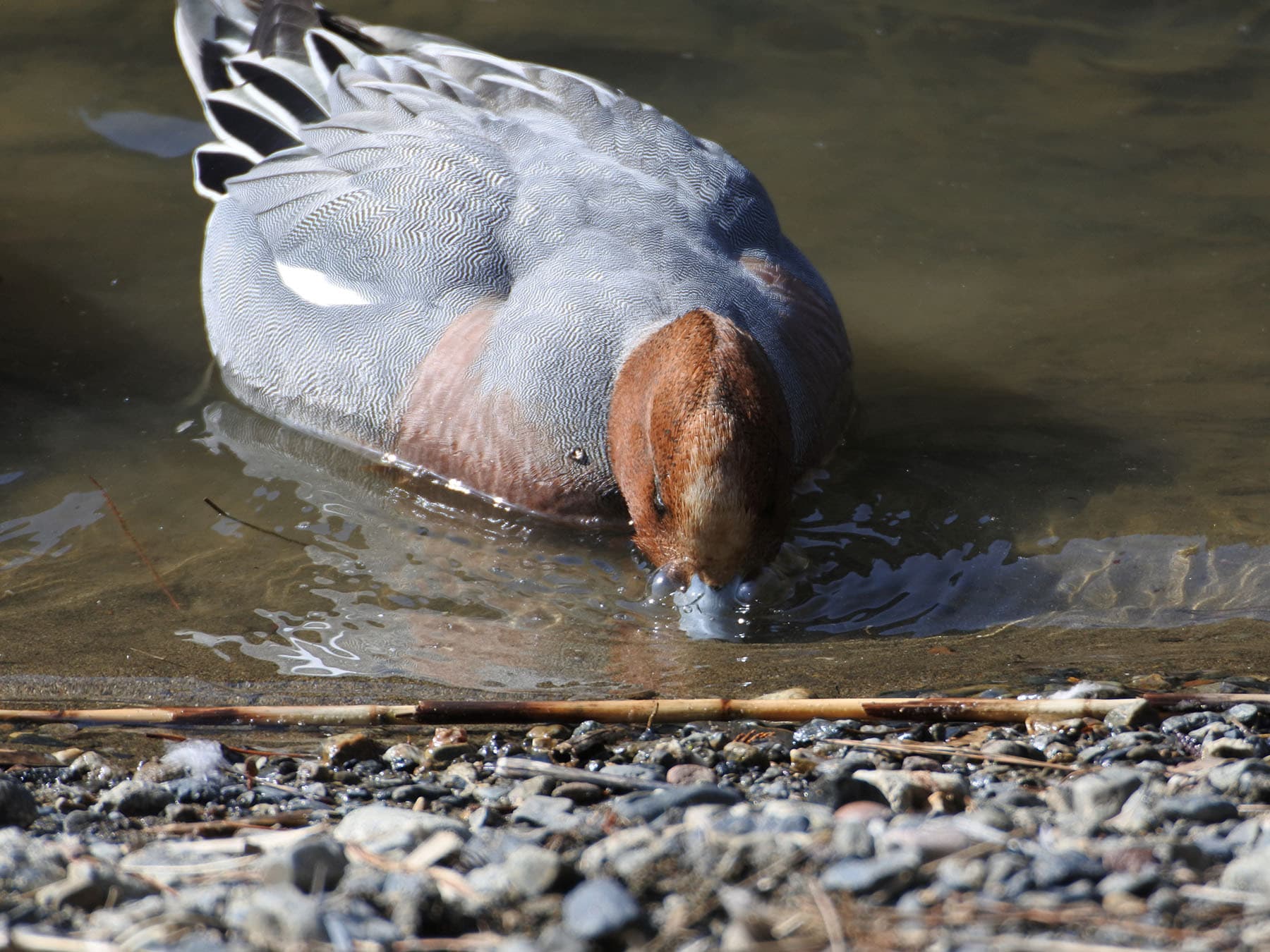
Eurasian wigeons are primarily herbivores, and their diets consist mainly of plant matter, foraged both from grazing on land or found while dabbling head-down in shallow ponds and lakes.
Grasses, sedge, leaves, stems and roots of aquatic vegetation are among the main elements of a wigeon’s diet all year round. During the breeding season, some small insects, particularly midges, are eaten.
In winter, grazing Eurasian wigeons eat seeds, rice, potatoes and even droppings of seagulls. Feeding occurs during both the day and night in winter months, according to the timing of the tides.
What do Wigeon duckings eat?
Midges and other tiny insects and invertebrate larvae form much of the initial diet of newly hatched wigeon ducklings, although it is not long before their diet matches that of adult birds, switching to plant matter, grasses and seeds.
Nesting and breeding
Where do Wigeons nest?
Wigeons nest on land within short distances of water. Nests are created in a depression on the ground, which is concealed in grasses, reeds or other waterside vegetation.
Grass, twigs and down are used to line the nest, which is formed at a site chosen by the female and constructed with no assistance from the male.
What do Wigeon eggs look like?
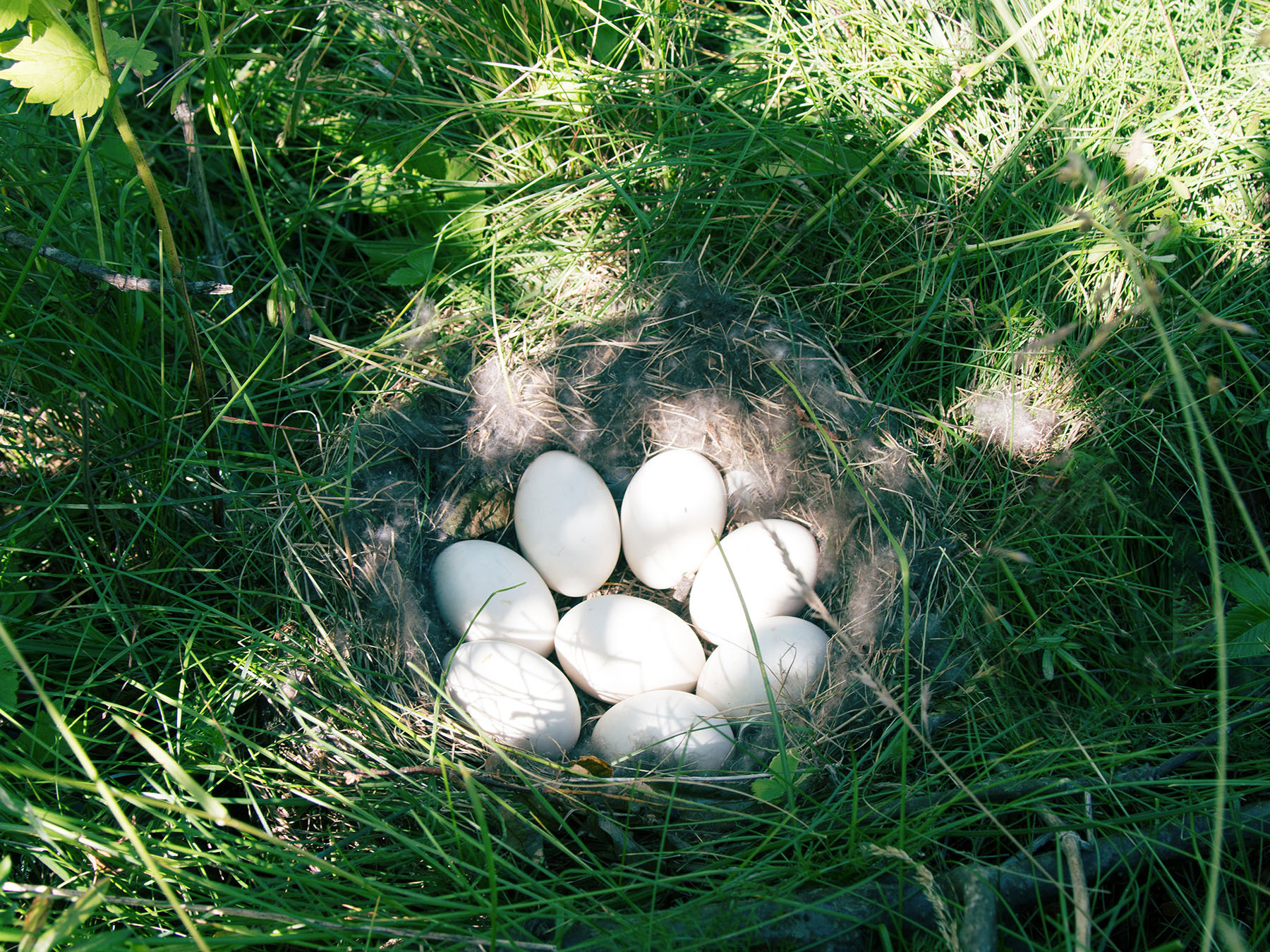
Eurasian wigeons’ eggs are a creamy buff colour and measure up to 60 mm by 42 mm (2.4 in by 1.7 in).
A typical clutch contains between 8 and 9 eggs, and one brood per season is usual, although second broods may be attempted if the initial brood fails.
Females alone incubate the eggs for 24 to 25 days, leaving them unattended for brief periods to forage for food on the nearby water.
Do Wigeons mate for life?
Eurasian wigeons are a monogamous species, and once paired, they remain together for life, maintaining the pair bond from one season to the next, with brief interruptions after young have been raised.
Where do Wigeon breed in the UK?
Breeding in the UK is not especially common for Eurasian wigeons, although up to around 400 pairs do raise young in Britain each year. Recorded locations for breeding include central and southern Scotland and northern England.
Behaviour
Are Wigeons aggressive?
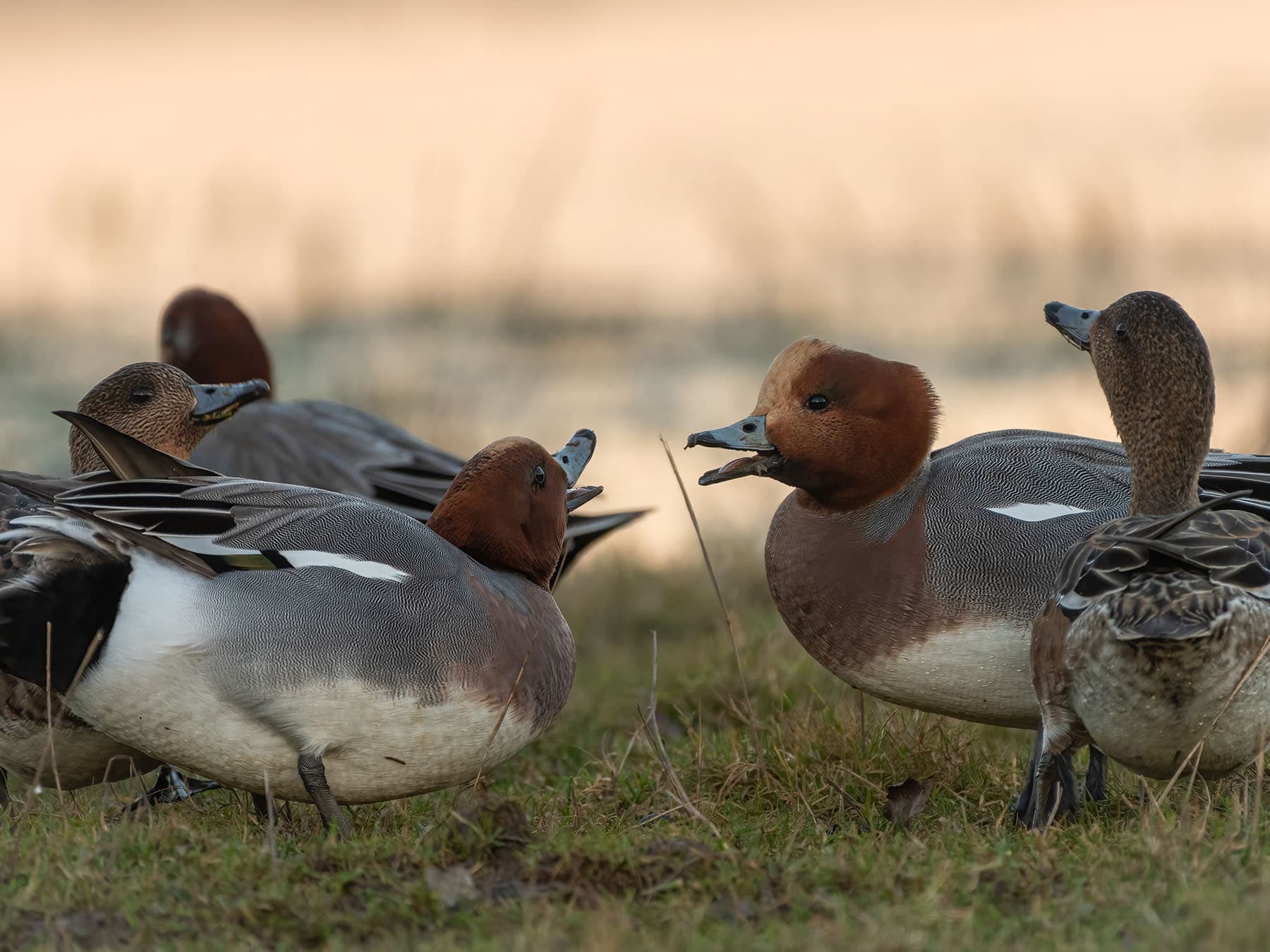
Some aggression may be shown by wigeons early in the breeding season, particularly when other pairs are nearby, and lone female ducks will be chased off.
Once the eggs are laid and young hatch, this territorial behavior subsides, and wigeons become more social, gathering and foraging in larger flocks.
Where do Wigeons sleep at night?
Large portions of a Eurasian wigeon’s daily time budget are spent resting, with roosting spots on tidal flats as well as on open water. Although they are typically diurnal birds, and actively feed during daylight hours, some nocturnal feeding is observed, depending on tidal patterns.
Lifespan and predators
How long do Wigeons live?
The maximum recorded lifespan of a Eurasian wigeon is 34 years and 7 days, with a much shorter average life expectancy of 3 years being more typical. Breeding occurs for the first time at one year.
What are the predators of Wigeons?
Minks and foxes prey on wigeons, and birds, including ravens, hooded crows, goshawks, and marsh harriers, may opportunistically raid their nests and eat their young.
Are Wigeons protected?
The Wildlife and Countryside Act, 1981, provides wigeons with protection against being captured, killed or injured, and also makes it illegal to damage or destroy their nests or eggs.
Are Wigeons endangered?
European wigeons are classified as a species of least concern across their entire range, but in the UK have been rated with Amber status on the British Birds of Conservation Concern list. This is due to the importance of the overwintering populations supported by British wetlands.
Conservation
While currently listed as Least Concern, Eurasian Wigeons face threats from habitat loss and degradation, particularly in their breeding grounds. Climate change may also impact their migration patterns and breeding success.
Conservation efforts focus on protecting wetland habitats and managing hunting practices.
More photos
7 photos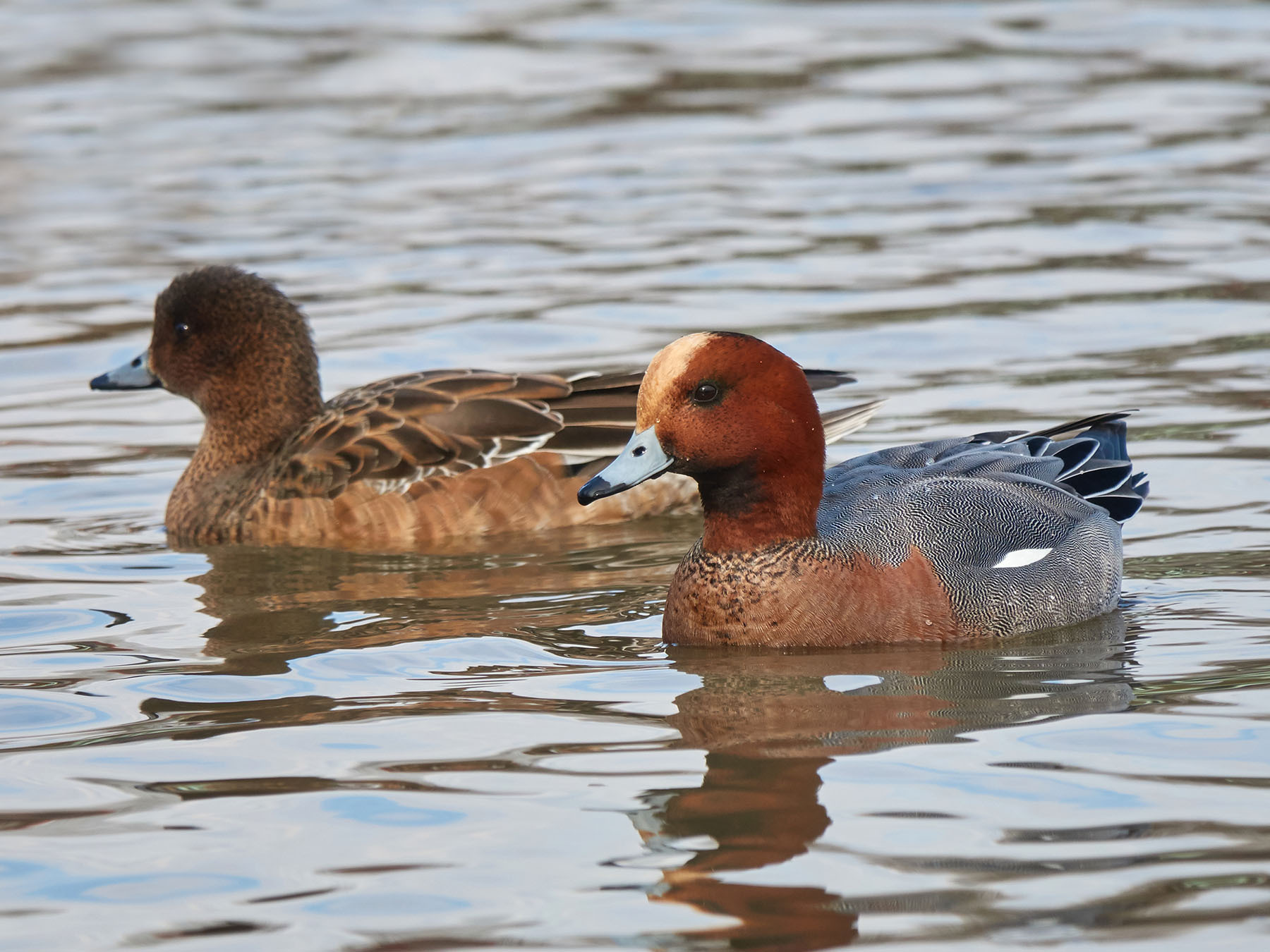
Eurasian Wigeon guides
4 guidesQuick facts
- Length
- 42–51 cm
- Wingspan
- 71–85 cm
- Weight
- 500–900 g
- Lifespan
- 3 years · oldest recorded 35.2 years
- Family
- Ducks, Geese & Swans
- Migration
- Long-distance Migrant
- Global status (IUCN)
- Least Concern
- World population
- 2,800,000 - 3,300,000 mature individuals
- Population trend
- Decreasing
- Also called
- Wigeon, Whistling Duck
- Scientific name
- Mareca penelope
Questions
2Where did the name Wigeon come from?
The name ‘wigeon’ is thought to be derived from the Middle French or Old French words vigeon, vingeon and vignier, meaning “to whine or shout”, which echoes the sharp, piercing whistle made by males of the species.
What is a male Wigeon called?
Male wigeons are known as drakes. Flocks of wigeons are called ‘bunches’.
Sources
4- 1BirdLife International. 2017. Mareca penelope (amended version of 2016 assessment). The IUCN Red List of Threatened Species 2017: e.T22680157A111892532. Source (opens in a new tab)
- 2Wetlands International (2015)
- 3Wetlands International (2015)
- 4Fransson et al., EURING list of longevity records for European birds (2010) Source (opens in a new tab)

Checked by
Nathan Cope, founder and editor
Nathan founded Birdfact and leads its writers and contributors in the UK, the US and Canada. He has watched and studied birds for more than ten years, and checks every article and species guide before it’s published.