


Shoebill
Shoebill Stork, Whalehead, Whale-headed Stork, Shoe-billed Stork · Balaeniceps rex
By the Birdfact teamChecked by Nathan Cope
On this page12 sections
How to recognise it
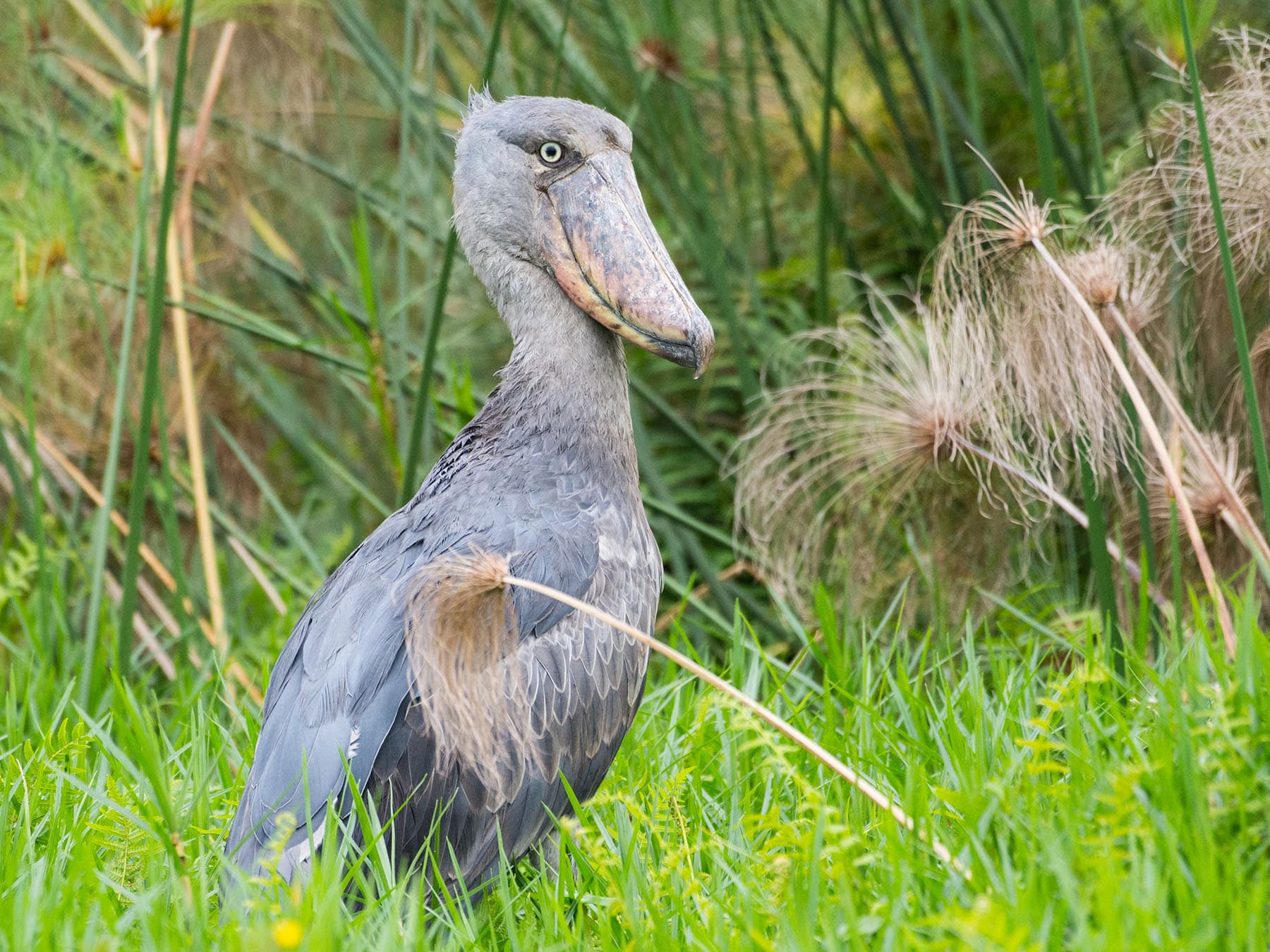
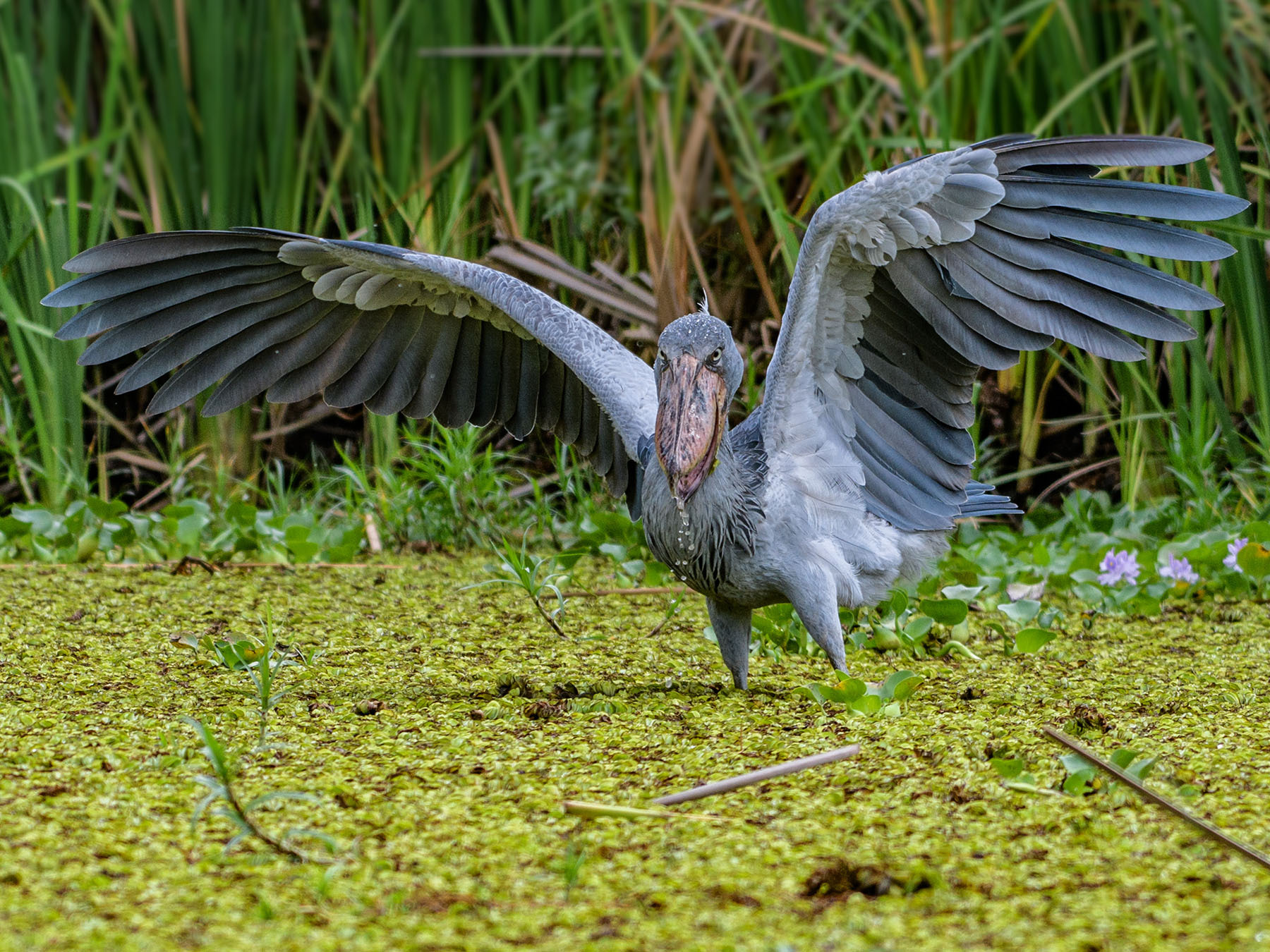
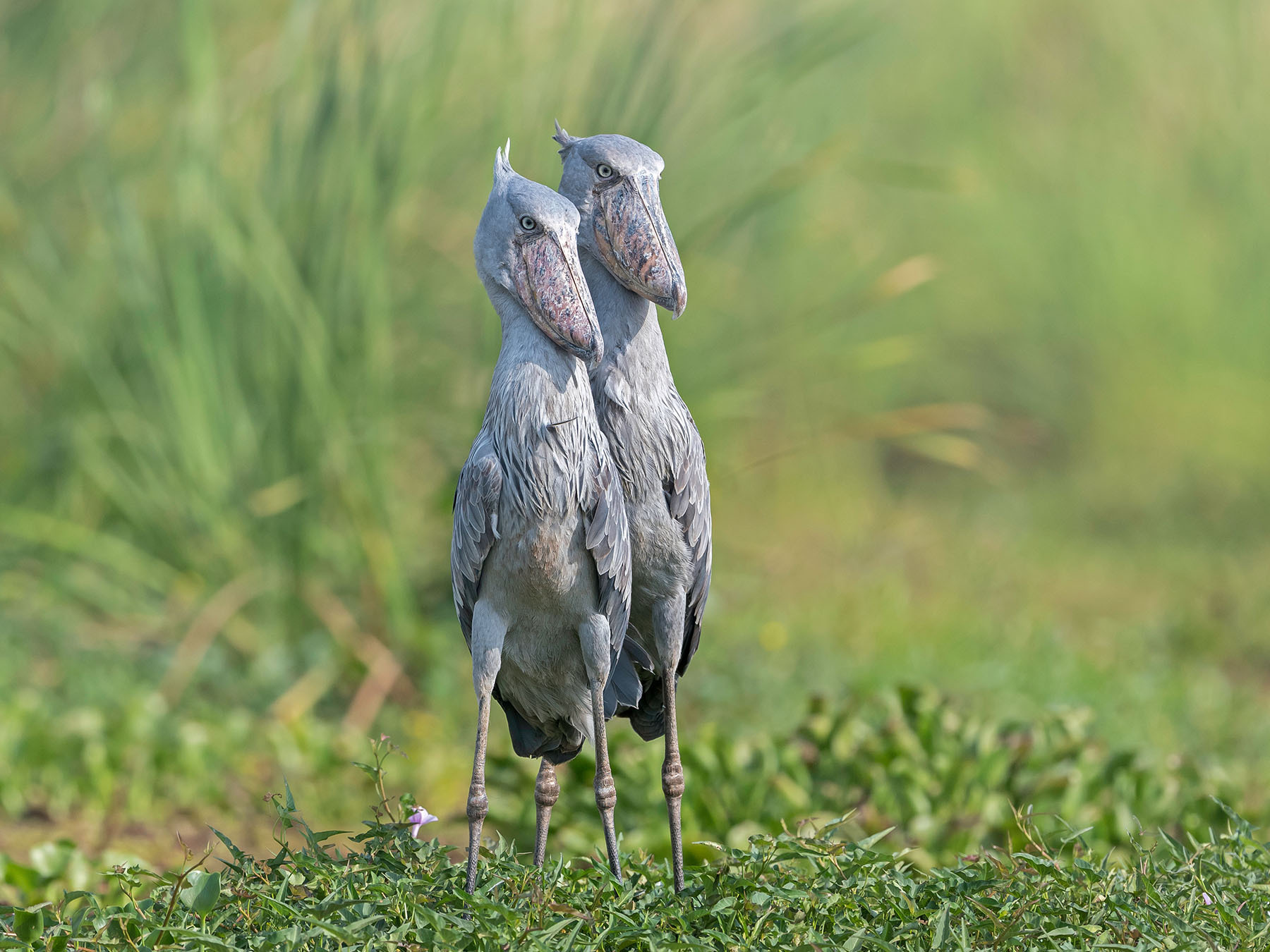
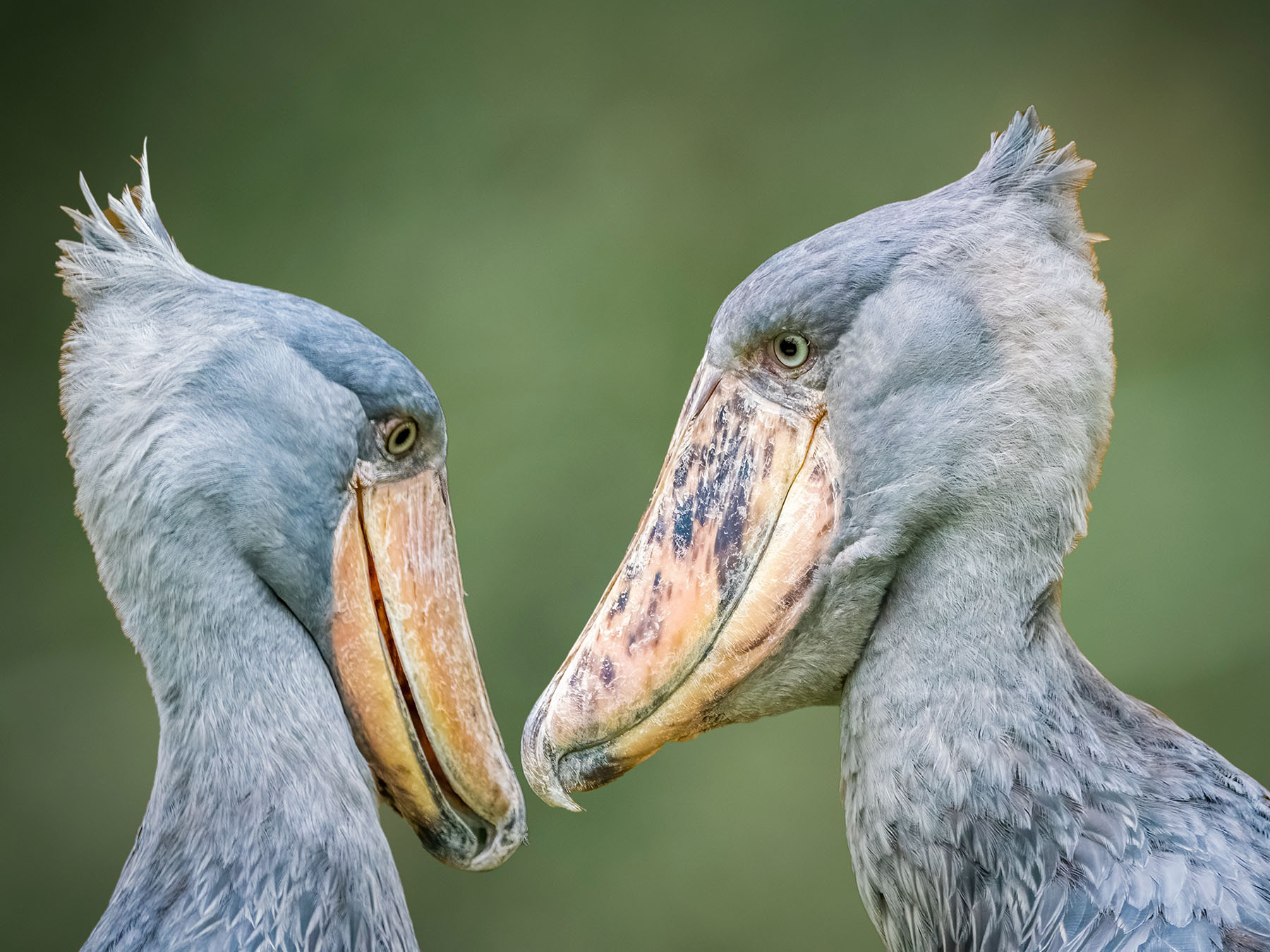
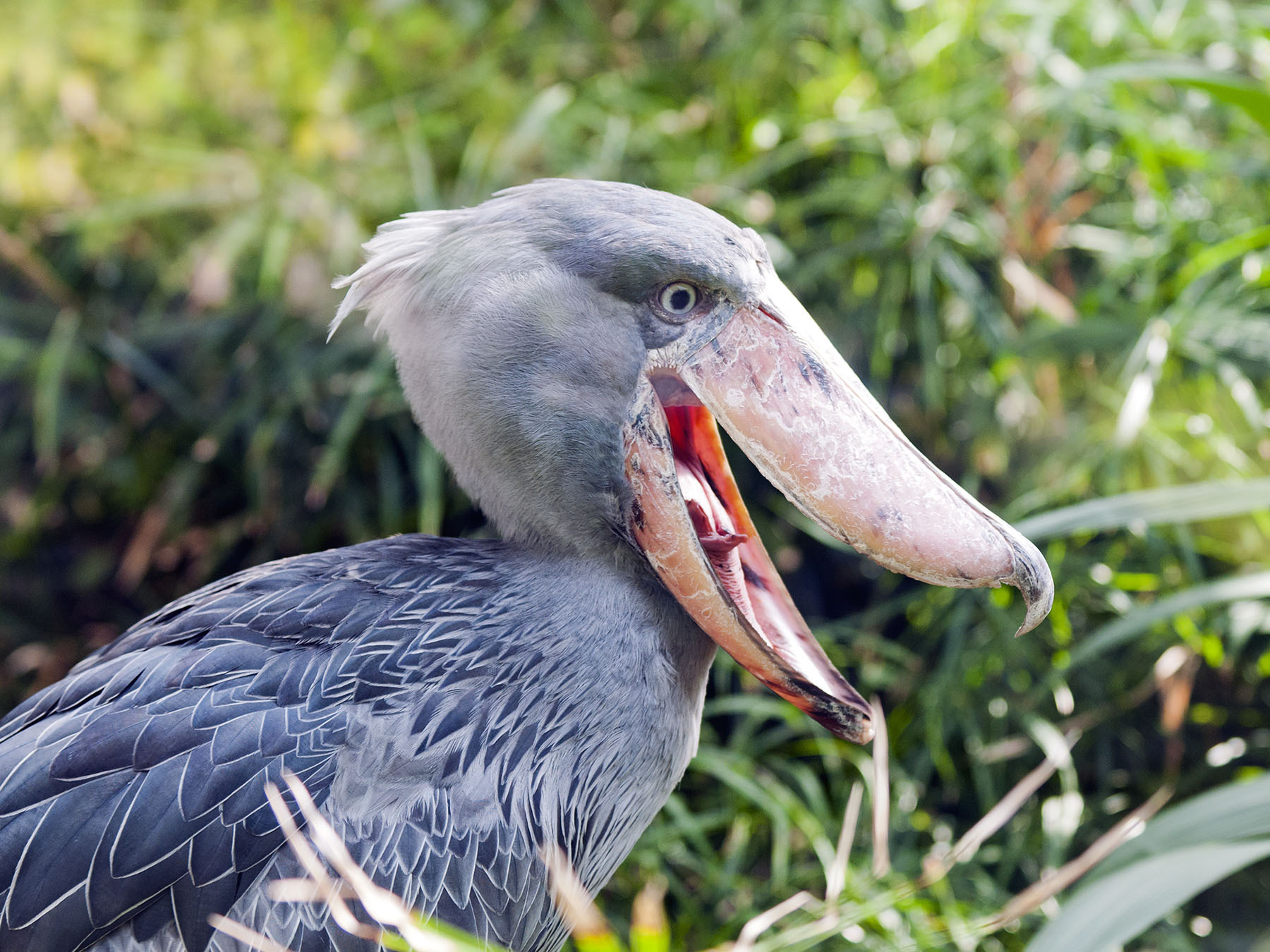
The Shoebill is a striking, large, wading bird with a distinctive shoe-shaped bill. Its plumage is predominantly blue-grey, with a slightly darker back and wings. The massive bill is greyish in colour and can reach up to 24 cm in length.
Both sexes look similar, with males being larger and have longer bills. There are no significant seasonal changes in plumage. Juveniles have a smaller bill and duller colouration compared to adults, gradually developing adult features over several years.
Its size
Adults- Length
- 110–140 cm
- Wingspan
- 230–260 cm
- Weight
- 4000–7000 g
Its song and calls
Shoebills are generally silent birds, but they produce a distinctive bill-clattering sound during courtship or when threatened. This rapid clattering, described as a 'machine-gun-like' tak-tak-tak, can be heard from a considerable distance. They may also emit low, cow-like moo-ing sounds.
When and where to see it
The Shoebill is not recorded regularly in the UK, Ireland, the United States or Canada.
Worldwide: recorded regularly in 4 countries
Countries where it was recorded in at least 3 of the 6 years 2019–2024. Linked countries have their own bird list.
Data: EOD – eBird Observation Dataset (Cornell Lab of Ornithology), accessed via GBIF.org, CC BY 4.0. Records from 2019–2024, aggregated and filtered by Birdfact. How these lists are made
Tips for seeing it
- Look for Shoebills in large, tropical swamps and marshes
- Be patient, as they often stand still for long periods
- Listen for their distinctive bill-clattering sound
- Observe from a distance to avoid disturbing these shy birds
- Visit protected areas in East Africa for the best chances of sighting
What it eats
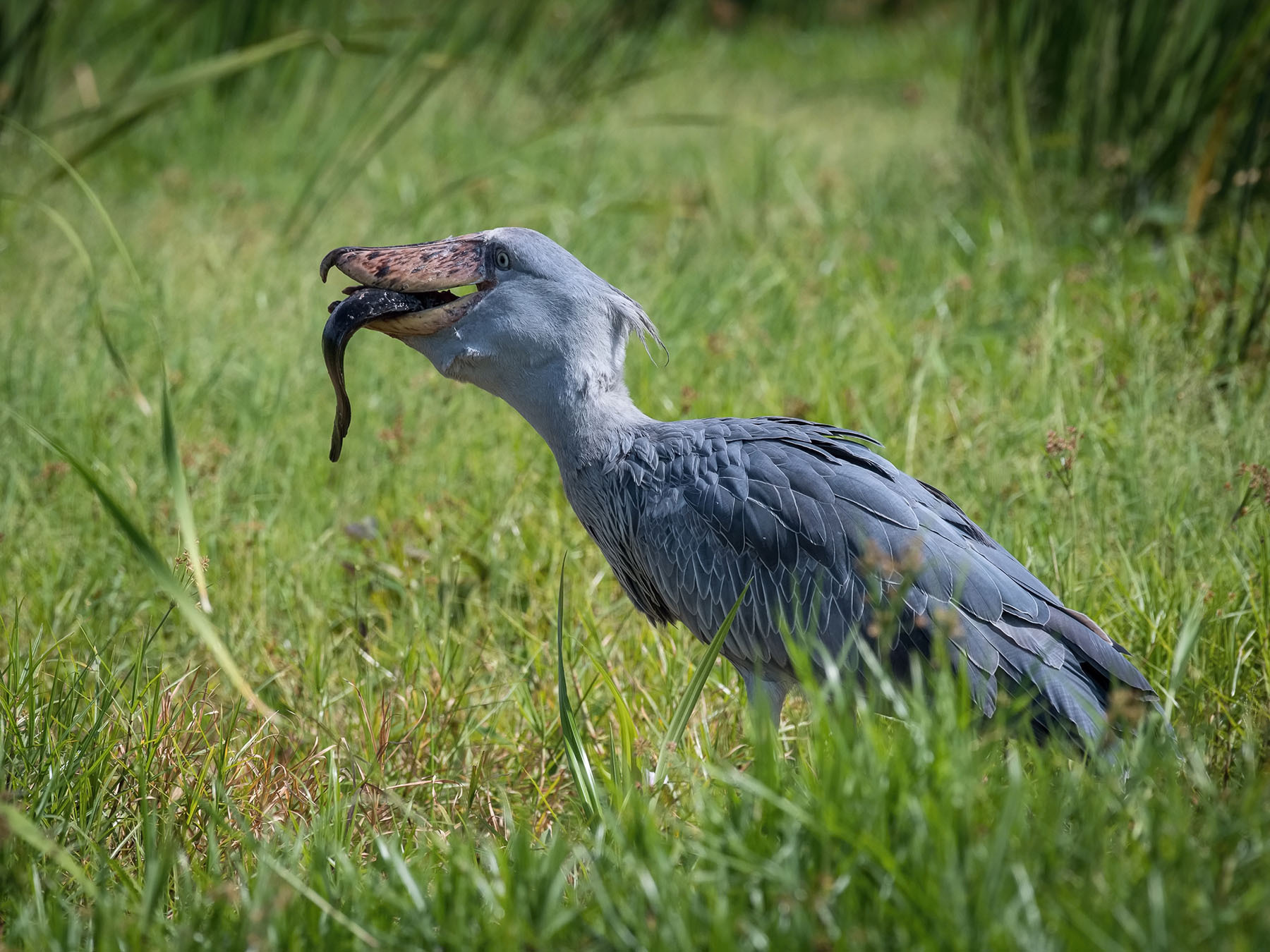
Shoebills primarily feed on fish, especially lungfish and catfish, but also consume frogs, snakes, and occasionally small crocodiles.
They hunt using a unique technique called 'collapsing', where they suddenly lunge forward to catch prey with their powerful bill.
Nesting and breeding
Shoebills form monogamous pairs and breed during the dry season when water levels are lower. They construct large, flat nests of reeds and grasses on floating vegetation or solid ground in swamps.
Females typically lay 1-3 white eggs, which both parents incubate for about 30 days. The eggs often become stained brown from the nest materials.
Chicks hatch asynchronously and are cared for by both parents. They fledge after about 3-4 months but may remain dependent on their parents for up to a year.
Behaviour
Shoebills are known for their statue-like stillness when hunting, often standing motionless for long periods. They are generally solitary birds, rarely seen in groups.
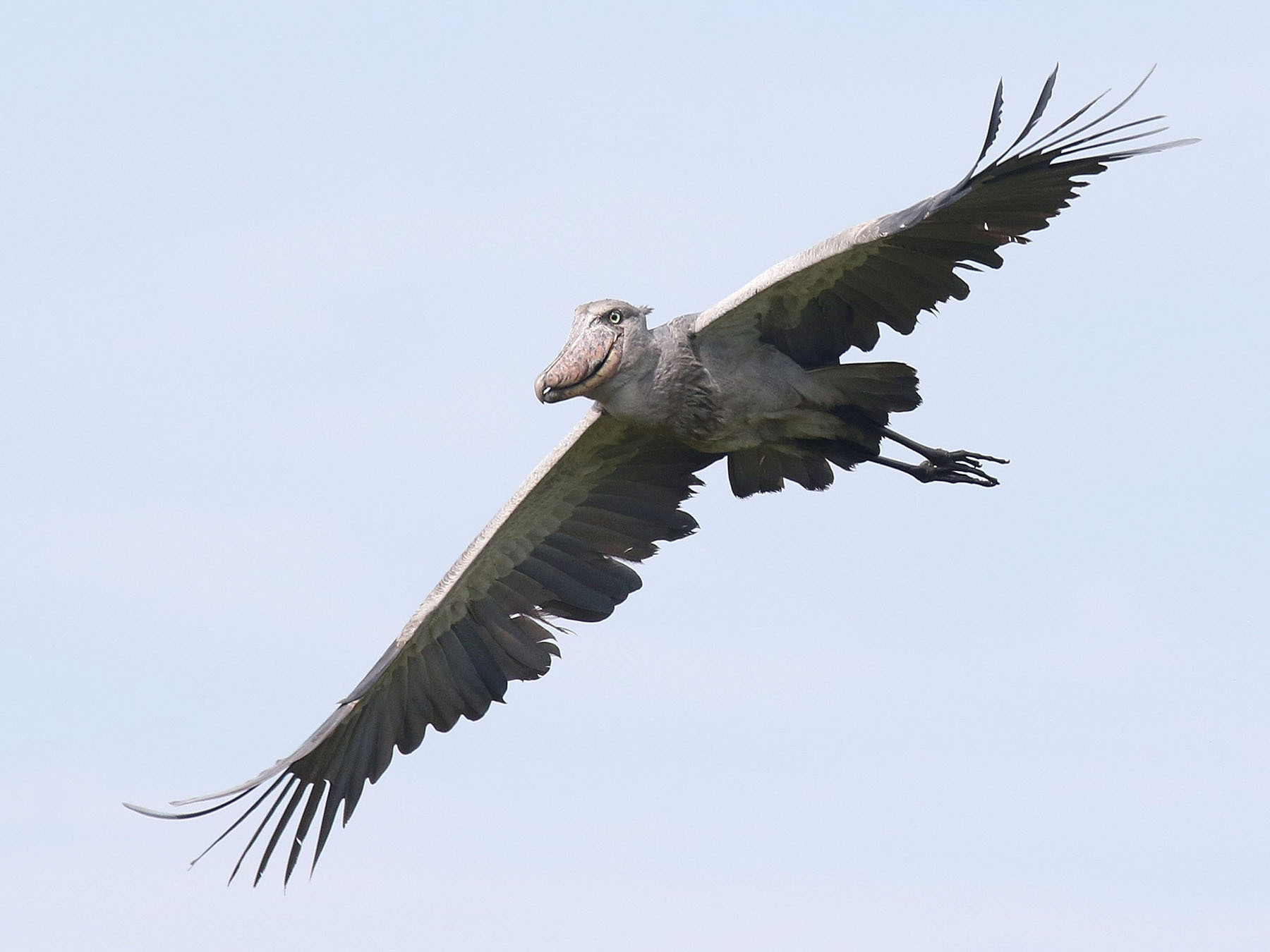
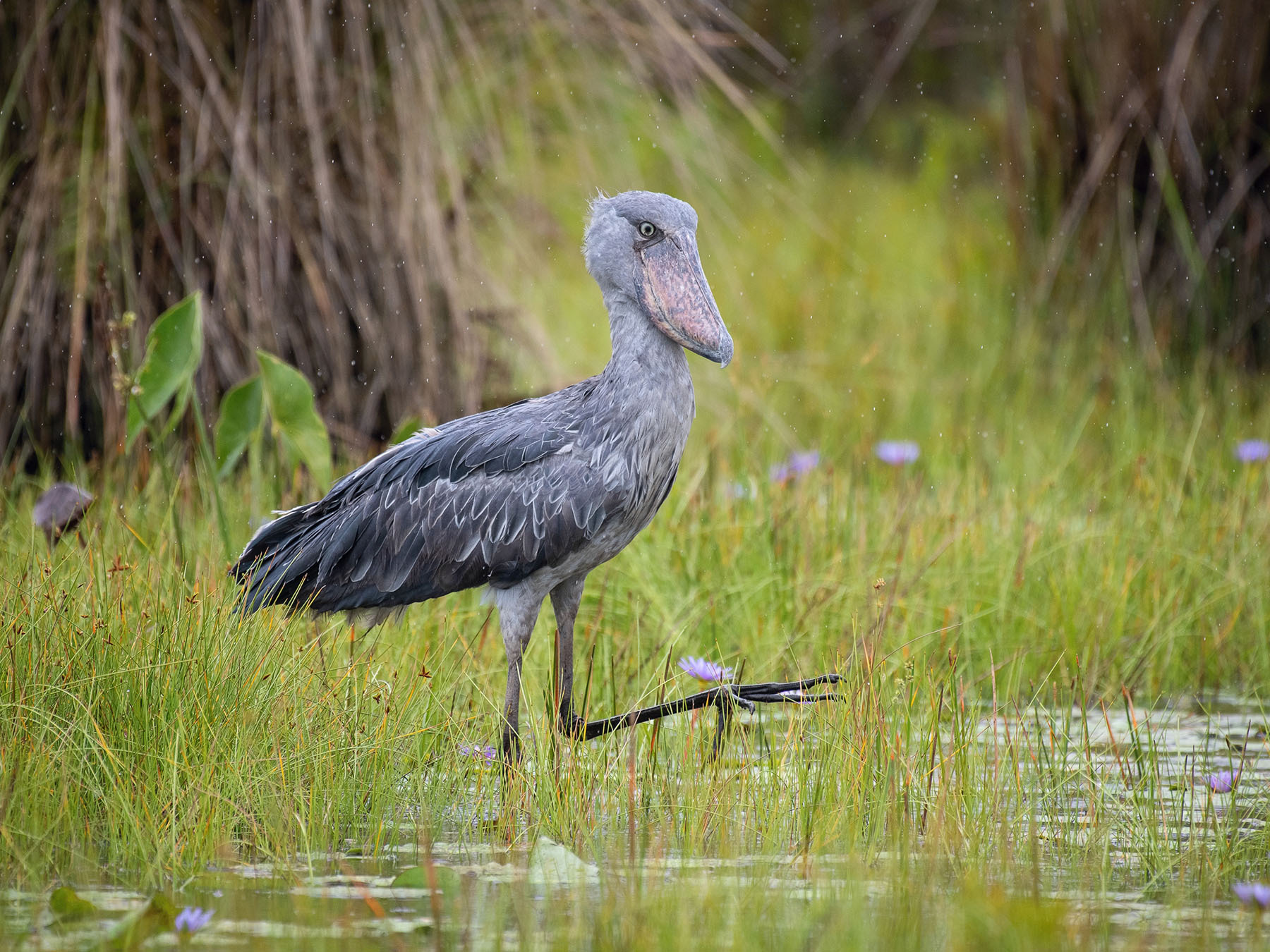
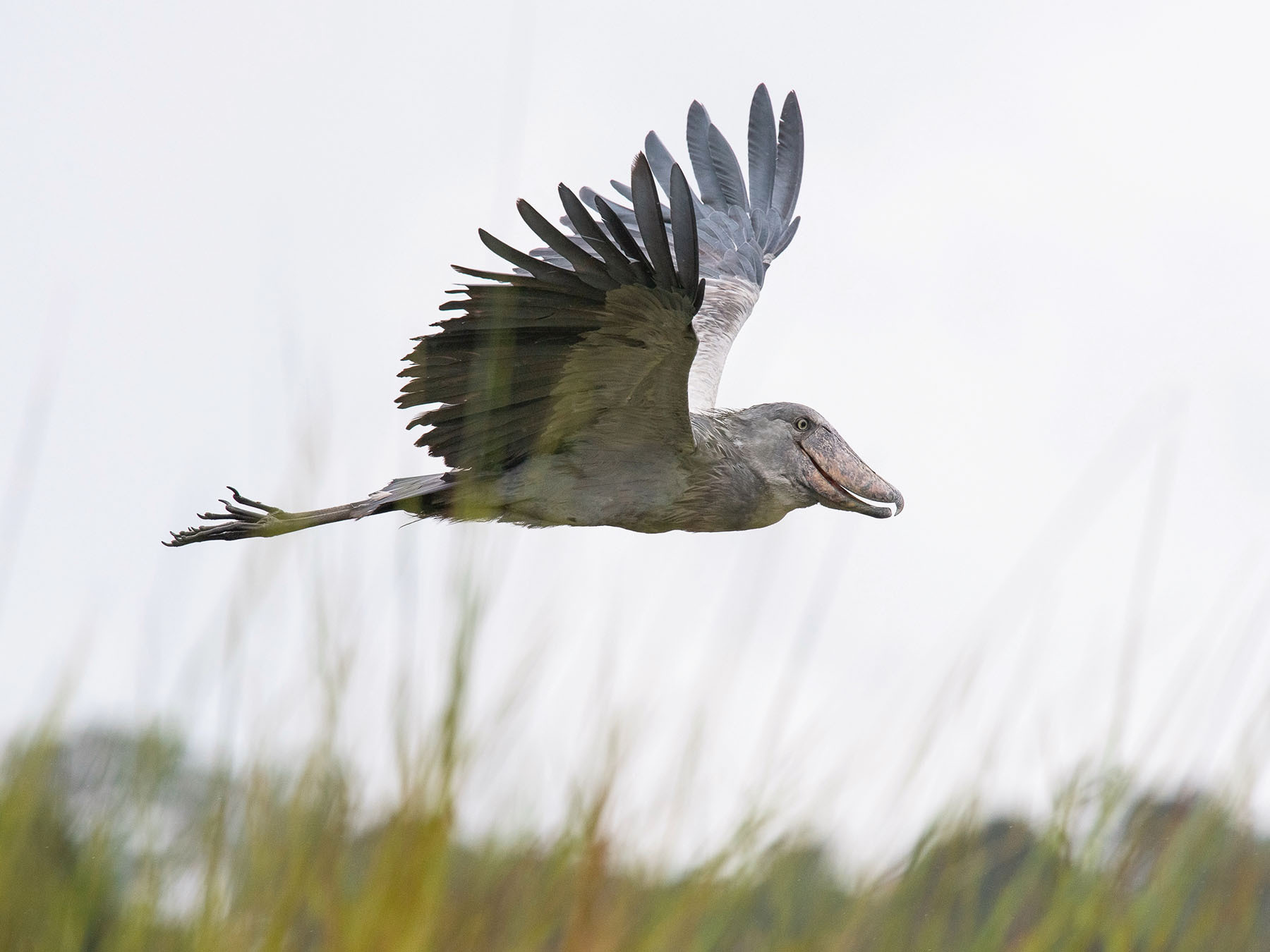
They exhibit a slow, deliberate gait when moving, and their flight is powerful but infrequent.
Conservation
The Shoebill is classified as Vulnerable due to habitat loss, hunting, and capture for the wild bird trade.
Conservation efforts focus on protecting wetland habitats and reducing human disturbance. Monitoring programs and international cooperation are crucial for the species' survival.
More photos
9 photos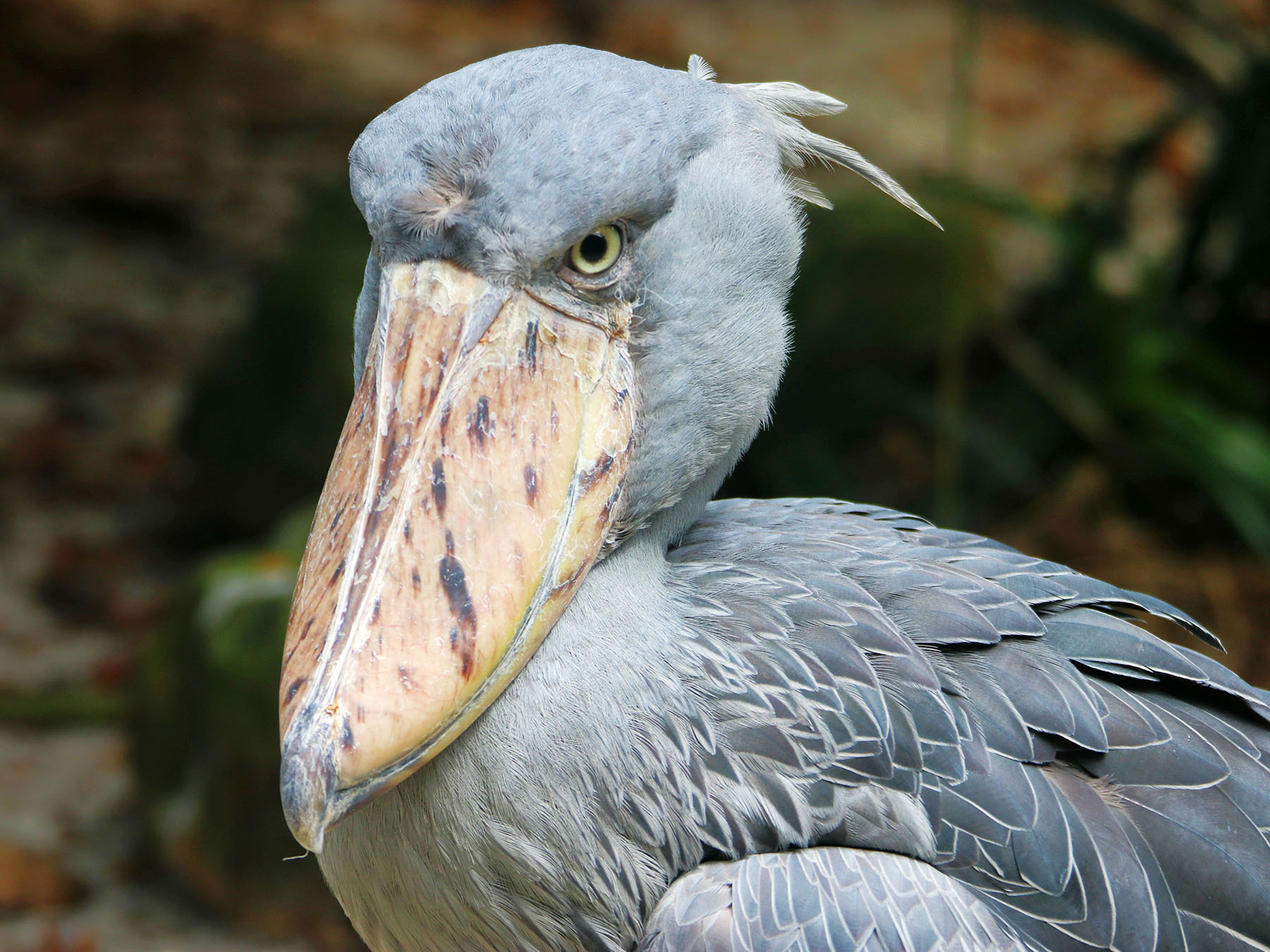
Shoebill guides
2 guidesQuick facts
- Length
- 110–140 cm
- Wingspan
- 230–260 cm
- Weight
- 4000–7000 g
- Lifespan
- 35 years · oldest recorded 50 years
- Family
- Shoebills
- Migration
- Resident
- Global status (IUCN)
- Vulnerable
- World population
- 3,300 - 5,300 mature individuals
- Population trend
- Decreasing
- Also called
- Shoebill Stork, Whalehead, Whale-headed Stork, Shoe-billed Stork
- Scientific name
- Balaeniceps rex
Sources
5- 1BirdLife International. 2018. Balaeniceps rex. The IUCN Red List of Threatened Species 2018: e.T22697583A133840708. Source (opens in a new tab)
- 2L. Dinesen in litt. (2007)
- 3T. Dodman in litt. 2002, Dinesen and Baker 2006
- 4Flower, Furter notes on the duration of life in animals. IV. Birds, Proc Zool Soc London, Ser. A:195-235 (1938)
- 5Bill the shoebill, believed to be world's oldest, dies at central Japan zoo, The Mainichi (2020) Source (opens in a new tab)

Checked by
Nathan Cope, founder and editor
Nathan founded Birdfact and leads its writers and contributors in the UK, the US and Canada. He has watched and studied birds for more than ten years, and checks every article and species guide before it’s published.