


Sanderling
Ruddy Plover, Beach Bird · Calidris alba
By the Birdfact teamChecked by Nathan Cope
On this page15 sections
How to recognise it
What do Sanderlings look like?
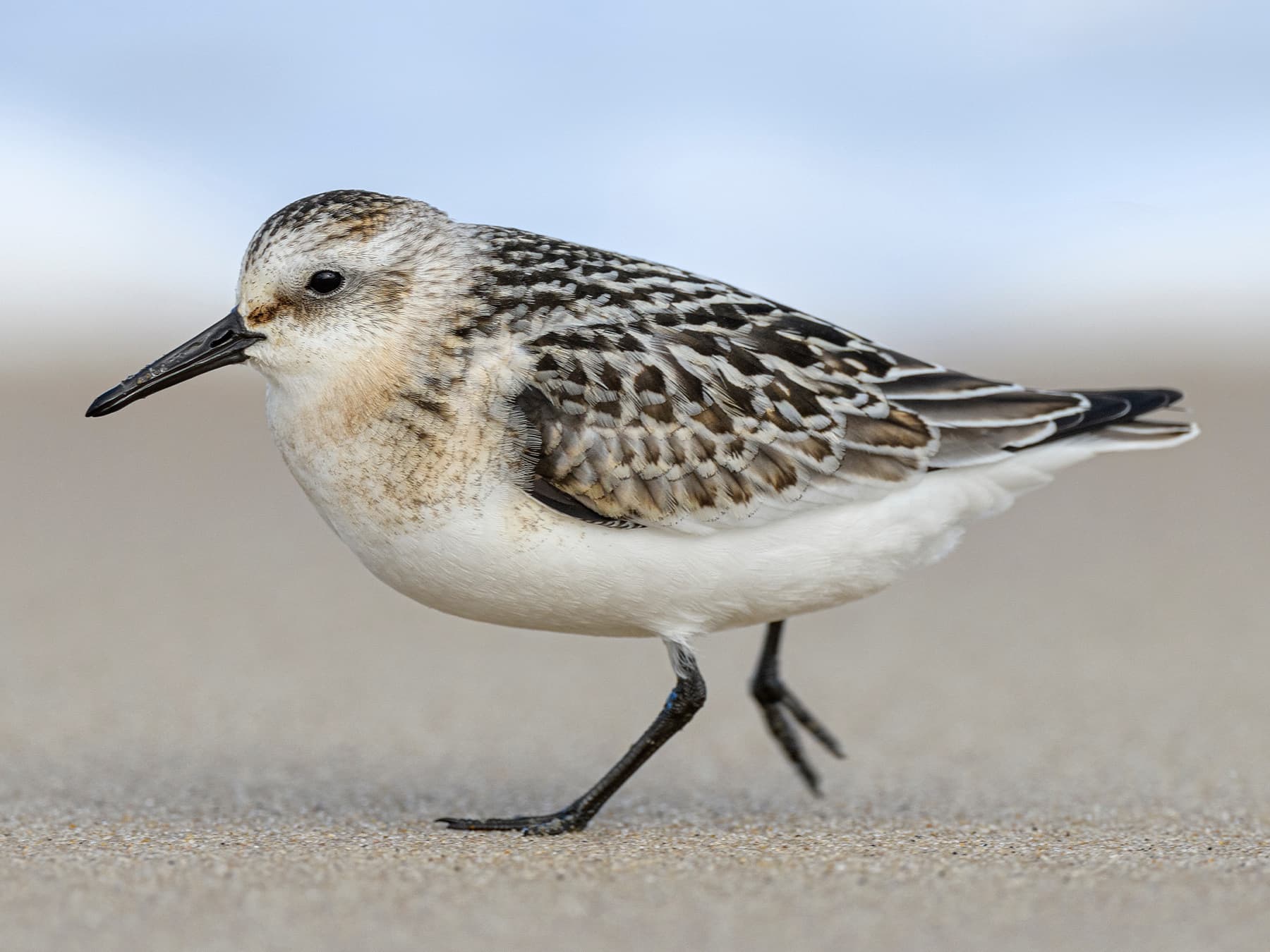
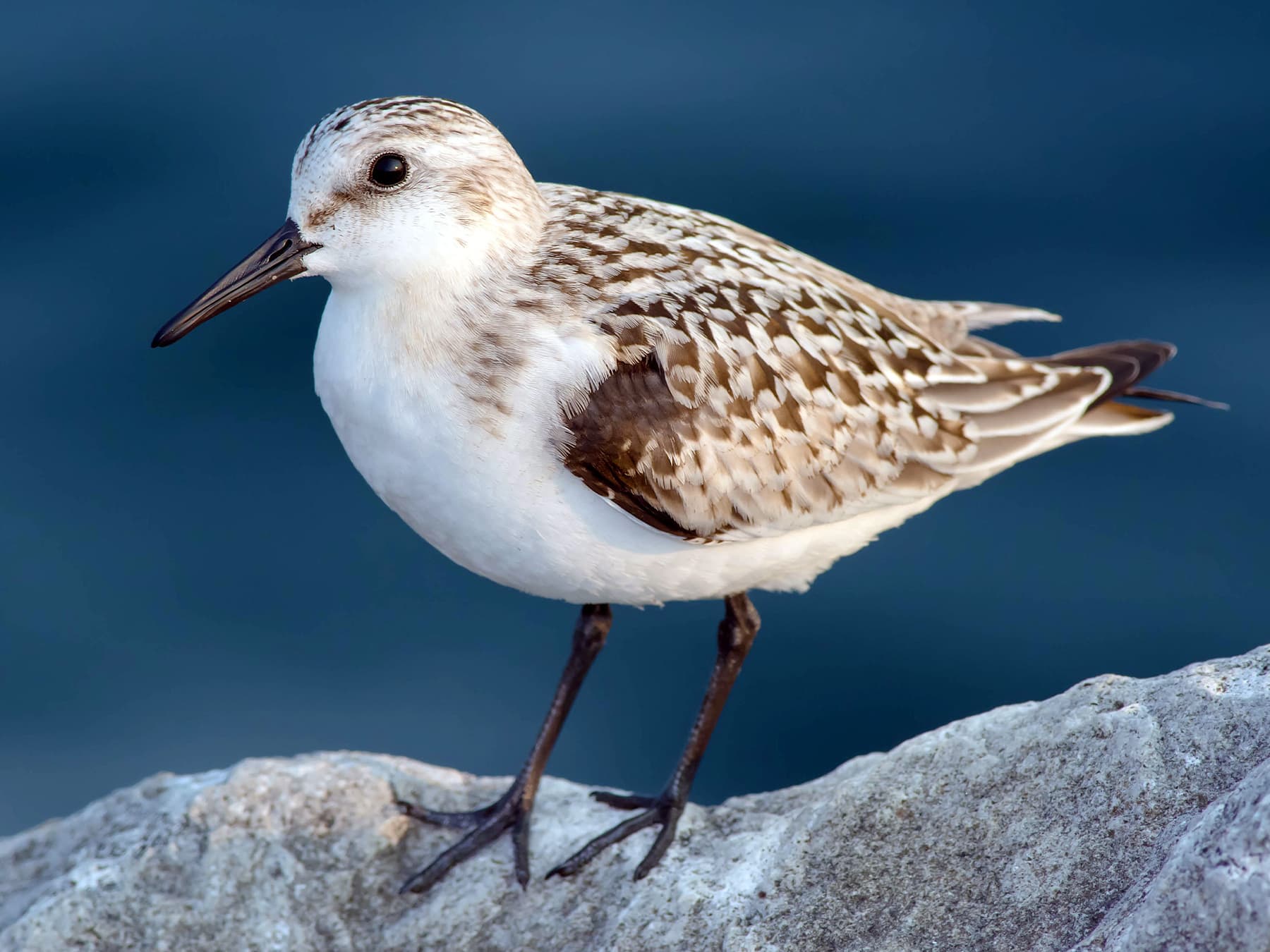
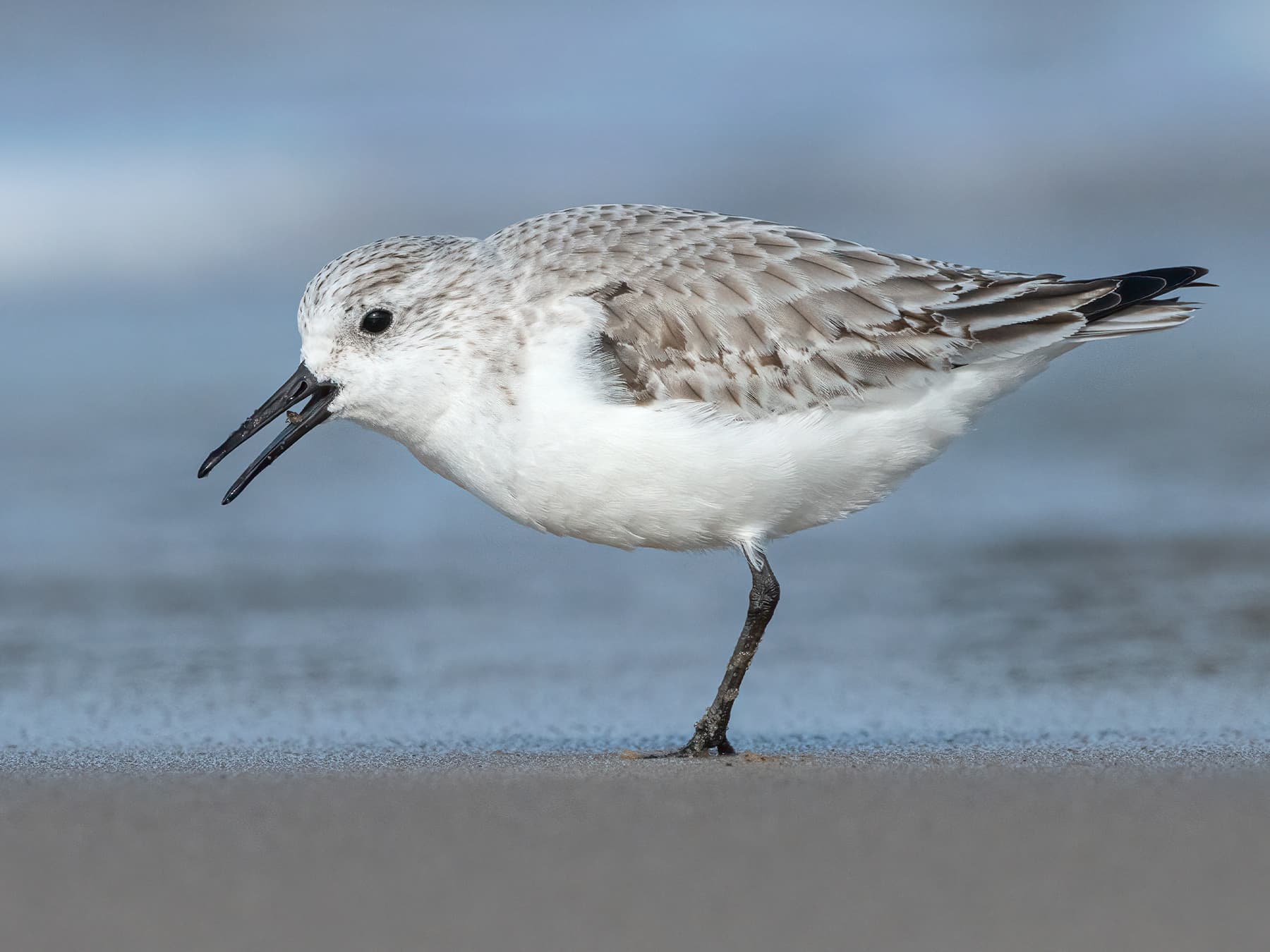
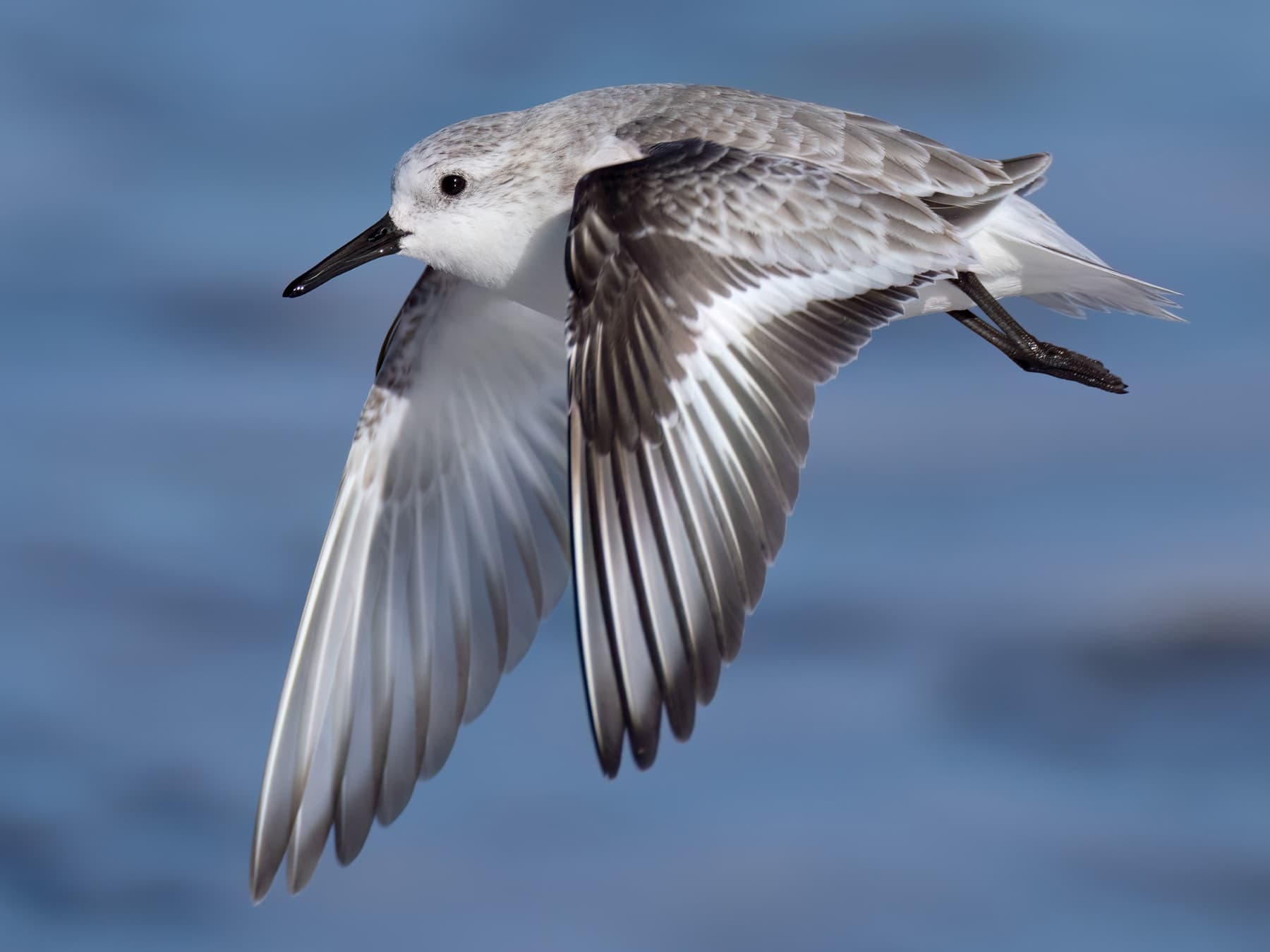
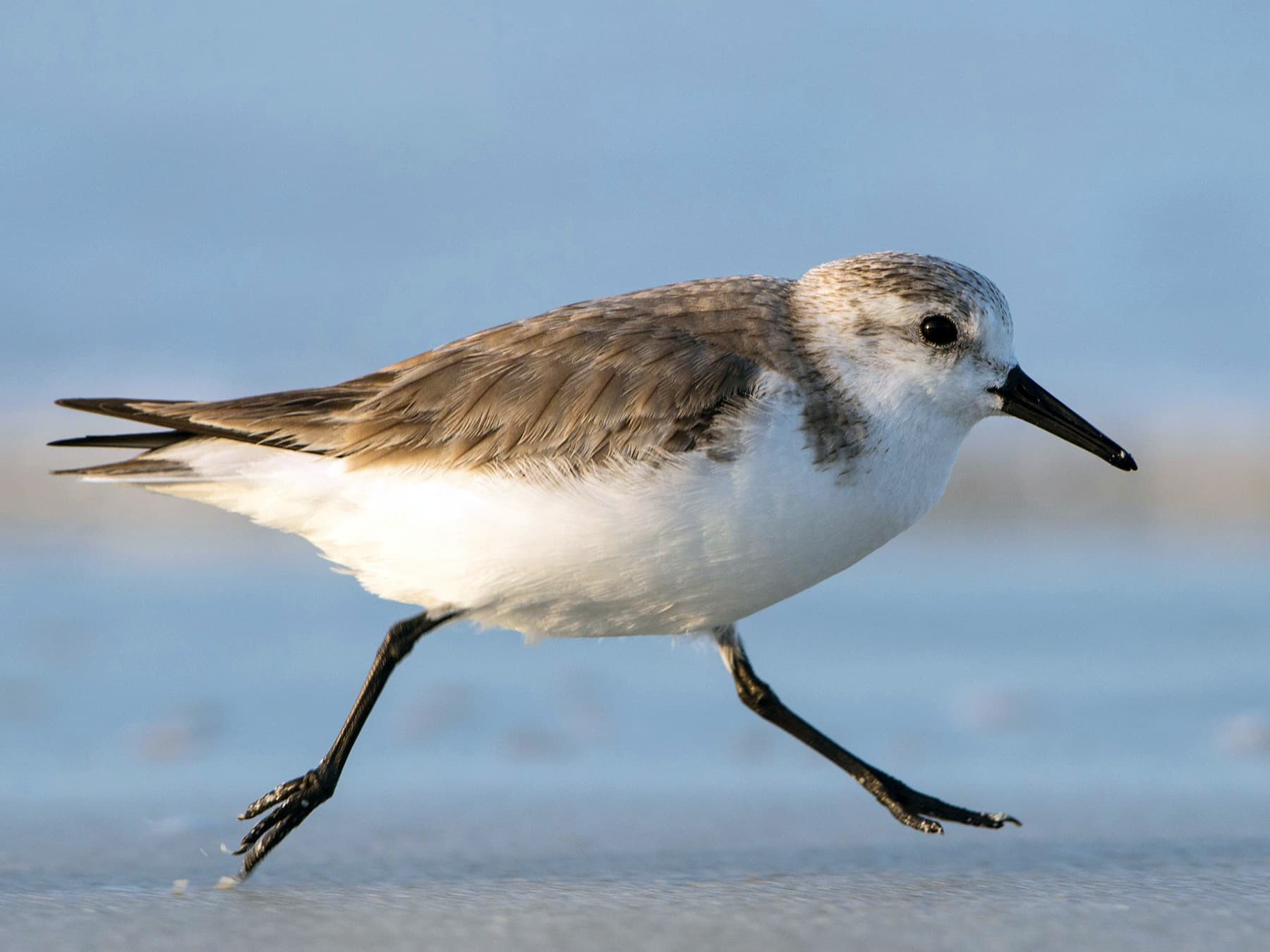
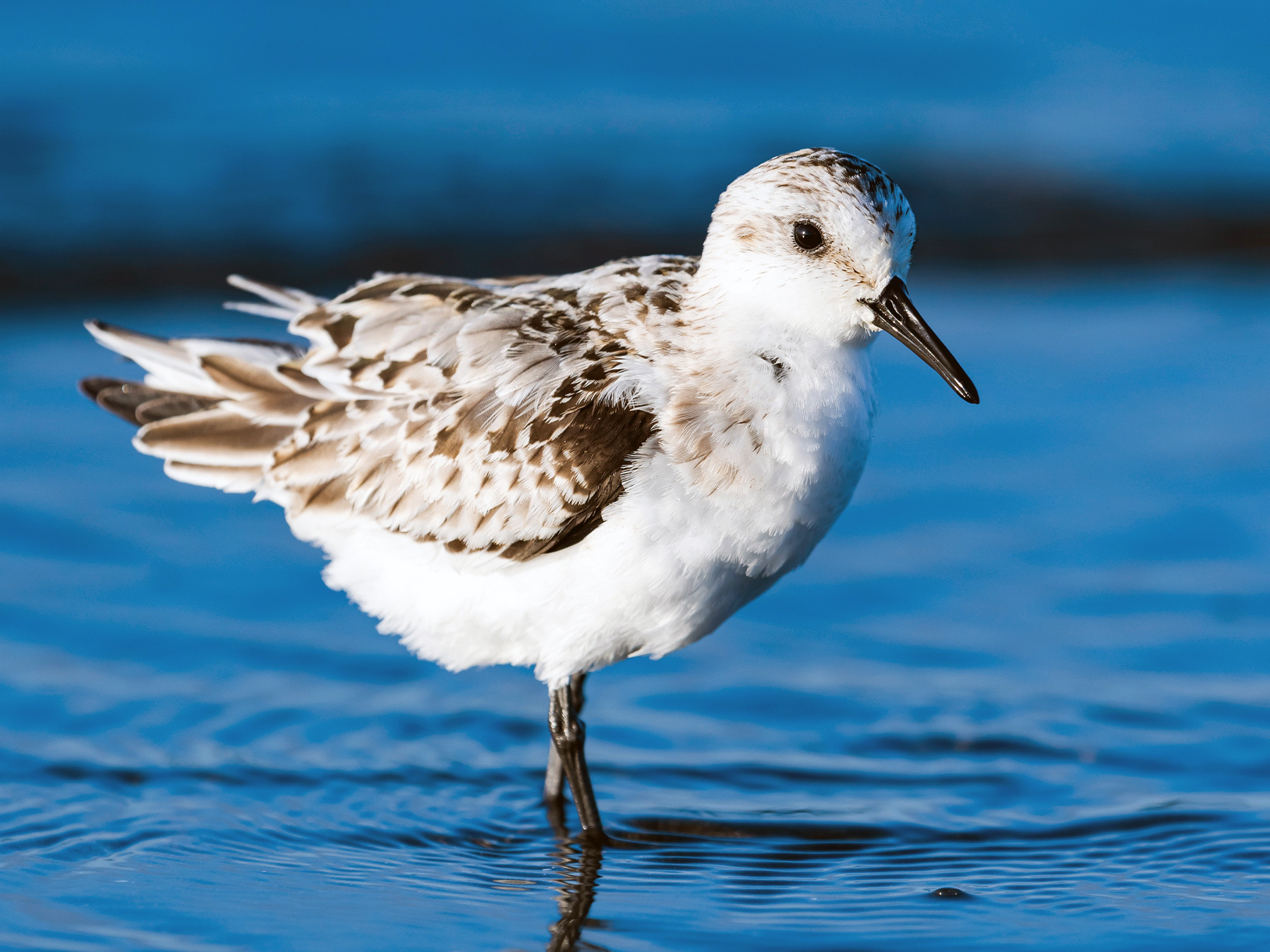
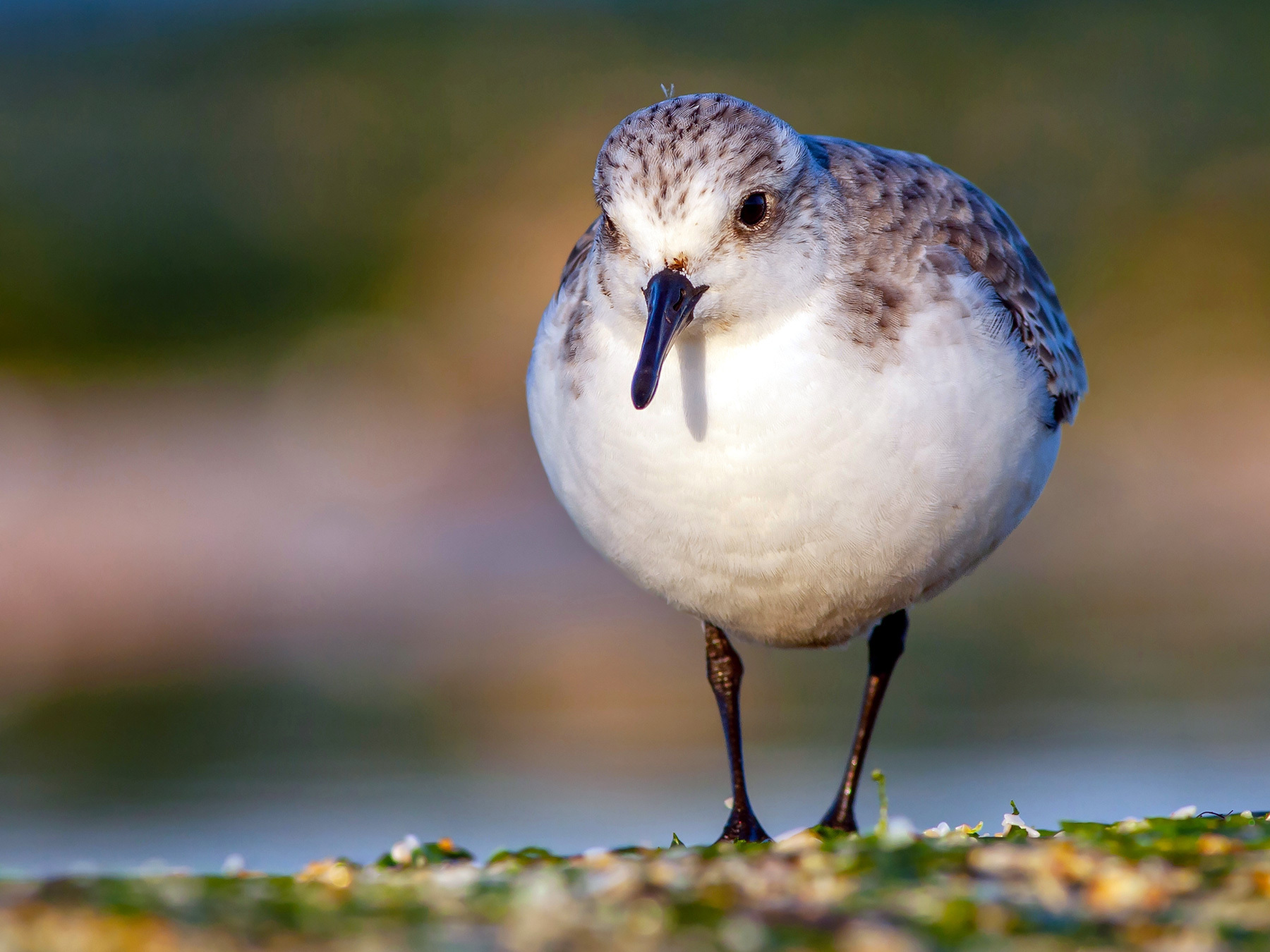
The sanderling is a pale, chunky wader with a straight black bill. They have black legs and pure white underparts at all times of the year. Birdwatchers in most parts of the world are likely to see them in their non-breeding plumage when they have silvery gray upperparts.
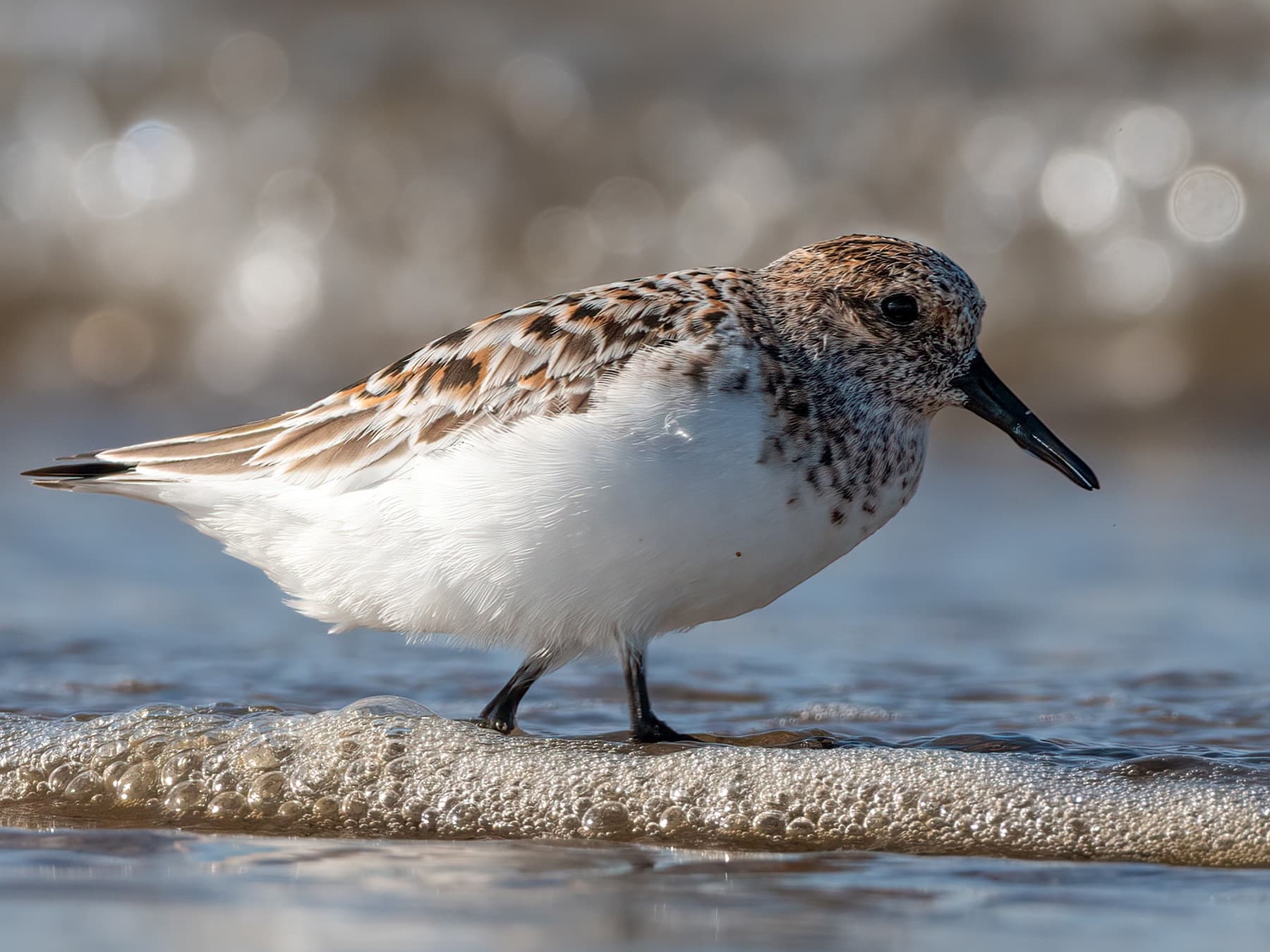
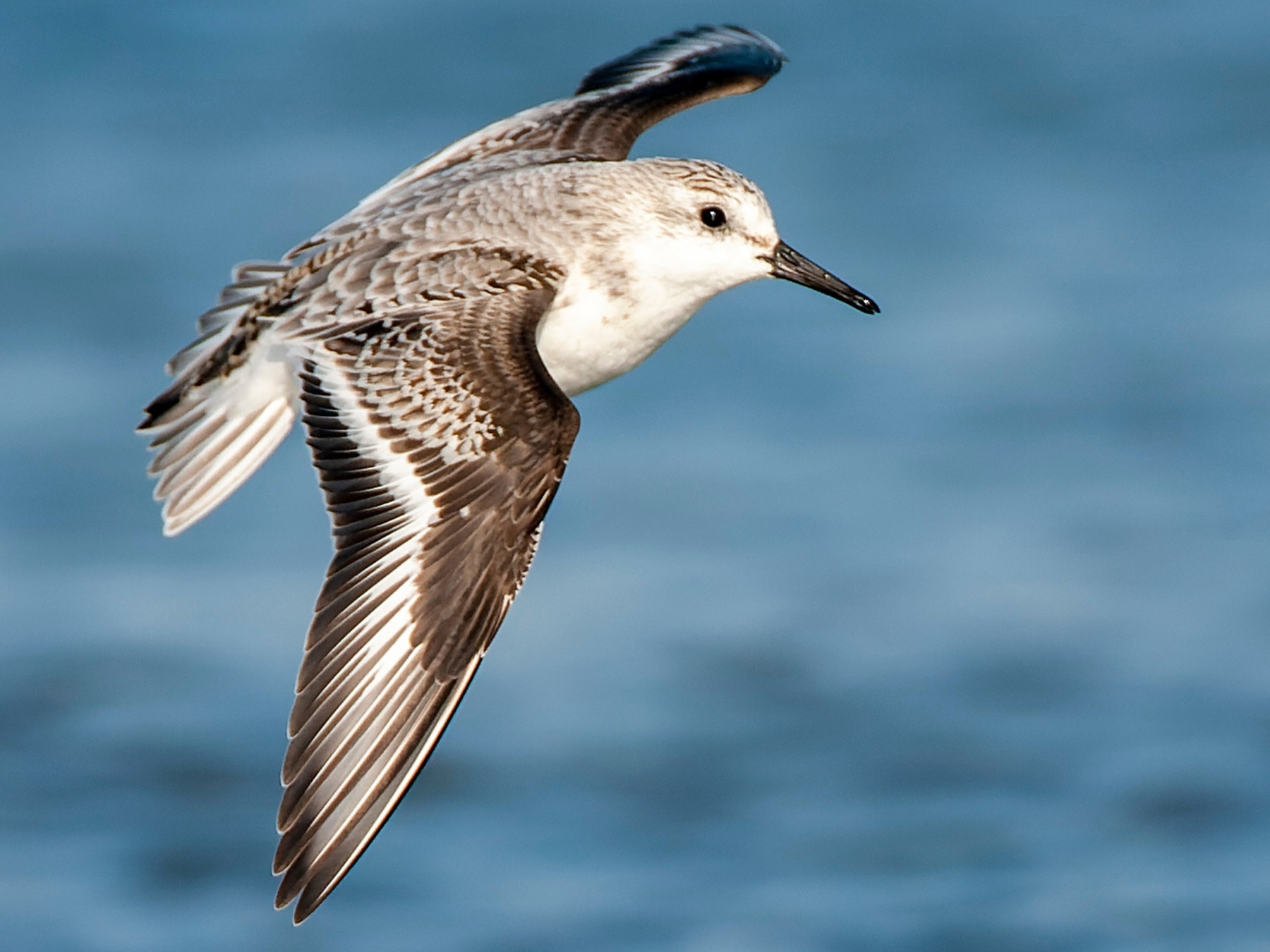
In the spring, breeding birds develop rusty brown upper parts with black mottling that covers the back, head, and breast. Sanderlings display contrasting dark upper wings with conspicuous white centers and dark tail feathers in flight. These birds are unique among sandpipers in that they lack a backward-facing toe, having three forward-facing digits instead.
Female Sanderlings are similar to males, although somewhat duller in their rufous breeding plumage. Juveniles appear similar to non-breeding adults but have more contrasting checkered upperparts.
How big are Sanderlings?
Length
The Sanderling has a total length of 18 to 21 centimeters or 7 to 8 inches. Females are generally larger than males.
Weight
They weigh 40 to 100 grams or 1½ to 3½ ounces. These birds show remarkable variation in weight at different seasons. They are at their heaviest just before migrating north to nest and can double their weight in just two weeks in preparation for the journey.
Wingspan
Sanderlings have a wingspan of 36 to 39 centimeters or 14 to 15 inches.
Its size
Adults- Length
- 18–20 cm
- Wingspan
- 35–39 cm
- Weight
- 40–100 g
Its song and calls
What sound does a Sanderling make?
Sanderlings perform soft, pipping calls, creating a twittering effect when flocking. Birdwatchers who visit their Arctic breeding grounds may hear their prolonged croaking and squeaking songs.
- Call0:00 / 0:23
Recorded in Normandie, France · September 2024
When and where to see it
OctoberLeaving
Most recorded in October
- 1. Mayo1.0%
- 2. Eilean Siar0.88%
- 3. Kerry0.86%
- 4. Orkney Islands0.84%
- 5. Sligo0.75%
Each dot is a county, state or province: the bigger and darker, the larger the bird’s share of that place’s bird records that month. Grey dots: no regular records. The ringed point is the centre of the bird’s records this month; the arrow shows how it moved since last month, and the dashed loop its path through the year. “Arrivals” colours places where it becomes regular this month (orange) or is in its last regular month (grey). GBIF eBird Observation Dataset, 2019–2024. Map data: Natural Earth, US Census Bureau; place centres © OpenStreetMap contributors.
In your area
See when the Sanderling is recorded in your county, state or province.
How often the Sanderling turns up in the UK, Ireland, the United States and Canada through the year, from birdwatchers' records.
United Kingdom
Resident · all year · most records in September
Ireland
Winter visitor · all year · most records in September
United States
Resident · all year · most records in August
Canada
Passage migrant · regularly May–Jan · most records in September
Show as a table
| Month | United Kingdom | Ireland | United States | Canada |
|---|---|---|---|---|
| January | 0.13% (regular) | 0.31% (regular) | 0.16% (regular) | 0.018% (regular) |
| February | 0.10% (regular) | 0.24% (regular) | 0.12% (regular) | 0.012% |
| March | 0.055% (regular) | 0.17% (regular) | 0.082% (regular) | 0.008% |
| April | 0.043% (regular) | 0.093% (regular) | 0.072% (regular) | 0.004% |
| May | 0.10% (regular) | 0.13% (regular) | 0.058% (regular) | 0.028% (regular) |
| June | 0.053% (regular) | 0.062% (regular) | 0.023% (regular) | 0.011% |
| July | 0.078% (regular) | 0.13% (regular) | 0.057% (regular) | 0.028% (regular) |
| August | 0.16% (regular) | 0.39% (regular) | 0.17% (regular) | 0.15% (regular) |
| September | 0.17% (regular) | 0.55% (regular) | 0.17% (regular) | 0.27% (regular) |
| October | 0.15% (regular) | 0.37% (regular) | 0.13% (regular) | 0.093% (regular) |
| November | 0.12% (regular) | 0.26% (regular) | 0.15% (regular) | 0.049% (regular) |
| December | 0.11% (regular) | 0.26% (regular) | 0.14% (regular) | 0.013% |
Recorded regularly in
Worldwide: recorded regularly in 165 countries
Countries where it was recorded in at least 3 of the 6 years 2019–2024. Linked countries have their own bird list.
Europe (39)
- Albania
- Austria
- Belarus
- Belgium
- Bulgaria
- Croatia
- Czechia
- Denmark
- Estonia
- Faroe Islands
- Finland
- France
- Germany
- Gibraltar
- Greece
- Guernsey
- Hungary
- Iceland
- Ireland
- Isle of Man
- Italy
- Jersey
- Latvia
- Lithuania
- Montenegro
- Netherlands
- Norway
- Poland
- Portugal
- Romania
- Russia
- Slovakia
- Slovenia
- Spain
- Svalbard & Jan Mayen
- Sweden
- Switzerland
- Ukraine
- United Kingdom
Africa (33)
- Algeria
- Angola
- Botswana
- Cape Verde
- Côte d’Ivoire
- Djibouti
- Egypt
- Gabon
- Gambia
- Ghana
- Guinea
- Guinea-Bissau
- Kenya
- Liberia
- Libya
- Madagascar
- Mauritania
- Mauritius
- Mayotte
- Morocco
- Mozambique
- Namibia
- Nigeria
- Réunion
- Senegal
- Seychelles
- Sierra Leone
- South Africa
- Tanzania
- Tunisia
- Uganda
- Western Sahara
- Zambia
Asia (36)
- Armenia
- Azerbaijan
- Bahrain
- Bangladesh
- British Indian Ocean Territory
- Cambodia
- China
- Cyprus
- Georgia
- Hong Kong SAR China
- India
- Indonesia
- Iran
- Israel
- Japan
- Kazakhstan
- Kuwait
- Lebanon
- Malaysia
- Maldives
- Mongolia
- Myanmar (Burma)
- Oman
- Pakistan
- Philippines
- Qatar
- Saudi Arabia
- Singapore
- South Korea
- Sri Lanka
- Taiwan
- Thailand
- Timor-Leste
- Turkey
- United Arab Emirates
- Vietnam
North America (36)
- Anguilla
- Antigua & Barbuda
- Aruba
- Bahamas
- Barbados
- Belize
- Bermuda
- British Virgin Islands
- Canada
- Caribbean Netherlands
- Cayman Islands
- Costa Rica
- Cuba
- Curaçao
- Dominican Republic
- El Salvador
- Greenland
- Grenada
- Guadeloupe
- Guatemala
- Honduras
- Jamaica
- Martinique
- Mexico
- Montserrat
- Nicaragua
- Panama
- Puerto Rico
- St Kitts & Nevis
- St Lucia
- St Martin
- St Pierre & Miquelon
- Trinidad & Tobago
- Turks & Caicos Islands
- United States
- US Virgin Islands
South America (14)
Oceania (7)
- Australia
- Cocos (Keeling) Islands
- French Polynesia
- New Zealand
- Northern Mariana Islands
- Palau
- US Outlying Islands
Data: EOD – eBird Observation Dataset (Cornell Lab of Ornithology), accessed via GBIF.org, CC BY 4.0. Records from 2019–2024, aggregated and filtered by Birdfact. How these lists are made
What is the habitat of a Sanderling?
Sanderlings are most at home along exposed sandy beaches with a gradual slope. They also visit mudflats, rocky shores, and estuaries, and migrating birds will visit freshwater lakes when migrating over land.
What is the range of a Sanderling?
The Sanderling has an immense global distribution covering the coastlines of every continent except for distant Antarctica. They are most at home in the intertidal zone, although they may visit inland waterbodies thousands of miles from the coast on migration.
Where do Sanderlings live?
Sanderlings have no fixed address. These traveling birds live on sandy beaches worldwide, spending almost all their time on the ground. They cover immense distances on migration and can spend hours and even days in flight. Sanderlings do not swim, although they may dive into the water when pursued by a predator.
How rare are Sanderlings?
Sanderlings are reasonably common birds that most beachgoers will spot at one time or another. Their population was estimated at 620,000 to 700,000 individuals in 2015, although their vast range means they occur in fairly low densities in some areas.
Where can you see Sanderlings in North America?
Sanderlings can be seen on sandy beaches around practically the entire coastline of North America. Look out for small flocks of these energetic winter migrants along both the Pacific and Atlantic coasts.
Where can you see Sanderlings in the UK?
Sanderlings occur on sandy shores throughout the United Kingdom. The only places you are not likely to see them are along the West Coast of Scotland and the Cornwall coastline in the southwest.
Migration
Do Sanderlings migrate?
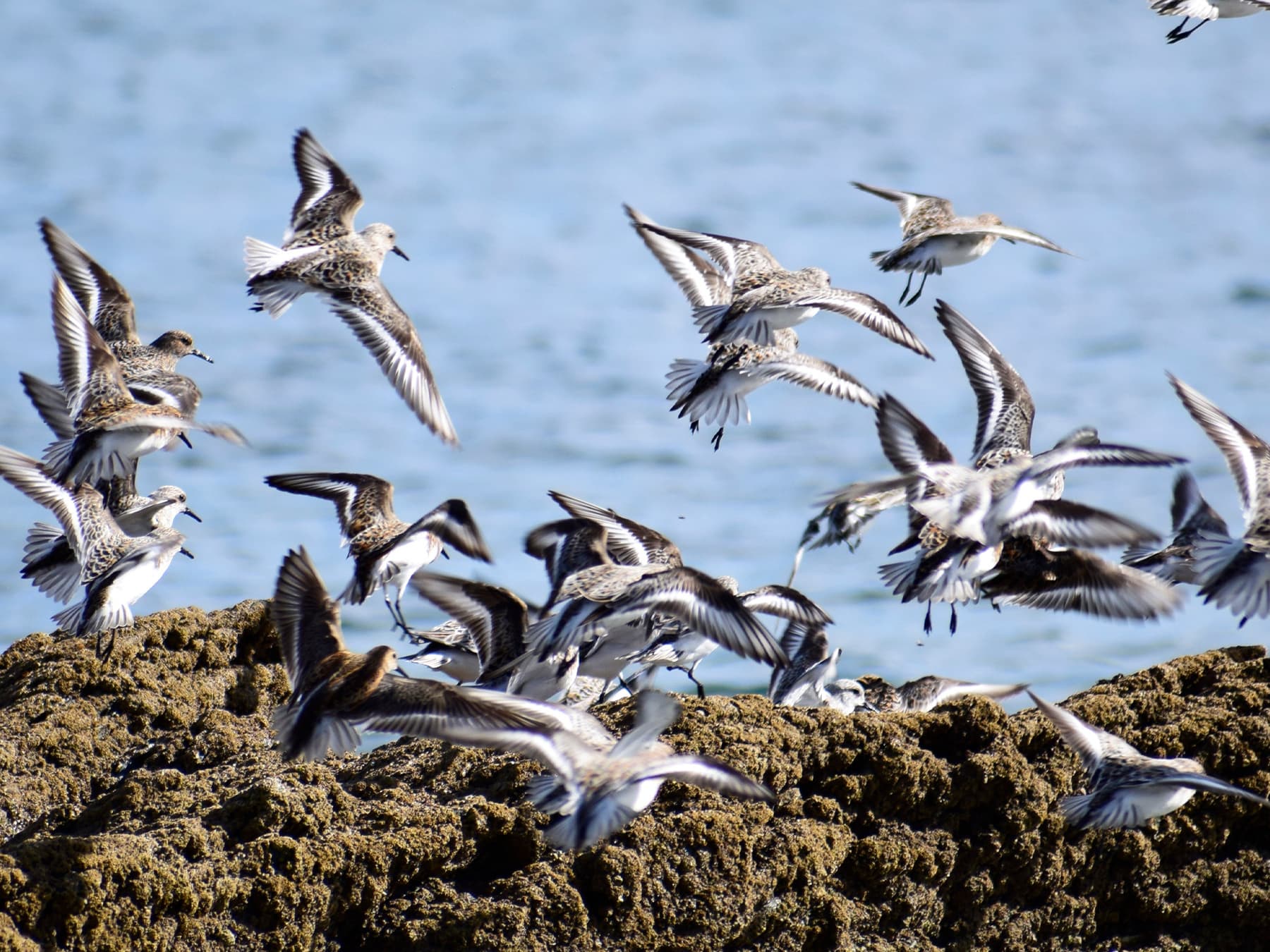
The Sanderling is a complete migrant. These small shorebirds undertake some of the longest migrations of any bird on the planet, some traveling an incredible 6,000 miles or more between summer breeding grounds in the Arctic tundra and sandy beaches in the Southern Hemisphere.
Are Sanderlings native to North America?
Sanderlings are native to North America. They breed and overwinter on the continent.
Are Sanderlings native to the UK?
Sanderlings are native to the United Kingdom, where they occur as a common winter visitor.
Tips for seeing it
- Look for Sanderlings on sandy beaches, especially during migration seasons.
- Observe their characteristic 'wave chasing' behaviour at the water's edge.
- Listen for their soft 'plik' or 'wick' calls as they forage.
- In the UK and US, they're common along coastal areas during spring and fall migrations.
What it eats
What do Sanderlings eat?
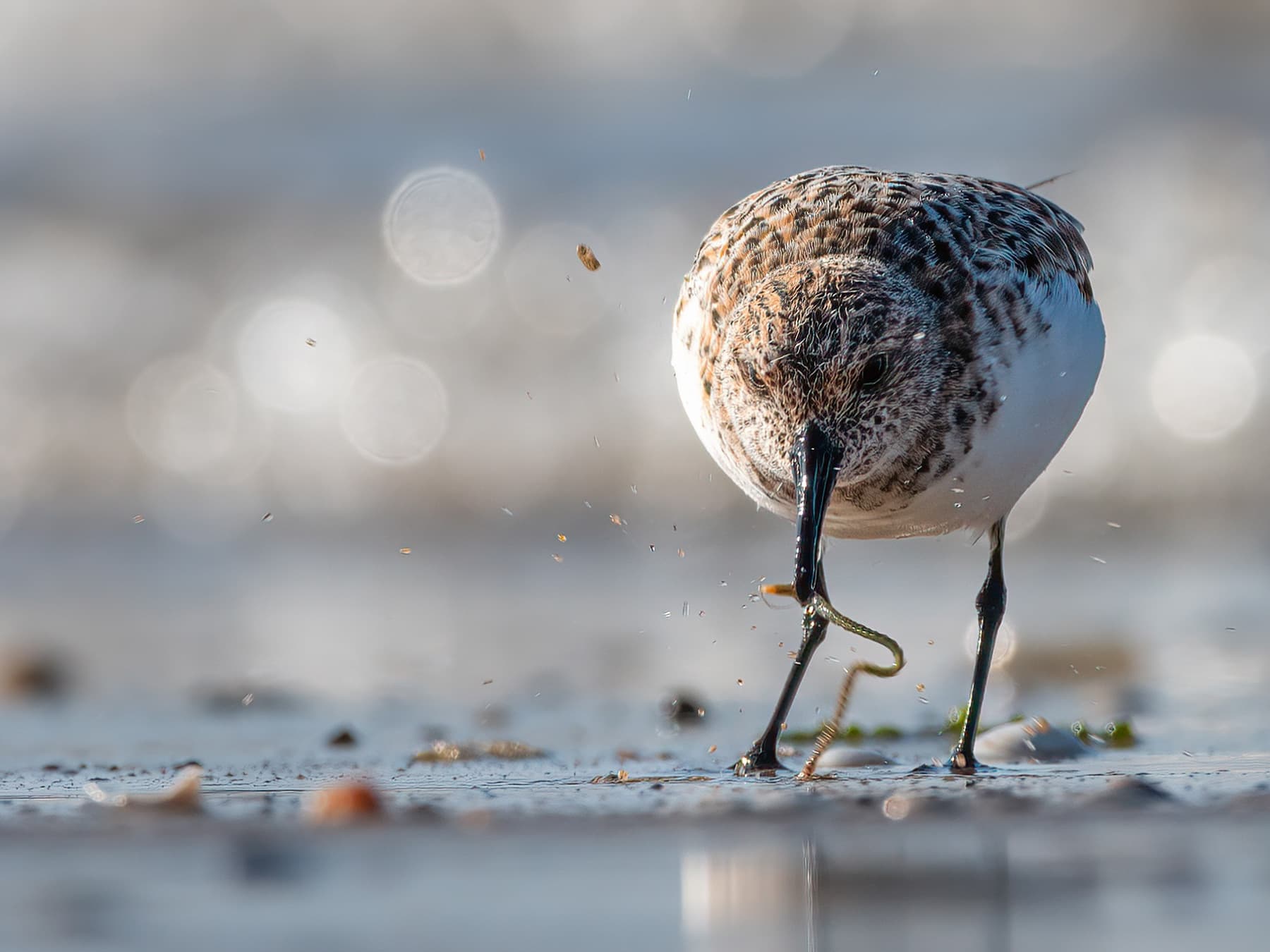
Sanderlings eat small marine invertebrates like worms and crabs in the winter. They find their food washed up on the sand or by probing with their stout bills. On their nesting grounds, they switch to a diet of small insects like flies and mosquitoes but also eat plant matter when food is scarce.
What do Sanderling chicks eat?
Sanderling chicks hatch at an advanced stage of development and usually leave the nest within their first twelve hours. They follow their parents to good feeding grounds and begin to catch their own insect prey within just two days.
Nesting and breeding
Where do Sanderlings nest?
Sanderlings nest in the tundra of the high Arctic in Alaska, Canada, Greenland, Svalbard, and Siberia. They nest on the ground, at low altitudes on open stony plains with low vegetation. Their nest is a shallow hollow in the ground, thinly lined with plant material.
When do Sanderlings nest?
Sanderlings nest in the height of summer in June and July. Their eggs hatch after 23 to 27 days, and they are ready to leave their breeding grounds by early September.
What do Sanderling eggs look like?
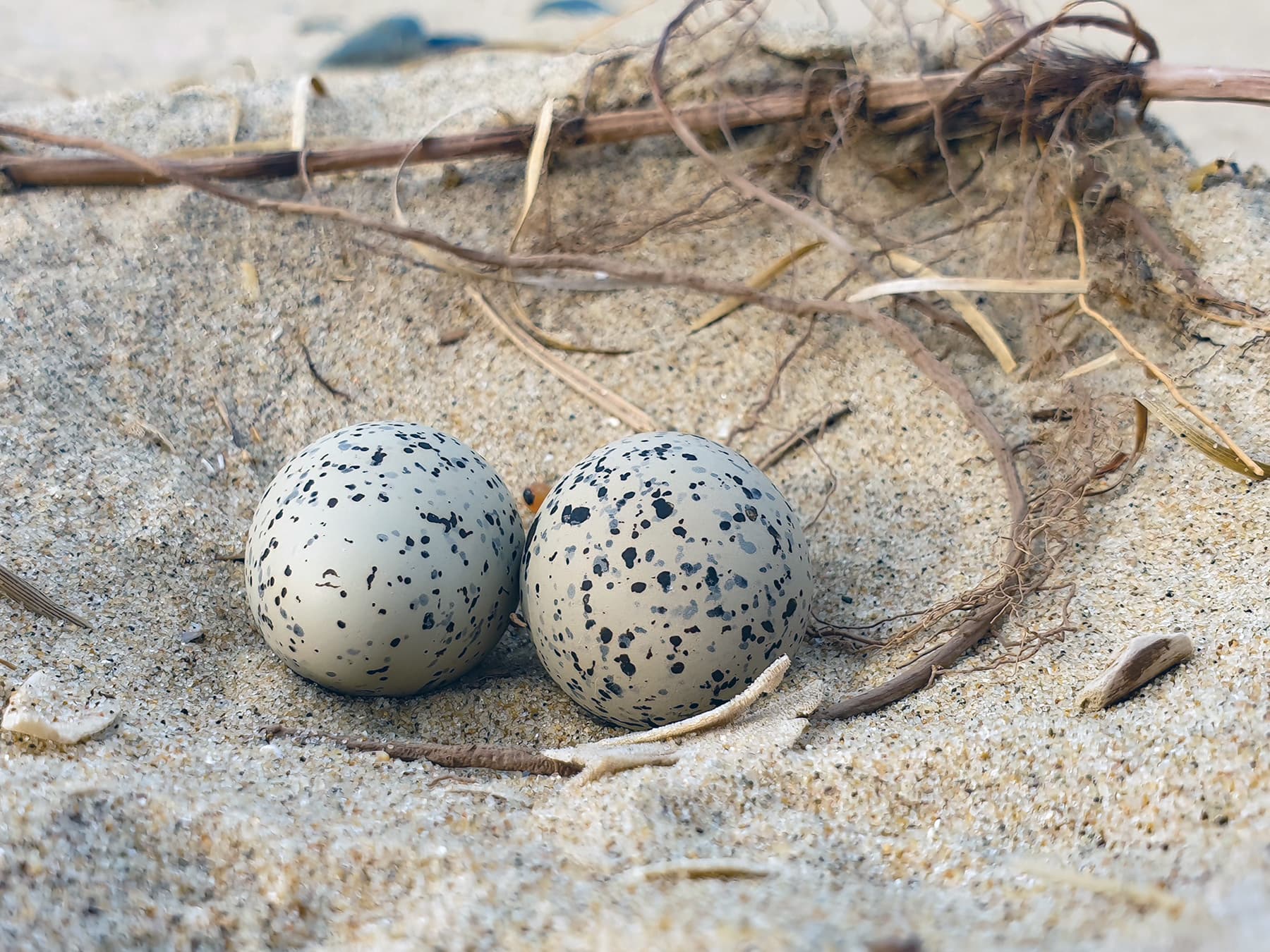
Sanderlings lay three or four eggs, each measuring approximately 36 millimeters long and 25 millimeters wide. Their eggs are lightly speckled and usually olive-green or brownish.
Do Sanderlings mate for life?
Sanderlings do not mate for life. They generally form monogamous pairs in the nesting season, but some females will mate with several males.
Behaviour
Are Sanderlings aggressive?
Sanderlings are territorial when nesting and defend areas several hundred meters wide. Intruders in the nesting territory are chased or attacked. They are more gregarious in the non-breeding season when flocks may join other waders like Knots, Dunlins, and Turnstones.
They are feisty birds and often attempt to steal food from other birds in their flock, particularly meals that are too big to swallow at once. Some birds have an anti-social streak and aggressively defend a small feeding area of their own.
Where do Sanderlings sleep at night?
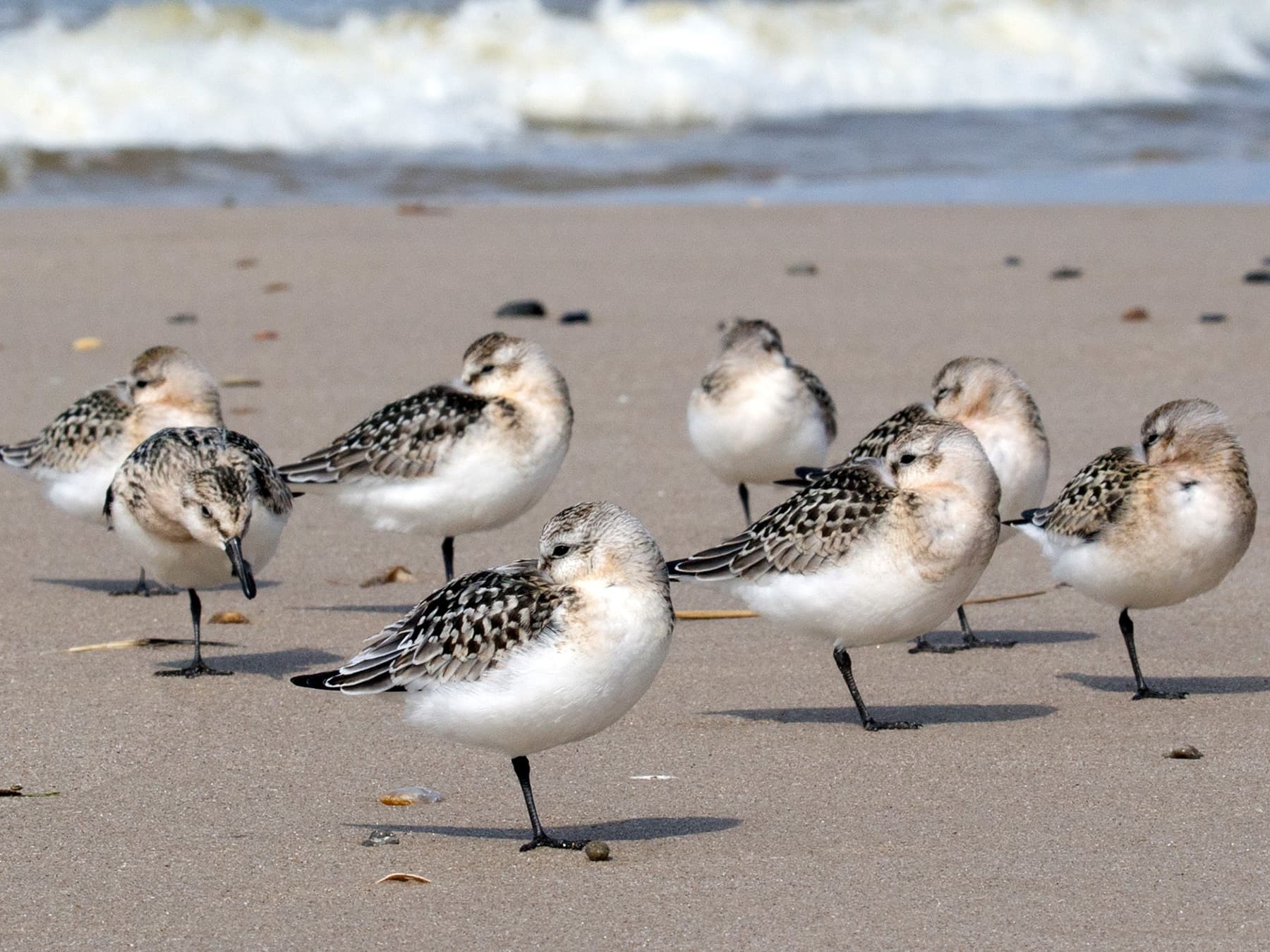
Sanderlings sleep on the nest while incubating. In the non-breeding season, these birds roost standing or squatting on the floor above the high-tide mark in tight flocks, doing their utmost to find a sheltered spot among the crowd.
Lifespan and predators
How long do Sanderlings live?
Sanderlings have a maximum recorded lifespan of 17 years, although their average life expectancy is closer to seven.
What are the predators of Sanderlings?
Peregrine Falcons and Merlins are major predators of adult Sanderlings, while Parasitic and Long-tailed Jaegers are significant predators of eggs and chicks on the nesting grounds.
Are Sanderlings protected?
Sanderlings are protected by the Wildlife and Countryside Act 1981 in the United Kingdom, by the Migratory Bird Treaty Act in North America, and internationally by the Bern Convention.
Are Sanderlings endangered?
Sanderlings are not endangered, although their population is thought to be in decline. They are ranked as a ‘Least Concern’ species on the IUCN Red List due to their vast range and large population, although they are difficult to assess due to their remote nesting grounds and scattered wintering population.
Conservation
While currently listed as Least Concern, Sanderlings face threats from habitat loss due to coastal development and climate change.
Conservation efforts focus on protecting key stopover sites along their migration routes and preserving Arctic breeding grounds.
Similar birds
Often mistaken for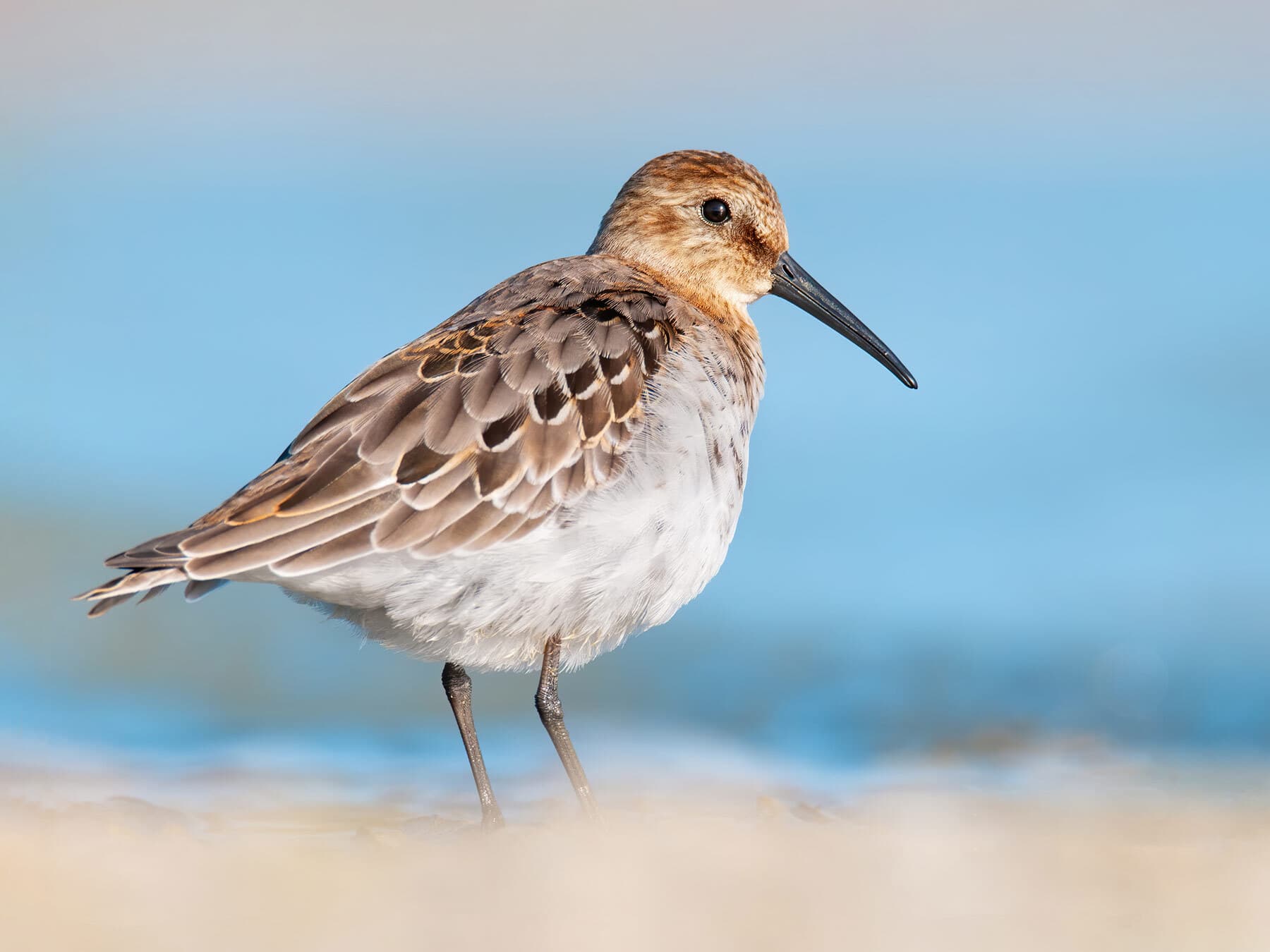
More photos
4 photos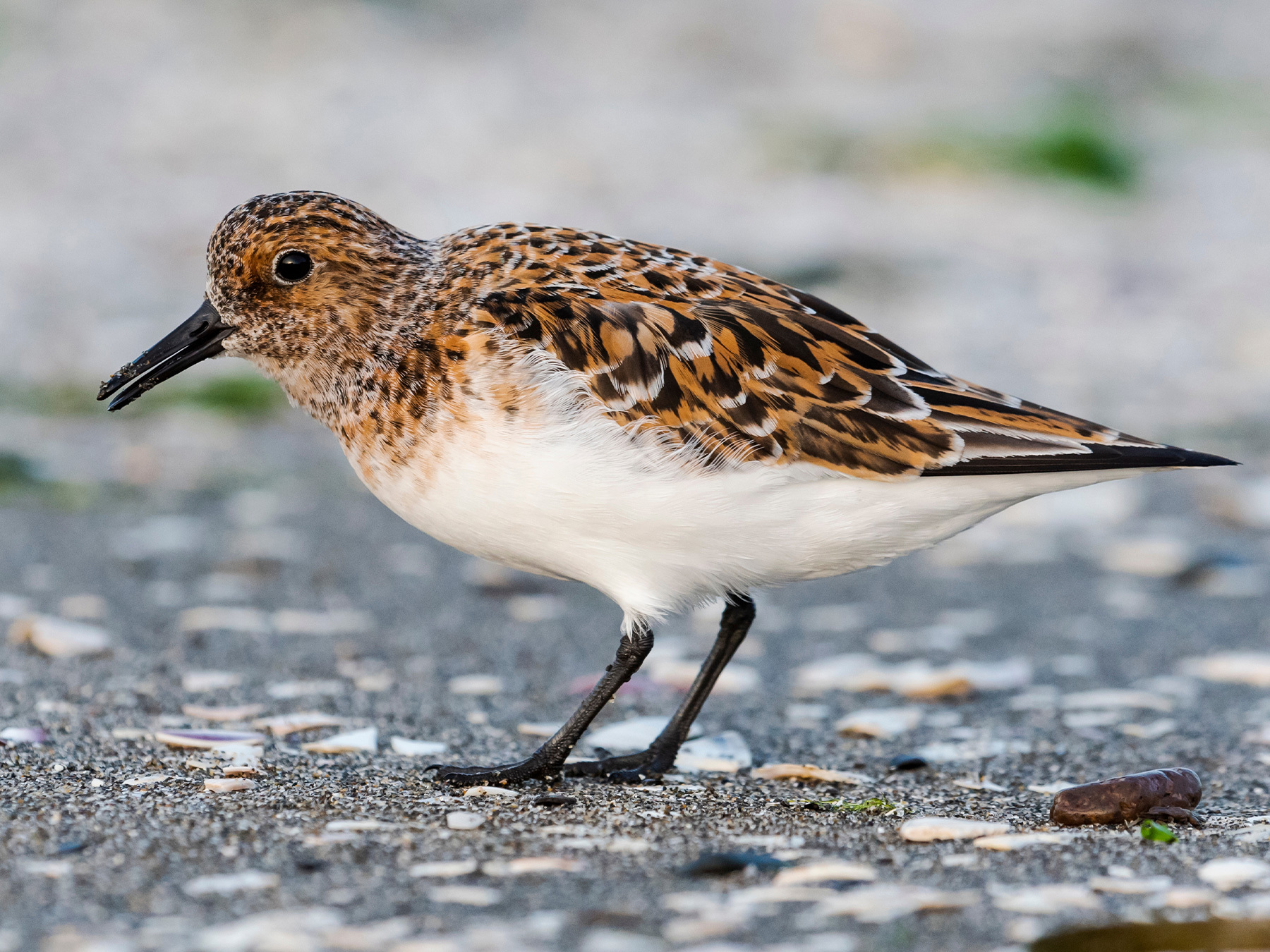
Sanderling guides
1 guidesQuick facts
- Length
- 18–20 cm
- Wingspan
- 35–39 cm
- Weight
- 40–100 g
- Lifespan
- 6–7 years · oldest recorded 18.6 years
- Family
- Sandpipers & Snipes
- Migration
- Long-distance Migrant
- Global status (IUCN)
- Least Concern
- World population
- 620,000 - 700,000 mature individuals
- Population trend
- Unknown
- Also called
- Ruddy Plover, Beach Bird
- Scientific name
- Calidris alba
Questions
3How can you tell a Dunlin from a Sanderling?
Dunlin and Sanderling appear very similar in their non-breeding plumage, although the Dunlin has a longer, slightly down-curved bill. Both species develop rich reddish upperparts ahead of the breeding season, but the Dunlin differs in having a large black belly patch.
What is a flock of Sanderlings called?
A flock of sanderlings is known as a ‘grain,’ which is an appropriate name for a bird that spends so much time on the sand!
Why are they called Sanderlings?
The word sanderling comes from an Old English word that means sand ploughman.
Sources
3- 1BirdLife International. 2016. Calidris alba. The IUCN Red List of Threatened Species 2016: e.T22693369A86614145. Source (opens in a new tab)
- 2Wetlands International (2015)
- 3Fransson et al., EURING list of longevity records for European birds (2010) Source (opens in a new tab)

Checked by
Nathan Cope, founder and editor
Nathan founded Birdfact and leads its writers and contributors in the UK, the US and Canada. He has watched and studied birds for more than ten years, and checks every article and species guide before it’s published.