


Ruddy Duck
Stiff-tailed Duck, Spiny-tailed Duck · Oxyura jamaicensis
By the Birdfact teamChecked by Nathan Cope
On this page14 sections
How to recognise it
What do Ruddy Ducks look like?
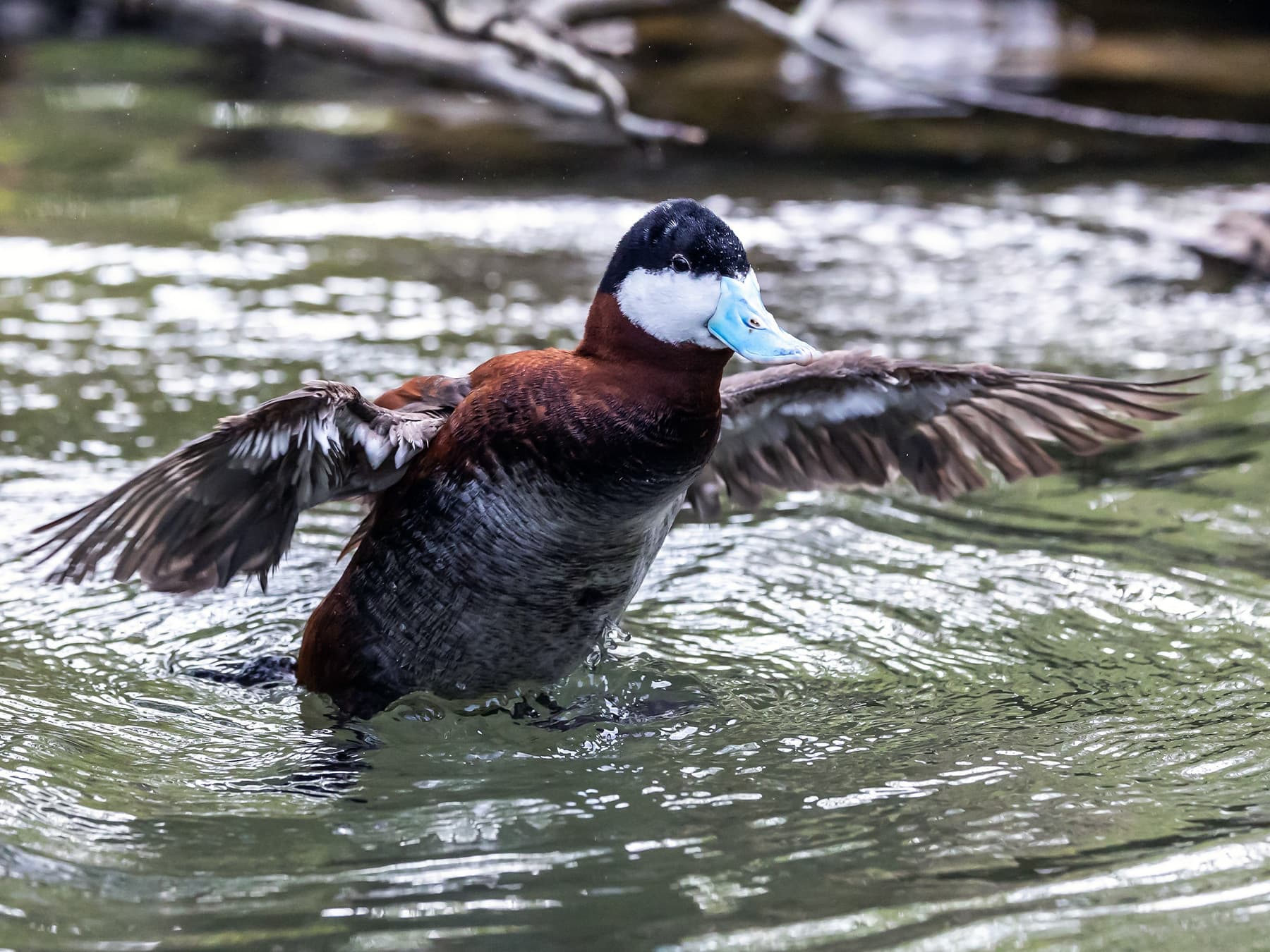
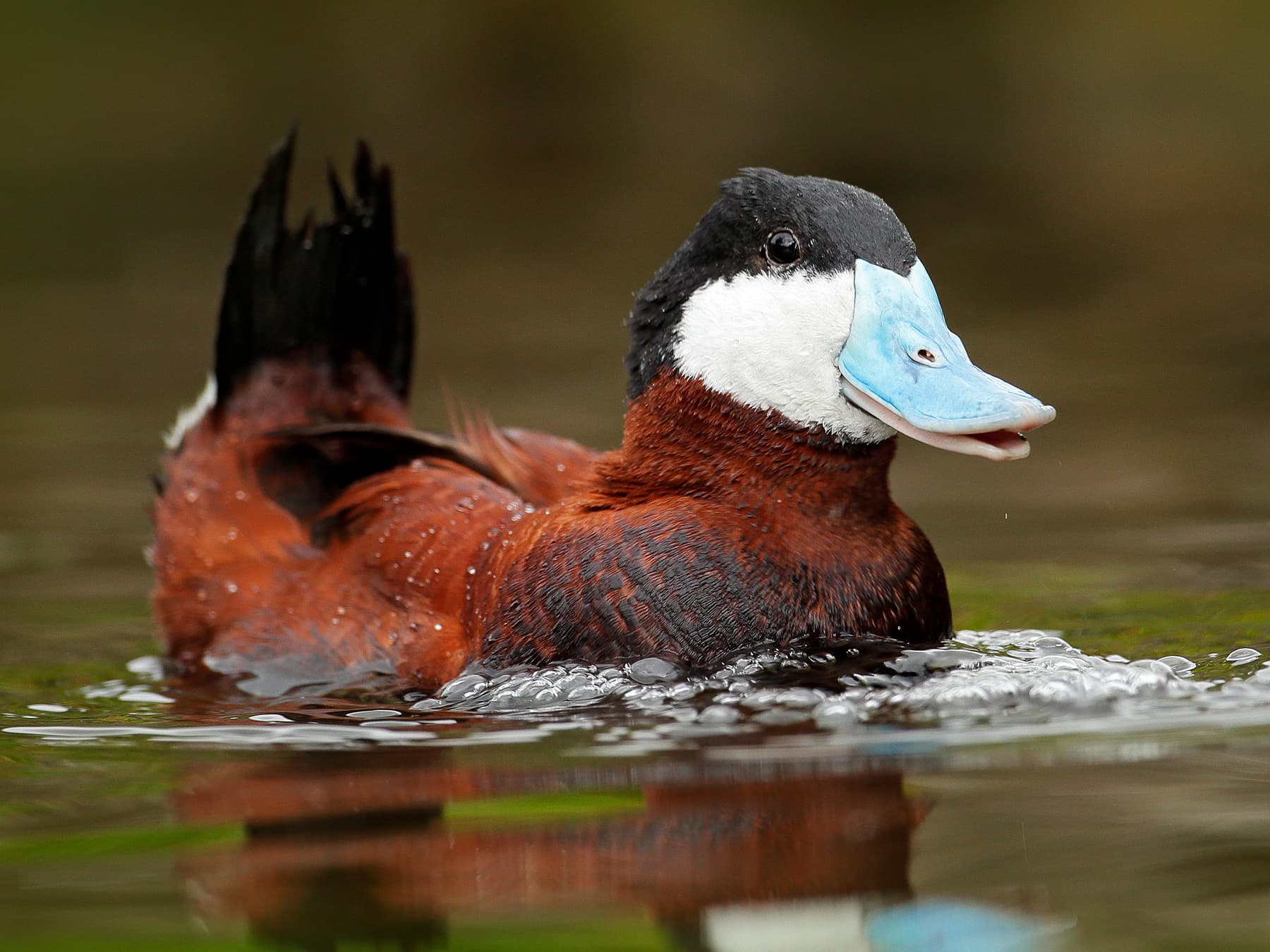
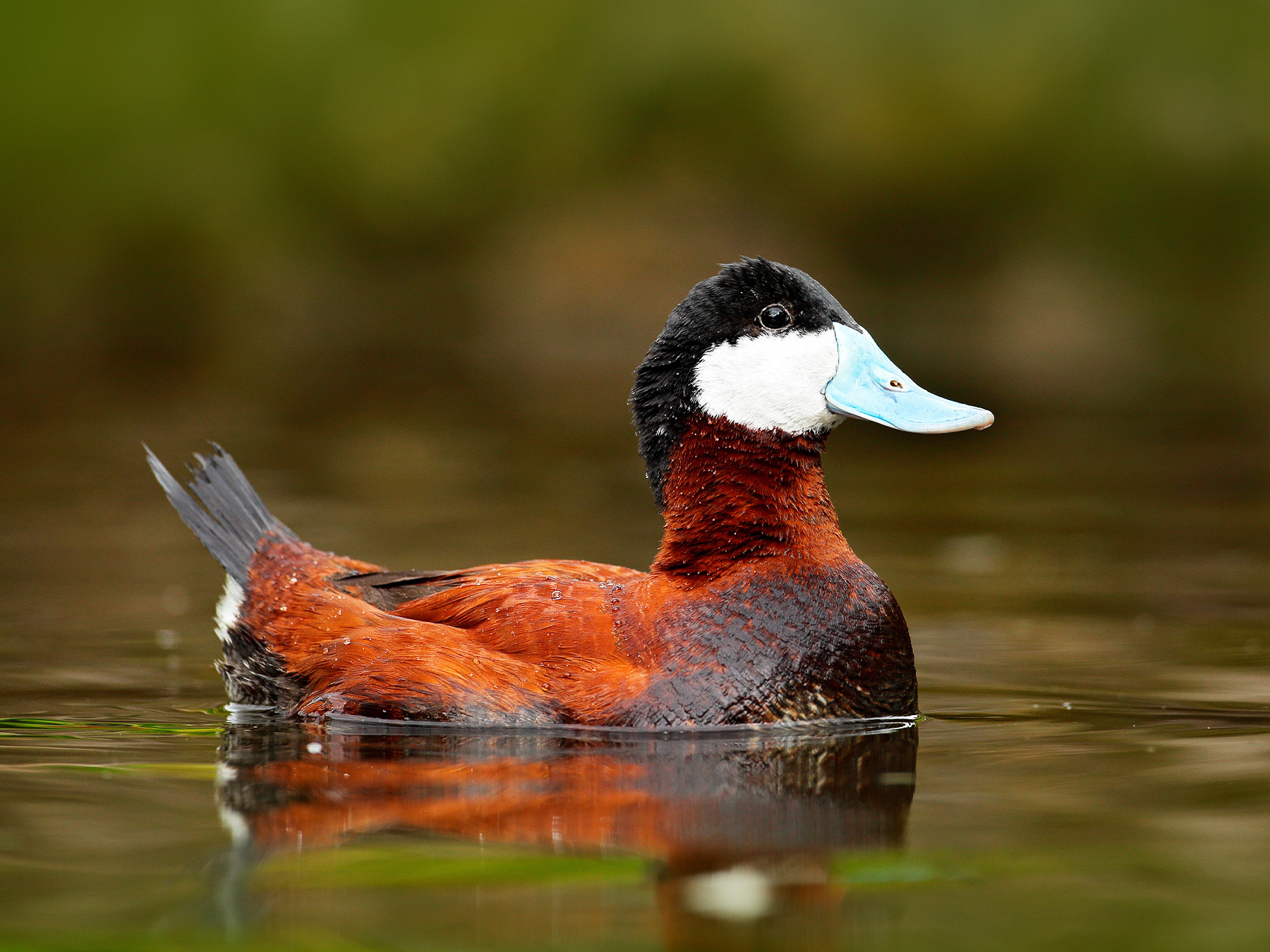
Ruddy Ducks are small diving ducks with stiff, fan-shaped tails that they hold cocked up at a steep angle. They have relatively short, thick necks and enormous webbed feet that are rarely seen out of the water.
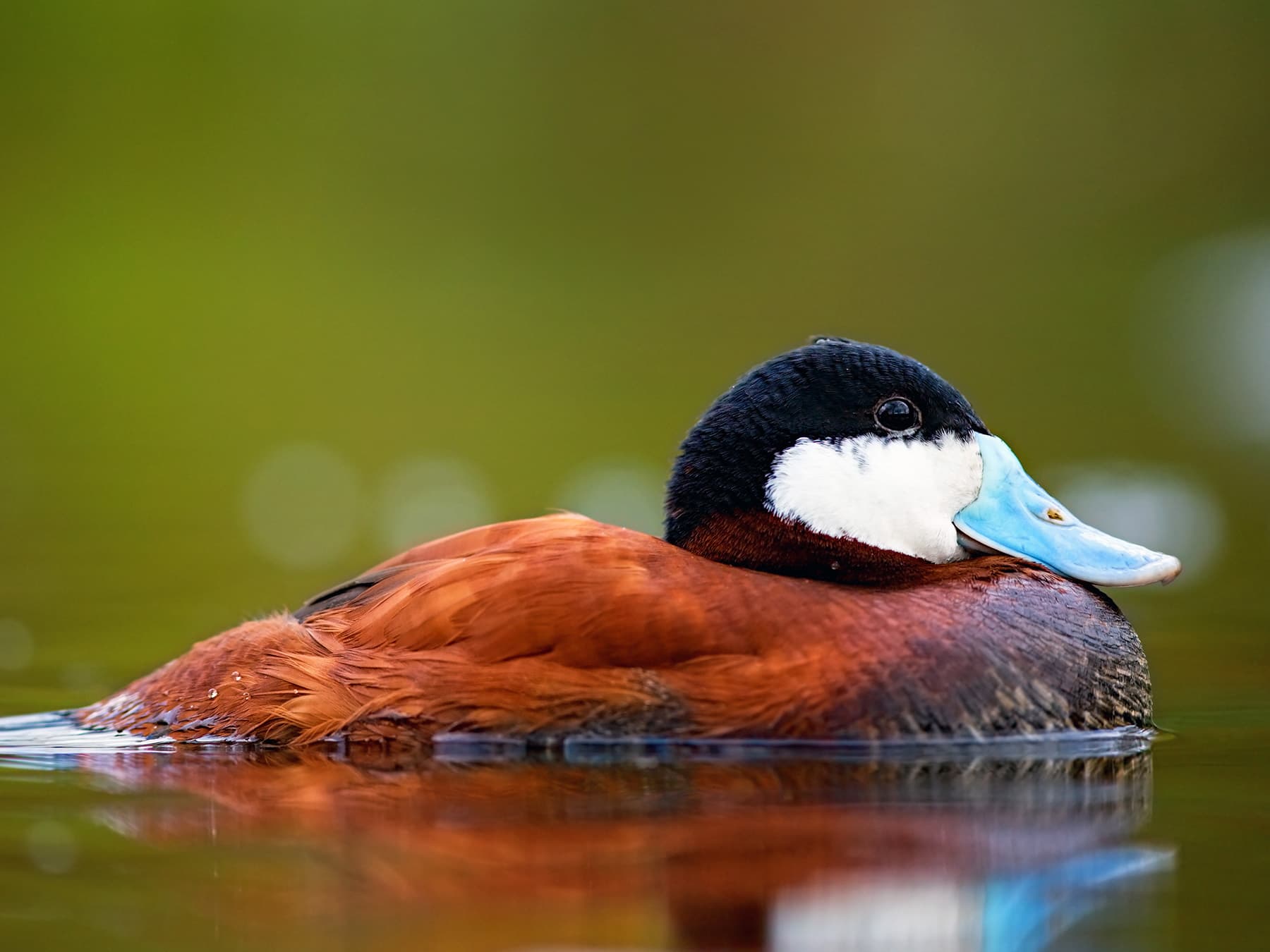
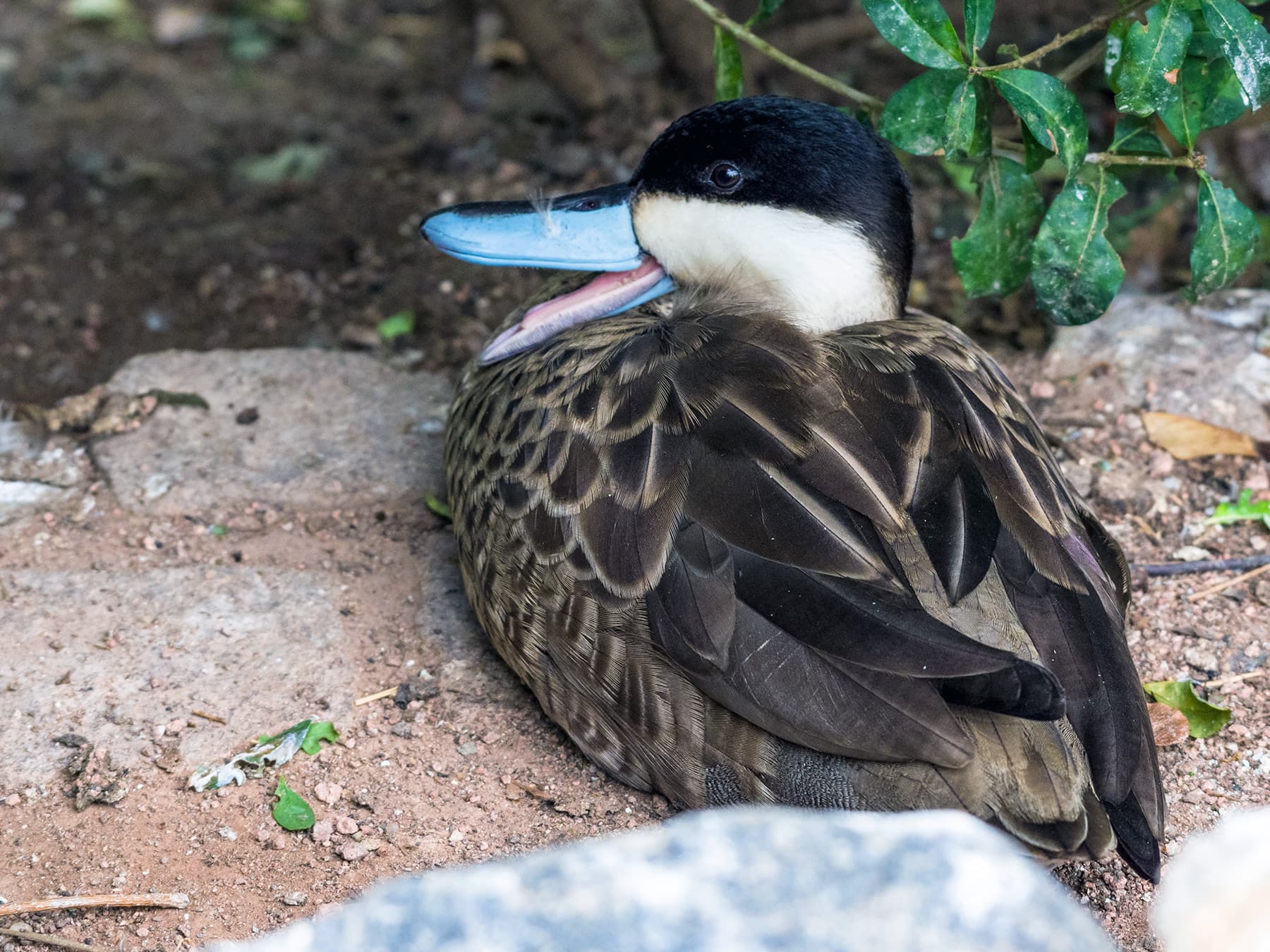
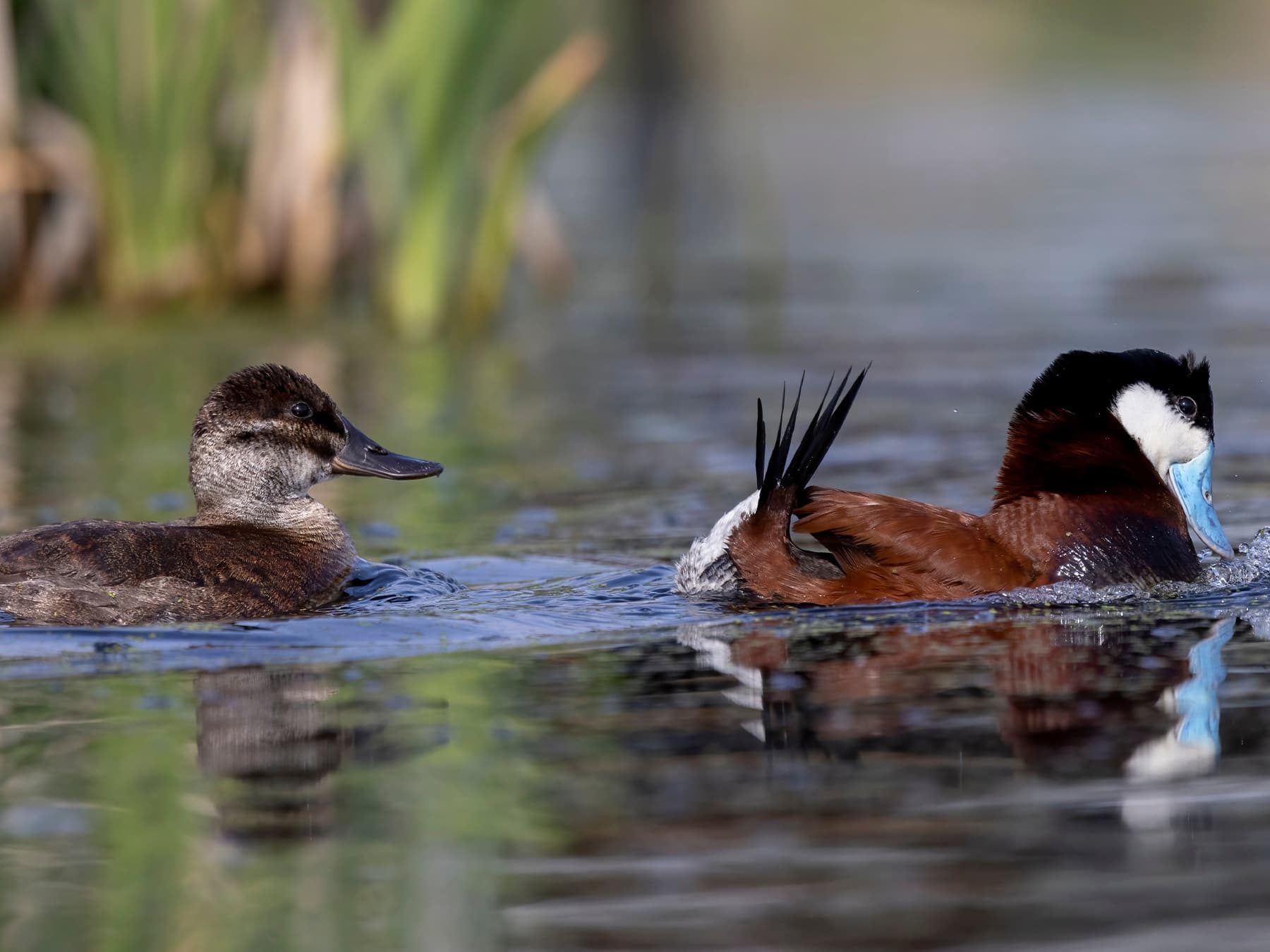
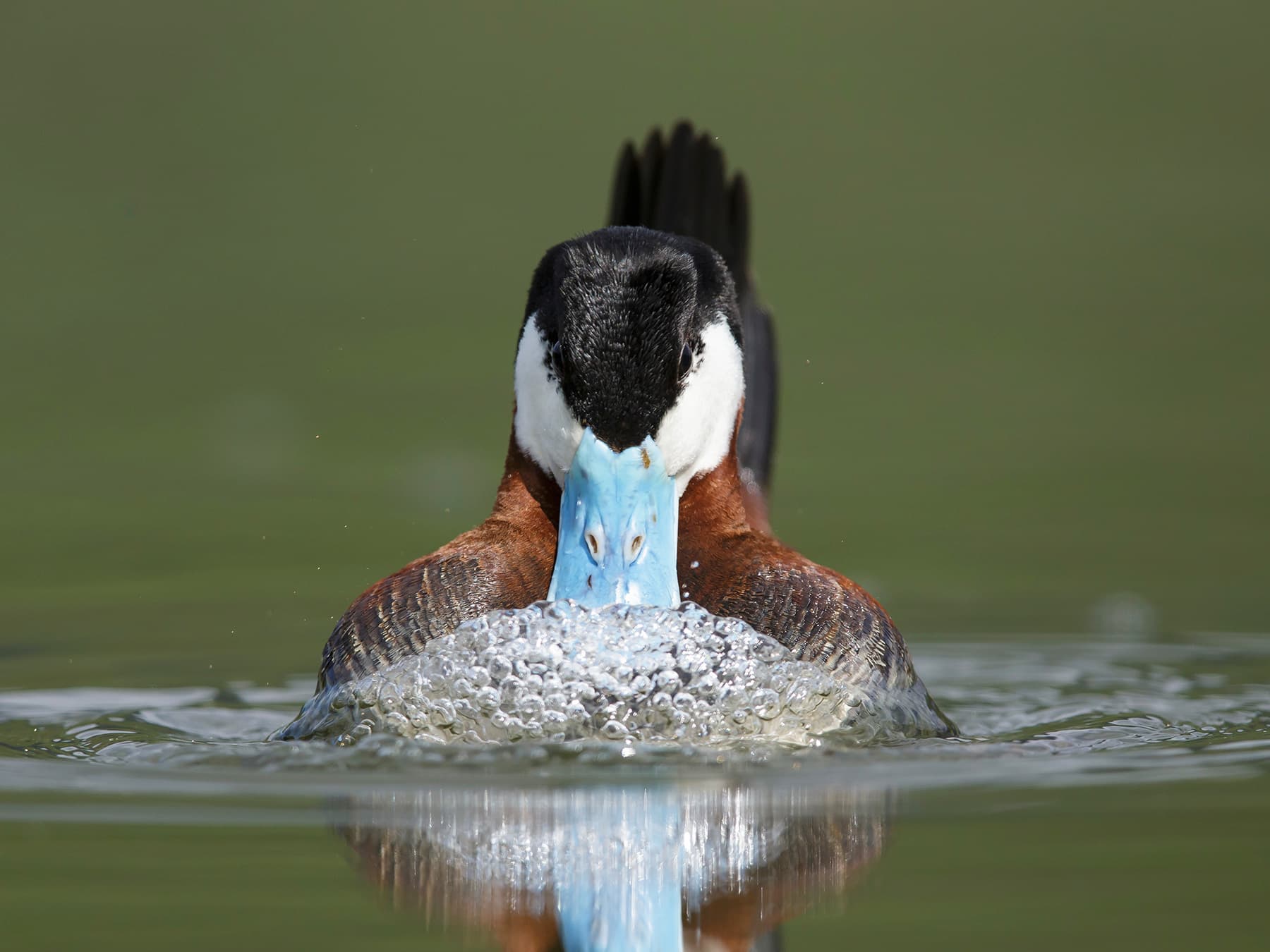
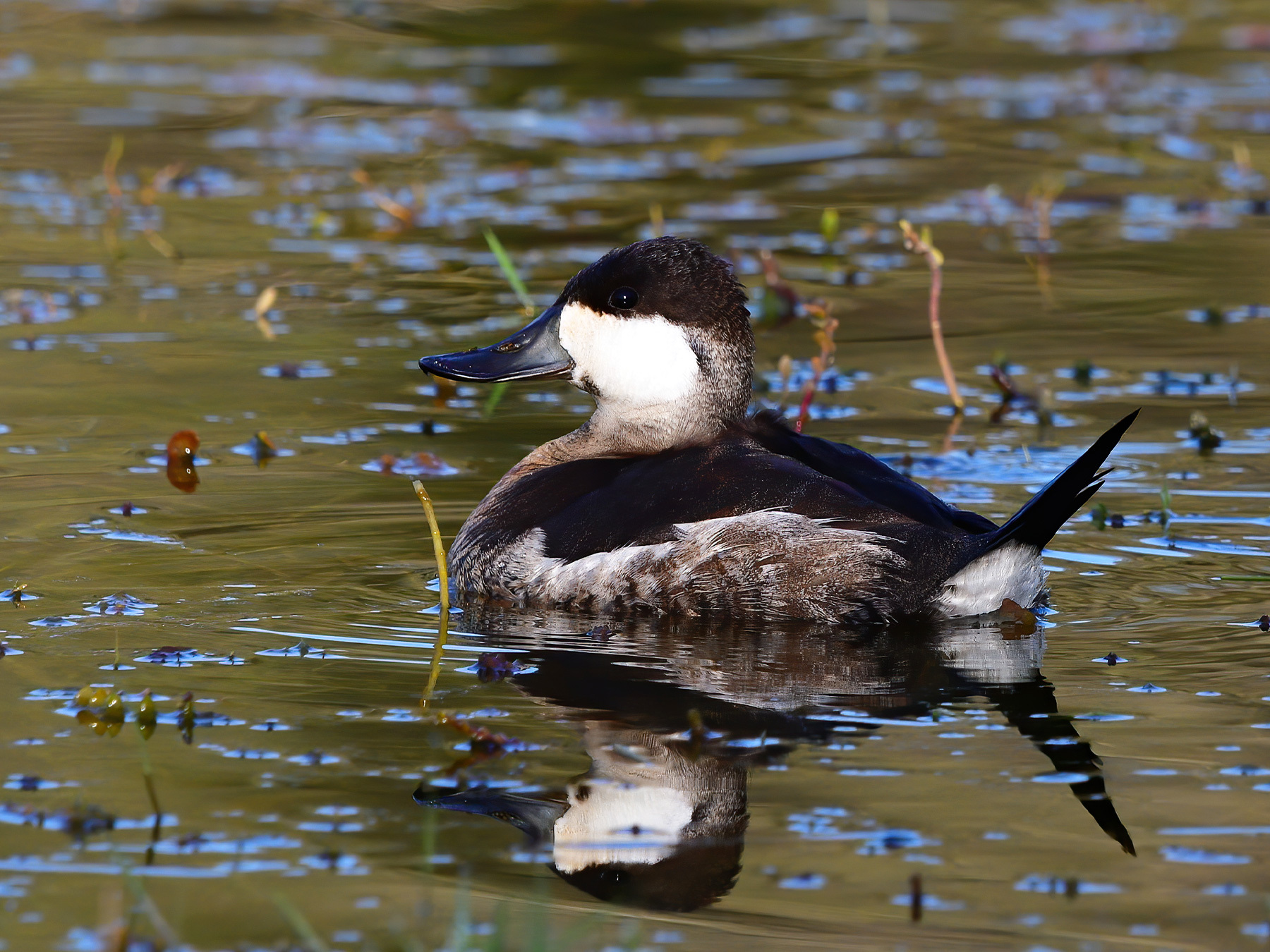
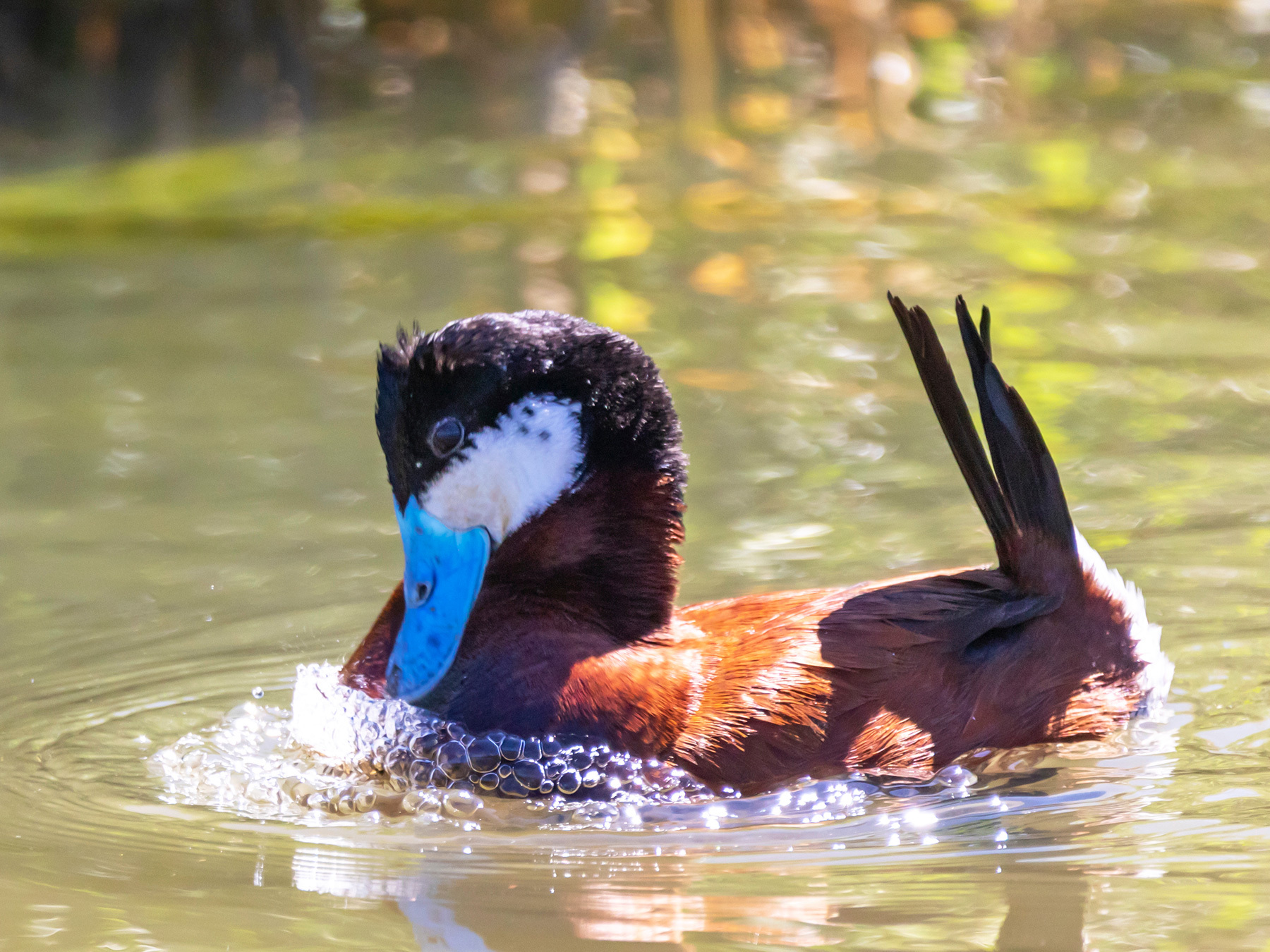
Males are distinctive in their breeding plumage, with rich chestnut plumage covering most of their body. At this time, they have a black cap, a large white patch on either side of the face, and a bright blue bill. Outside of the breeding season, males have much duller gray-brown plumage and a dark gray bill.
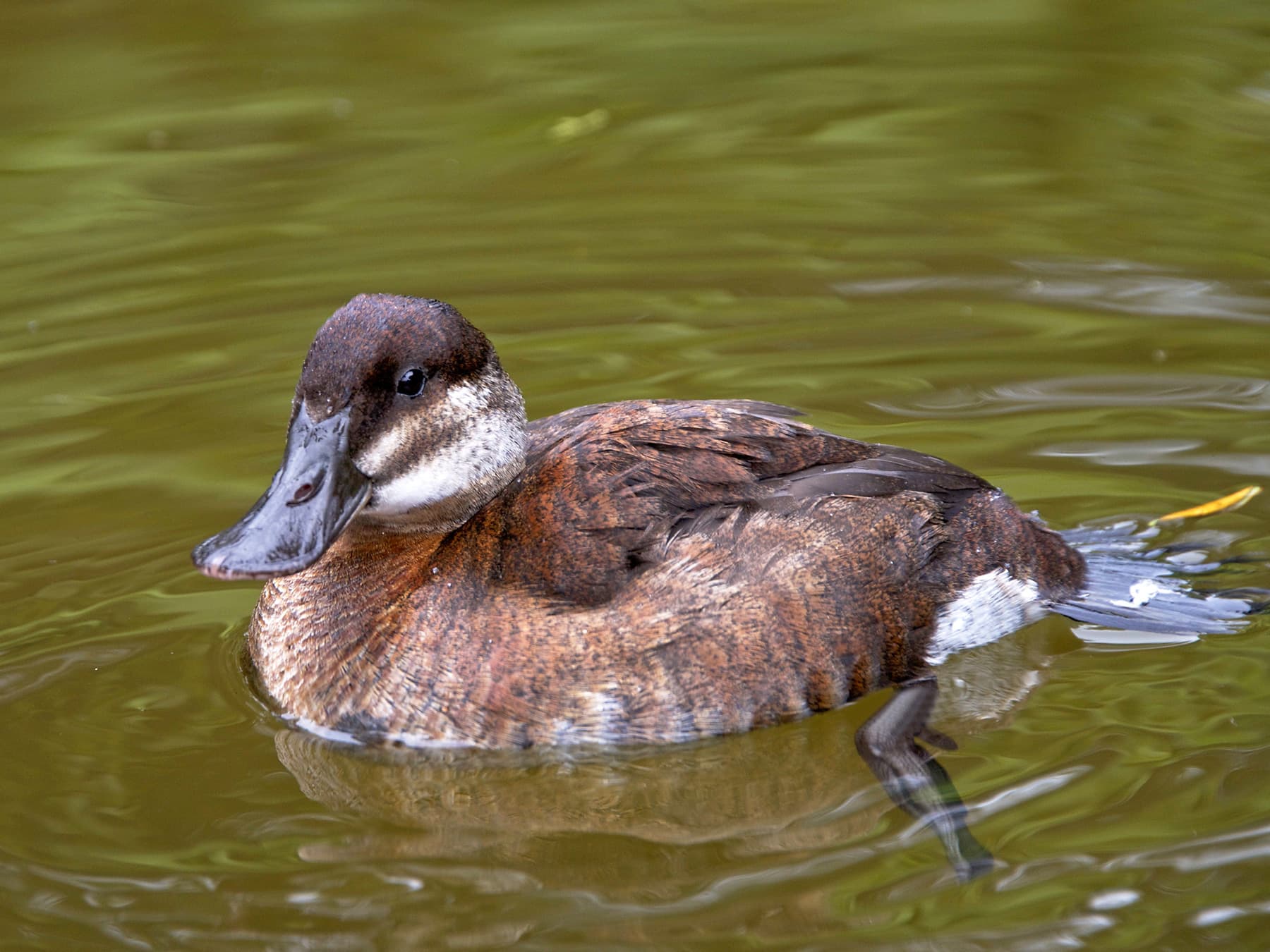
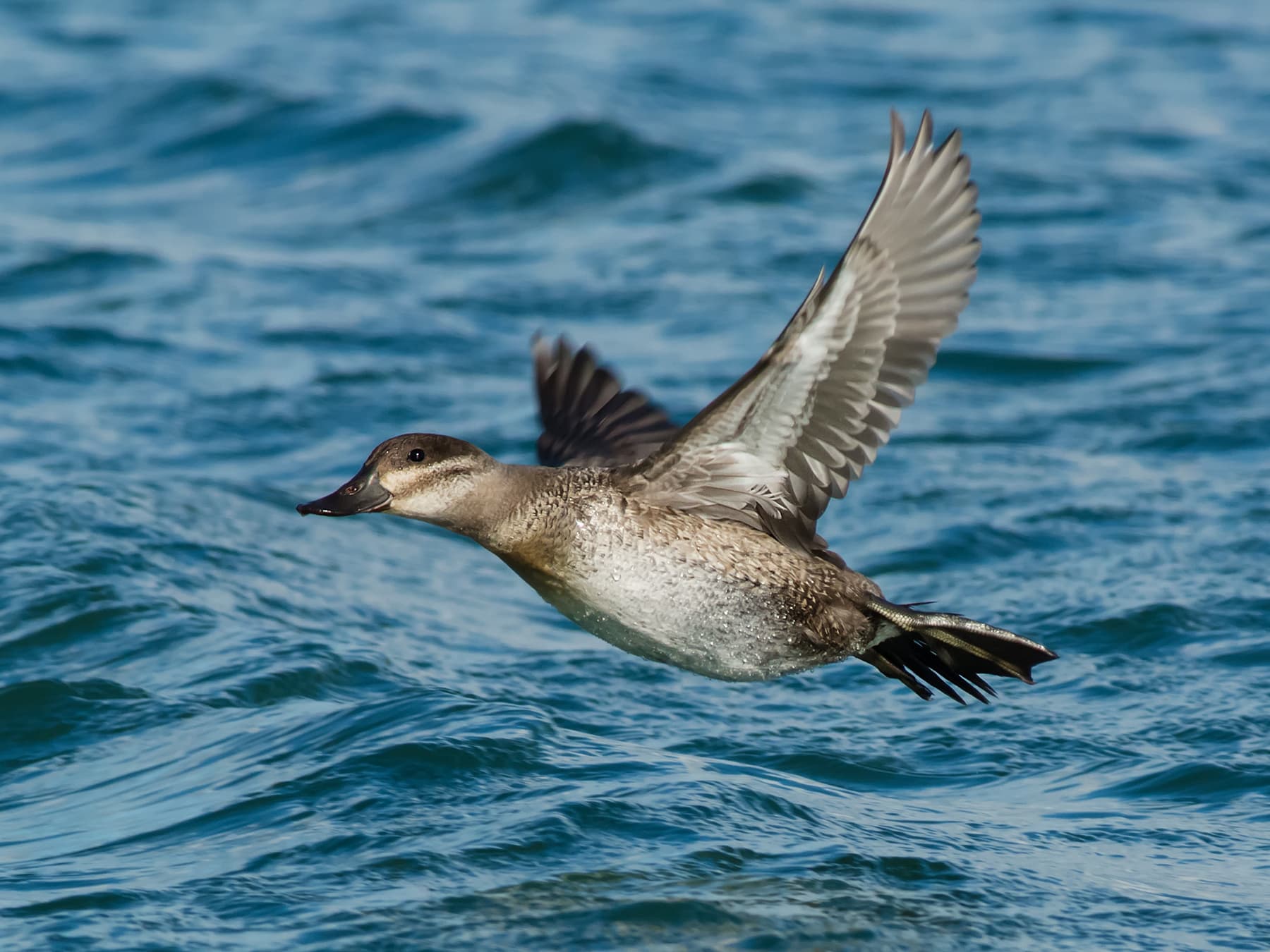
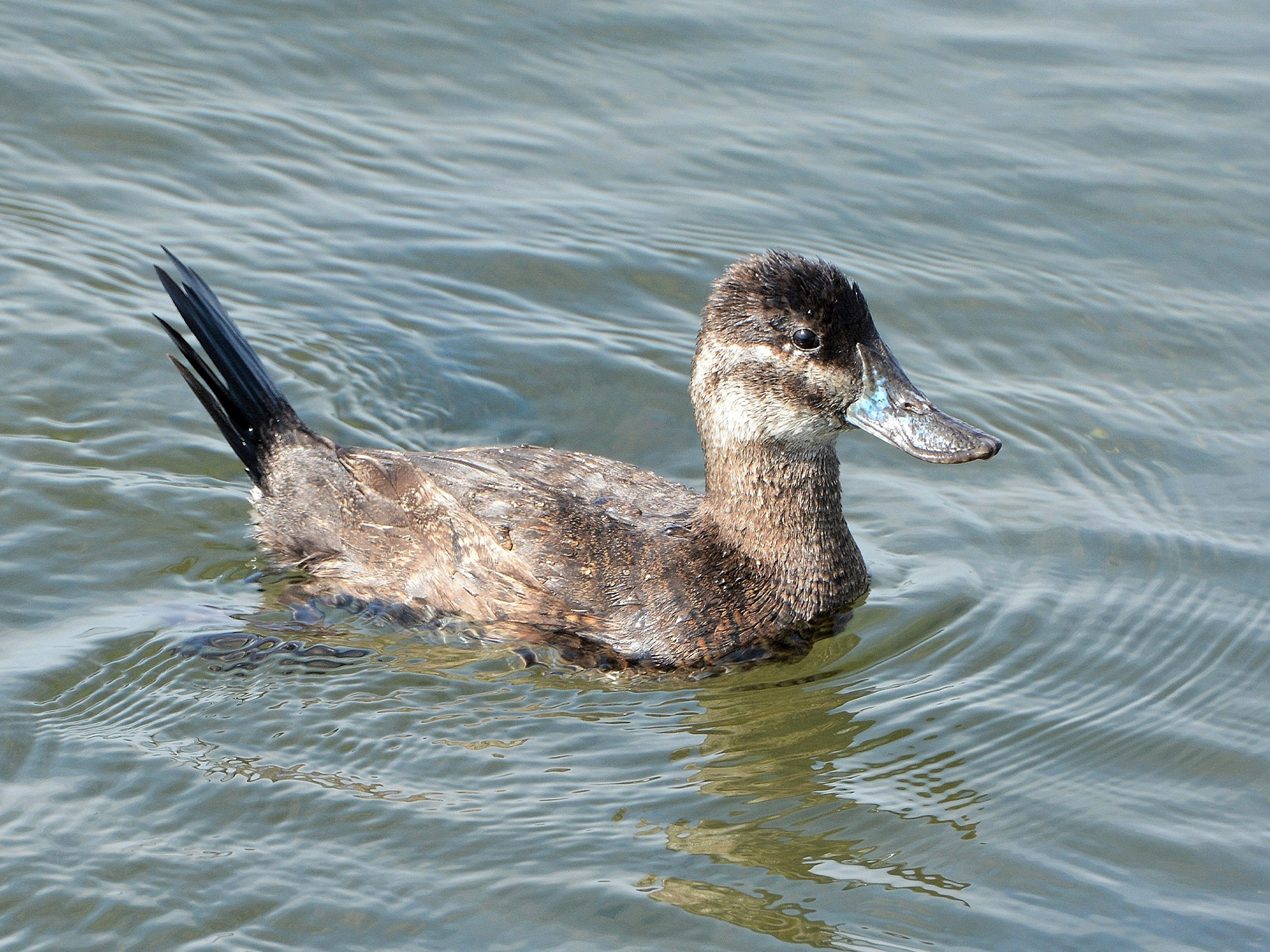
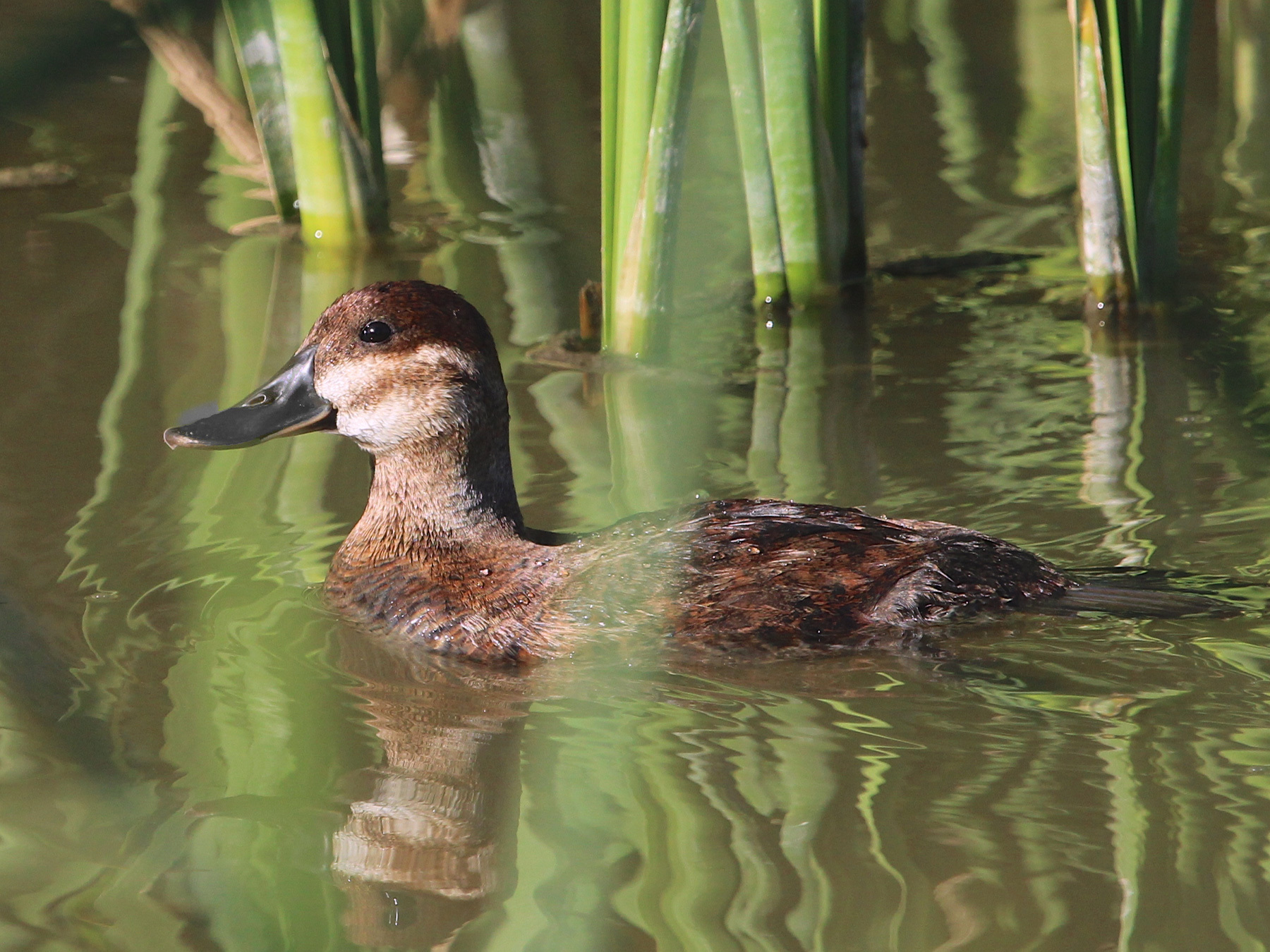
Females Ruddy Ducks are duller than their male counterparts, with mottled gray-brown plumage. They have a dark brown cap and a pale cheek with a dark horizontal line through it. Juveniles of both sexes look similar to the adult female.
How big are Ruddy Ducks?
The Ruddy Duck is a small waterfowl species. Males are generally larger than females, although there is some overlap.
Length
Males have a total length between 14½ to 17 inches (37 - 43 cm), while most females measure 13¾ - 16 inches (35 - 41 cm).
Weight
Ruddy Ducks have a wide weight range, with the largest specimens approaching two pounds. They have an average weight of about 1¼ pounds but vary between 11 and 30 ounces (300 - 850g).
Wingspan
Ruddy Ducks have a wingspan of 22 to 24 inches or 56 to 62 centimeters.
Its size
Adults- Length
- 35–43 cm
- Wingspan
- 53–62 cm
- Weight
- 450–850 g
Its song and calls
What sound does a Ruddy Duck make?
The Ruddy Duck is generally silent, although males utter a brief croaking call during their courtship display. Females call in alarm when pursued by males or grunt to communicate with their ducklings.
When and where to see it
OctoberIn season
Most recorded in October
- 1. Manchesterunder 0.1%
- 2. Somersetunder 0.1%
- 3. Rutlandunder 0.1%
- 4. Cambridgeshireunder 0.1%
Each dot is a county, state or province: the bigger and darker, the larger the bird’s share of that place’s bird records that month. Grey dots: no regular records. The ringed point is the centre of the bird’s records this month; the arrow shows how it moved since last month, and the dashed loop its path through the year. “Arrivals” colours places where it becomes regular this month (orange) or is in its last regular month (grey). GBIF eBird Observation Dataset, 2019–2024. Map data: Natural Earth, US Census Bureau; place centres © OpenStreetMap contributors.
In your area
See when the Ruddy Duck is recorded in your county, state or province.
How often the Ruddy Duck turns up in the UK, the United States and Canada through the year, from birdwatchers' records.
United Kingdom
Winter visitor · regularly Jul–Mar · most records in January
United States
Winter visitor · all year · most records in November
Canada
Resident · all year · most records in October
Show as a table
| Month | United Kingdom | United States | Canada |
|---|---|---|---|
| January | 0.002% (regular) | 0.43% (regular) | 0.075% (regular) |
| February | <0.001% (regular) | 0.36% (regular) | 0.050% (regular) |
| March | 0.001% (regular) | 0.32% (regular) | 0.069% (regular) |
| April | <0.001% | 0.22% (regular) | 0.14% (regular) |
| May | <0.001% | 0.099% (regular) | 0.13% (regular) |
| June | <0.001% | 0.076% (regular) | 0.13% (regular) |
| July | <0.001% (regular) | 0.075% (regular) | 0.12% (regular) |
| August | <0.001% (regular) | 0.076% (regular) | 0.097% (regular) |
| September | <0.001% (regular) | 0.085% (regular) | 0.10% (regular) |
| October | <0.001% (regular) | 0.24% (regular) | 0.18% (regular) |
| November | <0.001% (regular) | 0.47% (regular) | 0.17% (regular) |
| December | <0.001% (regular) | 0.40% (regular) | 0.071% (regular) |
Recorded regularly in
Worldwide: recorded regularly in 29 countries
Countries where it was recorded in at least 3 of the 6 years 2019–2024. Linked countries have their own bird list.
Europe (6)
North America (23)
- Anguilla
- Antigua & Barbuda
- Bahamas
- Barbados
- British Virgin Islands
- Canada
- Cuba
- Dominican Republic
- El Salvador
- Grenada
- Guadeloupe
- Guatemala
- Haiti
- Jamaica
- Mexico
- Nicaragua
- Puerto Rico
- Sint Maarten
- St Kitts & Nevis
- St Martin
- Turks & Caicos Islands
- United States
- US Virgin Islands
Data: EOD – eBird Observation Dataset (Cornell Lab of Ornithology), accessed via GBIF.org, CC BY 4.0. Records from 2019–2024, aggregated and filtered by Birdfact. How these lists are made
What is the habitat of a Ruddy Duck?
Ruddy Ducks inhabit various fresh and estuarine water bodies. They breed on deeper freshwater wetlands, reservoirs, and ponds. However, they occupy a greater variety of habitats during migration and the non-breeding season, including coastal marshes and estuaries.
What is the range of a Ruddy Duck?
The Ruddy Duck has an extensive but patchy distribution in North America, from Eastern Alaska in the north to Central America and the Caribbean. They are non-native but present in many European countries and have also spread to Morrocco and Tunisia in North Africa.
Locally, Ruddy Ducks occur in most of the Lower 48 states, although they only pass through much of the Northeast and Midwest on migration. They overwinter along the West and East Coasts and across the south from the Southwest to Florida. The Prairie Pothole region of the West and Midwest, the Southwest, and the Great Lakes Region are important breeding areas.
Where do Ruddy Ducks live?
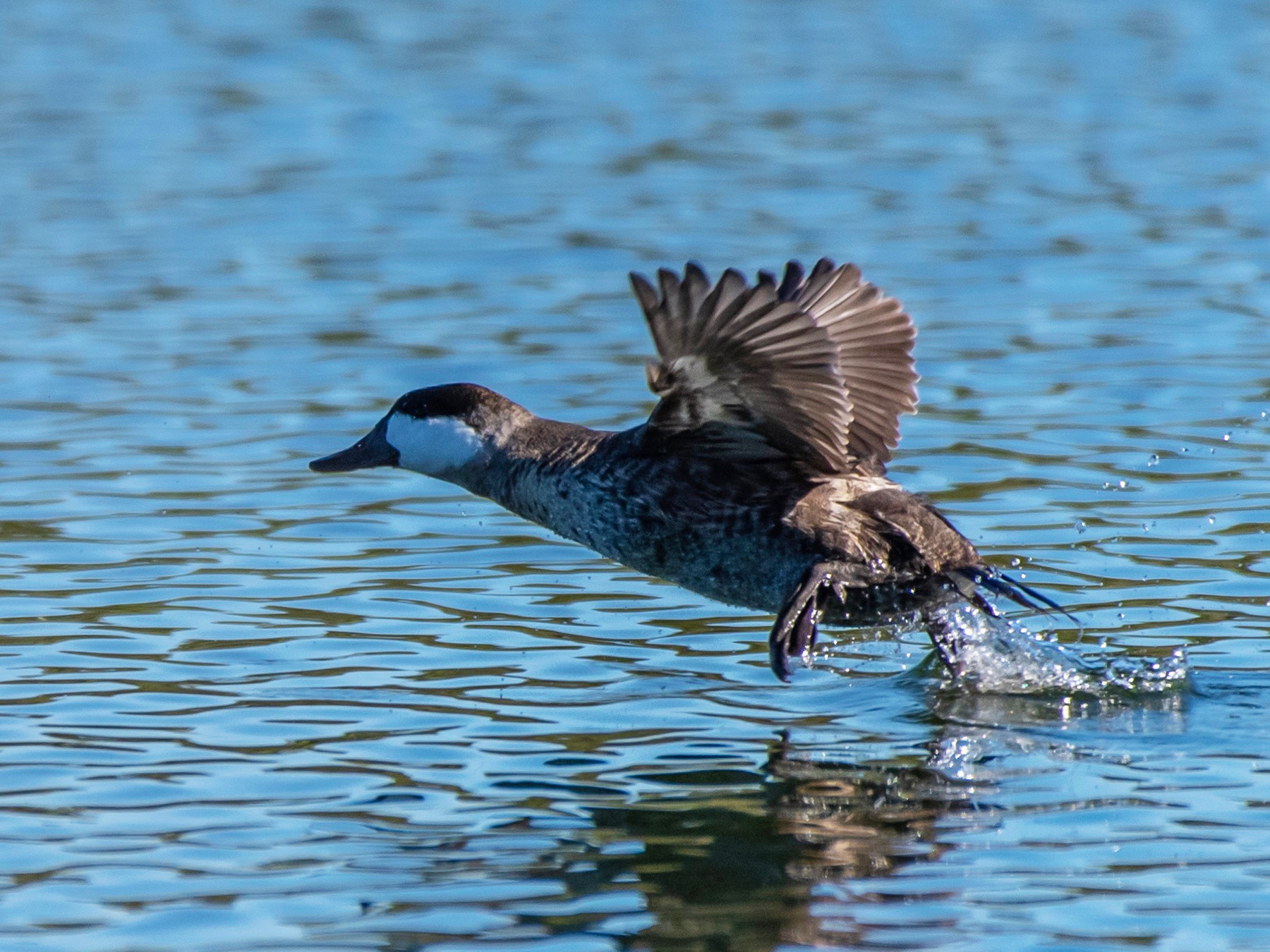
Ruddy Ducks spend almost all of their time on the water. In fact, these diving ducks are so clumsy on land that they can barely walk! They can fly strongly, although they struggle to get airborne.
How rare are Ruddy Ducks?
Ruddy Ducks are common in North America, although their migratory habits cause their numbers to fluctuate through the states and seasons.
Where can you see Ruddy Ducks in North America?
Ruddy Ducks are widespread in North America. The largest concentrations occur during the breeding season in South and North Dakota, Southwestern Manitoba, and neighboring states and provinces on either side of the USA/Canada border.
Where can you see Ruddy Ducks in the UK?
Ruddy Ducks are a controversial bird in the United Kingdom. They are very rare in the wild after a largely successful eradication program that began in 2005, and birdwatchers are encouraged to report sightings.
Migration
Do Ruddy Ducks migrate?
Ruddy Ducks are highly migratory over most of their North American range, although southern populations in the Caribbean, Mexico, and New Mexico are resident. Most of the population breeds in the Prairie Pothole region and overwinters in coastal areas at lower latitudes.
Ruddy Ducks embark on their spring migration between February and May and return to overwintering sites between August and December.
Are Ruddy Ducks native to North America?
Ruddy Ducks are a native species in North America.
Are Ruddy Ducks native to the UK?
Ruddy Ducks are not native to the United Kingdom. They escaped captivity in the 1950s and quickly established themselves, eventually crossing to continental Europe and spreading to more than 20 other countries.
Tips for seeing it
- Look for their distinctive stiff, upright tail while swimming
- Observe their diving behavior, as they frequently submerge for food
- Listen for the male's unique bubbling display during breeding season
- In the UK, check reservoirs and gravel pits where they've become established
What it eats
What do Ruddy Ducks eat?
Ruddy Ducks eat some plant material, although they are primarily carnivorous. These birds feed by straining bottom sediment through their bills and filtering out small organisms like midge larvae, crustaceans, and zooplankton.
What do Ruddy Duck chicks eat?
Baby Ruddy Ducks (ducklings) feed themselves without any assistance from their parents. They eat the same foods as adults.

Nesting and breeding
Where do Ruddy Ducks nest?
Most Ruddy Ducks nest in the Prairie Pothole Region of Southwestern Canada and the American Midwest. The female builds a nest just above the water among wetland vegetation like cat tails. The nest is a cup of dry or fresh vegetation, often hidden from above by a roof of woven vegetation.
When do Ruddy Ducks nest?
Ruddy Ducks first arrive on their breeding grounds between late March and late April. Pairs form soon after and build their nests about a month later. Depending on latitude, eggs are laid between late April and late June and hatch after about 23 days.
What do Ruddy Duck eggs look like?
Ruddy Ducks lay anything from three to thirteen white eggs, each measuring 56 to 72 millimeters long and 41 to 50 millimeters wide.
Do Ruddy Ducks mate for life?
Ruddy Ducks do not mate for life. They may form pairs that last a single season, change partners within a season, or form polygynous relationships where one male mates with several females.
Behaviour
Are Ruddy Ducks aggressive?
Ruddy Ducks are aggressive little waterfowl. The males are particularly belligerent in the breeding season when they will even chase other waterbirds and small animals. They use display and posturing to drive off rivals, but this frequently escalates into chases and physical conflict out on the water.
Where do Ruddy Ducks sleep at night?
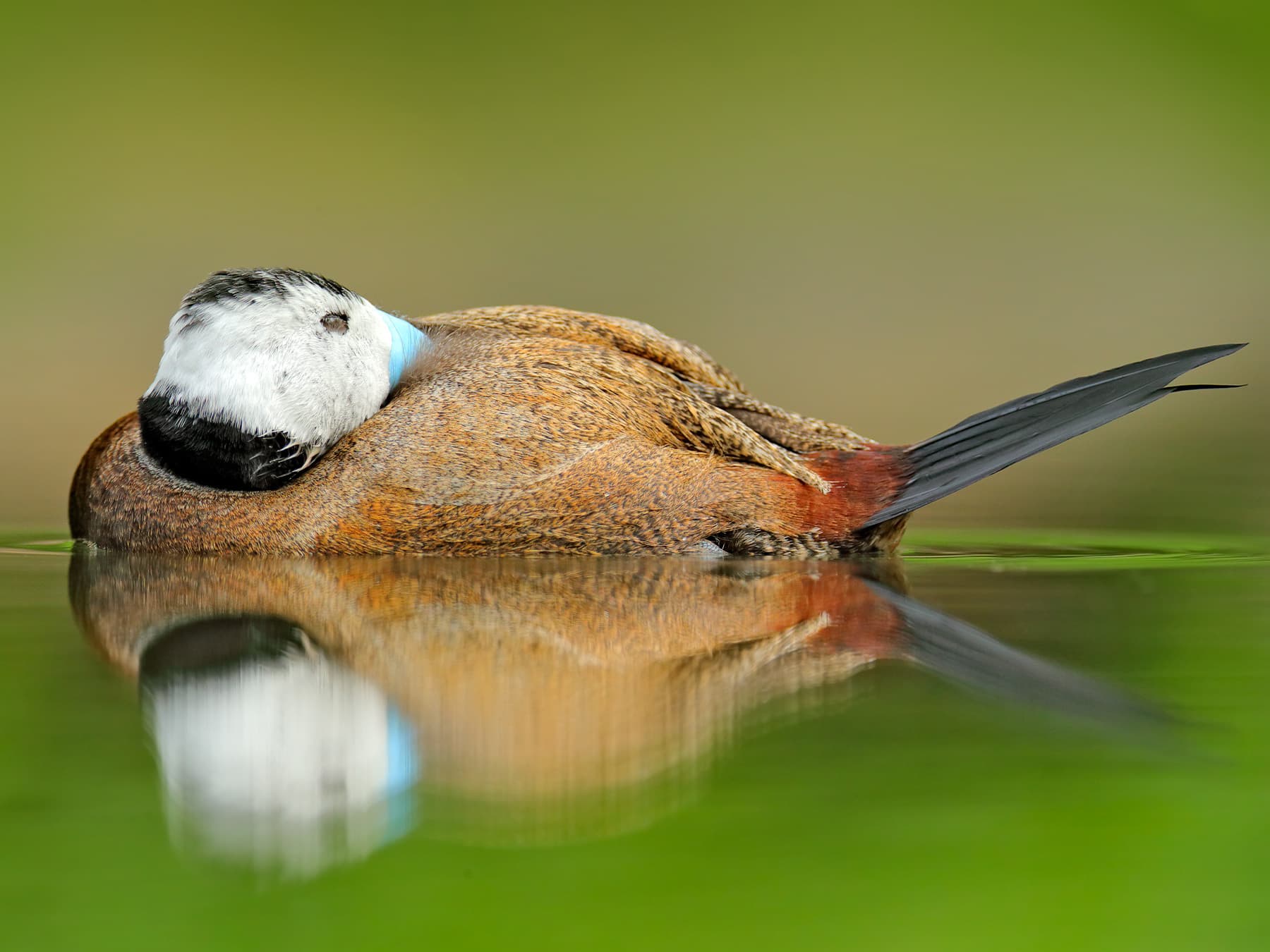
Ruddy Ducks rarely leave the water. They sleep out in the open water, floating, with their bill tucked under their shoulder feathers for warmth. They will move to a sheltered position near the bank or behind an island in bad weather.
Lifespan and predators
How long do Ruddy Ducks live?
Ruddy Ducks can live for over thirteen years, although their average life expectancy is much shorter.
What are the predators of Ruddy Ducks?
Ruddy Ducks are vulnerable to predators at all stages of their lives. Eggs and chicks may be taken by mammals like raccoons and mink and by birds like crows and gulls. Adults are hunted by birds of prey like Red-tailed Hawks, Great-horned Owls, and even cooper’s Hawks. Humans also hunt these waterfowl.
Are Ruddy Ducks protected?
The Migratory Bird Treaty Act protects Ruddy Ducks in North America, although regulated hunting is legal. They do not enjoy protection in the United Kingdom and Europe, where they are considered invasive and a threat to the native White-headed Duck that breeds in Spain.
Are Ruddy Ducks endangered?
Ruddy Ducks are not endangered, although their world population is thought to be decreasing. They are assessed as a ‘Least Concern’ species on the IUCN Red List.
Conservation
While globally listed as Least Concern, Ruddy Ducks face challenges in Europe where they're considered an invasive species.
Control programs in the UK and other European countries aim to protect the native White-headed Duck from hybridization. In North America, wetland conservation efforts benefit this species.
More photos
7 photos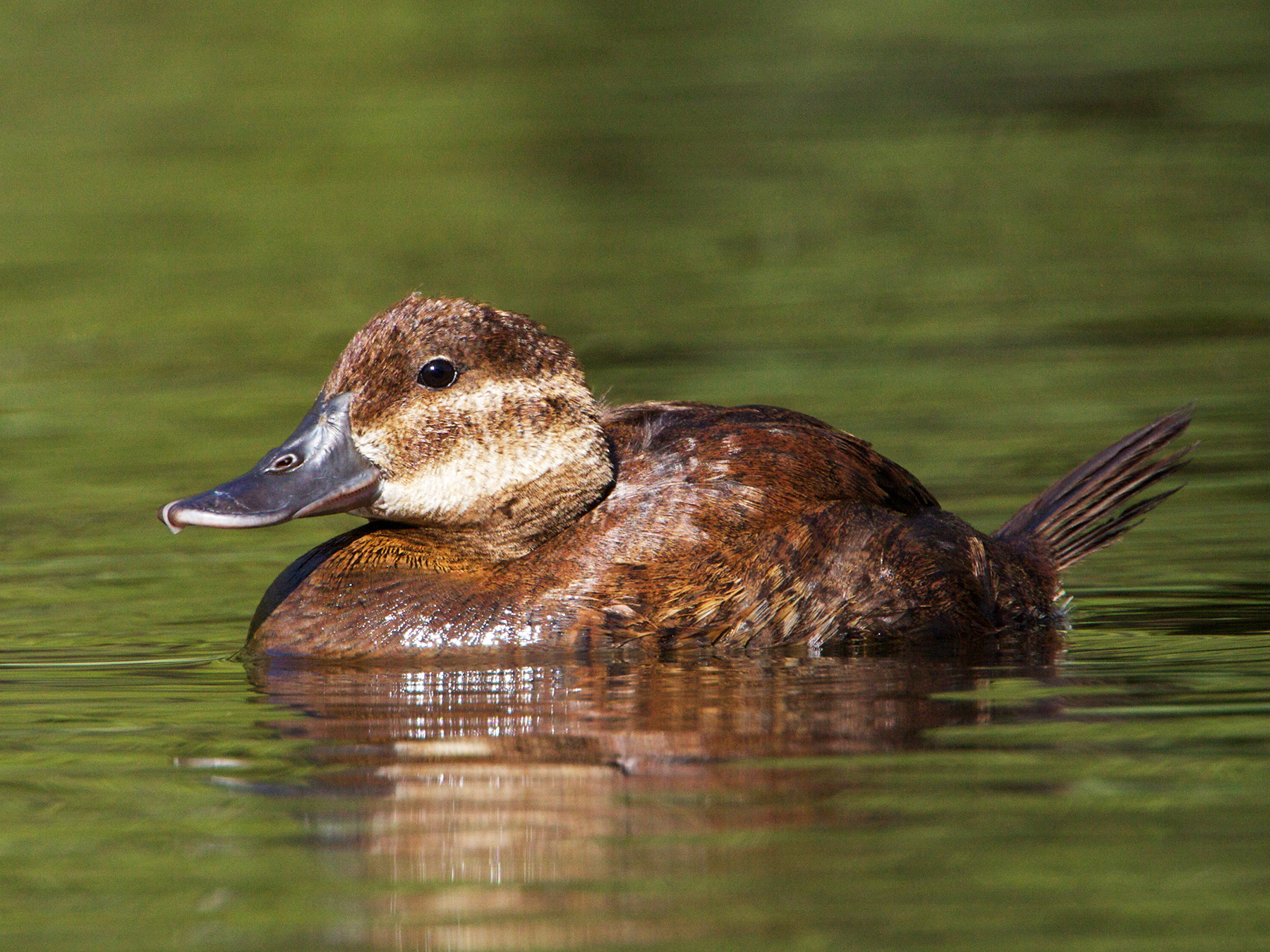
Ruddy Duck guides
5 guidesQuick facts
- Length
- 35–43 cm
- Wingspan
- 53–62 cm
- Weight
- 450–850 g
- Lifespan
- 10–15 years · oldest recorded 10.7 years
- Family
- Ducks, Geese & Swans
- Migration
- Partial migrant
- Global status (IUCN)
- Least Concern
- World population
- 1,700,000 mature individuals
- Population trend
- Decreasing
- Also called
- Stiff-tailed Duck, Spiny-tailed Duck
- Scientific name
- Oxyura jamaicensis
Questions
3Why do Ruddy Ducks have blue bills?
Only the male Ruddy Duck develops a bright blue bill, and then only during the breeding season. His colorful bill and plumage are a display of his fitness and are used to impress potential mates.
Why are they called Ruddy Ducks?
The Ruddy Duck’s common name is not particularly inclusive across the species. Ruddy means reddish, which is a good description of the male’s rusty breeding plumage.
Can you eat Ruddy Ducks?
Ruddy Ducks fly chiefly at night and dive rather than flush, making them unpopular targets among waterfowl hunters. However, they are certainly edible and were once quite popular for their meat.
Sources
4- 1BirdLife International. 2018. Oxyura jamaicensis. The IUCN Red List of Threatened Species 2018: e.T22727750A132178041. Source (opens in a new tab)
- 2Wetlands International (2006)
- 3Partners in Flight (2022) Source (opens in a new tab)
- 4BTO longevity records: maximum age from a ringed bird, 10 years, 8 months, 20 days (set in 2004), BirdFacts: Ruddy Duck (2004) Source (opens in a new tab)

Checked by
Nathan Cope, founder and editor
Nathan founded Birdfact and leads its writers and contributors in the UK, the US and Canada. He has watched and studied birds for more than ten years, and checks every article and species guide before it’s published.