
Ringed Plover
Common Ringed Plover · Charadrius hiaticula
By the Birdfact teamChecked by Nathan Cope
On this page14 sections
How to recognise it
Ringed Plovers are relatively easy to identify, although their appearance changes somewhat with the seasons, and they are easily confused with a similar plover species. Continue reading to learn some handy Ringed Plover identification tips.
What do Ringed Plovers look like?
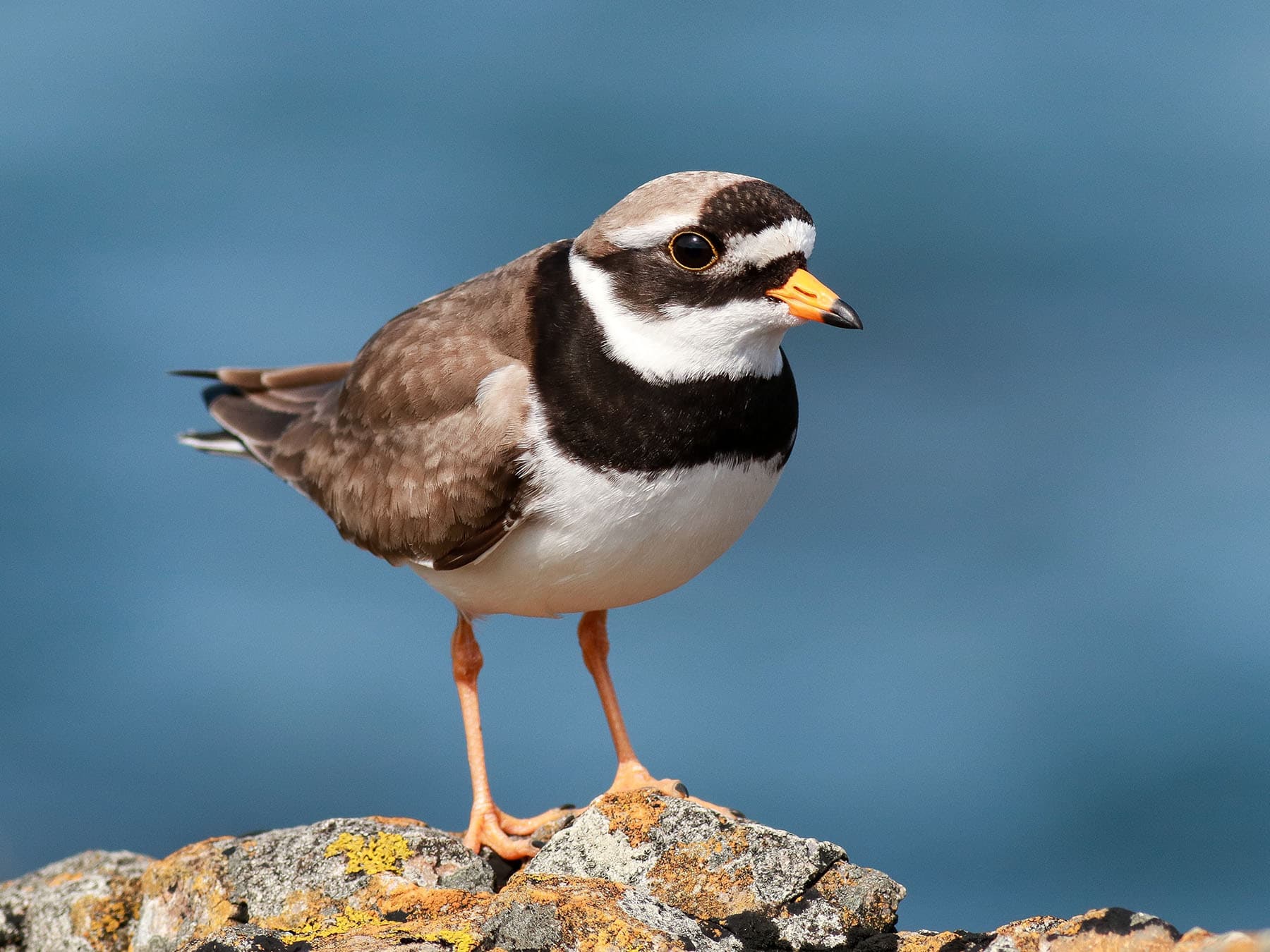
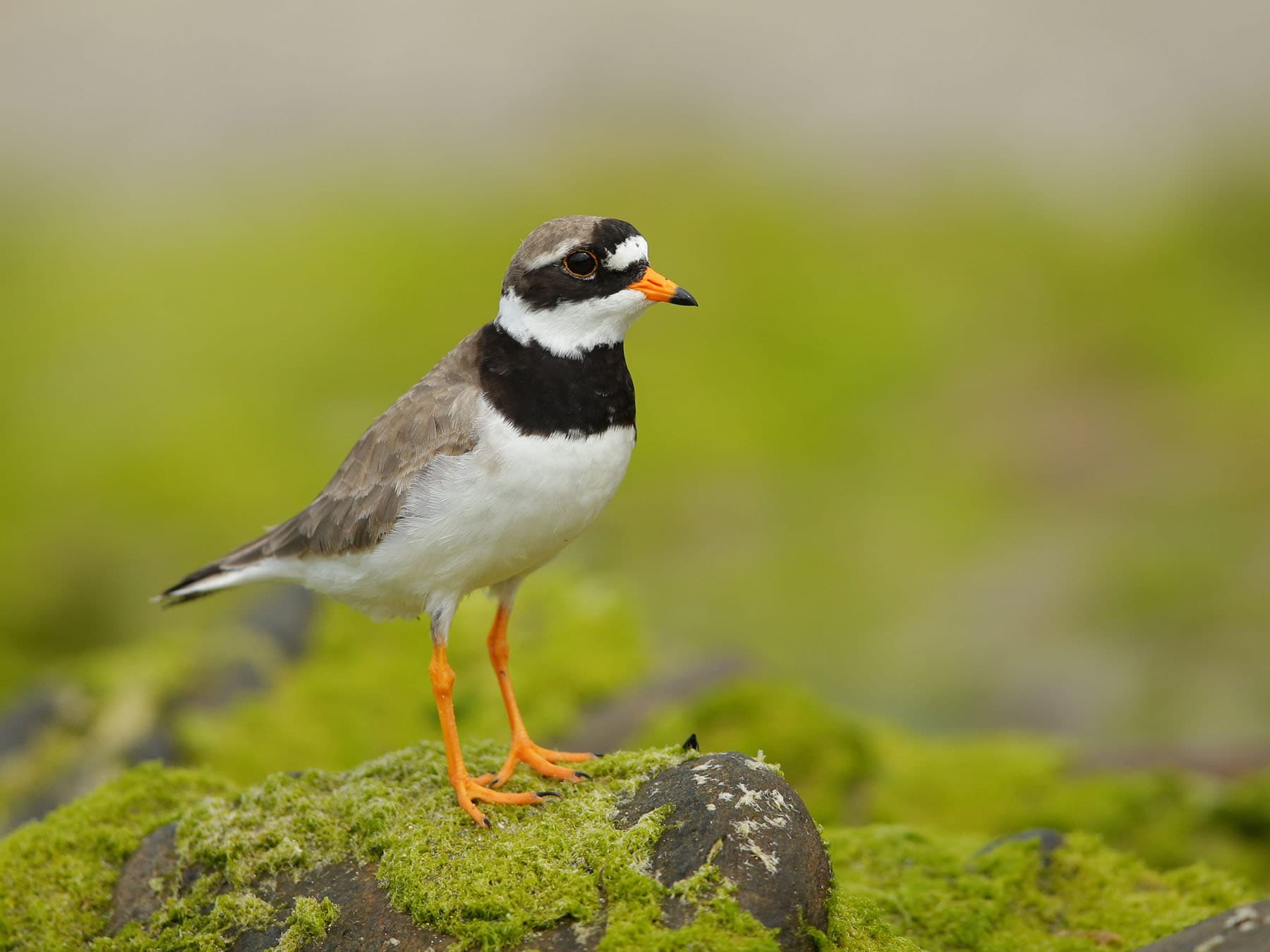
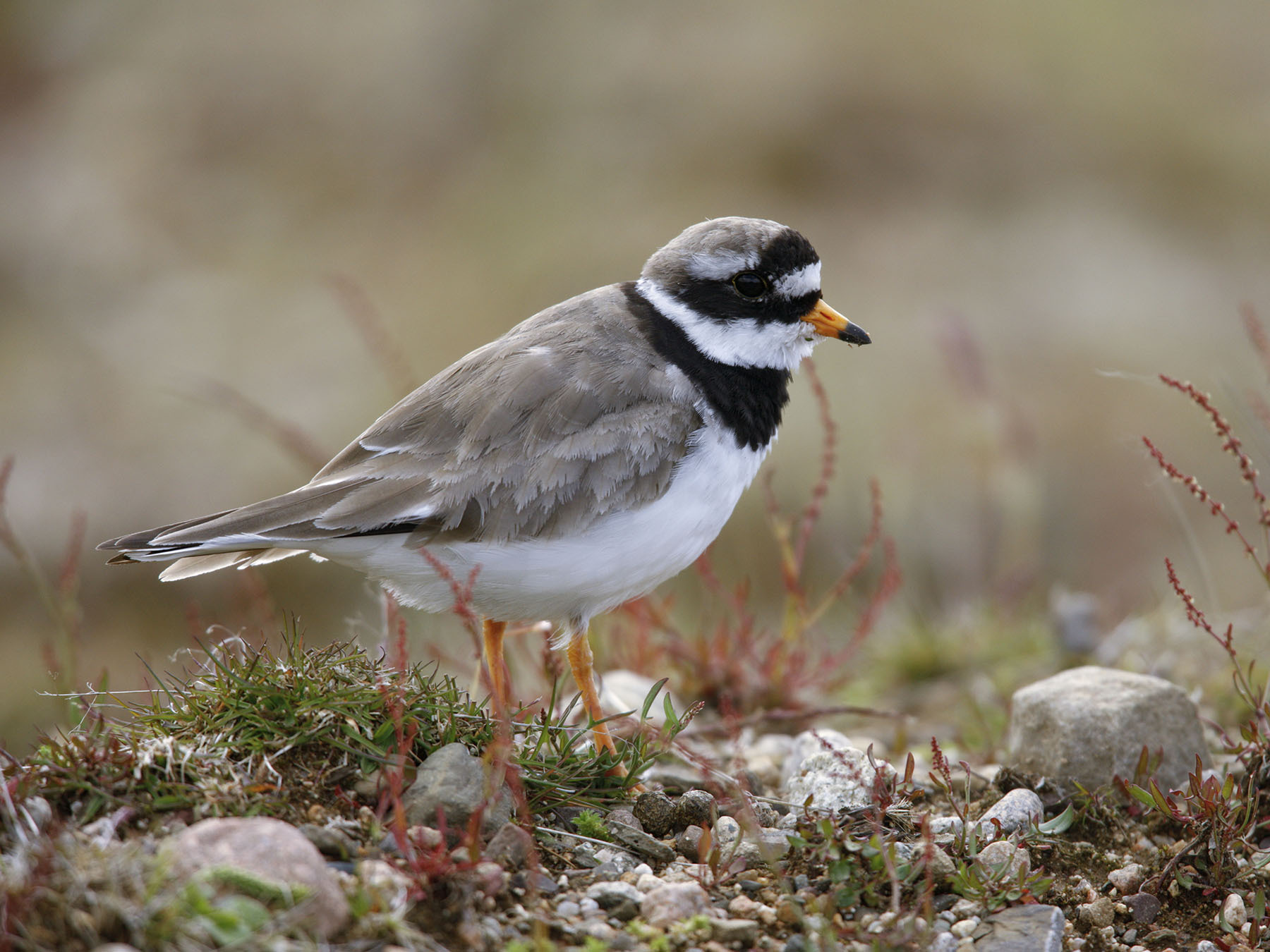
Ringed Plovers are most boldly marked in the breeding season when they have a bright orange bill with a black tip. Their orange legs contrast with pure white underparts, and they have a bold black ring around their neck and a black face mask.
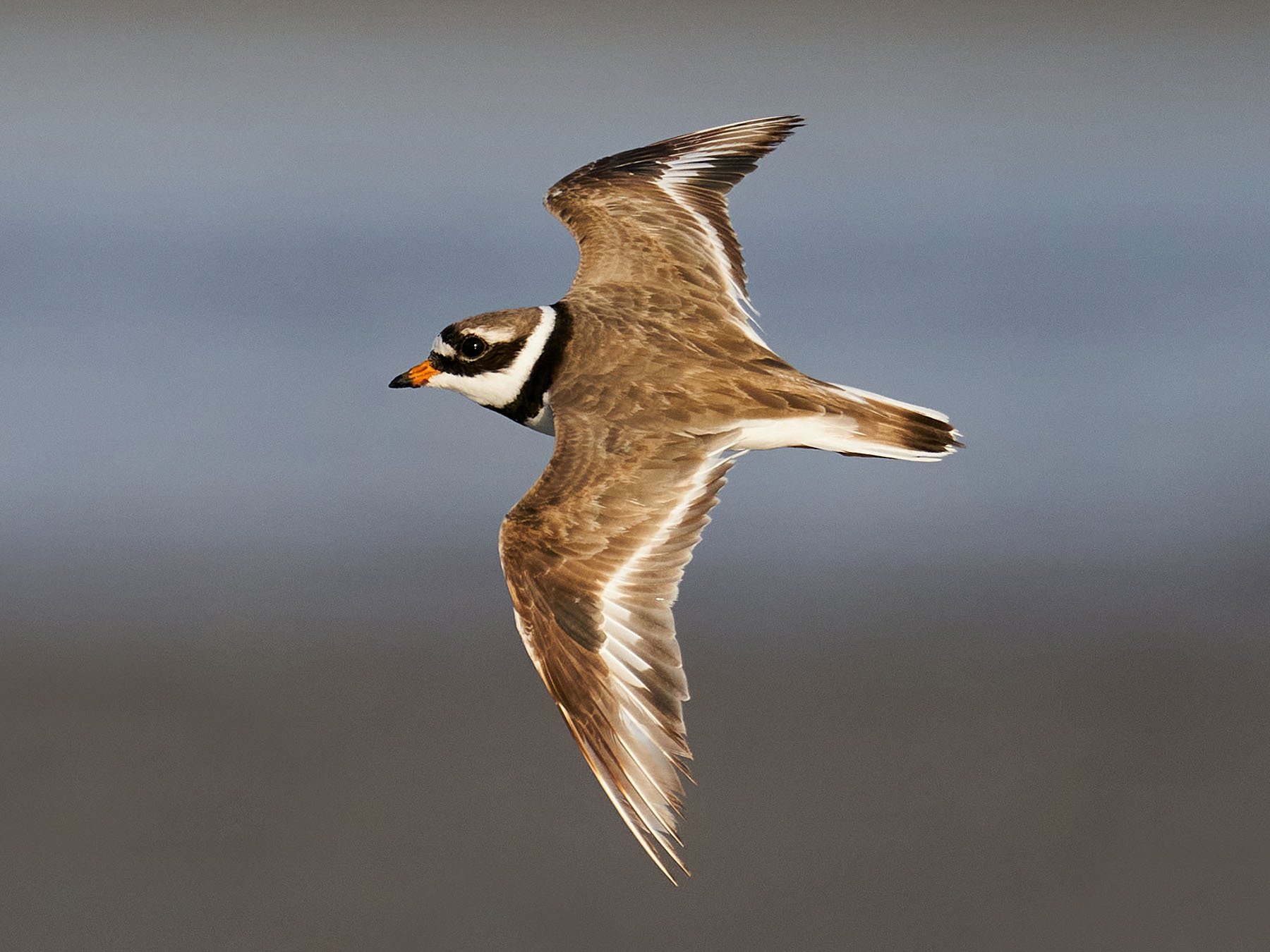
A closer look reveals a white marking on the front of the head and a white stripe above each eye. The back and crown of the head are brown. When the upper parts are seen in flight, Ringed Plovers display white wing bars and white around the tail, which is black towards the tip. The white and black rings around the neck are conspicuous.
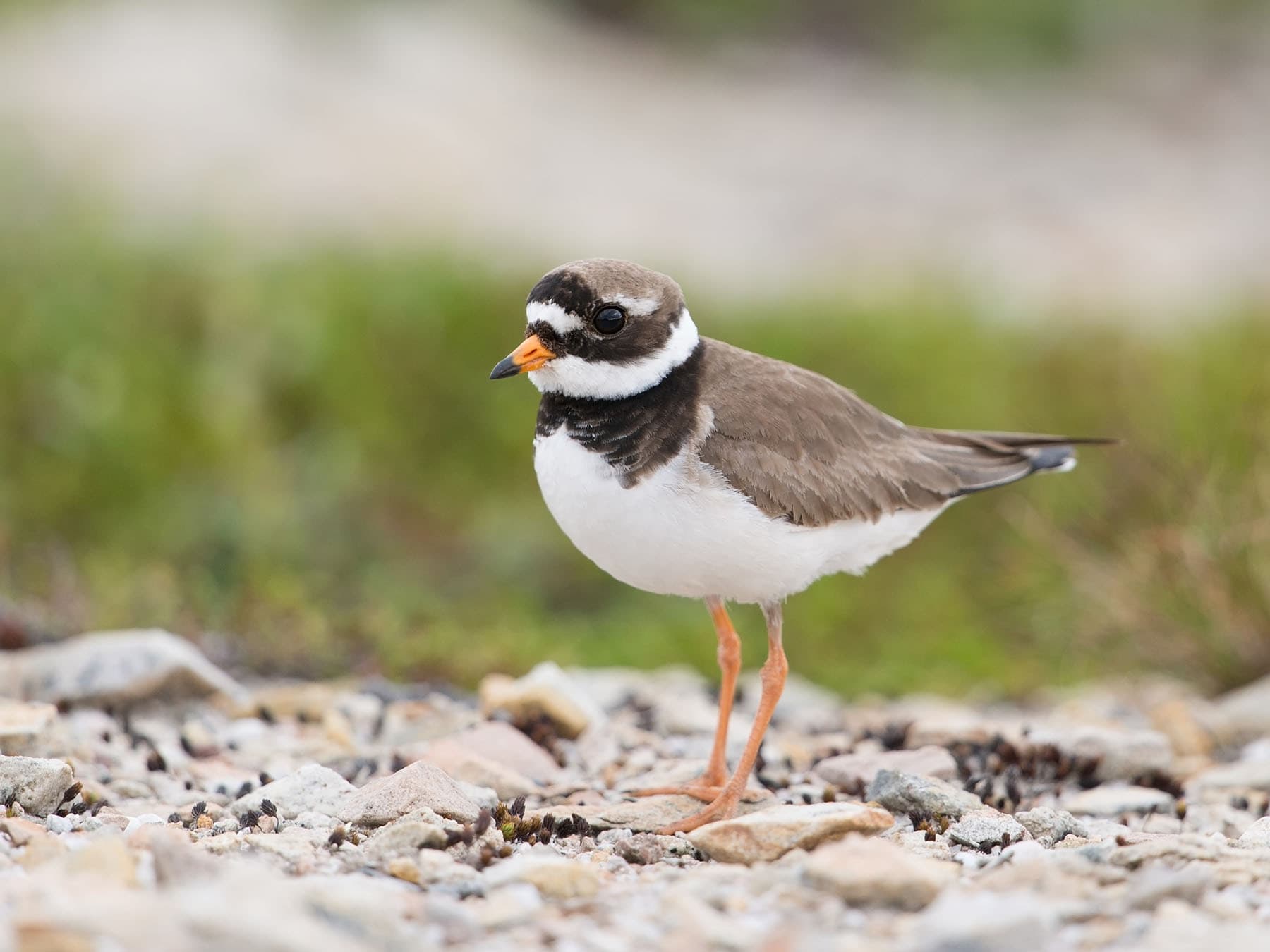
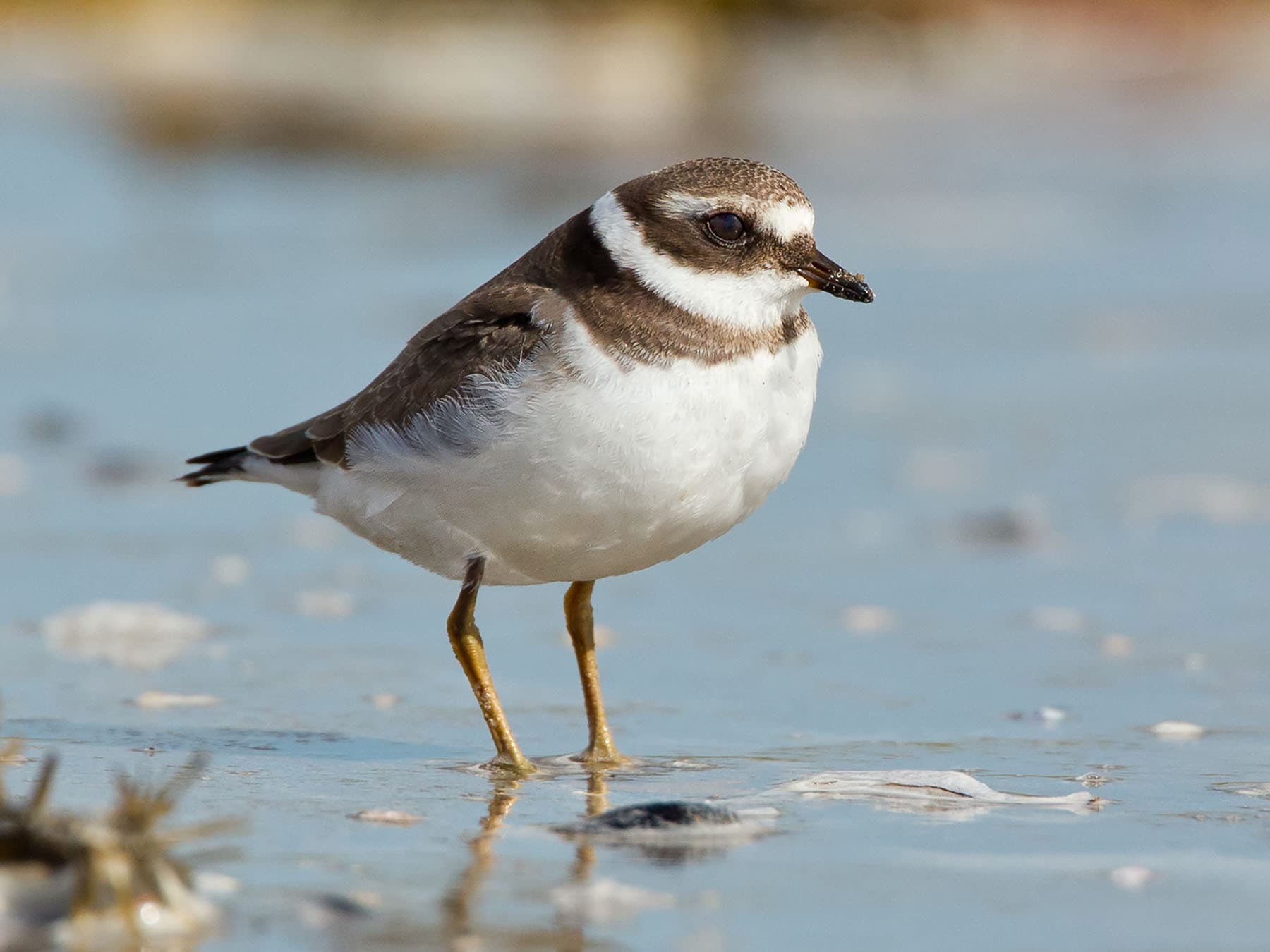
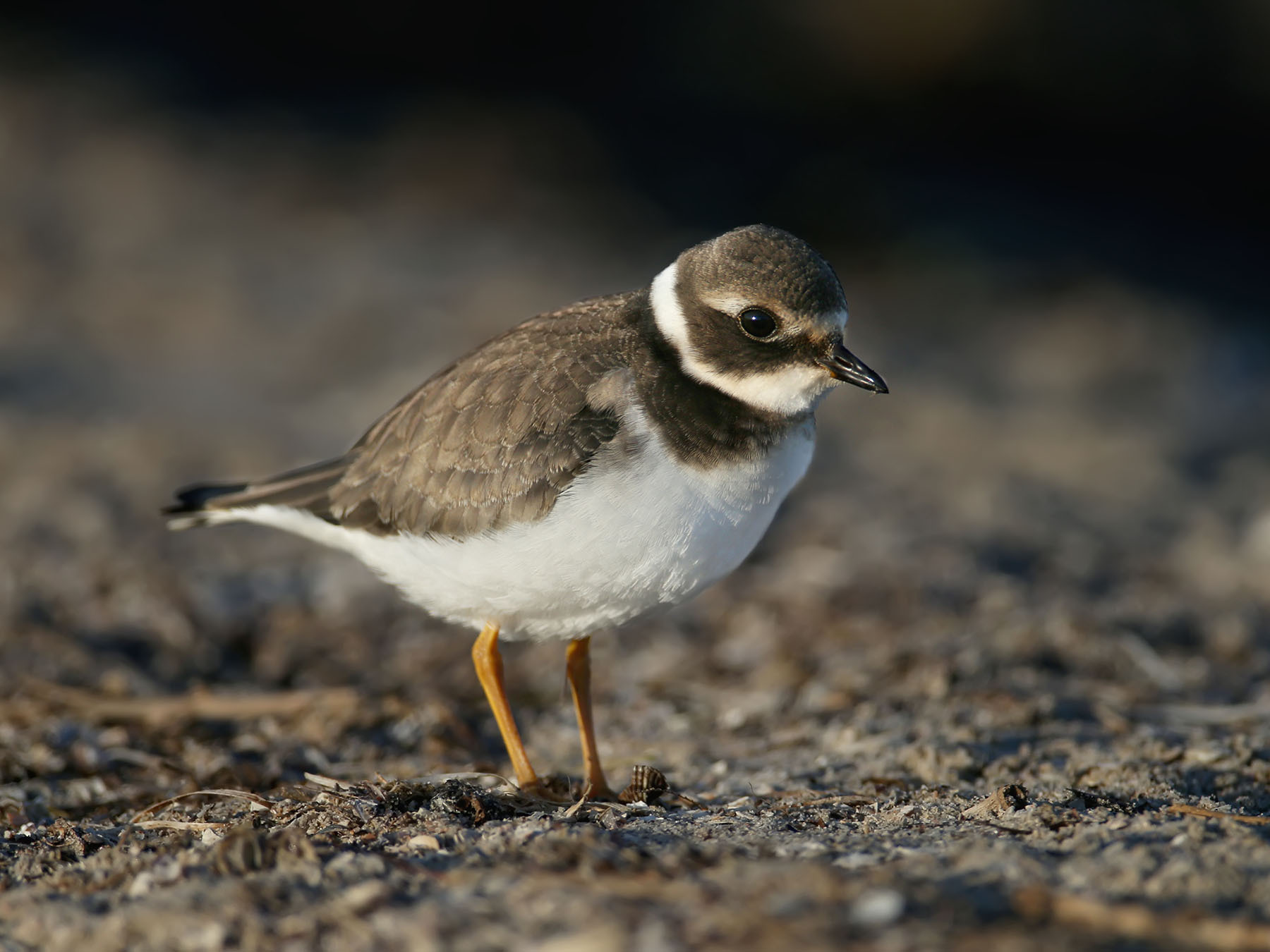
Female Ringed Plovers resemble males but have less prominent black markings on the throat and face. In the winter, both sexes lose their bright black rings, which dull to a dark brown shade. Their legs remain orange, although the bill may become completely dark.
Juveniles lack the bright orange bill and black markings altogether. The head and neck may appear slightly darker than the back, but the ring around the neck is broken in the front.
Ringed Plovers can be told from the similar Little Ringed Plover by their black-ringed eye (orange-ringed in Little Ringed Plover). Little Ringed Plovers also have slim, dull pink legs and an all-dark bill.
How big are Ringed Plovers?
Ringed Plovers are small but chunky waders. Their legs are short and heavy for a plover, and their bills are short and stout.
Length
Adult Ringed Plovers have a body length of 18 to 20 centimetres.
Weight
They weigh 42 to 78 grams.
Wingspan
Ringed Plovers have a rather impressive wingspan for a bird of their length, with recorded measurements of 48 to 57 centimetres.
Its size
Adults- Length
- 17–19 cm
- Wingspan
- 35–41 cm
- Weight
- 55–75 g
Its song and calls
Ringed Plovers are often heard in flight when they produce a pleasant whistled call. Listen out for these birds near sandy beaches, estuaries, and other shallow water bodies.
What sound does a Ringed Plover make?
The Ringed Plover’s flight call is a mellow, two-noted ‘pee-ee’ or ‘too-ee’. They also produce a three-noted call when displaying in the breeding season.
- Song and calls0:00 / 1:11
Recorded in Kalmar län, Sweden · April 2024
- Call0:00 / 0:42
Recorded in Norfolk, England
Aubrey John Williams / The British Library Board · Wikimedia Commons · CC BY-SA 4.0
When and where to see it
OctoberLeaving
Most recorded in October
- 1. Derry1.6%
- 2. Mayo1.5%
- 3. Eilean Siar1.4%
- 4. Kerry1.3%
- 5. Orkney Islands1.3%
Each dot is a county, state or province: the bigger and darker, the larger the bird’s share of that place’s bird records that month. Grey dots: no regular records. The ringed point is the centre of the bird’s records this month; the arrow shows how it moved since last month, and the dashed loop its path through the year. “Arrivals” colours places where it becomes regular this month (orange) or is in its last regular month (grey). GBIF eBird Observation Dataset, 2019–2024. Map data: Natural Earth, US Census Bureau; place centres © OpenStreetMap contributors.
In your area
See when the Ringed Plover is recorded in your county, state or province.
How often the Ringed Plover turns up in the UK, Ireland and Canada through the year, from birdwatchers' records.
United Kingdom
Resident · all year · most records in September
Ireland
Resident · all year · most records in September
Canada
Passage migrant · regularly Jun–Sep · most records in July
Show as a table
| Month | United Kingdom | Ireland | Canada |
|---|---|---|---|
| January | 0.14% (regular) | 0.41% (regular) | <0.001% |
| February | 0.14% (regular) | 0.43% (regular) | – |
| March | 0.14% (regular) | 0.39% (regular) | – |
| April | 0.17% (regular) | 0.37% (regular) | – |
| May | 0.33% (regular) | 0.39% (regular) | <0.001% |
| June | 0.26% (regular) | 0.45% (regular) | <0.001% (regular) |
| July | 0.27% (regular) | 0.53% (regular) | 0.002% (regular) |
| August | 0.52% (regular) | 0.96% (regular) | <0.001% (regular) |
| September | 0.54% (regular) | 1.1% (regular) | <0.001% (regular) |
| October | 0.30% (regular) | 0.67% (regular) | – |
| November | 0.16% (regular) | 0.44% (regular) | <0.001% |
| December | 0.13% (regular) | 0.38% (regular) | – |
Recorded regularly in
Worldwide: recorded regularly in 111 countries
Countries where it was recorded in at least 3 of the 6 years 2019–2024. Linked countries have their own bird list.
Europe (42)
- Åland Islands
- Albania
- Austria
- Belarus
- Belgium
- Bulgaria
- Croatia
- Czechia
- Denmark
- Estonia
- Faroe Islands
- Finland
- France
- Germany
- Greece
- Guernsey
- Hungary
- Iceland
- Ireland
- Isle of Man
- Italy
- Jersey
- Latvia
- Lithuania
- Malta
- Moldova
- Montenegro
- Netherlands
- Norway
- Poland
- Portugal
- Romania
- Russia
- Serbia
- Slovakia
- Slovenia
- Spain
- Svalbard & Jan Mayen
- Sweden
- Switzerland
- Ukraine
- United Kingdom
Africa (35)
- Algeria
- Angola
- Botswana
- Cape Verde
- Djibouti
- Egypt
- Ethiopia
- Gabon
- Gambia
- Ghana
- Guinea
- Guinea-Bissau
- Kenya
- Liberia
- Libya
- Madagascar
- Malawi
- Mauritania
- Mauritius
- Mayotte
- Morocco
- Mozambique
- Namibia
- Senegal
- Seychelles
- Sierra Leone
- Somalia
- South Africa
- Tanzania
- Togo
- Tunisia
- Uganda
- Western Sahara
- Zambia
- Zimbabwe
Asia (29)
North America (2)
- Canada
- Greenland
Data: EOD – eBird Observation Dataset (Cornell Lab of Ornithology), accessed via GBIF.org, CC BY 4.0. Records from 2019–2024, aggregated and filtered by Birdfact. How these lists are made
The Ringed Plover is a habitat specialist with a wide distribution in the United Kingdom. Continue reading to learn where you might spot these handsome waders.
What is the habitat of a Ringed Plover?
Ringed Plovers are most common in sandy coastal areas, estuaries, and the margins of lakes, rivers, and gravel pits. They are less common on flooded playing fields and farmlands.
What is the range of a Ringed Plover?
Ringed Plovers can be seen almost all around the UK’s coastline and on many inland water bodies. They are absent from parts of the south and southwest, however.
Elsewhere they occur as far west as Eastern Canada and Greenland and across the north coast of Europe and Asia to Siberia. Overwintering birds migrate to Western, Central, and Southern Africa.
Where do Ringed Plovers live?
Ringed Plovers spend almost all their time on the ground, usually close to shallow water.
How rare are Ringed Plovers?
Ringed Plovers are a common bird in the UK, particularly in winter when their population increases dramatically. The breeding population is approximately 5,400 pairs, and their peak numbers in winter rise to over 40,000 individuals.
Sadly, the species has declined significantly, and they are no longer as common as they once were.
Where can you see Ringed Plovers in the UK?
Birdwatchers can spot Ringed Plovers throughout the year in the UK, although their numbers swell in the winter when visiting birds from Europe arrive.

Migration
Ringed Plovers undertake impressive annual migrations that take them as far as the southern tip of Africa. Keep reading to learn about their migratory habits in the United Kingdom.
Do Ringed Plovers migrate?
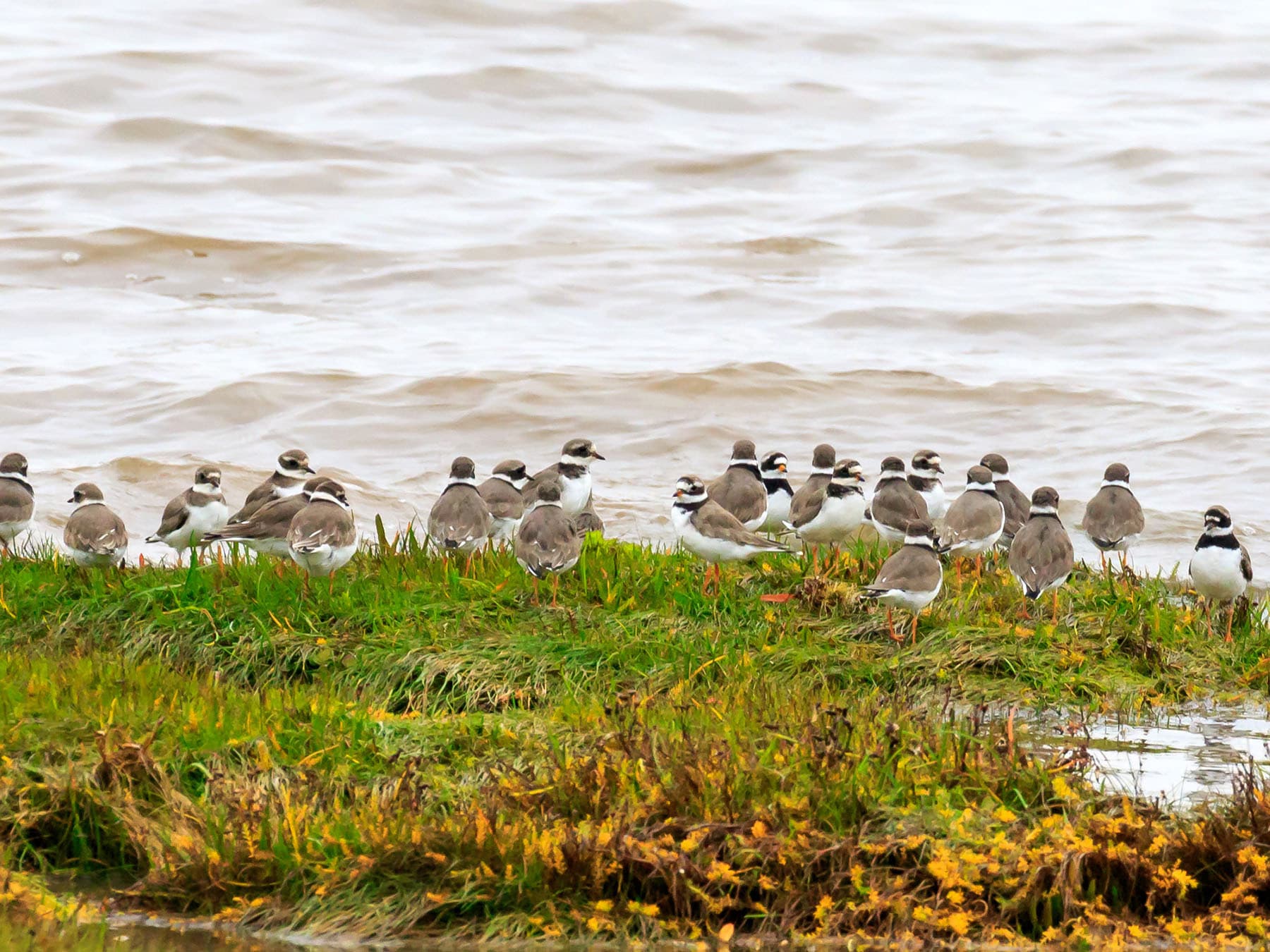
Ringed Plovers are resident in the UK throughout the year. However, the local population is joined by tens of thousands of birds from further north in Europe to overwinter each year.
Interestingly, the birds that breed furthest north tend to migrate furthest south. Birds that breed in Greenland and Eastern Canada fly through the UK on the long journey to their overwintering grounds in Africa.
Tips for seeing it
- Look for Ringed Plovers on sandy or shingle beaches, especially during low tide.
- Listen for their distinctive two-note whistle call, often given in flight.
- Observe their quick running and sudden stopping behaviour when foraging.
- In the UK, watch for them year-round on coastal areas and inland water bodies.
- Ringed Plovers can be told from the similar Little Ringed Plover by their black-ringed eye (orange-ringed in Little Ringed Plover). Little Ringed Plovers also have slim, dull pink legs and an all-dark bill.
What it eats
Ringed Plovers forage for live prey on the ground in the coastal and wetland habitats where they live.
What do Ringed Plovers eat?
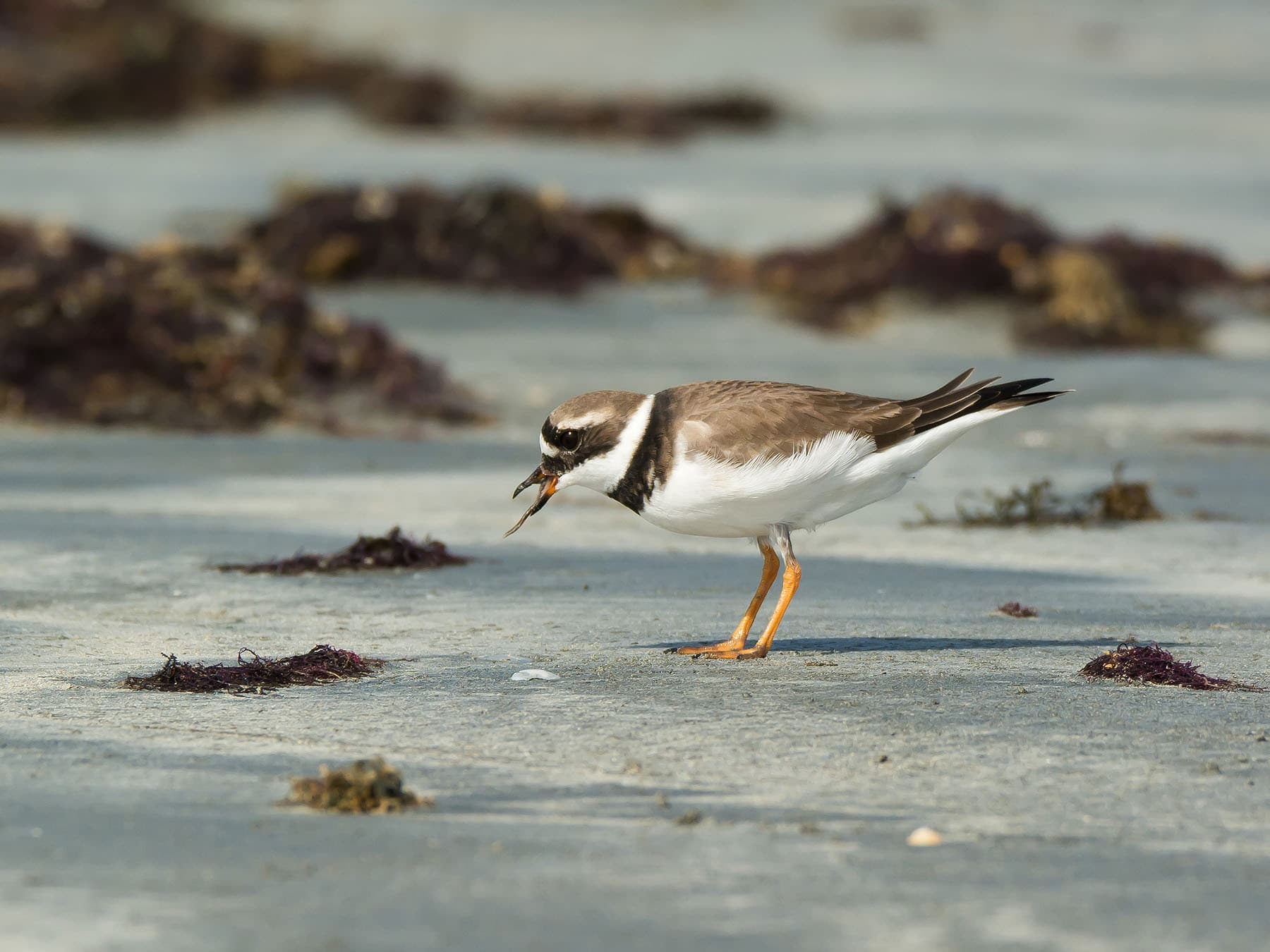
Ringed Plovers eat small invertebrates living on and in the sand and mud. They watch for their prey on the ground and may even tempt small burrowing animals to the surface by tapping their feet.
The following invertebrates form the bulk of their diet:
- Molluscs
- Worms
- Crustaceans
- Insects
What do Ringed Plover chicks eat?
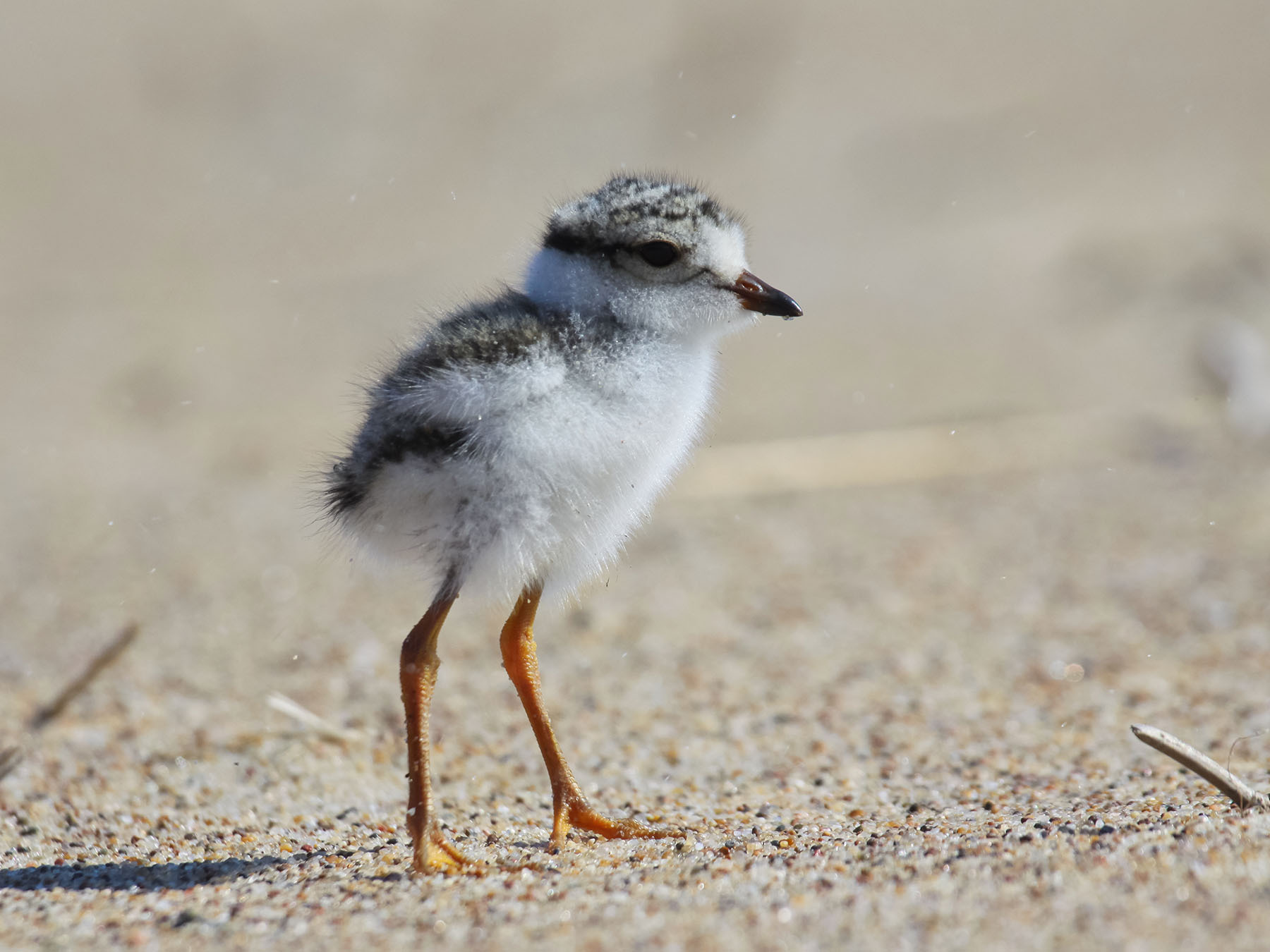
Young Ringed Plover chicks feed themselves from the day they hatch. Like their parents, chicks forage for small invertebrates on the ground.
Nesting and breeding
Ringed Plovers breed in the warmer months, with egg-laying primarily in May and June. Both parents incubate the eggs and may attempt two or three broods each year. Continue reading to learn more about Ringed Plover nesting in the UK.
Where do Ringed Plovers nest?
Common Ringed Plovers breed in suitable habitats all around the United Kingdom’s coastline and at inland sites like flooded gravel pits.
Ringed Plovers usually nest on the bare ground, relying on their rudimentary nest and highly camouflaged eggs to stay hidden in plain sight.
Most nests are located where there is little or no vegetation, although they will occasionally nest in more sheltered spots.
What do Ringed Plover eggs look like?
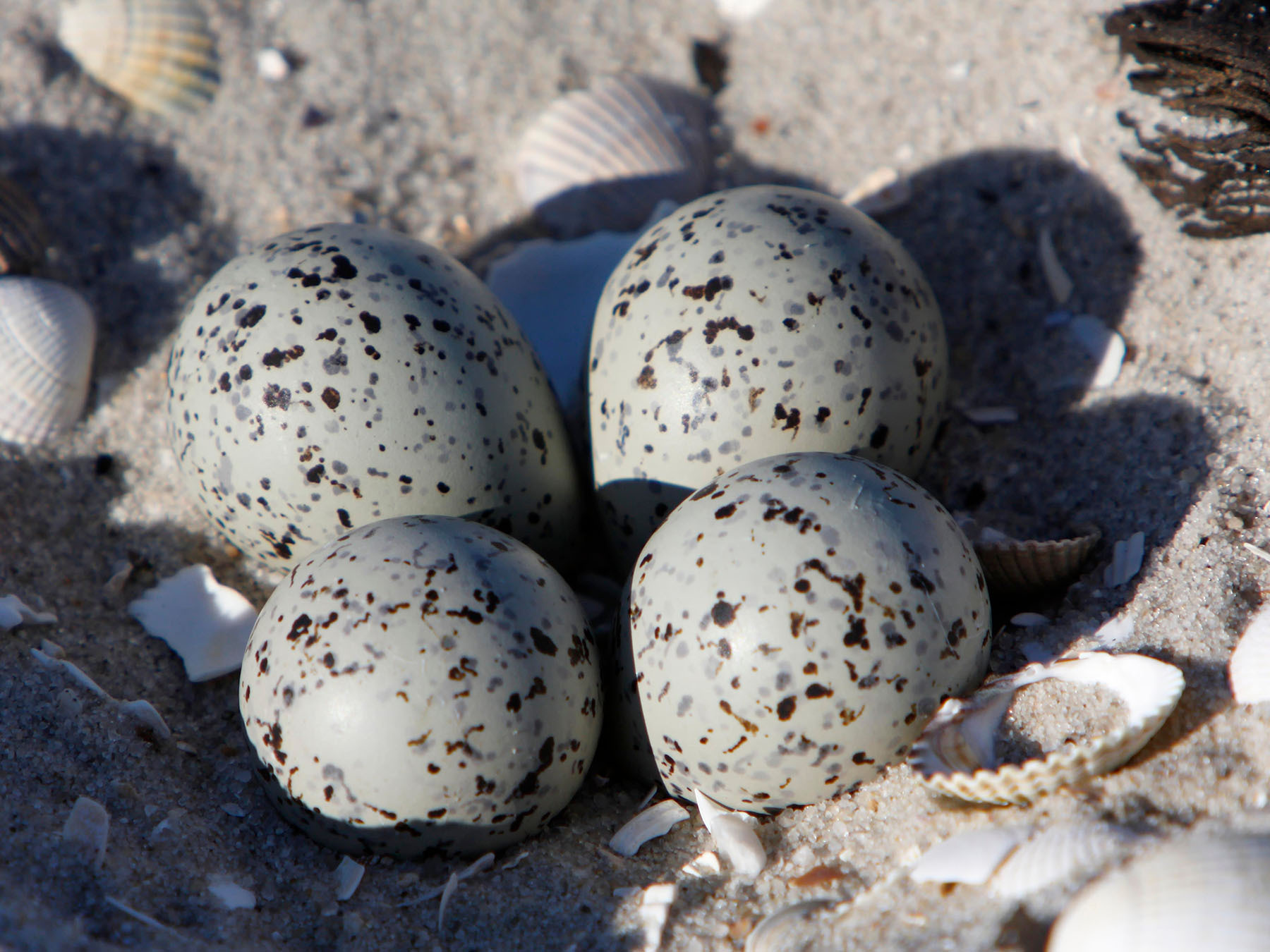
Ringed Plovers usually lay four (3-5) highly camouflaged eggs, each measuring approximately 36 millimetres long and 26 millimetres wide. Their eggs have a blueish, brownish or greyish ground colour and are heavily speckled in grey or brown.
Do Ringed Plovers mate for life?
Ringed Plovers are monogamous in the breeding season but usually pair with a different partner each year. However, some pairs may reunite in successive years.
Behaviour
Ringed Plovers are most often seen running in short bursts before pausing to peck at a small prey item on the ground below.
One of their most fascinating behaviours unfolds when predators approach their nest or chicks. The parent bird will make a dramatic display, pretending to be badly injured, all while leading the interested predator further from the nest.
Are Ringed Plovers aggressive?
Ringed Plovers are aggressively territorial. They use their bold black and white rings effectively to display, and they will raise their wings and fan out their tails to complete their threatening posture.
Early experiments using stuffed birds demonstrated the aggressive nature of nesting Ringed Plovers. Territorial birds initially posture and call to threaten intruders but will launch a physical attack if necessary.
Where do Ringed Plovers sleep at night?
Ringed Plovers spend the night on bare or lightly vegetated ground near their foraging areas. They roost communally, often just above the high water mark.
Lifespan and predators
Ringed Plovers face many threats, from extreme weather to cunning predators. Read on to learn about their lifespan.
How long do Ringed Plovers live?
Ringed Plovers that survive to adulthood have an average life expectancy of about five years, although they may live for over a decade. The oldest recorded individual lived for over twenty-one years.
What are the predators of Ringed Plovers?
Ringed Plover eggs and chicks are vulnerable to gulls and small mammals like mink, rats, and hedgehogs. Adults are fast and alert, although they may fall prey to foxes, Sparrowhawks, and Kestrels.
Are Ringed Plovers protected?
Ringed Plovers in the United Kingdom are protected by the Wildlife and Countryside Act of 1981.
Are Ringed Plovers endangered?
Ringed Plovers are a red-listed species in the United Kingdom. Their numbers have declined significantly, and their diminishing breeding success is probably due to human disturbance.
Ringed Plovers are assessed as a ‘Least Concern’ species because they have an extensive global range, although their population is in decline at an international level.
Conservation
While currently listed as Least Concern globally, Ringed Plovers face threats from habitat loss and disturbance at breeding sites. Coastal development and increased human activity on beaches pose significant challenges.
Conservation efforts focus on protecting nesting areas and raising awareness among beachgoers.
Similar birds
Often mistaken for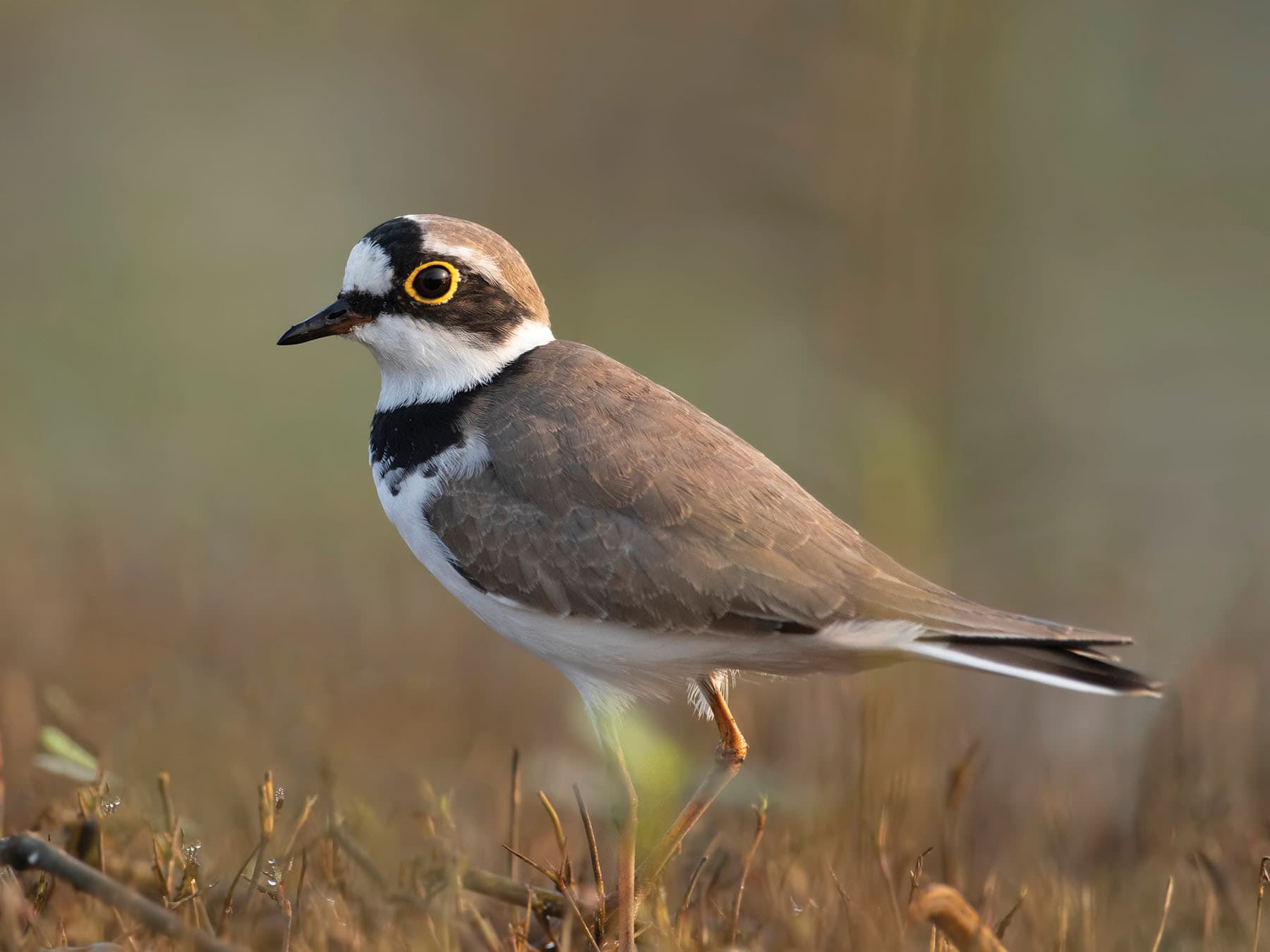
More photos
7 photos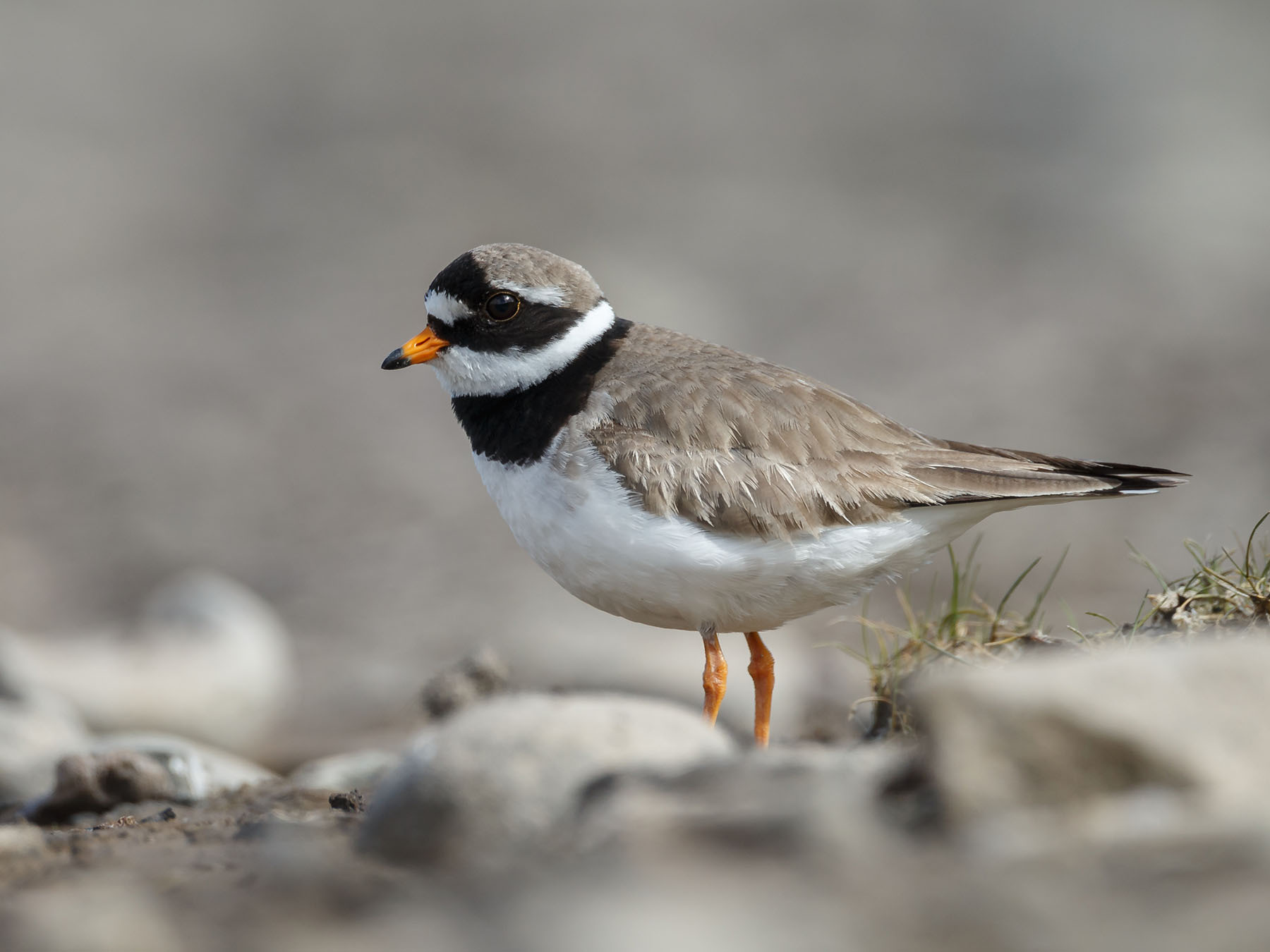

Quick facts
- Length
- 17–19 cm
- Wingspan
- 35–41 cm
- Weight
- 55–75 g
- Lifespan
- 5 years · oldest recorded 20.8 years
- Family
- Plovers & Lapwings
- Migration
- Long-distance Migrant
- Global status (IUCN)
- Least Concern
- World population
- 415,000 - 1,400,000 individuals
- Population trend
- Decreasing
- Also called
- Common Ringed Plover
- Scientific name
- Charadrius hiaticula
Questions
1What is strange about the nest of a Ringed Plover?
Ringed Plovers do not make much of a nest at all. These ground-nesting birds construct a simple scrape and line it with small pebbles, bits of plant material, and other debris like broken shells.
Interestingly, they almost always arrange their eggs with the narrowest end pointing to the centre.
Sources
4- 1BirdLife International. 2019. Charadrius hiaticula (amended version of 2016 assessment). The IUCN Red List of Threatened Species 2019: e.T22693759A155487854. Source (opens in a new tab)
- 2Wetlands International (2015)
- 3Wetlands International (2015)
- 4Fransson et al., EURING list of longevity records for European birds (2010) Source (opens in a new tab)

Checked by
Nathan Cope, founder and editor
Nathan founded Birdfact and leads its writers and contributors in the UK, the US and Canada. He has watched and studied birds for more than ten years, and checks every article and species guide before it’s published.