


Long-tailed Duck
Oldsquaw · Clangula hyemalis
By the Birdfact teamChecked by Nathan Cope
On this page14 sections
How to recognise it
What do Long-tailed Ducks look like?
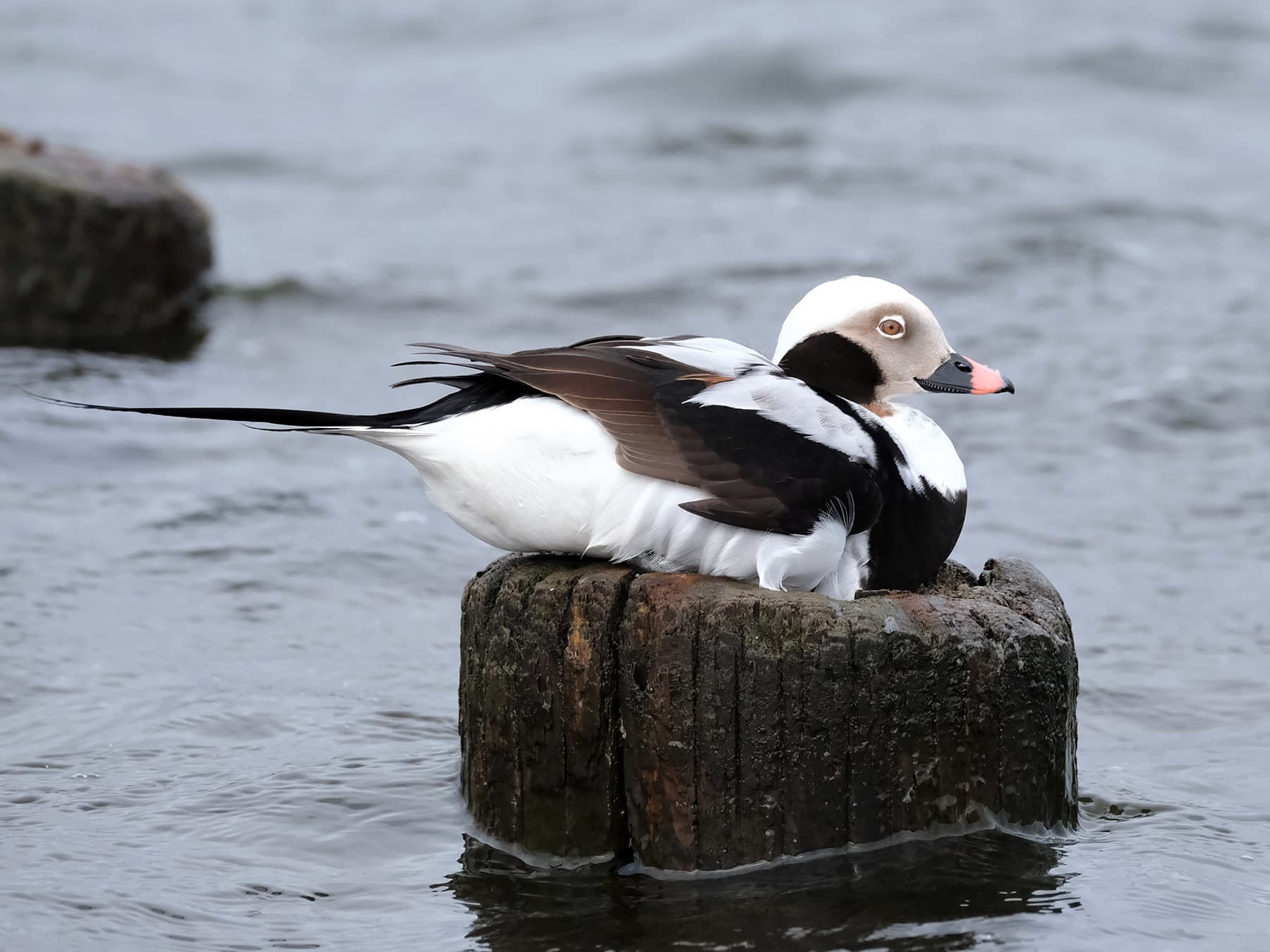
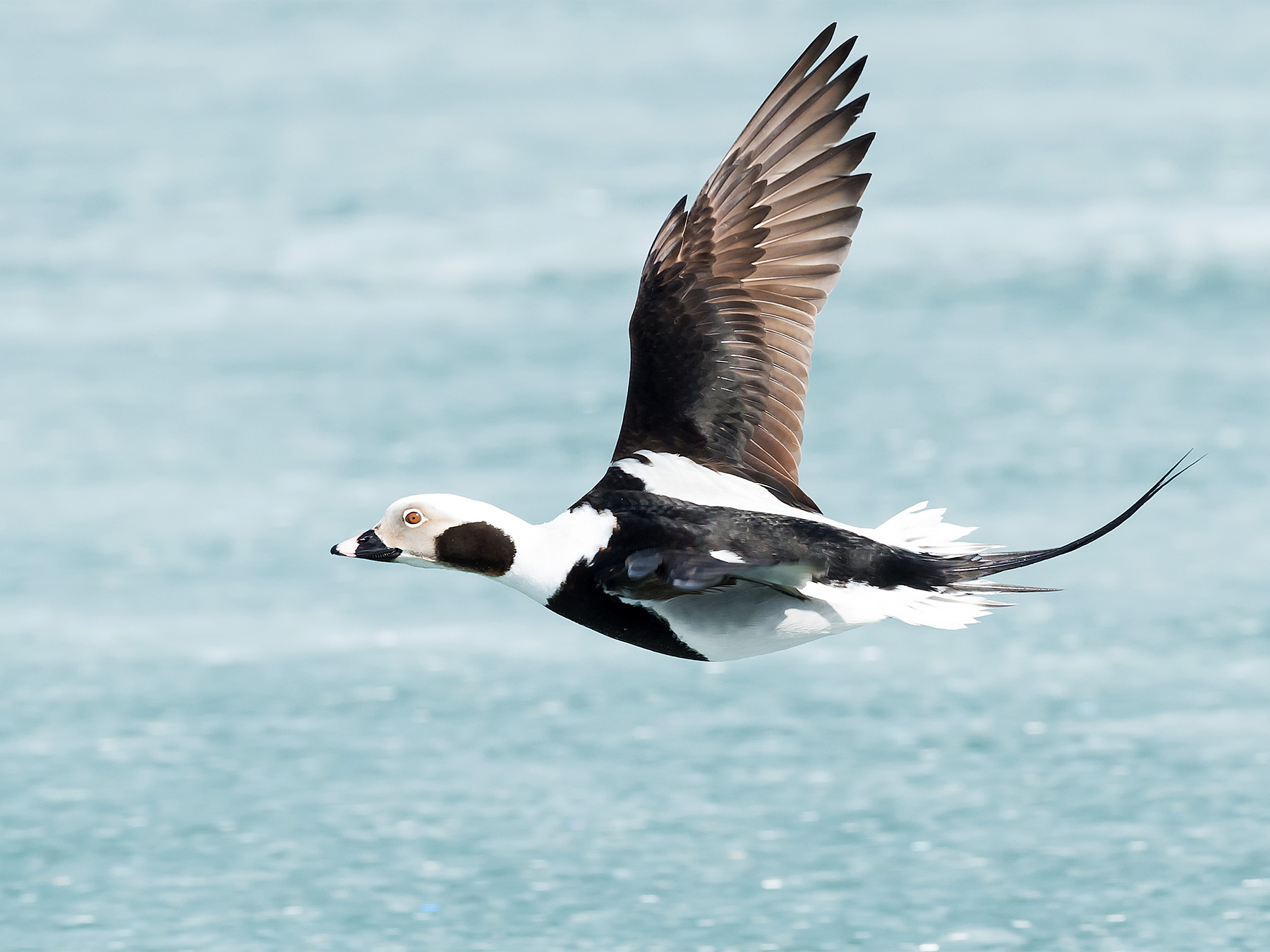
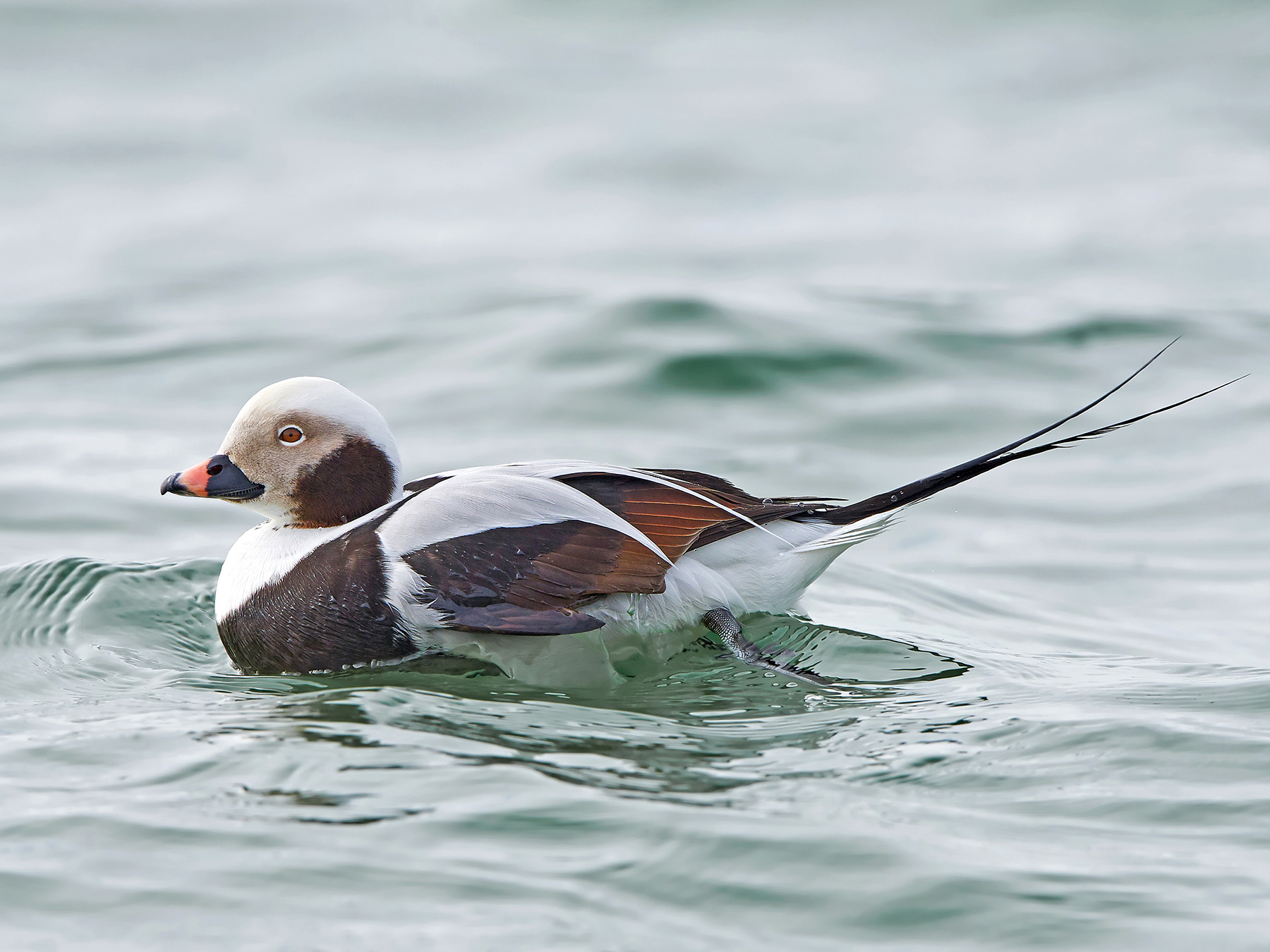
Long-tailed ducks are a relatively small species of diving duck, with a steep forehead and a short, stubby bill. As the species name might suggest, extended tail feathers (seen only on the male) are an instantly recognizable feature.
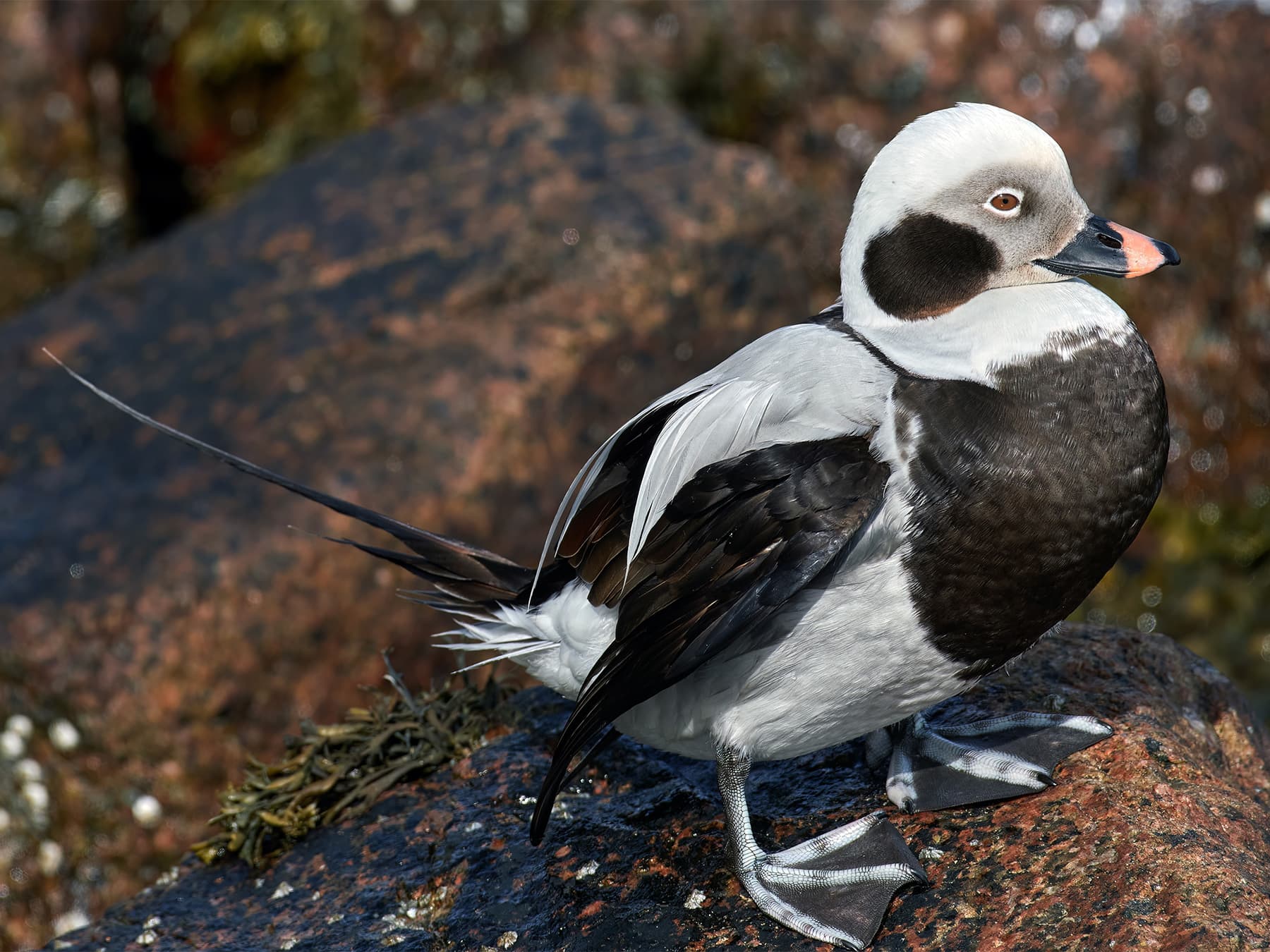
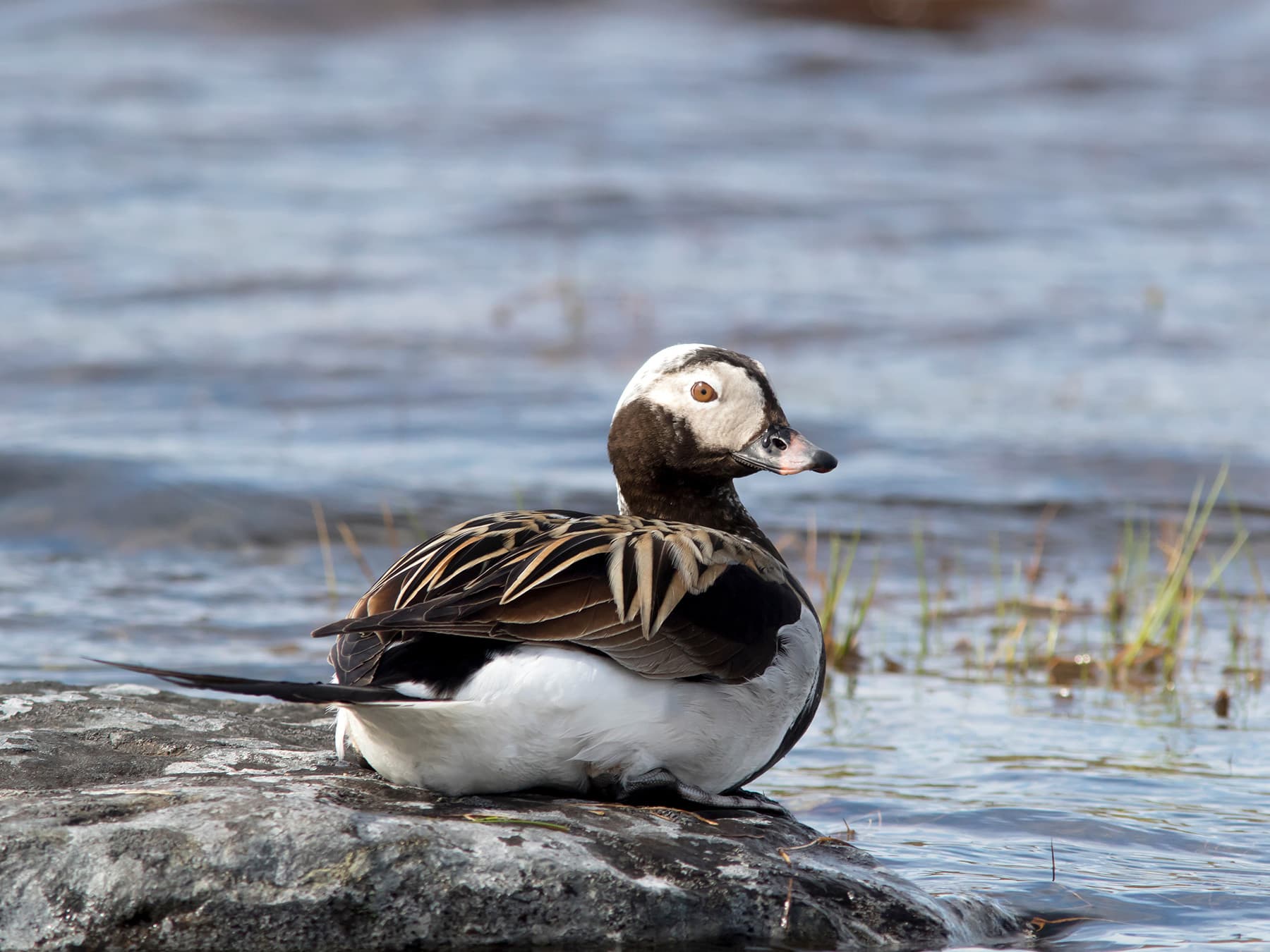
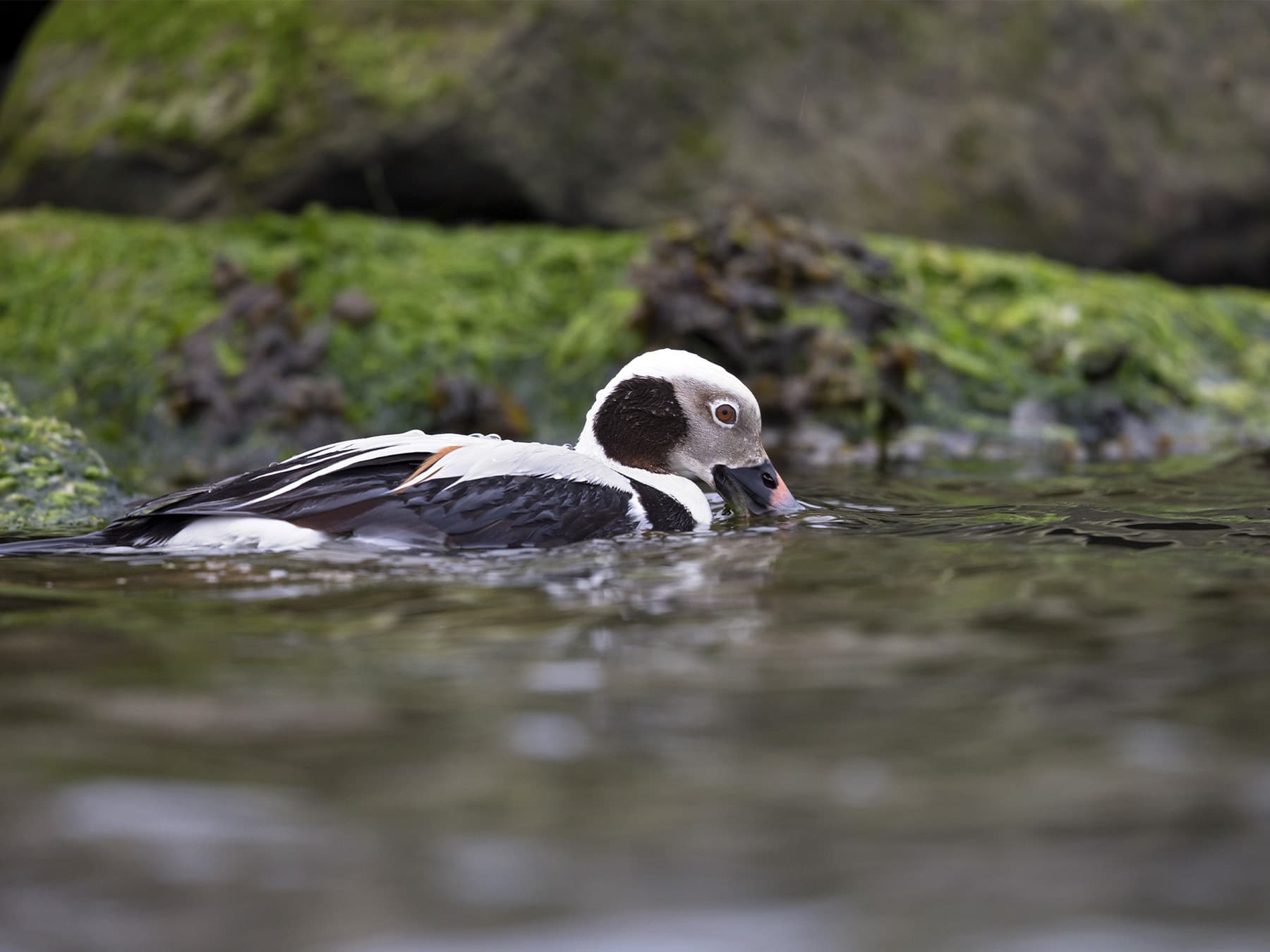
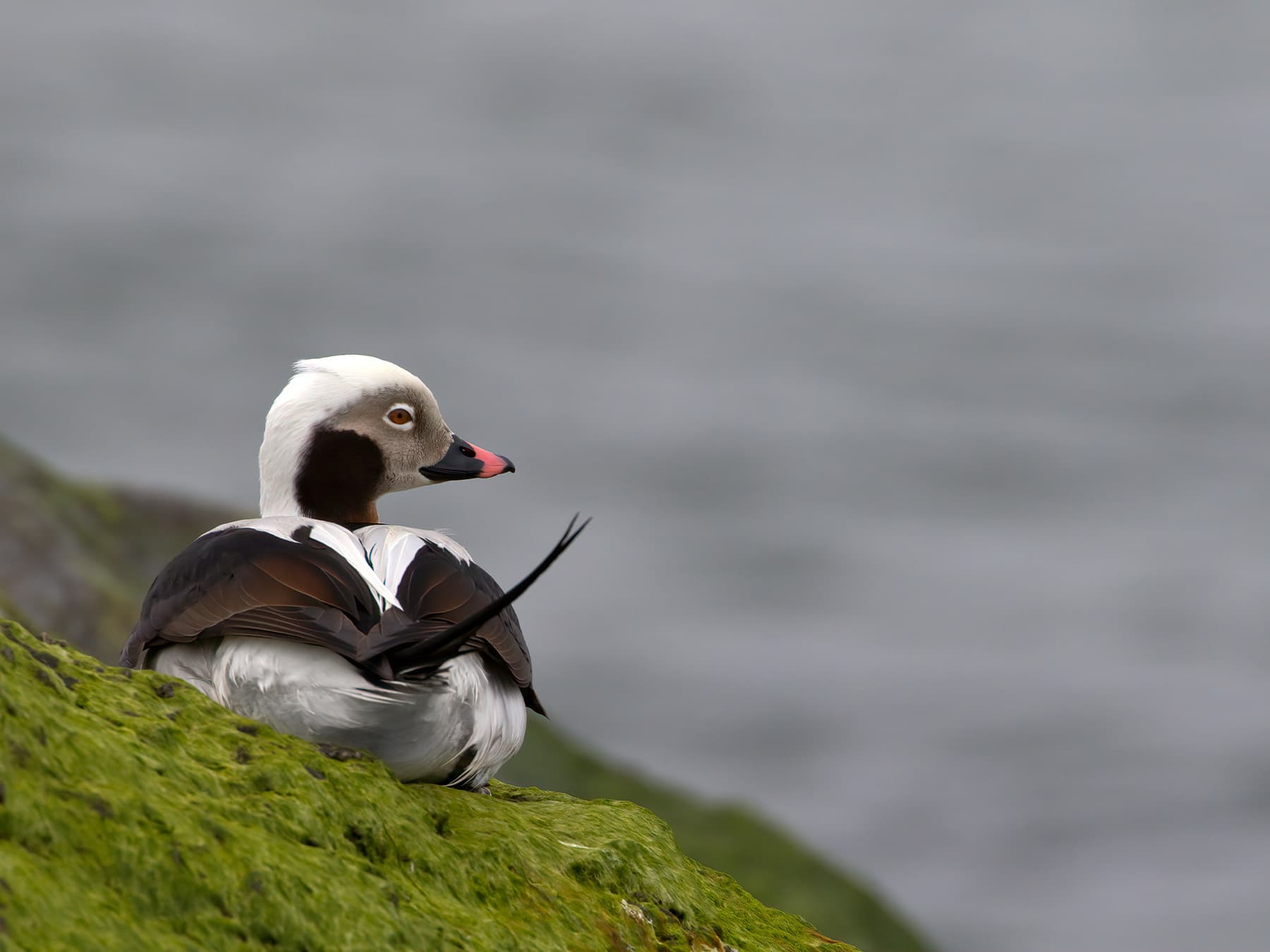
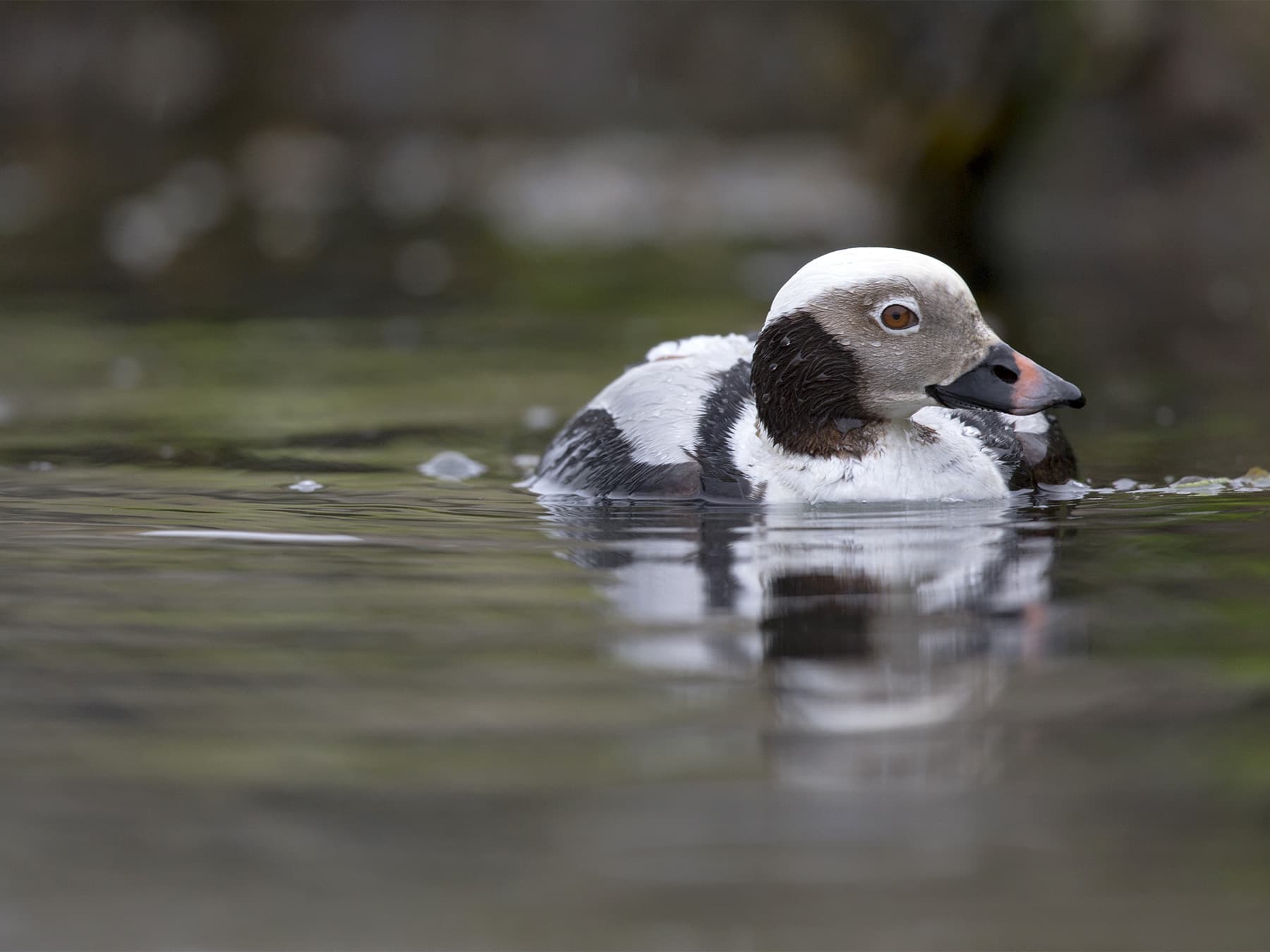
Breeding males are generally dark, with long black tail plumes, a black breast, neck, throat, and flanks, and light brown wings. The undertail area is a contrasting white. The breeding male long-tailed duck’s face features a large white blotchy patch around each eye but is otherwise black. Its bill is mainly black, with a pink band towards the tip.
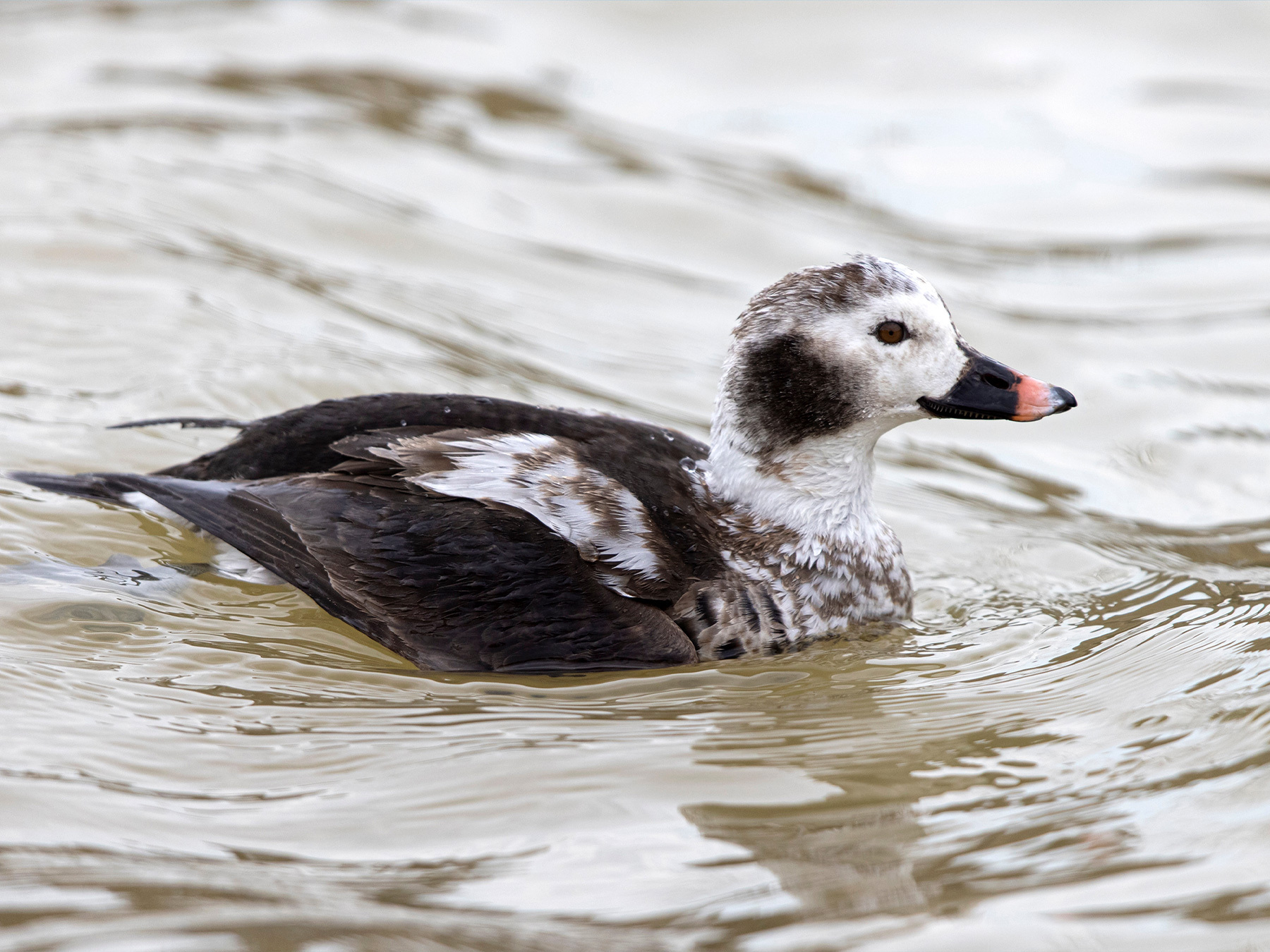
Molting takes place after breeding when they become patchy black and white all over before acquiring their distinctive winter plumage.
In winter, males become paler than their dark summer breeding plumage, with a white head, throat, upper wings, belly and undertail. A buff patch is visible next to the eye which darkens to a deeper black-brown on the side of the neck. Across the breast is a wide dark band, and the back and tail are black, with a brownish-black tinge to the lower wings. The bill is black and has a wide orange band near the tip.
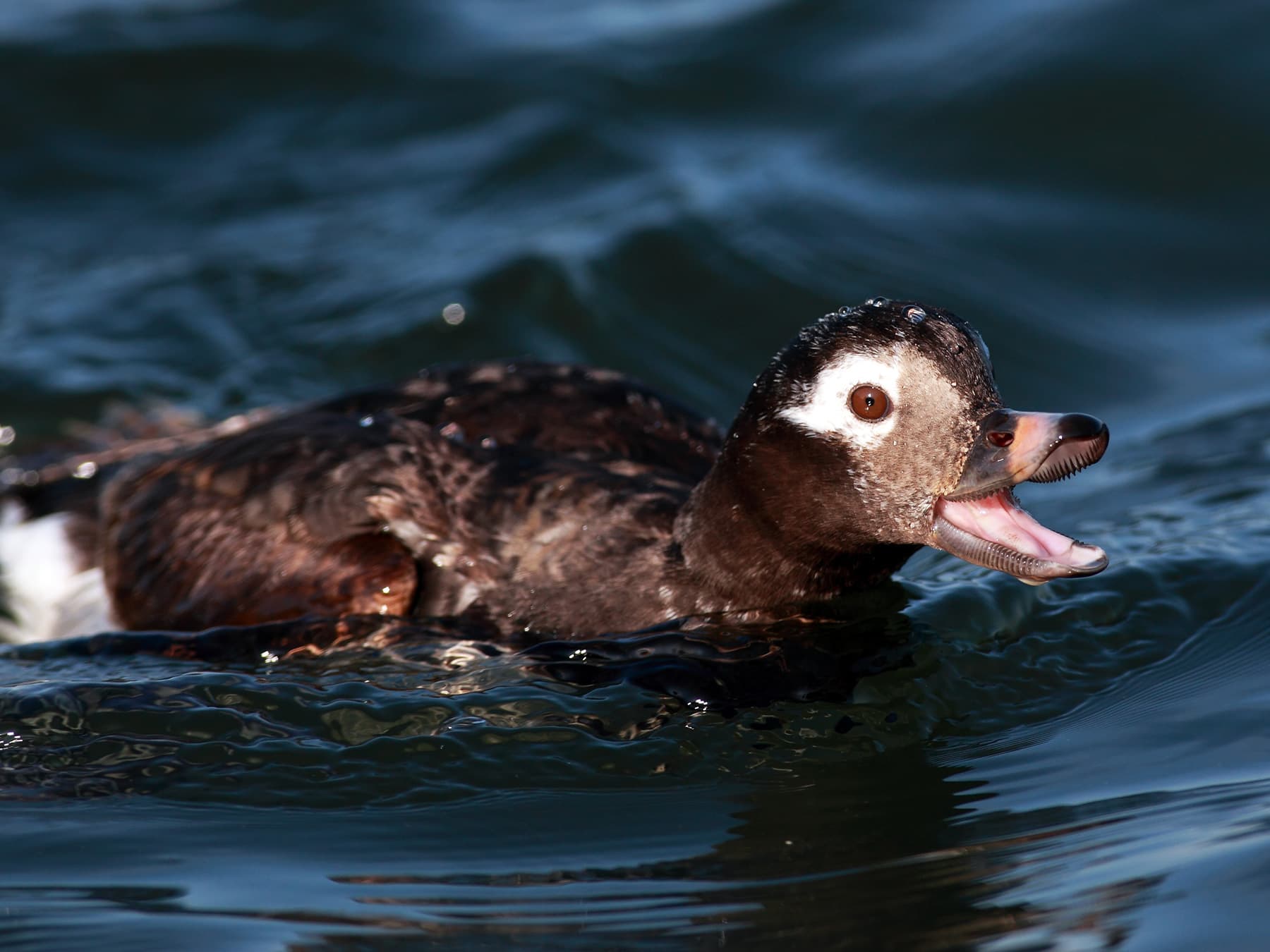
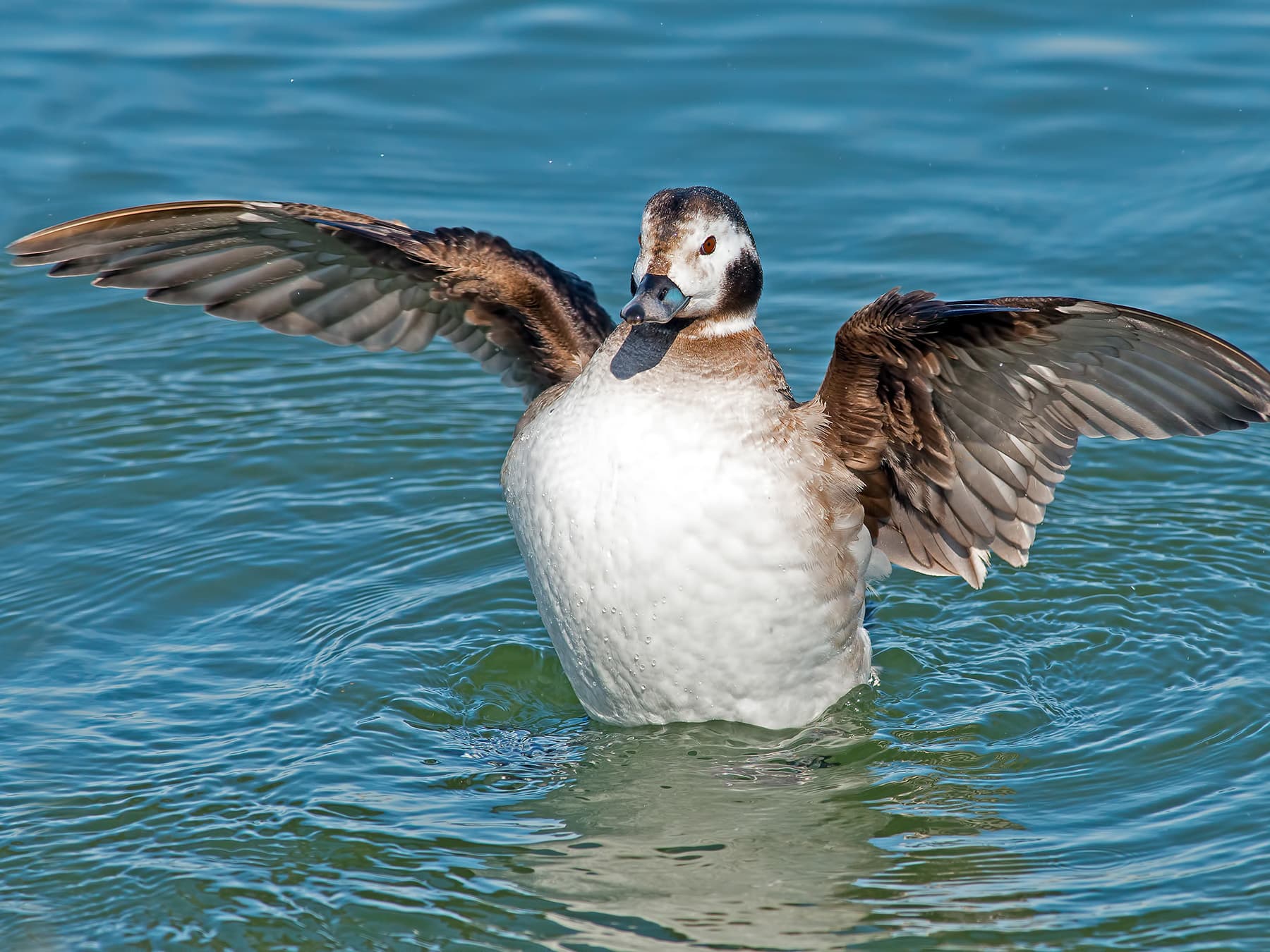
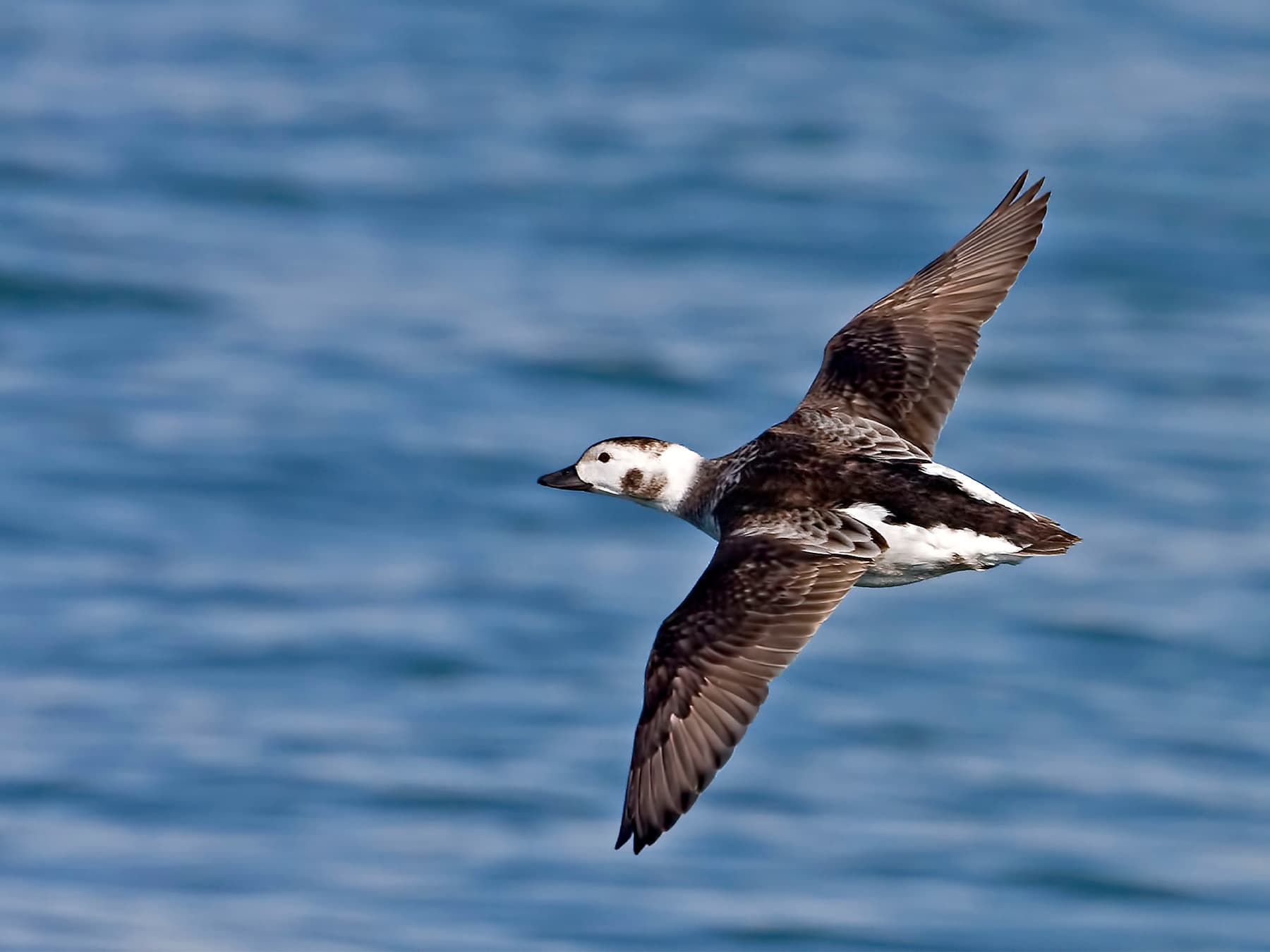
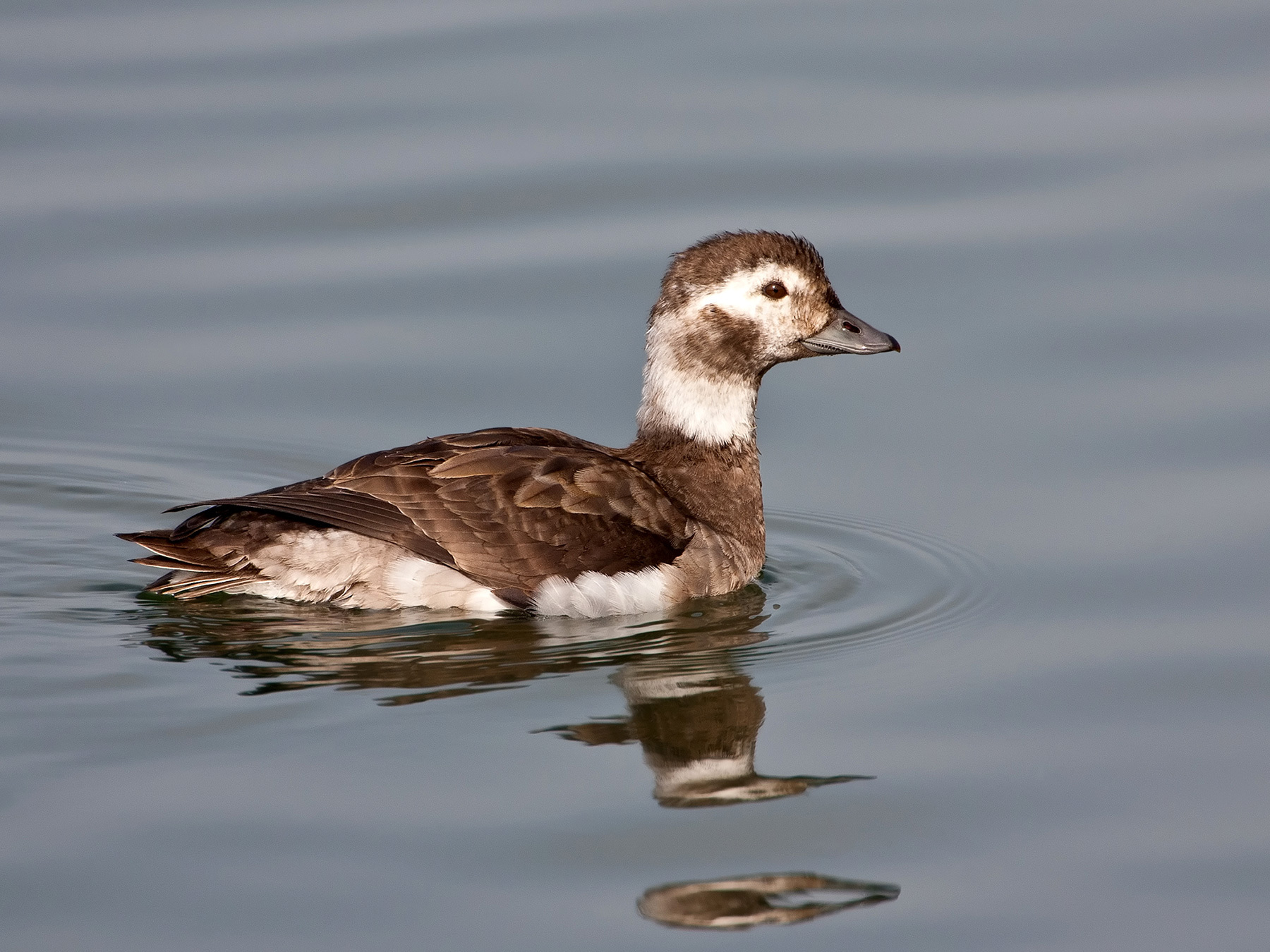
Female long-tailed ducks are small and compact and do not resemble males at all. In winter, they have stubby gray bills, brown eyes, a white eye patch and flanks, and a brownish-gray crown, wings, neck, rump, tail and breast. Their summer breeding plumage is darker, with less white on the face.
Juveniles resemble breeding females, but are paler, with brownish flanks and less-defined facial markings.
How big are Long-tailed Ducks?
The entire length of a breeding male long-tailed duck can be up to an impressive 60 cm (24 in), although the long tail plumes account for 13 cm (5 in) of this length. Female long-tailed ducks lack the extended tail feathers and are considerably smaller and more compact than the males of the species.
- Length: 58 cm to 60 cm (23 in to 24 in), including 13 cm (5 in) of tail
- Wingspan: 73 cm to 79 cm (29 in to 31 in)
- Weight: 520 g to 950 g (1.1 lb to 2.1 lb)
Its size
Adults- Length
- 37–60 cm
- Wingspan
- 73–79 cm
- Weight
- 500–1000 g
Its song and calls
What sound does a Long-tailed Duck make?
Long-tailed ducks are dubbed the most vocal sea duck, and are known for their ‘talkative’ nature and constant chattering. Males make a particularly melodious ‘ow ow owoolet’ call.
- Call0:00 / 0:06
When and where to see it
OctoberArriving
Most recorded in October
- 1. Moray1.2%
- 2. Orkney Islands0.99%
- 3. Eilean Siar0.51%
- 4. Highland0.46%
- 5. Shetland Islands0.46%
Each dot is a county, state or province: the bigger and darker, the larger the bird’s share of that place’s bird records that month. Grey dots: no regular records. The ringed point is the centre of the bird’s records this month; the arrow shows how it moved since last month, and the dashed loop its path through the year. “Arrivals” colours places where it becomes regular this month (orange) or is in its last regular month (grey). GBIF eBird Observation Dataset, 2019–2024. Map data: Natural Earth, US Census Bureau; place centres © OpenStreetMap contributors.
In your area
See when the Long-tailed Duck is recorded in your county, state or province.
How often the Long-tailed Duck turns up in the UK, Ireland, the United States and Canada through the year, from birdwatchers' records.
United Kingdom
Winter visitor · regularly Oct–May · most records in November
Ireland
Winter visitor · regularly Oct–Apr · most records in January
United States
Winter visitor · regularly Oct–Jun · most records in January
Canada
Winter visitor · regularly Oct–Jun · most records in January
Show as a table
| Month | United Kingdom | Ireland | United States | Canada |
|---|---|---|---|---|
| January | 0.077% (regular) | 0.16% (regular) | 0.16% (regular) | 0.58% (regular) |
| February | 0.059% (regular) | 0.096% (regular) | 0.13% (regular) | 0.46% (regular) |
| March | 0.041% (regular) | 0.062% (regular) | 0.078% (regular) | 0.35% (regular) |
| April | 0.023% (regular) | 0.027% (regular) | 0.025% (regular) | 0.20% (regular) |
| May | 0.011% (regular) | 0.003% | 0.013% (regular) | 0.10% (regular) |
| June | 0.003% | 0.005% | 0.028% (regular) | 0.032% (regular) |
| July | 0.001% | – | 0.006% | 0.019% |
| August | 0.001% | – | 0.002% | 0.011% |
| September | 0.004% | <0.001% | 0.003% | 0.012% |
| October | 0.050% (regular) | 0.024% (regular) | 0.019% (regular) | 0.13% (regular) |
| November | 0.089% (regular) | 0.099% (regular) | 0.084% (regular) | 0.52% (regular) |
| December | 0.071% (regular) | 0.13% (regular) | 0.13% (regular) | 0.55% (regular) |
Recorded regularly in
Worldwide: recorded regularly in 44 countries
Countries where it was recorded in at least 3 of the 6 years 2019–2024. Linked countries have their own bird list.
Data: EOD – eBird Observation Dataset (Cornell Lab of Ornithology), accessed via GBIF.org, CC BY 4.0. Records from 2019–2024, aggregated and filtered by Birdfact. How these lists are made
What is the habitat of a Long-tailed Duck?
Long-tailed ducks breed in Arctic tundra and taiga regions around the globe, on lakes and coastal sites at latitudes as far north as 80 degrees. As winter approaches, they head south to coastal marine waters, preferring sandy shelving beaches, but may also be found a short distance inland, on large freshwater lakes.
What is the range of a Long-tailed Duck?
Long-tailed ducks have a circumpolar range. Breeding grounds are found on the Arctic coasts of Canada, Alaska and Greenland. Across the Atlantic, long-tailed ducks breed in Iceland and Norway and across the far northern region of Russia, throughout eastern Siberia.
Their winter range is located further south, as far as the United Kingdom, the Black and Caspian Seas, and the Korean peninsula, where they spend the non-breeding season in maritime waters rather than on land. In North America, winter populations of long-tailed ducks are present along both coasts, as far south as South Carolina in the east and British Columbia in the west.
Where do Long-tailed Ducks live?
Eurasia has the largest population of long-tailed ducks, with up to 4.6 million pairs in northern Europe, Russia, and Siberia, in particular Norway and Finland. Up to 2.7 million pairs breed in North America, and a further 100,000 to 1 million pairs breed in East Asia.
In winter, the densest concentrations of long-tailed ducks are found in the Aleutian Islands, where between 700,000 and 1 million individuals gather post-breeding. The Baltic Sea was once a winter stronghold, welcoming over 4 million long-tailed ducks annually, but this number has shown a steep decline since the 1980s.
How rare are Long-tailed Ducks?
The global population of long-tailed ducks is estimated at between 3.2 and 3.75 million, so statistically, they are not an uncommon species. However, due to their specific maritime habitat requirements and breeding grounds in largely inaccessible regions in Arctic tundras, sightings are rare in comparison to many other waterfowl species.
Where can you see Long-tailed Ducks in the US?
Long-tailed ducks breed throughout Alaska, and winter populations gather along the state’s southern coasts and offshore islands. The northeastern coast of the United States offers good opportunities for winter sightings, as far south as South Carolina, and to the west, the Pacific Coast from the border with Canada off the shores of Washington is also a prime long-tailed duck wintering ground.
Where can you see Long-tailed Ducks in Canada?
Long-tailed ducks breed in the high Arctic regions of Canada and in winter, while many move to the marine waters off British Columbia’s Pacific Coast, large numbers head inland and can be seen on Lake Ontario and Lake Erie.
Where can you see Long-tailed Ducks in the UK?
Overwintering long-tailed ducks in UK waters are mainly found off the coasts of northern Scotland and around the Shetland and Orkney islands between October and March.
Up to 13,500 individuals arrive each autumn and occasional sightings are reported around much of the UK’s coastline, with the exception of South Wales, north Devon, and western Scotland.
Migration
Do Long-tailed Ducks migrate?
A migratory species, long-tailed ducks breed in far northern latitudes within the Arctic Circle and head south to maritime waters once their breeding grounds become too inhospitable to survive in as winter approaches.
Some resident populations may be present in parts of Alaska and around Hudson Bay, but most long-tailed ducks migrate relatively short distances. Returning to the same breeding sites is not uncommon, and the reuse of a previous nest is regularly observed.
Where do Long-tailed Ducks migrate?
Long-tailed ducks leave their Arctic breeding grounds when waters begin to freeze over, and head south to frost-free coastal areas. Some may reach as far south as Turkey and Greece, although most spend winters off the coasts of the north-eastern US and in northern Europe.
Tips for seeing it
- Look for Long-tailed Ducks in coastal areas during winter, especially in northern regions.
- Listen for their distinctive yodelling call, often heard before the birds are seen.
- Observe their unique diving behaviour, as they spend more time underwater than on the surface.
- In the UK, watch for them along eastern coasts from October to April.
What it eats
What do Long-tailed Ducks eat?
Long-tailed ducks follow a mainly animal-based diet, with mussels, cockles, clams, crabs, and small fish among the chief prey caught. Food is caught by diving underwater and picking items off the ocean or lake floor. In summer, invertebrates, insects, and their larvae are of great importance, while on wintering grounds their diet becomes more diverse, including crustaceans, fish, fish eggs and molluscs.
What do Long-tailed Duck chicks eat?
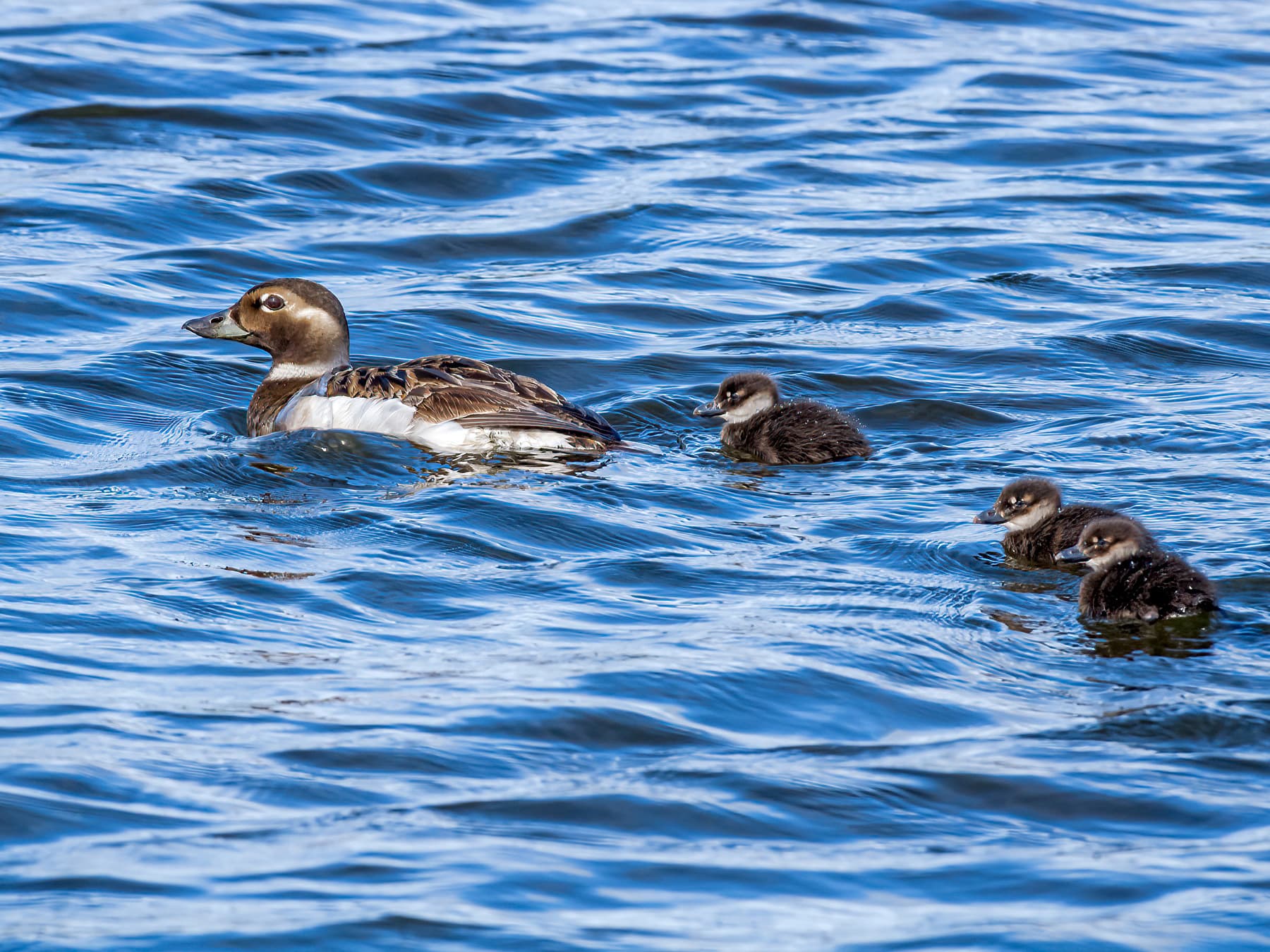
Young long-tailed ducks are led to water around 24 hours after hatching by their mother and feed on surface material until they master the art of diving. If food resources are low, the female will take her young to different foraging sites. Fairy shrimp and water fleas are the most common early prey.
Nesting and breeding
Where do Long-tailed Ducks nest?
Nesting long-tailed ducks create a shallow depression on open dry ground, close to water, and partly concealed by shrubs or other nearby vegetation. Most pairs are solitary during the breeding season, choosing nest sites away from other pairs, although occasional loose nesting groups may form.
Female long-tailed ducks choose the nest site after prospecting visits earlier in the breeding season. Nests are not built in advance, and construction begins only when the first egg is laid. Females gather materials from nearby, lining the scrape with leaves from dwarf birch and dwarf willow and some downy feathers. Grass, sedge, and heather may also be added.
When do Long-tailed Ducks nest?
The breeding season begins in May, with eggs usually laid from June onwards. After incubation, males leave the nesting grounds and have no further input in raising ducklings. They head to molting grounds where they shed their breeding plumage and undergo a change in coloring into their basic winter plumage.
Females incubate alone, for between 24 and 29 days, and ducklings leave the nest within the first day when they are led to water by the female and begin foraging for themselves immediately.
What do Long-tailed Duck eggs look like?
Eggs laid by long-tailed ducks are pale gray to olive in color, measuring 54 mm by 38 mm (2.1 in by 1.5 in). Between 6 and 9 eggs are laid and one brood per year is raised.
Do Long-tailed Ducks mate for life?
Seasonally monogamous pairs are formed by long-tailed ducks early in the year, with pairs forming on wintering grounds ahead of spring migration. There is evidence that long-tailed duck pairs may reunite on wintering grounds, several months after males desert the incubating female to molt earlier in the summer.
It is unknown whether all pairs remain together to breed for more than one season, although some records do suggest this may happen occasionally.
Behaviour
Are Long-tailed Ducks aggressive?
Male long-tailed ducks may show territorial behavior when breeding and are intolerant of any other pairs entering their patch. Male long-tailed ducks will target an intruding female and chase her off, possibly hoping that the male will then follow.
Physical confrontation is unlikely and challenges to threats are usually limited to posturing and chasing. Females are protective and defensive over their young, driving away any threat to their ducklings.
Where do Long-tailed Ducks sleep at night?
Overnight roosts of long-tailed ducks are found out at sea, where large groups gather offshore after dusk each evening.
Lifespan and predators
How long do Long-tailed Ducks live?
The average lifespan of long-tailed ducks is around 5 years, with first-time breeding from two years onwards. Older individuals have been recorded through banding programmes, including one that reached 20 years of age in 1987.
What are the predators of Long-tailed Ducks?
Avian predators of adult long-tailed ducks and their young include birds of prey such as northern harriers, gyrfalcons, and snowy owls, as well as herring gulls.
On breeding grounds, parasitic jaegers may raid nests for eggs and newly hatched ducklings, and Arctic and red foxes may also destroy nests. On the water, predatory fish, such as northern pike, pose a threat to the youngest ducklings when they first enter the water.
Are Long-tailed Ducks protected?
The United States Migratory Birds Treaty Act of 1918 and the UK’s Wildlife and Countryside Act, 1981 offer protection to wild long-tailed ducks against being injured, killed, or captured, or their nests, eggs and young being disturbed or traded. In North America, hunting long-tailed ducks is permitted with seasonal limits and maximum daily bag numbers.
Are Long-tailed Ducks endangered?
Globally, long-tailed ducks are classified as a Vulnerable species, due to severe declines in the winter population recorded in the Baltic Sea from the 1990s to the late 2000s. In the UK, they are designated with Red status on the British Birds of Conservation Concern list.
Why are Long-tailed Ducks endangered?
Long-tailed ducks being caught as bycatch in gillnets is a major cause of mortality each year, particularly in the Baltic Sea. Oil pollution and degradation of coastal habitats is another major cause for concern. Drainage and peat and sand extraction impact the natural food resources long-tailed ducks rely on, including invertebrates that live on the seafloor.
Conservation
The Long-tailed Duck is classified as Vulnerable due to significant population declines. Threats include oil spills, entanglement in fishing gear, and climate change affecting their Arctic breeding grounds.
Conservation efforts focus on protecting key wintering and breeding habitats, and reducing marine pollution.
More photos
5 photos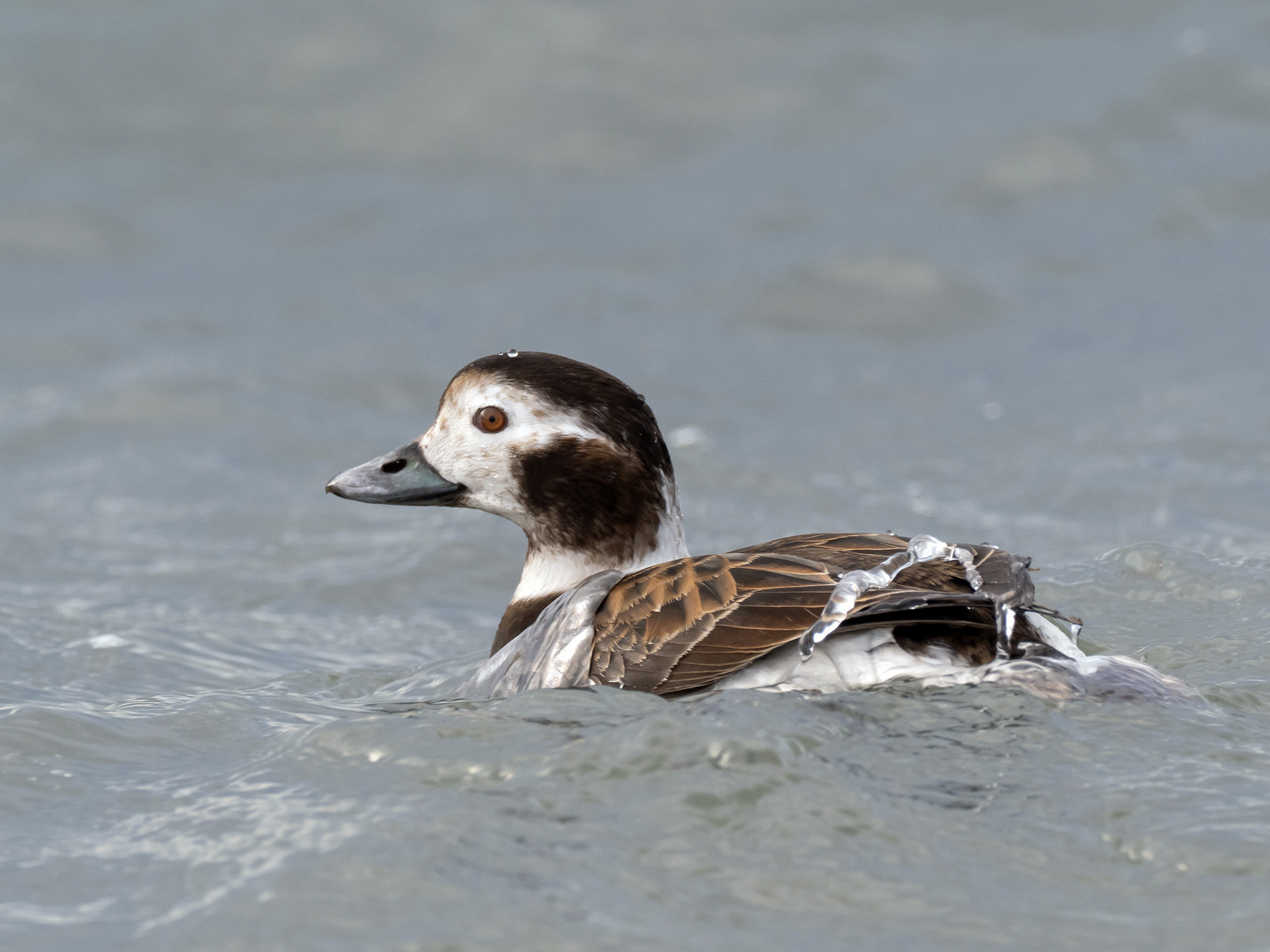
Long-tailed Duck guides
4 guidesQuick facts
- Length
- 37–60 cm
- Wingspan
- 73–79 cm
- Weight
- 500–1000 g
- Lifespan
- 15–20 years
- Family
- Ducks, Geese & Swans
- Migration
- Long-distance Migrant
- Global status (IUCN)
- Vulnerable
- World population
- 3,200,000 - 3,750,000 individuals
- Population trend
- Decreasing
- Also called
- Oldsquaw
- Scientific name
- Clangula hyemalis
Questions
1What was the Long-tailed duck called?
The previous North American name for the long-tailed duck was ‘oldsquaw’.
Sources
3- 1BirdLife International. 2018. Clangula hyemalis. The IUCN Red List of Threatened Species 2018: e.T22680427A132528200. Source (opens in a new tab)
- 2Skov et al. (2011)
- 3Wetlands International (2017)

Checked by
Nathan Cope, founder and editor
Nathan founded Birdfact and leads its writers and contributors in the UK, the US and Canada. He has watched and studied birds for more than ten years, and checks every article and species guide before it’s published.