


Grey Plover
Black-bellied Plover · Pluvialis squatarola
By the Birdfact teamChecked by Nathan Cope
On this page12 sections
How to recognise it
What do Grey Plovers look like?
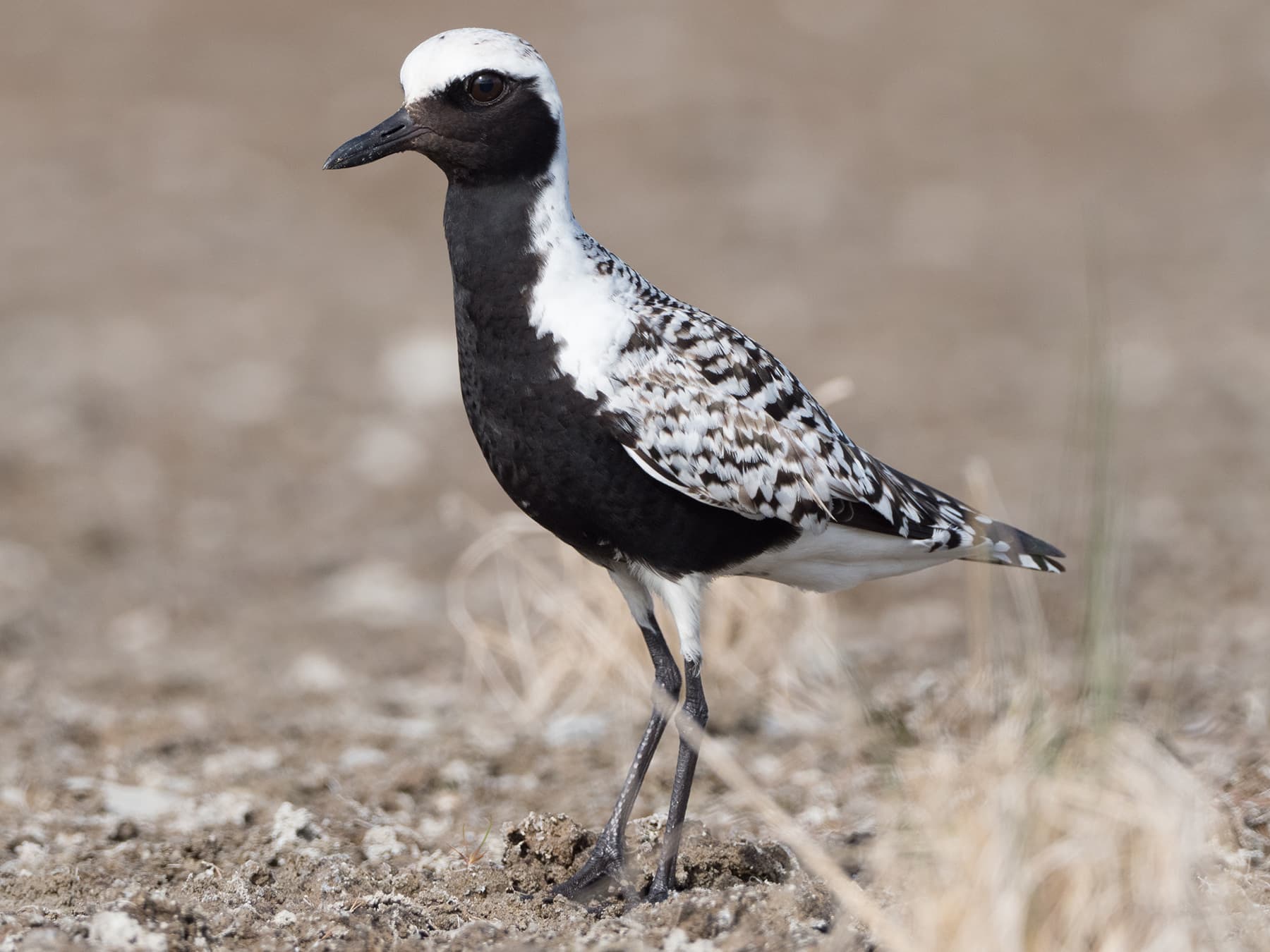
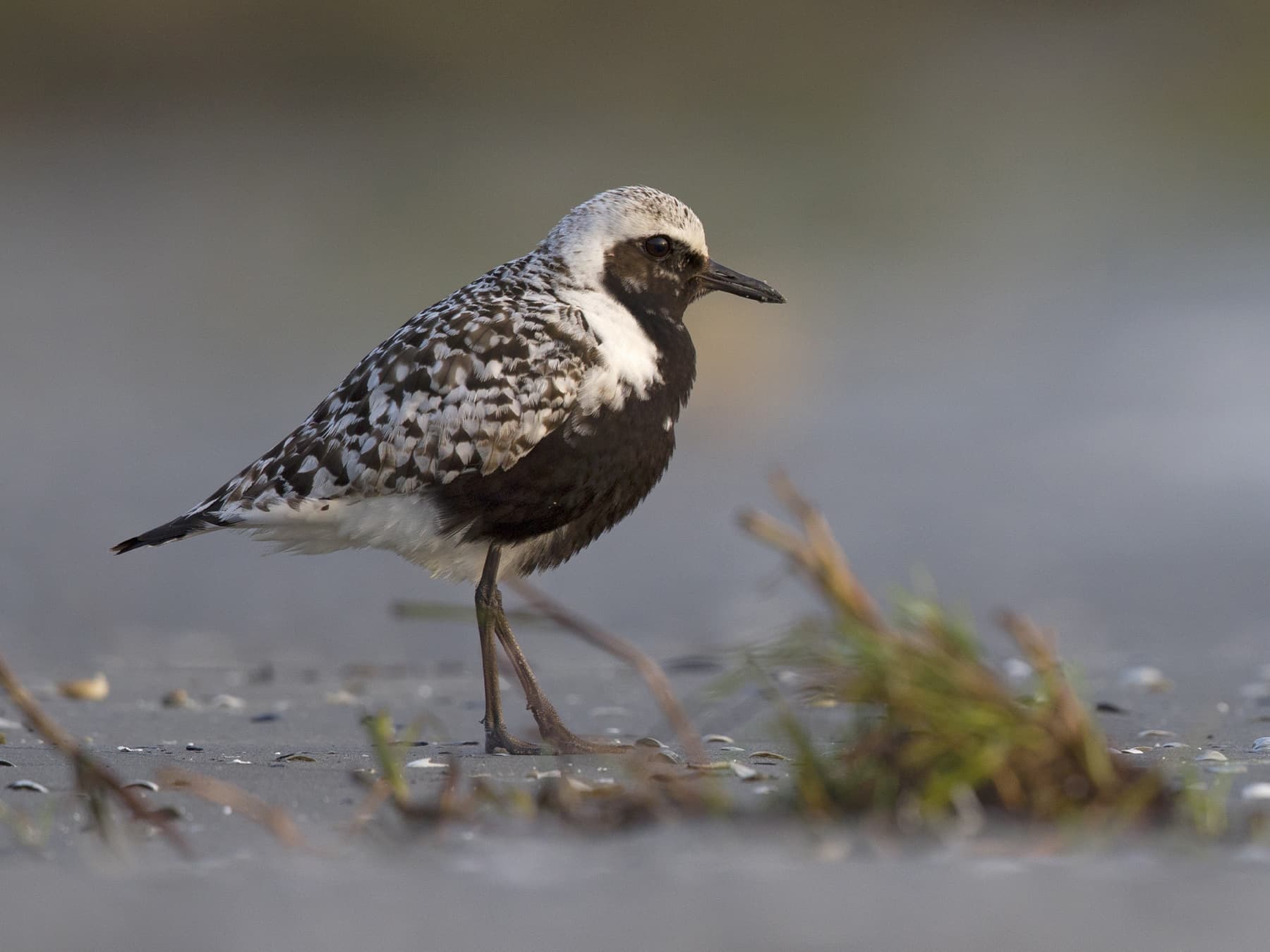
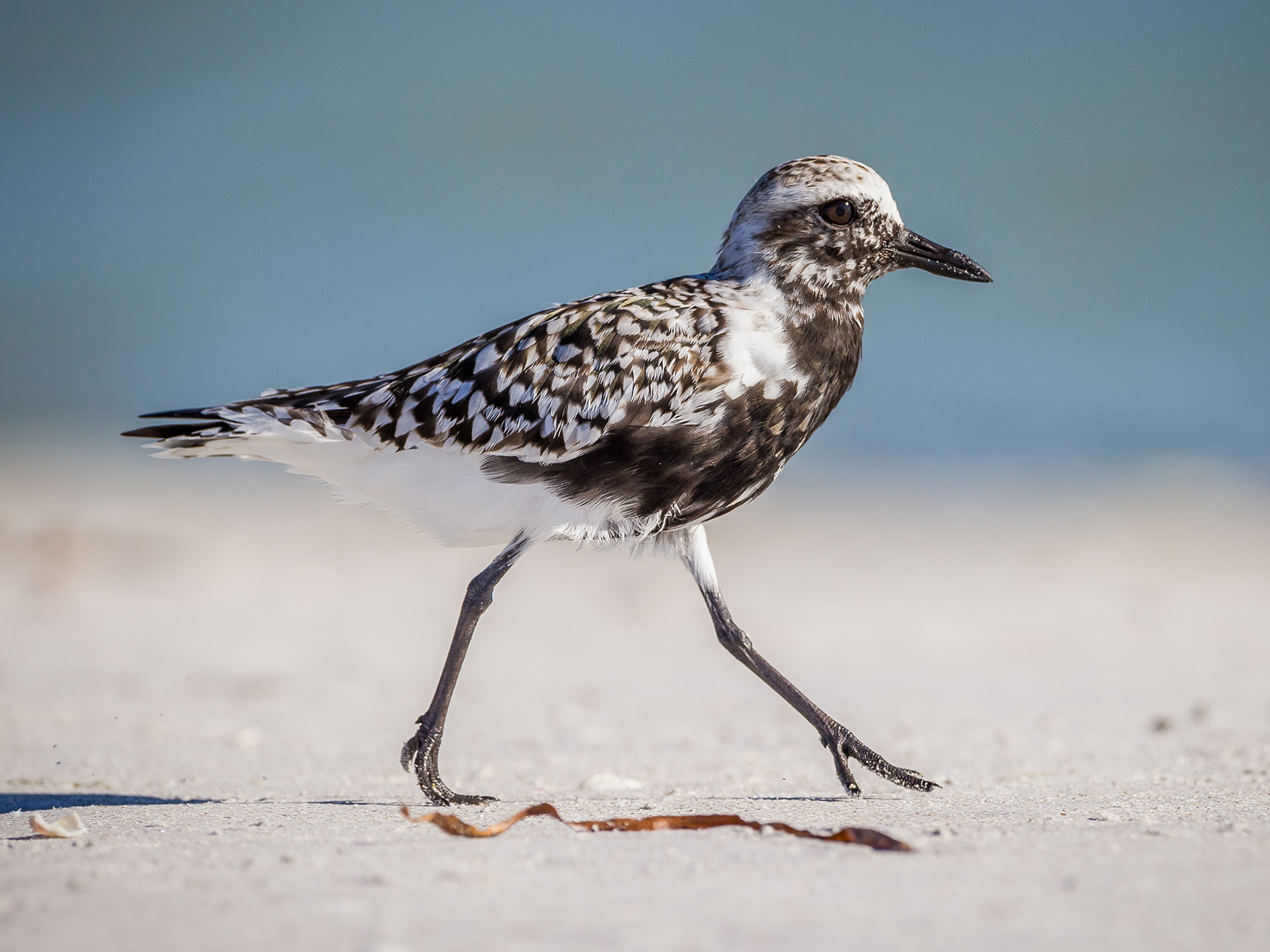
While the Old World name for the species reflects its drab, grey winter plumage, its North American name, the black-bellied plover, offers an accurate description of its more distinctive appearance when breeding.
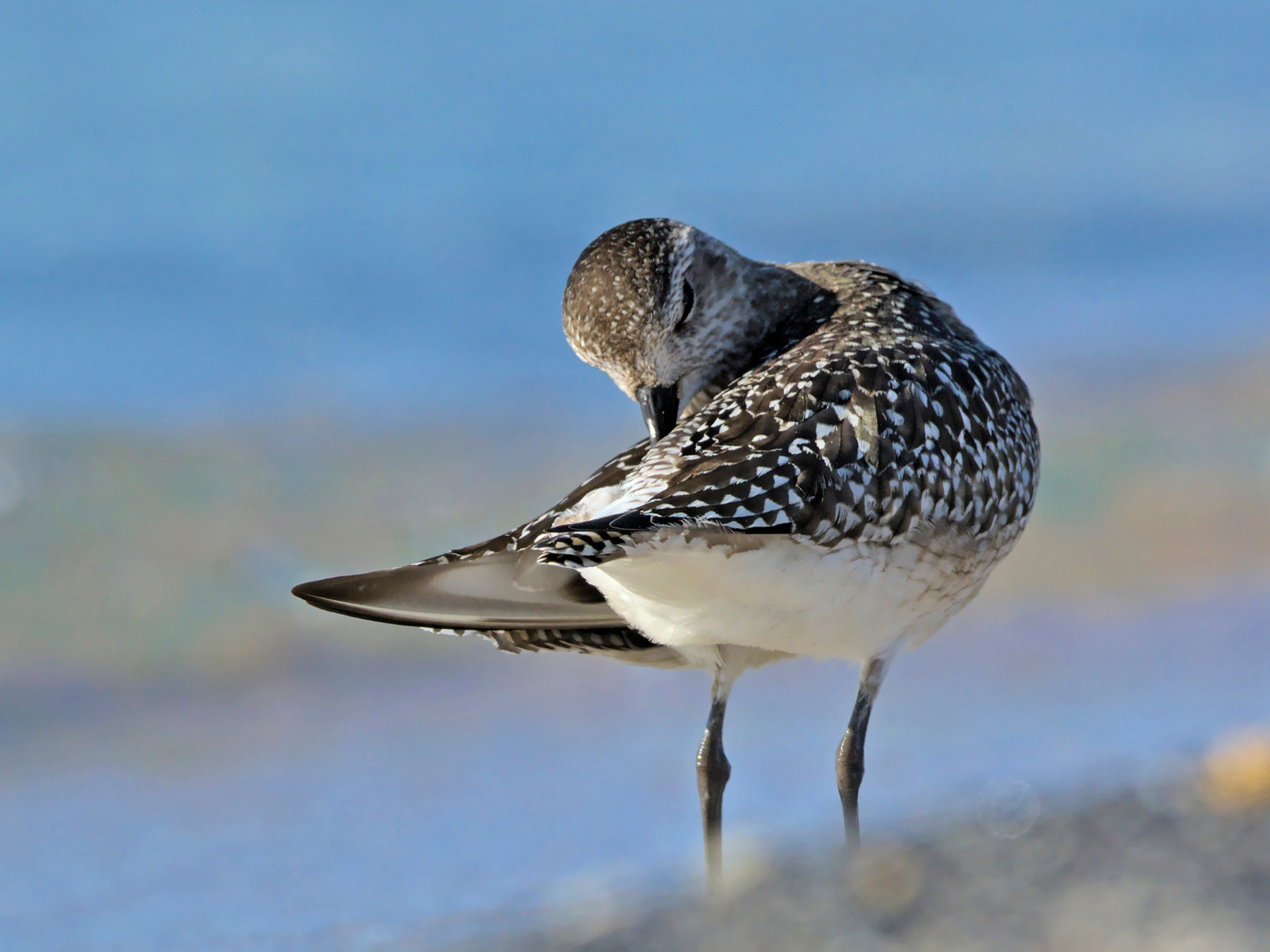
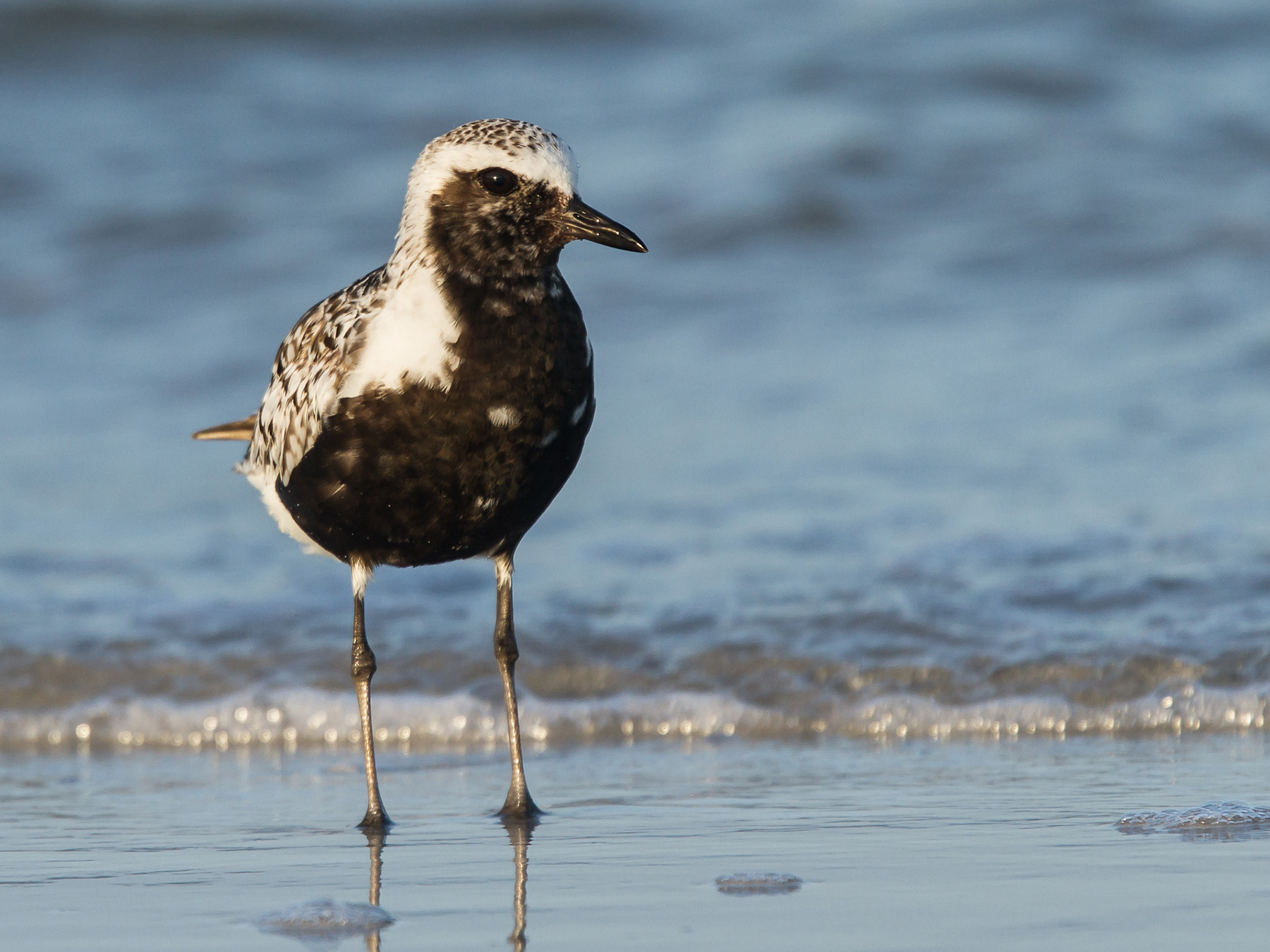
The breeding plumage of a grey plover features a bold black breast, belly, and face, bordered by white patches, leading to a silvery white rump and a mottled black-and-white back and upper wings. Some dark speckling is visible on its white crown, and its tail is barred with black and white. It has a heavy dark bill, dark brown eyes and long black legs.
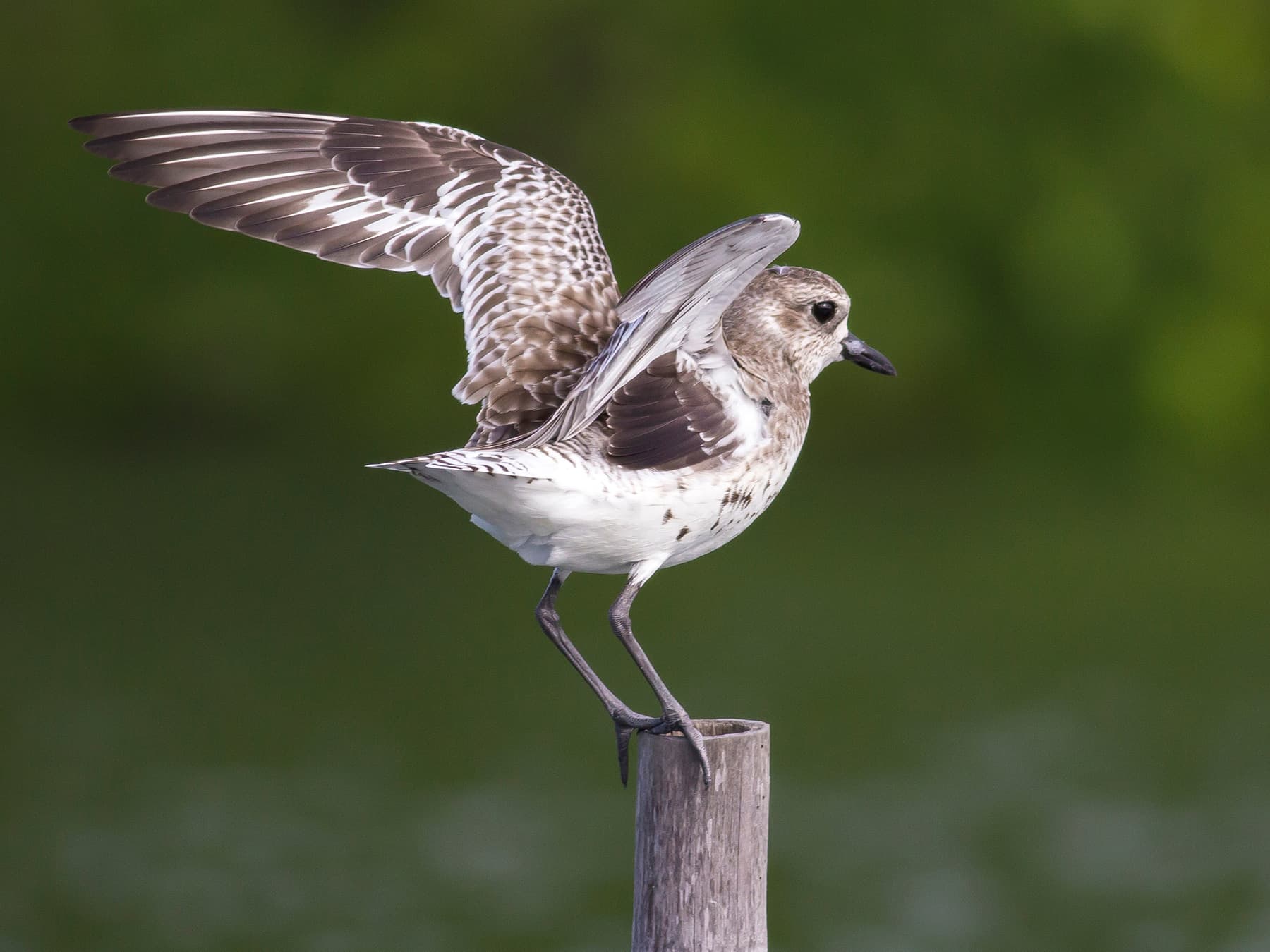
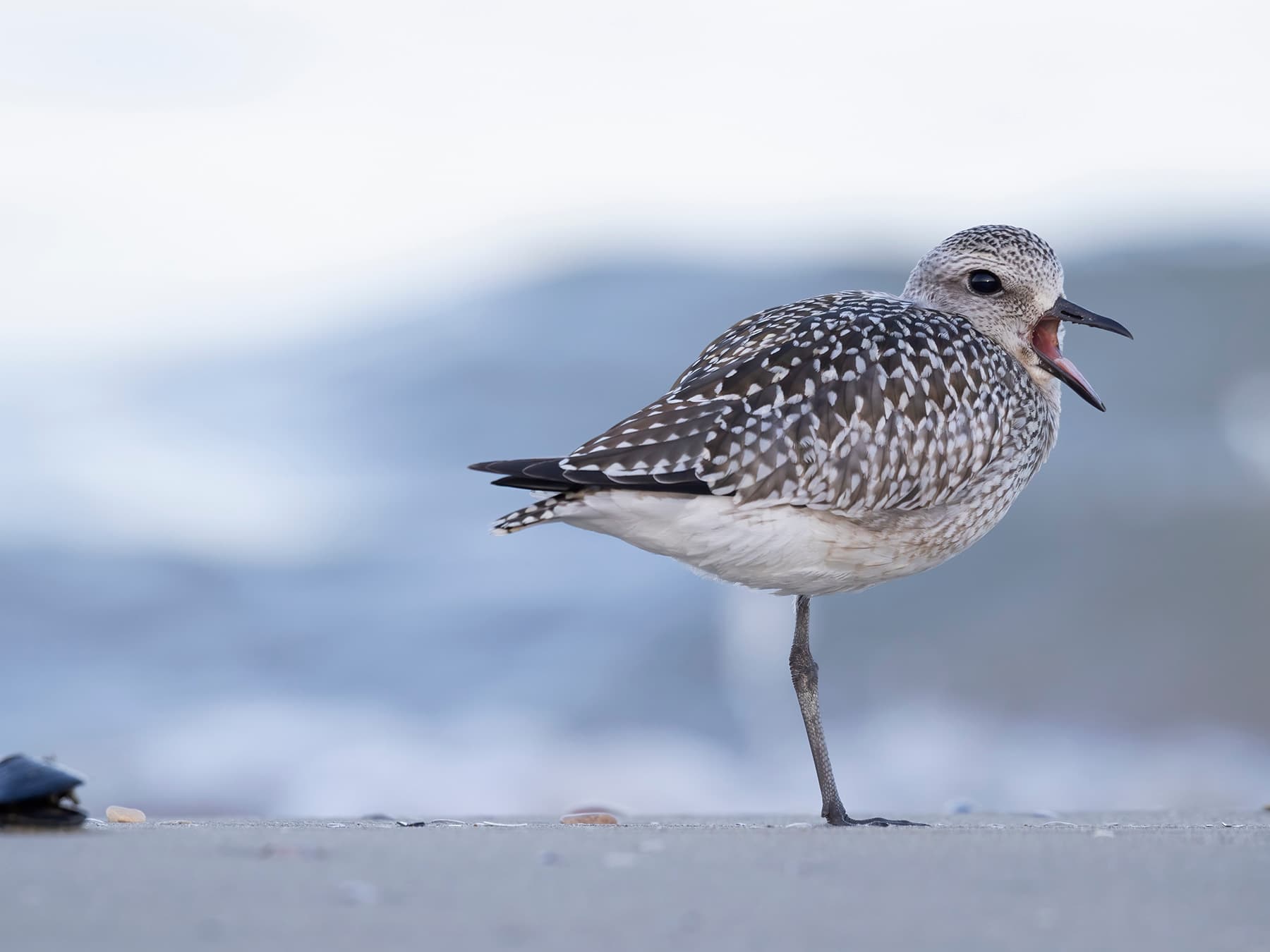
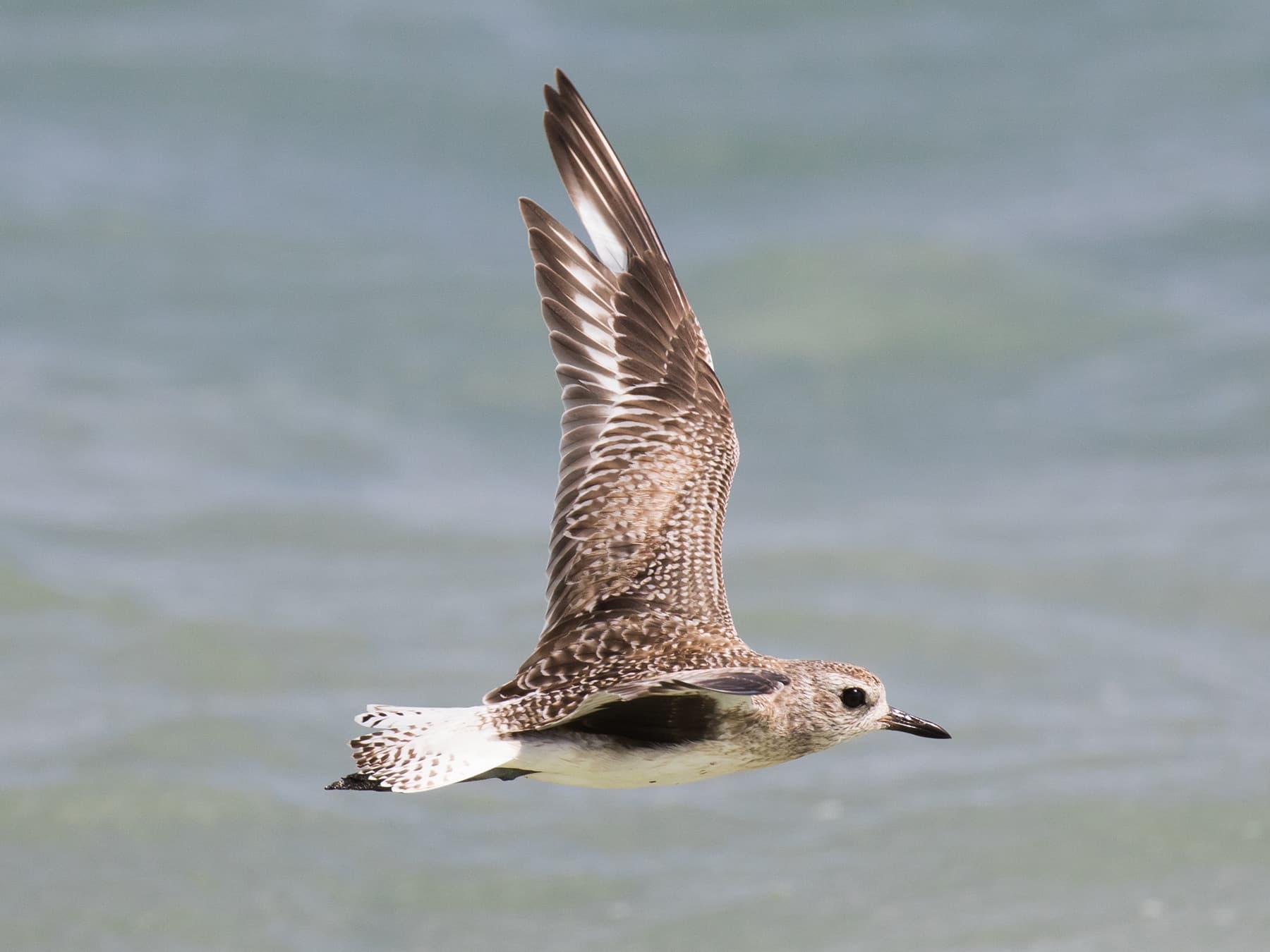
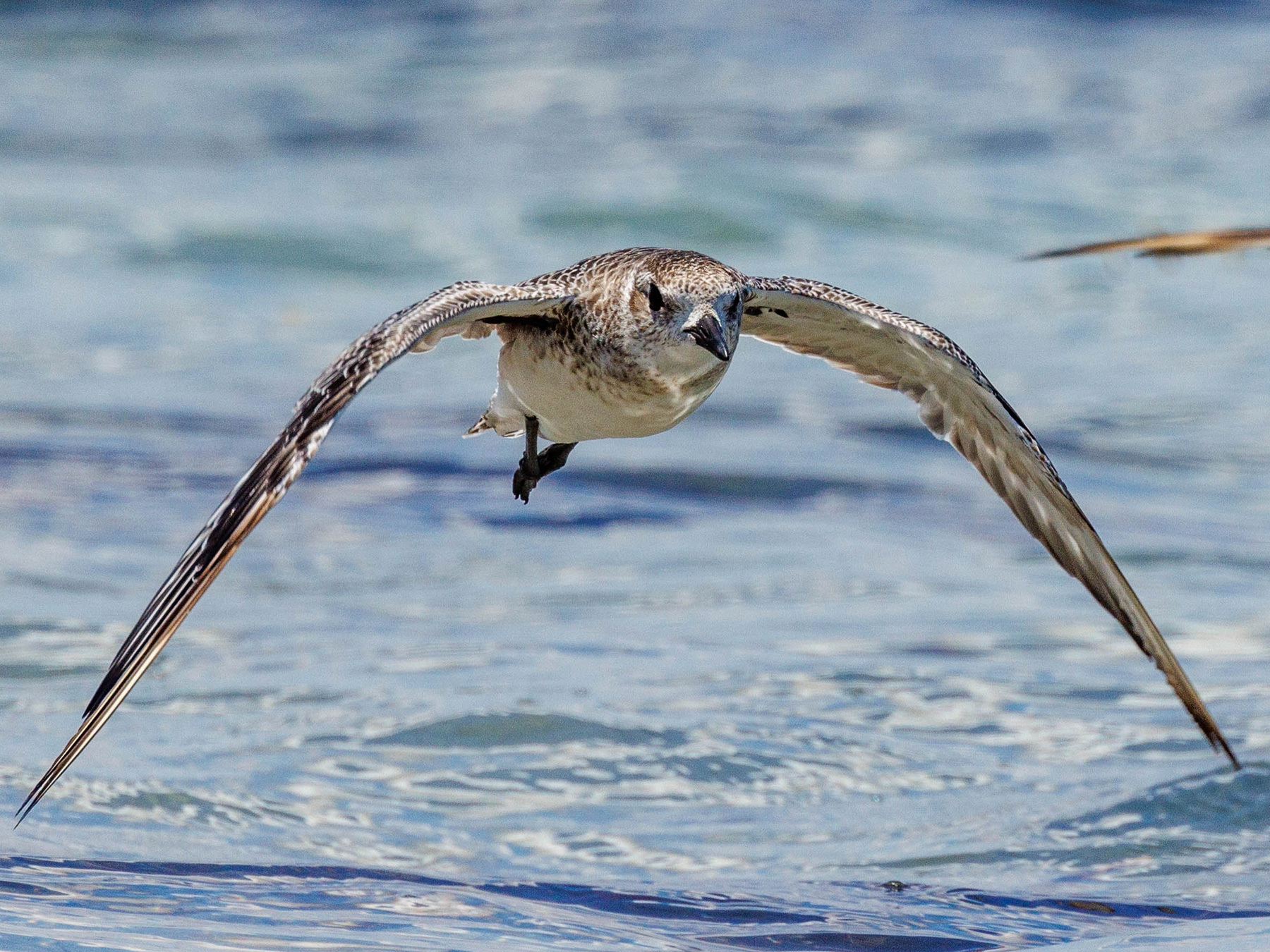
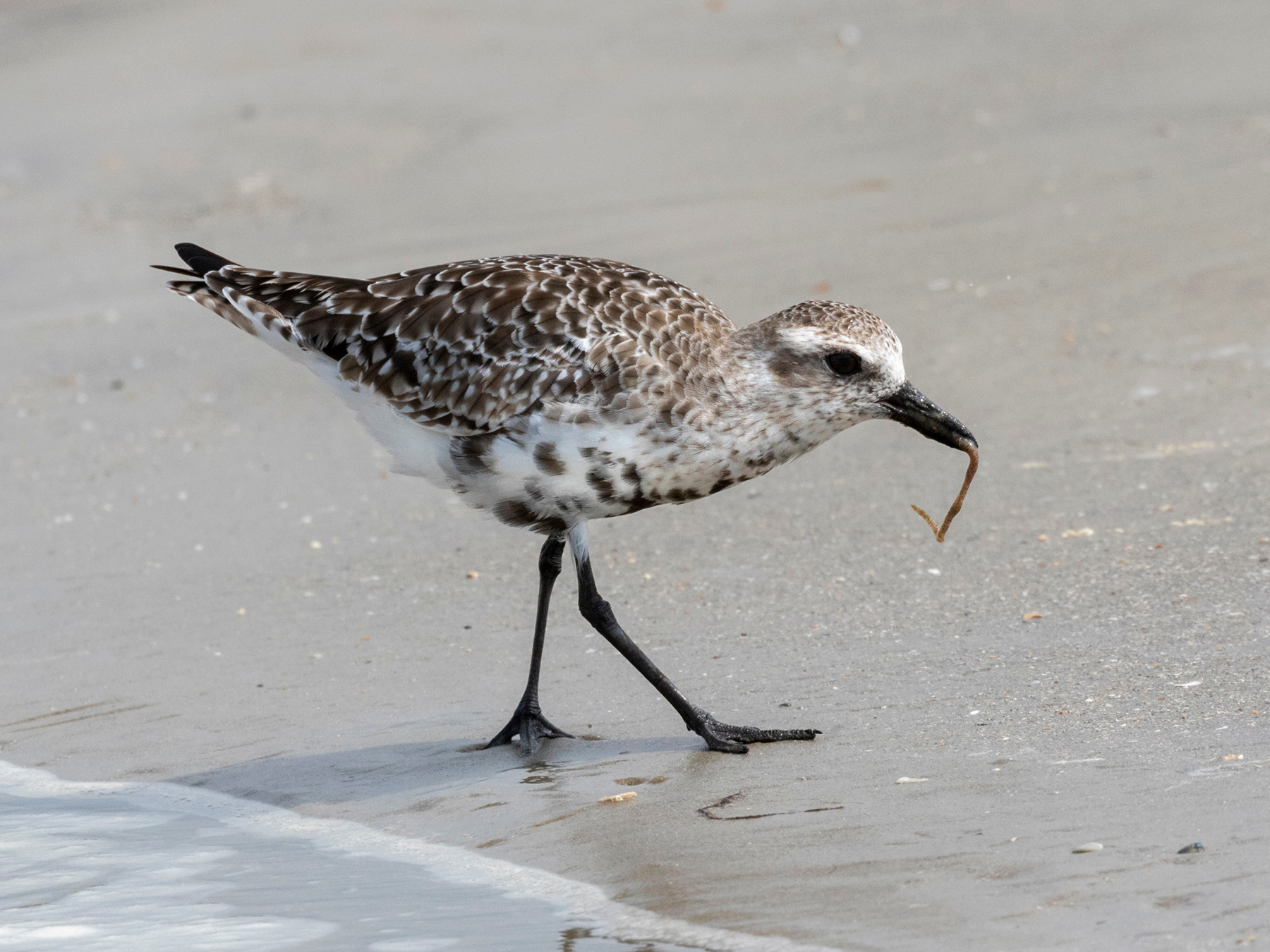
In winter, the plumage of a grey plover becomes far less distinctive, fading to a mottled grey all over, with lighter underparts streaked with greyish-buff markings and a white belly. The bill remains dark, but the legs and feet of non-breeding adults lightens to a mid-grey.
Breeding female grey plovers’ markings resemble those of breeding males although the colouring differs slightly, with the deep rich black seen on males in summer a more subdued shade of dark brown in females.
The barred tail markings of female grey plovers are also much less distinct than those of males. In winter, it’s not possible to visually distinguish between males and females.
Juvenile grey plovers are a more drab version of non-breeding adults, with grey-brown upperparts, a lighter grey breast, and a white belly, with upperparts dotted with pale speckling.
How big are Grey Plovers?
Grey plovers are large shorebirds, with wide necks and stocky bodies. They are at their heaviest ahead of autumn migration, and there is no difference in size between males and females.
- Length: 27 cm to 30 cm (11 in to 12 in)
- Wingspan: 71 cm to 83 cm (28 in to 33 in)
- Weight: 190 g to 345 g (6.7 oz to 12.2 oz)
Its size
Adults- Length
- 27–30 cm
- Wingspan
- 71–83 cm
- Weight
- 190–280 g
Its song and calls
What sound does a Grey Plover make?
Male grey plovers use a three-note whistle ‘koodiloo’ in flight to advertise and assert a claim to their territory. A second song, a trilled series of chu-weep notes, followed by a warbled tune, is used in display when attracting a female.
Loud ‘klee’ and ‘kleear’ alarm calls are heard, also by male grey plovers, to warn of threats near their nest sites, which carry across open landscapes to alert any nearby species.
- Call0:00 / 0:10
Recorded in Normandie, France · March 2023
When and where to see it
OctoberArriving
Most recorded in October
- 1. Louth1.4%
- 2. East Lothian0.75%
- 3. Essex0.69%
- 4. East Riding of Yorkshire0.66%
- 5. Norfolk0.60%
Each dot is a county, state or province: the bigger and darker, the larger the bird’s share of that place’s bird records that month. Grey dots: no regular records. The ringed point is the centre of the bird’s records this month; the arrow shows how it moved since last month, and the dashed loop its path through the year. “Arrivals” colours places where it becomes regular this month (orange) or is in its last regular month (grey). GBIF eBird Observation Dataset, 2019–2024. Map data: Natural Earth, US Census Bureau; place centres © OpenStreetMap contributors.
In your area
See when the Grey Plover is recorded in your county, state or province.
How often the Grey Plover turns up in the UK, Ireland, the United States and Canada through the year, from birdwatchers' records.
United Kingdom
Winter visitor · all year · most records in October
Ireland
Winter visitor · regularly Jul–May · most records in January
United States
Resident · all year · most records in October
Canada
Summer visitor · all year · most records in September
Show as a table
| Month | United Kingdom | Ireland | United States | Canada |
|---|---|---|---|---|
| January | 0.18% (regular) | 0.30% (regular) | 0.11% (regular) | 0.048% (regular) |
| February | 0.13% (regular) | 0.26% (regular) | 0.083% (regular) | 0.039% (regular) |
| March | 0.078% (regular) | 0.16% (regular) | 0.062% (regular) | 0.025% (regular) |
| April | 0.060% (regular) | 0.062% (regular) | 0.080% (regular) | 0.031% (regular) |
| May | 0.070% (regular) | 0.030% (regular) | 0.074% (regular) | 0.079% (regular) |
| June | 0.028% (regular) | 0.015% | 0.030% (regular) | 0.023% (regular) |
| July | 0.030% (regular) | 0.037% (regular) | 0.049% (regular) | 0.038% (regular) |
| August | 0.10% (regular) | 0.086% (regular) | 0.16% (regular) | 0.24% (regular) |
| September | 0.14% (regular) | 0.17% (regular) | 0.15% (regular) | 0.29% (regular) |
| October | 0.21% (regular) | 0.22% (regular) | 0.17% (regular) | 0.22% (regular) |
| November | 0.19% (regular) | 0.26% (regular) | 0.15% (regular) | 0.11% (regular) |
| December | 0.16% (regular) | 0.29% (regular) | 0.11% (regular) | 0.040% (regular) |
Recorded regularly in
Worldwide: recorded regularly in 161 countries
Countries where it was recorded in at least 3 of the 6 years 2019–2024. Linked countries have their own bird list.
Europe (37)
Africa (32)
- Angola
- Botswana
- Cape Verde
- Djibouti
- Egypt
- Gabon
- Gambia
- Ghana
- Guinea
- Guinea-Bissau
- Kenya
- Liberia
- Libya
- Madagascar
- Mauritania
- Mauritius
- Mayotte
- Morocco
- Mozambique
- Namibia
- Réunion
- Senegal
- Seychelles
- Sierra Leone
- Somalia
- South Africa
- Tanzania
- Tunisia
- Uganda
- Western Sahara
- Zambia
- Zimbabwe
Asia (39)
- Armenia
- Azerbaijan
- Bahrain
- Bangladesh
- British Indian Ocean Territory
- Cambodia
- China
- Cyprus
- Georgia
- Hong Kong SAR China
- India
- Indonesia
- Iran
- Israel
- Japan
- Kazakhstan
- Kuwait
- Lebanon
- Macao SAR China
- Malaysia
- Maldives
- Mongolia
- Myanmar (Burma)
- Oman
- Pakistan
- Philippines
- Qatar
- Saudi Arabia
- Singapore
- South Korea
- Sri Lanka
- Taiwan
- Thailand
- Timor-Leste
- Turkey
- United Arab Emirates
- Uzbekistan
- Vietnam
- Yemen
North America (36)
- Anguilla
- Antigua & Barbuda
- Aruba
- Bahamas
- Barbados
- Belize
- Bermuda
- British Virgin Islands
- Canada
- Caribbean Netherlands
- Cayman Islands
- Costa Rica
- Cuba
- Curaçao
- Dominican Republic
- El Salvador
- Grenada
- Guadeloupe
- Guatemala
- Haiti
- Honduras
- Jamaica
- Martinique
- Mexico
- Nicaragua
- Panama
- Puerto Rico
- St Kitts & Nevis
- St Lucia
- St Martin
- St Pierre & Miquelon
- St Vincent & the Grenadines
- Trinidad & Tobago
- Turks & Caicos Islands
- United States
- US Virgin Islands
South America (11)
Data: EOD – eBird Observation Dataset (Cornell Lab of Ornithology), accessed via GBIF.org, CC BY 4.0. Records from 2019–2024, aggregated and filtered by Birdfact. How these lists are made
What is the habitat of a Grey Plover?
Breeding habitats favoured by grey plovers include upland and valley locations within the Arctic Circle, particularly land that is located between the treeline and the coast.
Dry stony tundra is commonly chosen for nesting, with sedge, moss, lichen, grass or dwarf birch vegetation nearby. Peat ridges in tundra marshes, riverbanks, rocky slopes, and raised sand or gravel beaches may also be used.
During winter, grey plovers are frequent visitors to intertidal mudflats and sand flats, as well as muddy bays and estuaries, salt marshes and stretches of barren coastline.
What is the range of a Grey Plover?
Grey plovers are a fully migratory species, breeding in the upper Arctic islands and along the northern coasts of Alaska, Canada, and Russia. Once the breeding season ends, often as early as July, migration begins to various coastal areas throughout the world.
Black-bellied plovers, as they are known in the New World, spend winters from southwest British Columbia and Massachusetts as far south as Argentina and Chile.
The species’ Eurasian range extends from Ireland and southwestern Norway in the north, reaching south South Africa in the south. To the east, wintering grey plovers arrive in southern Japan and spread southwards throughout coastal southern Asia and Australia, with a few reaching New Zealand.
Where do Grey Plovers live?
More than 260,000 grey plovers are believed to breed in Alaska, with estimates of up to 100,000 breeding pairs in Russia. In winter, regions with the highest concentrations of grey plovers include 103,000 in Europe, 70,000 along the Pacific coast of the US, 50,000 in East Africa and south-west Asia and between 25,000 and 100,000 in East Asia and Australia.
How rare are Grey Plovers?
The global population of grey plovers (black-bellied plovers) is up to 630,000 mature individuals, but due to their wide dispersal to wintering grounds in North America, South America, Europe, Asia, Africa and Russia, they are not considered an overly common or abundant species in any part of the world.
Grey plovers begin to arrive on UK shores from July onwards and reach a peak between November and March. As they are coastal birds, inland sightings are considered rare, but in coastal wetlands, and along muddy estuaries, they are not an uncommon species.
Around 33,500 grey plovers settle in the UK during winter, with temporary passage birds en-route to breeding grounds from winter destinations in Africa swelling the number of annual sightings to 70,000 birds by spring.
Where can you see Grey Plovers in North America?
During autumn and winter, black-bellied plovers arrive along both the Atlantic and Pacific coastlines, with the latter attracting more than 21,000 birds according to an estimate from the early 1990s. California welcomes a sizeable influx each year, with concentrations around San Diego, in Mission Bay and along the Tijuana River estuary.
Where can you see Grey Plovers in the UK?
Grey plovers are coastal birds, preferring muddy estuaries and expanses of sandy shorelines. Locations, where sightings are frequently reported, include the estuaries of the Wash, Ribble, Thames, Blackwater, Medway, Dee and Humber rivers, as well as the harbours at Chichester and Langstone.
Migration
Do Grey Plovers migrate?
Breeding grounds of grey plovers are located in the far northern latitudes of islands in the Arctic Circle and coastal regions of Alaska, Canada and Russia.
Once the breeding season ends, populations disperse to coastal areas scattered widely around the world, from North and South America to Europe and further afield as far as South Africa, Japan, and Australia.
Are Grey Plovers native to North America?
In North America, grey plovers are known as black-bellied plovers.
Breeding is limited to the extreme northern regions of Alaska and Canada, but migration brings large numbers of migratory birds south in the fall, along both the Atlantic and Pacific coasts of the United States and into the Caribbean, where temporary settlers arrive in Cuba, Bermuda and the West Indies.
Are Grey Plovers native to the UK?
Grey plovers arrive in the UK from northern breeding grounds once their young have fledged. Earliest arrivals begin to appear from July onwards, although become more widespread into the autumn.
No breeding takes place in Britain, although some first-year birds may remain as residents through their first summer before they reach breeding age.
Tips for seeing it
- Look for Grey Plovers on coastal mudflats and sandy beaches during migration and winter.
- Observe their distinctive foraging behaviour: standing still, then running to catch prey.
- In flight, note the black 'armpits' contrasting with white wing stripes.
- Listen for their distinctive, mournful whistle, often given in flight.
What it eats
What do Grey Plovers eat?
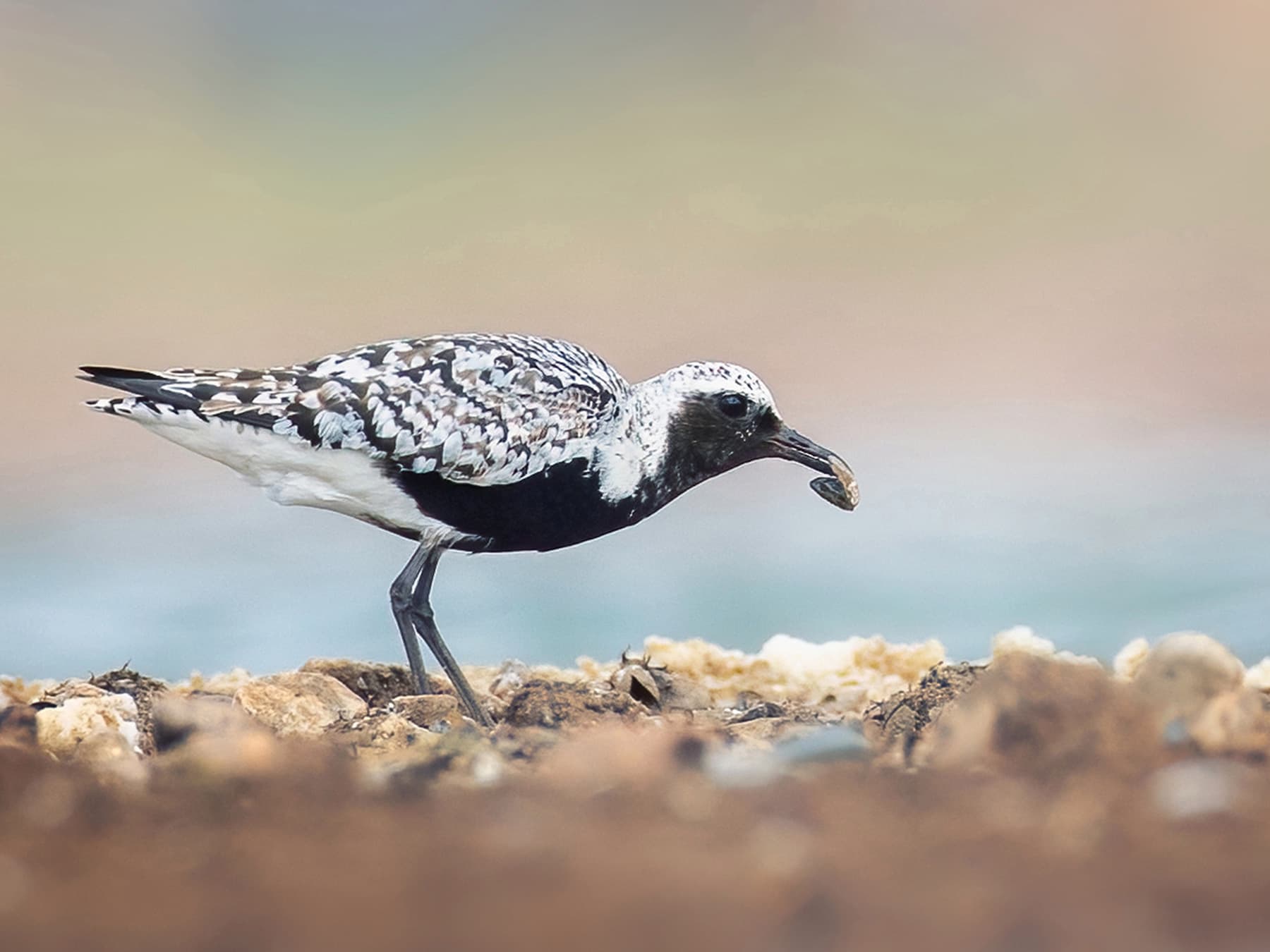
During the breeding season, invertebrates and their larvae are the primary prey of grey plovers, with marine worms, beetles, caterpillars and other insects and their larvae of chief importance.
Some seeds and plant matter are also eaten. In winter, clams and mussels, snails, shrimps and crabs are caught.
What do Grey Plover chicks eat?
Within 12 hours of hatching, grey plovers begin foraging for themselves, initially attempting to catch midges and caterpillars.
Parents do not support their young with feeding, and they quickly master the art of finding their own prey independently.
Nesting and breeding
Where do Grey Plovers nest?
Grey plovers lay their eggs in shallow nest scrapes, formed by the male, on open tundra landscapes. Nesting in spots lacking in vegetation allows better all-round visibility and lowers the opportunity of predations.
Any large pebbles are removed from the depression, created by the male, and sometimes a basic lining of lichen, moss or leaves might be added ahead of laying.
When do Grey Plovers nest?
Eggs are laid in late May and early June, and incubation lasts for between 23 and 27 days.
Males and females share incubation duties fairly equally, and only one clutch is laid in a typical breeding season, unless an earlier attempt at nesting fails.
What do Grey Plover eggs look like?
Grey plovers’ eggs are relatively large compared to the size of the birds themselves, measuring 52 mm by 36 mm (2 in by 1.4 in). Eggs are subelliptical, pale pink, grey or brown in colour, and heavily marked with blotches. A typical clutch consists of 4 eggs.
Do Grey Plovers mate for life?
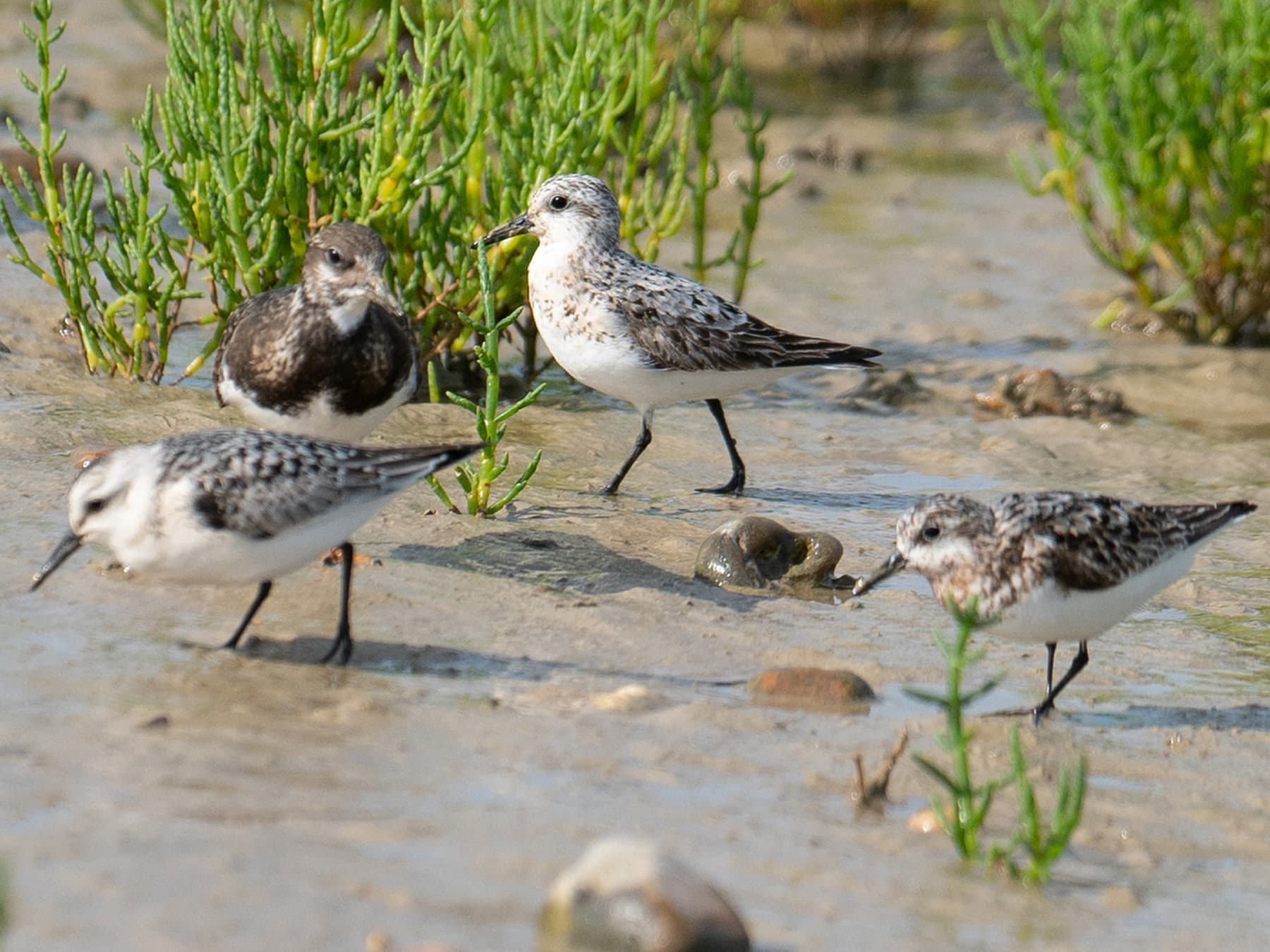
Grey plovers are monogamous during the breeding season, with pairs raising young together before parting and going their separate ways ahead of their autumn migrations.
Some reports of remating on breeding grounds the following spring do exist, but there is not enough data to indicate how common this is.
Behaviour
Are Grey Plovers aggressive?
While physical interactions with other birds are rare, aggressive and territorial flight displays are more common, and foraging grounds are actively defended, particularly at night.
Territorial behaviour extends into winter, especially with the arrival of a new influx of migratory birds as the season progresses.
Where do Grey Plovers sleep at night?
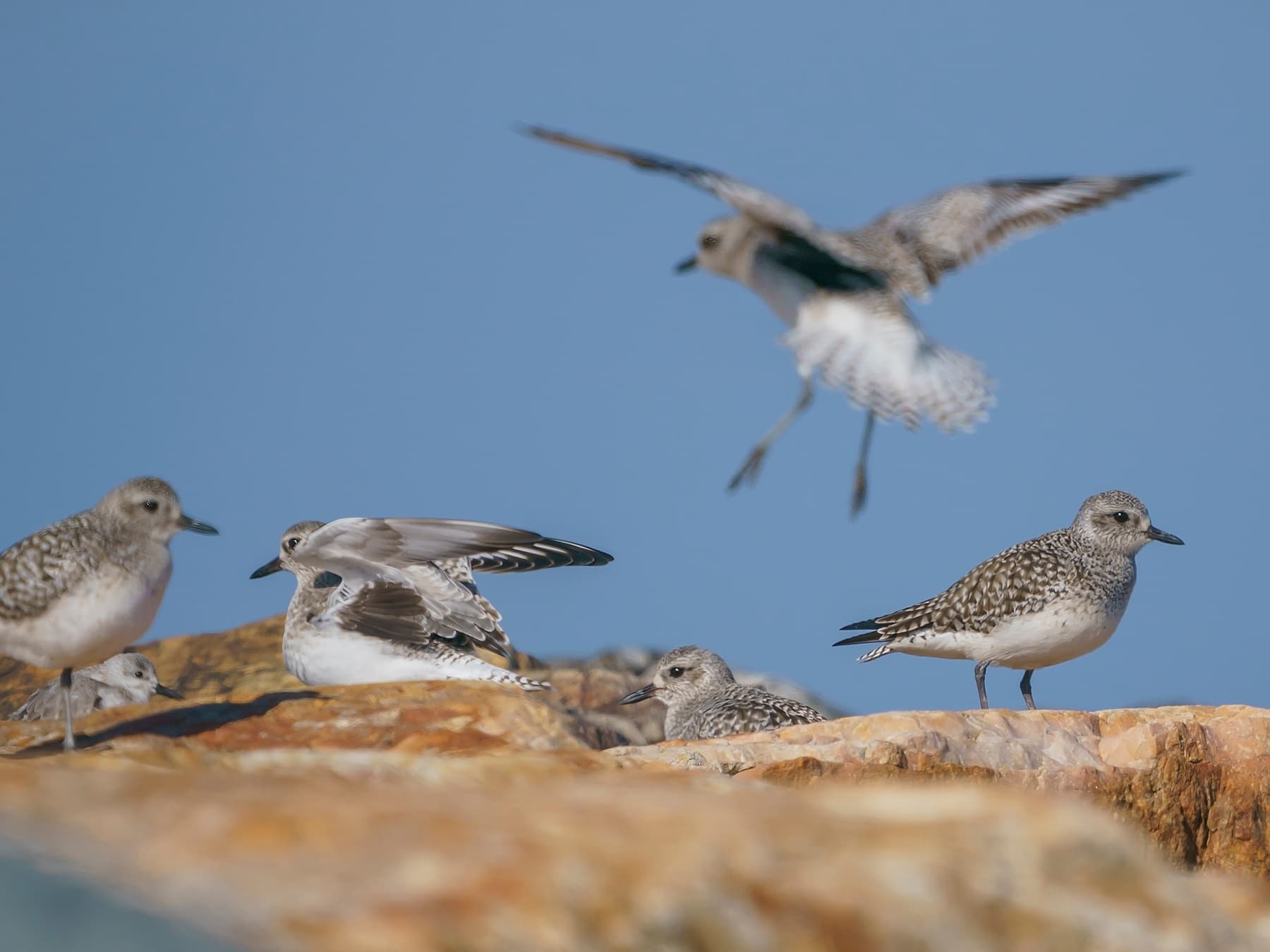
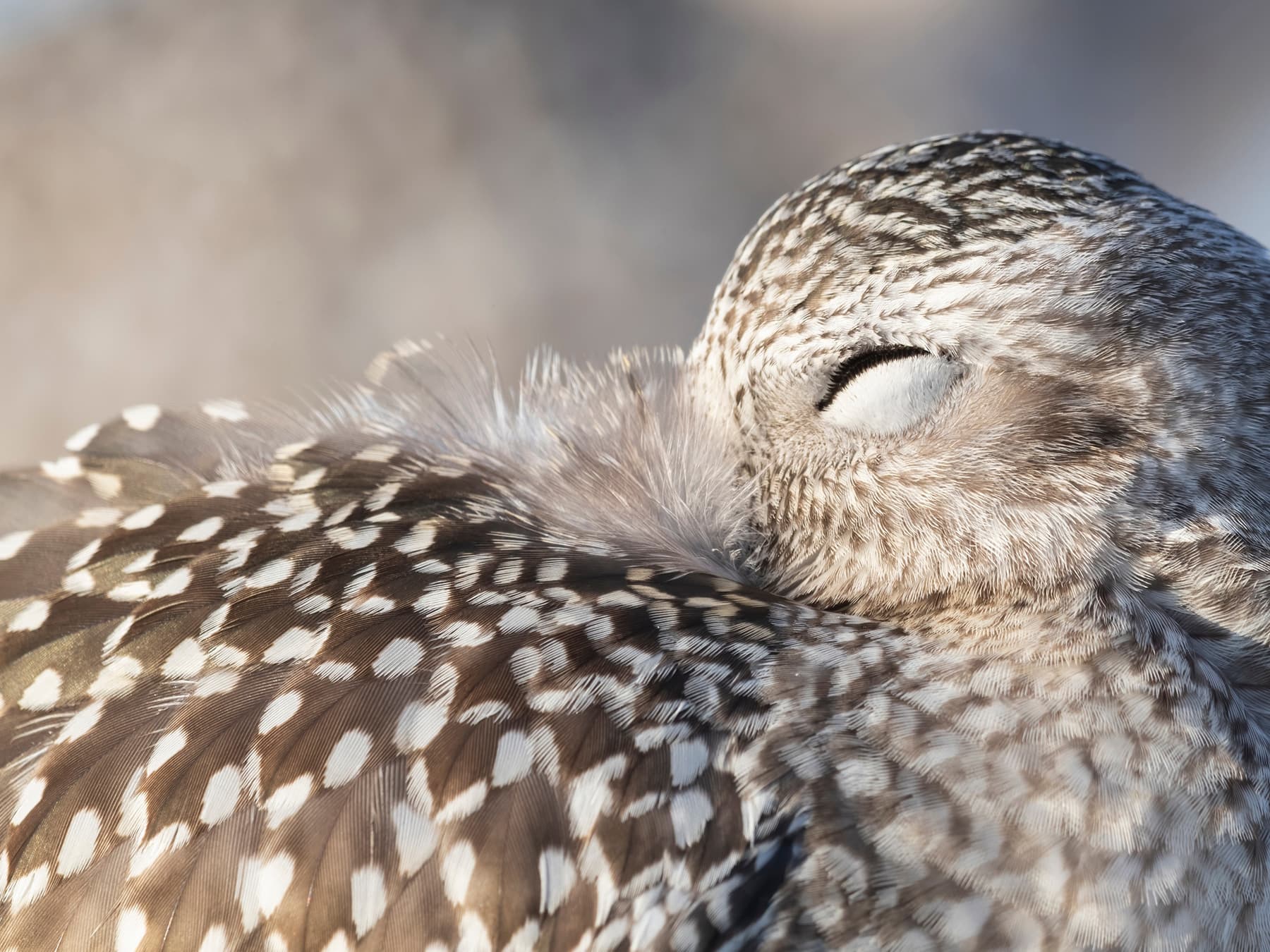
Flocks of up to 1000 birds gather at high tides to roost on coastal flats. Roosting birds stand on one leg, ready to make a quick getaway if disturbed.
Depending on tides, grey plovers remain active at night and forage on exposed beach shores as the tide goes out. Their large eyes offer effective night vision when scouring the ground for prey.
Lifespan and predators
How long do Grey Plovers live?
The average lifespan of a grey plover is around 9 years, but individual records of much older birds exist from banding, including 25 years and 1 month. First-time breeding is believed to occur at two years.
What are the predators of Grey Plovers?
Grey plover nests are extremely vulnerable to predation from Arctic foxes, leading to high rates of nest failure. Raptors and owls are also known to hunt adult grey plovers and their young.
Are Grey Plovers protected?
Grey plovers are protected under the Wildlife and Countryside Act, 1981, which makes it illegal to deliberately kill, injure or capture them. In the United States, black-bellied plovers are included in the Migratory Birds Treaty Act of 1918, which protects wild birds and their eggs from being destroyed or traded.
Are Grey Plovers endangered?
Considered an Amber status species on the British Birds of Conservation Concern list, grey plovers are not endangered, although some loss of coastal habitats may have contributed to a decrease of up to 44 per cent in winter populations in the UK between 1994 and 2019. Across their global range, numbers are not in decline and the species is classified as of least concern.
Conservation
While currently listed as Least Concern, Grey Plovers face threats from habitat loss due to coastal development and climate change. Conservation efforts focus on protecting key stopover sites along migratory routes and preserving breeding grounds in the Arctic tundra.
More photos
6 photos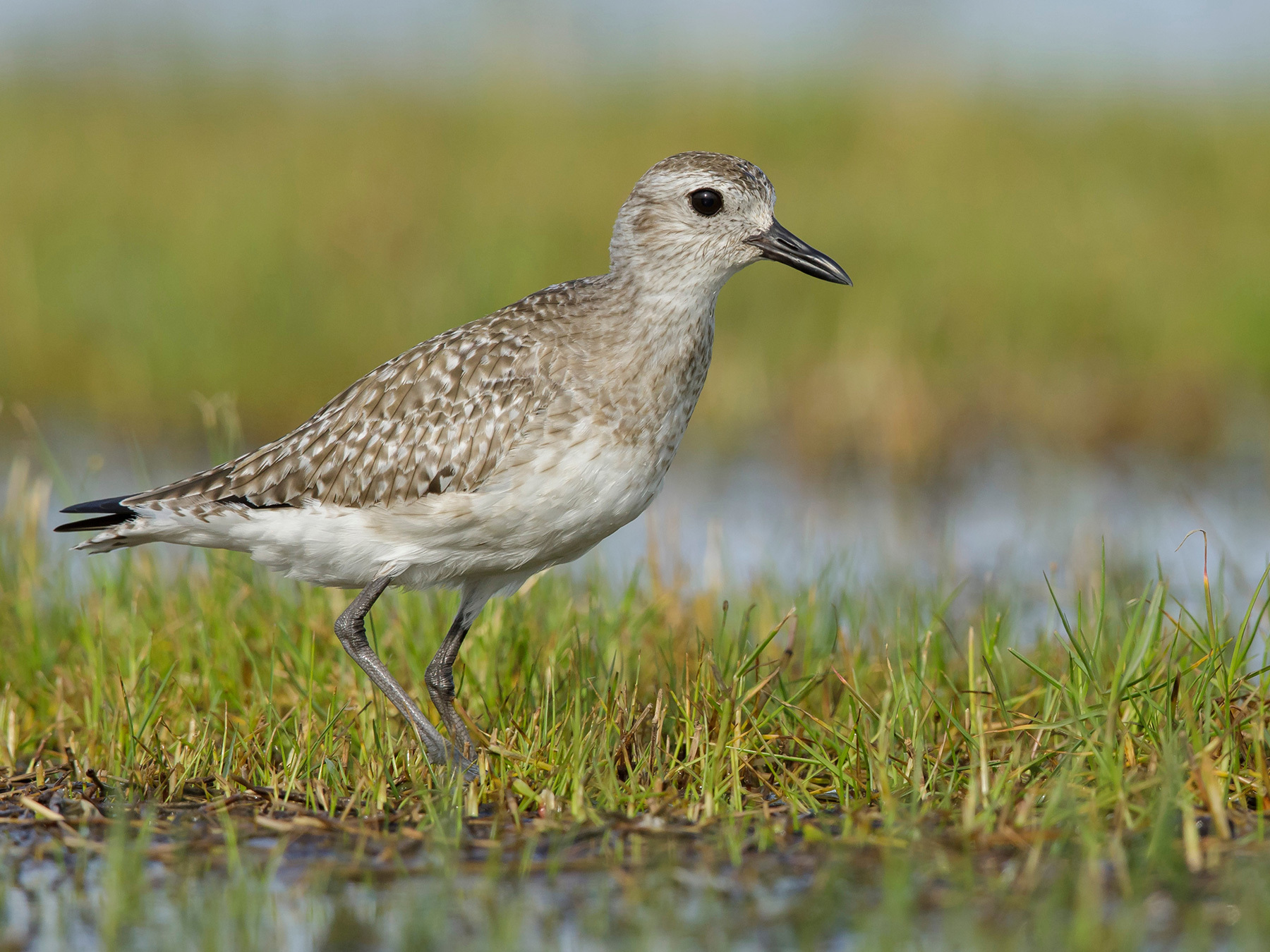
Quick facts
- Length
- 27–30 cm
- Wingspan
- 71–83 cm
- Weight
- 190–280 g
- Lifespan
- 15–20 years
- Family
- Plovers & Lapwings
- Migration
- Long-distance Migrant
- Global status (IUCN)
- Least Concern
- World population
- 490,000 - 630,000 mature individuals
- Population trend
- Decreasing
- Also called
- Black-bellied Plover
- Scientific name
- Pluvialis squatarola
Sources
3- 1BirdLife International. 2019. Pluvialis squatarola. The IUCN Red List of Threatened Species 2019: e.T22693749A154513104. Source (opens in a new tab)
- 2Wetlands International (2015)
- 3Wetlands International (2015)

Checked by
Nathan Cope, founder and editor
Nathan founded Birdfact and leads its writers and contributors in the UK, the US and Canada. He has watched and studied birds for more than ten years, and checks every article and species guide before it’s published.