


Cetti's Warbler
Cetti's Bush Warbler · Cettia cetti
By the Birdfact teamChecked by Nathan Cope
On this page14 sections
How to recognise it
What do Cetti's Warblers look like?
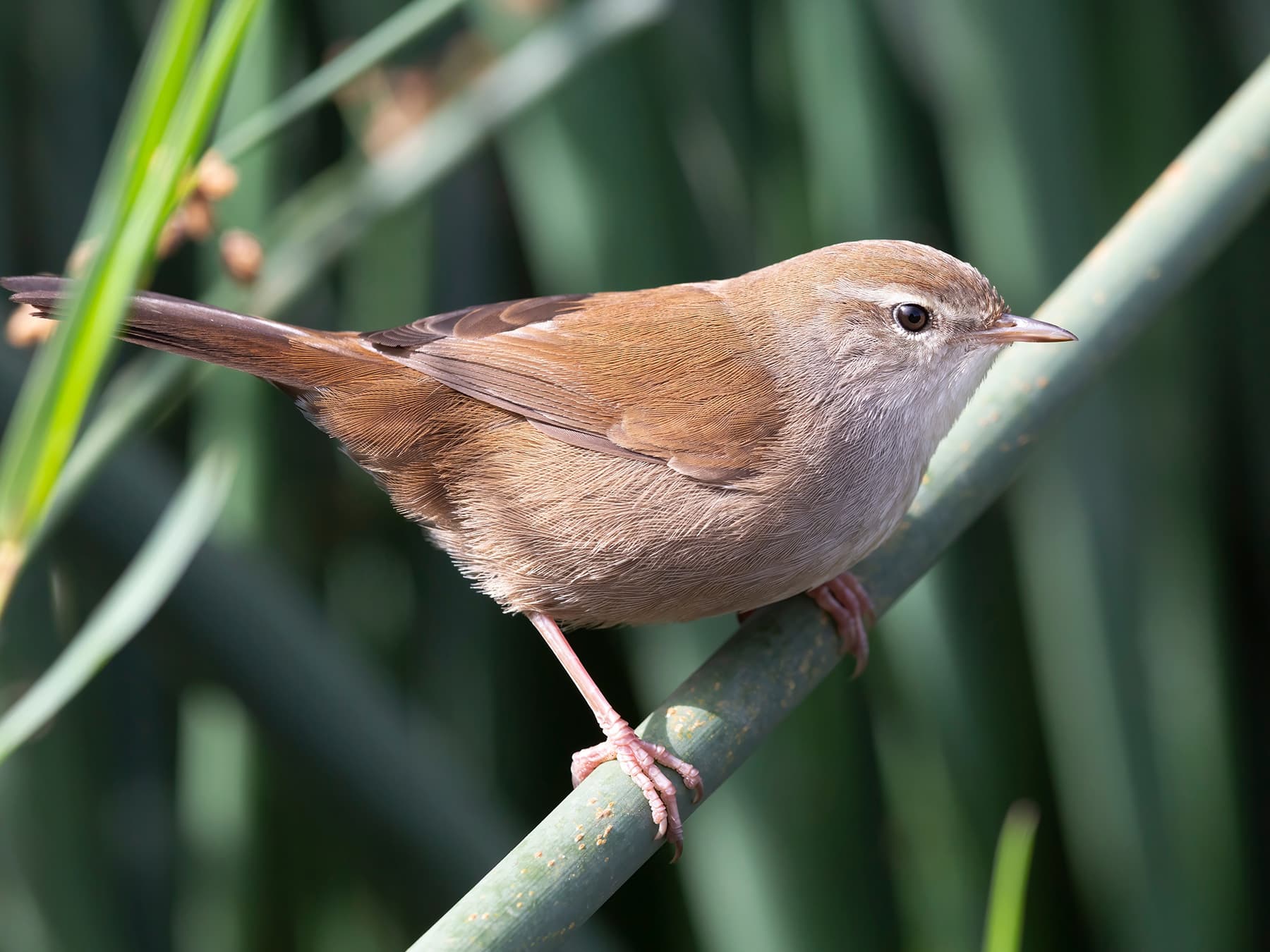
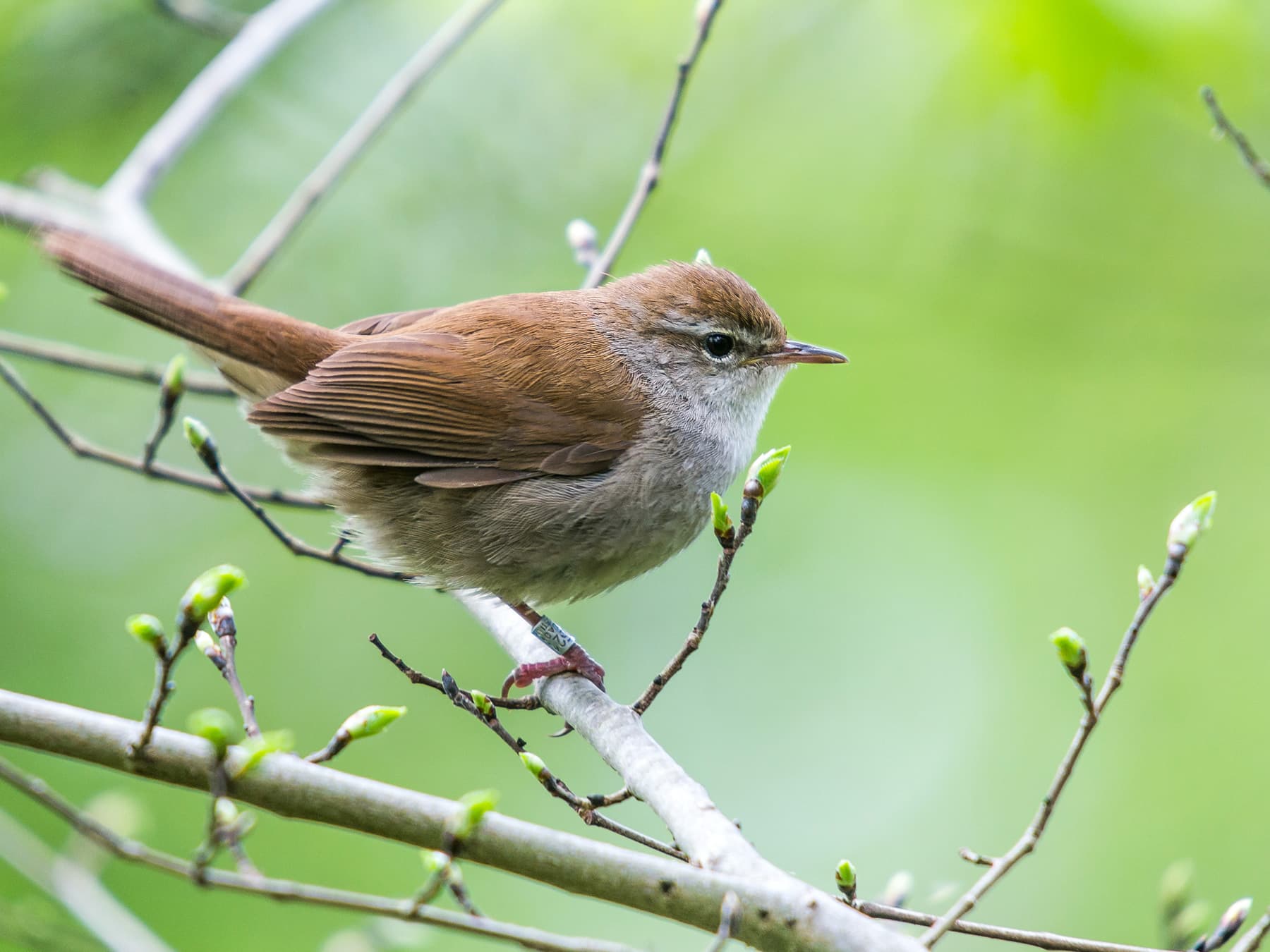
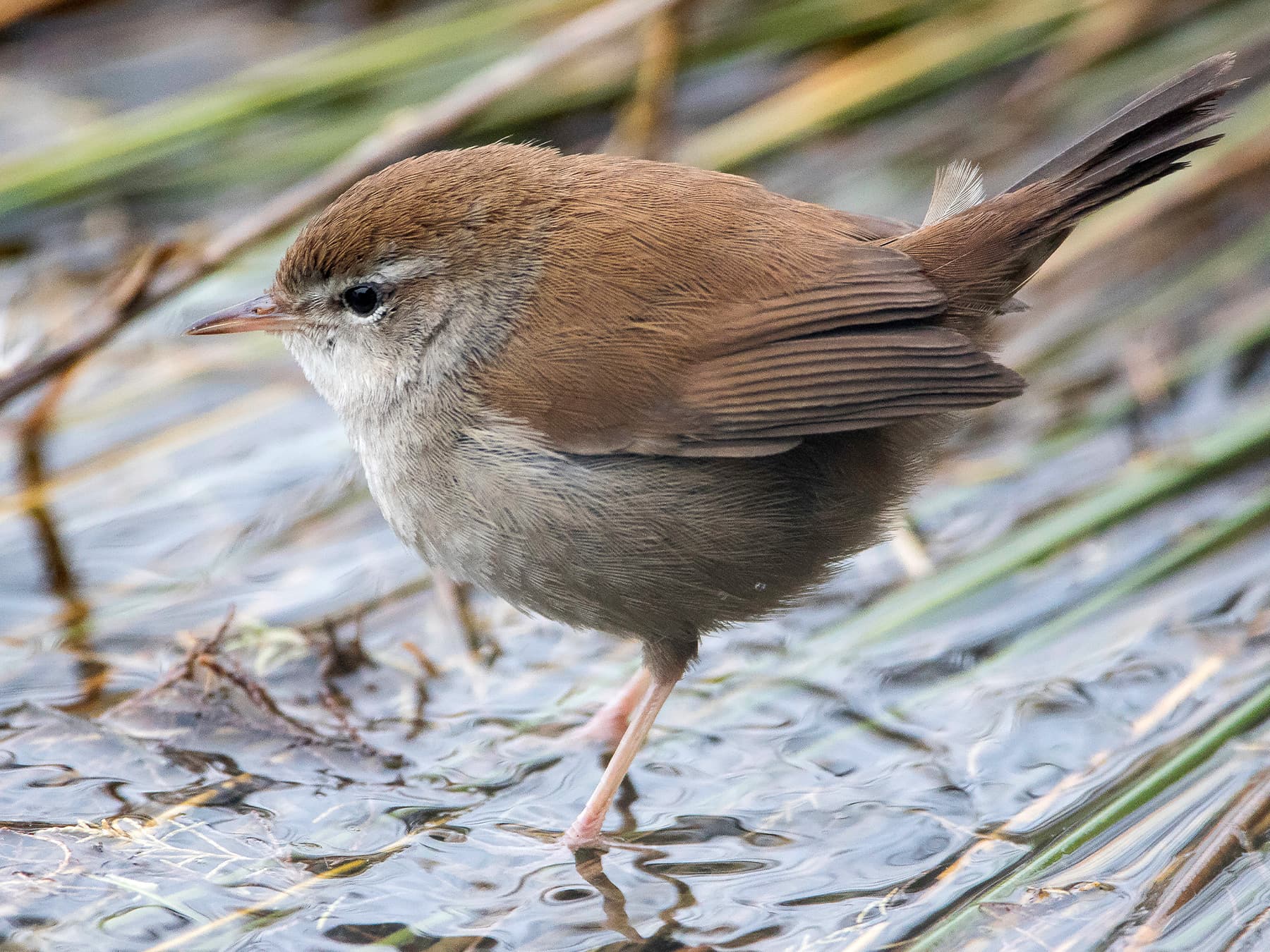
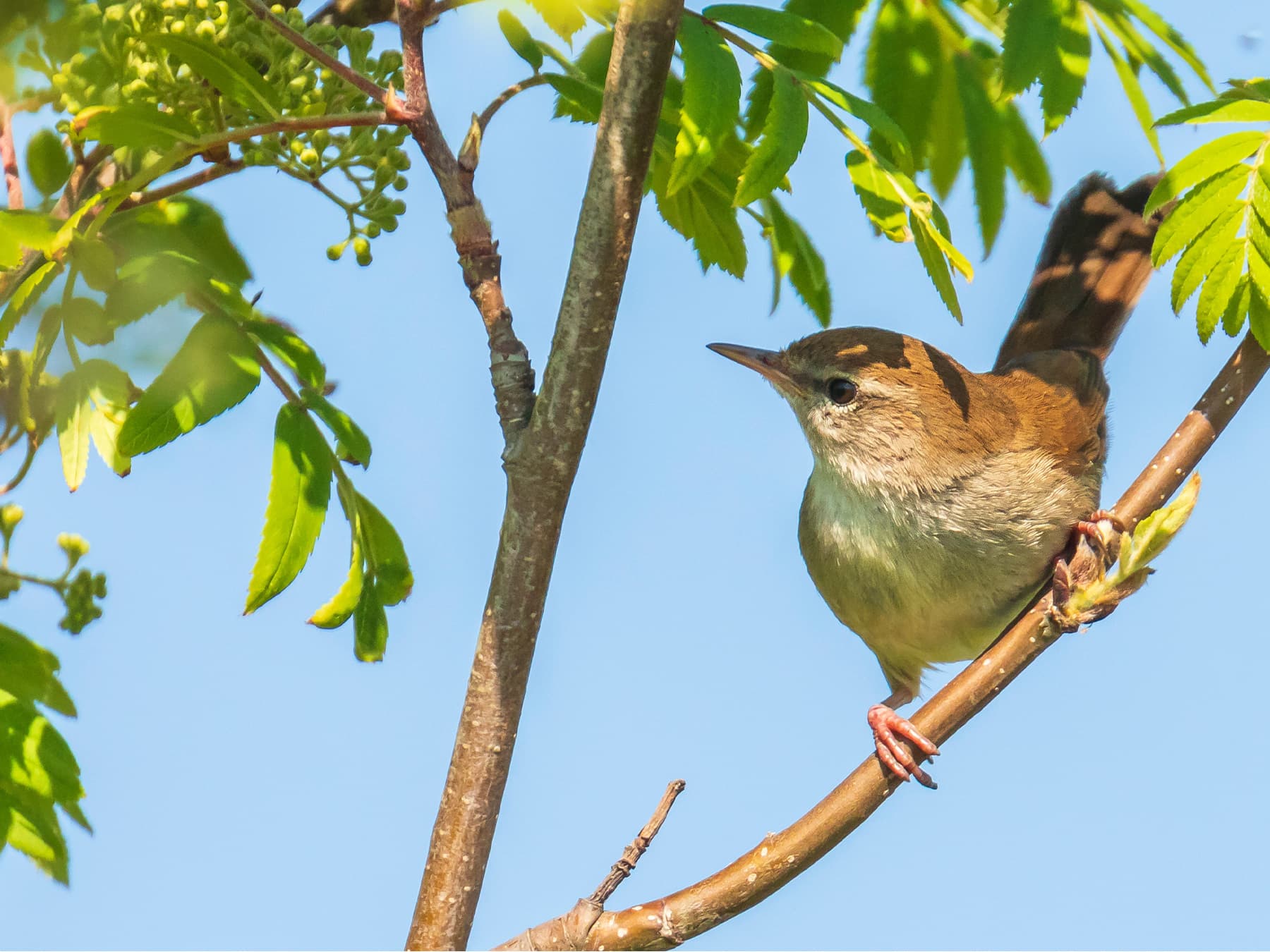
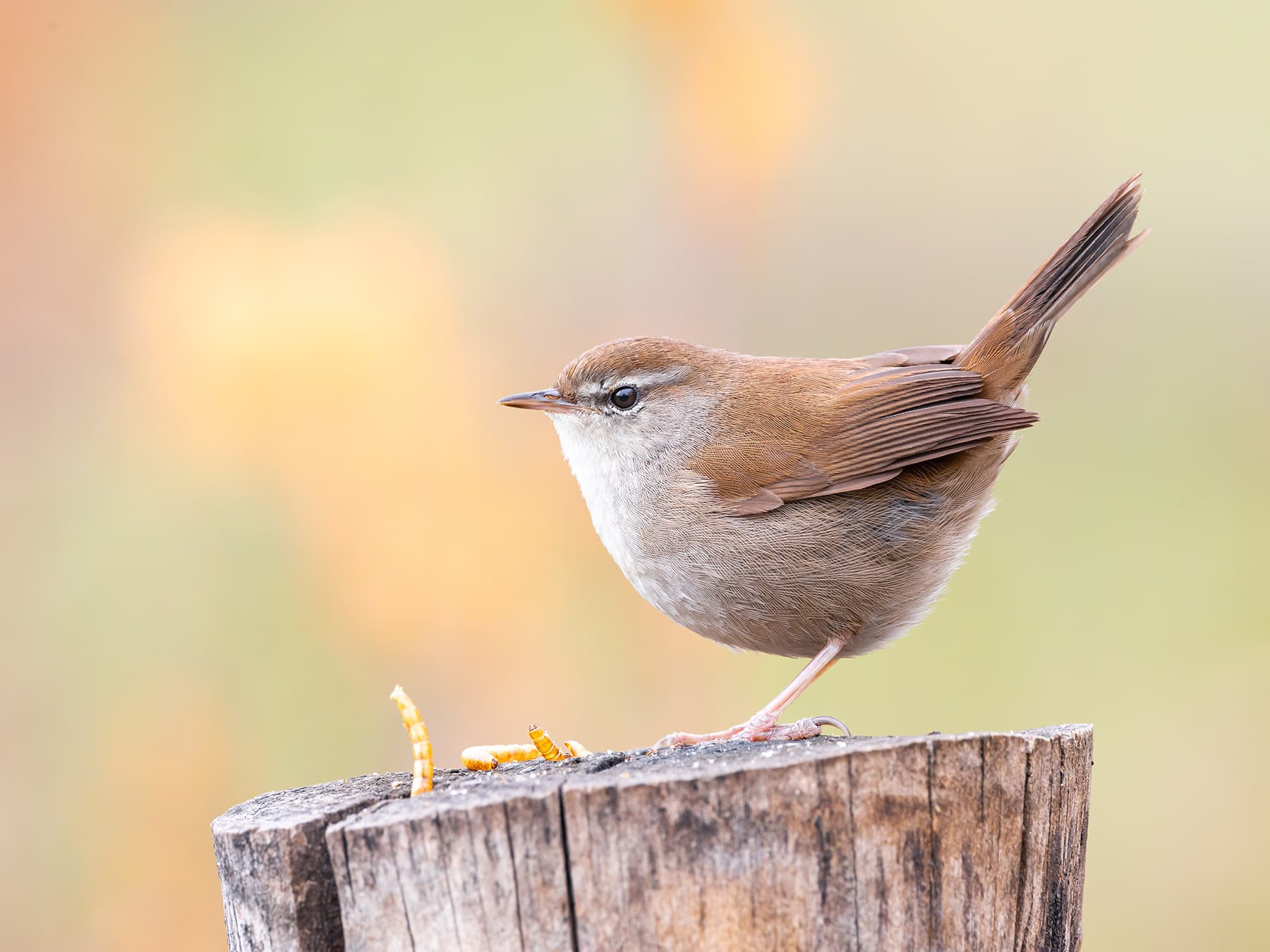
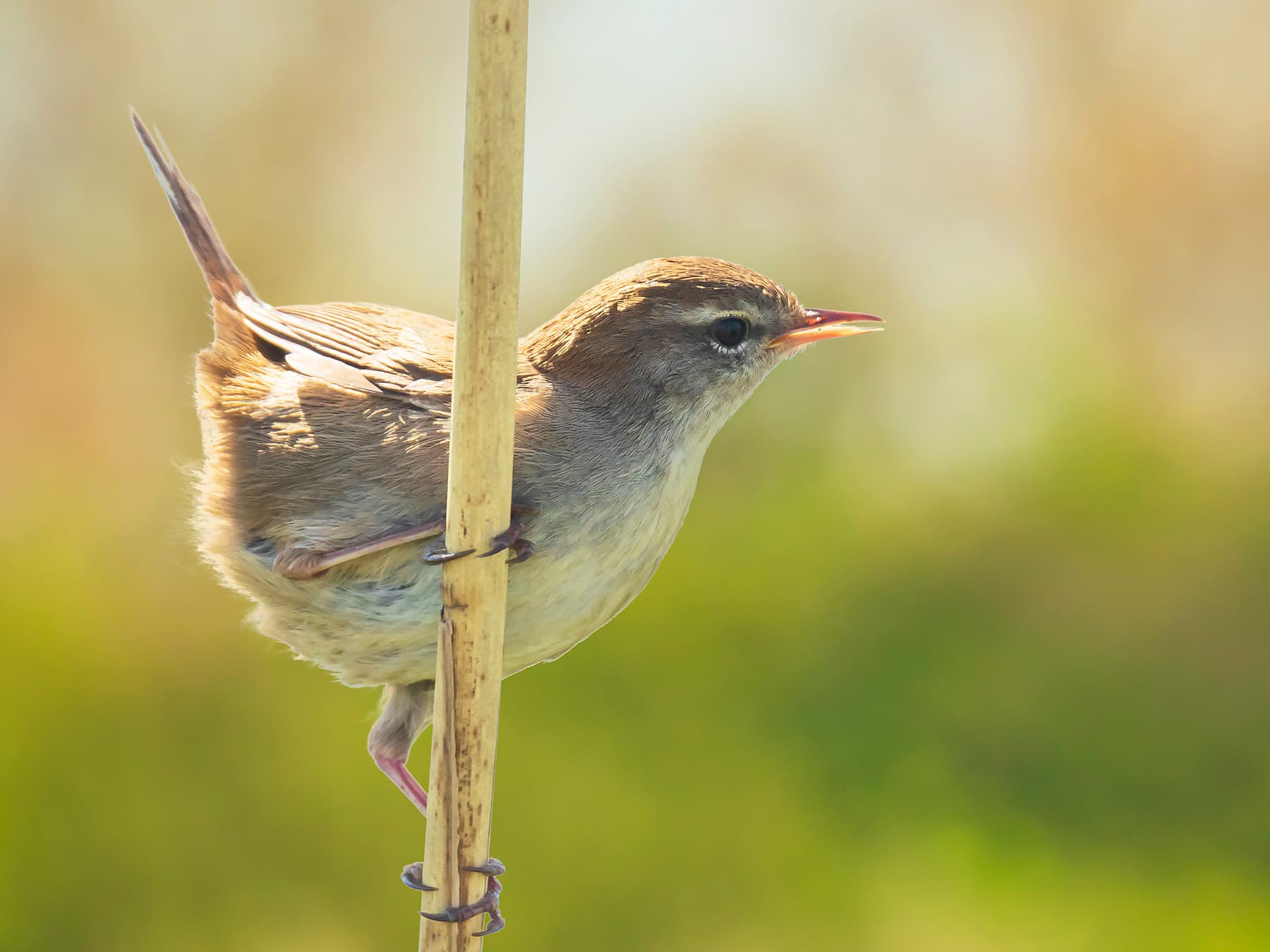
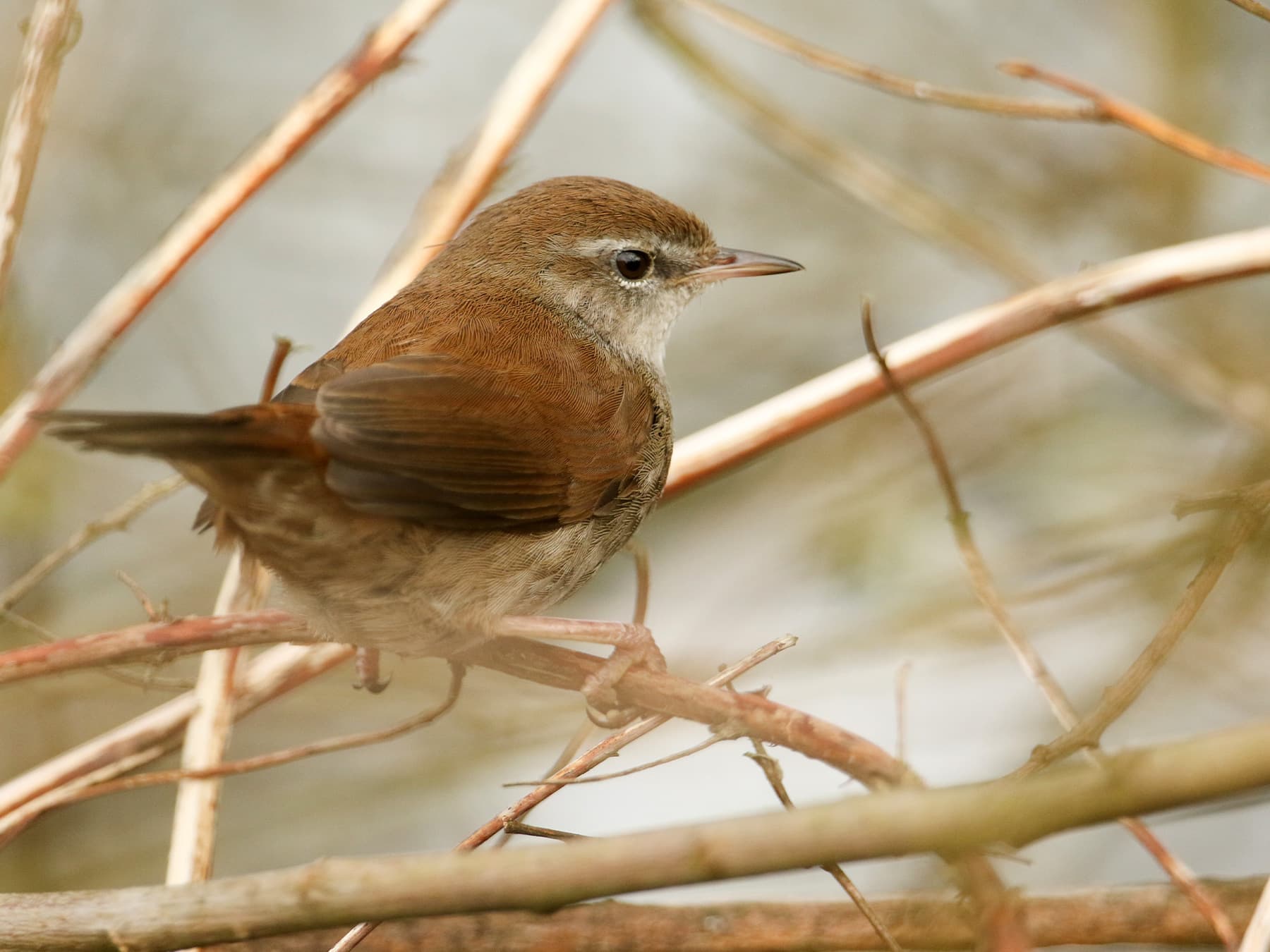
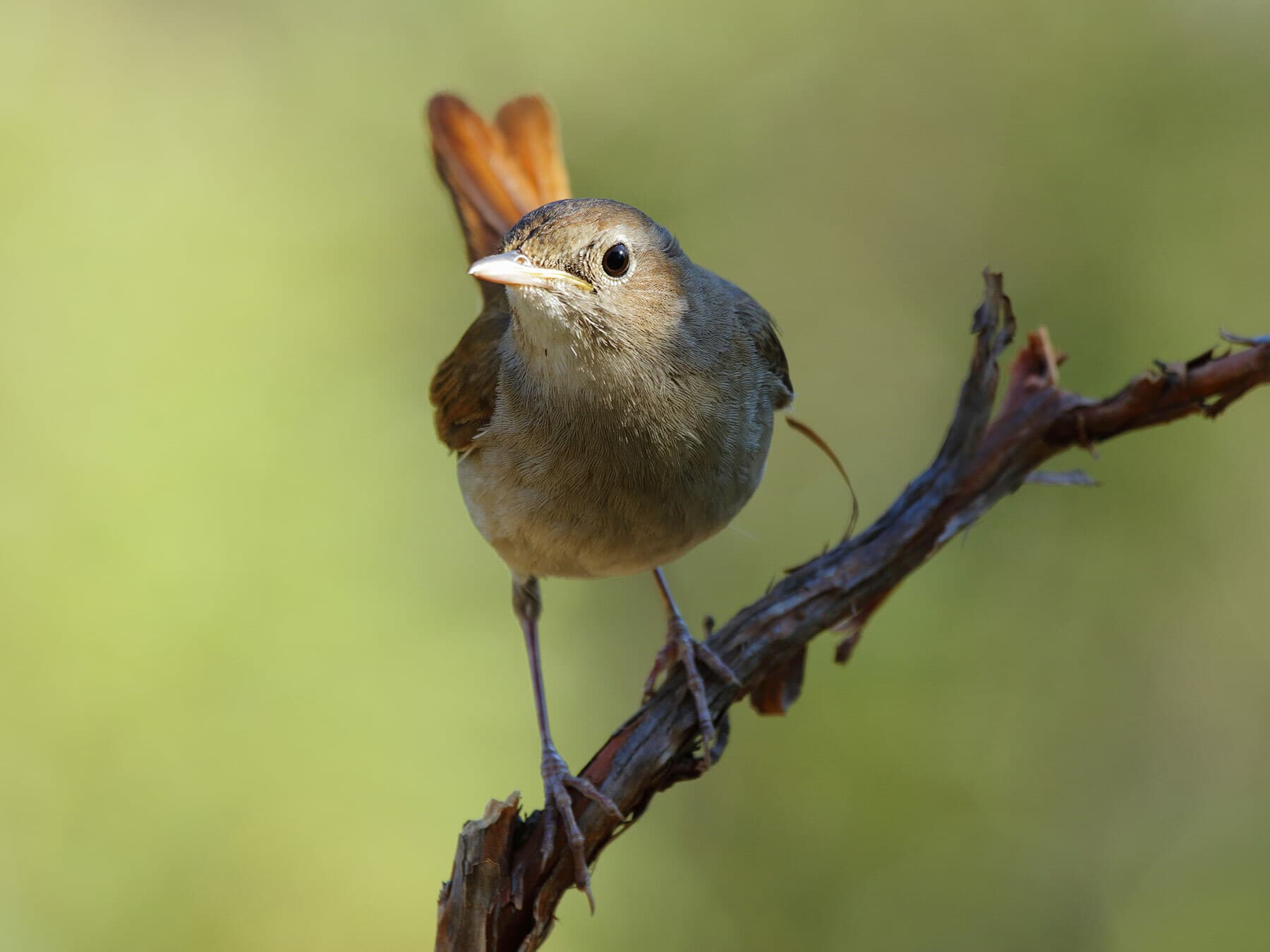
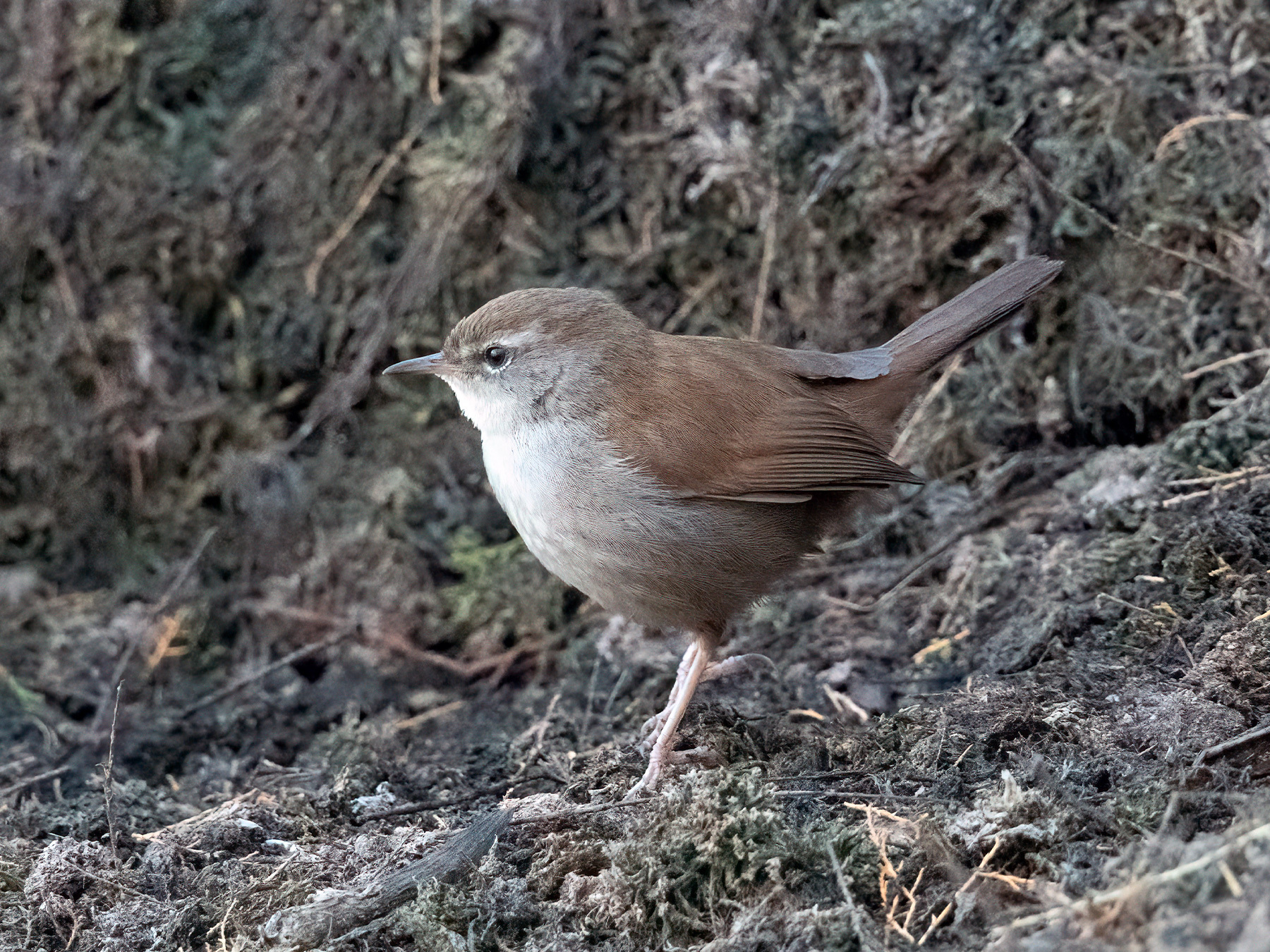
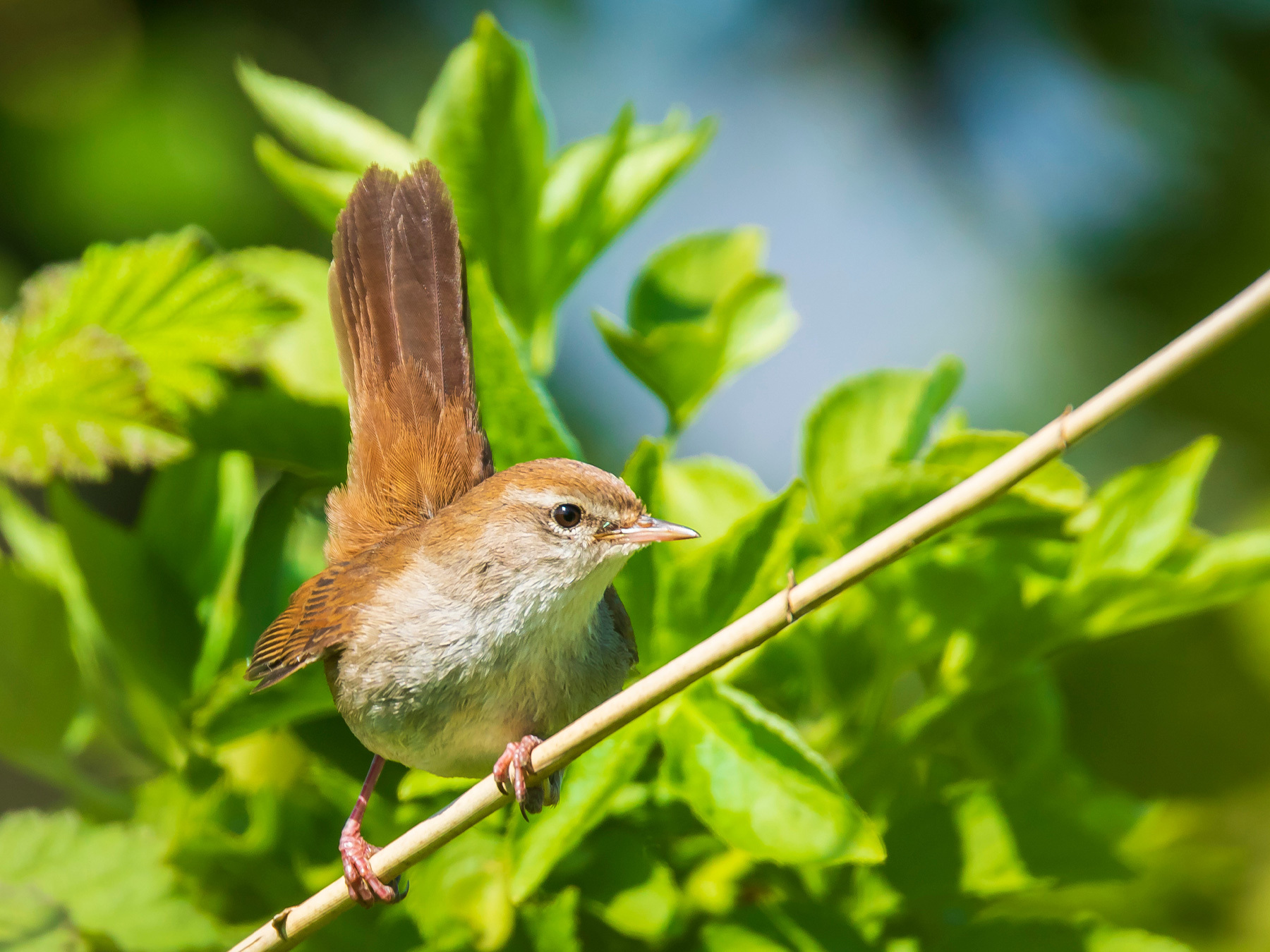
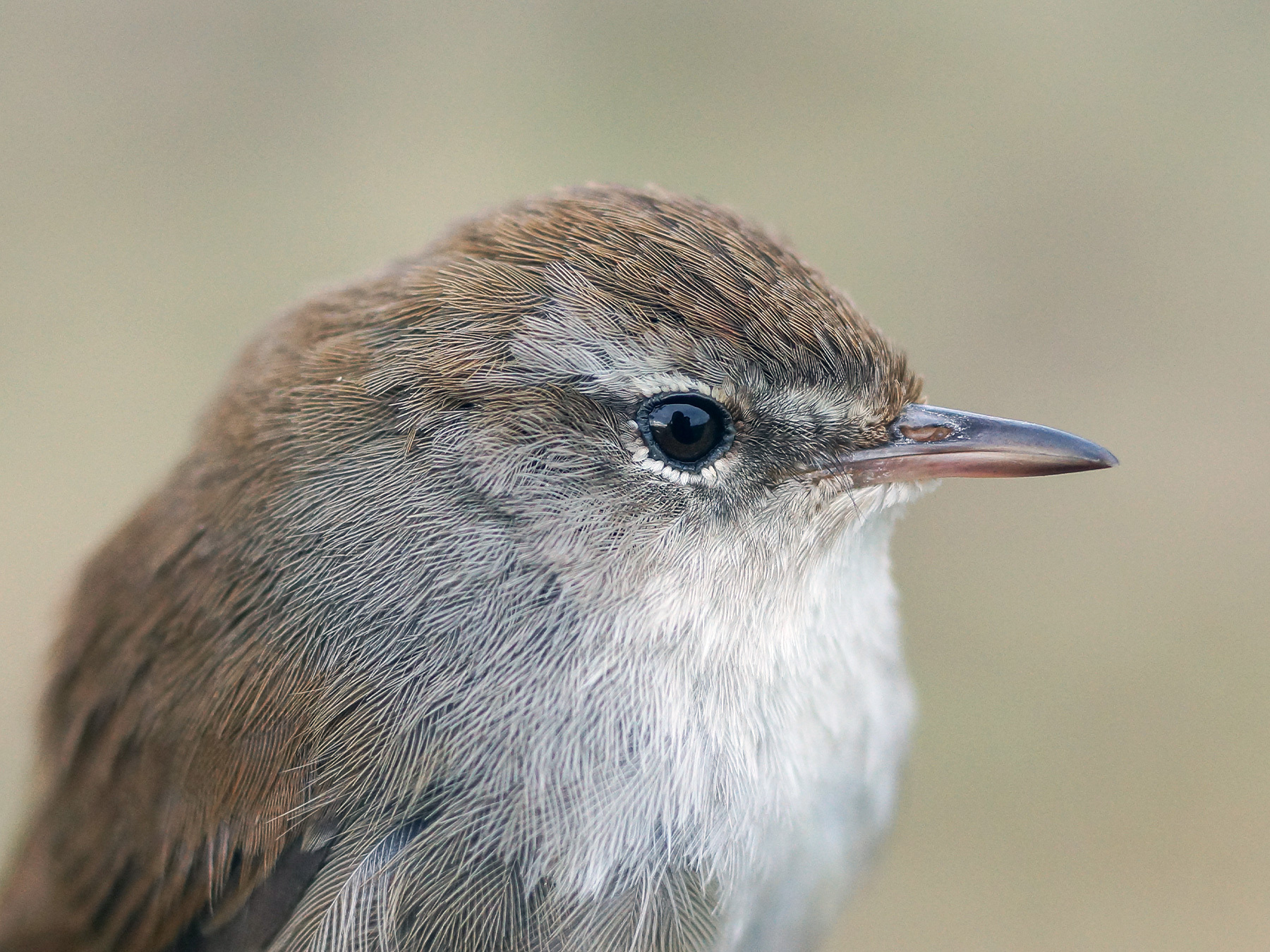
Cetti’s warblers are rather unremarkable in appearance, with their plumage consisting of various shades of brown. Their upperparts are a darker, richer brown than their breast and underparts, which are paler, and have a light grey wash. Facial markings include a pale grey eyebrow stripe, a dark eye stripe, and greyish-brown cheeks.
The wings are short and rounded and some faint, darker edging is visible to give a fringed effect. Cetti’s warblers are an anatomically unique species, with just 10 tail feathers instead of the usual 12 present in all other British breeding birds. Under the tail light and darker brown barring is noticeable, giving a barred appearance.
The bill is dark grey, with pale pink visible on the base of the lower mandible. Legs are a pinkish brown.
Female Cetti’s warblers cannot be told apart from males visually, and the only methods of being able to distinguish between the sexes are by observing their behaviour and listening to their song.
Identifying a young Cetti’s warbler is not a particularly easy task, as they tend to stay hidden out of sight. However, when compared to a mature adult, the younger bird has a duller plumage.
How big are Cetti's Warblers?
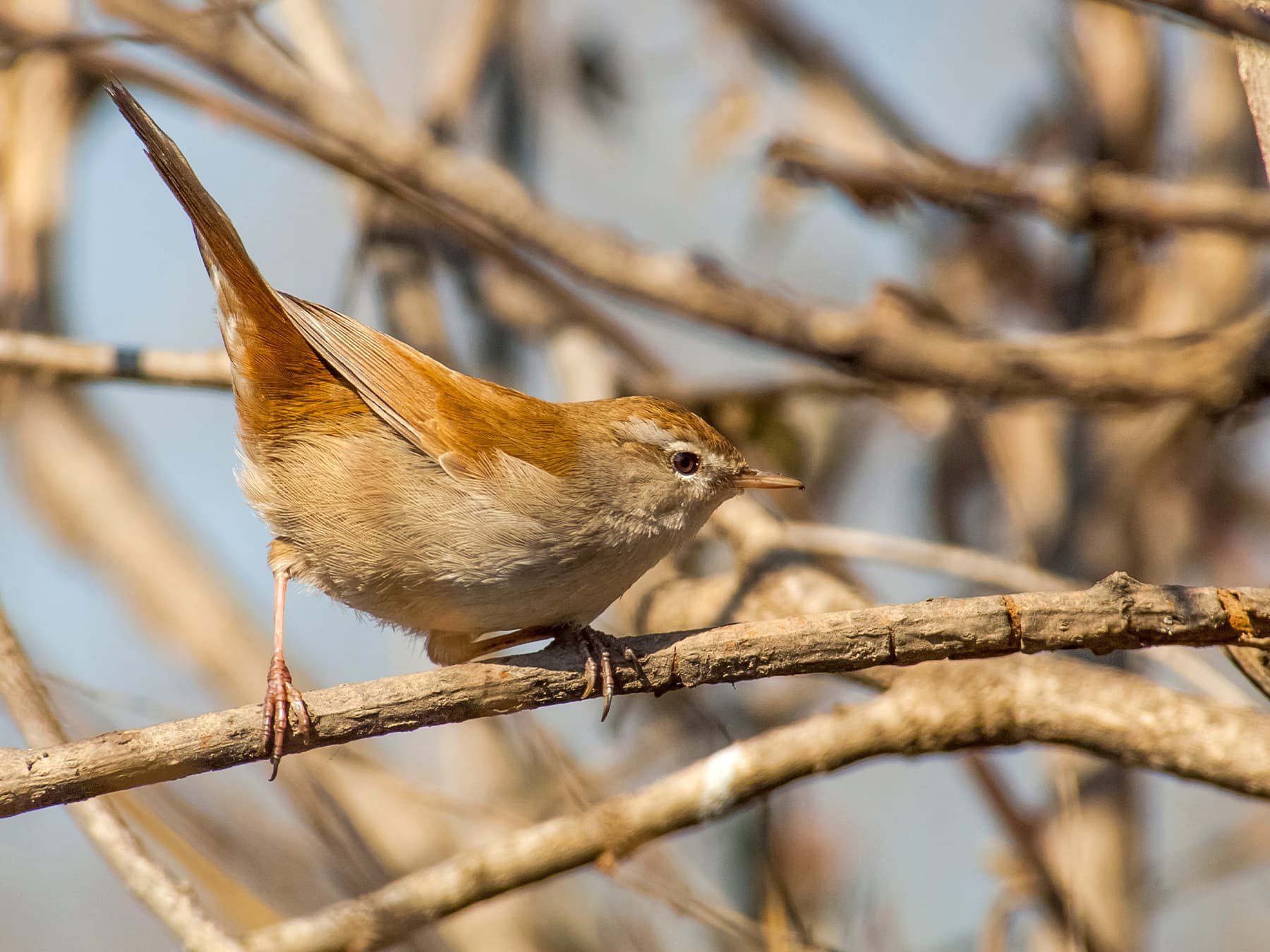
Superficially similar in colouring and cocked tail-stance to a wren, the Cetti’s warbler is noticeably bigger and heavier and is considered to be medium-sized among warblers. Males can be up to 32 percent heavier than females, and there is a minor difference in wing size, with the males being marginally longer.
- Length: 13.5 cm (5.3 in)
- Wingspan: 15 cm to 19 cm (5.9 in to 6.7 in)
- Weight: 9 g to 17g (0.3 oz to 0.6 oz)
Its size
Adults- Length
- 13–14 cm
- Wingspan
- 15–18 cm
- Weight
- 13–17 g
Its song and calls
What sound does a Cetti's Warbler make?
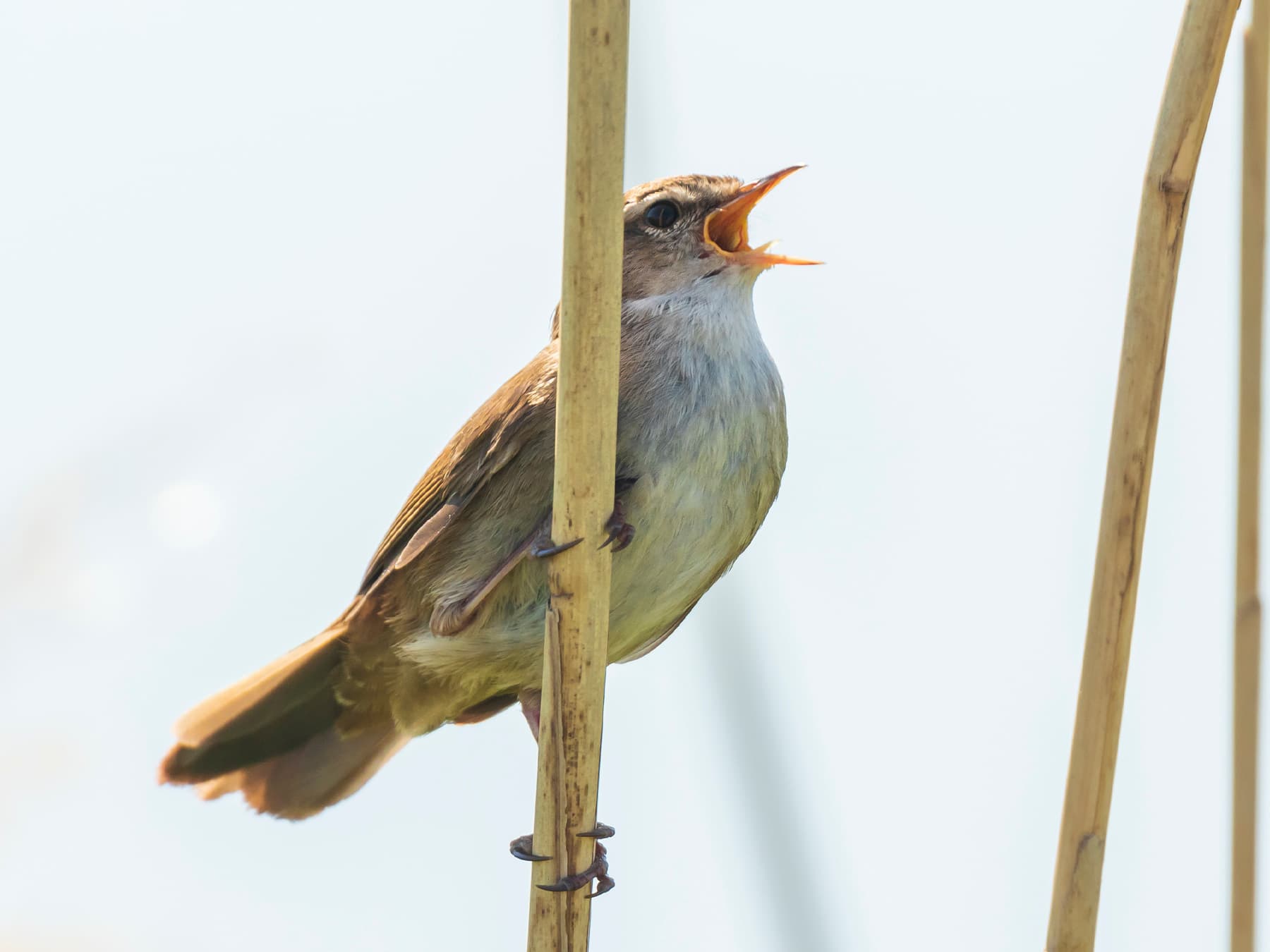
Hearing a Cetti’s warbler’s song is one of the most reliable forms of identification, and offers a more conclusive confirmation than a visual sighting alone. Both males and females sing, although males are more vocal. Their rolling, fluid melodies, heard most frequently in the early morning, are loud and tuneful and consist of a series of short ‘pwít-ptit-pit-chewit-chewit-chewit’ notes.
- Song0:00 / 0:13
Recorded in Andalucía, Spain · August 2018
- Call0:00 / 0:27
Recorded in Normandie, France · November 2021
When and where to see it
OctoberIn season
Most recorded in October
- 1. Newport2.0%
- 2. South Yorkshire1.2%
- 3. Essex1.1%
- 4. Bridgend1.1%
- 5. Suffolk1.1%
Each dot is a county, state or province: the bigger and darker, the larger the bird’s share of that place’s bird records that month. Grey dots: no regular records. The ringed point is the centre of the bird’s records this month; the arrow shows how it moved since last month, and the dashed loop its path through the year. “Arrivals” colours places where it becomes regular this month (orange) or is in its last regular month (grey). GBIF eBird Observation Dataset, 2019–2024. Map data: Natural Earth, US Census Bureau; place centres © OpenStreetMap contributors.
In your area
See when the Cetti's Warbler is recorded in your county, state or province.
How often the Cetti's Warbler turns up in the UK and Ireland through the year, from birdwatchers' records.
United Kingdom
Resident · all year · most records in April
Ireland
Scarce · regularly Nov–May · most records in April
Show as a table
| Month | United Kingdom | Ireland |
|---|---|---|
| January | 0.30% (regular) | 0.005% |
| February | 0.36% (regular) | 0.009% |
| March | 0.52% (regular) | 0.024% (regular) |
| April | 0.68% (regular) | 0.030% (regular) |
| May | 0.62% (regular) | 0.020% (regular) |
| June | 0.49% (regular) | 0.009% |
| July | 0.24% (regular) | <0.001% |
| August | 0.28% (regular) | – |
| September | 0.50% (regular) | <0.001% |
| October | 0.55% (regular) | 0.017% |
| November | 0.47% (regular) | 0.020% (regular) |
| December | 0.35% (regular) | 0.005% (regular) |
Recorded regularly in
Worldwide: recorded regularly in 46 countries
Countries where it was recorded in at least 3 of the 6 years 2019–2024. Linked countries have their own bird list.
Europe (24)
- Albania
- Belgium
- Bosnia & Herzegovina
- Bulgaria
- Croatia
- France
- Germany
- Greece
- Ireland
- Italy
- Jersey
- Kosovo
- Malta
- Montenegro
- Netherlands
- North Macedonia
- Portugal
- Romania
- Russia
- Serbia
- Slovenia
- Spain
- Switzerland
- United Kingdom
Asia (19)
- Armenia
- Azerbaijan
- China
- Cyprus
- Georgia
- India
- Iran
- Iraq
- Israel
- Jordan
- Kazakhstan
- Kuwait
- Kyrgyzstan
- Lebanon
- Pakistan
- Palestinian Territories
- Tajikistan
- Turkey
- Uzbekistan
Data: EOD – eBird Observation Dataset (Cornell Lab of Ornithology), accessed via GBIF.org, CC BY 4.0. Records from 2019–2024, aggregated and filtered by Birdfact. How these lists are made
What is the habitat of a Cetti's Warbler?
Swampy lowland landscapes, overgrown ditches, dense reedbeds and flooded meadows with thorny vegetation are preferred breeding habitats. Out of the breeding season, Cetti’s warblers are common visitors to scrubland, wild plains, and sparsely vegetated foothills, with streams, marshes, and swampland nearby.
What is the range of a Cetti's Warbler?
The range of Cetti’s warblers extends across much of southern Europe, from southern England forming the northern limit, and from Portugal in the west, along the Mediterranean coasts of Europe and north-west Africa (from Morocco to Tunisia). Within Europe, Cetti’s warblers are found throughout Italy, Greece, and the Balkan states, eastwards into the regions surrounding the Black Sea.
The species is present all year round through western Turkey, northern Iraq, western and southern Iran, and Central Asia. Further north, in northern and eastern Turkey and into states bordering the south-eastern shores of the Caspian Sea as far north-east as Kazakhstan, Cetti’s warblers are breeding visitors only.
Where do Cetti's Warblers live?
2015 estimates place the European population of Cetti’s warblers at between 2.02 and 3.19 million pairs. Around 35 percent of the world’s Cetti’s warblers live in Europe, so the overall species population is believed to be around 11.6 and 18.2 million individuals. Within Europe, Portugal, Italy, and Turkey have the highest concentrations.
How rare are Cetti's Warblers?
In the UK, Cetti’s warblers are still an emerging species, with no record of breeding before the first individuals successfully raised young in Kent in 1972. Around 3850 pairs now breed in Britain annually, and this number is increasing as the breeding area continues to expand. With a global population of up to 18.23 million, they are considered common to very common in much of Europe.
Where can you see Cetti's Warblers in the UK?
Cetti’s warblers are notoriously hard to spot, due to their preference for remaining out of sight deep in reedbed habitats and other patches of tangled vegetation.
Spots, where sightings have been regularly reported, include Radipole Lake and Lodmoor in Dorset, Exminster Marshes in Devon, Marazion Marsh in Cornwall, and Strumpshaw Fen in Norfolk. The species is rarely found inland and reports north of The Wash and Morecambe Bay are unusual.
Migration
Do Cetti's Warblers migrate?
Cetti’s warblers are partially migratory, although resident in large parts of their range. Across most of their European and North African habitats, they are sedentary and present all year round. However, in Central Asia, northern populations arrive to breed in spring and relocate south into parts of the Middle East, Pakistan, and North India for winter.
Are Cetti's Warblers native to the UK?
Cetti’s warblers are a relatively recent addition to the British breeding bird species list, with the first records of successful breeding occurring in the 1970s. Over the course of the last 50 years, their range has spread as they have become a more established presence in the UK.
Tips for seeing it
- Listen for the distinctive, explosive song, especially in the early morning or evening
- Look for movement in dense vegetation near water bodies
- Be patient and still; the bird may eventually show itself briefly
- In the UK, focus on wetland reserves and reed beds
What it eats
What do Cetti's Warblers eat?
Cetti’s warblers are insectivores, eating a diet that consists mainly of insects, invertebrates, and their larvae. The most commonly consumed prey include damselflies, aphids, moths and their larvae, earthworms, beetles, flies, and molluscs, found while foraging in low-level foliage. Occasionally seeds may be eaten, although these only form a minor element of their diet.
What do Cetti's Warbler chicks eat?
Insects and invertebrates are fed to young Cetti’s warblers by their mother, with soft-bodied larvae particularly important in the early days of their development.
Nesting and breeding
Where do Cetti's Warblers nest?
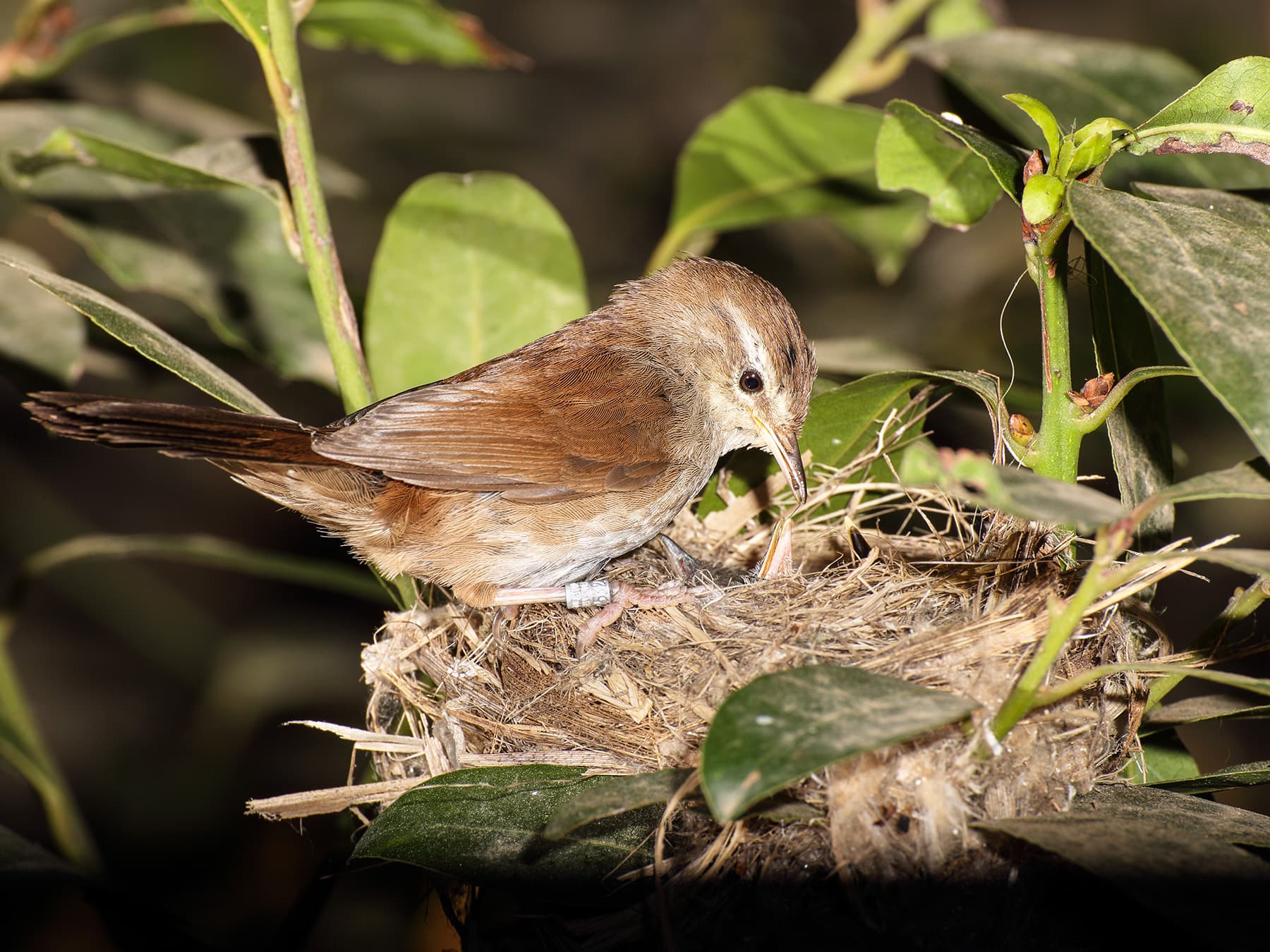
Nest sites are chosen in patches of inaccessible vegetation, such as nettles, tangled reeds, or the interior branches of a bush or bramble clump, no more than 2 m (7 ft) off the ground. The nest itself is a loose cup of dry grasses, plant parts, and reed mace, lined with feathers and animal fur.
When do Cetti's Warblers nest?
Cetti’s warblers begin breeding from April onwards. The nesting season continues until late July or early August, with two broods usually being raised.
Incubation, by the female Cetti’s warbler alone, lasts for 16 to 17 days. After hatching, the young are fed in the nest mainly by the female while the male continues to defend the nest site.
What do Cetti's Warbler eggs look like?
Cetti's warblers lay 4 to 5 eggs, which are a particularly unusual colour – a bright brick red. These distinctive eggs have no surface markings or speckling and measure 18 mm by 14 mm (0.7 in by 0.6 in).
Do Cetti's Warblers mate for life?
While most pairs of Cetti’s warblers are monogamous through the course of the nesting season, some polygamous breeding does occur, and the bond between mates is not especially strong. A new mate is chosen at the start of each breeding season.
Behaviour
Are Cetti's Warblers aggressive?
With a reputation as a secretive species, Cetti’s warblers are not known to be aggressive, confrontational, or particularly territorial, although the sudden and explosive song is used in defence of a nest site or brooding mate.
Lifespan and predators
How long do Cetti's Warblers live?
A lifespan of around 2 years is typical for a Cetti’s warbler, with breeding after one year. Occasionally much older birds are identified through ringing schemes, including one individual that reached 9 years and 4 months in 2008.
What are the predators of Cetti's Warblers?
Owls, hawks, raccoons, and cats are among the leading predators of Cetti’s warblers and their eggs and young. Non-living threats are also a concern, with loss of habitat caused by drainage of wetlands a top priority that needs to be addressed.
Are Cetti's Warblers protected?
The 1981 Wildlife & Countryside Act in the UK protects Cetti’s warblers from intentionally being killed, injured, or trapped to be taken into captivity. As a Schedule I bird under this act, breeding Cetti’s warblers, their nest sites, eggs, and young are additionally protected against being disturbed or damaged.
Are Cetti's Warblers endangered?
There are no immediate threats to the long-term survival of Cetti’s warblers. They are considered a species of least concern globally and in the UK they are classed with Green status on the British Birds of Conservation Concern list.
Conservation
While currently listed as Least Concern, Cetti's Warblers face threats from habitat loss and degradation, particularly the draining of wetlands.
Climate change is influencing their distribution, with populations expanding northward in Europe. Conservation efforts focus on protecting and managing suitable wetland habitats.
Similar birds
Often mistaken for
More photos
4 photos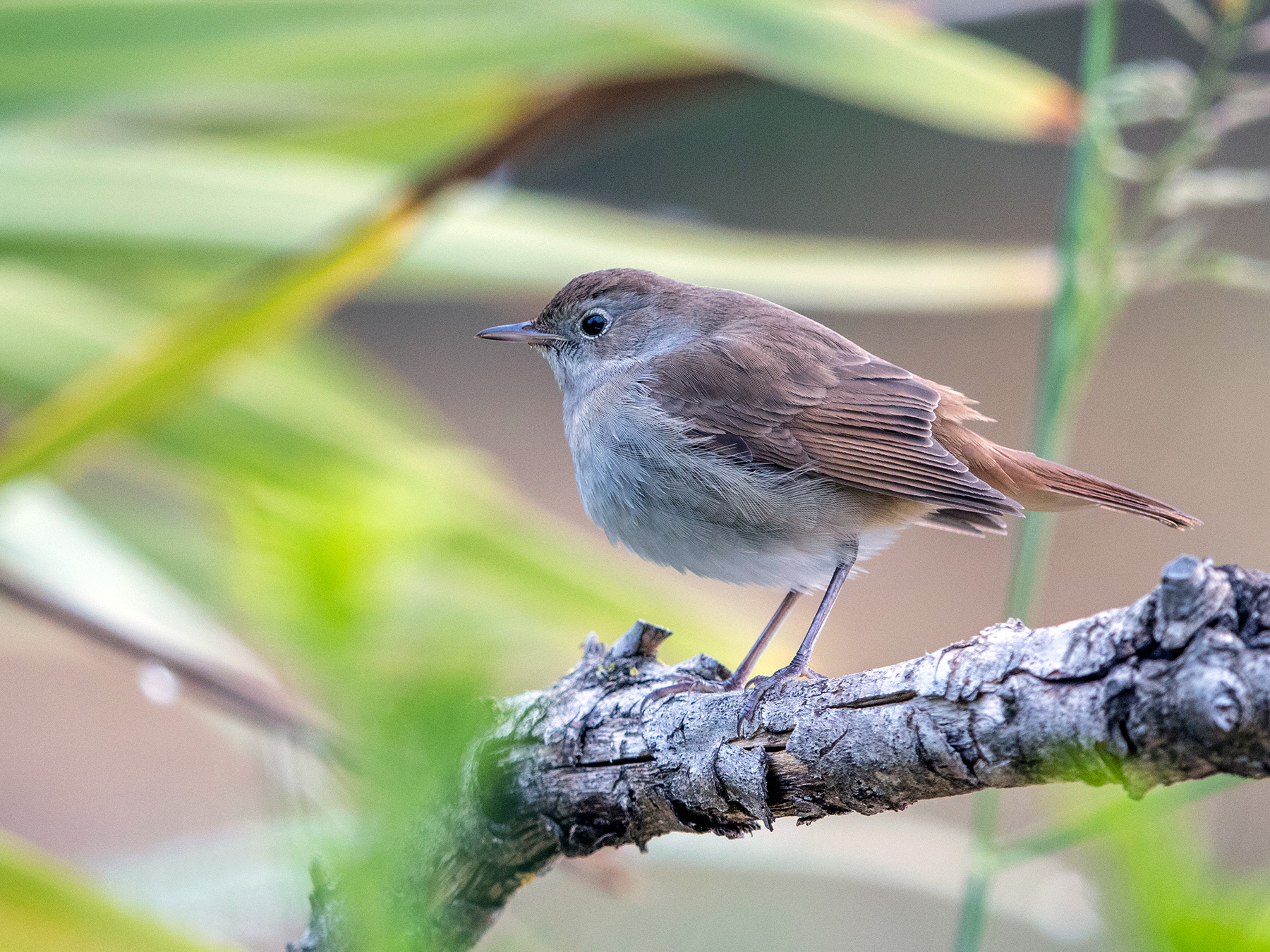
Quick facts
- Length
- 13–14 cm
- Wingspan
- 15–18 cm
- Weight
- 13–17 g
- Lifespan
- 2 years · oldest recorded 9.3 years
- Family
- Bush Warblers
- Migration
- Partial migrant
- Global status (IUCN)
- Least Concern
- World population
- 11,570,000 - 18,230,000 mature individuals
- Population trend
- Increasing
- Also called
- Cetti's Bush Warbler
- Scientific name
- Cettia cetti
Questions
1How do you pronounce Cetti's?
Cetti’s is pronounced ‘chettys’ to rhyme with jetties. The species is named after Francesco Cetti, an 18th-century Italian zoologist.
Sources
4- 1BirdLife International. 2017. Cettia cetti (amended version of 2016 assessment). The IUCN Red List of Threatened Species 2017: e.T22714445A111073290. Source (opens in a new tab)
- 2EBCC (2015)
- 3BirdLife International. 2017. Cettia cetti (amended version of 2016 assessment). The IUCN Red List of Threatened Species 2017: e.T22714445A111073290. Source (opens in a new tab)
- 4Robinson and Clark, The Online Ringing Report: Bird ringing in Britain & Ireland in 2011 (2012) Source (opens in a new tab)

Checked by
Nathan Cope, founder and editor
Nathan founded Birdfact and leads its writers and contributors in the UK, the US and Canada. He has watched and studied birds for more than ten years, and checks every article and species guide before it’s published.