Facts · Updated 8 Oct 2026
Where Do Seagulls Sleep? (Location, Habits and Behavior)
By the Birdfact teamChecked by Nathan Cope
On this page10 sections
Gulls - or seagulls as they’re known colloquially - are widely distributed seabirds from the Laridae family. Gulls are extremely hardy and breed on every continent, including Antarctica.
Seagulls don’t have the best reputation but are highly intelligent birds that adapt to environments quickly. Gulls are a common sight, especially at the seaside, where their raucous vocalizations are omnipresent! So, where do gulls sleep at night?
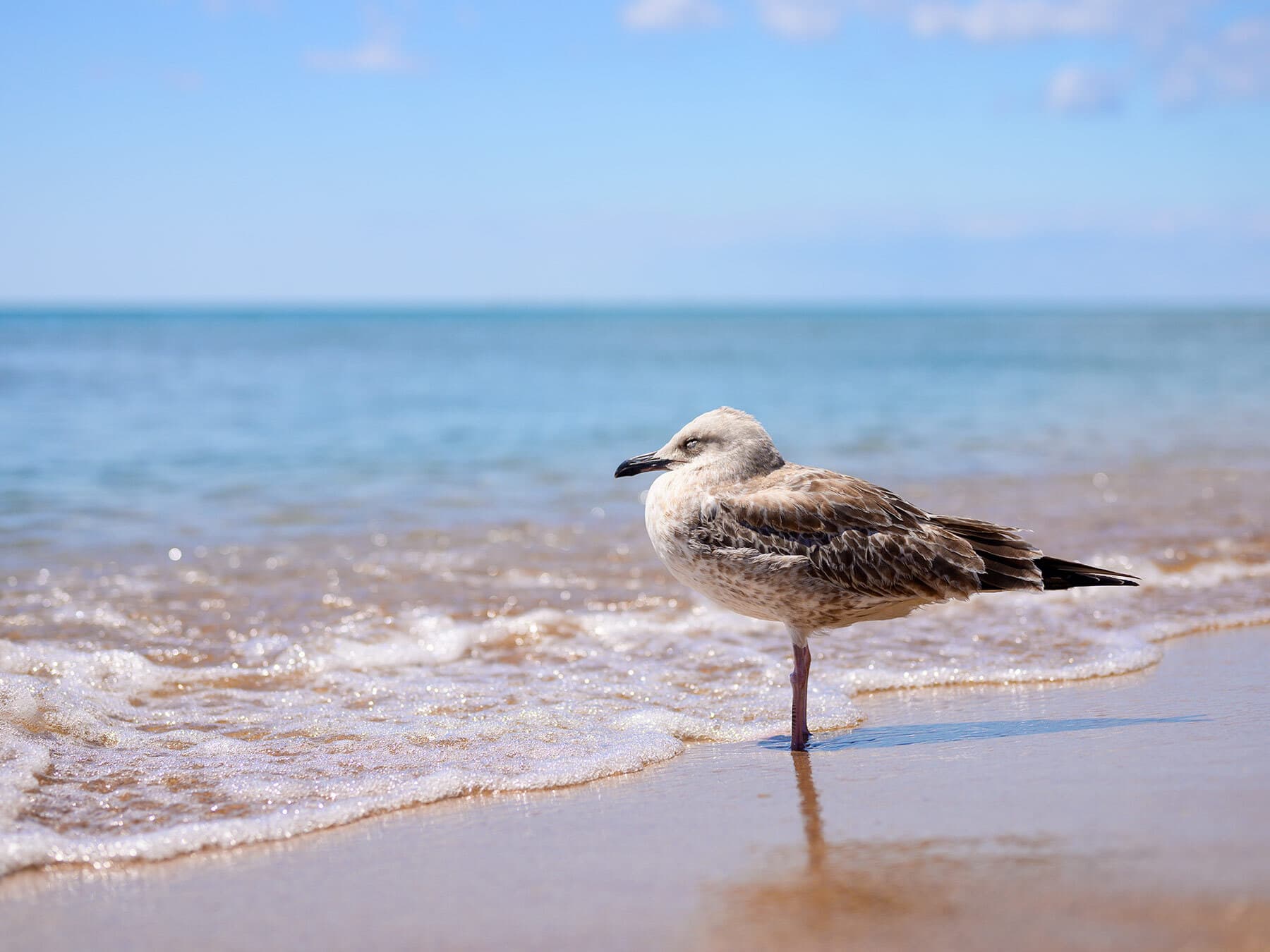
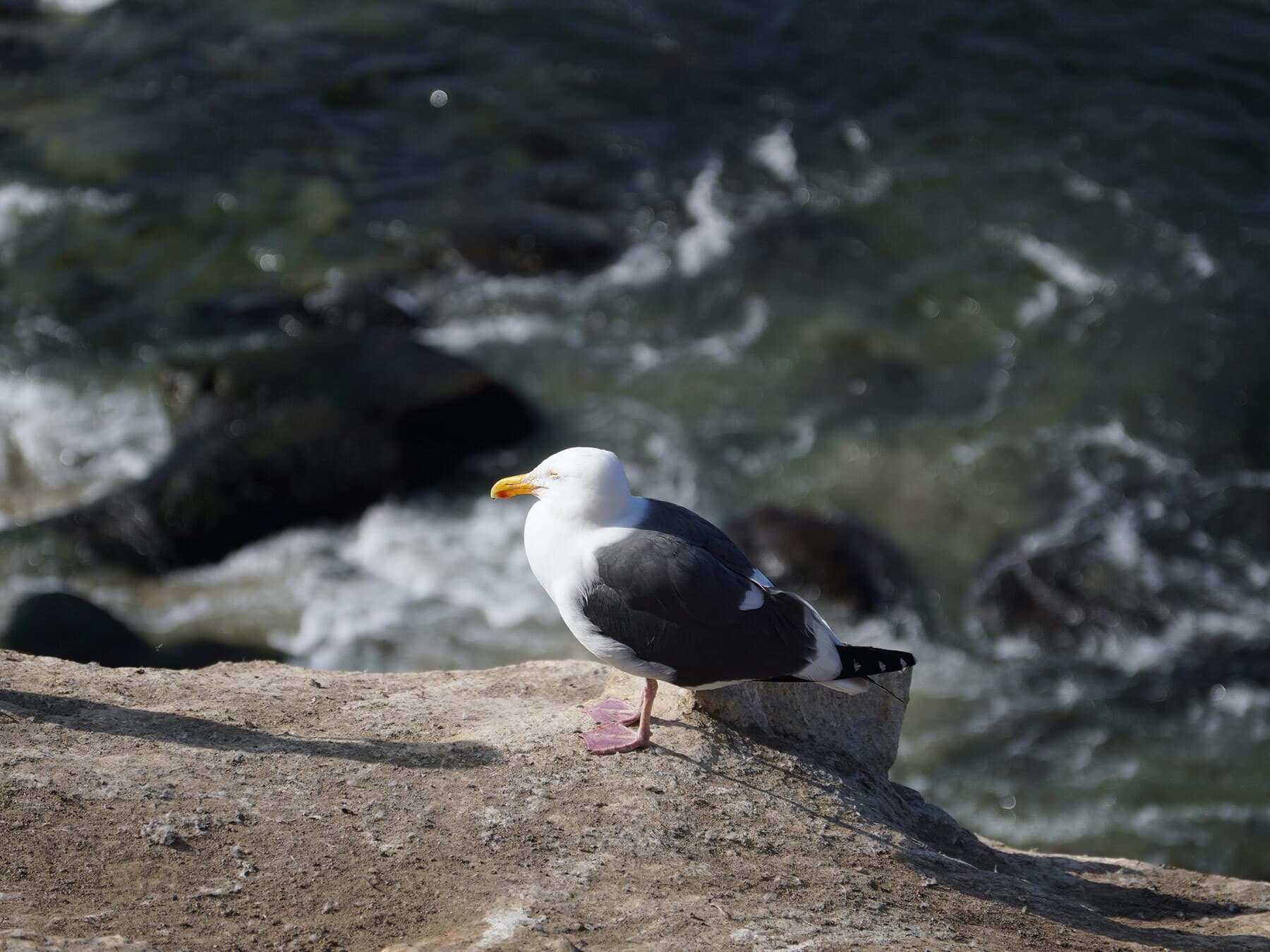
Seagulls commonly sleep on beaches, sandbars, or coastal fields and pastures. They also sleep on cliffsides, rocks, and buildings in urban areas. Many species of gulls also sleep on the water, on the sea, lakes, and reservoirs.
Gulls prefer to sleep in open areas that give them a good view of any incoming predators. However, some species do sleep in trees, such as the Bonaparte’s gull.
Gulls are adaptable, and they’re not too bothered about where they sleep, so long as they’re reasonably protected from predators. In addition, most gulls are social, and usually roost communally in large groups.
Where do seagulls sleep in cities and towns?
Seagulls are well-adapted to urban environments but still prefer to sleep on beaches, fields, pastures, or on the water. Some gulls will sleep on top of buildings in urban areas.
Where they live near human settlements, gulls are accustomed to humans and realize they pose no real threat. Gulls are content sleeping within reach of humans and might even see this as an advantage.
It’s not uncommon to see gulls napping near humans at coastal resorts and settlements.
When do seagulls sleep?
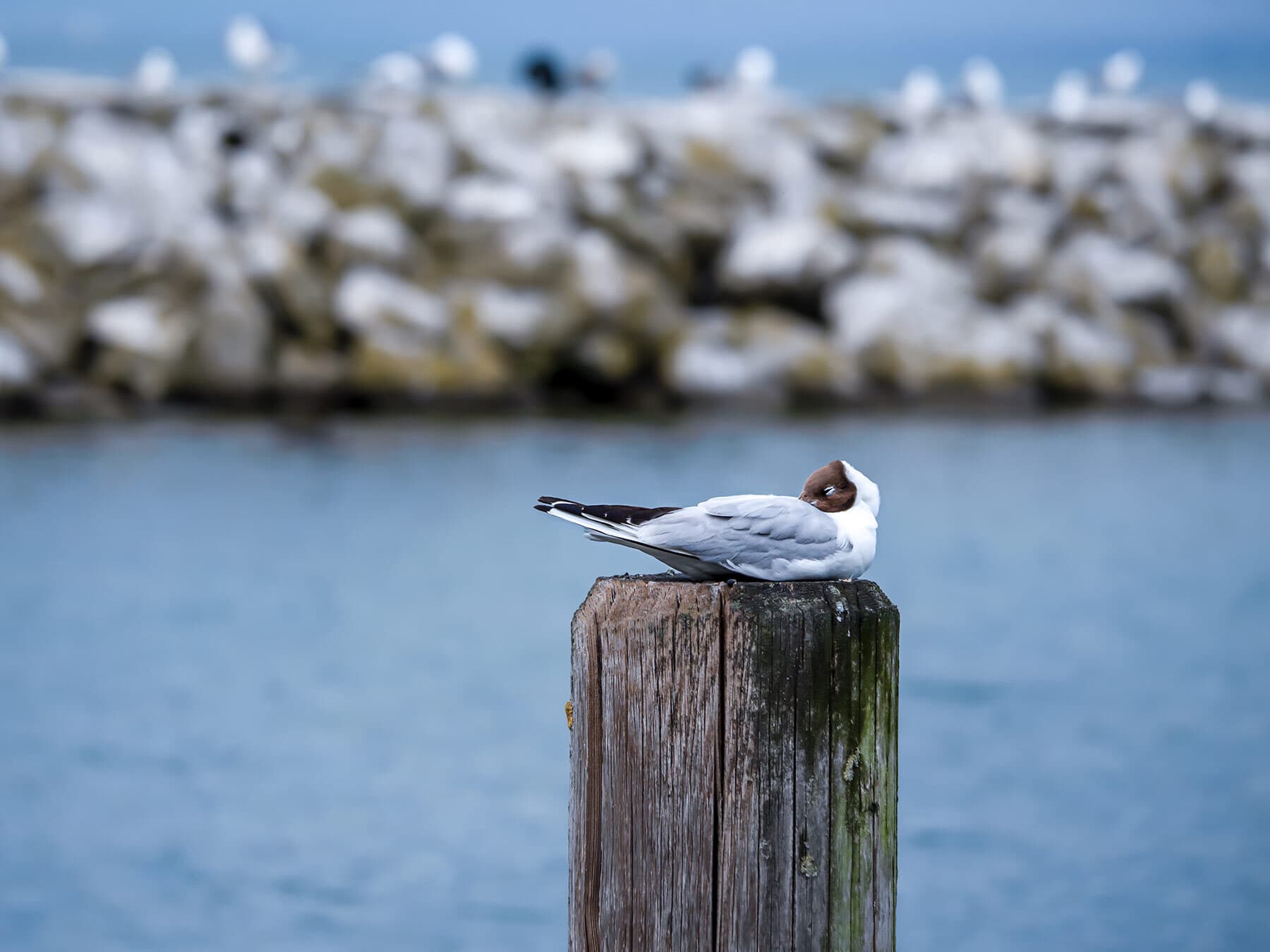
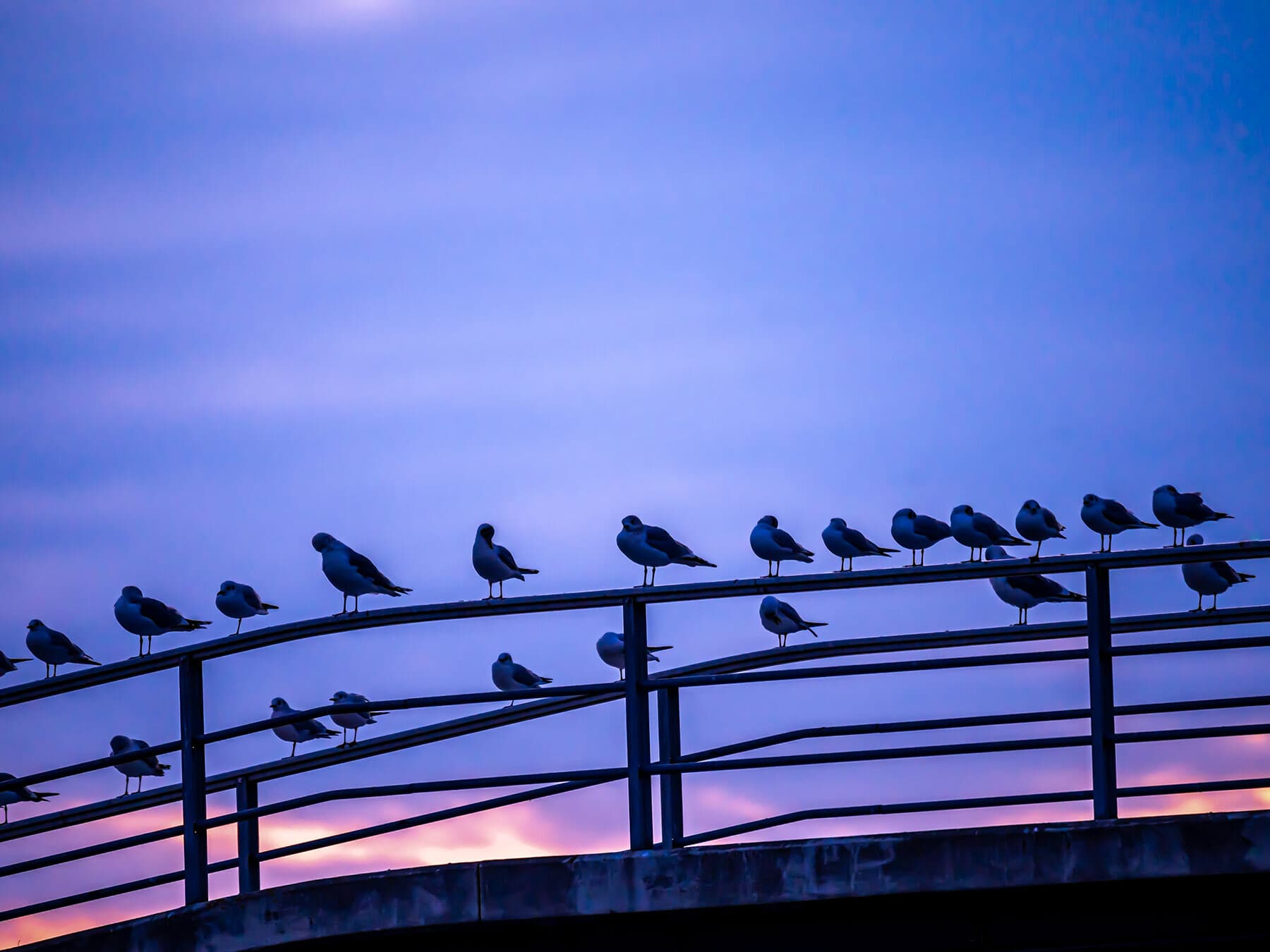
Seagulls are mostly diurnal birds, meaning they get up at sunrise and sleep at sunset. Gulls often gather in large flocks at sunset before bedding down and roosting for the night. They get up at the crack of dawn, around 5 am or so in summer or later in winter.
There is one exception: the Swallow-tailed gull. This is considered the only gull that feeds almost exclusively at night and has a specialized diet consisting of fish, plankton, and shellfish that are more active at night than during the day.
It’s not uncommon to see gulls napping during the day. Gulls often take naps after feeding sessions and naps throughout the day during migration.
How do seagulls sleep?
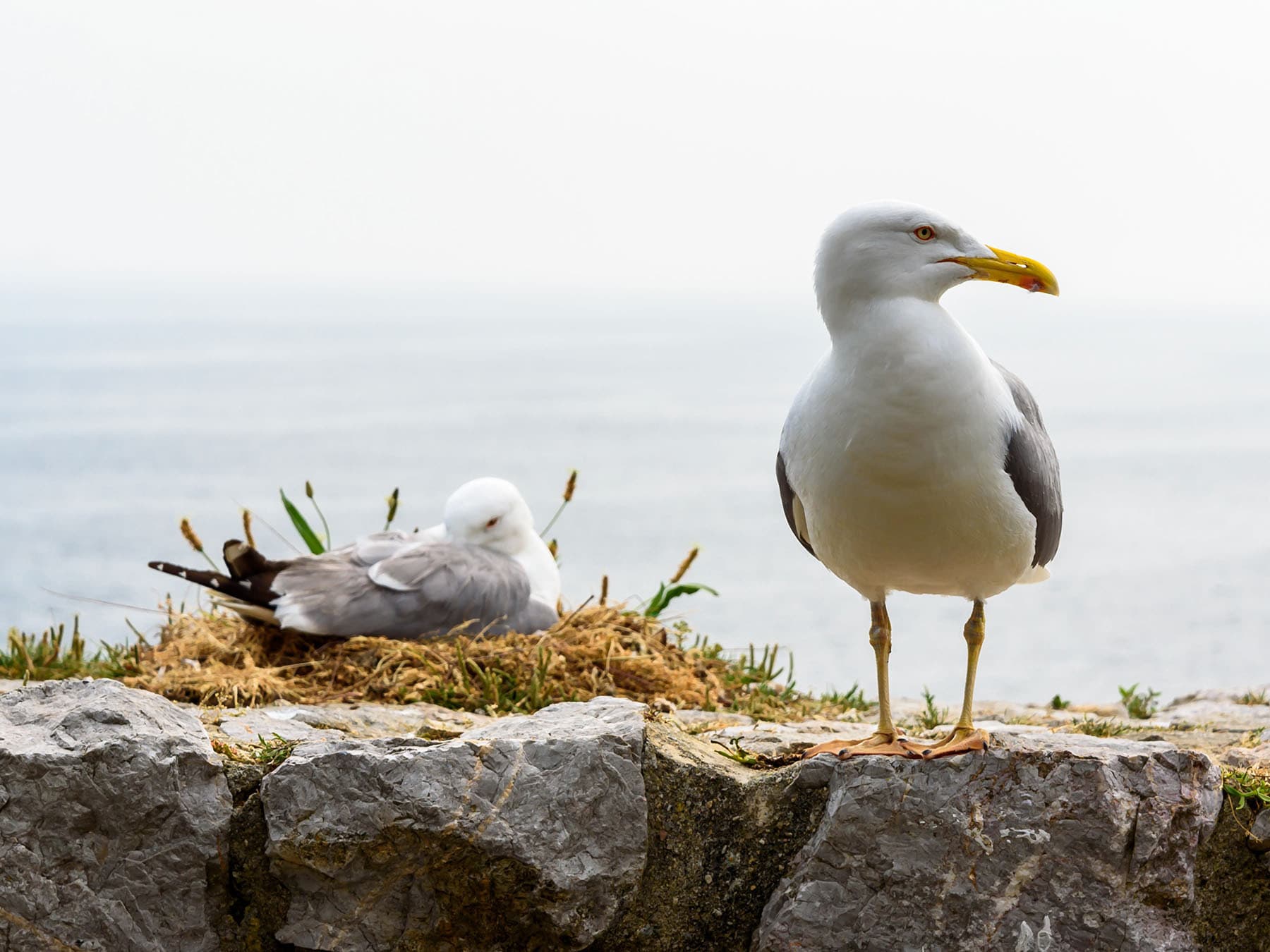
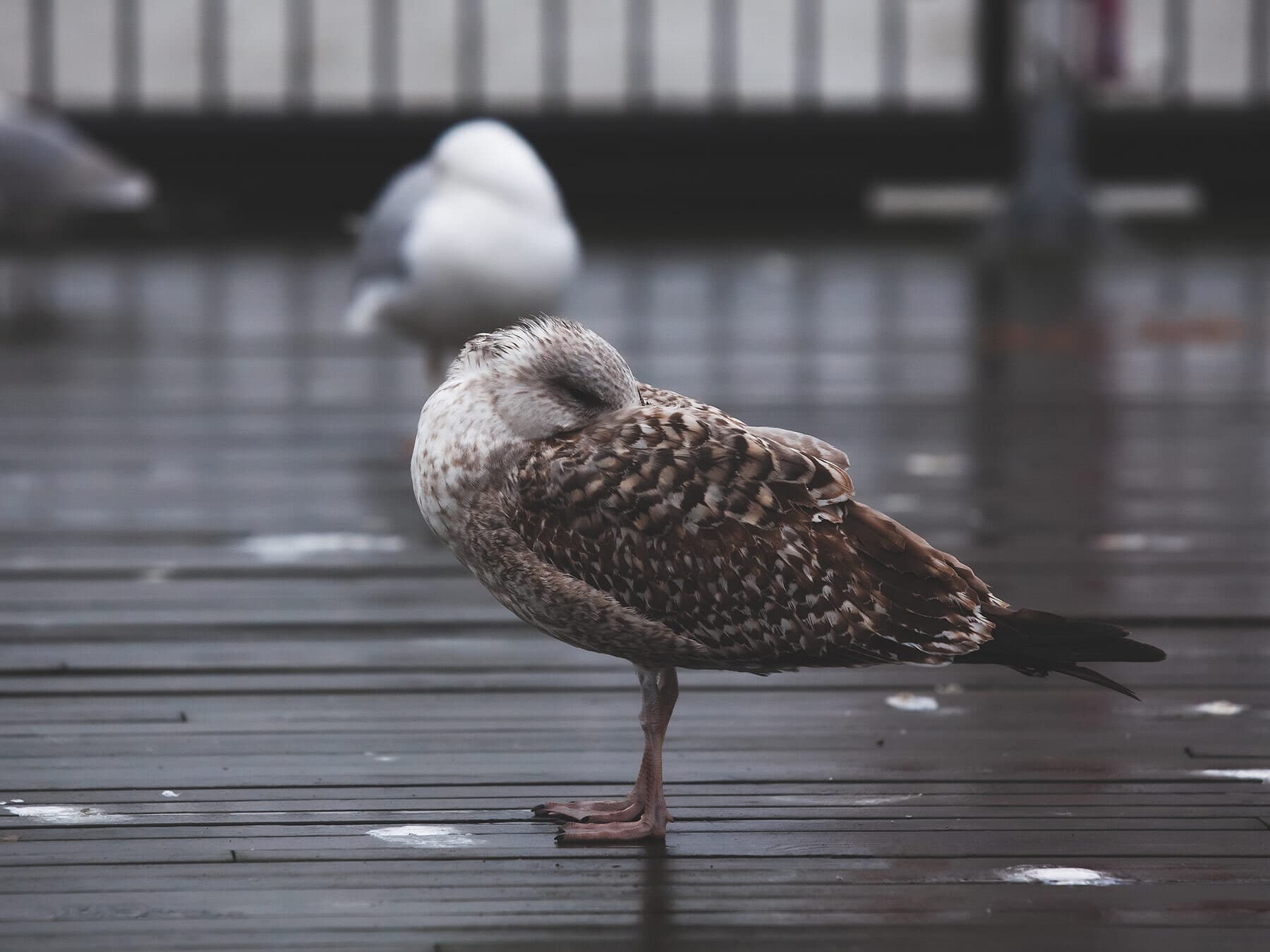
Gulls have two main sleeping positions: standing on one leg or sitting on the ground.
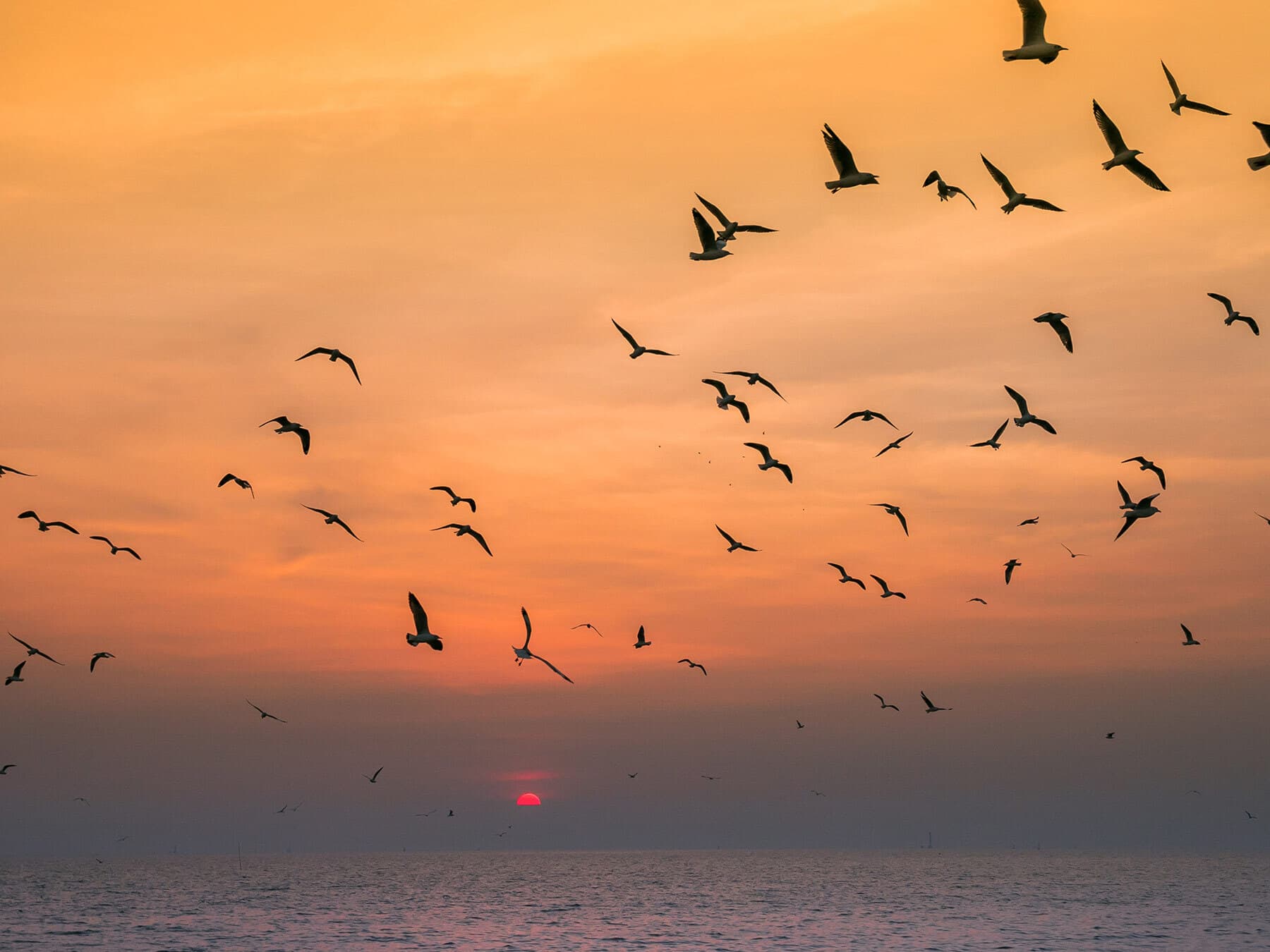
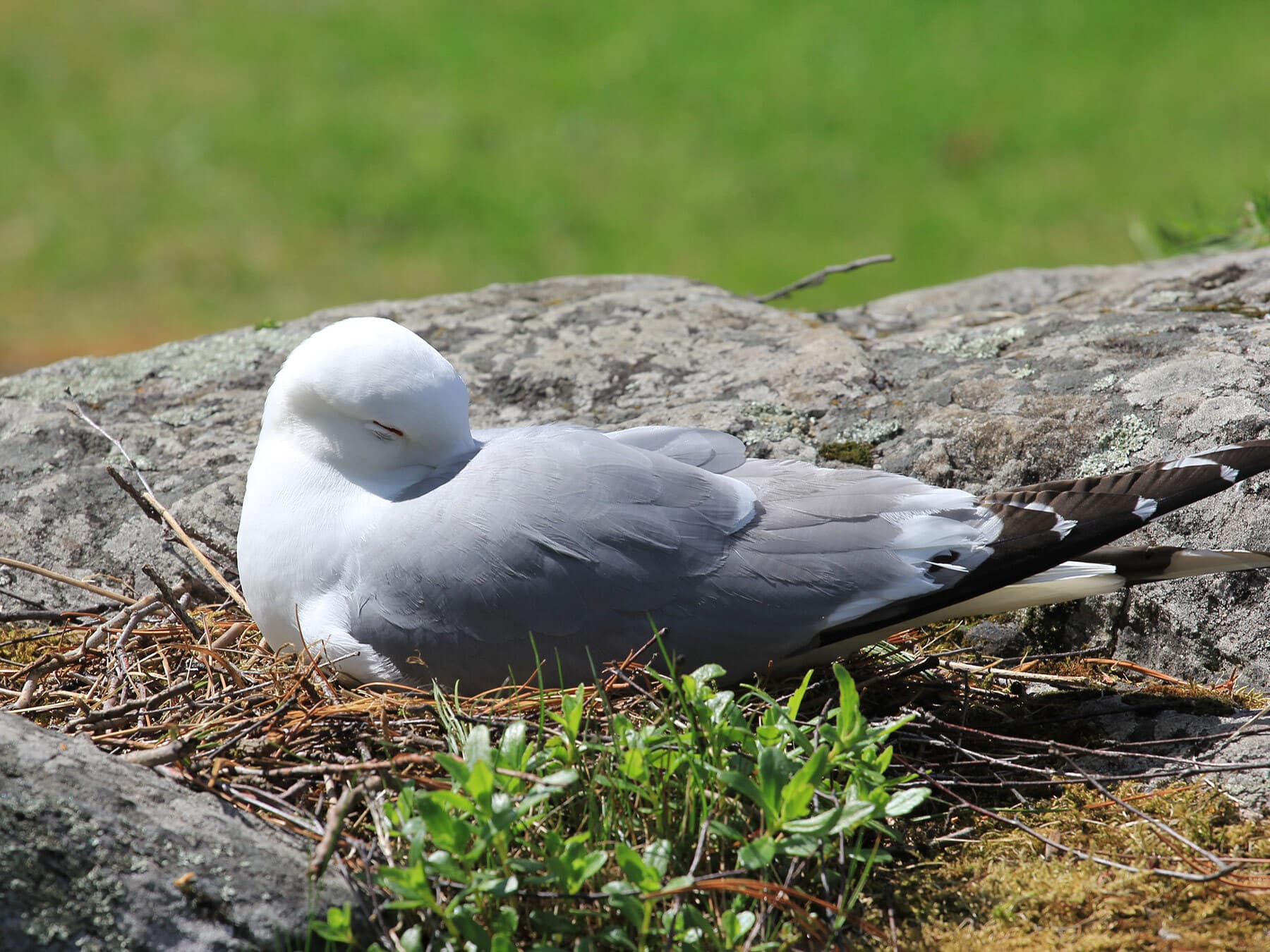
Gulls tuck their other leg into their underside when they sleep standing up. When gulls sleep sitting down, they tuck their head around into their wings, similar to ducks and other waterbirds.
Alternatively, gulls will sit on the ground and tuck their head into their backs to sleep. Both positions help them conserve body heat in cold environments. Their sleep position likely depends on the terrain and how safe the bird feels in its environment.
Like many other birds, gulls are capable of unihemispheric sleep, which means they can shut one-half of their brain down to sleep while keeping the other half awake.
This enables gulls to keep an eye (literally) on their environment while sleeping. In addition, gulls take unihemispheric naps during the day to freshen themselves up and boost their energy levels.
Returning to the same places
Seagulls are colonial breeders who often return to the same locations yearly to breed.
Breeding gulls remain close to their nests and are fiercely defensive of their chicks throughout both day and night. Studies show that gulls are more active at night during the breeding season.
In winter
migratory, traveling hundreds or even thousands of miles each year to winter in warmer environments.
For example, European gulls migrate to Africa and the Middle East, Asian gulls to South Asia and the Indian Subcontinent, and North American gulls to Central and South America.
Gulls will sleep in largely the same environments in summer as they do in winter, making themselves at home near large bodies of water such as the sea, lakes, and reservoirs.
In summer
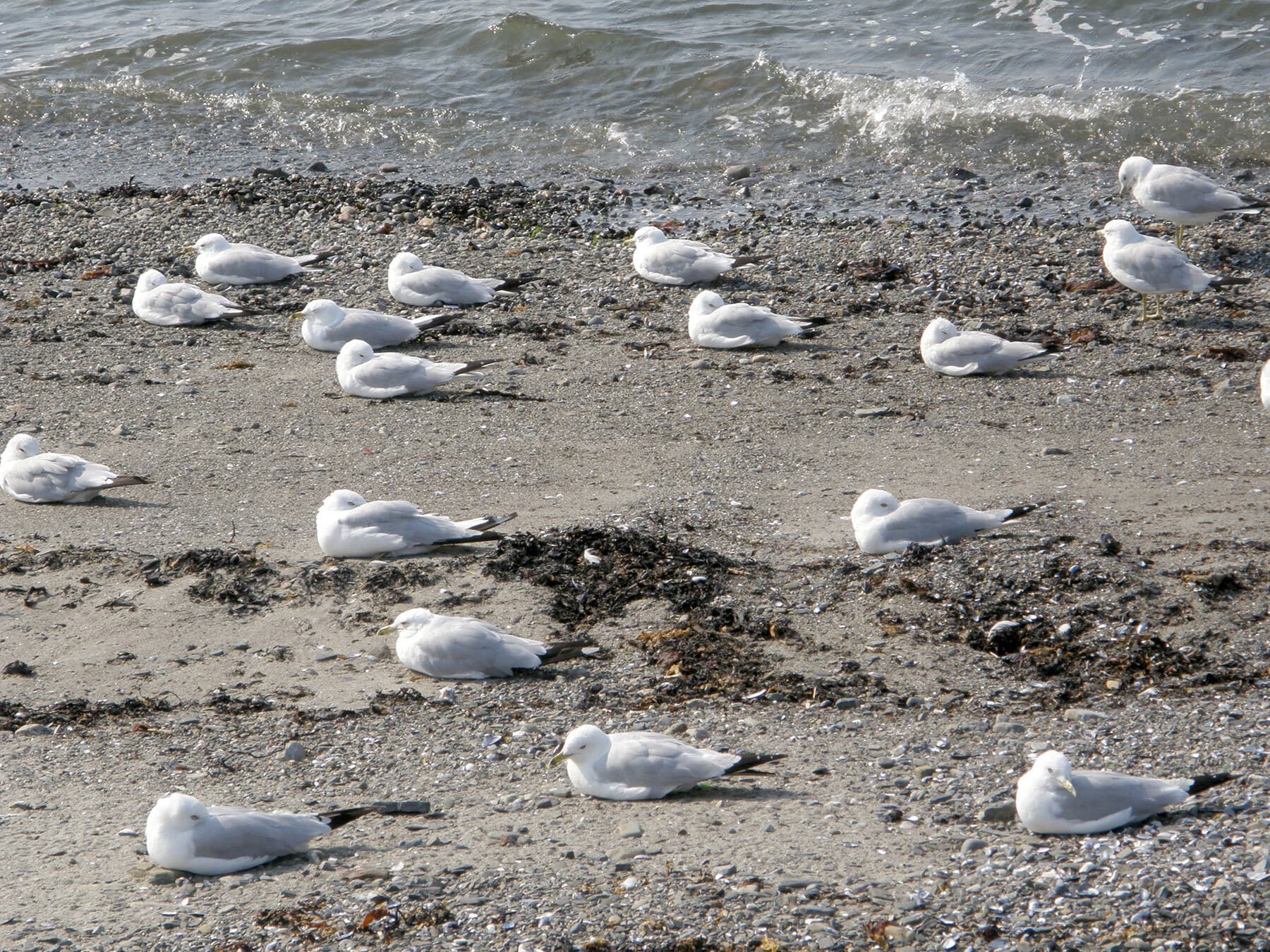
Most gulls breed throughout the spring and summer and sleep in or near their nests.
Breeding gulls are territorial, and pairs are fiercely protective of their nests. Non-breeding gulls will sleep in the same types of places as they do in winter.
A study of Black-headed gulls found they defend their nest for around 40% of the night during the breeding season.
chicks are born, gull parents keep a close eye on them for around 3 to 4 weeks, after which the chicks will leave the nest to roam the surrounding area on their own.
Chicks
Baby gulls take a fairly long time to fledge - up to 4 to 6 weeks. During that time, they’ll chiefly sleep inside the nest.
After a week or so, baby gulls roam outside the nest and explore the surrounding area. Then, they remain close to their parents for a couple of months or longer.
In the rain
As you might expect, gulls are not afraid of the rain - they are seabirds, after all!
When it’s raining, gulls will try to take cover under tree canopies or sheltered buildings, but they’re perfectly capable of sleeping in wet and windy conditions.
Roosting in groups
Gulls are highly sociable and gregarious and roost communally in large flocks. Gulls have excellent communication skills and complex systems for alerting each other when it is/isn’t safe to sleep.
When gulls sleep, the outliers of the roost will stay half awake to prevent predators from sneaking up on them. If they sense danger, they’ll sound the alarm to wake up the colony.
Sleeping in large groups helps these ground-sleeping birds stay safe from land predators, as they don’t have the benefit of roosting in trees like many other birds.
Night vision
Gulls can probably see reasonably well in the dark but don’t possess notably good night vision, with one exception. The Swallow-tailed gull is primarily nocturnal and forages at night rather than in the day. This nocturnal gull probably has excellent night vision to help it forage at night.
FAQs
Do seagulls sleep in trees?
Gulls don’t typically sleep in trees. They sleep on the sea, lakes, rivers, and reservoirs, and on the ground, in fields, pastures, parks, and urban environments. The Bonaparte’s gull is one exception and has been observed roosting in trees.
Do seagulls sleep while flying?
Some strongly migratory birds that travel great distances do sleep while flying, such as the Frigate bird that naps during soaring or gliding flight. There’s no substantial evidence to suggest that gulls are capable of the same, but it’s possible.
Do seagulls sleep on the water?
Gulls are naturally buoyant and often sleep on the sea, lakes, reservoirs, and rivers.