Identification · Updated 8 Oct 2026
A Guide to Britain's Green Birds
By the Birdfact teamChecked by Nathan Cope
That burst of green in British gardens isn't as rare as you might think.
From exotic arrivals to native specialists, our green-feathered friends bring their own unique character to gardens, parks and woodlands across the country.
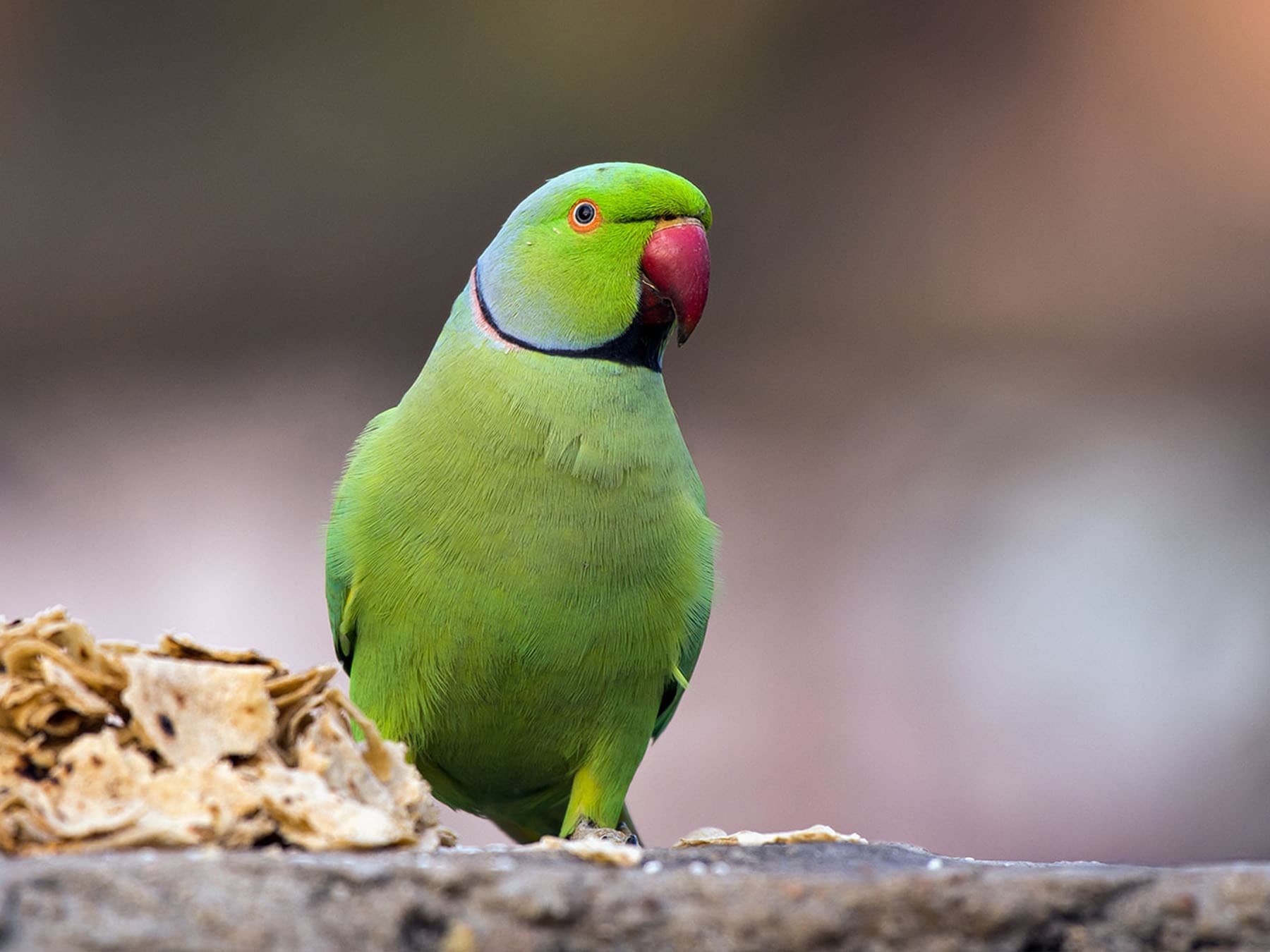
Rose-ringed Parakeet
Psittacula krameri
Regional Rarity Score
Ranges from 0 (common) to 100 (extremely rare) in this region
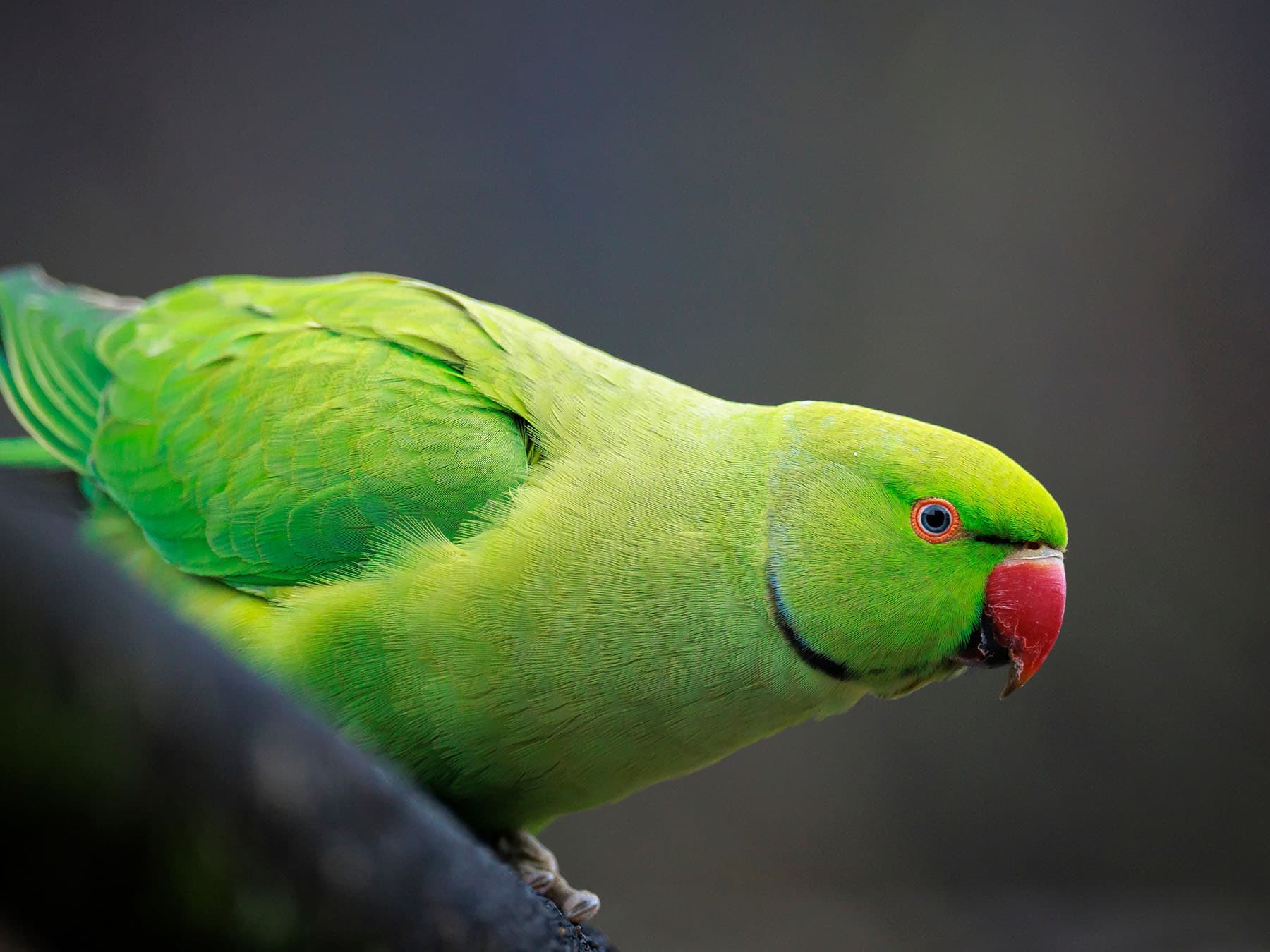
That flash of tropical green streaking across a London park isn't some escaped pet - it's almost certainly one of the thousands of Ring-necked Parakeets that now call Britain home.
While once confined to London's suburbs, these adaptable birds are steadily pushing northward, with established colonies now reaching as far as Birmingham and Manchester.
These noisy characters gather in huge roosting flocks, their squawking impossible to miss as dusk approaches.
Watch any park with old trees, especially around Richmond or South London, and you'll spot them squabbling over the best perches or raiding fruit trees with remarkable precision.
They're particularly visible when the leaves have fallen in winter, revealing their impressive communal roosts.
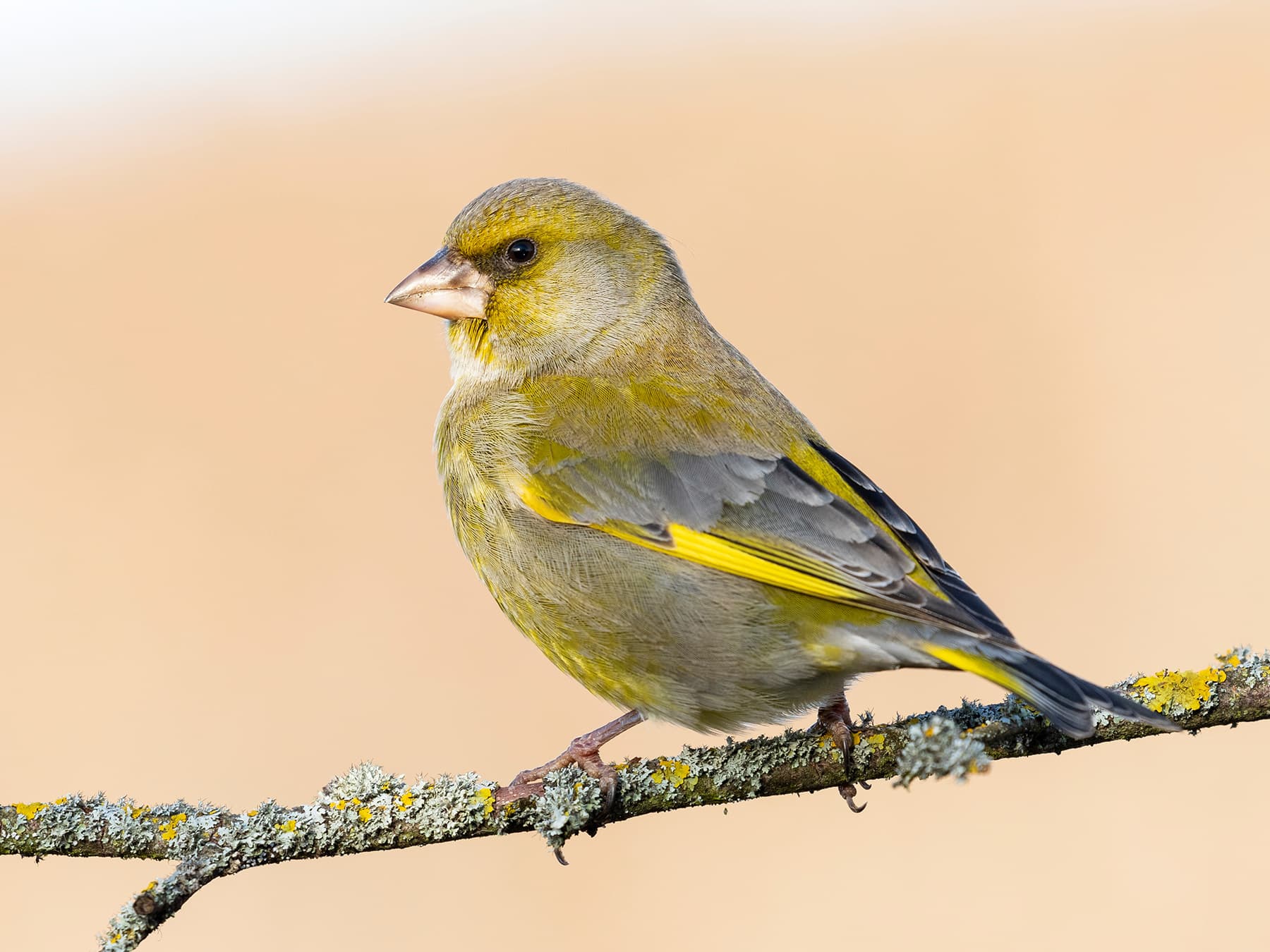
Greenfinch
Chloris chloris
Regional Rarity Score
Ranges from 0 (common) to 100 (extremely rare) in this region
These stocky garden visitors are often the first green birds people notice at their feeders. Their chunky, powerful build makes them stand out from other finches, with males showing off their brightest yellowy-green plumage in spring.
They've got powerful beaks that make short work of sunflower seeds - watch them at garden feeders, where they'll shoulder aside smaller birds to get at their favourite foods.
Come spring, males perch high in trees, singing their distinctive wheezing song that sounds rather like someone trying to start a rusty bicycle.
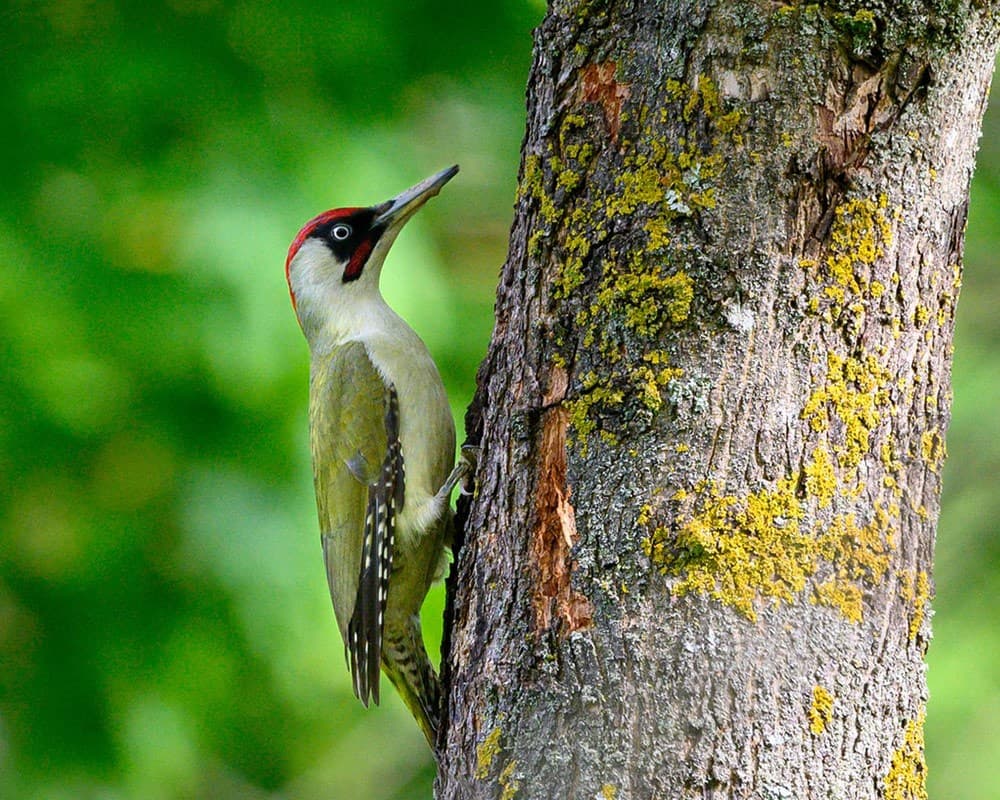
European Green Woodpecker
Picus viridis
Regional Rarity Score
Ranges from 0 (common) to 100 (extremely rare) in this region
Unlike their tree-drumming cousins, these birds spend most of their time on the ground, probing lawns with their sturdy beaks.
Most common in southern and central England, they're gradually expanding northward as winters become milder.
Listen for their distinctive yaffle - a call that sounds exactly like mocking laughter echoing across gardens and parkland.
They're absolute specialists when it comes to ants, and you'll often spot them on lawns, especially after rain when the insects are easier to catch.
Their bouncing flight and bright green back make them unmistakable as they move between feeding spots.
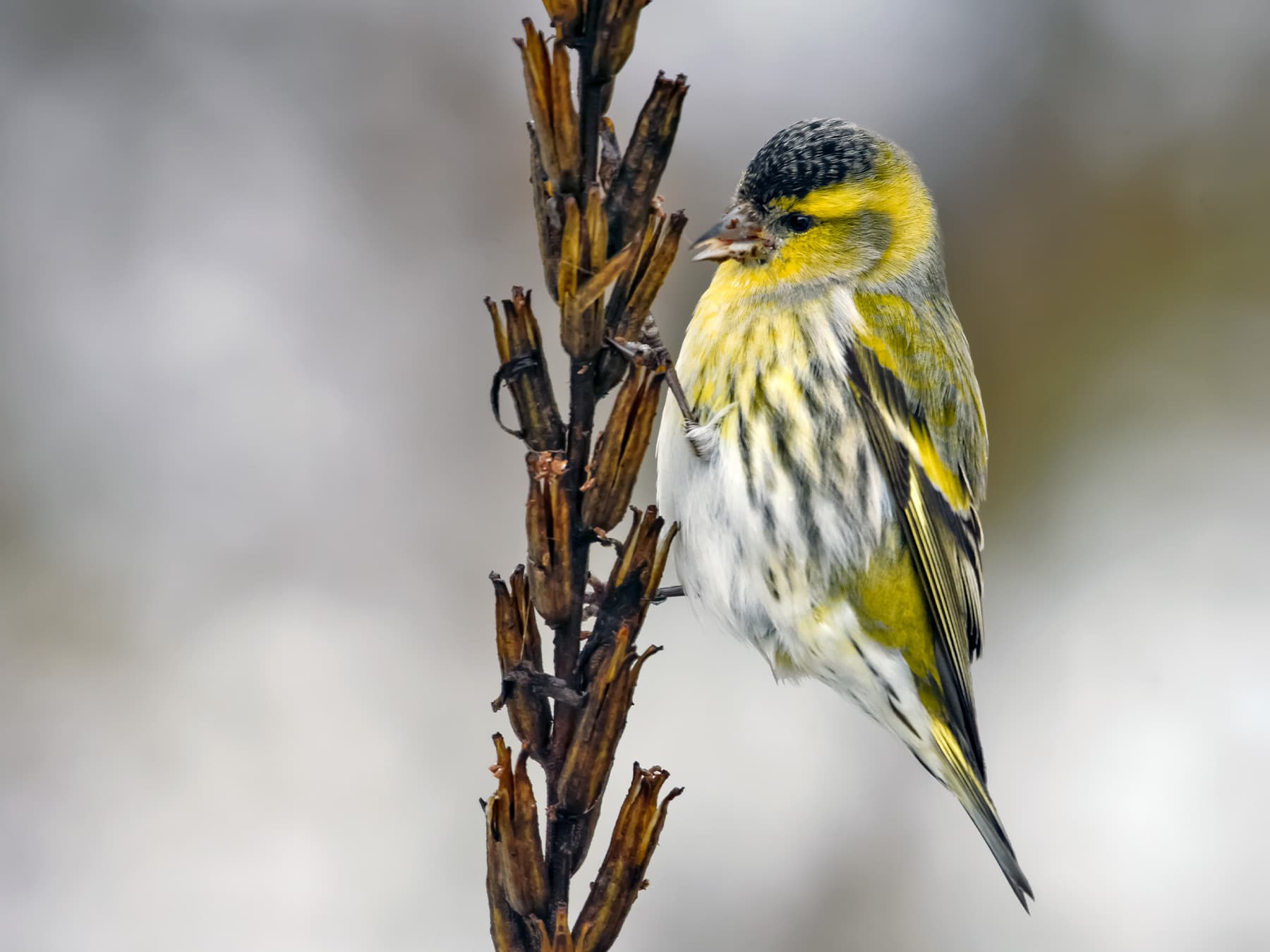
Eurasian Siskin
Spinus spinus
Regional Rarity Score
Ranges from 0 (common) to 100 (extremely rare) in this region
These tiny finches appear like little streaked bullets at garden feeders, especially during winter months. They're more olive than bright green, with distinctive yellow wing bars that flash as they flit between branches.
In recent years, they have become much more common garden visitors across Britain, though they are especially numerous in Scotland and northern England, where conifer forests provide their preferred habitat.
Watch them hanging upside down on feeders - they're skilful acrobats and often squabble with their own reflections in window panes on frosty mornings.