Facts · Updated 8 Oct 2026
Swan Sleeping Habits and Behavior
By the Birdfact teamChecked by Nathan Cope
On this page9 sections
Swans are a familiar sight swimming on rivers, ponds and reservoirs, and grazing on grassy lake shores and in marshy reedbeds. But where do these large graceful waterbirds sleep at night?
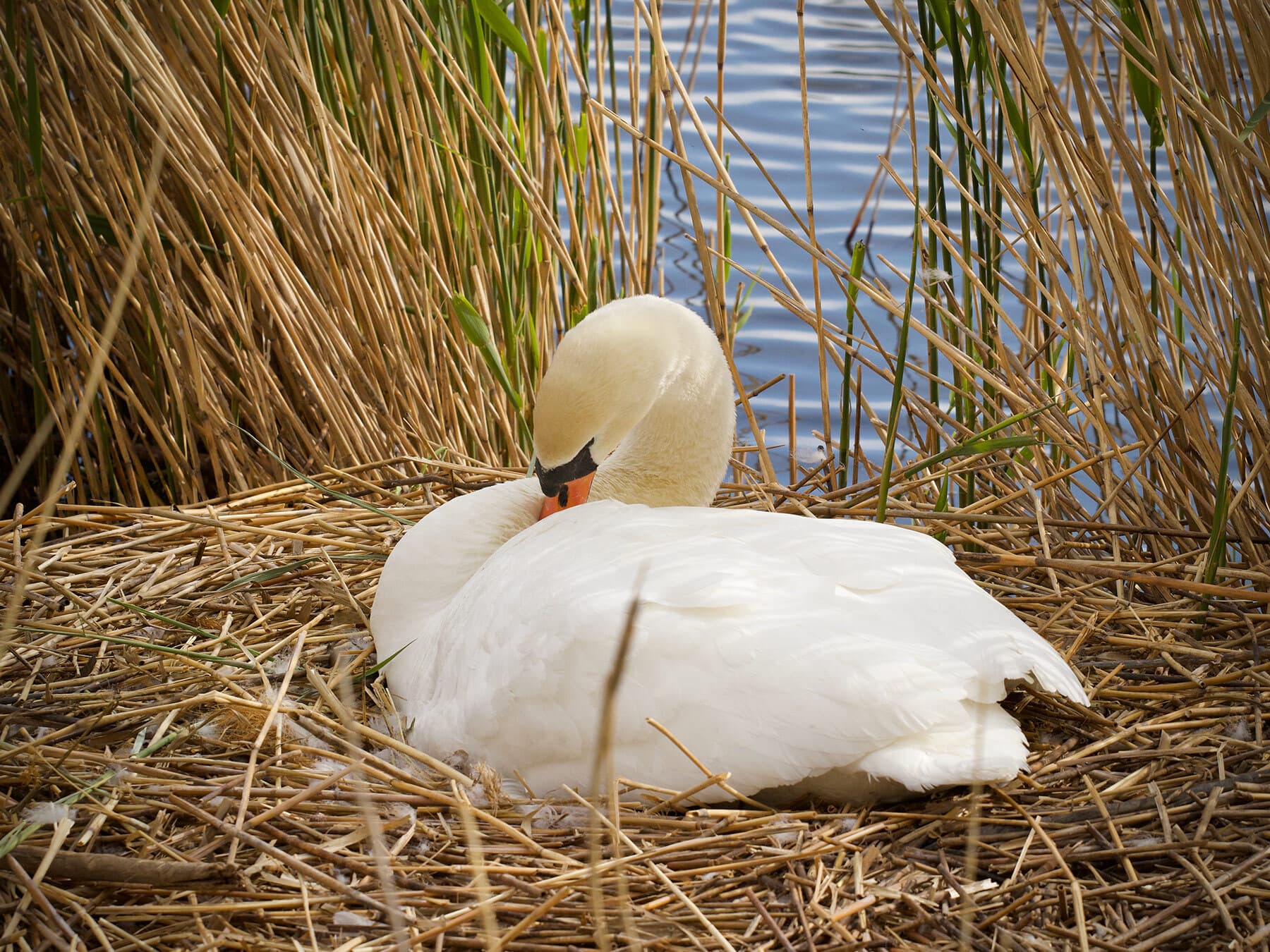
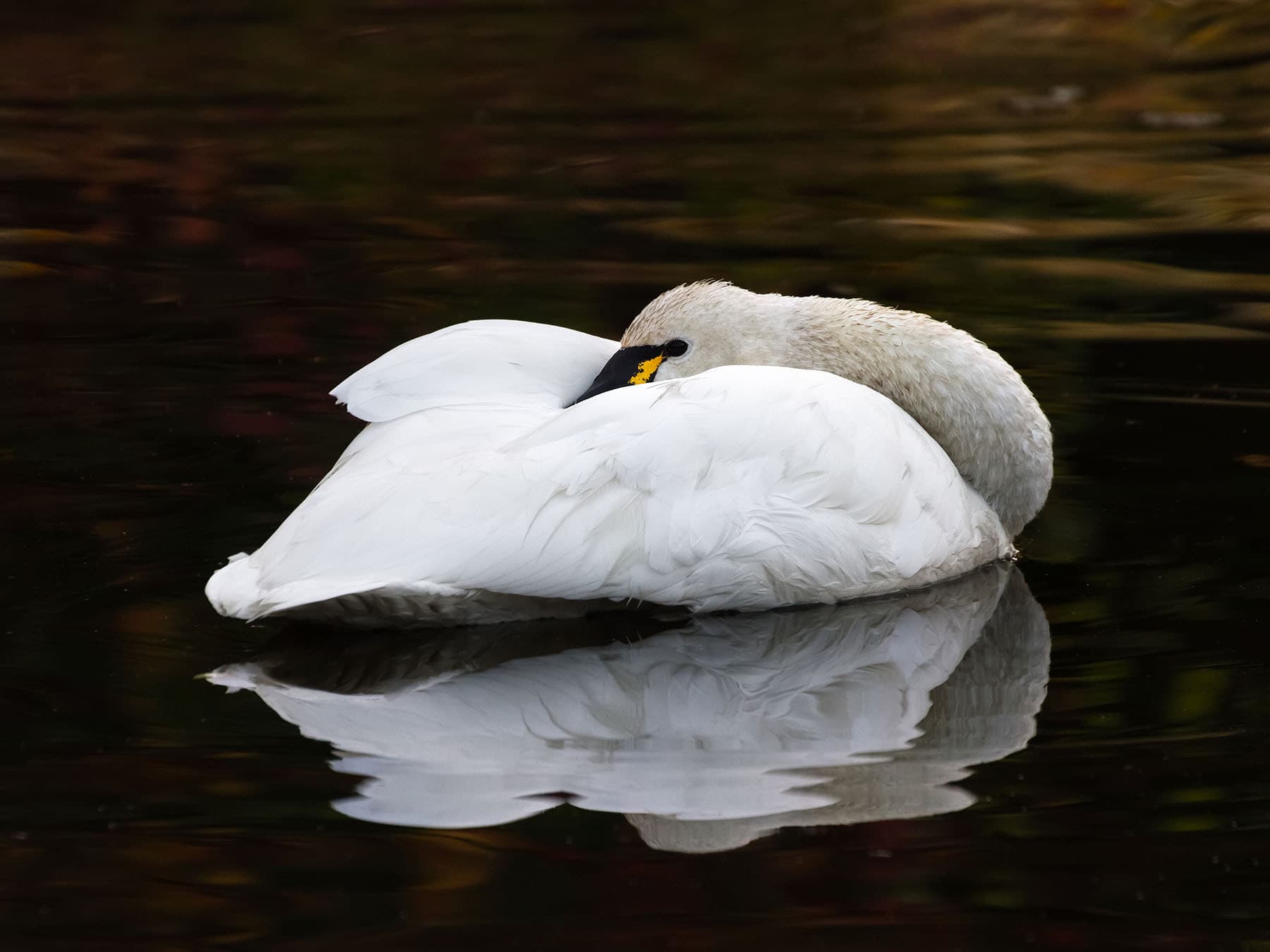
Swans can sleep on water as well as on land, and use a mix of the two each day (and night). Most nights are spent asleep on a lake’s surface, head tucked under a wing and feathers fluffed out for warmth.
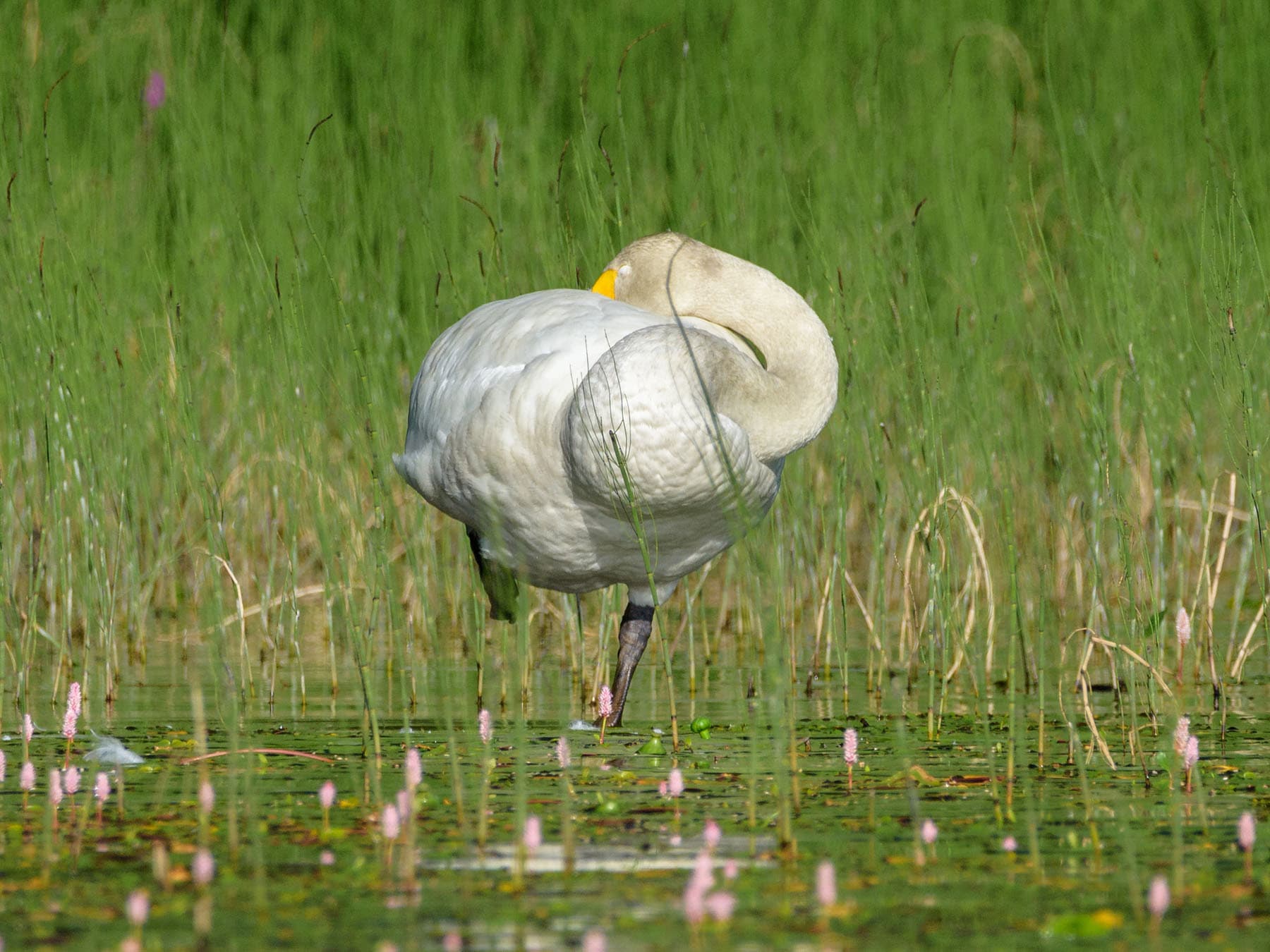
When taking short naps on land, swans balance on one leg to reduce heat loss. Despite their large body size, they have no issue with overbalancing, and are regularly seen standing steadily in this position for short periods in the afternoon while they catch up on a bit of rest after a busy morning of swimming and grazing.
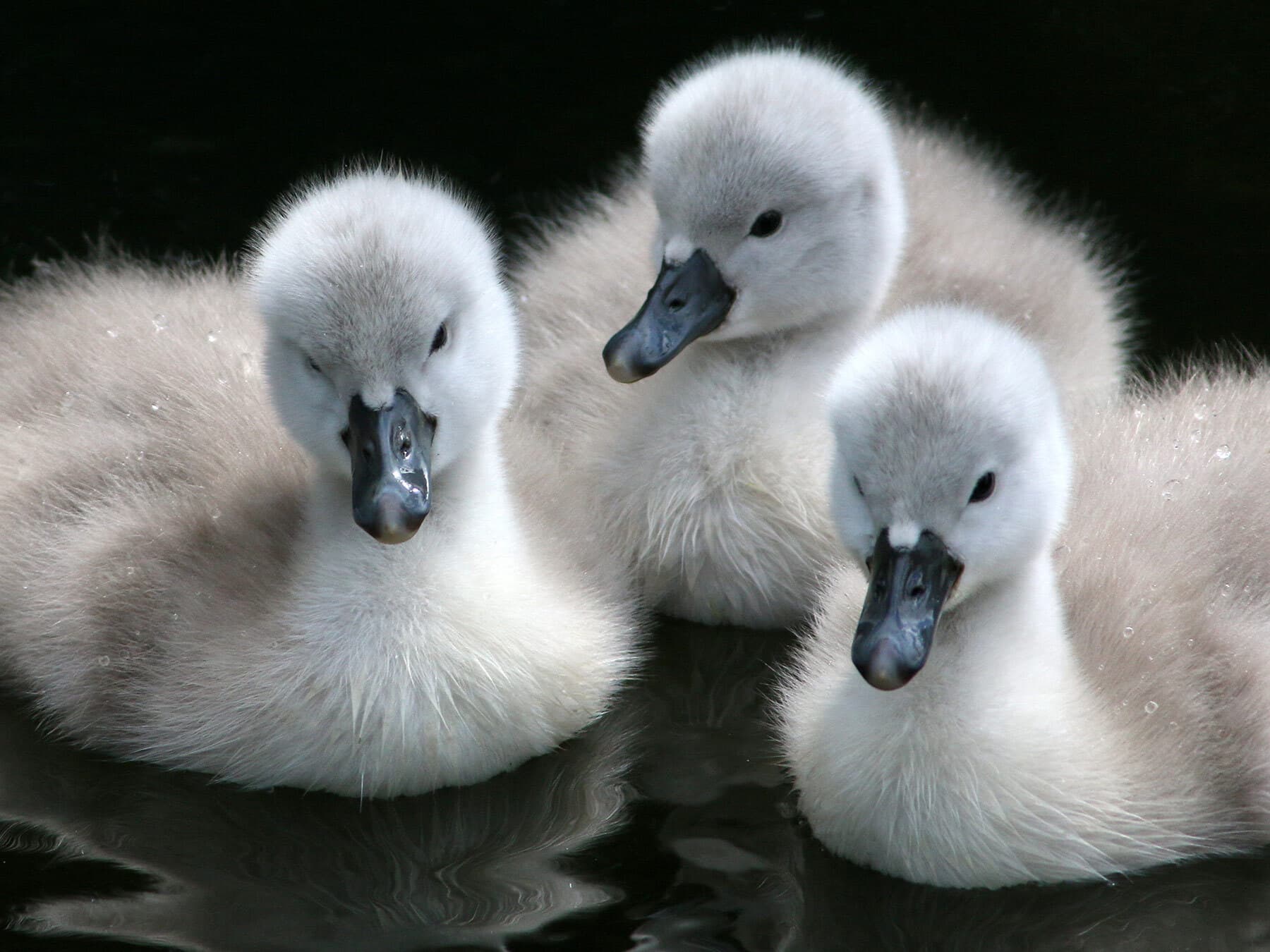
Overnight, the common practice of sleeping on the water’s surface offers swans increased protection from land predators, which are unable to easily approach and attack a resting swan. Young cygnets are not born with the ability to float, and have to rely on other tactics to survive at night until they are a few weeks of age.
If you’d like to learn more about how both adult and young swans sleep and why they choose the spots they do to take their nightly rest, then please keep reading our guide to swan sleeping habits and behavior.
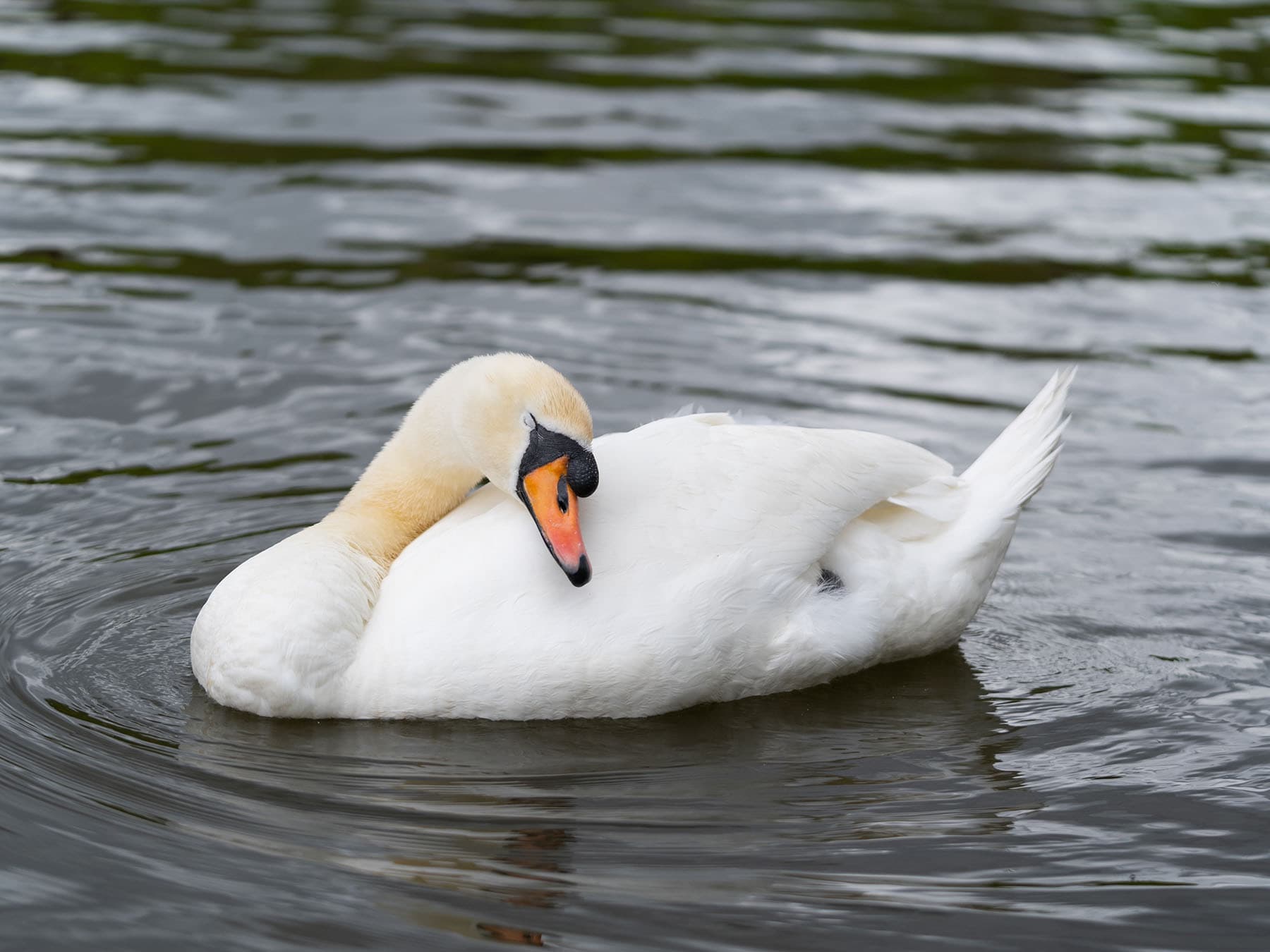
Where do swans sleep?
When it comes to sleeping, there are two options available to swans, and the one they choose depends a lot on what time of day it is and the environment in which they live.
They will regularly alter their sleeping position during the night, but typically remain surrounded by water, rather than on the shore or in an open space.
During the day, swans can often be seen taking a nap on land, standing on one leg with their head tucked back underneath a wing. These short bursts of sleep are frequently taken on the banks or shores of a lake or pond, or the edges of waterside vegetation.
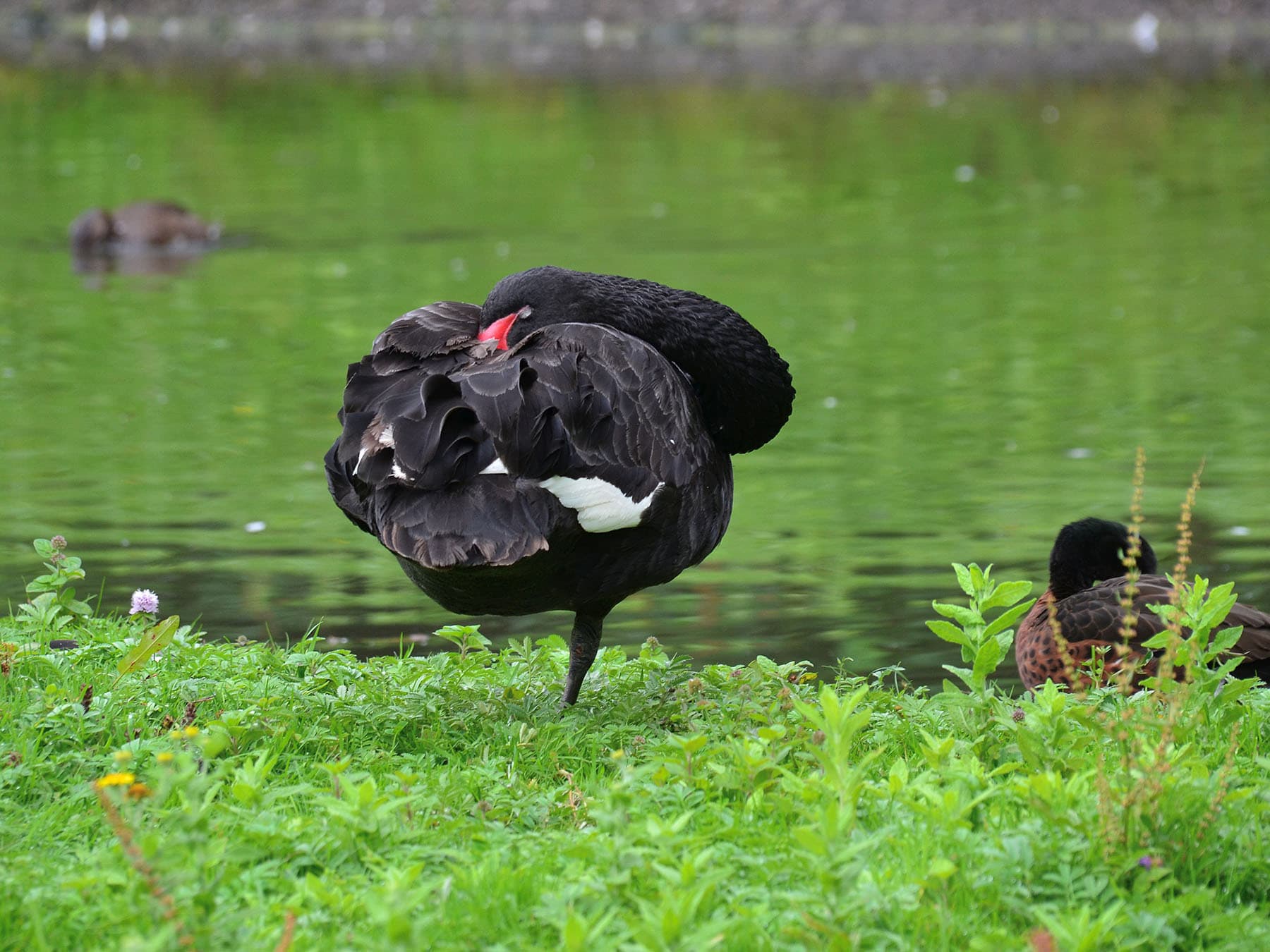
How do swans sleep?
On land, swans balance on one leg to sleep, tucking their head under their wing and fluffing up their feathers for warmth.
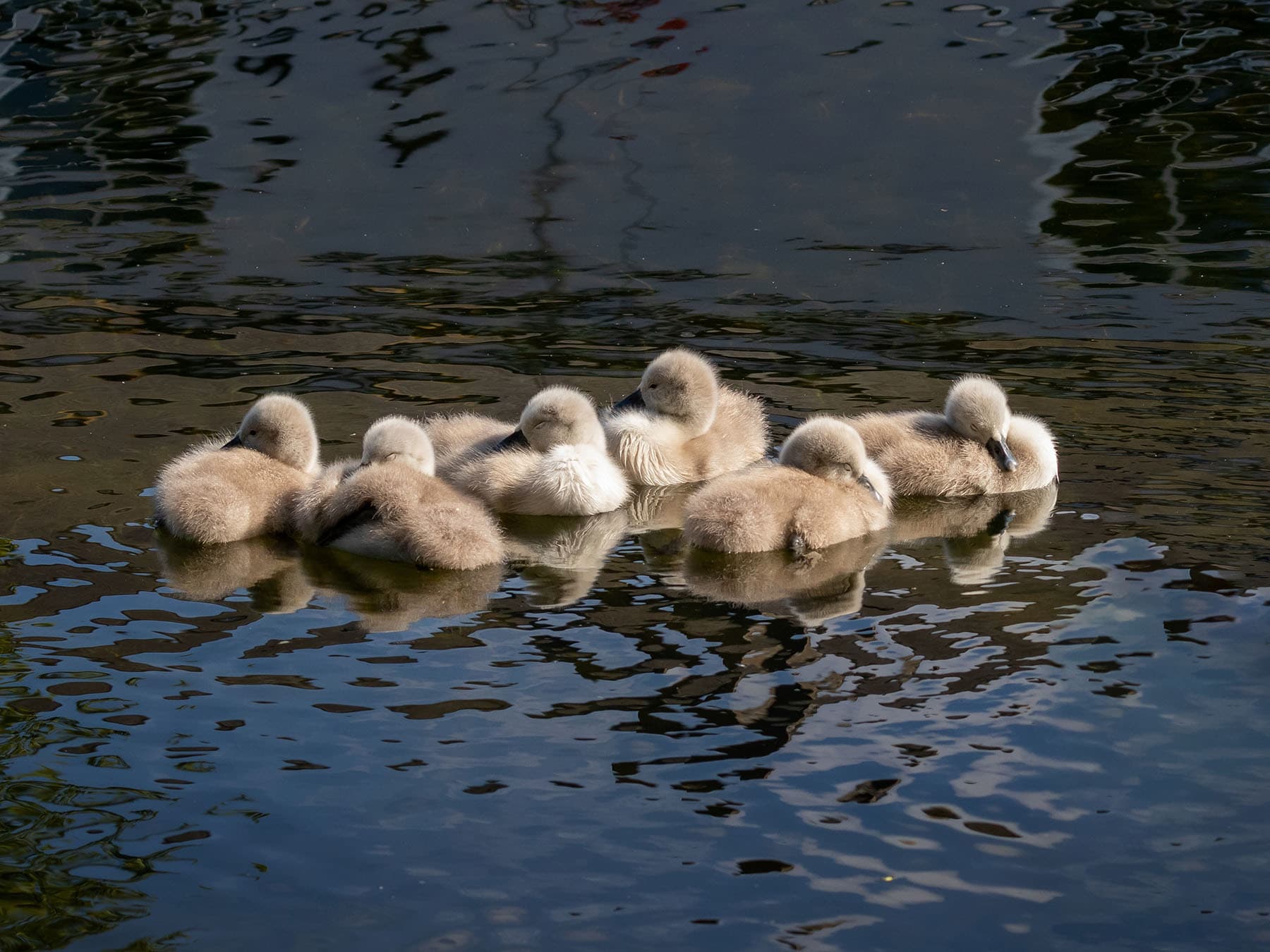
Overnight, the majority of swans sleep on water, often as part of a larger group for protection. The most common sleeping position is with their head turned backwards and tucked beneath a wing. Feathers are also puffed for comfort and warmth.
Swans are light sleepers and are vigilant for noises and movement nearby. They adjust their sleeping position several times each night, and wake with daybreak to begin their daily routine of swimming and foraging.
Day and night
Swans are active during the day and rest at night, but this doesn’t mean they can’t be seen taking short naps throughout the day.
During the day, it’s more common to see sleeping swans on the shores of lakes and edges of waterside grazing grounds balanced on one leg with their head and neck tucked under their wing, catching a quick bit of shut-eye.
Nights are when swans rest the most; the hours between sunset and sunrise are spent mainly floating on the water’s surface.
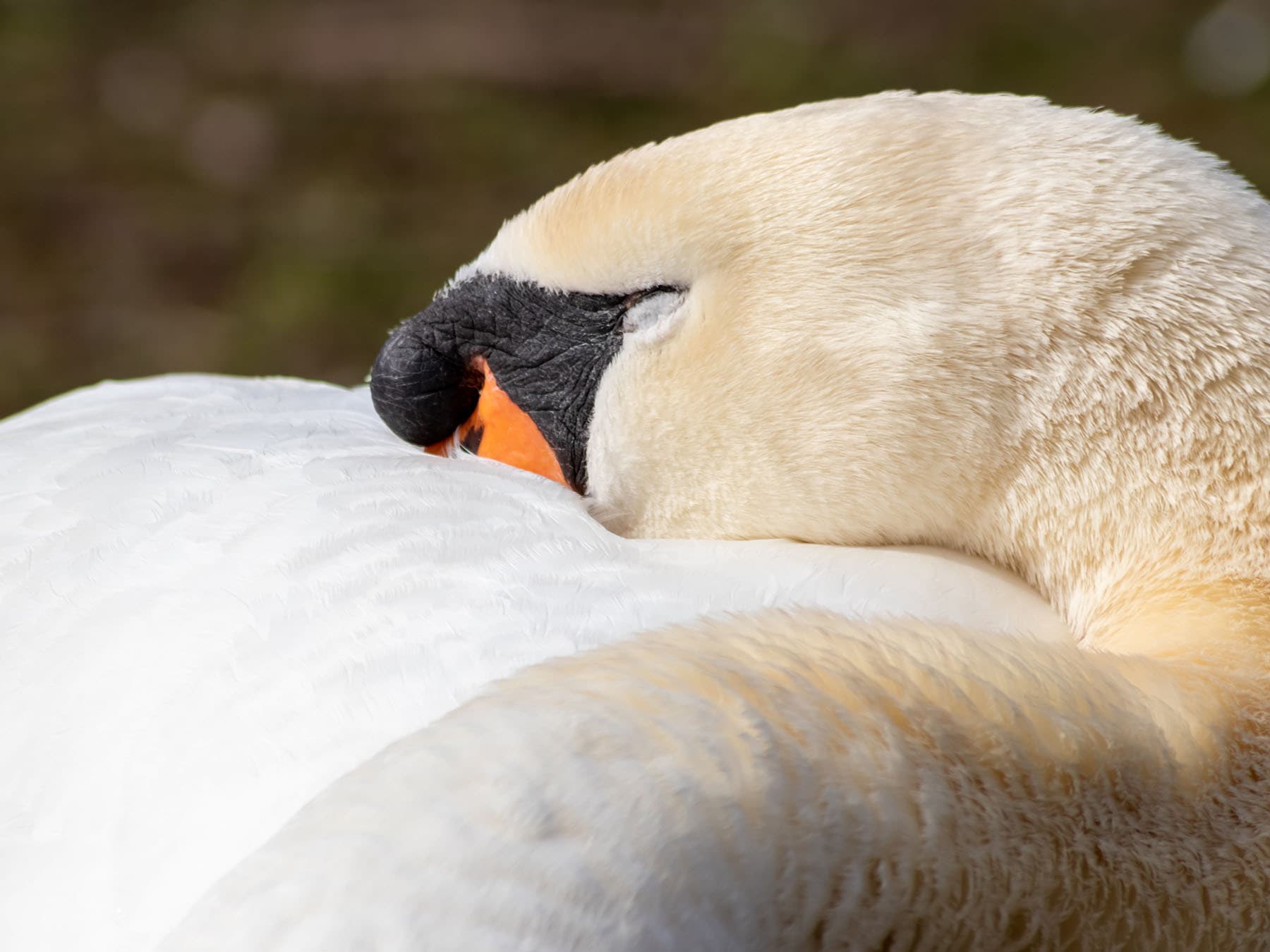
How long they sleep
Swans are at their least active during hours of darkness and are commonly seen resting between sunset and sunrise. Naturally they sleep for longer periods in winter months, with shorter daylight hours bringing the opportunity to rest more and conserve energy.
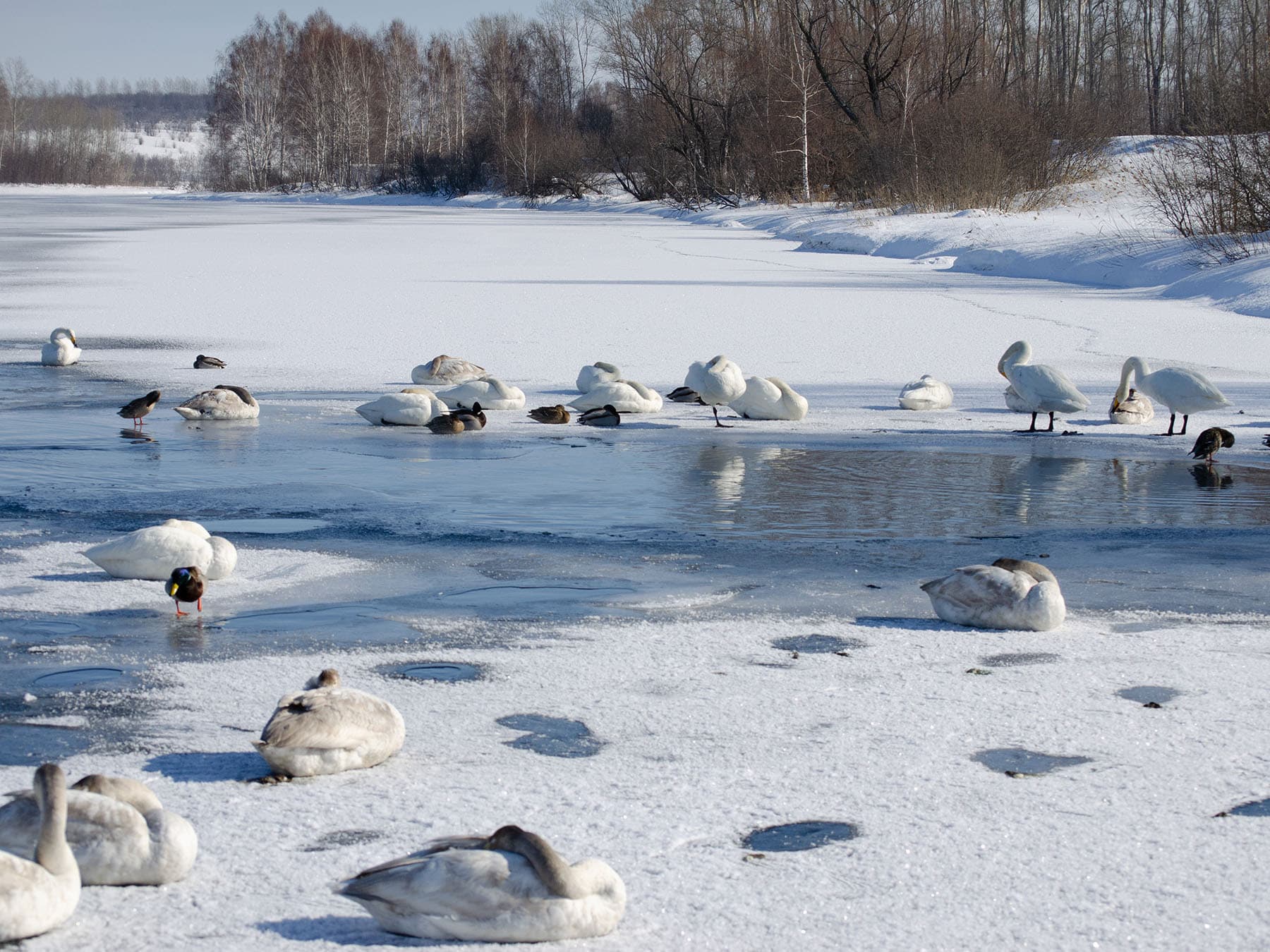
In winter
migrate in winter, but those that breed in colder regions in the extreme north may fly south in winter in search of more tolerable climates and ice-free waters.
As long as lakes and ponds remain unfrozen and conditions are not unbearable, swans continue to sleep on open water as they do at all other times of the year, or will move on in search of less harsh conditions elsewhere.
Swans sleep more in winter than in spring and summer, as they need to conserve energy when food resources are often in shorter supply.
Cygnets
nest within 48 hours of hatching, spending their first days and nights in familiar surroundings. Once they leave the nest, cygnets and their parents do not return, choosing instead to roost on the water or finding temporary overnight spots in reedbeds.
cygnets are observed to clamber onto the backs of their parents (usually the female, but occasionally the male too), to seek shelter and warmth and to enjoy a break from swimming. Sleeping tucked under the adult’s wings allows them to sleep safely on the water, until they are developed enough to survive nights directly on the water themselves.
Occasionally, a spot will be chosen in a reedbed or on a small island where the young cygnets will settle to sleep after dusk. A temporary nest will be created there by the adults and may be used to safely brood the young until they, too, have mastered the art of sleeping while floating.
Flying at night
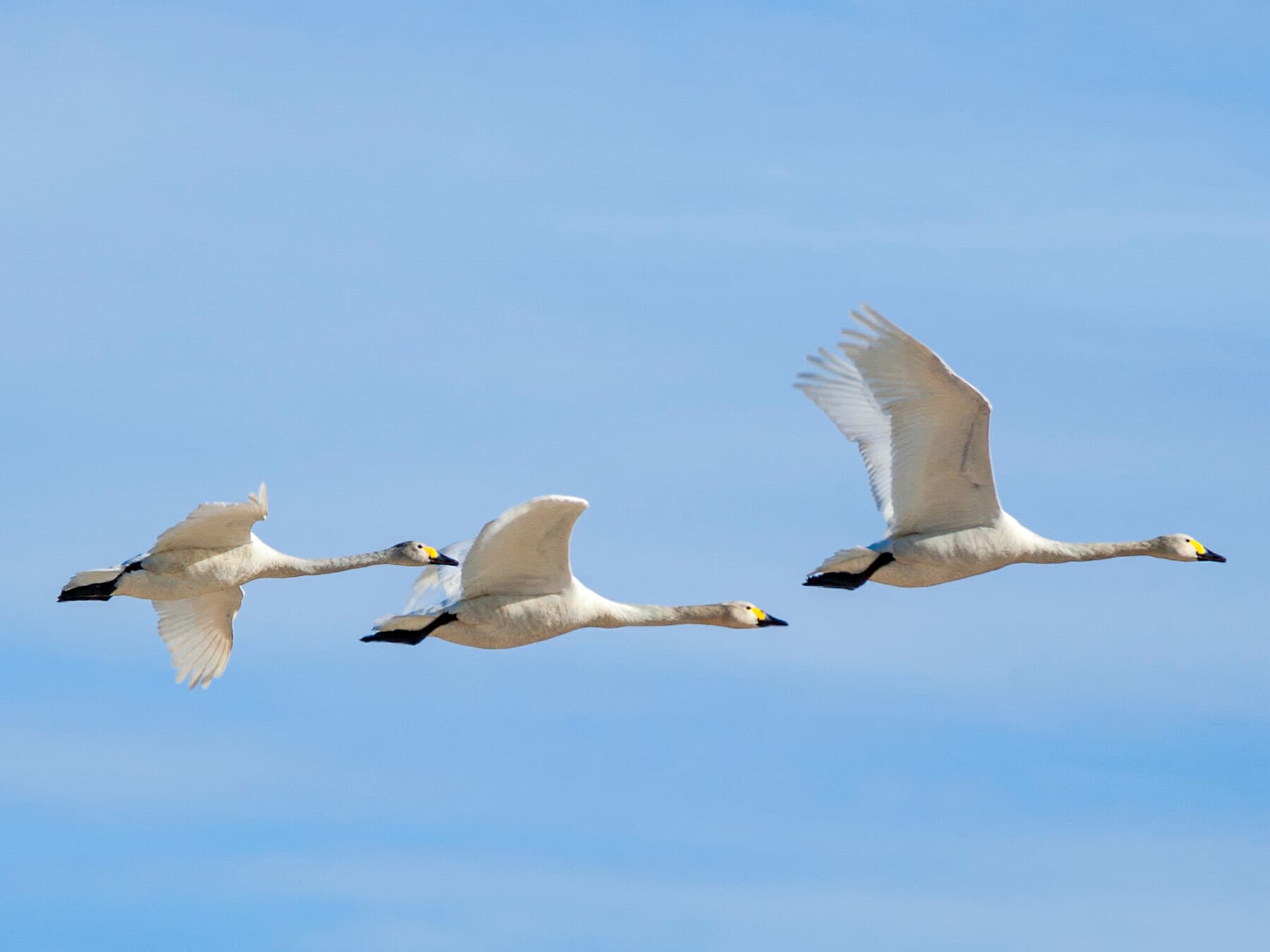
Swans do sometimes fly at night, covering long distances in darkness, but they are awake rather than asleep. You may even hear their familiar honking noises overhead, even when it’s pitch black outside.
Sleeping on one leg
Sleeping on one leg is an adapted behavior in swans to minimize heat loss. By tucking one foot up into their feathers, they effectively reduce the amount of heat lost by their body by 50 percent.
Their bare legs and feet are not insulated by feathers, meaning that when both legs are exposed to the air, body heat will be lost more quickly.
FAQs
Are swans awake at night?
Swans are diurnal birds and are mainly active during daylight hours. Occasionally they may fly between bodies of water at night, but generally, a swan’s nights are spent resting, and days spent feeding, swimming and napping.
Do swans sleep while floating?
Swans can sleep both on land and while floating on water. At night it’s often safer for a swan to rest on water, as it sets them out of reach from nocturnal land predators such as foxes.