From the Journal
Pigeons and Doves of the UK: A Guide
There's something oddly mesmerising about watching pigeons and doves in British gardens and woodlands go about their daily business.
Often dismissed as mundane, these birds reveal surprising complexity when you take the time to really notice them.
Woodpigeon
Columba palumbus
Regional Rarity Score
Ranges from 0 (common) to 100 (extremely rare) in this region
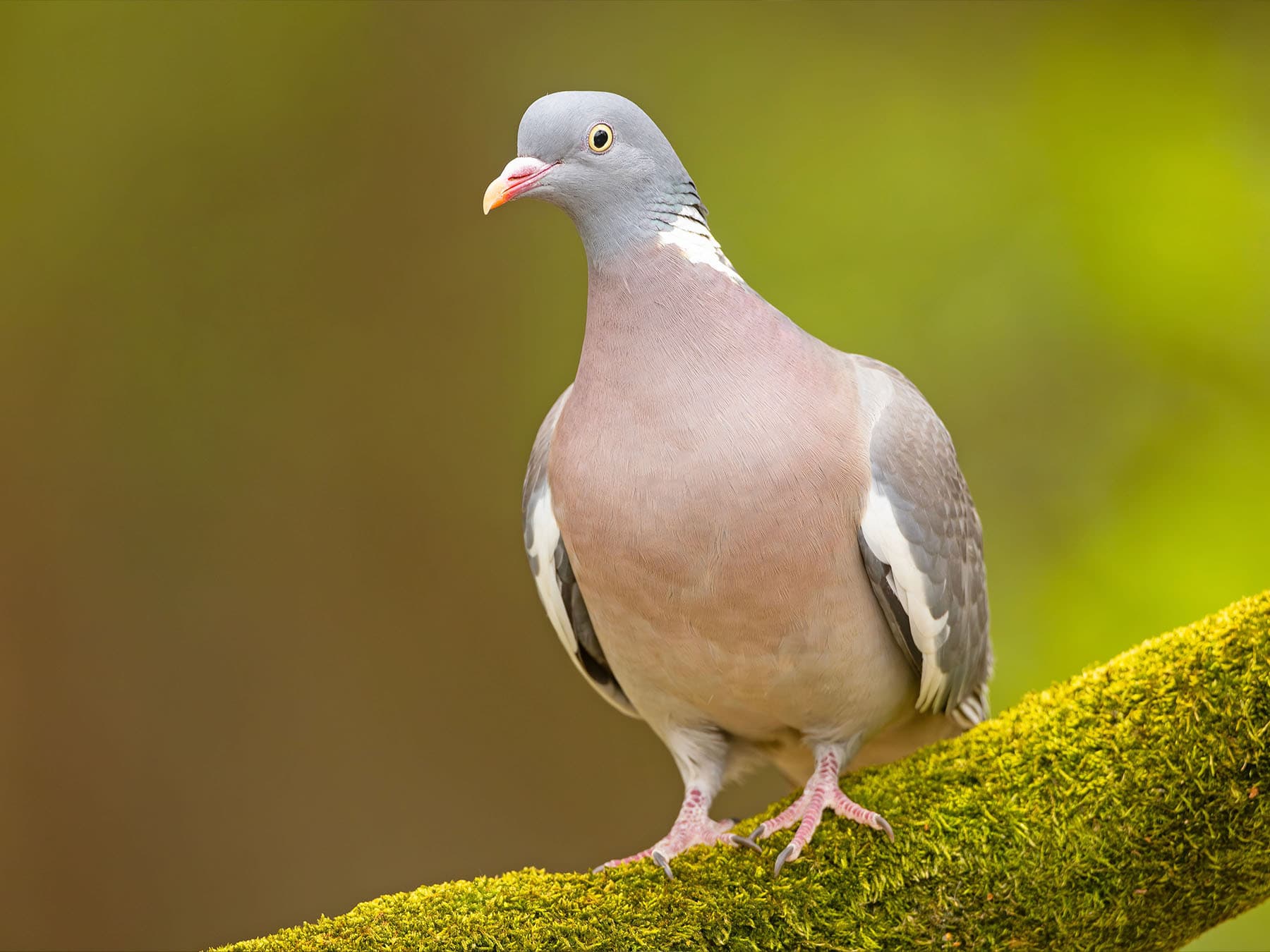
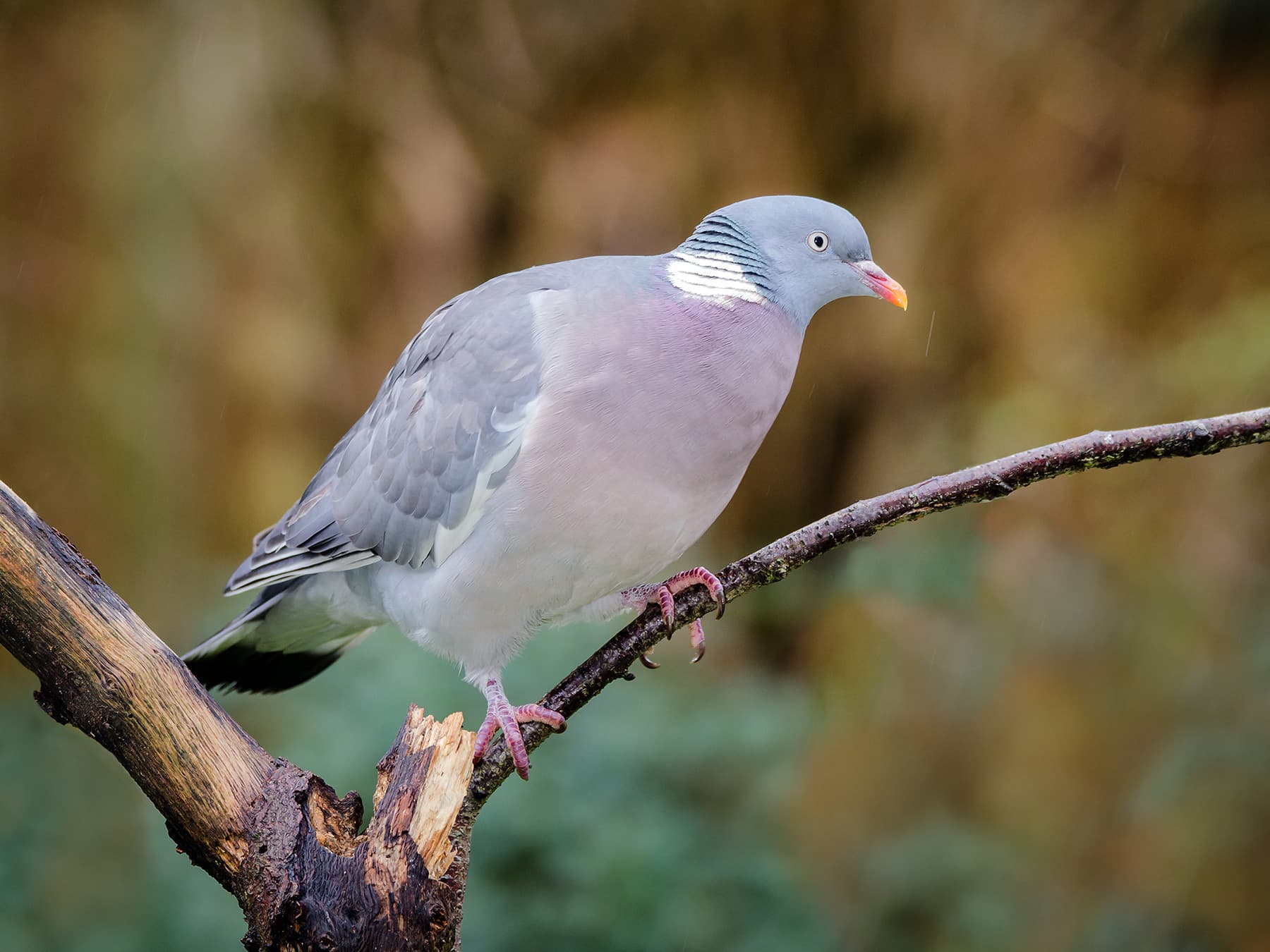
Found across virtually every corner of Britain, from inner-city parks to remote Highland gardens. The chunky giants of British doves absolutely dominate garden feeders.
Watch them land on delicate branches - they'll wobble comically for a moment before finding their balance. That distinctive white neck flash catches the morning sun as they bob their heads, crooning their familiar "take TWO-OO COO-OO" calls.
Come winter, wood pigeons gather in massive flocks to raid oilseed rape fields, their wings making a characteristic whistling sound as they take off en masse.
You'll spot them doing their springtime display flights, clapping their wings as they rise steeply into the air before gliding down on stiff wings.
Got a photo of a bird you can't identify?
Upload a photo and find out what it is in seconds — no account needed
Identify a BirdEurasian Collared Dove
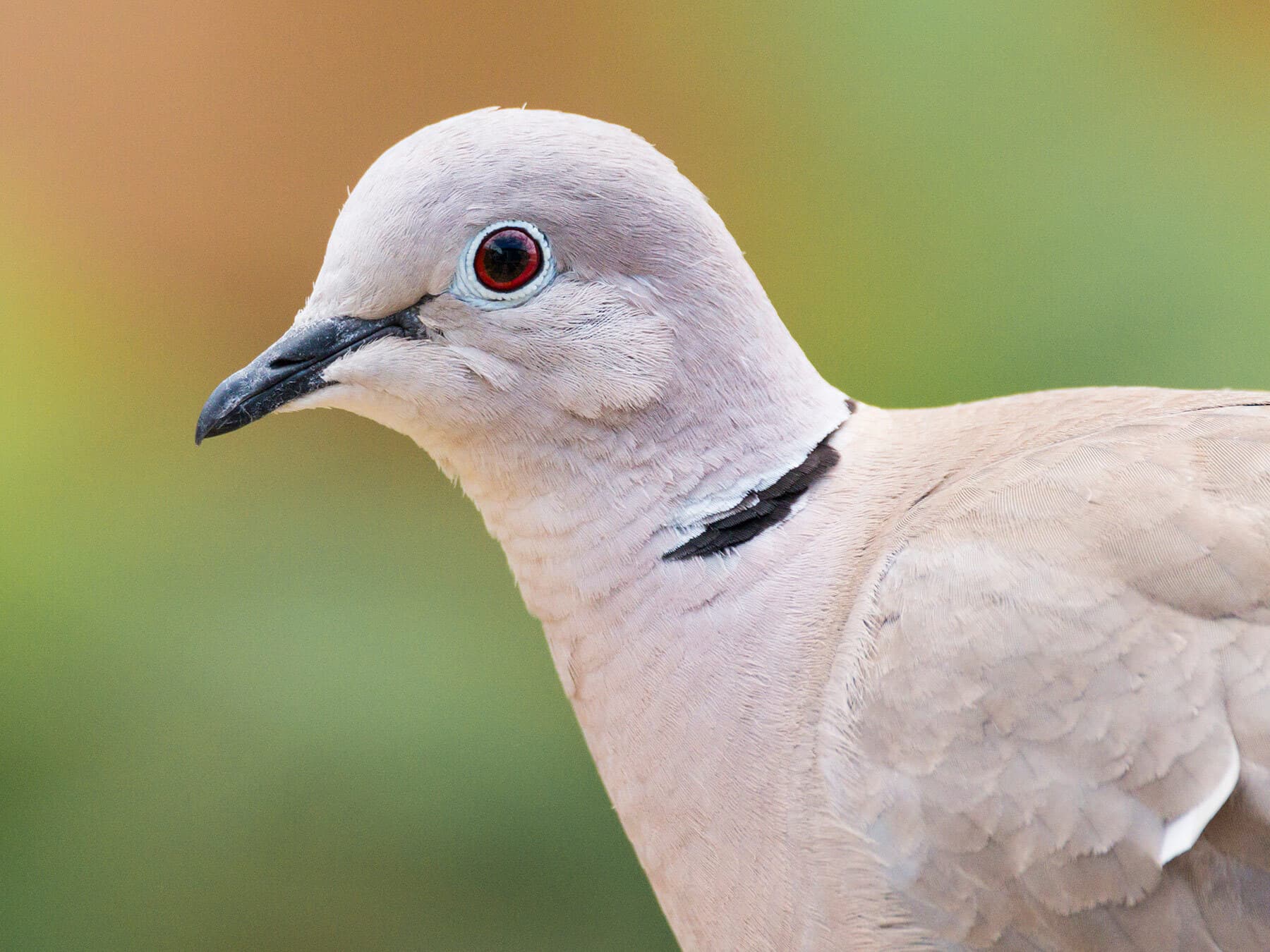
Streptopelia decaocto
Regional Rarity Score
Ranges from 0 (common) to 100 (extremely rare) in this region
Most numerous in suburban southern Britain, though they are now well-established as far north as the Outer Hebrides. These suburban specialists arrived in Britain only in the 1950s but have made themselves thoroughly at home.
Dawn breaks to their rhythmic "u-NIII-ted" calls. They are often the first birds to start the morning chorus. Their pale sandy plumage looks almost white in bright sunlight, and their black neck collar stands out starkly against it.
Watch collared doves on telephone wires - they'll often preen each other in synchronised movements, turning their heads in perfect mirror-image patterns. Unlike their cousins, they breed almost year-round, even in winter if food's plentiful.
Stock Dove
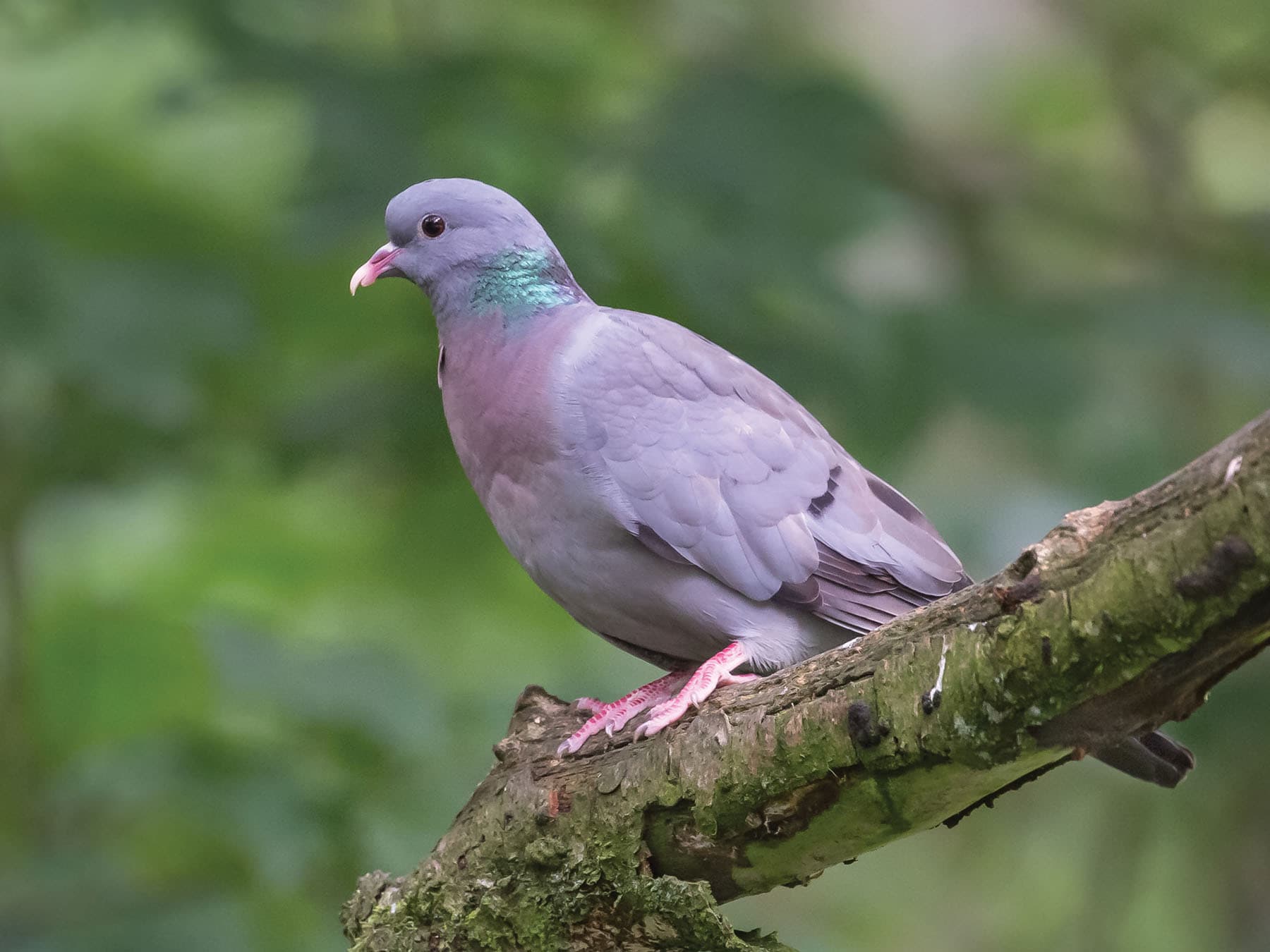
Columba oenas
Regional Rarity Score
Ranges from 0 (common) to 100 (extremely rare) in this region
Most often spotted in England's ancient woodlands and traditional parklands, particularly in the south and east.
The overlooked stock dove often hides in plain sight. No white patches here - just iridescent green neck patches that flash in good light. They're woodland edge specialists, but they've adapted to forage in fields alongside their larger relatives.
Watch carefully when they take off. Their wings lack the white bars of the wood pigeon, and they're noticeably more agile in flight.
Old parkland trees are their favourite nesting spots, where they'll use natural hollows rather than building the flimsy platforms favoured by other pigeons.
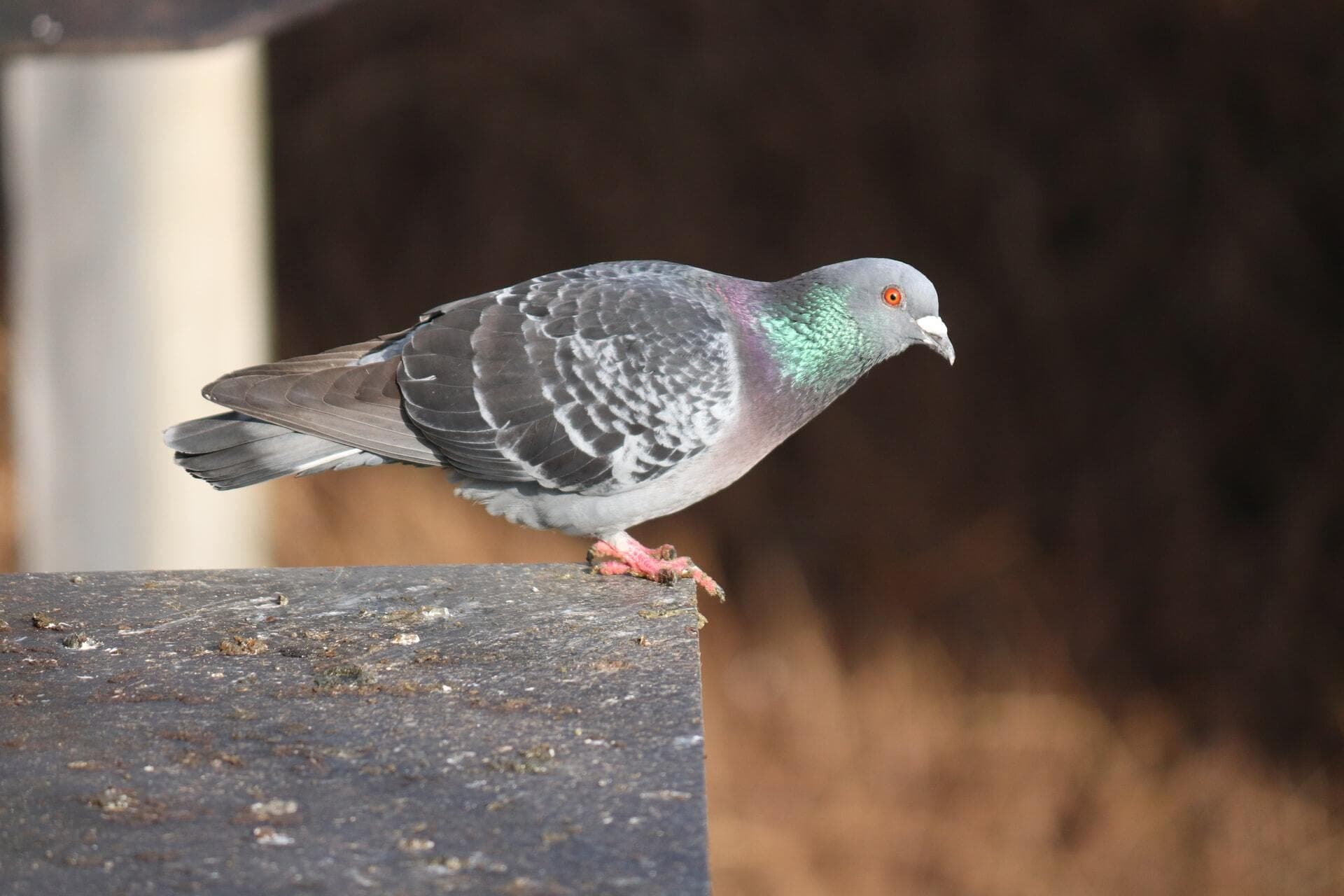
Found in every UK town and city, feral pigeons are the descendants of escaped domestic pigeons, which were themselves originally bred from wild rock doves.
These urban adaptors come in a kaleidoscope of colours - blues, blacks, whites, and every patchwork combination between. Their plumage variety tells the story of their domestic ancestry.
Watch them navigate busy streets with remarkable confidence, ducking between feet and traffic while keeping one eye on the sky for perched peregrine falcons.
They've mastered urban living, nesting on buildings that mimic the sea cliffs of their ancestors. Town squares and railway stations have become their new roosting caves, while window ledges serve as perfect nesting spots.
Rock Dove
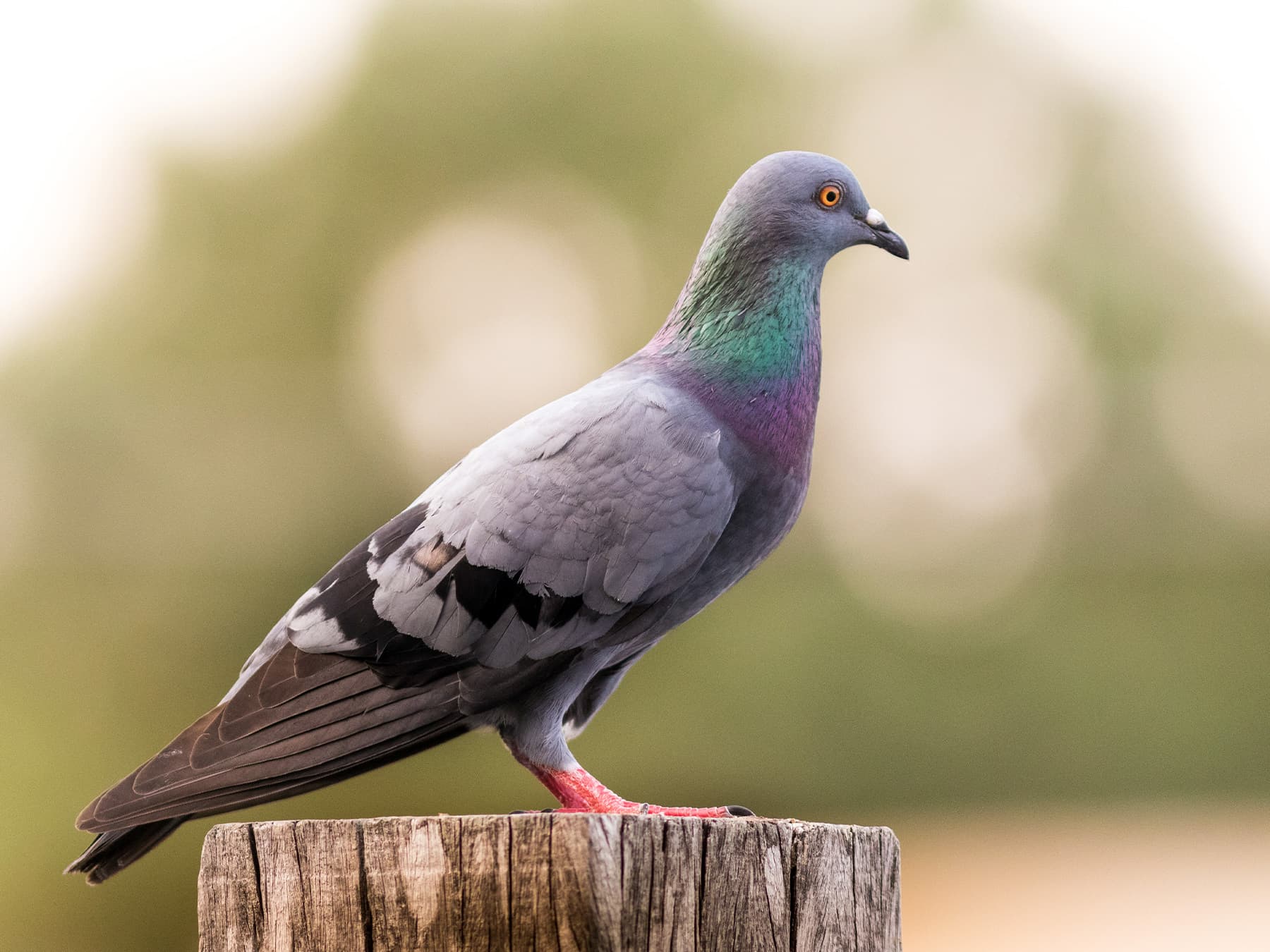
Columba livia
Regional Rarity Score
Ranges from 0 (common) to 100 (extremely rare) in this region
True wild rock doves are now mainly found along the north and west coasts of Scotland, particularly in the Hebrides and Shetland, with smaller populations on Northern Ireland's rugged coastline.
These birds show what pigeons looked like before domestication—steel grey with two black wing bars. Dawn sees them swooping from cliff ledges to feeding grounds, their white rumps flashing against dark rocks.
Their acrobatic courtship flights are something special. Males chase females in tight circles, wings held in a sharp V-shape.
Unlike their city descendants, they maintain strict breeding seasons, synchronised with the best feeding conditions.
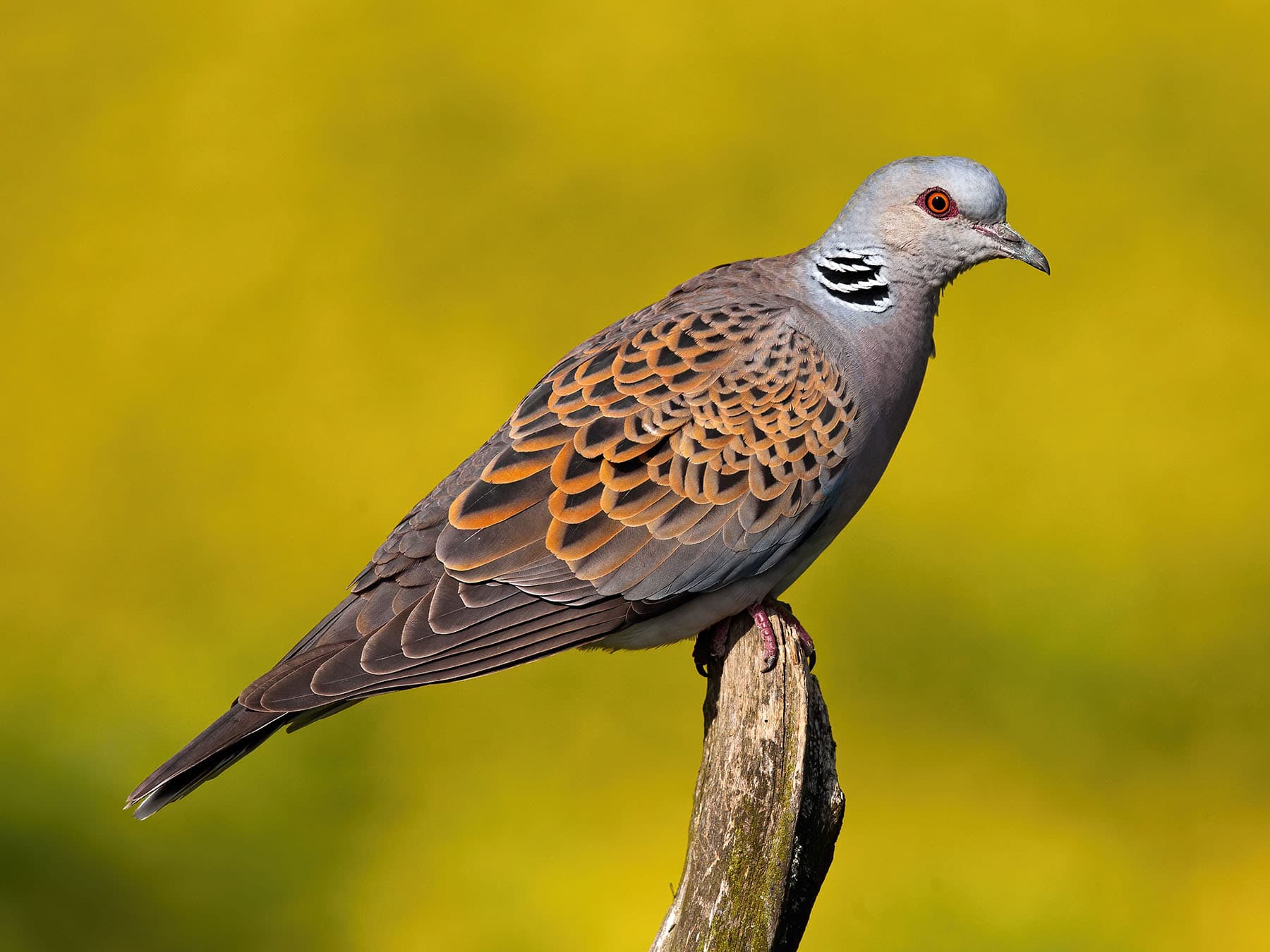
European Turtle-dove
Streptopelia turtur
Regional Rarity Score
Ranges from 0 (common) to 100 (extremely rare) in this region
Now mainly restricted to scattered locations in southeast England, with a few precious strongholds in East Anglia. Summer visitors whose purring calls once defined British summers, turtle doves are now heart-breakingly rare.
Their delicate scaling pattern and pink-flushed chest make them our most ornate dove. They arrive in late April, immediately seeking out thorny scrub where they perform their distinctive display flight - rising at an angle before gliding down with a fanned tail.
By August, they're gone, heading back to African wintering grounds. Each spring, fewer return, making every sighting precious.
Identify Any Bird Instantly
- Upload a photo from your phone or camera
- Get an instant AI identification
- Ask follow-up questions about the bird
Monthly Birds in Your Area
- Personalised for your location
- Seasonal tips and garden advice
- Updated every month with new species