


European Turtle-dove
Turtle Dove, European Turtle Dove · Streptopelia turtur
By the Birdfact teamChecked by Nathan Cope
On this page14 sections
How to recognise it
The Turtle Dove is an attractive species with distinctive markings on its wings and neck. Continue reading for more identification tips.
What do Turtle Doves look like?
Turtle Doves have the typical pigeon or dove body shape but are smaller and slimmer than other species in the UK. Look out for the following features when identifying this bird.
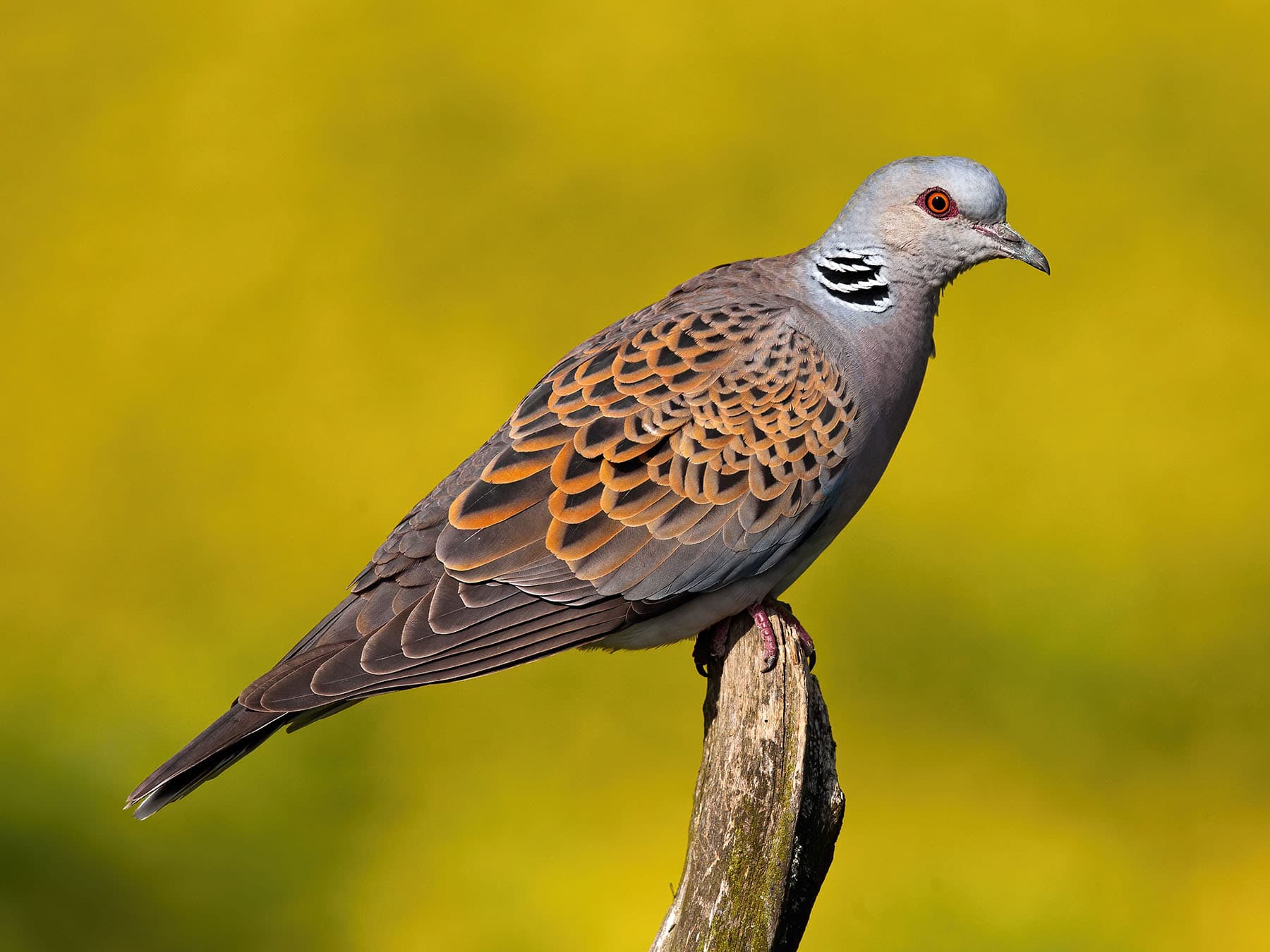
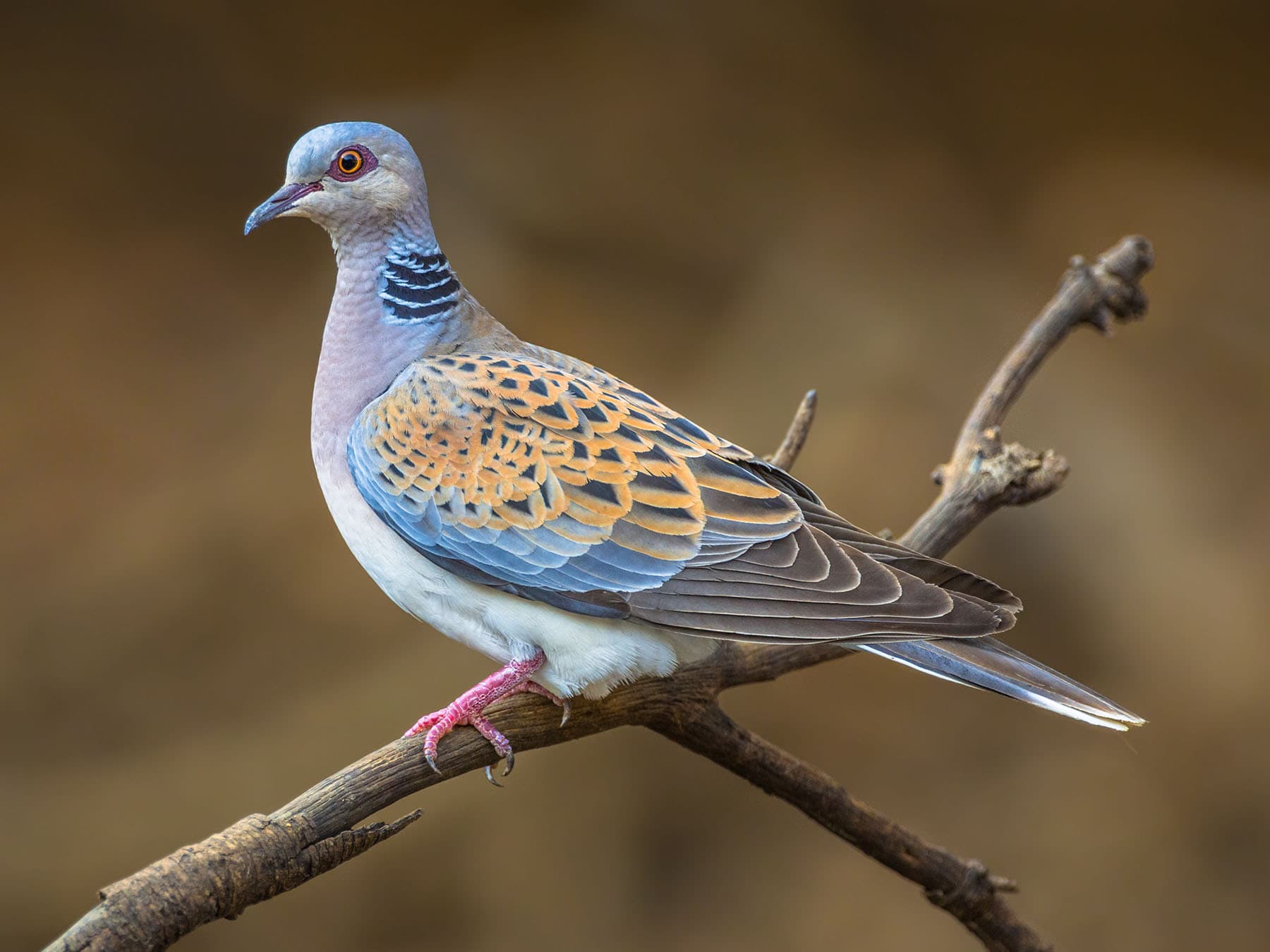
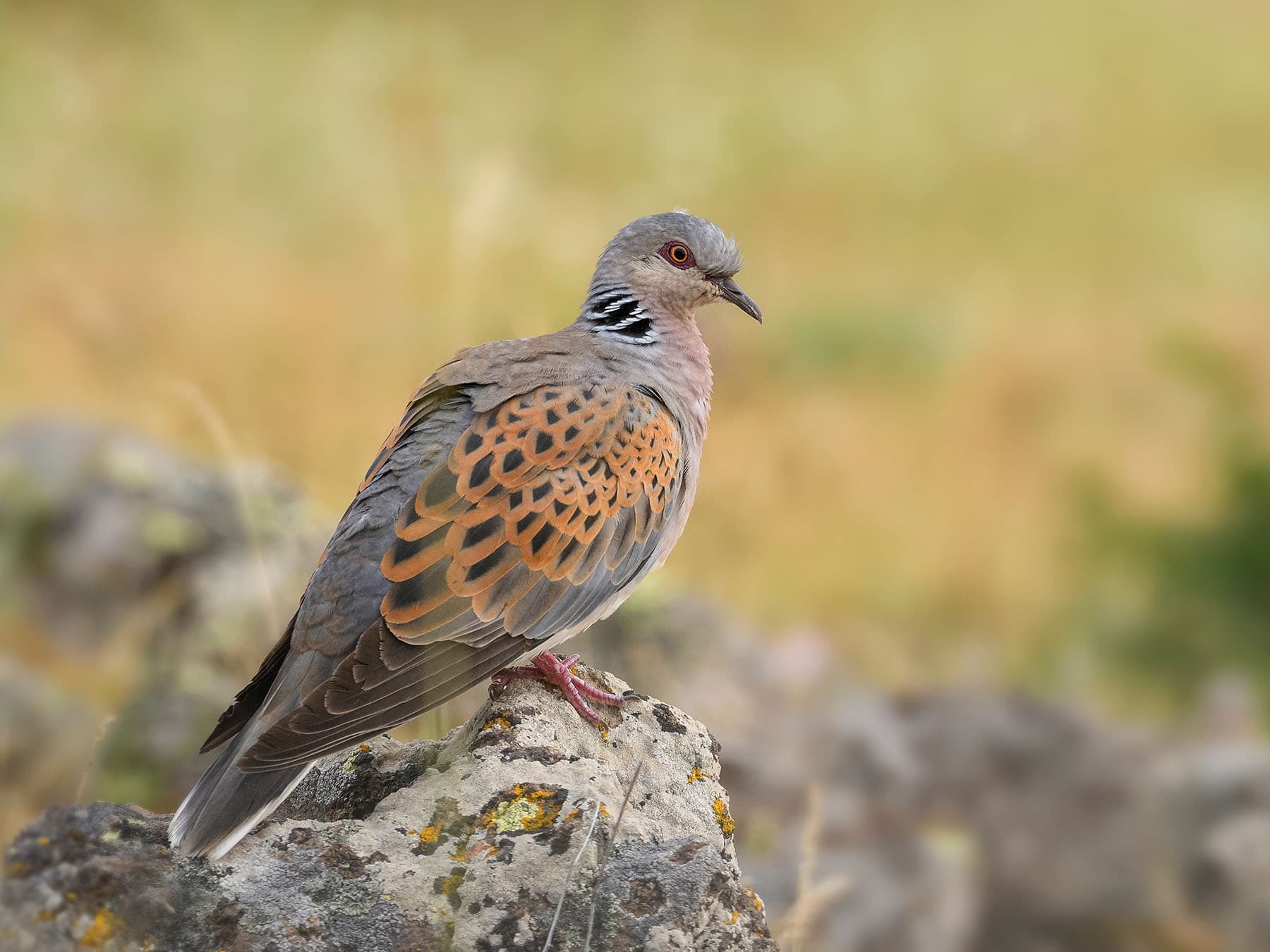
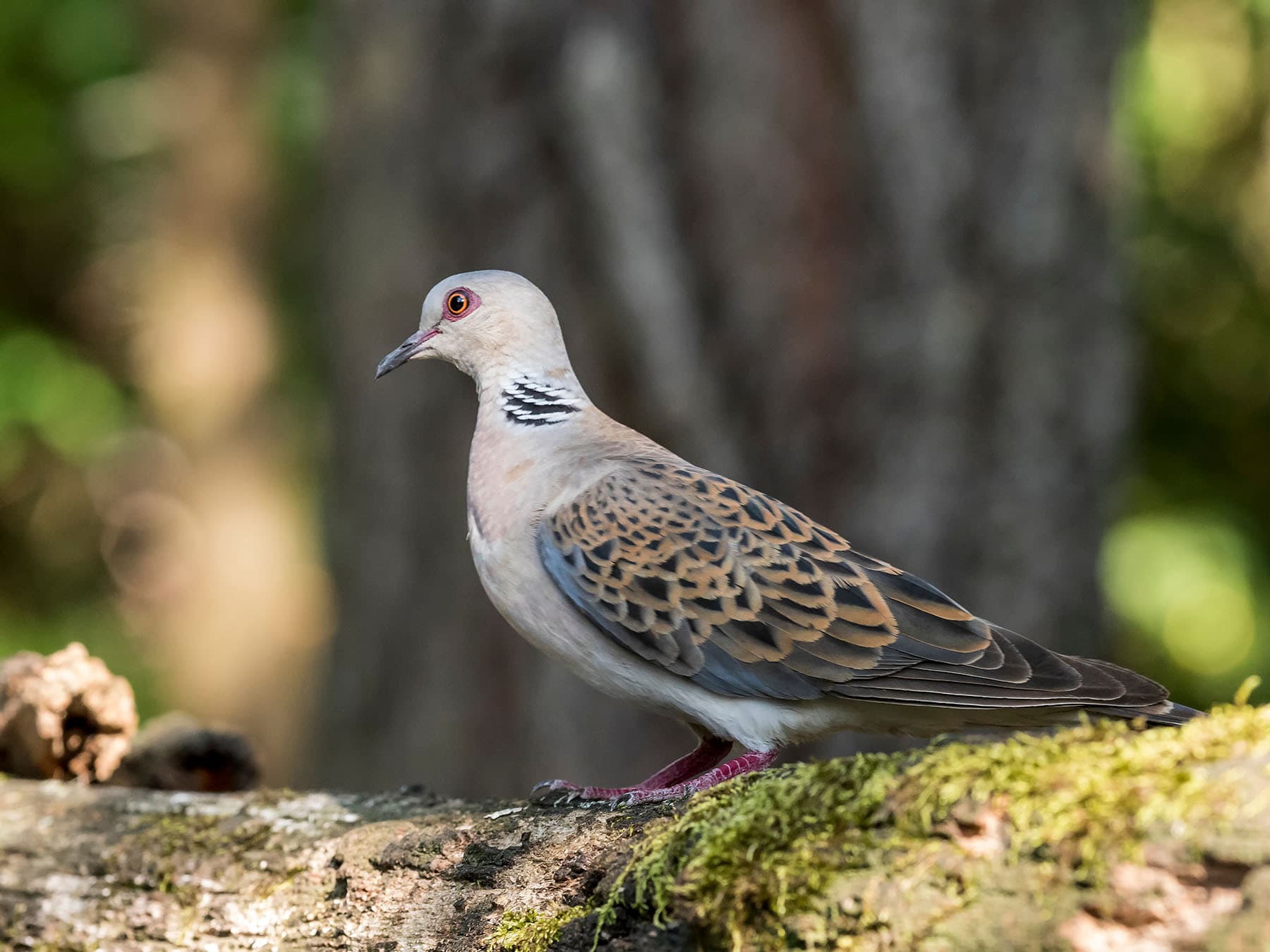
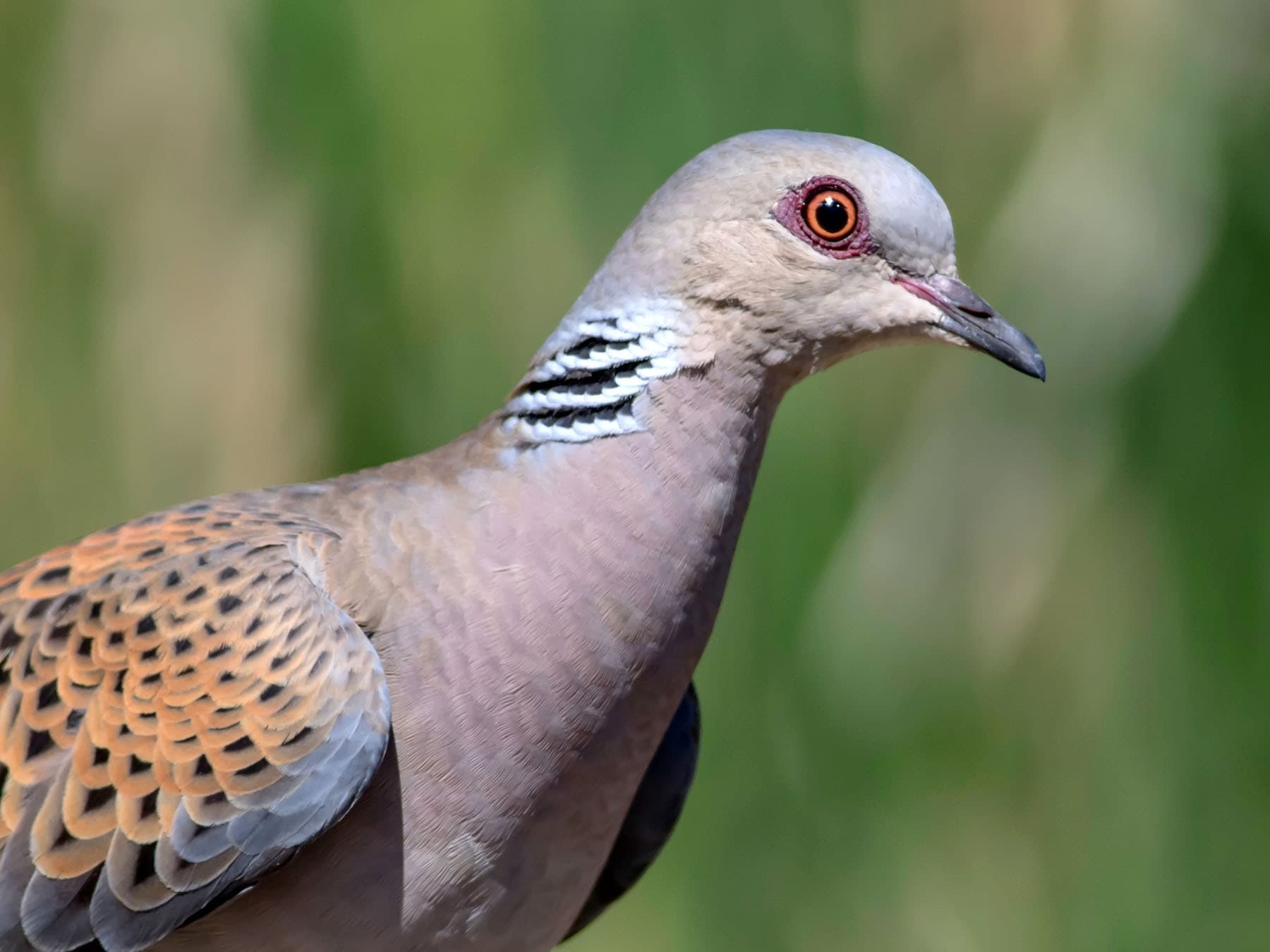
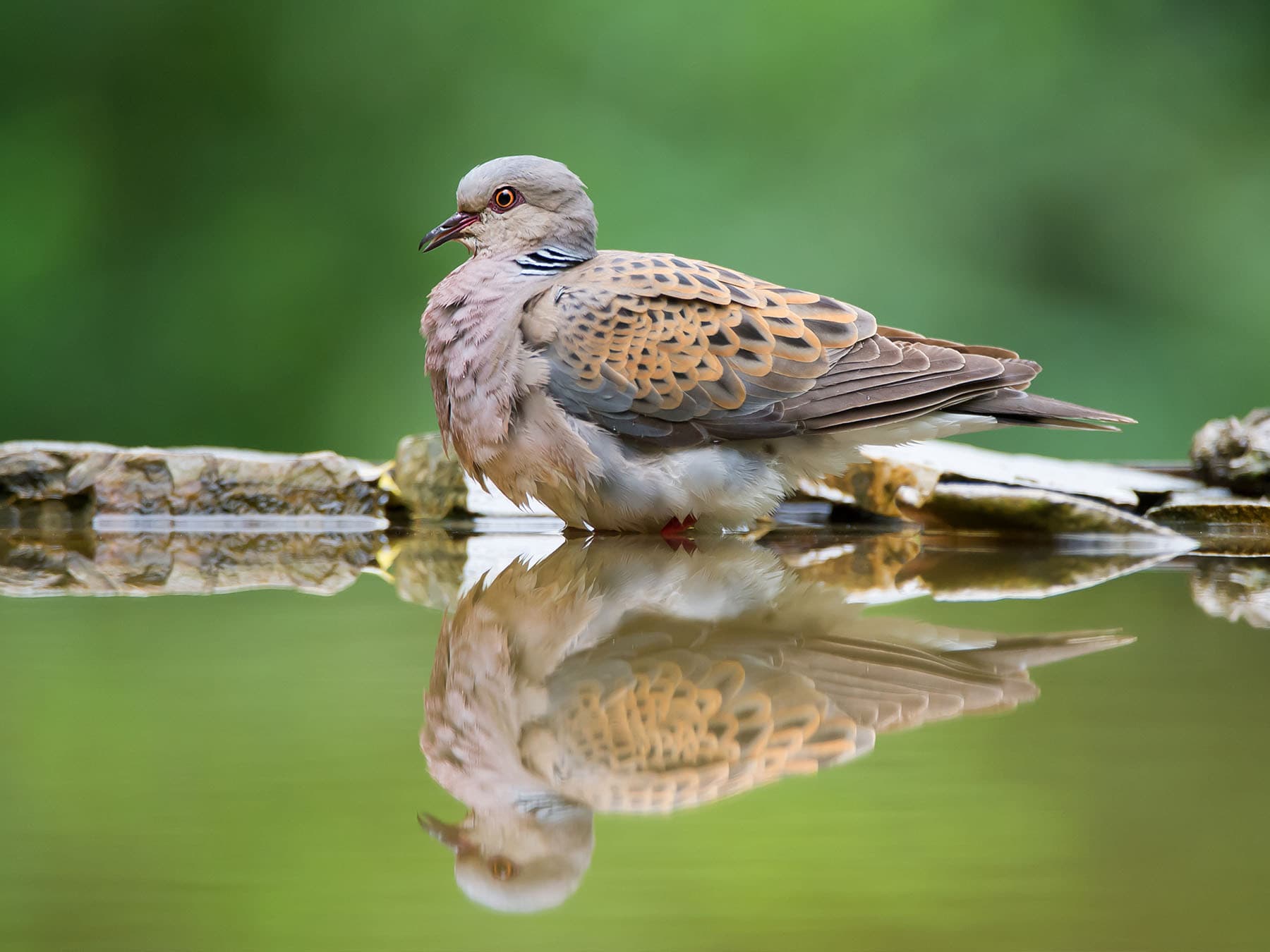
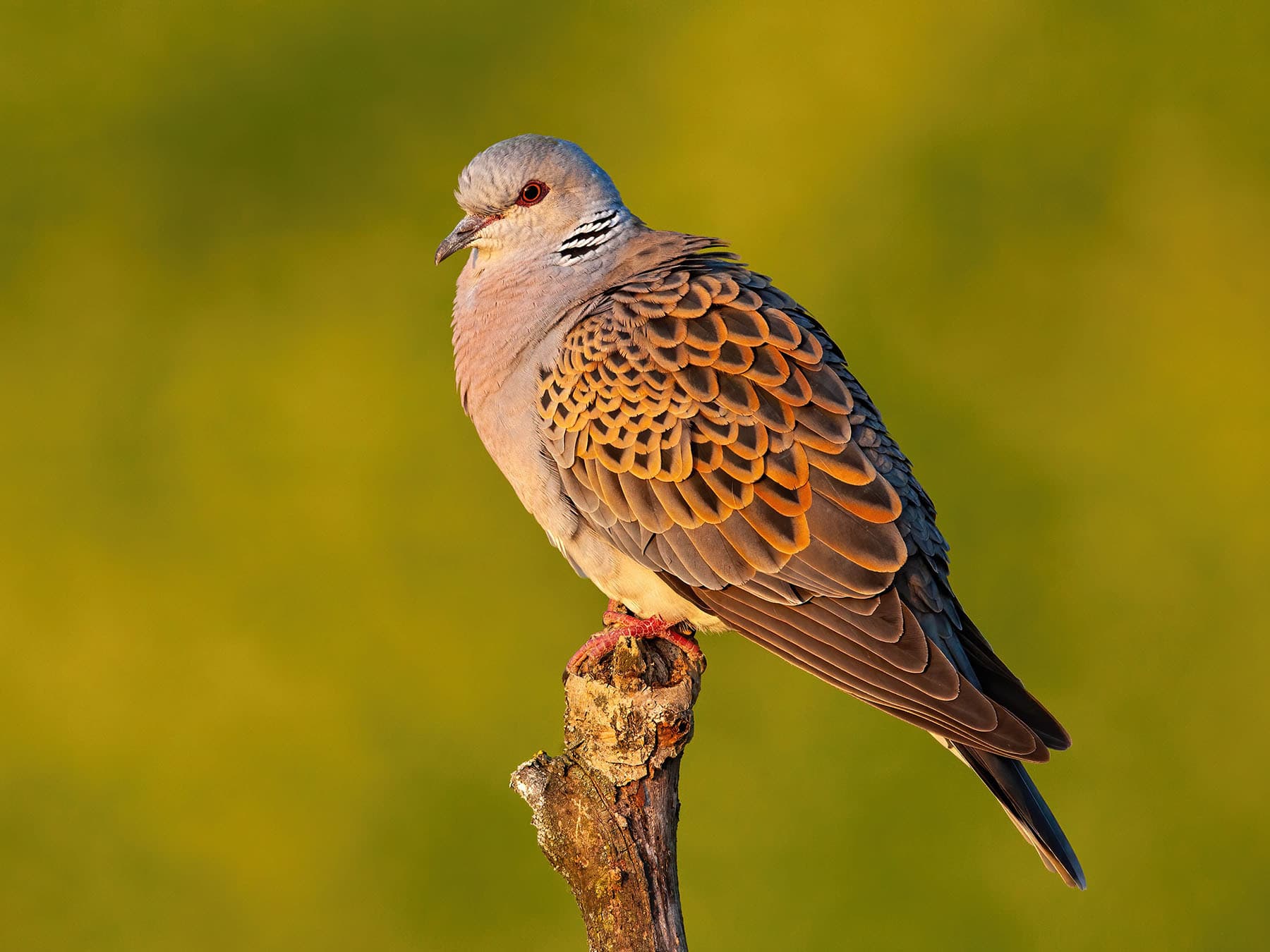
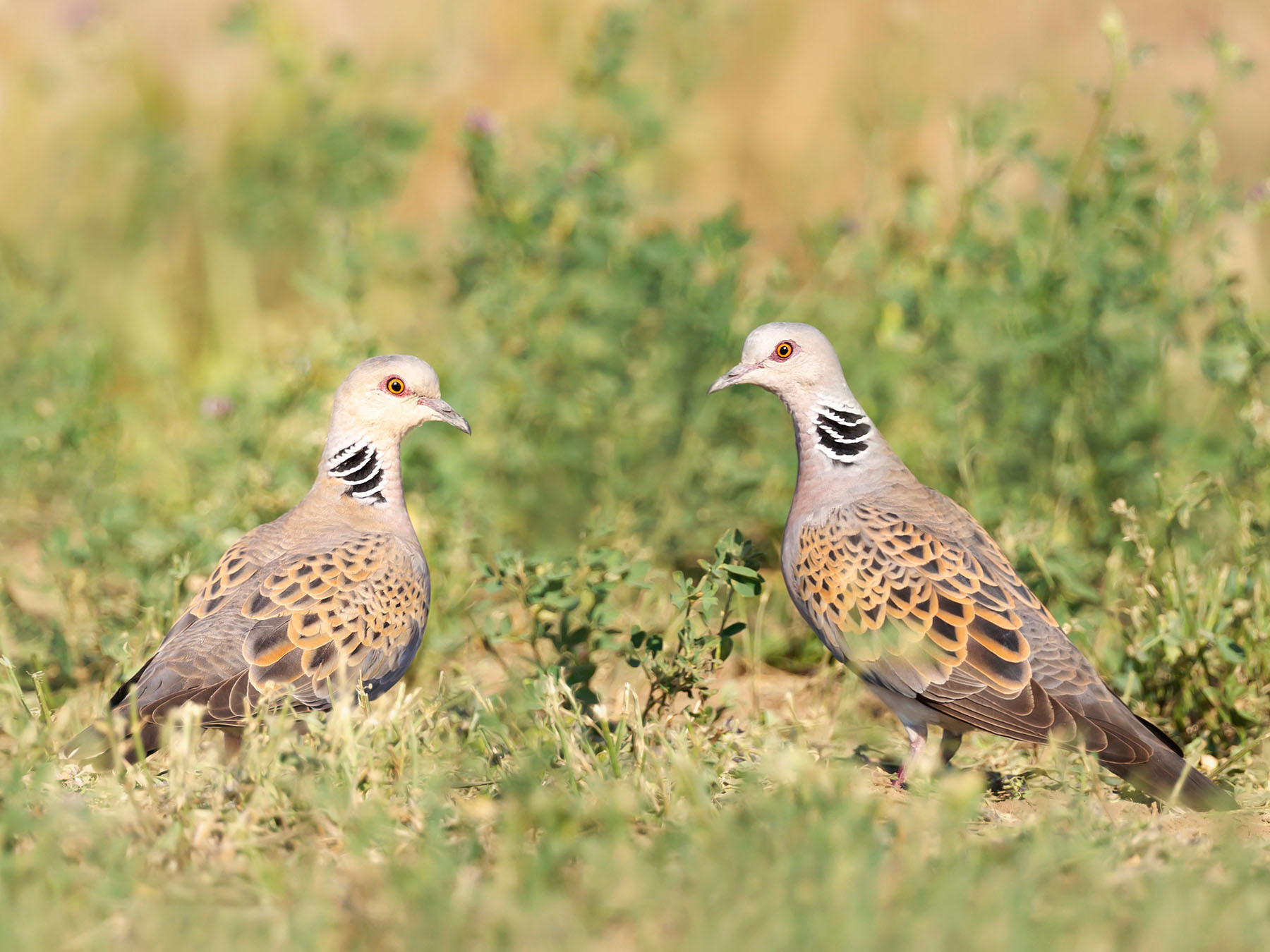
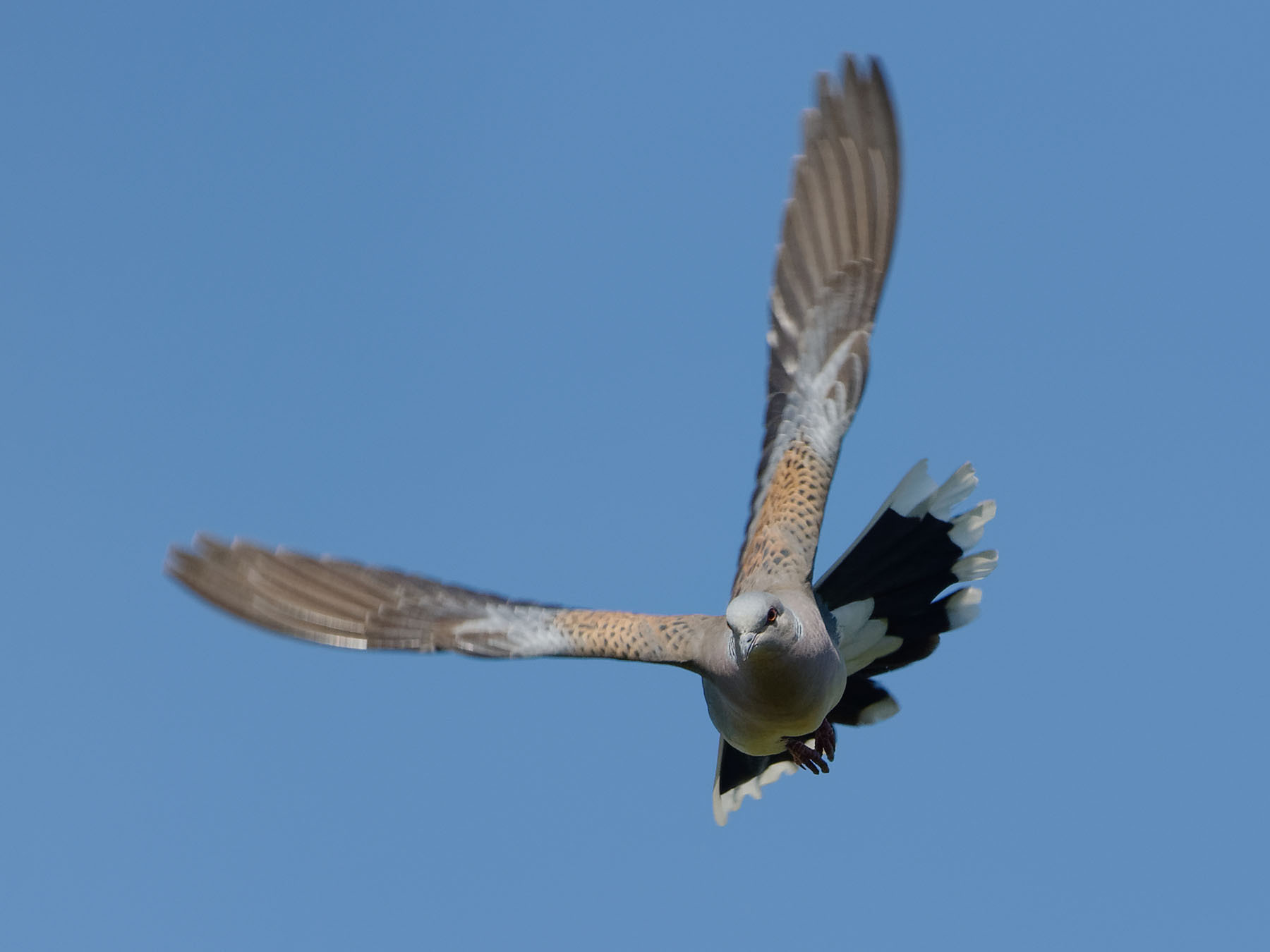
Turtle Doves have patches of distinctive black and white bars on each side of their necks. The feathers on their upper wings are a warm orange colour, and each has a black centre. In flight, their dark tails show a bold white border.
Their wing coverts are blue-grey, and the flight feathers are slate grey. The head, mantle and chest are pinkish, becoming white towards the belly and thighs. Their eyes are red, with black pupils, and their legs are purplish.
Female Turtle Doves are often paler and duller than males, although it is difficult to distinguish between the sexes on appearance alone.
Juvenile Turtle Doves are duller still, and they may not have the spotted wings and prominent neck markings of the adults.
How big are Turtle Doves?
The Turtle Dove is the smallest dove species in the UK. It is slightly smaller and slimmer than the more common Collared Dove.
Length
Turtle Doves measure 27 to 29 centimetres long. They have short legs and fairly long tails, typical of birds in their family.
Weight
They are stout birds which weigh between 99 and 170 grams. Females are slightly lighter than males on average.
Wingspan
Turtle Doves are fast-flying birds with a wingspan of 47 to 53 centimetres.
Its size
Adults- Length
- 26–28 cm
- Wingspan
- 47–53 cm
- Weight
- 100–170 g
Its song and calls
The Turtle Dove song is fairly typical of its family. Listening for these birds is an effective way to locate them during their brief summer nesting season.
What sound does a Turtle Dove make?
Turtle Doves produce a mellow, rolling ‘turrr-turrr’ song. Their name may be an onomatopoeic representation of this pleasant sound.
- Song0:00 / 0:14
Recorded in Bretagne, France · May 2022
- Call0:00 / 1:28
Recorded in Hampshire, England
Rex Ashby / The British Library Board · Wikimedia Commons · CC BY 4.0
When and where to see it
OctoberLeaving
Most recorded in October
- 1. Cork0.13%
- 2. Shetland Islandsunder 0.1%
- 3. North Ayrshireunder 0.1%
- 4. Cornwallunder 0.1%
- 5. Orkney Islandsunder 0.1%
Each dot is a county, state or province: the bigger and darker, the larger the bird’s share of that place’s bird records that month. Grey dots: no regular records. The ringed point is the centre of the bird’s records this month; the arrow shows how it moved since last month, and the dashed loop its path through the year. “Arrivals” colours places where it becomes regular this month (orange) or is in its last regular month (grey). GBIF eBird Observation Dataset, 2019–2024. Map data: Natural Earth, US Census Bureau; place centres © OpenStreetMap contributors.
In your area
See when the European Turtle-dove is recorded in your county, state or province.
How often the European Turtle-dove turns up in the UK and Ireland through the year, from birdwatchers' records.
United Kingdom
Summer visitor · regularly Apr–Oct · most records in May
Ireland
Passage migrant · regularly Jun–Oct · most records in October
Show as a table
| Month | United Kingdom | Ireland |
|---|---|---|
| January | <0.001% | – |
| February | <0.001% | – |
| March | – | <0.001% |
| April | 0.005% (regular) | – |
| May | 0.058% (regular) | 0.002% |
| June | 0.050% (regular) | 0.003% (regular) |
| July | 0.048% (regular) | – |
| August | 0.024% (regular) | – |
| September | 0.011% (regular) | 0.015% (regular) |
| October | 0.003% (regular) | 0.020% (regular) |
| November | <0.001% | – |
| December | <0.001% | – |
Recorded regularly in
Worldwide: recorded regularly in 71 countries
Countries where it was recorded in at least 3 of the 6 years 2019–2024. Linked countries have their own bird list.
Europe (40)
- Albania
- Austria
- Belarus
- Belgium
- Bosnia & Herzegovina
- Bulgaria
- Croatia
- Czechia
- Denmark
- Estonia
- Finland
- France
- Germany
- Gibraltar
- Greece
- Hungary
- Ireland
- Italy
- Kosovo
- Latvia
- Lithuania
- Luxembourg
- Malta
- Moldova
- Montenegro
- Netherlands
- North Macedonia
- Norway
- Poland
- Portugal
- Romania
- Russia
- Serbia
- Slovakia
- Slovenia
- Spain
- Sweden
- Switzerland
- Ukraine
- United Kingdom
Asia (22)
- Armenia
- Azerbaijan
- Bahrain
- China
- Cyprus
- Georgia
- Iran
- Iraq
- Israel
- Jordan
- Kazakhstan
- Kuwait
- Kyrgyzstan
- Lebanon
- Oman
- Palestinian Territories
- Qatar
- Saudi Arabia
- Tajikistan
- Turkey
- United Arab Emirates
- Uzbekistan
Data: EOD – eBird Observation Dataset (Cornell Lab of Ornithology), accessed via GBIF.org, CC BY 4.0. Records from 2019–2024, aggregated and filtered by Birdfact. How these lists are made
Turtle Doves have a wide but disjointed distribution in the Northern Hemisphere. Range contractions in the United Kingdom are a grave concern to conservationists and bird watchers.
What is the habitat of a Turtle Dove?
Turtle Doves are most common along woodland edges, tall scrub and large hedgerows in lowland areas where they nest. They feed in nearby weedy areas and arable land. These birds do not breed in towns and gardens and generally avoid continuous forest habitats.
What is the range of a Turtle Dove?
The Turtle Dove range in the UK has shrunk considerably, and the species is now largely confined to the South and east of England.
Despite their limited UK range, these birds have a fairly wide distribution that includes a summer breeding range in Southern and Central Europe, Western and Central Asia, and North Africa. They overwinter in Central Africa, south of the Sahara Desert.
Where do Turtle Doves live?
Turtle Doves spend most of their lives in trees, although they descend to the ground to search for food.
How rare are Turtle Doves?
Turtle Doves have become increasingly rare in the United Kingdom, and there are justifiable fears that the species may become locally extinct. Their population has declined by an estimated 98% since the 1970s, and there may be as few as 2100 returning pairs.
Where can you see Turtle Doves in the UK?
The Turtle Dove is a rather elusive species that prefers to remain hidden from view. Most arrive in April and depart by late August, so there is a brief window to see these migratory birds.
Look (and listen) for them along woodland edges, large hedgerows, and adjacent weedy fields in East Anglia and the South-east.
Migration
Turtle Doves are the only migratory dove in the United Kingdom. Read on to learn about their impressive annual migration.
Do Turtle Doves migrate?
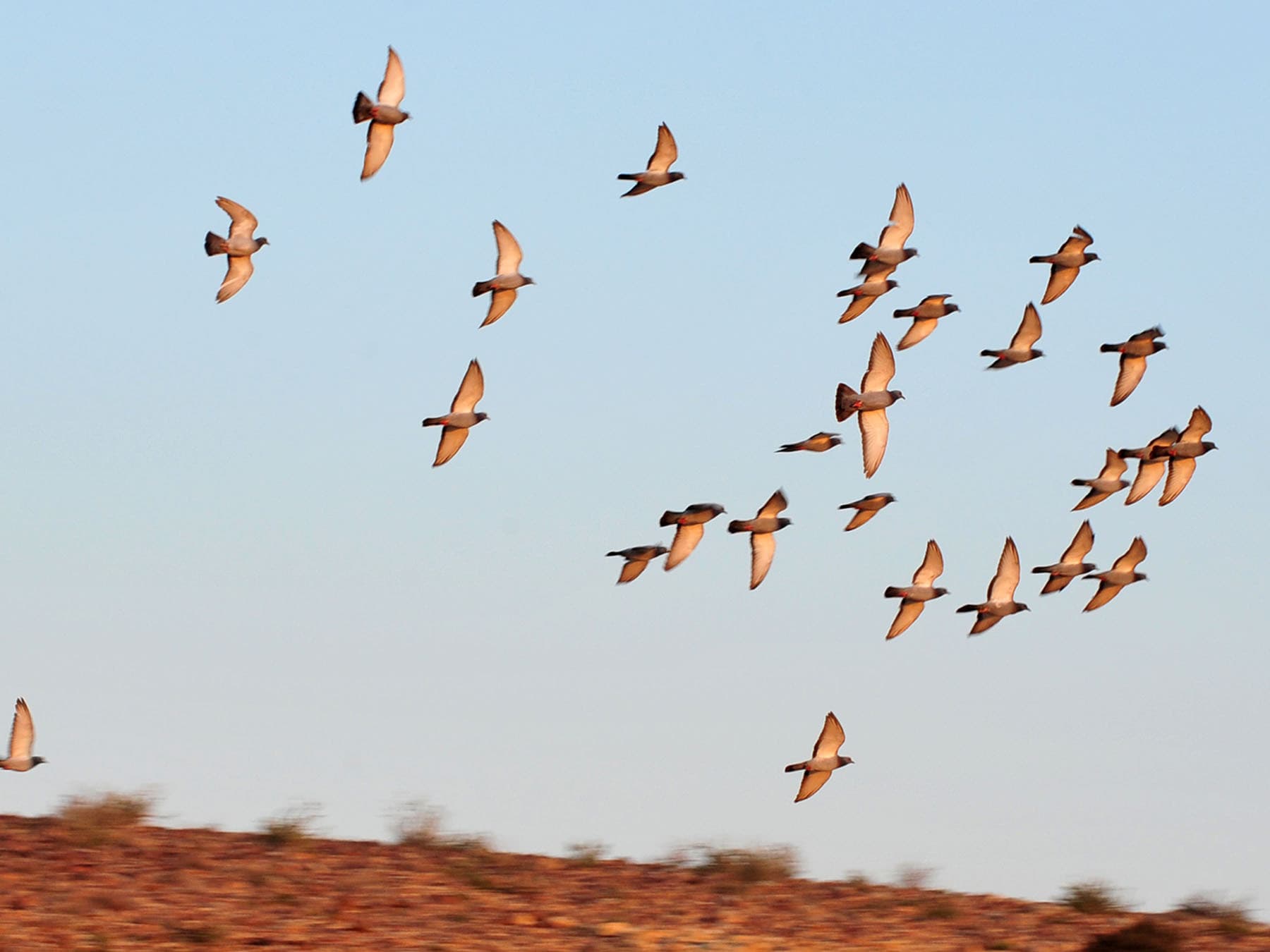
Turtle Doves are long distances migrants that spend the winter in Sub-saharan Africa and return to nest in the UK in spring.
In a pioneering study, researchers attached a satellite transmitter to a male specimen and tracked his migration to the West African country of Mali and back, an impressive journey of over 11,000 kilometres!
Tips for seeing it
- Listen for their soft, purring 'turr-turr' call in woodland edges and farmland
- Look for them feeding on the ground in open areas near trees
- Observe their courtship flights in late spring and early summer
- In the UK, visit nature reserves in southern and eastern England during the summer months
What it eats
These omnivorous birds find most of their food on the ground. Continue reading to learn more about the Turtle Dove diet.
What do Turtle Doves eat?
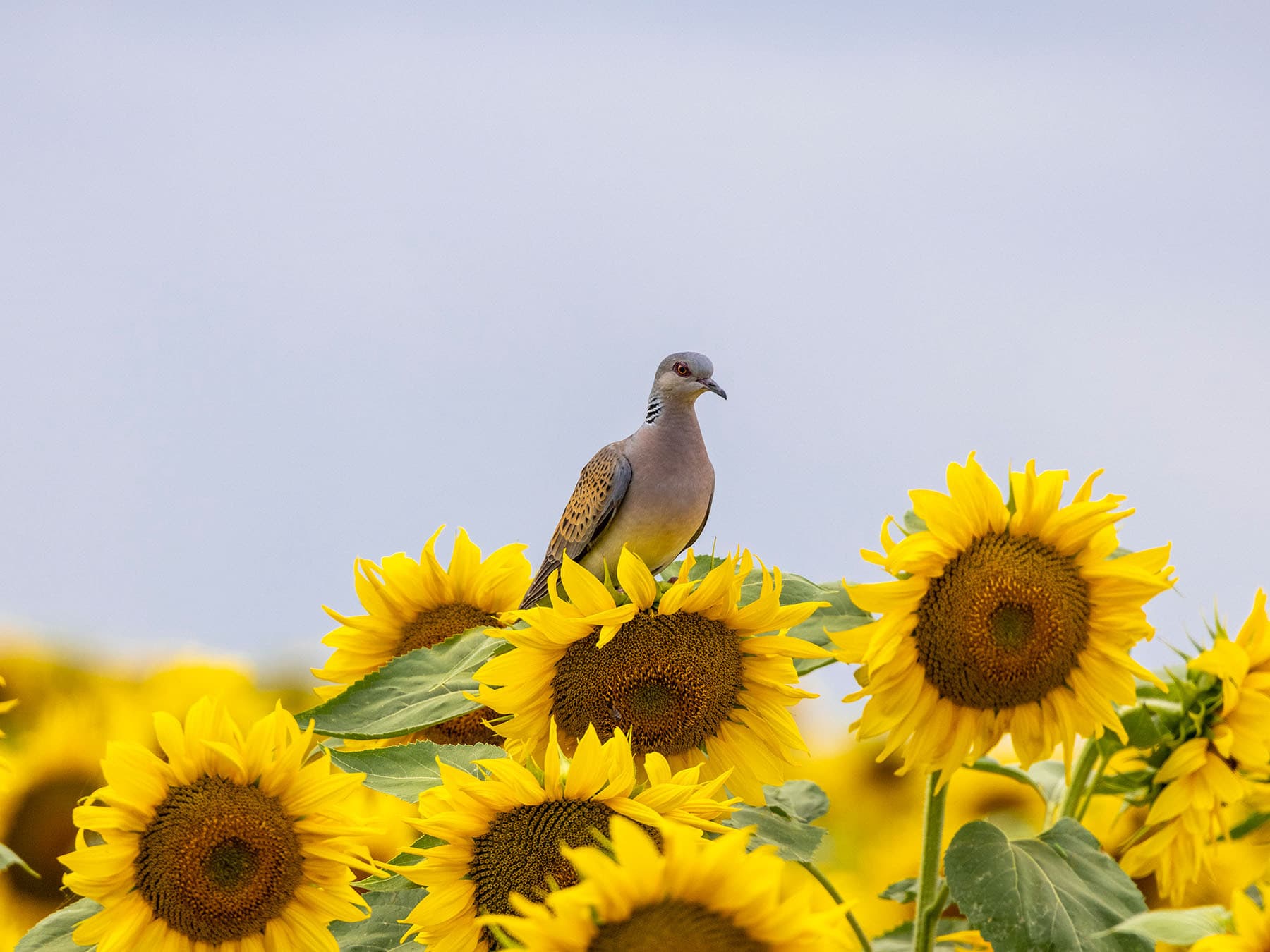
Turtle Doves eat seeds and fruits from various weeds and cereal grasses. They also supplement their diet with small invertebrates like worms, insects, and snails.
The following seed plants are important food sources for Turtle Doves in the UK:
- Setaria
- Fumitory
- Chickweed
- Rapeseed
- Vetch
- White clover
What do baby Turtle Doves eat?
Adult Turtle Doves feed their young by regurgitating a liquid substance known as pigeon milk. This nutritious food is high in protein and fat and stored in the crop.
Once fledged, the young birds remain close to their nests for the first few weeks, which is why an abundant source of seeds is vital for breeding success.
Nesting and breeding
These threatened birds return to nest in the UK each year between April and September. They may have two or three broods during this time. Continue reading to learn more about Turtle Dove nesting in the UK.
Where do Turtle Doves nest?
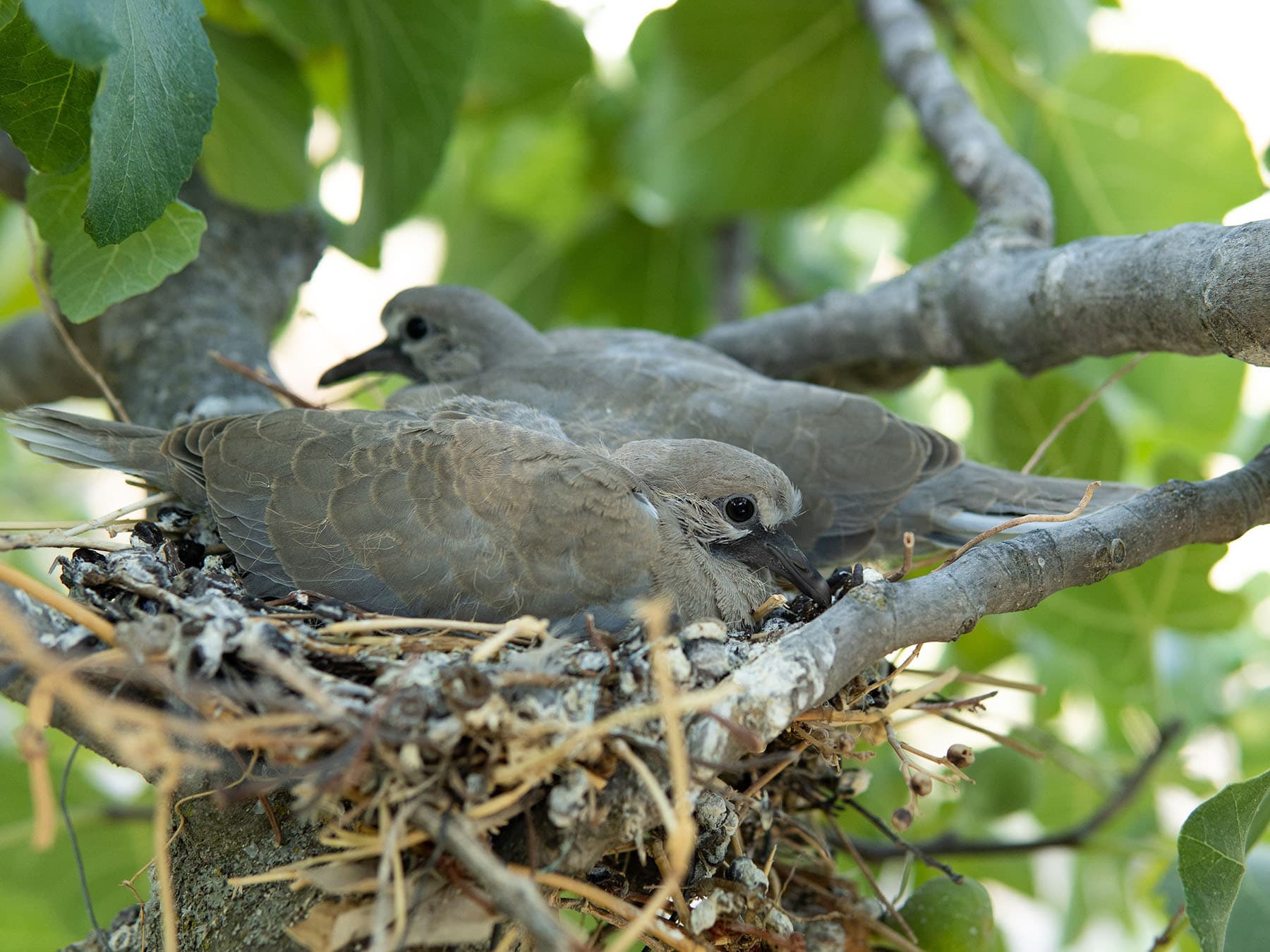
Turtle Doves nest in the Southeast of England and large parts of Europe, Western and Central Asia, and North Africa. They build their flimsy nests among the branches of thorny plants, climbers, and other vegetation.
What do Turtle Dove eggs look like?
Turtle Doves lay two glossy white eggs, each measuring approximately 29 millimetres long and 22 millimetres wide.
Do Turtle Doves mate for life?
Turtle Doves are monogamous and may pair for life.
Behaviour
Turtle Doves are often seen in pairs. They are a symbol of love, and the gentle coo-ing and nodding display of the male have inspired poets and artists throughout modern history.
Are Turtle Doves aggressive?
Turtle Doves are better known for being affectionate than aggressive.
Where do Turtle Doves sleep at night?
Turtle Doves roost at night among the branches of trees.
Lifespan and predators
Turtle Doves are under threat from habitat loss and hunting in the United Kingdom and elsewhere across their range. Continue reading to learn more about their lifespan and conservation status.
How long do Turtle Doves live?
Turtle Doves have an estimated maximum lifespan of about 20 years. The oldest recorded specimens lived to 12 and 13, although their average lifespan is just two years.
What are the predators of Turtle Doves?
Humans are one of the Turtle Doves' most serious predators. These birds remain popular with hunters despite their official ‘Vulnerable’ status.
Turtle Doves probably have a diverse array of predators over their range, with different threats at different stages of their migration. Cats, foxes, and birds of prey like Sparrowhawks are all potential predators in the UK.
Are Turtle Doves protected?
In the United Kingdom, Turtle Doves are protected by the Wildlife and Countryside Act of 1981. Sadly, they are not protected in some other parts of their range, and hunting is a major threat to these migratory birds as they pass through Europe and Africa.
Are Turtle Doves endangered?
Turtle doves are not officially endangered, despite local declines in the UK. The greater European population has also declined by an estimated 30% in the last 15 years.
The species is on the UK red list of conservation concern and classified as a priority species. Globally, they are classified as ‘Vulnerable’ by the IUCN, which is one step behind being endangered.
Conservation
The European Turtle-dove is classified as Vulnerable due to rapid population declines. Habitat loss, changes in agricultural practices, and hunting during migration are major threats.
Conservation efforts focus on creating suitable breeding habitats and reducing hunting pressure along migration routes.
Similar birds
Often mistaken for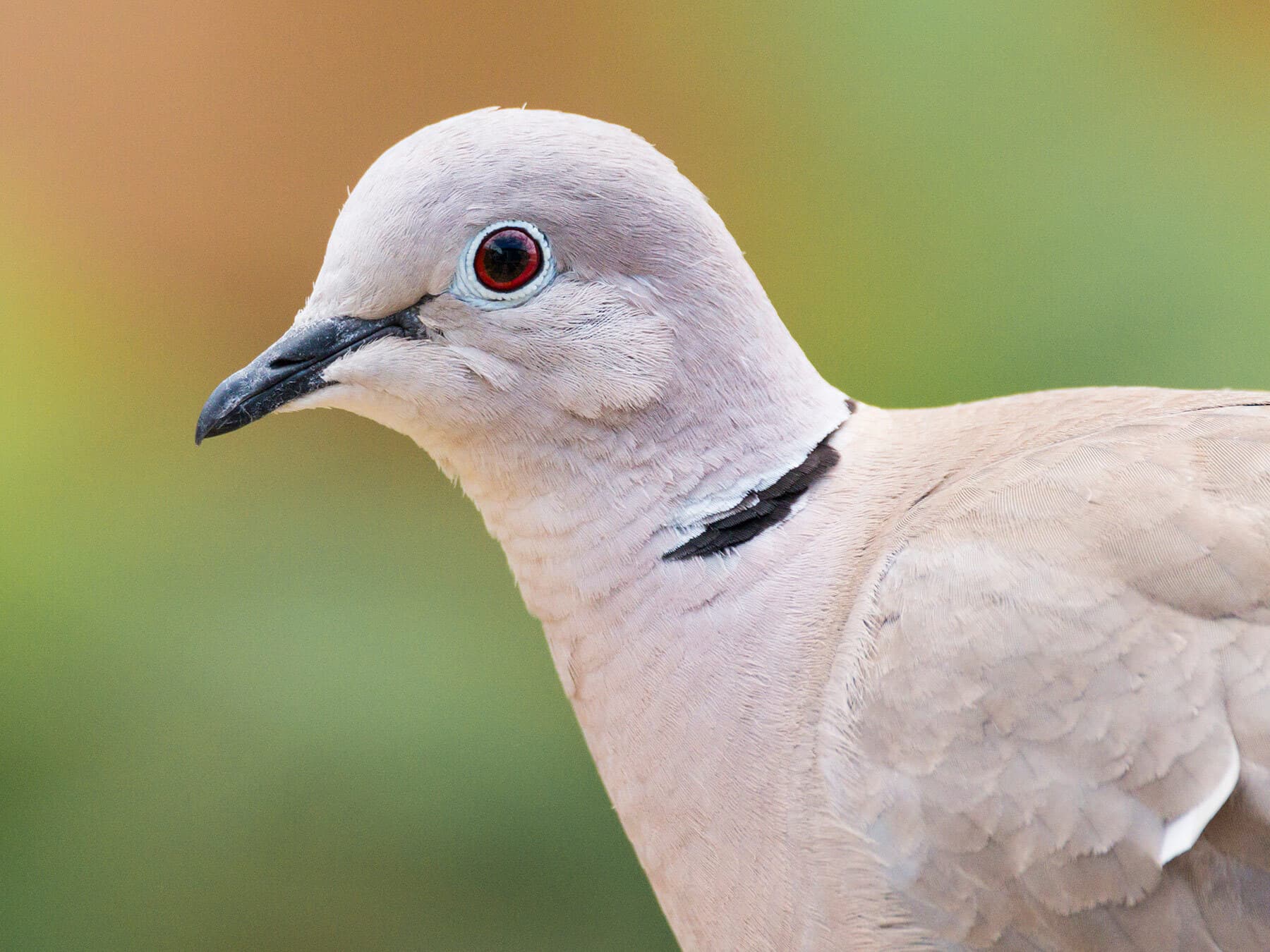
More photos
3 photos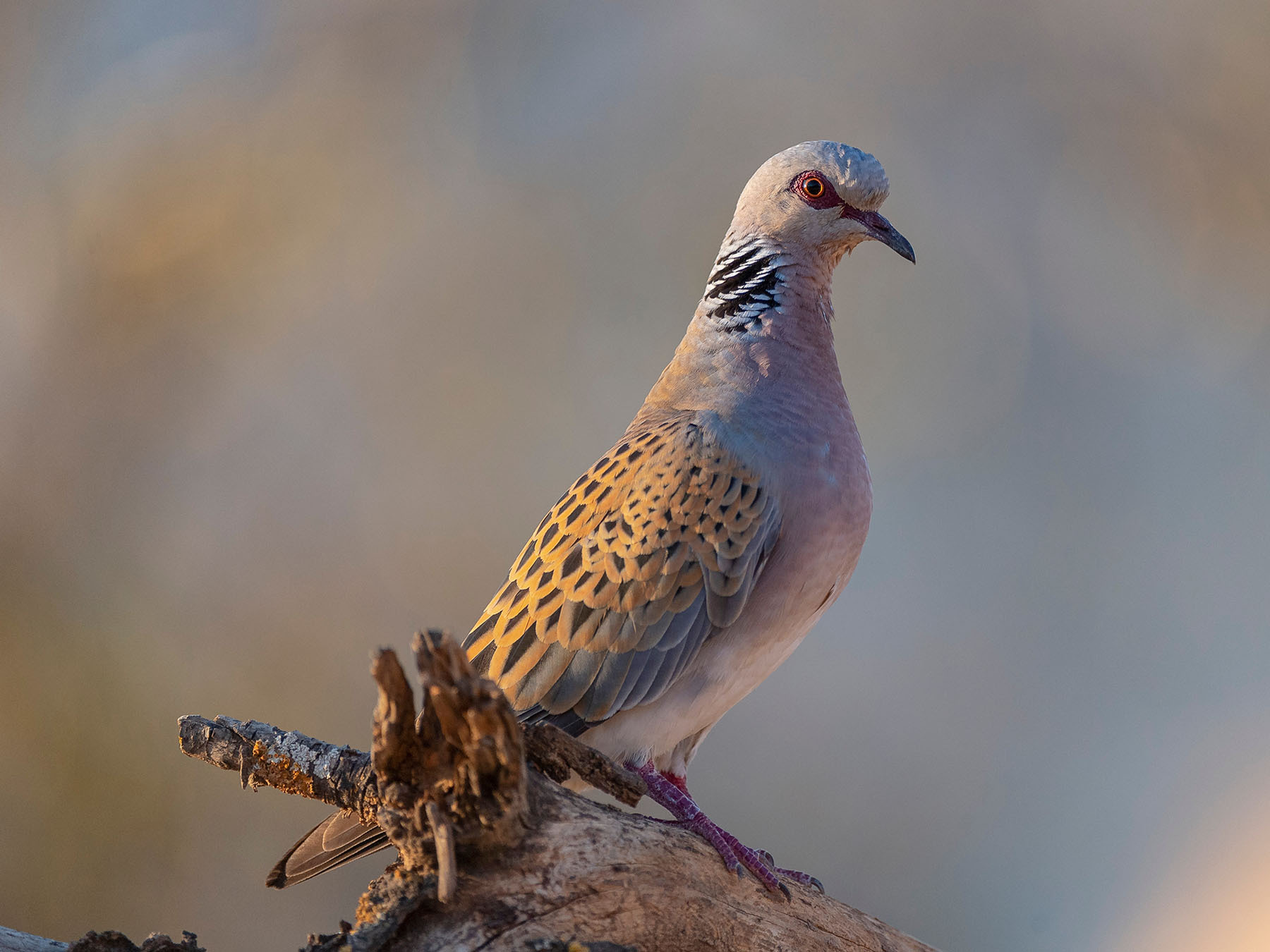
Quick facts
- Length
- 26–28 cm
- Wingspan
- 47–53 cm
- Weight
- 100–170 g
- Lifespan
- 2 years · oldest recorded 13.2 years
- Family
- Pigeons & Doves
- Migration
- Long-distance Migrant
- Global status (IUCN)
- Vulnerable
- World population
- 12,800,000 - 47,600,000 mature individuals
- Population trend
- Decreasing
- Also called
- Turtle Dove, European Turtle Dove
- Scientific name
- Streptopelia turtur
Questions
4Why are they called Turtle Doves?
Turtle Doves probably take their name for their coo-ing ‘turr-turr’ song that sounds like the word turtle. However, their common name could also be in reference to the tortoise-shell-like plumage on their wings.
Do Turtle Doves mourn?
Turtle Doves have been a symbol of love for centuries, and their habit of forming close bonds with their breeding partner may lead to speculation about their ability to mourn.
We don’t really know if these birds can mourn, although more romantic birdwatchers like to think they do.
How to attract Turtle Doves?
Turtle Doves are not common garden birds, although they may visit bird tables at properties near their preferred habitats.
However, farmers and land owners in their breeding range are encouraged to attract these birds by growing plots of cereals and other favoured food sources, limiting herbicide use, and maintaining suitable habitats like hedgerows, scrub, and shrubby woodland borders.
Are Turtle Doves a pest?
Turtle Doves are not a pest species. In fact, these birds are in rapid decline and need our active protection if they are to recover to healthy levels.
Sources
4- 1BirdLife International. 2019. Streptopelia turtur. The IUCN Red List of Threatened Species 2019: e.T22690419A154373407. Source (opens in a new tab)
- 2EBCC; RSPB; BirdLife; Statistics Netherlands
- 3BirdLife International. 2019. Streptopelia turtur. The IUCN Red List of Threatened Species 2019: e.T22690419A154373407. Source (opens in a new tab)
- 4Fransson et al., EURING list of longevity records for European birds (2010) Source (opens in a new tab)

Checked by
Nathan Cope, founder and editor
Nathan founded Birdfact and leads its writers and contributors in the UK, the US and Canada. He has watched and studied birds for more than ten years, and checks every article and species guide before it’s published.