Facts · Updated 8 Oct 2026
Bowerbird Nesting
By the Birdfact teamChecked by Nathan Cope
On this page13 sections
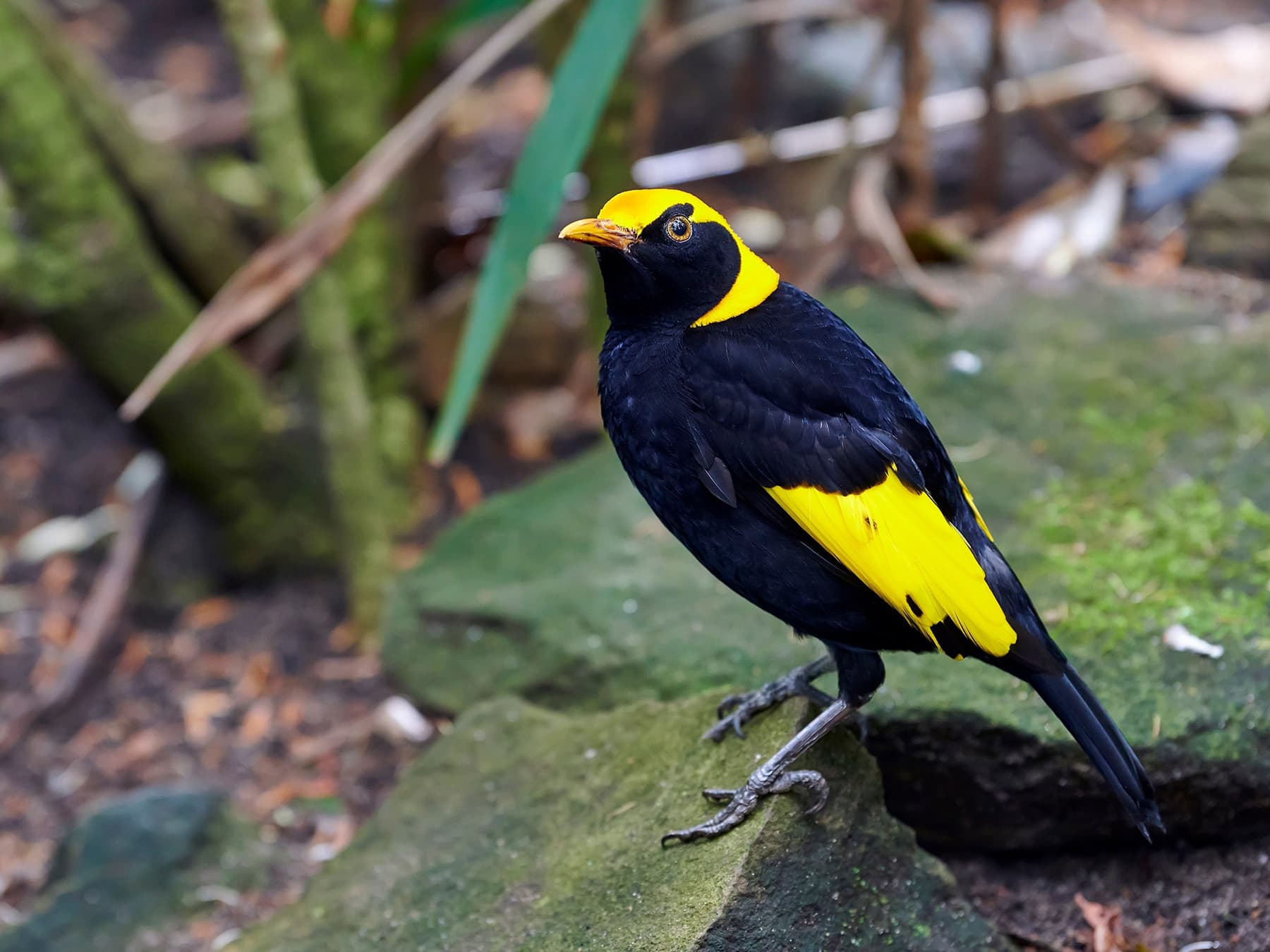
There are 27 species in the Ptilonorhynchidae family, a fascinating group of birds found only in Australia and New Guinea. Eight species of Bowerbirds occur in mainland Australia where they are mostly confined to the north and east of the continent.
Bowerbirds are best known for the behaviour of the courting males, but what about their nesting habits?
Bowerbirds are polygynous, which means one male may mate with several females in a season. The female alone is responsible for building a simple cup nest well off the ground in trees and shrubs. There she usually lays one or two eggs, which she incubates alone. The eggs hatch after about three weeks, and she feeds the chicks for up to eleven weeks before they become fully independent.
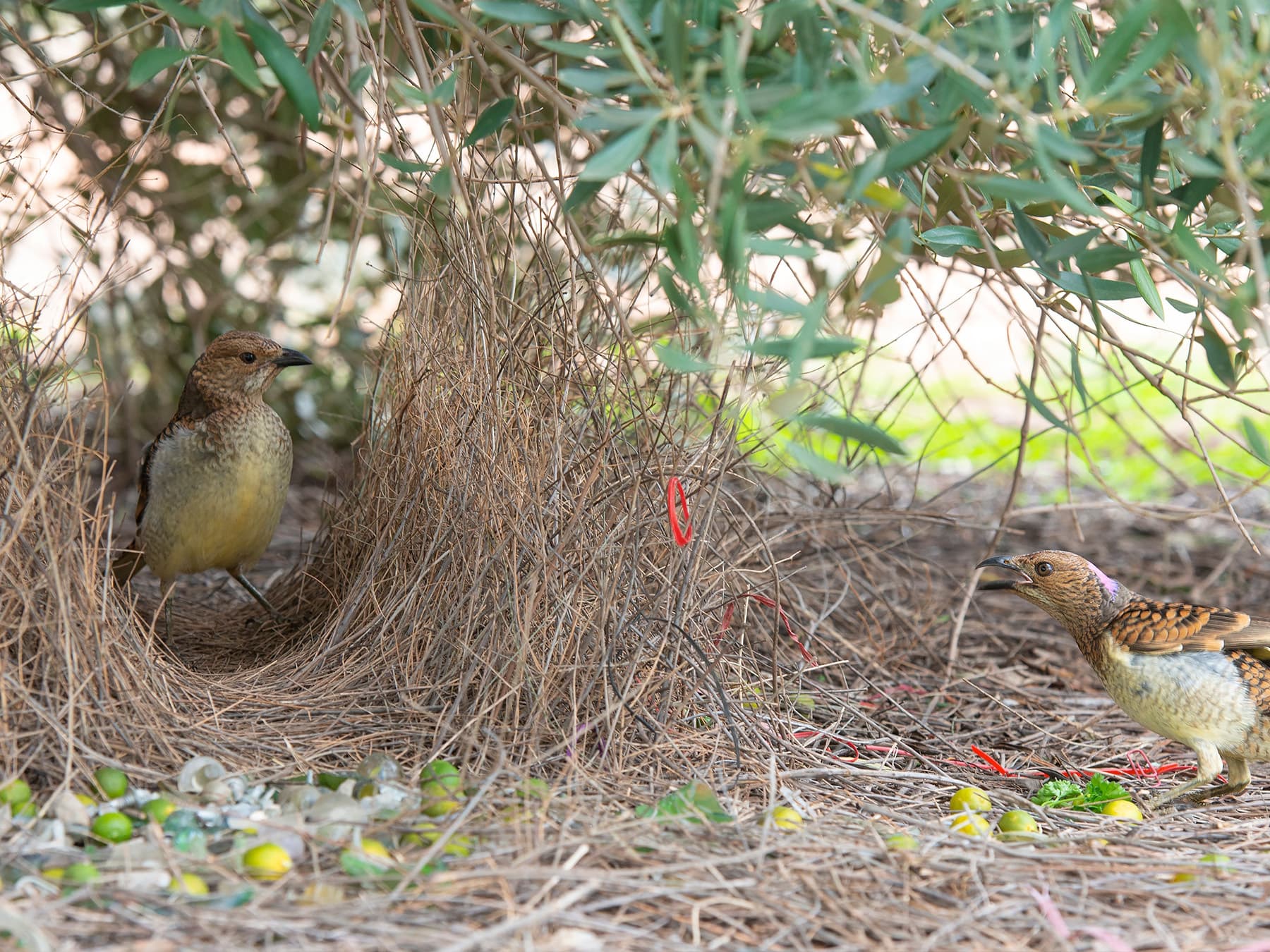
Many birdwatchers confuse the bower (Built by the male) for a nest. In fact, these intricate and fascinating structures serve the sole purpose of catching the female's eye. If she is suitably impressed, she will mate with the male and go on to raise their offspring alone.
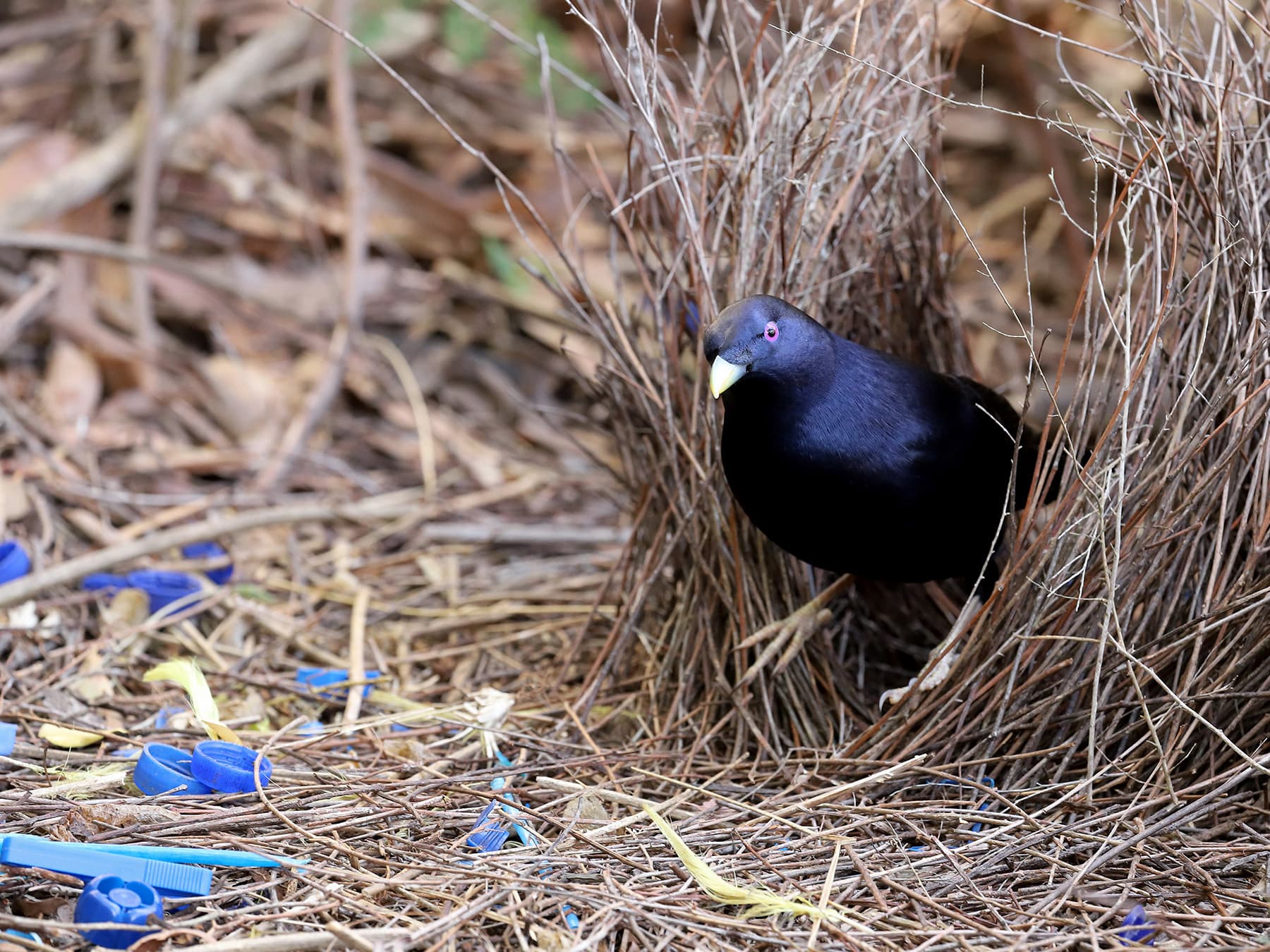
There are two types of bowers, with the avenue style being the most common. These structures consist of a parallel avenue of walls made from carefully arranged sticks. Male Bowerbirds even go one step further and decorate their masterpieces with piles of small objects.
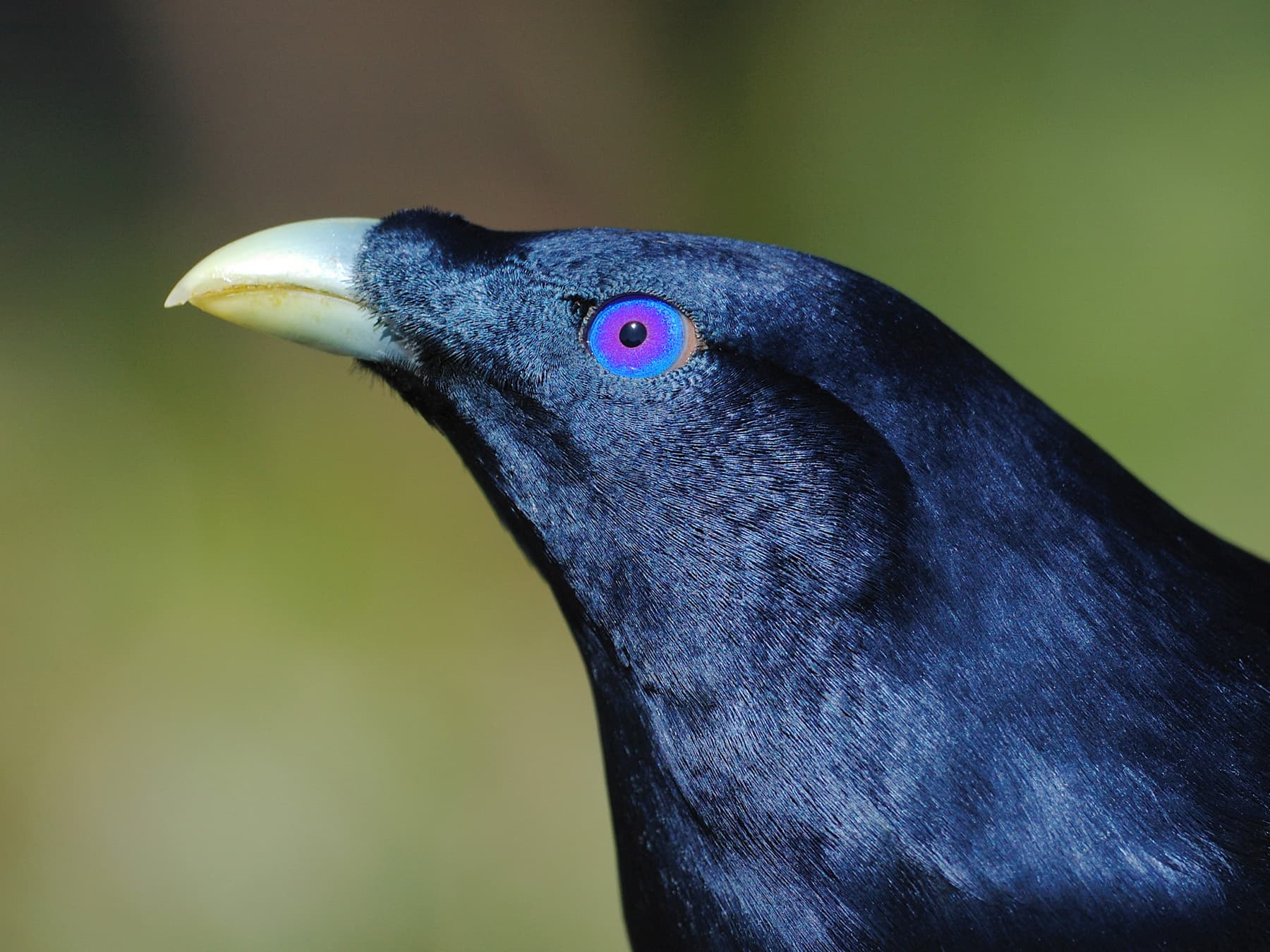
Colour vision allows them to select items of just the right shade to win the favour of the females, which varies depending on the species involved. Female Satin Bowerbirds, for example, are most attracted to blue objects, while male Tooth-billed Bowerbirds simply use green leaves.
This article covers the nesting habits of the Australian Bowerbirds.
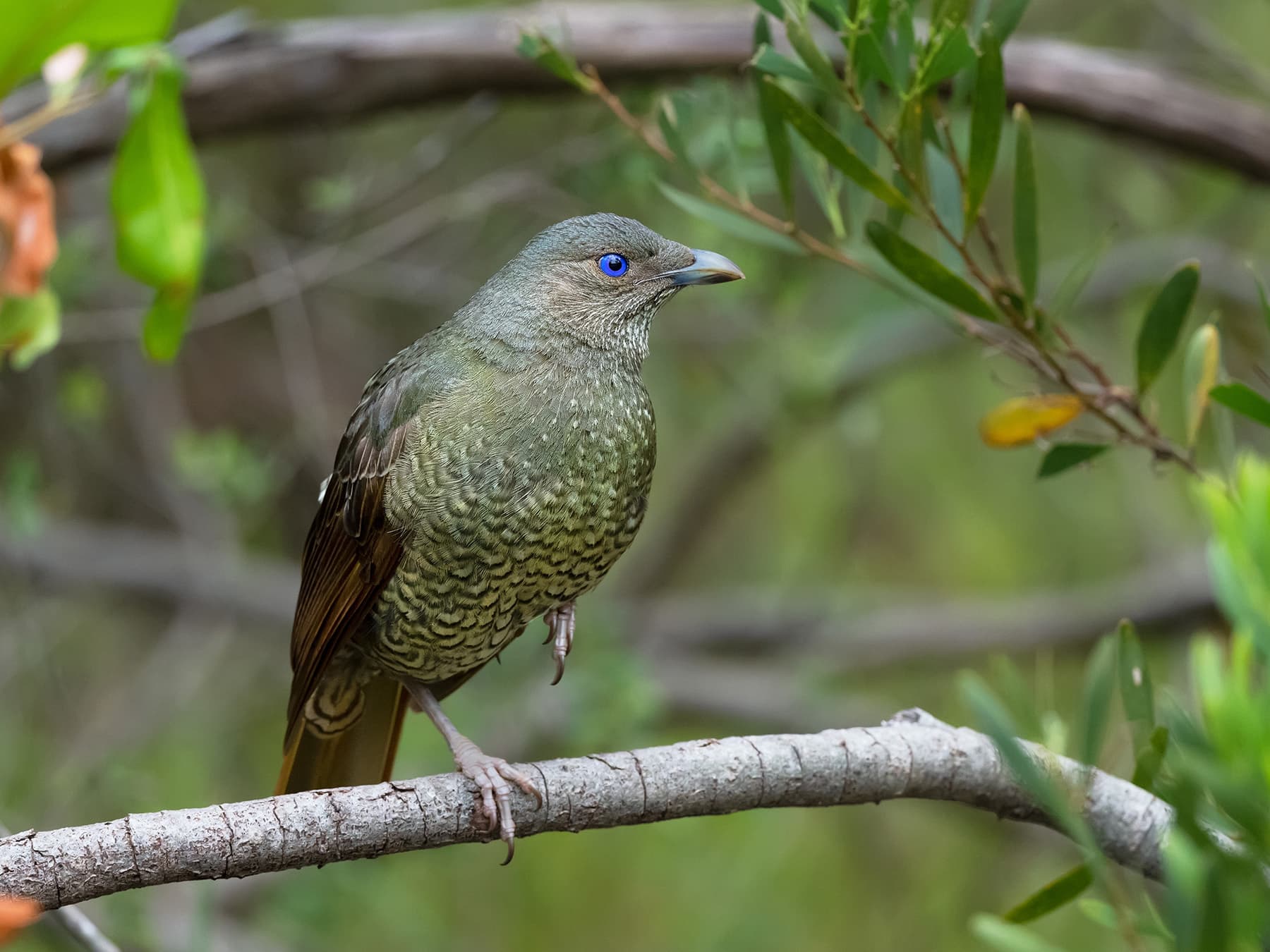
Where do bowerbirds nest?
Bowerbirds usually nest in trees and other plants. They build their nests at varying heights above the ground, depending on their species and the habitat where they live. The nest itself is often constructed in a fork or other place that provides a stable foundation.
Western Bowerbirds are unique in that they occupy the Outback of the Northern Territory and Western Australia, where they usually nest in shrubs and small trees just two to six meters from the ground.
The remaining species live in wetter environments and often nest in much taller vegetation.
Rainforest species like the Regent Bowerbird have nested as high as 31 meters above the ground, and the Satin Bowerbird will build its nest at heights of up to 40 meters.
The nest
Female Bowerbirds construct a simple saucer or cup-shaped nest of sticks.
This inner cup prevents the eggs from falling through and makes a more comfortable and better-insulated surface for the growing chicks and brooding mother.
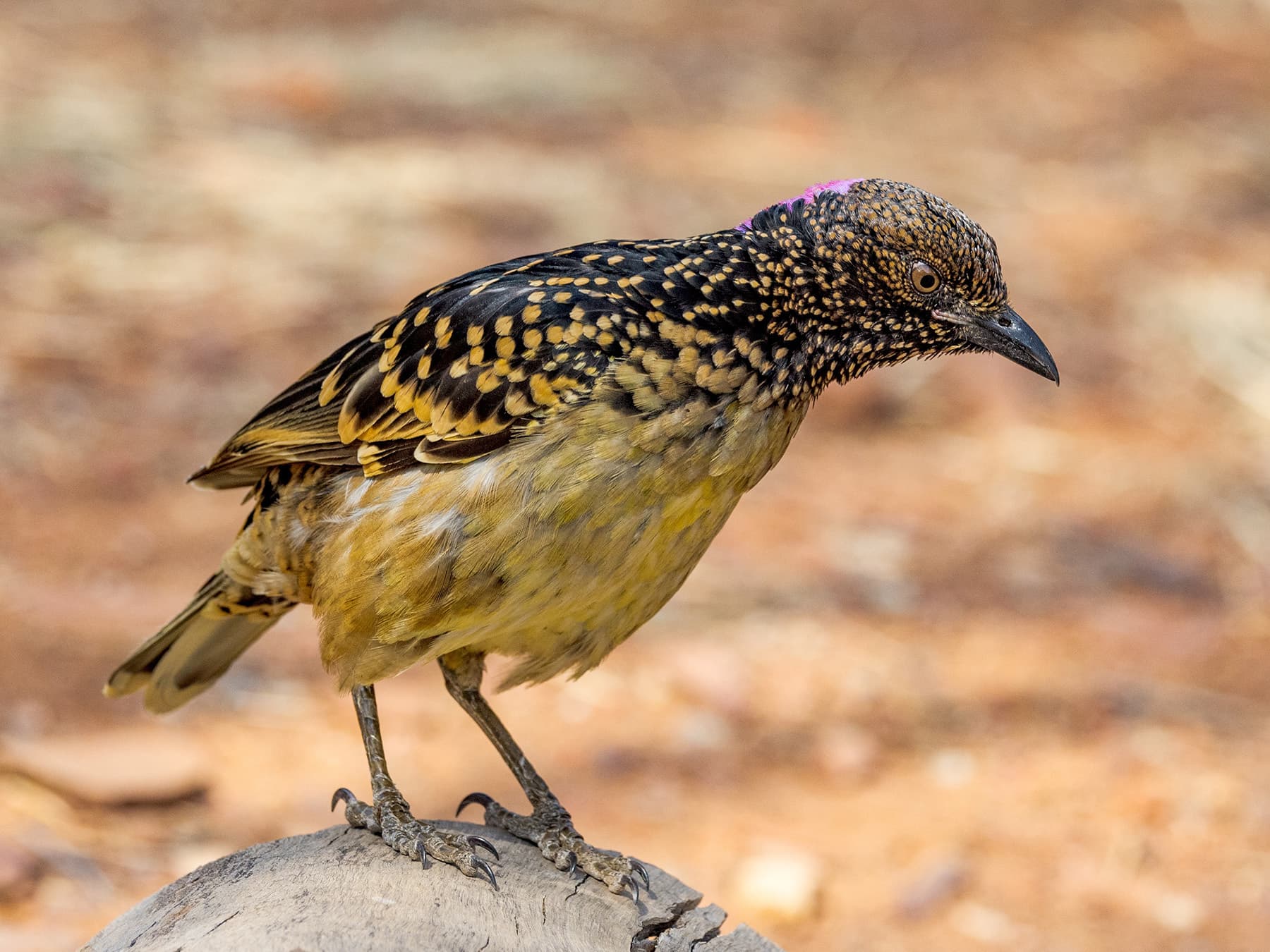
Nest size
While male Bowerbirds may build elaborate structures that can exceed two meters in height, the females’ nest is a far less extravagant structure, being just large enough to safely support the incubating mother and her one to three growing chicks.
Nesting season
Most Bowerbirds breed in the warmer months of the year, with a peak in the spring. Some species are less rigid in their timing than others, however, like the Great Bowerbird of Northern Australia which has been recorded nesting in every month except April and June.
Continue reading to learn when each of the 8 Australian Bowerbird species nest:
- Regent Bowerbird (Sericulus chrysocephalus): September - February
- Golden Bowerbird (Amblyornis newtoniana): September - February
- Satin Bowerbird (Ptilonorhynchus violaceus): August - February
- Spotted Bowerbird (Chlamydera maculata): July - March
- Great Bowerbird (Chlamydera nuchalis): July - March
- Fawn-breasted Bowerbird (Chlamydera cerviniventris): September - December
- Western Bowerbird (Chlamydera guttata): July - March
- Tooth-billed Bowerbird (Scenopoeetes dentirostris): September - January
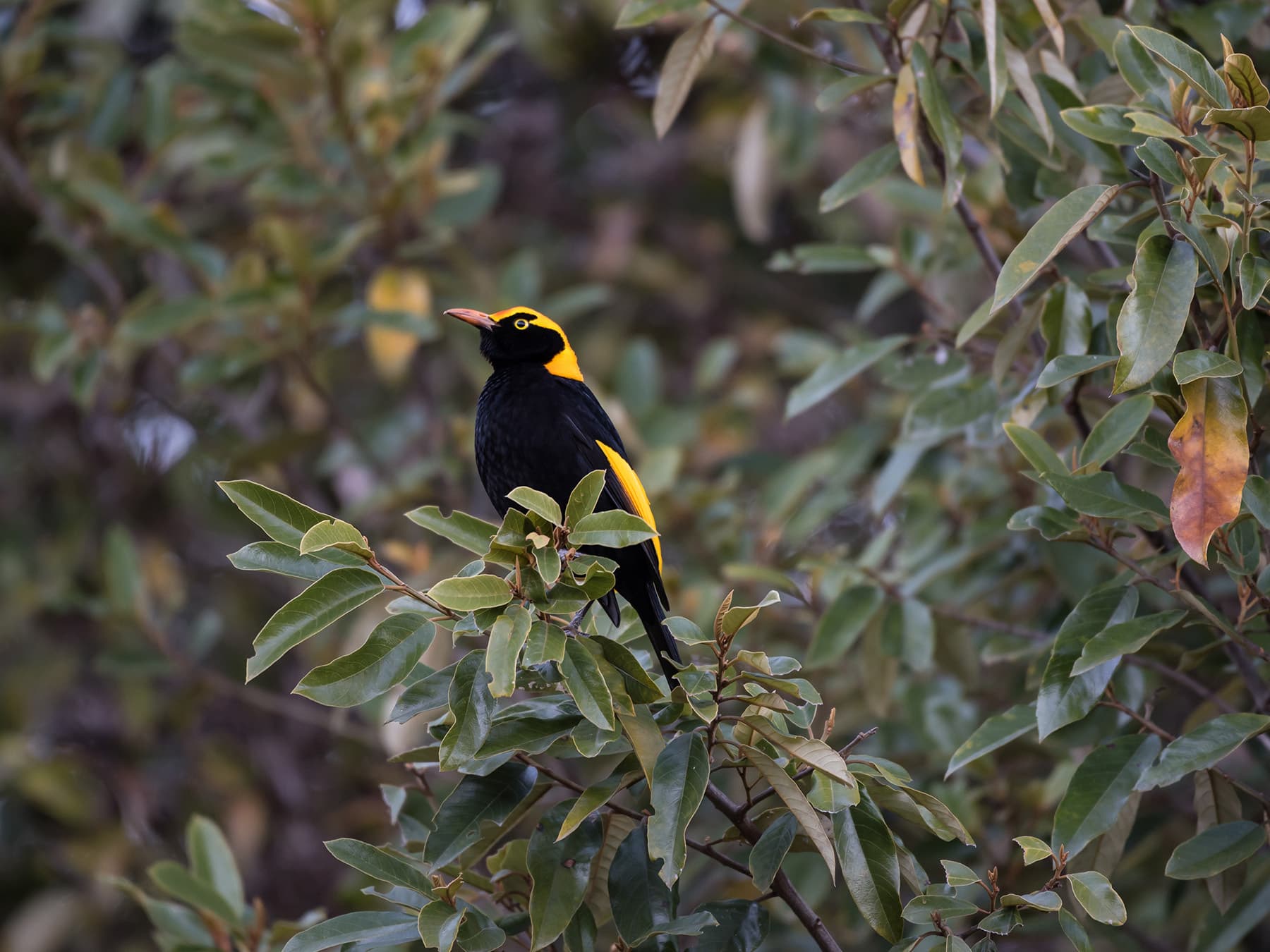
How long nesting takes
Bowerbirds usually nest for six to seven weeks. This period includes the week or so that it takes for the female to build a nest.
Juveniles are not necessarily fully independent after fledging, however, and some will be fed by their mother for up to eight more weeks.
Building
Only the female Bowerbird builds the nest. She will use her bill to collect building materials like twigs and orchid stems to create the structure and then manipulate them and weave them into place. The female will then gather softer materials such as fine twigs, green leaves, tendrils and grass to form the inner cup.
Fledging
Baby Bowerbirds fledge the nest about three weeks after hatching.
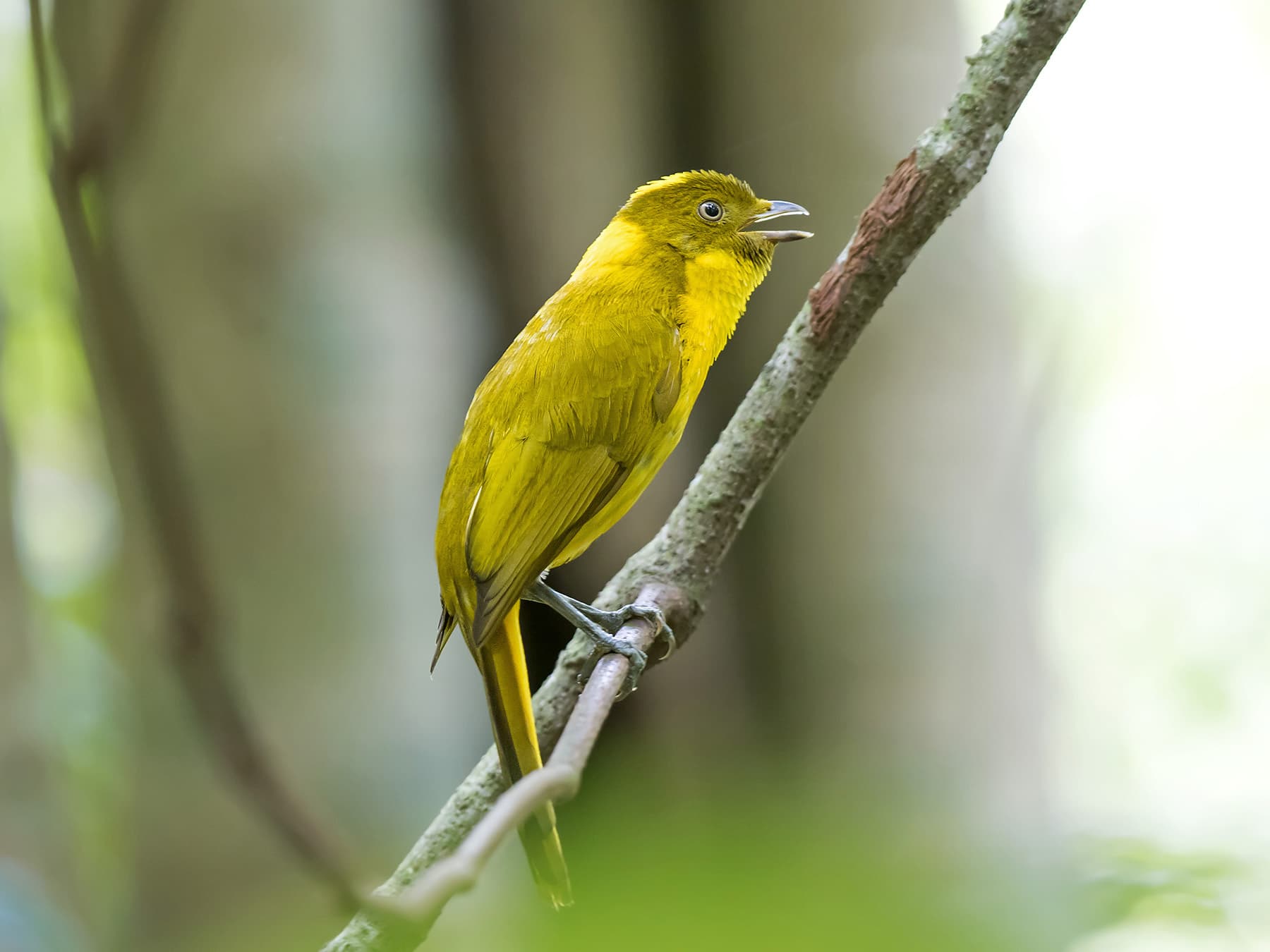
Broods
Bowerbirds have a single brood each year. If there is time, the female may produce a replacement clutch if the first should fail due to an attack by a predator or storm damage.
Nest sites year to year
Bowerbirds usually build a new nest each breeding season, even though they may nest in the same vicinity each year. This habit can result in a large collection of disused nests in a localised area.
Eggs
Bowerbirds lay one to three eggs with different colours and markings depending on the parent species. Their eggs vary from plain cream-white in the Golden Bowerbird to spotted in the Satin Bowerbird.
The prize for the most attractive eggs in this group of birds probably goes to the Spotted Bowerbird. This relatively drab species lays intricately patterned eggs with dark brown and black streaks or vermiculations.
Laying months
Bowerbirds lay their eggs at different times of the year according to their species and location. Generally speaking, peak egg laying occurs between September and November, although some species may lay their eggs in just about any month.
Abandoned nests
Bowerbirds usually construct a new nest each breeding season. Like most birds, they will not easily abandon a nest once they have laid their eggs. Of course, nesting birds should never be disturbed so give them plenty of space if you come across an active nest.
Bowerbird Nesting FAQs
Do Bowerbirds nest in backyards?
Bowerbirds do occasionally nest in backyards with suitable vegetation. Male Satin Bowerbirds even construct their intriguing bowers in the gardens of some lucky homeowners.
Do Bowerbirds nest on the ground?
Bowerbirds nest above the ground in trees and tall shrubs. Male Bowerbirds construct their elaborate bowers on the ground, which are often confused for nests.
Do male Bowerbirds sit on eggs?
Male Bowerbirds neither incubate the eggs nor feed the chicks. In fact, attracting females and mating are where the male Bowerbirds’ breeding responsibilities end.
Do Bowerbirds nest in trees?
Bowerbirds build their nests in trees and other plants up to a height of 40 meters or so. The nests are usually located within a few hundred meters of the male’s bower, depending on the species. Bowerbird females will build their nests in the fork of a tree, in a crevice, on a limb, or in tangled vines.