Facts · Updated 8 Oct 2026
Baby Pelicans
By the Birdfact teamChecked by Nathan Cope
On this page13 sections
There are eight species in the pelican family (Pelecanidae), with representatives on every continent except Antarctica. These distinctive waterbirds are easy to recognize with their long bills and unique pouches.
Pelicans are giants of the bird world, but like all other bird species, they start life as baby chicks. So what do baby pelicans look like, and how big are they?
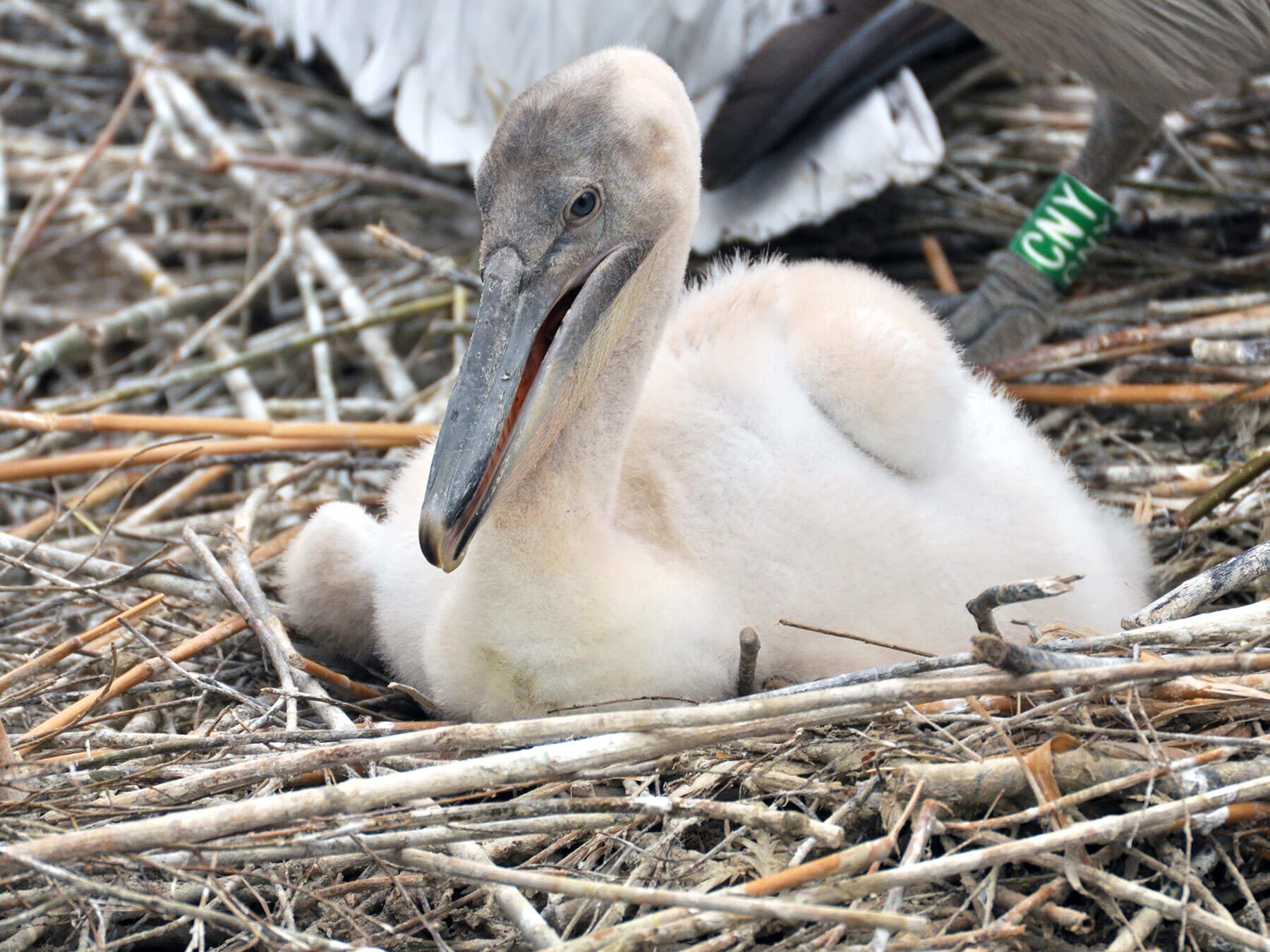
Baby pelicans hatch from large, dull white eggs. The eggs are incubated dutifully by both parents, who use their feet to keep them warm. The chicks are completely helpless at first but grow into full-size juveniles by about three months after hatching. Baby pelicans start life as naked, pink, orange, or black hatchlings, although they soon develop a soft covering of white or dark brown down feathers.
Baby pelicans grunt to beg for food, a call that sounds much like the bark of a small dog. Both parents feed the babies a rich diet of regurgitated fish, and the chicks may grow to be a hundred times heavier than their hatching weight.
Baby pelicans look much like their parents by the time they become independent, although they tend to look duller and lack the distinctive markings and colorful bills that mature birds have.
Pelican chicks might not be the cutest babies in the bird world, but their early life is fascinating all the same.
What does a baby pelican look like?
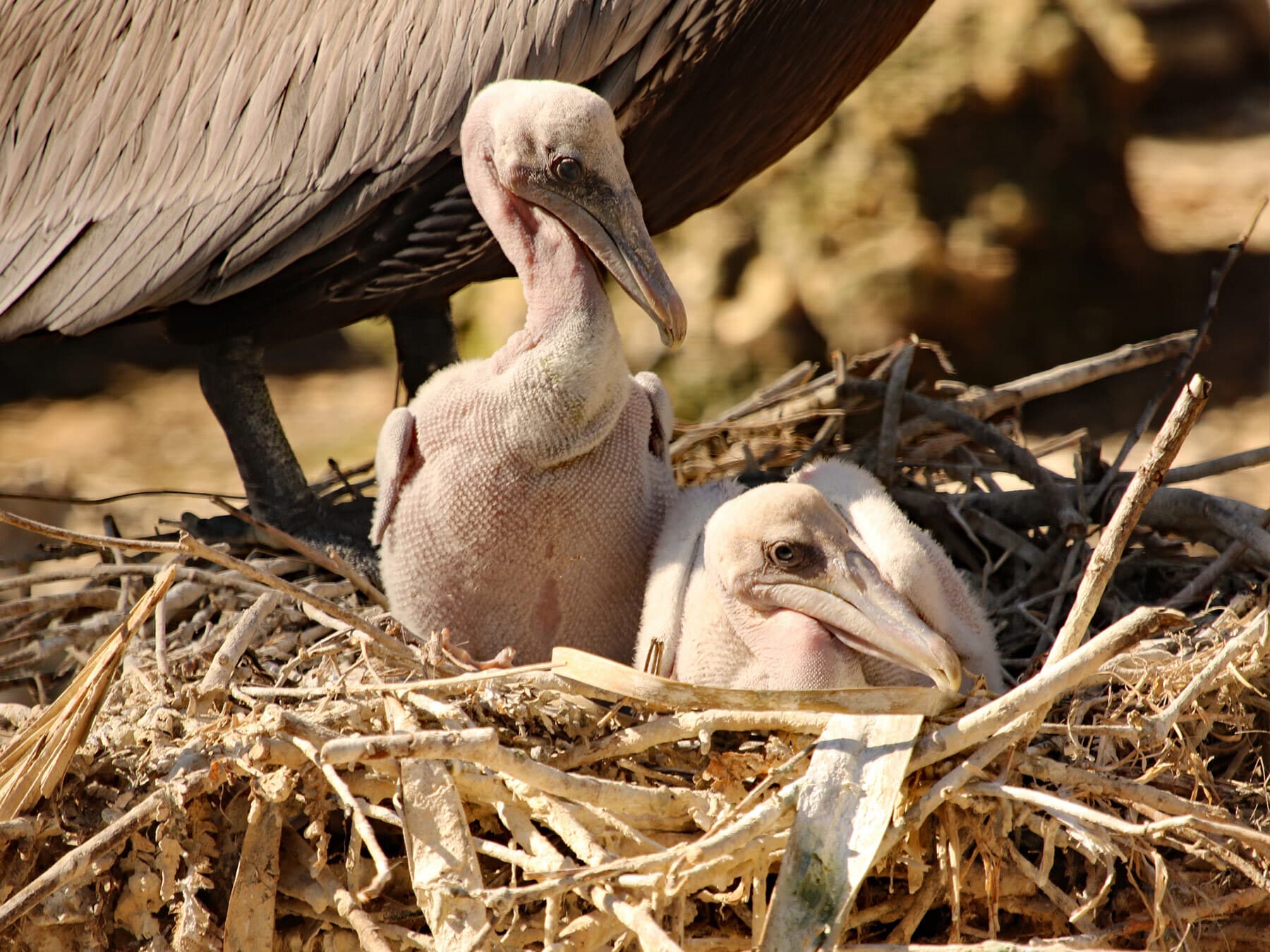
Baby pelicans are altricial, which means they are poorly developed when they hatch. Their eyes may be closed or slightly open, and their bodies are naked. They can’t move much at first and even struggle to hold up their large heads.
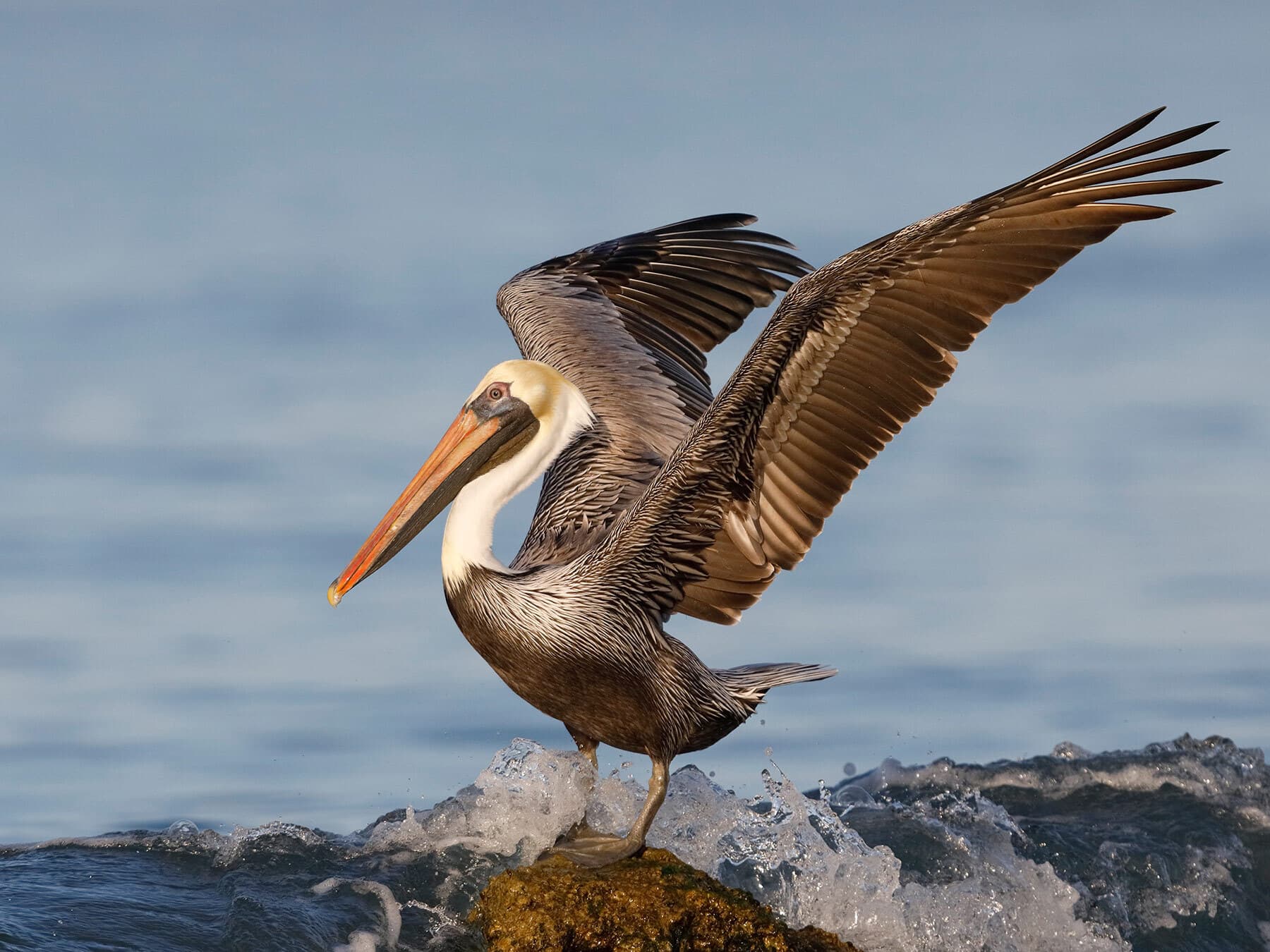
state bird of Louisiana) are pink before they grow their first feathers.
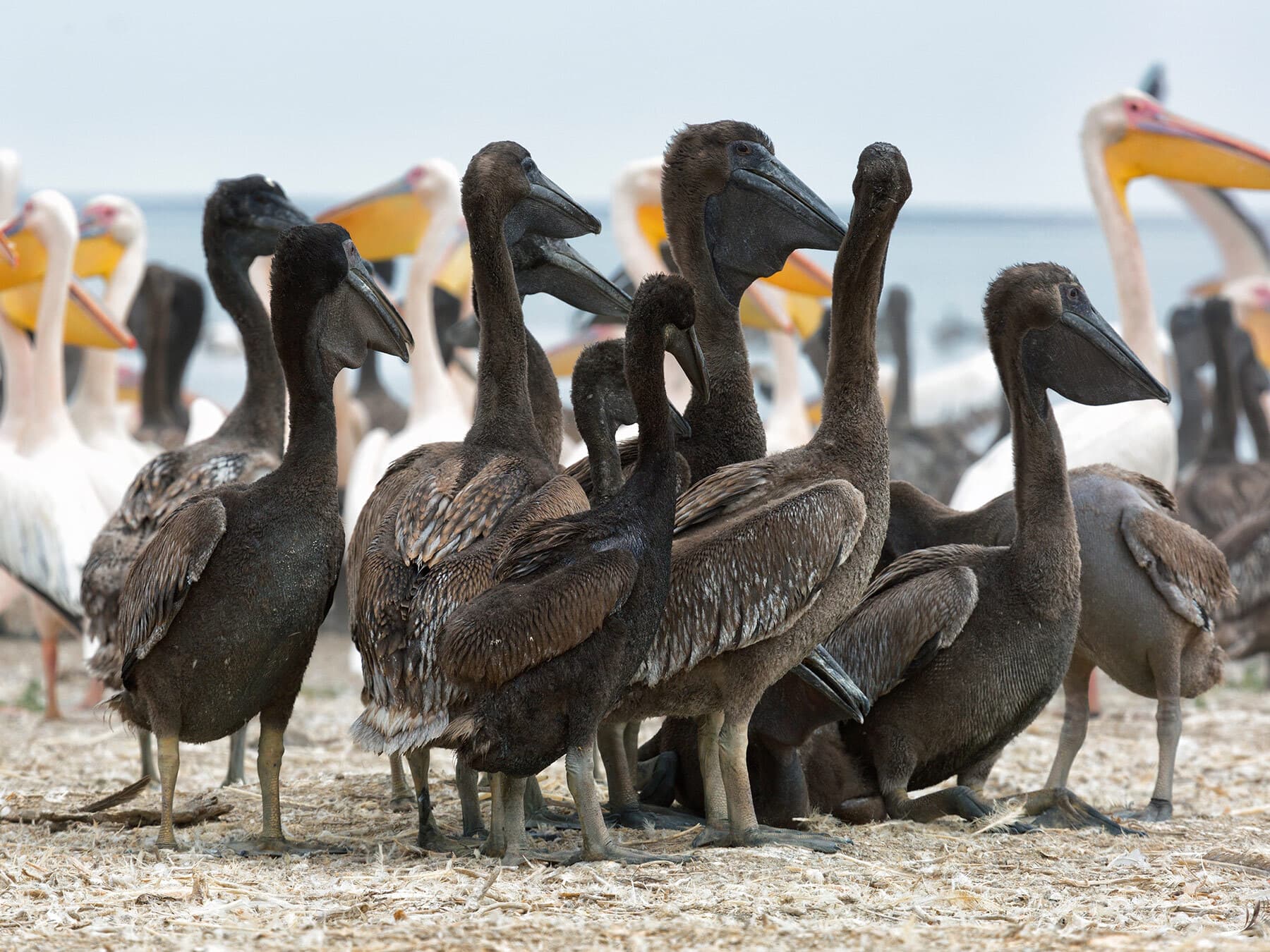
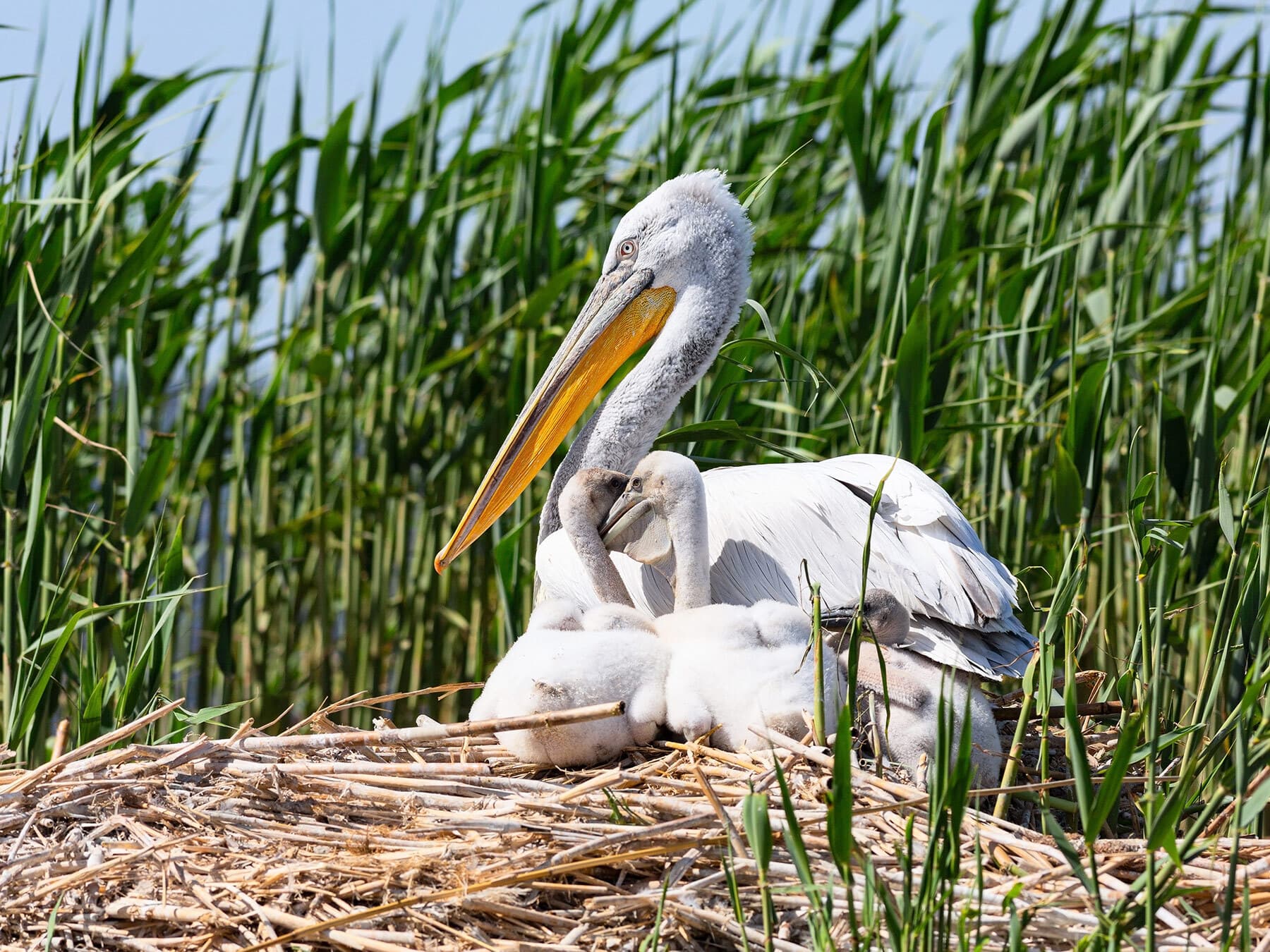
As they grow older, most baby pelicans develop a snow-white covering of soft down feathers. Great White Pelican chicks differ by having chocolate brown feathers, which makes them stand out among their parents.
Baby pelicans already have a large bill and a distinctive pouch when they hatch, although it is proportionately much shorter than the bill of an adult. Their bill is also tipped in a hard egg tooth, which helps them break out of the egg.
Size
Baby pelicans start their lives at a relatively large size because they hatch out of big eggs.
The young birds will be just as large as their parents when they fledge and become independent, however.
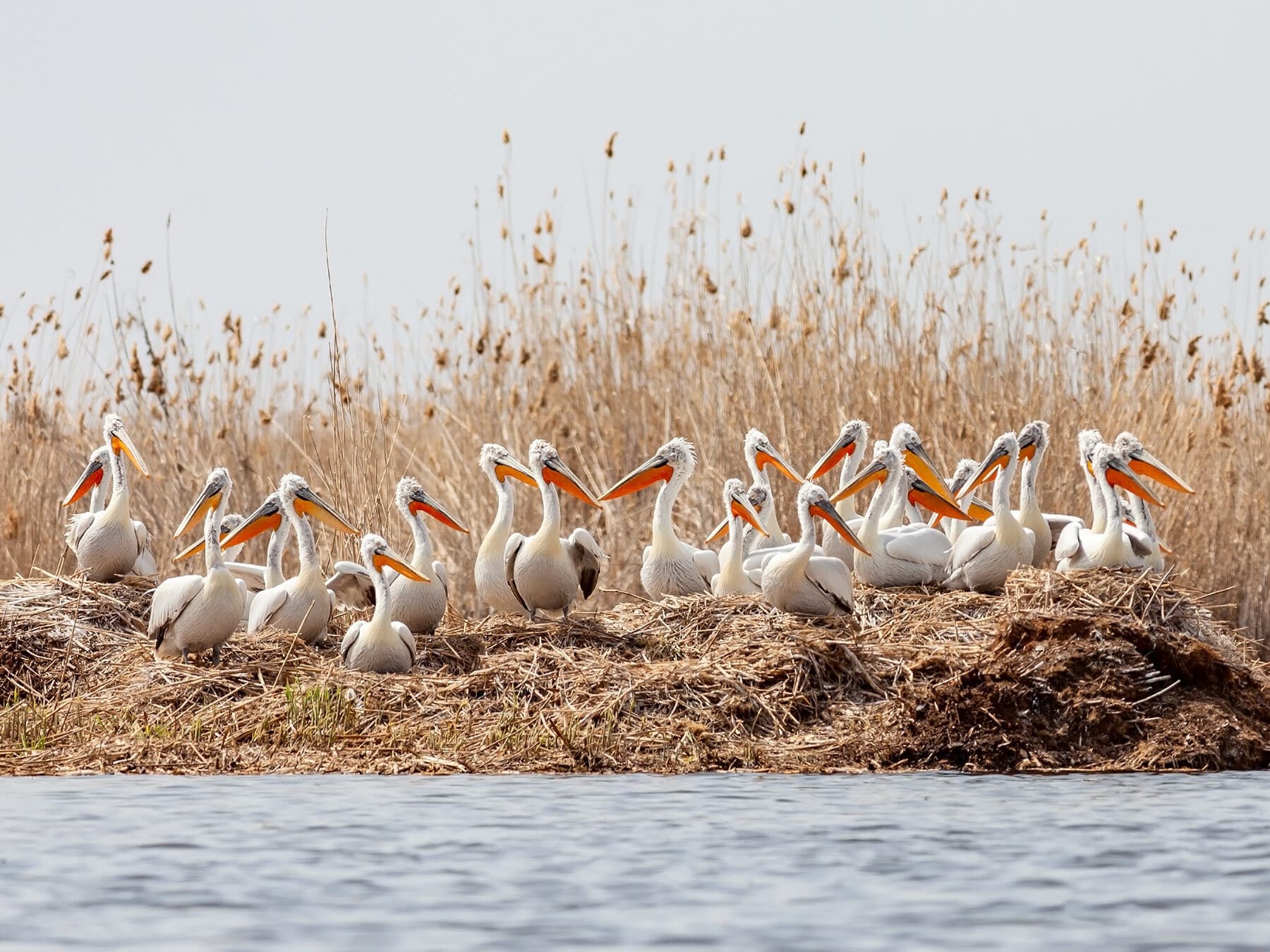
Adults are huge: the Dalmatian pelican has a wingspan of 2.7 to 3.2m (8ft 10in to 10ft 6in)!
Weight
Most baby pelicans weigh just 3 or 4 ounces (85 g - 114 g) when they hatch, but they will grow to an enormous size by the time they fledge. 9 ounces (110 g) when they hatch.
3 ounces (150 g). They grow to remarkable weights as they mature, with some adult birds attaining weights of over 33 lbs (15 kg)!
Juveniles
Juvenile pelicans look very similar to their parents.
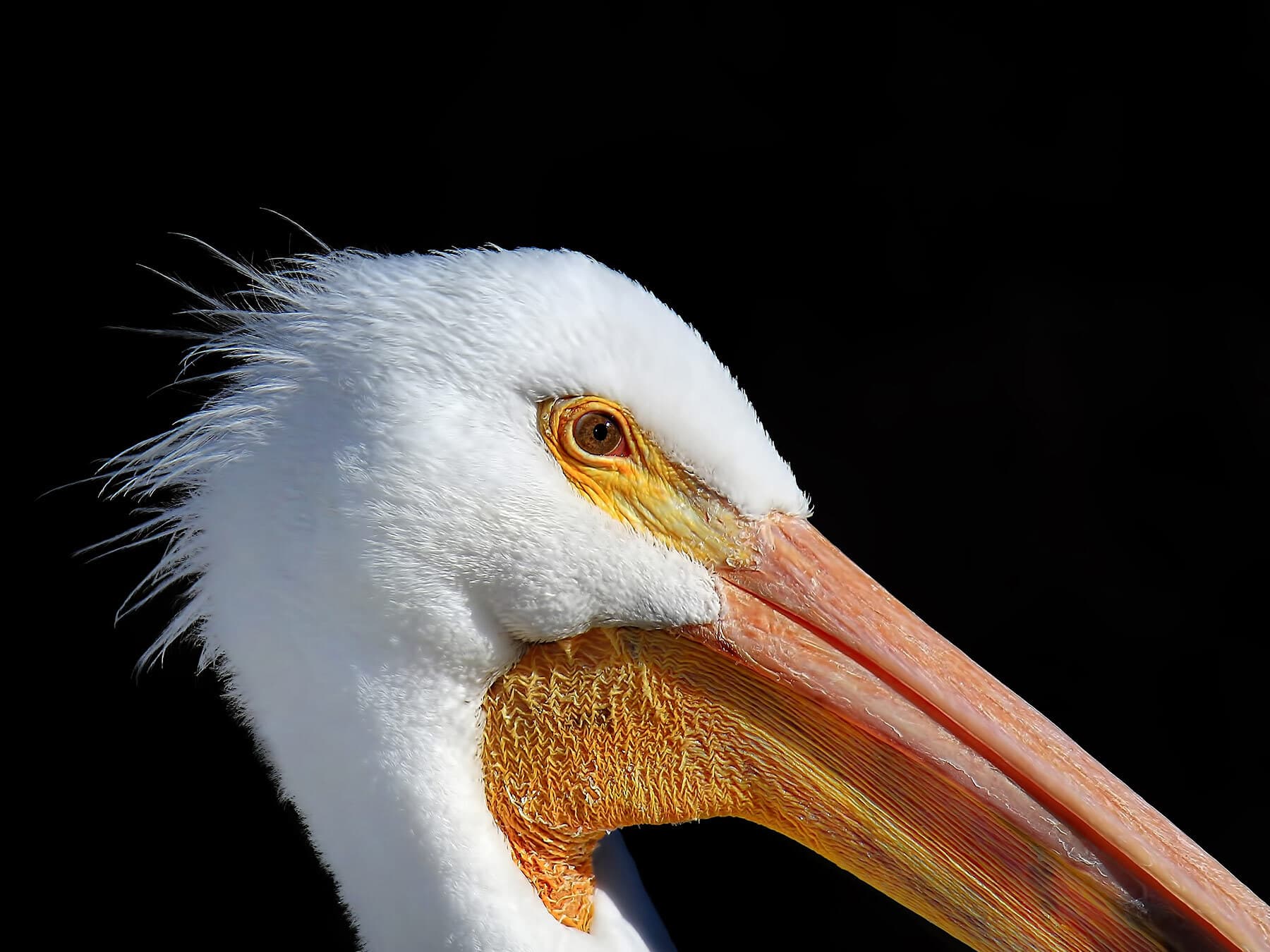
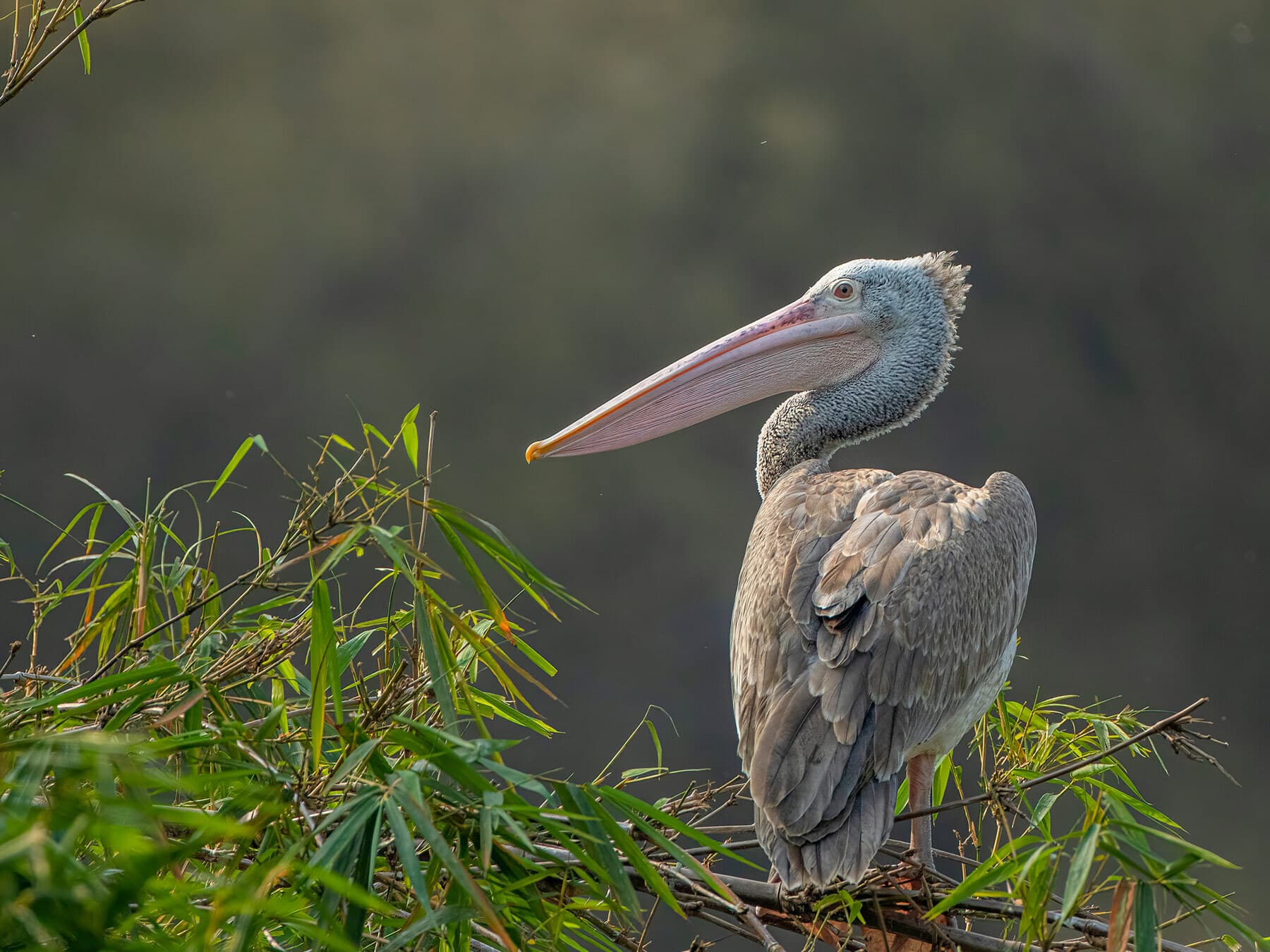
Juveniles tend to have a similar overall color to the adults but lack the bright colors on the bill and legs. Black markings tend to be lighter, and white plumage looks more dusky on juvenile pelicans.
What do you call a baby pelican?
Baby pelicans can be called by many names, depending on their age. They start life as hatchlings but are called chicks until they have grown their flight feathers and graduated to become juveniles.
Food
specialist fish hunters, although they also eat amphibians, crustaceans, and even other birds. Marine pelicans feed their babies with small, schooling saltwater fish like mullets, sardines, and anchovies. Freshwater species provide fish like trout and minnows.
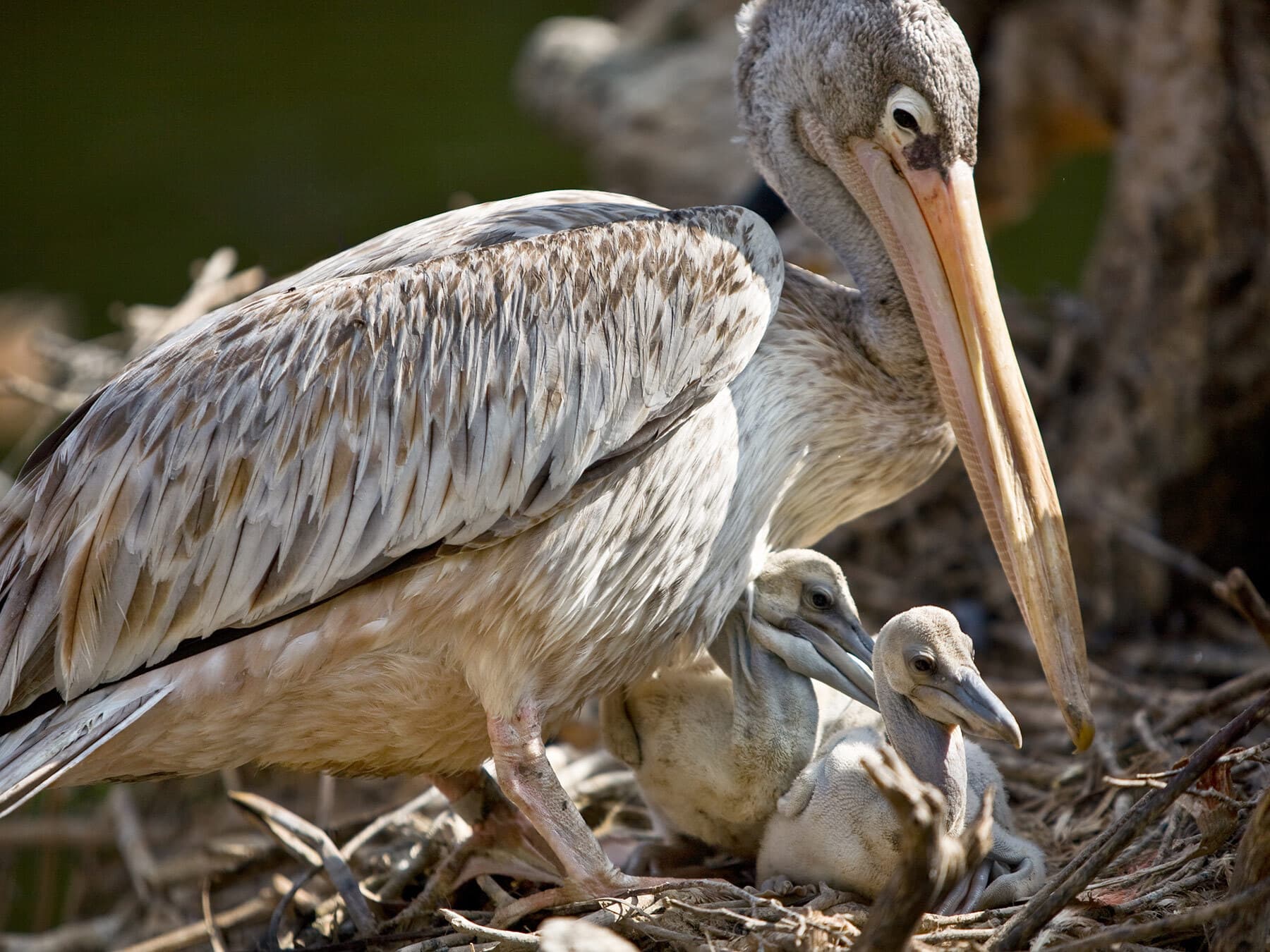
Feeding the chicks
Feeding baby pelicans can be pretty awkward with such a large bill. At first, pelican parents regurgitate partially digested fish onto the nest floor where the babies feed. The regurgitated fish is too large for young chicks to swallow whole, but the weak young birds manage to pick it apart because it is already softened.
The chicks will learn to take fish directly from their parent’s pouch as they grow older. By the time they are about a month old, the young birds will be feeding directly out of their parent's throats. This is a remarkable sight, with the hungry chick putting its entire head into its parent’s mouth!
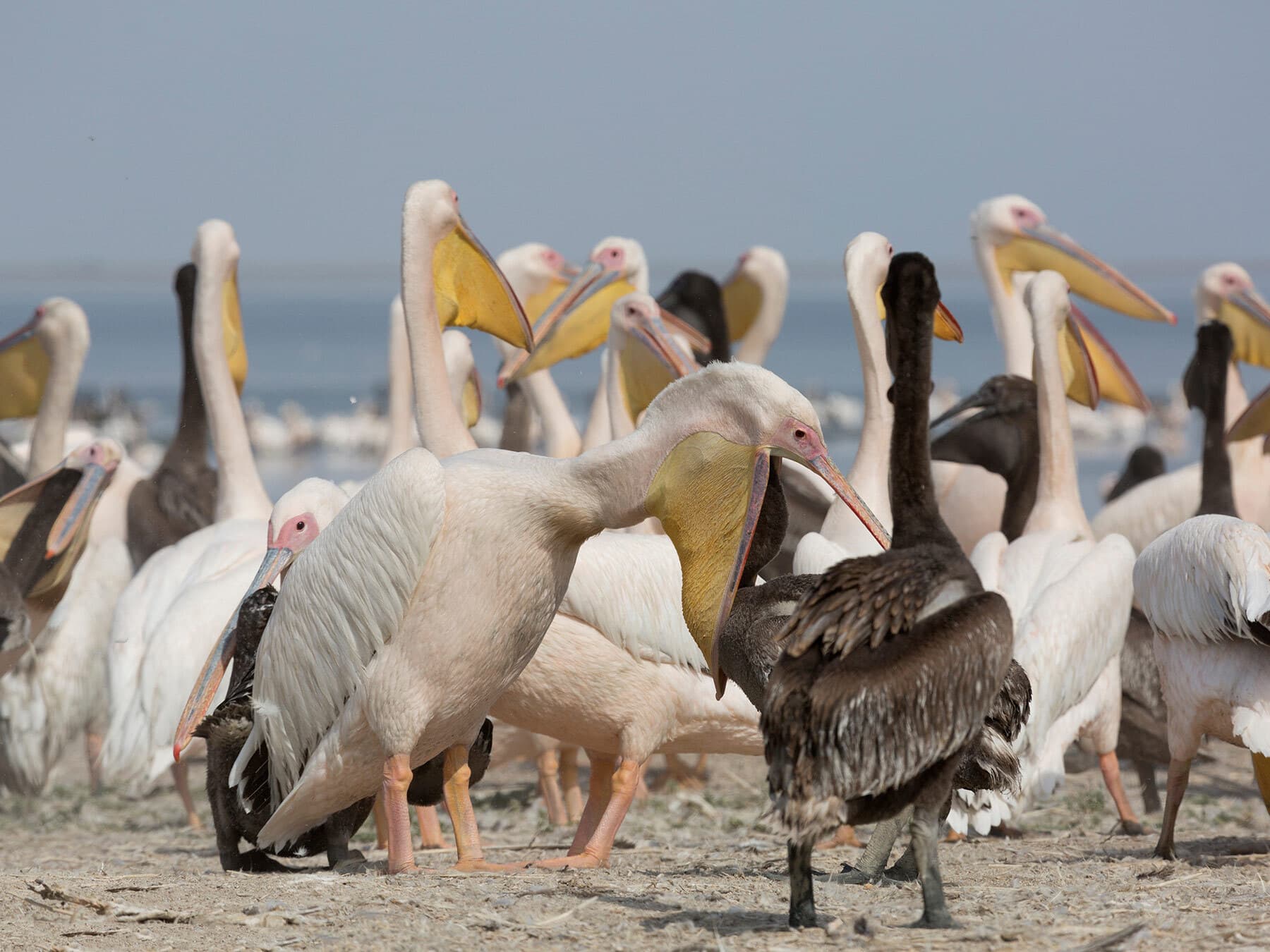
Both parents
Both mother and father pelicans are involved in raising their young. Each parent helps out by incubating the eggs and feeding the growing babies.
Eggs
Pelicans lay large, dull white eggs. The egg surface is relatively rough, and the eggs are often partially covered in blood when fresh.
Brown Pelicans from America, for example, lay eggs that measure 3 inches long and 2 inches across (76 mm x 50 mm). 4 inches across (92 mm x 60 mm).
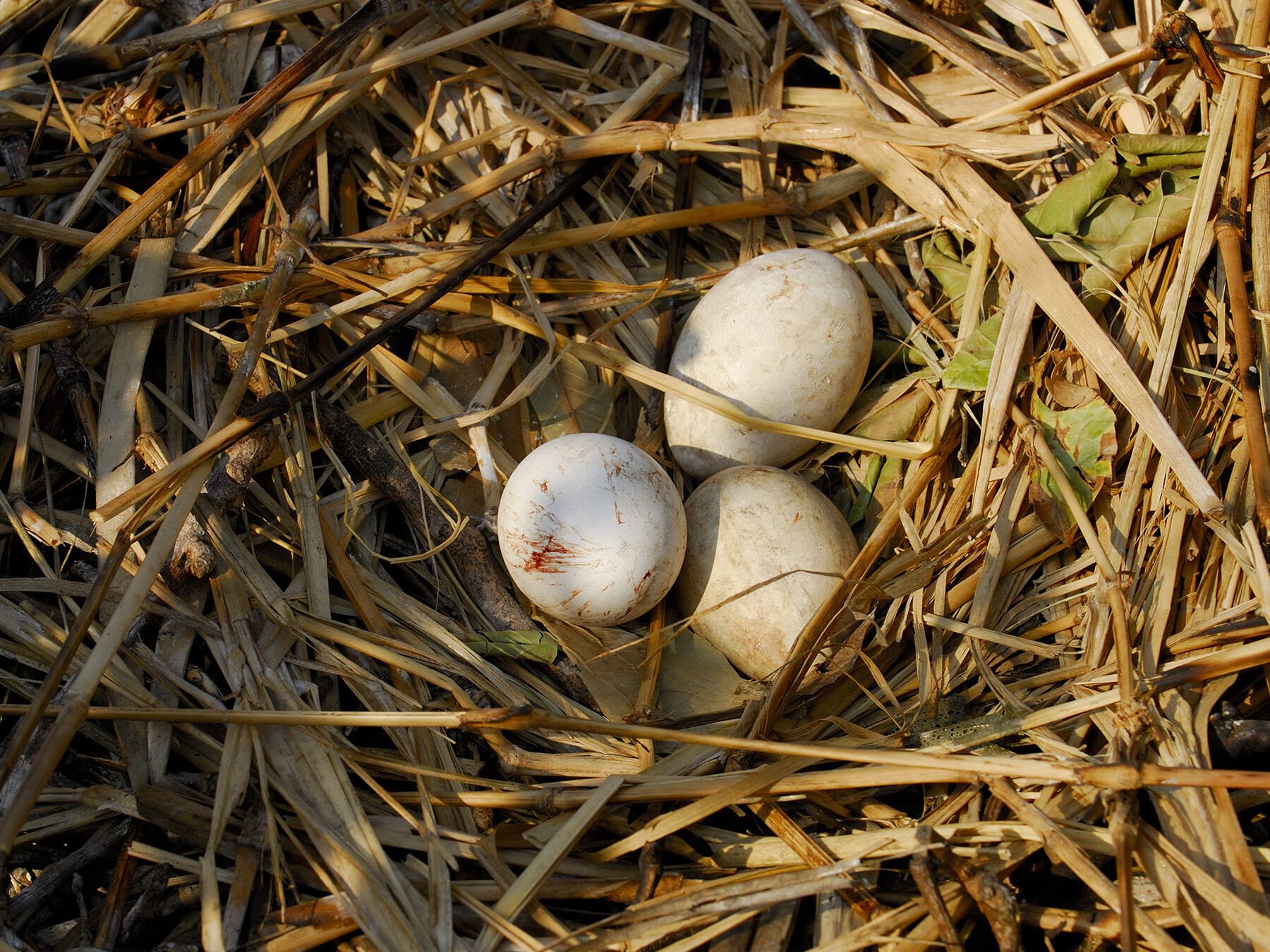
Incubation
Pelican eggs take about a month to hatch. Depending on the species and the climate, incubation may take as little as 29 days or as long as 36 days. Interestingly, pelicans incubate their eggs with their webbed feet rather than under their chest.
Clutch size
Most pelicans lay two or three eggs, although clutches of up to eight eggs have been recorded from nesting Peruvian Pelicans in South America.
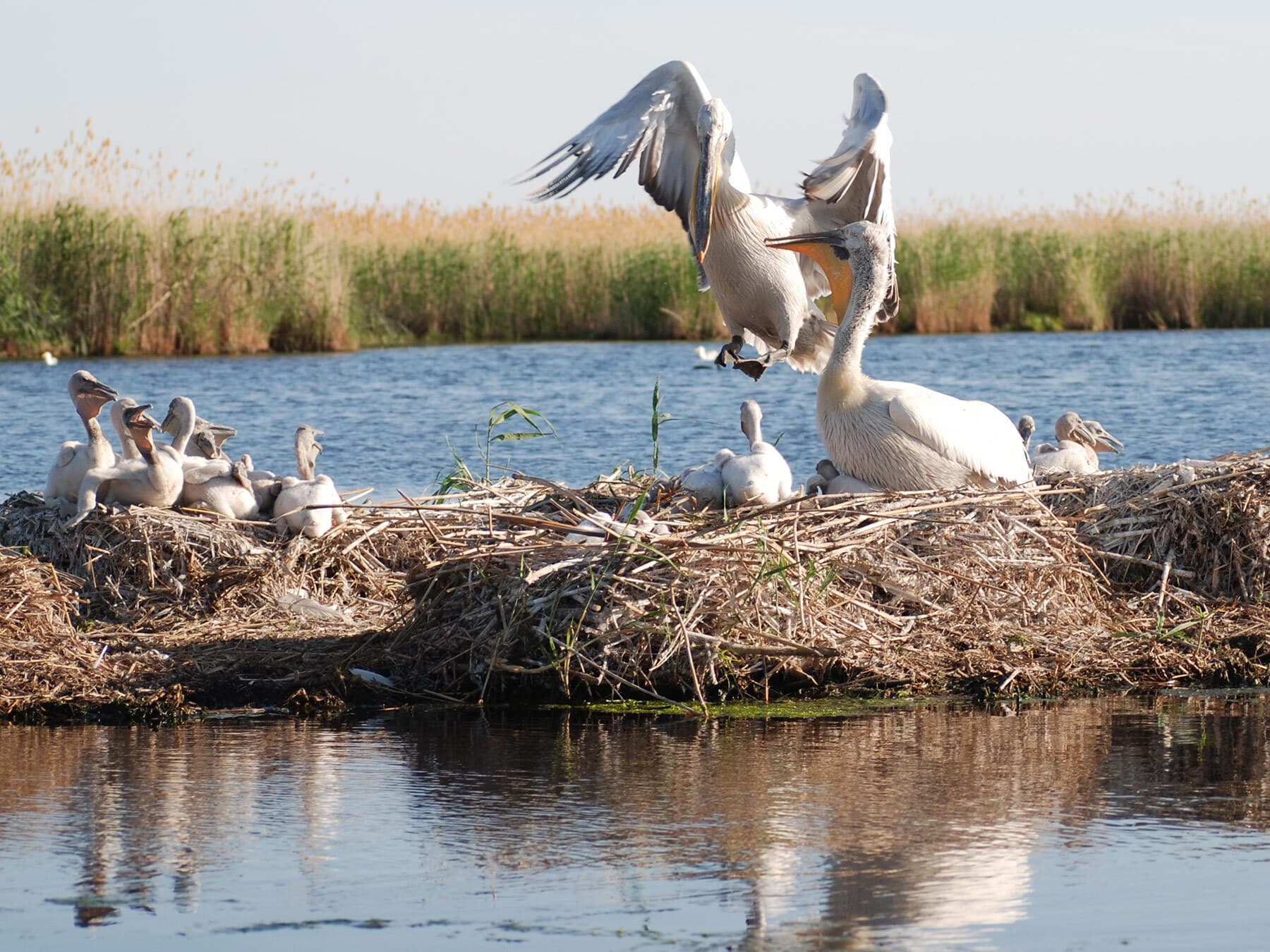
Laying season
Pelicans are found in both the Northern and Southern Hemispheres and on every continent except Antarctica. They lay their eggs at different times, depending on where they live.
- American White Pelican (Pelecanus erythrorhynchos): March to May
- Brown Pelican (P. occidentalis): Mostly December to September
- Peruvian Pelican (P. thagus): October to February
- Great White Pelican (P. onocrotalus): Any month
- Australian Pelican (P. conspicillatus): Any month
- Pink-backed Pelican (P. rufescens): Any month
- Spot-billed Pelican (P. philippensis): October to November
- Dalmatian Pelican (P. crispus): March to April
Independence
Baby pelicans can take several months to reach independence. They grow rapidly on a rich diet of fish and begin to leave the nest at about two to four weeks old. The young birds do not go far, however, gathering instead into groups with other young pelicans called crèches or pods. Their parents continue to feed them at this stage.
Most baby pelicans are ready to become fully independent at about three months old, although this varies between each species. Great White Pelicans seem to mature the fastest, with independence coming as early as 65 days. Dalmatian Pelicans can take as long as 105 days, however.