


Published 18 Feb 2025
Alabama's Owls: Complete Guide to 5 Species (With Identification Tips)
By the Birdfact teamChecked by Nathan Cope
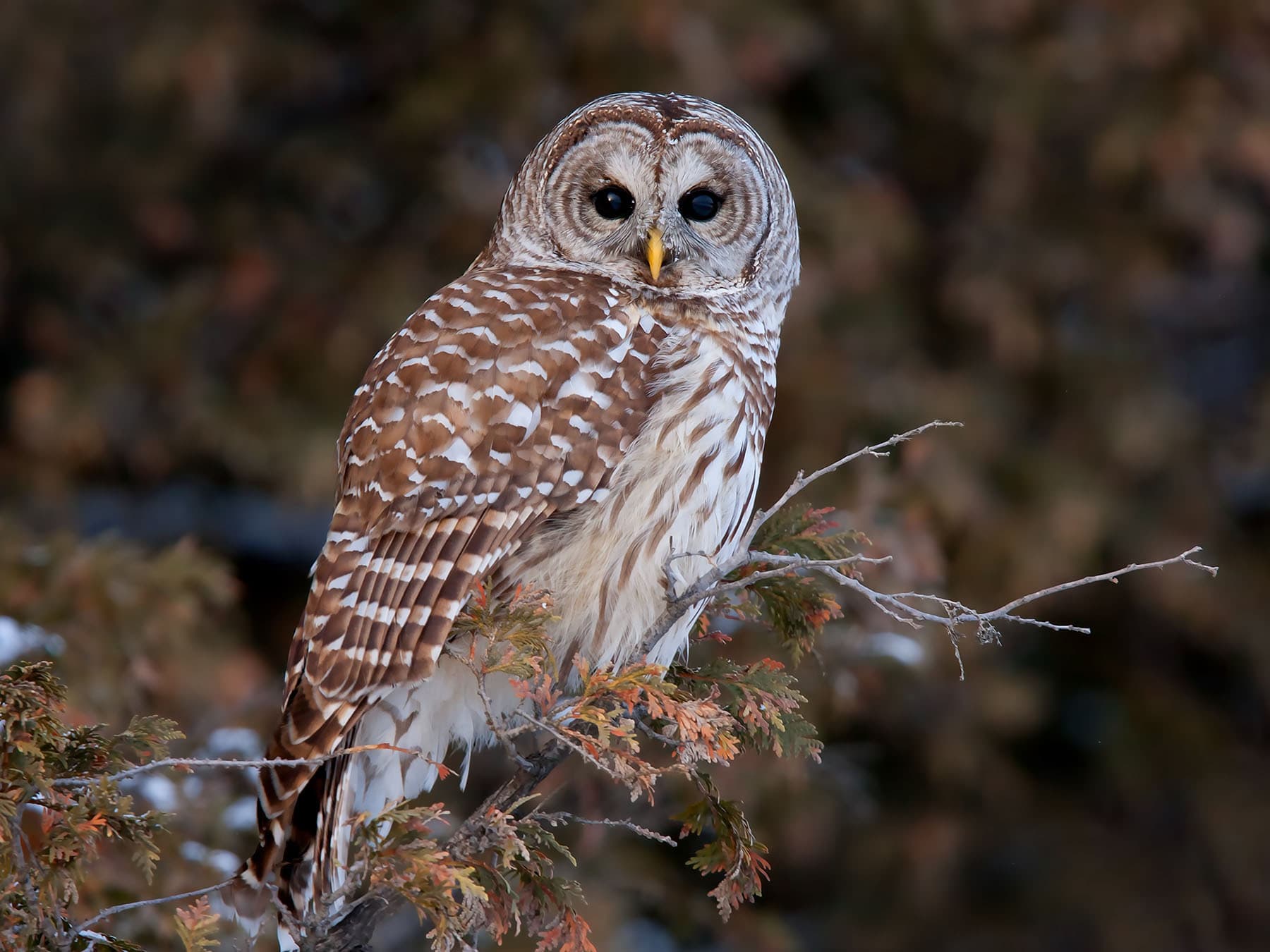
Night falls differently in Alabama when you're listening for owls.
The state hosts an impressive variety of these nocturnal hunters, from the abundant Barred Owl to the rarely-glimpsed Burrowing Owl, each with its own story to tell.
Barred Owl
Strix varia
Regional Rarity Score
Ranges from 0 (common) to 100 (extremely rare) in this region
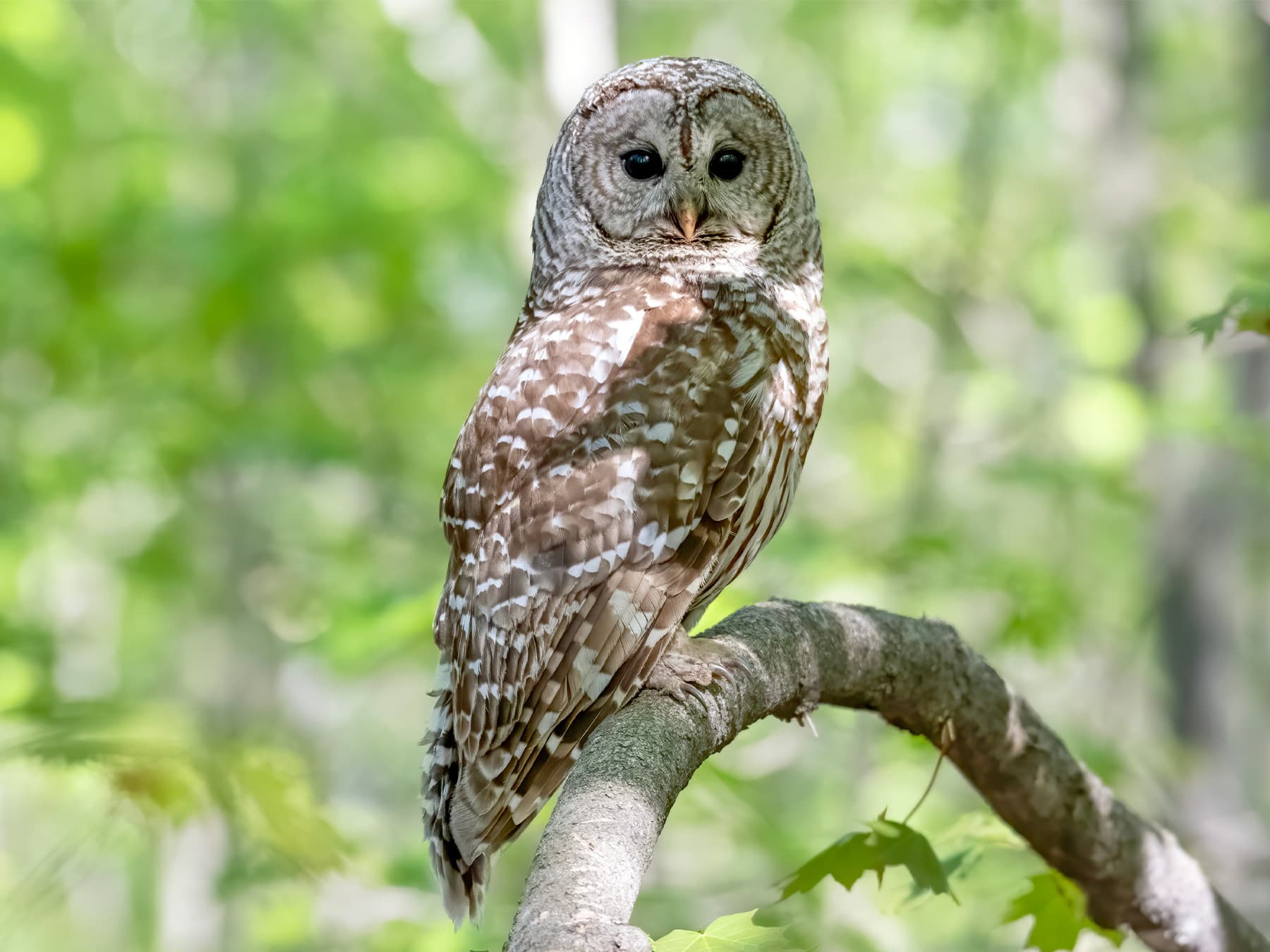
The Barred Owl rules Alabama's forests with authority, particularly thriving in the state's dense bottomland forests and swampy areas along the Mobile-Tensaw Delta.
These medium-sized owls, the most frequently observed in the state, make their presence known year-round with their distinctive "who cooks for you?" call.
Around April, they're particularly vocal - this is typically their peak activity period.
You'll often catch them perched on thick branches just before dusk, their round heads swiveling to track movement in the understory.
Great Horned Owl
Bubo virginianus
Regional Rarity Score
Ranges from 0 (common) to 100 (extremely rare) in this region
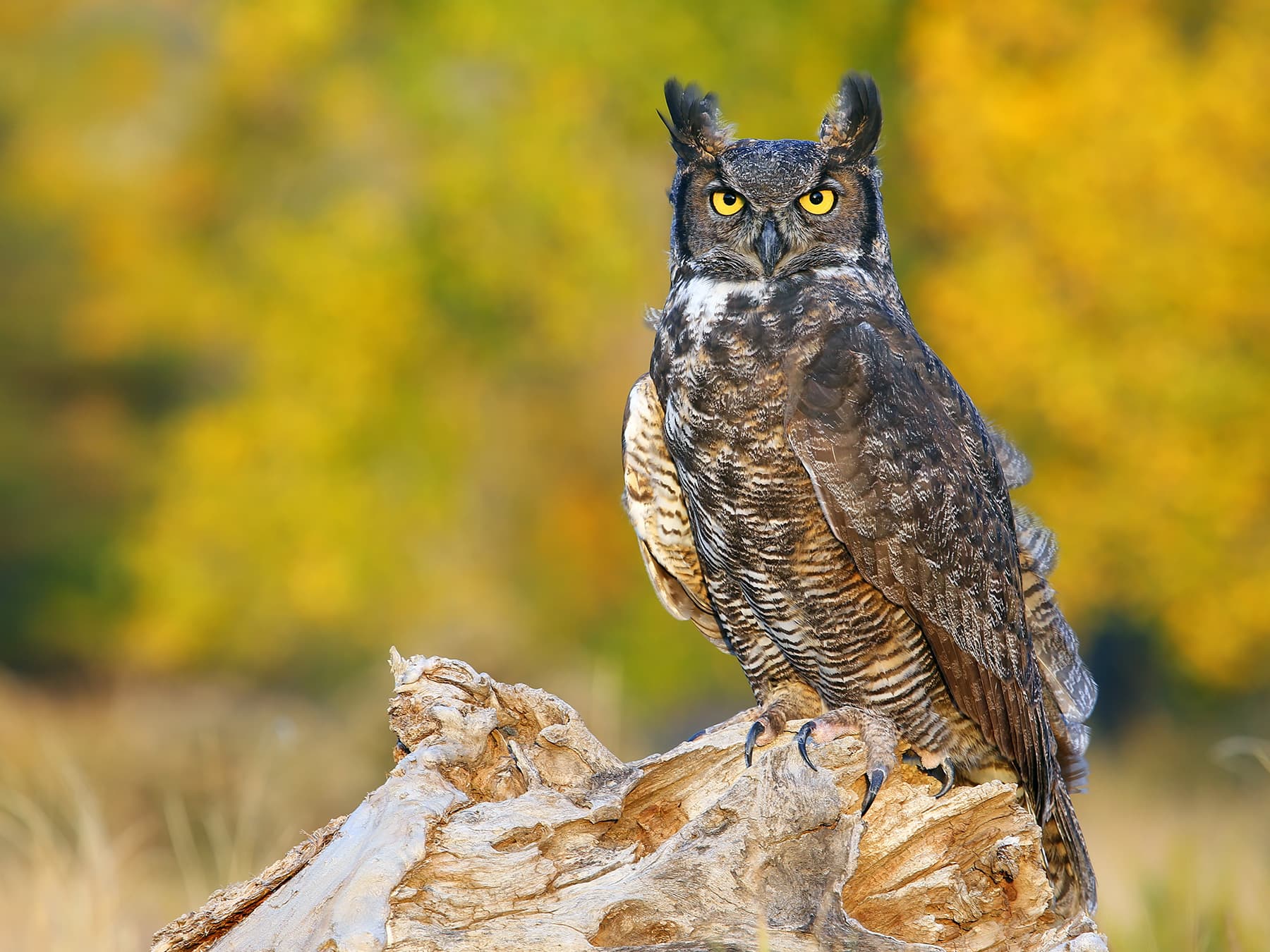
Great Horned Owls bring a different energy to Alabama's nights, adapting equally well to the pine forests of the Appalachian foothills and the mixed woodlands of the coastal plain.
These powerful predators, while less common than their Barred cousins, maintain a steady presence throughout the year.
They become especially active during October when their deep hooting echoes through both urban and rural areas.
Their silhouette - large body, prominent ear tufts - stands out against the twilight sky when they launch from their daytime roosts.
Eastern Screech-owl
Megascops asio
Regional Rarity Score
Ranges from 0 (common) to 100 (extremely rare) in this region
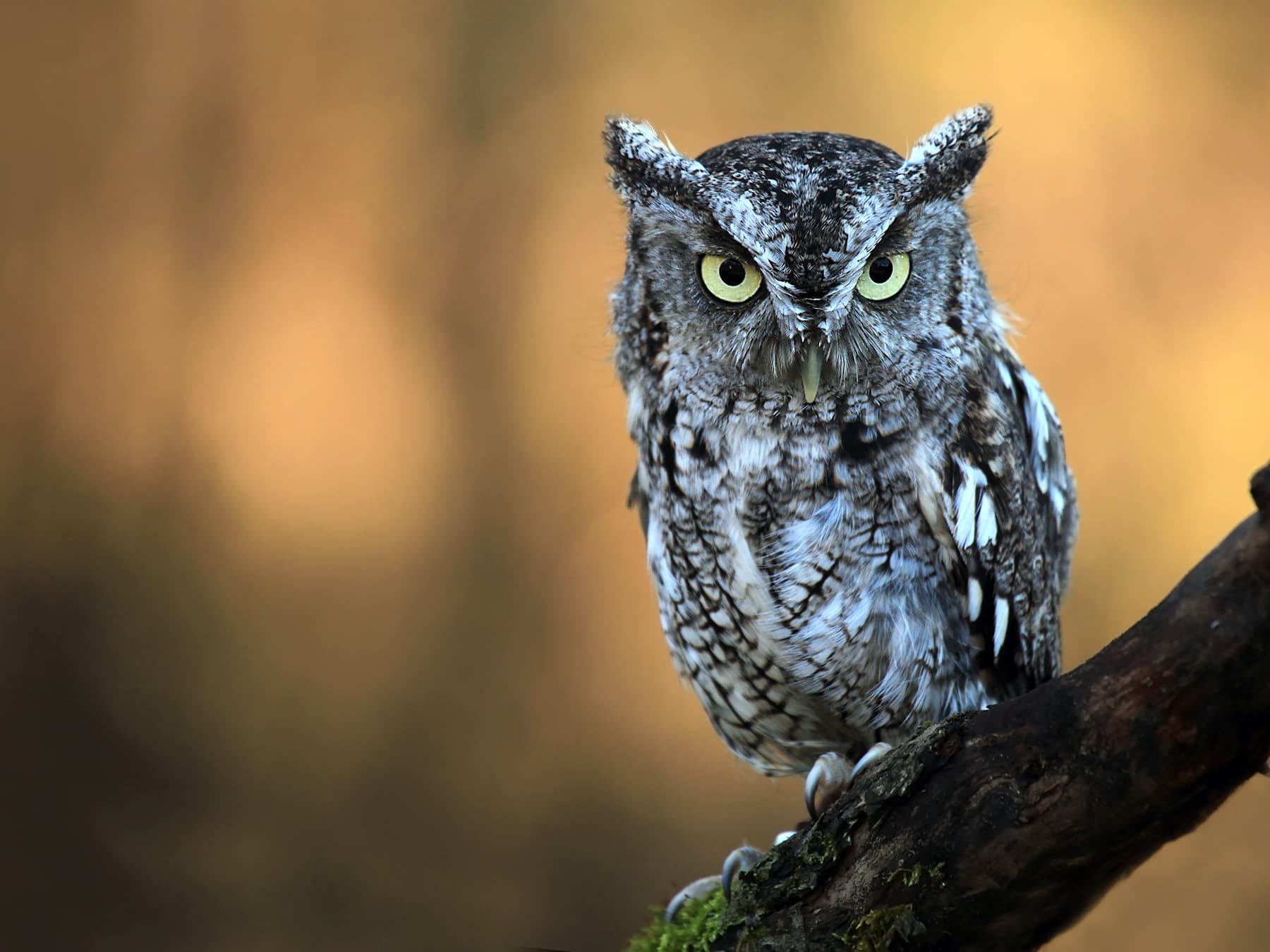
Eastern Screech-Owls add their own character to Alabama's owl chorus, frequently found in suburban areas from Birmingham to Mobile.
Despite being year-round residents, they're remarkably good at staying hidden.
September marks their most active period when their trembling whistle calls become more frequent in suburban areas.
They often reveal themselves at dusk, appearing as small, gray or rusty-colored shapes emerging from tree cavities.
Barn Owl
Tyto alba
Regional Rarity Score
Ranges from 0 (common) to 100 (extremely rare) in this region
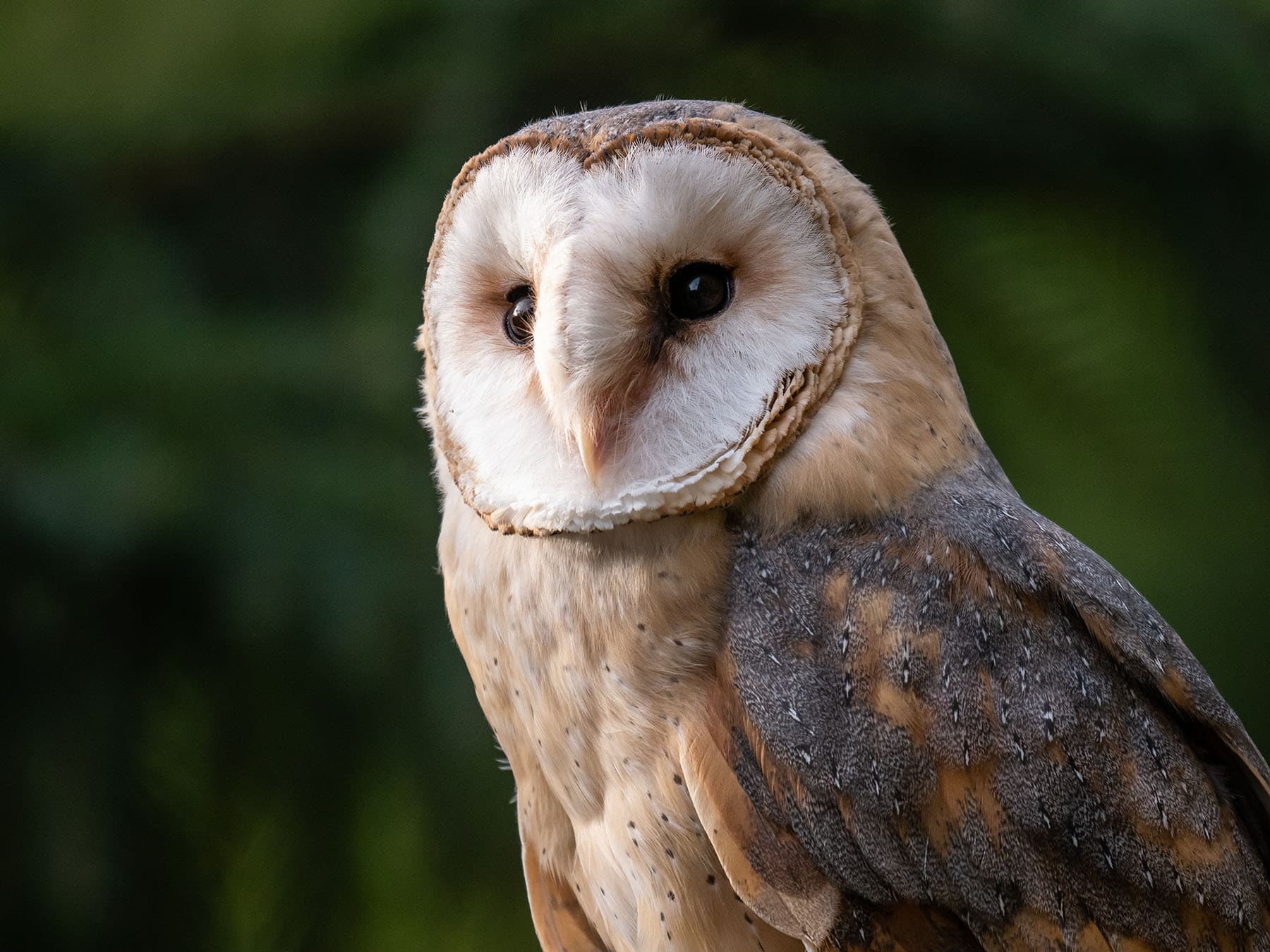
The American Barn Owl brings a ghost-like elegance to Alabama's spring and summer nights, particularly in the Black Belt region's open agricultural landscapes.
Most active in June, these heart-faced owls show a particular preference for open areas and agricultural lands.
Their presence is more limited than other resident owls, but their screech - distinctly different from other owls' calls - carries far across open fields on warm summer evenings.
They're especially fond of the state's historic barns and abandoned structures scattered throughout farming communities.
Burrowing Owl
Athene cunicularia
Regional Rarity Score
Ranges from 0 (common) to 100 (extremely rare) in this region
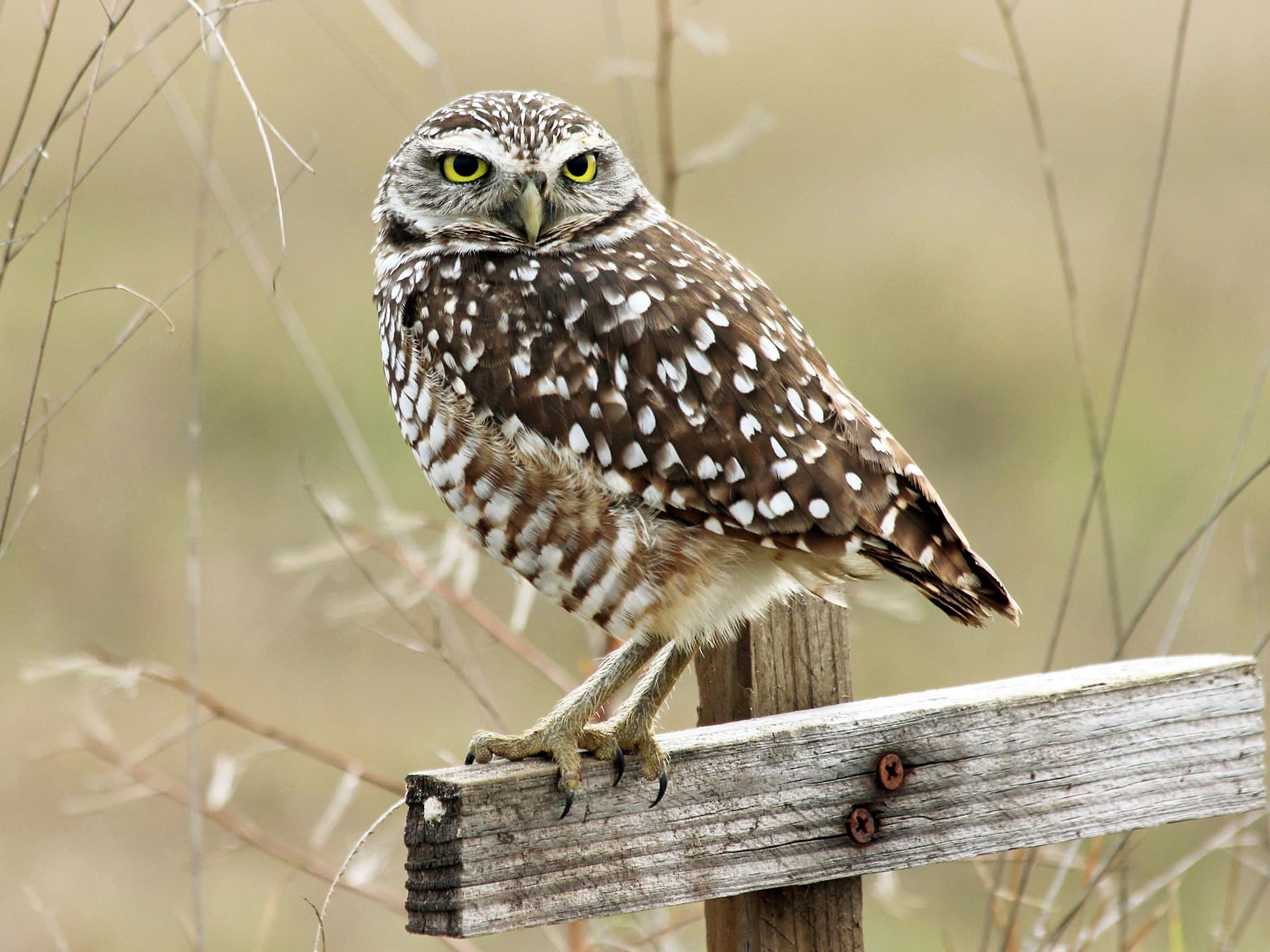
Perhaps most intriguing is the Burrowing Owl, a rare spring visitor to Alabama, occasionally spotted in the state's coastal areas and open grasslands.
March shows a brief spike in sightings, making each observation particularly quite special.
Unlike their tree-dwelling relatives, these small, long-legged owls prefer open ground, sometimes appearing in agricultural areas or at the edges of airfields.
Their presence is fleeting but memorable - a small sentinel standing guard near its temporary burrow, most often spotted in the state's southern coastal regions.
Nature's Night Watch
Each species plays its part in Alabama's nocturnal ecosystem, from the commonly spotted Barred Owl to the elusive Burrowing Owl.
The changing seasons bring different owl activities into focus, creating a year-round tapestry of nocturnal life that rewards patient observers with glimpses into their mysterious world.
From the Appalachian foothills to the Gulf Coast, Alabama's diverse landscapes provide perfect hunting grounds for these remarkable nocturnal predators.
Common Questions About Alabama Owls
Are owls protected in Alabama?
All owl species in Alabama are protected under both federal and state laws, including the Migratory Bird Treaty Act. This means it's illegal to hunt, capture, kill, or possess owls, their feathers, or their nests without proper permits.
What is the most common owl in Alabama?
The Barred Owl is the most frequently seen owl in Alabama, with over 1,500 recorded observations annually. They're followed by Great Horned Owls (around 695 observations) and Eastern Screech-owls (roughly 227 observations).
When can you see owls in Alabama?
The best time to see owls in Alabama varies by species:
- Year-round residents: Barred Owls (peak activity in April), Great Horned Owls (peak in October), and Eastern Screech-owls (peak in September)
- Spring and Summer visitors: American Barn Owls (most active in June)
- Spring migration: Burrowing Owls (primarily March)