


Snow Bunting
Snowflake · Plectrophenax nivalis
By the Birdfact teamChecked by Nathan Cope
On this page14 sections
How to recognise it
The Snow Bunting is a distinctive bird, although it may be confused with other buntings, longspurs, and larks that share its habitat.
What do Snow Buntings look like?
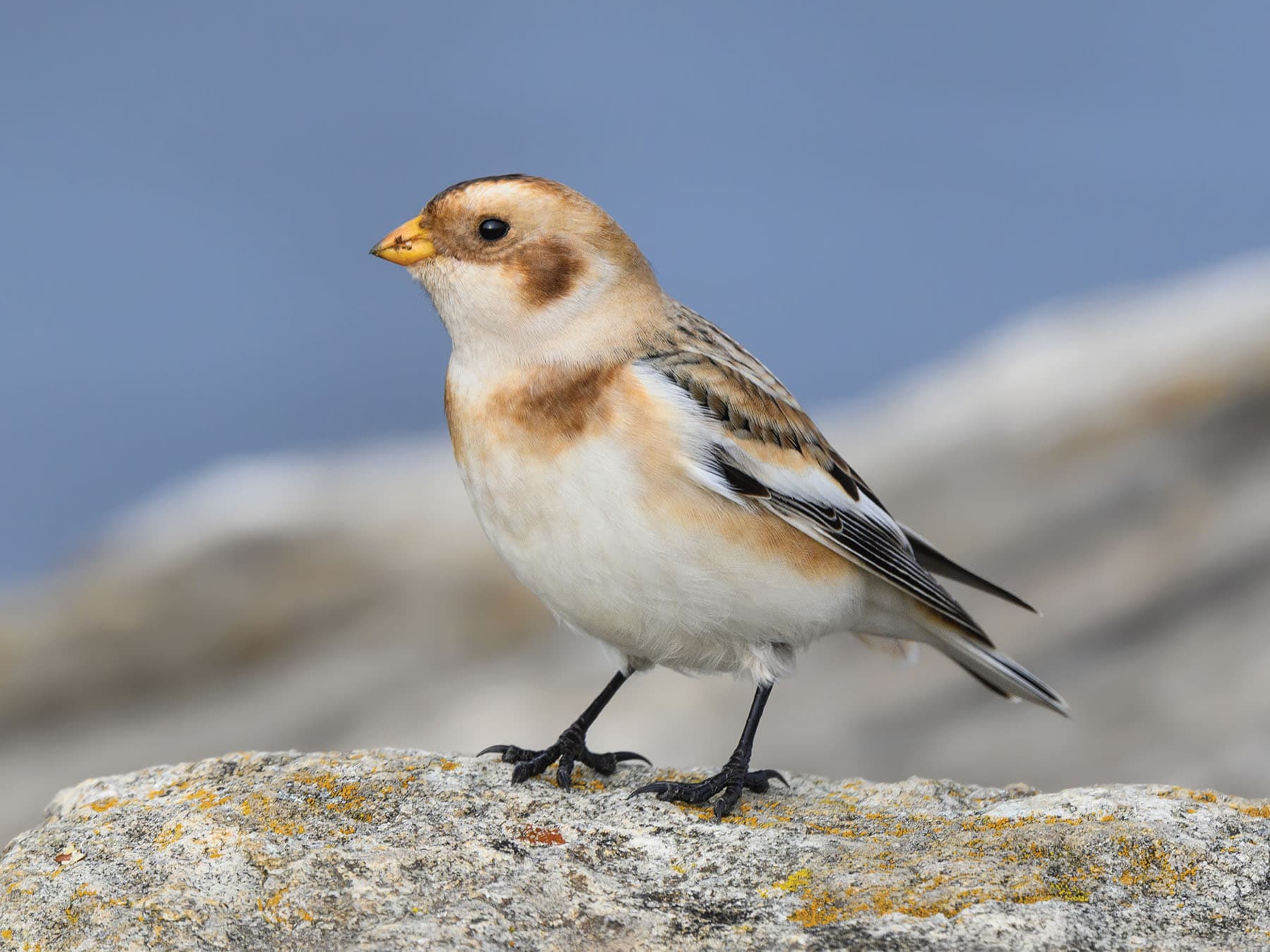
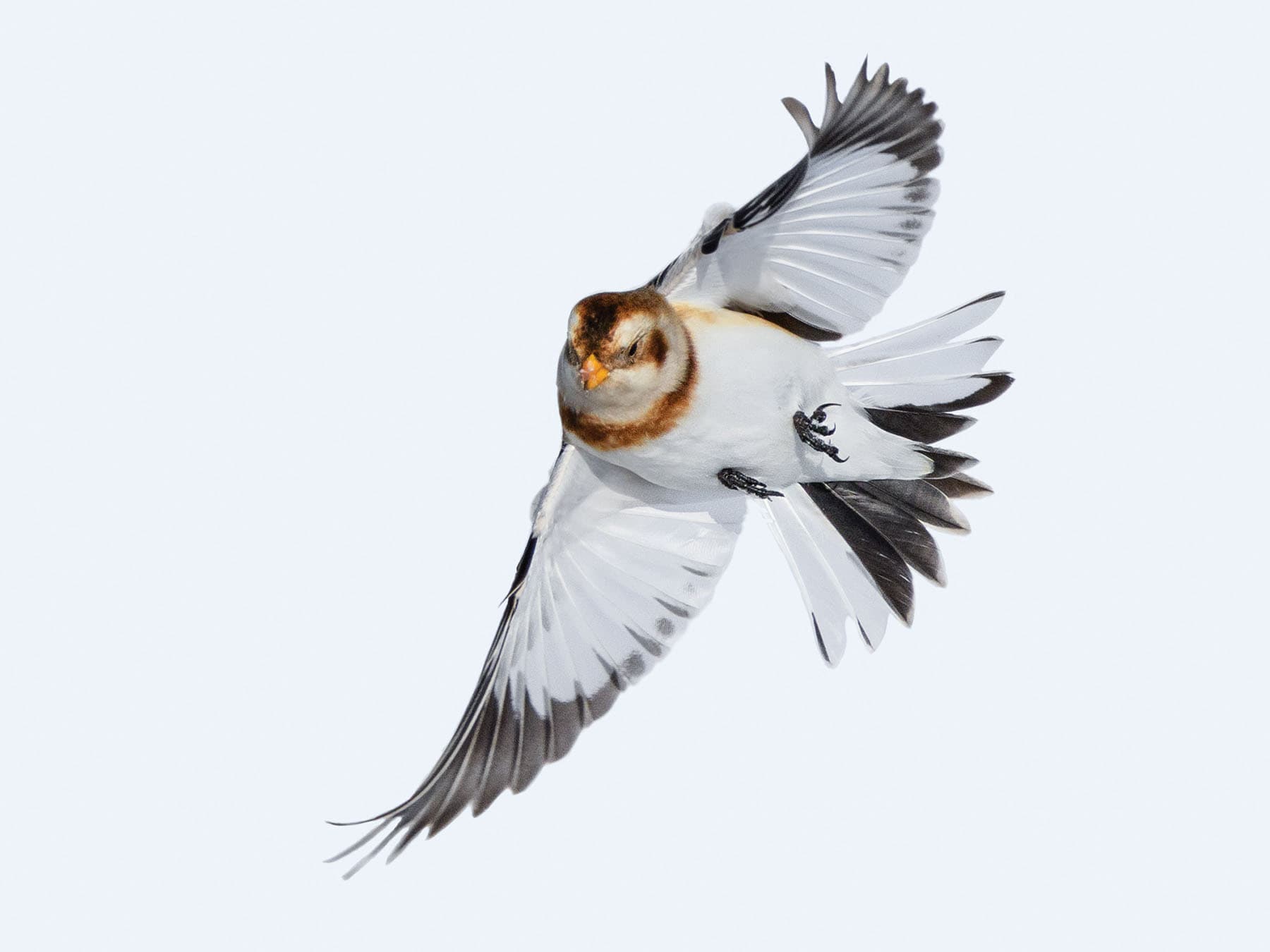
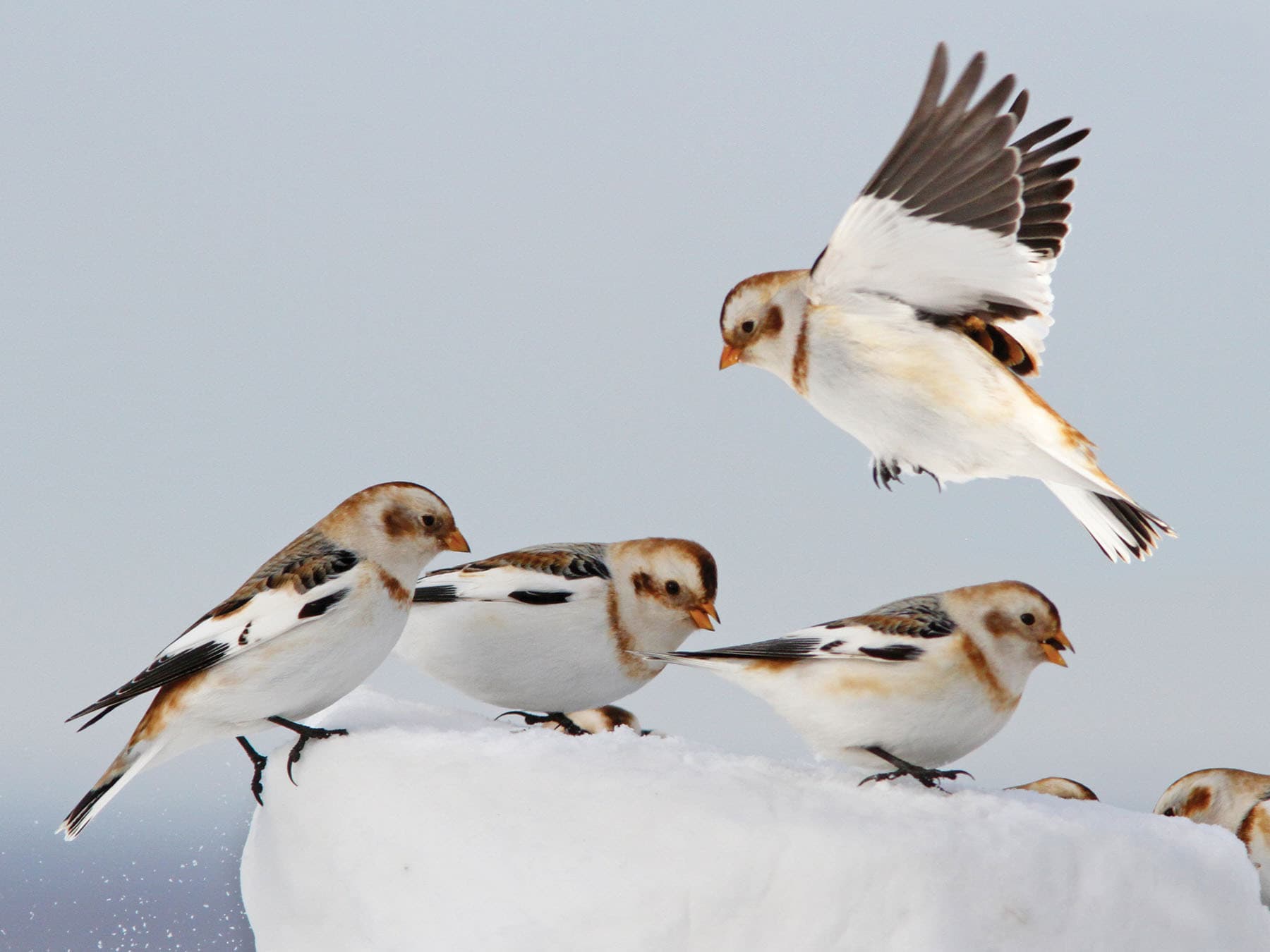
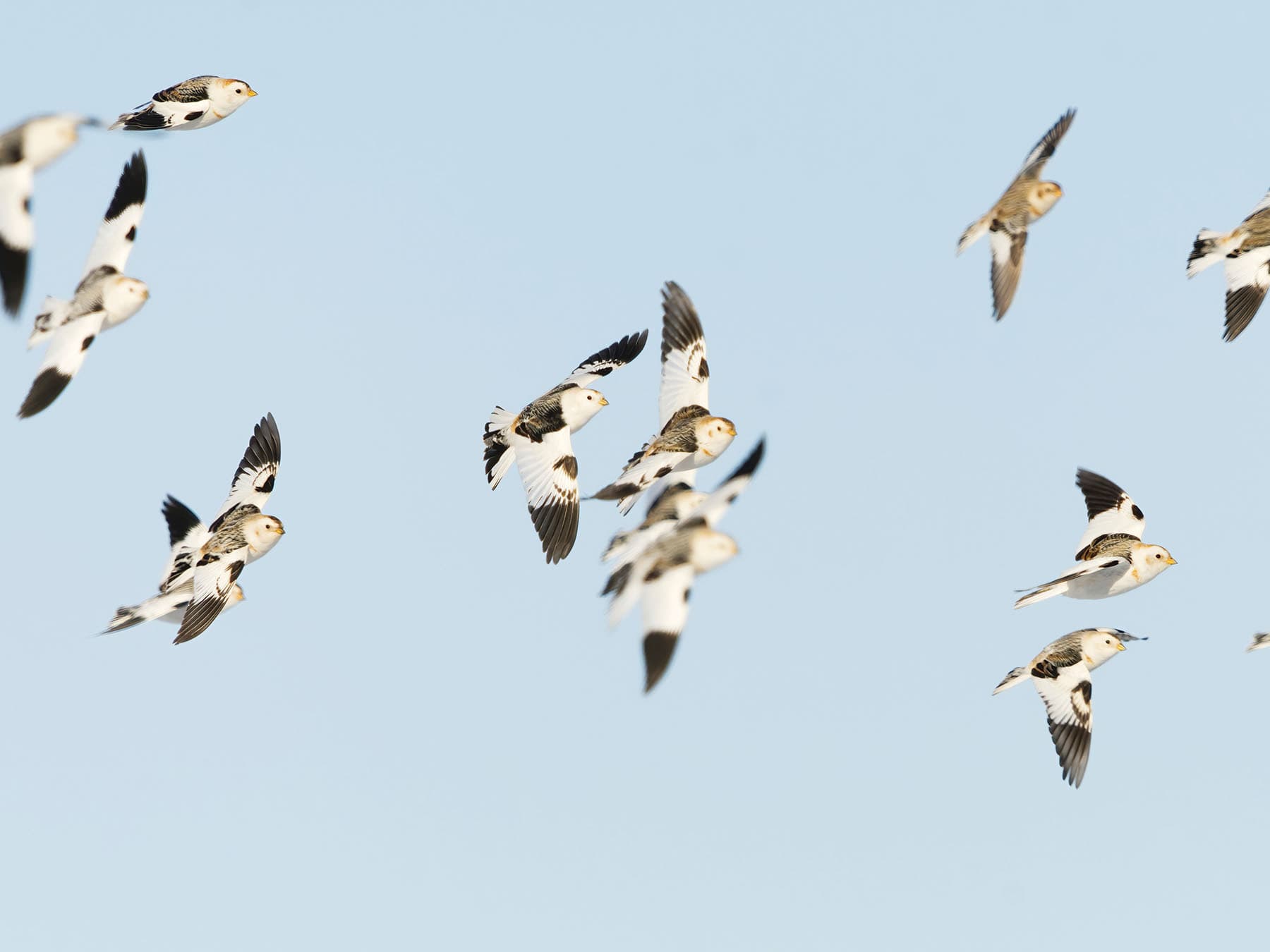
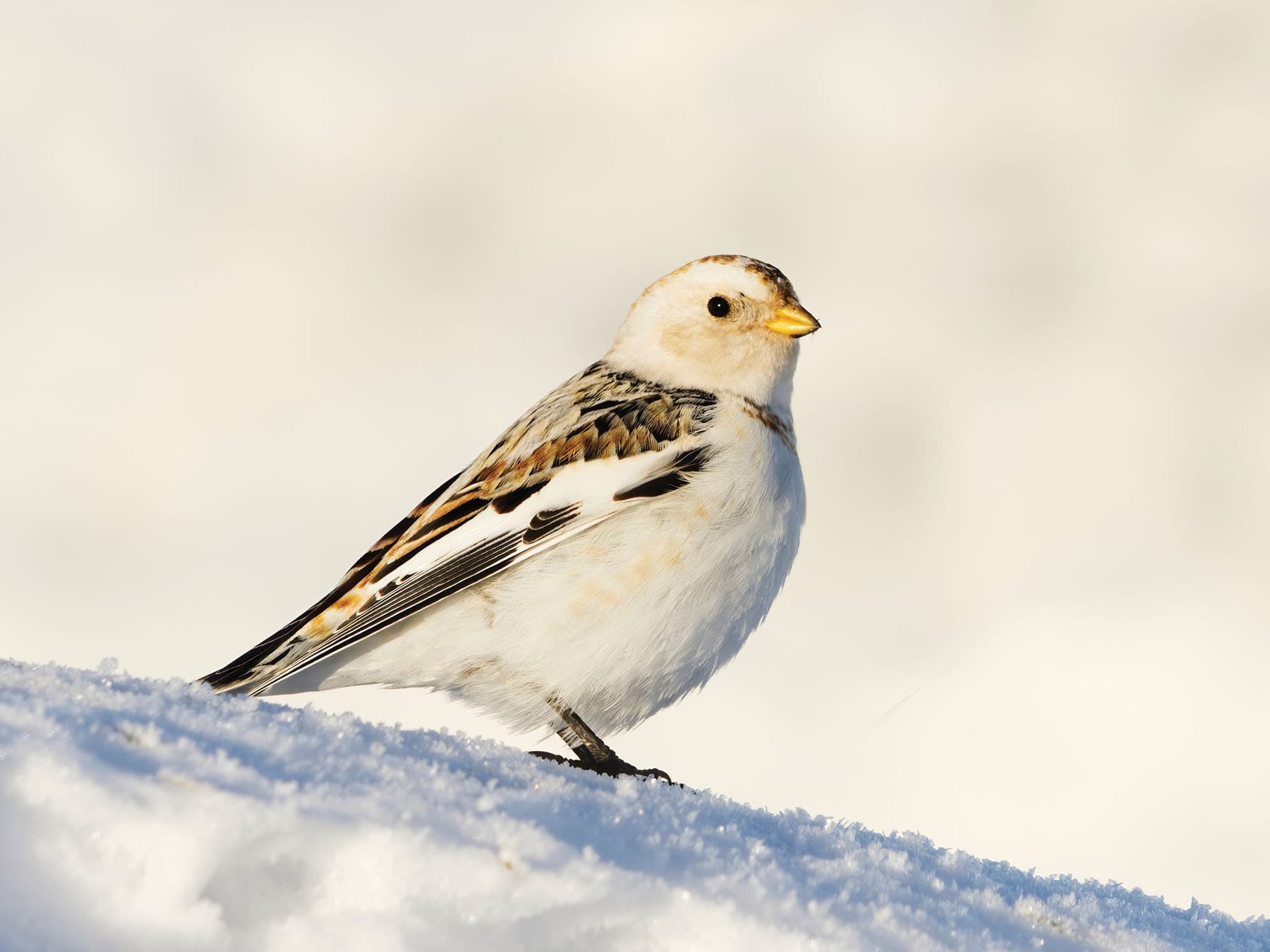
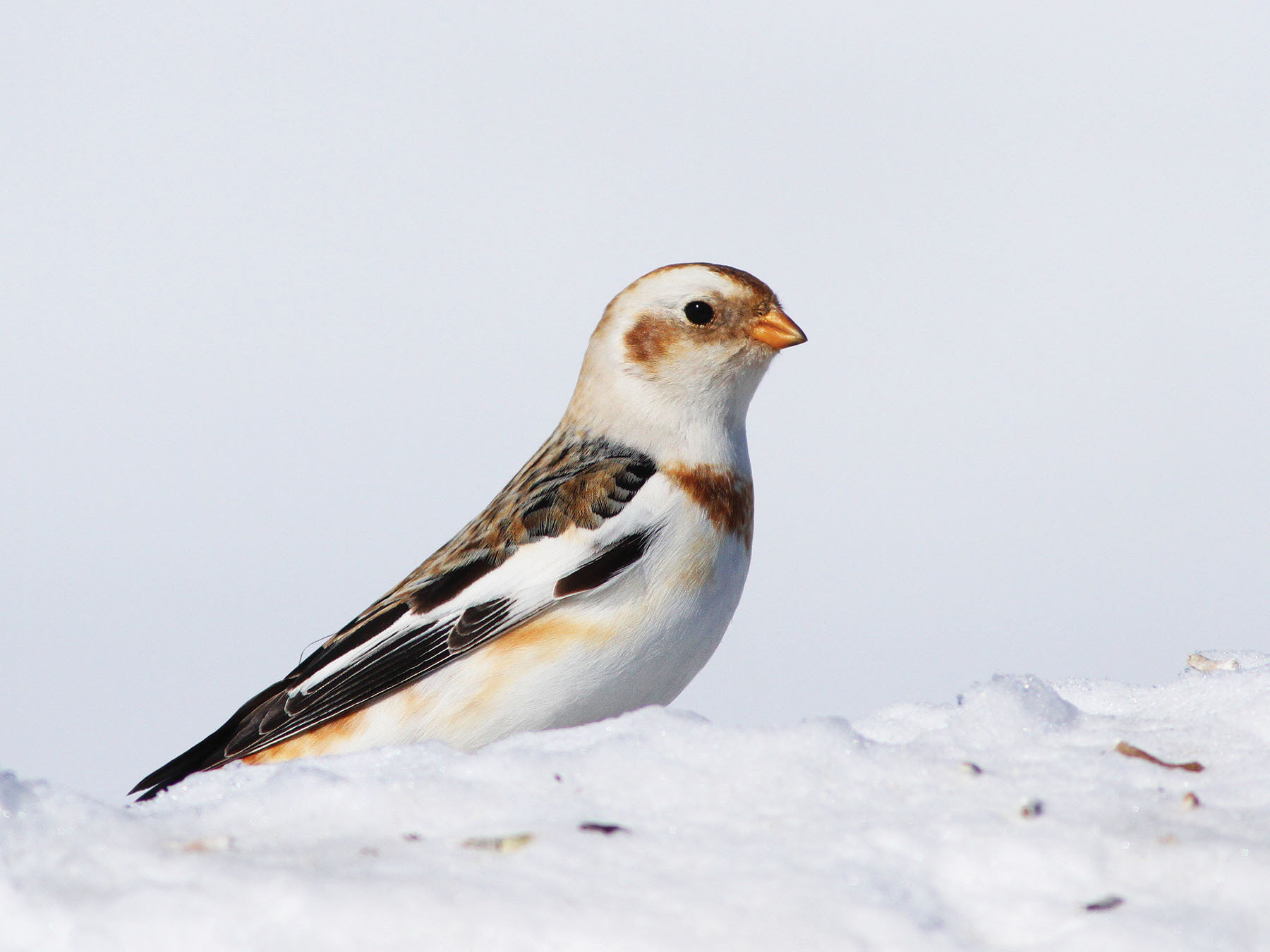
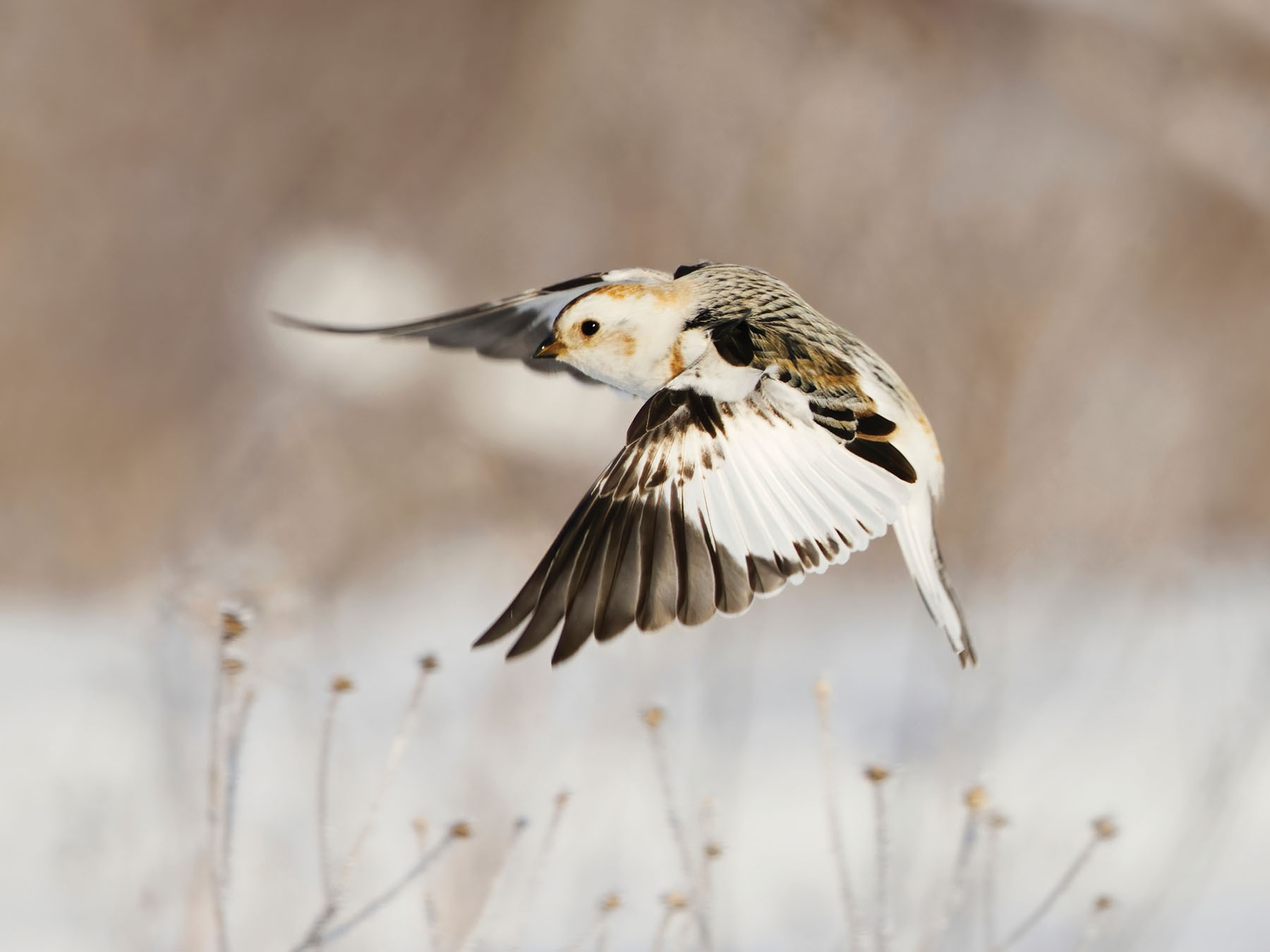
The Snow Bunting is a relatively large, finch-like songbird with a stocky build and a short conical bill. Their colours vary with seasons, although birdwatchers are most likely to see them in their rusty winter plumage. When seen in flight, these birds have characteristic white wings with black tips and white outer tail feathers.
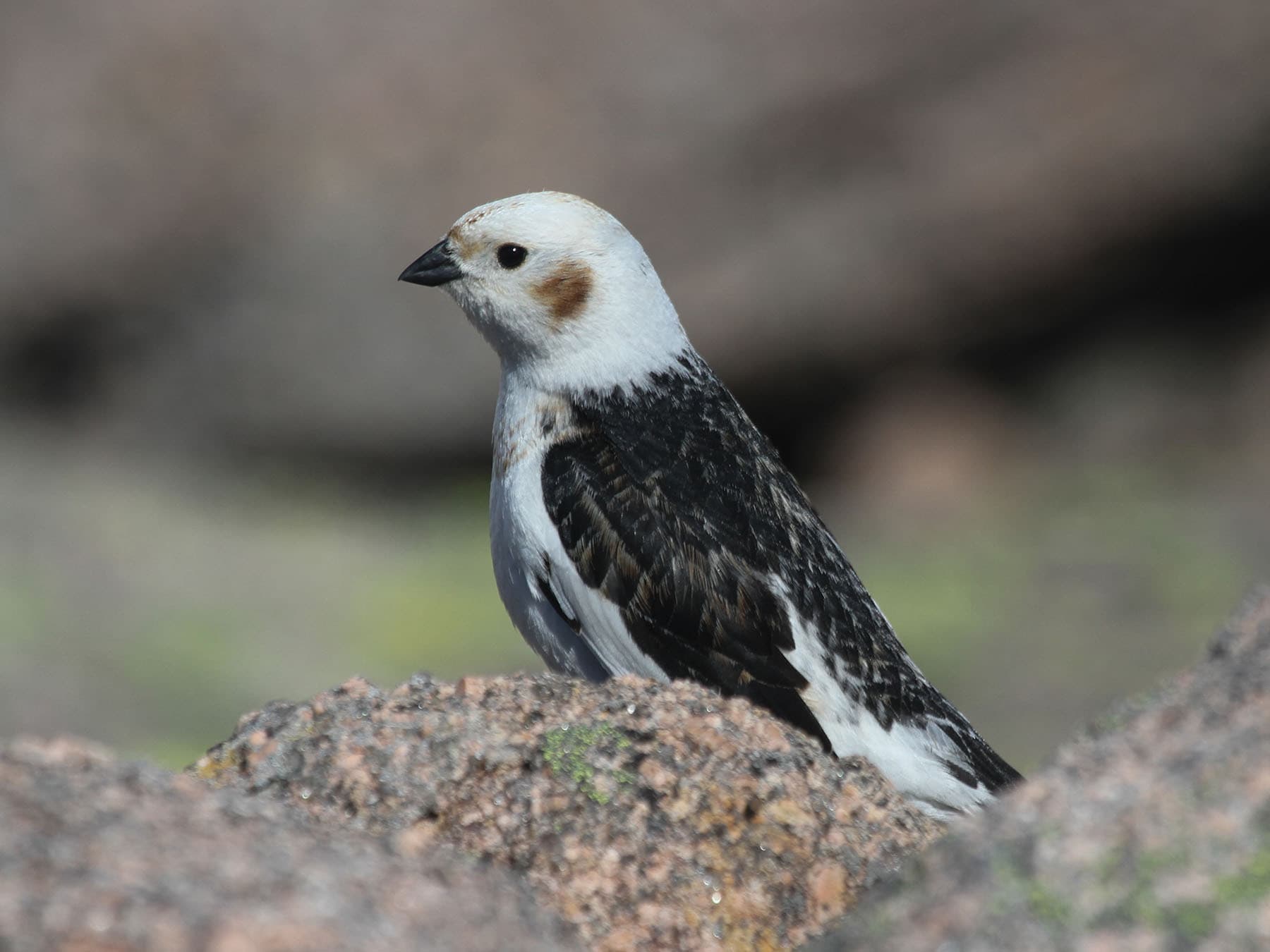
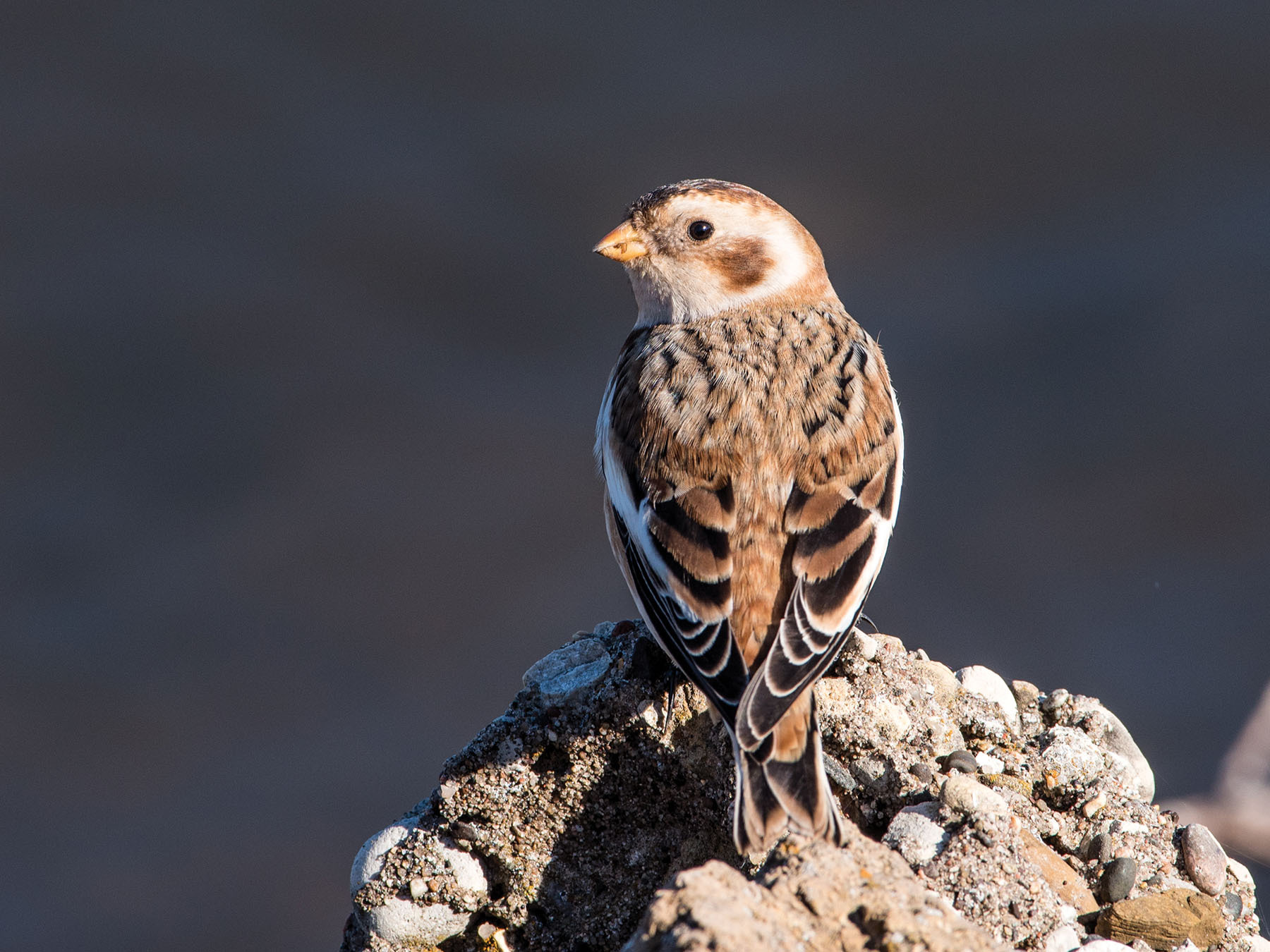
Males are primarily white in the summer, with black backs and wings. In the winter, their backs become paler, and they develop brownish marks across the upper chest, the sides of the face, and the crown and nape.
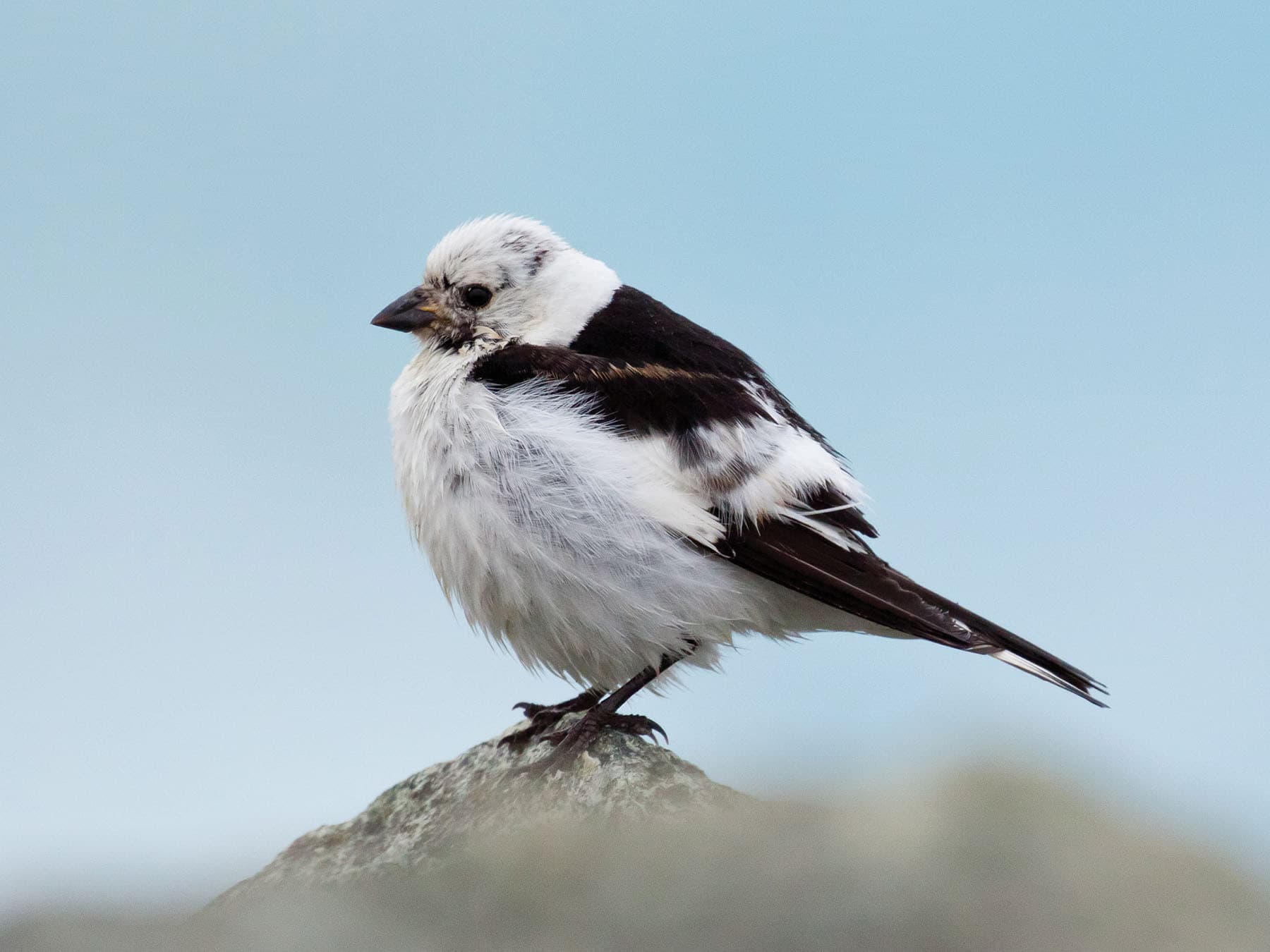
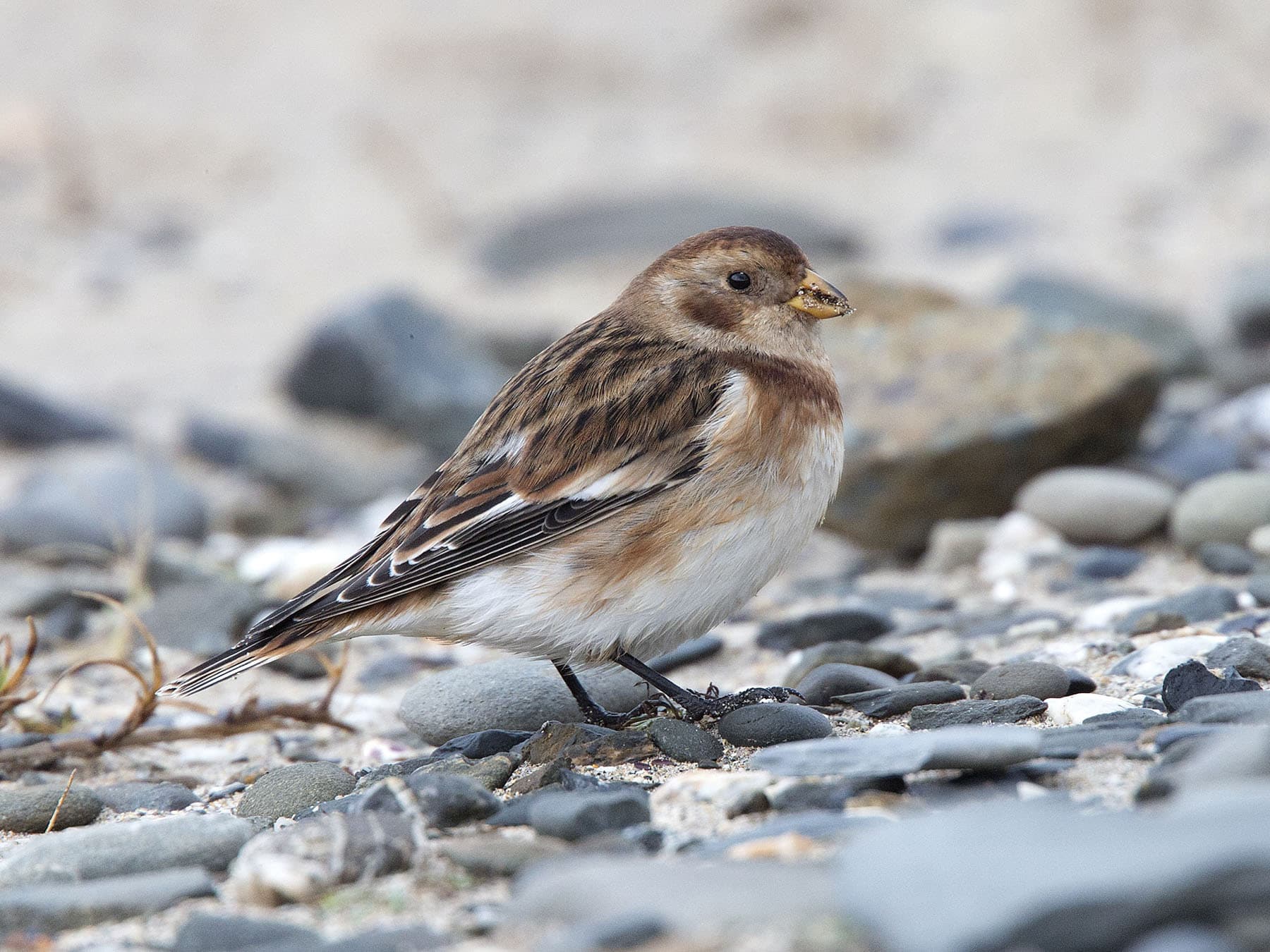
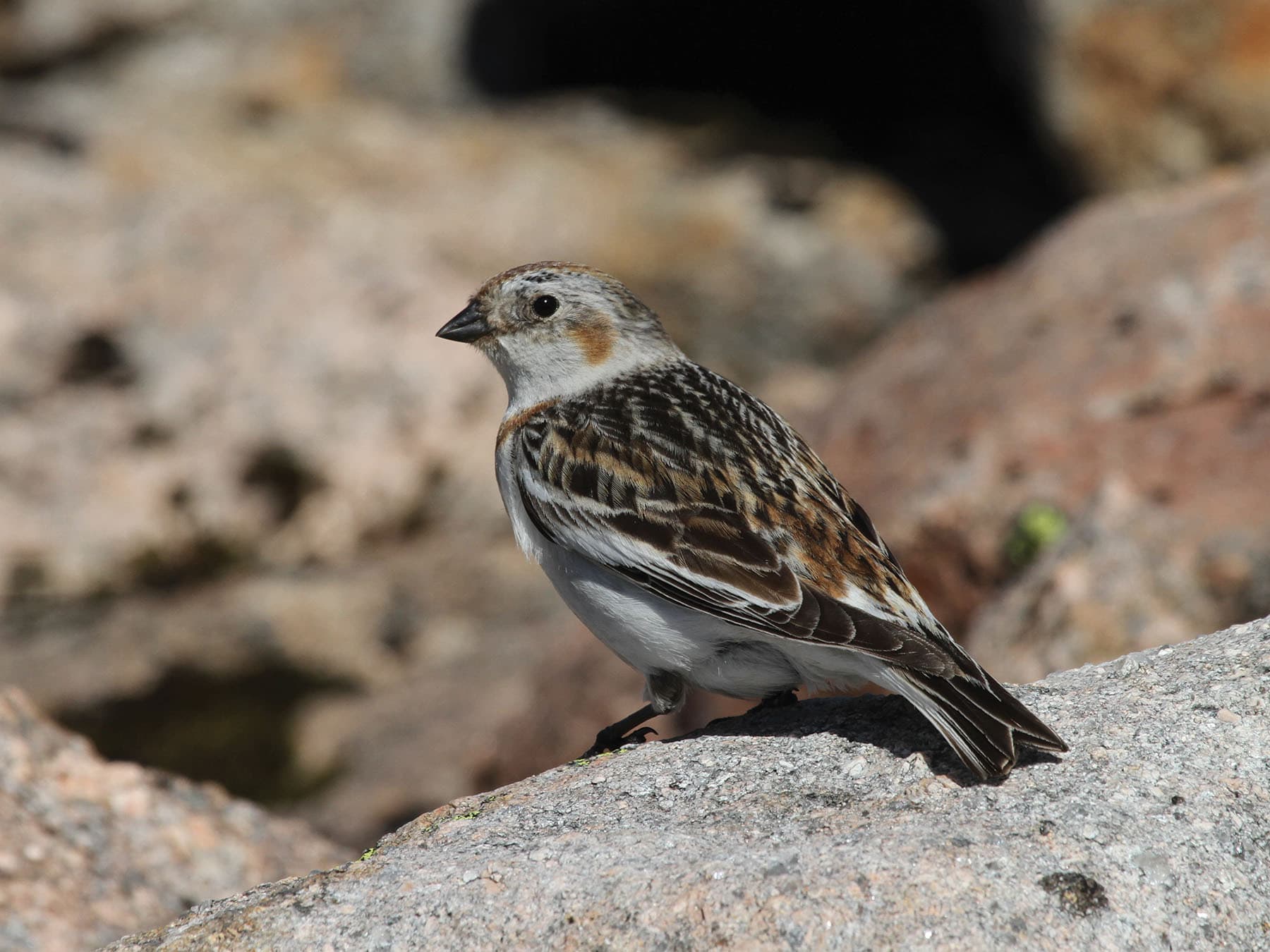
Female Snow Buntings have similar plumage but have black peppering on the head and a grizzled black and white back. In the winter, females develop more rusty brown plumage on the back, head, and breast. The bill is black during the breeding season in both sexes, changing to a yellow-brown shade in the winter.
Juvenile Snow Buntings seen from July to September are greyish above with paler bellies and a yellowish bill. These dull feathers are soon lost as they moult into their adult plumage.
How big are Snow Buntings?
The Snow Bunting is a fairly large, heavyset Bunting, slightly larger than a House Sparrow.
Length
Snow Buntings measure 15 to 17 centimetres or 6 to 6 ⅔ inches long.
Weight
These stocky birds weigh 28 to 50 grams or 1 to 1¾ ounces.
Wingspan
They have a wingspan of 32 to 38 centimetres or 12½ to 15 inches.
Its size
Adults- Length
- 15–18 cm
- Wingspan
- 32–38 cm
- Weight
- 30–50 g
Its song and calls
What sound does a Snow Bunting make?
Male Snow Buntings produce a pleasant warbled song in flight or while perched. Their calls include whistles, buzzing, and rolling notes.
- Song0:00 / 0:17
- Call0:00 / 0:13
Recorded in Normandie, France · November 2024
When and where to see it
OctoberIn season
Most recorded in October
- 1. Orkney Islands1.1%
- 2. Antrim0.47%
- 3. Shetland Islands0.45%
- 4. Eilean Siar0.32%
- 5. Monmouthshire0.24%
Each dot is a county, state or province: the bigger and darker, the larger the bird’s share of that place’s bird records that month. Grey dots: no regular records. The ringed point is the centre of the bird’s records this month; the arrow shows how it moved since last month, and the dashed loop its path through the year. “Arrivals” colours places where it becomes regular this month (orange) or is in its last regular month (grey). GBIF eBird Observation Dataset, 2019–2024. Map data: Natural Earth, US Census Bureau; place centres © OpenStreetMap contributors.
In your area
See when the Snow Bunting is recorded in your county, state or province.
How often the Snow Bunting turns up in the UK, Ireland, the United States and Canada through the year, from birdwatchers' records.
United Kingdom
Winter visitor · regularly Sep–Apr · most records in November
Ireland
Winter visitor · regularly Oct–Mar · most records in November
United States
Winter visitor · regularly Jun–Mar · most records in November
Canada
Winter visitor · regularly Oct–Apr · most records in January
Show as a table
| Month | United Kingdom | Ireland | United States | Canada |
|---|---|---|---|---|
| January | 0.045% (regular) | 0.021% (regular) | 0.057% (regular) | 0.54% (regular) |
| February | 0.035% (regular) | 0.012% (regular) | 0.050% (regular) | 0.53% (regular) |
| March | 0.016% (regular) | 0.008% (regular) | 0.014% (regular) | 0.25% (regular) |
| April | 0.005% (regular) | <0.001% | 0.003% | 0.090% (regular) |
| May | 0.003% | – | 0.003% | 0.008% |
| June | 0.004% | – | 0.019% (regular) | 0.015% |
| July | 0.003% | – | 0.003% | 0.019% |
| August | 0.001% | – | 0.002% | 0.005% |
| September | 0.011% (regular) | 0.001% | 0.005% (regular) | 0.004% |
| October | 0.058% (regular) | 0.025% (regular) | 0.023% (regular) | 0.13% (regular) |
| November | 0.084% (regular) | 0.044% (regular) | 0.086% (regular) | 0.42% (regular) |
| December | 0.041% (regular) | 0.024% (regular) | 0.045% (regular) | 0.34% (regular) |
Recorded regularly in
Worldwide: recorded regularly in 39 countries
Countries where it was recorded in at least 3 of the 6 years 2019–2024. Linked countries have their own bird list.
Europe (31)
North America (5)
Data: EOD – eBird Observation Dataset (Cornell Lab of Ornithology), accessed via GBIF.org, CC BY 4.0. Records from 2019–2024, aggregated and filtered by Birdfact. How these lists are made
Snow Buntings are adapted to life in cold, open habitats across the Northern Hemisphere. Continue reading to learn where these tough little songbirds live and breed.
What is the habitat of a Snow Bunting?
Snow Buntings live in open, treeless environments. In the summer, they inhabit tundra with rocky areas for nesting. Their winter habitats are more varied, including beaches, lake shores, sand dunes, stubble in farmlands, grassy areas, and weedy fields.
What is the range of a Snow Bunting?
Snow Buntings have an expansive global range. They breed across the tundras of the Northern Hemisphere, from Alaska, through Canada, Greenland, Iceland, Scandinavia, and Northern Russia to the Bering Sea. Their winter range includes much of temperate North America, Europe, and Asia.
Where do Snow Buntings live?
Snow Buntings are primarily terrestrial. They are most at home when walking, running or hopping on snowy, sandy, and rocky ground.
How rare are Snow Buntings?
Snow Bunting abundance varies between seasons and locations. They can be very common in one year but completely absent the next, especially on the southern boundaries of their range.
Where can you see Snow Buntings in North America?
Unless you live in Alaska or Northern Canada, winter is the best time to see Snow Buntings in North America. These birds are most common in agricultural fields, coastal sand dunes, and other open areas in the upper Great Plains states, the Great Lakes States, and the Northeast.
In Canada, non-breeding Snow Buntings can be seen in similar habitats right across the southern half of the country to Newfoundland in the east.
Where can you see Snow Buntings in the UK?
The only place to see Snow Buntings in the UK summer is a few high mountain peaks in Scotland. However, they are far more common in the winter when non-breeding birds arrive from places like Iceland and Scandinavia.
Snow Buntings can turn up along most of the United Kingdom’s coastline in winter, although the best place to look for these birds is the upper east coast of England and Scotland.
Migration
Most Snow Buntings are migratory, although they are resident in a few parts of their range. Continue reading to learn more about their movements and migratory habits.
Do Snow Buntings migrate?
Snow Buntings migrate twice each year. Their spring migration takes them to the tundra at high latitudes, where they will find a partner and raise a family.
Males arrive on their breeding grounds about a month before the females when the tundra is still covered in ice and snow because they must secure a desirable nest site if they hope to find a partner.
Snow Buntings head south in the autumn/fall before conditions become too extreme. They do not fly as far as the tropics or subtropics, settling instead for cold and often snowy areas with similar habitat characteristics to their breeding grounds.
Are Snow Buntings native to North America?
Snow Buntings are native to North America. These birds breed in Alaska and Northern Canada and fly south to overwinter in the Lower 48 and Southern Canada.
Are Snow Buntings native to the UK?
Snow Buntings are native to the United Kingdom. Most of the population are winter visitors from Iceland and Scandinavia, although small numbers breed in high-lying parts of Scotland.
Tips for seeing it
- Look for Snow Buntings in open, snowy fields or rocky coastal areas during winter.
- Listen for their distinctive, tinkling call, often described as a soft 'tew' or 'pew'.
- Observe their unique 'crawling' behaviour as they forage on the ground.
- In the UK, watch for them along the eastern and northern coasts from October to March.
What it eats
What do Snow Buntings eat?
Snow Buntings feed primarily on seeds, although they will take buds and invertebrates when possible. They find most of their food on the ground but can take seeds from stalks by bending or shaking them.
These birds often feed along agricultural fields in the winter, looking for grain and weed seeds uncovered along roadsides. They also feed along the shoreline of sandy beaches, hunting small invertebrates like amphipods.
What do Snow Bunting chicks eat?
Snow Bunting chicks eat insects and other invertebrates delivered by both parents.
Nesting and breeding
Snow Buntings nest in pretty extreme environments. Continue reading to learn more about their breeding behaviours.
Where do Snow Buntings nest?
Snow Buntings nest in deep rock cracks where they are protected from storms and predators. They build a cosy nest of grass, moss, and other plant materials and line the cup with insulating fur and feathers to keep the eggs and chicks warm.
Even so, the female must spend virtually all her time in the nest when incubating and relies on her partner to bring her food.
What do Snow Bunting eggs look like?
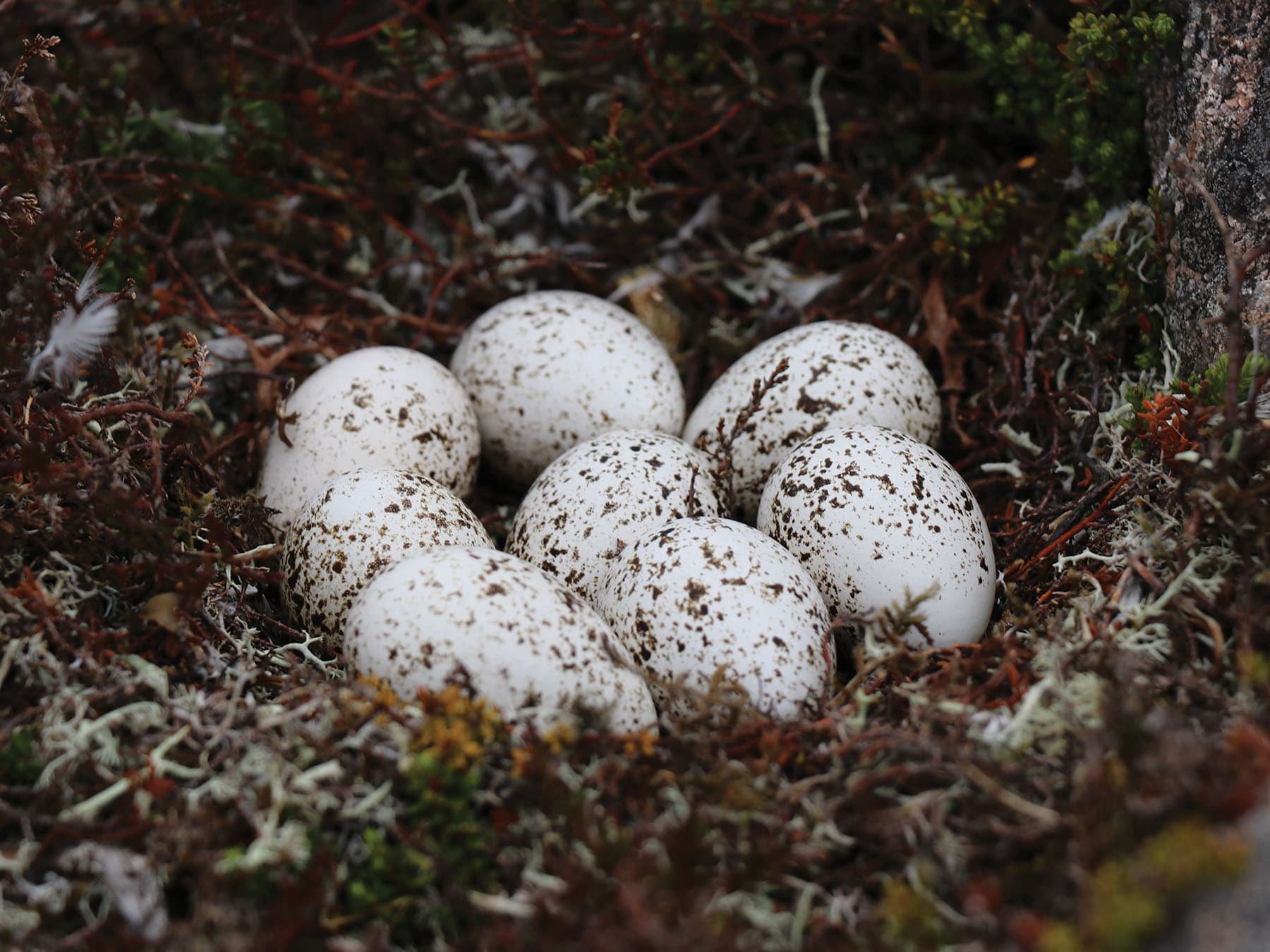
Snow Buntings lay two to eight variably marked eggs with a cream-white to pale blue-green ground colour. Their eggs have an average size of 23 millimetres long and 16 millimetres wide.
Do Snow Buntings mate for life?
Snow Buntings do not mate for life. They are usually monogamous in the nesting season, although males occasionally mate with more than one female.
Behaviour
Snow Buntings are territorial in the breeding season but highly gregarious in the winter. Bird watchers can often enjoy sightings of dozens, hundreds, or even thousands of these birds in their favoured habitats.
Are Snow Buntings aggressive?
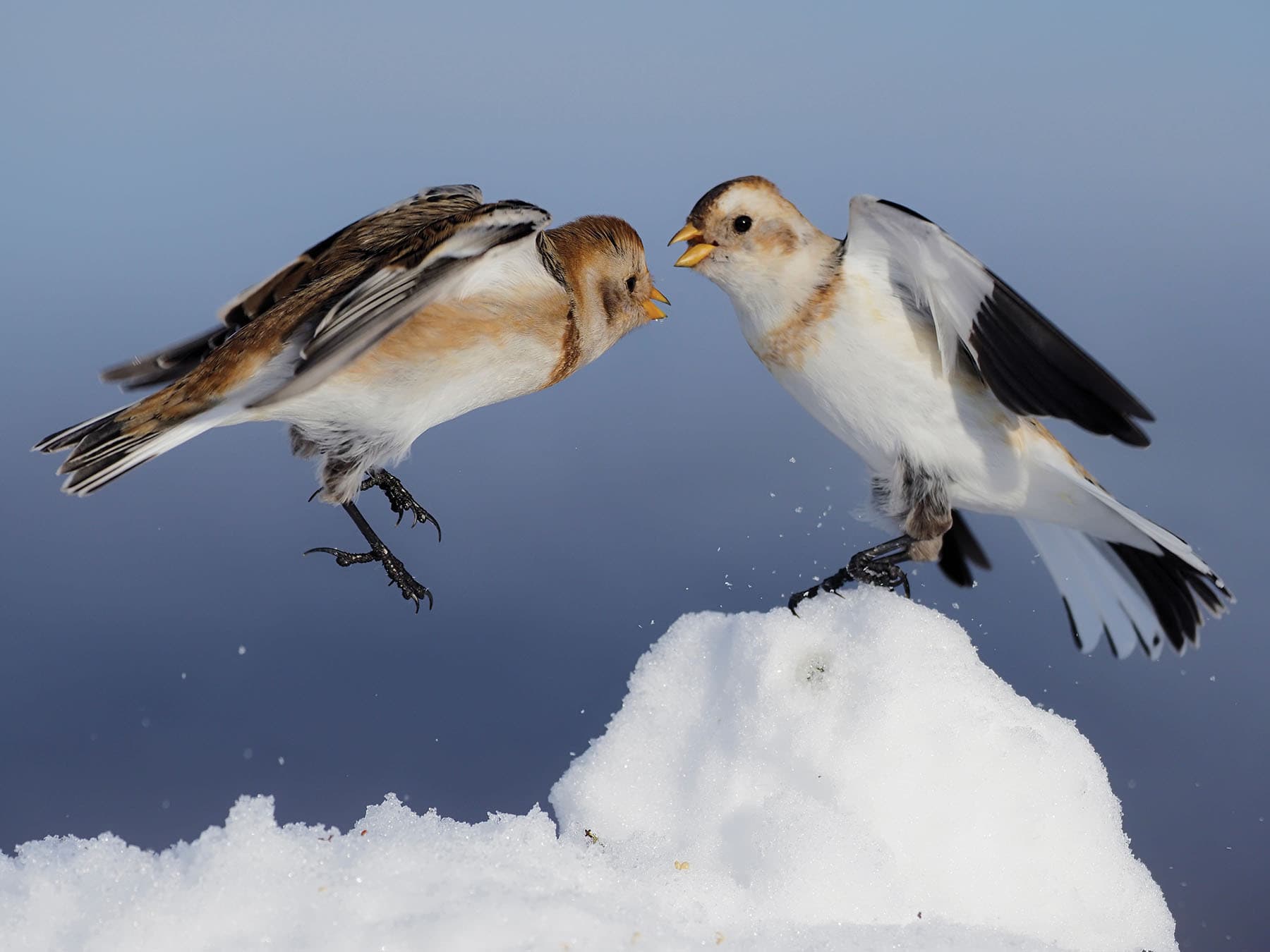
In the nesting season, male Snow Buntings are highly territorial and will fight with other males. Combat occurs both in the air and on the ground, and they will use their bills and claws against their opponent. Females are also aggressive towards potential female competitors in their territory.
Snow Buntings are not aggressive birds outside of the breeding season, although they may squabble among themselves when flocking.
Where do Snow Buntings sleep at night?
Snow Buntings sleep in holes and rock cracks in the breeding season and on the ground in winter. They may choose wind-sheltered positions on the coldest nights, although these resilient birds do not huddle for warmth.
Lifespan and predators
How long do Snow Buntings live?
Snow Buntings have a typical lifespan of about three years, although banding data shows that they can survive nearly nine years.
What are the predators of Snow Buntings?
In the nesting season, Snow Buntings are particularly vulnerable to northern predators like Arctic Fox, Snowy Owl, and Gyr Falcons. Many other birds of prey and small mammalian carnivores will feed on them in the winter.
Are Snow Buntings protected?
Snow Buntings are protected by the Wildlife and Countryside Act in the UK and the Migratory Bird Treaty Act in North America.
Are Snow Buntings endangered?
Snow Buntings are not endangered. They are a Least Concern species on the IUCN Red List.
Conservation
While currently listed as Least Concern, Snow Buntings face threats from climate change affecting their Arctic breeding grounds. Habitat loss due to changes in agriculture and coastal development also impacts their wintering areas.
Conservation efforts focus on protecting both breeding and wintering habitats.
Similar birds
Often mistaken for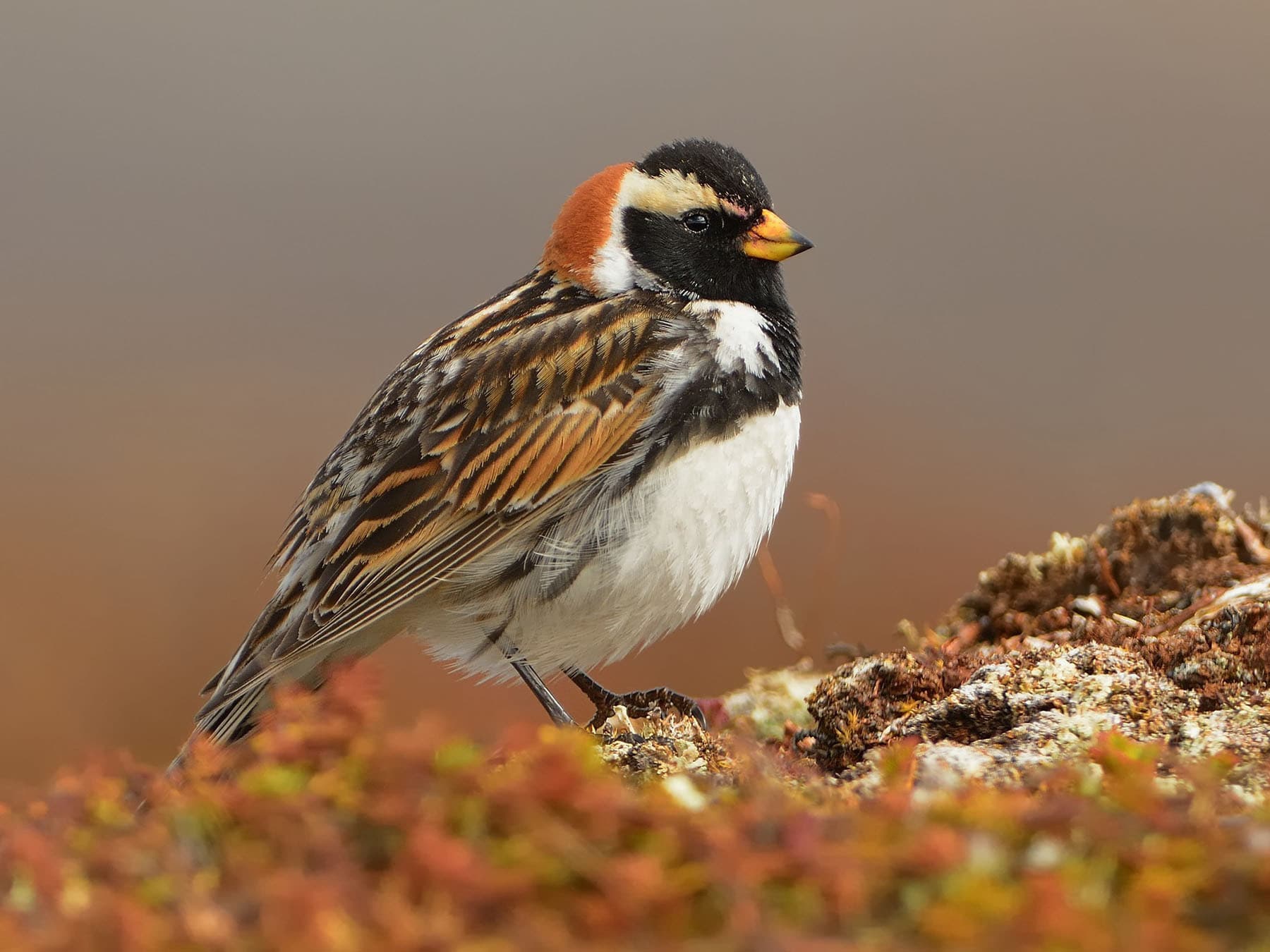
More photos
4 photos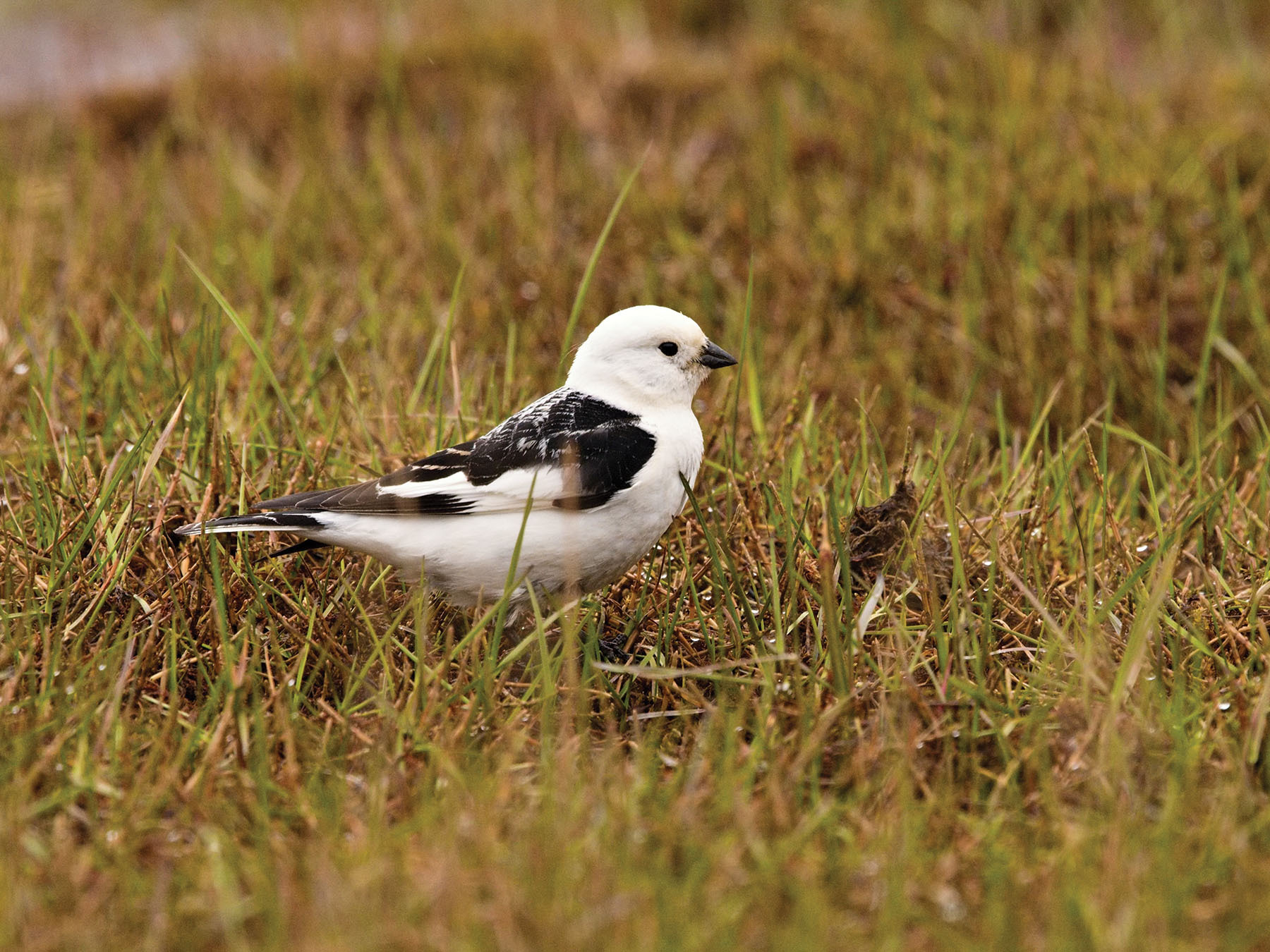
Quick facts
- Length
- 15–18 cm
- Wingspan
- 32–38 cm
- Weight
- 30–50 g
- Lifespan
- 3 years · oldest recorded 10.2 years
- Migration
- Long-distance Migrant
- Global status (IUCN)
- Least Concern
- World population
- 40,000,000 mature individuals
- Population trend
- Decreasing
- Also called
- Snowflake
- Scientific name
- Plectrophenax nivalis
Questions
4How to attract Snow Buntings?
Snow Buntings are very difficult to attract unless you live in an area they frequent. In such places, these birds may be attracted by spreading birdseed on the ground.
Do Snow Buntings visit feeders?
Snow Buntings do not visit bird feeders. These migratory nomads prefer to feed on the ground in wide-open habitats.
What is a flock of Snow Buntings called?
A flock of Snow Buntings is known collectively as a drift. Individual birds are often described as ‘snowflakes’.
Is a Snow Bunting a sparrow?
Snow Buntings are not in the same family as sparrows. In fact, Snow Buntings are members of the Calcariidae family (Longspurs and Snow Buntings), while sparrows are from the Passeridae and Passerellidae families.
Sources
4- 1BirdLife International. 2016. Plectrophenax nivalis. The IUCN Red List of Threatened Species 2016: e.T22721043A89345729. Source (opens in a new tab)
- 2Breeding Bird Survey and/or Christmas Bird Count: Butcher and Niven (2007)
- 3Rich et al. (2004)
- 4Fransson et al., EURING list of longevity records for European birds (2010) Source (opens in a new tab)

Checked by
Nathan Cope, founder and editor
Nathan founded Birdfact and leads its writers and contributors in the UK, the US and Canada. He has watched and studied birds for more than ten years, and checks every article and species guide before it’s published.