


Lapland Longspur
Lapland Bunting · Calcarius lapponicus
By the Birdfact teamChecked by Nathan Cope
On this page13 sections
How to recognise it
What do Lapland Longspurs look like?
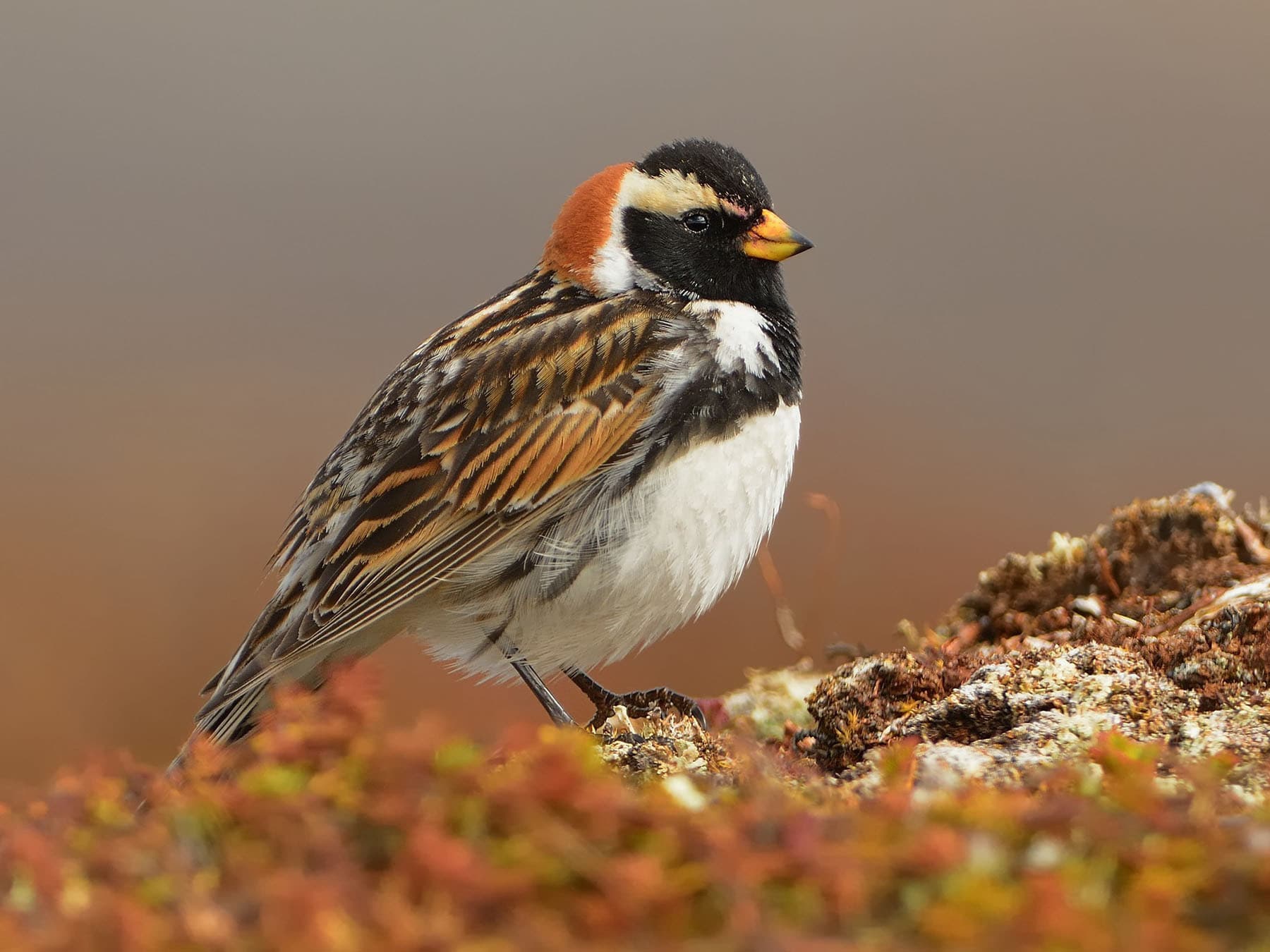
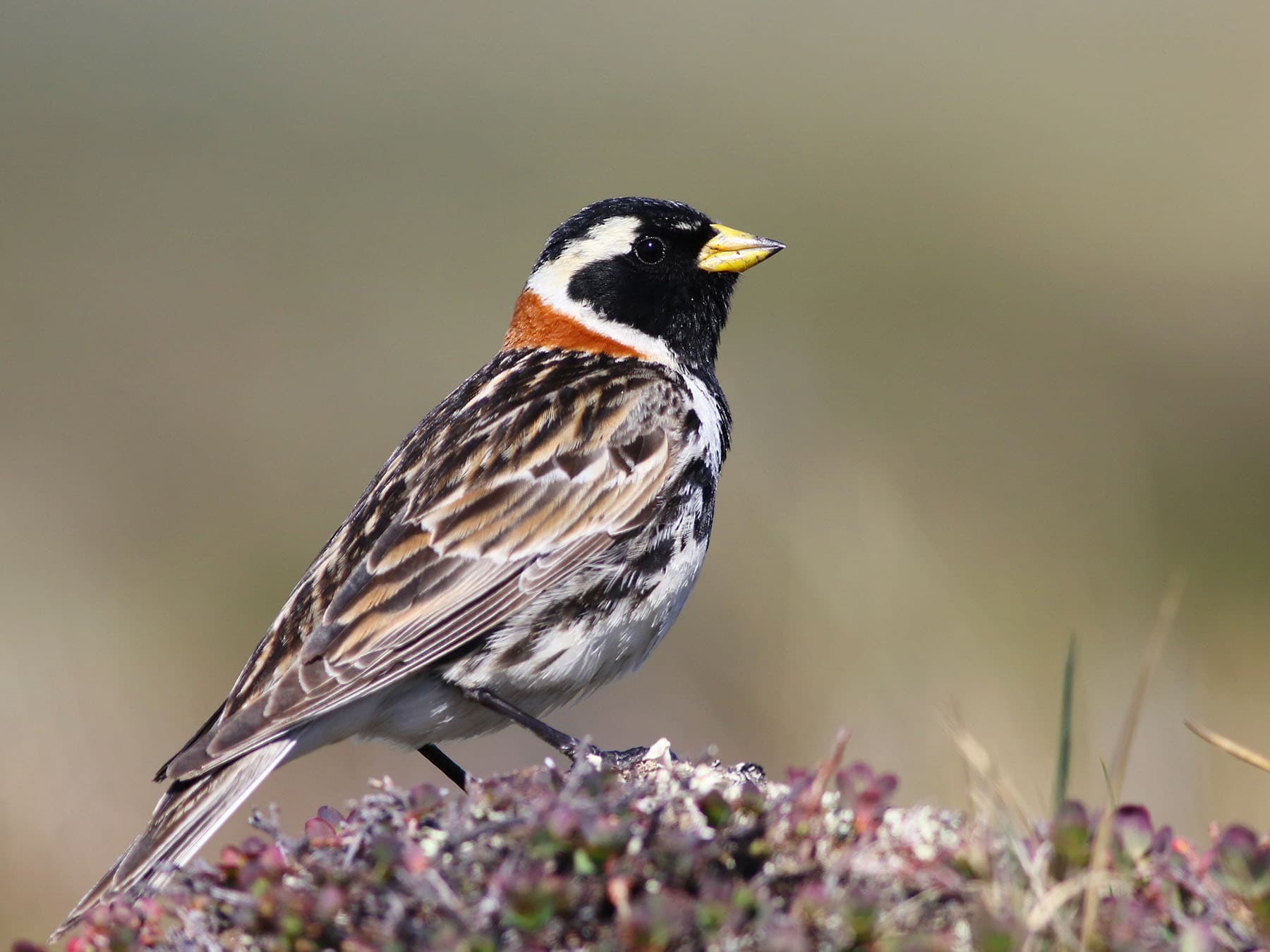
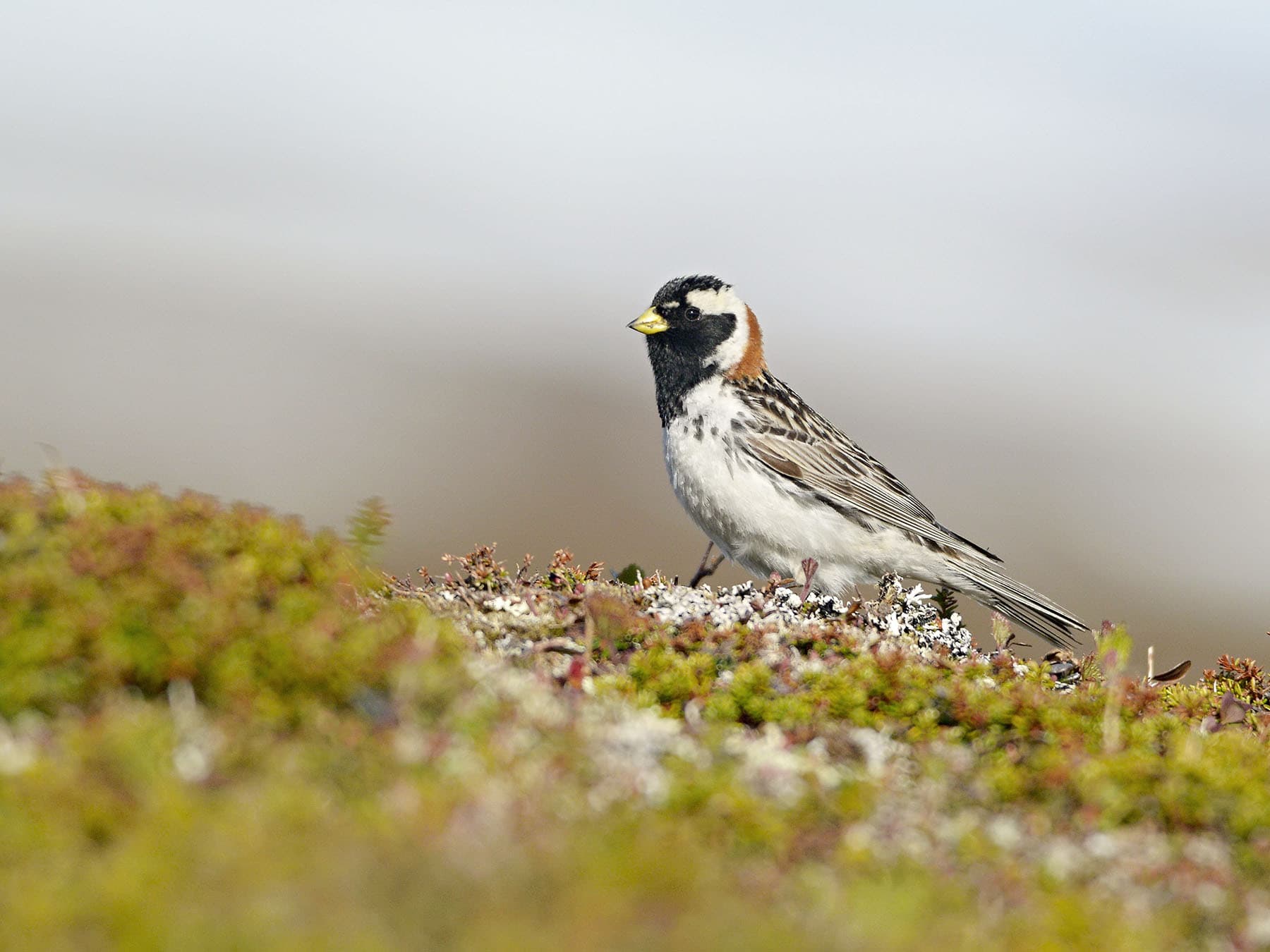
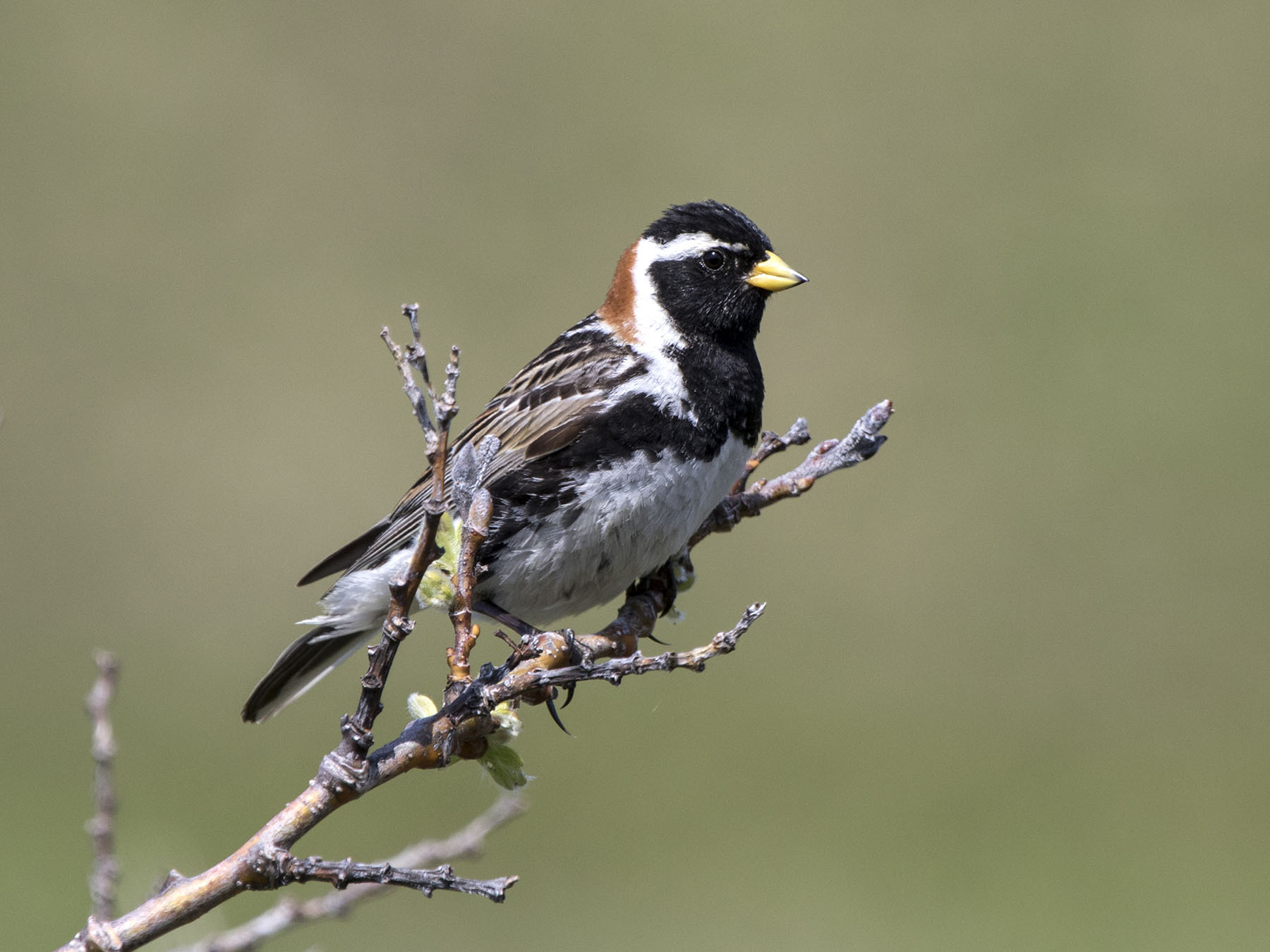
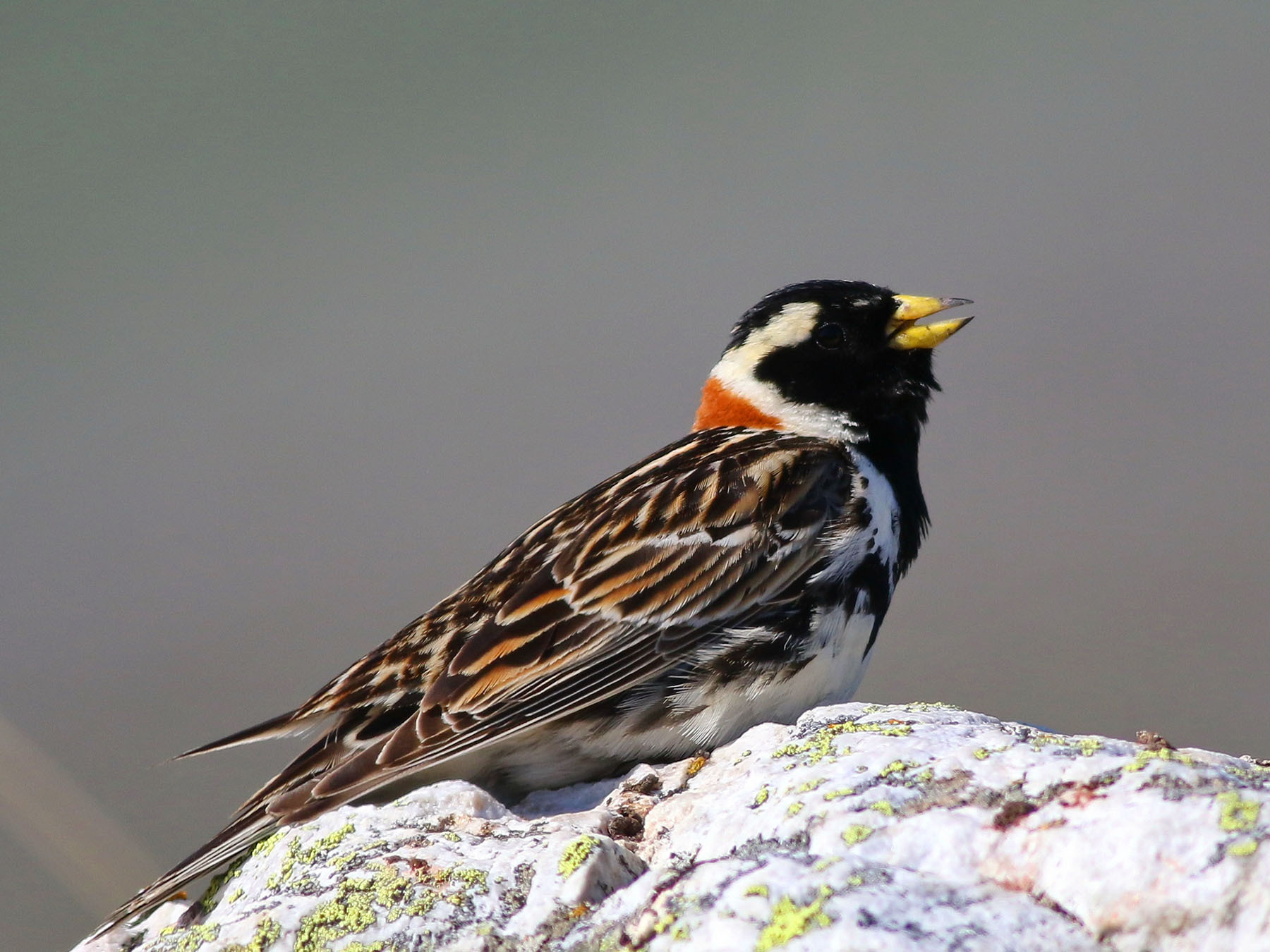
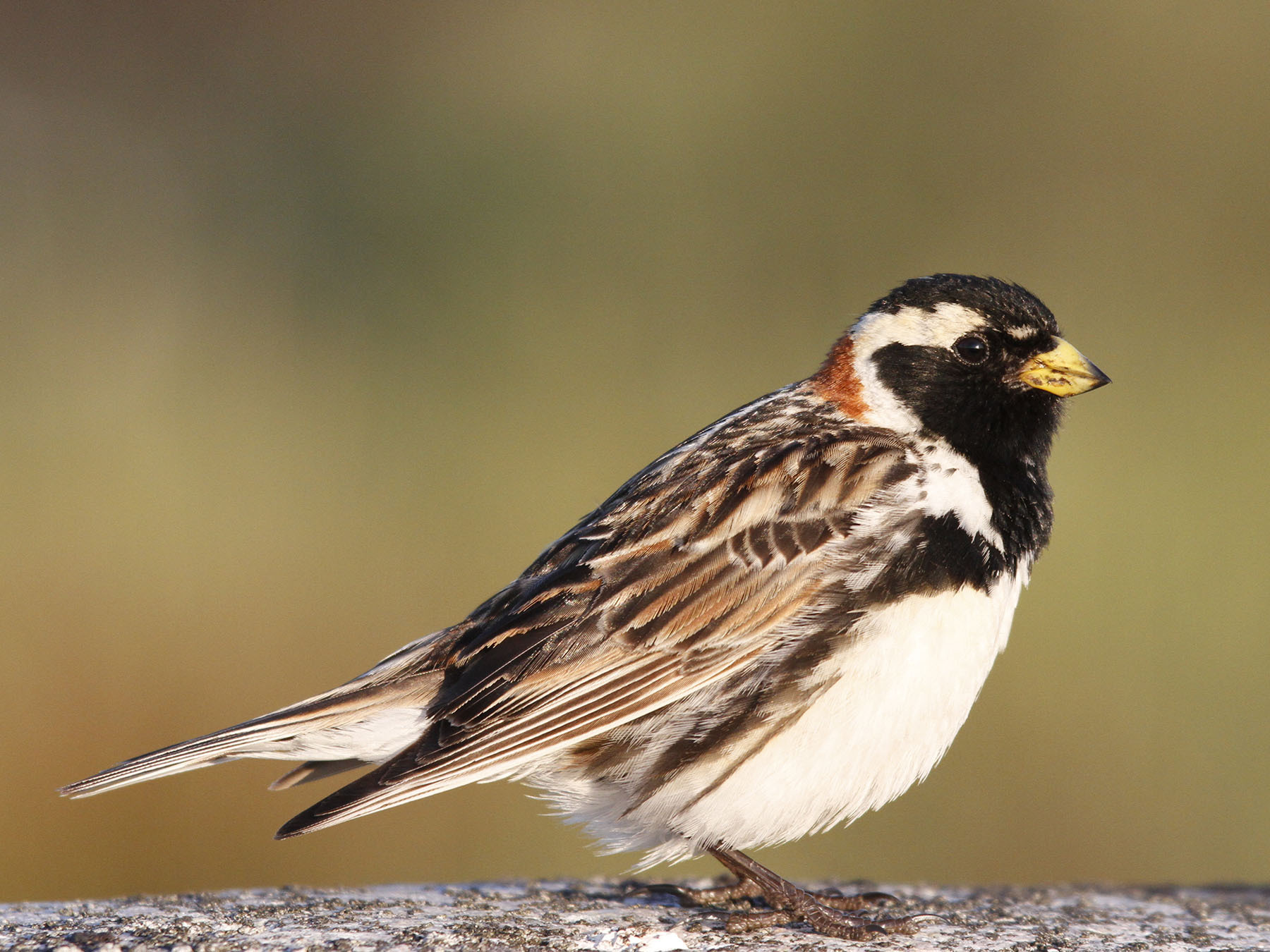
Male Lapland longspurs have two distinct plumages, for breeding and nonbreeding seasons. The male’s showy breeding plumage is bold and colorful, with a black head, throat and flanks, a white eyestripe, chestnut nape, white underparts, a heavily streaked gray-black back and wings, with chestnut panels, and a broad yellow bill.
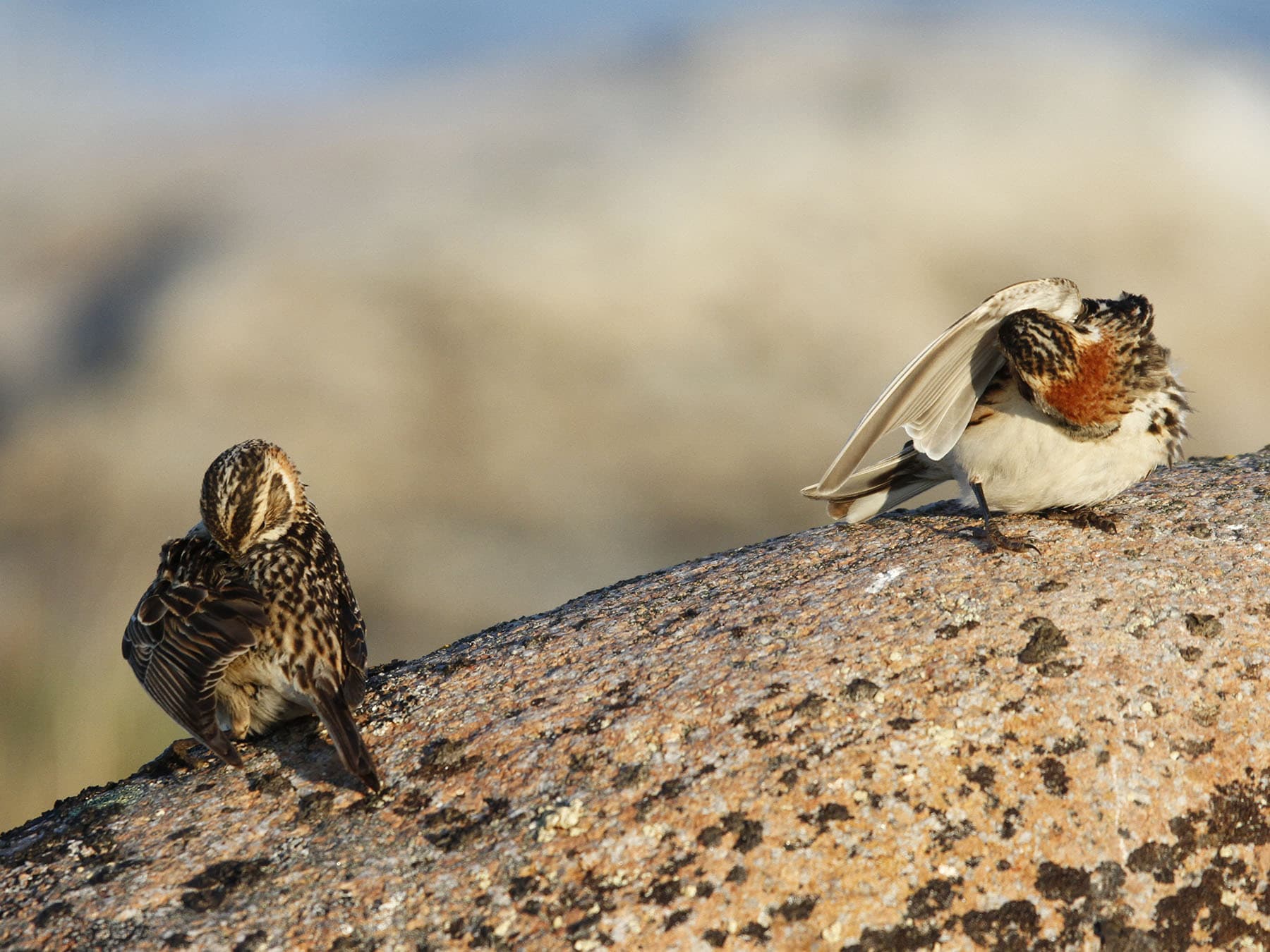
During the breeding season, female Lapland longspurs have similar marking patterns to breeding males, but lack the heavy black coloring, instead showing a patchy blackish streaked throat and washed out streaky facial markings. They have the same chestnut nape, white underparts and a paler version of the male’s gray-black wings.
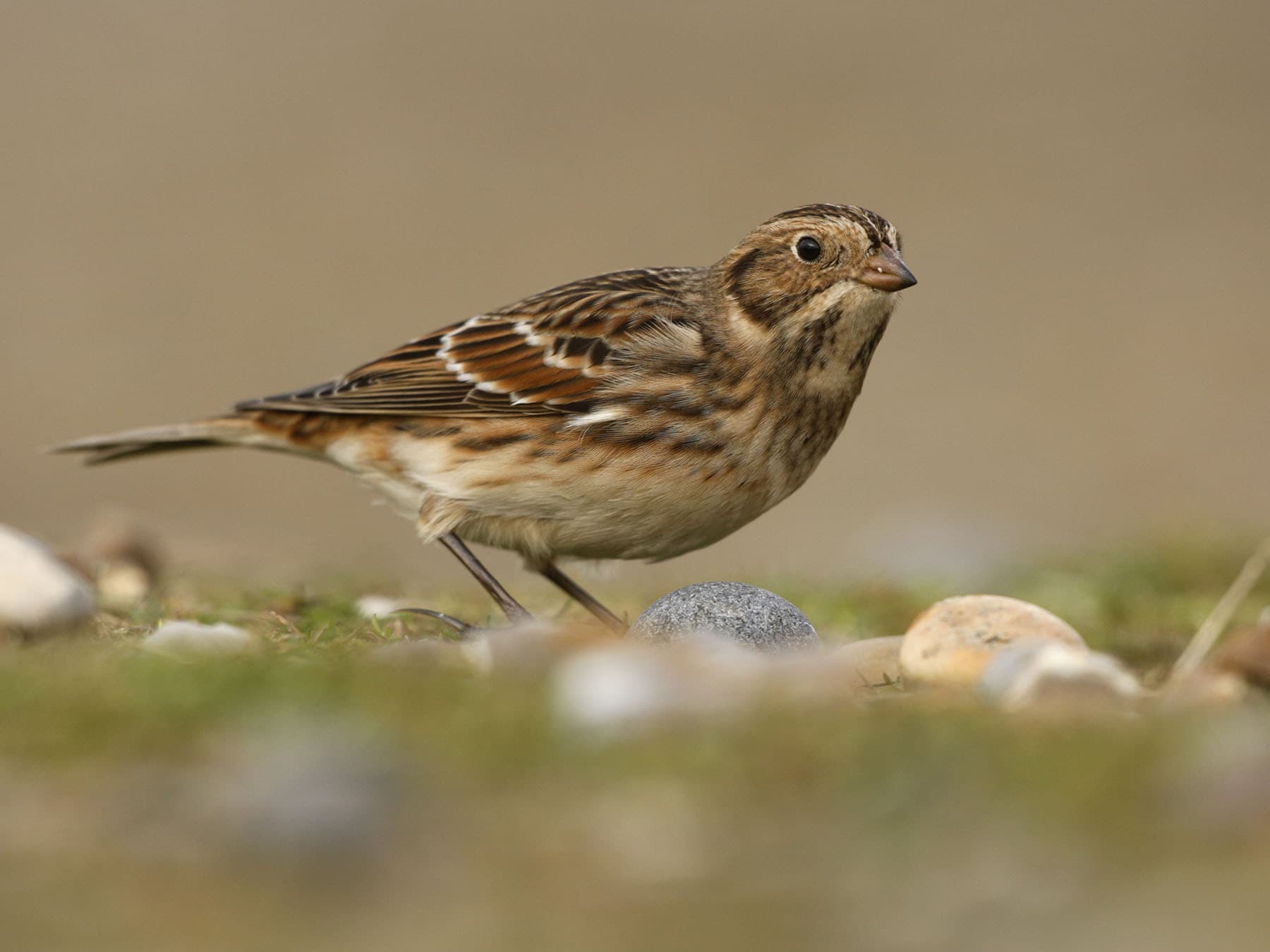
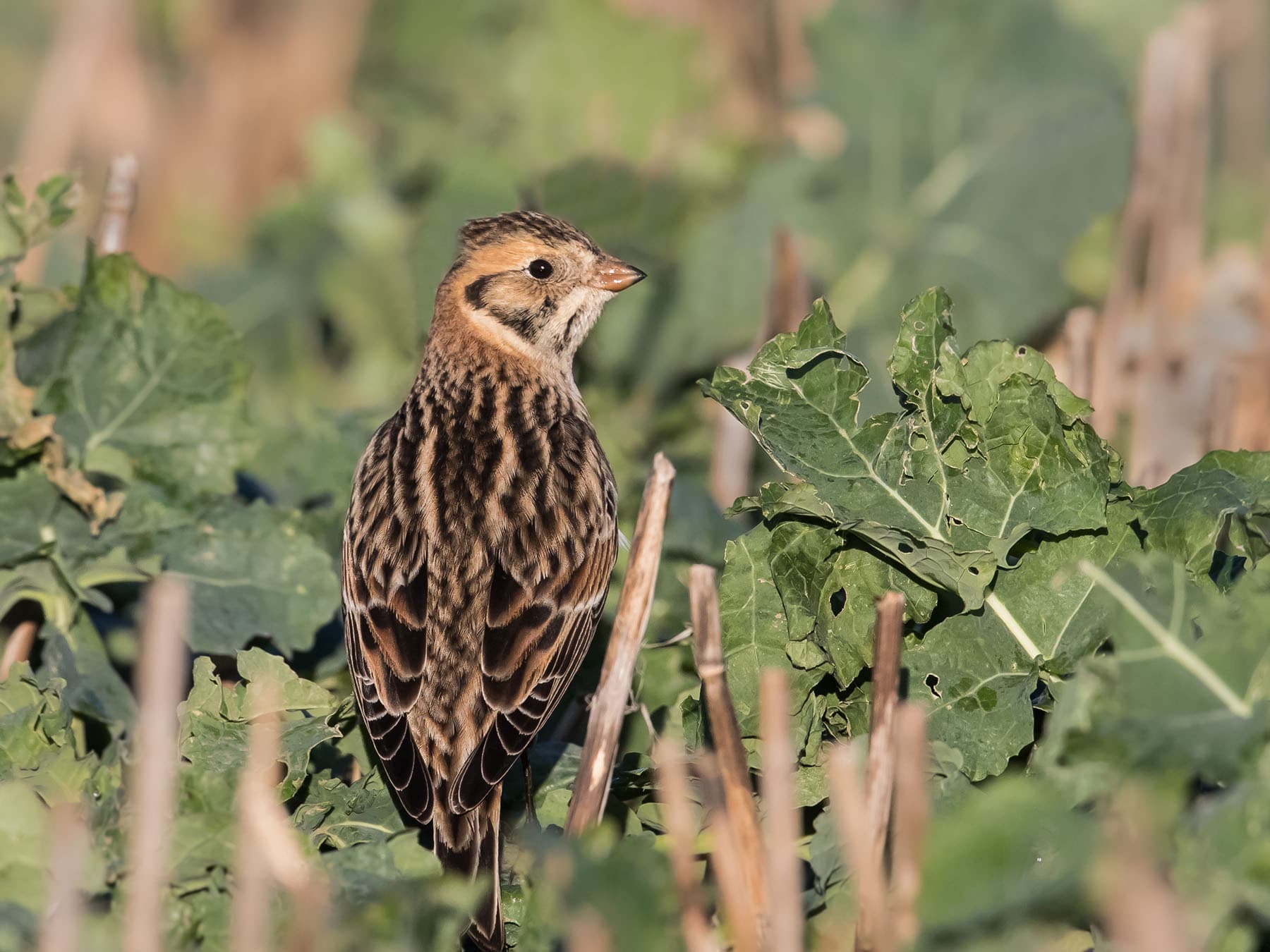
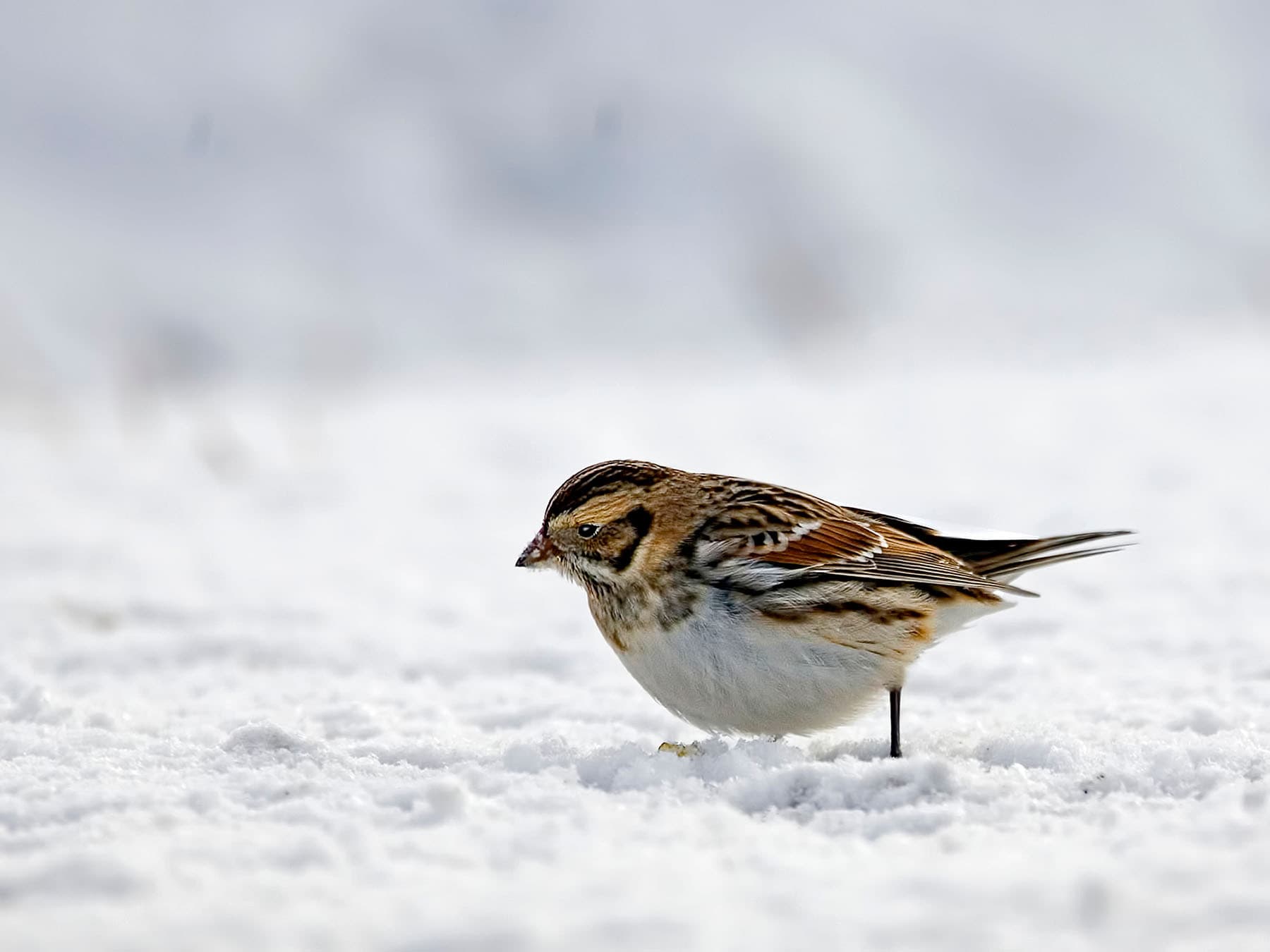
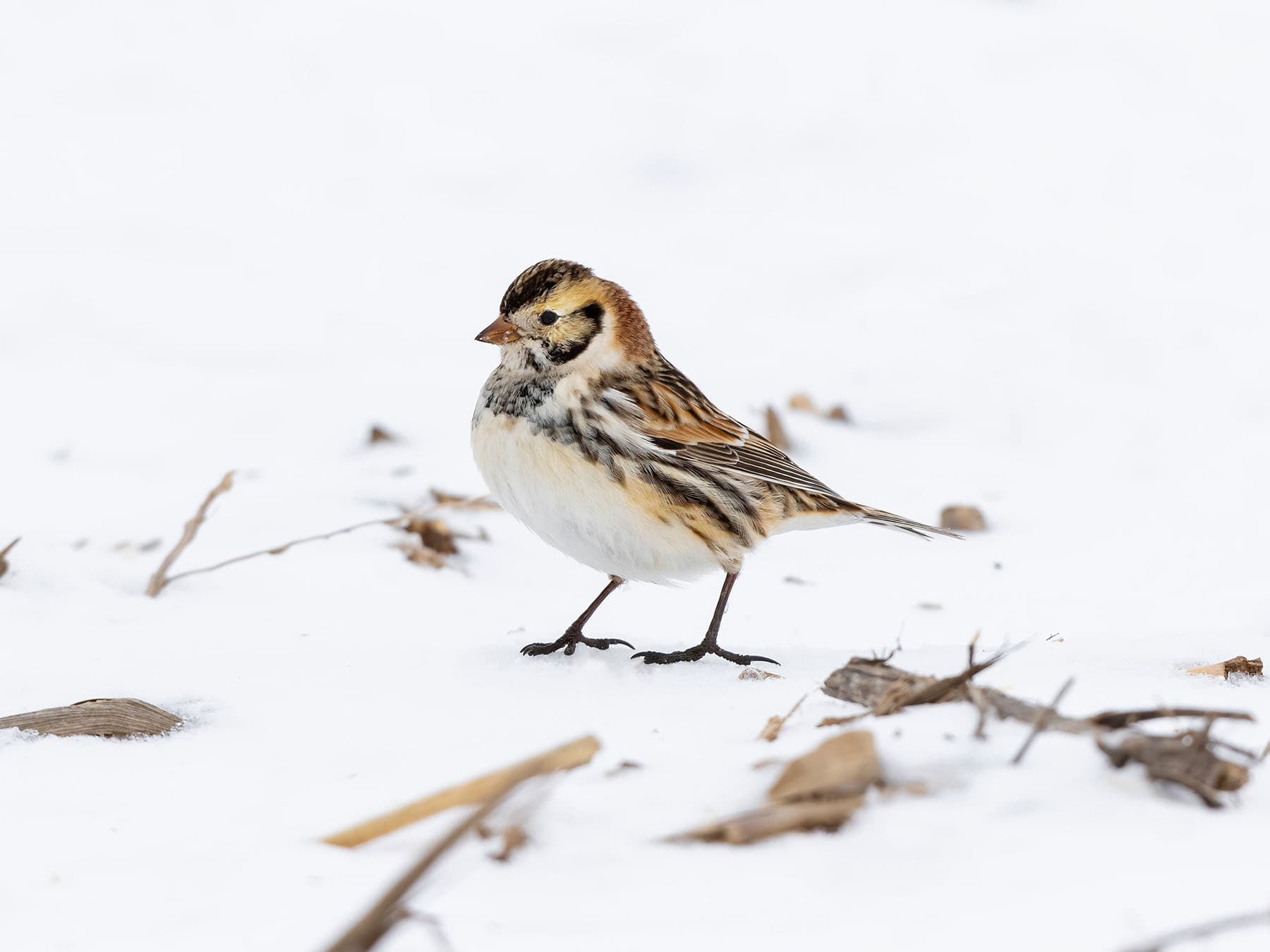
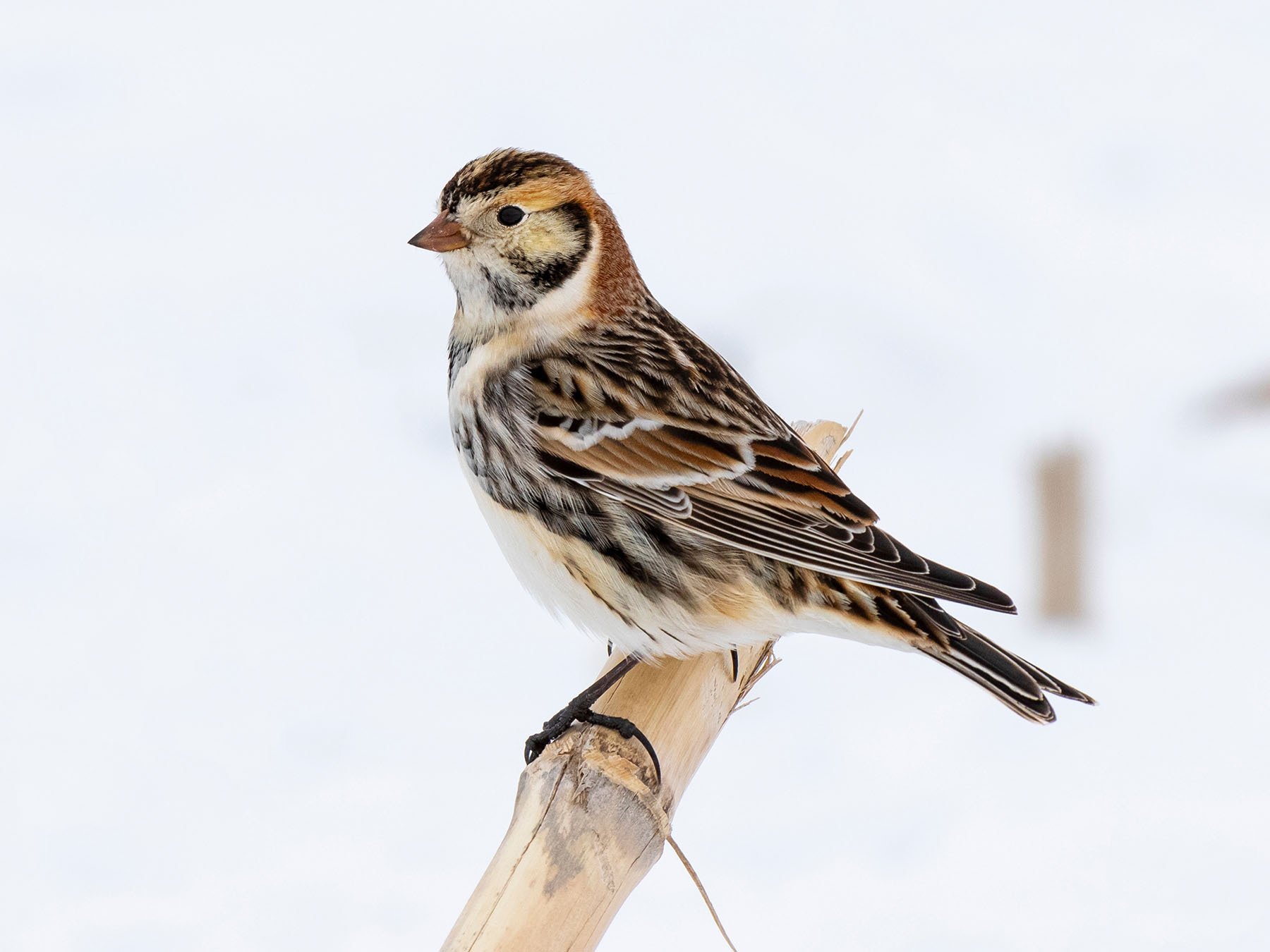
Nonbreeding male Lapland longspurs molt into a sparrowlike plumage, with a less remarkable orange-brown head which is streaked with darker markings. Its back is streaked with black and brown, and it has a reddish-chestnut nape and rusty wing panels.
Nonbreeding females are also sparrowlike, lacking any bold coloring and having an all-over paler appearance. Their nape patch is more of a gray-brown shade than the rufous chestnut of the nonbreeding male.
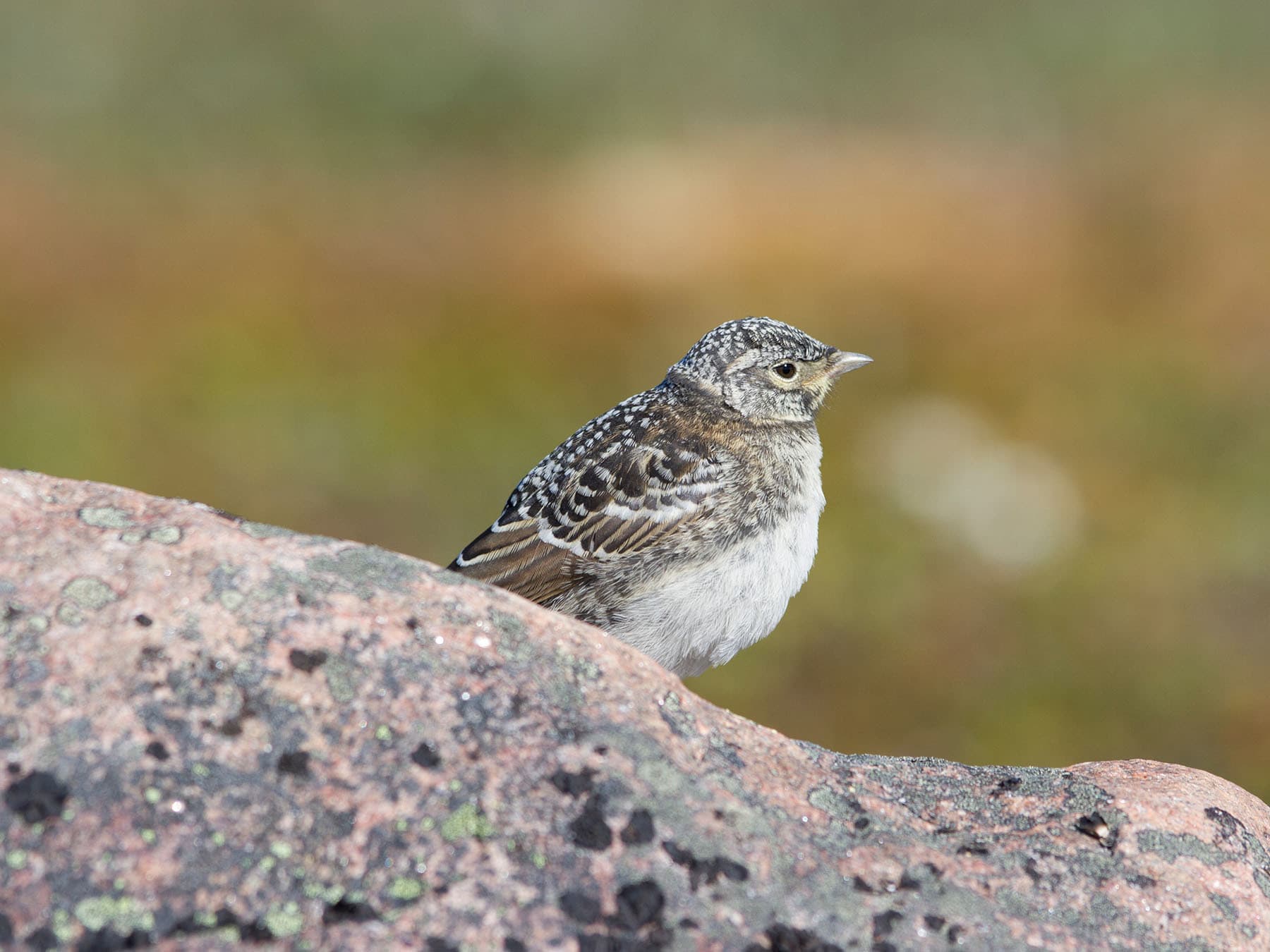
Juvenile Lapland longspurs resemble non-breeding males but are altogether darker and more streaked, and have less vibrant markings, with browner tones.
How big are Lapland Longspurs?
Lapland longspurs are slightly larger than sparrows, and have relatively long tails. Females are marginally smaller than males in length, wingspan and weight.
- Length: 15 cm to 16 cm (5.9 in to 6.3 in)
- Wingspan: 25.5 cm to 28 cm (10 in to 11 in)
- Weight: 20 g to 28 g (0.7 oz to 1 oz)
Its size
Adults- Length
- 15–16 cm
- Wingspan
- 22–28 cm
- Weight
- 20–35 g
Its song and calls
What sound does a Lapland Longspur make?
The rolling song of male Lapland longspurs is quite musical, rapid and loud, and heard frequently at the outset of the breeding season. Wheezy alarm calls are made by the male when danger is sensed, and a hard ‘prrrt’ call, made by both sexes in flight, is thought to serve as a contact call.
- Flight call0:00 / 0:06
Recorded in Normandie, France · September 2022
When and where to see it
OctoberIn season
Most recorded in October
- 1. Conwy0.27%
- 2. Donegal0.23%
- 3. Orkney Islands0.22%
- 4. Shetland Islands0.13%
- 5. Flintshireunder 0.1%
Each dot is a county, state or province: the bigger and darker, the larger the bird’s share of that place’s bird records that month. Grey dots: no regular records. The ringed point is the centre of the bird’s records this month; the arrow shows how it moved since last month, and the dashed loop its path through the year. “Arrivals” colours places where it becomes regular this month (orange) or is in its last regular month (grey). GBIF eBird Observation Dataset, 2019–2024. Map data: Natural Earth, US Census Bureau; place centres © OpenStreetMap contributors.
In your area
See when the Lapland Longspur is recorded in your county, state or province.
How often the Lapland Longspur turns up in the UK, Ireland, the United States and Canada through the year, from birdwatchers' records.
United Kingdom
Winter visitor · regularly Sep–Apr · most records in October
Ireland
Passage migrant · regularly Sep–Oct · most records in October
United States
Resident · all year · most records in June
Canada
Winter visitor · all year · most records in October
Show as a table
| Month | United Kingdom | Ireland | United States | Canada |
|---|---|---|---|---|
| January | 0.003% (regular) | – | 0.032% (regular) | 0.057% (regular) |
| February | 0.003% (regular) | – | 0.028% (regular) | 0.050% (regular) |
| March | 0.004% (regular) | – | 0.010% (regular) | 0.019% (regular) |
| April | 0.002% (regular) | <0.001% | 0.007% (regular) | 0.023% (regular) |
| May | <0.001% | – | 0.009% (regular) | 0.013% (regular) |
| June | <0.001% | – | 0.033% (regular) | 0.019% (regular) |
| July | – | – | 0.006% (regular) | 0.017% (regular) |
| August | <0.001% | – | 0.004% (regular) | 0.008% (regular) |
| September | 0.015% (regular) | 0.011% (regular) | 0.014% (regular) | 0.057% (regular) |
| October | 0.021% (regular) | 0.011% (regular) | 0.026% (regular) | 0.10% (regular) |
| November | 0.012% (regular) | 0.003% | 0.030% (regular) | 0.033% (regular) |
| December | 0.002% (regular) | – | 0.024% (regular) | 0.020% (regular) |
Recorded regularly in
Worldwide: recorded regularly in 31 countries
Countries where it was recorded in at least 3 of the 6 years 2019–2024. Linked countries have their own bird list.
Data: EOD – eBird Observation Dataset (Cornell Lab of Ornithology), accessed via GBIF.org, CC BY 4.0. Records from 2019–2024, aggregated and filtered by Birdfact. How these lists are made
What is the habitat of a Lapland Longspur?
Treeless landscapes offer suitable landscapes for Lapland longspurs all year round, supporting both the foraging and nesting needs of this ground-dwelling species. They are found mainly on low-lying Arctic tundra, as well as higher altitude uplands in Alaska, dotted with sparse vegetation.
During winter months, coastal scrubland, open habitats with short grass or stony expanses of shore or wasteland offer foraging opportunities until they can return to their northern breeding grounds.
What is the range of a Lapland Longspur?
Lapland longspur breed in the Arctic Circle, from Alaska and northern Canada, along the western and southern coasts of Greenland, and around the northernmost regions of Scandinavia, Finland and Russia.
The winter range of Lapland longspur stretches in a wide band across the United States, immediately to the south of the Canadian border.
Of the eastern population, known as Lapland buntings in the UK, a small number spend winters in Britain, while for the majority, the distribution range extends in a corridor across Central Asia, from Ukraine in the west into Russia, Kazakhstan and Mongolia, as far as northeastern China and North and South Korea.
Where do Lapland Longspurs live?
The largest breeding populations of Lapland longspurs are found in North America, with up to 40 million birds. US states with the highest winter population counts are found west of the Great Lakes, in particular Iowa, Illinois, Colorado, North Dakota and Kansas.
In Europe, Norway, Sweden and Finland host the highest populations of breeding Lapland buntings.
How rare are Lapland Longspurs?
Lapland longspurs are an abundant species across North America, with a breeding population of around 40 million in the continent. Migration flocks numbering into hundreds of thousands have been observed over Canadian prairies and as far south as Kansas.
However, despite these numbers, Lapland longspurs have a reputation as being elusive birds that prefer to stay out of sight, so spotting one at close range would definitely class as a rare event.
In the UK, Lapland buntings are considered a rare migrant species, with only just over 300 individuals arriving to overwinter in Britain each year. Sightings are limited to coastal areas, and would class as a highly sought-after spot on any keen birder’s list.
Where can you see Lapland Longspurs in the US?
Kansas, North Dakota, Iowa, Illinois and Colorado all rank at the top of the list for Lapland longspur sightings during winter months. Within the United States, the only location in which Lapland longspur breed is Alaska.
Where can you see Lapland Buntings in the UK?
A small number of Lapland buntings spend winter months in the UK each year, and can be found around the eastern coast of Scotland and England, from East Lothian to Kent. The largest concentrations of sightings have been reported in Yorkshire, Lincolnshire and North Norfolk.
Migration
Do Lapland Longspurs migrate?
Lapland longspurs are fully migratory, breeding in the extreme north of their range, then migrating to wintering grounds further south until the harshest seasonal conditions have eased.
The North American population of lapland longspurs breed in Alaska and the extreme northern regions of Canada, as well as around the western and southern coasts of Greenland.
Wintering grounds are located across most of the northern and central United States, from the northern border with Canada as far south as northeast Texas and eastern Virginia.
In Europe, the species breeds in southern Norway, the extreme north of Scandinavia and Russia and into the Kamchatka peninsula in the far north-eastern reaches of Asia.
European lapland buntings spend winters in coastal regions of Britain, parts of Germany and southern Scandinavia. The largest numbers are found in winter months across Central Asia, in a region that encompasses southern Russia, Kazakhstan, Mongolia and northern China.
Tips for seeing it
- Look for Lapland Longspurs in open tundra or grasslands during summer
- In winter, search for flocks in agricultural fields or coastal areas
- Listen for their distinctive rattling call and sweet, warbling song
- Observe their ground-foraging behaviour and rapid, low flight patterns
What it eats
What do Lapland Longspurs eat?
Lapland longspurs survive mainly on a diet of seeds and insects. They use their short, stout beaks to crack open the hard, outer shells of seeds, including grass seeds, millet, wheat and chickweed.
In summer, insects, in particular crane fly and beetles form a large share of the Lapland longspur’s diet. Caterpillars and spiders are also widely eaten.
What do Lapland Longspur chicks eat?
Young Lapland longspurs are initially fed on a diet of larvae, crane flies, sawflies, caterpillars and midges. After fledging, seeds are gradually introduced.
Nesting and breeding
Where do Lapland Longspurs nest?
Nests built by lapland longspurs are well concealed in vegetation and often excavated in the ground or in the side of a bank or a mossy tussock by the female.
A cup-shaped nest is crafted from dead grasses, moss and leaves, and lined with soft feathers from Arctic birds, such as the ptarmigan, raven or Eider. Occasionally fir from musk ox is used as a lining.
What do Lapland Longspur eggs look like?
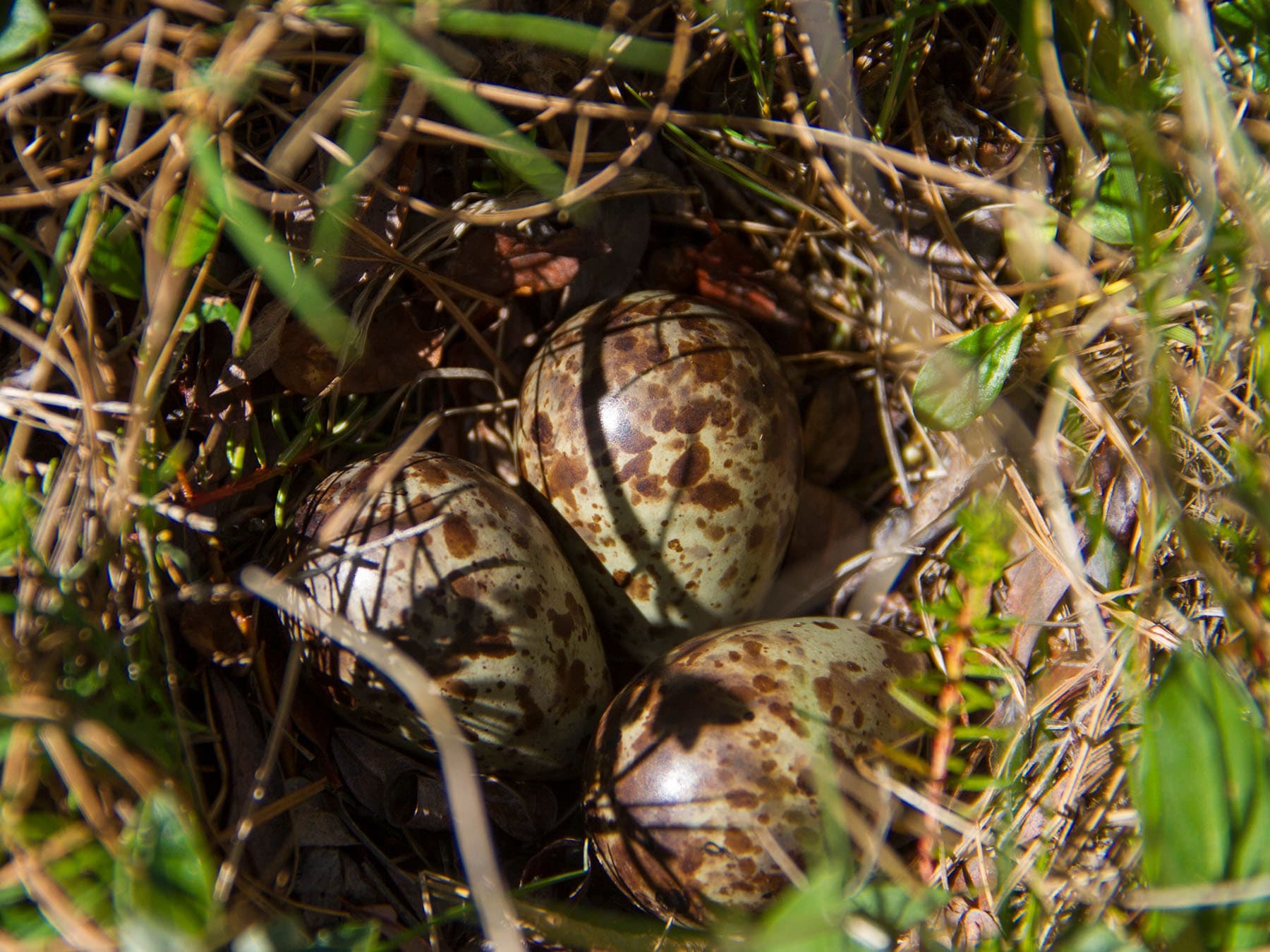
Eggs are semi-glossy and can be any shade between yellowish-brown and pale greenish-white. Scattered brown or black blotchy markings are usually present.
A typical Lapland longspur clutch contains between 3 and 7 eggs, which are laid from the end of May onwards. Females incubate the eggs alone, with hatching occurring after 11 to 14 days.
Do Lapland Longspurs mate for life?
Pairs form early in the breeding season and remain together for the duration of raising their young each year. Usually only one brood is attempted and second broods are likely to be less successful.
Some males may leave their territories to seek an extra mate once their original mate is incubating, although finding a willing partner is not always guaranteed.
Behaviour
Are Lapland Longspurs aggressive?
Male lapland longspurs show territorial aggression during the breeding season and noisily and physically defend their patch against neighboring males. While breeding, it’s most common to see pairs of lapland longspurs rather than larger flocks, although in poor weather, small groups may form.
During migration, vast flocks of several hundred birds may gather and associate loosely together on wintering grounds.
Where do Lapland Longspurs sleep at night?
Little is known about the winter night-time roosting habits of lapland longspurs, but during the breeding season, males are observed to roost alone perched on a relatively high branch of a tree, and continue to sing throughout the night.
This is perhaps not as strange a concept as it may initially sound, as their breeding grounds are found in regions where on summer nights there is little or no darkness.
Lifespan and predators
How long do Lapland Longspurs live?
The average life expectancy of a lapland longspur is around 3 years, with breeding attempted for the first time at one year. Some cases of individual ringed birds reaching 5 years of age have been recorded.
What are the predators of Lapland Longspurs?
Animal predators include Arctic foxes and weasels, while bird species that prey on lapland longspurs include gyrfalcon, parasitic jaeger (Arctic skua), peregrine falcon and snowy owl. Nests may be raided by Arctic foxes, weasels, rats, lemmings, snowy owls and ravens.
Are Lapland Longspurs protected?
- In the US, Lapland longspurs fall under the protection offered by the Migratory Bird Treaty Act 1918, making it illegal to kill, hunt or keep them as pets.
- In the UK, Lapland buntings are protected from being killed, injured or captured, and having their eggs and nest sites deliberately destroyed or damaged under the Wildlife and Countryside Act, 1981.
Are Lapland Longspurs endangered?
Across their entire global range, lapland longspurs are classed as a species of least concern, as they are considered widespread and common in their large circumpolar range. Global populations are estimated at up to 150,000,000 adult birds.
In the UK, lapland buntings have Amber status on the Birds of Conservation Concern list, due to their low population in the British Isles of only around 310 birds each winter.
Conservation
While currently listed as Least Concern, Lapland Longspurs face threats from climate change affecting their tundra breeding grounds. Habitat loss due to agricultural intensification in wintering areas is also a concern. Conservation efforts focus on protecting both breeding and wintering habitats to ensure population stability.
More photos
5 photos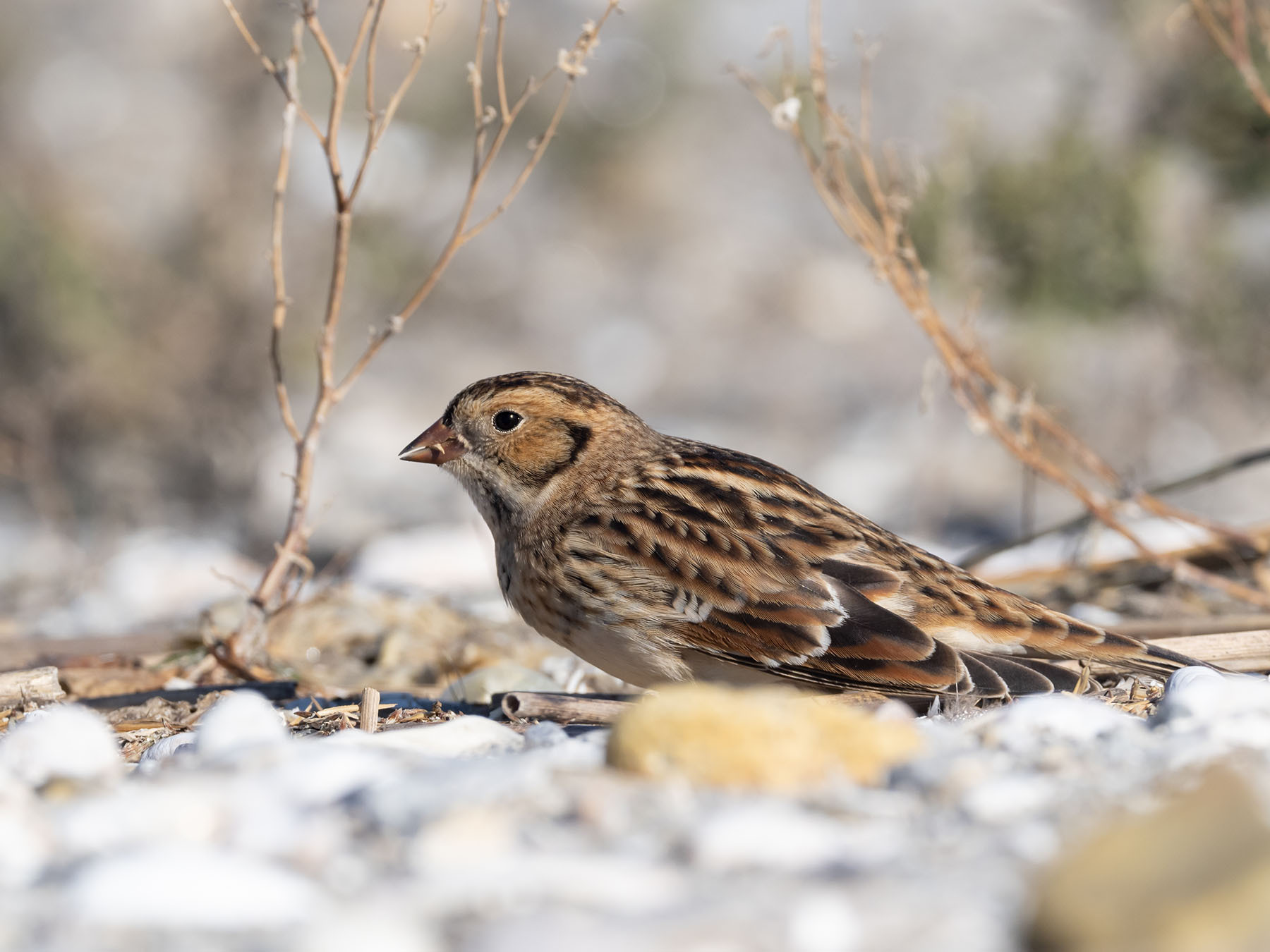
Quick facts
- Length
- 15–16 cm
- Wingspan
- 22–28 cm
- Weight
- 20–35 g
- Lifespan
- 3–5 years
- Migration
- Long-distance Migrant
- Global status (IUCN)
- Least Concern
- World population
- 50,000,000 - 199,999,999 mature individuals
- Population trend
- Increasing
- Also called
- Lapland Bunting
- Scientific name
- Calcarius lapponicus
Questions
1Are Lapland Buntings the same as Lapland Longspurs?
Lapland bunting is an alternative name for the Lapland longspur, and is the most familiar name for the species in the UK.
Sources
3- 1BirdLife International. 2017. Calcarius lapponicus (amended version of 2016 assessment). The IUCN Red List of Threatened Species 2017: e.T22721033A111138693. Source (opens in a new tab)
- 2Breeding Bird Survey and/or Christmas Bird Count: Butcher and Niven (2007)
- 3BirdLife International. 2017. Calcarius lapponicus (amended version of 2016 assessment). The IUCN Red List of Threatened Species 2017: e.T22721033A111138693. Source (opens in a new tab)

Checked by
Nathan Cope, founder and editor
Nathan founded Birdfact and leads its writers and contributors in the UK, the US and Canada. He has watched and studied birds for more than ten years, and checks every article and species guide before it’s published.