


Atlantic Puffin
Common Puffin, Sea Parrot · Fratercula arctica
By the Birdfact teamChecked by Nathan Cope
On this page14 sections
How to recognise it
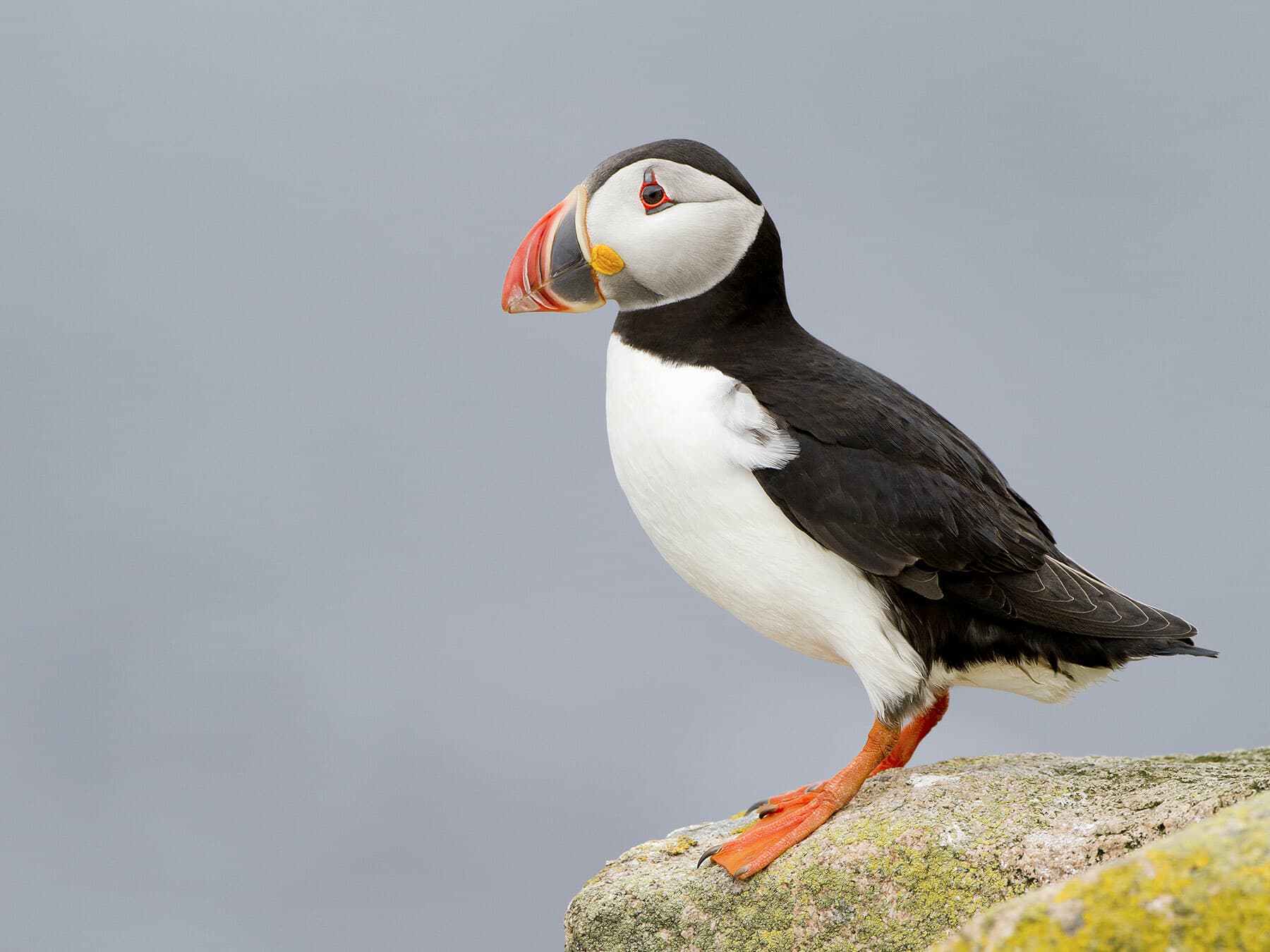
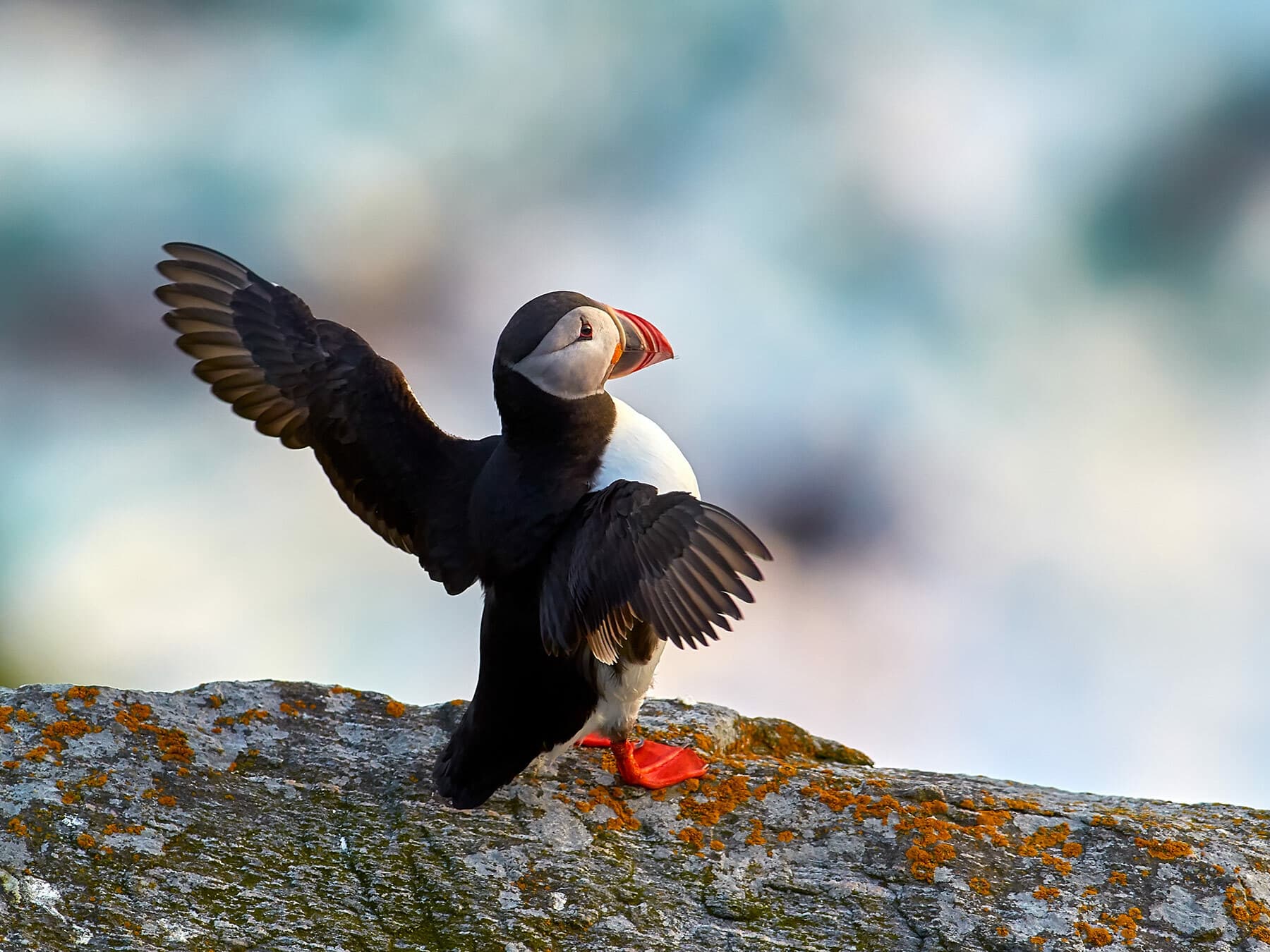
The Atlantic Puffin is one of the world's most distinctive seabirds. It has a black back, white underparts, and a large, colourful beak.
Its head is black with pale grey cheek patches, and it has a blue-grey eye-ring, and its legs and webbed feet are bright orange. The beak is red and yellow with a blue base during the breeding season.
In winter, the beak becomes smaller and duller, the face turns darker , and the feet turn pale yellow. Juveniles resemble winter adults but have a smaller, darker beak.
Its size
Adults- Length
- 28–34 cm
- Wingspan
- 50–60 cm
- Weight
- 300–500 g
Its song and calls
Puffins mainly vocalise around the nest and utter a long deep growl similar to ‘aaaaaarrrrrrrrr’.
- Call0:00 / 1:04
Recorded in Pembrokeshire, Wales
Lawrence Shove / The British Library Board · Wikimedia Commons · CC BY-SA 4.0
When and where to see it
OctoberLeaving
Most recorded in October
- 1. Orkney Islands0.18%
- 2. Tyne and Wear0.16%
- 3. Fife0.12%
- 4. Cork0.12%
- 5. Northumberland0.11%
Each dot is a county, state or province: the bigger and darker, the larger the bird’s share of that place’s bird records that month. Grey dots: no regular records. The ringed point is the centre of the bird’s records this month; the arrow shows how it moved since last month, and the dashed loop its path through the year. “Arrivals” colours places where it becomes regular this month (orange) or is in its last regular month (grey). GBIF eBird Observation Dataset, 2019–2024. Map data: Natural Earth, US Census Bureau; place centres © OpenStreetMap contributors.
In your area
See when the Atlantic Puffin is recorded in your county, state or province.
How often the Atlantic Puffin turns up in the UK, Ireland, the United States and Canada through the year, from birdwatchers' records.
United Kingdom
Summer visitor · regularly Mar–Nov · most records in June
Ireland
Summer visitor · regularly Apr–Oct · most records in July
United States
Summer visitor · regularly May–Mar · most records in July
Canada
Passage migrant · regularly Jun–Nov · most records in July
Show as a table
| Month | United Kingdom | Ireland | United States | Canada |
|---|---|---|---|---|
| January | 0.001% | 0.004% | 0.002% (regular) | <0.001% |
| February | 0.002% | 0.001% | 0.005% (regular) | <0.001% |
| March | 0.015% (regular) | 0.012% | 0.002% (regular) | <0.001% |
| April | 0.039% (regular) | 0.081% (regular) | <0.001% | <0.001% |
| May | 0.088% (regular) | 0.19% (regular) | 0.002% (regular) | 0.001% |
| June | 0.16% (regular) | 0.31% (regular) | 0.009% (regular) | 0.014% (regular) |
| July | 0.16% (regular) | 0.35% (regular) | 0.010% (regular) | 0.038% (regular) |
| August | 0.046% (regular) | 0.14% (regular) | 0.005% (regular) | 0.033% (regular) |
| September | 0.018% (regular) | 0.048% (regular) | 0.002% (regular) | 0.033% (regular) |
| October | 0.016% (regular) | 0.023% (regular) | <0.001% (regular) | 0.011% (regular) |
| November | 0.021% (regular) | 0.001% | <0.001% | 0.004% (regular) |
| December | 0.007% | 0.001% | <0.001% (regular) | 0.002% |
Recorded regularly in
Worldwide: recorded regularly in 23 countries
Countries where it was recorded in at least 3 of the 6 years 2019–2024. Linked countries have their own bird list.
Europe (19)
- Denmark
- Faroe Islands
- France
- Germany
- Gibraltar
- Guernsey
- Iceland
- Ireland
- Isle of Man
- Italy
- Jersey
- Netherlands
- Norway
- Portugal
- Russia
- Spain
- Svalbard & Jan Mayen
- Sweden
- United Kingdom
North America (4)
Data: EOD – eBird Observation Dataset (Cornell Lab of Ornithology), accessed via GBIF.org, CC BY 4.0. Records from 2019–2024, aggregated and filtered by Birdfact. How these lists are made
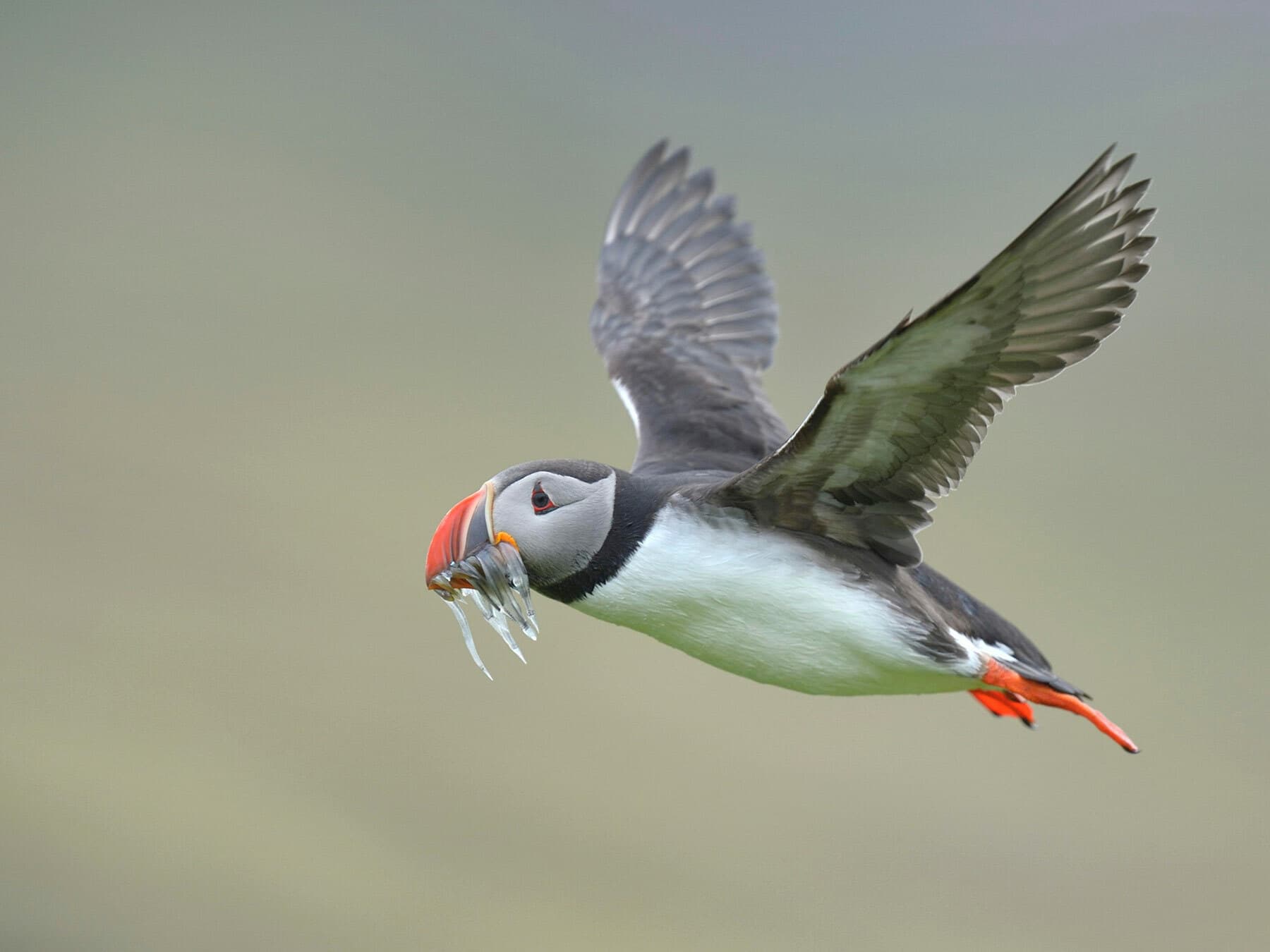
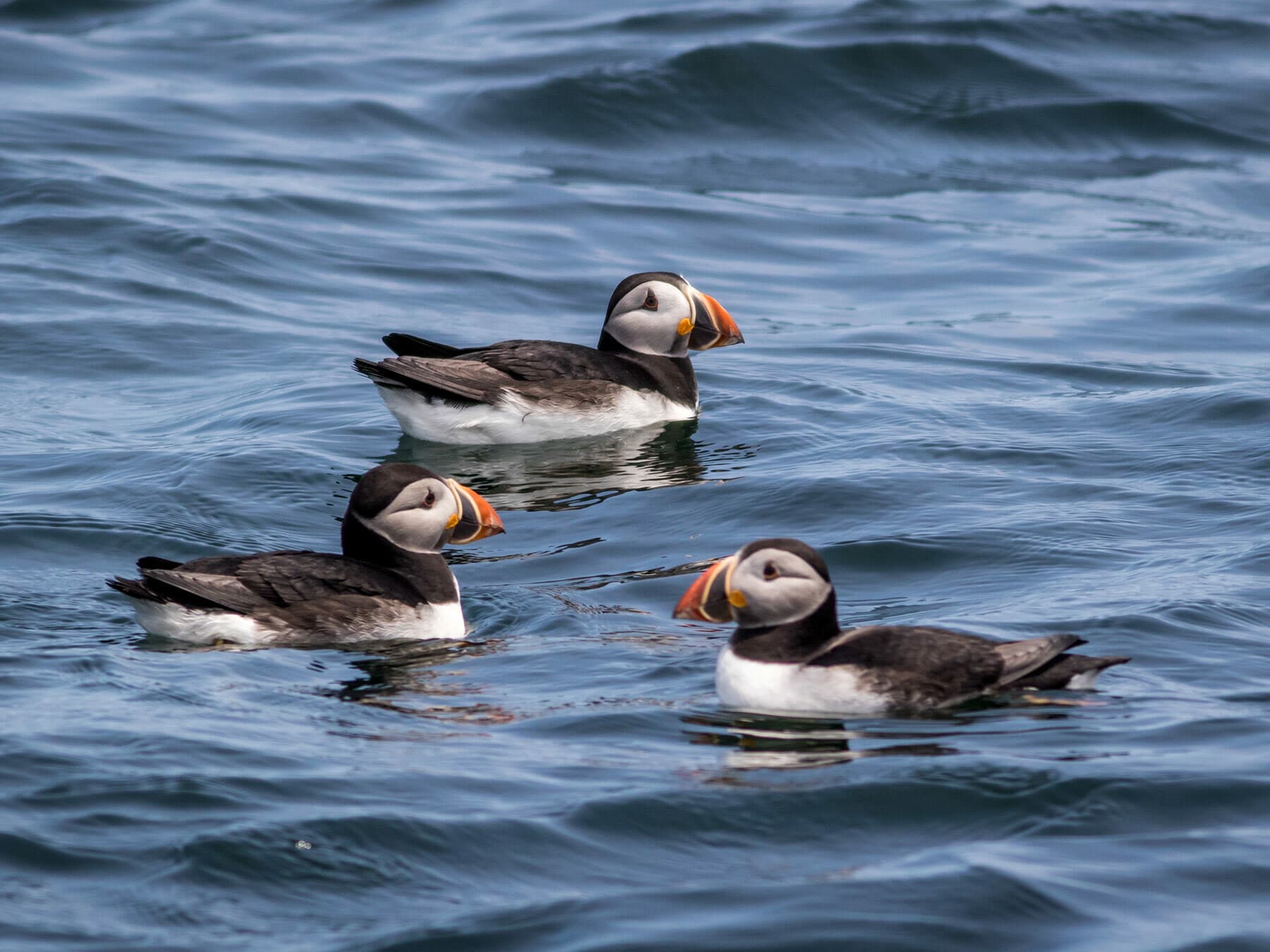
Puffins are resident in the UK around the coasts of Scotland and the Scottish Northern Isles. There are also small resident populations on the northeast coast of England. Summer visitors nest around the coasts of Northern Ireland, north and south Wales, Lundy Island, north Devon and Cornwall and the Scilly Isles. Visiting birds arrive from March onwards and depart in late August. Their nests are normally built in burrows which they excavate themselves. The nesting sites are often on grassy slopes and clifftop colonies overlooking the sea. If it is not possible to burrow due to the geology of the nesting site pairs will often use fissures or cracks in the cliffs. During the winter, birds return to the Atlantic and spend their time at sea often floating in large flocks otherwise known as rafts.
Signs and Spotting tips
Male and female adults are identical in colour and markings although the female is shorter than the male which only becomes apparent when they are standing together. When walking they tend to waddle in a comical manner. Some of the best places to view puffins are RSPB or National Trust reserves.
What it eats
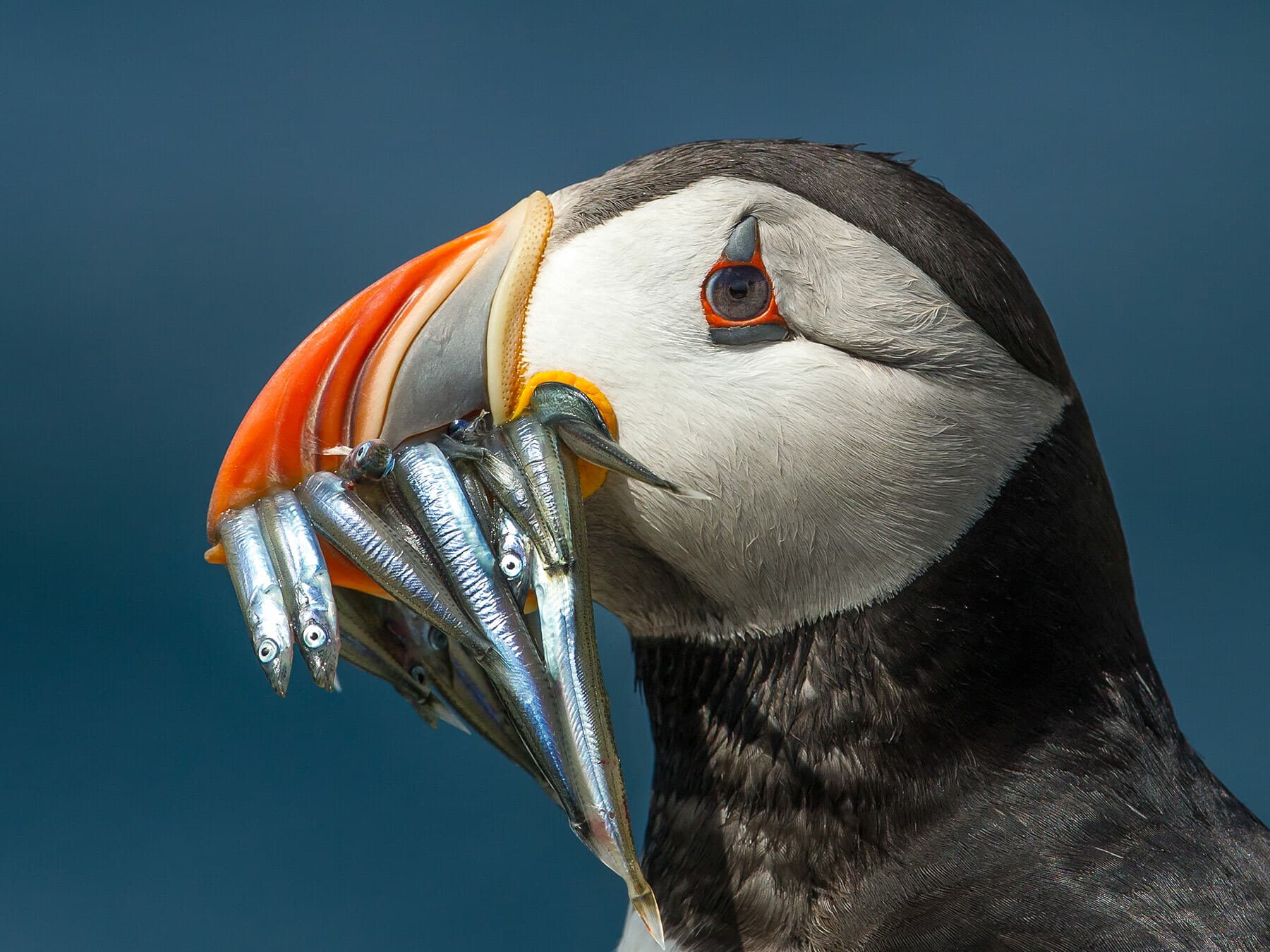
Puffins feed on fish, squid and sand eels. They have a serrated bill and a tongue which they use to trap food against their palate thus enabling them to open their bills and catch further food. In this way they can return to their young with a bill containing many fish which is a far more effective way of feeding.
For a more in-depth guide on what puffins eat, check out this article.
Nesting and breeding
Puffins pair for life and start breeding around the age of 5 years. The female lays a single white egg deep inside the nest in April to early May which is incubated by both parents for a period of up to 45 days.
Behaviour
Atlantic Puffins are excellent swimmers, using their wings to 'fly' underwater while hunting fish. On land, they walk with a waddling gait.
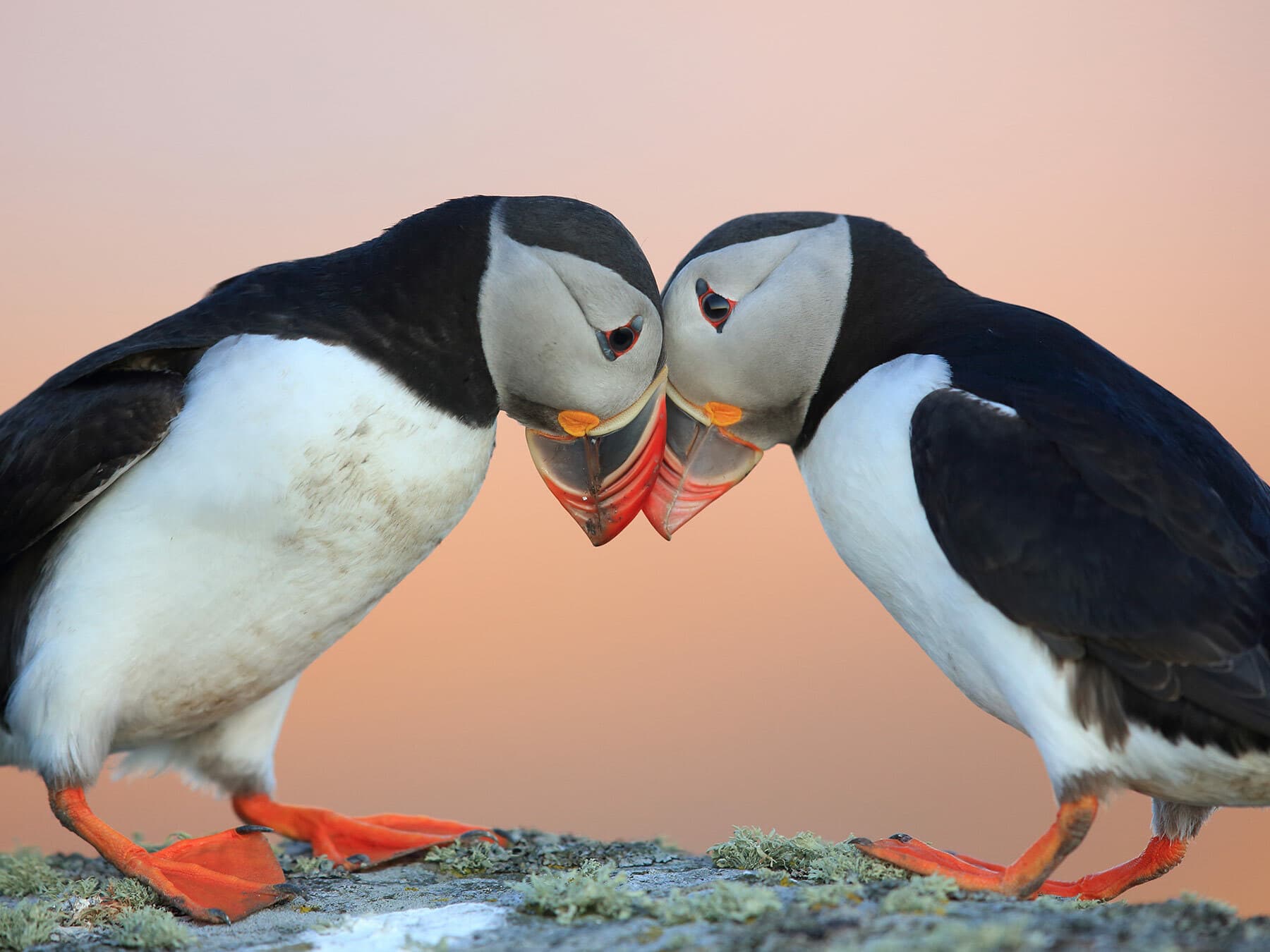
These birds are highly social, nesting in large colonies and engaging in group behaviours like synchronised head-bobbing and bill-tapping during courtship.
Lifespan and predators
The average lifespan of an Atlantic puffin is up to 20 years although there have been cases of birds surviving into their thirties!
Conservation
Atlantic Puffins face threats from climate change, overfishing, and pollution. Conservation efforts focus on protecting breeding sites, managing fisheries, and reducing plastic pollution in the oceans. Several organisations work to monitor and protect puffin populations across their range.
What does a Puffin look like?
The puffin is instantly the most recognisable of all seabirds found around the coasts of the UK. In the main this is due to its stocky almost plump appearance and the shape and colour of its bill. During the summer the adult bird’s almost triangular shaped beak is distinctively patterned red, orange, yellow and blue. As the bird ages, grooves appear circling the beak which makes the beak larger. The bird has a white underside and a whitish grey face and cheeks with black head, neck, wings, and upper parts. The legs and webbed feet are bright orange and there are red and black markings around the dark coloured eyes. During the winter the adult’s face becomes much greyer and the beak loses its bright colours with the feet turning a pale yellow. Juvenile birds resemble their parents’ winter markings and colour.
Similar birds
Often mistaken for
Atlantic Puffin guides
3 guidesQuick facts
- Length
- 28–34 cm
- Wingspan
- 50–60 cm
- Weight
- 300–500 g
- Lifespan
- 20–25 years · oldest recorded 45 years
- Family
- Auks & Puffins
- Migration
- Partial migrant
- Global status (IUCN)
- Vulnerable
- World population
- 12,000,000 - 14,000,000 mature individuals
- Population trend
- Decreasing
- Also called
- Common Puffin, Sea Parrot
- Scientific name
- Fratercula arctica
Sources
4- 1BirdLife International. 2018. Fratercula arctica. The IUCN Red List of Threatened Species 2018: e.T22694927A132581443. Source (opens in a new tab)
- 2BirdLife International. 2018. Fratercula arctica. The IUCN Red List of Threatened Species 2018: e.T22694927A132581443. Source (opens in a new tab)
- 3Harris and Wanless 2011; Berglund and Hentati-Sundberg 2014
- 4Fransson et al., EURING list of longevity records for European birds (2010) Source (opens in a new tab)

Checked by
Nathan Cope, founder and editor
Nathan founded Birdfact and leads its writers and contributors in the UK, the US and Canada. He has watched and studied birds for more than ten years, and checks every article and species guide before it’s published.