


Little Auk
Dovekie, King Auks, Bull Birds · Alle alle
By the Birdfact teamChecked by Nathan Cope
On this page13 sections
How to recognise it
What do Little Auks look like?
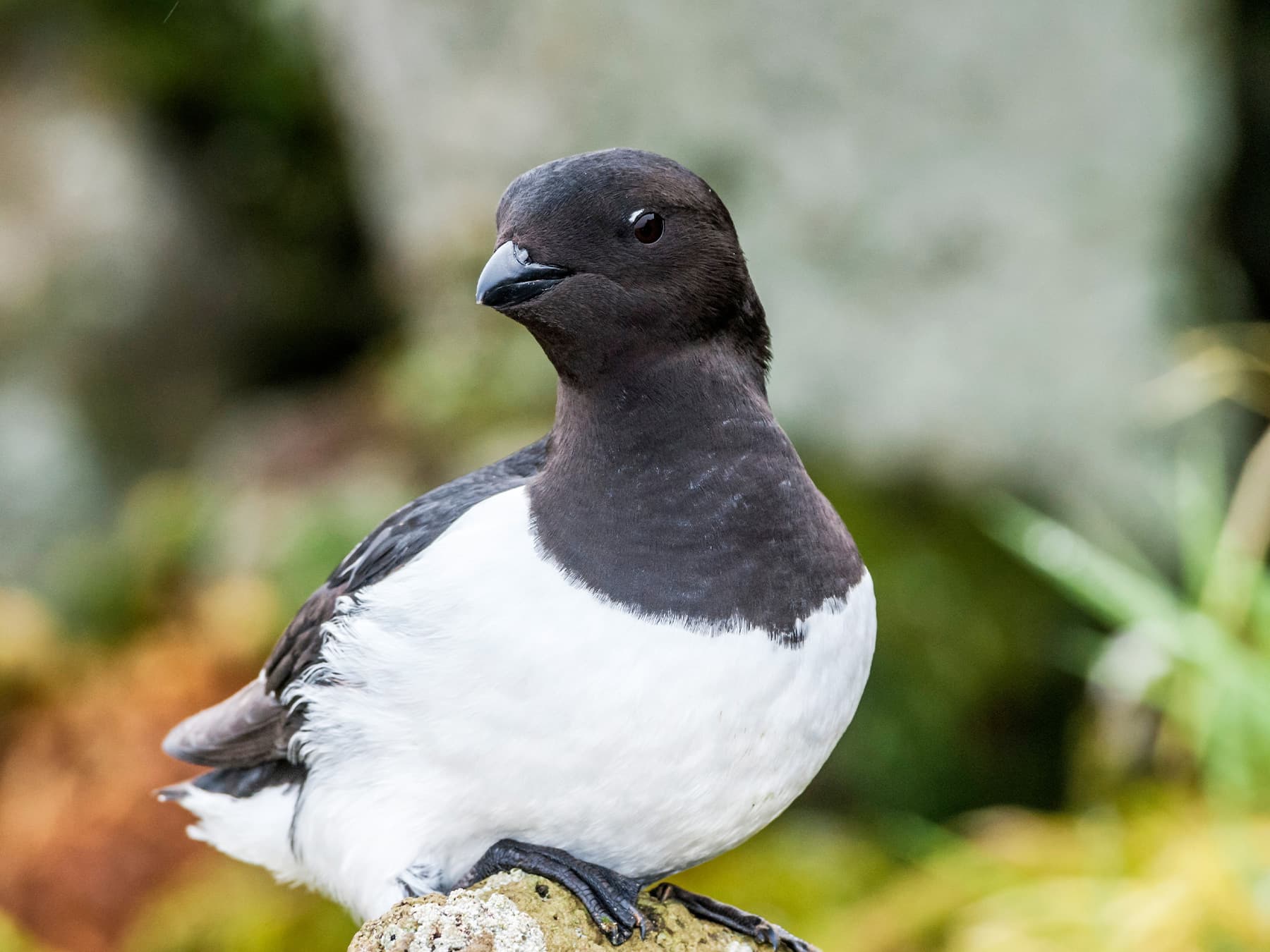
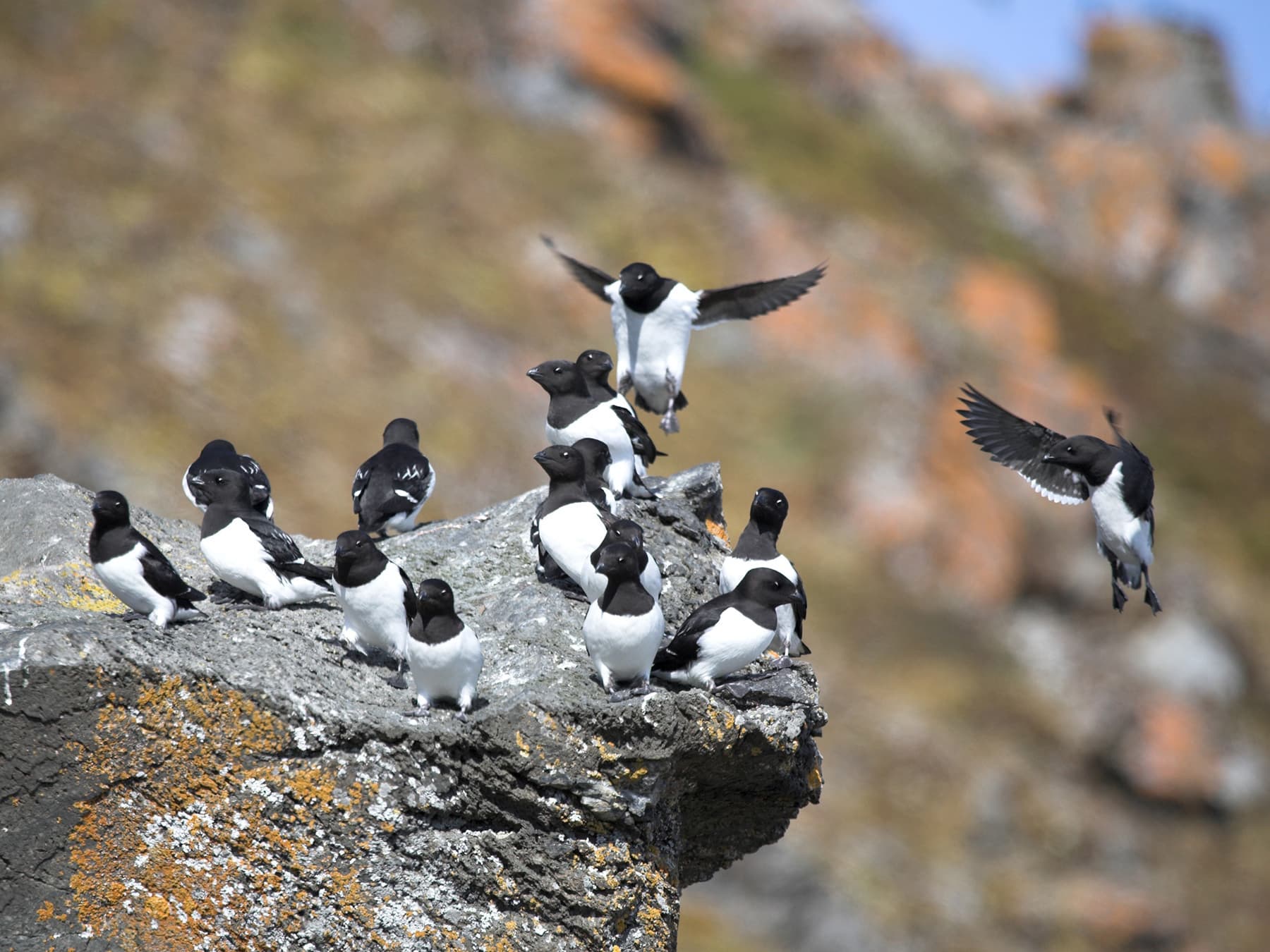
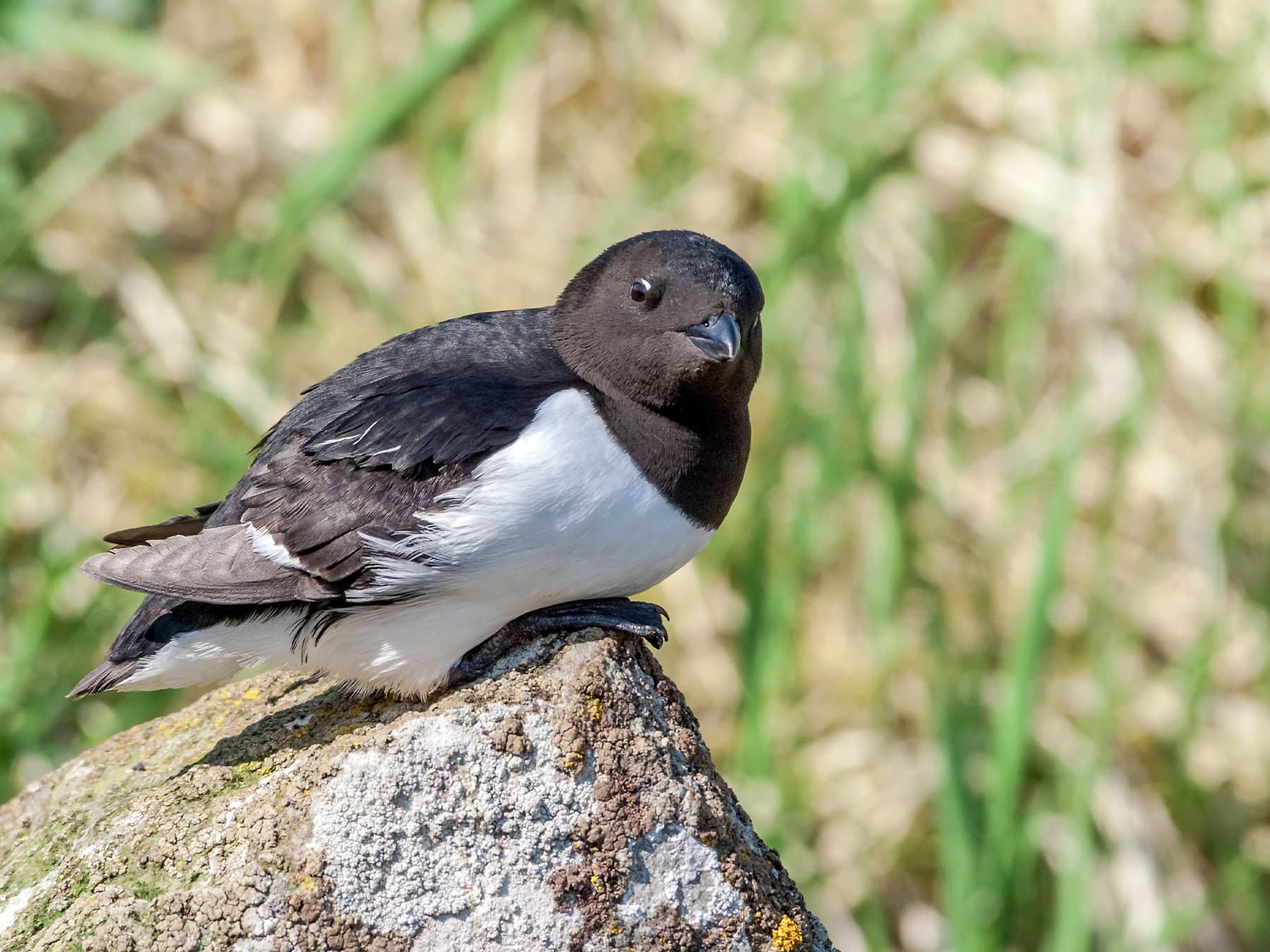
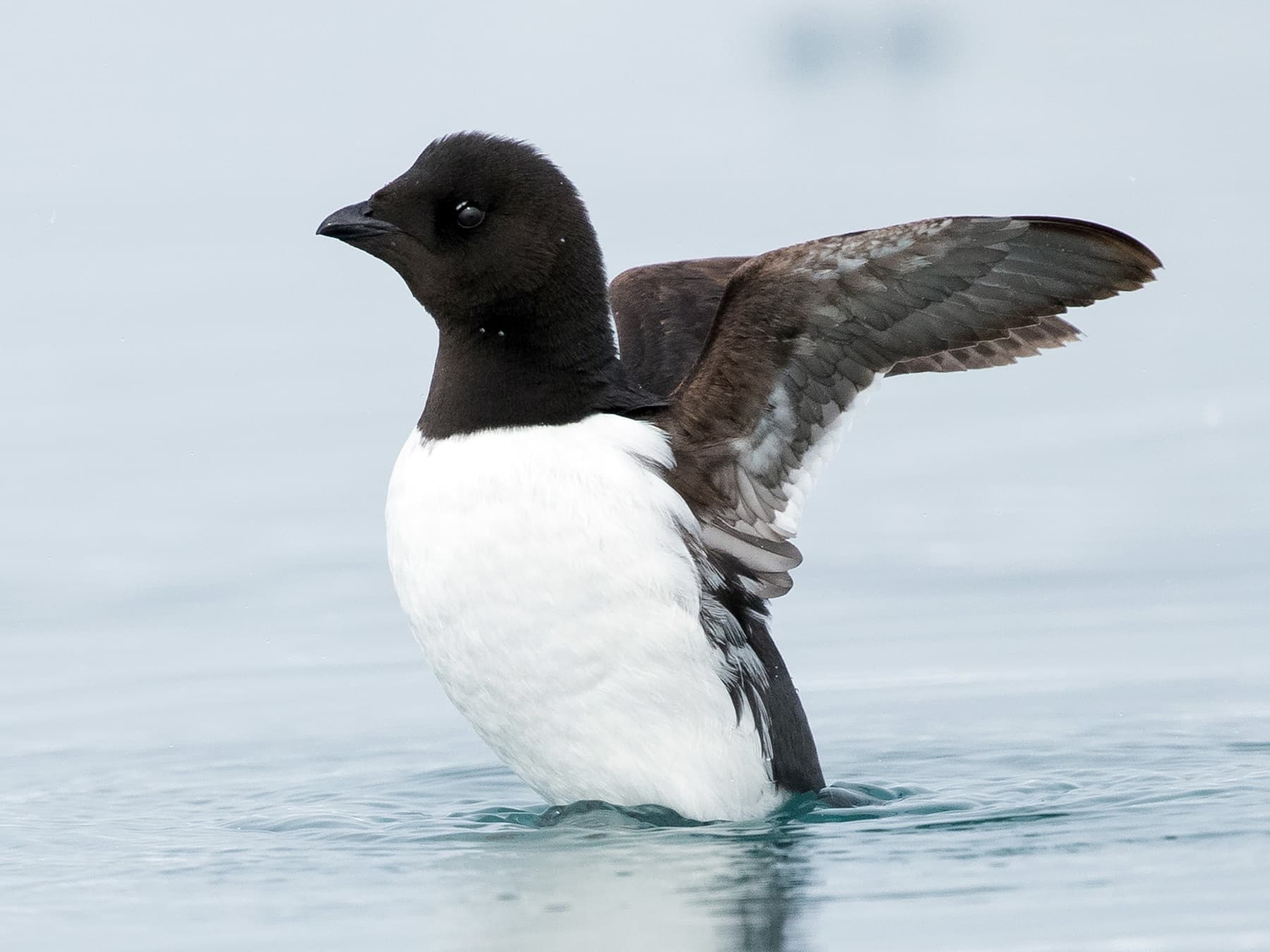
Little auks are compact black and white seabirds with distinct breeding and non-breeding plumages. They undergo a major molt after the breeding season ends when they become temporarily flightless until their winter plumage develops.
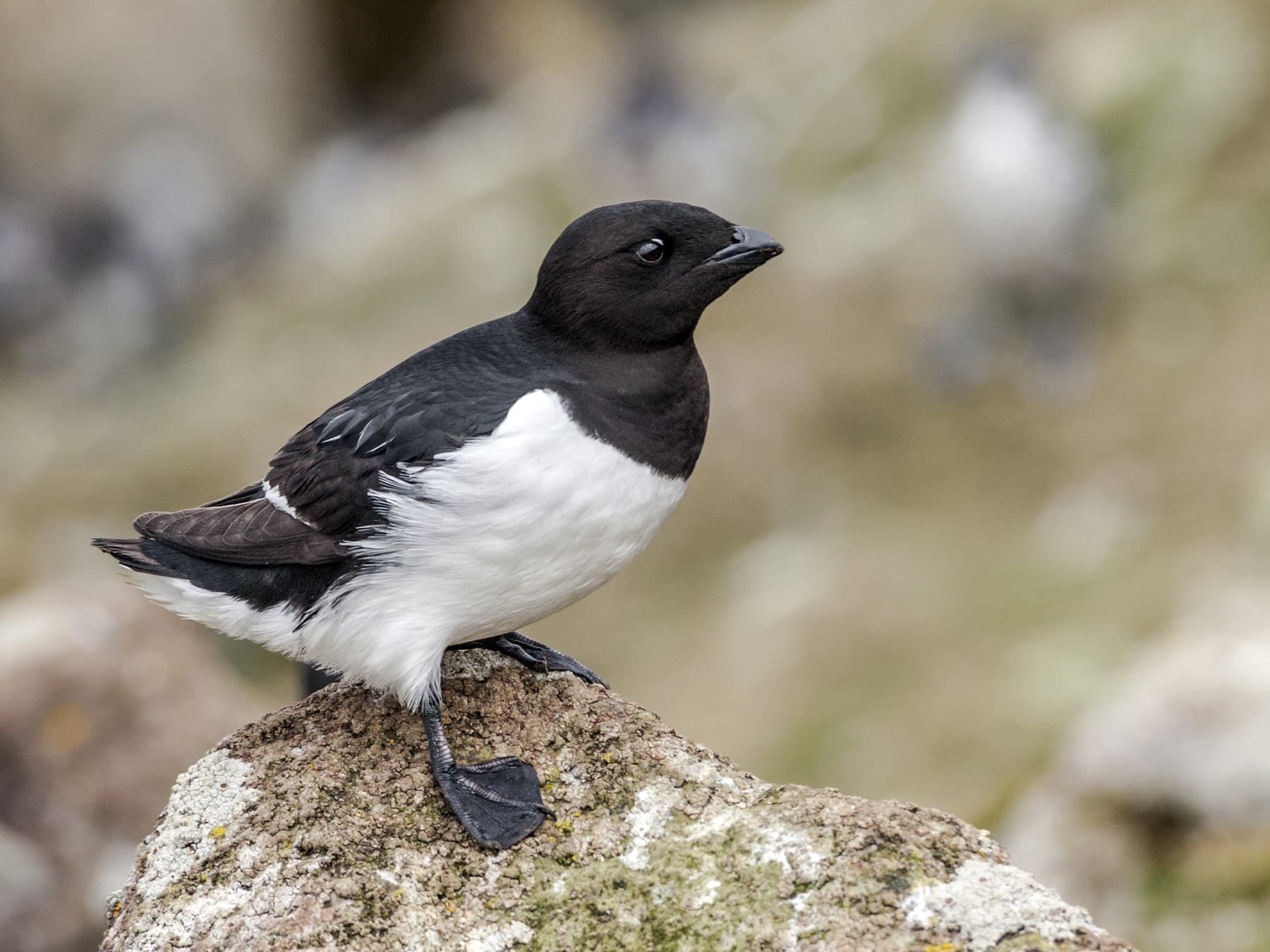
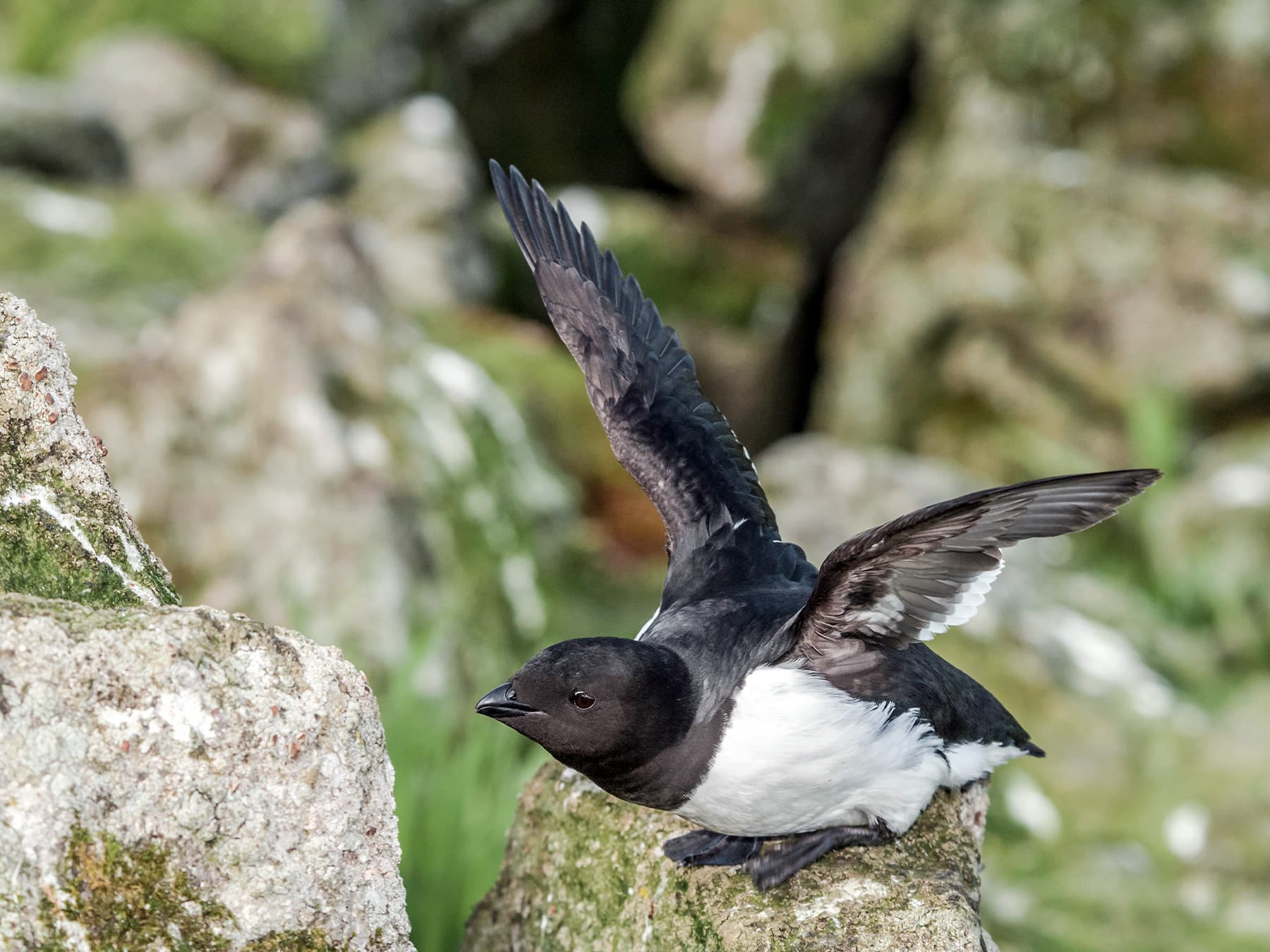
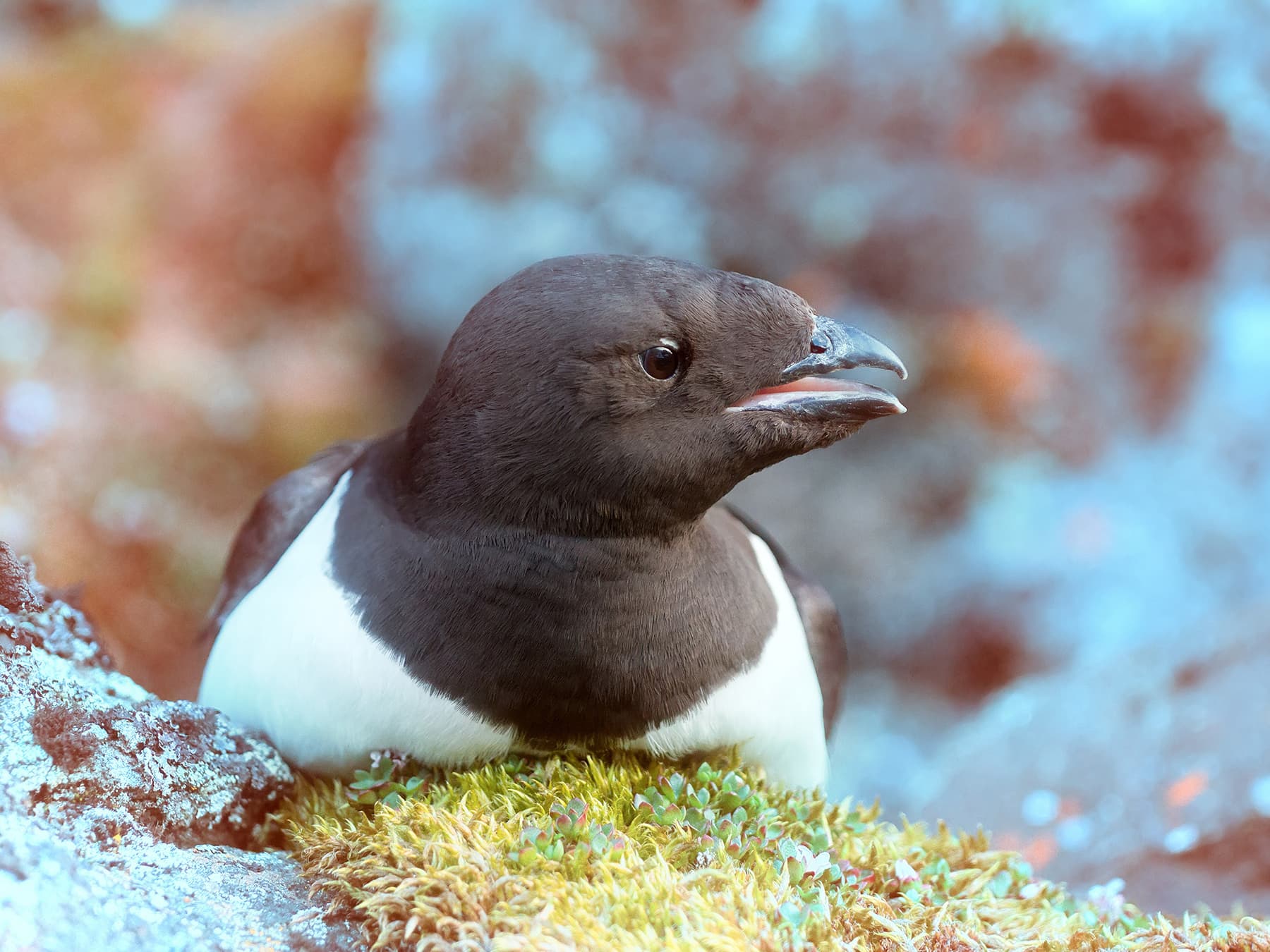
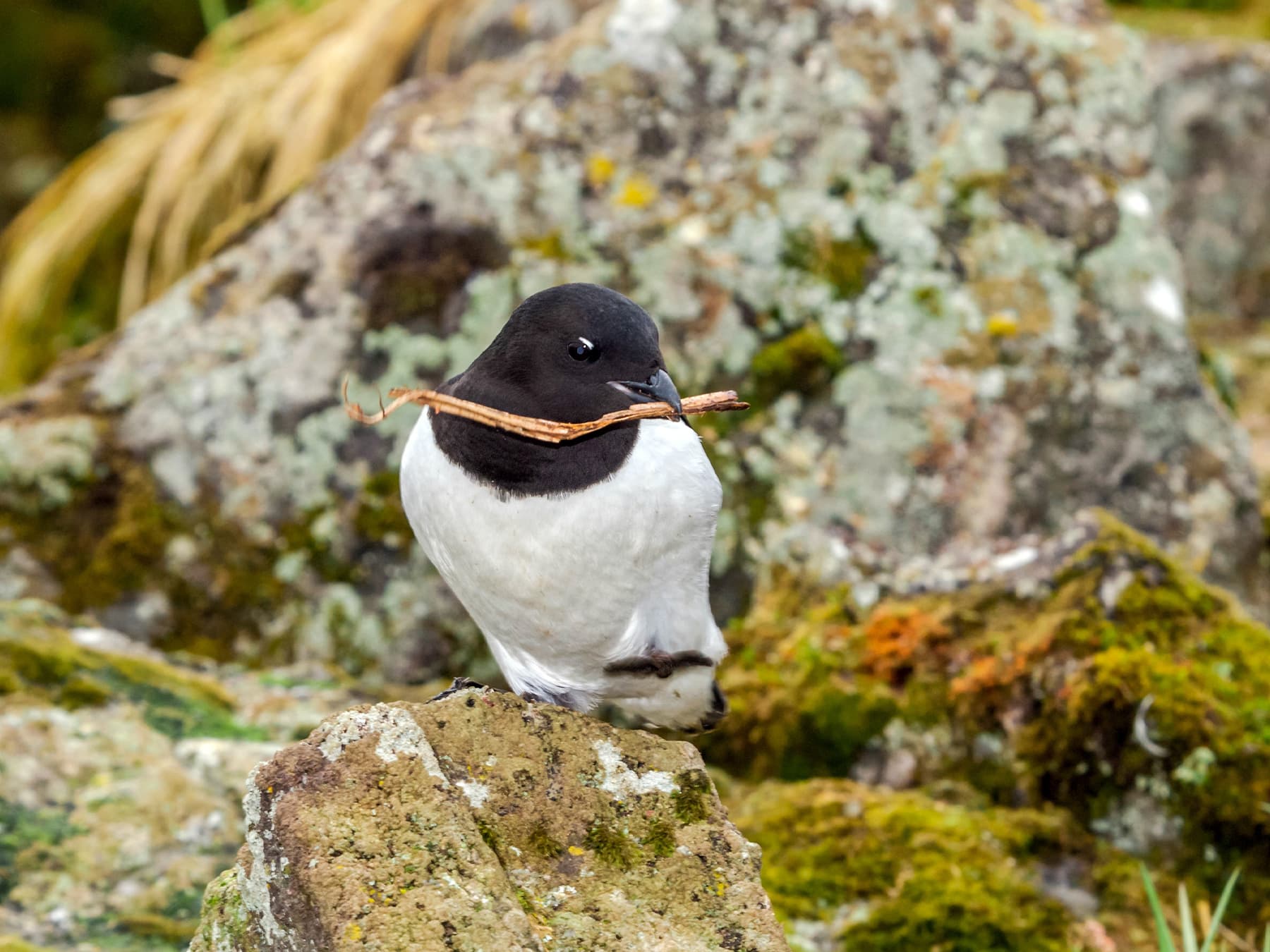
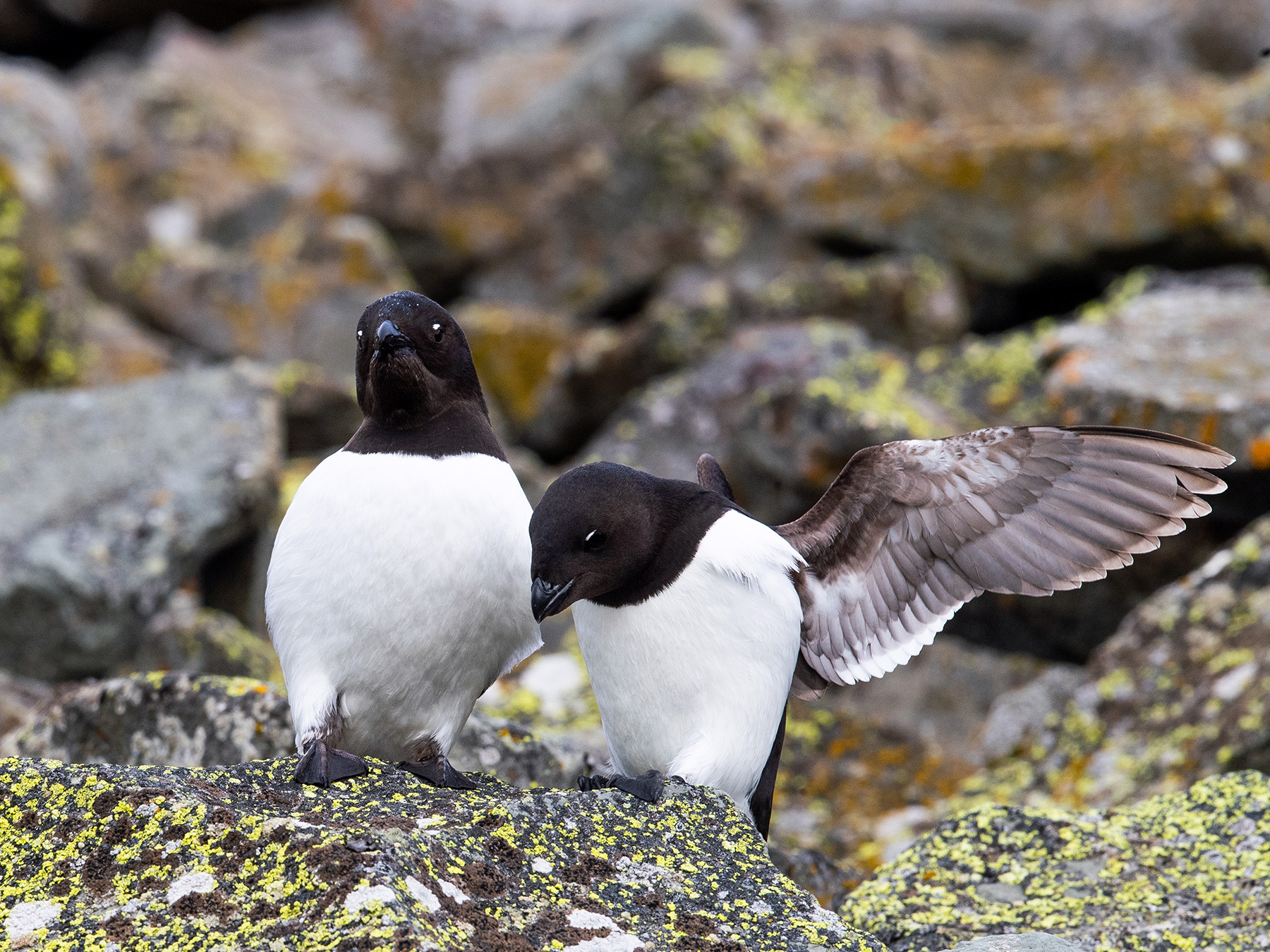
In summer, little auks have rich black upperparts, including a black back, tail, wings, head and upper breast. Their black wings are edged with white with white edges on the wings. Their belly is white, and their tail and underwings are dark.
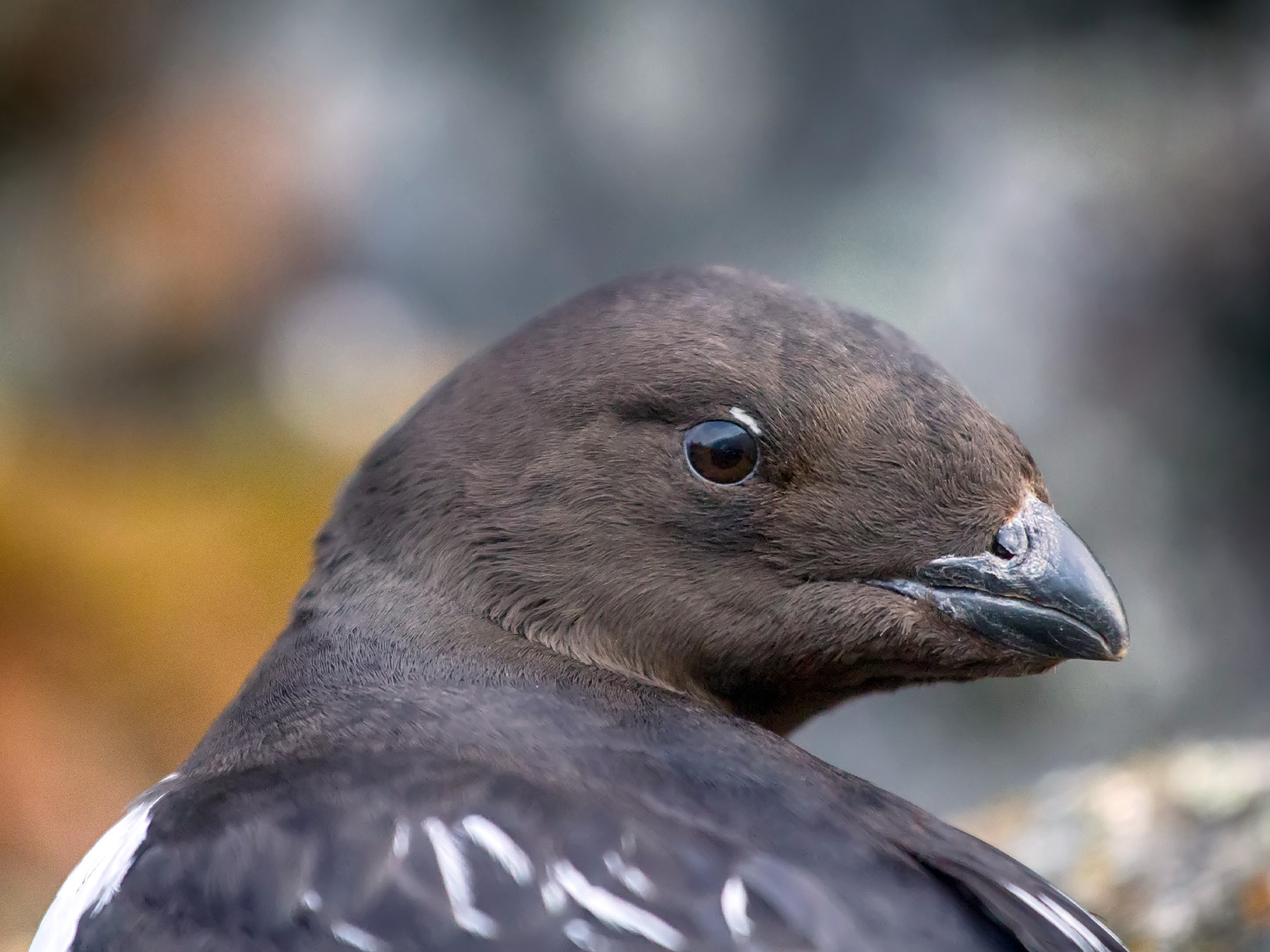
A little auk’s facial markings include a tiny white crescent immediately above the eyes and a stubby, conical black bill. Its legs and feet are a dull brownish-pink.
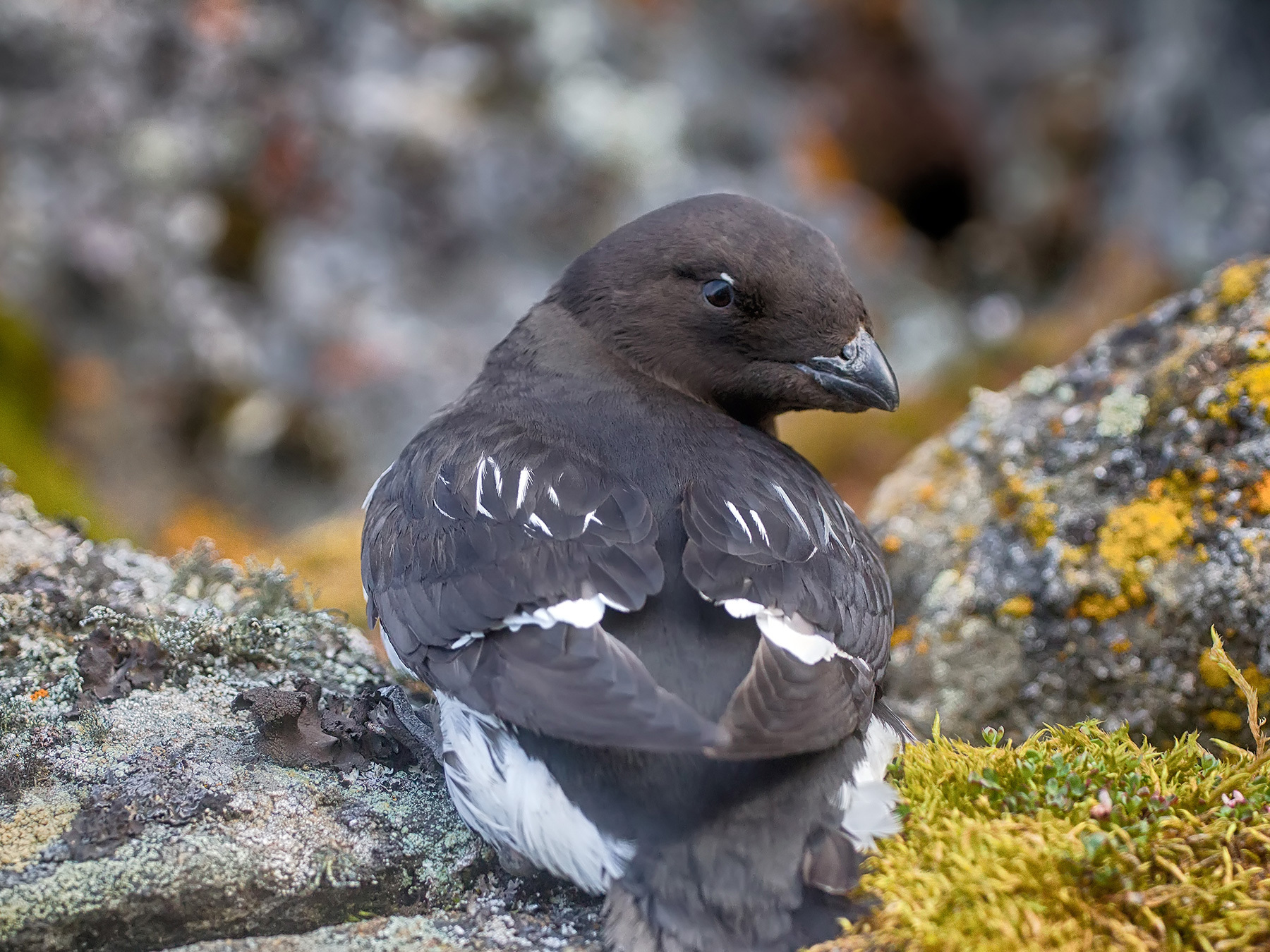
As winter approaches, little auks molt into their basic non-breeding plumage. Their upperparts are a sooty black, and the underparts are white. Their white belly and breast extend upwards into the throat and cheeks. The crown and forehead are also a dark, sooty black.
Female and male little auks are identical in plumage in both winter and summer but are slightly smaller than males when compared side by side.
Juvenile little auks are very similar in appearance to non-breeding adults, but their plumage is darker.
How big are Little Auks?
Little auks are a small species of seabird, around half the size of an Atlantic puffin. Females are slightly smaller and lighter in weight than males.
- Length: 17 cm to 19 cm (6.7 in to 7.5 in)
- Wingspan: 40 cm to 48 cm (15.7 in to 18.9 in)
- Weight: 140 g to 170 g (4.9 oz to 6 oz)
Its size
Adults- Length
- 18–21 cm
- Wingspan
- 42–48 cm
- Weight
- 150–180 g
Its song and calls
What sound does a Little Auk make?
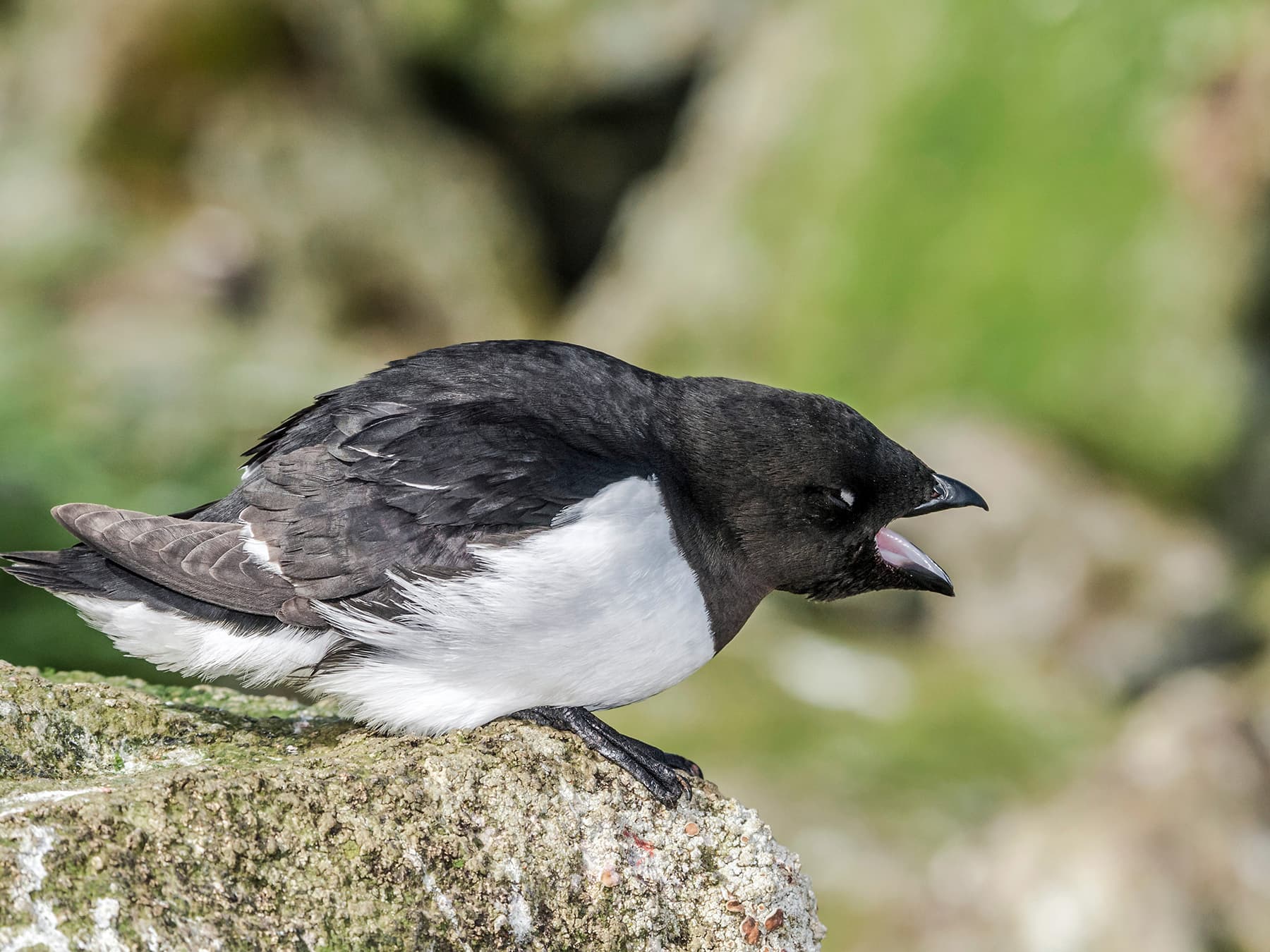
While at sea, little auks are silent; however, on nesting grounds they are highly vocal birds, with high-pitched trilling calls used in flight and on the ground as a contact call. A whinnying warning call is heard when nest colonies are disturbed, particularly by human intruders, and a hoarse, single-note alarm call is heard later in the breeding season to signal potential danger.
- Call0:00 / 0:39
Recorded in Svalbard, Norway · June 2024
When and where to see it
OctoberArriving
Most recorded in October
- 1. Fifeunder 0.1%
- 2. Orkney Islandsunder 0.1%
- 3. Aberdeenshireunder 0.1%
- 4. Tyne and Wearunder 0.1%
- 5. Northumberlandunder 0.1%
Each dot is a county, state or province: the bigger and darker, the larger the bird’s share of that place’s bird records that month. Grey dots: no regular records. The ringed point is the centre of the bird’s records this month; the arrow shows how it moved since last month, and the dashed loop its path through the year. “Arrivals” colours places where it becomes regular this month (orange) or is in its last regular month (grey). GBIF eBird Observation Dataset, 2019–2024. Map data: Natural Earth, US Census Bureau; place centres © OpenStreetMap contributors.
In your area
See when the Little Auk is recorded in your county, state or province.
How often the Little Auk turns up in the UK, the United States and Canada through the year, from birdwatchers' records.
United Kingdom
Passage migrant · regularly Oct–Dec · most records in November
United States
Winter visitor · regularly Nov–Jun · most records in January
Canada
Winter visitor · regularly Sep–Feb · most records in January
Show as a table
| Month | United Kingdom | United States | Canada |
|---|---|---|---|
| January | 0.001% | 0.009% (regular) | 0.033% (regular) |
| February | <0.001% | 0.008% (regular) | 0.007% (regular) |
| March | <0.001% | 0.002% (regular) | <0.001% |
| April | <0.001% | <0.001% | <0.001% |
| May | – | <0.001% | <0.001% |
| June | <0.001% | <0.001% (regular) | <0.001% |
| July | – | <0.001% | <0.001% |
| August | <0.001% | – | 0.001% |
| September | <0.001% | – | 0.002% (regular) |
| October | 0.007% (regular) | <0.001% | 0.004% (regular) |
| November | 0.033% (regular) | 0.001% (regular) | 0.015% (regular) |
| December | 0.013% (regular) | 0.005% (regular) | 0.015% (regular) |
Recorded regularly in
Worldwide: recorded regularly in 15 countries
Countries where it was recorded in at least 3 of the 6 years 2019–2024. Linked countries have their own bird list.
Europe (11)
North America (4)
Data: EOD – eBird Observation Dataset (Cornell Lab of Ornithology), accessed via GBIF.org, CC BY 4.0. Records from 2019–2024, aggregated and filtered by Birdfact. How these lists are made
What is the habitat of a Little Auk?
Little auks breed in the High Arctic, nesting on crevices or ledges amid rocky debris at the bottom of cliffs and coastal slopes. Large colonies – sometimes with several thousand pairs – are established, with individual nesting spots facing toward the sea.
Winters are spent largely out at sea, with southward migration to the edge of pack ice until the breeding season begins the following spring. Little auks rarely come inland, but sightings do increase following periods of stormy weather, when they may have been blown off course by strong winds or unpredictable currents.
What is the range of a Little Auk?
Little auks breed on islands in the Arctic, including a number of remote Alaskan islands in the Bering Sea and eastern parts of Canada’s Baffin Island.
Breeding grounds are also found on the west and east coasts of Greenland, in northern Iceland, on the Norwegian archipelagoes of Spitsbergen, Bear Island and the Jan Mayen Islands, eastwards to the Russian islands of Novaya Zemlya, Severnaya Zemlya and Franz Josef Land.
In winter, the range of little auks extends southwards into the North Atlantic Ocean, as far south as coastal regions of the British Isles, and along the north-eastern coast of the United States.
Where do Little Auks live?
Between 3 and 5 million pairs of little auks breed in Greenland annually, with the largest and densest breeding site for the species at Qaanaaq (Thule), on the north-west coast of the territory. 250,000 pairs are believed to breed on Russia’s Franz Josef Land, with 50,000 pairs in Novaya Zemlya, and 75,000 pairs in Severnaya Zemlya.
How rare are Little Auks?
Little auks are widespread and numerous across their breeding range in the waters of the High Arctic. Global population estimates vary widely, from 9 million to 82 million individuals.
Where can you see Dovekies in the US?
Alaska is home to the United States only breeding population of dovekies, with an established colony on the Bering Sea island of Little Diomede Island.
In winter, sightings become more common, with visiting birds along the country’s north-eastern coast. Coastal Maine and Massachusetts offer the best chances of a sighting, but observations of the species are regularly recorded to Long Island, and occasionally further south, off Virginia and even Florida.
Where can you see Dovekies in Canada?
Dovekies regularly breed on Canada’s Baffin Island, while a less established nest colony may be present on Ellesmere Island. Winter sightings of little auks around the Labrador Sea, Grand Banks and the coast of Newfoundland are widespread.
Where can you see Little Auks in the UK?
During periods of stormy weather each autumn, little auks may be blown off course and carried by the winds or strong currents into waters around the British Isles, along the North Sea coasts of eastern Scotland and north-east England. Large numbers of wintering birds are known to gather in the waters of northern England in the northern North Sea, east of the Moray Firth and the Orkney Islands.
Migration
Do Little Auks migrate?
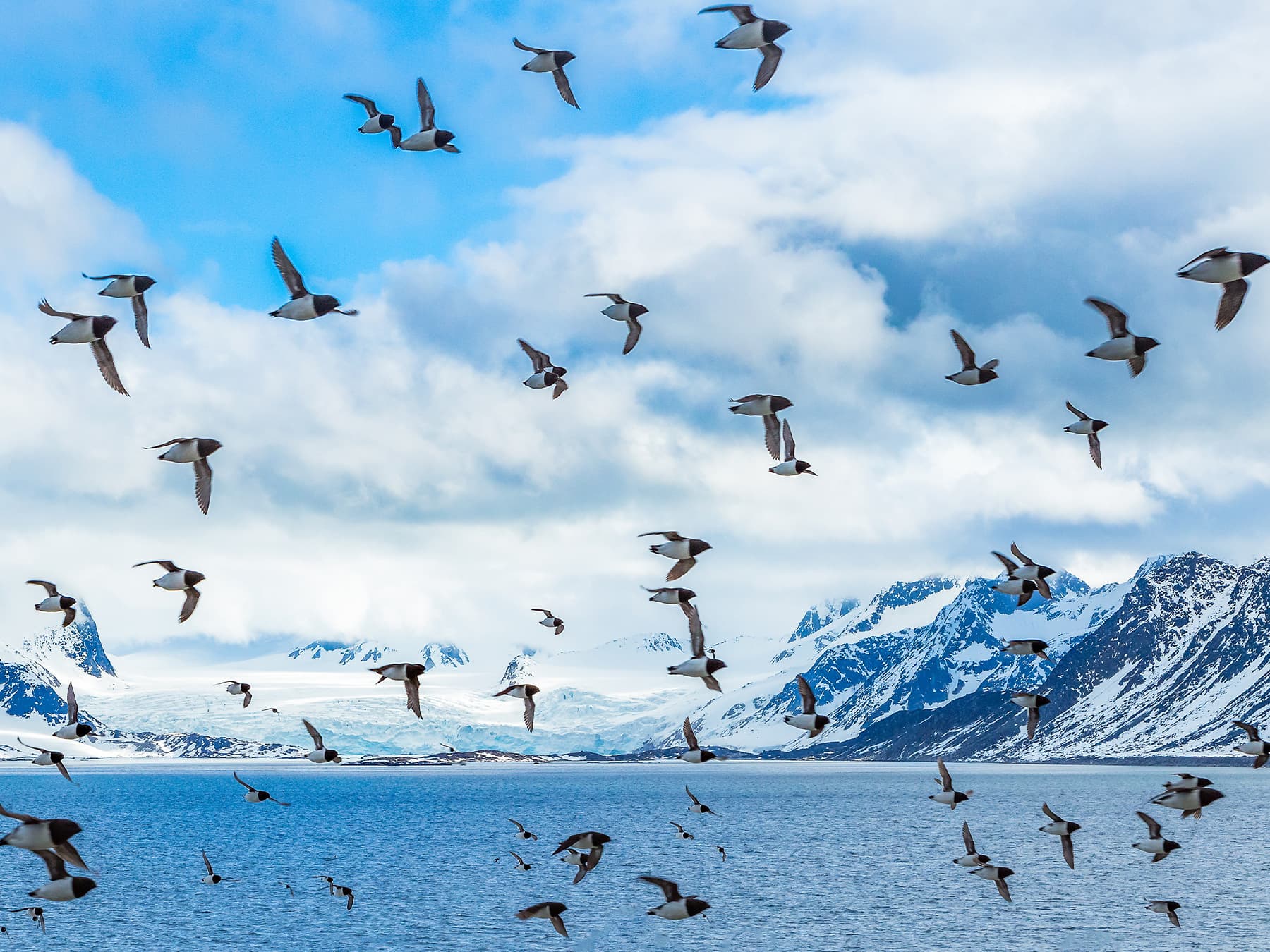
Little auks breed on Arctic islands and along stretches of rocky isolated coasts, but once breeding is complete, they temporarily relocate further south, in ice-free waters of the North Atlantic and the North Sea. During winter, they are rarely seen inland, only coming close to shore after periods of intense stormy weather.
Tips for seeing it
- Look for large flocks on the open sea during the winter months
- Visit Arctic breeding colonies in summer for closer views
- Observe their distinctive flight pattern: rapid wing beats with short glides
- Listen for their high-pitched, trilling calls at breeding sites
- Use a spotting scope to watch feeding behaviour from coastal vantage points
What it eats
What do Little Auks eat?
Little auks feed almost exclusively on small crustaceans, particularly copepods and amphipods. The tiny zooplankton swim in swarms near the surface of cold ocean waters and are caught by little auks swimming underwater. In winter, more krill, molluscs and marine worms are eaten, and crustaceans become less important.
What do Little Auk chicks eat?
Both parents feed young little auks in the nest for up to a month after hatching. Food is brought back to the nest in the adult’s throat pouch and regurgitated into the mouths of the young in a mucus-covered secretion. Zooplankton is the main food of parents while feeding chicks.
Nesting and breeding
Where do Little Auks nest?
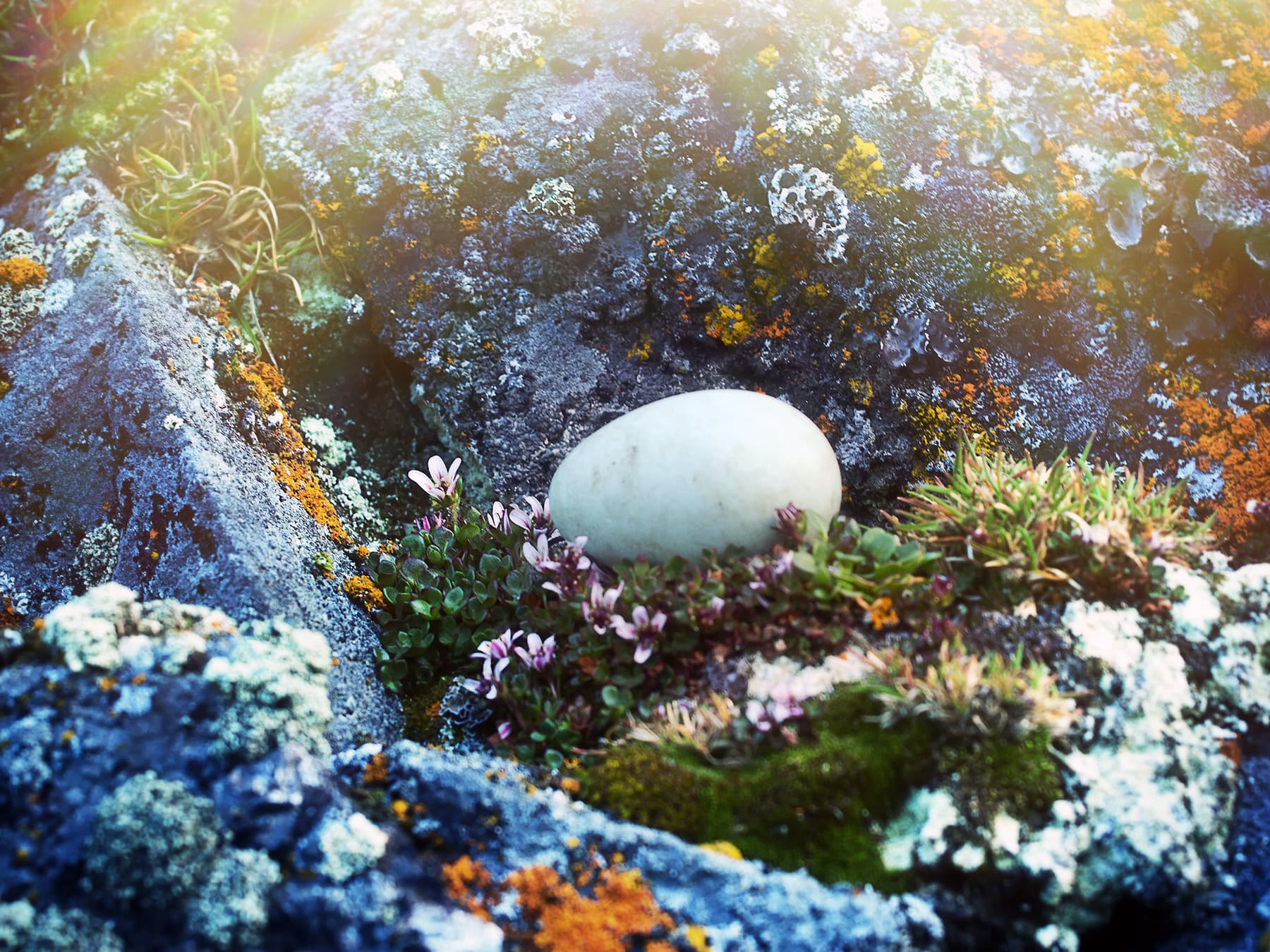
Little auks nest on rocky outcrops or in crevices or ledges of scree at the bottom of cliffs or slopes along the coast. Pebbles may be pushed one by one into a crevice to form a nesting platform, which may then be lined with rough grasses and lichens, which stop the egg from being dislodged or rolling away.
When do Little Auks nest?
Depending on location, little auks usually arrive on their breeding grounds in April and May – however, in Franz Josef Land, spring arrivals begin in late February. Late June is the peak month for eggs to be laid, with pairs raising a single chick per season. Incubation, shared between both parents, lasts for between 28 and 31 days.
What do Little Auk eggs look like?
Little auks lay one pale blue-green egg, which is sometimes marked with brown dots. Eggs measure 44 mm by 38 mm.
Do Little Auks mate for life?
Little auks form monogamous, long-term pairs and raise young together for several successive breeding seasons.
Behaviour
Are Little Auks aggressive?
While little auks are not observed to be particularly aggressive and nest together in close proximity to each other in large colonies, some antagonistic behavior is seen when establishing a nest site early on in the breeding season, with physical conflicts between competing males.
Once a site has been chosen and incubation is underway, territorial behavior is limited to the area immediately around the nest itself, but the presence of other birds nearby is tolerated without aggression.
Lifespan and predators
How long do Little Auks live?
Little data is available for the average or maximum lifespan of a little auk, although various estimates place their life expectancy between 10 and 25 years. First breeding is also unclear but assumed to be at two or three years of age.
What are the predators of Little Auks?
Arctic foxes and Glaucous gulls are the chief predators of little auks on their breeding grounds. Eggs and young may be eaten by opportunistic polar bears.
Are Little Auks protected?
The Canadian Migratory Birds Convention Act of 1994 and the Migratory Bird Treaty Act of 1981 in the United States both offer protection to dovekies against being hunted and their eggs and young targeted or destroyed.
As migratory birds in UK waters, little auks are protected under the Wildlife and Countryside Act, 1981, which makes it an offense to kill, injure or take them into captivity.
Are Little Auks endangered?
Little auks are classed as a species of least concern globally and have Green status on the British Birds of Conservation Concern list. Large-scale hunting affects numbers in Greenland, and the species is particularly vulnerable to oil discharges from ships in the North Atlantic.
Conservation
While currently listed as Least Concern, Little Auks face threats from climate change and oil spills. Rising sea temperatures affect their prey availability, potentially impacting breeding success.
Conservation efforts focus on protecting breeding colonies and maintaining clean Arctic waters to ensure their long-term survival.
More photos
4 photos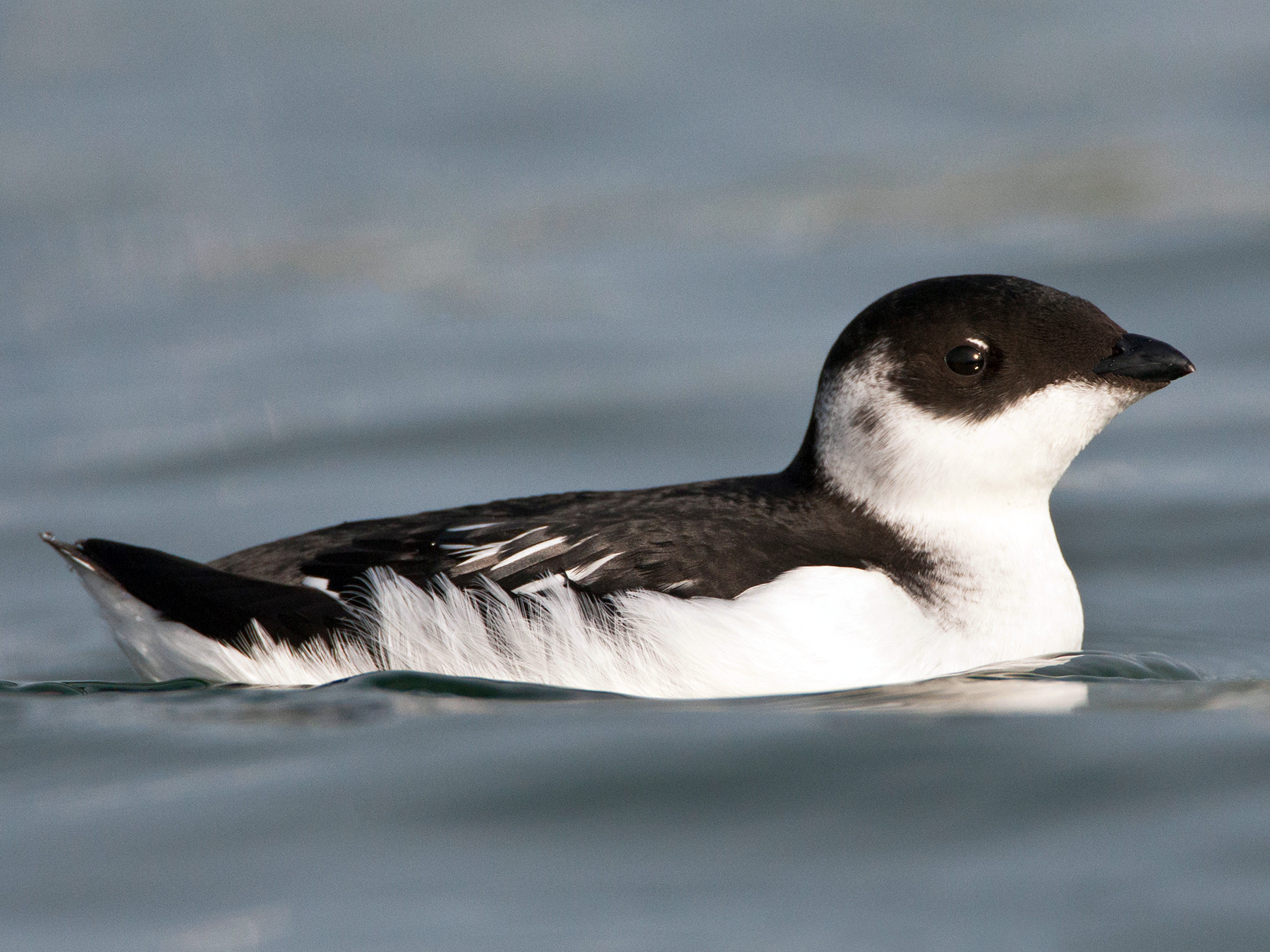
Quick facts
- Length
- 18–21 cm
- Wingspan
- 42–48 cm
- Weight
- 150–180 g
- Lifespan
- 15–20 years
- Family
- Auks & Puffins
- Migration
- Long-distance Migrant
- Global status (IUCN)
- Least Concern
- World population
- 9,200,000 - 82,000,000 mature individuals
- Population trend
- Decreasing
- Also called
- Dovekie, King Auks, Bull Birds
- Scientific name
- Alle alle
Questions
1Is the little auk extinct?
Little auks are not extinct – in fact, they are thriving, with a global population estimated at up to 82 million mature birds. However, a relative of the little auk, the great auk (Pinguinus impennis) – a flightless bird that lived in the Arctic and sub-Arctic regions of the North Atlantic – did fall into extinction in 1844, due to overhunting.
Sources
3- 1BirdLife International. 2018. Alle alle. The IUCN Red List of Threatened Species 2018: e.T22694837A131932114. Source (opens in a new tab)
- 2BBS/CBC data: Butcher and Niven 2007
- 3BirdLife International. 2018. Alle alle. The IUCN Red List of Threatened Species 2018: e.T22694837A131932114. Source (opens in a new tab)

Checked by
Nathan Cope, founder and editor
Nathan founded Birdfact and leads its writers and contributors in the UK, the US and Canada. He has watched and studied birds for more than ten years, and checks every article and species guide before it’s published.