


Western Marsh-harrier
Eurasian Marsh-harrier, Marsh Harrier, Western Marsh Harrier · Circus aeruginosus
By the Birdfact teamChecked by Nathan Cope
On this page15 sections
How to recognise it
Marsh Harriers are sexually dimorphic, with sexes differing in weight and plumage. Continue reading to learn more about their size and appearance.
What do Marsh Harriers look like?
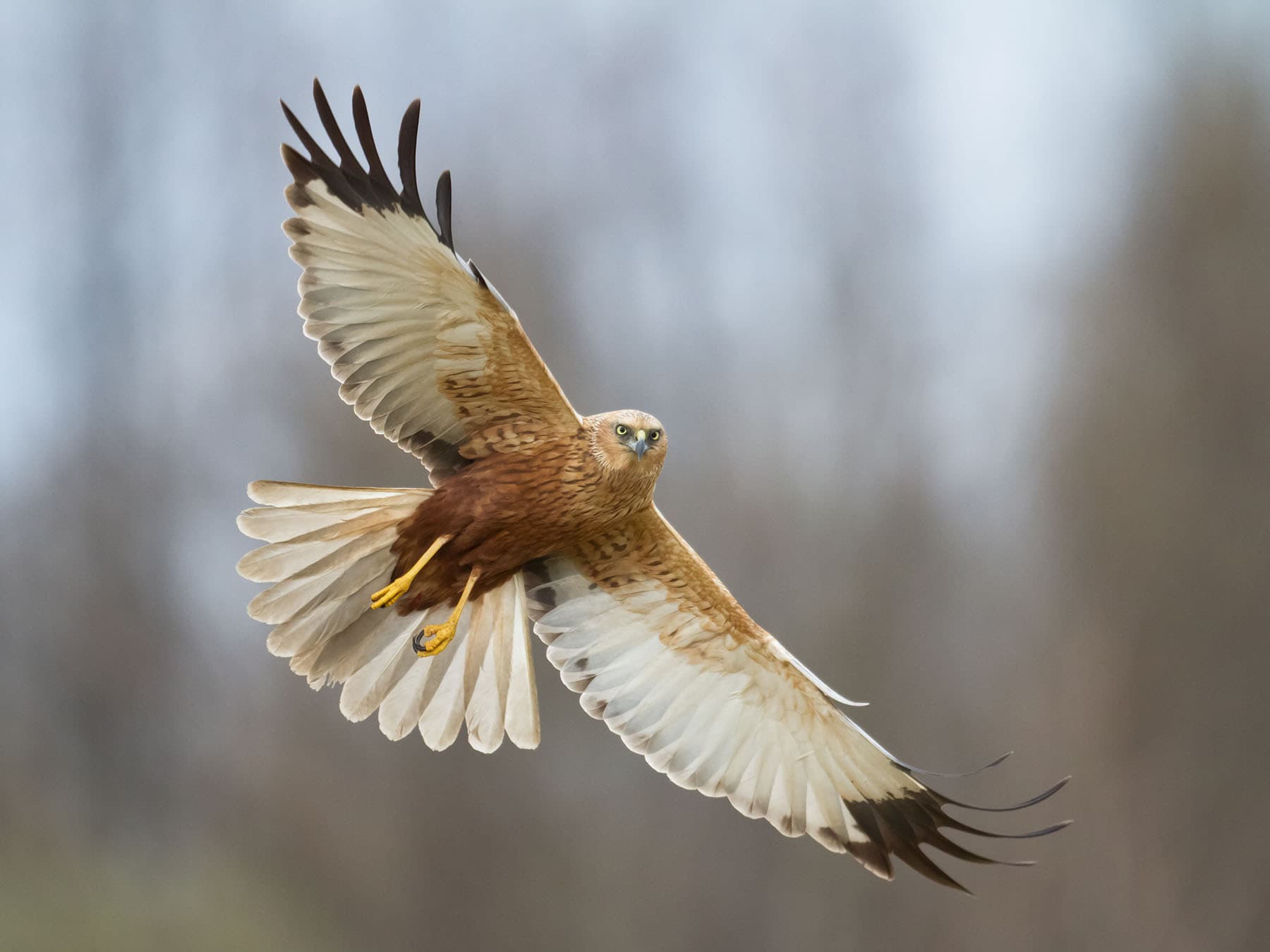
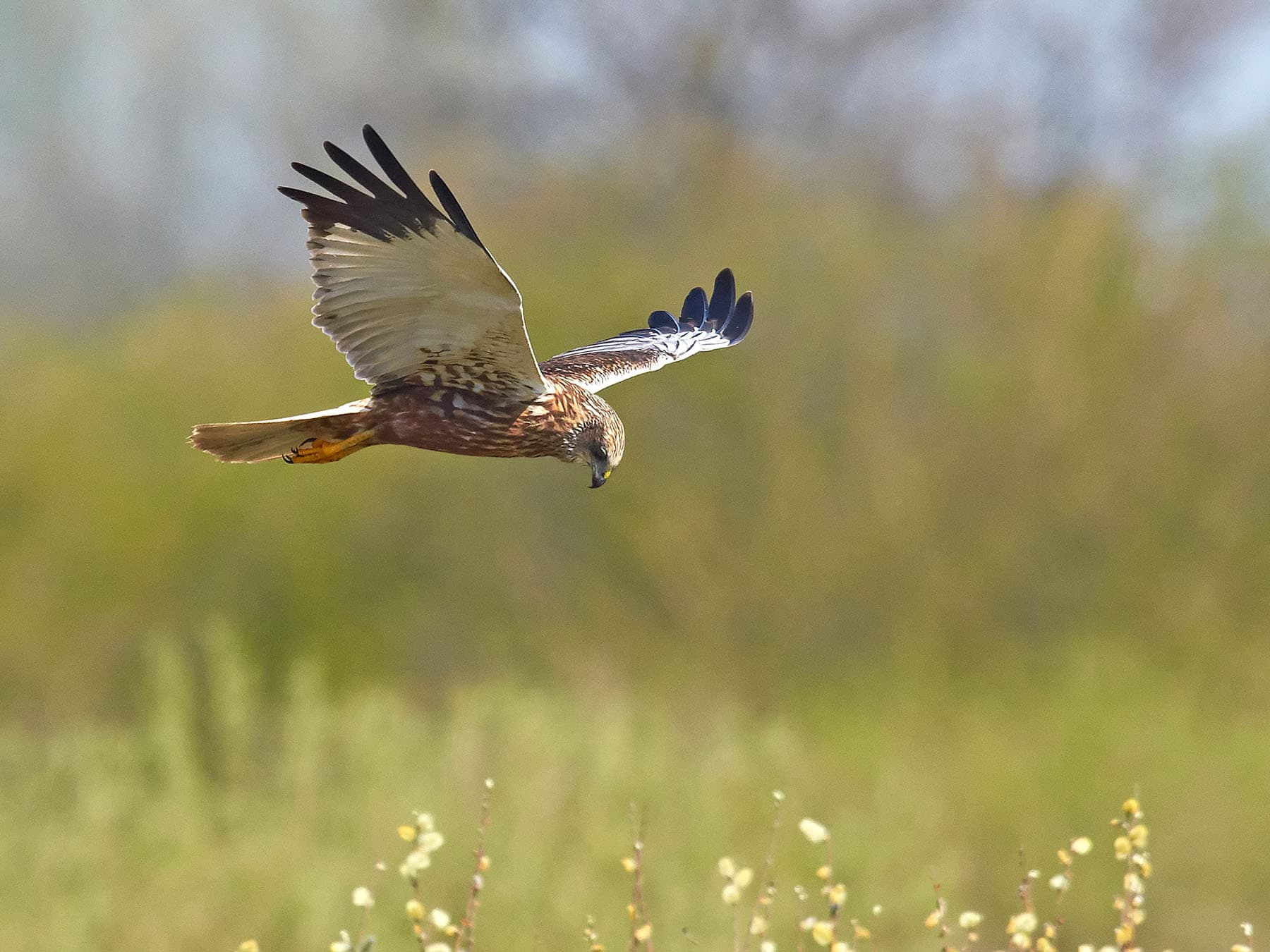
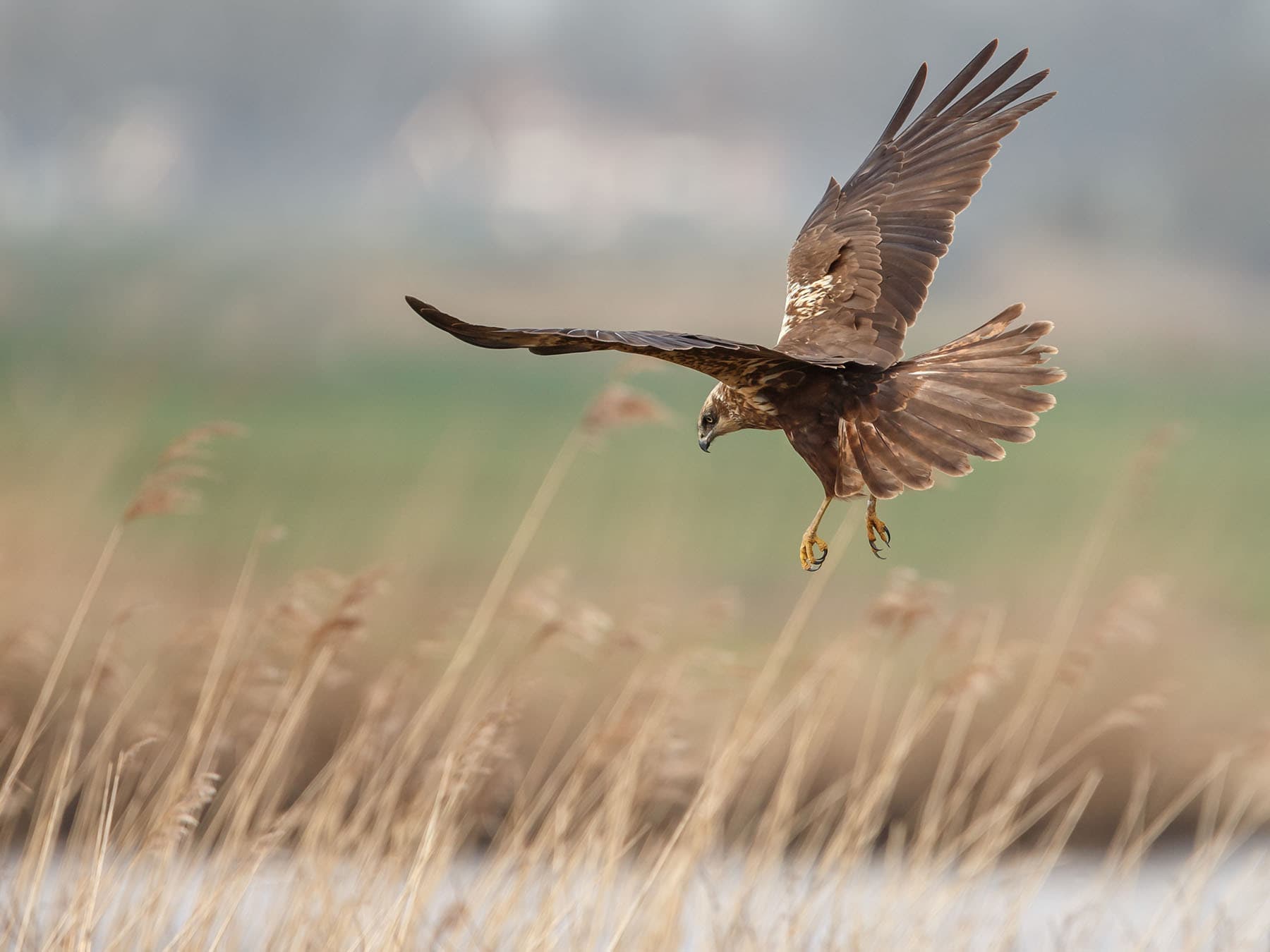
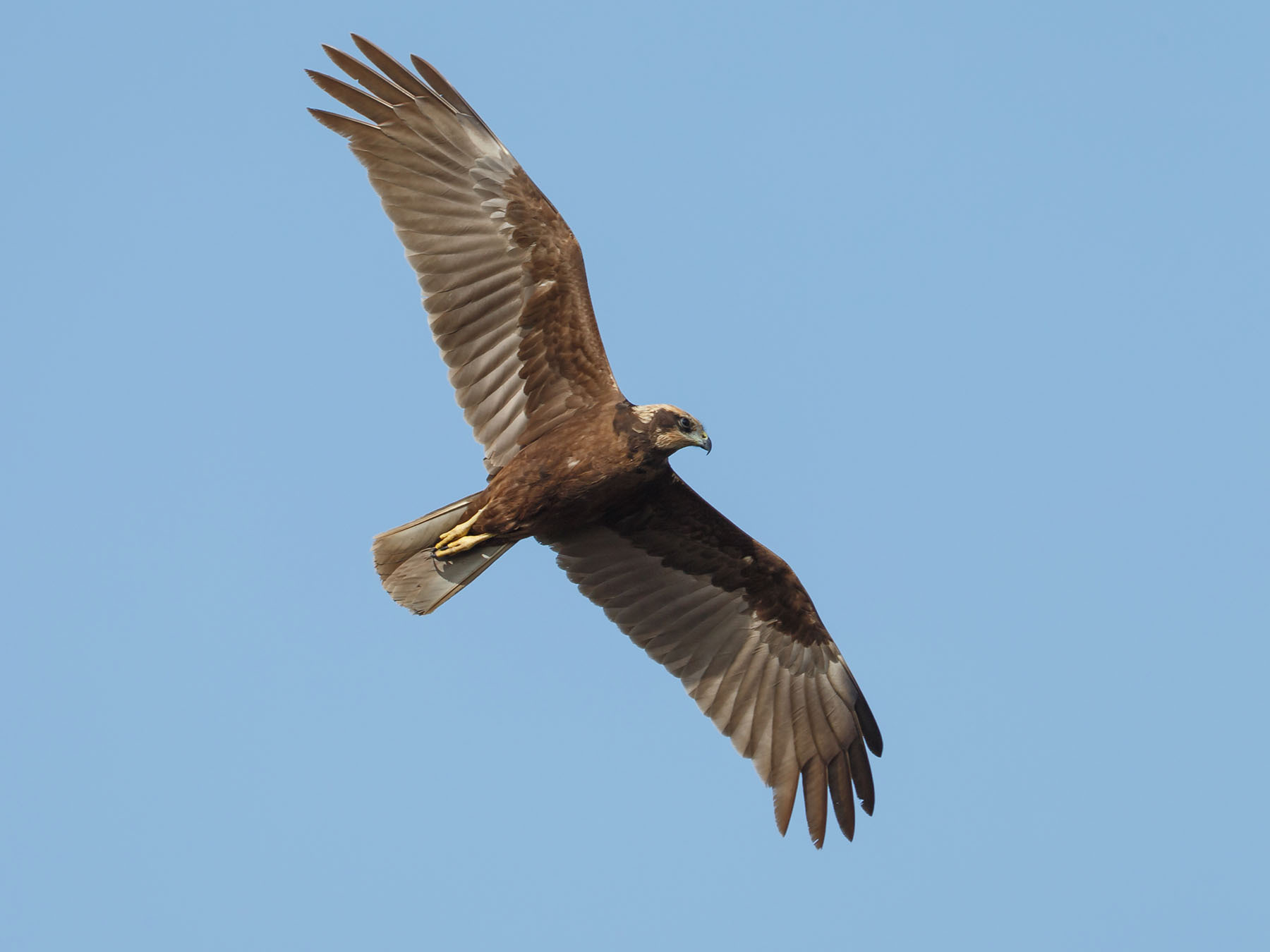
Marsh Harriers are slender birds of prey with long legs and long tails. They are superficially similar to the Buzzard but have a much ganglier look and are typically seen flying low over marshlands with their wings held in a characteristic v-shape.
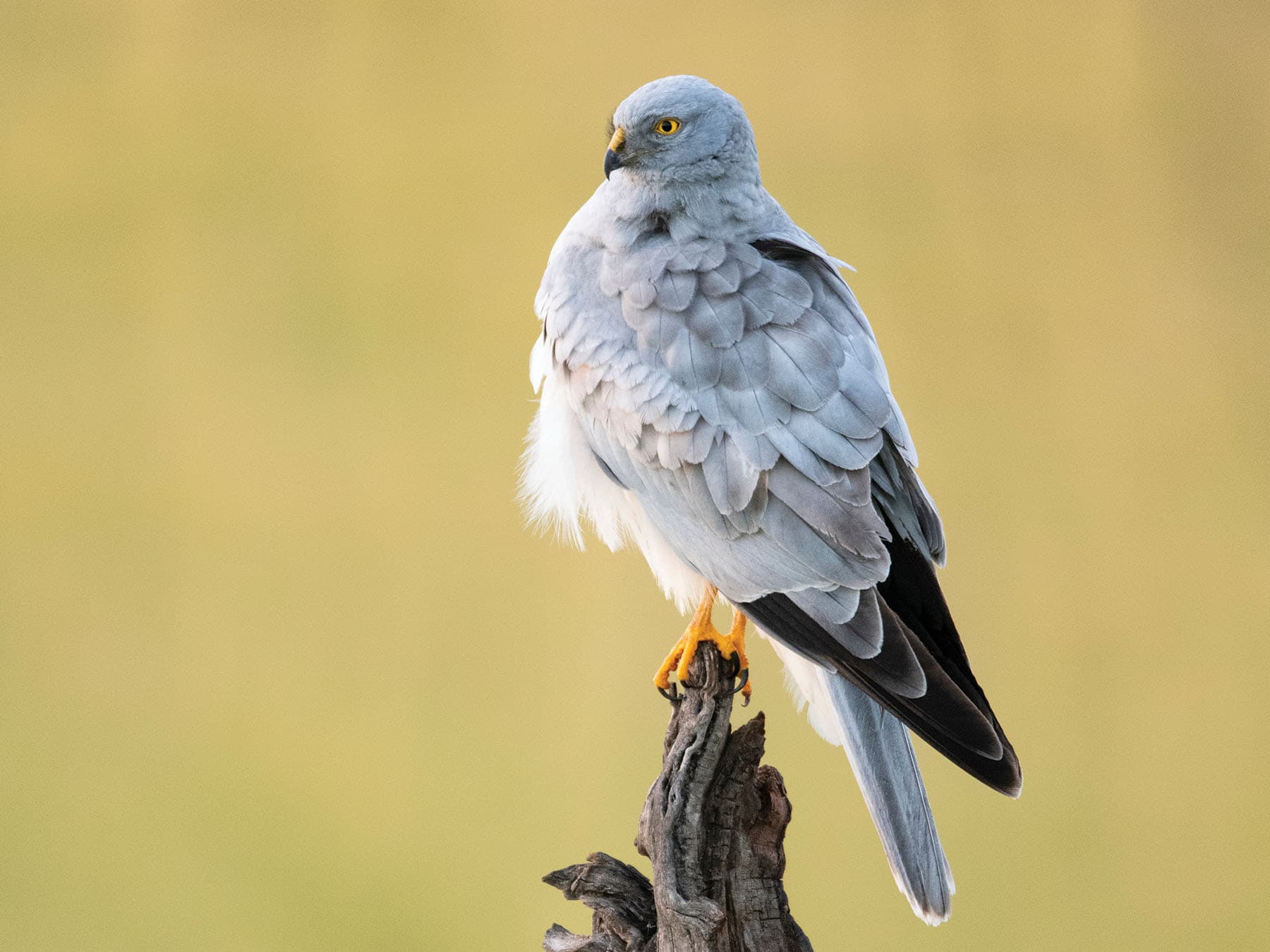
Birdwatchers can distinguish both sexes from the female Hen Harrier, which has a prominent white rump. Marsh Harrier plumage is somewhat variable but generally has the following appearance.
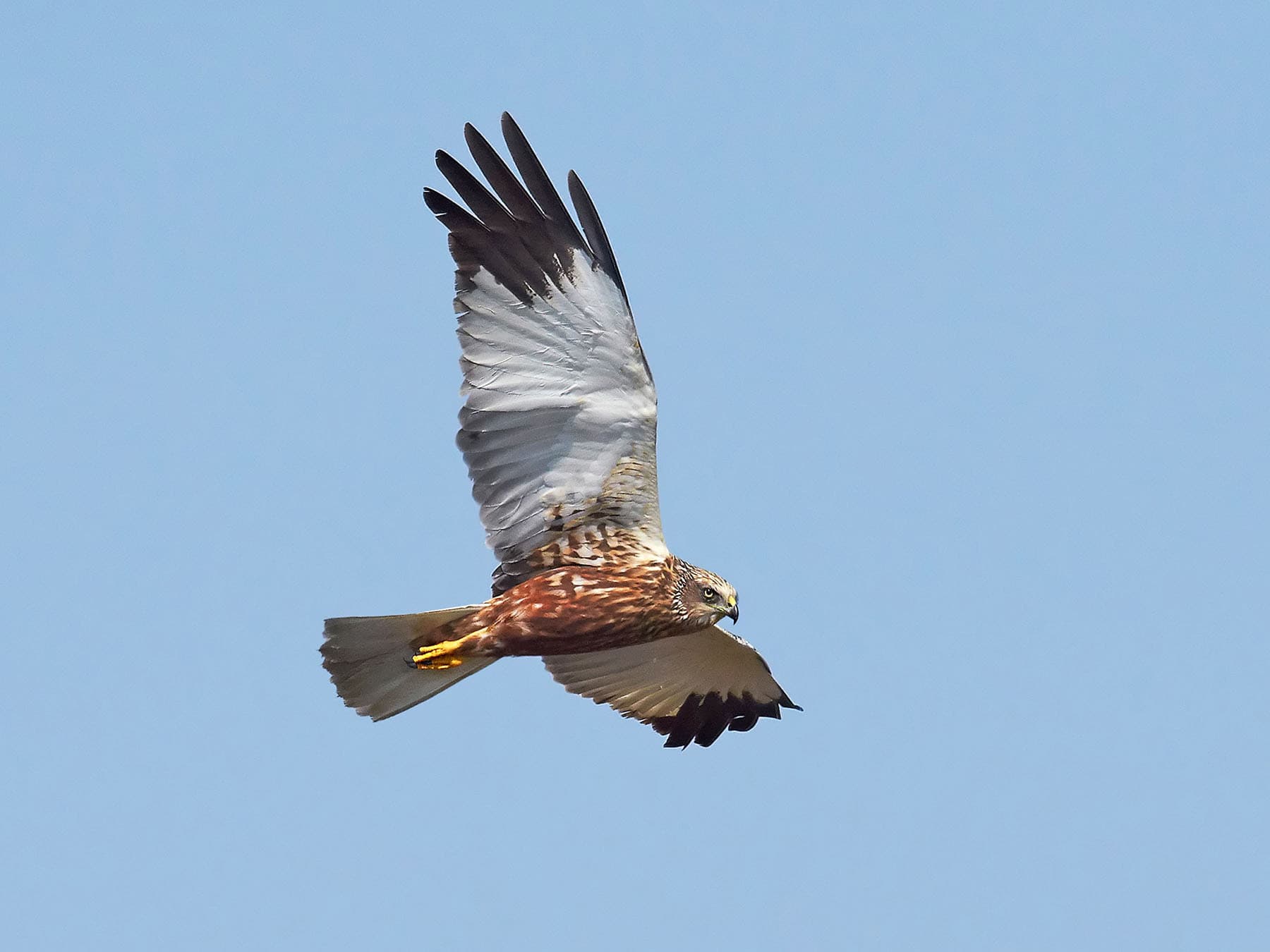
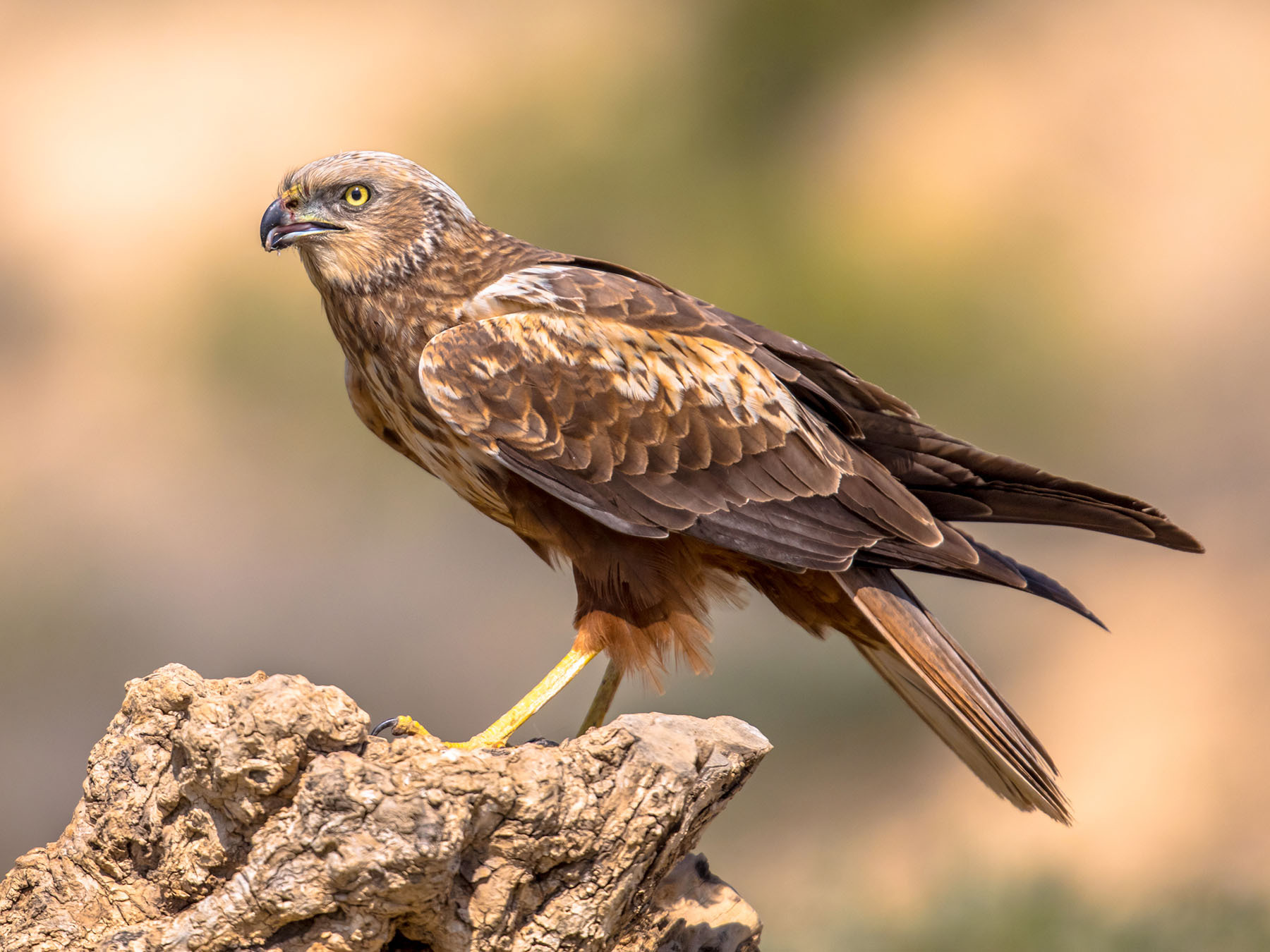
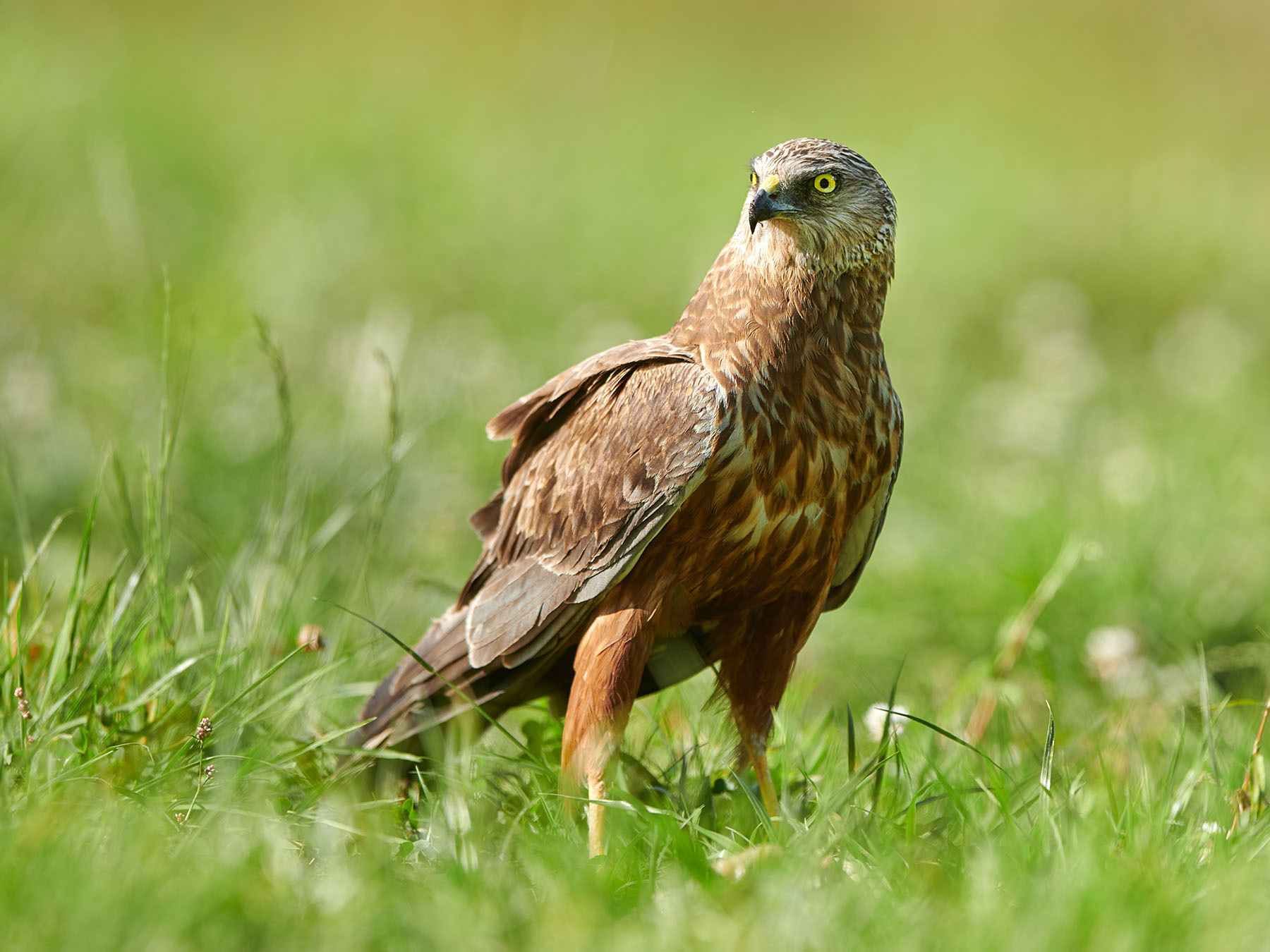
Adult males have brown backs. The upper side of each wing is brown closest to the back, becoming grey in the middle and dark at the tip. The upper side of the tail is grey, and the head is pale. They have streaked ginger-brown breasts, solid brown bellies, and yellow eyes and legs.
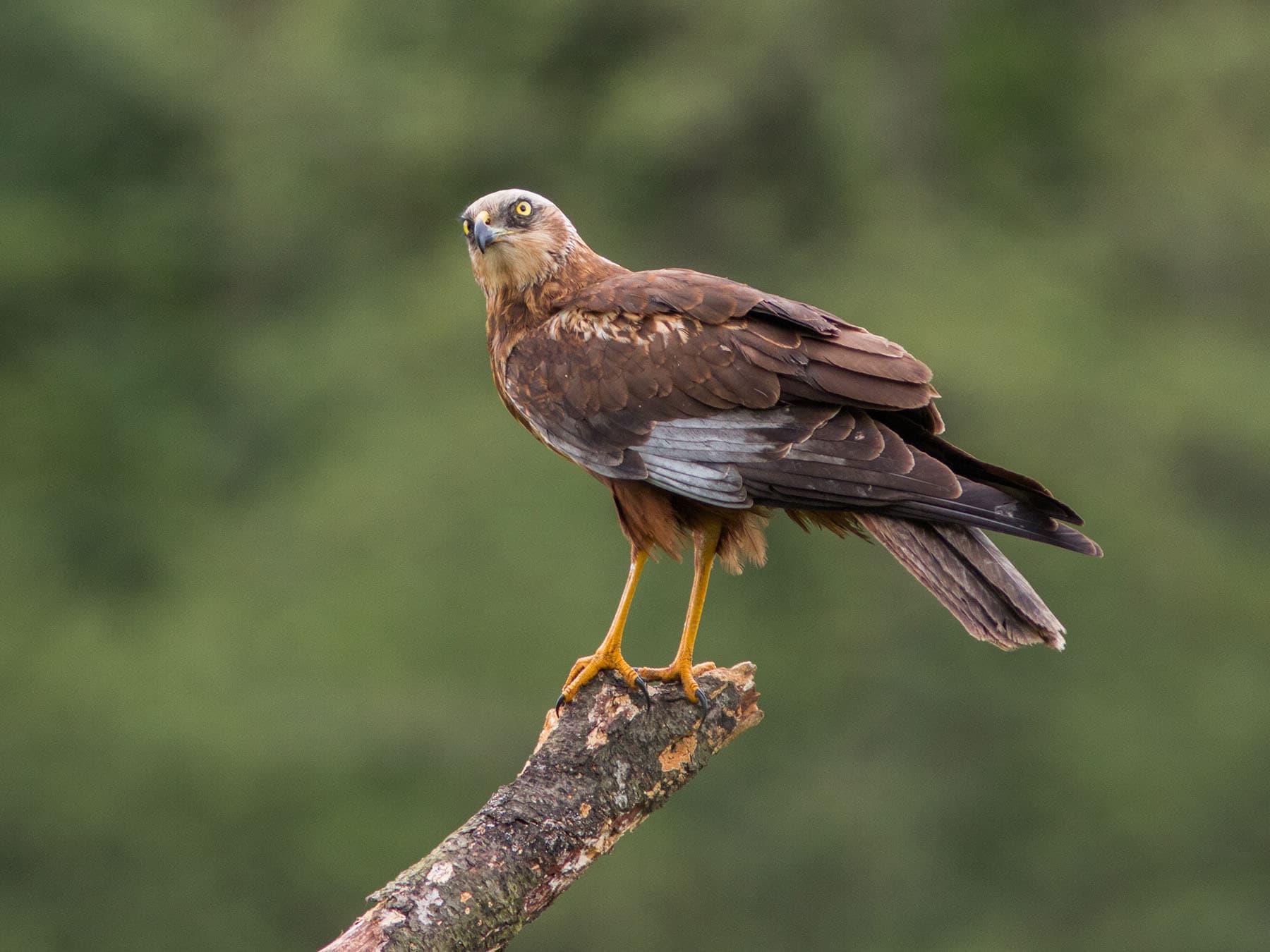
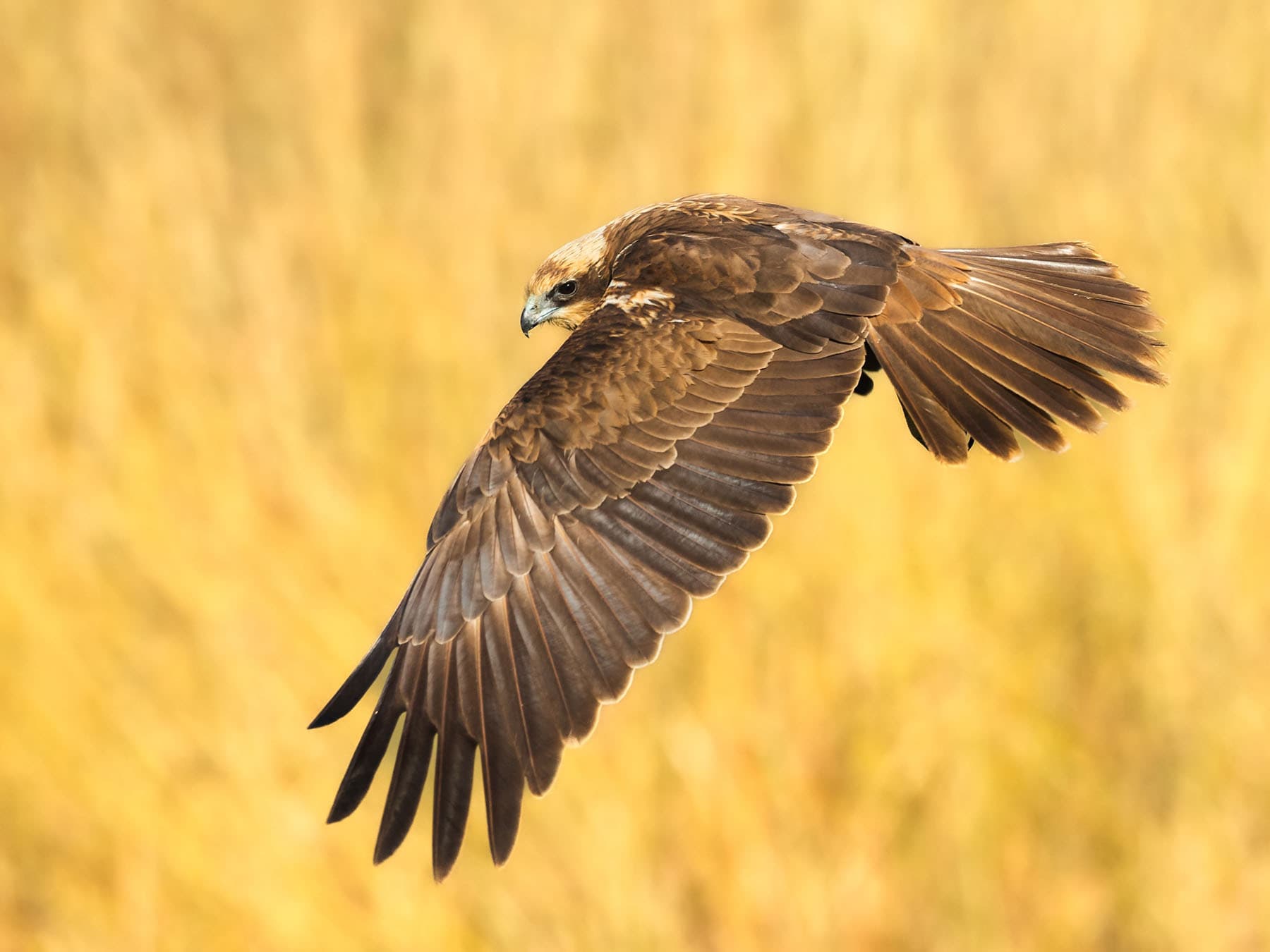
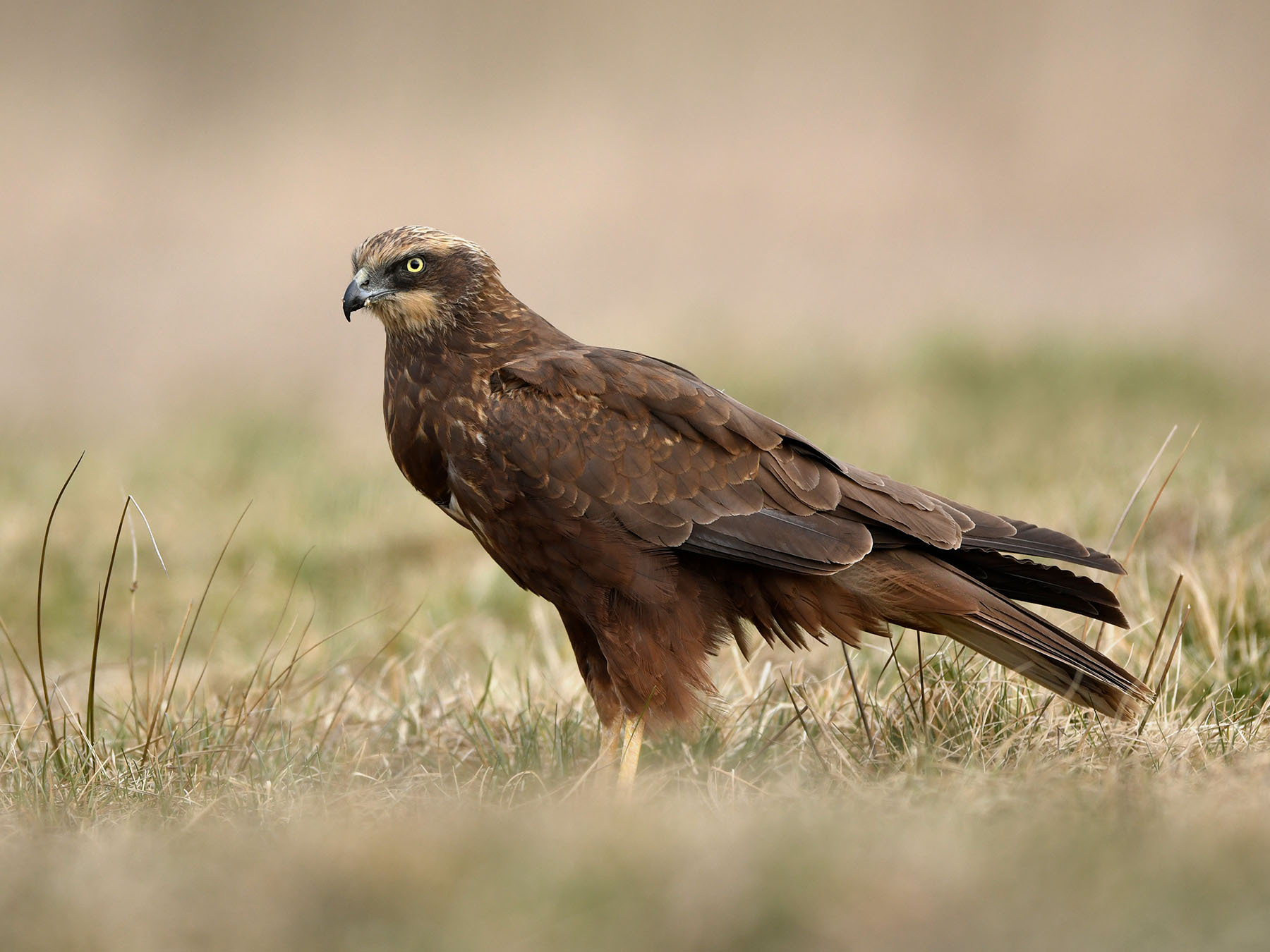
Females are usually uniform chocolate-brown with cream to yellowish caps, throats, shoulders, and leading wing edges.
Juveniles of both sexes are very similar to females. They have the same uniform dark brown plumage and pale throat and cap but lack the pale wing patches.
How big are Marsh Harriers?
Marsh Harriers are medium-sized birds of prey. Females average about five percent heavier than males, although plumage differences are a more reliable marker for distinguishing the sexes.
Length
Marsh Harriers of both sexes have a length of 43 to 54 centimetres.
Weight
Males weigh 405 to 730 grams, while females weigh between 540 and 960 grams.
Wingspan
Marsh Harriers have relatively long wings. Their wingspan is 115 to 145 centimetres from tip to tip.
Its size
Adults- Length
- 48–56 cm
- Wingspan
- 115–130 cm
- Weight
- 500–1100 g
Its song and calls
These fine birds of prey are quiet in the winter, although you may hear them during the breeding season. Read on to learn more about Marsh Harrier vocalisations.
What sound does a Marsh Harrier make?
Male Marsh Harriers call in flight when courting a partner, and the female may answer their loud ‘wee-ah’ cry. They also produce a cackling alarm call when threatened.
- Song0:00 / 0:06
Recorded in Normandie, France · April 2026
- Call0:00 / 0:10
Recorded in Normandie, France · November 2021
When and where to see it
OctoberHere all year
Most recorded in October
- 1. Norfolk1.3%
- 2. South Yorkshire1.1%
- 3. Essex0.97%
- 4. Lincolnshire0.92%
- 5. Suffolk0.87%
Each dot is a county, state or province: the bigger and darker, the larger the bird’s share of that place’s bird records that month. Grey dots: no regular records. The ringed point is the centre of the bird’s records this month; the arrow shows how it moved since last month, and the dashed loop its path through the year. “Arrivals” colours places where it becomes regular this month (orange) or is in its last regular month (grey). GBIF eBird Observation Dataset, 2019–2024. Map data: Natural Earth, US Census Bureau; place centres © OpenStreetMap contributors.
In your area
See when the Western Marsh-harrier is recorded in your county, state or province.
How often the Western Marsh-harrier turns up in the UK and Ireland through the year, from birdwatchers' records.
United Kingdom
Resident · all year · most records in January
Ireland
Resident · all year · most records in October
Show as a table
| Month | United Kingdom | Ireland |
|---|---|---|
| January | 0.41% (regular) | 0.048% (regular) |
| February | 0.35% (regular) | 0.035% (regular) |
| March | 0.29% (regular) | 0.011% (regular) |
| April | 0.31% (regular) | 0.027% (regular) |
| May | 0.33% (regular) | 0.029% (regular) |
| June | 0.32% (regular) | 0.017% (regular) |
| July | 0.33% (regular) | 0.025% (regular) |
| August | 0.33% (regular) | 0.039% (regular) |
| September | 0.34% (regular) | 0.046% (regular) |
| October | 0.39% (regular) | 0.076% (regular) |
| November | 0.39% (regular) | 0.072% (regular) |
| December | 0.39% (regular) | 0.053% (regular) |
Recorded regularly in
Worldwide: recorded regularly in 101 countries
Countries where it was recorded in at least 3 of the 6 years 2019–2024. Linked countries have their own bird list.
Europe (45)
- Åland Islands
- Albania
- Andorra
- Austria
- Belarus
- Belgium
- Bosnia & Herzegovina
- Bulgaria
- Croatia
- Czechia
- Denmark
- Estonia
- Finland
- France
- Germany
- Gibraltar
- Greece
- Guernsey
- Hungary
- Ireland
- Isle of Man
- Italy
- Jersey
- Kosovo
- Latvia
- Lithuania
- Luxembourg
- Malta
- Moldova
- Montenegro
- Netherlands
- North Macedonia
- Norway
- Poland
- Portugal
- Romania
- Russia
- Serbia
- Slovakia
- Slovenia
- Spain
- Sweden
- Switzerland
- Ukraine
- United Kingdom
Africa (26)
- Algeria
- Burkina Faso
- Cameroon
- Cape Verde
- Chad
- Congo - Kinshasa
- Egypt
- Ethiopia
- Gambia
- Ghana
- Guinea
- Guinea-Bissau
- Kenya
- Libya
- Mauritania
- Morocco
- Nigeria
- Rwanda
- Senegal
- South Africa
- Tanzania
- Togo
- Tunisia
- Uganda
- Western Sahara
- Zimbabwe
Asia (30)
- Armenia
- Azerbaijan
- Bahrain
- Bangladesh
- China
- Cyprus
- Georgia
- India
- Iran
- Iraq
- Israel
- Jordan
- Kazakhstan
- Kuwait
- Kyrgyzstan
- Lebanon
- Mongolia
- Myanmar (Burma)
- Nepal
- Oman
- Pakistan
- Palestinian Territories
- Qatar
- Saudi Arabia
- Sri Lanka
- Tajikistan
- Thailand
- Turkey
- United Arab Emirates
- Uzbekistan
Data: EOD – eBird Observation Dataset (Cornell Lab of Ornithology), accessed via GBIF.org, CC BY 4.0. Records from 2019–2024, aggregated and filtered by Birdfact. How these lists are made
Marsh Harriers occupy specific habitats in localised areas of the United Kingdom. Continue reading to learn where you might spot these interesting birds of prey.
What is the habitat of a Marsh Harrier?
True to their name, Marsh Harriers prefer wetland habitats like marshes, freshwater reedbeds and reed-lined lakes and watercourses. They occasionally hunt in farmland and other low vegetation near their typical marsh habitat.
What is the range of a Marsh Harrier?
Marsh Harriers are restricted to low-lying areas with suitable habitats in the UK. They are most common in the east and southeast of England, although they also occur in isolated parts of Wales and the northwest of England. Some pairs visit eastern Scotland in the summer to nest.
Elsewhere, the Eurasian Marsh Harrier has a large global distribution that extends as far as Central Asia in the east and Central Africa in the south.
Where do Marsh Harriers live?
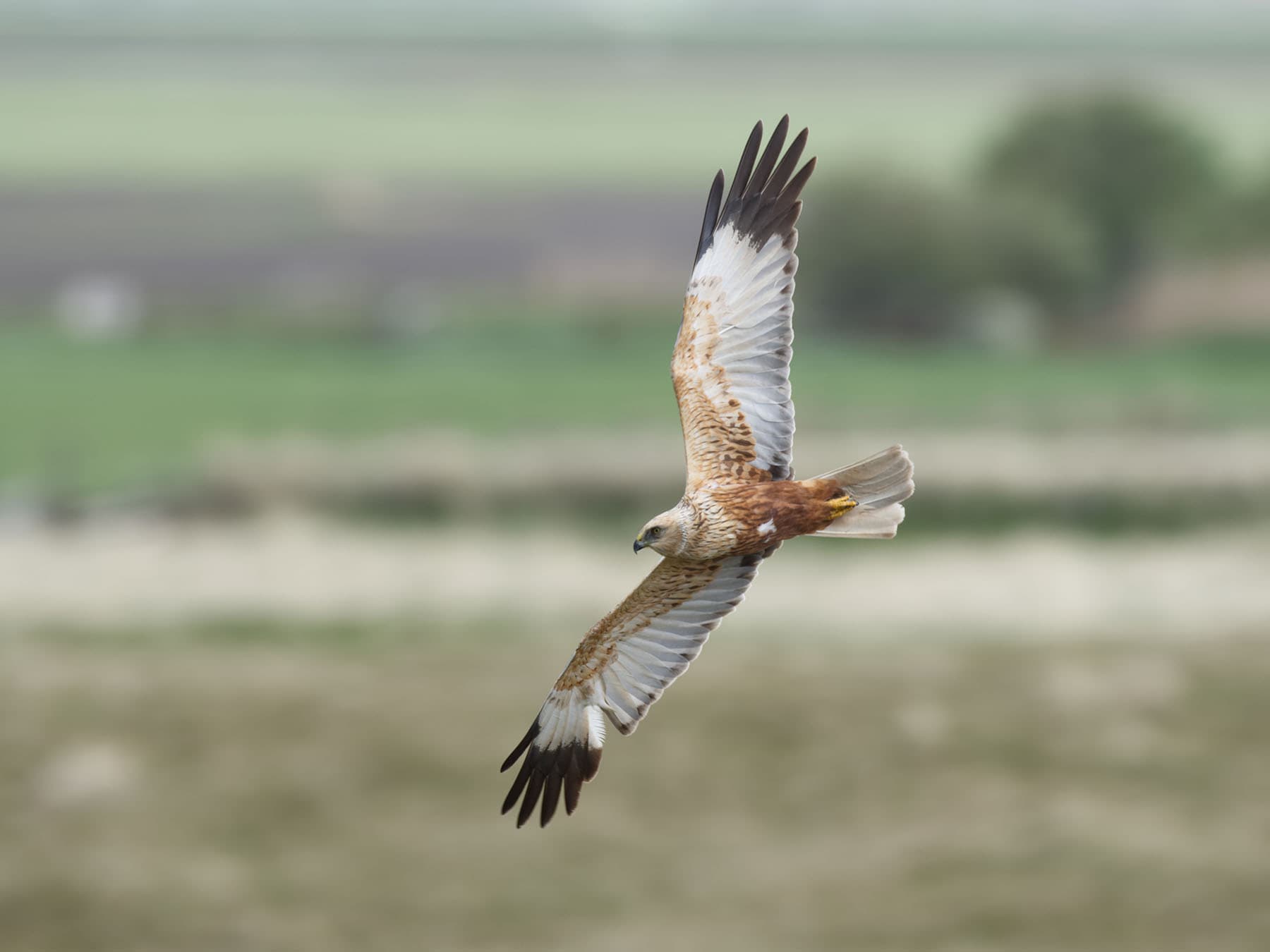
Marsh Harriers live in open wetlands. They are most often seen flying low in search of prey, although they also rest on the ground or low perches like fence posts.
How rare are Marsh Harriers?
Marsh Harriers are not common in the United Kingdom, with a breeding population of just 400 to 600 pairs. However, these birds occupy localised habitats within their limited range, and an outing to these areas provides a good chance of a sighting.
Where can you see Marsh Harriers in the UK?
RSPB Minsmere in Suffolk is an excellent place to look for Marsh Harriers, although visiting other reedbed habitats in East Anglia may be rewarding. Somerset in the Southwest is also a good part of the country to look for Marsh Harriers.
Migration
Marsh Harriers are partial migrants, with some birds remaining in the same areas throughout the year while others undertake lengthy annual migrations. Read on to learn more about their migratory habits in the UK and beyond.
Do Marsh Harriers migrate?
Many Marsh Harriers are resident in their strongholds of south and southeastern England throughout the year. Those that visit Scotland to breed are only present in the warmer months.
Tips for seeing it
- Look for their distinctive low, quartering flight over wetlands and reedbeds
- Listen for their 'kek-kek-kek' call during breeding season
- Observe them in early morning or late afternoon when they're most active
- In the UK, visit coastal marshes and wetland reserves for the best chances of spotting them
- They're similar to the Buzzard but have a much ganglier look and are typically seen flying low over marshlands with their wings held in a characteristic v-shape.
What it eats
Marsh Harriers are strictly carnivorous birds. They hunt by flying low over marshy areas and dropping down on their prey.
What do Marsh Harriers eat?
Marsh Harriers are generalist hunters and will attack any prey item they can overpower. Birds up to the size of gulls and ducks are their most frequent prey, although they often capture small mammals like voles and rabbits.
These adaptable birds will take other prey like invertebrates, reptiles, fish, and frogs less often. They also feed on carrion when available.
What do Marsh Harrier chicks eat?
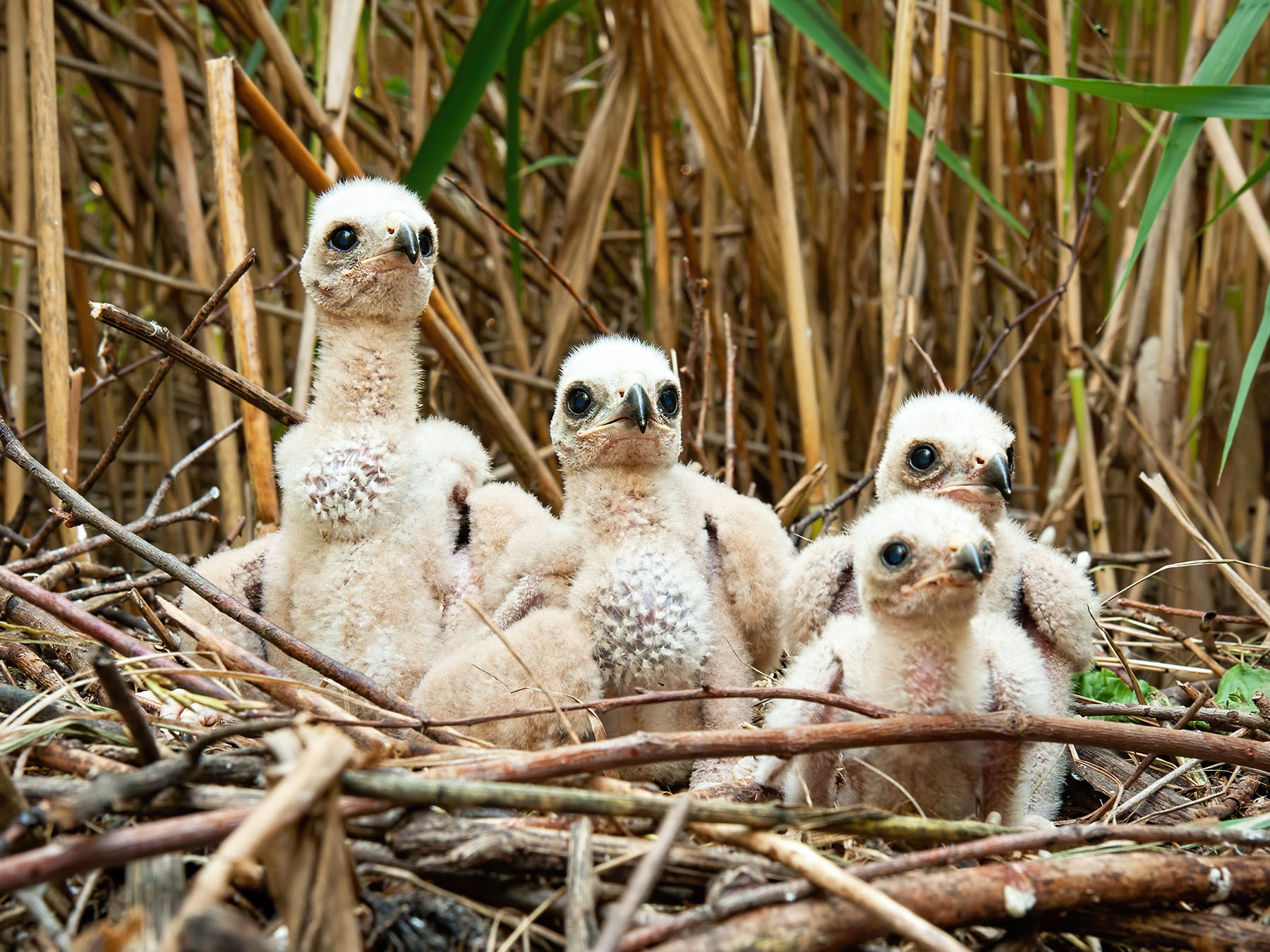
Marsh Harrier chicks eat the flesh of birds and small mammals. They are fed by both parents, although the male provides the most food.
Nesting and breeding
Marsh Harriers breed in the UK from about March to August, with peak egg-laying from April to mid-May.
Where do Marsh Harriers nest?
Marsh Harriers nest in reedbeds and other dense wetland vegetation. The female constructs a nest of rushes and reeds on the ground, sometimes in shallow water. Most nests measure 60 to 80 centimetres in diameter.
What do Marsh Harrier eggs look like?
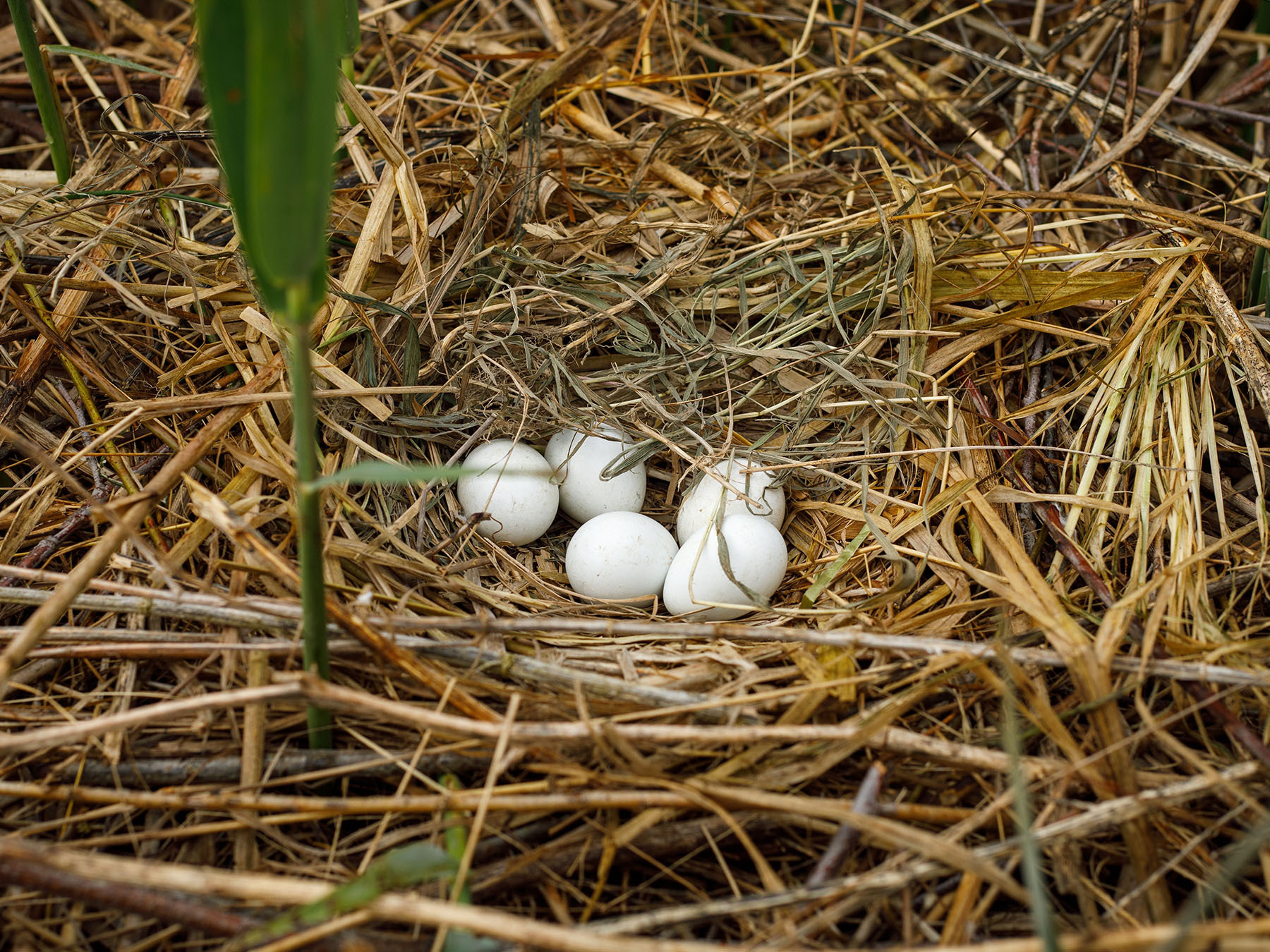
Marsh Harriers usually lay three to six bluish-white eggs per clutch. Each egg measures about 49 millimetres long and 38 millimetres wide.
Do Marsh Harriers mate for life?
Marsh Harriers do not mate for life. They are generally monogamous in the breeding season, although males may have two or three different partners each year. Some pairs will reunite in successive years.
Behaviour
Marsh Harriers exhibit some fascinating behaviours, especially in the breeding season when males perform flight displays that may include spectacular acrobatic manoeuvres.
Are Marsh Harriers aggressive?
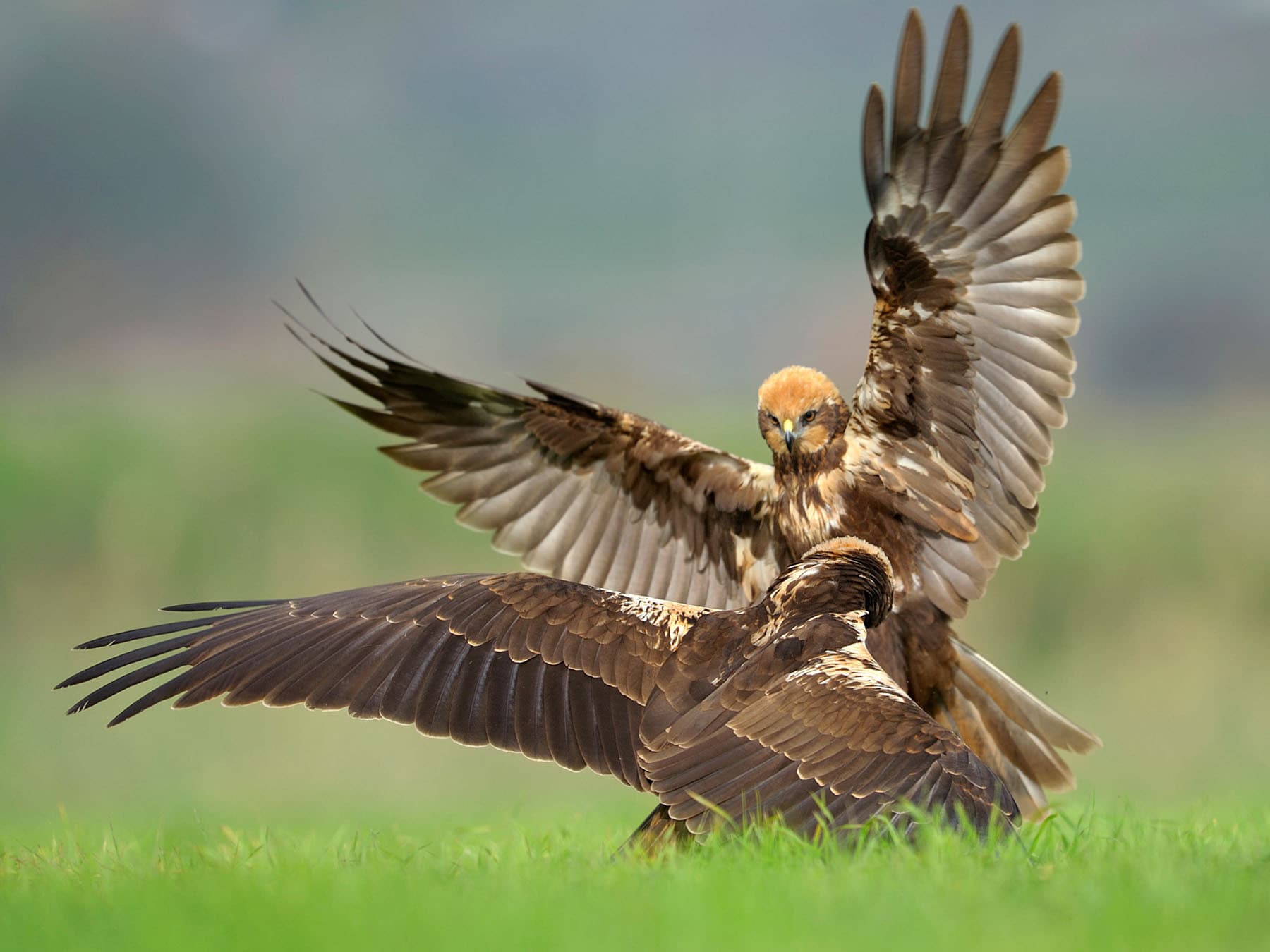
Male Marsh Harriers are aggressive toward other males in their territory. Interestingly, some males retain female-like plumage to gain access to females without incurring the wrath of the resident male.
Marsh Harriers are not aggressive toward humans, although they will defend themselves if trapped or cornered. These birds nest on the ground, and it is an offence to disturb or interfere with their nests, eggs or chicks.
Where do Marsh Harriers sleep at night?
Marsh Harriers sleep in low marsh vegetation and reedbeds. Large communal roosts may develop in the autumn in some areas.
Lifespan and predators
Humans are the greatest threat to Marsh Harriers. Habitat destruction, persecution, and pesticide use brought their population to dangerously low levels, but thankfully, the species is in recovery. Read on to learn more about the Marsh Harrier's lifespan and the threats these birds face.
How long do Marsh Harriers live?
Marsh Harriers have an average lifespan of about six years, although they can live for up to sixteen years.
What are the predators of Marsh Harriers?
Marsh Harriers are relatively high on the food chain and have few natural enemies. Sick or injured birds may be vulnerable to larger predators like foxes, while their eggs and chicks are vulnerable to many carnivorous mammals and other birds like ravens and magpies.
Are Marsh Harriers protected?
Marsh Harriers are protected in the United Kingdom by the Wildlife and Countryside Act of 1981 and are listed as a schedule 1 species.
Are Marsh Harriers endangered?
Marsh Harriers went extinct in Britain in the 1800s, and the current population grew from just one pair at the start of the 1970s. Today, there may be as many as 600 pairs, and they are not considered endangered.
However, The species remains on the UK's amber list of conservation concern.
Conservation
While currently listed as Least Concern globally, Western Marsh-harriers face threats from habitat loss, drainage of wetlands, and persecution. Conservation efforts focus on protecting and restoring wetland habitats, particularly in their breeding areas.
Marsh Harriers went extinct in Britain in the 1800s, and the current population grew from just one pair at the start of the 1970s. Today, there may be as many as 600 pairs, and they are not considered endangered. However, The species remains on the UK's amber list of conservation concern.
Similar birds
Often mistaken for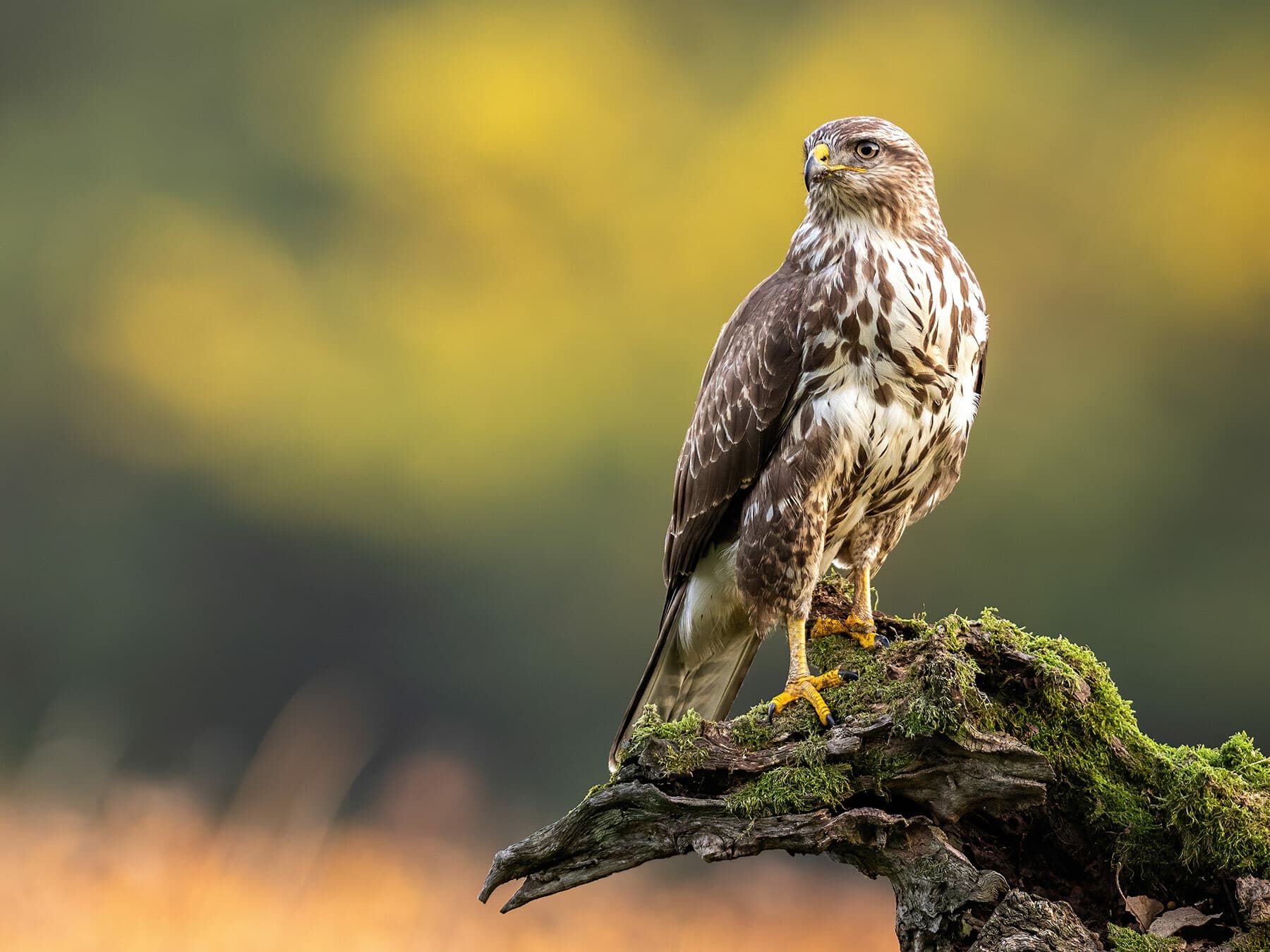
More photos
7 photos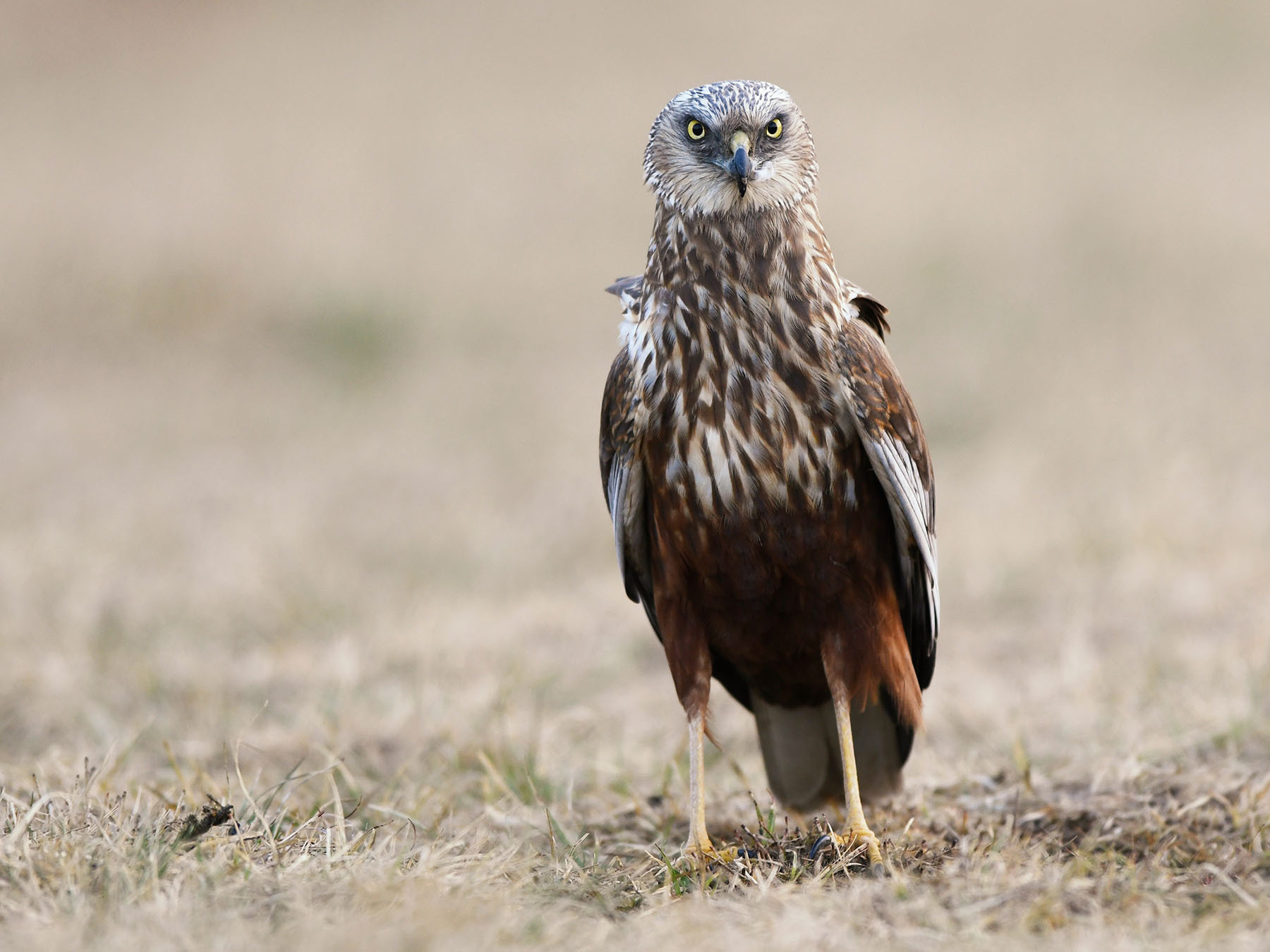
Western Marsh-harrier guides
1 guidesQuick facts
- Length
- 48–56 cm
- Wingspan
- 115–130 cm
- Weight
- 500–1100 g
- Lifespan
- 6 years · oldest recorded 20.1 years
- Family
- Hawks & Eagles
- Migration
- Partial migrant
- Global status (IUCN)
- Least Concern
- World population
- 631,000 - 1,010,000 mature individuals
- Population trend
- Stable
- Also called
- Eurasian Marsh-harrier, Marsh Harrier, Western Marsh Harrier
- Scientific name
- Circus aeruginosus
Questions
3Is a Marsh Harrier an eagle?
Technically speaking, Marsh Harriers are not eagles. However, both birds of prey belong to the same bird family.
Is a Marsh Harrier bigger than a Buzzard?
Marsh Harriers are similar in size but have longer wings and legs than Buzzards. The Harrier has a lighter build, although large females often outweigh smaller Buzzard males.
How many pairs of Marsh Harriers are there in the UK?
There are an estimated 400 to 700 breeding pairs of Marsh Harriers in the United Kingdom.
Sources
4- 1BirdLife International. 2021. Circus aeruginosus. The IUCN Red List of Threatened Species 2021: e.T22695344A203357709. Source (opens in a new tab)
- 2BirdLife International. 2021. Circus aeruginosus. The IUCN Red List of Threatened Species 2021: e.T22695344A203357709. Source (opens in a new tab)
- 3BirdLife International. 2021. Circus aeruginosus. The IUCN Red List of Threatened Species 2021: e.T22695344A203357709. Source (opens in a new tab)
- 4Fransson et al., EURING list of longevity records for European birds (2010) Source (opens in a new tab)

Checked by
Nathan Cope, founder and editor
Nathan founded Birdfact and leads its writers and contributors in the UK, the US and Canada. He has watched and studied birds for more than ten years, and checks every article and species guide before it’s published.