


Hen Harrier
Circus cyaneus
By the Birdfact teamChecked by Nathan Cope
On this page15 sections
How to recognise it
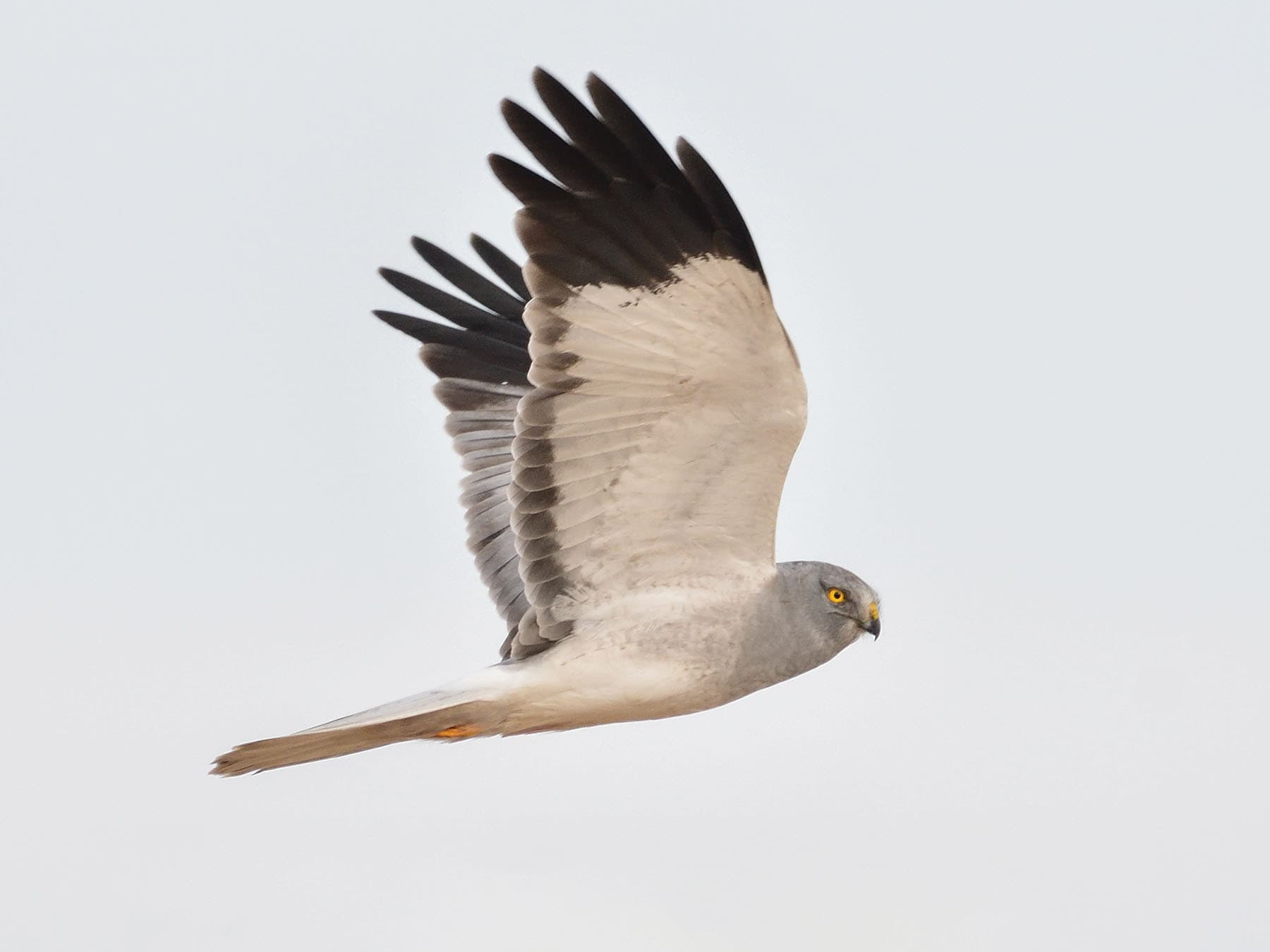
The Hen Harrier is a fairly distinctive bird, although it may be confused with the similar Montagu’s Harrier (Circus pygargus).
What do Hen Harriers look like?
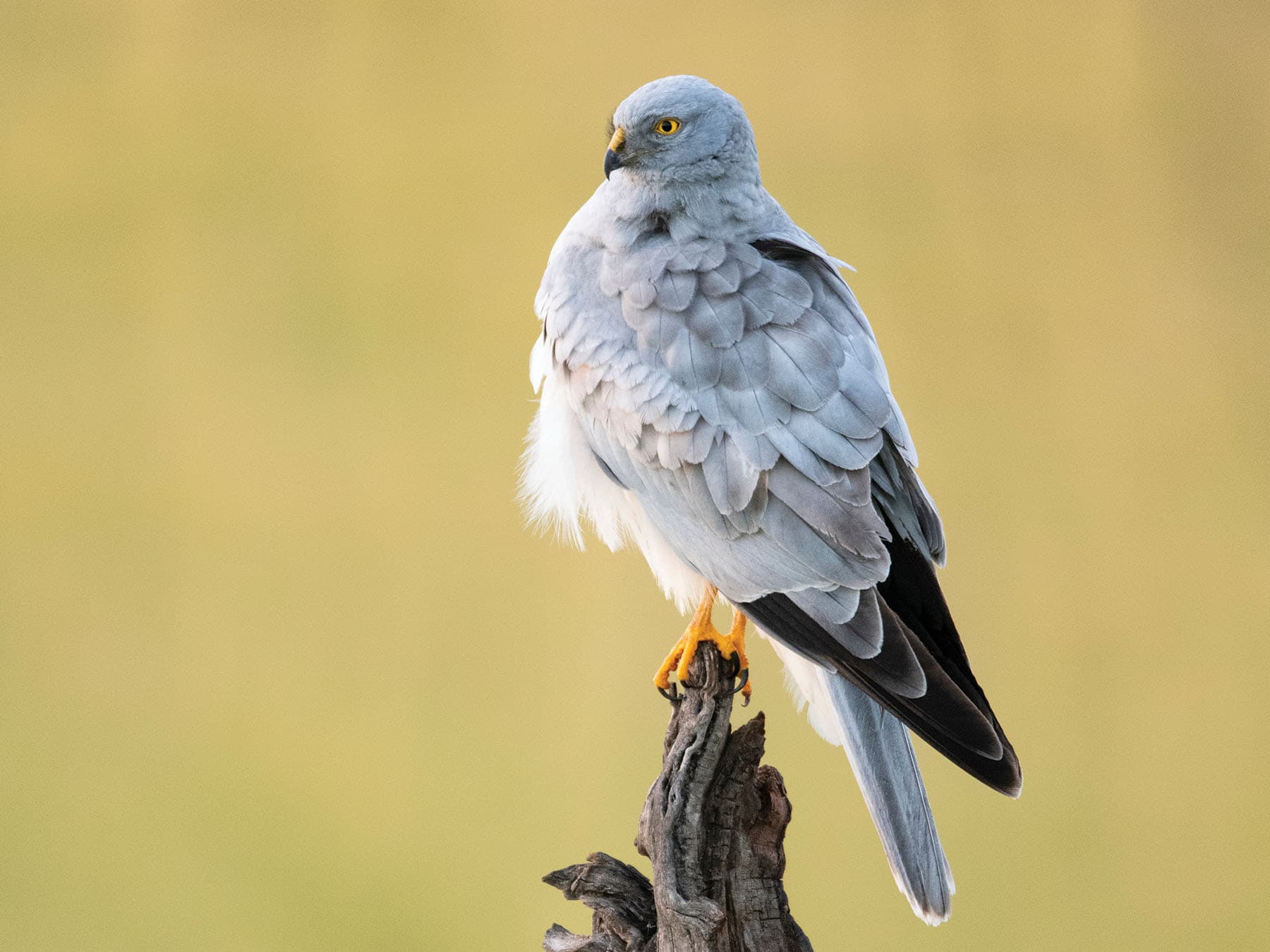
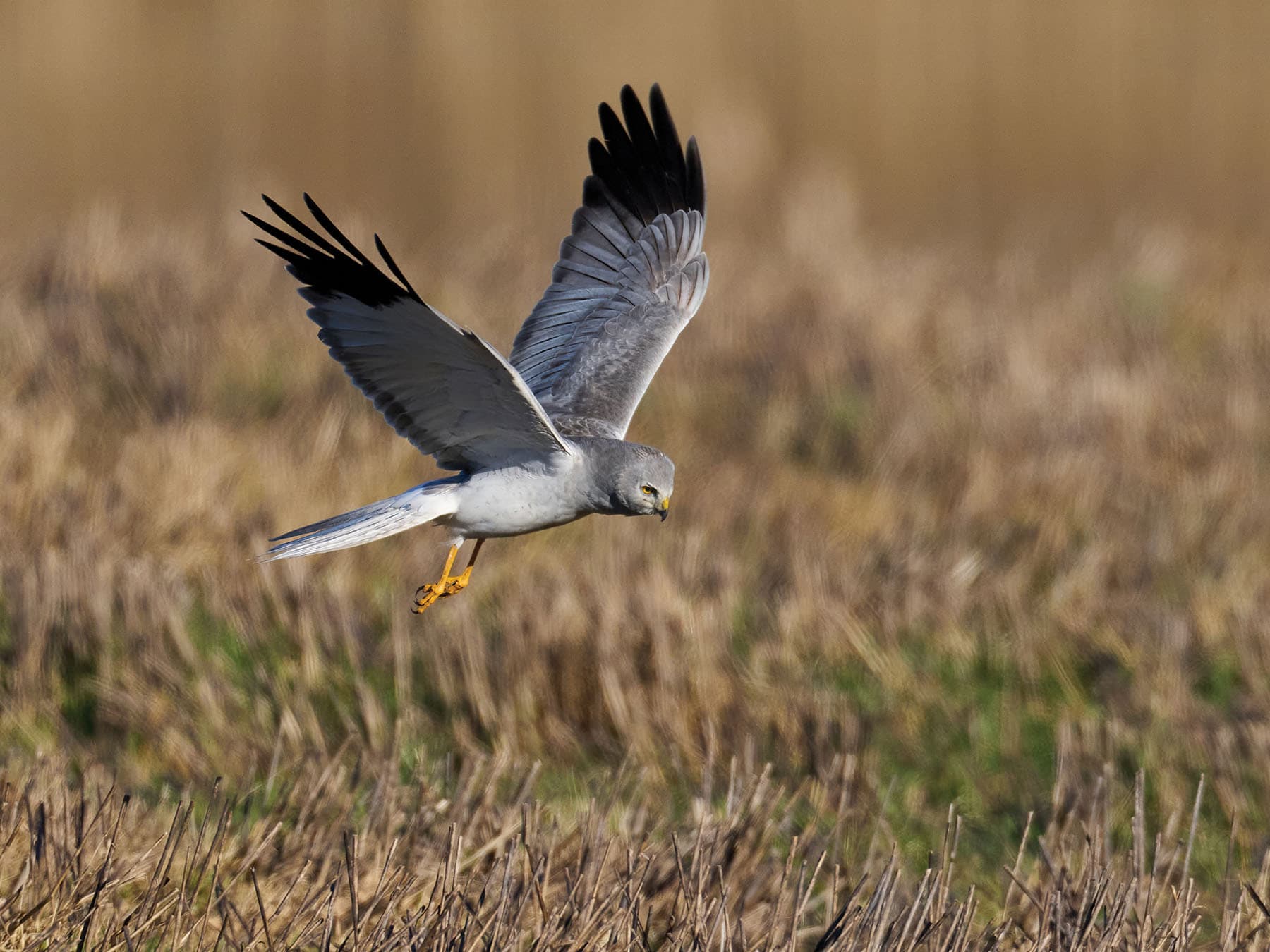
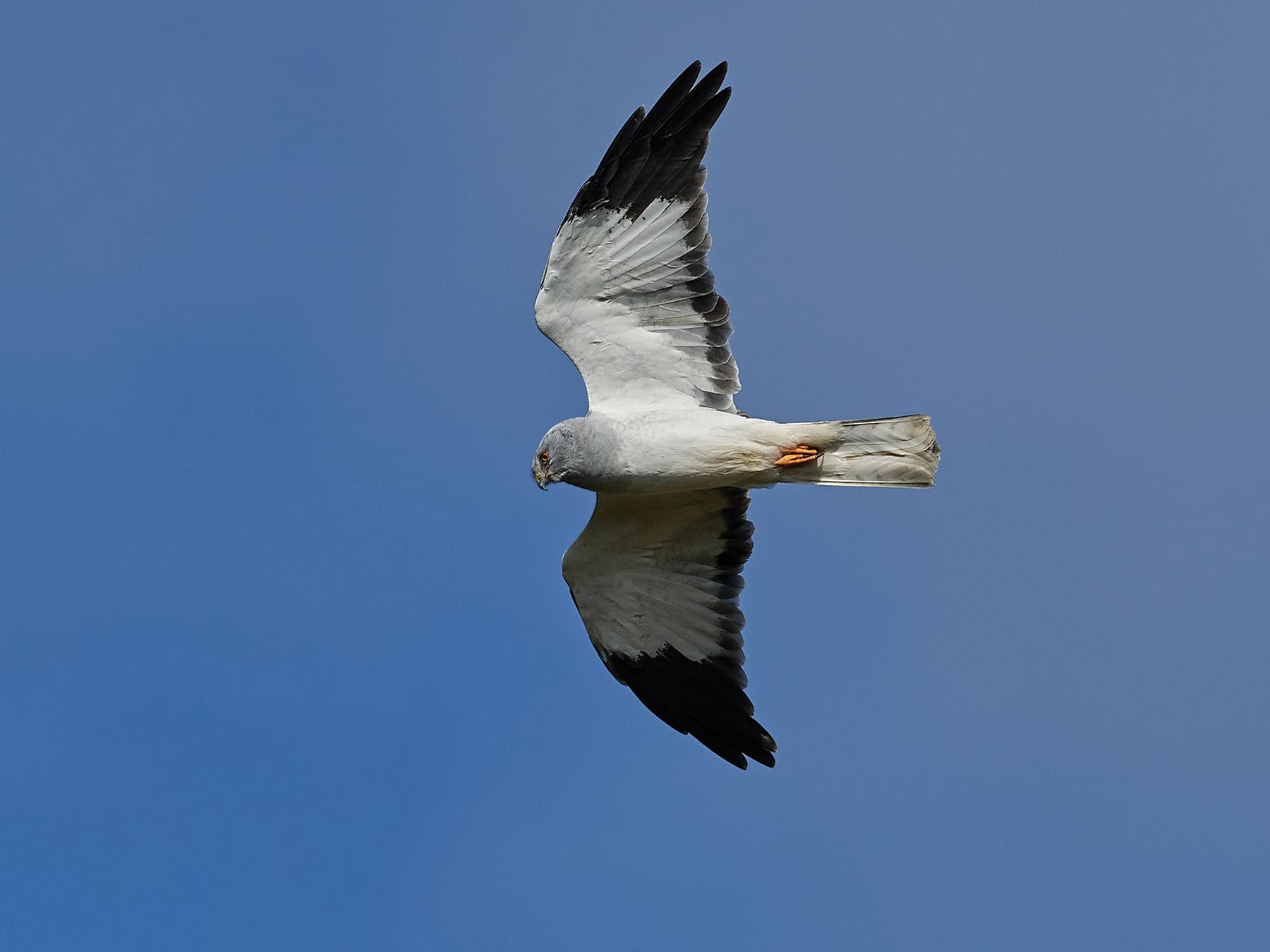
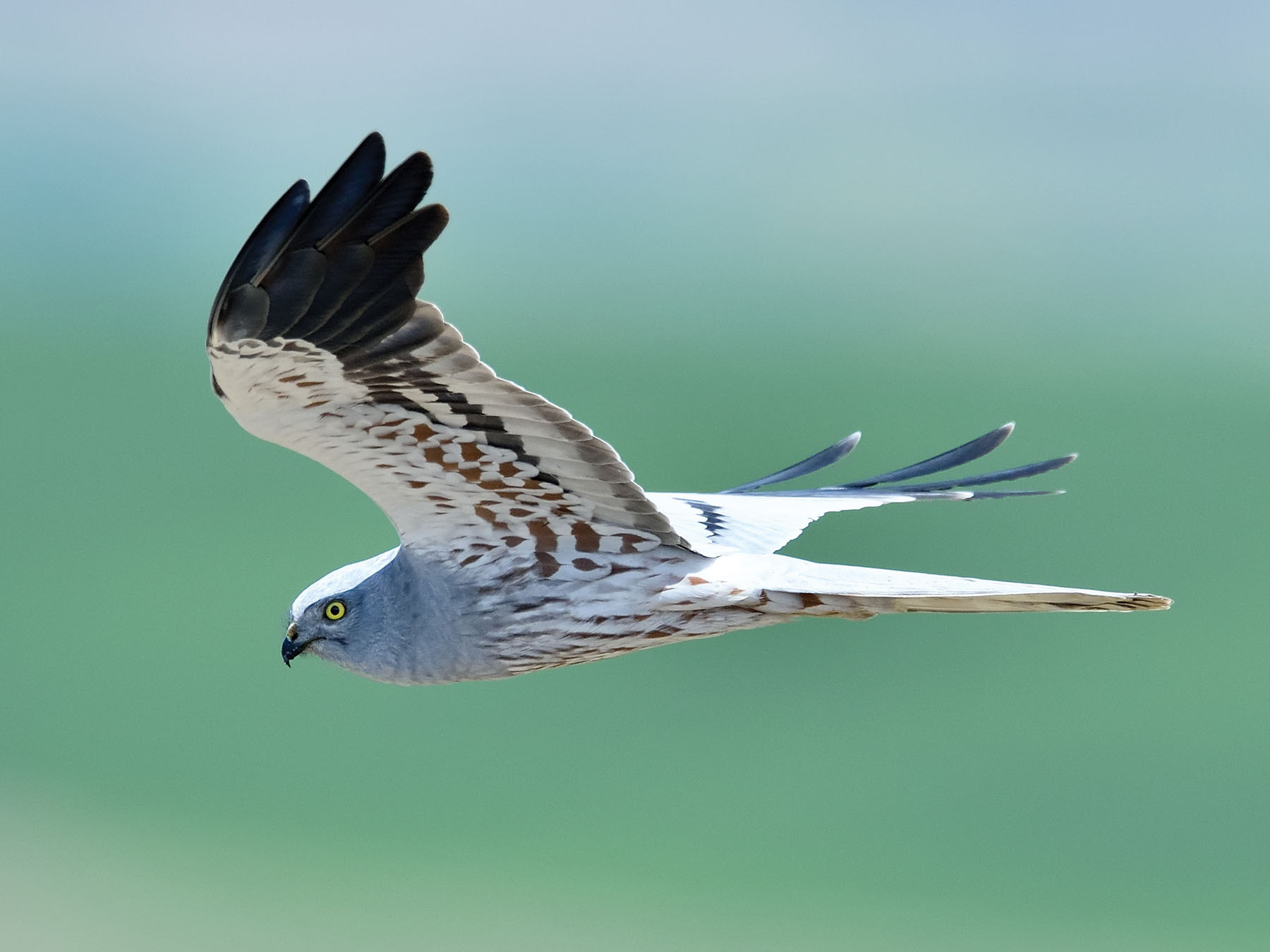
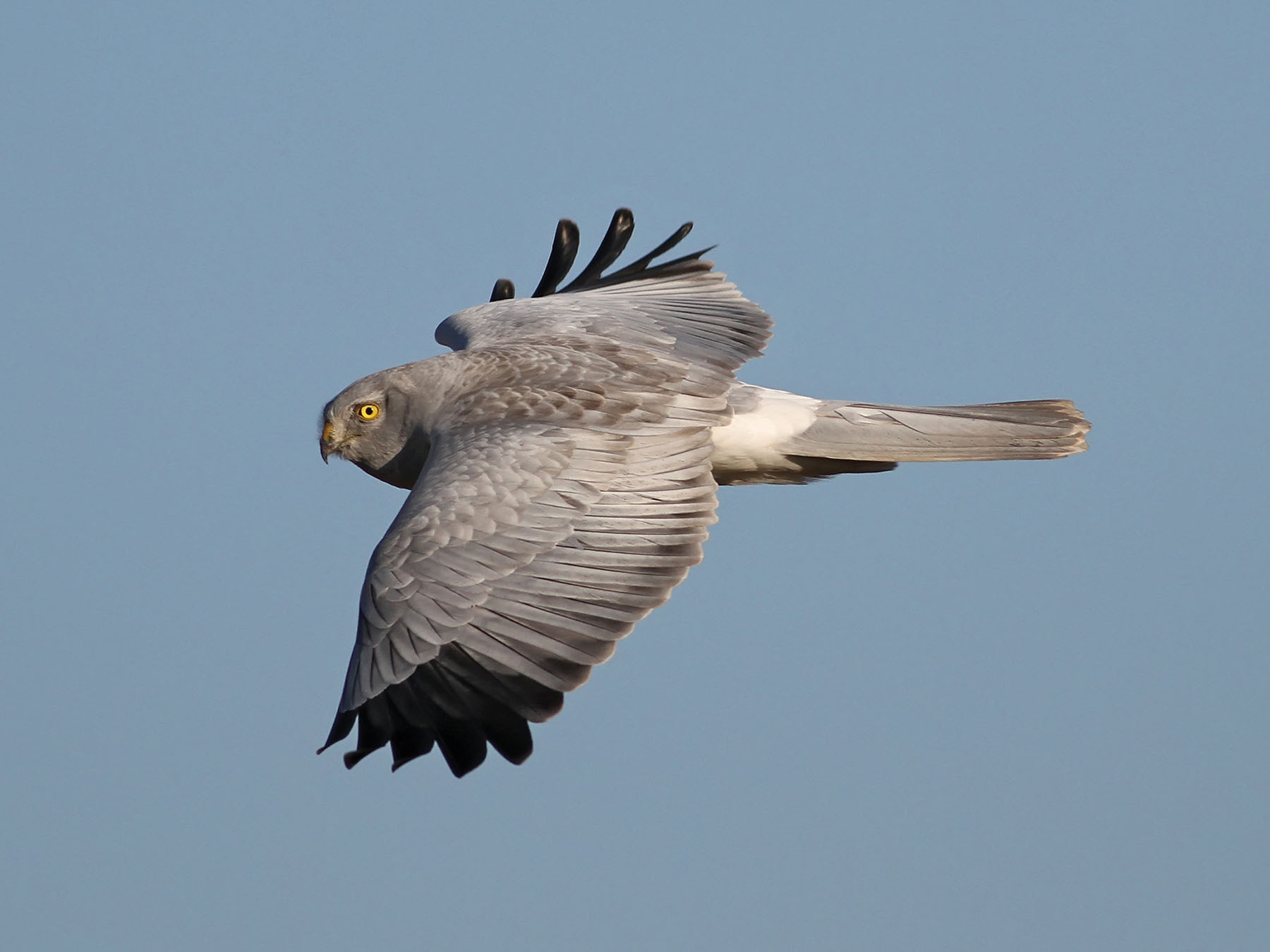
Hen Harriers are medium-sized raptors with long legs, long tails, and small, owl-like faces. Males are silvery grey above with dark wing tips and a white rump. Seen from below, they are almost white with a grey chest and head. Their wings have black tips and a dark grey trailing edge.
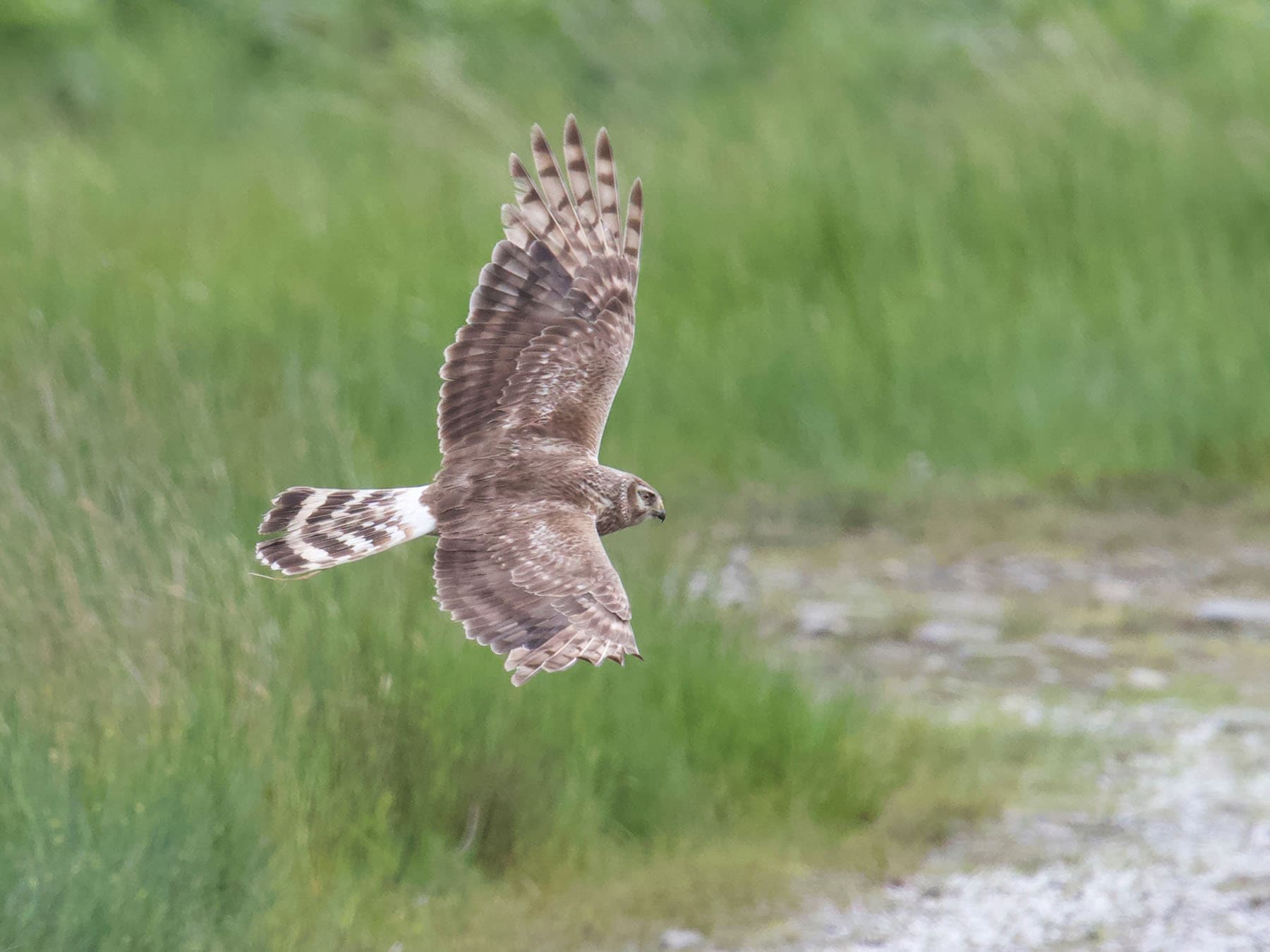
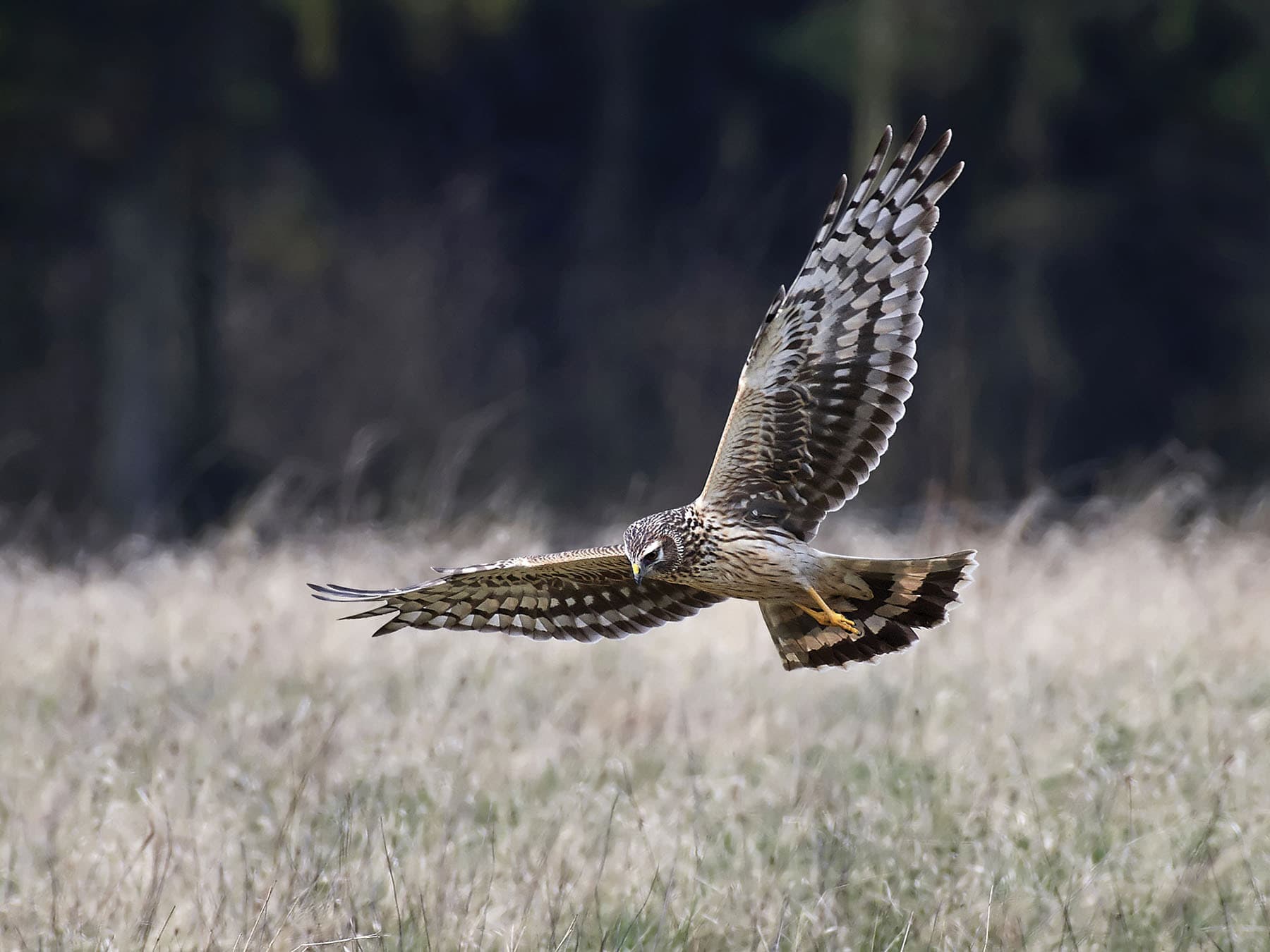
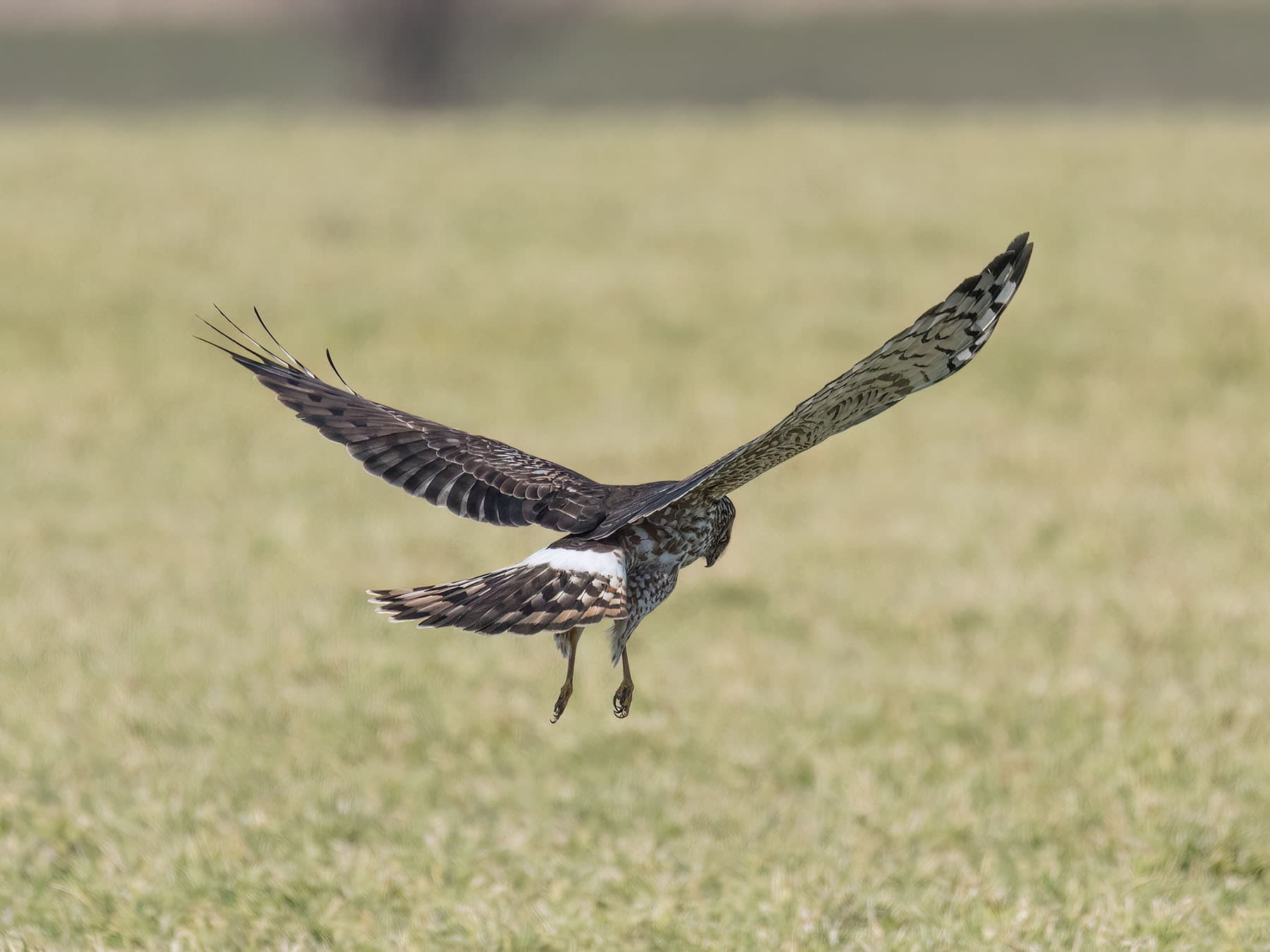
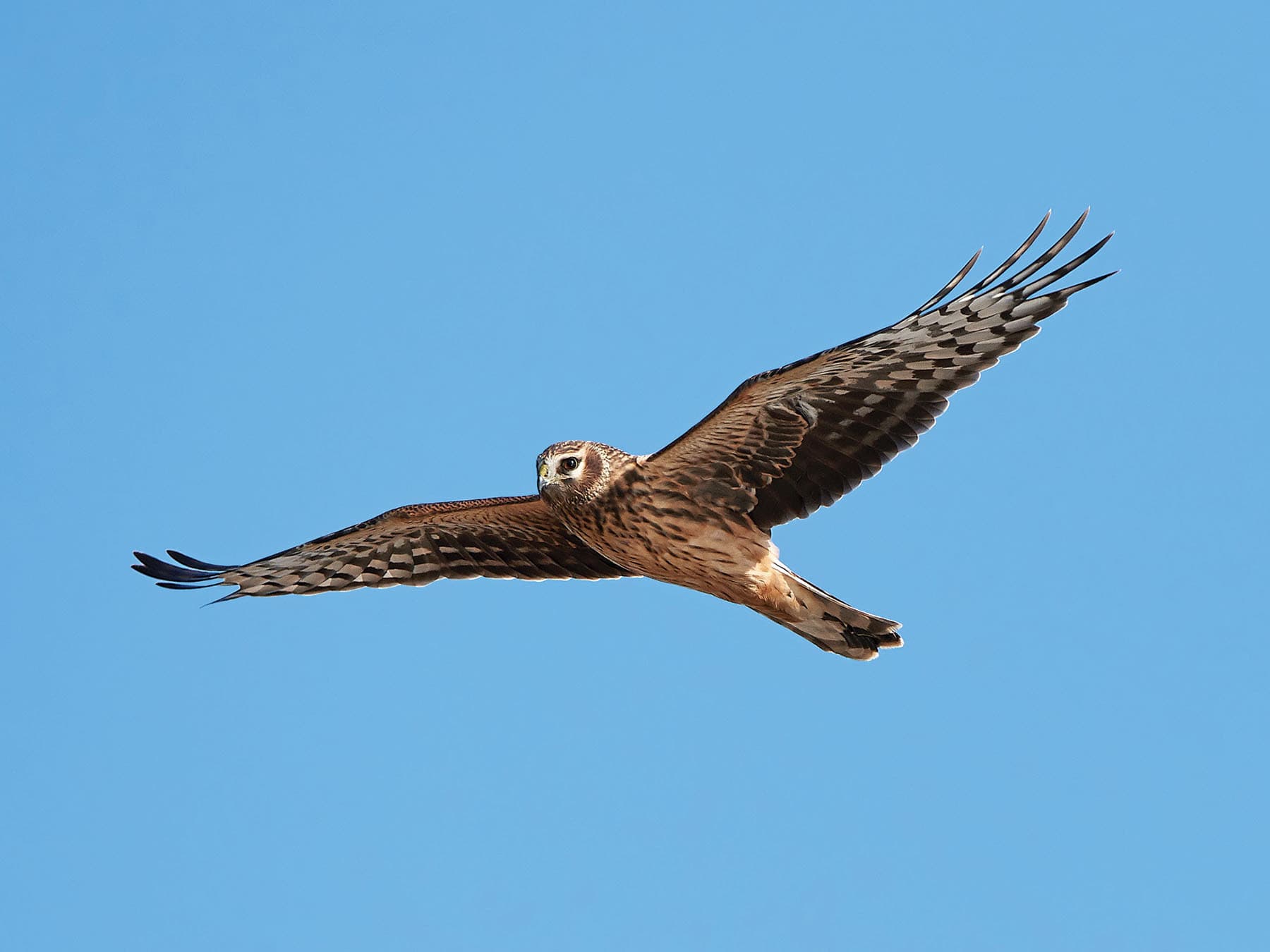
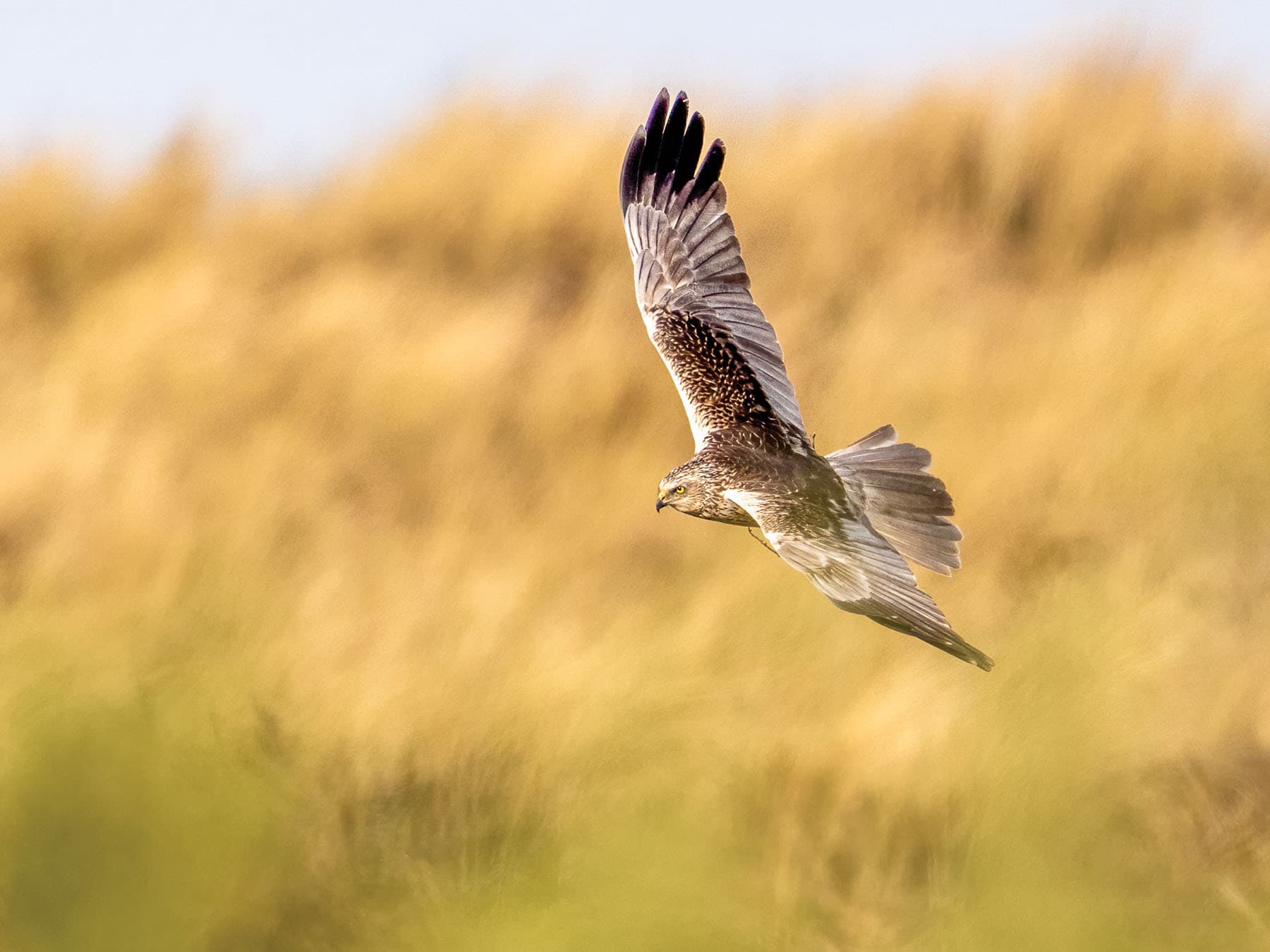
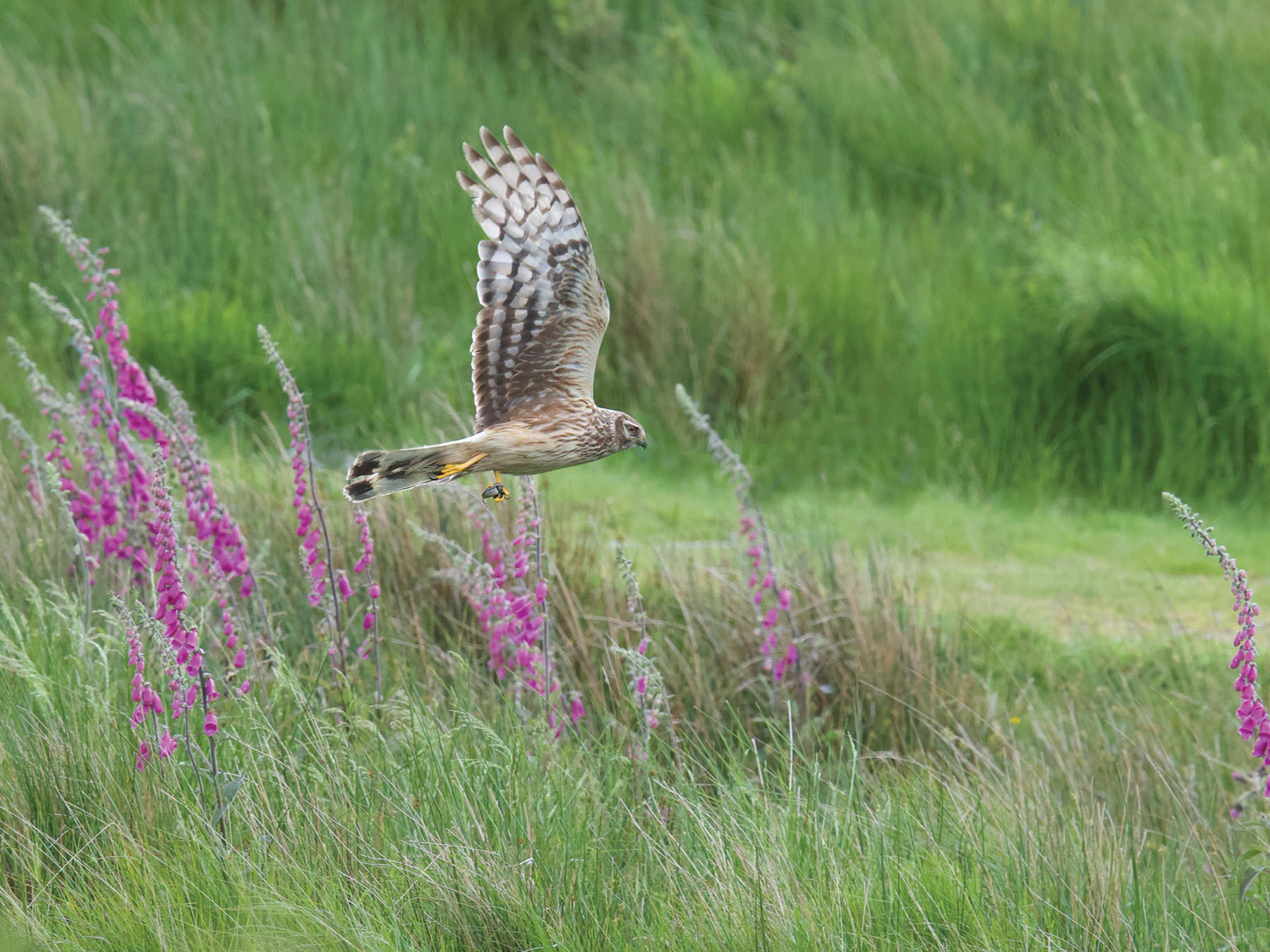
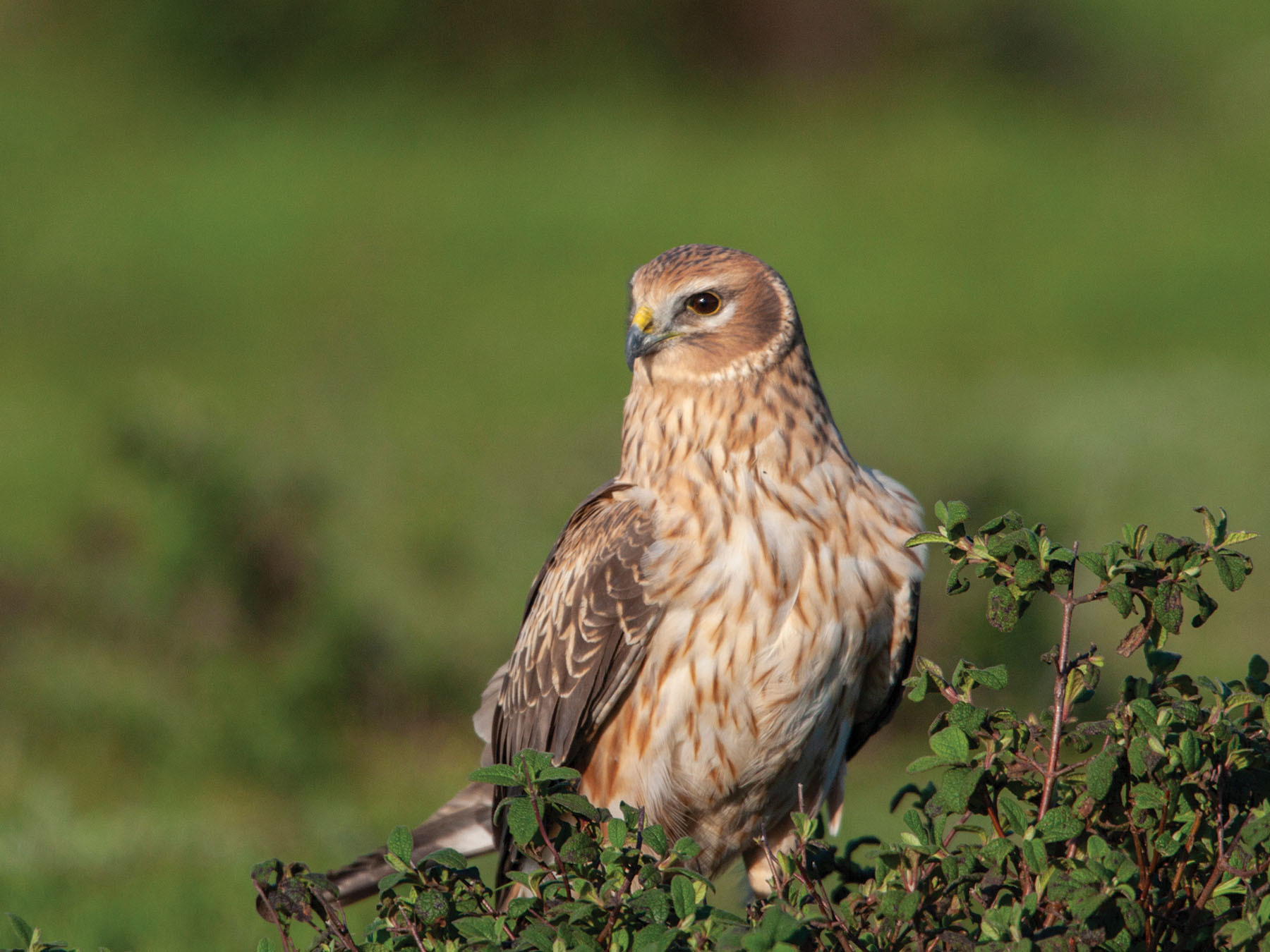
Female Hen Harriers are predominantly brown above, with a white rump and a barred tail. The underparts appear mottled or streaked with beige in flight, and the tail and flight feathers are prominently banded. Eyes and legs are yellow in both sexes.
Juveniles appear very similar to females, although they tend to have warmer red-brown plumage below and darker upper parts.
The rare Montagu’s Harrier is confined to the south and east. Males can be identified by the dark steaks across the wings, while females have banded wing coverts. Both sexes have four (not five as in Hen Harrier) primary feathers at the wingtips.
How big are Hen Harriers?
Hen Harriers are medium-sized birds of prey, intermediate between the Sparrowhawk and the Buzzard.
Length
Hen Harriers have a total body length of 42 to 52 centimetres.
Weight
These birds have a wide weight range. Males are significantly lighter at 300 to 400 grams, while females typically weigh 370 to 700 grams.
Wingspan
Adult Hen Harriers have a wingspan from 1 to 1.2 meters.
Its size
Adults- Length
- 41–52 cm
- Wingspan
- 97–122 cm
- Weight
- 300–750 g
Its song and calls
What sound does a Hen Harrier make?
Hen Harriers are generally silent except during courtship when males utter a cackling call that may be answered by the female. They also produce similar calls when threatened or alarmed.
- Call0:00 / 0:28
When and where to see it
OctoberIn season
Most recorded in October
- 1. Orkney Islands1.8%
- 2. Eilean Siar0.88%
- 3. Offaly0.83%
- 4. Argyll and Bute0.79%
- 5. West Dunbartonshire0.70%
Each dot is a county, state or province: the bigger and darker, the larger the bird’s share of that place’s bird records that month. Grey dots: no regular records. The ringed point is the centre of the bird’s records this month; the arrow shows how it moved since last month, and the dashed loop its path through the year. “Arrivals” colours places where it becomes regular this month (orange) or is in its last regular month (grey). GBIF eBird Observation Dataset, 2019–2024. Map data: Natural Earth, US Census Bureau; place centres © OpenStreetMap contributors.
In your area
See when the Hen Harrier is recorded in your county, state or province.
How often the Hen Harrier turns up in the UK and Ireland through the year, from birdwatchers' records.
United Kingdom
Resident · all year · nesting-season records held back
Ireland
Winter visitor · all year · most records in November
Show as a table
| Month | United Kingdom | Ireland |
|---|---|---|
| January | 0.077% (regular) | 0.10% (regular) |
| February | held back (protected) | 0.095% (regular) |
| March | held back (protected) | 0.084% (regular) |
| April | held back (protected) | 0.042% (regular) |
| May | held back (protected) | 0.011% (regular) |
| June | held back (protected) | 0.019% (regular) |
| July | held back (protected) | 0.022% (regular) |
| August | 0.018% (regular) | 0.071% (regular) |
| September | 0.024% (regular) | 0.085% (regular) |
| October | 0.049% (regular) | 0.15% (regular) |
| November | 0.061% (regular) | 0.15% (regular) |
| December | 0.064% (regular) | 0.13% (regular) |
Nesting-season records (February to July) are held back to protect nests, so those months show as present but unmeasured.
Recorded regularly in
Worldwide: recorded regularly in 74 countries
Countries where it was recorded in at least 3 of the 6 years 2019–2024. Linked countries have their own bird list.
Europe (40)
- Åland Islands
- Albania
- Austria
- Belarus
- Belgium
- Bosnia & Herzegovina
- Bulgaria
- Croatia
- Czechia
- Denmark
- Estonia
- Finland
- France
- Germany
- Greece
- Hungary
- Ireland
- Isle of Man
- Italy
- Kosovo
- Latvia
- Lithuania
- Luxembourg
- Moldova
- Montenegro
- Netherlands
- North Macedonia
- Norway
- Poland
- Portugal
- Romania
- Russia
- Serbia
- Slovakia
- Slovenia
- Spain
- Sweden
- Switzerland
- Ukraine
- United Kingdom
Asia (31)
- Armenia
- Azerbaijan
- Bangladesh
- Bhutan
- China
- Cyprus
- Georgia
- India
- Iran
- Iraq
- Israel
- Japan
- Jordan
- Kazakhstan
- Kuwait
- Kyrgyzstan
- Lebanon
- Mongolia
- Myanmar (Burma)
- Nepal
- Oman
- Pakistan
- Palestinian Territories
- Saudi Arabia
- South Korea
- Taiwan
- Tajikistan
- Thailand
- Turkey
- United Arab Emirates
- Uzbekistan
Data: EOD – eBird Observation Dataset (Cornell Lab of Ornithology), accessed via GBIF.org, CC BY 4.0. Records from 2019–2024, aggregated and filtered by Birdfact. How these lists are made
Hen Harriers have a patchy distribution on the British Isles. Continue reading to learn where you can find these elegant but scarce raptors in the United Kingdom.
What is the habitat of a Hen Harrier?
Hen Harriers are birds of open country with short vegetation. Typical habitats include:
- Moorlands
- Meadows
- Coastal marshes
- Fenlands
- Farmlands
What is the range of a Hen Harrier?
Hen Harriers are widespread in the old world, occurring over much of Europe and across Asia to Japan in the east. Some also spend the winter near the Mediterranean coastline in North Africa.
In the United Kingdom, Hen Harriers breed in Scotland and upland areas of northern Wales, northern England, and Northern Ireland. They are more widespread in the winter when they visit low-lying areas around the English coastline.
Where do Hen Harriers live?
Hen Harriers live in open environments where trees are scarce. They spend their lives hunting in low flight and perched on the ground or at low vantage points like rocks, stumps, and fence posts.
How rare are Hen Harriers?
Hen Harriers are a rare bird in the United Kingdom, with an estimated breeding population of just over a thousand pairs, most of which occur in Scotland.
Where can you see Hen Harriers in the UK?
Some of the best places to see Hen Harriers are up north in Orkney and the Isle of Arran, although birdwatchers can see these graceful raptors on the Isle of Man and the Forest of Bowland in Lancashire.
Migration
Hen Harriers are hardy birds, although the open uplands are a harsh place to live in the winter. Continue reading to learn about their movements in the UK.
Do Hen Harriers migrate?
Hen Harriers make local movements within the UK between their upland breeding territories and lowland overwintering sites. Many Hen Harriers that breed in mainland Europe migrate across the open sea to overwinter in the south and east of England.
Are Hen Harriers native to the UK?
Hen Harriers are a native species in the United Kingdom.
Tips for seeing it
- Look for their distinctive low, quartering flight over open habitats
- Listen for their 'kek-kek-kek' call during breeding season
- Observe early morning or late afternoon when they're most active
- In the UK, visit moorlands or coastal marshes for the best viewing opportunities
What it eats
Hen Harriers hunt over open uplands in search of live prey. Continue reading to learn about the Hen Harrier’s diet in the UK.
What do Hen Harriers eat?
Hen Harriers will eat a variety of small vertebrates, although rodents and small birds are their main targets. Their largest prey includes rabbits and even small ducks.
Common Hen Harrier prey items:
- Dunnocks
- Meadow pipits
- Skylarks
- Greenfinches
- Grouse chicks
- Voles
- Mice
- Insects
- Frogs
- Carrion
What do baby Hen Harriers eat?
Hen Harrier chicks rely on their parents for food, and birds and rodents are their usual diet. The adult birds tear the prey into manageable morsels until the birds can feed themselves.
Nesting and breeding
Hen Harriers are resident breeding birds in the United Kingdom. These birds begin nesting in the spring and produce a single brood each year.
Where do Hen Harriers nest?
Hen Harriers nest in heather moorland in upland areas of Wales, Northern England, Scotland, Northern Ireland, and the Republic of Ireland. These birds nest on the ground in a one to two-foot-wide stick and grass nest built by the female.
What do Hen Harrier eggs look like?
Hen Harriers generally lay four or five eggs per clutch, although nests may contain one to eight eggs. The eggs are plain whitish and measure an average of 46 millimetres long and 36 millimetres wide.
Do Hen Harriers mate for life?
Hen Harriers are not strictly monogamous. Males often mate with two or more (rarely up to 7) females in the nesting season.
Behaviour
Hen Harriers are most often seen quartering low over open country in search of food, although lucky birdwatchers may observe the males' spectacular sky dance display at the start of the nesting season. Continue reading to learn more about the Hen Harrier’s behaviour in the UK.
Are Hen Harriers aggressive?
Hen Harriers may behave aggressively towards potential predators and other harriers that approach their nest. Chicks in the nest are also highly aggressive as they are so vulnerable to predators on the ground.
Where do Hen Harriers sleep at night?
Hen Harriers sleep on the ground. They can be surprisingly gregarious outside of the nesting season, when small groups may gather to roost together at night.
Lifespan and predators
How long do Hen Harriers live?
Hen Harriers have an average lifespan of seven years and a maximum recorded lifespan of over 16 years.
What are the predators of Hen Harriers?
Adult Hen Harriers have few natural predators, although sick or injured individuals may be prey for carnivorous mammals like foxes. Their eggs and chicks are vulnerable to crows and foxes.
Are Hen Harriers protected?
Hen Harriers are protected by the Wildlife and Countryside Act of 1981.
Are Hen Harriers endangered?
Hen Harriers are not officially endangered globally, although they are a species of conservation concern in the United Kingdom. The local population is small and vulnerable to habitat destruction and direct persecution, and as a result, these birds are on the UK’s red list.
Conservation
Hen Harriers face significant conservation challenges, particularly in the UK, where illegal persecution on grouse moors has severely impacted populations. Habitat loss and degradation also threaten the species. Conservation efforts focus on protecting breeding sites and working with landowners to reduce conflicts.
Similar birds
Often mistaken for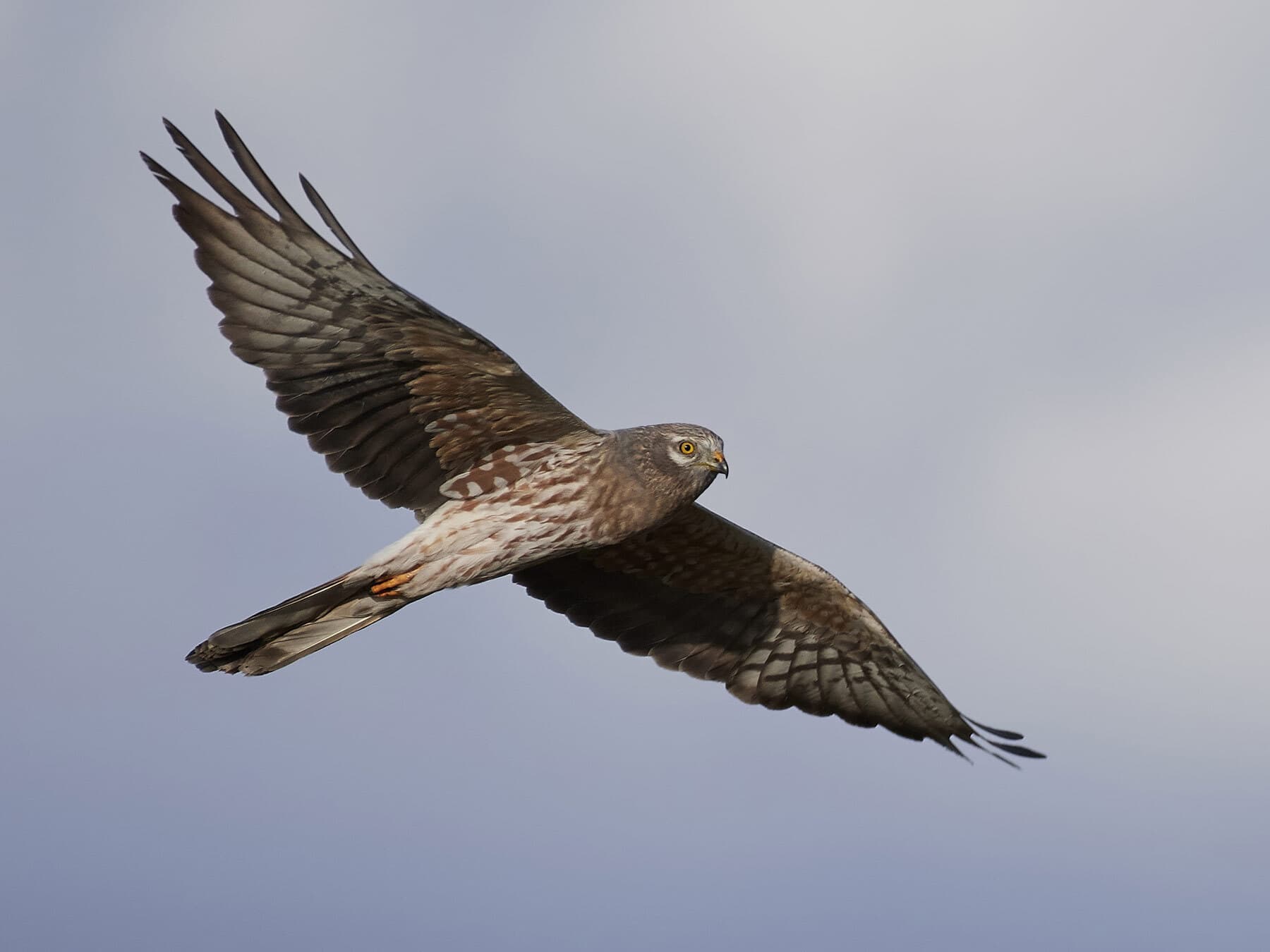
More photos
5 photos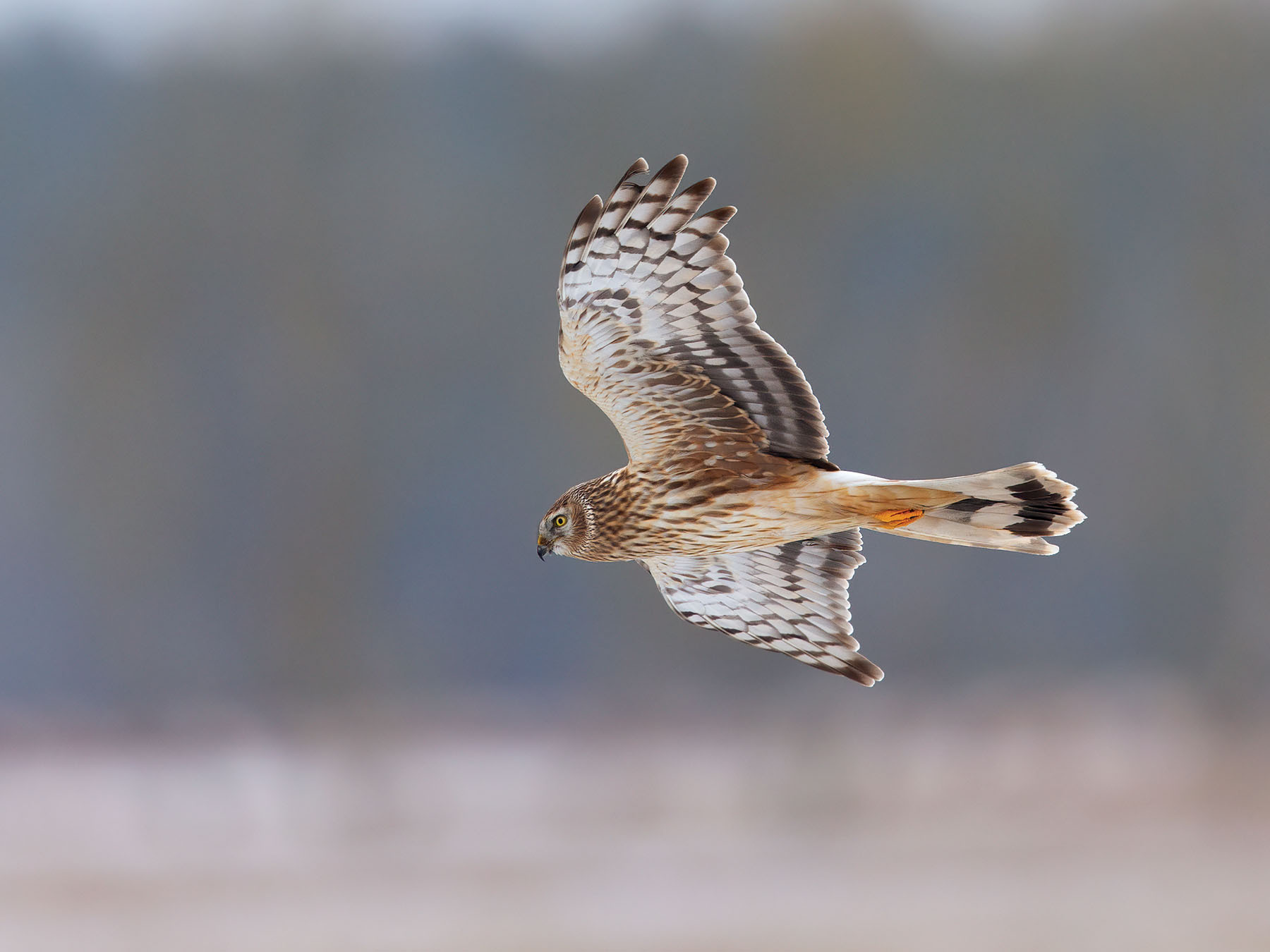
Hen Harrier guides
1 guidesQuick facts
- Length
- 41–52 cm
- Wingspan
- 97–122 cm
- Weight
- 300–750 g
- Lifespan
- 7–12 years
- Family
- Hawks & Eagles
- Migration
- Partial migrant
- Global status (IUCN)
- Least Concern
- World population
- 330,000 - 512,000 mature individuals
- Population trend
- Decreasing
- Scientific name
- Circus cyaneus
Questions
2Do Hen Harriers hover?
Hen Harriers fly low and slow, looking and listening for prey on the ground below. They can stall or hover briefly but do not have the impressive abilities of a hovering Kestrel.
Why are they called Hen Harriers?
Hen Harriers got their name for their habit of hunting free-ranging chickens. They also eat similar gamebirds like Red Grouse, and sadly, this has led to their historical persecution by gamekeepers.
Sources
3- 1BirdLife International. 2021. Circus cyaneus. The IUCN Red List of Threatened Species 2021: e.T22727733A200497981. Source (opens in a new tab)
- 2Fernandez-Bellon et al. (2020)
- 3BirdLife International. 2021. Circus cyaneus. The IUCN Red List of Threatened Species 2021: e.T22727733A200497981. Source (opens in a new tab)

Checked by
Nathan Cope, founder and editor
Nathan founded Birdfact and leads its writers and contributors in the UK, the US and Canada. He has watched and studied birds for more than ten years, and checks every article and species guide before it’s published.